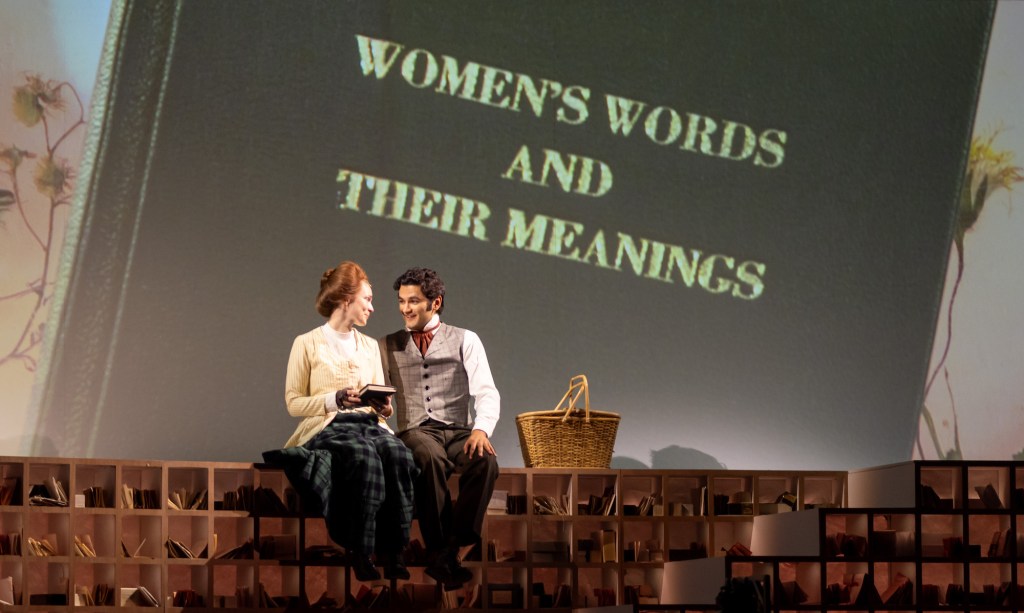
Adapted by Verity Laughton from the novel by Pip Williams. Sydney Theatre Company. 26 Oct – 16 Dec, 2023.
Words and language are powerful signifiers of what we consider to be important. While in the internet age words are easy to disseminate (like one guy spouting his opinions about theatre for example), the history of how we organise and communicate information and the decisions made along the way, is a thorny one. The ‘primacy of print’ forms the setting for Verity Laughton’s translation of Pip Williams’ beloved book, The Dictionary of Lost Words, and in doing so it highlights the strong difference between novels and plays.
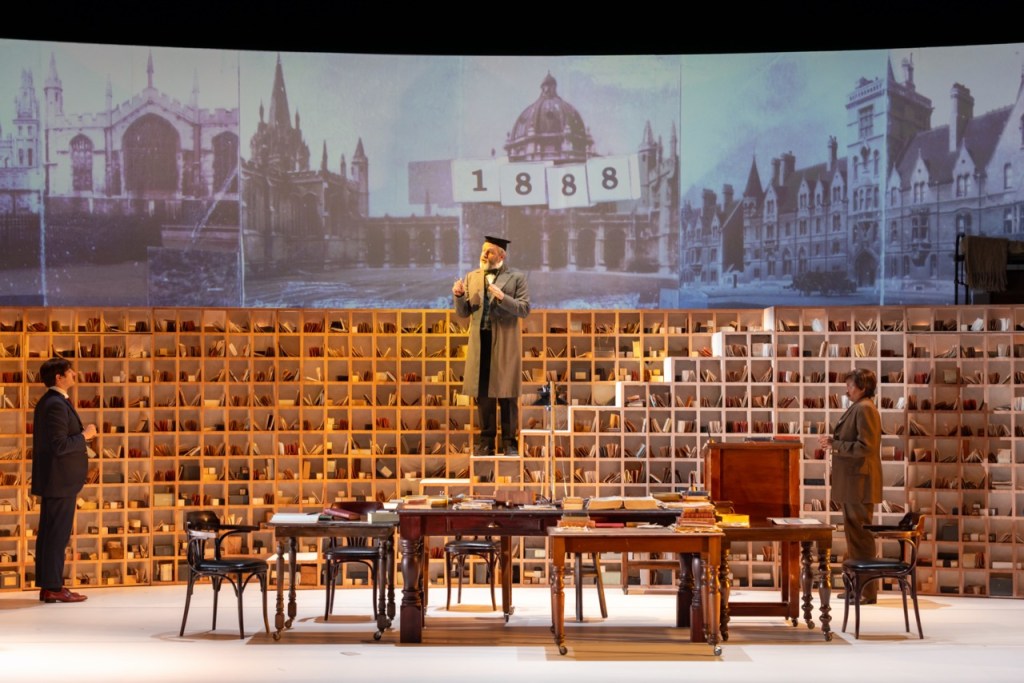
Esme Nichols’ world is surrounded by words. Her father is working in “the scrippy”, the scriptorium where he and other academics are collating the English language into a dictionary. It is a gargantuan task; codifying, defining and illustrating an entire lexicon. As a child she watches as they debate, and sometimes discard, words. It’s these “lost words” that intrigue her the most and Esme (a vivacious Tilda Cobham-Hervey) starts her own project, to save and collect the words no one else cares about.
As a young woman, Esme starts to understand the forces behind which words are saved and exalted and which are cast off. If a word must be in print before it can be recorded in the dictionary, then who decides what is printed in the first place? If women’s books aren’t printed, how are their words to be included? Are women’s words less important than those of men? And so begins Esme’s journey into womanhood, as she seeks out words the men are ignoring at the turn of the 19th Century just as women’s suffrage is gaining steam, and the forces that would erupt into World War are brewing.
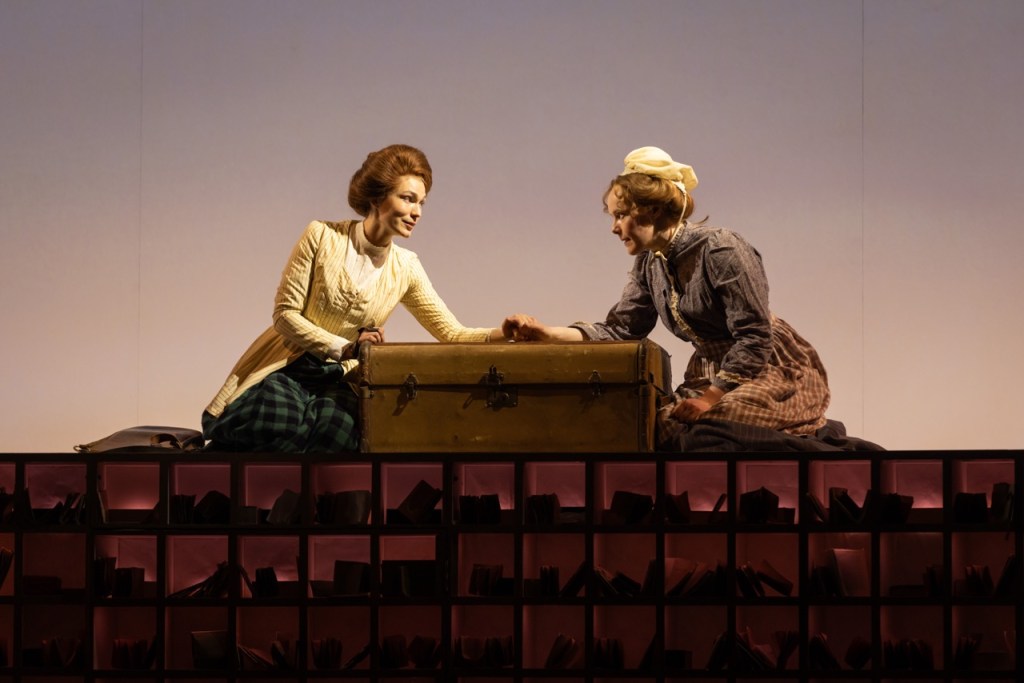
My first thought, as I entered the Sydney Opera House’s Drama Theatre, was “I want those bookshelves”. The set by Jonathon Oxlade is a long wall of square shelving illuminated from behind. It gives off a calming, clean Scandinavian tone. In front of it stand more era-appropriate desks of darker wood on top of which, we soon discover, is a clever video set up allowing us to see what is on the desk. Here they project images and text onto the back wall of the set. Mainly used to mark scene transitions, this video work gives the play an extra layer of dynamism which is effective when it’s not being overused.
The relatively sparse stage is filled with excellent performances. Ksenja Logos shines in various roles, but especially as the toothless, former sex-worker Mabel with a fruity vocabulary that opens Esme’s eyes. Rachel Burke excels as Esme’s long-suffering, illiterate maid Lizzy, who provides a level of heart to balance Esme’s cerebral pursuits. Raj Labade brings an innocent charm to the role of Gareth, a young man working at the printing press.
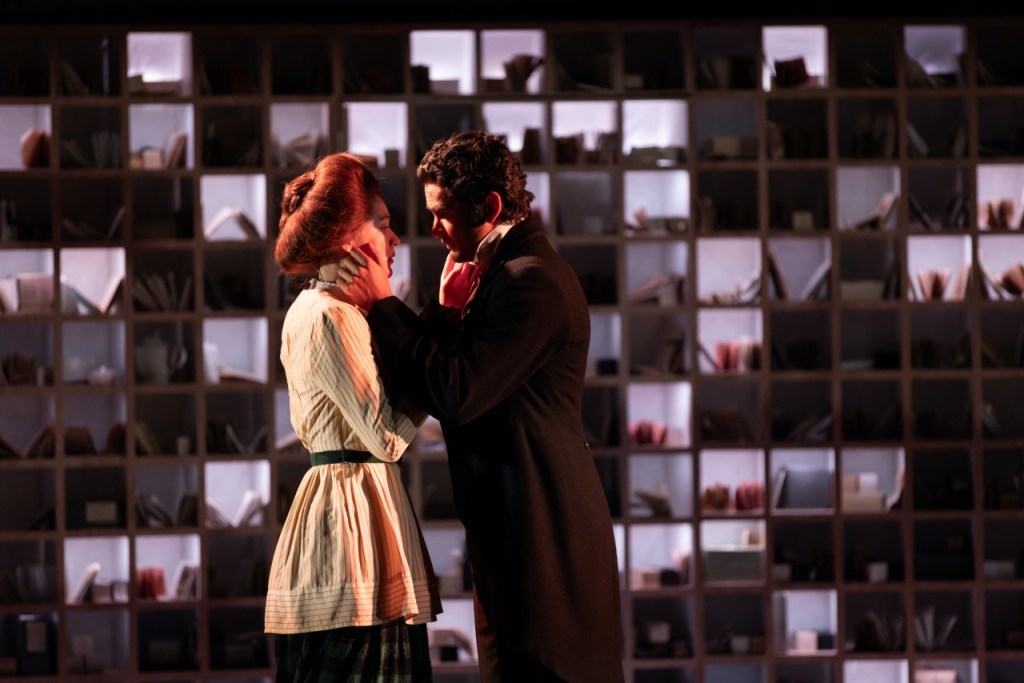
It’s in the community of women that the play finds its footing. Esme’s head is filled with knowledge but she is ignorant of her own biology, and it’s through her relationships with her female friends, mentors, strangers and even servants that she fully develops. It is the women around her who challenge her worldview and push her forward.
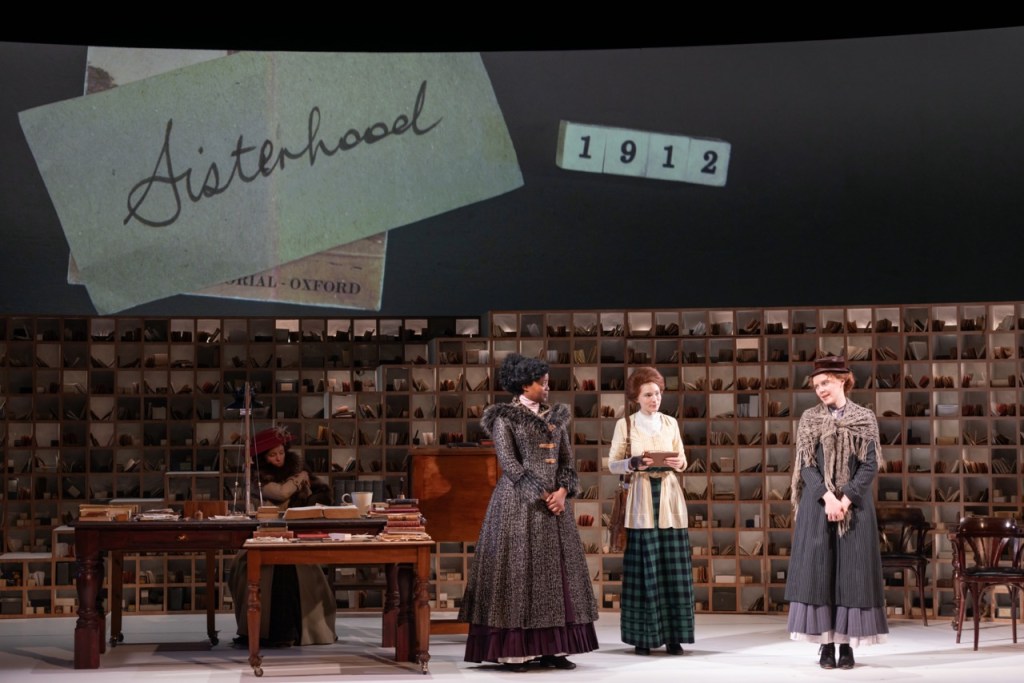
For all the inventive stage-craft and fine acting however, The Dictionary of Lost Words can’t escape its unwieldy plotlessness. The sweeping scope of the novel works on the page, but less so on the stage as events unfold with no real narrative drive. Opening scenes are filled with exposition that proves to be of little impact to the wider story.
At three hours long, the impact of The Dictionary of Lost Words is sadly dissipated. Key relationships are lost across the span of time making for an ending that aims for poignancy but falls flat. This is the novel edited and translated to stage, rather than being adapted to a different form of storytelling. Fans will enjoy the details, but patrons approaching it for the first time may find it a harder sell.
 Cultural Binge
Leave a comment