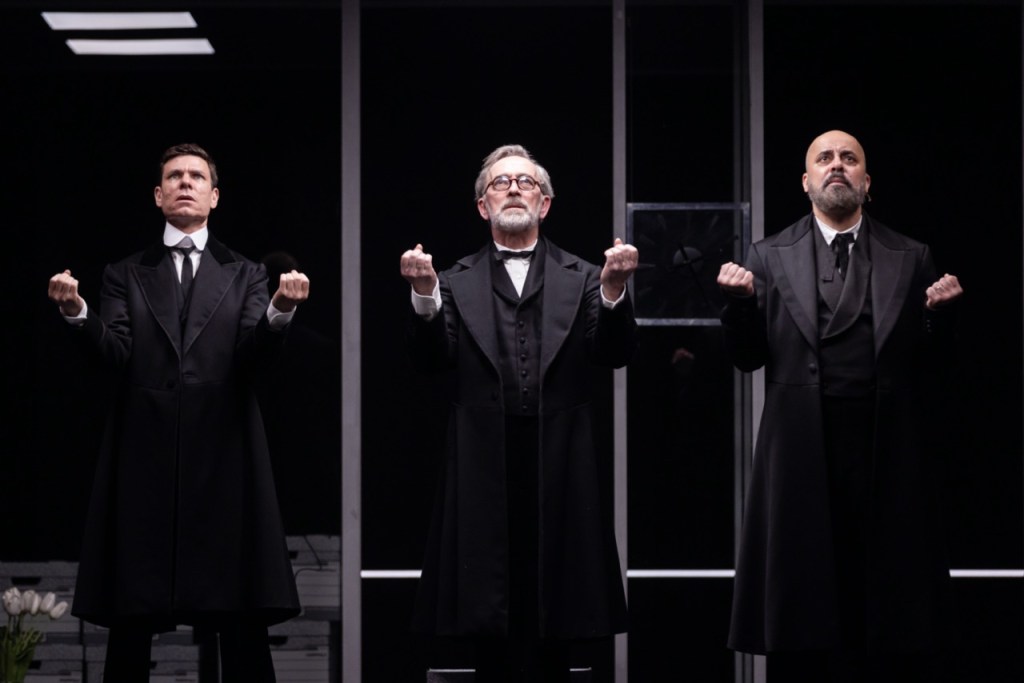
Written by Stefano Massini. Adapted by Ben Power. Theatre Royal Sydney. 21 Feb – 24 Mar, 2024.
It’s the kind of alchemy the theatre does best, taking this collection of seemingly unappealing things: a play about a bank, over three hours long, a relatively unknown cast of three, set in a glass box, costing $$$ in a cost of living crisis – and turning it into unmissable, thrilling entertainment. The UK’s National Theatre production of The Lehman Trilogy has arrived in Sydney, six years after its debut, still as sharp as ever.

You are instantly inclined to like the three Lehman brothers. Charming, hard working immigrants who turn setbacks into triumphs. They start with nothing, not even their names, in a general store in Alabama. They will trade with anyone, regardless of skin colour, buying from slave owning plantations and selling for a modest profit. They do not approach the world with judgement, they live in the moment and move where and when they need to, to stay afloat and try to prosper. Step by step we watch their lives and their business change, grow, move to New York, and reshape the way the world thinks about money.
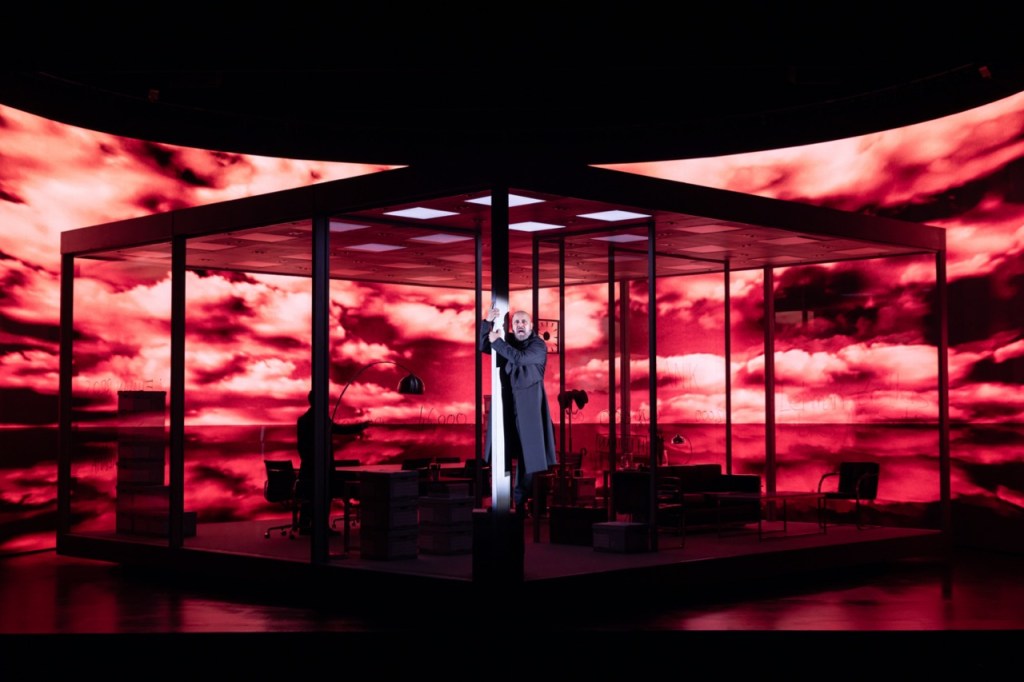
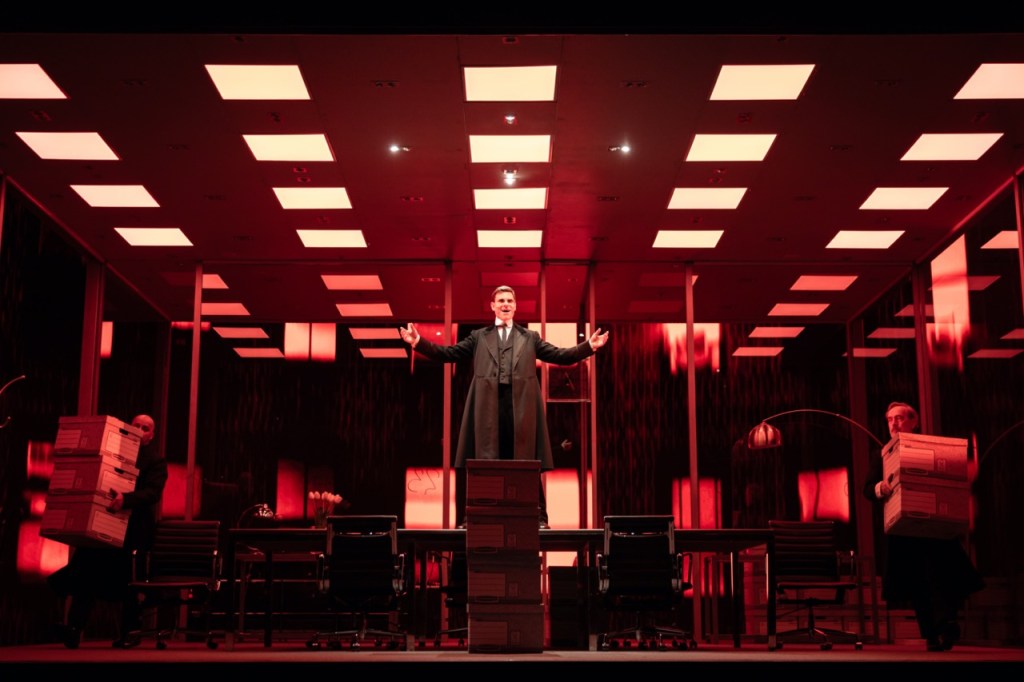
But it’s not the subject that draws audiences in, it’s the production, the theatricality of it all. Massini (via Power) has written an epic poem of power and money, but it is Sam Mendes’ directorial vision that makes this a hit. Three actors run a marathon playing the three Lehman brothers, plus their wives, children, business partners etc, often changing roles with the simplest alteration of stance or the wave of a hand. They animate what is essentially a massive monologue of text with subtle voice work and the constant movement of the set (more on that later). This cast, Aaron Krohn, Howard W Overshown and Adrian Schiller are serving us a bacchanalian feast of performances, where even the smallest roll is a sharply defined character that leaps off the stage. It is pure imagination combined with skill, marvellous to behold.
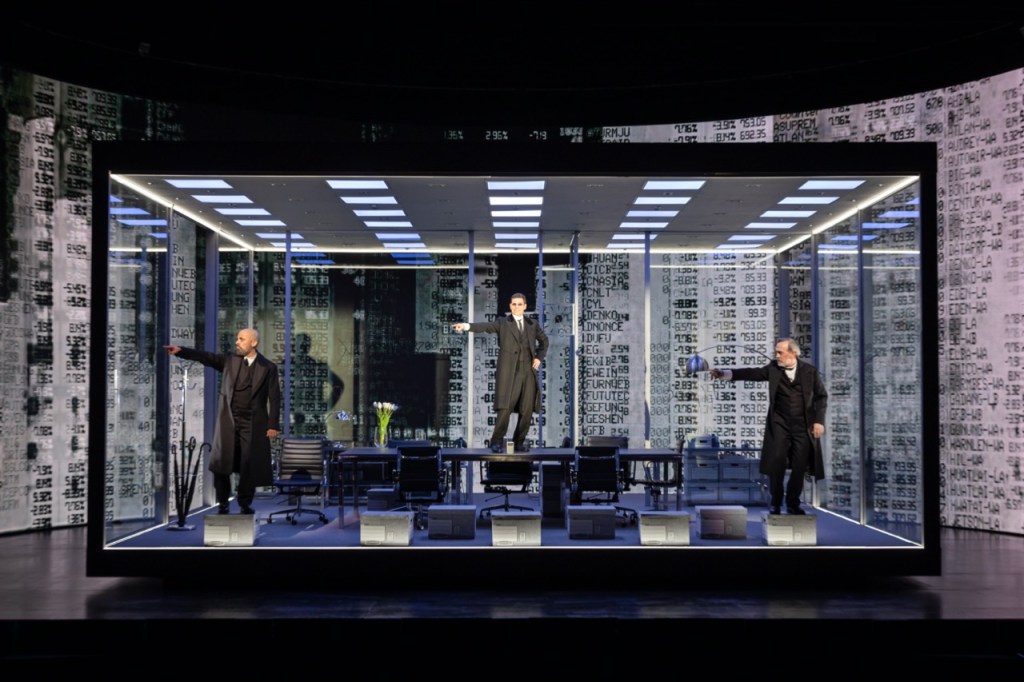
Es Devlin is possibly my favourite set designer in the world. Her sense of scale and clarity appeal to me immensely and this is pure Devlin. A glass box, rotating on stage, in front of giant projections. It focuses the eyes while telling a story itself – this is the architectural version of “the emperor’s new clothes”, there is nothing there. Much like the financial markets, theatre is built on belief, not literal truth.
The action is accompanied by a live piano score (played by Cat Beveridge) that works more or less like a film score would. Almost always present, it highlights emotional tone, smooths transitions and keeps scenes fresh. A crisp three act structure (each act is just under an hour) means you are never sitting down too long. In fact, it feels very much like watching three episodes of television, with time to get up, go to the loo and grab a cuppa between episodes.

When the play was first staged in its native Italy in 2013, just five years after the bank’s collapse in 2008, the world was still recovering from the shockwaves to the financial system. When this production was first seen in 2015 in England, the motherland of financial chicanery, it struck a nerve. Stefano Massini’s drama, adapted by Ben Power, seemed to shine a light on the shadowy world of investment banking that appeared all powerful… until it wasn’t. The play is a rebuke of rampant capitalism, but a gentle, stylish and entertaining one. No bankers were harmed in the making of this play.
If you want to quibble you can take issue with the presentation of the women in the brother’s lives, and the way the play glosses over events from 1969 (the death of the final Lehman offspring in the company) to the collapse in 2008. But the story is one of how struggle and hard work turned into greed, and how that greed dehumanised us, divorcing money from its utility to become an end unto itself. After the last Lehman was gone, the machine they built kept running in the hands of men who never knew anything different – a self-perpetuating system of avarice.
The scope of this particular production of The Lehman Trilogy is breathtaking. It’s clear to see why it has won almost every conceivable award. The star of this show is nothing less than theatre itself.

 Cultural Binge
Leave a comment