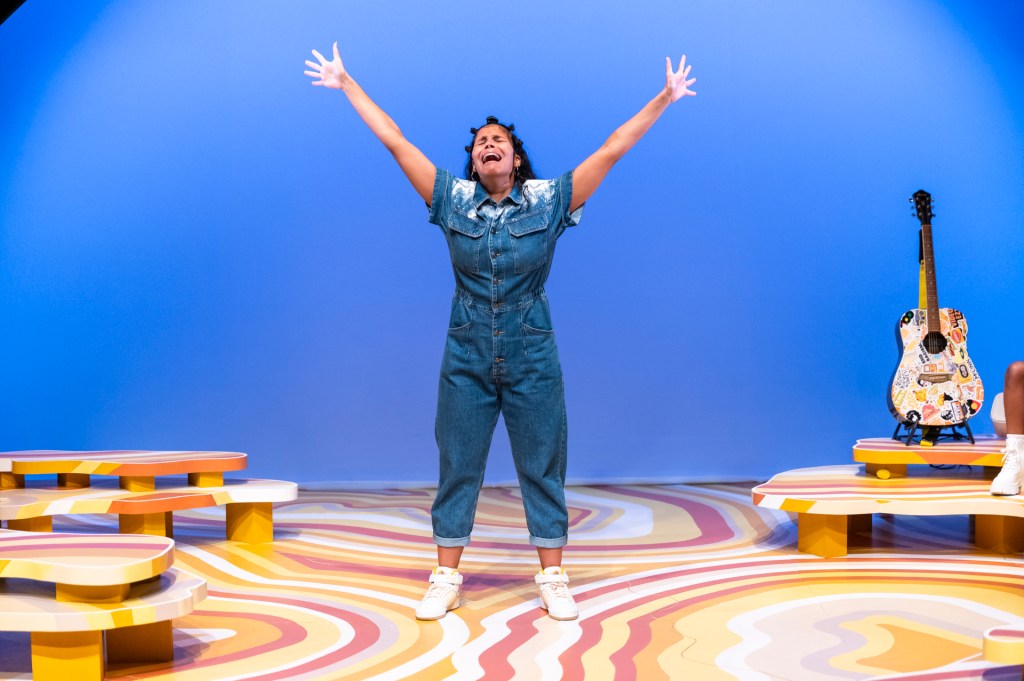
Written by Maxine Beneba Clarke. Malthouse Theatre, Melbourne. 23 Feb – 17 Mar, 2024
Zehra Newman hits it out the park with this funny, charming look at growing up Black in suburban Australia. Short, sharp and sparklingly funny, my only question, where is the ending? It feels like there’s more story to tell.
Inspired by Maxine Beneba Clark’s memoir, The Hate Race takes us into the childhood of Maxine, the middle child of Black British parents of Jamaican and Ghanaian descent who lives through the both subtle and overt racism of the 80s and 90s. All the marketing material would lead you to think this is a manifesto for change in Australia… but to be honest, it’s not that. It is surprisingly gentle as it immerses you in Maxine’s world.
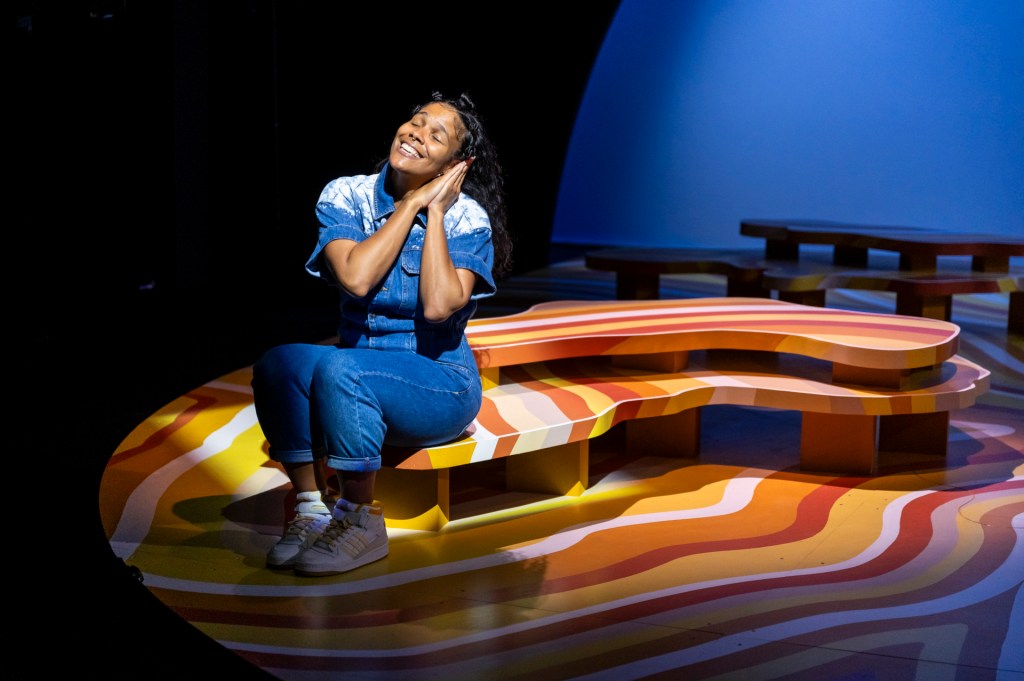
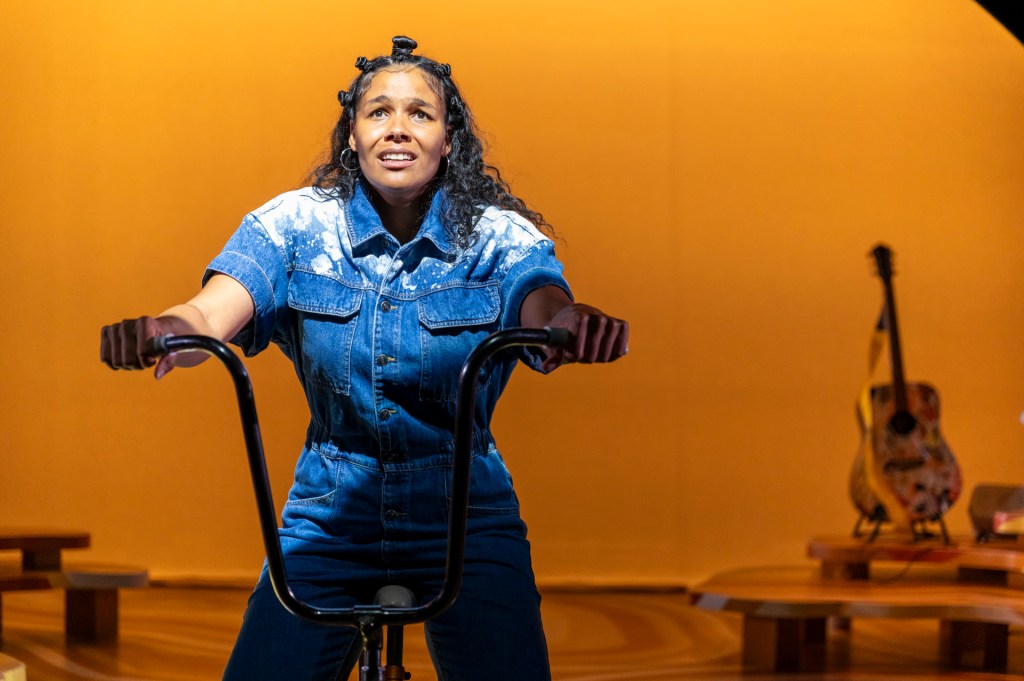
Zahra Newman is the star of the show as Maxine (and just about every other character) but this isn’t a one-woman show. She is assisted onstage by Kuda Mapeza who lends her voice, musicianship and presence at key moments. But none of this works without Newman’s skill as a performer. The precision in her performance is truly stunning to behold as she leaps between characters and tones with the lightness of a stone skipping over calm waters.
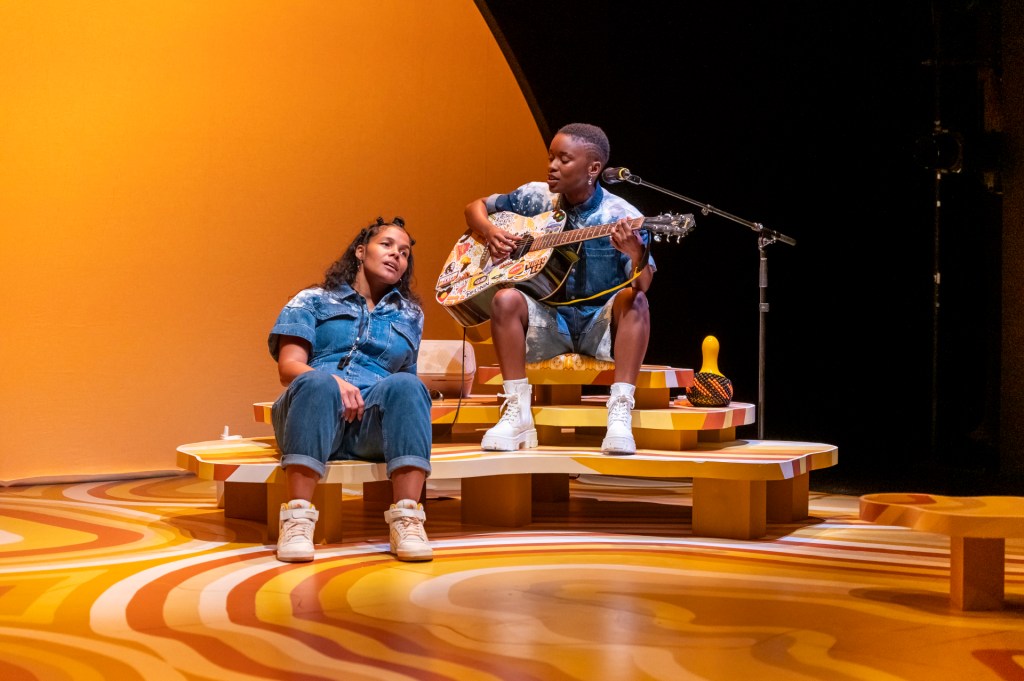
Newman is lifted up by some of the best use of sound design and music I’ve heard in some time, both by Dan West. Using recognisable pop music, blending between sound effects and live music by Mapeza. The play has a seamlessness to it that never feels stale. Similarly the set (Zoë Rouse) and lighting (Rachel Lee) are a kaleidoscope of colours that come to life to illustrate each scene. The production aspects are all flawless.
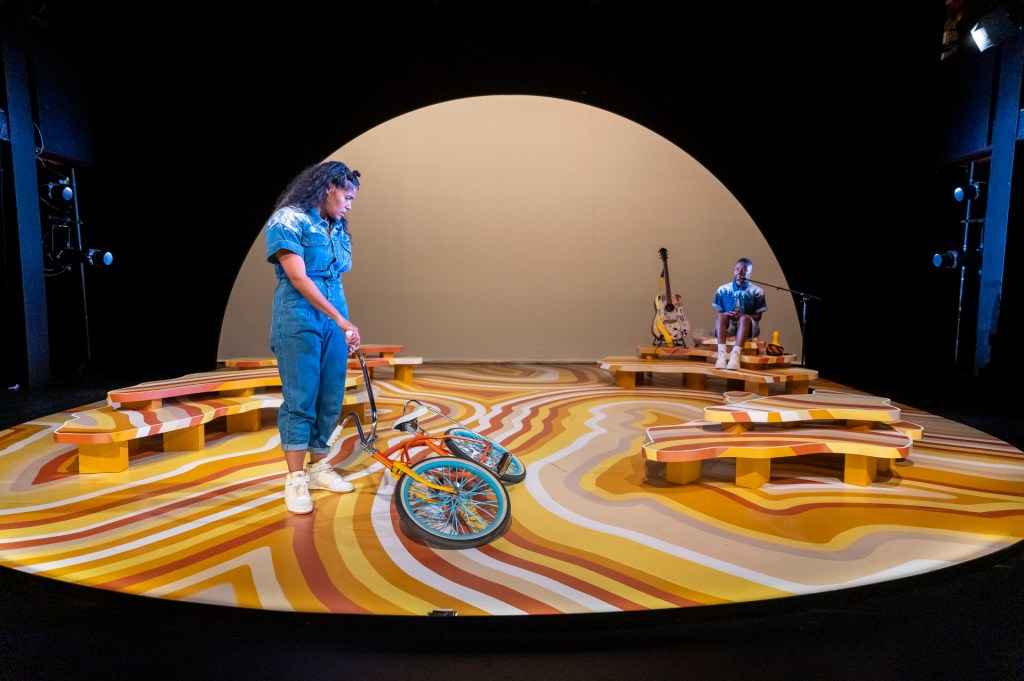
As a tale of racism The Hate Race makes it point without screaming and shouting (I mean, Maxine does scream and shout at points but it’s more to do with a Cabbage Patch Doll than outpourings of repressed rage). As someone of Caribbean descent myself (you’d never know to look at me but my genetic history is quite the blend) I could recognise the voices and cadence of the islands in Maxine’s grandmother that brought a smile to my face. But apart from the timeless truth of the lesson, racism is bad, this is more an individual character study than a “state of the nation” piece.
The ending, as it is, is open ended. In fact, it’s barely an ending at all, the play finds a nice, uplifting place to leave the audience, waves and says goodbye. As an arc it is somewhat lacking, without being emotionally unfulfilling at all. The opening scene, with adult Maxine hearing a voice shouting at her on the street, is never revisited. We never see how adult Maxine is different from the youthful Maxine we spend the bulk of the show’s 70 minutes with.
What surprised me most however was the audience. I probably shouldn’t have been shocked to see the usual white, middle class people filling the seats but I for one would have hoped to see the show bring more of the Blak community into the theatre. Of course, predominantly older, white patrons are the lifeblood of our theatres and if you poke fun at them, you do so at your own peril (*throws A Fool in Love a hard stare*), but more work is needed to reach out into the community to convince people that the theatre isn’t just a “rich white person” thing.
And maybe that’s my only real critique of The Hate Race, it feels designed for white people. It takes our hand and lets us have a glimpse at what it’s like to be Black in Australia but softens all the stings with humour and music and love. That’s not a bad thing, we need to speak against racism in whichever way gets people to listen. In an age of shouting, The Hate Race speaks warmly and calmly, and that may be more effective in the end.
 Cultural Binge
Leave a comment