
Written by Gary Abrahams, Elise Esther Hearst and Galit Klas. After the short story by Isaac Bashevis Singer. Malthouse Theatre, Melbourne. 29 Feb – 17 Mar, 2024.
You may think you know the story of Yentl from the 1975 Broadway play and Barbra Streisand’s iconic 1983 musical film but this production (returning for a second season after its 2022 debut) fills the tale of the young woman who dresses as man in order to receive an education with mysticism, theology and sex.
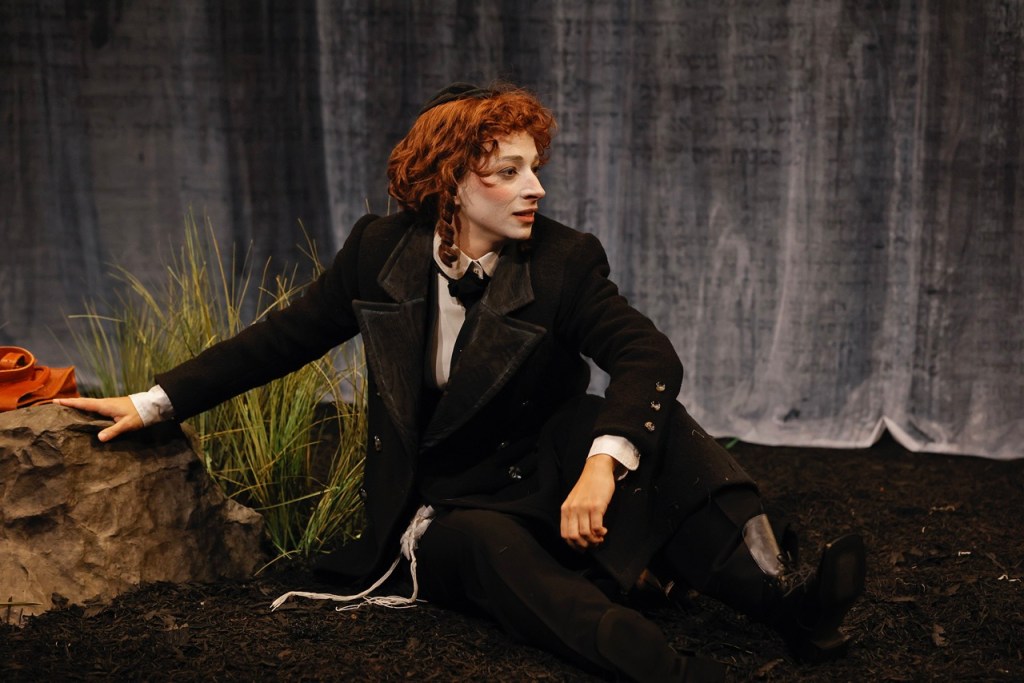
How can an all-knowing, infallible god make mistakes? How can humanity have free will, when an all-powerful god has predestined the future? Can you really be a heretic if you enlighten the scriptures?
Yentl poses a lot of big questions about faith, but ultimately comes down to the emotional wrangling of a young woman struggling with her unfair place in society, and her own sexuality.
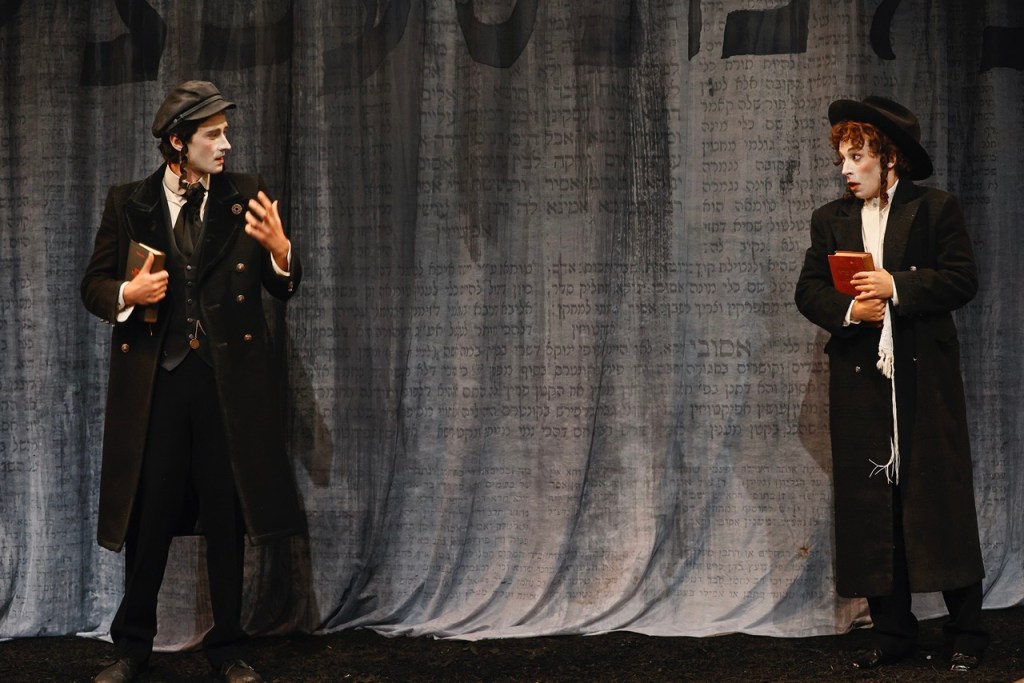
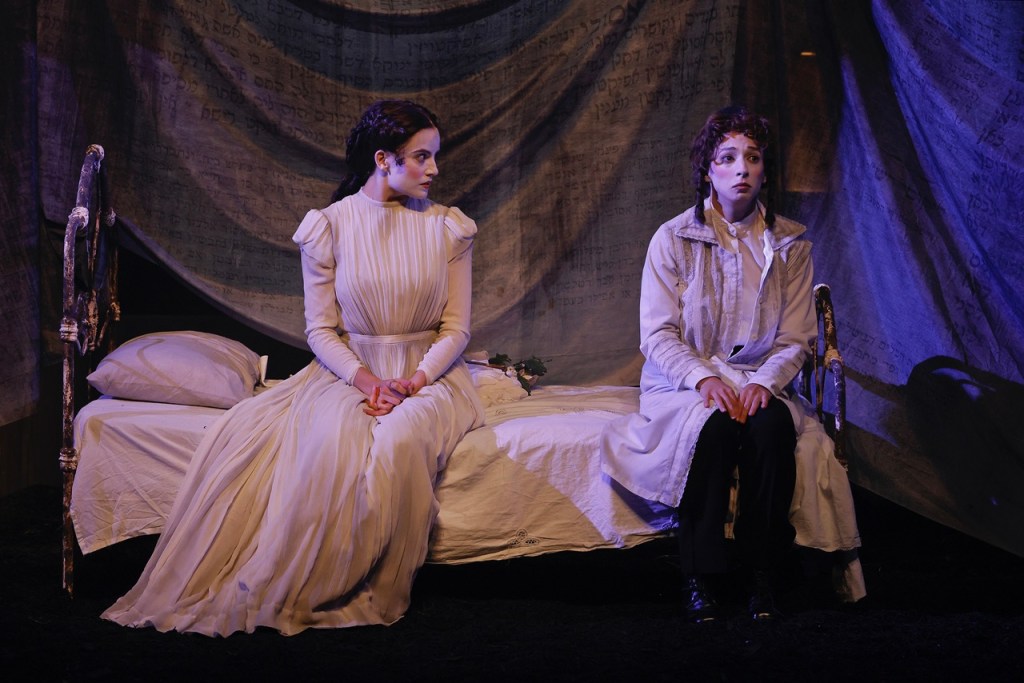
After the death of her father, and teacher, Yentl (Amy Hack) takes his clothing and disguises herself as Anshl, a young scholar, to attend school. There she meets the handsome, tortured rebel Avigdor (Nicholas Jaquinot) who becomes her best friend. But the pretence of boyhood gets more complicated than she planned when Avigdor’s former fiance Hodes (Genevieve Kingsford) falls for the soft-skinned, sweet, young student Yentl has invented.
The real genius of this production is the invention of the yeytser ho’re (Evelyn Krape), “The Evil Inclination”. Part-narrator, part-meddling-sprite, she is constantly subverting the tale and pushing Yentl further along. Krape gives her role a malevolent glee, enjoying the emotional turmoil Yentl creates among the village. She is Yentl’s desire and drive made manifest as an agent of chaos.
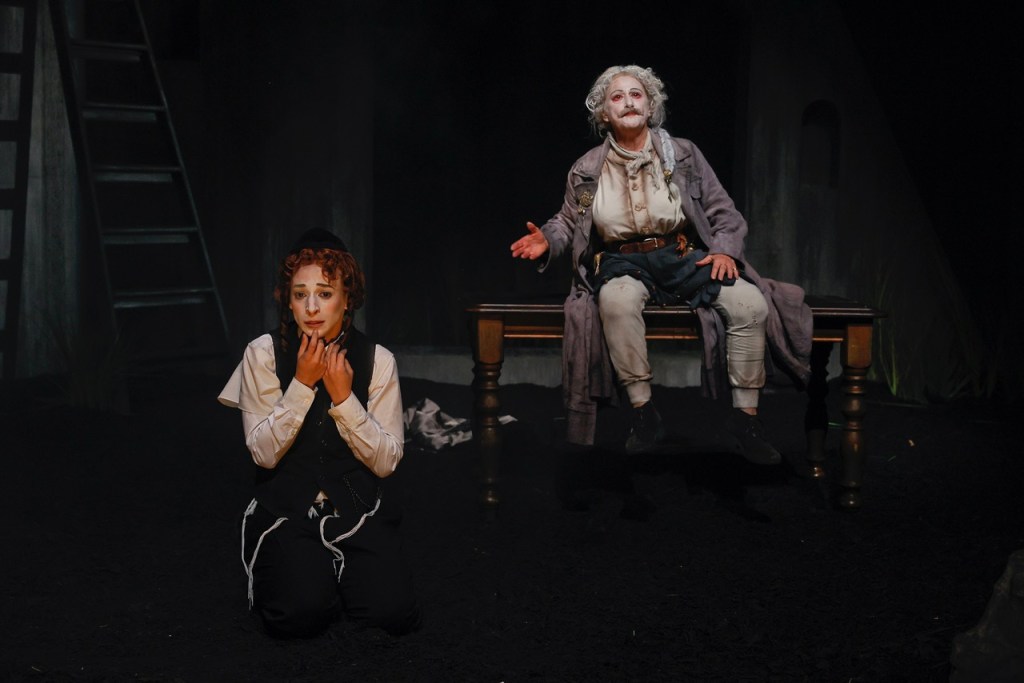
Writer/director Gary Abrahams has created a darkness in the space that feels as oppressive as the cultural restraints placed on Yentl’s life. Set and costumes by Dann Barber feel decrepit and heavy as Russell Goldsmith’s sound fills the room with an ethereal energy. This is a ghost story in a way. But it’s the script by Abrahams, Elise Esther Hearst, and Galit Klas that makes this show what it is. Deeply grounded in Jewish lore and faith it manages to circumnavigate doctrine and myth with clarity. For a story that hits existential heights, it never loses its footing. This text has a lust for theology and an intricate, scholarly drive to explore gender and sexuality.
This is first rate theatre with literally nothing to critique. Worth a trip to Melbourne to see it all on its own, we can only beg the theatre gods, or the yeytser ho’re, for a Sydney transfer.
 Cultural Binge
Leave a comment