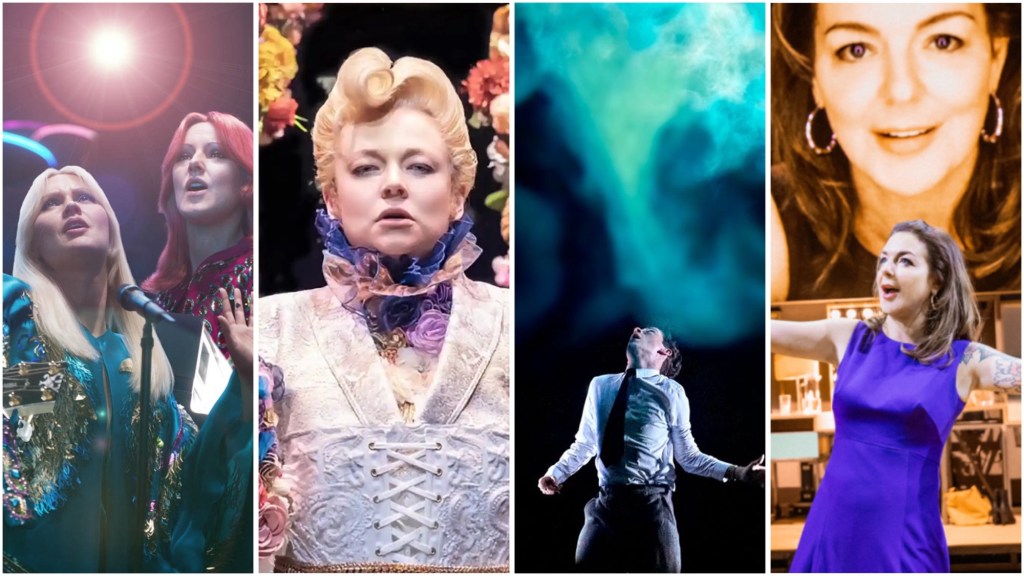
Stranger Things: The First Shadow ★★★★ / The Picture of Dorian Gray ★★★★★ / Opening Night ★★ / ABBA: Voyage ★★★★
The collision of technology and the stage is nothing new but across all the shows I saw in London, a few used the blend of cameras, screens and live performance better than others – and yes, I’m proud to say Kip Williams’ The Picture of Dorian Gray blew them all away.
Let’s start with the most basic…
STRANGER THINGS: THE FIRST SHADOW ★★★★
Written by Kate Trefry. Story by The Duffer Brothers, Jack Thorne & Kate Trefry. Based on Stranger Things by The Duffer Brothers. Phoenix Theatre, London.
For all you members of Hellfire out there, yes this is very much part of the show’s official canon. No, you don’t really need to see it. If you’ve seen Season 4 of the show, you’ll know almost everything that happens here as this is essentially one long version of the flashbacks to Vecna’s childhood you’ve already seen. The real fun is seeing what the adult character’s we know and love were doing in their high school years (not all are what you expect).
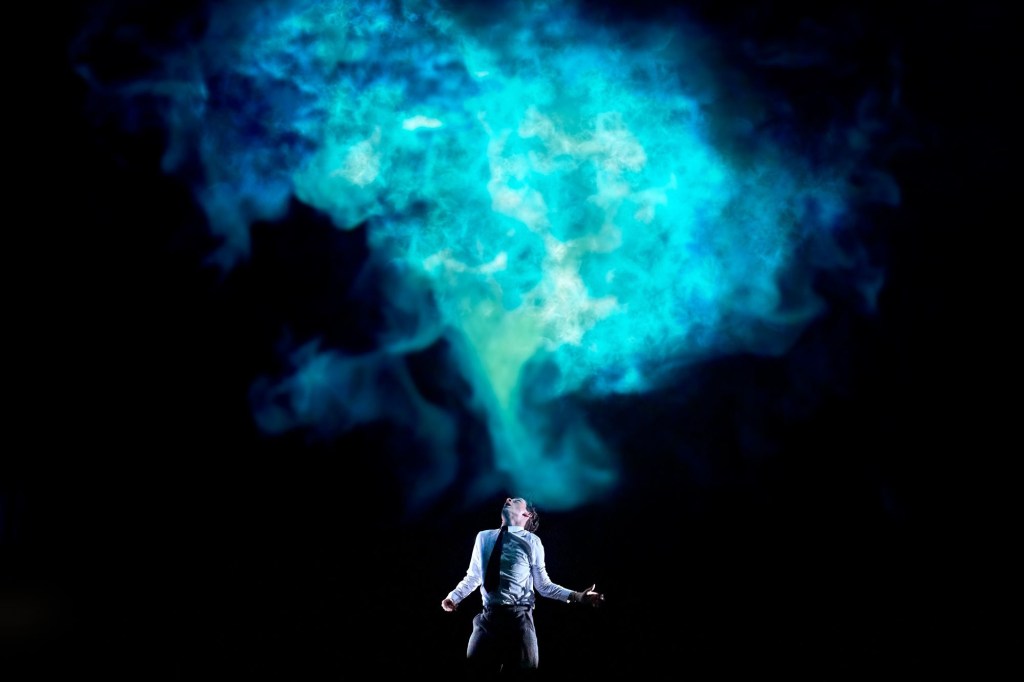
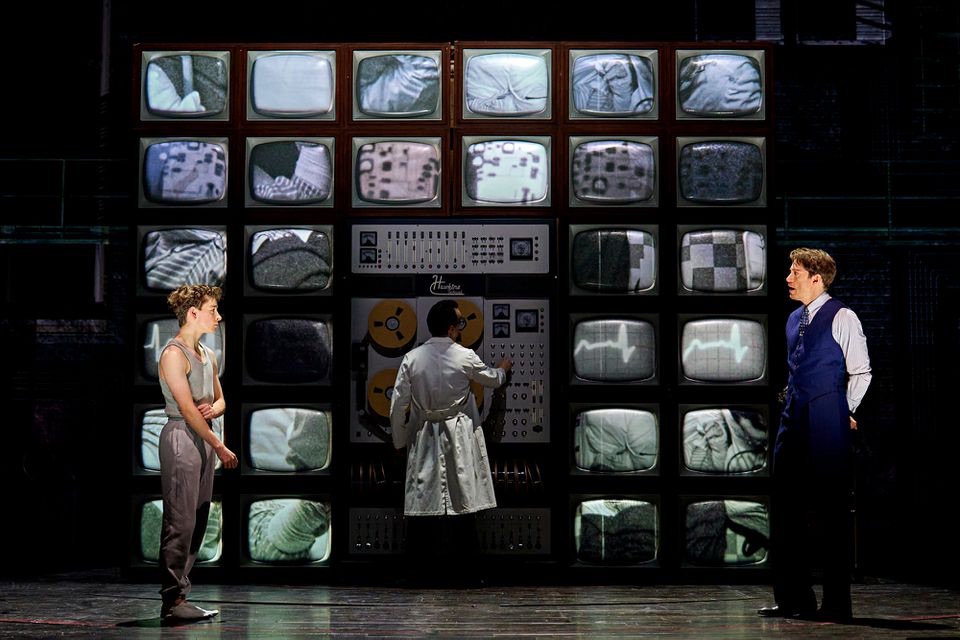
The star of the show is the on-stage special effects, which don’t quite hit the inventive heights of Harry Potter and The Cursed Child, but are very effective in giving the stage the scope of a VFX-filled TV show. Not cine-theatre in the strictest sense, merely a show that blurs the lines between screen and stage, there is an interesting interplay between the world of Stranger Things that we know from our TV screens and what happens live. For instance, The First Shadow has the traditional Stranger Things opening credits (Act One is Episode One, Act Two is Episode Two).
Some canny use of projections, puppets and screens give the effects a truly three-dimensional feel. But it’s the more subtle stage tricks that really seal the deal. As young Henry Creel (Louis McCartney) starts to hurt animals, the audience sees a mixture of puppetry and real animals (or possibly filmed footage of real animals blended into the set) that gives it a verisimilitude it would have been lacking. Some terrific lighting and smart casting tricks the audience into believing characters can be in two places at once.
The cast are excellent playing younger versions of the on screen adults. Isabella Pappas has a voice almost identical to Winona Ryder’s making her Joyce uncannily similar. Young Hopper (Oscar Lloyd) is recognizable as the screen character with some of the youthful bravado of Steve from Season 1. Eddie Munson’s father Alan (Max Harwood) is a surprise in a variety of ways.
Does this add to the lore of the show? Yes, it introduces an earlier start date to the understanding of the alternate dimension they call the “Upside Down” – tied to the Philadelphia Experiment (which may not completely fit with the show’s continuity). It also made me want to rewatch Season’s 2 and 4 again to look for the links with Henry Creel and Bob Newby (played by Sean Austin on the TV show) as I didn’t recall Bob mentioning a sister. Also (spoilers for Season 4 ahead) on the TV show Henry Creel said he’d never met the mind flayer till Eleven sent him to the Upside Down, but here it says he encountered it as a child. None of these seem like irreparable continuity gaffs, more like classic Marvel Comics “No Prizes” (the kind of contradictions you can easily ignore for a good story).
And on a completely different note, (minor spoiler ahead) it’s weird that none of the characters baulk at the idea of Bob Newby having to kiss his own step-sister when he takes on a role in the play-within-a-play at the last minute – then again, there is a lot more dramatic stuff happening at the time.
Like most stage show, it struggles to pull off an action finale and attempting to quickly jump between scenes to build up a pace (as you would on film) can be a bit clunky, but the audience here is full of fans who are in for the ride no matter what.
THE PICTURE OF DORIAN GRAY ★★★★★
Adapted by Kip Williams. Based on a novel by Oscar Wilde. Theatre Royal Haymarket, London.
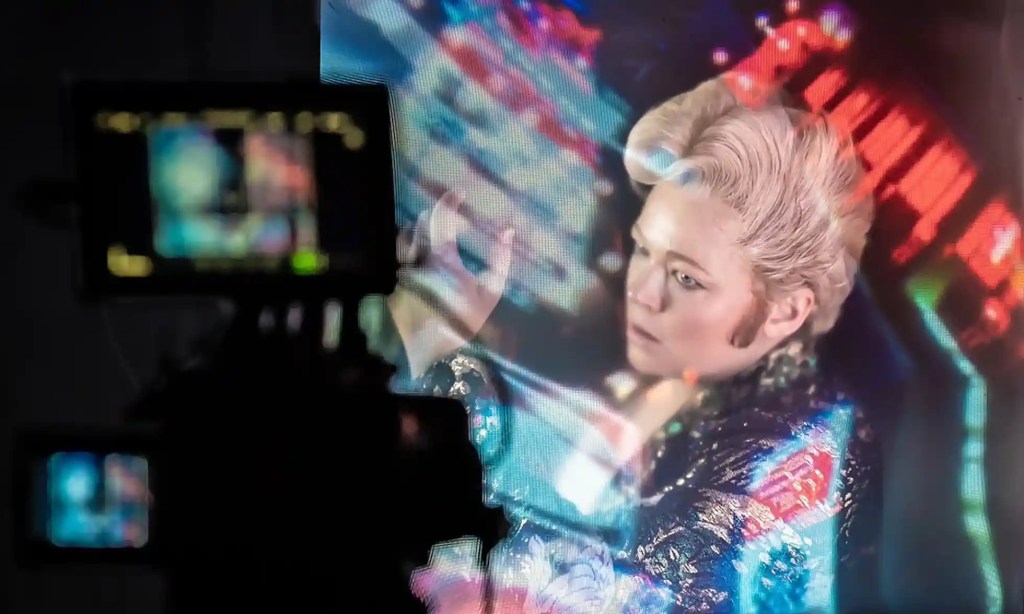
Kip Williams’ The Picture of Dorian Gray has had an upgrade since I last saw it. No, I don’t mean the casting of Sarah Snook, I mean the technology itself has evolved into something more seamless and impressive.
I was nervous walking in to rewatch the show, because I have been raving to all my London friends for months and demanding they all spend their money to get tickets (and this production ain’t cheap or easy to get into). I had that fear of “what if they don’t like it”. It was ridiculous obviously, this is a blockbuster show both for the tech and for the central performance. Lucky for me as well, by the time I saw it in London the show had scooped up a bunch of five-star reviews and some Olivier Awards, so it was still in demand.

Snook is divine on stage. I’d only ever seen her on stage once before (The Old Vic’s production of The Master Builder in 2016) and hadn’t seen her real range. I love her TV show Succession, but that’s just one character. Here we get to see her in all her camp glory – and it is camp, far more camp than original production. Snook has a permanent wink in her eye, feeding off the audience’s gasps and cheers as the techno-organic performance keeps developing over the whole running time.
The updated tech makes the transformations smoother, although the fear of a tech breakdown did give the original a real seat-of-your-pants thrill. The audience reaction though is the same – awe. London stages have not seen anything like this and it’s absolutely thrilling. Next stop – Broadway!
OPENING NIGHT ★★
Music & Lyrics by Rufus Wainwright. Book by Ivo Van Hove. Based on the film by John Cassavetes. Gielgud Theatre, London
Oh boy… this one is rough. I am no stranger to glorious flops having sat through the original productions of both Andrew Lloyd Webber’s Stephen Ward and Love Never Dies, but Opening Night is nothing short of one man’s hubris destroying everything in its path. No, that’s not the plot of the play, just personal commentary.
I rarely lay blame for a failed production on one person, and find “naming and shaming” to be a gauche endeavour, but Opening Night’s problems all clearly stem from a single source. Director Ivo Van Hove has screwed the pooch.
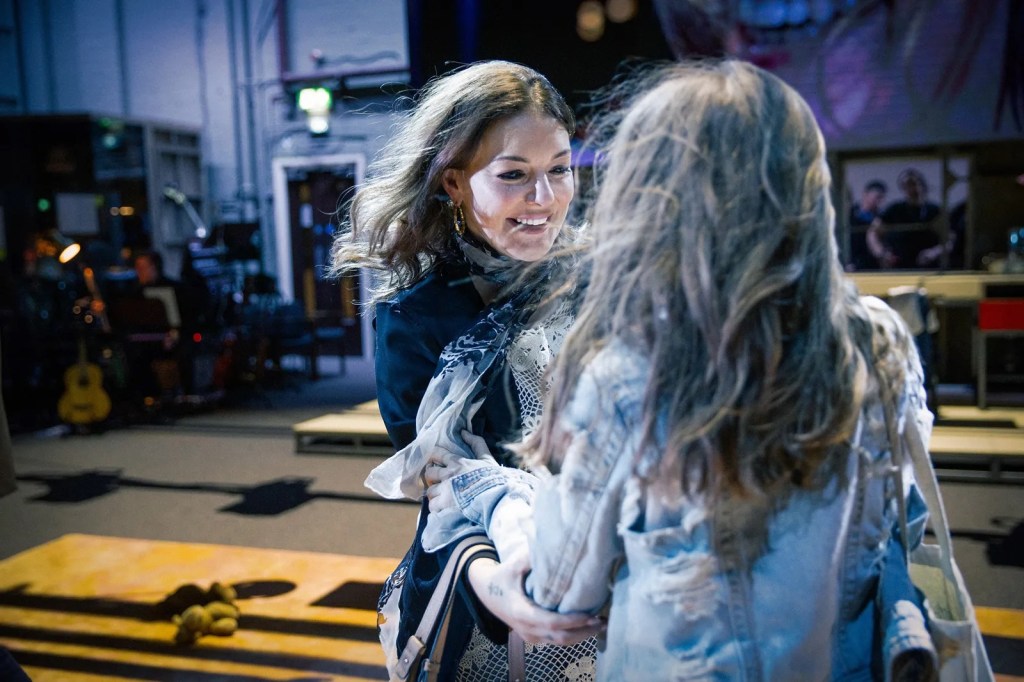
Everything about this had the potential to be amazing, and I can totally understand why everyone signed on. A successful director whose work I generally like. A respected film by Cassavetes. A lead actress (Sheridan Smith) whose life mimics that of the lead character. Music by singer-songwriter and queer superstar Rufus Wainwright, who’s been earning his theatrical stripes working in opera for a while. Pile on a cast including Benjamin Walker, Hadley Fraser, Amy Lennox et al… it all looks so good.
Van Hove has always been a controversial director drawing a range of opinions but I’ve found his plays to be challenging and exhilarating when they work. His production of A View From The Bridge starring Mark Strong was a revelation. His Hedda Gabler with Ruth Wilson was less successful but still intrigued me. He even made me care for A Little Life, a book I find odious in the extreme. He’s been playing with integrating live video into his productions for a while now, but I’ve never found it to be particularly successful. In Network, there was at least a narrative connection to the video work, but in All About Eve the video screen drew focus from the stage and put an emotional barrier between the audience and the characters.
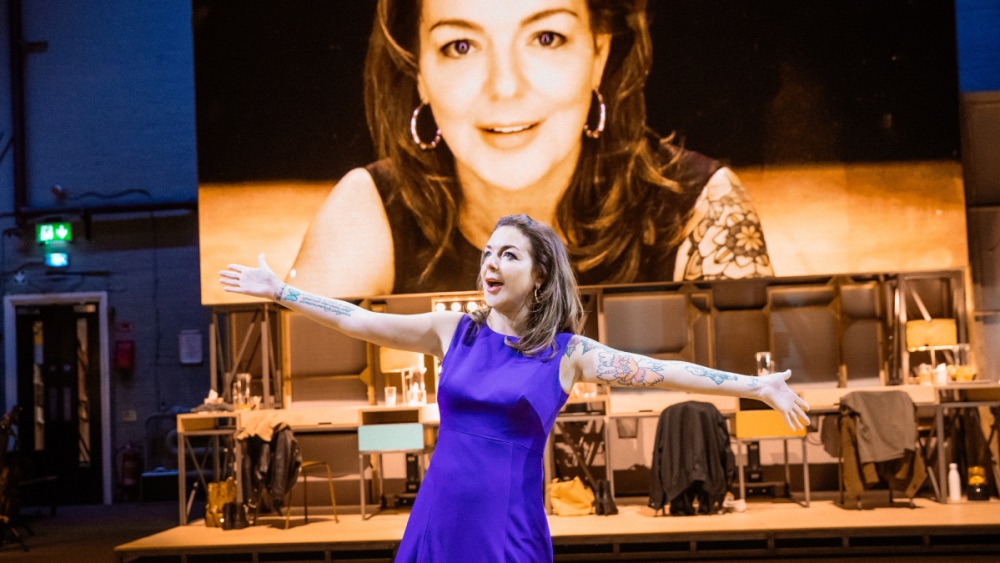
The same problem exists here with Opening Night, but is magnified. Van Hove has inserted a plot thread about a documentary crew chronicling this play-within-a-play’s journey as an excuse to put a giant screen above the stage and cameras on the set. Let’s be clear, this adds NOTHING to the story. NOT. A. THING. Worse yet, using locked off shots that are poorly framed or tight close-ups that clearly show actors microphones and wigs etc merely highlights how artificial this all is. I found myself constantly forcing myself to look away from the screen to focus on the live performers in front of me but that effort in itself was enough to pull me out of the narrative.

Then there is the incomprehensible book to the musical, written by Van Hove himself. I’ve not seen the film and have no idea what’s really going on here or what the actual core emotional story is supposed to be but this script, riddled with ridiculous dialogue, felt like a bad soap opera’s first draft rather than a professional West End show.
Myrtle (Sheridan Smith) is an actress returning to the stage after having a serious mental health emergency (famously, the same happened to Smith herself). One day outside the theatre as they’re rehearsing she sees a young fan be hit by a car. Myrtle is haunted by this young girl’s death, and starts to behave erratically during previews (which seem more like early rehearsals to be honest, but anyway…). Her co-star, and ex lover Maurice (Benjamin Walker) is struggling to draw the line between playing lovers and keeping his distance. The director Manny (Hadley Fraser) is struggling to get through to her, or his own wife Dorothy (Amy Lennox – a great actress stuck in a pointless subplot). The playwright Sarah (Nicola Hughes) is fuming on the sidelines.
But what does Myrtle want? There are some babbling speeches about defying female stereotypes and wanting to “break free”, but it’s all moody teenage babble. Instead we watch Myrtle act increasingly unhinged in the worst, stereotypical “woman going craaazzzzyyy” way. When the story ends and Myrtle gets back together with Maurice (was that even something either of them wanted?! I don’t know), I was trying to look back for the connective threads but came up wanting.
Plus, in an act of hubris, Van Hove can’t stop himself but to tempt fate. As the opening night of the play-within-a-play unfolds (no play in this state would ever actually open. The producers would have pulled the plug and replaced Myrtle weeks before), the live audience are treated to the cast apologising from the stage. “Well that was terrible,” says Maurice directly to the relatively sparse crowd. Well, I think it was Maurice, maybe it was Ben Walker himself, his delivery had the ring of truth to it. At one point Myrtle starts improvising and singing during the play’s performance, leading to the playwright shouting “Why is she singing” from the wings… as if we weren’t watching a musical full of previous musical numbers? Worse yet, she herself then proceeds to have a song of her own? It’s as if Van Hove’s own disdain from the form of musical theatre is seeping through. It’s the kind of sly dig filmmakers do when they’ve been contractually forced to make a sequel (like the film The Matrix: Resurrections).
All of which distracts from the fact that all the performers and the new tunes are terrific! I was worried about Rufus Wainwright writing a musical. His last few albums have been a bit repetitive (like most seasoned artists a few albums in, they were starting to sound like one long song instead of individual tracks). But his work here is fun, I’d happily watch a concert staging of Opening Night.
By the time the curtain fell, I couldn’t help but laugh at the show I’d seen. Where were the producers guiding this project? Where was the dramaturg pointing out that the script made no sense? Where was the skill of a talented director who previously has been able to edit his own work down to its emotional core? I felt bad for all the talents being wasted on this one. His shoddy use of video is only highlighted by the fact that a few blocks away The Picture of Dorian Gray is packing the house (with punters paying up to 300 pounds a ticket) and getting rousing ovations every performance.
And to round this off, the following isn’t strictly theatre, but the technology and storytelling on show make for very interesting viewing…
ABBA: VOYAGE ★★★★
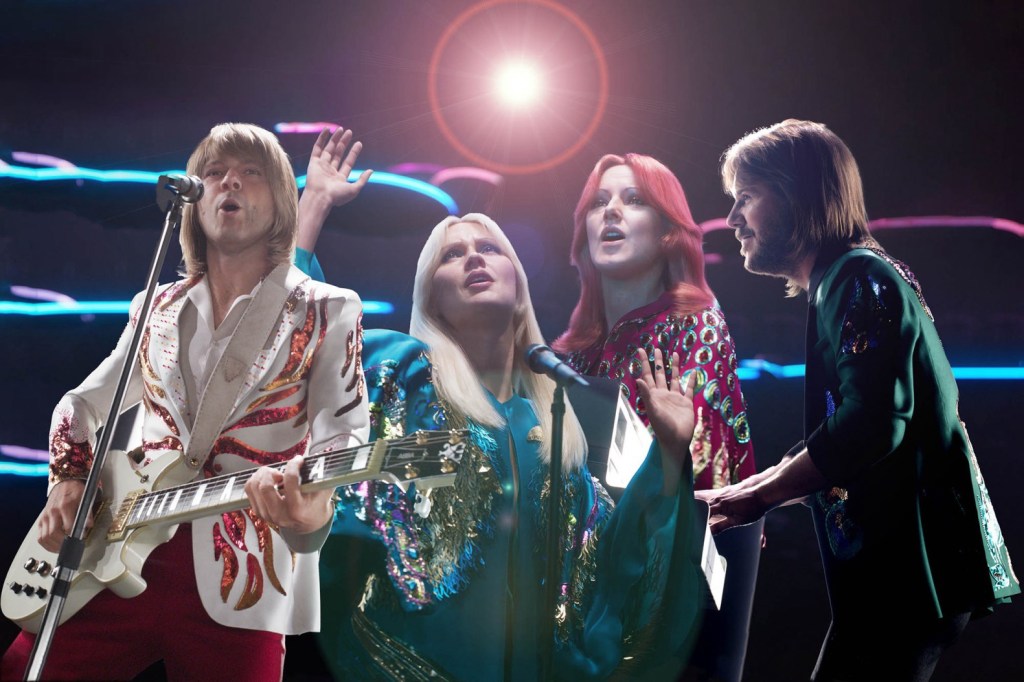
I went in wanting to watch the seams to see how these CG avatars (or ABBAtars as they are called) work… could they really appear to be on stage? The answer is yes, for the most part. But through some clever stage work it simply doesn’t matter. They’re not trying to be real, this concert deliberately jumps the shark over the uncanny valley to be both a celebration and elevation of ABBA’s legacy.
Walking in I was prepared to watch for the trickery and some of it was immaculate, if obvious in retrospect. The show opens with screens in front of the stage playing an animated image of a snowy forest. It’s deliberately 2D in its presentation, so when these screens are removed and the CG ABBA “walk” on stage, they seem truly 3D in comparison.
A smart blending of the “fake” CG lighting and the real lighting rig in the auditorium makes the effect seamless, but again, a close eye starts to notice the edges.
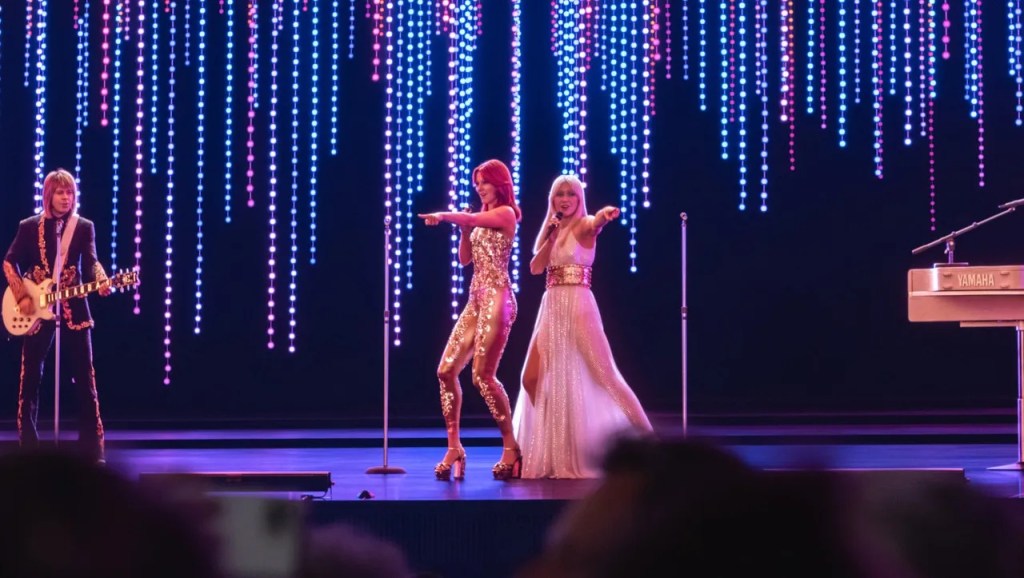
From the vantage point of standing close to the stage, slightly to stage left, things were incredibly realistic but also not. Like watching CG from a few years ago you could see the not-quite-realistic touches. The four members of ABBA looked slightly 2D due to the angle I was viewing them from. The actual details of their CG outfits were remarkably sharp, almost too sharp, in the end they couldn’t quite beat the parallax errors.
But after the first few songs, I stopped caring. And so did ABBA.
At some point, the pretence of reality is thrown to the curb. As the quartet performs, side screens show close ups like any regular concert… except there are no cameras on stage to capture the angles. At times, it is less a “live concert” and more of an immersive music video with no pretence at physical reality. After carefully constructing a blend of real and fake, the show accepts its limitations and plays with its boundaries. There is banter with the audience, but it feels plastic and artificial. When they play genuine footage of ABBA performing ‘Waterloo’ at the Eurovision Song Contest, the flat verisimilitude draws a strong, positive emotional response.
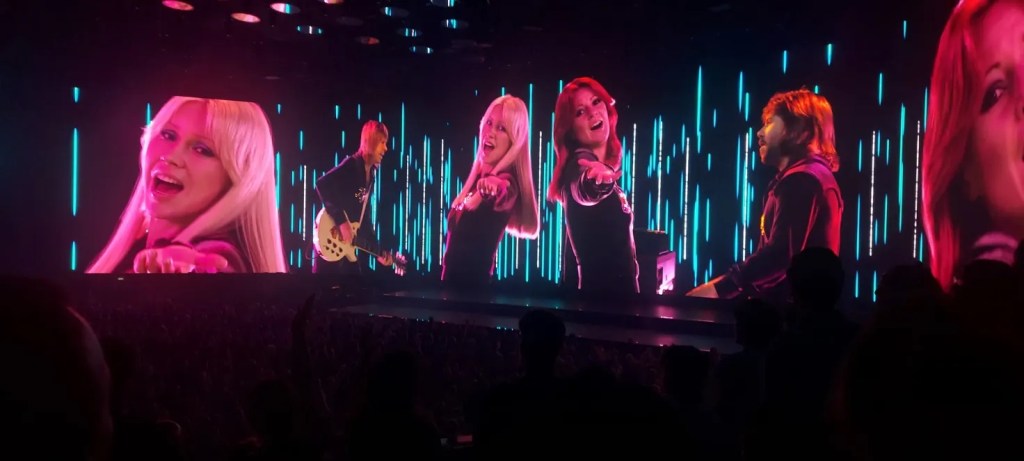
The live band, and there is a live band with backing vocals on stage, also blend truth and fiction (their own close ups seemed to come from non-existent cameras). Once your brain gets accustomed to the unreality of it all, you’re free to dance and belt out the tunes. Maybe this is the apotheosis of a “post-truth world”, we openly accept the lie but enjoy it nonetheless.
I was very impressed with the way the show created its own world with its own rules as you entered the arena. Every piece of stagecraft held your hand to make sure when the moment came, you were completely enthralled in the illusion and it works beautifully.
 Cultural Binge
Leave a comment