
The Hills of California ★★★1/2 / Machinal ★★★★ / Minority Report ★★★ / People, Places and Things ★★★★★
I saw a wide variety of plays from big West End blockbusters to fringe two-handers. As always, more money and bigger names doesn’t always mean it’s a better show. You can read my thoughts on Stranger Things: The First Shadow and The Picture of Dorian Gray in an earlier post, and there is another coming after this covering Long Day’s Journey into Night, Spirited Away, For Black Boys… and Remembrance Monday.

THE HILLS OF CALIFORNIA ★★★1/2
Written by Jez Butterworth. Harold Pinter Theatre, London.
Ever since the breakaway success of Jerusalem, each new Jez Butterworth play has become a major West End event. While I didn’t particularly care for The Ferryman, The Hills of California is a very different beast – to start with, it’s practically a comedy, albeit a comedy with dark undertones.
This story of a single mother who raised/is raising her four talented daughters (the play is set in two time periods), moulding them into a singing quartet ala The Andrew’s Sisters, is filled with moments of wit. Set in a guest house, in which each room is named after an American state, the core family are surrounded by a cast of peculiar characters. It’s a great setting for the story. Called “The Seaview” but featuring no view of the sea, with vaulting staircases rising high into the Harold Pinter Theatre rooftop, the place has lofty aspirations without necessarily having a solid grasp on reality.
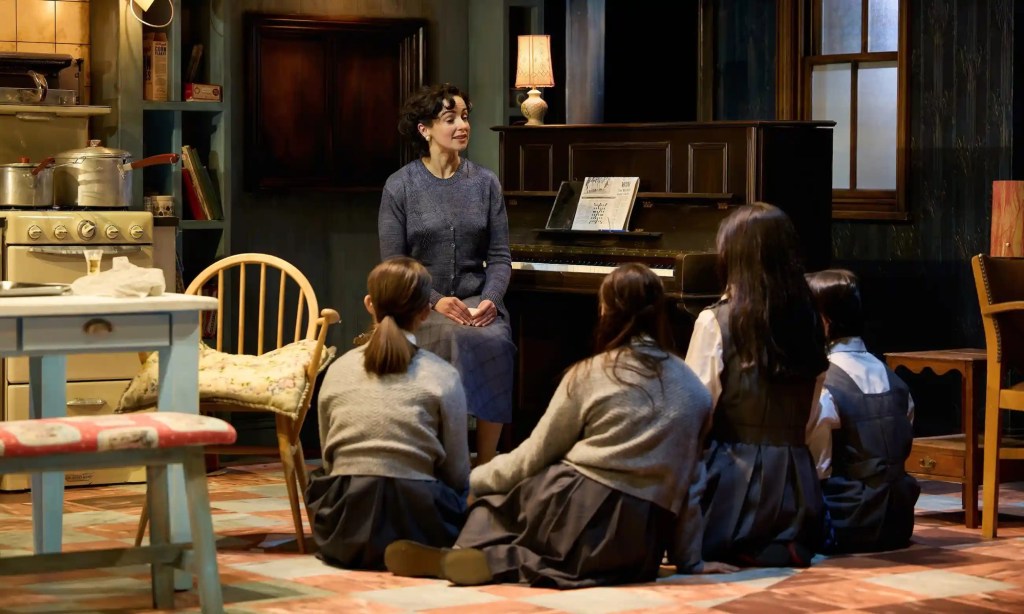
The play bounces between the adult daughters arriving back as their mother lay on her deathbed, and flashing back to their childhood, rehearsing in the kitchen and waiting for their big break. Time has not been kind to most of them. Eldest daughter, Joan, went on to a solo singing career in America and cut off contact with the family. Second oldest, Gloria, is married to a boring man with boring children and is filled with barely concealed rage and disappointment. Jillian stayed home to care for their mother, missing out on life. And the youngest, Penny, idolises her oldest sister from afar.
The sisterly dynamics will be familiar to anyone from any number of other plays (I instantly thought of The Memory of Water at Ensemble this year). Years of resentment and pain built up over decades, all coming to a head in a moment of bereavement. Secrets are shared, but does anyone really heal?

Laura Donnelly is terrific as Veronica, their determined mother, striving to build a better life for her daughters than she has had herself. Things are less convincing when, in the second act, she appears as the adult Joan, a washed up singer still trying to live the dream. There is a common thread between the two, both women are choosing to ignore their reality to reach for something greater.

But the real stand out of the night is Helena Wilson as Jillian, the “good daughter” who has never been allowed to grow up. Watching her sisters from afar, her sadness is palpable.
Hills of California is definitely Butterworth’s most enjoyable play. Its three hour running time flies by (in part thanks to designer Rob Howell’s intricate set, I could watch the staircase spin around, like something out of Hogwarts, for hours).
But I did get to the end and think to myself, “And…?” Yes, Veronica was a pushy stage mother desperate for her children to succeed. Yes, success and fame aren’t what they’re cracked up to be. Yes, siblings take very different life routes. For all the skill involved, Hills of California doesn’t seem to have anything new to say.
MACHINAL ★★★★
Written by Sophie Treadwell. The Old Vic, London.
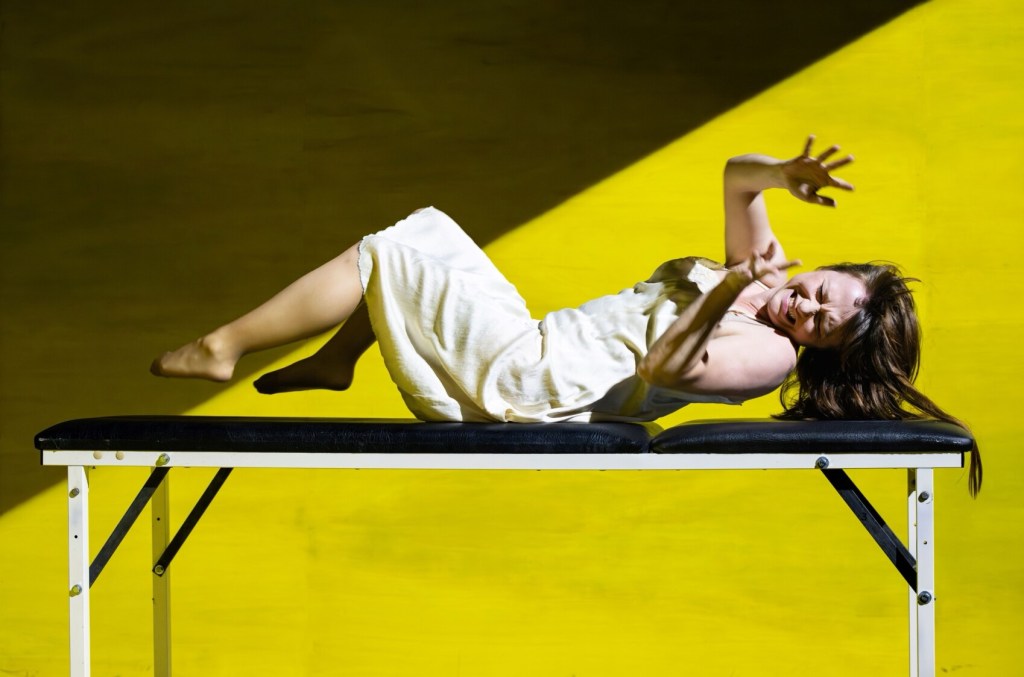
The Old Vic’s Machinal may be the boldest piece of theatre I’ve seen in quite some time. This revival of Sophie Treadwell’s exploration of womanhood in the modern world doesn’t hold your hand, it assaults your senses to break you, just as the Young Woman at its core is broken by the world.
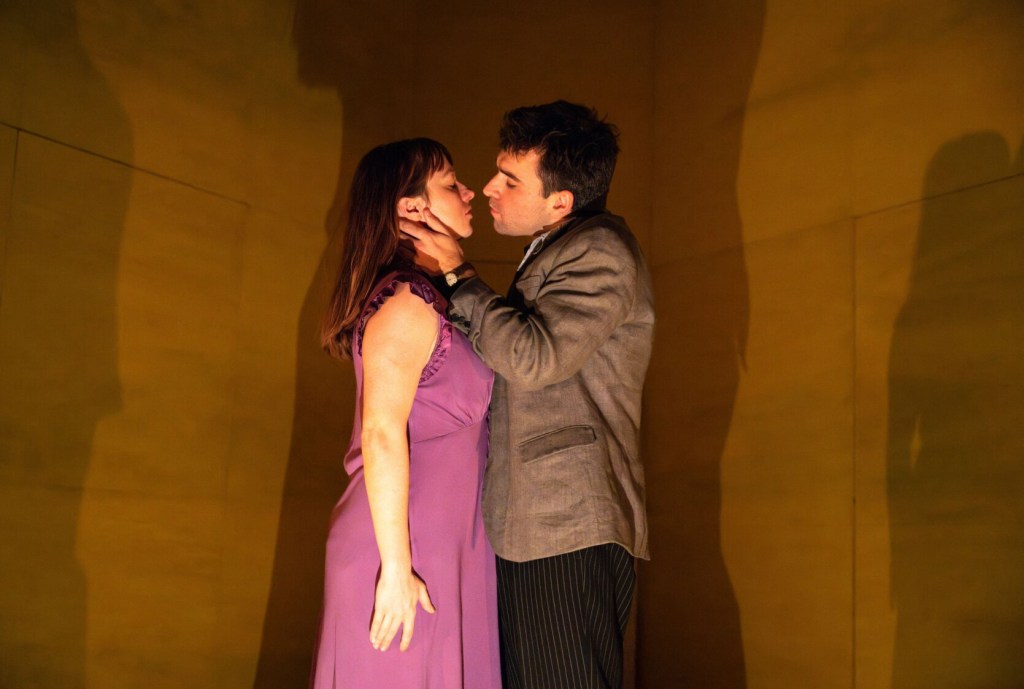
Director Richard Jones has marshalled all the elements to create a pressure cooker on stage. A claustrophobic, searingly yellow set (by Hyemi Shin) combined with harsh lighting (Adam Silverman), abrupt sound (Benjamin Grant) and sharp movement work (Sarah Fahie) overrun the senses – it’s easy to see why Rosie Sheehy’s Young Woman is on the verge of a break down. Treadwell’s dialogue shouts and attacks with shrill force. The men menace without thinking about it. The blinds on the windows open to reveal nothing but more wall. This is a woman not only trapped, but attacked by modernity.
All of this means that Machinal is not an easy watch. It’s as exhausting as it is rewarding, but the unrelenting pace and immersive world the production creates won’t let you go till the curtain call. Thrilling stuff.
MINORITY REPORT ★★★
Adapted by David Haig. Based on the short story by Phillip K. Dick. Lyric Hammersmith, London.
I’ll be honest, I booked this one because I just wanted to know how they were going to tell this story on stage. I’m fascinated by attempts to do science-fiction in theatre. It usually doesn’t work, but it always pushes creatives to think a bit differently about the limitations of the stage and Minority Report did just that.
David Haig has taken the bare bones of Dick’s story and created a new tale to spin out of it. This is not an adaptation of the Tom Cruise film, even if it does hit a number of similar beats.
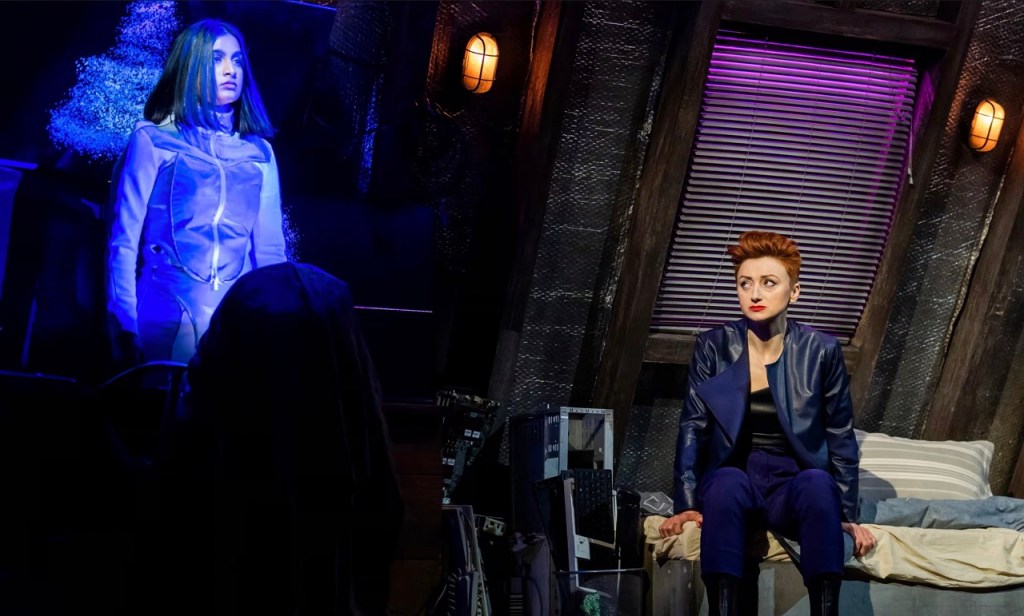
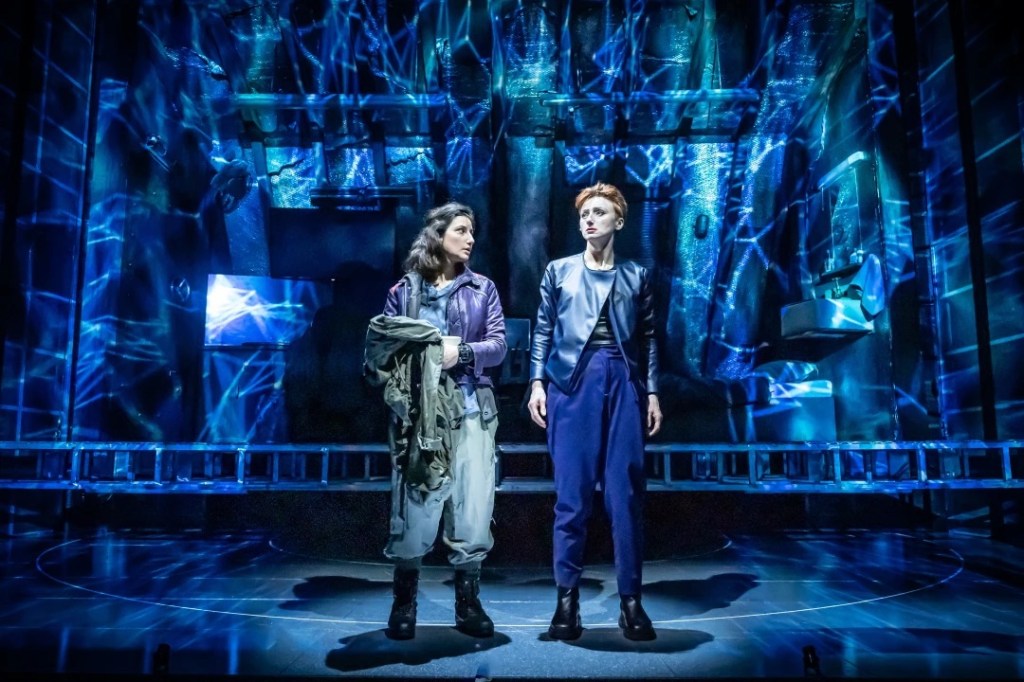
The story itself is neatly adapted. Julia Anderton (Jodie McNee), the head of UK pre-crime is, herself, accused of being about to commit murder. Going on the run to prove her innocence, she discovers the flaws in the system she’s been promoting and defending. Haig gives Julia an AI companion, David (Tanvi Virmani), who appears and disappears thanks to some nifty illusion work, allowing for some exposition.
The set by Jon Bausor is something of a marvel, using the depth and height of the Lyric Hammersmith to full effect. Minority Report even manages to include a futuristic car chase and gun fight. With a bit of extra polish, this could easily sit on the West End.

Unfortunately things are let down by a rushed and emotionally unsatisfying climax that’s too didactic and neat. It’s hard for theatre to pull off an action-packed finale and that drags Minority Report down. We’ll accept a bit of theatrical “running back and forth” pretending the characters are weaving their way through a cities streets, but in the end we don’t have any time to connect with Julia as a human character, and thus don’t really care for her fate.

PEOPLE, PLACES & THINGS ★★★★★
Written by Duncan Macmillan. Trafalgar Theatre, London
I never saw the original production of Duncan Macmillan’s People, Places and Things in 2015 even though I was living in London at the time. Despite the raving reviews I was cash strapped and the thought of an addiction play didn’t sound that appealing. If only I’d known it was this funny and thrilling.
Denise Gough has returned to the role that put her in the theatrical A-list. Emma is an addict who checks herself into rehab and instantly regrets the decision. She fights the process, dissects the methodology and attacks the people around her, but as her own hidden pain surfaces she comes to realise she has to deal with it or simply repeat the cycle of destruction she’s caught in.
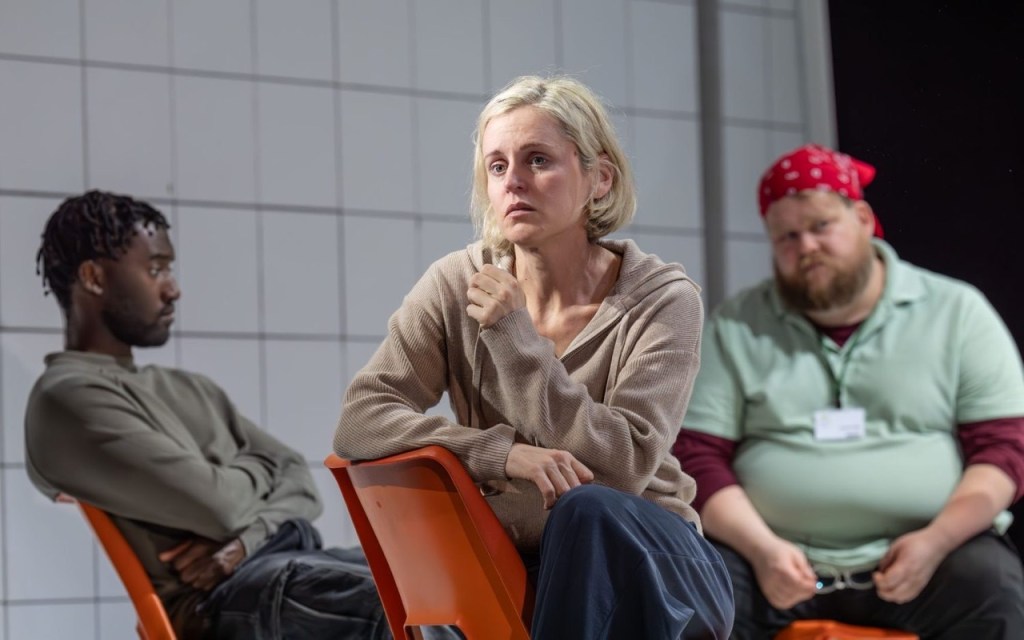
Rather than being the over-wrought melodrama I imagined, People, Places and Things starts off like a comedy. We begin with Emma on stage, mid-performance in a production of The Seagull, clearly drunk and rambling, unable to hold herself together. Imagine a younger Patsy from Absolutely Fabulous checking into rehab, only to be stripped away from her comedic tones and brought to a place of fragile healing.
Already a fan of Duncan Macmillan’s writing (his play Lungs is possibly the only good play about the environment I’ve seen, and his adaptation of George Orwell’s 1984 was also impressive), People, Places and Things is a thing of beauty. The script is sharp and witty but laced with danger. The running joke that all the therapists look like Emma’s mother (all played by Sinéad Cusack) seems like a joke about the limitations of casting, but evolves into a more serious thread. The audacity of ending the first act with Emma screaming about the fact there is a bar just outside threatens to jump the shark but manages to tip toe along the line – although considering the subject matter I couldn’t bring myself to order any alcohol.
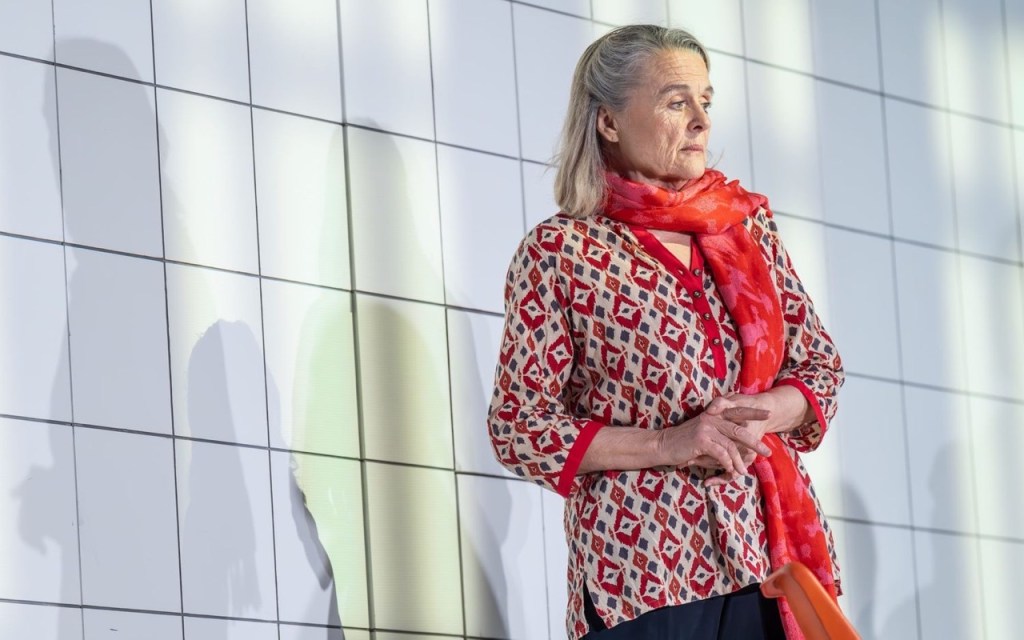
Bunny Christie’s design is instantly iconic. Clinical and white, the set hides its complexity, blending projections, lighting and props that come from all directions. Gough inhabits the role of Emma completely and the passage of nine years since the original production doesn’t seem to have altered the character. This is the sort of role that any actress would kill for. Onstage for the entire play, Emma is funny, charming, abrasive and ultimately broken to pieces. Has this ever been staged in Australia? I can’t find any record of it happening (I assume it hasn’t be put up for licensing?) but I sincerely hope it finds a home here, or at least an NT Live broadcast.
 Cultural Binge
Leave a comment