
Music & lyrics by Jason Robert Brown. Book by Alfred Uhry. Seymour Centre. May 9-25, 2024.
There is a timeliness to director Mark Taylor’s new rendition of Parade that the creative team could not have anticipated when this went into productionin early 2023. With anti-semitism on the rise in Australia it is right that we’re reminded of the dangers of scapegoating “the other” in society. So yeah, this ain’t no “feel good” show but damn it is a beauty.
Inspired by the true murder of a 14 year old girl in Atlanta, Georgia in which Jewish bookkeeper Leo Frank was accused and tried, Parade charts the court case that ran on for nearly three years, attracted the attention of lawyers from the North and became a flashpoint for racism in America leading to the formation of the Anti-Defamation League, and a revival of the KKK.
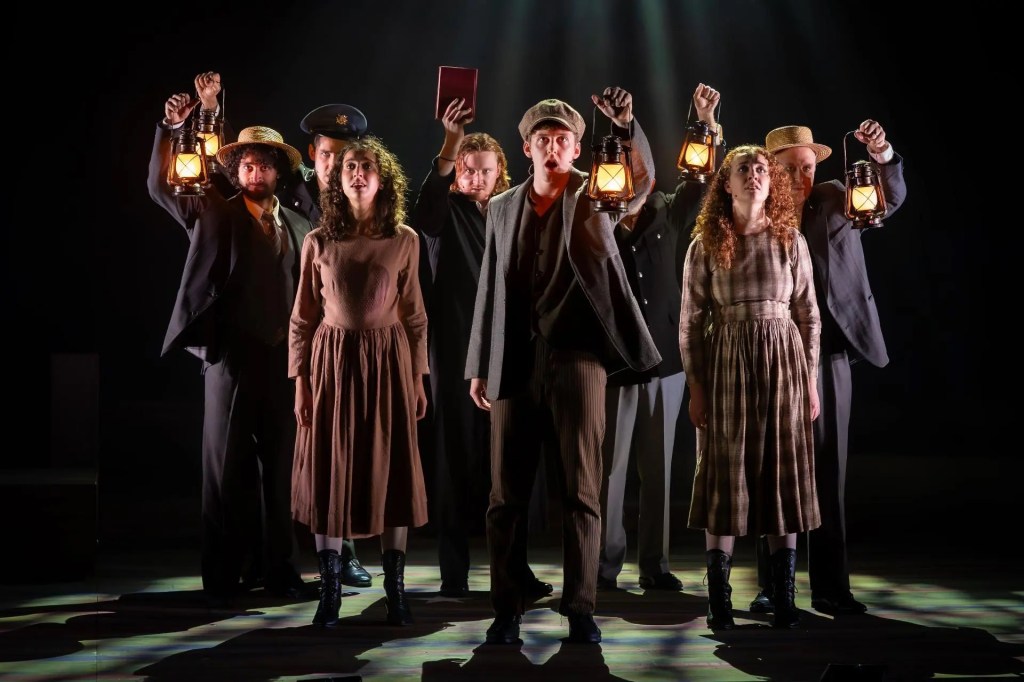
Atlanta in 1913 was on edge. The end of the Civil War was within recent memory, and the Atlanta Race Riots of 1906 had only recently passed. White Georgians felt aggrieved and black Georgians were living in fear. Into this comes Jewish Leo Frank (Aaron Robuck), a New York native refusing to assimilate to the South despite the protestations of his wife Lucille (Montana Sharp). When Mary Phagan’s body is found in a local factory where Leo worked, he is instantly a suspect. Standing aloof from the locals, the university educated Leo is an easy target when Governor Slaton (Nic Davey-Greene) pushes the police to make a conviction… any conviction. But when lawyers from the North get involved, the local KKK become determined to see this Jewish man pay the price.
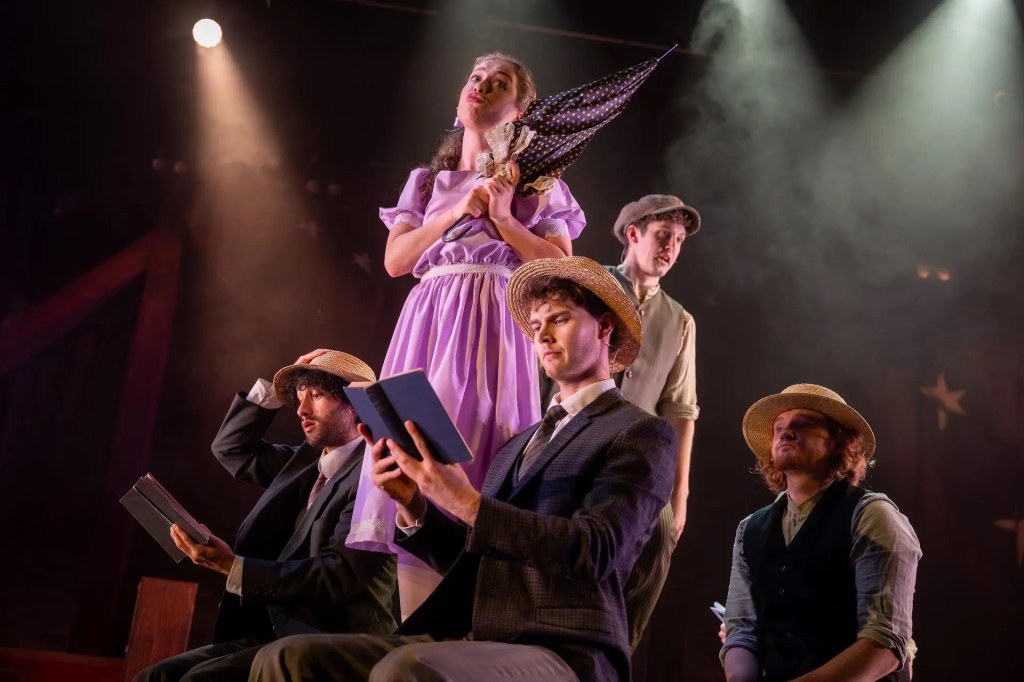
The score to Parade by Jason Robert Brown (The Last Five Years, The Bridges of Madison County, Songs for a New World) stands out as one of his very best. With measured use of discordant tones to balance out his romantic pop-melodies the show avoids the emotional treacle of some of his other works. When you hit an anthemic show tune it is well earned and twice as impactful.
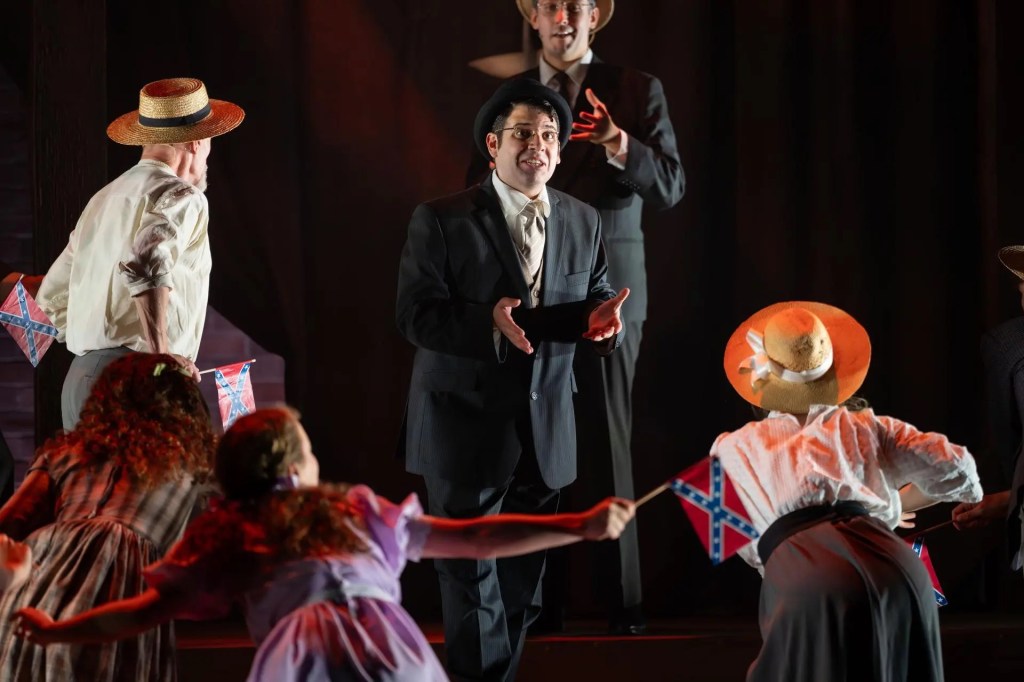
Thankfully the cast is loaded with big voices. Adeline Hunter, who was brilliant in The 25th Annual Putnam Spelling Bee at Hayes last year, again shines as the murdered teenager Mary. James Frampton, Maverick Newman and Liam Wigney also impress with their sharp vocals that cut through the sometimes muddy sound. But this show revolves around Leo and Lucille and both Aaron Robuck and Montana Sharp know how to sell a musical number. Sharp especially is aided by the fact she has the best numbers in the show. When the whole ensemble sings, the harmonies are electric.
This production is almost too keen to show off what it can do. Sidney Younger’s lighting is dramatic and moody (I shudder to think what the lighting desk’s cue sheet looks like). Harry Gill’s set is similarly ominous. Director Taylor and choreographer Freya List time set changes to the beat, making the movement of chairs and tables into violent stabs of percussion. It’s impressive, but also overwhelming – almost distracting from the story. Sometimes you just want the performers to stand still and let their song hit the audience.
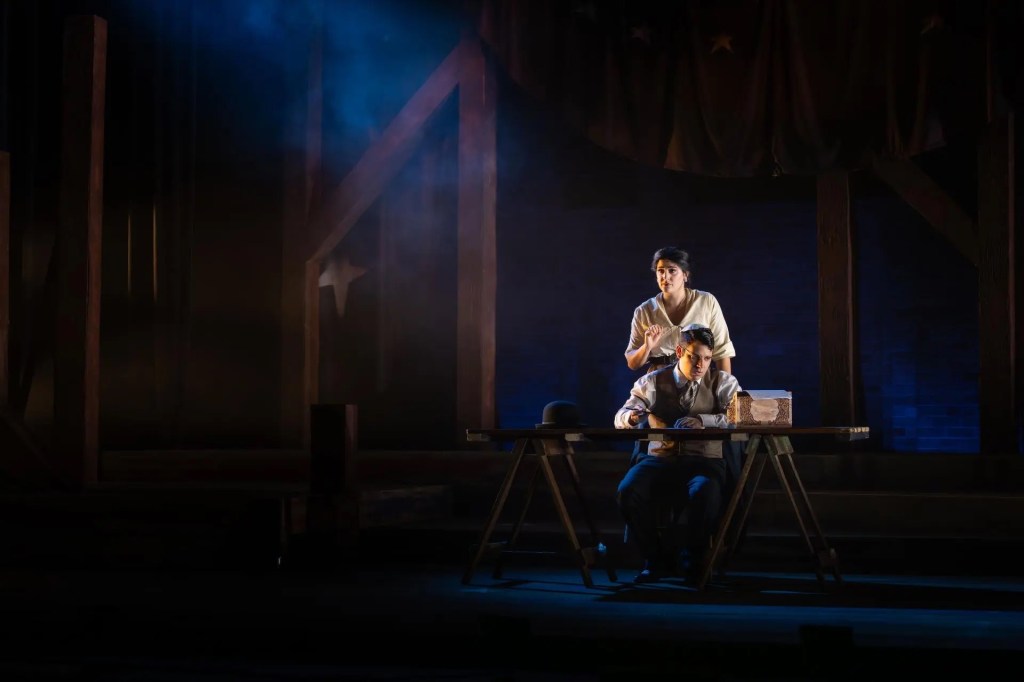
With all the busy movement not all the important moments land and it causes some problems as things go on. The show-starting anthem “The Old Red Hills of Home” felt anaemic after the bold percussion that opened the show. By the time James Frampton leads the ensemble in “It Don’t Make Sense” things are truly back on track though. Similarly the Act 2 opener “It Goes On and On” was lost in muffled vocals and complex choreography meaning vital plot points were missed.
When Parade was revived on Broadway in 2023, the first preview was protested by Neo-Nazis. A sure sign the message of the show is as relevant now as always. This new, local production refuses to sit back meekly, and dares you to take in the impact racism, especially anti-semitism, has on us all.
 Cultural Binge
Leave a comment