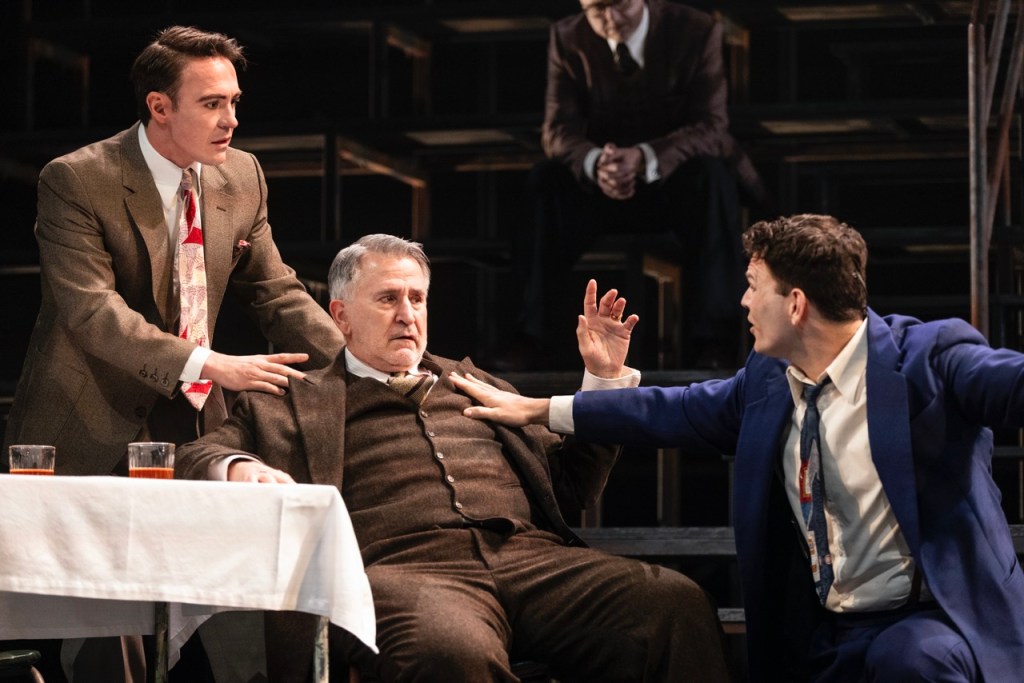
Written by Arthur Miller. Theatre Royal Sydney. 17 May – 23 June, 2024.
Sometimes the problem with “great plays” is that they’re treated with spine-numbing reverence. And few plays are as lauded as Arthur Miller’s Pulitzer Prize winning Death of a Salesman. Repeatedly named as the “The Greatest Play of the 20th Century” it’s shadow looms large on all who step into Willy Loman’s battered shoes. The thing that makes Neil Armfield’s new production so effective is how it steps outside the boundaries and focuses us in on the broken characters on the stage.
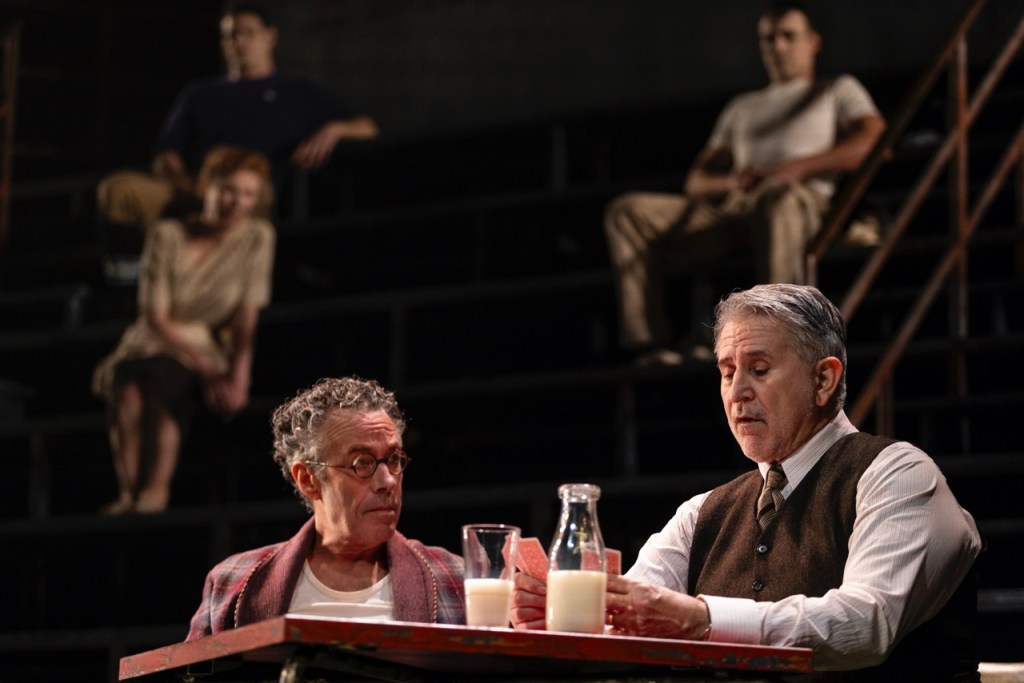
The big marquee drawcard here is acclaimed film actor Anthony LaPaglia making his long awaited Australian stage debut in this production (that started in Melbourne last year). And LaPaglia is great. He carries the weight of a generation of men struggling to hold it together. Men who buckled under the self imposed expectations and dreams for their lives and their children. LaPaglia’s Willy Loman is never quite in the same space as the other characters, lost in his own memories and wishes for the future he stumbles from moment to moment. As his stature and delusions are stripped away from him one-by-one the humiliation is writ large on his imposing body. This isn’t a showy performance, but a stoic and quiet one.
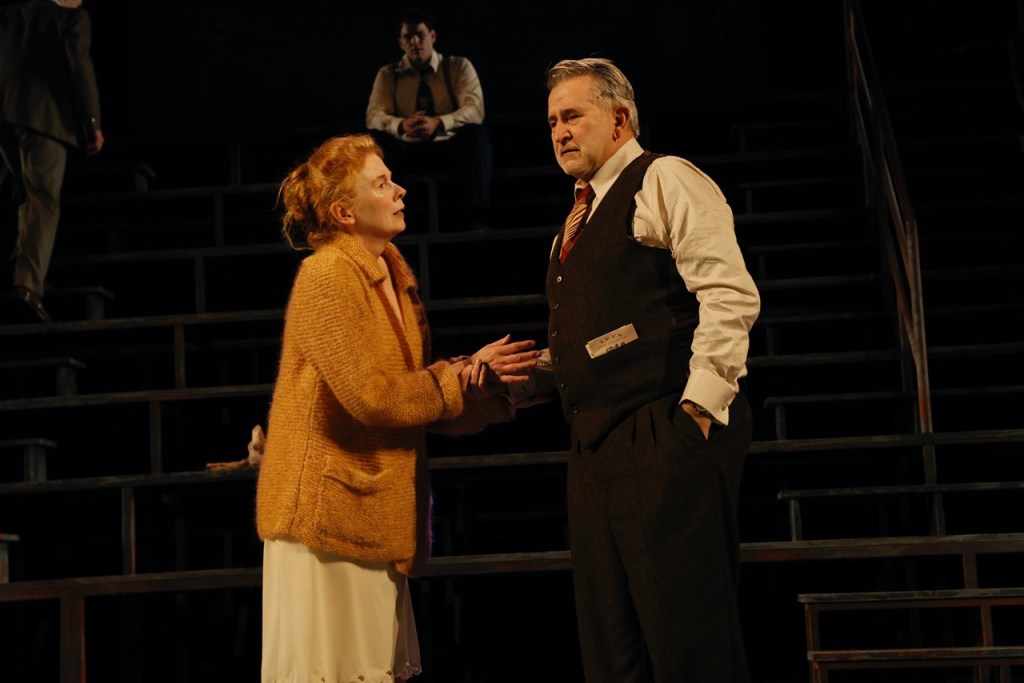
Around his centre of gravity the other performances shine. Alison Whyte is luminous as Linda Loman. A strong woman who is undercut by her fear, trying to hold the family together. She holds the stage with a gravitas and unyielding strength that makes her dynamic without moving a muscle. Ben O’Toole straddles the lovable/loathable divide as Willy & Linda’s younger son Happy Loman – a philandering dilettante with no goals other than his own instant gratification. But it’s Josh Helman, as the older son Biff, who really makes his mark. Helman’s Biff is a broken man-child who was raised for greatness he could never achieve and his self-loathing is crushing him. The towering Helman brings a shattered pathos to the role as a man who just can’t adjust to his fall from grace. It’s a wonderful performance, the likes of which I’ve not had a chance to see from him on screen – maybe he should do more theatre?
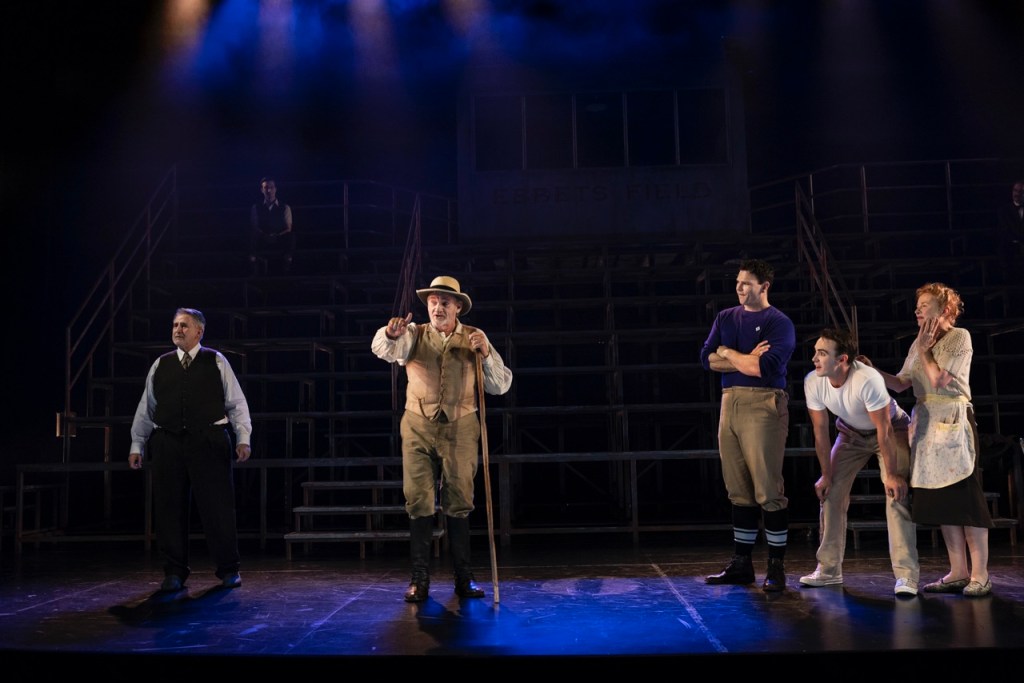
In a brilliant move, Armfield and set designer Dale Ferguson have staged the domestic play by the bleachers of Ebbets Field, a football stadium and the site of Biff’s glory days. With the cast always watching the scene’s play out in front of them, silently observing, it reminds us of how commonplace these tragedies are. We walk past them every day. This abstract arena also reorients the story slightly away from Willy and onto Biff. It is his “field of dreams” that never comes true.
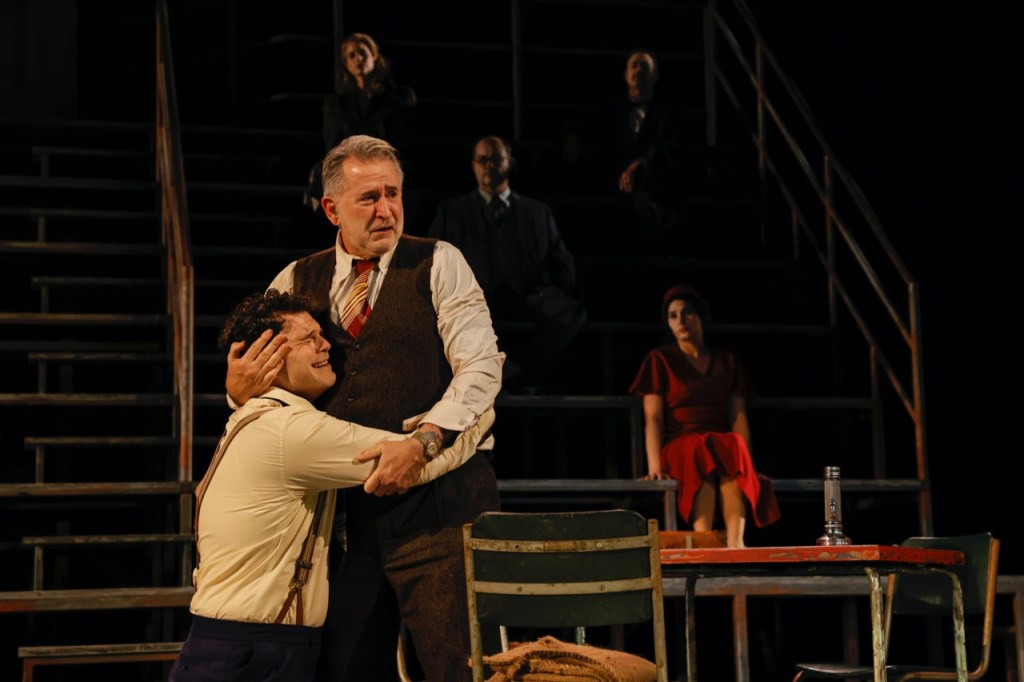
At around three hours long, I was concerned at how I’d go. While I found the first act a bit static, the longer second act flew by. With only minimal set changes and an almost universally muted colour scheme, I felt the show would benefit from more dynamic lighting, but these are minor niggles. For a play of its length and subject matter it is surprisingly fleet-footed.
The great tragedy of Arthur Miller’s Death of a Salesman isn’t how it ends, it’s the fact it is still appallingly relevant. Too many men are trying to silently weather their pressures without asking for help, and too few are taught to process their emotions in a healthy fashion. It’s not hard to see the rage of many disenfranchised men in the world these days stems from a similar, broken sense of manhood with equally disastrous outcomes. 75 years after it was first written, we’re still struggling to pay attention.
 Cultural Binge
Leave a comment