
Written by Mark Rogers. Belvoir 25a. 28 May – 16 Jun, 2024.
The ever inventive re:group collective have arrived downstairs at Belvoir with POV, an experiment in blending theatre and documentary that looks at the effects of parental mental illness through the literal lens of an eleven year old girl named Bub.
POV’s main conceits are 1) that Bub (played by Mabelle Rose and Edie Whitehead depending on the performance) has brought in two professional actors to play her parents in reenactments for a documentary she is making about them, and 2) that the two real actors playing the fictional actors playing her parents, are actually completely unrehearsed and must take direction onstage in real time.
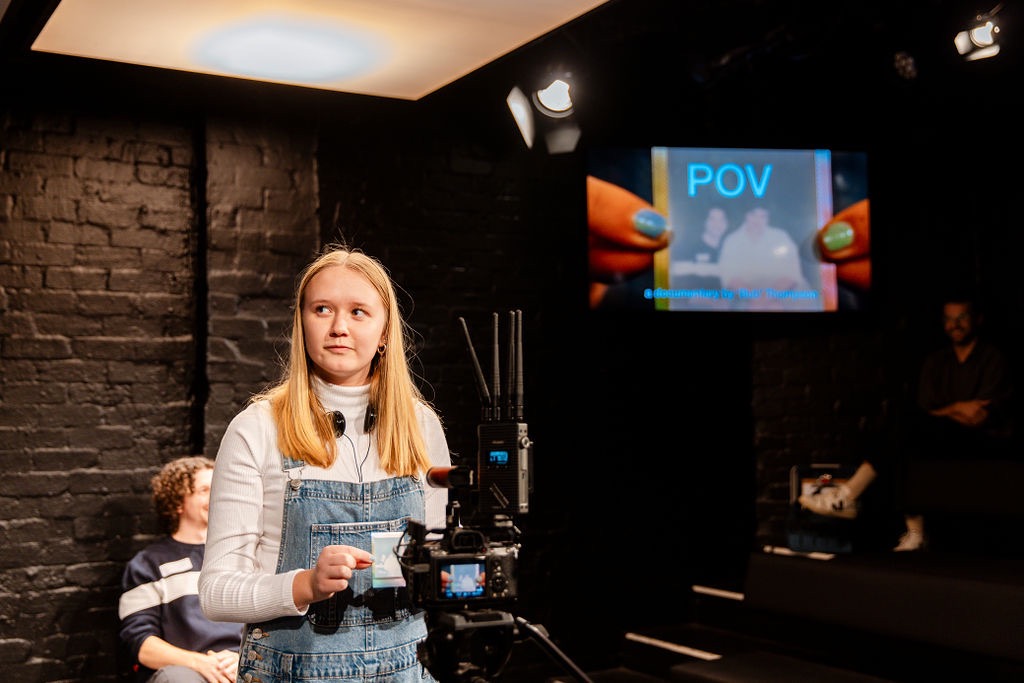
Every little thing about POV feels fresh. From the topic it’s tackling, the way it chooses to handle it and the unrehearsed nature of two thirds of the performances. There is the thrill of the unexpected at every turn. The creative team of Mark Rogers, Solomon Thomas, Malcolm Whittaker, Steve Wilson-Alexander and Carly Young has made a show that so completely itself it is a marvel.
On one level you’re watching a show about a child processing her mother’s bipolar disorder, and on another you’re watching two actors (on opening night it was Tom Conroy and Vaishnavi Suryaprakash, a different unannounced couple will take the roles each night) throw themselves into an unexpected scenario and see how they react. The show plays out both realities at the same time with a script laced with moments of meta-humour. It feels like an improv class mixed with a cruel joke on the pair of actors brave enough to step in as Bub’s parents. POV has a seat-of-your-pants, anything-could-happen energy. Somehow neither aspect distracts from the other.

Like a magician, the show lays its mechanics out for all to see, usually to comedic effect. Only once you think you understand the parameters, it surprises you. The two unprepared actors read out the instructions they were given in advance to the audience. Each step builds the audience’s trust and sense of authenticity. That well earned faith keeps us invested in the emotional story, even when there is a thick layer of technical wizardry between the viewers and the performers.
Intriguingly the short show (around 70 minutes long) is happy to take time for the technology to do its thing. We sit and watch as the camera is repositioned and reset, watch a polaroid develop in real time, pause while an air-mattress inflates. It’s a rare example of technology forcing us to be contemplative, rather than rushing us through moments.
And, as I’m coming to expect from the re:group collective, literal perspective is everything. The framing of the camera can change how you feel about a moment in front of you. They use the language of film to manipulate us in real time. The fact that they tell us what they’re doing in advance doesn’t alter the impact. We love Bub’s parents because we see them through her eyes, not just our own.
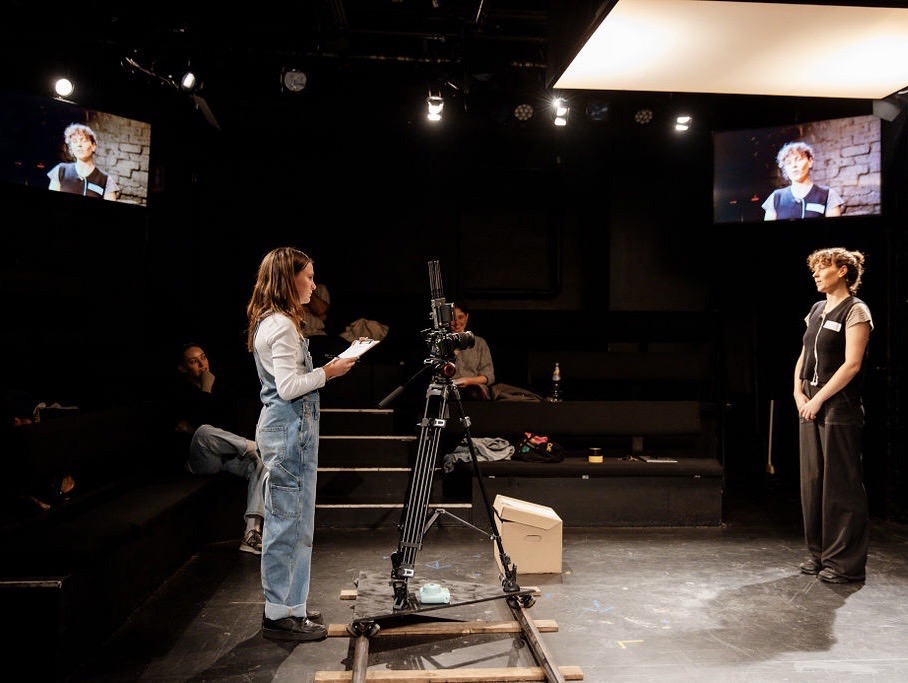
Of course, being live theatre filled with technical details, not everything works perfectly. Sometimes it’s very funny, other times it feels like things are missed. Rushed camera work doesn’t give the lens time to autofocus. Sometimes awkwardly framed shots mean we are distracted by the tech and not invested in the scene.
Having now seen two wildly different but equally audacious shows from re:group collective I’m definitely a fan. If this is what they can achieve on a budget of just $2500, we should throw money at them and give them a bigger stage… the results could be electrifying.
 Cultural Binge
Leave a comment