
Composed by Joseph Twist. Libretto by Alana Valentine & Christos Tsiolkas. Joan Sutherland Theatre, Sydney Opera House. 14-16 Jun, 2024.
Following its acclaimed debut at the Adelaide Festival in 2022, the new Australian oratorio Watershed: The Death of Dr Duncan debuts at the Sydney Opera House retelling the story of the drowning of Dr George Ian Ogilvie Duncan. This homophobic murder, at the hands of police, would galvanise South Australia into leading the way on the decriminalisation of homosexuality.
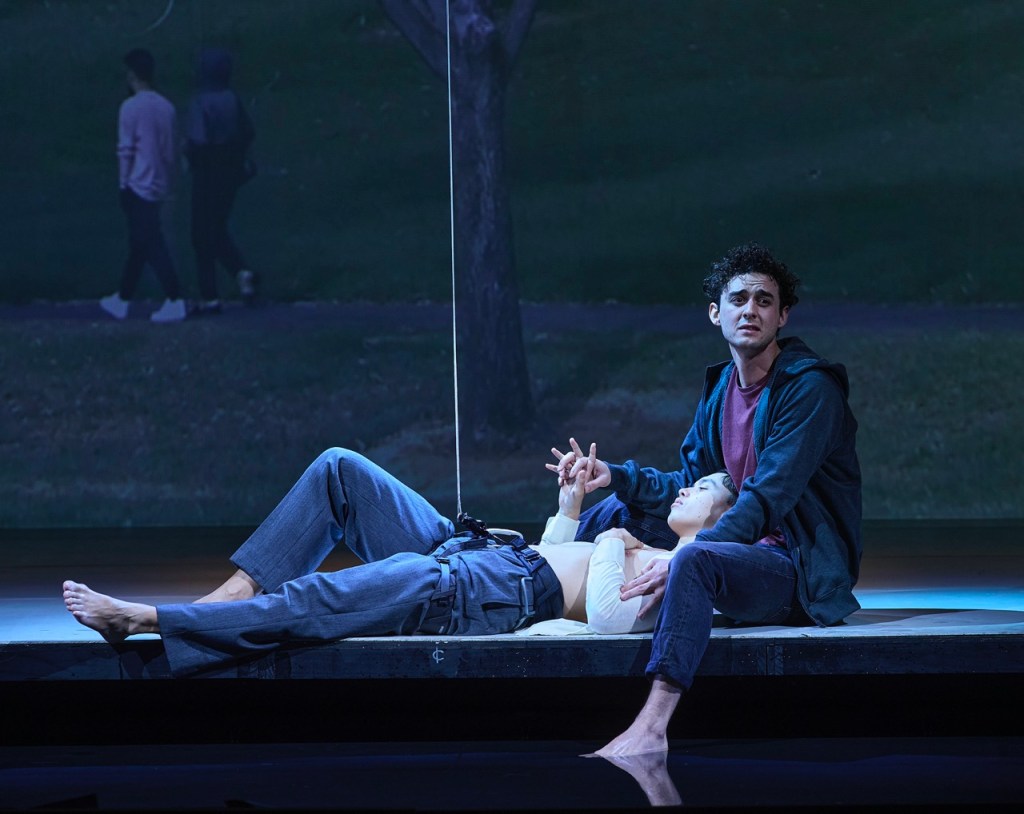
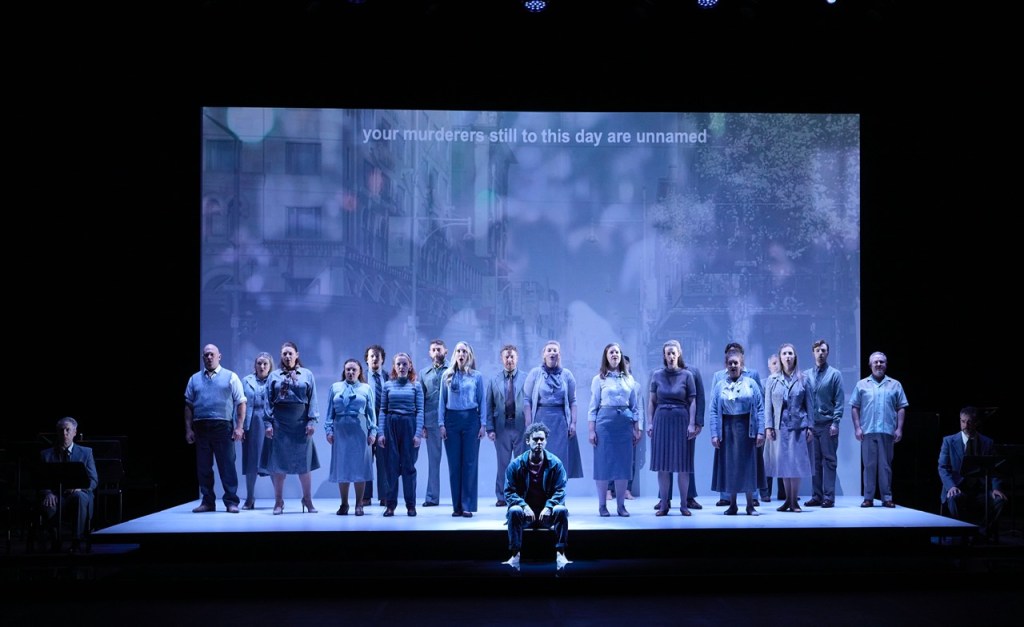
Commissioned and directed by Neil Armfield, for his final season as Festival Director, to commemorate the 50th anniversary of the murder, Watershed sees a core cast of four bring the story to life. Tenor Mark Oates and Bass Pelham Andrews return to sing the majority of the roles, from cops, lawyers, politicians and Duncan himself. They are joined by Tomáš Kantor as Lost Boy (a narrator of sorts) and Macon Escobal Riley as the dancer who embodies the drowning Duncan. The Opera Australia Chorus play a variety of smaller roles and serve as the Greek Chorus to the tragedy.
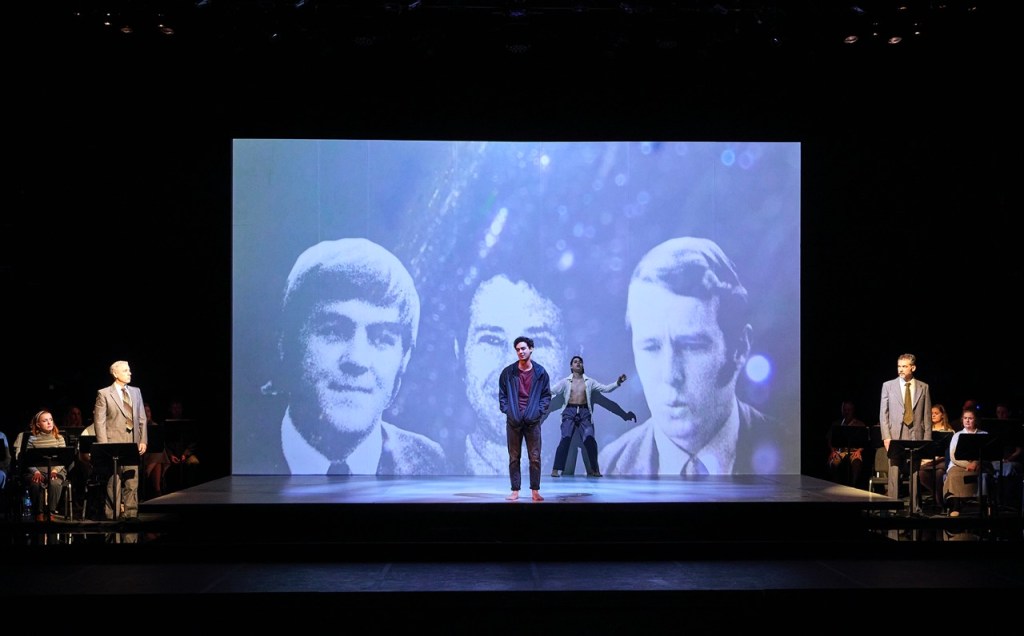
Starting with Duncan’s murder, the show spends most of its time exploring the legal and political movements that would swell afterward. An institutional cover up would protect those responsible (while officers were eventually accused, a prosecution was never pursued), but the outcry would lead to South Australia decriminalising homosexuality. However the show is quick to point out how that is little consolation for the many who had already been killed by homophobes.
There is a mournful, and contemplative poetry to Ailsa Paterson’s set – a platform surrounded by water, with a large projection screen behind. This is complemented by the design team of Sean Bacon (video), Jane Rossetto (sound) and Nigel Levings (lighting). A similar restraint is found in Armfield’s direction. Lewis Major’s choreography adds movement and beauty to the tale, a vital ingredient in making the show a success.

The real star is the music. Composer Joseph Twist’s orchestration plays with choral works as well as elements of musical theatre, ensuring that there is always an air of movement and diversity to the otherwise fairly static production. The libretto by Alana Valentine & Christos Tsiolkas is often blunt (the opening song, set during a sexual encounter in a public toilet is not coy in any way… it’s not everyday you see the word “cum” in a surtitle), but is also charmingly colloquial (at one point love is referred to as “a cheesy melt”). At first it makes your brain backflip over the high/low cultural divide, but once you’re in its grip you settle into the rhythms.
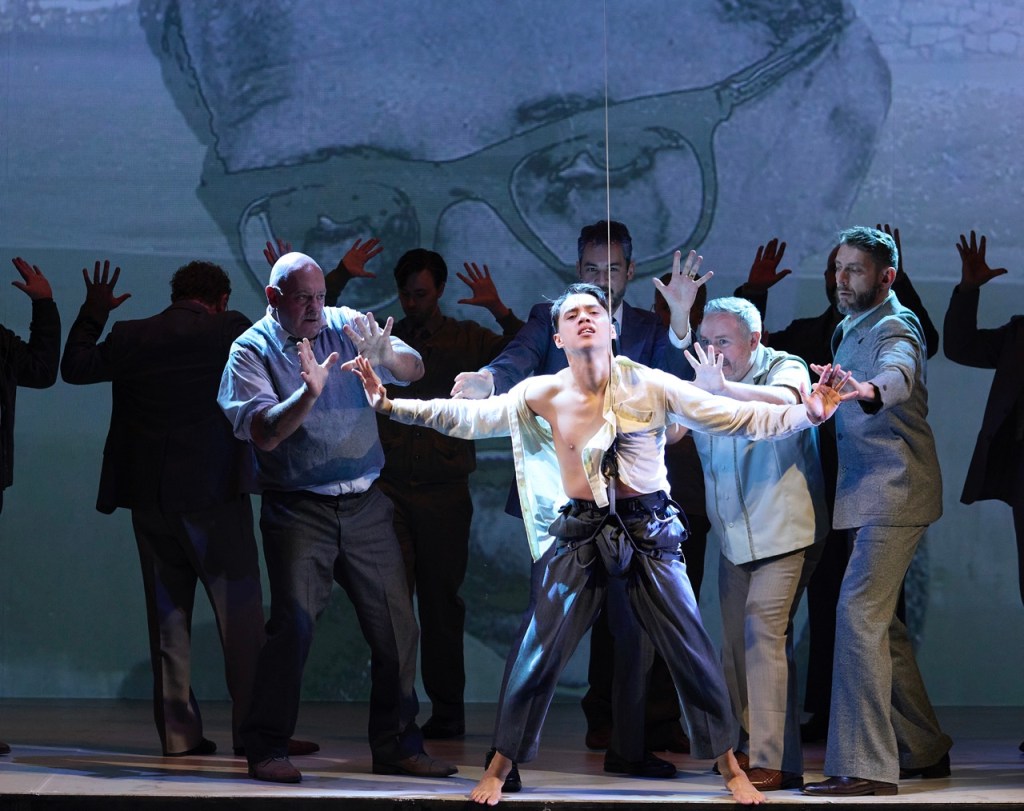
Kantor’s wide-eyed empathy radiates across the theatre, a conduit for the stories’ grief and rage. The powerful imagery of Riley first descending from the ceiling as he drowns, is repeated in reverse at the end – seeing him rise to the heavens is breathtaking to watch.
If you’re a student of queer Australian history, this is an enlightening look at our own story. For lovers of choral work, it’s a fresh Australian piece. With so few performances I’d urge you to rush out and see it.
 Cultural Binge
Leave a comment