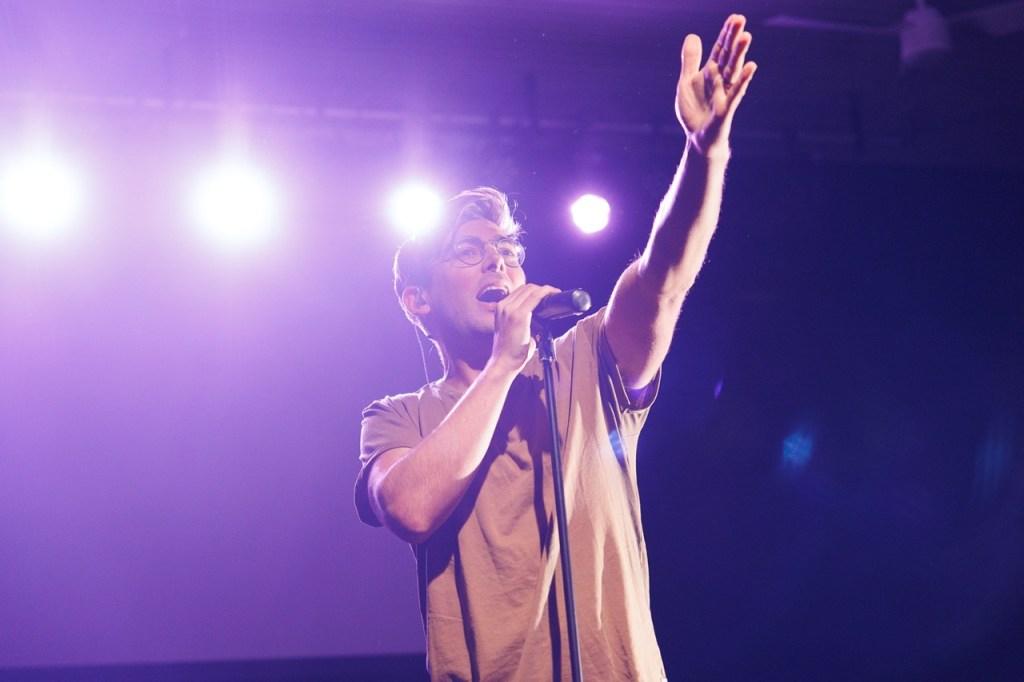
Created by Scott Parker & Felicity Nicol. Sydney Fringe. PACT Centre for Emerging Artists. 3-14 Sept, 2024.
Scott Parker is in pain. After devoting nineteen years to Hillsong, Sydney’s internationally famous megachurch, he’s on the outside and processing his religious trauma in the autobiographical show Hillsong Boy, returning for Sydney Fringe.
I’ve been where Parker is at. As an ex-Evangelical, I’m very familiar with the inner workings of this world. Those who’ve not been inside them, may struggle to understand how all-encompassing they are. Scott details his life, and non-stop itinerary, as a committed member. Essentially working a full time job singing on stage (aka a “worship leader”) at multiple events per week, plus being a youth leader attending meetings and practices, he was busy every day of the week. He reveled in his tight knit community of friends and the moral purity of purpose of following Christ but all the while he was “struggling with homosexuality”, and trying to reconcile the church’s behaviour to gay people with his own life.
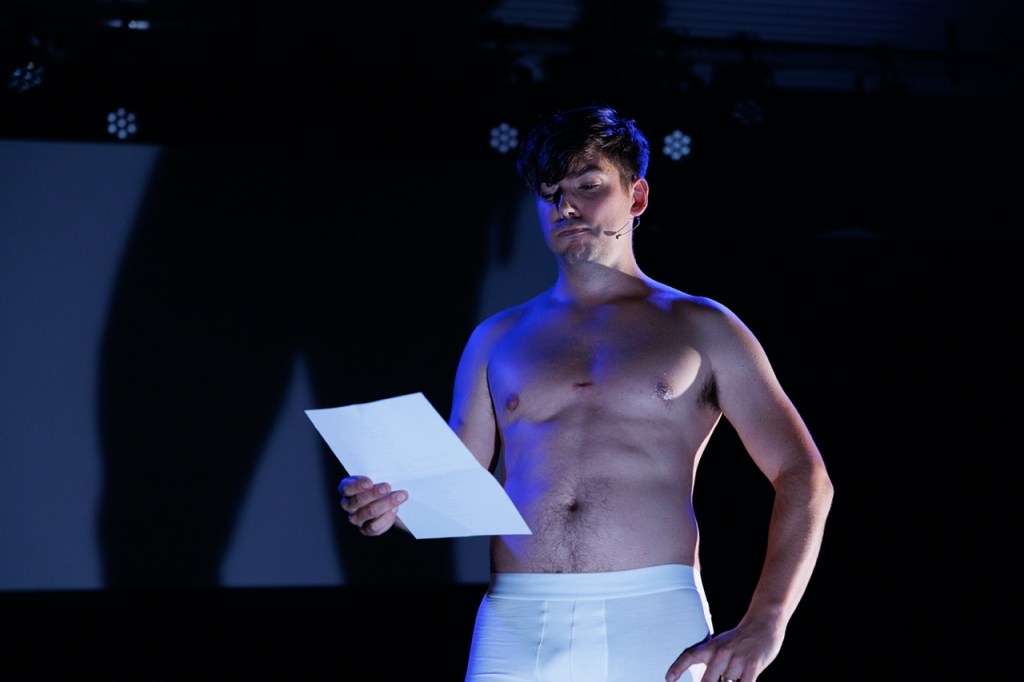
Hillsong Boy isn’t really about Hillsong and its very public reckonings which form the backdrop of the story (if you want that there is no shortage of documentaries, books and news articles to dive into. Also the Stan TV show Prosper deals with the inner workings of a fictionalised version and is very good), it’s about Scott’s attempts to find his own sense of harmony.
Over 60 minutes, Hillsong Boy jumps through genres to tell its story. Starting as a recreation of a service, then an interview that goes off the rails, a private confessional text exchange and a direct talk/sermon to the audience. It’s not always successful and falls back on “telling” rather than “showing” us this world, but one thing is clear, Scott Parker is still healing from the experience all these years later.
The show gets a fair bit of its humour, sometimes unintentionally, from playing it completely straight, giving us the everyday behaviour of the faithful and snippets of church-speak outside of the context of the belief system. In the cold light of day it looks and sounds ridiculous. From the Jesus-ballads, speaking in “tongues” and the super-positive double-speak that masks any real emotions, if you’ve been through this system you may find it re-traumatising.
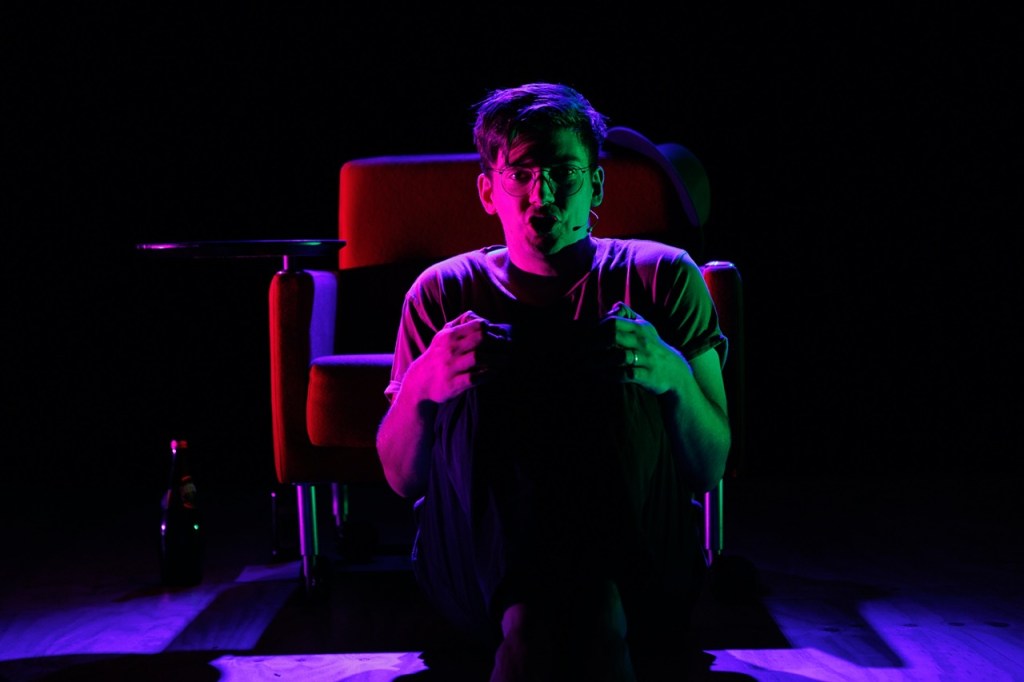
Bouncing between the personal betrayal and abandonment he felt leaving it behind, and the bigger problems of Brian Houston and the megachurch, Hillsong Boy finds itself trying to say too much. But the thing that interested me the most was the absence of anger from Parker’s narrative. There is some emotion missing from this retelling.
On some level, Parker is still a “Hillsong boy”. There is a recognisably modern Pentecostal style of behaviour, a preacher-ly faux-sincerity, that Parker slips in and out of as he speaks/preaches to the audience. The impulse to make this show a new form of “ministry” can be hard for a Hillsong survivor to resist.
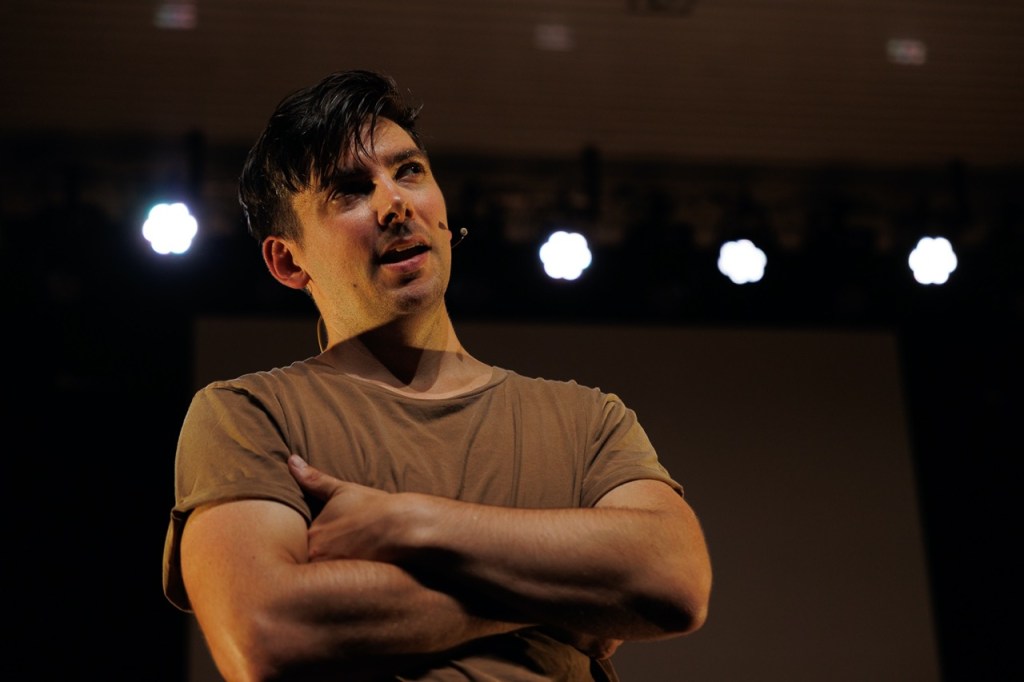
Hillsong Boy felt like the start of a journey away from toxic faith. Religious deconstruction is a long and messy process that only complicates the usual “coming out” narrative, and Hillsong Boy is just scratching the surface.
If you’re interested in going deeper on of these issues, I recommend Anthony Venn Brown’s autobiography, “A Life of Unlearning”, which details some of the very earliest years of Hillsong.
 Cultural Binge
Leave a comment