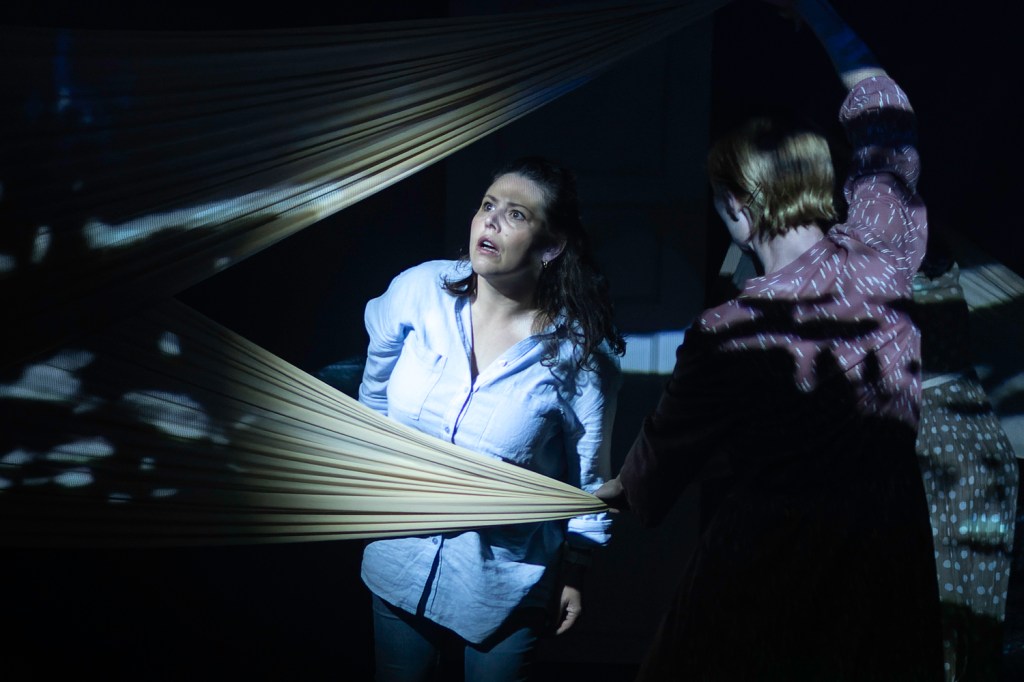
Created and Directed by Emily Ayoub and Madeline Baghurst. Belvoir 25a. 1-20 Oct 2024.
It’s quite rare that I watch a piece of independent theatre and leave pondering its beauty, but Ruins is exactly that. Beautiful.
Amelia Alyssa (Emily Ayoub) leaves her family in Australia behind as she heads to Lebanon, the land of her ancestry. There, among the ancient Baalbek ruins of the Bekaa Valley, she is haunted by thoughts of her father (Tony Poli) who had recently passed away and was supposed to go on this journey with her. As she stays at the Palymyra Hotel, her mind is filled with memories of Jean Cocteau films (who was one of the famous guests at the hotel) and the stories her father once told her.
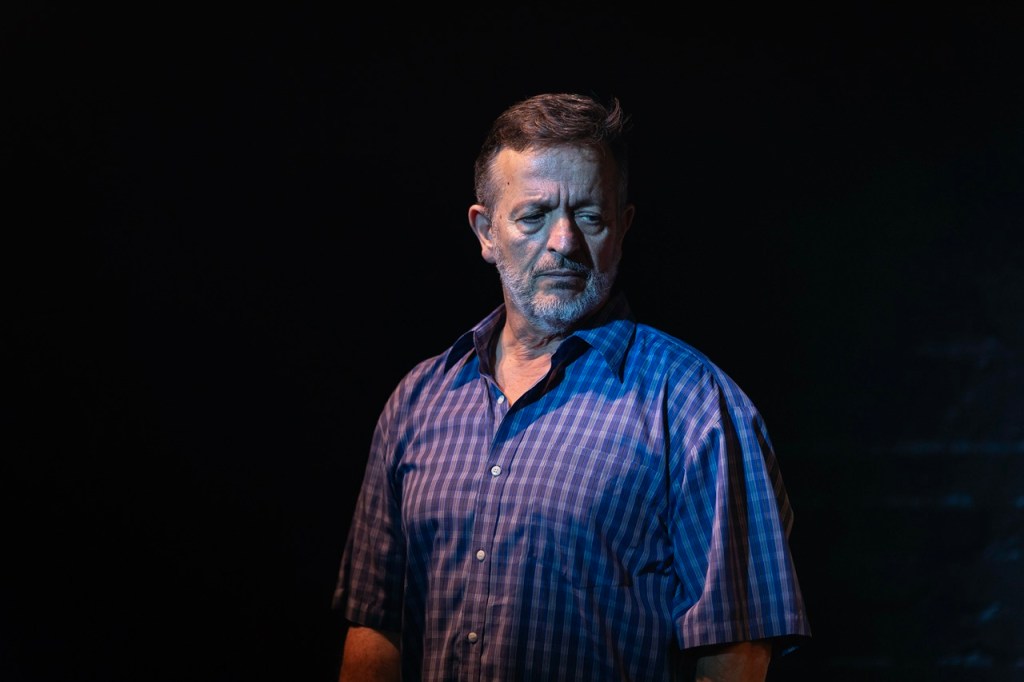
Ayoub and co-creator Madeline Baghurst have created a dreamlike story of a woman lost in her grief and ancestral memory. Overcoming with emotions and new, jarring experiences Amelia sees reflections of her father all around her. Directed with clarity and compassion, Ruins travels to lofty places with the simplest of theatrical techniques and excellent storytelling skills.
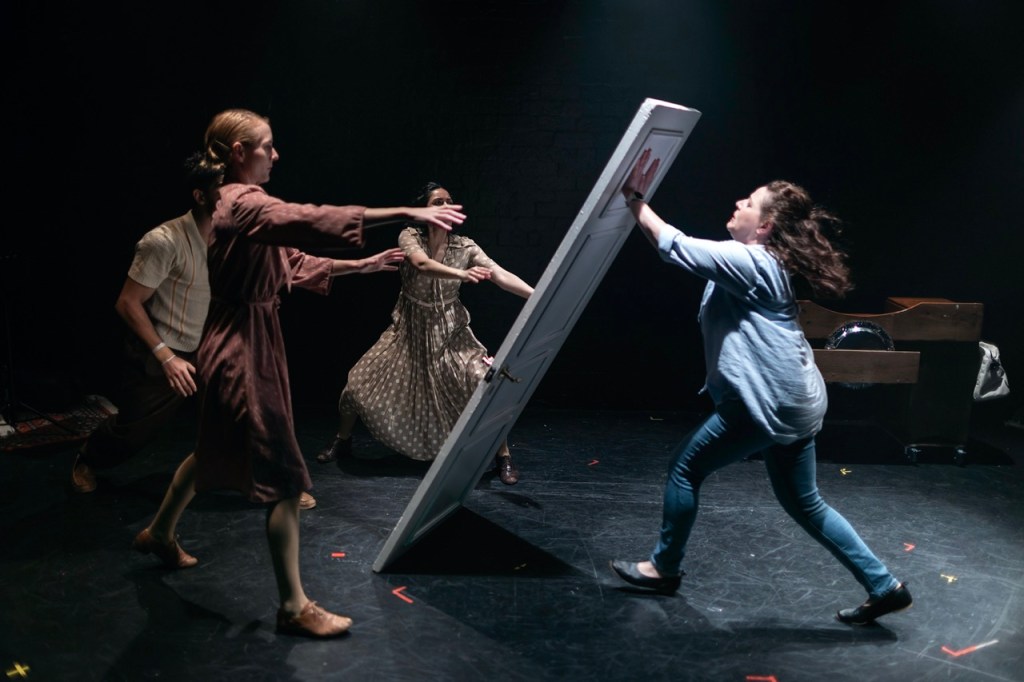
The production aspects of Ruins are gracefully presented, remarkably so considering the limited $2500 25a budget. A door and a desk transform into an airport security screening, a taxi, a hotel room and more with each elegant move. After seeing the full-scale multimedia extravaganza of Frankenstein this week, it’s refreshing to see a simple white door effectively used as a projection screen with more emotional heft than the big budget version.
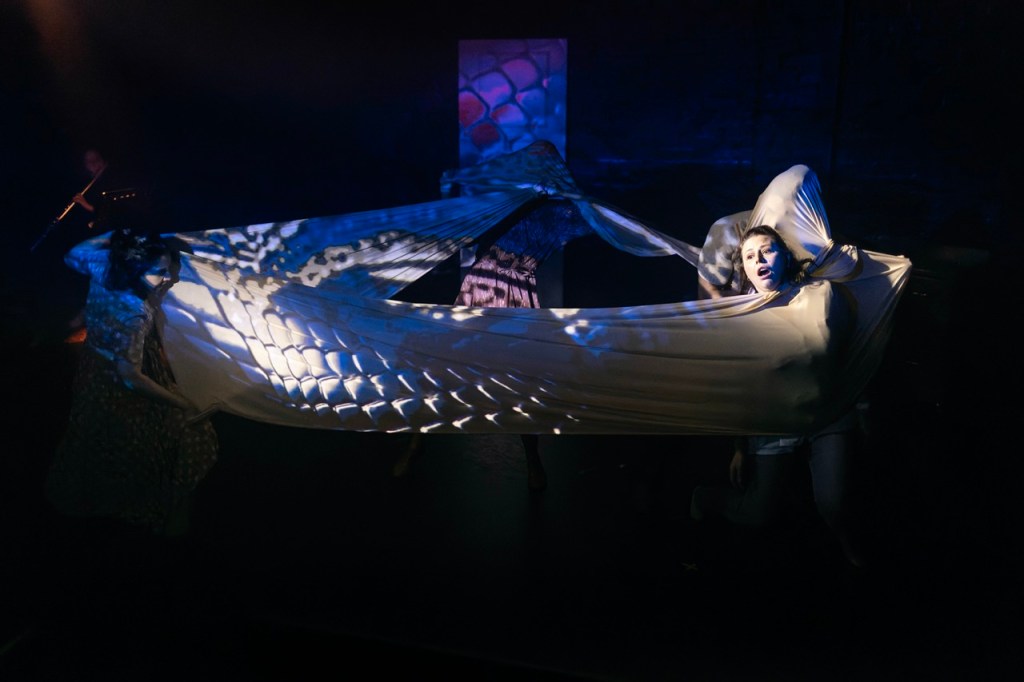
The ensemble (Piumi Wijsundara, Madeline Bahurst and Adam Al Kuhel) morph between characters and scenarios with a disorienting smoothness. The gentle live score by composer Johnny Yang sets the tone and carries the audience through the piece, and videographer Laura Turner’s images ground us in the sense of place, before transporting us into a world of memories and nightmares.
This whole show is seamless, a flowing stream of moments that brings itself to a neat and satisfying resolution in under 45 minutes. By not outstaying its welcome or throwing needless complications into the plot, Ruins manages to be a perfectly concise distillation of its story. This kind of storytelling takes disciple and clarity behind the scenes, skills sorely lacking in many productions.
Could Ruins be expanded into a fuller work? Definitely, but the fact the creatives have let this version become its own, complete vision without forcing it to be longer makes for a refreshing piece of theatre. Perhaps the future is simple to double-bill it with another work? Either way, the Ruins we have now is worth experiencing all on its own.
 Cultural Binge
Leave a comment