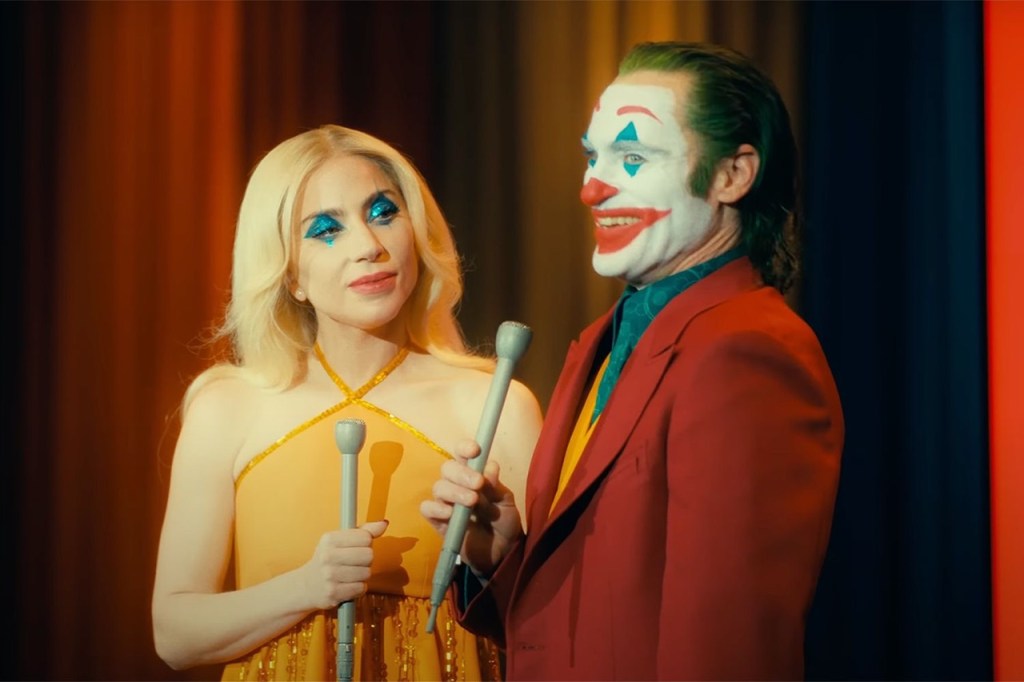
Directed by Todd Phillips. Written by Scott Silver & Todd Phillips.
I can’t believe I’m about to say this but… I liked Joker: Folie à Deux, which is, make no mistake, a movie musical! It’s just not like one you’ve probably seen before, replacing the usual comedic beats with violence and psychological tension. I wouldn’t say it was fun, or even completely successful, but it is fascinating – especially when you consider there was originally talk of it being a stage musical.
After the events of the first film, in which failed comedian Arthur Fleck (Joaquim Phoenix) took on the persona Joker and murdered five or six people, including one on live TV, he is in a psychiatric prison, Arkham State Hospital. Under the watchful eye of abusive prison wardens, including Jackie Sullivan (Brendan Gleeson). When Jackie arranges for Arthur to have access to a music therapy class, Arthur meets Lee (Lady Gaga) who is instantly fascinated with him as a celebrity killer. After Arthur is deemed sane enough to stand trial, she gets released and promises to turn up to the trial every day. As the crowd of Joker fans gather in and outside the courtroom, Arthur can’t resist becoming the Joker once more to appeal to his fans.
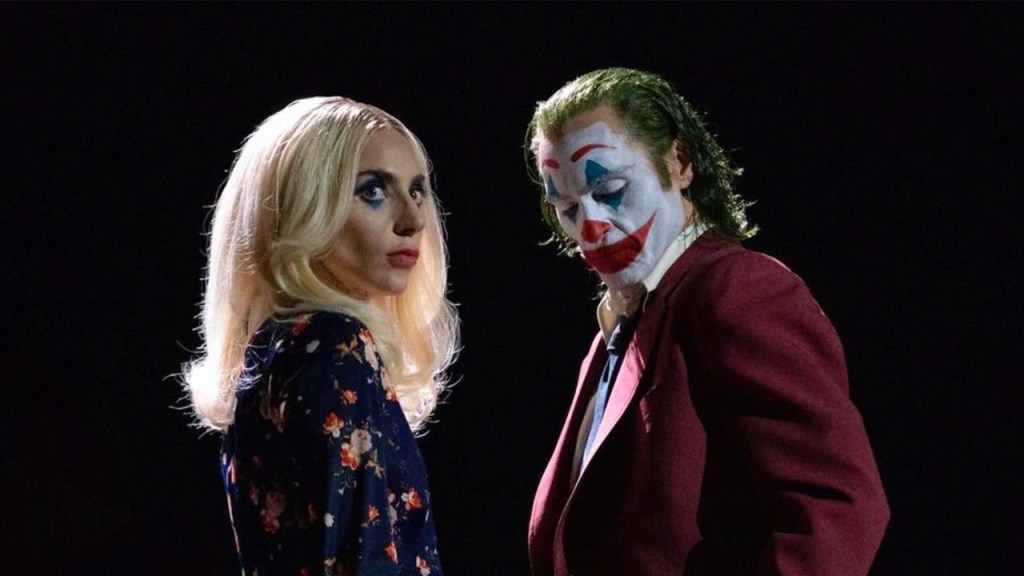
There are two musicals Folie à Deux most resembles. First and foremost is Rob Marshall’s Oscar winning adaptation of Kander & Ebb’s Chicago. Folie à Deux is part prison drama, part courtroom drama, laced with musical flights of fancy that almost all take place inside the mind of the characters. But where Chicago is a musical comedy that winks in the direction of violence, Folie à Deux is a trip into Arthur Fleck’s broken soul which snaps into musical numbers when his brain hits overload.
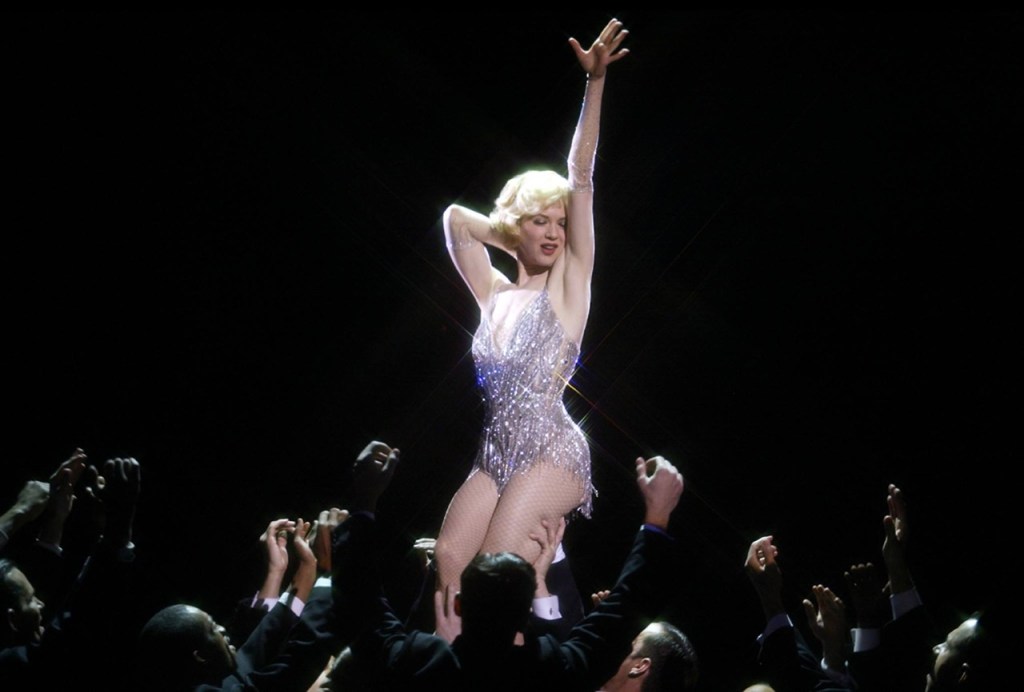
The second show it reminded me of is & Juliet. There is a thrill to the way both & Juliet and Folie à Deux reframe the original lyrics of their songs without changing a word. In the film Fleck sings a bitter, angry rendition of Rogers & Harts “Bewitched (Bothered & Bewildered)”. Coming from the mouth of a psychopath, the lyrics are inverted into a chilling moment of self-recognition.
“I’m wild again! Beguiled again! A simpering, whimpering child again! Bewitched, bothered and bewildered am I.
Couldn’t sleep, And wouldn’t sleep. Until I could sleep where I shouldn’t sleep. Bewitched, bothered and bewildered am I!
Lost my heart, but what of it? My mistake, I agree. He’s a laugh, but I love it Because the laugh’s on me.”
The victim of child abuse, Arthur Fleck is about to reclaim his violent alter-ego, but the man underneath knows it’s a hollow joke on himself.
Or take Schwartz & Dietz’s “That’s Entertainment” that acts as a plot summary:
“A clown, with his pants falling down. Or the dance that’s a dream of romance. Or the scene where the villain is mean. That’s entertainment!”
This jukebox musical is taking “American standards” and highlighting the pain and desperation behind them. And like all good MT songs they reveal the true inner thoughts of the characters, in this case the inner ambivalence of the Joker who finds himself becoming the centre of a cult of personality he can’t control and doesn’t actually want after craving a spotlight for so long.
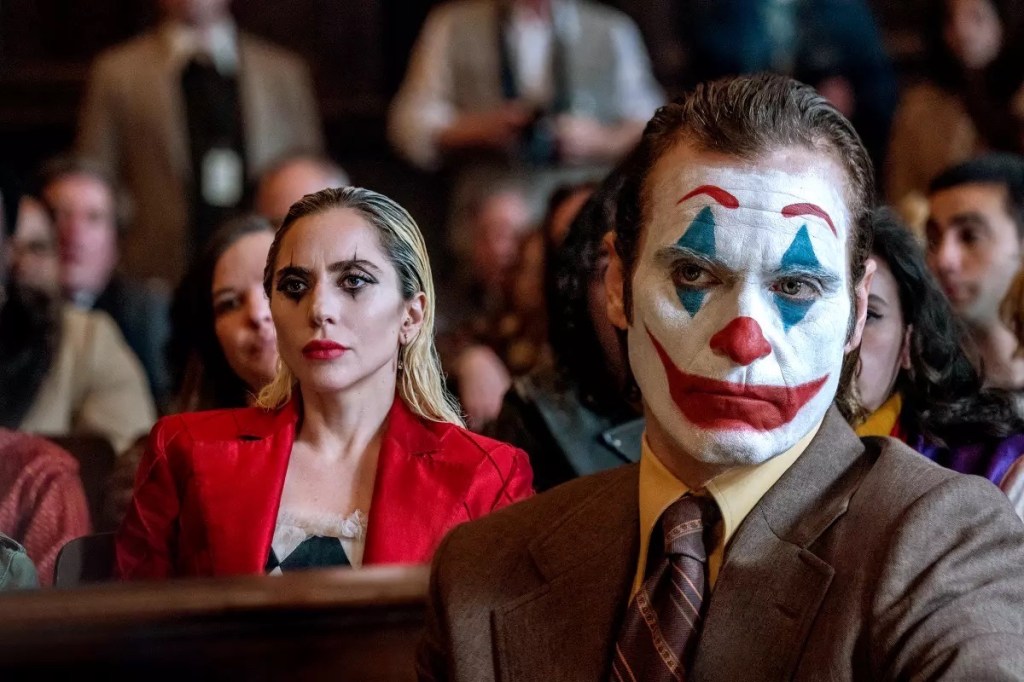
Sadly, Folie à Deux doesn’t quite commit to the bit and make the songs integral to the story (although Lady Gaga’s accompanying album ‘Harlequin’ is well worth a listen as she fully evolves into her Liza Minelli era). Like most jukebox musicals the songs just aren’t designed to further the narrative and as the film progresses they start to lose their momentum. By the end, the songs become a distraction to the story rather than an aide.
But the one thing you can’t accuse Folie à Deux of is a lack of originality or vision, which was my major complaint about the first film (that I loathe). Joker became an unexpected Oscar-winning (excuse me while I vomit) hit, becoming the highest earning R rated film ever (till Deadpool & Wolverine came along in 2024) despite being a soulless recycling of over-played IP, given a sheen of prestige drama by photocopying better films (Scorcese’s The King of Comedy and Taxi Driver). A nihilistic wankfest for lost boys. That said, Joaquim Phoenix’s performance was terrific and completely committed, as much as I didn’t want to spend a second more in his presence.
Then why did I go see the sequel? A couple of film-nerd friends who also hated the first movie said it was interesting and that the stunning backlash from critics and audiences was oddly harsh. So I set my expectations very low and discovered Folie à Deux is practically a repudiation of the original (although I’m sure everyone involved would reject that idea). Where Joker reveled in its pornographic nastiness and anarchy, winning a legion of Snyder-bro fans, Folie à Deux carries that worldview through to its conclusion. Joker isn’t an anti-hero, he’s a failure. His nihilism is a mask just like his face-paint, and underneath there is still a man who can’t escape his own emotions as much as he wants to.
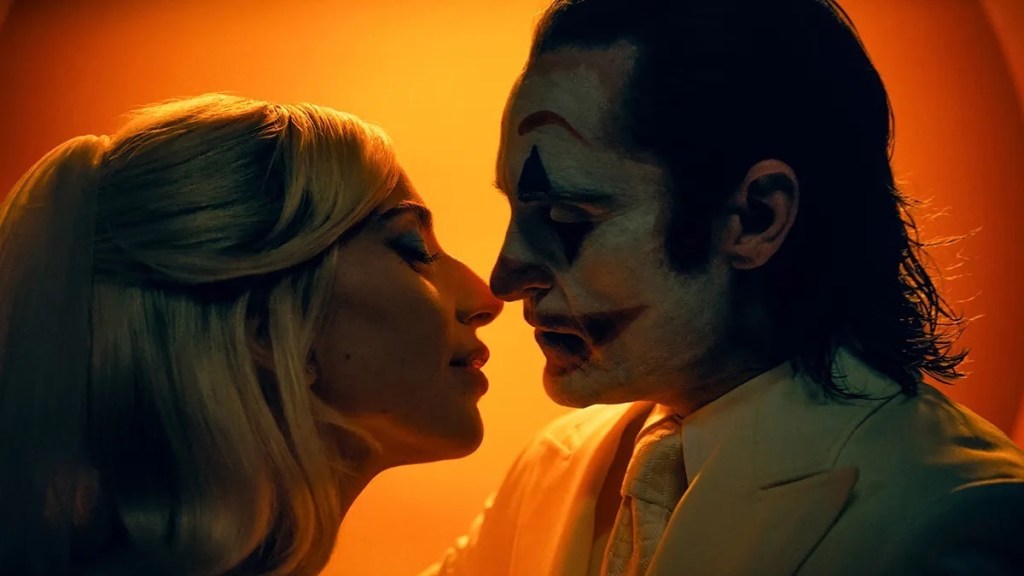
I can’t think of a film that has so firmly stuck its middle finger up at the original audience other than Lana Wachowski’s The Matrix Resurrections (which was a big “oh you want more of the same shit? Well fuck you!” to the studio, but wasn’t successful as a film). It’s like Todd Phillips won the trust of the fans and then slapped them in the face (“You think the Joker is cool? Well I’ll show you how stupid you are AND I’ll make it a musical to really rub your noses in it!”). As someone who had a visceral reaction of disgust to Joker, I found Folie à Deux to be a refreshing follow-up.

Once again, Phoenix (and Gaga) both completely commit to their roles. Where a more timid film would be filled with exposition, Todd Phillips leaves it to their performances to fill in the gaps. Gaga’s Harleen Quinzel never truly lays out her motivations but her drive to achieve her own goals is undeniable. There’s just enough of the original comic book origin in there to please fans without bogging the film down with backstory. Phoenix makes his transformation from Fleck to Joker feel like the birthing of a monster in a horror film. In fact Folie à Deux comes close to being a genuine musical-horror movie without a trace of comedy (is musical/horror a thing?). Sweeney Todd is many things, but actually frightening isn’t one of them.
Todd Phillips keeps the musical moments restrained, easing the audience into Fleck’s mind (it’s a little unclear whether Gaga’s Lee is also having musical delusions or if we’re just seeing what Fleck imagines is happening). Despite plenty of references to movie musicals of the past, Joker takes its cues from late-night TV (which is appropriate) and vaudeville. What the film is lacking is a full-scale production number to cap off the psychological journey into madness we’ve been on.
Did this movie need to exist? Definitely not, but after Joker made over a billion dollars a sequel was inevitable and I tip my hat to all involved for using their sudden success to make something this unexpected and bold. Folie à Deux is definitely ones of those divisive ones that I could either give ★★ or ★★★★ depending on my mood. I have zero intention of ever watching either of the Joker films again, but I can’t deny they are very well made and now that they both exist I can appreciate the arc. So I’ll give it ★★★ and call it even.
 Cultural Binge
Leave a comment