
Written by Jack Holden. Australian Premiere. KXT on Broadway. 12–22 Feb 2025.
Jack Holden’s Olivier Award-nominated one-man play, Cruise, is a time-jumping, bar-hopping treasure that achieves in 90 minutes what The Inheritance takes almost seven hours to accomplish. This play explores the connections between gay generations and remembers the vibrant queer life in Soho, London, during the 1980s as AIDS struck.
Based on Holden’s own experience volunteering for Switchboard, the LGBTQ+ phone helpline founded in 1974, Cruise focuses on the story of Michael, a young man who arrives in London unemployed and eager to explore. Michael recounts tales of his life filled with eccentric characters and thrilling sexual exploits as he discovers gay bars, clubs, and cruising spots. When he meets the tall, butch “Slutty Dave” at a karaoke bar, he falls in love, just as AIDS begins to take its toll on the community.
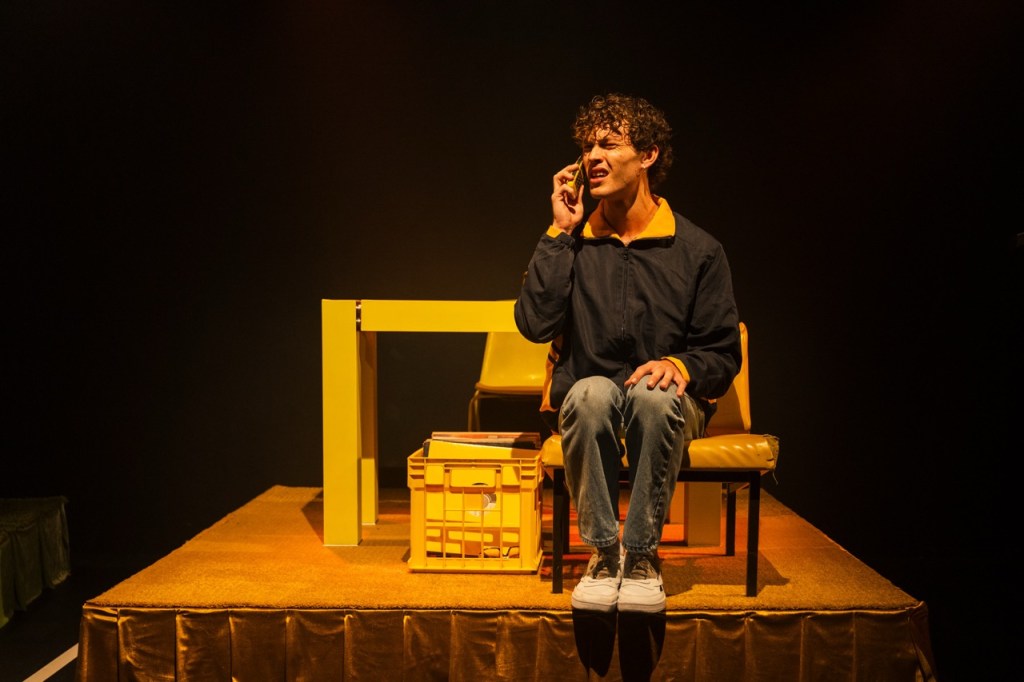
Yes, it’s another AIDS narrative. Yes, it’s sad. Yes, many of the beats may seem familiar from a dozen other plays, films, and TV shows (such as The Normal Heart, It’s A Sin, Holding The Man, etc.), but the brilliance of Cruise lies not in the story itself, but in how it is told. Rather than simply presenting the narrative, Holden’s script immerses you in the action. Michael’s history has the all the idiosyncrasies of reality making this more impactful than mere fiction.
The performance rests entirely on the handsome, versatile actor Fraser Morrison, who plays a dozen characters, narrating a tale that operates on multiple levels. It’s a complex, multifaceted performance as Morrison shifts and contorts his body to embody each person Michael meets. Through changes in physicality and (occasionally OTT) accent, each character remains clear, distinct, and real. It’s a comprehensive showcase for a young actor and Morrison proves his worth.

Sean Landis’s direction is vibrant, capturing the essence of various locations and times with subtle shifts. He keeps the action flowing around the traverse staging, ensuring the monologue never feels static as Morrison moves from platform to platform (production design by Chelsea Wheatley) like he’s skipping across Soho’s crowded streets. While some moments are occasionally underlit, and a few sound design choices lack verisimilitude, Landis still gets to the heart of the story.
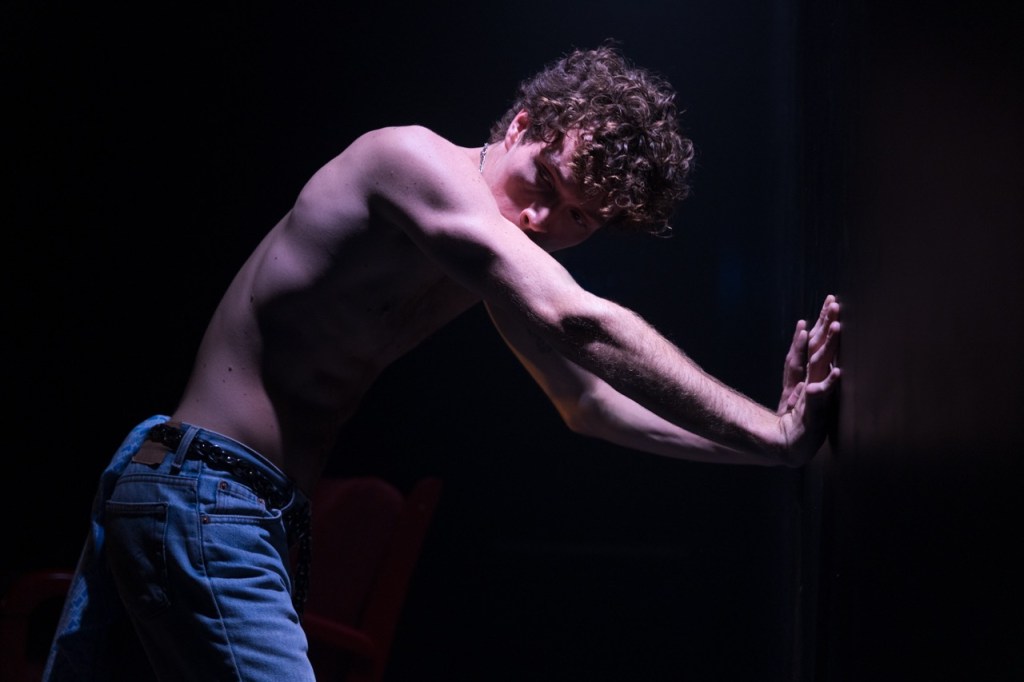
Despite its sensual title and sex-filled stories, Cruise doesn’t fall into the “gay play” cliches of gratuitous smutty details or nudity. There is a pervasive air of sexual energy, a hormonal thrill of anticipation, that helps power the story along, without the cheap thrills. Low lighting and strobes (lighting design by Tom Hicks) keep things tantalisingly suggestive.
Holden’s script serves as a history lesson about London’s Soho and its surroundings in the 1980s, mentioning real locations and local legends like drag queen Jackie Shit. It presents a world that feels foreign to most of the audience in 2020s Sydney—where gay bars once hid behind blacked-out windows, rather than the open, neon-lit fishbowls we see today. In this era, strangers would go cruising, dogging, and cottaging for furtive sexual encounters before the rise of location-based apps. While many of the venues Holden references are long gone, some still stand as the last remnants of a gay village now overtaken by upscale retail and restaurants catering to the West End crowd.
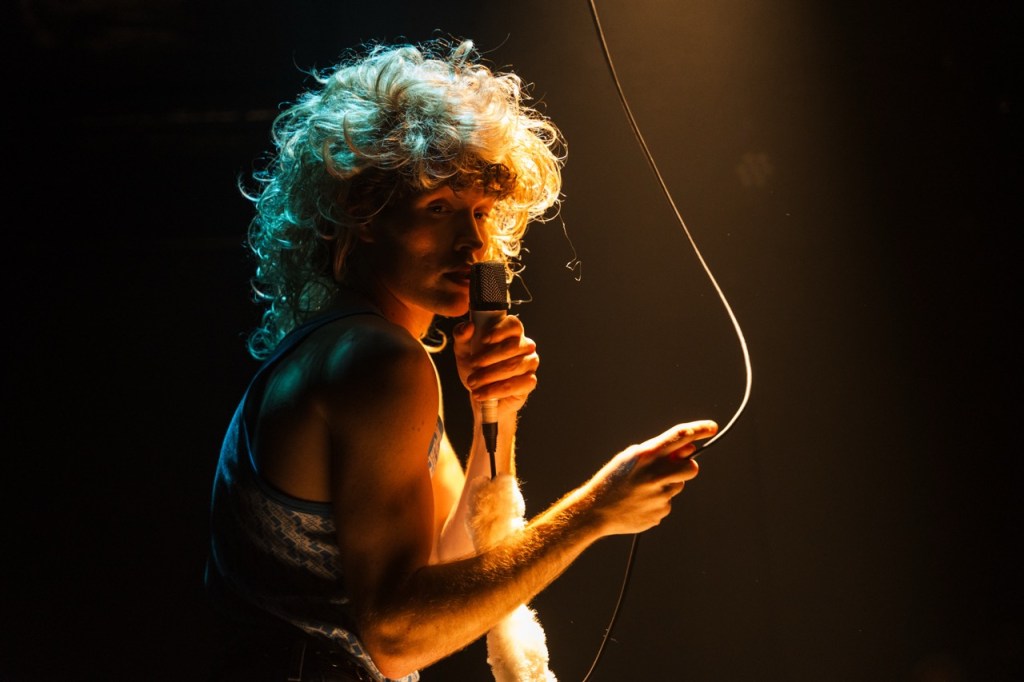
Weaving through moments of hope and hopelessness, Cruise is a triumph of beautifully nuanced observations and compassionate storytelling. It feels more real and less sensationalistic than other “AIDS plays.” The intricacy of the storytelling—from script to direction, to Fraser Morrison’s stunning performance—makes Cruise far more than what one might expect.
 Cultural Binge
Leave a comment