Written by Tennessee Williams. Ensemble Theatre. 21 Mar – 26 Apr, 2025.
Director Liesel Badorrek’s new production of Tennessee Williams’ debut The Glass Menagerie pushes against the play’s expected structure and text to bring the “memory play” to the stage with a fresh twist. The result is a strange beast with an amorphous tone that feels less like memory and more like a dream.
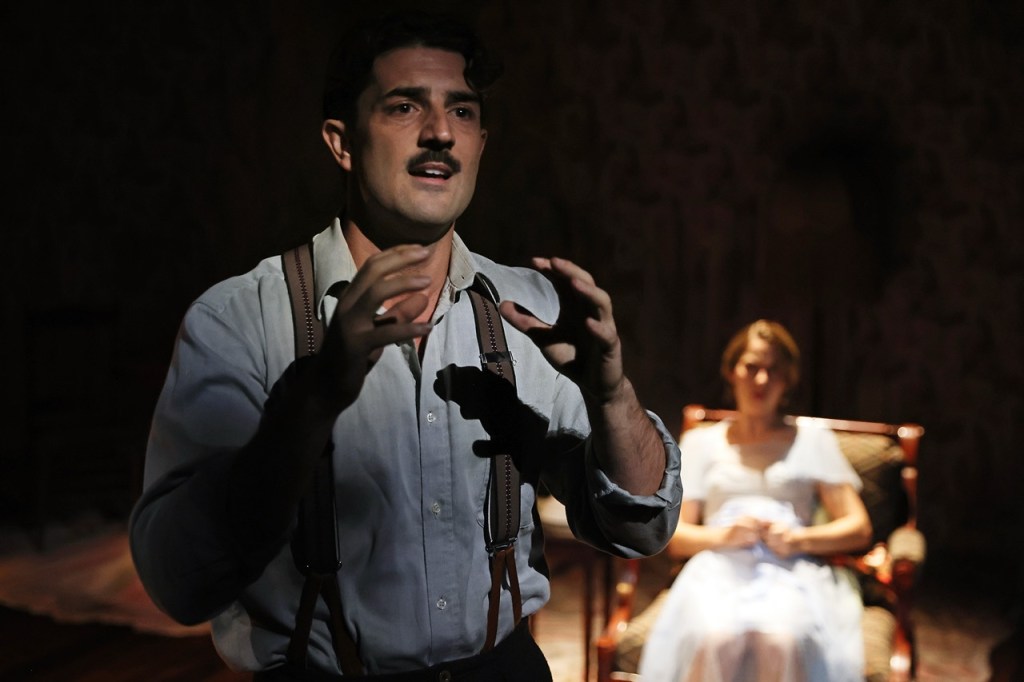
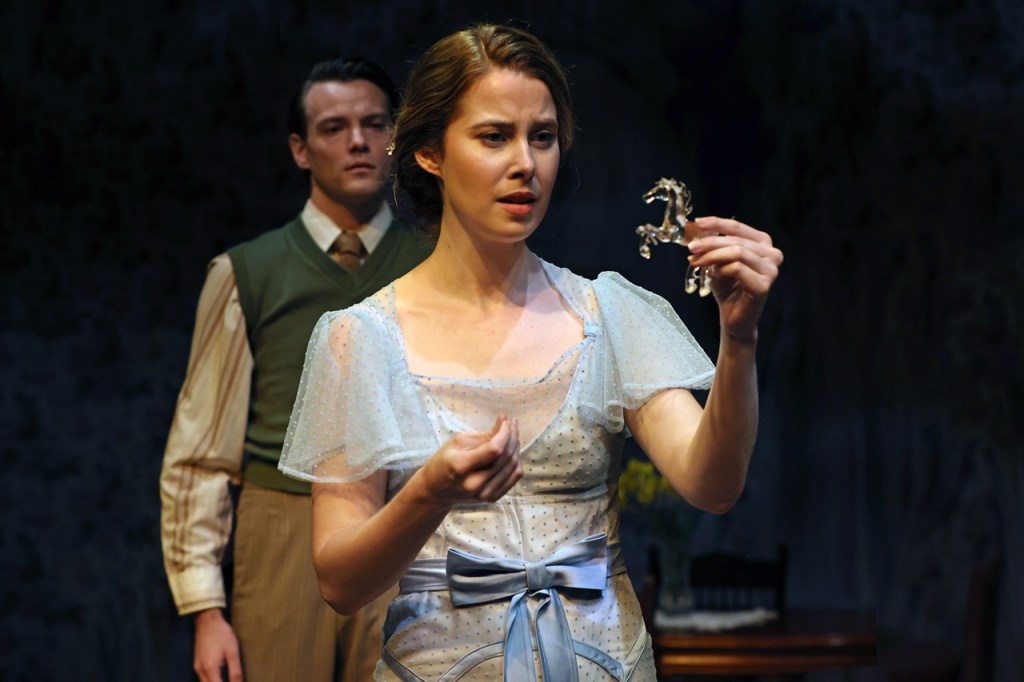
As Tom Wingfield (Danny Ball), our narrator, tells us in the introduction, the play “is dimly lighted, it is sentimental, it is not realistic.” This is a memory of Tom’s family, and he is stepping back into it. His mother Amanda (Blazey Best), a former Southern belle, is desperately trying to find a brighter future for her children, while his painfully shy sister Laura (Bridie McKim) hides in the house, fixating on her collection of glass animals — her menagerie.
When Amanda discovers Laura has been lying to her about attending a business college, she realises the quiet girl, with a walking impediment, has few prospects for an independent life and convinces Tom to help her find a suitor for Laura. One day, Tom announces he has arranged for a “gentleman caller” (Tom Rodgers) to stop by for dinner.
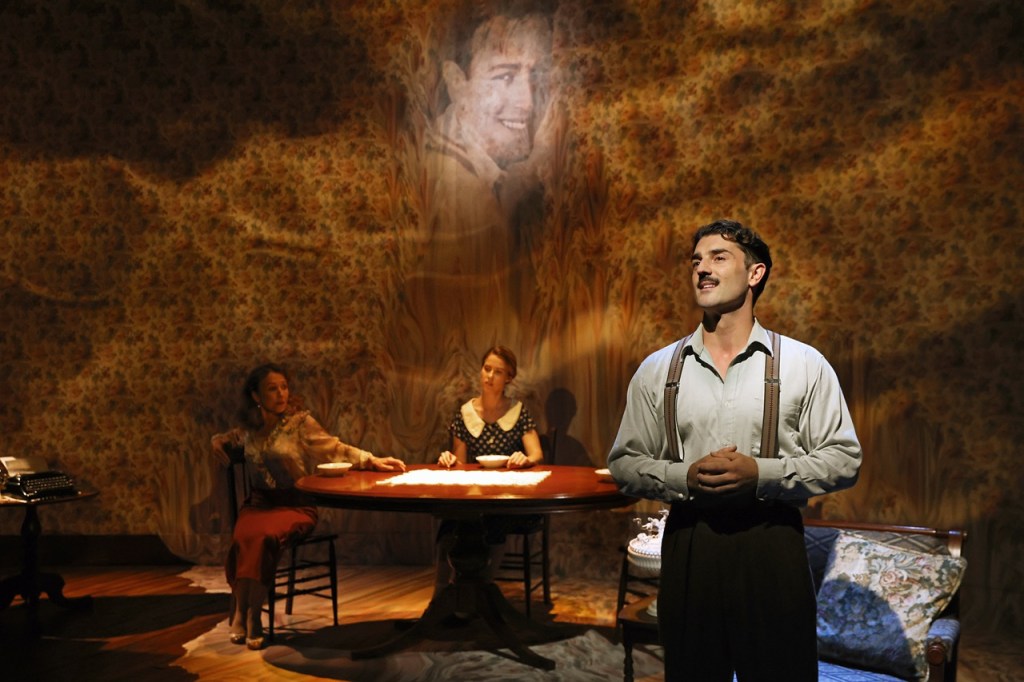
For me, the hero of the play is the peculiar set by Grace Deacon. As you enter the Ensemble Theatre, the first thing you see is a wide expanse of wallpaper with its hypnotic, repeating pattern. Into its facade, a face emerges, smearing down the wall and bleeding into the floor below, as though the walls are weeping with their own quiet anguish. Beneath an armchair, a circular rug stretches and breaks in two. The fire escape outside slowly deconstructs itself as it reaches out of view. If this “memory” were a digital image, it would be corrupting with glitches and imbalances.
On top of this, lighting designer Verity Hampson creates a sea of movement as Tom’s memories shift through time. The spectral portrait of Tom’s father recedes or looms large depending on how the lighting strikes it. A visual fluidity washes over the stage, aided by Maria Alfonsine’s compositions and sound design. This is the kind of stagecraft I get nerdily excited about.
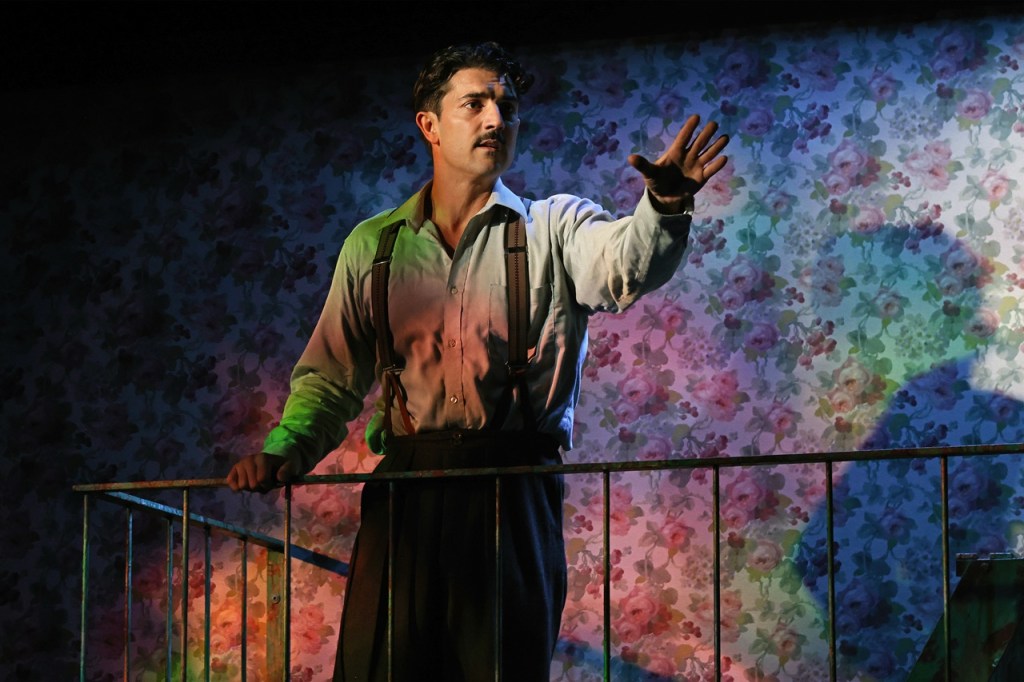
Director Liesel Badorrek has further blurred the boundaries of this text by using parts of Williams’ prosaic stage direction (grab a copy of the script and read it — it’s beautiful prose in its own right) as pre-recorded narration. While it certainly fits the tone of voice of Tom’s character, there is something distractingly artificial about hearing a voice from the speakers than the stage that detracts rather than enhances the action.
This cast also brings something new to the text that I haven’t seen before. Danny Ball’s Tom has a charming softness and playful nature. Blazey Best brings out an absurd humour in Amanda that doesn’t immediately evoke pity but unexpected comedy.
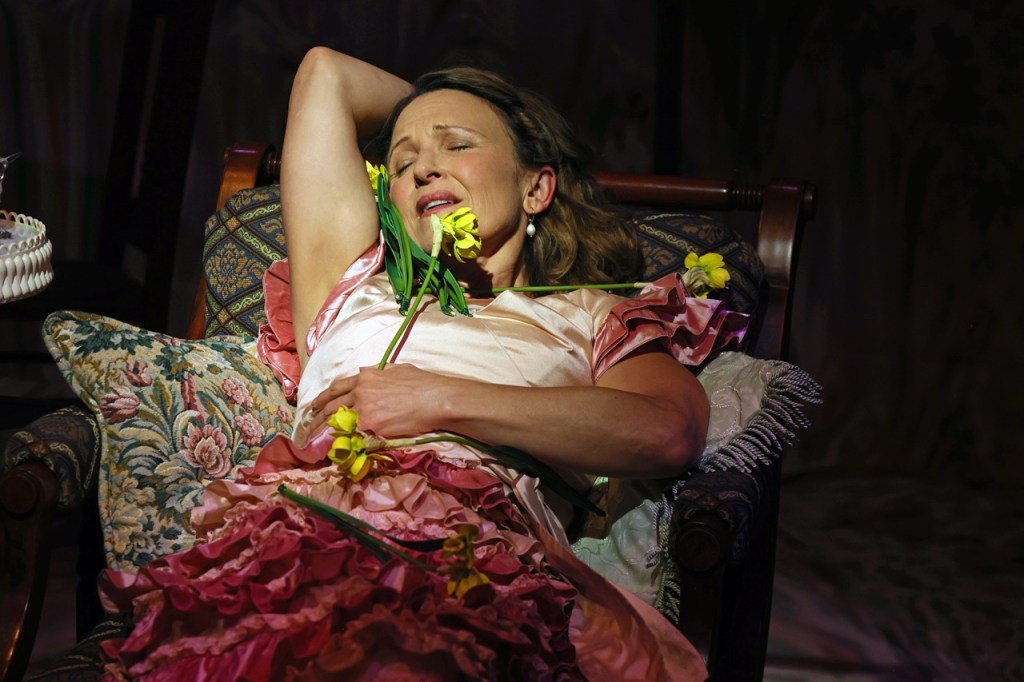
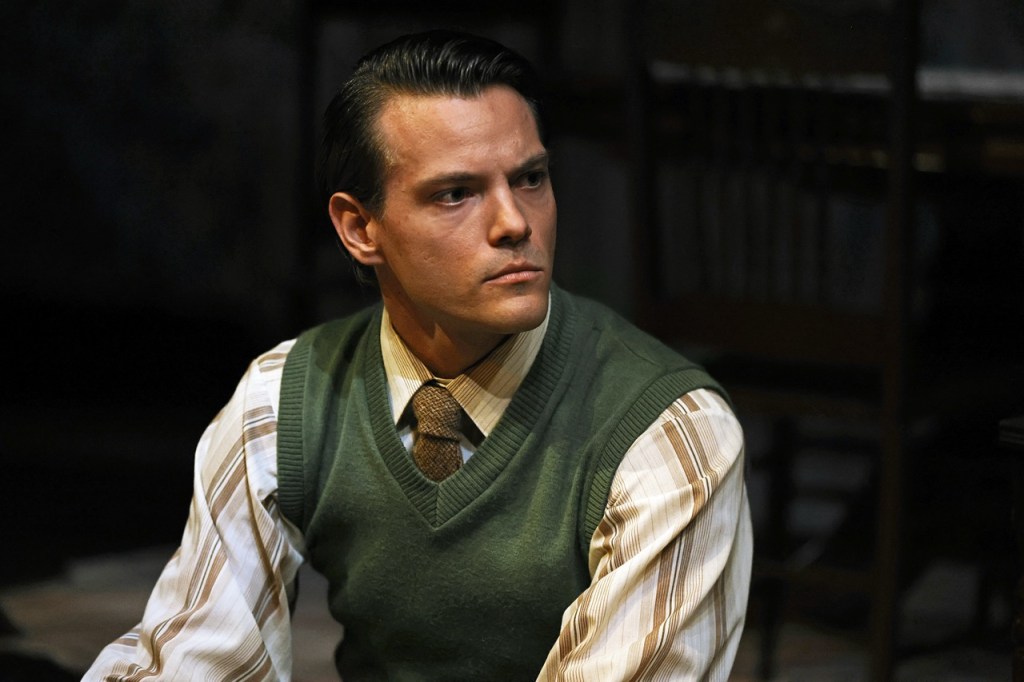
Bridie McKim’s Laura isn’t a beautiful waif with a token limp but something more frail and lived in. Tom Rodgers’ Jim O’Connor, the gentleman caller, is a harder role to play, both because of the mountain of text he delivers and the burden of being the most “realistic” (in Tennessee’s words) of the characters. He elevates his performance to the same slightly unhinged level as the rest of the cast, leading you to conclude that maybe the Wingfield family isn’t as unusual as they seem — perhaps society has twisted everyone.
Much like a dream, for all the interesting moments there is a lack of clarity or consistency to what’s happening that blunts the finale’s revelations [no spoilers, obviously — if you want to know more, it’ll cost you a wine or three]. The bold accents threaten to twist these exaggerated characters into melodrama, and one or two of the creative decisions dilute the play’s complexity.
The Glass Menagerie is a classic with the kind of poetic script that generations of writers have tried and failed to emulate. While this lacks the richness and depth of Ensemble’s 2023 production of Williams’ Suddenly Last Summer, it offers a fresh opportunity to luxuriate in Tennessee Williams’ greatness again.
 Cultural Binge
Leave a comment