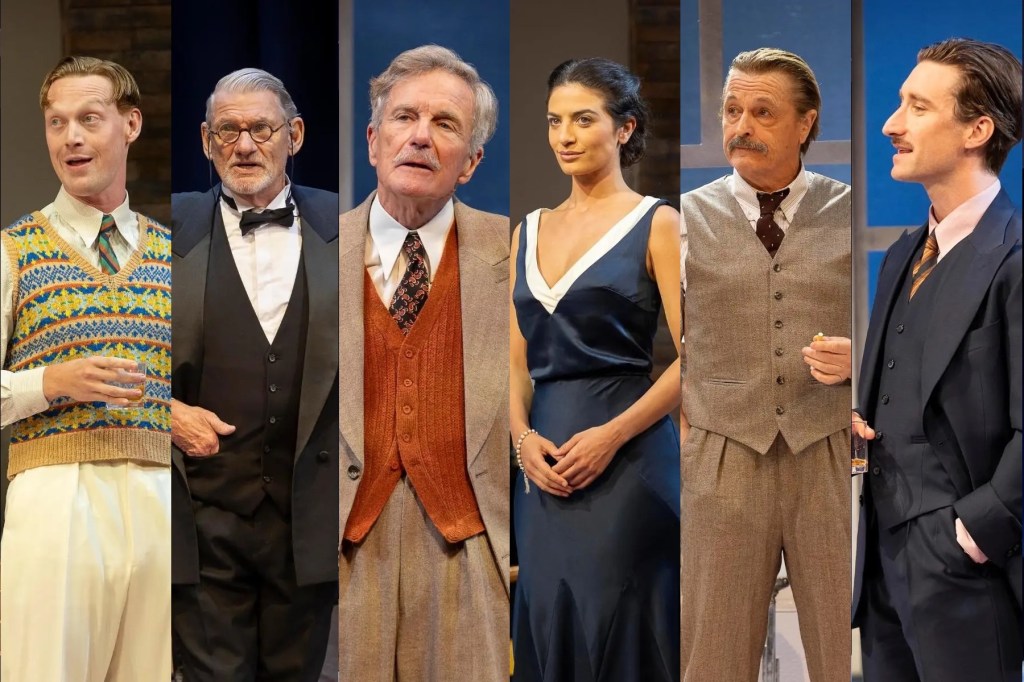
Written by Agatha Christie. Presented by John Frost for Crossroads Live. Theatre Royal, Sydney. 3 May 3 – 1 Jun, 2025.
Agatha Christie is justifiably considered one of the greats, if not the GOAT, of the murder mystery genre. And Then There Were None (not the original title) is one of her best and most groundbreaking novels, but her stage adaptation suffers from hackneyed characterisations and a slightly altered plot (no spoilers).
Ten strangers are invited to a secluded island mansion under false pretences. Once assembled, a pre-recorded voice accuses each of them of murder. But who is the mysterious Mr UN Owen who brought them all here? And who is killing them off, one by one?

I’d been meaning to see And Then There Were None since it opened, but real life kept getting in the way. As the run progressed, I couldn’t help but notice the seating chart for the Theatre Royal had plenty of options available, even with the balcony closed off on weeknights. It started to look like And Then There Were None was referring to the paying audience. But a last-minute night off saw me grabbing a mid-priced ticket and sitting down for a bit of comfort crime.
The air of pantomime quickly wafted in from the painted seaview on stage, as a parade of ridiculously on-the-nose accents began speaking. One of them was actually meant to be fake, so Peter O’Brien gets a free pass. Some of the others, though, were a mix of rejects from Olivier! and extras from Downton Abbey. They weren’t all bad, not at all, but the range of accents was so artificially pointed, and seemingly mimicked from a binge-watch of The Crown, that it was hard to get past them. Once the play settled into its rhythms, and the cast began to be thinned out, the performers really got to sink their teeth into things.

I enjoyed the work of Anthony Phelan as the retired judge Sir Lawrence Wargrave and Jack Bannister as the irresponsible Anthony Marston (but that may be because his opening costume seemed like a bit of Doctor Who cosplay). Peter O’Brien seemed to be having the most fun on stage. Tom Stokes made for a suitably unlikable Phillip Lombard.
Structurally, the play is a sound mystery (although a 45-minute Act I feels particularly short; the story had barely started). As the psychological torture of the second act begins, the thrills kick in. With each subsequent killing driving the survivors’ paranoia higher, things veer ever closer to melodrama.

Part of this is undoubtedly due to the play itself which, like Nevin’s recent revival of Christie’s The Mousetrap, cannot escape its well-worn material that has been adapted time and time again. Having become the template for a whole sub-genre of genteel British murder, it is very easy for anyone in a Christie to stumble into cliché, which they inevitably do on occasion. But where The Mousetrap leaned into its “drawing room murder mystery” trappings, And Then There Were None tries to freshen things up, which simply reveals the creaking moving pieces underneath.
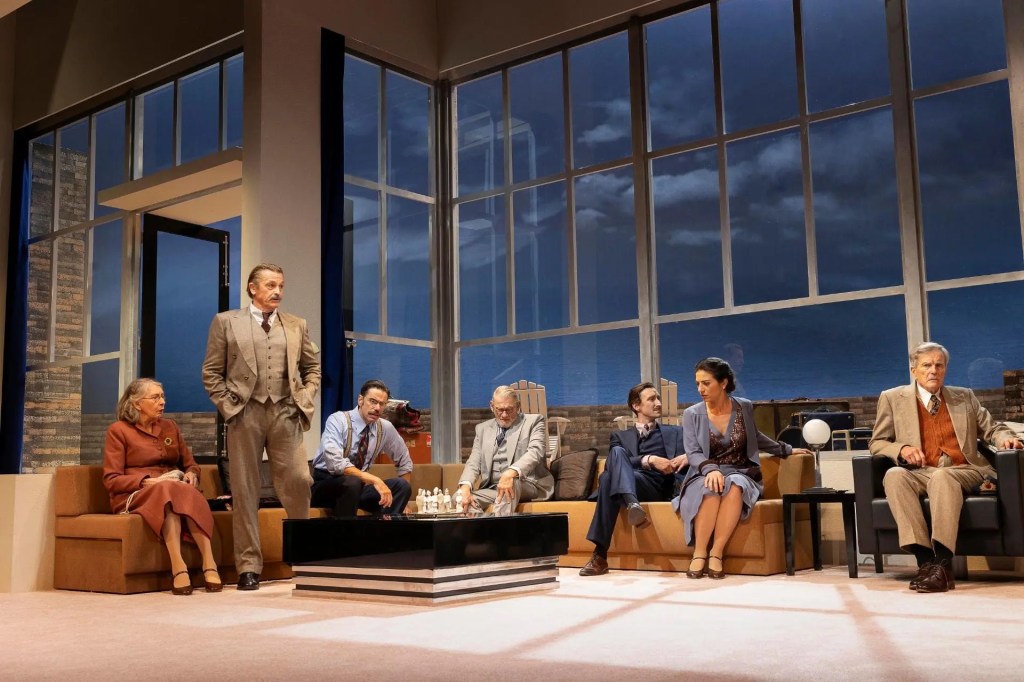
There is an unrelenting flatness to this production that starts to wear thin through the first act. Dale Ferguson’s open, modernist set felt fresh and clean, though possibly too sparse in places. The bright lighting didn’t differentiate moments or tones (I genuinely wondered if they’d missed a lighting cue or two – especially in the early scenes). Paul Charlier’s sound design earned the first, though not the last, laugh of the evening with its bold shock opening.
Christie’s stories are like a box of chocolates, all similar with different flavours. But instead of being a rich, dark treat with a surprise inside, this version of And Then There Were None is more like a lone white chocolate that’s all froth and no bite. I think I’ll rewatch the thrilling 2015 BBC adaptation instead.
 Cultural Binge
Leave a comment