Based on the story by Daphne du Maurier. Adapted by Louise Fox. Malthouse, Melbourne. 16 May – 7 Jun, 2025.
Forget Alfred Hitchcock’s classic cinematic thriller. Forget Daphne du Maurier’s original story. Louise Fox has taken the frightening premise of an avian revolt against humanity and placed it in Australia with a sharply contemporary context to creep you out. Some intimate audio and a shape-shifting solo performance from Paula Arundell combine to create an interesting piece of theatre.
Tessa and her family (husband Nat and their two children) have made a classic Covid “sea change”, trading the city for the open spaces of farms and beaches. One night, she hears an incessant tapping at her bedroom window. Investigating, she opens the window as a bird swoops in to attack her. A scream from her daughter’s bedroom sends her bolting in and battling off dozens of birds. In the morning… she realises it wasn’t a freak occurrence.

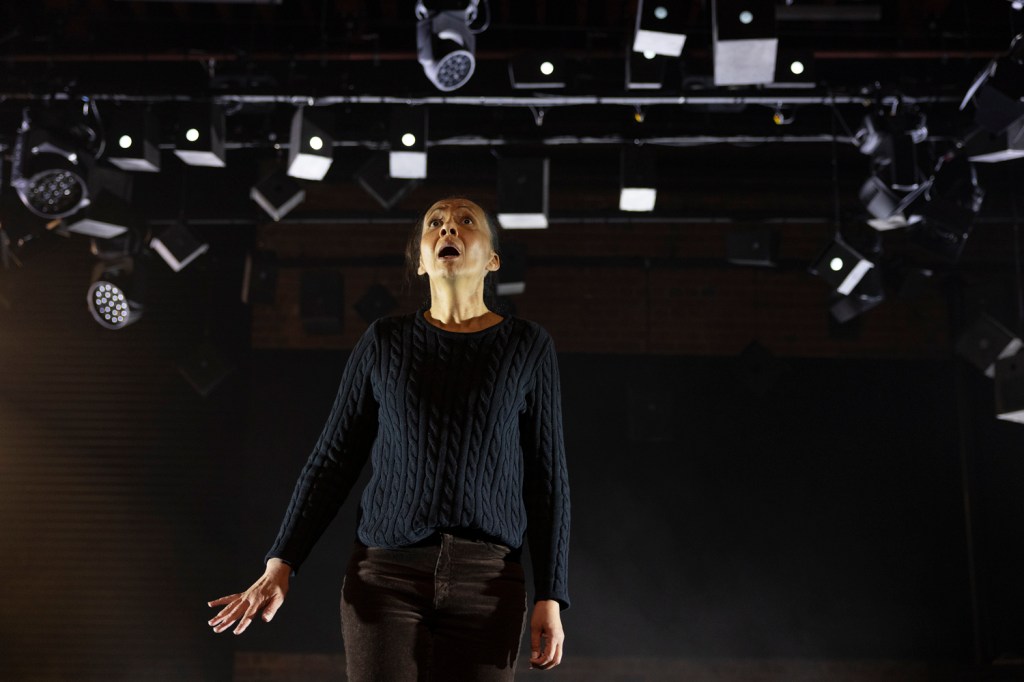
Unsurprisingly, Paula Arundell is wonderful playing all the roles, including Tessa and her family, as well as neighbours and friends. It’s a beautifully precise array of performances showing her personal range. Vocally, she manages to convey age, gender, mood and more with impressive agility.
However, for a show aimed at providing an inventive and immersive experience, The Birds felt rather conventional on the technical side. Outgoing Artistic Director Matthew Lutton directs Malthouse’s production, which gives the audience headphones, making the sound design (and Arundell’s dialogue) feel very close. However, this is where the play fails to reach its promise. J. David Franzke’s sound design is crisp and effective but doesn’t make enough use of the intimate stereo environment to truly elevate the play. Had the sound design simply been pumped through some good surround-sound speakers in the theatre, it would have had the same effect.
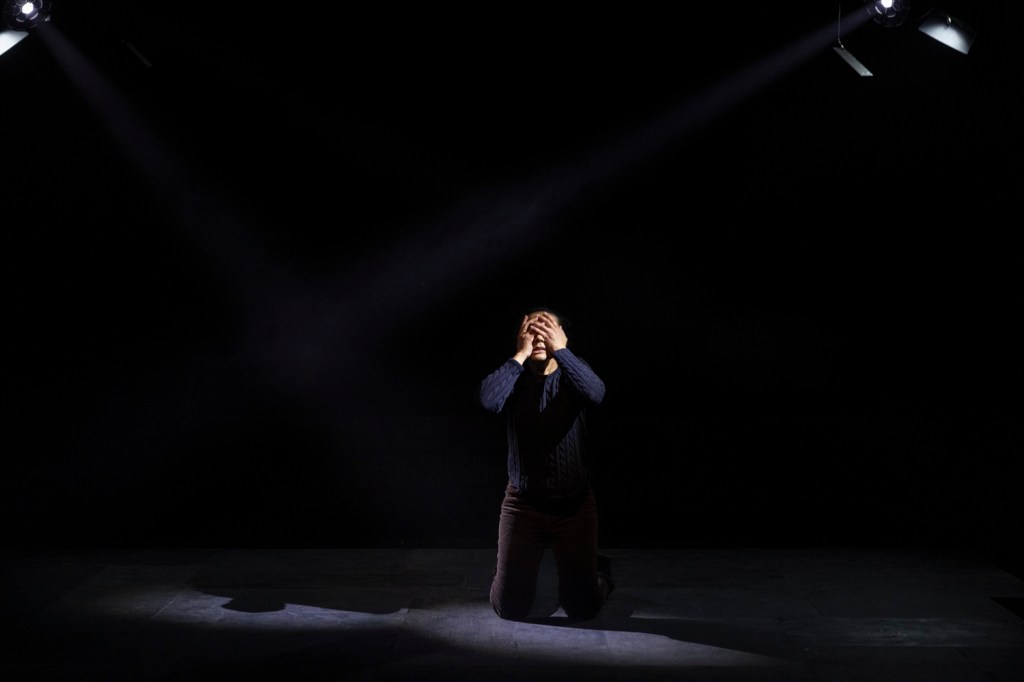
Niklas Pajanti’s ambient lighting features some interesting accents, but mostly works against the audio because the featureless lighting fails to engage the imagination of the non-existent birds. I found myself shutting my eyes to enjoy the production as an audio play, which worked wonders—placing the danger in my imagination made it more thrilling.
Kat Chan’s stage design puts Arundell on an elevated platform surrounded by props. Dozens of wooden birdhouses hang from the ceiling above her, physically reminding us of the threat we experience only through audio and lighting. Again, the abundance of space lessens the threat of attack (although the birdhouses are used to excellent effect, I just wish there was more to it).

One of the best things adaptor Louise Fox has done is take du Maurier’s post-war paranoia and place it in the world of modern conspiracy theorists and climate upheaval. While The Birds never explains the uncanny happenings, humanity’s guilt hangs over Nature’s suicidal assaults. Would anyone question the Earth’s right to defend itself against the abuses humanity has inflicted on it?
Tellingly, the play’s most disturbing moment comes not from the antagonistic birds themselves but from a morally upsetting choice Tessa must make. It is more terrifying than all the effects and relies solely on Arundell’s tortured delivery. It’s the one image that has stuck with me long after the play ended.
In retrospect, I feel the use of headphones isolated the audience in their own bubbles, muting communal gasps and reactions and lessening the theatrical experience. I still think there is much that can be done with this technique with more time and imagination to play with the form.
 Cultural Binge
Leave a comment