
Written by Taylor Mac. New Theatre. 8 Jul – 2 Aug, 2025.
Taylor Mac’s Hir, now over a decade old, remains startlingly ahead of its time. While conversations about gender have grown increasingly chaotic and polarised, this play focuses less on pronouns and more on the complex forces driving its characters.
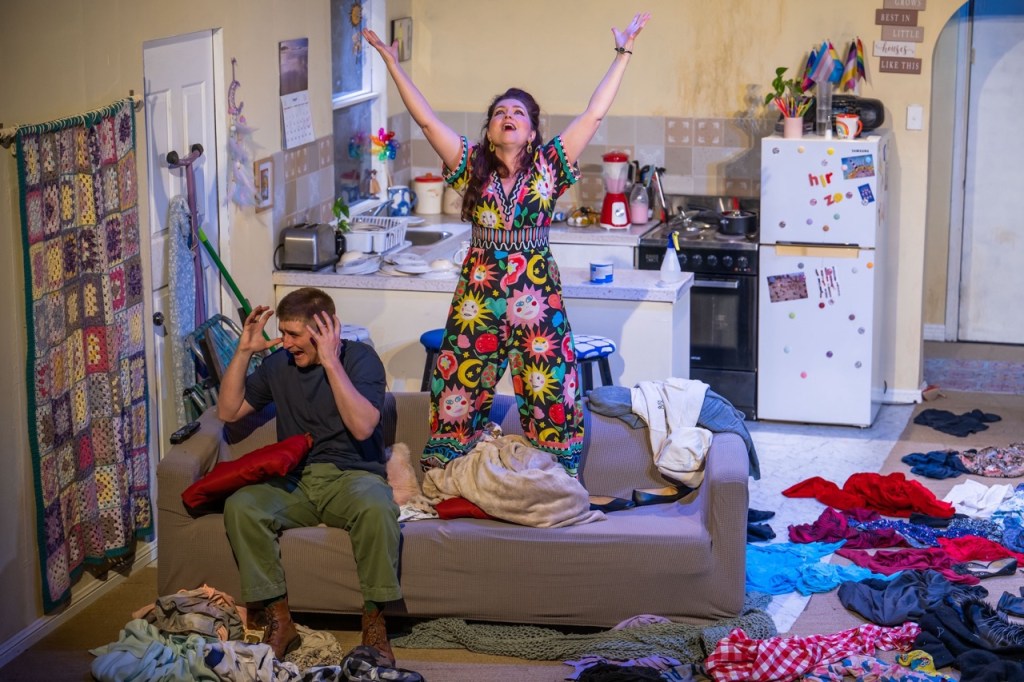
Isaac (Luke Visentin), known simply as ‘I’, returns home from a stint in the military to find his childhood house in utter chaos. Laundry litters the floor, dirty dishes clog the kitchen, and the front door is blocked by… stuff. His father, Arnold (Rowan Greaves), is now an incoherent, stupefied figure — a lump in a nightgown smeared with clown makeup. Max (Lola Kate Carlton), Isaac’s sibling, no longer identifies as his sister but as genderqueer, using ze/hir neopronouns. Meanwhile, their mother, Paige (Jodine Muir), freed from Arnold’s violent tyranny, enforces one strict rule: absolutely no cleaning. This is far from a happy household.
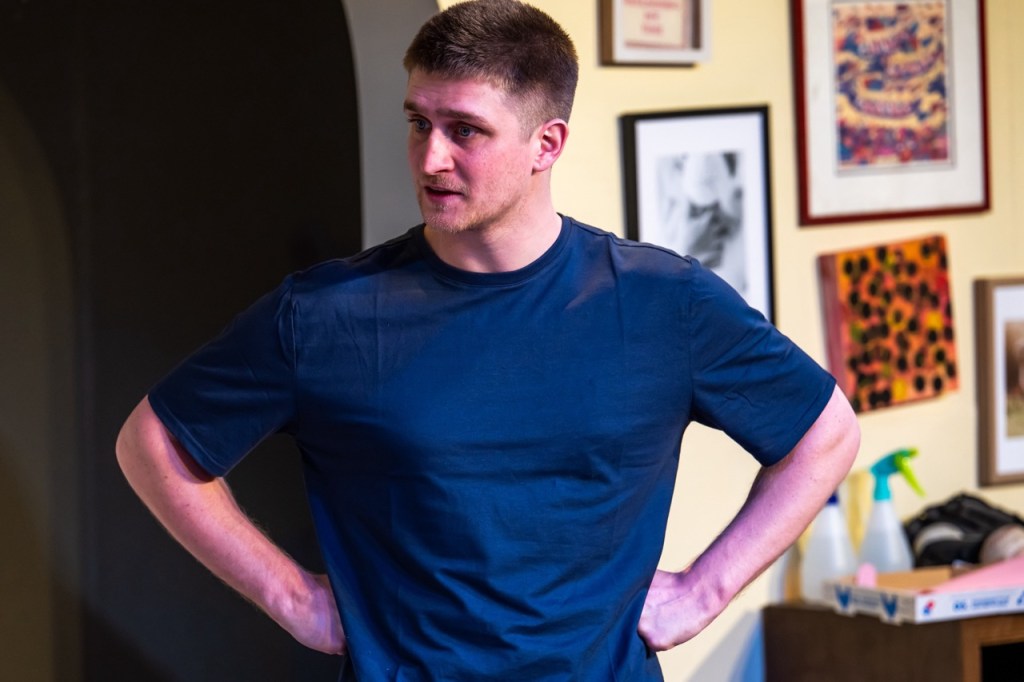
Playwright Taylor Mac, now better known for his durational music extravaganzas such as A 24-Decade History of Popular Music and Bark of Millions, uses his insider perspective to poke fun at progressive ideals. Unlike a cisgender playwright, whose intentions might be questioned, Mac’s lived experience outside the gender binary lends his observations both sharpness and authenticity.
Beneath the surface, Hir is not about gender or sexuality; it is a raw exploration of trauma and control. Arnold, once a terrifyingly violent presence, has been reduced to a powerless shadow by a stroke. Paige, seizing control, exacts retribution through countless humiliations. Max, despite hir rebellious claims, remains a teenager craving approval. And Isaac wrestles with a haunting question: will he become like his father? In this tangled web of wounds and fears, even a battle over the air-conditioning becomes a fraught, almost warlike struggle.
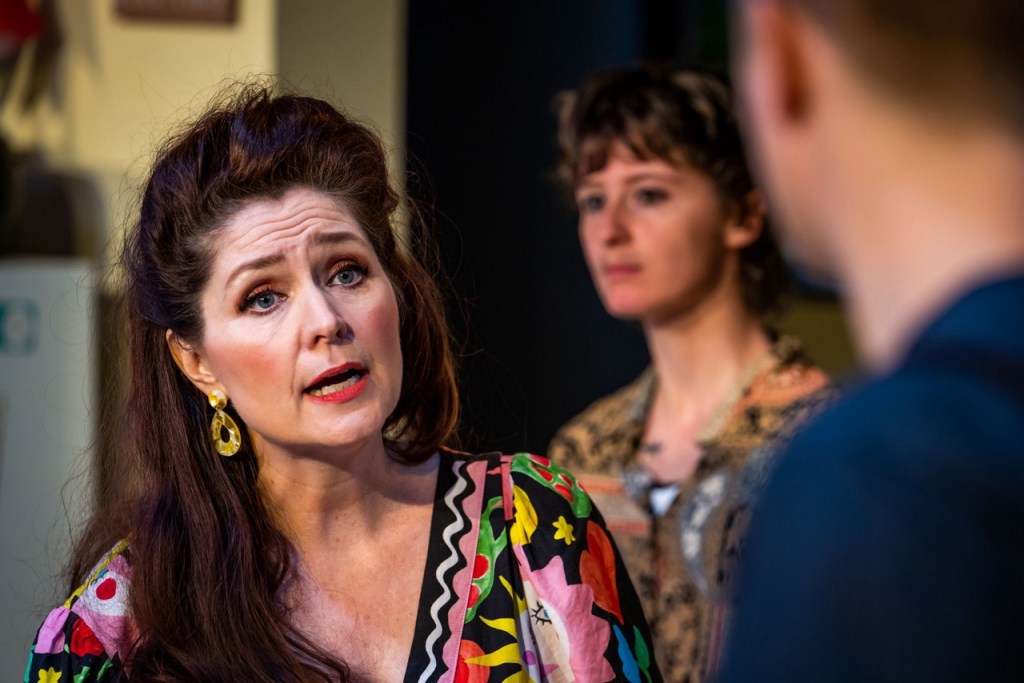
Kudos to Jodine Muir, who delivers commanding speeches brimming with jargon and gender theory, and to Rowan Greaves, whose near-mute Arnold looms over every scene. Victor Kalka’s set, with its lived-in, seedy aesthetic, perfectly captures the household’s disarray (as a neat-freak, it disturbed me). The Gen X playlist warmed my middle-aged heart. However, some of the longer scenes lack the dynamic shifts needed to keep the audience fully engaged, and there are big emotional moments that feel unjustified. At times, the production risks becoming entangled in its grand ideas and choreography, slightly overshadowing the human journeys at its heart.
Though it joins the long tradition of “families being awful to each other” plays, Hir still feels refreshingly original. Its characters are deliciously complex, revelling in the darker undercurrents of some utopian ideals. Taylor Mac understands that politics is often just a form of drag — it’s the person beneath the surface who truly matters.
 Cultural Binge
Leave a comment