Written by Simon Phillips, Nick Schlieper & Toby Schmitz. Adapted from the novel by Max Porter. Belvoir. 26 Jul – 24 Aug, 2025.
Belvoir’s streak of literary adaptations unearths another winner with Grief is the Thing With Feathers. This production gives Toby Schmitz a chance to soar. As the list of playwrights suggests, this is a collaborative affair that merges the disciplines of theatre into one poetic whole. Don’t be put off by the title; while it meditates on grief, it’s also quite fun, albeit in a dark way.
An academic and father of two young boys attempts to cope with the loss of his wife. Then, one night, as if summoned by the household’s pain, Crow arrives and takes over their lives. This metaphysical encounter—or psychological break, if you prefer—serves as both a chaotic disruption and a possible journey to healing.
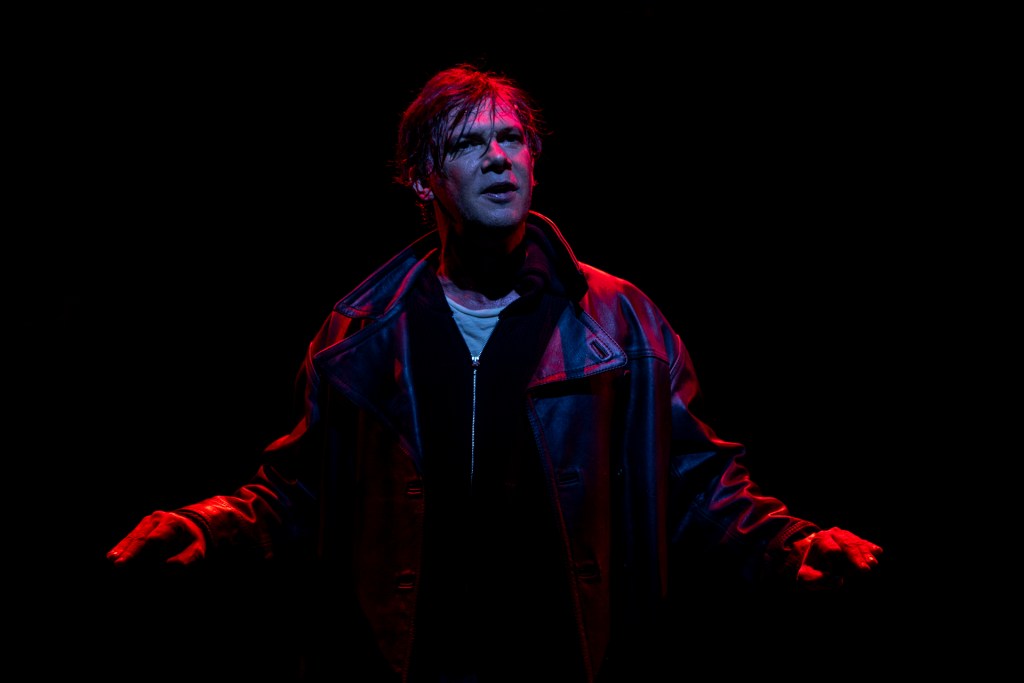
The true test of a play’s power lies in how much lingers in my mind after leaving the theatre. The morning after seeing Grief is the Thing With Feathers, I still hold a crystal-clear image of Crow. He is vivid. This mastery of storytelling means that, although Crow manifests onstage only through subtle changes in Schmitz’s accent, posture, and mannerisms, in my mind he transforms into a powerful, sleek, black-winged creature of terrifying size and beauty. The play sent my own imagination soaring.

The opening moments showcase that rare theatrical magic Belvoir captures so well: Crow’s entrance is one of the most exciting acts of misdirection and majesty I’ve seen all year. I found myself grinning from the back row. Craig Wilkinson’s projections and animations beautifully expand the tale while maintaining the bleak, pungent atmosphere of the emotionally drained household. Nick Schlieper’s lighting design has more than a few tricks up its sleeves.
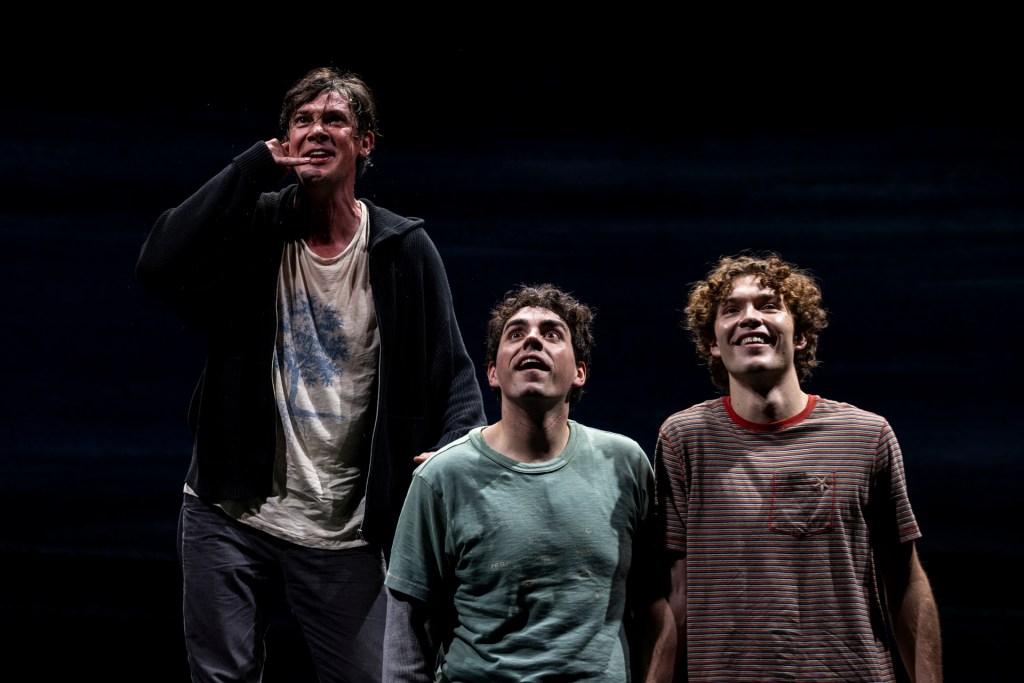
Schmitz clearly enjoys playing both the mild-mannered English Dad and the rougher, ruder Crow. Ella Butler’s dark-toned, layered costumes punctuate Crow’s presence, enhancing Schmitz’s performance. Dad walks—Crow leaps. Dad watches and thinks; Crow reacts and snaps. It’s a joy to watch.

Schmitz is joined on stage by Philip Lynch (The Lewis Trilogy) and Fraser Morrison (Cruise) as his two sons, along with composer Freya Schack-Arnott, who performs the cello-based score live. Lynch and Morrison cavort like children, bringing innocent, blunt acceptance to the strangeness of their new post-mum lives. Their narration blends childlike observations with future-adult rationalisations, giving the play the temporal elasticity of memory.

There is a strong echo of Patrick Ness’s 2011 YA hit A Monster Calls in the story. The opening moments are strikingly similar (a feather in a bedroom versus a leaf), and the transformation of unfathomable emotions into a supernatural force unfolds in much the same way—just swap Monster’s Yew Tree for Grief’s Crow. Max Porter’s verse, largely unaltered on stage, retains its lyrical mysticism, making this a far more successful adaptation than other stage versions of A Monster Calls I’ve seen. On a lighter note, some of the ‘da-dum’ sound transitions amusingly reminded me of TV’s Law & Order.
At 100 minutes, the show starts to feel a bit claustrophobic in its second half, with the oppressive world of black and grey wearing thin. Still, it’s more than worth enduring for the beautiful catharsis of the final moments.
 Cultural Binge
Leave a comment