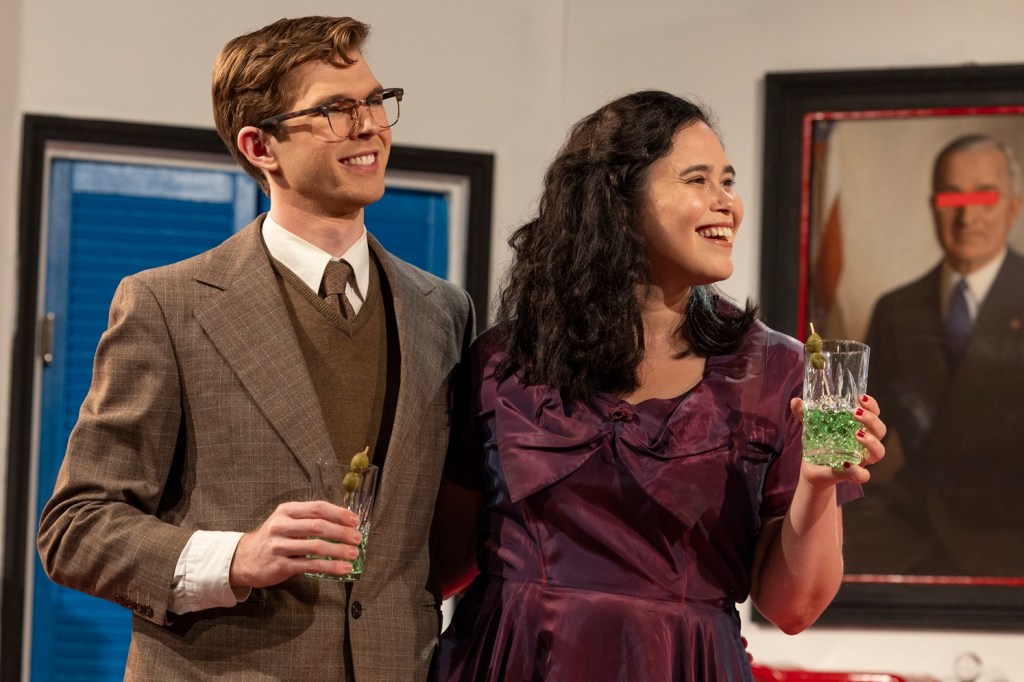
Written by Topher Payne. New Theatre presented as part of Mardi Gras+. 4 Feb – 7 Mar, 2026.
Watching Perfect Arrangement at New Theatre, my brain kept bouncing from one extreme to the other. Was I loving or hating this show? The reality is a bit of both. A major stylistic choice irritated me from the outset, yet the end result left me impressed and well entertained. Thanks to a sharp script and strong performances, the show ultimately shines through its own sometimes flawed execution.
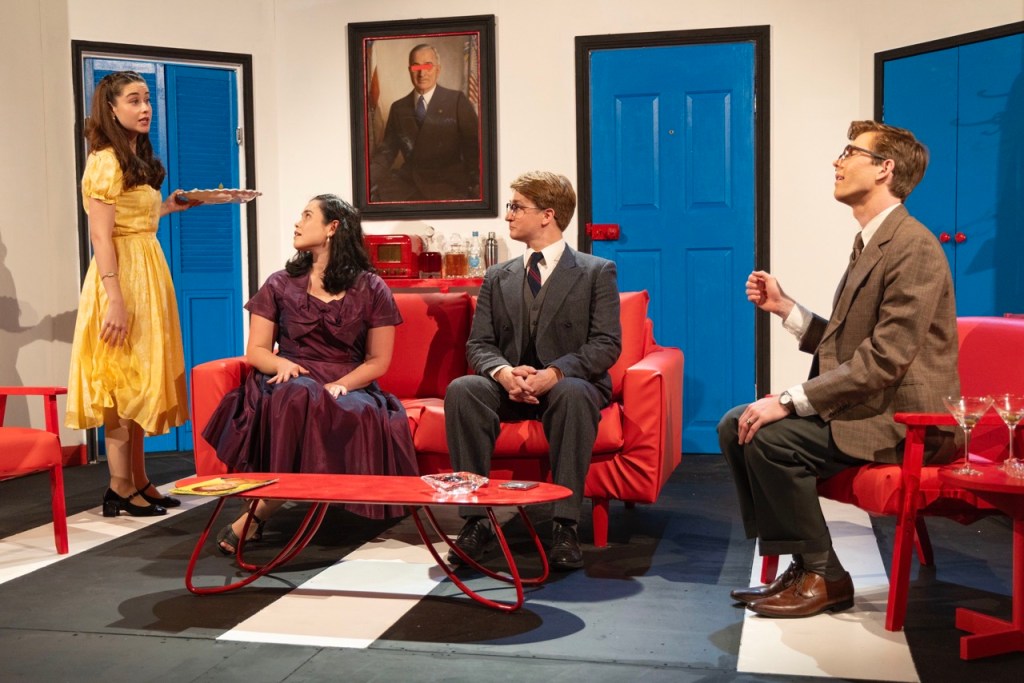
Set in 1950s America, on the cusp of McCarthyism, two employees in the State Department, Bob (Luke Visentin) and his secretary Norma (Dominique Purdue) have a serious problem. The emerging “Lavender Scare” strikes uncomfortably close to home for them both. Bob is gay and secretly in a relationship with Norma’s husband Jim (Brock Cramond), while lesbian Norma is actually with Bob’s “wife”, Millie (Jordan Thompson).
To make their dual lives work, the two couples live next door to each other, with a hidden passage in the closet allowing the real lovers to meet up without anyone outside knowing. This elaborate fake-out works just fine until Bob and Norma are tasked with rooting out homosexuals and communists in their own office. Matters become even more dangerous when one employee — the embattled bisexual Barbara Grant (Lucinda Jurd) — starts digging into their lives.
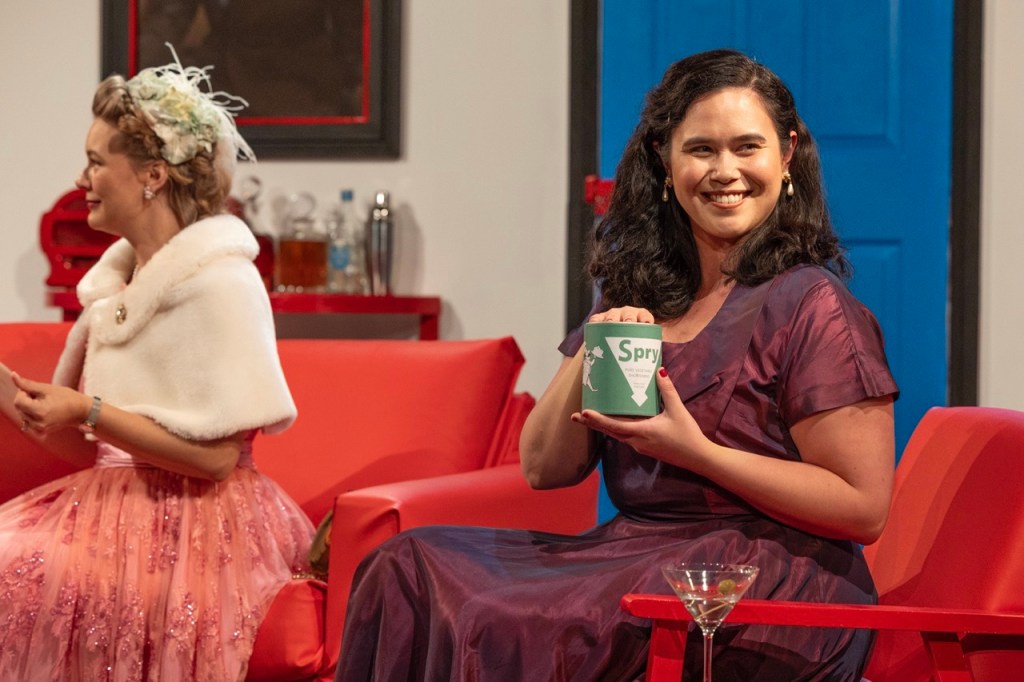
Let me get my biggest complaint out of the way early. The events of the play are dressed up like a 50s domestic sitcom, complete with ad breaks and a large studio “applause” sign looming above the audience. The stylistic flourish in the script aims to establish the juxtaposition between the “perfect” TV version of young married life and the messy reality they live in. It’s a gimmick, and a poorly executed one at that, making the whole opening scene an ordeal to get past. Once you do, things get progressively better.
Where playwright Topher Payne excels is in his plotting and construction. The comedic set-up is ripe for hi-jinx that feeds directly into the drama, with these two couples’ lives so intimately entwined that the emotional stakes feel genuinely high. As the unified quartet begins to fracture under mounting pressure, the story taps neatly into the real-world politics of the era — a time when LGBT men and women in corporate America began making themselves visible and demanding legal protections.
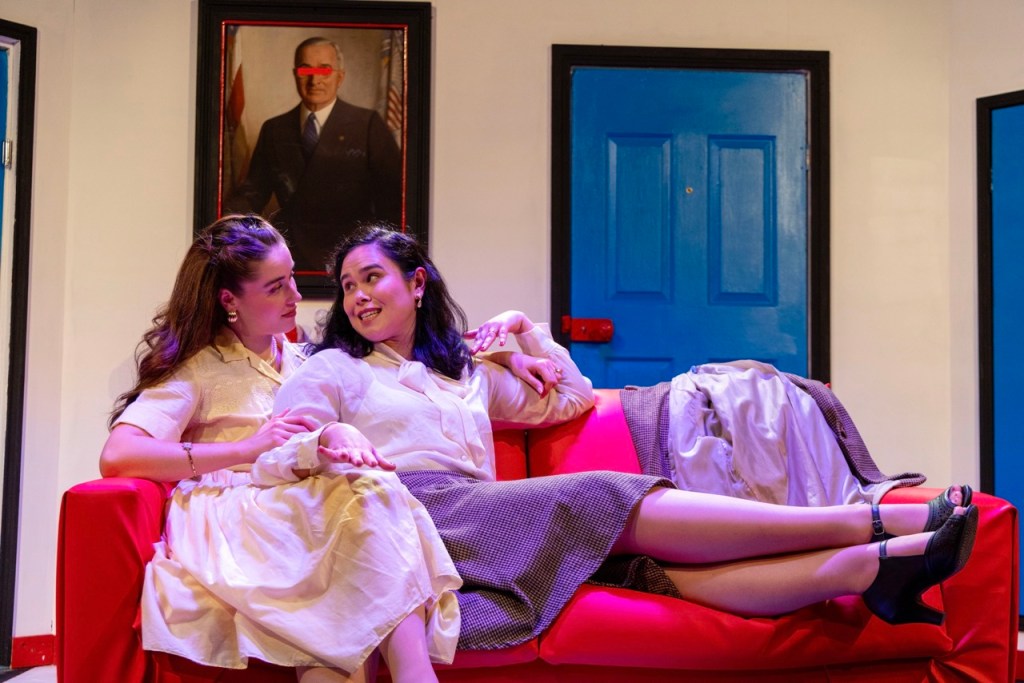
Payne’s writing finds a natural comedic rhythm that gives the actors room to breathe, allowing the humour to serve the drama rather than undermine it. The dual house arrangement is silly and over-the-top, just the fact these couples can’t simply live their lives and love who they choose. The fact that queer people had to hide at all is the biggest farce on this stage.
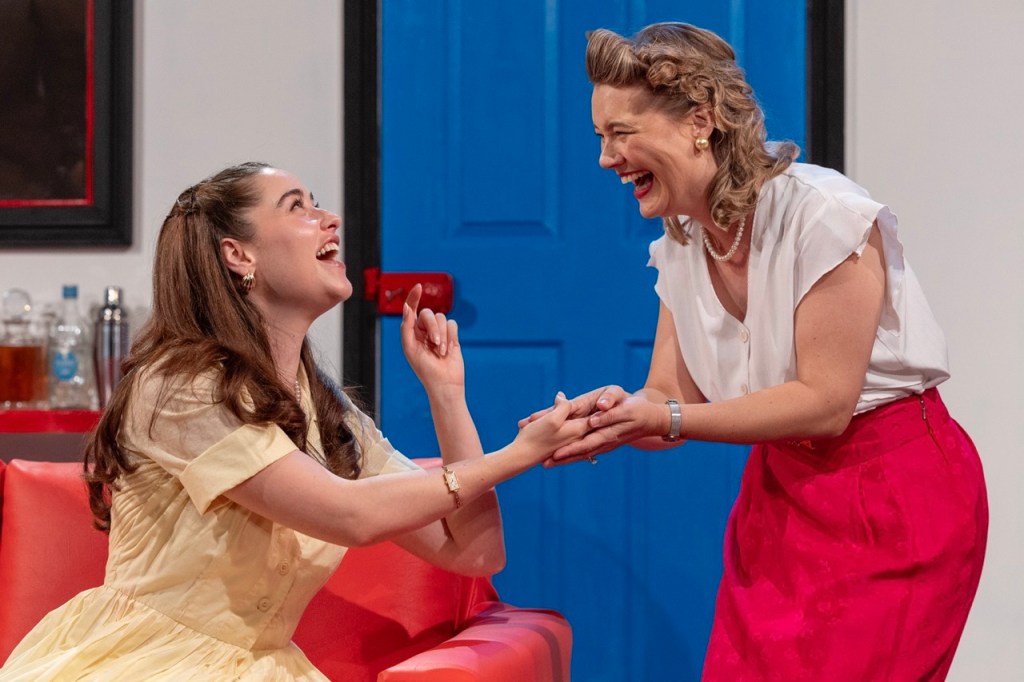
Thankfully the cast bring genuine emotion to the play with some excellent performances in which the women shine brightest. Dominique Purdue brings an officious toughness to Norma that plays beautifully against Jordan Thompson’s femme housewife Millie.
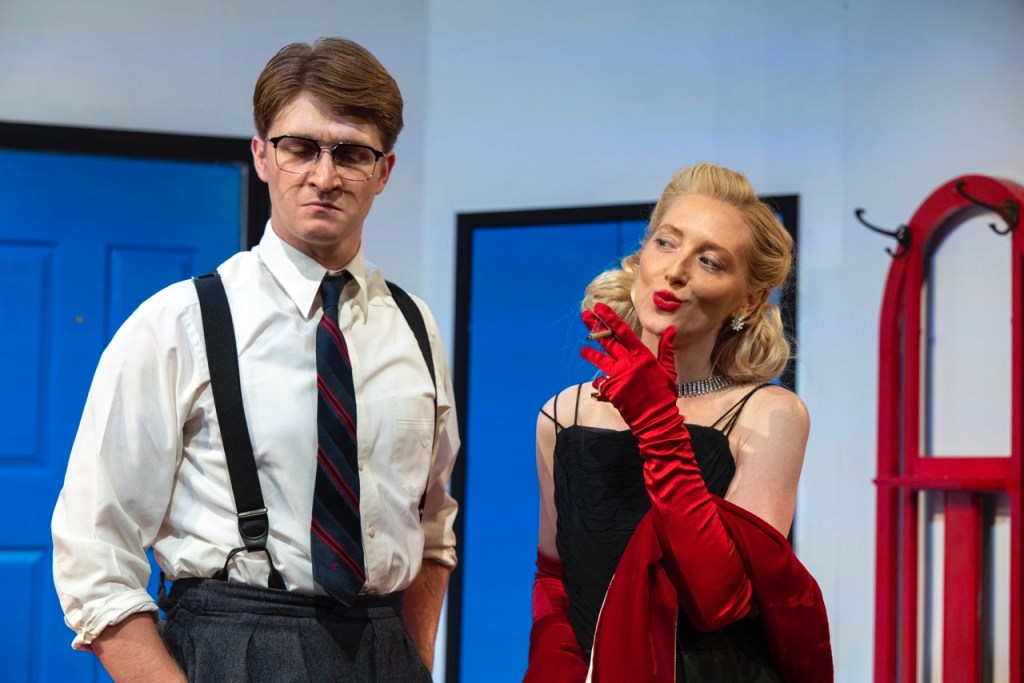
And the supporting roles are really elevated by two well pitched performances. Lucinda Jurd relishes the chance to play both vampy villain and moral compass with the fabulously multifaceted Barbara Grant. Brooke Ryan is outstanding as awkward older housewife Kitty, a woman with a head of stones and a heart of gold. She’s a scene stealer. While the men more than hold their own, it’s the women who are given the richest material to work with.
Director-designer Patrick Kennedy’s dual role is less successful. As a director Kennedy shows good instincts. After the deliberately stilted opening scene, the emotional realism of the performances takes over. The natural rhythms of the dialogue and character relationships begin to carry the audience along, and the warmth and honesty of the acting cut through the visual noise to deliver a genuinely fulfilling experience. This show is at its best when stripped back to its core.
But the show’s design is its real failing. The overly conceptual set detracts from, rather than adds to both the 50s realism and the heightened perfection of sitcom pastiche. The bold graphic colour scheme aims for “Bauhaus” (according to the Director’s Notes) but lacks the finesse of execution to pull it off, leaving us in a prison of clashing primary colours.
Despite its gauche visuals, Perfect Arrangement succeeds where it counts. A well-written script and a terrific ensemble of performers come together to overcome any missteps and, like the characters themselves, defy the world around them to bring their truth to the fore.
 Cultural Binge
Leave a comment