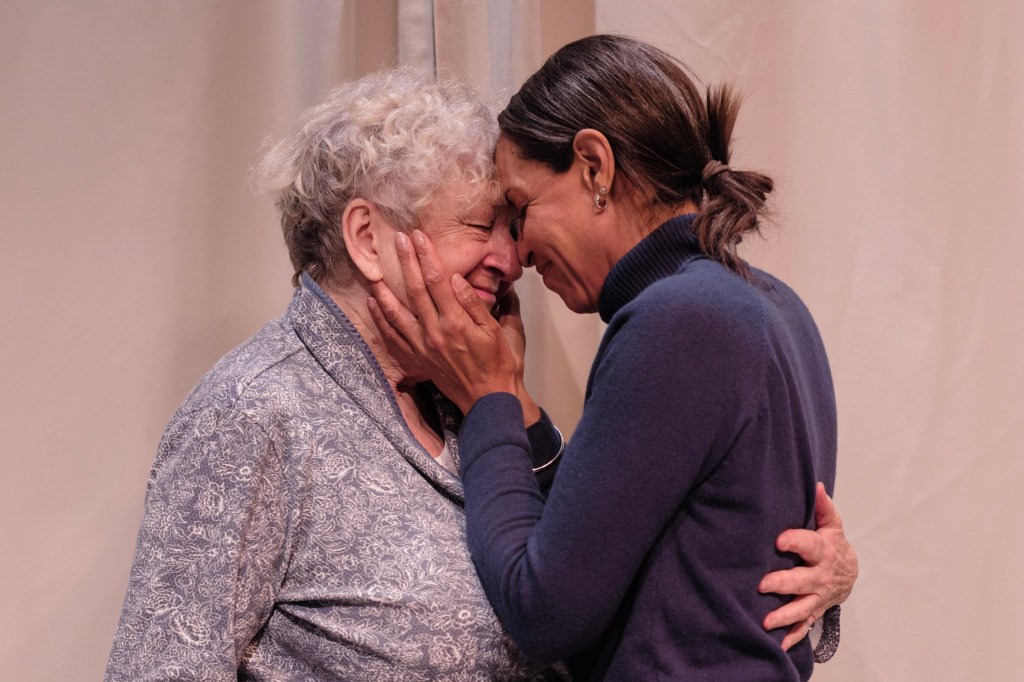
Written by Jennifer Lunn. Australian Premiere. Mi Todo Productions. Old Fitz Theatre. 13-28 Feb, 2026.
“Some girls marry girls – get over it,” says the fantastically precocious Kasia in Jennifer Lunn’s play Es & Flo.
The play charts the changing landscape of gay rights over the last 50 years, while also revealing how things that seem simple can be emotionally complicated for those who lived through harsher times.

Esme (Annie Bryon) is slipping from “occasionally confused” into “potential dementia”, and it’s taking a toll on her nearly 40-year relationship with Flo (Fay Du Chateau). Es, like many older people in her situation, doesn’t want to face the reality of what’s happening. For Flo, however, the stakes are immediate and frightening. If Es goes into care – or, God forbid, dies – Flo could lose not only her partner but her home and any say in what happens next. They’re not married, they’ve kept their relationship hidden from Es’s son, and the house is in Es’s name.
When Es’s son, Peter, sends in a part-time carer, the Polish Beata (Charlotte Salusinszky), and begins talking about moving Es to a care home closer to him in London, it becomes a tug-of-war. Who will Es give power of attorney to – her long-time secret partner, or her beloved (but often absent) son?
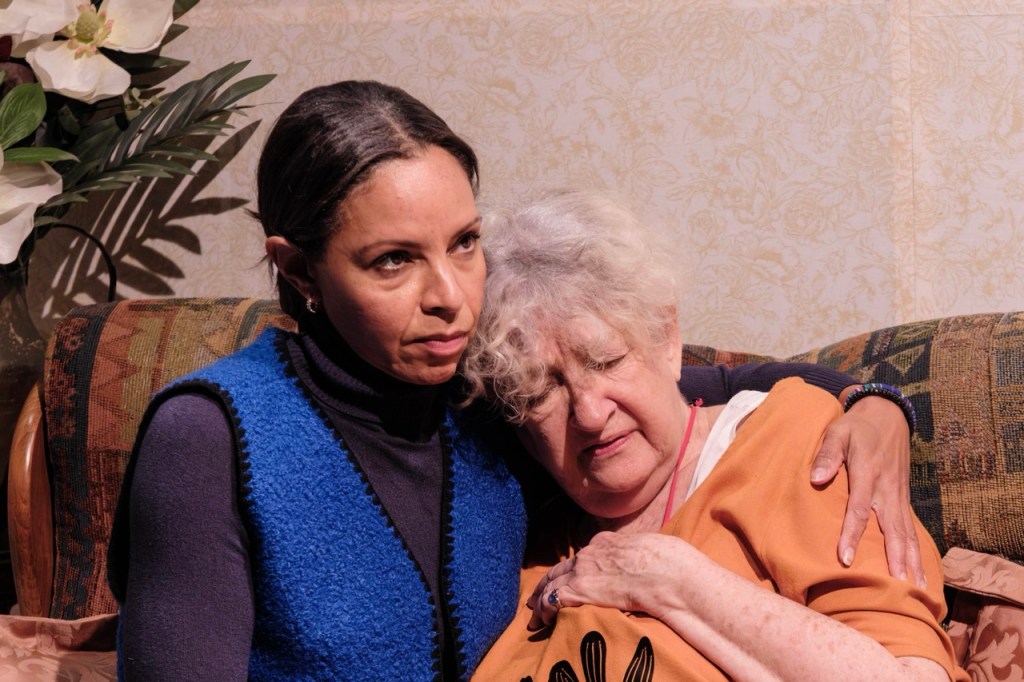
The beauty of Lunn’s script lies in the way it weaves British political history into deeply personal lives while building strong, believable characters. Es and Flo met at the Greenham Peace Camp in the 1980s, protesting against nuclear weapons at what became a political hotbed. Their same-sex relationship was later condemned under Margaret Thatcher’s infamous Section 28 legislation. These forces pushed schoolteacher Es further into the closet, fearful for her job and for her son from a previous marriage. Lunn also doesn’t shy away from exploring the racial dynamics at play on stage.
Director Emma Canalese brings these memories to life in scene transitions that sometimes feel overlong, washing the stage with projected photographs and fragments of memory, supported by evocative video and sound design from Aron Murray and Keelan Ellis. Soham Apte’s set has an intriguing impermanence – paper-thin walls heighten the unsettling atmosphere.
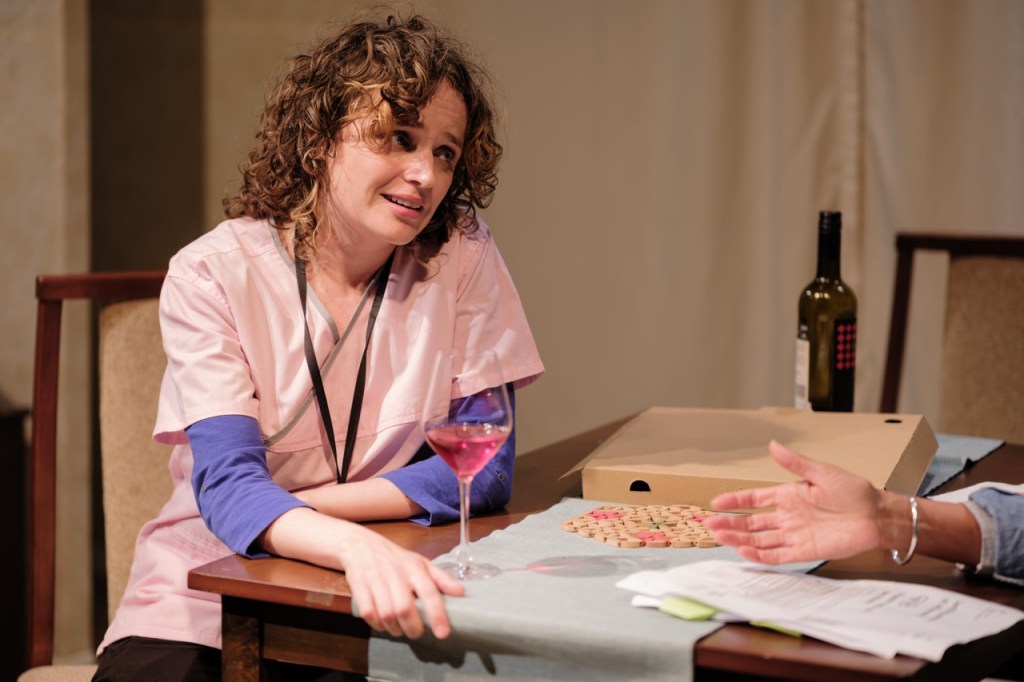
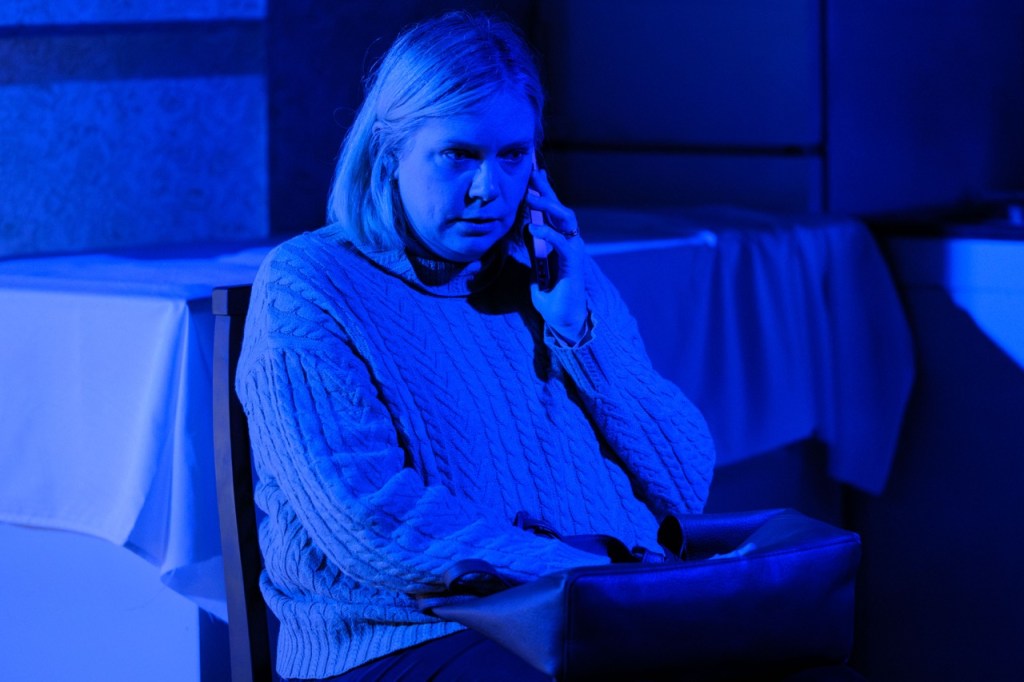
Where the script and production occasionally lack pace or tension, there are nevertheless some beautiful performances. Salusinszky’s Beata offers a compassionate voice of reason, trying to care for Es and support Flo without overstepping boundaries. Eloise Snape shines as Katherine, Peter’s wife, who undergoes the most significant transformation – a white, middle-class housewife exposed for the first time to the realities unfolding around her.
At its core are Annie Bryon’s Es and Fay Du Chateau’s Flo, who exude charm but never fully convince of the depth of their relationship. The more compelling connections emerge elsewhere. Es shares a natural affinity with Beata’s daughter, Kasia (Erika Ndibe), while Flo’s shifting dynamic with Beata carries genuine tension and momentum.
For all its discussion of dementia, elder care, long-held trauma and queer rights, the play’s most striking moment comes in its final scene, gently seeded throughout and landing on a note of grace. Some narrative threads remain unresolved, but the emotions are undeniable.
 Cultural Binge
Leave a comment