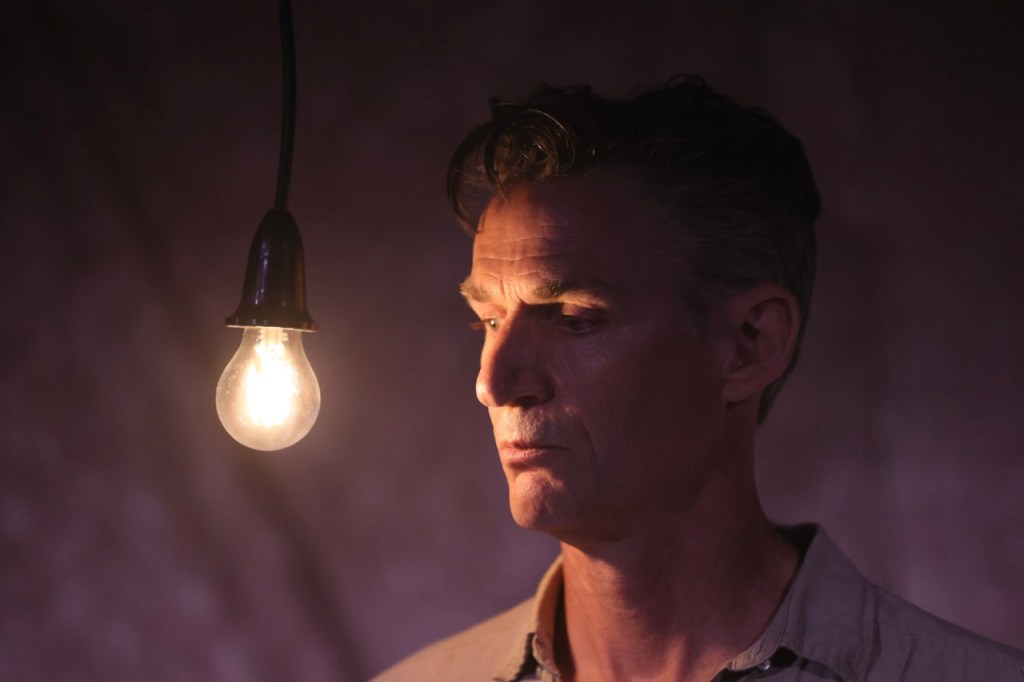
Written by T.S. Eliot. Presented by The Wounded Surgeon. Old Fitz Theatre. 16-20 March 2026.
T.S. Eliot’s epic meditation on time, humanity and divinity gets put on its feet for a late-night show at The Old Fitz — where the intimate darkness of the space, and the late hour, turns out to be a natural fit. And to be clear: this is nothing like Cats.
Eliot’s Four Quartets is made up of four poems — Burnt Norton, East Coker, The Dry Salvages, and Little Gidding — written as the world irrevocably changed around their author in the late thirties and early forties. These are works of spiritual seeking and anguish: Eliot wrestling with mortality, God, and the search for meaning, starting before World War Two begins and deepening as the conflict tore across Europe. Deeply rooted in his Anglicanism but reaching into Buddhist philosophy, he arrives at a vision of the divine that can only be approached by abandoning the very striving we instinctively bring to difficult things — the need to grasp, comprehend, and resolve.
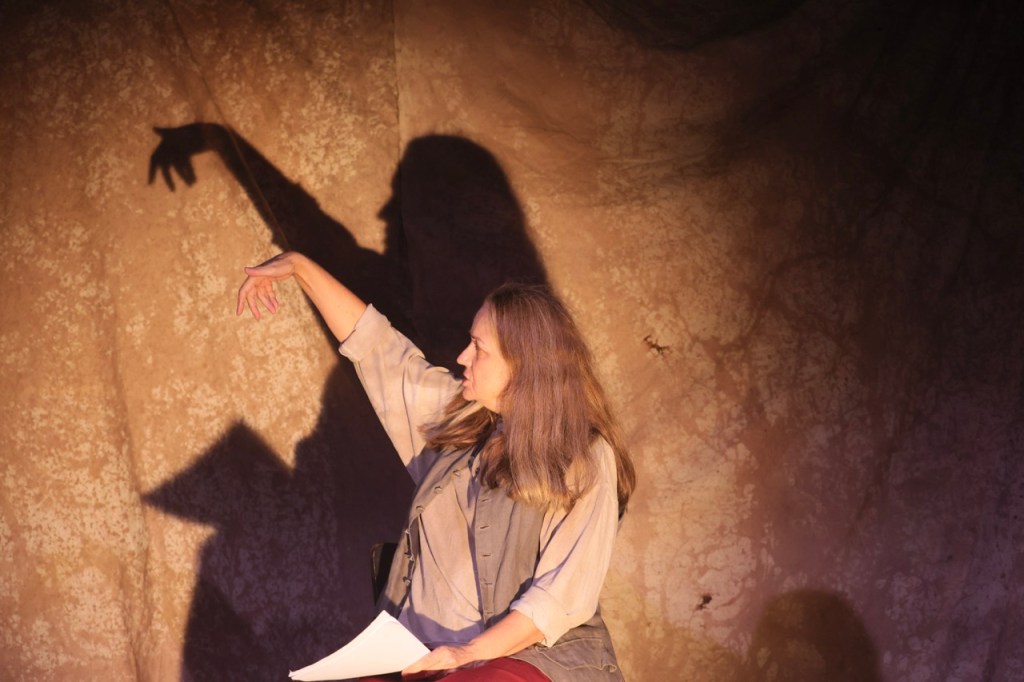
Eliot is also a master of form. Each poem is loosely structured like a classical music quartet (hence the title) with a lyricism and metre that carries you through some pretty dense liturgical imagery and complex philosophical terrain. Each is anchored to a specific place, from the Cotswolds to the Massachusetts coastline, and each references one of the four classical elements. There are layers here to luxuriate in, these are rich works that reward further study.
Which makes the production’s central challenge a fascinating one. Each poem is presented as a monologue by a single performer in turn — Sandie Eldridge, Grace Stamnas, Charles Mayer and Kaivu Suvarna navigating these non-linear passages as both dramatic works and spoken-word poetry. Getting the cadence right, finding the understanding underneath the language is no small ask. While they all speak with Eliot’s clear voice, each performer brings a slightly different colour to the material, giving the evening a clear sense of progression.
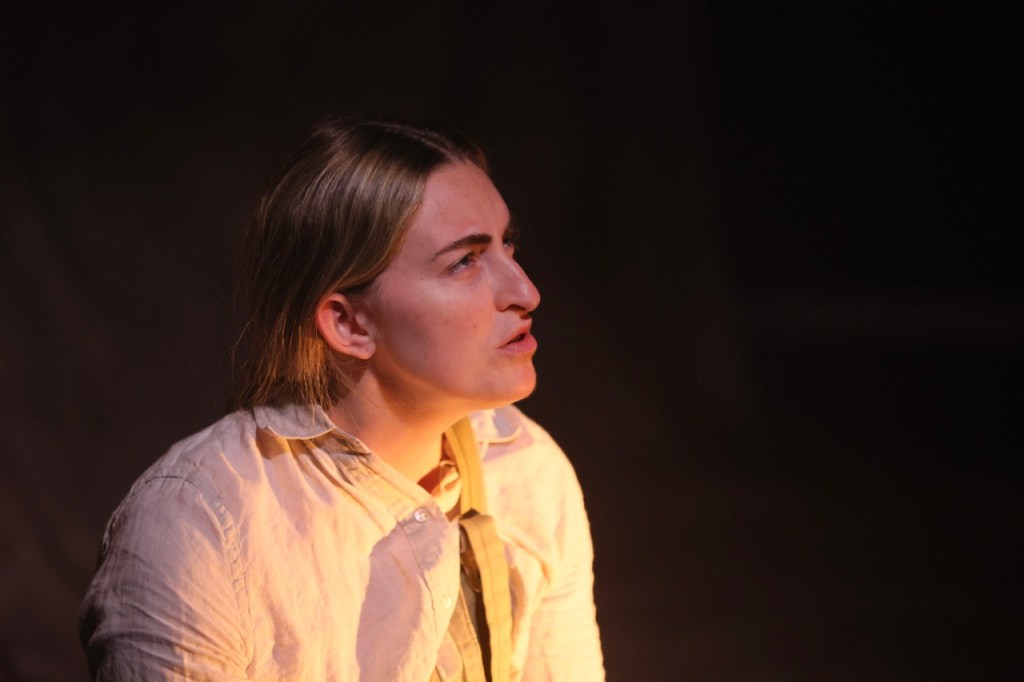
Under Patrick Klavins’ direction, with Topaz Marlay-Cole’s lighting, Jamie Hornsby’s sound design, and Bella Saltearn’s earthen set and costumes, there’s an almost rural, organic earnestness to the staging. A few props and simple blocking keep things alive without pulling focus from the heady material. It grounds us so that the elements of avant-garde can’t overpower the emotion.
What the theatrical format does best is enact Eliot’s own instruction. These are poems you go along with rather than dissect — you let the language carry you, resist the urge to pin every image down. Just as Eliot preaches the abandonment of attachment as the path to the divine, the only way to truly receive this work is to loosen your grip on comprehension. The late-night setting helps with that. You arrive already disposed toward mood over meaning. At a tight sixty minutes, the production has the good sense to trust the material and get out of the way.

It’s confronting to sit with this work right now, when the world seems permanently on the brink and the lessons of the great wars feel all but forgotten. As events around us grow in scale from the transformative power of AI to repeated shocks of war, Eliot’s meditations speak to our sense of existential insecurity – which for Eliot came from surrendering to the divine. Would that we could face the horror of humanity’s capacity for evil with even a fraction of Eliot’s rigour, honesty, and poetry.
Four Quartets won’t be for everyone — and it’s worth being straight about that. If you’re not already disposed toward poetry, or you need drama to come with plot and conflict, there’s a real chance this will be a slow, bewildering night. Eliot doesn’t meet you halfway. But if language moves you, if you’re drawn to the big unanswerable questions, if you’re willing to sit in the dark and let something wash over you without demanding it explain itself — this can be genuinely magical. The kind of evening that follows you home. Go late, go open, and leave your need for answers at the door.
 Cultural Binge
Leave a comment