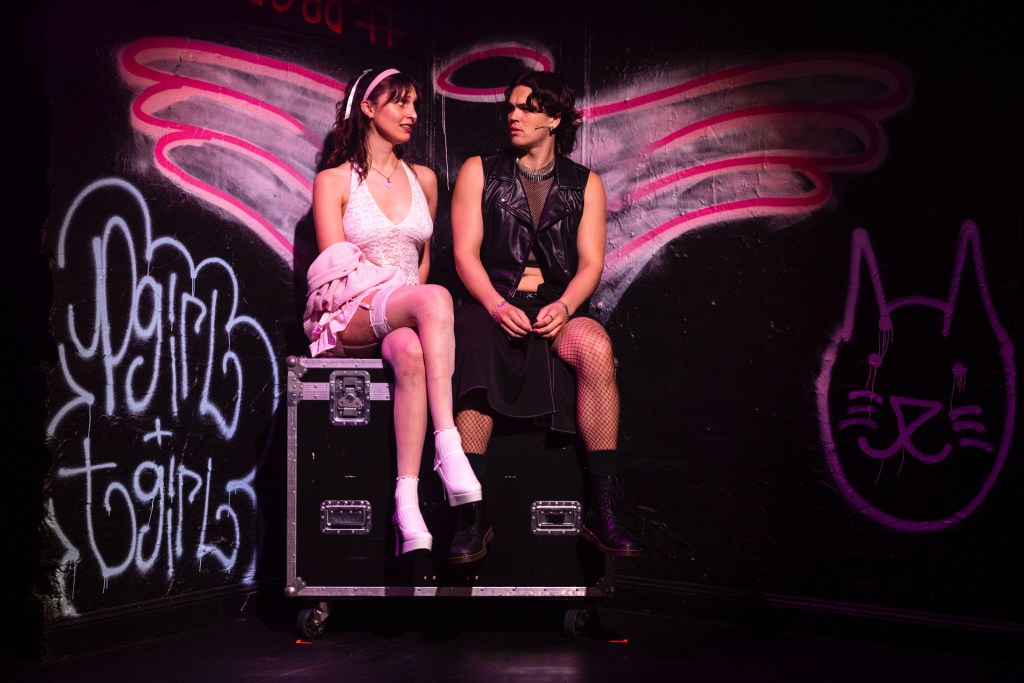
Written by Cassie Hamilton. Presented by Green Door. Old Fitz Theatre. 26 Mar – 11 Apr, 2026.
This is A LOT – in a hectic, whirlwind, fun way. Taking on the aesthetic assault of hyperpop with a deep dive into transgender storytelling, A Transgender Woman on the Internet, Crying gets into the complex details with a sense of glee and abandon. If you’re feeling starved for new stories on stage – this one’s for you.
Transgender social media darling Avis (Cassie Hamilton) is chronicling her transition journey online and using her (primarily cis) fanbase to help her decide all her next moves. And now that she’s had her bottom surgery, she’s looking for love (ideally with a cis man, but she’s not saying that bit out loud). Meanwhile upcoming transfemme hyperpop DJ Mouth Feel (Rosie Rai) has no time for the doll-like Avis and what she sees as her comphet, bio-essentialist, cis-friendly worldview. Infuriated by her popularity, she wants to dig up Avis’ dirt and take her down. So she enlists her keyboard warrior friend Corrin (Blake Appelqvist) to befriend Avis and find out her secrets. But as Corrin 10-Things-I-Hate-About-You’s Avis, they find themselves maybe, actually, IRL – falling in love.
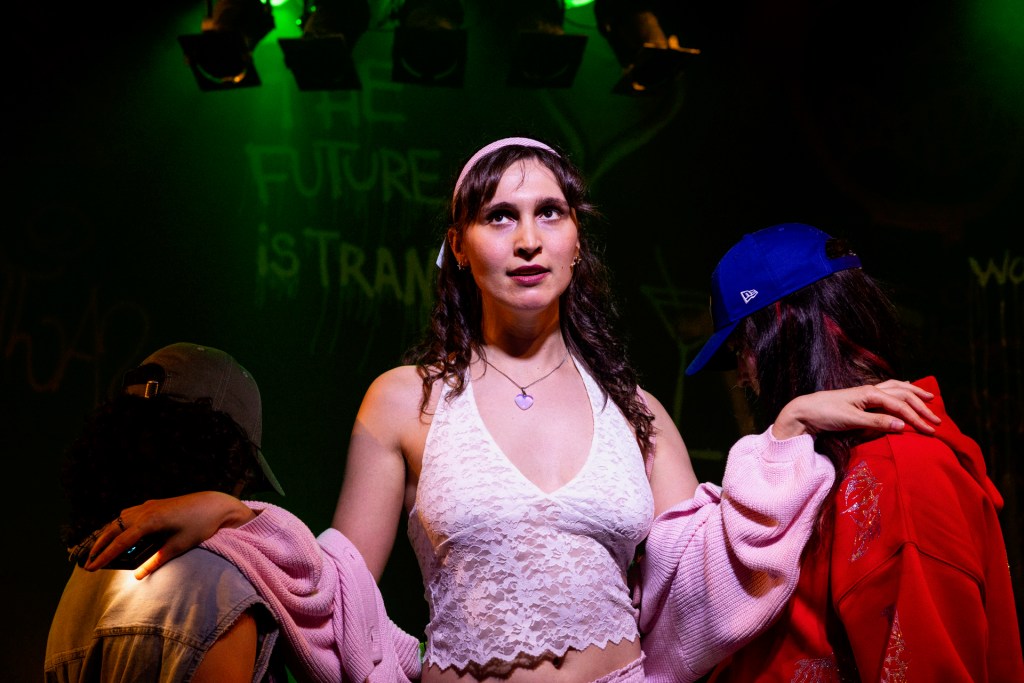
It’s a plot we’ve seen before. The protagonist tricks someone into thinking they’re in love on a dare but — plot-twist — actually falls for them, and things turn sour when the truth is revealed. Familiar as it is, it gives the musical a clear dramatic structure, which matters, because the specificity of these characters can get hard to follow. An easy-to-digest plot gives the audience a north star.
After debuting at the 2024 Adelaide Cabaret Festival and giving audiences a taste at Hayes Theatre’s Festival of New Work in 2025, this first full staging feels like an exciting next step — and hopefully not the last.
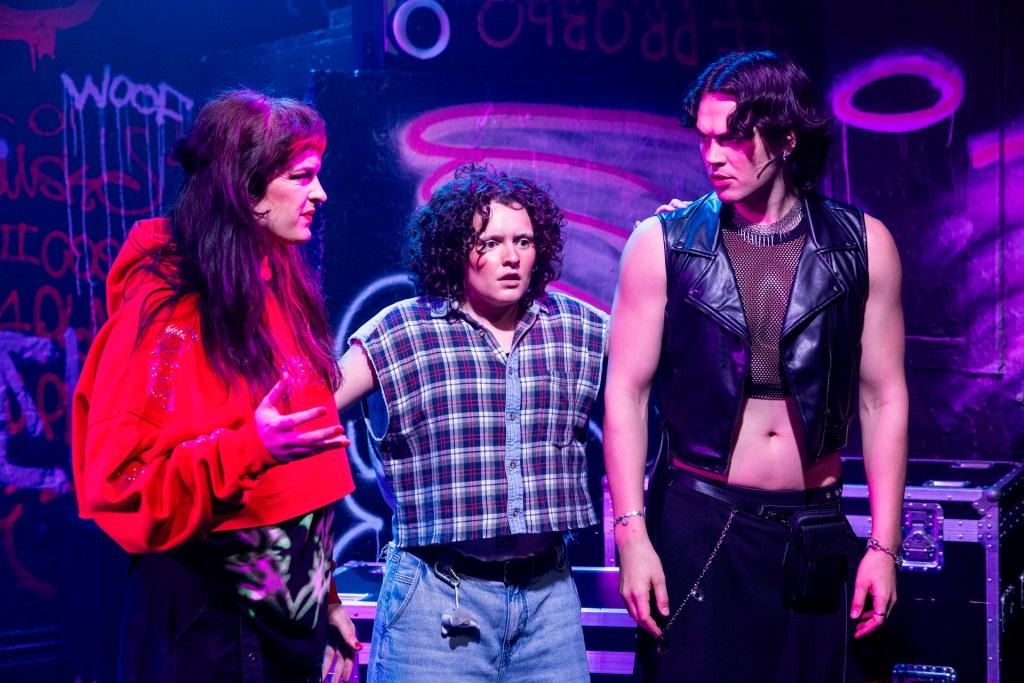
Bringing hyperpop into musical theatre is, on one hand, a perfect fit — they both love big emotions and a catchy hook, and there’s an unbridled sense of emotional release in both that sits well together. But hyperpop presents real challenges: its sheer artificiality can cut against genuine emotion when it’s most needed, its wall-of-sound production de-emphasises the lyrics that theatre depends on, and its relentless intensity leaves little room for the dynamic variation a full evening requires. As the genre has matured and been absorbed into the wider world of commercial pop (“Brat summer” anyone?), it has become more amenable to narrative storytelling — and Hamilton’s score finds a smart middle ground, hitting hyperpop’s signature moves while blending in more familiar musical theatre forms when the drama needs clarity and breath.
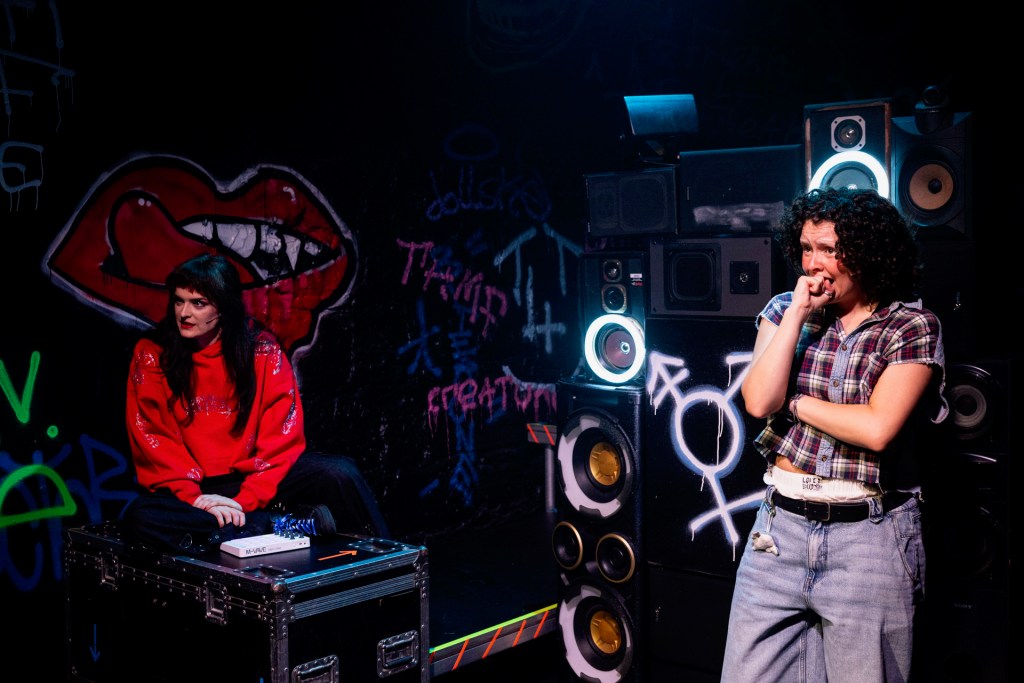
The real exciting thing about ATWOTIC, though, is its evolution of trans stories on stage. This may be the first time I’ve seen a broader sense of the multiplicity of the trans community represented theatrically, and it opens up refreshing narrative avenues. Where recent plays have been content to pat themselves on the back telling audiences things they already know, ATWOTIC offers a glimpse into lives less familiar. It could benefit from laying out its internal community politics with more finesse for the uninitiated — a clearer directorial and dramaturgical hand would do wonders — but the ambition and fresher point-of-view are exciting.
If you’re worried about being bogged down in unfamilliar politics, never fear. The debate about who is “the right kind of trans” could translate to almost any arena. Who is “the right kind of immigrant” or “the right kind of progressive” or “the right kind of Christian/Muslim/Jew”? Humanity loves to argue about who is the most righteous, regardless of the arena.

Another strong part of the storytelling is its critique of performative social media. For many in the LGBTQIA+ space, online communities can be an affirming safe haven — but there is also a deeply toxic side, and ATWOTIC highlights the irreplaceable need for actual human connection. Followers are no substitute for real friends who can hold you when you need it most. The exaggerated hyper-connectivity of the internet is a cold and shallow mirror compared to the kaleidoscopic, rewarding chaos of real relationships.
For all its sometimes confusing jargon and occasionally incomprehensible lyrics, I found myself smiling all the way through. Don’t worry about the musical style or the trans politics — I guarantee they won’t be what you’re thinking about as you leave the theatre. You’ll walk away with a simple sense of joy at seeing complicated people find community and a space to be themselves.
 Cultural Binge