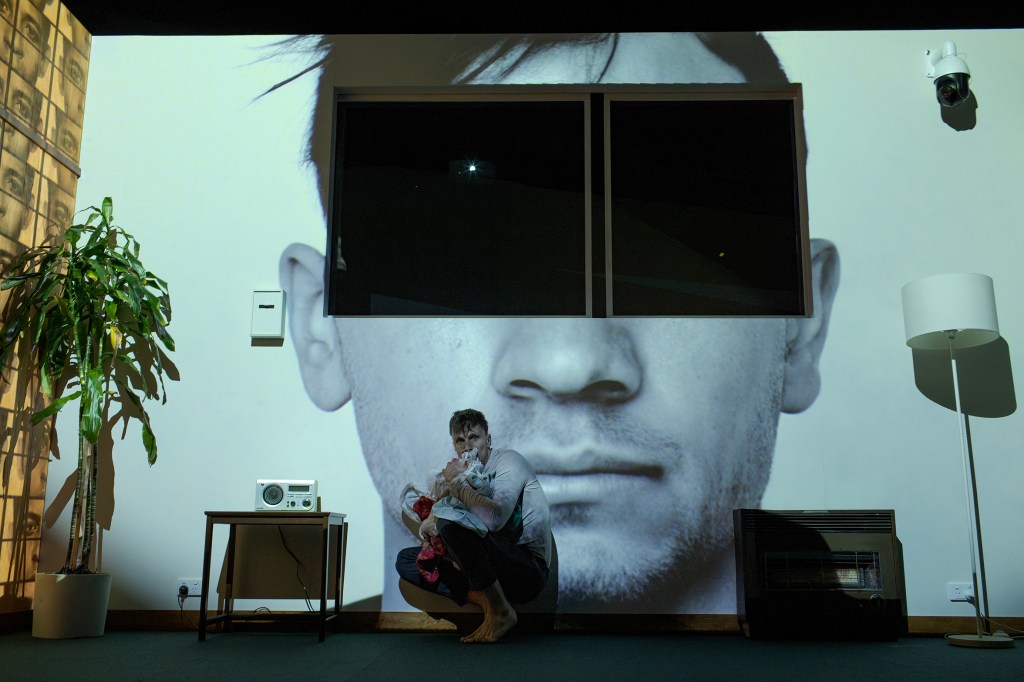
Written by Enda Walsh. Australian Premiere. Seymour Centre. 2-24 Aug, 2024.
Arlington is the sort of play that gets under your skin. Channelling the nightmares of Caryl Churchill through the class-war angst of 2016, Enda Walsh taps into the existential anguish that hums beneath modern life. This play will be divisive – multiple people walked out of the opening night performance. That rarely happens.
The marketing may tout this as being from “the Tony Award-winning writer of Once” but get that tender and sweet musical out of your head – this is the polar opposite. Some of the obvious touchpoints would be George Orwell’s 1984, and the TV series Black Mirror, but there’s clearly a lot of Kafka in the mix as well. Arlington will hint at backstories and meanings, but defiantly withholds details just to play with your mind. I instantly thought of 60’s British TV shows like the mind-bending The Prisoner. There is a gleeful sadism both in the story, and in the writing.
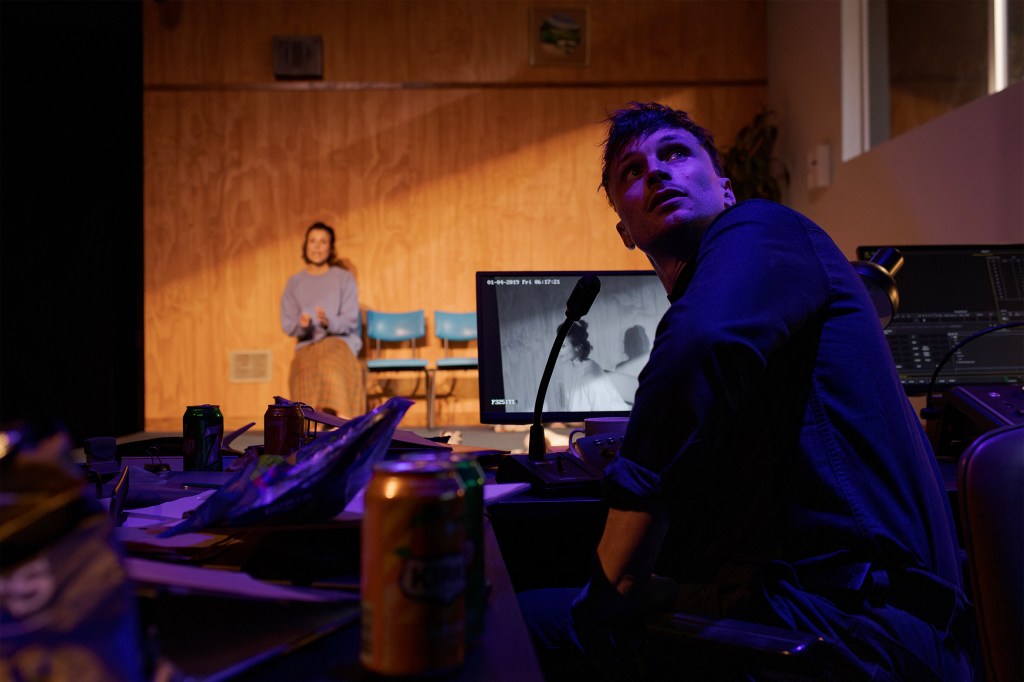
Told in three scenes, which are not in chronological order, we begin with Isla (Phaedra Nicolaidis) in a waiting room. She is being remotely observed by a young man (Jack Angwin) who seems flustered. Via intercom he instructs her to begin, and Isla tells a story as he records. Isla is torn between her engaging tale, and the thing she saw out the window earlier when the curtains had mysteriously fallen off – people outside, in identical tower blocks and identical waiting rooms…
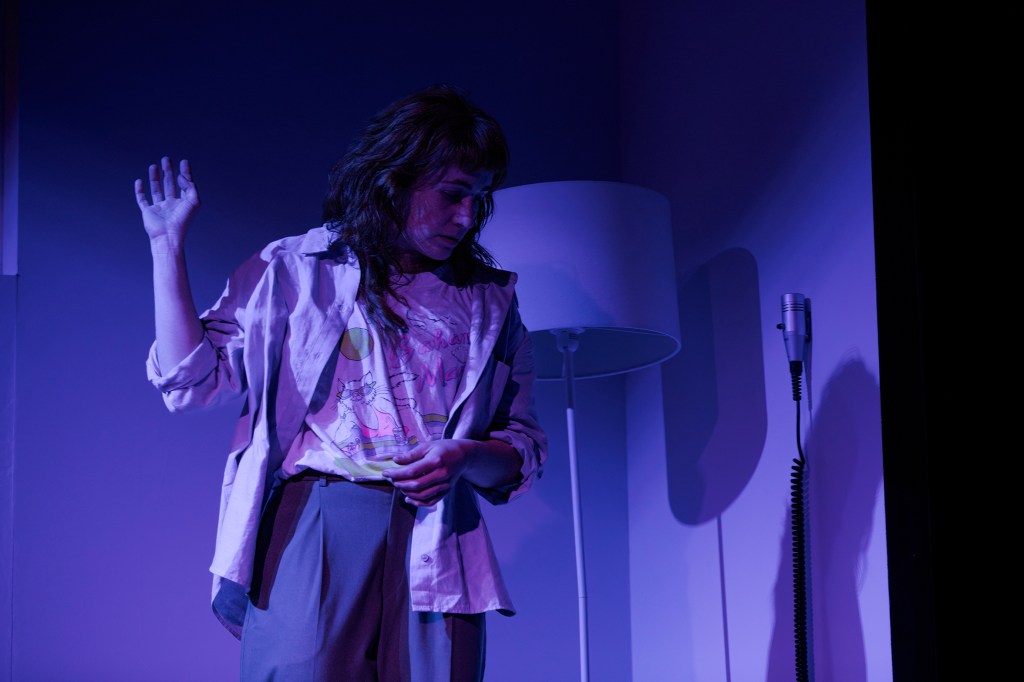
In scene two, the most controversial of the three scenes, a woman (Emma Harrison – also the show’s choreographer) sits in a similar waiting room. As she waits, and waits, her movements become an erratic and unstable dance, a decaying repetition of cycles. This 25 minute scene, told entirely through dance, becomes the catalyst for the rest of the play.
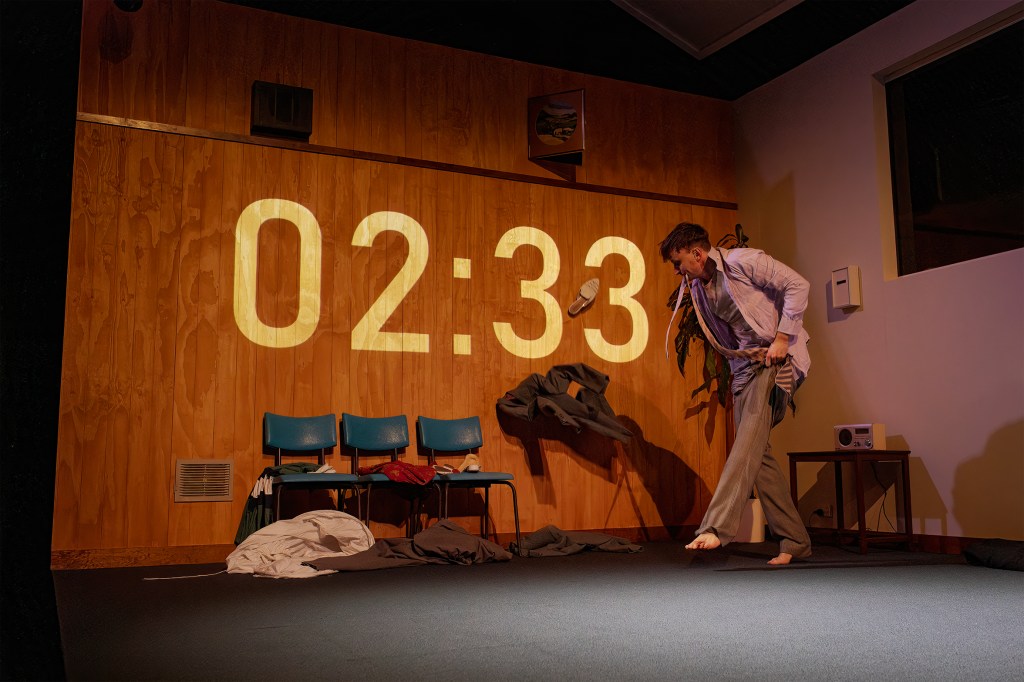
The final scene sees the young man return, this time he himself is in a waiting room under surveillance from another woman (Georgina Symes) intent on interrogating him while he waits for his chance to earn some food and sleep.
Arlington is a dark play, and those looking for glimmers of hope or neat resolutions will do well to look elsewhere. Walsh takes the tensions of the wealth divide and institutional power and pushes them into a different, dystopian place. His lack of exposition lets this play out like a good horror story – it’s mainly happening in your own imagination where you can’t escape.
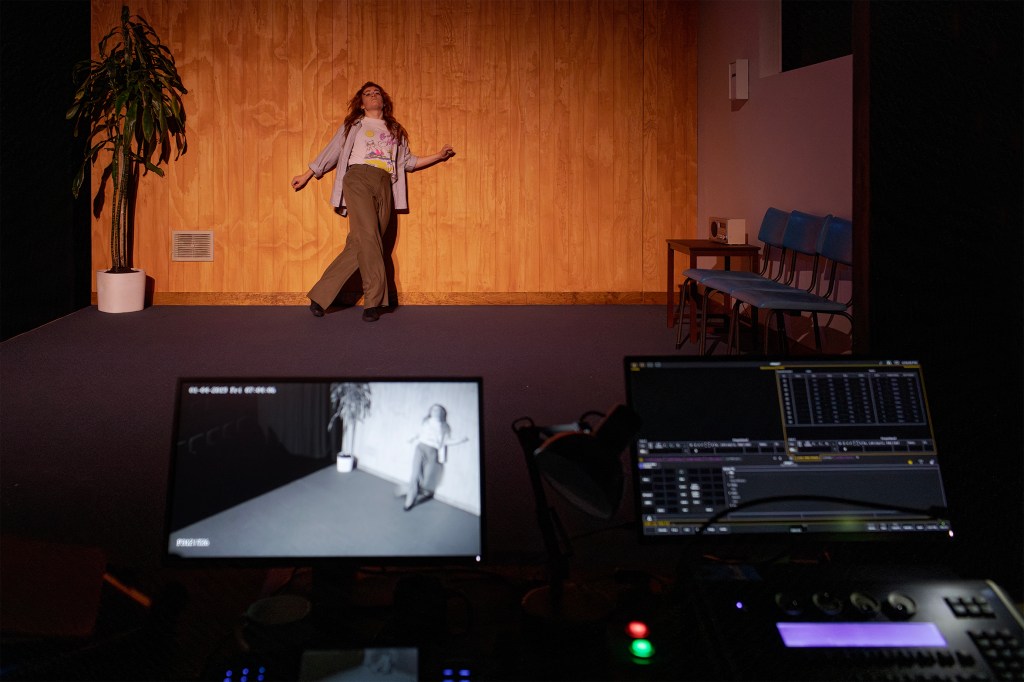
Watching Arlington was at first intriguing, then frustrating, then annoying, then intriguing once more and finally satisfying in a way I didn’t expect. The dance scene pushed the limits of my attention span, but its resolution and impact are felt more keenly after going on its journey. Could it have been told more quickly, in a more conventional manner? Sure, but this bold choice is what makes Arlington unique and ties back into Walsh’s own work, feeling like an outgrowth of his other musical, 2015’s claustrophobic Lazarus (a show that infuriated me so much I went back to watch it a second time to make sure of how I felt).
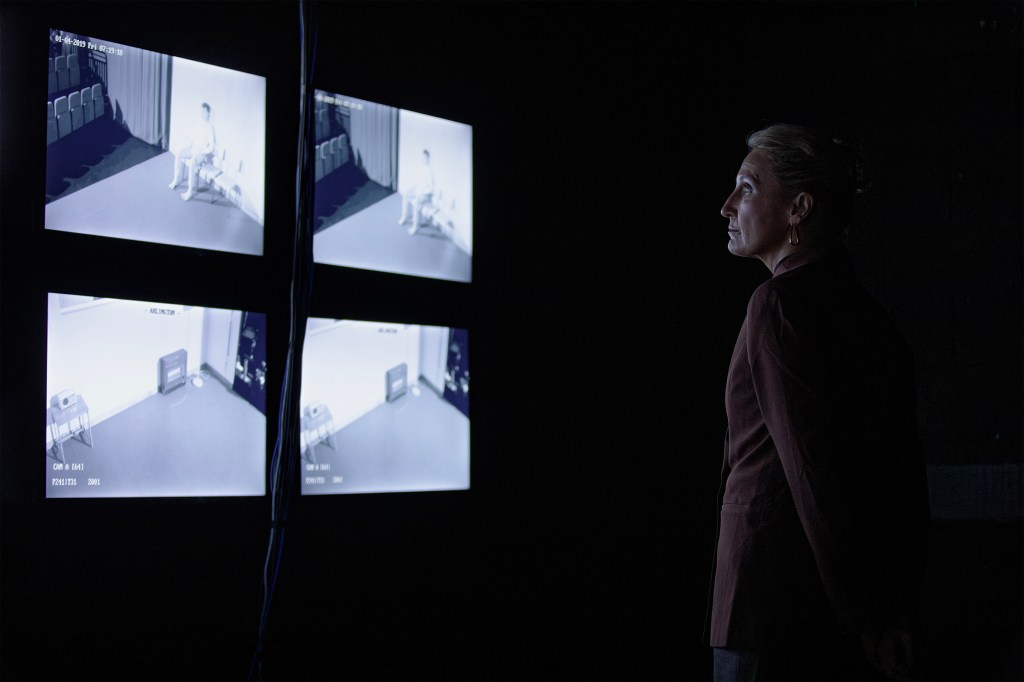
Despite being written in 2016, it feels sharply contemporary with its themes of isolation, mental health and how the need for entertainment can drive society to dark places. I was always baffled in 2020 (and selfishly grateful) that in the height of the Covid pandemic, making reality TV was deemed an “essential service” that continued during lock-down, which eerily echoes the world of Arlington. Except in Walsh’s conception the idea of “bread and circuses” is turned back on the poor & middle classes as a punishment, forcing them to entertain others for basics like food and shelter.
The performances are all excellent. Nicolaidis’ pixie-esque charm skirts the line between she’s-broken-and-crazy and she’s-innocent-and-pure. Angwin goes through the largest story arc as a young man who makes a single, life changing decision. While Symes brings a harsh authoritarian chill to the closing scene.
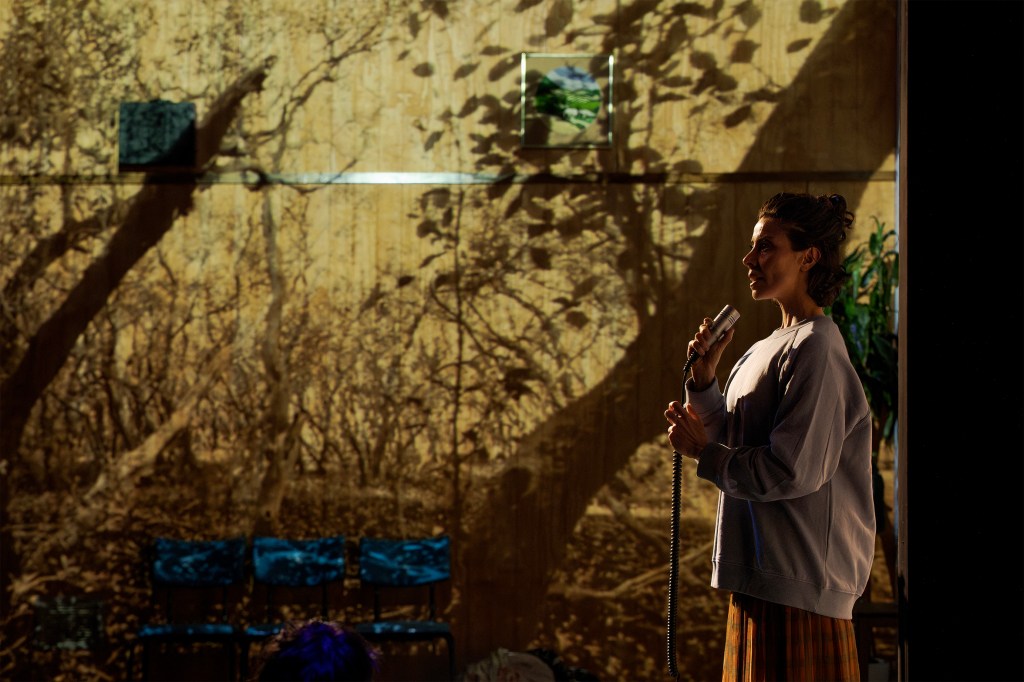
But it’s the production elements that really excel here, especially the lighting and video by designer Aron Murray, and the music and sound design by Steve Toulmin. Toulmin’s sound especially has a major impact as a tool of interrogation, wearing the characters down and jumping us through their fractured mental states.
Arlington will definitely not be for everyone. It’s a challenging piece, both in its form and subject. Walsh seems intent on making us question society’s structures and how they are evolving, without giving us any easy answers or release. The result is unsettling and rewarding.
 Cultural Binge - Independent Theatre Reviews
Leave a comment