
Written by Tue Biering. Sydney Festival. Sydney Town Hall. 9-23 Jan, 2025.
Cycles of American violence are at the heart of Dark Noon, a retelling of America’s “wild west” mythology, this time with the insight of history and the clarity of an outsider’s point of view. But be warned, it’s confronting, and for those in the front row, unexpectedly interactive.
Written and directed by Danish theatre-maker Tue Biering and choreographer/co-director Nhlanhla Mahlangu, created through workshops with an African cast in Johannesburg, Dark Noon untangles the tropes of the spaghetti Western, inserting the brutal realities behind the cinematic visions and putting the evils of colonialism, greed, and lawlessness front and centre. Told in nine chapters over almost two hours, the show hums with an anger that undercuts its multiple comedic beats. It is fun and very funny, but you’ll never forget there is a bedrock of injustice and cruelty underneath.
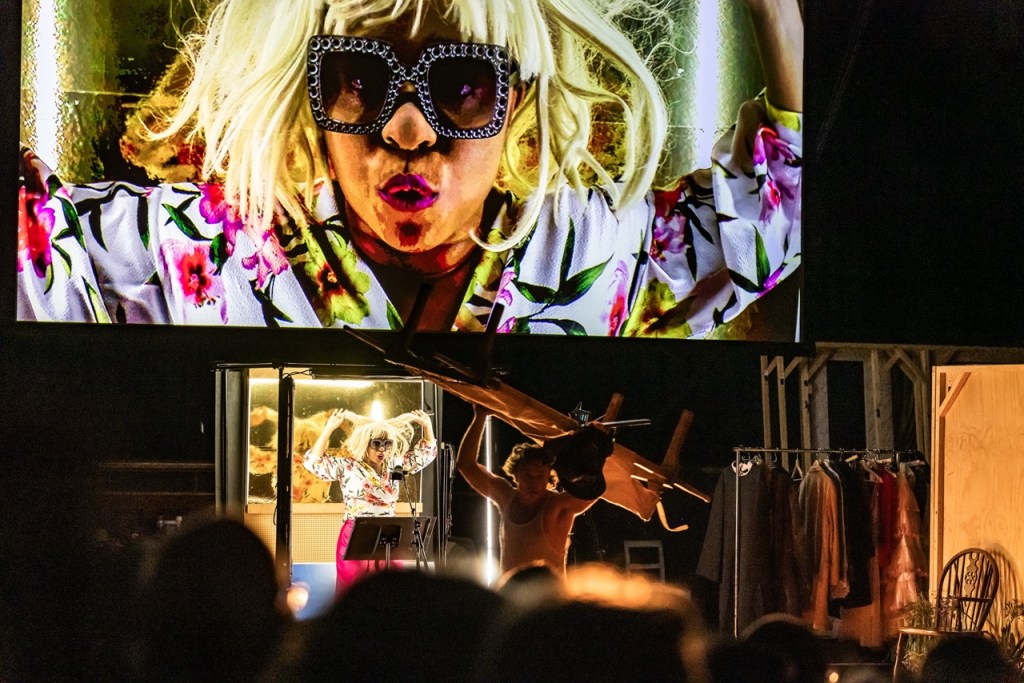
Spread out on the expansive floor of Sydney Town Hall, the audience watches a frontier town being constructed, building by building, around a railroad track. From an open expanse claimed by Europeans desperate for a new beginning (murdering or displacing the indigenous population), through the cold-hearted avarice of the “gold rush” years, the myth-making of Little House on the Prairie, Chinese immigration, and the growing divide between East and West Coasts, Dark Noon covers a lot of ground. But it’s not the specifics of each era that stick in your mind; rather, it’s the base reality of human nature.
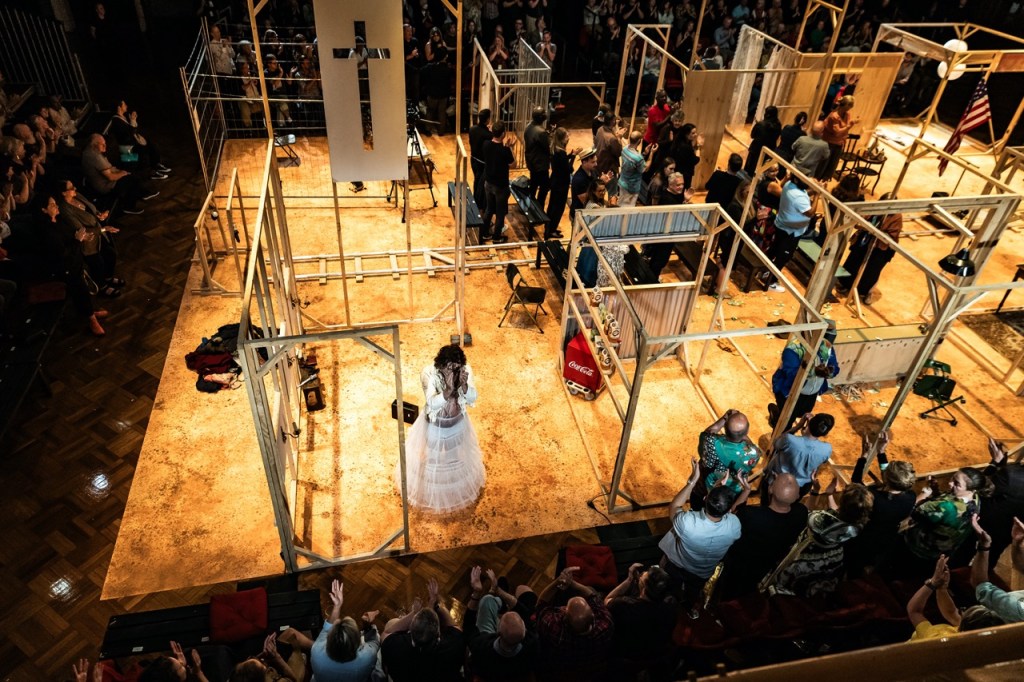
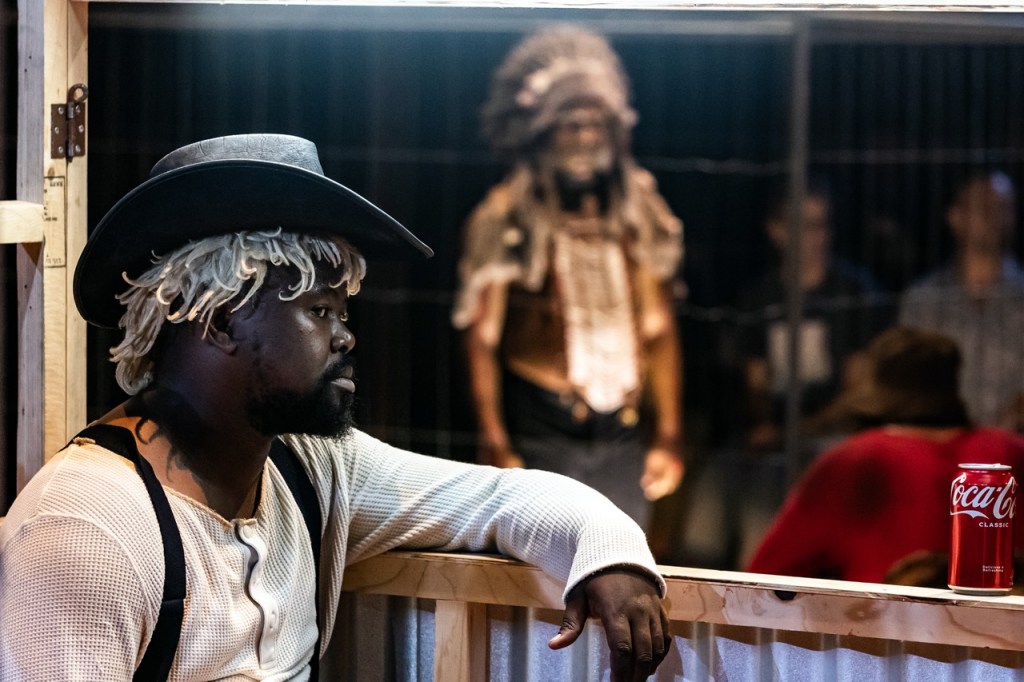
The cast of seven (Bongani Bennedict Masango, Joe Young, Kaygee Letsholonyana, Lillian Malulyck, Mandla Gaduka, Siyambonga Alfred Mdubeki and Thulani Zwane) jump between multiple roles, break the fourth wall, and narrate the story as they go. They deliver very physical performances, including some rich singing, that fills the space. Each knows how to turn on the charm and draw the audience in before flipping to their more dangerous characters – we never get to relax in their presence for too long.
I walked in expecting an anti-colonial message, but what you get is much more than that. Cycles of selfishness and greed breeding cycles of violence and desperation. Men unbound by society turning to their animalistic natures. Lawlessness vs. “civilisation” is played out in different ways at different times. Dark Noon reminds us that modern society is a veneer, and it doesn’t take much for people to revert to (and sometimes revel in) their own barbarism.
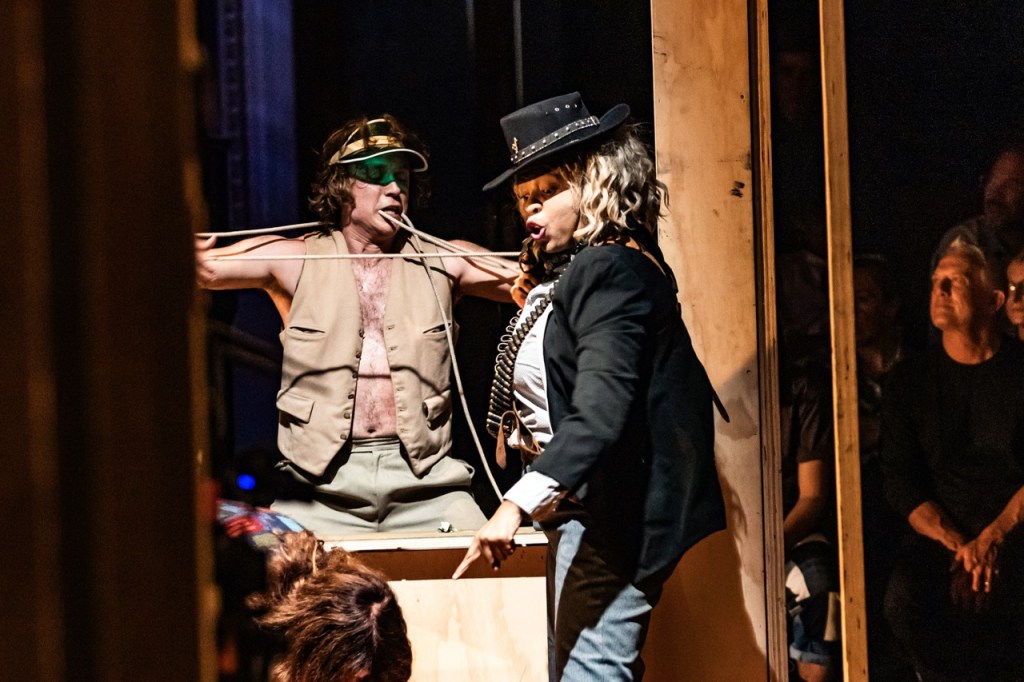
Now, let’s talk about the most potentially controversial part of the show. No, it’s not the vast generalisations about the sweep of history or the violence. It’s the audience interaction. Perhaps we’ve all gotten a bit too polite, but those brave/unfortunate souls in the front row are often thrown into the action with little awareness of what’s coming, and the social pressure to join in with a smile is high. The fact that these “fun” moments take a darker turn has a greater narrative point, which is well taken, and most of the participants played along (though there were a few noticeable grimaces among them). But I’m very glad I was sat a few rows back from the action.
For all the inventive stagecraft, the witty script, and the refreshing point of view, the best moment of Dark Noon comes at the very end (don’t worry, this isn’t a spoiler) when the cast pause and talk to the audience about their own childhoods and their first tastes of movies set in the “wild west.” That simple moment of honest, non-confrontational connection whispers its truths more powerfully than the 100 minutes of shouting before it.
 Cultural Binge
Leave a comment