Written by Joanna Murray-Smith. Red Stitch Actors’ Theatre, Melbourne. 15 Feb – 23 Mar, 2025.
It’s sadly a “tale as old as time”: a middle-aged man leaves his family for a younger woman. While Joanna Murray-Smith’s 1995 international hit Honour may show some signs of its age, it retains an emotional truth that keeps it relevant.
George (Peter Houghton), a much-loved and awarded journalist, is being profiled by Claudia (Ella Ferris), a fiercely intelligent 29-year-old writer. Around the edges is his wife Honor (Caroline Lee), a writer herself who hasn’t published in over 20 years, dedicating herself instead to raising their daughter, Sophie (Lucinda Smith), and caring for George. Their marriage seems bulletproof, built on love and mutual admiration. But when George announces that he’s in love with Claudia, recriminations arise. Is Claudia to blame? Is George being a fool? Has Honor given up her own creative career for nothing?
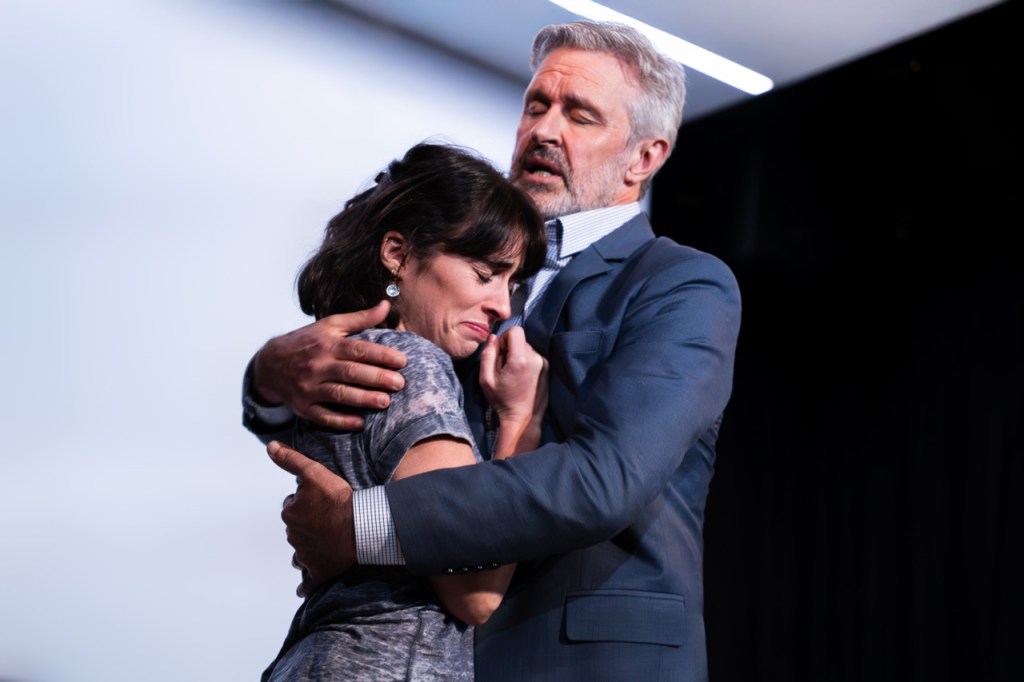
It’s always useful to take a step back and revisit the basics before building on decades of thought, and that’s what this presentation of Honour does. It reminds us of the sexual politics and public debates that form the foundation of our modern view of relationships. It also starkly highlights the fact that these issues still occur, in exactly the same way, today. When Claudia points out that it’s “always the woman” who sacrifices for the man in a relationship, it still rings true in 2025, as women continue to bear the brunt of domestic duties even when both adults are working.
That’s not to say Honour is without its rough edges. Watching it today, one might yearn for the intellectual and emotional interrogation to dig deeper than it does. The dissection of love and relationships feels somewhat narrow these days.

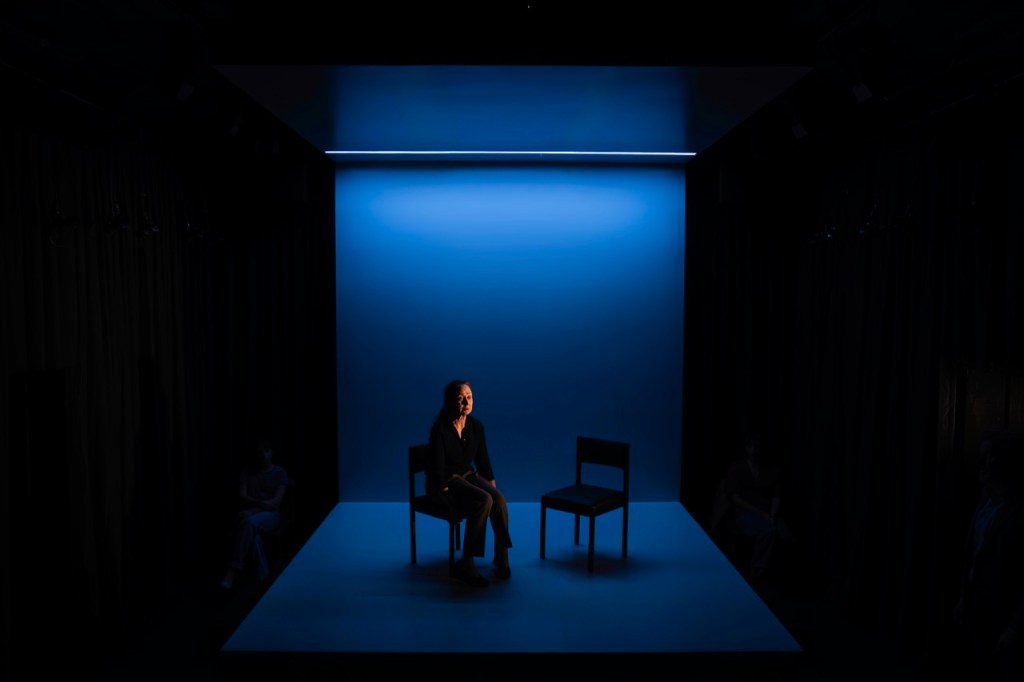
In the intimate Red Stitch Actors Theatre, all attention is on the acting. In a space this size, performers can invest in micro-moments and nuance without the need to play to the cheap seats. When not involved in a scene, the cast sit or stand at the side of the stage, observing the action, always in character. Without the distraction of a set (the staging is reduced to a white stage with two chairs), all eyes are on the actors.
Peter Houghton is superb as the brilliant George, who is sharply self-aware but still falls into the middle-aged cliché of the mid-life crisis. His opening scene, full of stutters and changes of thought, is a lesson in open interiority. Each character’s thoughts and shifts are clear and honest, while maintaining the rhythm of the script. He is a man who “thinks through his mouth,” and this mass of text feels alive. As this seemingly self-assured man is rocked by the attention of a younger woman, his newfound insecurity is wonderful to behold.
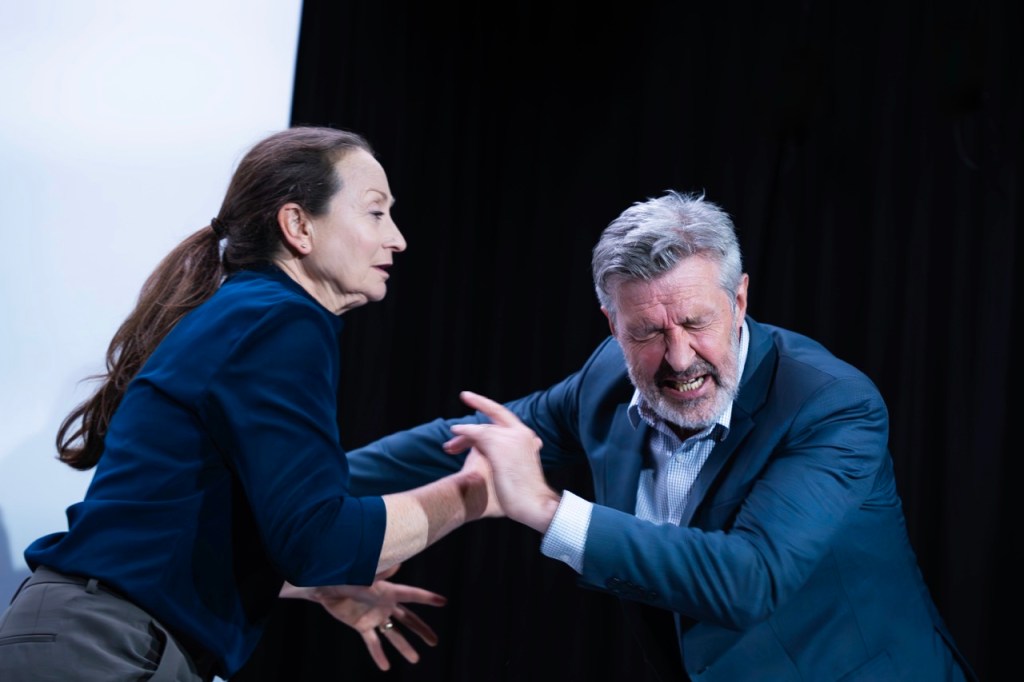
Caroline Lee’s Honor travels a similar yet distinct arc, moving from wry observation to grief, then to self-reliance. It’s a suitably intelligent performance that benefits from the small theatre space, allowing her to live in the smaller moments. Honor is often quiet and thoughtful, which can seem passive, but here it represents a journey of a woman rising from within. When she bites back, it’s a delicious shock of unexpected energy, fuelled by her own disappointments.
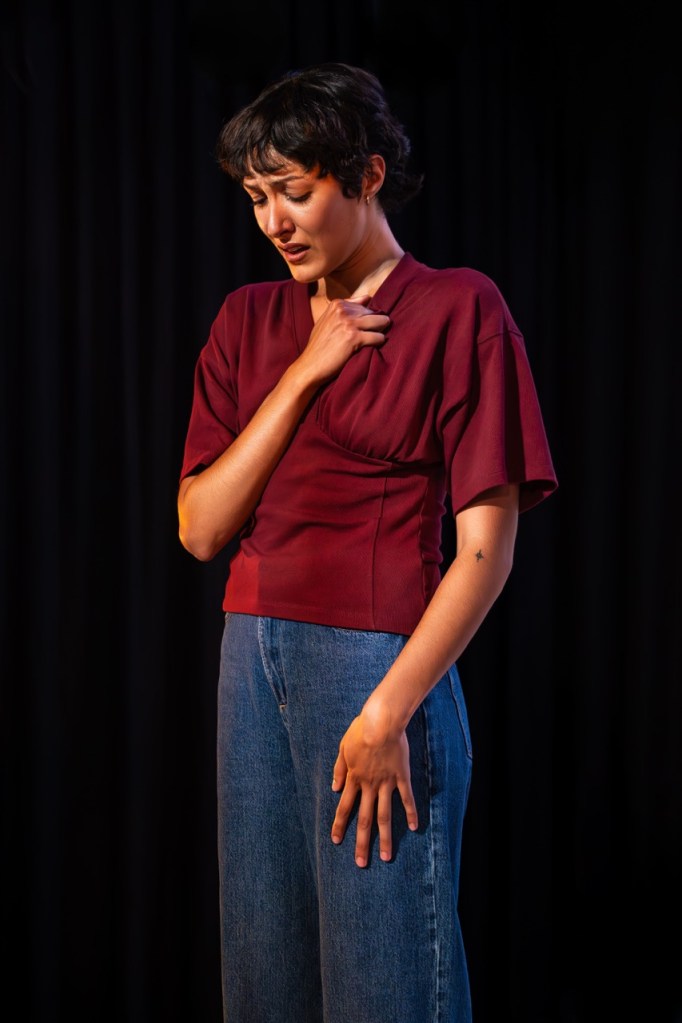
Ella Ferris’s Claudia is a harder role to balance, often reduced to being an external agent of change, rather than a fully fleshed-out character herself. Murray-Smith’s script layers the role with complex motivations: she is a strong, intelligent, beautiful woman aware of her power but also deeply concerned about her own emotional capacity. Ferris plays the role broader than the others, which at times felt overly demonstrative against the smaller, subtler performances around her.
There is a coldness to Honour. The sharpness of Murray-Smith’s text is muddied by overly fast delivery; the humour is never given space to land, nor are the emotions allowed room to build. For all the talk of passion, George and Claudia’s romance feels more like a concept than a rush of excitement. Honor herself often seems depressed, and that depression dampens the atmosphere.
Is Honour still relevant? Yes. The emotional question at its core holds true as long as we live in a world where relationships end and new ones begin. Audiences will always approach classic plays with fresh eyes and minds, discovering new truths in the text. Built on excellent, lived-in performances, Honour will continue to strike hard at the predominantly middle-aged and older audiences who fill the theatre.


Leave a Reply