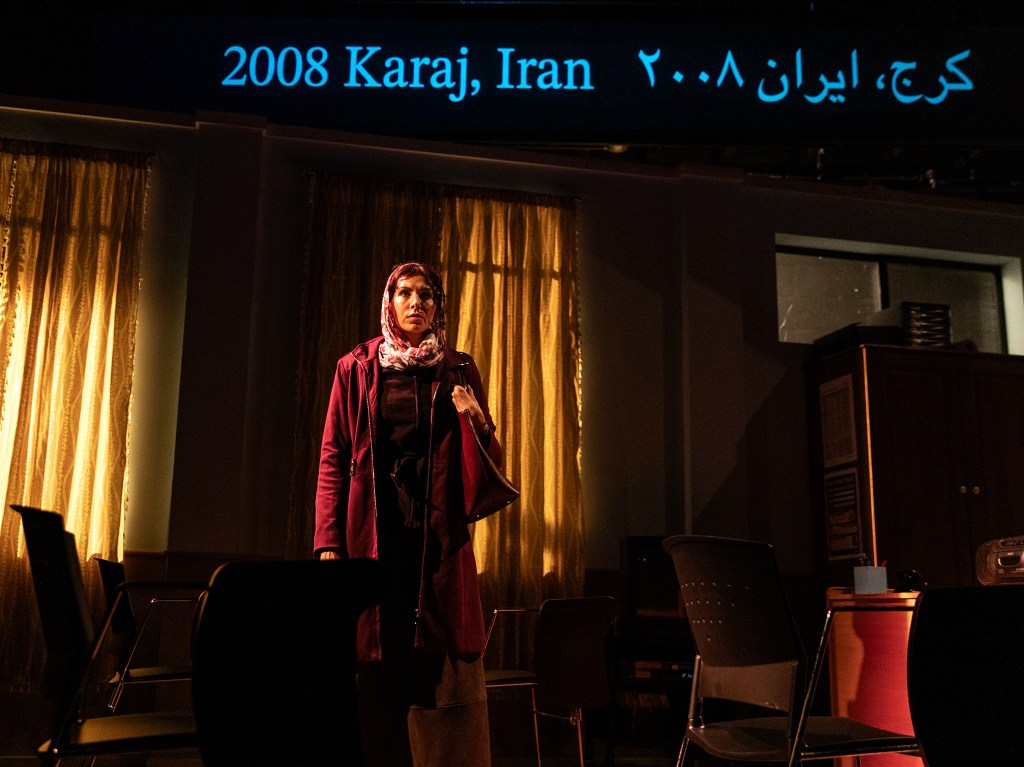
Written by Sanaz Toossi. Outhouse Theatre Co and Seymour Centre. Reginald Theatre, Seymour Centre. 9 Apr – 2 May, 2026.
Sanaz Toossi’s play about a class of English students in Iran has a gentle touch. Those 90 minutes of sweet comedy and warmth soften you up for a final scene that is the perfect grace note. I can see why it won the Pulitzer.
In a classroom in Karaj, in 2008, Marjan (Nicole Chamoun) has a new class of students eager to learn English for their own reasons. Elham (Setareh Naghoni) has been offered a research position at an Australian university, 18-year-old Goli (Minerva Khodabande) wants to be prepared for whatever life throws at her, grandmother Roya (Neveen Hanna) wants to be able to speak to her grandchild in Canada, and Omid (Pedram Biazar) simply wants to improve his English — or maybe he just has a crush on his teacher. As they struggle with their grammar and vocabulary, they not only learn the power of another language, but what their own language means to them.
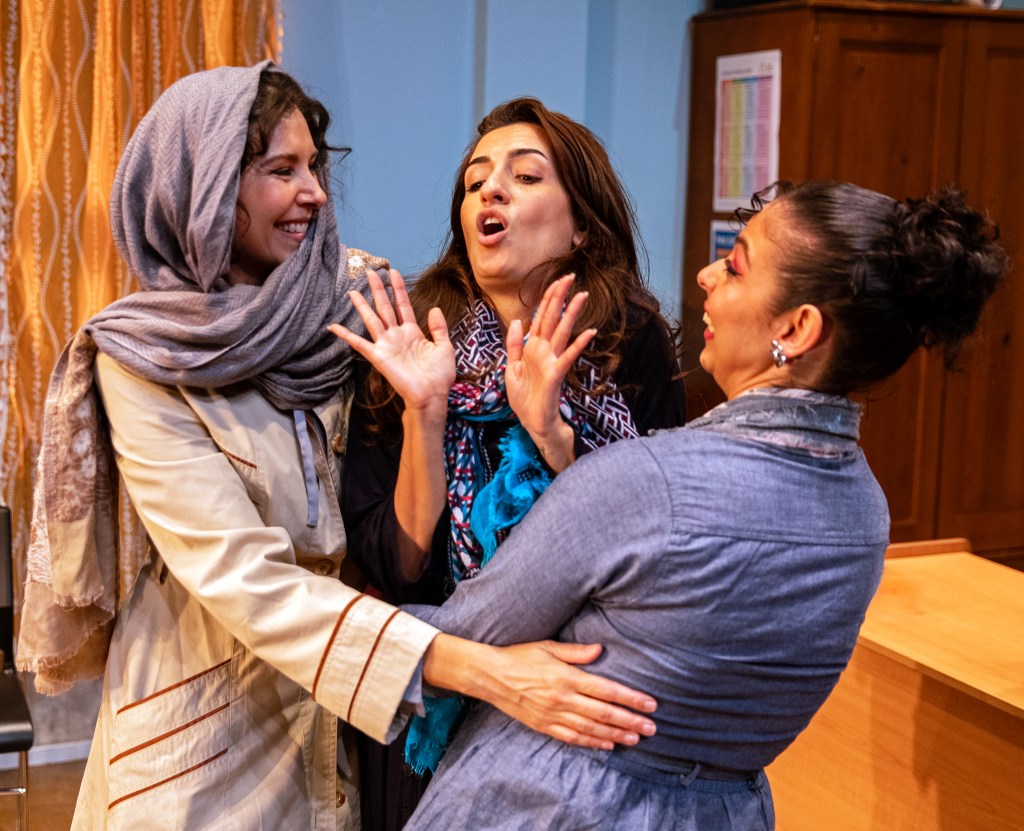
The play has a central dramatic conceit. All the characters speak with Iranian accents when they are speaking in English, but when the characters dip into their own native Farsi, they speak with their natural Australian accents. If that sounds complex, it isn’t — you pick it up pretty quickly. It allows the audience to be with the characters in their struggle and frustration with English and their ease with their native Farsi. It breaks down any sense of “otherness” that stands between the audience and the stage.
For a play with so much inherent political baggage, English does a remarkable job of keeping things light. Its softly-softly approach uses language as a metaphor to strip away any preconceptions and lets you approach these characters as real people, not political punching bags. Similarly, director Craig Baldwin takes a light touch to the movement, favouring simplicity and authenticity over stylistic flourishes.
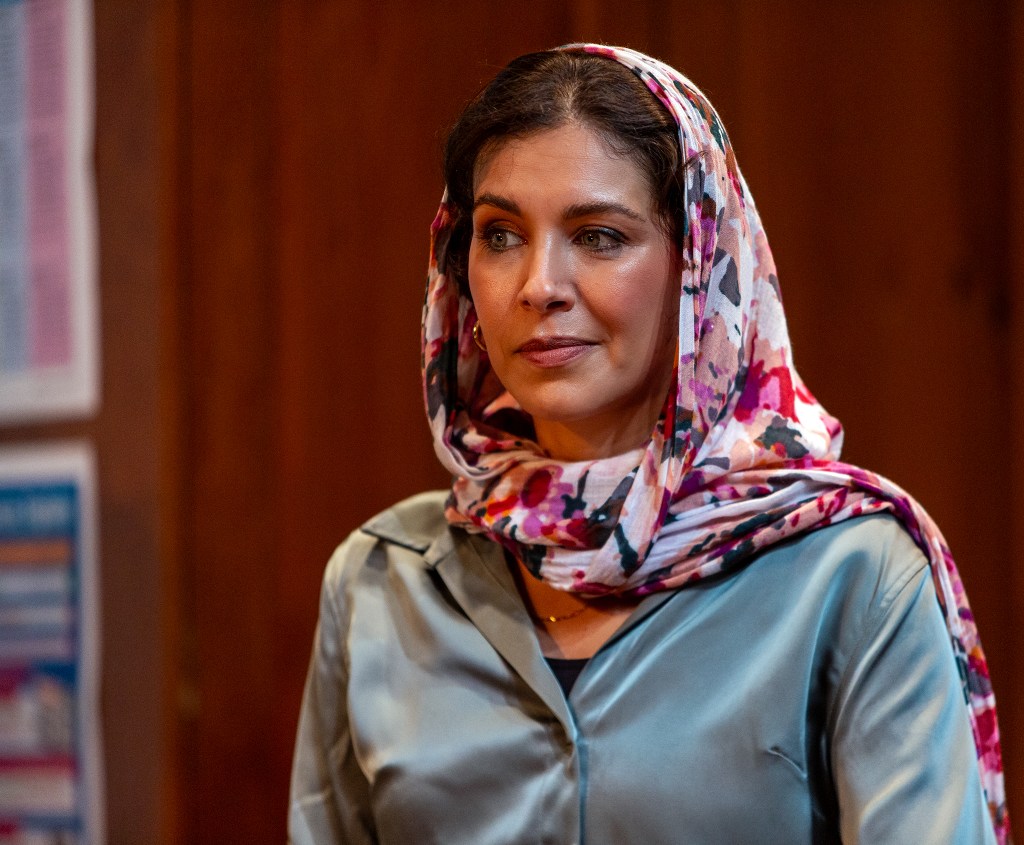
Toossi’s script elegantly touches on a whole host of interconnected issues. It shows how hard it is for people to unlearn behaviours, and how changing language changes thoughts. Just as the intelligent Elham is frustrated by the way her English makes her sound like a simpleton, the struggle to learn a new language reveals each character’s inner fears — Roya feels like she’s losing contact with her son, Elham fears she’s unlikeable, and Marjan is conflicted about having returned to Iran after nine years living in the UK.
It’s anchored by Nicole Chamoun’s charming and layered performance as teacher Marjan. She gives the character a commanding grace and strength, and only slowly reveals her deep well of melancholy. While her past is only referenced in passing, its impact is clearly felt in her behaviour. Also of note is Setareh Naghoni’s abrasive Elham — the problem student whose sharp mind and intense pride fight her every step of the way. It’s a funny and rewarding performance that makes a brilliant foil for Marjan.
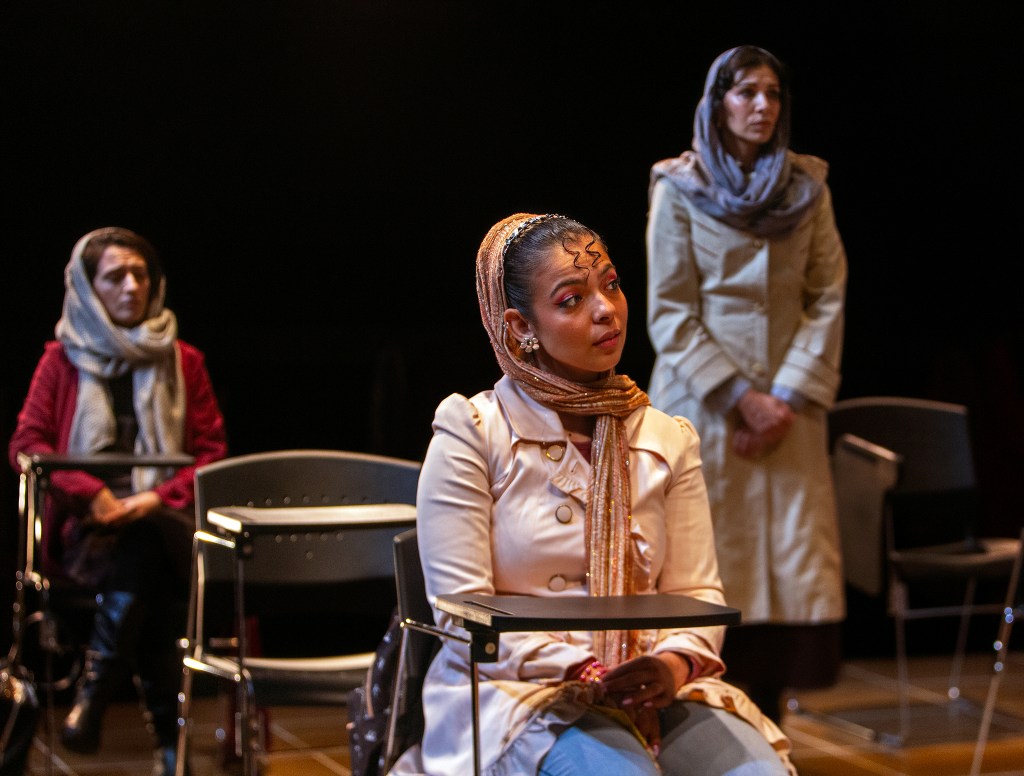
There is little plot to worry about here (if you were frustrated by Circle Mirror Transformation at STC, you may struggle with this) — instead we get a series of episodic vignettes of the class, showing their gradual improvements and revealing character. Each small-scale arc slowly plays out, with some threads left unresolved — just like real life. In the end, it’s the peeling back of layers to reveal the complexity of the characters underneath that is the whole point.
The play’s apolitical nature may seem weak to some, but I found its focus on character to be its winning move. Even in the midst of a very real war, it is good to be shown the clear humanity of the Iranian people — people with all the same loves, fears, hopes and struggles we all have. English humanises events that are happening right now, without ever having to touch on them, and that’s a rare gift.


Leave a comment