Written by Edward Albee. Joe Theatre. Flight Path Theatre. 20-30 May, 2026.
Well this is a great theatrical curio. Edward Albee’s two connected one-act plays, written more than 40 years apart, claw away at the veneer of civilised manners. Beneath the comforts of Manhattan’s educated elite, darker impulses are waiting.
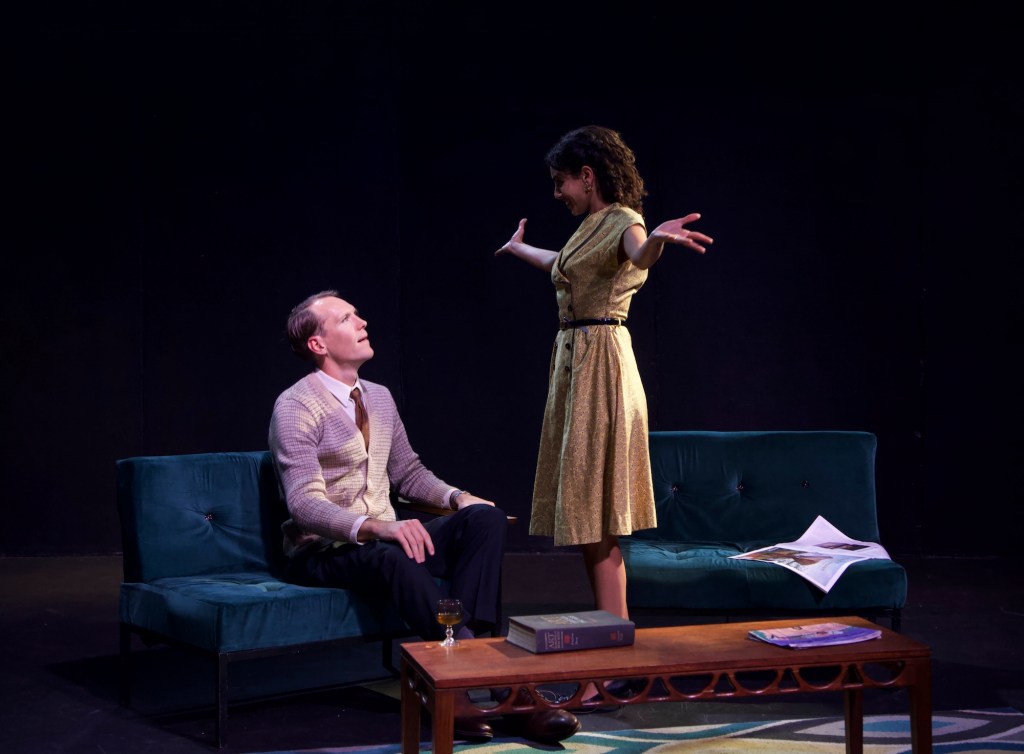
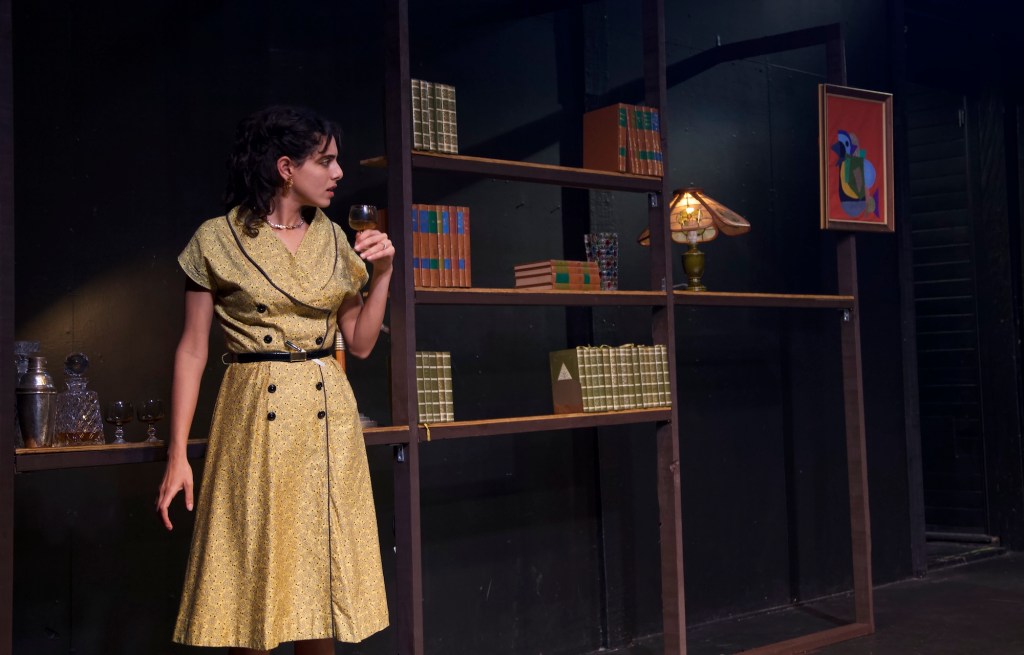
We open with Albee’s 2004 prequel piece, Homelife, in which married couple Peter (Will Johnston) and Ann (Helana Sawires) form a new, honest connection around their baser instincts. Their comfortable Upper West Side life is slowly driving Ann to drink. As she tries to encourage Peter’s animal lusts it’s a tug of war between humanity’s bestial nature and its domesticated nurture.
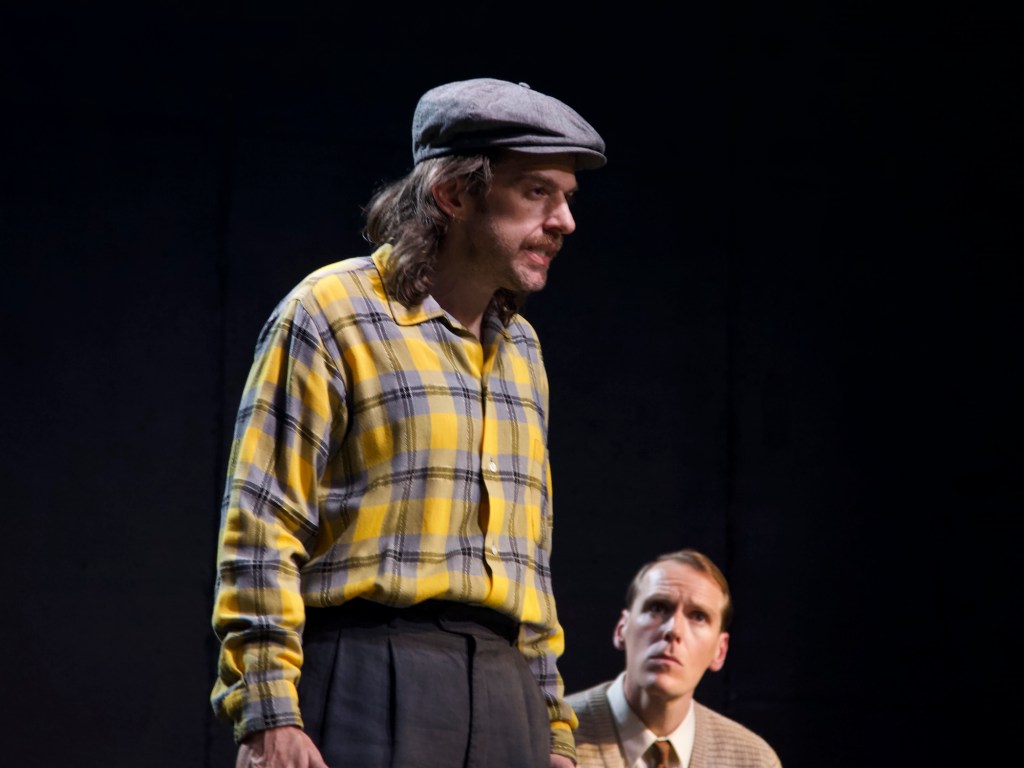
In Act 2, we get Albee’s 1959 The Zoo Story, following straight on from Homelife, in which Peter has taken his book outside to Central Park to read in peace. That peace is short-lived as he is disrupted by Jerry (Evan Lever), a quirky and explosive man who has just visited Central Park Zoo and is unnervingly keen to tell Peter all about it.
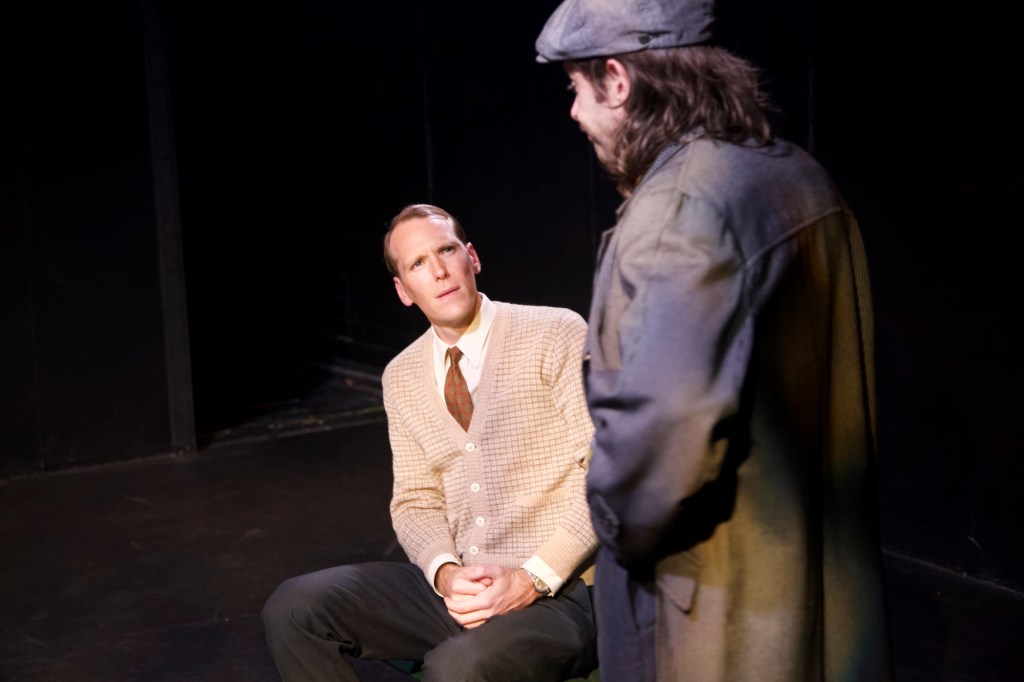
Homelife treads familiar territory for fans of Albee. The echo of Who’s Afraid of Virginia Woolf’s George and Martha haunts Peter and Ann, as Ann goads and prods her textbook-reading husband into action. Ann’s opening “We should talk…” sets up a conversation that reveals the travails of marriage — a waning sexual life, banal medical woes and existential wanderlust. Peter describes their conjoined lives as a “smooth voyage on a safe ship,” but they are both being numbed by their comforts and routines.
It’s classic Albee dialogue that bristles with barely contained aggression and contempt, delivered with a diabolical glee by Sawires. Her repressed sexuality clashing with his scholarly calm — “You’re very good, I just wish you could be bad sometimes.” There is tension, but no teeth to their chat. It’s about discovery, not destruction. The repartee between Sawires and Johnston takes a while to spark, not helped by their relatively quiet delivery competing with the sound of planes and the theatre’s large space. When it does, though, the scene comes alive.
The older The Zoo Story shows the hallmarks of a younger, more aggressive mind. The undercurrent of danger is palpable as the unpredictable Jerry effectively monologues, telling long stories of the seedier side of Manhattan life. It all feels like a prelude to something terrible. Lever conveys Jerry’s uneasy over-familiarity with a pugnacious, attention-grabbing edge. He’s a storyteller, a manipulator, and it’s clear the book-smart Peter is no match for the street-smart Jerry.
Director James Litchfield keeps things stripped back and simple, with elegantly minimal production designs, focusing on performance and text – which is a good fit for these plays that are all about language and subtext. At times the performances pitch themselves a bit too subtle for the space (as if they are acting for the camera in close up, rather than playing to a wide room). The comedy still lands but there is room for elevation still. Lever’s powerful performance in The Zoo Story shows a strong handle on the material and its ebbs and flows.
Taken all together it’s an intriguing double act that is intellectually engaging. How has Albee raised the stakes for The Zoo Story by fleshing out Peter — and how does that change if you encounter the two plays in purely chronological order, with the 1959 work first and the 2004 prequel after?
And you see the cares of ages creep through the juxtaposition of the two plays. Younger Albee is clearly more invested in the convention-busting Jerry than in the mild-mannered Peter. Jerry bursts with youthful energy and creative chaos. But the older Albee has come to Peter’s lived experience more fully in Homelife. Peter is no longer a cipher, a counterweight to Jerry — he is his own man, with an interior life as rich as his antagonist’s.
The result is two thematically connected vignettes that feel like a theatrical curiosity, a scholarly exercise in writing, rather than a piece of compelling drama in its own right. The core of both pieces is pure Albee — a distaste for civilised conventions and sterilised homogeneity — but they lack the narrative propulsion of his best works.
For the theatrically minded, seeing this rare Albee on stage is a must — you may not get another chance for quite some time. For general theatregoers it may be a less satisfying watch.
 Cultural Binge - Independent Theatre Reviews
Leave a comment