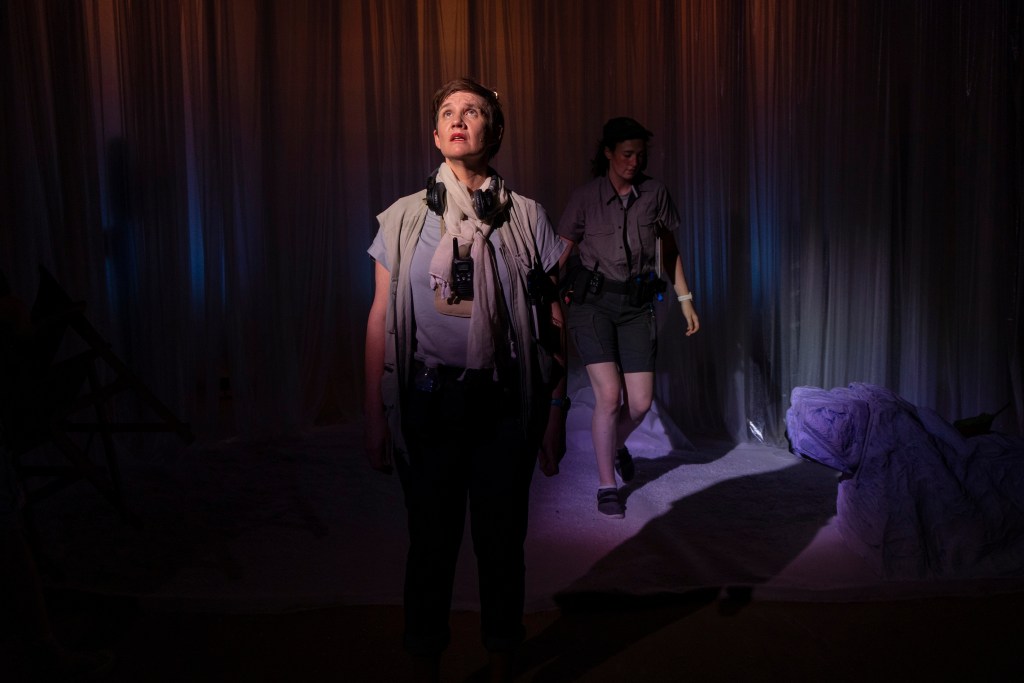
Written by Bess Wohl. New Theatre. 26 May – 20 June, 2026.
Art clashes with commerce and climate change in Bess Wohl’s scattershot black comedy, Continuity.
Indie film director Maria (Michelle Robin Anderson) is living the dream. Her wordy, dramatic spec script about climate change has become a big budget star vehicle for studio darling Nicole (Jessica Joseph-McDermott). But with big budgets comes big expectations and the arrival of her screen-writer ex, David (Nick Curnow), who has turned her drama into a full-blown action blockbuster. All Maria wants is to get the climactic confrontation shot before they lose the light but the annoying science advisor Laurie (Susan Jordan) has some issues with the increasingly unhinged script…
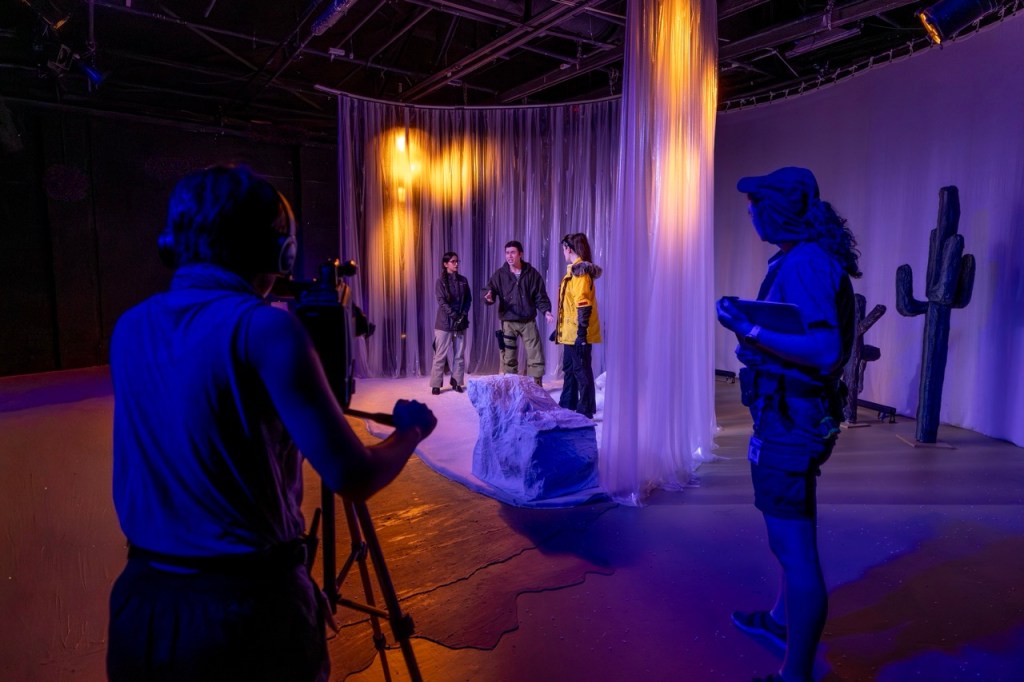
Industry comedy mixed with existential dread is an unusual mix for a stage show, and Continuity never quite finds a way to have its cake and eat it too. But while the script struggles to juggle its many competing goals, this production is having fun bringing the movie-making chaos to the stage.
The trio of in-story actors Jessica Joseph-McDermott, Andrew McLaughlin and Sarah Nader have fun skewering the film industry’s on-screen talent while Nick Curnow and Michelle Robin Anderson reveal the chaos off-camera. A special shout out to Noah Rayner, whose slyly passive-aggressive First AD is a nice touch.
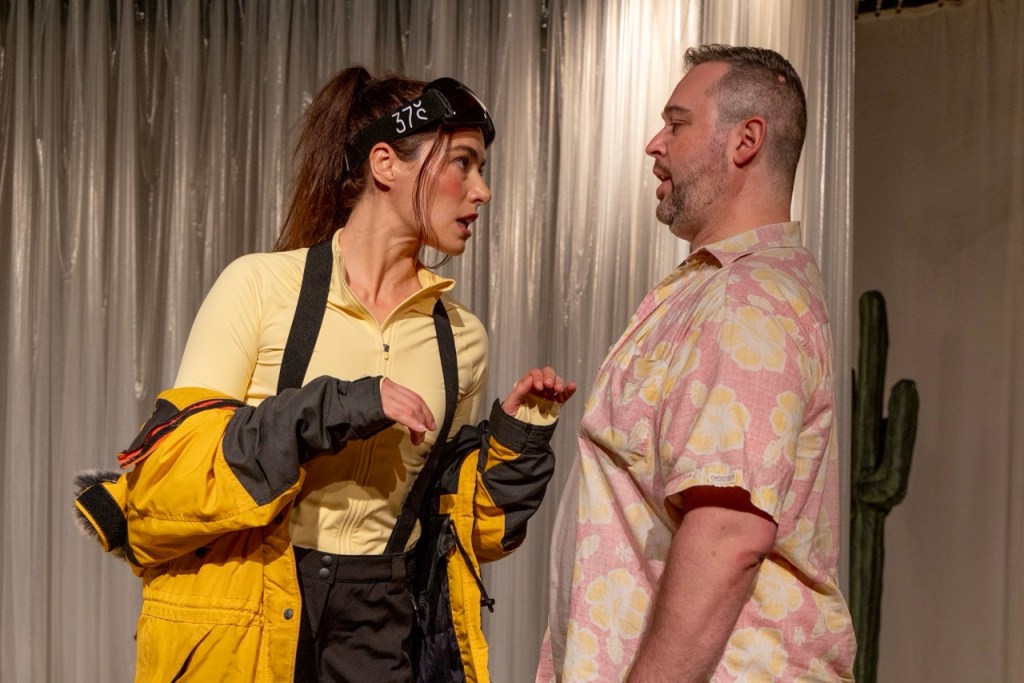
Director Sahn Millington leans into the absurdity of the film-within-a-play’s terrible dialogue, while grounding the off-camera angst with a refreshing believability. David Marshall-Martin’s set is beautifully clean and layered, with shimmering plastic in the place of an ice shelf.
But Bess Wohl’s script is a mishmash of issues stuck in an endless loop. Structured around multiple takes of the same scene, the play’s central thesis — about how many of the attempts to educate the public about the climate crisis lose their focus — is ironically lost in the distraction of the plot set-up. The audience walks away with more investment in the fictional film, than the large scale crisis that motivates it.
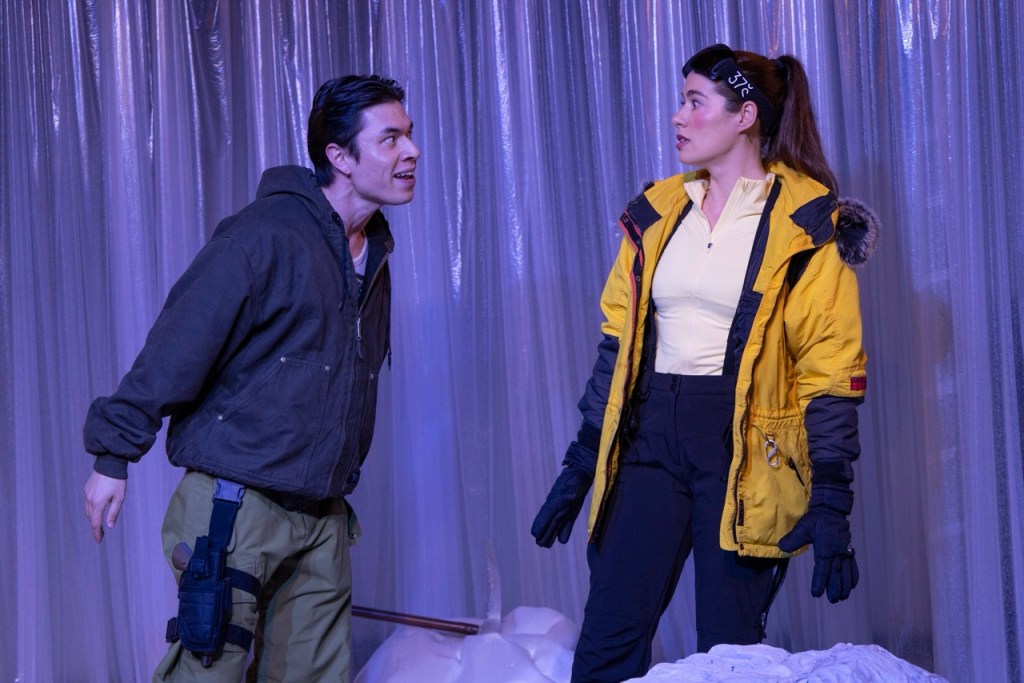
When Continuity does start addressing the issue at hand, it feels like a heavy-handed left turn into hopelessness that feels even more depressing now than it would have back in 2019 when the play premiered. Laurie’s final speech strikes a tone of defeatism that threatens to suck the air out of the room.
Conceptually there is an elegance to Wohl’s premise — using a film set to show how we humans are distracting ourselves with token messages on repeat but never face the reality in front of us. Despite some cracking dialogue and laugh-out-loud moments, the execution lacks a clarity of thought.
The air of pessimism and frustration that fuels Continuity could have birthed a black comedy with bite, but the result is a bit more milquetoast than that. Despite the strengths of this production, and some fine performances (especially from Anderson and Curnow), the funny, film industry parody never truly connects with the social messaging to form a fully satisfying whole.


Leave a Reply