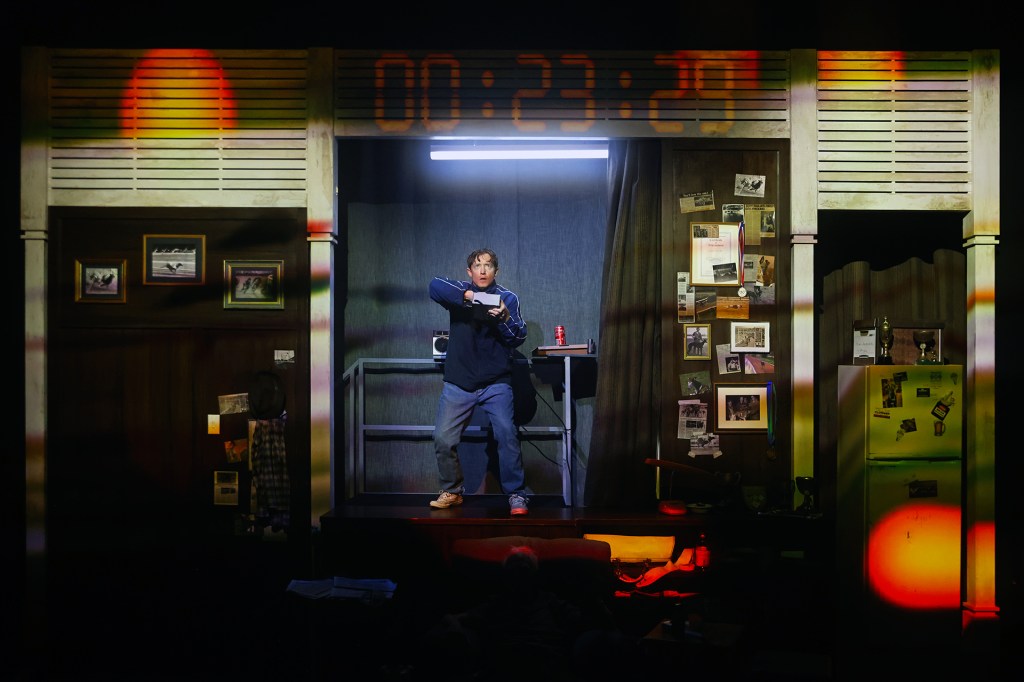
Written by Mary Rachel Brown. Ensemble Theatre. 29 Jun – 25 Jul, 2026.
It’s a dog-eat-dog world in The Dapto Chaser, Mary Rachel Brown’s look at greyhound racing and the trap of poverty. When everyone is out for themselves, how can someone at the bottom ever catch a break? And why does the temptation to “flip the table” feel like it has a wider political resonance in 2026 than it did when the play debuted in 2015 2011?
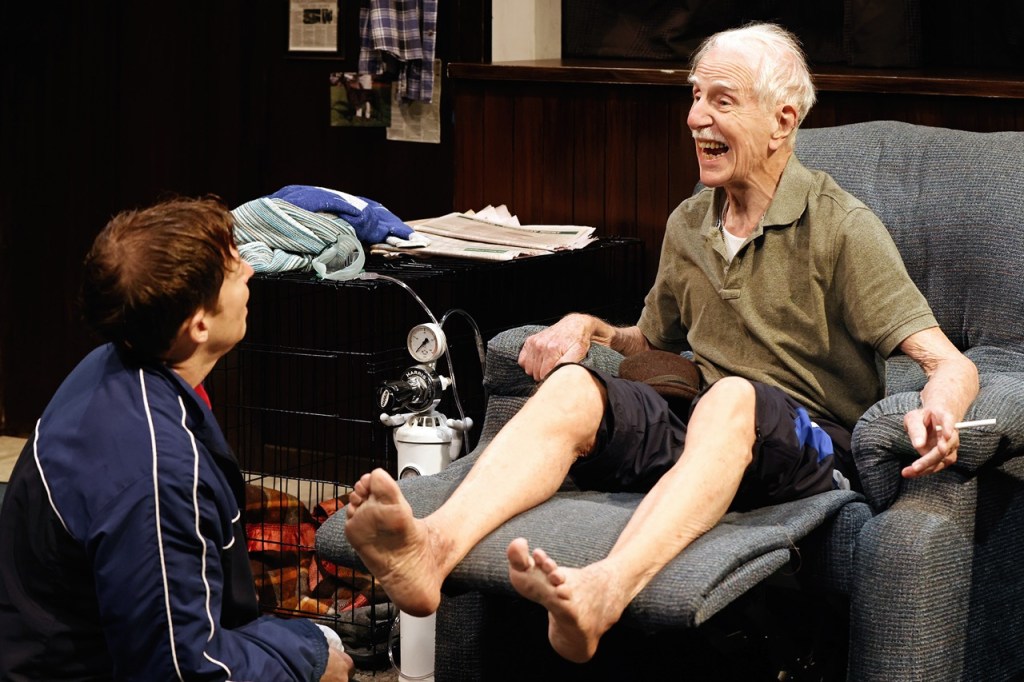
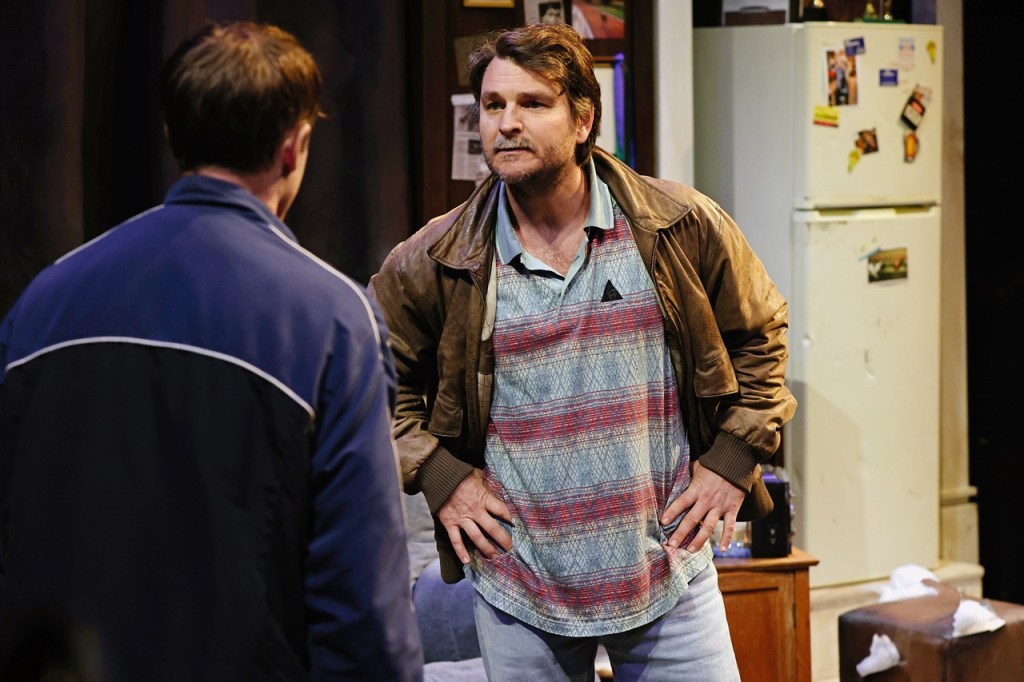
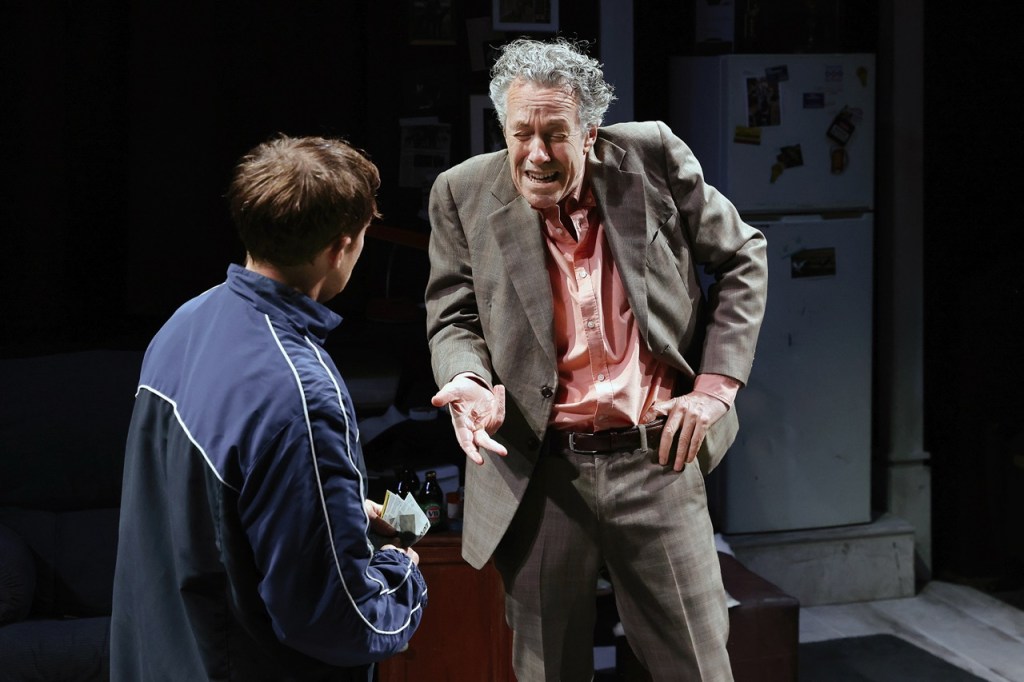
The Sinclair family live and breathe dog racing. Father Errol (Peter Carroll) is a former dog racing stalwart brought low for cheating. His son Cess (Justin Rosniak) is still active in the sport, while his other son Jimmy (André De Vanny) wants out but can’t get too far away from the family business. As the boys struggle with a mountain of debts, their only hope falls to their dog, Boy Named Sue — their one shot for glory and potential freedom. But Jimmy’s employer and Errol’s nemesis, Arnold (Marco Chiappi), has other plans.
Brown’s script is full of nuggets of comedic dialogue sitting next to sharp moments of truth. The story may start in the world of dog racing but the heart of it is in the cyclical nature of disadvantage. These characters are living with next to nothing; for them gambling isn’t just an addiction — it’s a dream of escape. There’s always the next race, the next opportunity.
Peter Carroll sets the tone as the obsessive patriarch of the family, desperate to stay connected to the world through his battery-operated transistor radio and hear the races. His relationship with his son Jimmy, who acts as his carer, is complex. De Vanny’s Jimmy has his own breed of toughness, standing up to his father’s whims while doing his best to help. There is an honest simplicity to De Vanny’s performance that reveals an inner child with his own hopes and dreams. Rosniak’s Cess, however, is the mirror image of his father — a fast-talking obsessive who is always good for the money (if you can just wait till after the next race).
As events take their course it becomes clear — no one listens to Jimmy. The other characters talk “at” him, but never “to” him. His isolation from the world is exemplified by his job — sitting in a tower operating the mechanical rabbit the dogs chase around the track. It’s a position of power no one respects. In the end, Jimmy is the only one who can break the cycle of addiction and destruction.
The Dapto Chaser is maybe an odd choice for Ensemble, and risks coming across as poverty porn for the Kirribilli Set, were it not for the far-reaching effects of gambling in all its forms. With its tight focus on family, its message is broader than the specifics of its setting, and this production, directed by Anna Houston, leans into the grotesque comedy found in familial moments.
Simone Romaniuk cleverly adapts the space, using the bones of The Roommate’s set, amplified by Matt Cox’s lighting. We are taken to the racetrack by Aron Murray’s video design that overlays the space, combined with Madeleine Picard’s sound. The show packs a punch into a small space.
It comes down to Jimmy to change the game with a drastic choice. With nothing to lose, an uncertain future holds more hope than he finds in his current life. It’s the desperate optimism of destructive change – things can’t get worse but maybe they can get better. In the end it’s just another long shot gamble. That’s the only hope he’s got.

 Cultural Binge - Independent Theatre Reviews
Leave a comment