
Based on the novel by John Wyndham. Adapted by J. James-Moody. New Theatre. 30 Jun – 25 Jul, 2026.
SCREAM at the fall of civilisation! PANIC as the KILLER plants ATTACK! SHIVER at the HORROR of human depravity! Or… sit back and enjoy J. James-Moody’s retro-creepy stage adaptation of John Wyndham’s beloved 1950 post-apocalyptic eco-thriller, The Day of the Triffids.
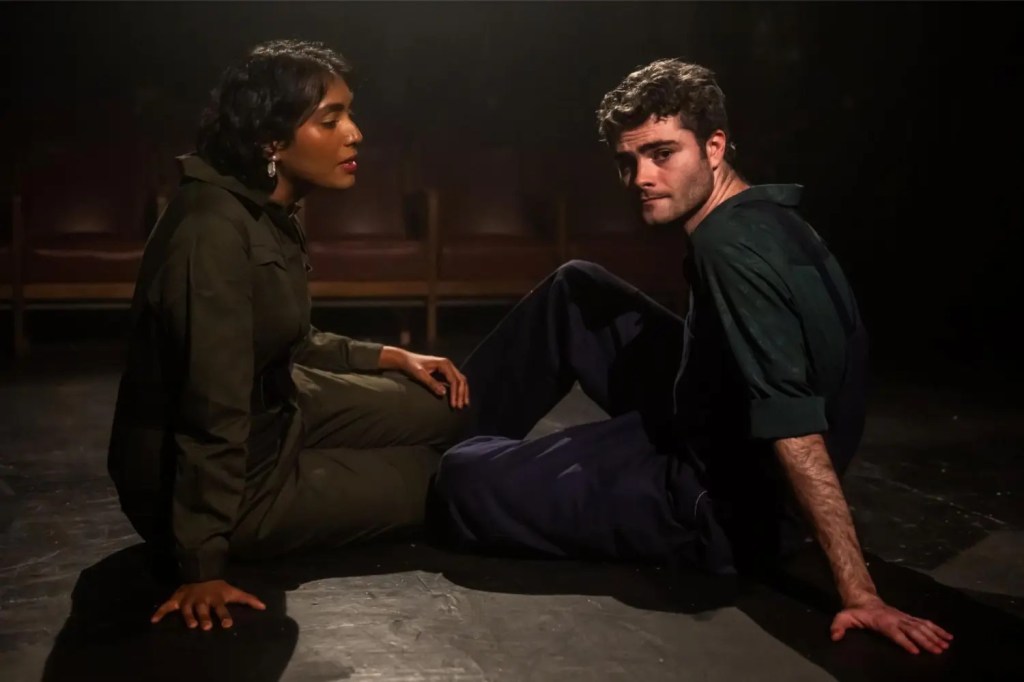
Biologist Bill Masen (James Collins) wakes from eye surgery to discover he’s missed a spectacular meteor shower that has rendered everyone who saw it blind overnight. As one of the few sighted people left in London, he watches society crumble within days — and with no one left to contain them, the tightly controlled, carnivorous plants called Triffids break loose, revealing themselves to be far more intelligent than anyone realised. Amid the chaos he finds Josella Playton (Umai Shantharajah), a socialite and novelist who was too drunk to see the meteor shower herself, and together they try to eke out a new existence in a truly broken Britain.
Wyndham’s speculative novels are brilliant at capturing the creeping unease of Cold War Britain, and reflecting on them now, in 2026, those fears feel just as real. The Day of the Triffids combines a distrust of science with a fear of humanity’s darker survival instincts, and it lands eerily close to contemporary climate anxiety, vaccine scepticism and the rise of strongman politics. Wyndham’s visions of how society tries to rebuild are all tinged with a wry socio-political cynicism that isn’t too different from modern nihilism in the face of democracy’s potential decline.
It’s little wonder the novel’s core story will feel more than familiar to horror fans, given how liberally Danny Boyle and Alex Garland borrowed its plot for 28 Days Later — swap racing zombies for slow-moving plants and it’s pretty much the same film.
What’s most striking is how neatly the fears of the 1950s map onto the present. Wyndham’s genetically modified Triffids feel born of today’s GM crop debates. His theorised satellite weapons could easily be replaced by Elon Musk’s Starlink (sorry — “Skynet”). And the harvesting of Triffid oil as a fossil fuel replacement speaks directly to the 2020s energy transition. Plumbing a range of modern anxieties — including AI, conspiracy theories, anarchy, and humanity’s hubris leading to its own downfall, Wyndham was, as ever, ahead of his time — and there’s something oddly comforting in realising our current fears aren’t as unique as we like to think.
Director/adapter/designer J. James-Moody leans into these fears with a production that mimics a mid-century radio play, complete with stretches of spoken narration, giving us shades of War of the Worlds paranoia. This surprisingly faithful adaptation follows the episodic structure of the novel as Bill travels around England searching for Josella.
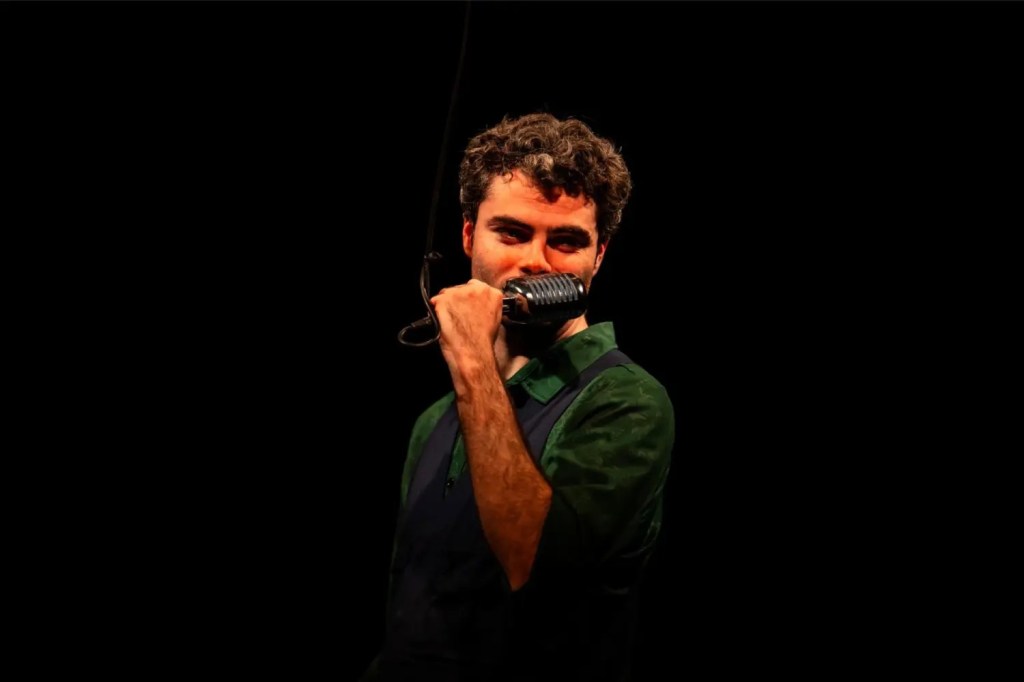
Opening with a burst of creative energy, there is a real drive to early scenes that mimic the fast editing of a movie, placing the on-stage audience in the middle of the action. The stylised, boldly coloured intro feels reminiscent of Alfred Hitchcock thrillers. Scored with 40s/50s-style pop hits, the beginning gets you hooked in.
The production is anchored by the winning duo of James Collins as the brooding young biologist and Umai Shantharajah as the vivacious, resourceful, posh writer, giving the story a romantic spine and some much-needed plot momentum. Both are charming and eminently watchable as two people wrestling with their own good natures and their need to survive.

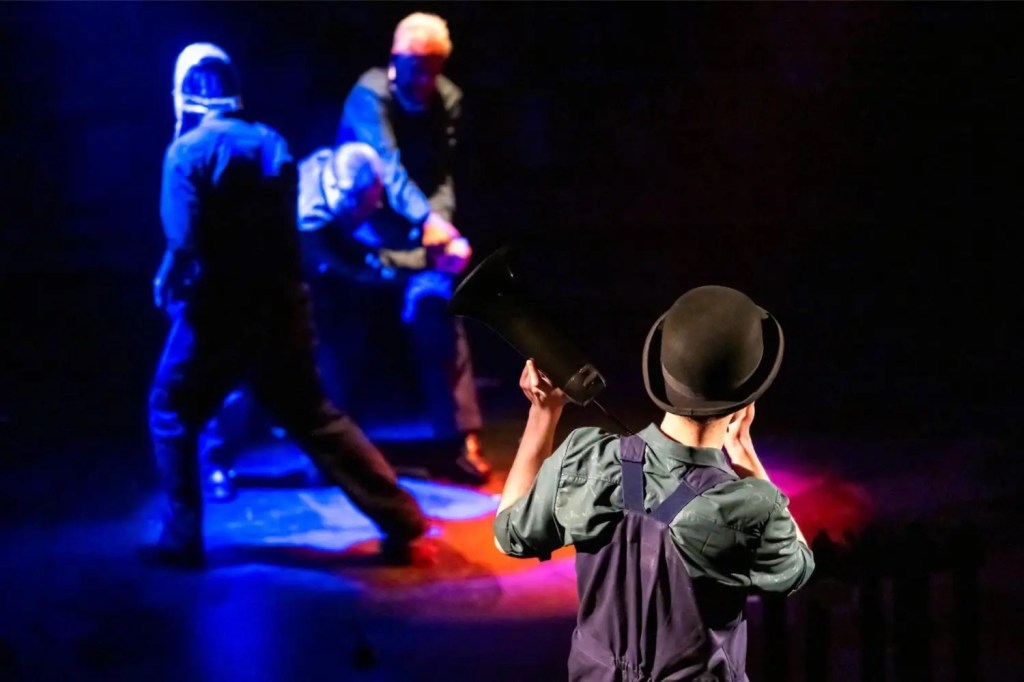
Equally impressive are the show’s two other showcase roles — Max Ryan’s violent Torrence, channelling A Clockwork Orange vibes complete with a bowler hat, and Natasha Todd as a gender-flipped Coker, a smart adaptation choice that gives the production’s second act a different dynamic than the novel’s.
When the production was first announced, I was dying to know how the Triffids would be realised on stage. A puppet-like “Audrey II”? A potted plant on wheels? A poor stage manager in a green leotard? I should have trusted James-Moody’s vision more. The titular, deadly plants are given menacing life through Aubtin Namdar’s immersive sound design and Holly Nesbitt’s lighting, with only the occasional flash of props — effective and appropriate for a story in which the real enemy is other humans with a lust for power.

The production could do with a haircut. Its two-hour running time feels a touch too long, especially once the inventive opening act gives way to a more repetitive episodic pace. The novel’s tour through post-apocalyptic social models lands harder on the page, where its commentary can breathe, than it does compressed on stage. Some pacing issues persist, both plot and production wise, that takes the sting out of the big finale.
Still, The Day of the Triffids has a genuinely exciting thrill of invention about it — simple stagecraft and storytelling filling the gaps the way only the best theatre makers can. It has a vision that makes it one of the most enthralling shows on Sydney stages right now.


Leave a Reply