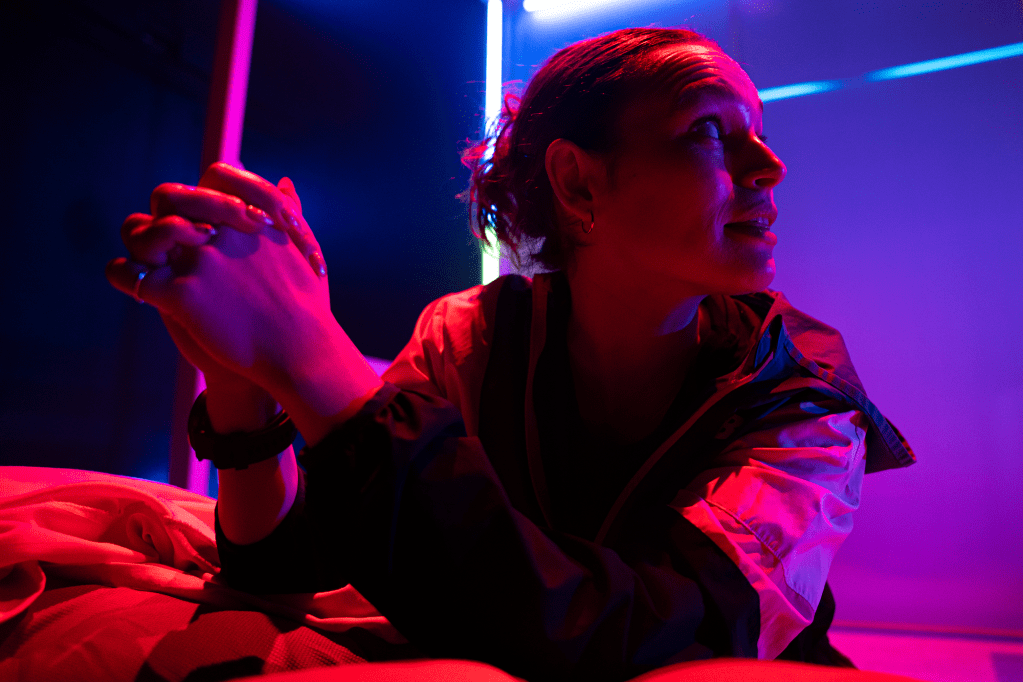
Written by Bianca Watkins. World Premiere. Bloodline Productions. The Old Fitz Theatre. 14-24 Jul, 2026.
Faith, friendship and hard drugs combine to produce some unexpected answers in Bianca Watkins’ new play, Holy Hell, that proves itself to be more devout than you might expect.
Catholic university students Cat (Stephanie Somerville) and Mish (Courtney Ally Miller) aren’t exactly the best of friends, but when their mutual bestie Daisy has her drink spiked, Cat suspects one of their uni mates and enlists Mish’s help to get to the bottom of things. But Mish has other plans. She needs a character reference from Cat, and is determined to bond with her over an intense late-night “trip” provided by her dealer — aka her brother. As hallucinogens get ingested and reality bleeds into fantasies, some truths prove to be messier than expected.
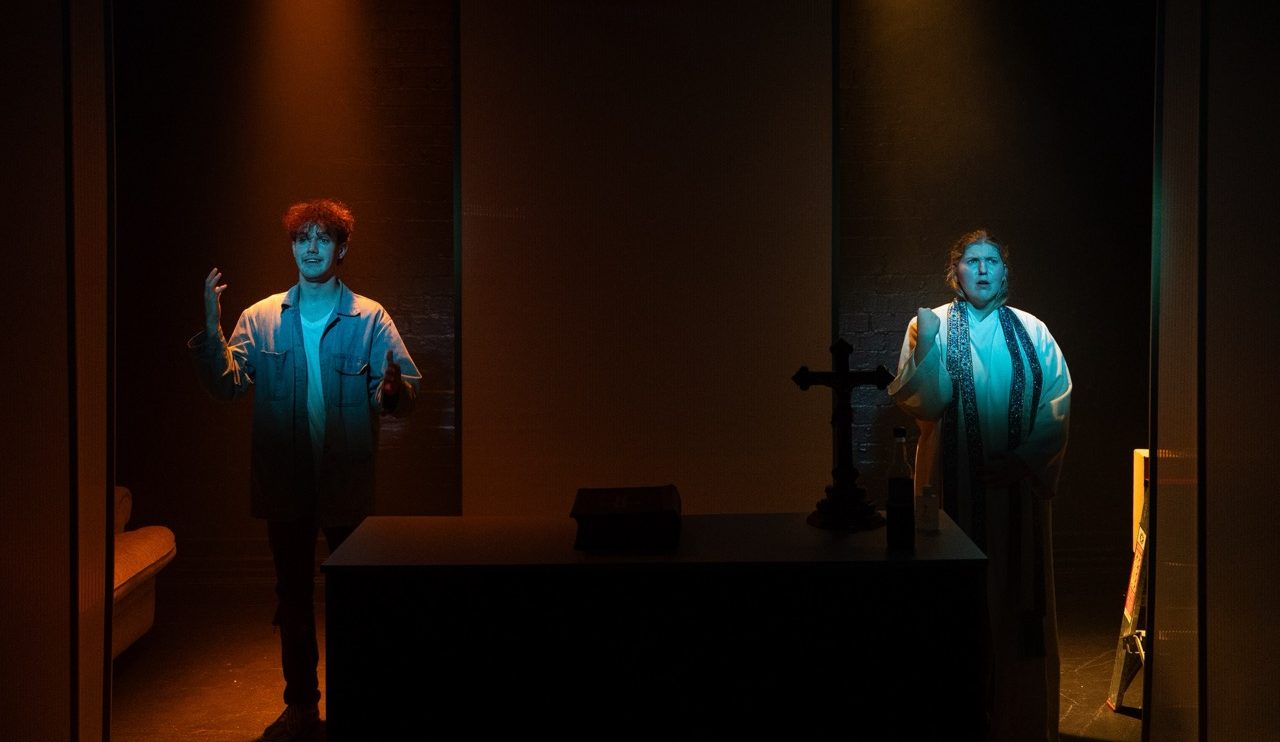
There’s something refreshing in Bianca Watkins’ writing that kept subtly defying expectations as Holy Hell progressed. Rather than pushing for the drama, the story veered away from the obvious (and frankly tired) tropes of similar stories, finding itself an honest vein of emotion to explore. As Cat pursues what she believes to be the obvious answer, the truth proves to be maybe more mundane, but more emotionally impactful for her.
As the core duo, Stephanie Somerville and Courtney Ally Miller are a study in opposites. Their performances come to the material from different directions but blend neatly into the kind of odd couple friendship you only really develop in university. Director Dakotah Love keeps the comedy in check, knowing when to amplify for effect without sacrificing genuine emotional investment. The story is helped immensely by the comedic charm of Owen Hasluck as their poor, unwitting friend and the quiet calm of Riley Thomas as their university chaplain.
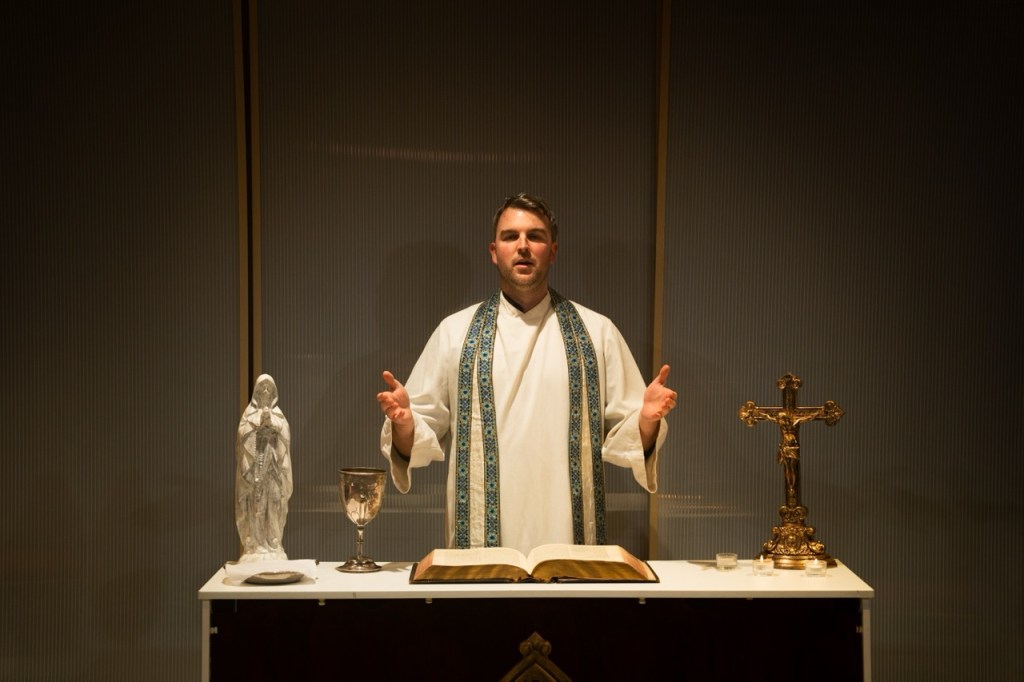
But it’s the play’s careful, inquiring exploration of faith that I found quite fascinating. Watkins avoids writing an anti-religion polemic and instead finds an element of belief at its core. There is a respectful playfulness to her observations of Catholicism that looks for nuance with a sense of positivity. I have no idea of Watkins’ relationship with religion, but she neatly avoids both juvenile rejection and blind observance.
While it doesn’t deliver on the promise of the title, Holy Hell succeeds in forging its own path through some well-trodden material. With a keen observational eye, Watkins has made an interesting and entertaining play worth staying up late for.


Leave a comment