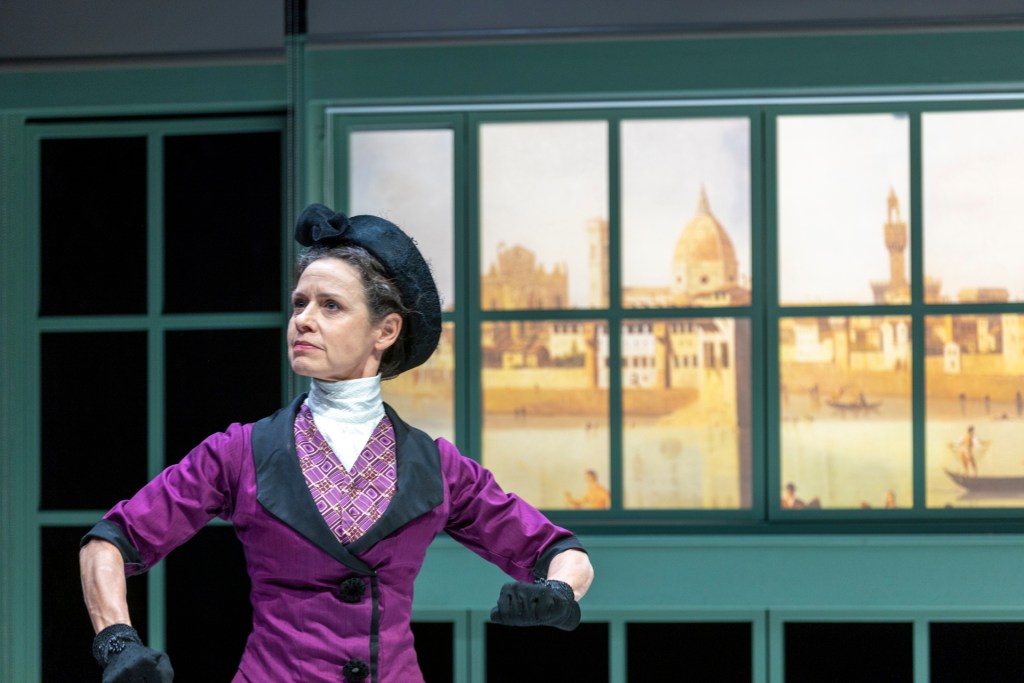
Adapted by Grace Chapple. Based on the novel by E.M. Forster. Belvoir. 3 Oct – 1 Nov, 2026.
My first reaction on entering Belvoir and seeing Zoë Atkinson’s colour-drenched, bare set was, “What is this? A Backrooms With A View?” But no, the visual simplicity is a gateway to an imaginative panorama of emotions in playwright Grace Chapple and director Hannah Goodwin’s irreverent E.M. Forster adaptation. Merchant Ivory this ain’t.
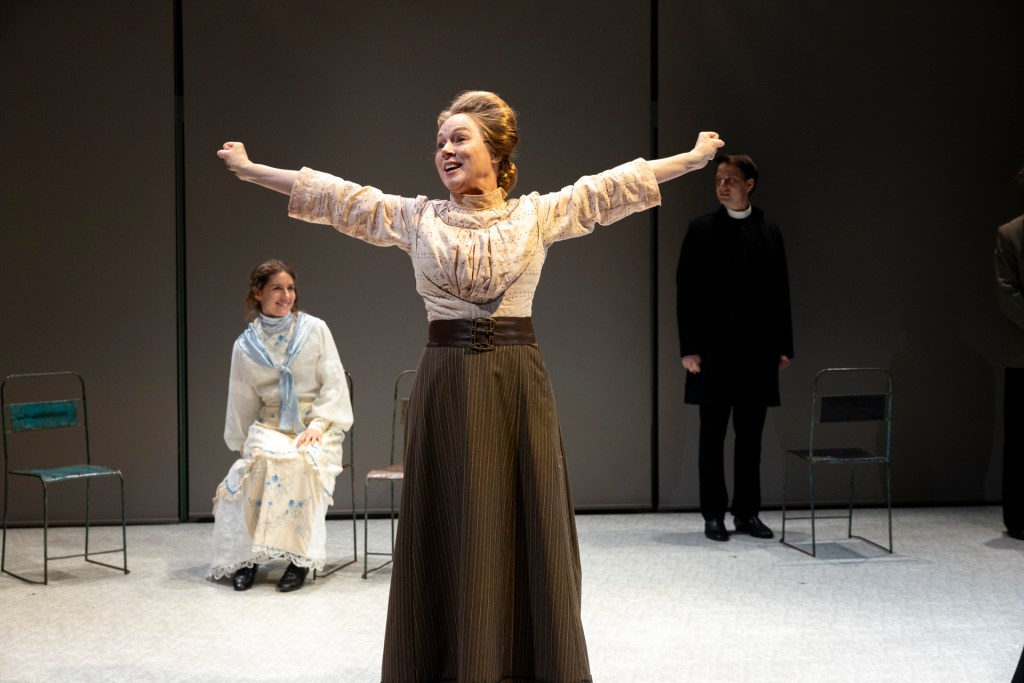
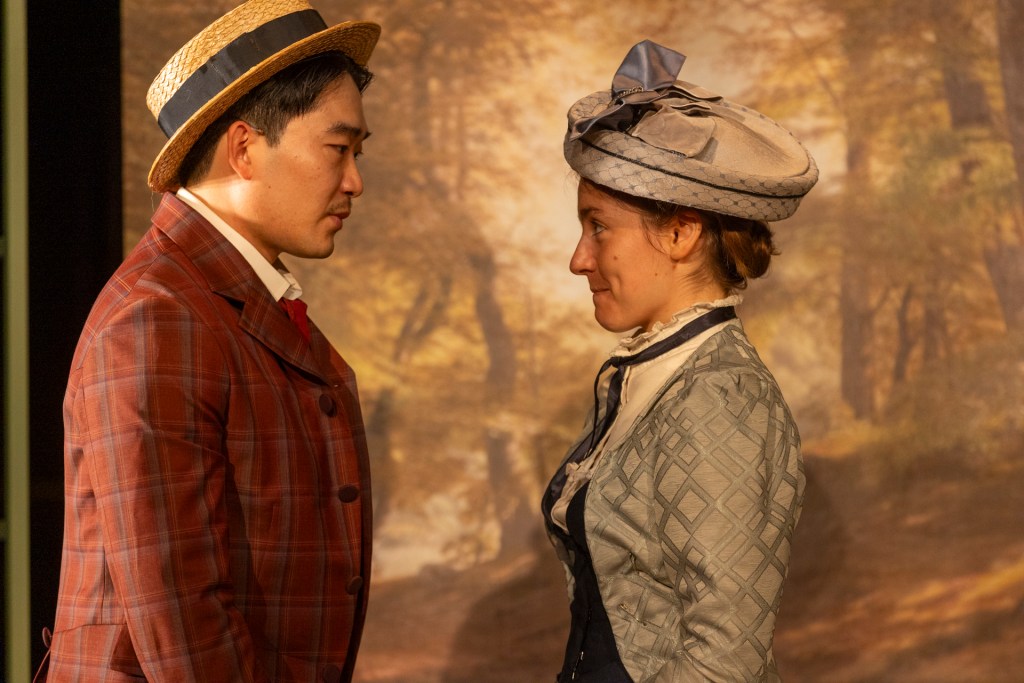
Young Englishwoman Lucy Honeychurch (Nathalie Morris), chaperoned by her fussy cousin Charlotte (a brilliant Hayley McElhinney), visits Florence, where a stolen kiss from the impulsive, free-thinking George Emerson (Luke Wiltshire) stirs feelings she’s been taught to suppress. Back home in Surrey, she retreats into propriety and gets engaged to Cecil Vyse (Charles Wu), a snobbish, condescending man who treats her more like an accessory than a person. When George and his father unexpectedly move into a nearby villa, Lucy must confront the gap between the life she’s expected to want and the one she actually does.
Goodwin fills the story with a wild sense of make-believe and play, as the open space transforms into a field of violets, a swimming pond, a tennis court and an Italian chapel with little more than a wink and some lighting and sound cues. This may be the closest Belvoir has come to a spiritual successor to 2023’s endlessly inventive The Master & Margarita, just with a lighter touch.
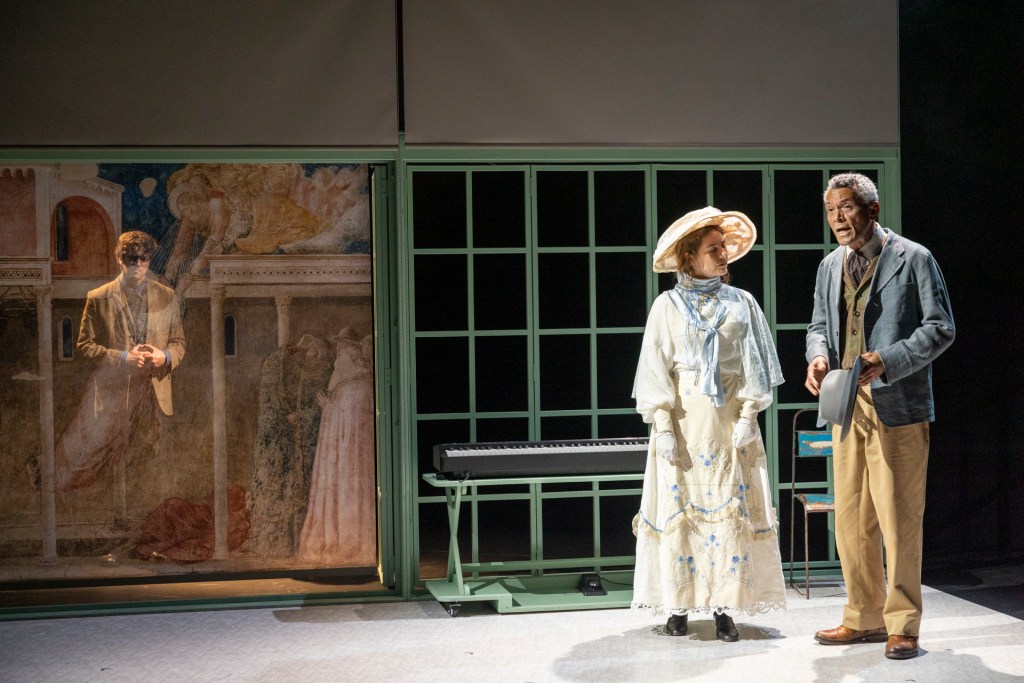
Chapple mines Forster’s text (and subtext) to bring a sharp clarity to the novel’s themes. The narration bounces between every character other than Lucy and the moody George (even the Italian driver gets a section), which sets the stage for the young lovers to claim their own story, and their own agency, against a watchful and judgemental society.
Perhaps controversially, Chapple extends that sense of progress by extrapolating an explicitly queer story from Forster’s writing. It isn’t evident in the novel, so I’m sure it will offend some purists. It places Lucy and George’s struggle against class and convention in a wider context of people who must push against society’s constraints to acknowledge their love.
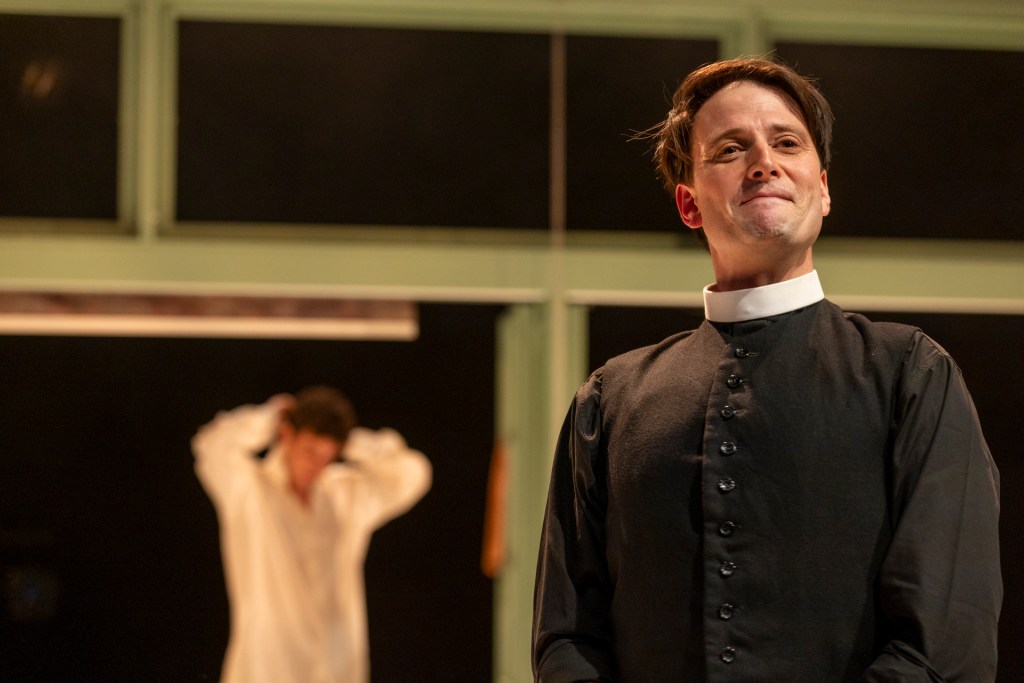
What A Room With A View lacks in literal visual scope, it makes up for in sheer verve and humour. Chapple transforms Forster’s character observations into self-aware narration, and Goodwin leans into the theatricality for full effect. The men’s bathing scene is both silly and sweet. The use of music cues to simulate the tennis match is pure whimsy.
The performances are simply joyful. Morris captures the duality of Lucy: an independent thinker trying hard to fit the mould society is squeezing her into. McElhinney’s uptight, double-speaking Charlotte is simply delectable. Wu is having a ball with the awkwardly awful Cecil, as is Tomáš Kantor in his many roles (including Lucy’s unruly brother Freddy). Wiltshire gives George a floppy-haired insolence and the brooding air of a young man with too many feelings and too many thoughts to contain.
As someone who loves both Forster’s writing and the power of free-wheeling adaptation, I think this hits the sweet spot. It has the moments and language that fans of Forster (and of Merchant Ivory) will love, while making big creative swings to transmute the story to a modern stage. All of Forster’s mannered humour is here, alongside physical comedy that enhances the tale.
Forster encourages us to strip away the conventions and fears of society and embrace our hearts. It was the common thread through all his novels: the search for connection, and a return to our humanity. His vision of the individual is of someone wholly themselves, who finds connection rather than isolation through that honesty. Chapple has internalised this vision and given it back to us anew.
The partnership between Chapple and Goodwin has really found its feet here. I was perhaps less effusive than others about their previous collaboration, Chapple’s debut play Never Closer, but A Room With A View shows an inquisitive, experimental playwright at work, paired with a director in sync with her ambition. Like the best creative partnerships, these two seem to spur each other on. It makes me excited for their third collaboration, the original play The Landlord, in 2027.


Leave a comment