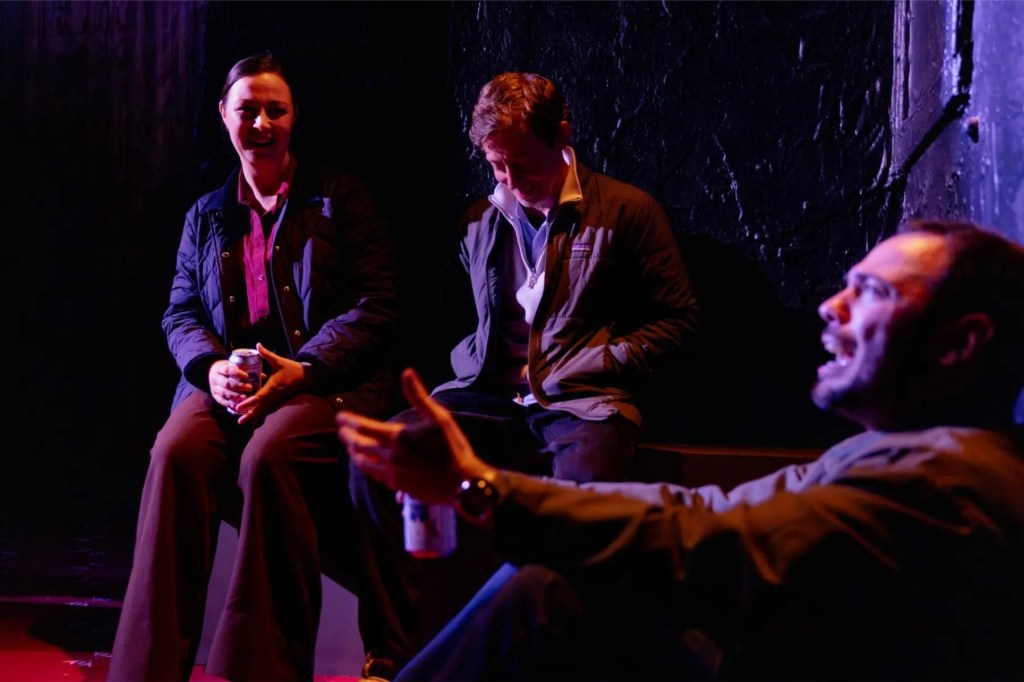
Written by Mia Chung. Australian Premiere. Presented by Empress Theatre. Old Fitz Theatre. 9-31 Oct, 2026.
There’s flexing your acting muscles and then there’s the kind of “acting-maxxing” on display in Catch as Catch Can, as three performers take on two, often simultaneous, roles each to look at the ways family shapes and destroys us. Mia Chung’s layered experiment in character and theatrical form brings out the best in the cast, even if it has you scratching your head. But you’ll definitely leave asking how well you really know yourself.
It takes a while for the audience to start to catch on to the complicated game Chung is playing here. What starts off as domestic comedy, with gender-blind casting and more than a little racism, grows more and more complex as the character arcs multiply, with the cast of three playing both parent and adult child. By the time the third act wildly throws the play into entirely new territory, you’ll either be enthralled or completely bewildered.
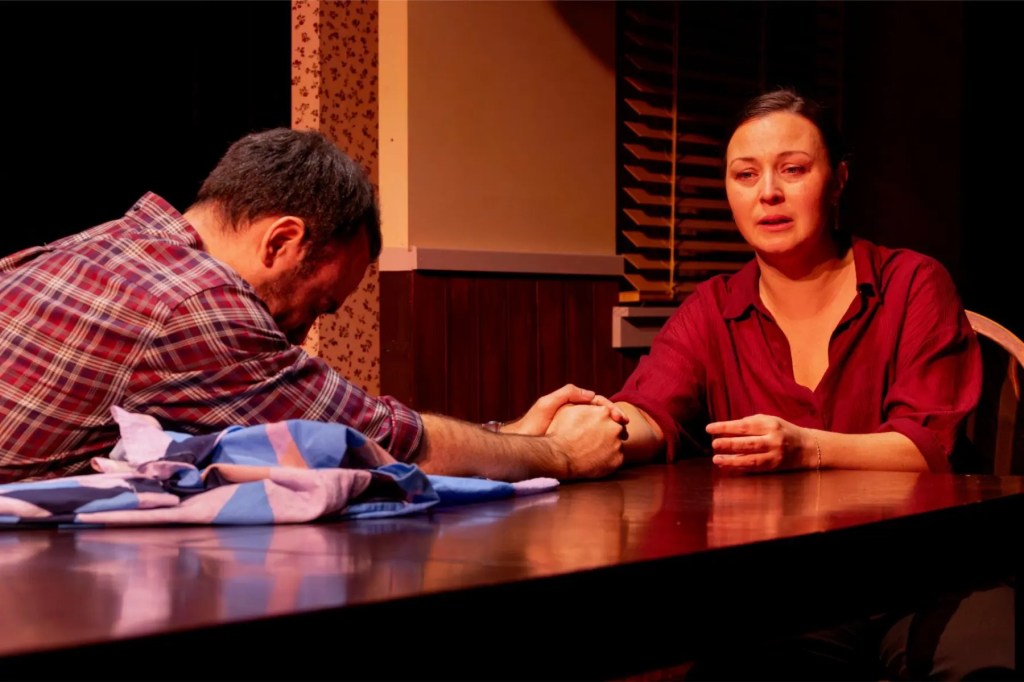
The show’s already racked up a lot of praise, and I’ll join the chorus. This cast, Robin McLeavy, André De Vanny and David Soncin, are giving us three (or is that six) of the best performances of the year. The art involved in layering each of their characters with comedy and heart as well as clear cues when they switch roles culminates in a chaotic Christmas lunch with all the intricate absurdity of Michael Frayn’s immortal Noises Off. It’s a comedic climax that leads straight into the play’s shocking turn.
The thing I enjoyed most was the way neither Chung nor this production pandered to the audience. One scene expertly plays out two different moments at the same time, with the cast speaking the parents’ dialogue while physically acting out a silent scene as their children. Sheer brilliance.
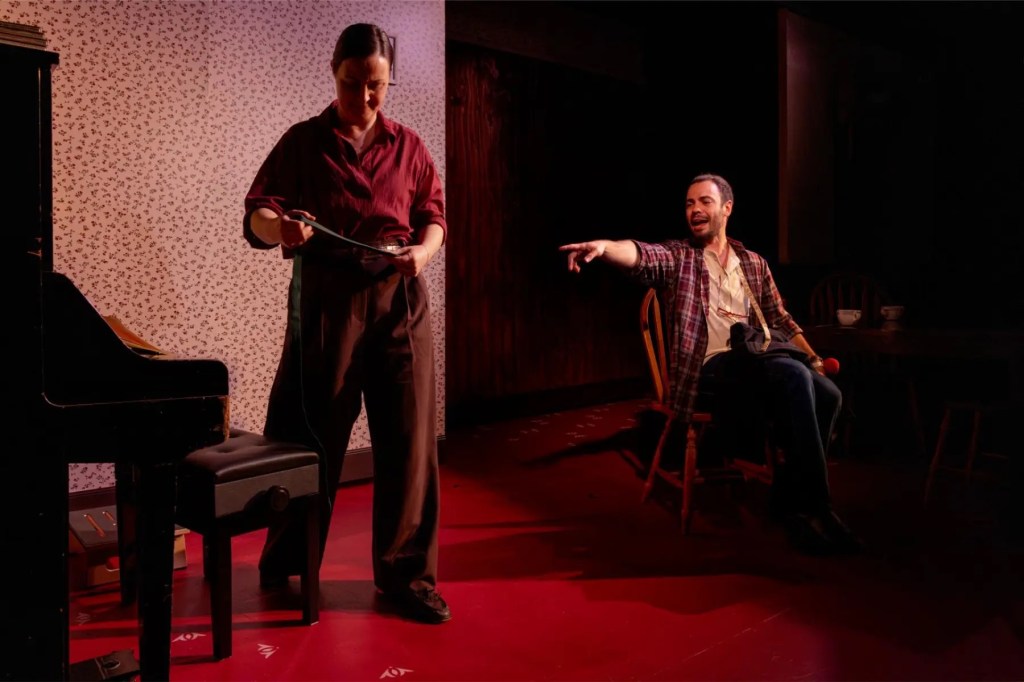
While I was completely under the spell of the performances, the play’s themes slowly, quietly start to emerge – but are never fully clear or highlighted. Things came into focus afterwards, as I read more about the play, but you should never have to research to grasp a story’s core, and that’s what was required here.
And it’s this lack of clarity that starts to make Catch as Catch Can a frustrating experience (no, I don’t know what the title means, either). When the third act pivoted into a mental health emergency, it derailed my whole view of the story and left me wondering – what is this play saying?! How were the events of the ending connected to the themes of the earlier scenes? I was lost.
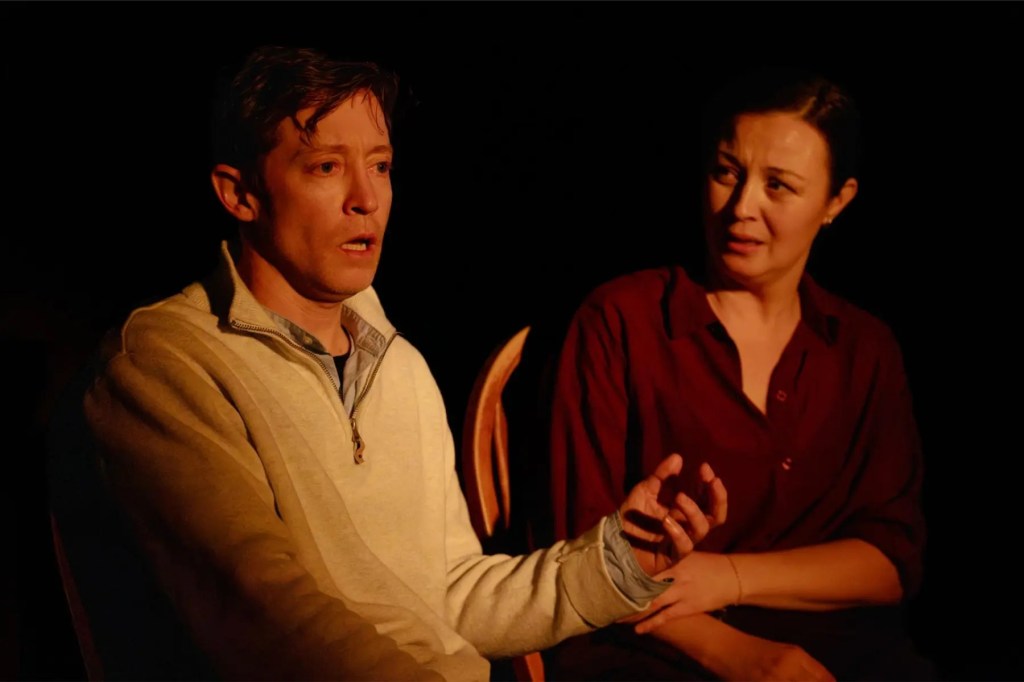
Despite that, the production still works beautifully because of director Anna Houston’s vision and the three brilliant performances. I would have happily sat back and watched them speak gibberish, as long as they said it with the conviction and honesty they displayed on stage. The friendship of the younger characters was so real that I wanted to instantly cast all three in a production of Merrily We Roll Along.
So while I’m left unsure about Chung’s actual intentions, my final impression of Catch as Catch Can is about the importance of friendships that can weather life’s constant process of abjection and unexpected horrors. I applaud writing this bold, and structural experimentation of this kind, even if I can’t say I caught it all.


Leave a Reply