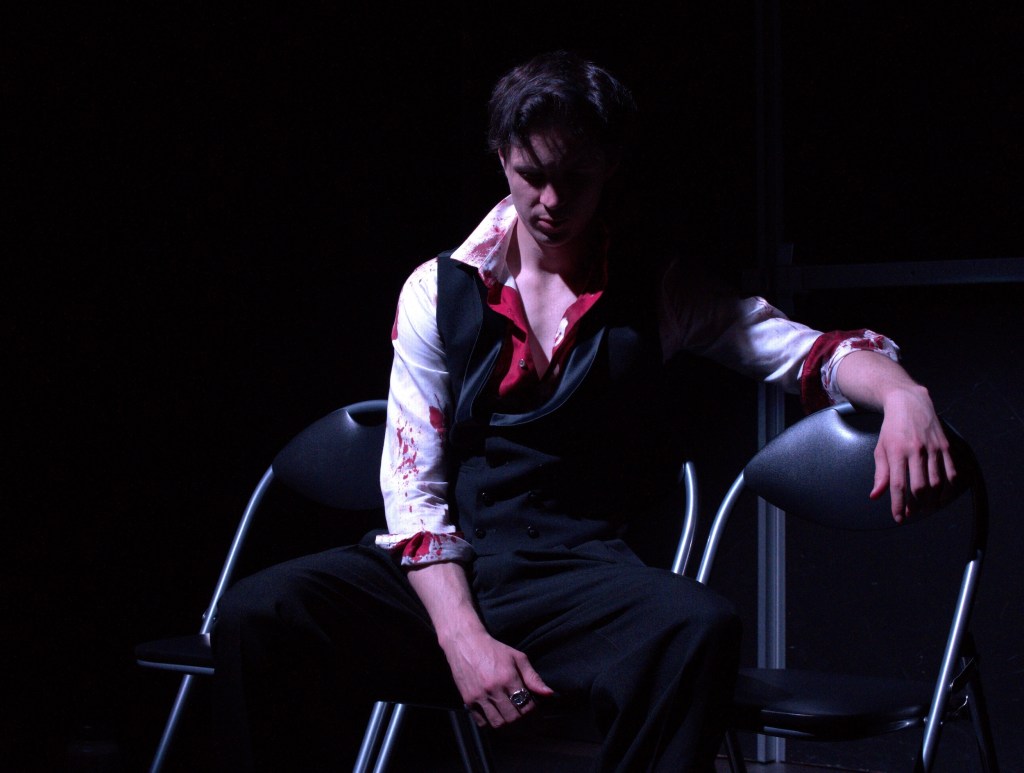
Written by John Logan. Presented by Good Time Theatrics. Qtopia Loading Dock. 8-24 Oct, 2026.
John Logan’s debut play about the infamous duo Leopold & Loeb pleads with the audience to look past sensational headlines and easy answers and hunt for the humanity inside two teen killers. In 2026, it also plays as an indictment of the modern hyper-optimising mentality, and of insecure young men desperately trying to prove their superiority through violence.
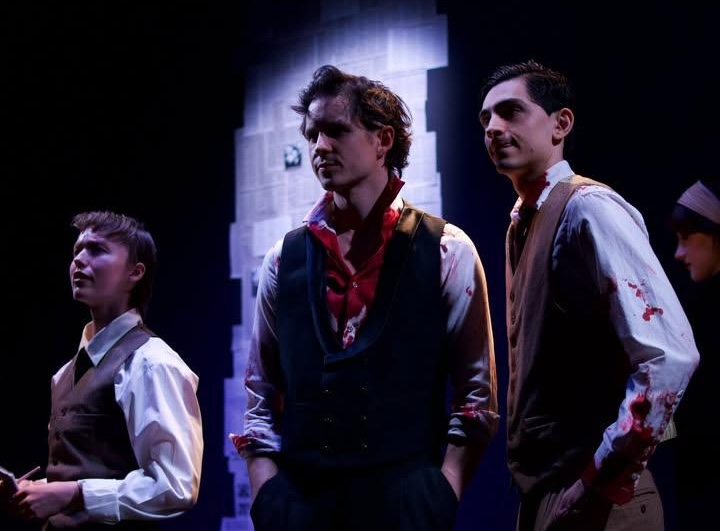
The play bounces between courtroom drama, as 19 year old Nathan Leopold Jr (Jack Bridges) and 18 year old Richard Loeb (Josh Hammond) are put on trial for the murder of 14 year old Bobby Franks, and the events leading up to their arrest. The two older teens, obsessed with Nietzsche’s concept of the “superman”, are determined to prove themselves worthy of the title. To do so, they will commit the perfect crime: killing a boy and getting away with it.
John Logan has had an illustrious career as a playwright and screenwriter, from his Tony Award-winning Red (2009) to Martin Scorsese’s Oscar-winning The Aviator (2004), with the some large misfires along the way (Star Trek: Nemesis and Alien: Covenant – two of the worst entries in their respective franchises among them). He even wrote both the best and worst of the modern James Bond films, Skyfall and Spectre. My point is, Logan is a very talented writer, but not a flawless one. (Side note: we’re getting TWO John Logan musicals next year, with his book for both Moulin Rouge and Swept Away.)
Never The Sinner marks the start of that career. First written in 1985, then revised over the next decade, it has an instantly cinematic quality, with short, quick-cutting scenes and punchy dialogue. You can see the blockbuster writer he would become.
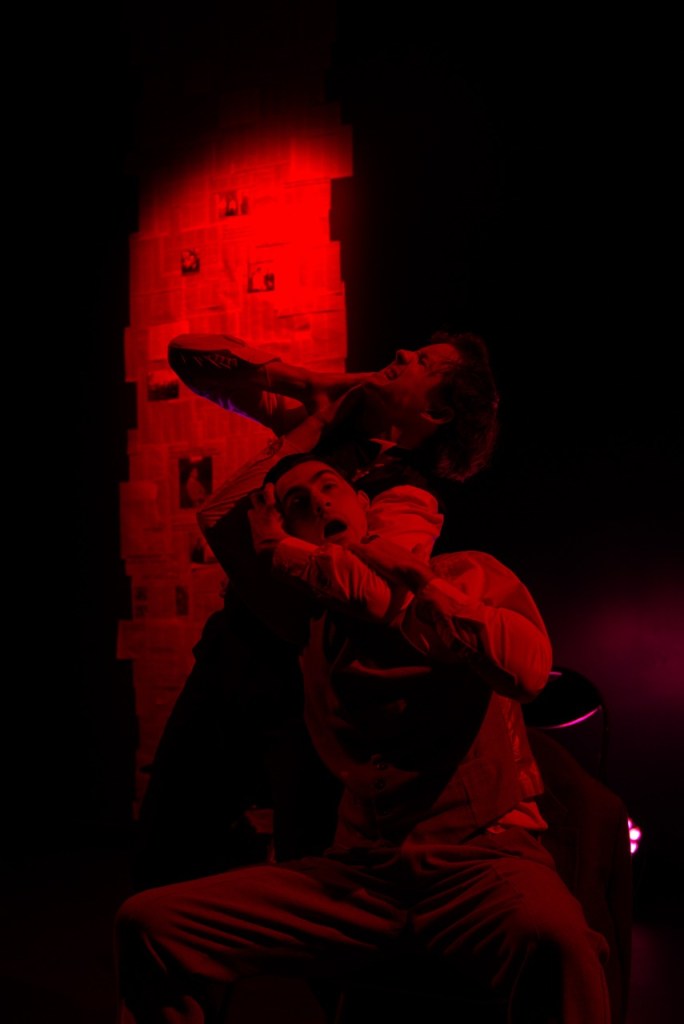
This production has real strengths. Josh Hammond steals the show as the energetic and violent Loeb. His explosive dialogue gives the show much needed life and movement (kudos on the impressive kip up, too). Josh Hammond’s frenetic energy is both engaging and disturbing. Against him, Jack Bridges offers a cerebral and distant Leopold. Mark Langham is a strong addition as the defence lawyer searching for the humanity in the boys. Sound and lights by Matthew Phillips give the show crisp punctuation. The contemporary music in the transitions offers a lively respite.
Where the production struggles is in translating the kinetic pace of the text. Seeing the show a week into its run, it feels like it hasn’t yet settled, landing on a halting, unnerving rhythm instead. Pauses stretch scenes beyond their purpose (perhaps the characters’ thoughtfulness is reading as the performers’ hesitance?), and at a solid 2hr 40min, the simple black box staging has little room to hide when the energy dips.
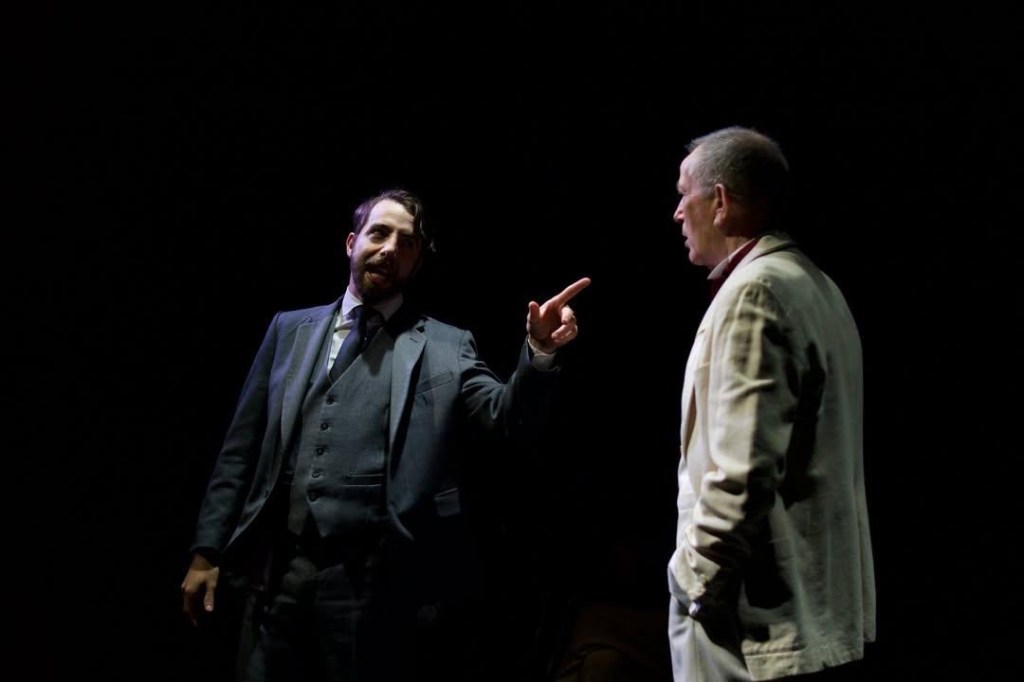
I also wanted a clearer thesis from Kurtis Laing’s direction to hold it all together. Who were Leopold and Loeb behind the headlines and the crime? What is this production saying here and now? The script works to humanise the killers, while the staging often keeps their inner worlds out of reach, placing the cast in semi-shadow or shifting motivations from scene to scene. It doesn’t feel like a deliberate choice to be enigmatic so much as a question the production hasn’t yet answered. The music, welcome as it is, feels unconnected to the rest of the staging, and it raises a question: are we really playing music by the antisemitic Kanye West (Ye) in a play about two queer Jewish teenagers? A more cohesive vision would help pull the story into shape.
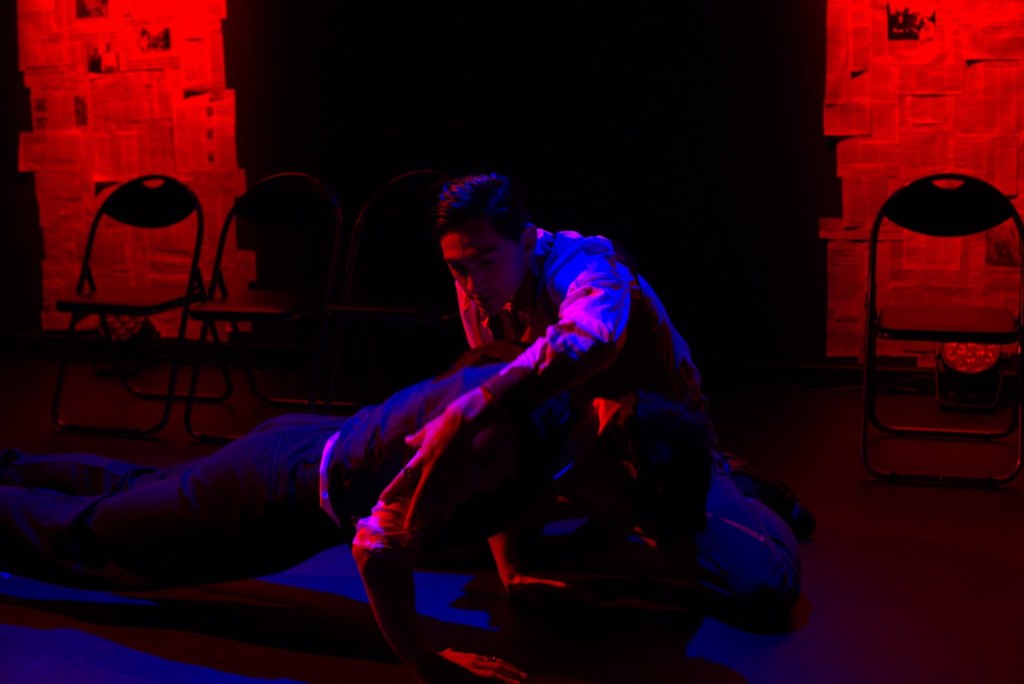
The production’s most noticeable gap is the sexual energy between Bridges and Hammond. The psycho-sexual bond of Leopold and Loeb, front and center in the dialogue, but takes a backseat in the performances. The script points to their transactional relationship, in which Loeb could manipulate Leopold with sexual access, but after the one scene of seduction, the subtext almost disappears. It’s surprising to see the queerness at the core of this story recede, in a play by a gay writer about infamous gay characters performed at a queer venue.
There is much here to admire, but the depth of thought and purpose is somewhat lacking. John Logan’s text offers room to explore these characters that isn’t fully realised. With a steadier tempo and a more defined point of view, Never The Sinner could find the voice and rhythm the text is asking for.


Leave a Reply