-
Welcome to Cultural Binge

The rating system is simple:
★★★★★ – Terrific, world-standard. Don’t miss.
★★★★ – Great, definitely worth seeing.
★★★ – Good. Perfectly entertaining. Recommended. Individual mileage may vary.
★★ – Fine. Flawed and not really recommended, but you may find something to appreciate in it.
★ – Bad (& possibly offensive).
See more reviews over at The Queer Review.
Instagram: @culturalbinge
Substack: culturalbinge.substack.com
Email: chad at culturalbinge.com
-
Grief is the Thing With Feathers (Belvoir) ★★★★½
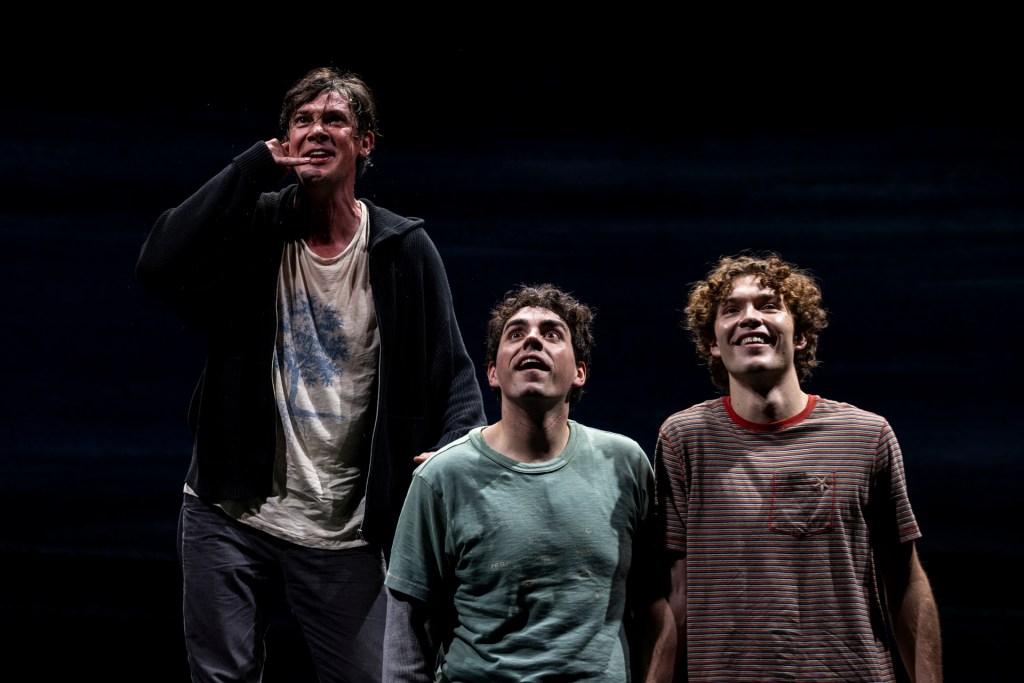
Written by Simon Phillips, Nick Schlieper & Toby Schmitz. Adapted from the novel by Max Porter. Belvoir. 26 Jul – 24 Aug, 2025.
Belvoir’s streak of literary adaptations unearths another winner with Grief is the Thing With Feathers. This production gives Toby Schmitz a chance to soar. As the list of playwrights suggests, this is a collaborative affair that merges the disciplines of theatre into one poetic whole. Don’t be put off by the title; while it meditates on grief, it’s also quite fun, albeit in a dark way.
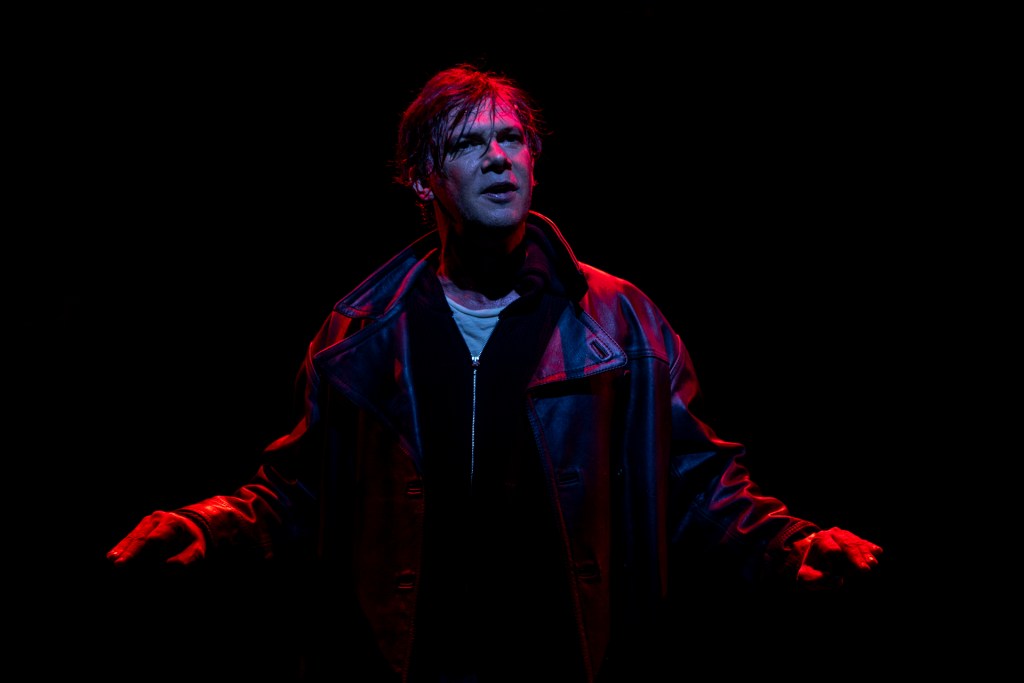
Toby Schmitz. Photo: Brett Boardman. An academic and father of two young boys attempts to cope with the loss of his wife. Then, one night, as if summoned by the household’s pain, Crow arrives and takes over their lives. This metaphysical encounter—or psychological break, if you prefer—serves as both a chaotic disruption and a possible journey to healing.
The true test of a play’s power lies in how much lingers in my mind after leaving the theatre. The morning after seeing Grief is the Thing With Feathers, I still hold a crystal-clear image of Crow. He is vivid. This mastery of storytelling means that, although Crow manifests onstage only through subtle changes in Schmitz’s accent, posture, and mannerisms, in my mind he transforms into a powerful, sleek, black-winged creature of terrifying size and beauty. The play sent my own imagination soaring.

Toby Schmitz. Photo: Brett Boardman. The opening moments showcase that rare theatrical magic Belvoir captures so well: Crow’s entrance is one of the most exciting acts of misdirection and majesty I’ve seen all year. I found myself grinning from the back row. Craig Wilkinson’s projections and animations beautifully expand the tale while maintaining the bleak, pungent atmosphere of the emotionally drained household. Nick Schlieper’s lighting design has more than a few tricks up its sleeves.
Schmitz clearly enjoys playing both the mild-mannered English Dad and the rougher, ruder Crow. Ella Butler’s dark-toned, layered costumes punctuate Crow’s presence, enhancing Schmitz’s performance. Dad walks—Crow leaps. Dad watches and thinks; Crow reacts and snaps. It’s a joy to watch.

Toby Schmitz, Fraser Morrison & Philip Lynch. Photo: Brett Boardman. Schmitz is joined on stage by Philip Lynch (The Lewis Trilogy) and Fraser Morrison (Cruise) as his two sons, along with composer Freya Schack-Arnott, who performs the cello-based score live. Lynch and Morrison cavort like children, bringing innocent, blunt acceptance to the strangeness of their new post-mum lives. Their narration blends childlike observations with future-adult rationalisations, giving the play the temporal elasticity of memory.

Fraser Morrison & Toby Schmitz. Photo: Brett Boardman. There is a strong echo of Patrick Ness’s 2011 YA hit A Monster Calls in the story. The opening moments are strikingly similar (a feather in a bedroom versus a leaf), and the transformation of unfathomable emotions into a supernatural force unfolds in much the same way—just swap Monster’s Yew Tree for Grief’s Crow. Max Porter’s verse, largely unaltered on stage, retains its lyrical mysticism, making this a far more successful adaptation than other stage versions of A Monster Calls I’ve seen. On a lighter note, some of the ‘da-dum’ sound transitions amusingly reminded me of TV’s Law & Order.
At 100 minutes, the show starts to feel a bit claustrophobic in its second half, with the oppressive world of black and grey wearing thin. Still, it’s more than worth enduring for the beautiful catharsis of the final moments.
-
Fewer Emergencies (Old Fitz) ★★★★½
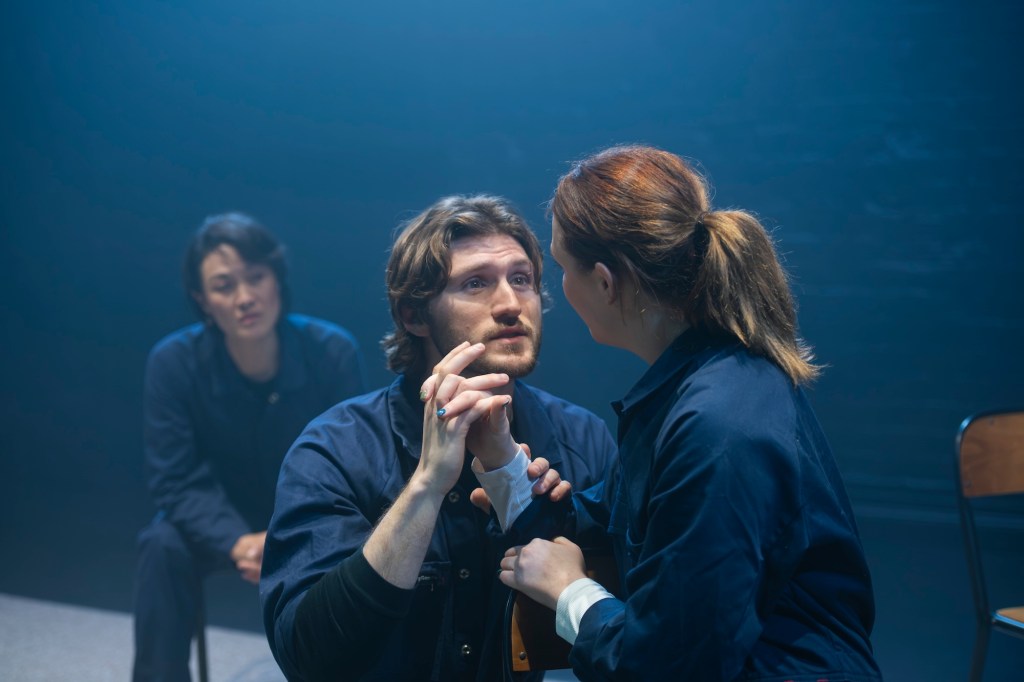
Written by Martin Crimp. The Company Theatre. The Old Fitz. 22 Jul – 3 Aug, 2025.
If you’re a fan of the challenging, conceptual work of Caryl Churchill or Sarah Kane, then make your way to The Old Fitz for this late-night treat. Martin Crimp’s triptych of stories about stories is woven seamlessly together in director Harry Reid’s new production. It offers no new answers to the play’s questions but presents them with exhilarating conviction.

Bayley Prendergast, Monica Sayers, Olivia Hall-Smith & Clay Crighton. Photo: Robert Miniter. In Reid’s interpretation, three (or is it four?) cleaners invent stories about the world around them as they work. In the first, Whole Blue Sky, a stray scarf sparks an improvised tale of a young woman who may (or may not) have the perfect marriage. Together, the storytellers develop and correct each other’s versions as they go—but the story reveals more about the teller than the subjects, taking darker turns along the way. In the second, Face to the Wall, they imagine a school shooting from the shooter’s point of view—someone who, on the surface, seems to have the perfect life (could he be the husband or father from the first story? Possibly). In the third, the short Fewer Emergencies, the storytellers glimpse a flicker of hope, whether real or imagined, in the distance.

Monica Sayers & Bayley Prendergast. Photo: Robert Miniter. This is the first piece of genuine “lean-in” theatre I’ve seen in a while, and despite the lateness of the hour, it gripped me completely. Crimp’s ambiguity invites the audience to create their own narrative, sharing a sense of personal responsibility for the direction the story takes. It’s manipulative and more than a little cruel—but thrilling all the same. Just as Beckett’s Happy Days (recently performed at Sydney Theatre Co) places us in an existential space to focus on the characters and their humanity, Crimp’s stories expose the inner workings of the storytellers and their own violent impulses. By compelling us to imagine the visuals ourselves, we experience a fully immersive virtual memory. This is storytelling at its most disturbing.
The Company Theatre provides an extra layer of context through the cast’s costumes and actions, gently guiding us into the world rather than leaving us in a purely conceptual space (when Fewer Emergencies premiered in 2005, it was staged in an all-white room with the cast seated around a table). I’m sure some purists will object, but I found it to be additive. There’s a reassuring confidence in the cast’s performances too—they seem to know where we’re headed, even if we do not, which lets us sit back and immerse ourselves more fully.
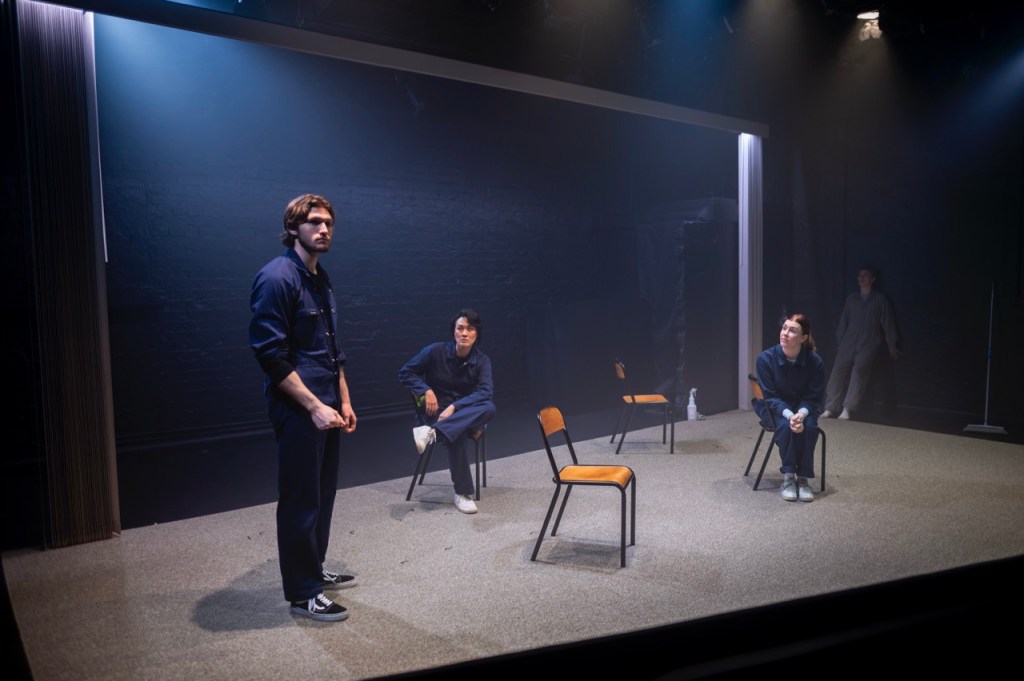
Bayley Prendergast, Monica Sayers, Olivia Hall-Smith & Clay Crighton. Photo: Robert Miniter. The cast of four—Clay Crighton, Olivia Hall-Smith, Bayley Prendergast, and Monica Sayers—are all exceptional. With such a conceptual script, it would be easy for their characters to feel cold or detached, but instead, each is vibrantly alive. Telling these stories seems to be their great joy, and that enthusiasm, however twisted or macabre, holds us enthralled.
As part of The Old Fitz’s late-night programme, Fewer Emergencies takes place on the same basic set as the main show, Betrayal, which is completely transformed with the addition of some props and rich lighting by Izzy Morrissey, whose work does much of the visual storytelling.

Clay Crighton. Photo: Robert Miniter. But fear not—Fewer Emergencies isn’t nearly as disturbing as some might suggest. It feels like watching an unsettling yet wildly entertaining episode of Black Mirror, rather than enduring a Saw movie.
Frankly, this is fantastic work. Experience it alongside Betrayal, and you’ve got a double bill of the highest calibre.
-
The Book of Mormon (Capitol Theatre) ★★★★★

Book, Music & Lyrics by Trey Parker, Robert Lopez & Matt Stone. Capitol Theatre, Sydney. From 15 Jul, 2025.
I had no intention of actually reviewing The Book of Mormon. After a very hectic week (lots of shows, lots of writing, lots of day job work, lots of real-world dramas), it was meant to be a simple, fun night at the theatre with a friend—something I didn’t have to think about too much. I wasn’t invited to review it, so there was no obligation, etc. This one was just for funzies. So why am I writing this now?
Because it was completely, filthily, fucking five-stars worth of brilliant!

When I saw the show originally (back in 2013), I remember cackling my arse off but doubting it would work as well a second time around. Many of the laughs then came from the “oh-my-god-I-can’t-believe-they-said-that-on-stage” shock factor. Would any of it be funny when you already knew what was coming? And that’s true—the incongruity of hearing a bunch of words I won’t repeat in the middle of brassy Broadway numbers is still there, but now it gets a wry smile rather than a shocked guffaw.
What I’d forgotten is just how sharp everything else about the show is. The book of The Book of Mormon walks a gossamer-thin line between lovingly poking fun and raucous abuse of the Church of Latter-Day Saints (and all religion, really). The genius move is digging beneath the intellectual self-denial of spiritual belief to explore the suppressed, complex emotional lives of believers. From Elder Price’s vanity and self-serving sense of destiny to Elder Cunningham’s hunger for approval. Even the intense profanity has a deeper point about entitled white saviours, racist caricatures, and the gap between words and deeds. Casey Nicholaw’s choreography is genuinely a standout (despite my pet hate—the accursed fake, amplified taps and claps).

And the new cast are sharp. So fucking sharp! They have real “first cast” energy, not “touring cast 14 years after the debut” energy. Sean Johnston completely nails the physicality and tone of the optimistic-and-over-entitled Elder Price. And his vocals—Jesus Christ! Nick Cox brings the schlubby Elder Cunningham real comedic charm while perfectly nailing the choreography and vocals. Together, their dynamic powers the show and gives it a stronger emotional core than I expected beneath the mountain of crude jokes. But it doesn’t stop there. The entire ensemble is both in on the joke and performing like their lives depend on it. The big production number “I Am Africa” is jaw-droppingly ridiculous and impressively precise.
As the stink of aggrieved religious conservatism creeps into the political arena overseas, The Book of Mormon remains a breath of fresh air. Will it offend? Quite possibly—hearing an ensemble sing “Fuck you, God” while joking about female genital mutilation isn’t exactly mainstream family entertainment, even in 2025. Will you laugh? For sure. Should you book? Fuck yes.
-
Babyteeth (KXT on Broadway) ★★★

Written by Rita Kalnejais. White Box Theatre in association with bAKEHOUSE Theatre. KXT on Broadway. 18 Jul – 2 Aug, 2025.
Rita Kalnejais’s teen cancer weepie, Babyteeth, starts with a kick to the guts before inserting layers of emotional complexity. It’s a brutal play that brings out the best in some younger performers.
Fourteen-year-old Milla (Rachel Thomas) is struggling. Beyond the usual trials of being a teenage girl on the cusp of young adulthood, she has cancer and isn’t sure how much longer she wants to keep fighting. Her psychologist father Henry (James Smithers) and her mother Anna (Jane Angharad) are on the verge of their own breakdowns, dealing with the pressure and growing acceptance of their daughter’s fatal condition. So, when she comes home with a 23-year-old drug dealer named Moses (Campbell Parsons), who she is clearly infatuated with, they try to take it in their stride. Grief takes many different and unexpected forms.

Campbell Parsons. Photo: Phil Erbacher. Thomas is fantastic as the teenage Milla. Bringing the same innocent charm she showed in These Youths Be Protesting earlier this year, she now uses it for pathos to great effect. Similarly, Parsons’s Moses never seems overly exploitative in his relationship with the younger girl—despite making decisions that are clearly illegal and unethical. There is a tortured soulfulness to him, even as he proves to be an opportunist. This duo forms the absolute highlight of Babyteeth.

Rachel Thomas. Photo: Phil Erbacher. Under Kim Hardwick’s direction, the scenes carry a mournful energy that wallows in anticipatory grief. The production doesn’t always navigate the different emotional tones, especially the sharp shifts into comedy with over-the-top side characters like Esha Jessy’s pregnant neighbour Toby or Philip D’Ambrosio’s violin teacher Gidon. The stark design and neutral colour palette sit across the stage like an icy depression, only given reprieve by Topaz Marlay-Cole’s subtle lighting shifts.
If you’re familiar with the excellent 2019 film adaptation, you’ll know how the story unfolds. This is not a feel-good night at the theatre, but this production highlights some exciting onstage talent.
-
Emerald City (Ensemble) ★★★

Written by David Williamson. Ensemble Theatre. 18 Jul – 23 Aug, 2025.
Time is a funny thing, and the Ensemble Theatre has done us a huge favour by presenting classic and contemporary David Williamson in the same season. It’s a great opportunity to see how he has evolved as a writer over the decades. With the new production of Emerald City—his Sydney-skewering high point from the 1980s—we can now look back with wry amusement.
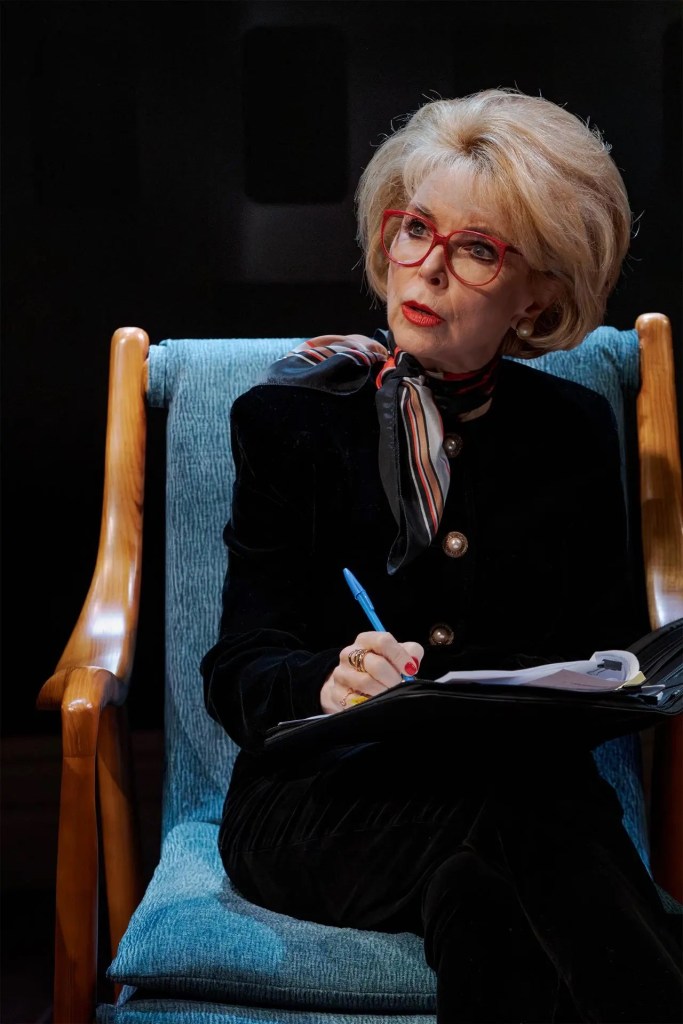
Danielle Carter. Photo: Phil Erbacher. Colin (Tom O’Sullivan) is a screenwriter known for solid, respected films about the Australian middle class. His wife, Kate (Rachel Gordon), works in book publishing. Together, this “champagne-socialist” couple have traded Melbourne’s café culture for Sydney’s glistening avarice, where waterfront proximity defines your status.
When Colin struggles to excite his producer Elaine (Danielle Carter, very much in her element) about his next project, he meets Mick (Matt Minto), an entrepreneurial scriptwriter tired of talky, arty films. Mick wants to make Hollywood-style blockbusters in Australia. Mick needs industry credibility; Colin needs commercial success—they just both need to hold their noses and compromise.

Matt Minto & Tom O’Sullivan. Photo: Phil Erbacher. Let’s get the most insufferable aspect of Emerald City out of the way: the constant fourth-wall breaks. Characters frequently monologue directly to the audience—mid-scene, mid-conversation—which mostly feels unnecessary. This stylistic flourish disrupts scene rhythm and oddly resembles a reality-TV show cutting to cast interviews. Williamson was ahead of his time, but the didactic tone of the monologues feels clumsy compared to his later work.
The cast handles these moments well enough, though not flawlessly. Thankfully, the rest of the play strikes the right notes. In the battle of art versus commerce, commerce always wins—best illustrated through Kate’s publishing subplot. While Colin is consumed by impotent ambition, Kate quietly soars and convinces herself that enjoying the spoils doesn’t compromise her integrity. Williamson also slips in some excellent one-liners on marriage and relationships, and Kate feels far more realistic than Colin.

Tom O’Sullivan & Rachel Gordon. Photo: Phil Erbacher. Simple staging by Dan Potra, including evocative ’80s/Ken Done harbour-inspired illustrations, keeps us focused. The costuming feels a touch on-the-nose: Colin starts off wearing a black turtleneck (Melbourne!), before changing into a gaudy shirt (Sydney!).
The Sydney of Emerald City is a peculiar metropolis—one we might not recognise today. Its reputation as Melbourne’s cruder, shallower cousin still rings true (just compare radio’s Kyle & Jackie O, who tops the ratings in Sydney but flopped in Melbourne). Yet this avaricious chase for harbour views feels distant from 2025, where most people simply try to buy… any house.

Matt Minto. Photo: Phil Erbacher. Of course, this production plays not just anywhere in Sydney, but at the Ensemble Theatre—literally perched on the harbour central to the story. We are surrounded by the very homes the play depicts. The audience clearly enjoyed reminiscing about the ’80s and their own journeys to waterfront properties.
The sad irony of Emerald City is that Mick’s vision of the film industry has triumphed. After the Australian New Wave’s golden age in the ’70s, backed by strong government support, the industry shrank in the ’90s and pivoted into an international production hub for Hollywood blockbusters with little local relevance—just as Mick envisioned.
Emerald City deserves its place in Sydney’s theatrical canon. It’s a major work capturing the spirit of its time. Nearly 40 years later, it feels both quaint and depressingly accurate.
-
Betrayal (Old Fitz) ★★★★
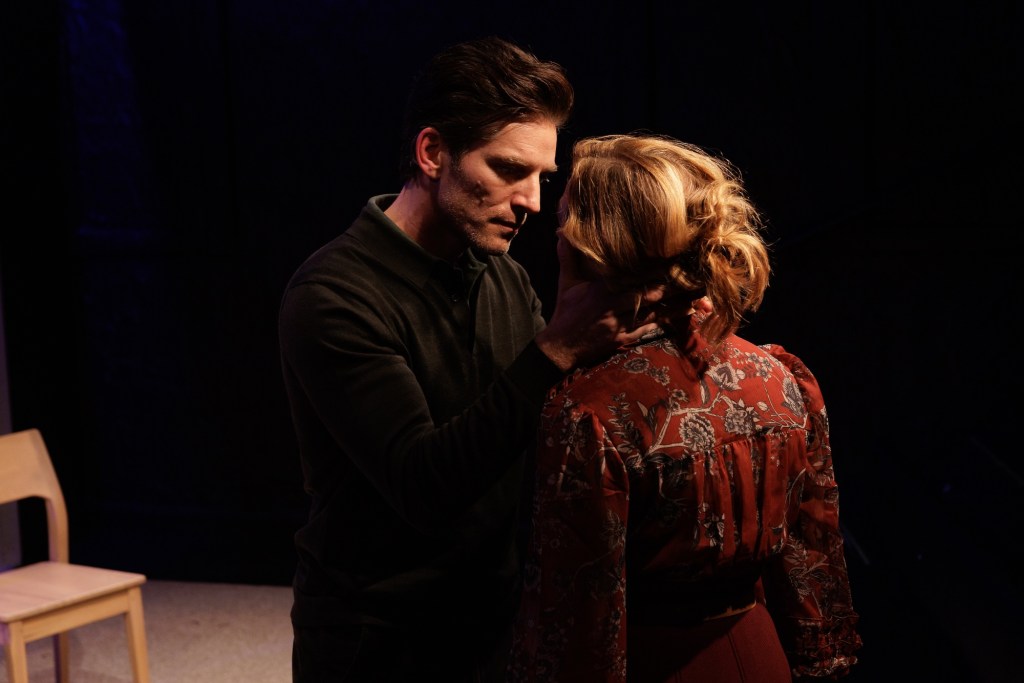
Written by Harold Pinter. Sport For Jove. Old Fitz Theatre. 18 Jul – 10 Aug, 2025.
Sport For Jove’s production of Harold Pinter’s Betrayal peels back layer after layer of relationships and asks us: who can you really trust?
Emma (Ella Scott Lynch) and Jerry (Matt Hardie) meet in a pub after a few years apart. They catch up on their respective families like the old lovers they are. Emma reveals that she has just told her husband Robert (Andrew Cutcliffe) about their past affair. From this moment, a complex web of deceit unfolds as each scene takes us further back into their shared history, showing lies piling up over the years.
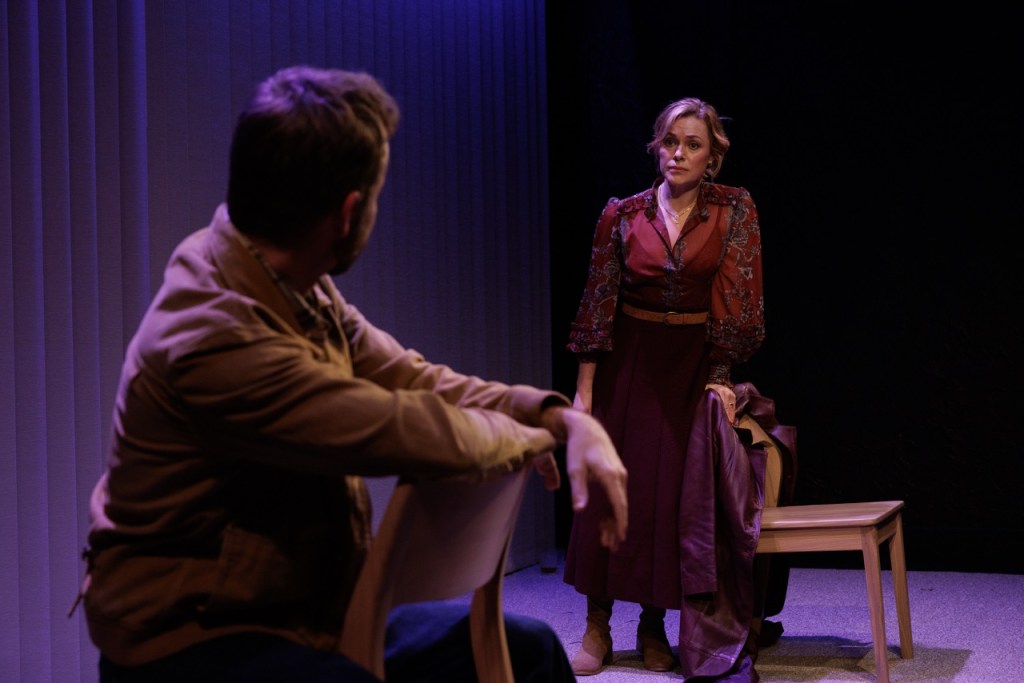
Matt Hardie & Ella Scott Lynch. Photo: Kate Williams. Does a lie hurt if it is never discovered? Emma, Jerry and Robert have been lying to each other for years. The question of who knows what, and when, drives this mannered comedy of revelations. Betrayal is funny—partly because the script’s major surprises catch us off guard, and partly because Pinter’s rhythms are so familiar they verge on self-parody.
Pinter’s cold, compassionless menace is best captured by Cutcliffe’s Robert, who seems more interested in squash and poetry than in his wife’s wellbeing. You’re left wondering where polite British reserve ends and genuine indifference begins. It’s a performance told largely through subtext—brilliant to watch. In contrast, Lynch’s Emma appears to be constantly questioning her decisions, on the verge of changing her mind at any moment, while Hardie’s Jerry moves from warm reserve at the play’s start (the end of their relationship) to reckless abandon. This emotional “three-body problem” feels inevitably destined for chaos.

Ella Scott Lynch, Andrew Cutcliffe & Matt Hardie. Photo: Kate Williams. Director Cristabel Sved strips the production down to near black-box simplicity. Melanie Liertz’s set design threatens to bring back the vertical blind to theatre stages in a way I haven’t seen since the 1990s (kudos to Diego Retamales, who turns opening and closing them into an art form). Lighting by Verity Hampson and Luna Ng subtly shifts the tone, transporting us from Kilburn in West London to Venice. As the play progresses, the stage becomes cluttered with the detritus of the characters’ interactions—what starts pristine ends in disorder.
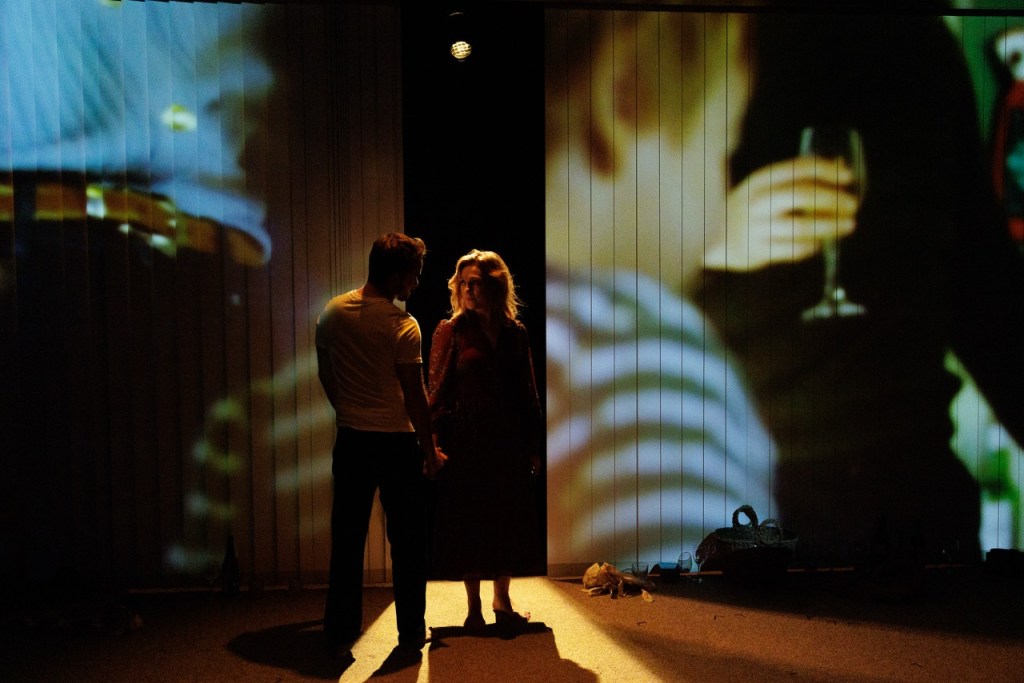
Matt Hardie & Ella Scott Lynch. Photo: Kate Williams. Reverse chronologies can be tricky (just ask the late Stephen Sondheim). As the play unfolds, we already know the ‘who’, ‘when’, ‘what’ and ‘where’ of events; what remains unknown is the ‘how’ and ‘why’ of their relationships. The drama doesn’t lie in what happens but leaps out in the small lies that are told.
The audience must stay attuned to the micro-moments that make a Pinter play truly sing—though some are not always easy to catch. With a script full of wickedly ambiguous lines that can cut deep and an emotional tension that simmers beneath the surface, some scenes occasionally feel blunt and out of step with the characters.
Betrayal is one of my favourite Pinter plays, even more than the much-lauded The Caretaker, and it’s a joy to see it brought to life in such an intimate space. This is a real “actors’ play”, offering plenty for the performers to savour. It’s all about character, and this cast clearly revels in it. The show is very good now, and I suspect it will deepen further over the course of the run.
-
Hedwig & the Angry Inch (Carriageworks) ★★★★★
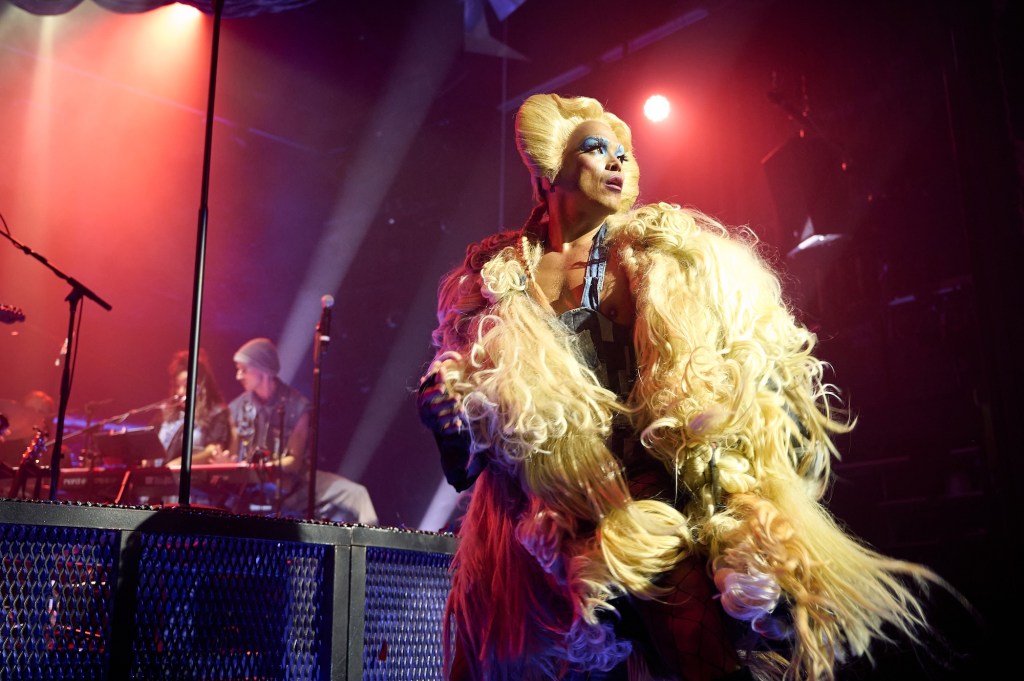
Text by John Cameron Mitchell. Music & Lyrics by Stephen Trask. Carriageworks. From 17 Jul, 2025.
Seann Miley Moore at first seems a completely incongruous casting choice to play a blonde, blue-eyed German boy who becomes the indie musician Hedwig. But once he hits the stage, Moore transcends the material by sheer force of talent. Hedwig needs cabaret/rockstar energy, and Moore delivers.

Seann Miley Moore. Photo: Shane Reid. This production (by co-directors Shane Anthony and Dino Dimitriadis) throws out any attempt at literal realism. It is both 1994 and 2025 simultaneously – it’s timey-wimey, as Doctor Who might say – letting Moore riff on modern events and play to the crowd. Rather than punk rock leathers, the cast are clad in patchwork denim (designed by Nicol & Ford) that somehow loops from 60s bohemia to 90s Gap-commercial to 2020s chic all at once. Hedwig’s “dreamcoat-of-many-weaves” is a wonder to behold all on its own.
Hedwig & the Angry Inch has always resonated by being both a rock gig and a surprisingly emotional piece of storytelling. Hedwig is a survivor, repeatedly abandoned but always getting back up and forging a new life from the ashes. There is a deep well of sadness and rage fuelling the narrative, which is translated through rockstar verve.

Adam Noviello & Seann Miley Moore. Photo: Shane Reid. Just as Hedwig has been abused, she too becomes the abuser to her second husband, Yitzhak (a show-stealing performance by Adam Noviello, with Amy Hack as understudy), whom she constantly suppresses. It is both harshly comedic and gives this rock/cabaret a story arc you can invest in.
Jeremy Allen’s set design, a circular riser with a staircase, is small but efficient. I would have loved something that took advantage of the expansive Carriageworks space, but as a touring show (which has already been through Adelaide and Melbourne) it needs to be adaptable. Thankfully, the lighting by Geoff Cobham fills the space. Rather than a basement gig, this Hedwig leans into the industrial space with cabaret flair.

Adam Noviello & Seann Miley Moore. Photo: Shane Reid. As creators John Cameron Mitchell and Stephen Trask (Trask attended the Sydney premiere and performed at the encore) have previously stated, Hedwig is not a trans character but a young gay femme boy who is coerced into gender reassignment surgery by an abusive lover. In response, the stage persona of Hedwig is in part a drag performance and an exploration of gender beyond the binary, or even the trinary – giving the role a rich liminal space to exist in, one in which Moore brings a joyous, gender-fuck energy.

Seann Miley Moore. Photo: Shane Reid. The result is a juicy, overflowing performance from Seann Miley Moore that channels itself through the indie rock anthems, and which held me in rapt attention for 90 minutes. This Hedwig & the Angry Inch is not just theatre, it is an event. One you definitely don’t want to miss.
-
Circle Mirror Transformation (Sydney Theatre Co) ★★★★
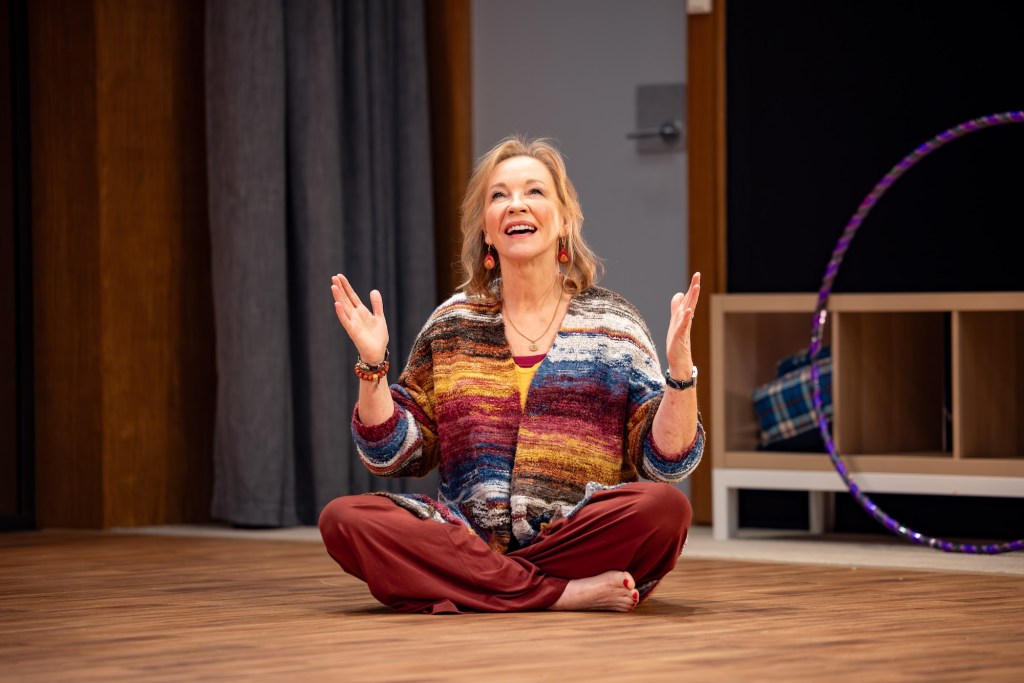
Written by Annie Baker. Wharf 1 Theatre. Sydney Theatre Co. 12 Jul – 7 Sep, 2025.
Circle Mirror Transformation is a tonic for the real-world dramas taking place. This gentle character comedy unveils itself at a careful pace, with a spacious script that allows five fantastic performances to fill the stage. Tip: Keep an eye on everyone’s faces, its all in the hilarious micromoments.
A group of strangers meet in an empty studio to take introductory acting classes from Marty (Rebecca Gibney). There is Theresa (Jessie Lawrence), who moved from New York to this small Vermont town five months ago; the recently divorced carpenter Schultz (Nicholas Brown); and the shy 16-year-old Lauren (Ahunim Abebe), who wants to study theatre, or perhaps veterinary science, when she goes to university. The group is rounded out by Marty’s husband, James (Cameron Daddo). Over the course of six weeks, personal boundaries come crashing down and everyone receives more than they anticipated.

Jessie Lawrence and Cameron Daddo. Photo: Daniel Boud. There is a refreshing simplicity to Circle Mirror Transformation that is instantly relaxing. It is undoubtedly a comedy, but the laughs don’t come from set-ups and punchlines; they bubble up out of character. Annie Baker’s script gives us time to get to know these people, their foibles, and their dreams. Told in a succession of short moments (it reminded me a lot of Nick Payne’s Constellations, seen at STC in 2023), the story lies not in what is said, but in the reactions of the characters. It’s a relatively slow burn for a comedy, but worthwhile.

Ahunim Abebe, Rebecca Gibney, Cameron Daddo, Jessie Lawrence and Nicholas Brown. Photo: Daniel Boud. Many people will no doubt buy tickets to see the STC debut of two of Australia’s most beloved screen talents, Rebecca Gibney and Cameron Daddo—both of whom deliver disarming and warm performances—but the real gems come from the trio of Ahunim Abebe, Nicholas Brown, and Jessie Lawrence. This cast, under the direction of Dean Bryant, keeps things grounded and is all the richer for it. Each role feels both quirky and authentic, without trying too hard to get a laugh from the audience. These may be the most organic performances I’ve seen all year, deliciously underplayed, drawing you in.
Once the audience learns the play’s rhythms, its humour truly begins to shine. It rewards us by layering the laughs into the action. These five flawed and fickle people are all too familiar and relatable. Their desires and slights are petty on a grand scale, but seismic within this small group.

Nicholas Brown. Photo: Daniel Boud. As anyone who has attended any form of introductory acting class knows, the process of breaking down people’s inhibitions and inviting them to play can seem peculiar to onlookers, and Circle Mirror Transformation makes the most of this awkwardness. Jeremy Allen’s set, with a mirrored wall looking back at the audience, puts us right in the action. It also allows the cast to perform scenes with their backs to the audience in a naturalistic way. Clemence Williams’ sound design makes use of Wharf 1’s crisp speaker system to immerse us in breaths and the odd noises of vocal warm-ups between scenes.
Circle Mirror Transformation does not have the political edge of recent comedies like Eureka Day or Hir, and its levity feels like a deliberate counterweight to STC’s last show, the meaty existential comedy Happy Days. The pace may frustrate some, but after a hectic few days I rejoiced in being able to decompress in its staging. It felt like drinking a glass of wine after a stressful day—a crisp, aromatic Pinot Gris rather than a woody Chardonnay.
-
Hir (New Theatre) ★★★½

Written by Taylor Mac. New Theatre. 8 Jul – 2 Aug, 2025.
Taylor Mac’s Hir, now over a decade old, remains startlingly ahead of its time. While conversations about gender have grown increasingly chaotic and polarised, this play focuses less on pronouns and more on the complex forces driving its characters.
Isaac (Luke Visentin), known simply as ‘I’, returns home from a stint in the military to find his childhood house in utter chaos. Laundry litters the floor, dirty dishes clog the kitchen, and the front door is blocked by… stuff. His father, Arnold (Rowan Greaves), is now an incoherent, stupefied figure — a lump in a nightgown smeared with clown makeup. Max (Lola Kate Carlton), Isaac’s sibling, no longer identifies as his sister but as genderqueer, using ze/hir neopronouns. Meanwhile, their mother, Paige (Jodine Muir), freed from Arnold’s violent tyranny, enforces one strict rule: absolutely no cleaning. This is far from a happy household.
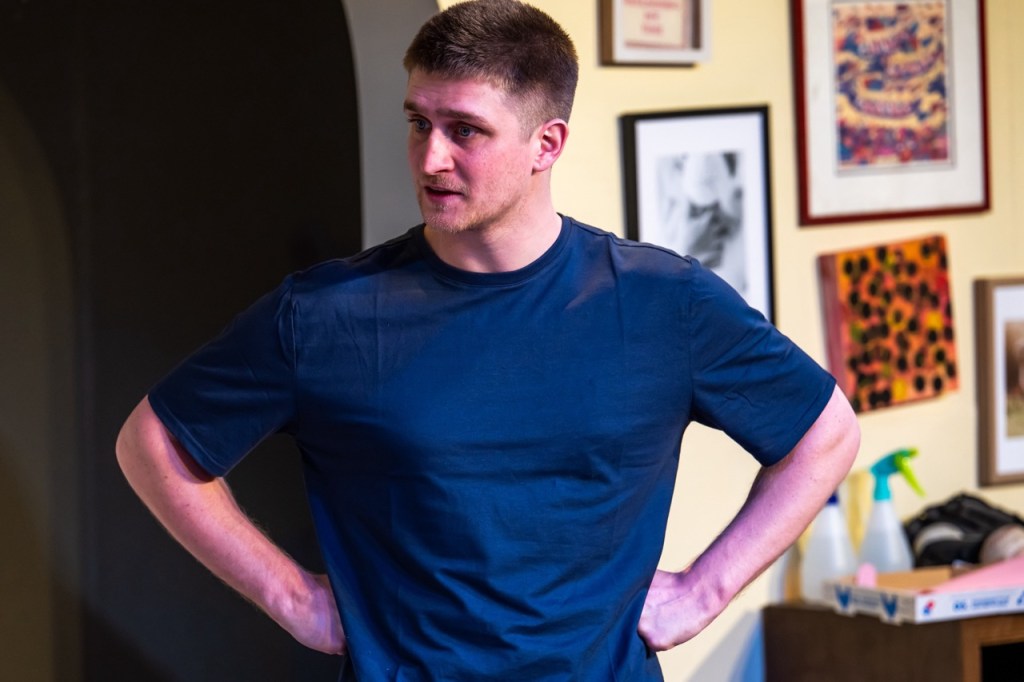
Photo: Chris Lundie. Playwright Taylor Mac, now better known for his durational music extravaganzas such as A 24-Decade History of Popular Music and Bark of Millions, uses his insider perspective to poke fun at progressive ideals. Unlike a cisgender playwright, whose intentions might be questioned, Mac’s lived experience outside the gender binary lends his observations both sharpness and authenticity.
Beneath the surface, Hir is not about gender or sexuality; it is a raw exploration of trauma and control. Arnold, once a terrifyingly violent presence, has been reduced to a powerless shadow by a stroke. Paige, seizing control, exacts retribution through countless humiliations. Max, despite hir rebellious claims, remains a teenager craving approval. And Isaac wrestles with a haunting question: will he become like his father? In this tangled web of wounds and fears, even a battle over the air-conditioning becomes a fraught, almost warlike struggle.
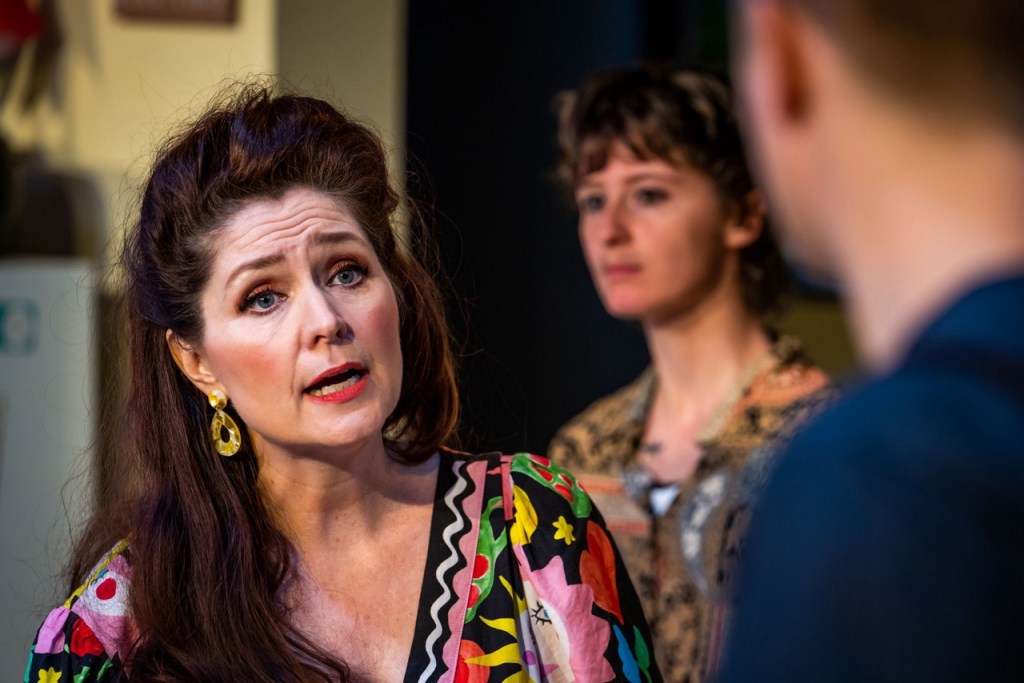
Photo: Chris Lundie. Kudos to Jodine Muir, who delivers commanding speeches brimming with jargon and gender theory, and to Rowan Greaves, whose near-mute Arnold looms over every scene. Victor Kalka’s set, with its lived-in, seedy aesthetic, perfectly captures the household’s disarray (as a neat-freak, it disturbed me). The Gen X playlist warmed my middle-aged heart. However, some of the longer scenes lack the dynamic shifts needed to keep the audience fully engaged, and there are big emotional moments that feel unjustified. At times, the production risks becoming entangled in its grand ideas and choreography, slightly overshadowing the human journeys at its heart.
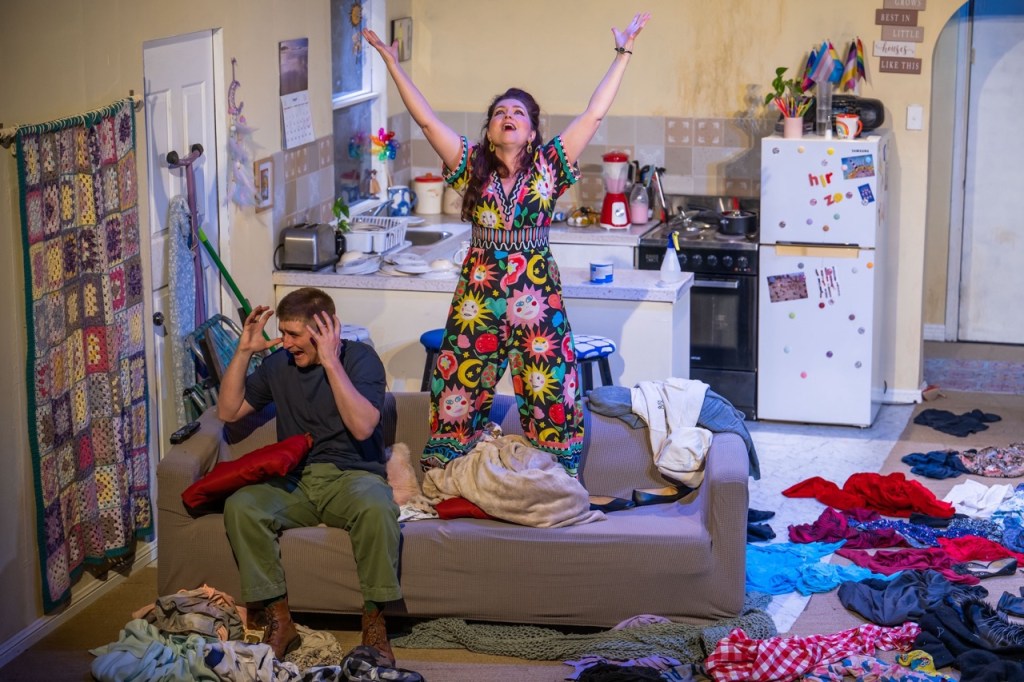
Photo: Chris Lundie. Though it joins the long tradition of “families being awful to each other” plays, Hir still feels refreshingly original. Its characters are deliciously complex, revelling in the darker undercurrents of some utopian ideals. Taylor Mac understands that politics is often just a form of drag — it’s the person beneath the surface who truly matters.
-
Marrow (Carriageworks) ★★★★
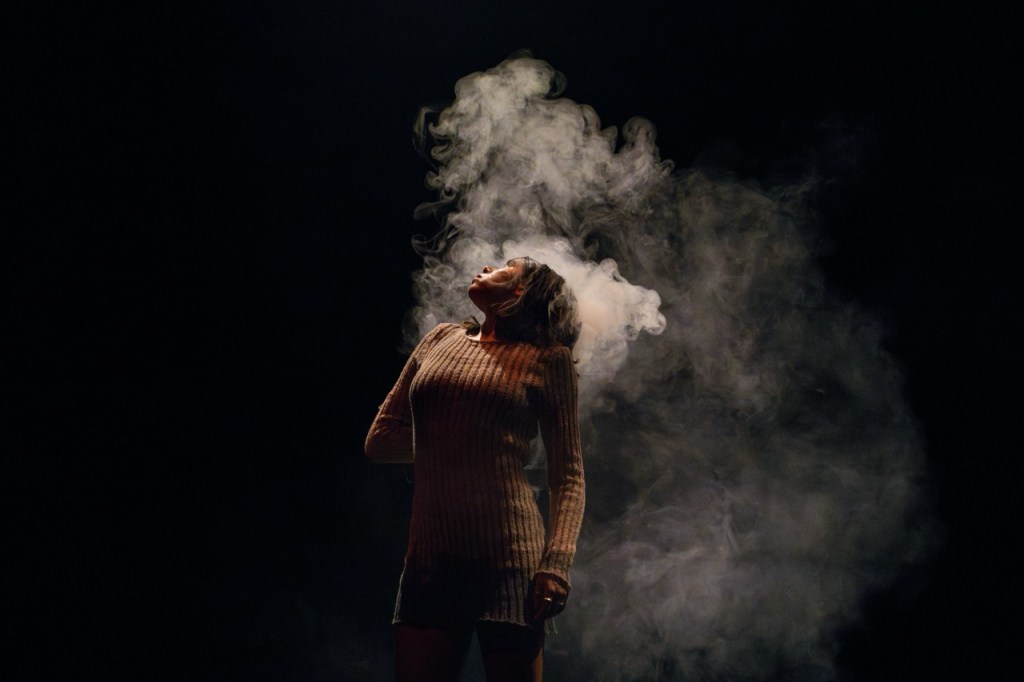
Choreographed by Daniel Riley with Australian Dance Theatre’s Company Artists. Australian Dance Theatre. Carriageworks. 10-12 Jul, 2025.
Australian Dance Theatre’s new work, Marrow, hits the ears like a rave and the heart like a punch. Much of this power comes from the work of Kaurna and Narungga dancer Karra Nam.
It starts as many dance pieces do, with an empty stage. Off to the side, a small, solo branch sticks out of the wall with a single blue fairy-wren, the Waatji Pulyeri, sitting on it. As the beats (by Jaadwa composer James Howard—available to purchase on vinyl) begin and the dancers enter, the stage transforms into a contemporary club-like space. The ADT ensemble (Joshua Doctor, Yilin Kong, Zachary Lopez, Karra Nam, Patrick O’Luanaigh and Zoe Wozniak), dressed in loose garments by Ailsa Paterson that add momentum to their movements, divide and recombine in different formations.
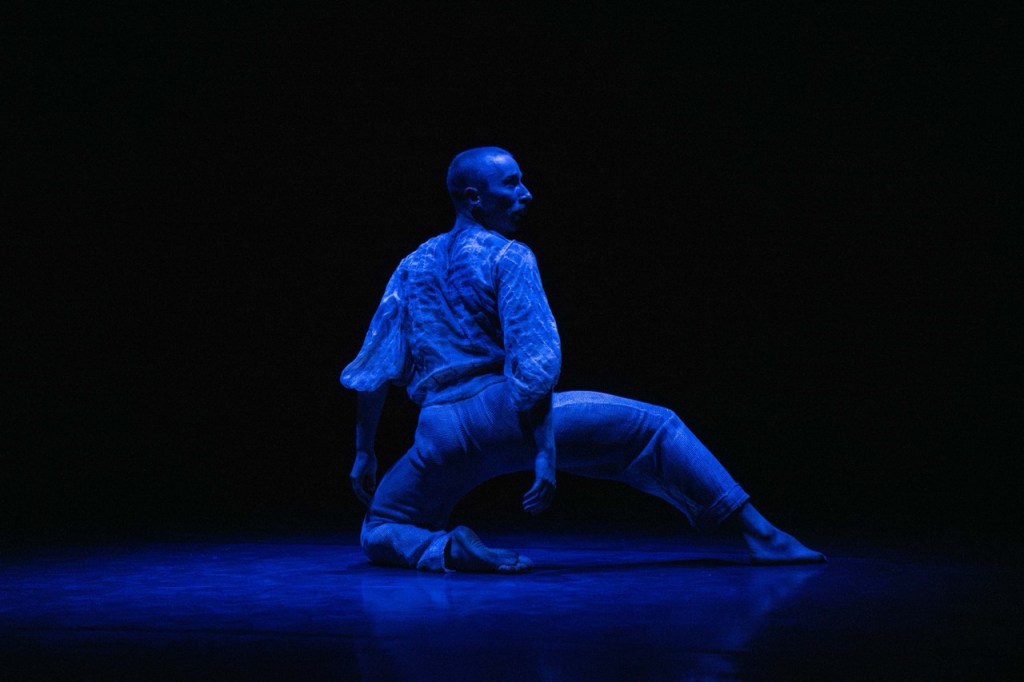
Sebastian Geilings. Photo: Morgan Sette. Daniel Riley plays with visual textures that have a visceral edge—from ethereal smoke that can be both beautiful and menacing, to a sheet of black fabric that introduces clean lines or a tortured, twisted body depending on how it is used. Marrow hits its peak as the dancers torture the fabric, binding it with plastic ties and hanging it from a hook while the soundtrack blasts a loud, discordant screech (as a middle-aged person, I wished I’d brought some concert earplugs). Then silence, as Karra Nam rescues the form, gently flattens it back out and cleanses it with smoke. The juxtaposition of this mournful, silent movement after the propulsive dance hits hard.
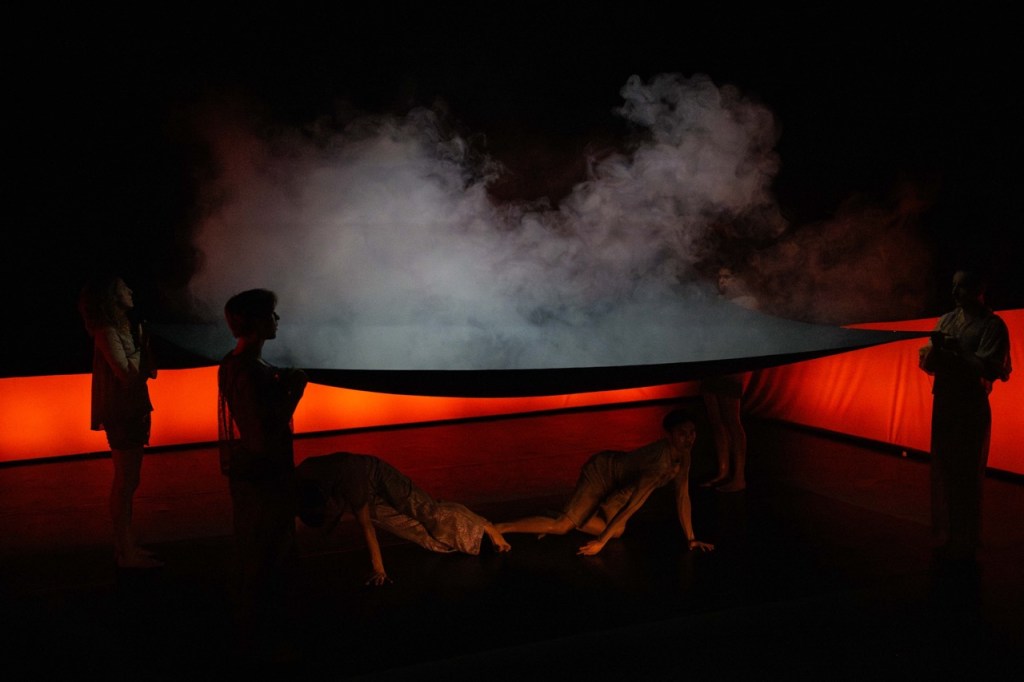
ADT Ensemble. Photo: Morgan Sette. Rooted in ritual and born from the defeat of the Voice to Parliament, Marrow carries layers of meaning and emotion—from our divided society to the pain we cause others and how this pain is taken back out into the world. But for all the anger within its beats, you don’t leave feeling enraged or berated—you leave feeling a sadness. As Nam storms off the stage while the others keep dancing, our eyes are drawn back to the wren on the branch—a symbol with added layers of meaning that you might not at first expect (definitely check out the digital program for more).
Marrow has something to say, and it does so with clarity, but even the message doesn’t upstage the work on stage. Riley and the ensemble create ever-evolving pieces of visual art that are exciting to watch in the moment and will stay with you long after.
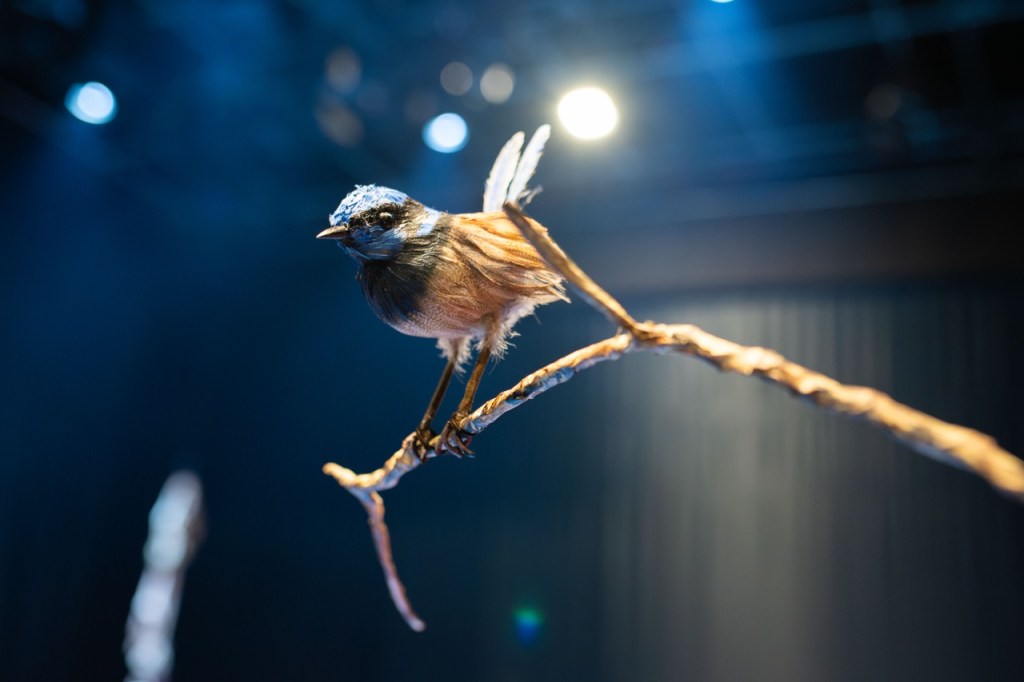
Blue Fairy Wren made by Ninian Donald. Photo: Morgan Sette.
-
Subscribe
Subscribed
Have a WordPress.com account? Log in now.

