-
Welcome to Cultural Binge

The rating system is simple:
★★★★★ – Terrific, world-standard. Don’t miss.
★★★★ – Great, definitely worth seeing.
★★★ – Good. Perfectly entertaining. Recommended. Individual mileage may vary.
★★ – Fine. Flawed and not really recommended, but you may find something to appreciate in it.
★ – Bad (& possibly offensive).
See more reviews over at The Queer Review.
Instagram: @culturalbinge
Substack: culturalbinge.substack.com
Email: chad at culturalbinge.com
-
The Emerald Room ★★★★
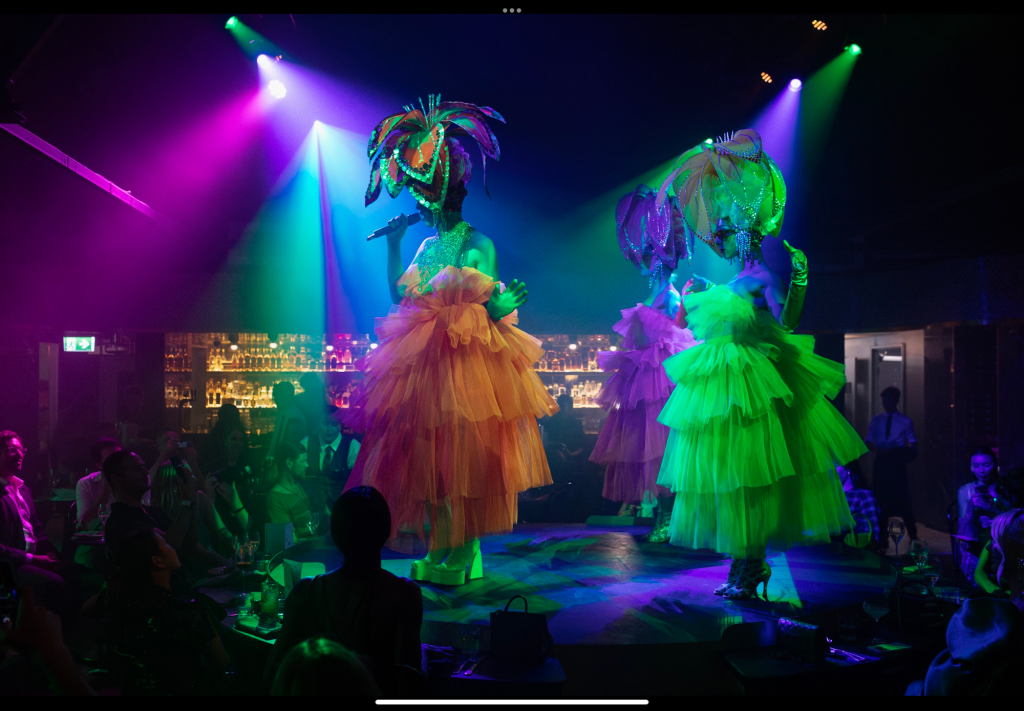
Creative Director Brendan de la Hay. Dining Wed-Sun. Shownights Thu-Sat 6-9:30pm. Late night dining 9:30-midnight. High Tea Sat & Sun.
Sydney, ever needy and insecure, is always trying to convince itself it can do what the Londons, New Yorks, Hong Kongs and Paris’s of the world can do. “Sydney is a global city” we mutter to ourselves every New Year’s Day, rocking back and forth under our doonas as the rest of the world wakes up to shots of fireworks streaming from the Harbour Bridge. We have some of the world’s best restaurants, top notch theatre, internationally renowned landmarks, a “light rail” and a raging cocaine habit that puts Los Angeles in its place… we’re one of the big boys, right?
So why the **** is it so hard to get a meal in the city after 9pm?
Photo: Cultural Binge. I know there are a handful of late night options (that aren’t just fast-food venues, but even most of them are shut by 11), but now we have The Emerald Room that’s vying to be both a raucous cabaret venue and a late-night destination for dining and drinks.

Photo: The Emerald Room. So does Sydney’s new cabaret/dining locale make us green with envy, or send us all “Hulk! Smash!”? Well it’s more “Hulk! Get Smashed!” as The Emerald Room serves dinner, drinks, drag and more.
As you ascend the stairs you are welcomed by a floating sky of neon, drawing you up to the walls and walls of emerald sequins (how many Spotlight branches died to make this venue? We’ll never know).
The friendly and finely dressed staff lead you past the band into the main room, with its three stages. No matter where you sit, you’ll get an eyeful of the action. And what a room it is. Gorgeous green banquettes line the walls, with a number of “enviable up close” booths at one end. The central stage is lined with seats for some very intimate views, while the rest of the tables are scattered in the spaces. It feels busy, and as the crowd arrive the buzz grows.
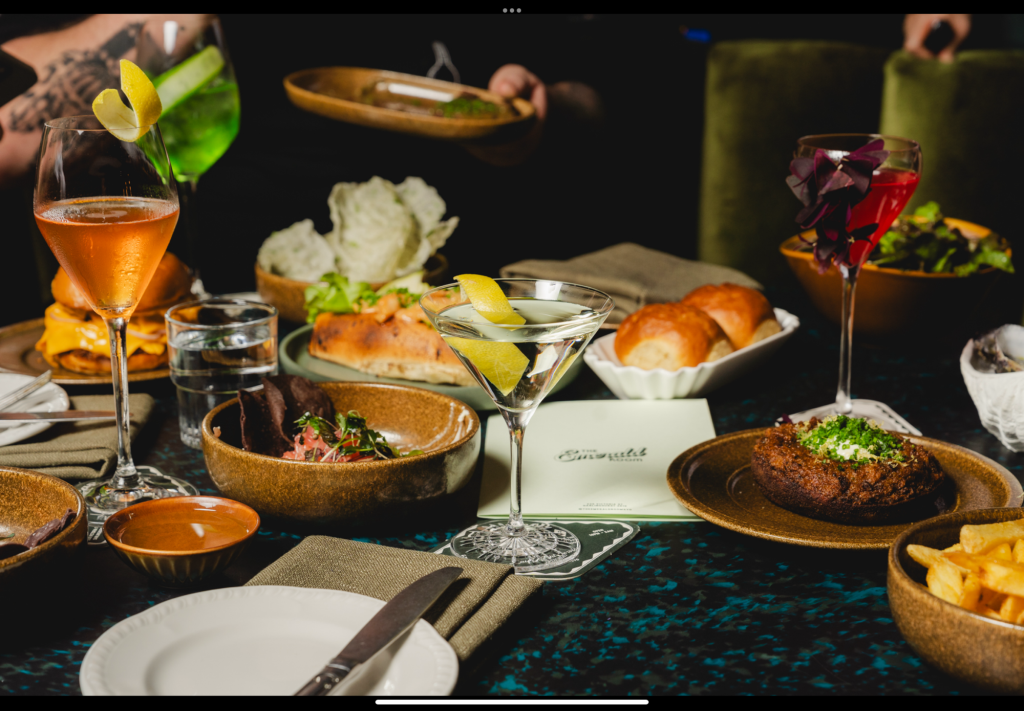
Photo: The Emerald Room. The menu is small but with pleasant twists on classics, mainly due to the logistics of what is essentially “dinner theatre”. The entire room will need to be served almost simultaneously between acts. The set menu has some flare but keeps on the simple and honest side of things. The a la carte menu serves up ever-reliable options like burgers and steak. The prawn toast looks like the item to beat though.
Due to the timings, the “dinner and show” service starts early – a 6pm early bird special – but that includes plenty of time to relax and drink a cocktail or two before the dishes start to spin.

Brendan de la Hay, the Host of the Emerald Room. Photo: The Emerald Room. And then, once you’re sufficiently lubricated, Brendan de la Hay steps forth in deeply unpractical footwear to get the party started. The night is part drag, part “Cabaret” (the musical, not the genre) and part saucy Spiegeltent. Having three stages keeps the action flowing to match the torrent of wines and cocktails being poured by the Emerald Room’s army of night-cap ninjas.
On the night in question we had two burlesque acts that covered all bases. Natalya Alessi mixed silliness with her striptease, keeping things light, while Danny Golding worked the pole with sensual moves that had a pair of posturing straight boys sat round the central stage feeling very uncomfortable (the Emerald Room should hire them, their faces were very amusing).
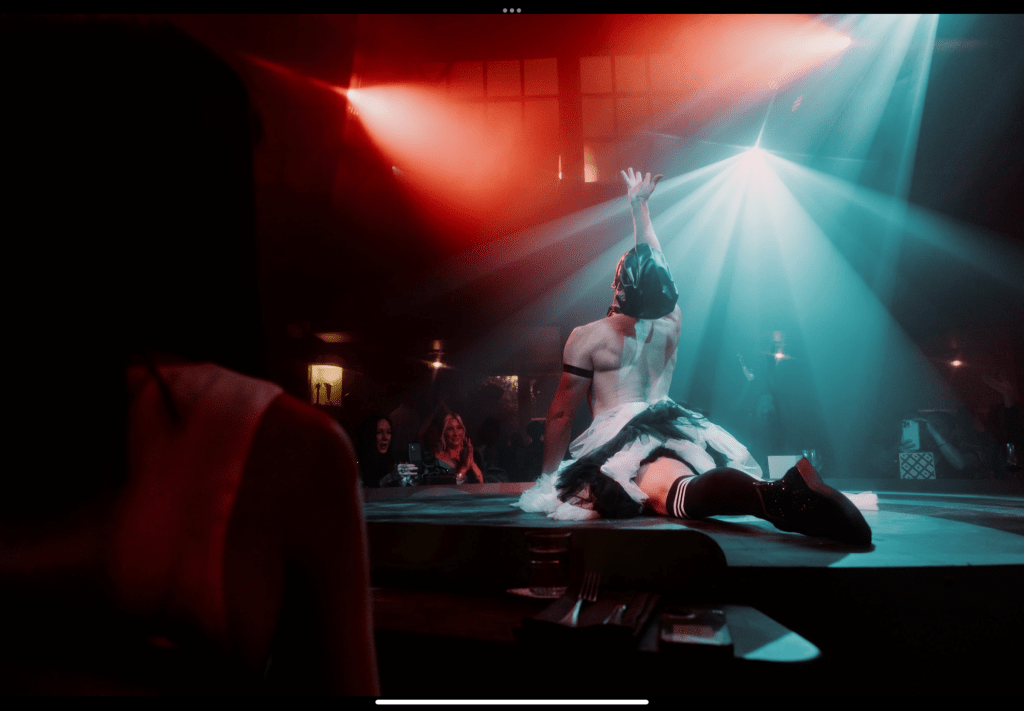
Danny Golding. Photo: The Emerald Room. De la Hay hosts and rocks the elevated fashion drag with two Gemstones (Alex Lewtas and Catrina Ralph), while the powerhouse that is Catherine Alcorn brings the vocals and sassy laughs as Mama (dressed as a shimmering Statue of Glib-erty). They’re all backed by the three piece band of Jonathon Holmes, Amanda Jenkins and Brendan Paul.
The night is loud. From the music, the vocals and the laughs & howls from the crowd. This cavernous space rocks to the rafters in a sea of glitter and good vibes. Unlike most other performance spaces, the Emerald Room is thirsty for your socials. Each performer seems to have a radar that’s always pinging for each video or photo being taken – they’re happy to play to your screen for that perfectly capture post.
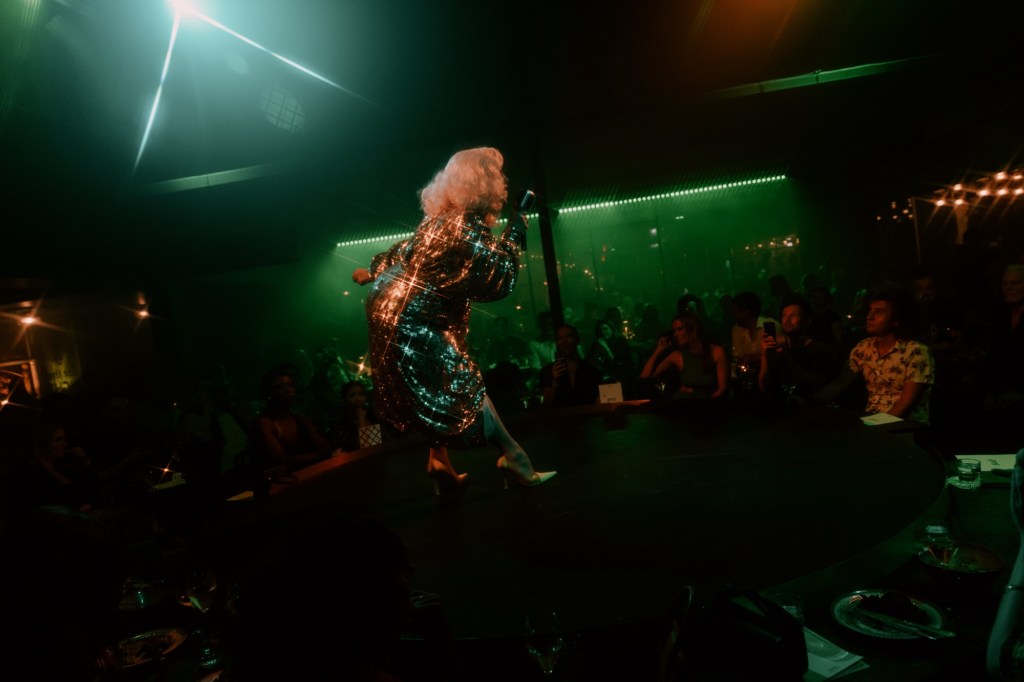
Catherine Alcorn. Photo: The Emerald Room. And when the show is over, the fun doesn’t have to stop. No one is hovering over you with the bill, in fact they’d prefer you to order another round, or two (or three in our case – the next morning was a little hazy). As the happy punters started to leave their tables, a smaller second crowd began to filter in. The room was less rowdy, but now a more intimate, more relaxed atmosphere took over. Newcomers grabbed drinks and a quick bite – the evening had never been very “formal” but now it felt like you were just as likely to have a chat with staff who were happy to banter, as you were to your friends. It had turned from a show, into a hang out.
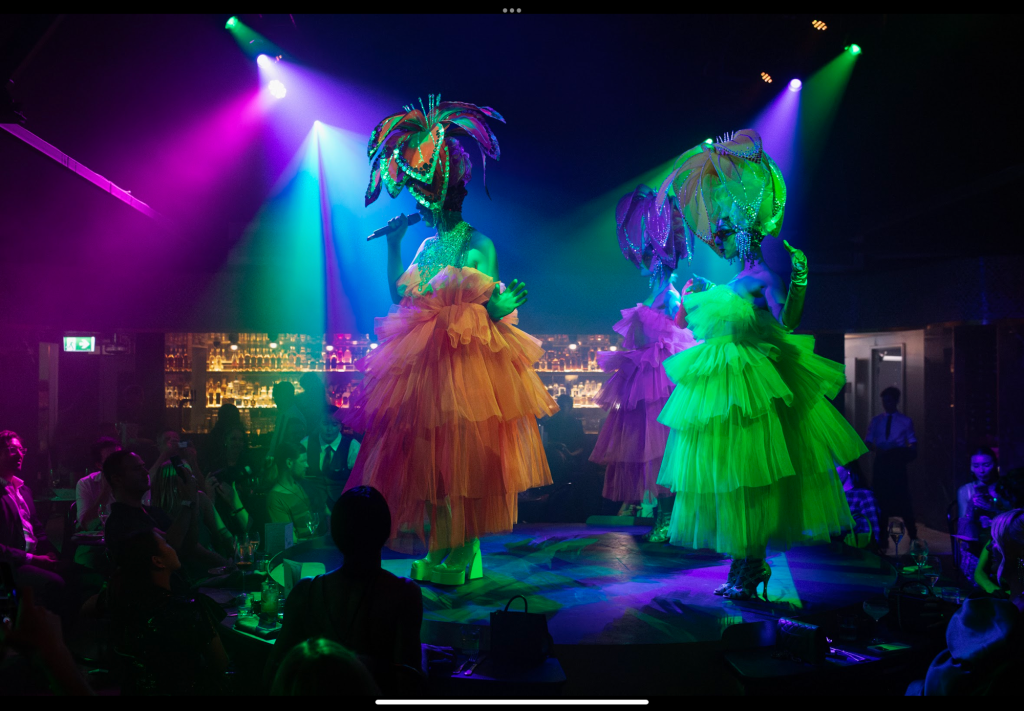
Brendan de la Hay, Alex Lewtas and Catrina Ralph. Photo: The Emerald Room. So here’re the tough questions – is the food worth the price? Yes, but you’re not coming here for the menu. It takes second place to the show. Is the show worth it? Definitely, but I’d love to see it pushed a fraction further into the risqué. Give me enough sauce to get tongues wagging. At the moment it’s a bit closer to GATSBY at the Green Light, and not as chaotically catchy as Briefs – if you know what I mean. But it’s a tough balance, you can’t put anyone off their meals at the end of the day. It’s never going to be as boundary-pushing as the renowned and infamous The Box (you don’t want food anywhere near those acts TBH), but we don’t want this to be the same as any touring festival show. De la Hay has excellent taste, and has been on a one-person mission to bring some drama to our red carpets for years, so I trust their judgement.
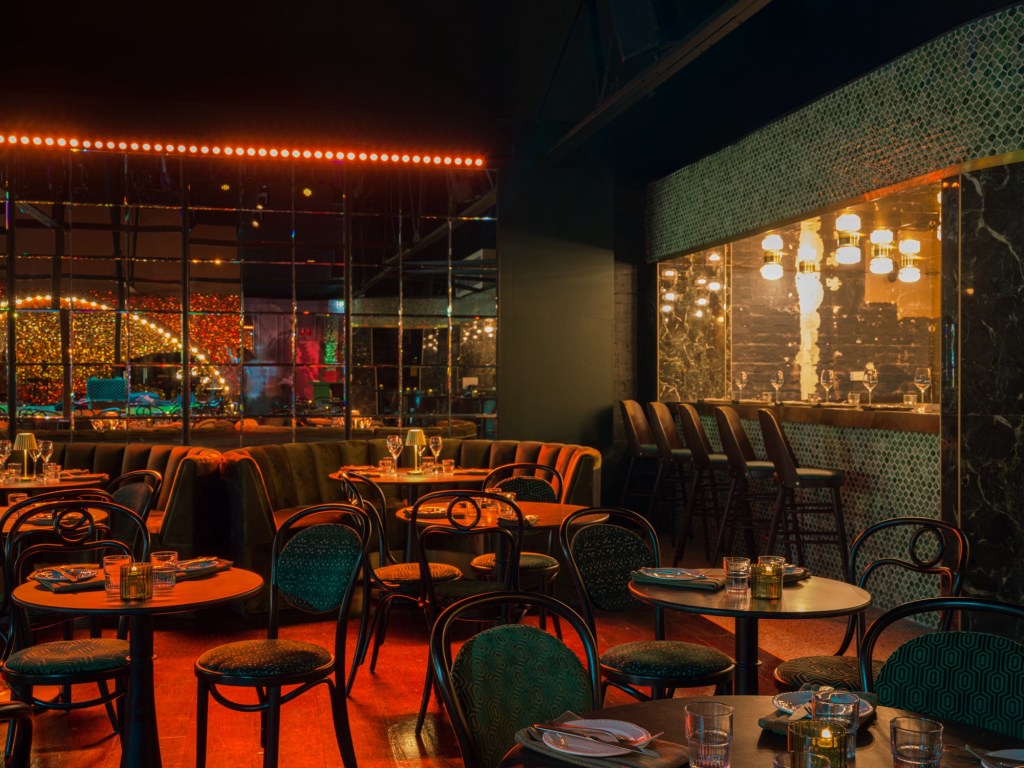
Photo: The Emerald Room. Overall, I’d rank the dining as “solid”, the cocktails as “excellent” (as the sister venue to King’s Cross hidey-hole Dulcies, I’d expect nothing less), and the performances as “a ****ing great night out”. With a rotating cast and a changing menu (or even the creation of a signature “must have” menu item) I can see myself coming back multiple times. This is the kind of thing you can bring out-of-town friends to for a whole evening of entertainment and leave them with stories to take home. I already know a few people planning on using the place as a birthday event (but please, no hen’s nights!).
When you stumble out of our esteemed cultural spaces desperate for a bite, get thee to the Emerald Room for a late-night experience that will cap things off with a smile.
Professional photo credits: Tom Wilkinson, Josh Raymond, Tomo Okai and Philip Erbacher.
-
Tell Me on a Sunday (Hayes Theatre) ★★★½

Music by Andrew Lloyd Webber. Lyrics by Don Black. Hayes Theatre. 12 Apr – 5 May, 2024.
Erin Clare is remarkable in Lloyd Webber’s rather unremarkable musical. This “Neglected Musicals” presentation of Tell Me on a Sunday, turns the mid-tier story into a fun, one-woman cabaret worth every cent.
There’s not a lot to the plot. A young woman from England looking for love in America, falls for a number of prospects, gets her heart broken a few times and decides not to let life get her down. That’s about it. Oh and the songs are good, Lloyd Webber is on fine form here.

Erin Clare. Photo: Marnya Roth. In lots of ways it’s nice to strip Lloyd Webber back from the grandiosity of his super-hits Phantom of the Opera, Starlight Express and Sunset Boulevard etc, and narrow the focus down to a single character. Lloyd Webber has always been more experimental than people give him credit for (think about it, a song-cycle about domestic pets isn’t anyone’s idea of standard MT fare), and his earlier credits have a boldness to them that he’s lost in later productions. Tell Me on a Sunday feels like an amuse bouche between the semi-historical Evita and the completely-histrionic Cats. This is his version of a sit-com with a quirky female lead.
But is it sexist? Two white, middle aged men writing a musical about a young woman’s romantic adventures… well, it’s not dripping in verisimilitude is it? The nameless “Girl” at the heart of the show is cypher for sure. There is an air of patriarchal condescension to the writing, “oh that silly girl”, as she stumbles into each new, doomed-from-the-start relationship. However I have to say, I know both men and women, who aren’t too far from this character. The problem with “The Girl” isn’t that she’s not realistic, it’s that she’s a caricature. Give the book to a good writer and you could really make something of her (just not Emerald Fennell… Lloyd Webber’s Cinderella/Bad CInderella was not good).

Erin Clare. Photo: Marnya Roth. Presented as part of the Hayes Theatres “Neglected Musicals,” Tell Me on a Sunday actually has more staging than expected, usually these are black-box affairs with minimal props or costumes. I assume having a single performer has let them invest in more staging, lighting and props – all of which help a lot and make the brief 70 min show fly by.
But the focus is purely on Erin Clare. Clare looks and sounds like a million bucks, owning the stage and the audience for the whole running time. Her “girl” is vivacious, tenacious and great fun to be with. Head-strong and optimistic she is a British Gidgit (or a less world-weary Carrie Bradshaw, or a… I’m too old to have any more contemporary references). Clare is singing and acting her proverbials off. In the small space of the Hayes you can see the glimmers of uncertainty flash across Clare’s face as she leaps into the next rich suitor’s arms. And of course, Clare has a gift for comedy, milking each scene for its silliest moments. Dare I say she reminds me of a young Sutton Foster?
While still only a “semi-staged” presentation, this is the most staged I’ve seen from “Neglected Musicals” and it hits just right. This is the perfect way to stage a show like this, flawed but with some terrific tunes. Tell Me on a Sunday has charm and promise (you can hear a lot of echoes of Lloyd Webber and Black’s Sunset Boulevard in the score) but it feels like only half a story. “The Girl” has a whole journey to go on yet.
-
The President (Sydney Theatre Co) ★★★★

Written by Thomas Bernhard. Translated by Gitta Honegger. Sydney Theatre Company. 13 Apr – 19 May, 2024.
Olwen Fouéré and Hugo Weaving star as fascists on the verge of a nervous breakdown in the mesmerising The President, that peaks behind the heavily armed barriers to watch a married couple wrestle with the world they have created.
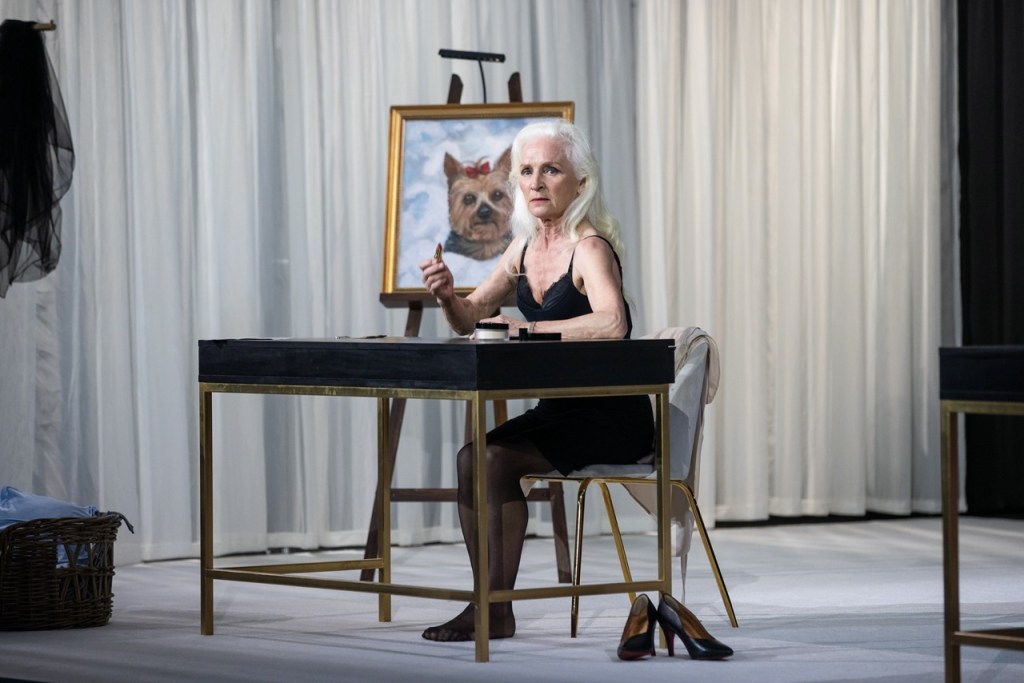
Olwen Fouéré. Photo: Daniel Boud. The President is a proverbial game of two halves. In Act One, Fouéré’s First Lady prepares to attend another in a long line of funerals she’s had to attend thanks to the anarchists who are terrorising the unnamed nation which she and The President (Weaving) rule over. The President is in the bathroom, bathing and having a massage, after a near-miss assassination attempt. But the First Lady is less concerned about that than she is about the death of her beloved dog – who had a heart attack during the commotion. As she is attended by her maid Mrs Frolick (an outstanding Julia Forsyth), she descends into barely controlled madness.

Olwen Fouéré and Julia Forsyth. Photo: Daniel Boud. In Act Two, The President has gone to Portugal with his lover, a much younger actress (Kate Gilmore). Bored of ruling such a small nation, he bemoans his life. He was born to rule greater places, to control greater things. His narcissism on full show in front of his hosts and lover, his denial can’t hold out forever.

Hugo Weaving and Kate Gilmore. Photo: Daniel Boud. The unusual structure of The President puts the two leads together on stage for a single scene, a handover between two mammoth monologues. As both characters spout forth non-stop they exhibit similar ticks – from a stubborn denial of the world around them, to the repetition of words and phrases. While the First Lady’s mind seems to be stuck in a loop of paranoia and repression, The President’s ego is constantly stroking itself, trying to convince himself that what he says is true.
Around them, a cast of characters perform a near-silent comedy. Rolling eyes, scurrying around, bowing and scraping and trying to avoid their master’s wrath. The rants may be monotonous for the audience, but for the staff they are all too familiar.
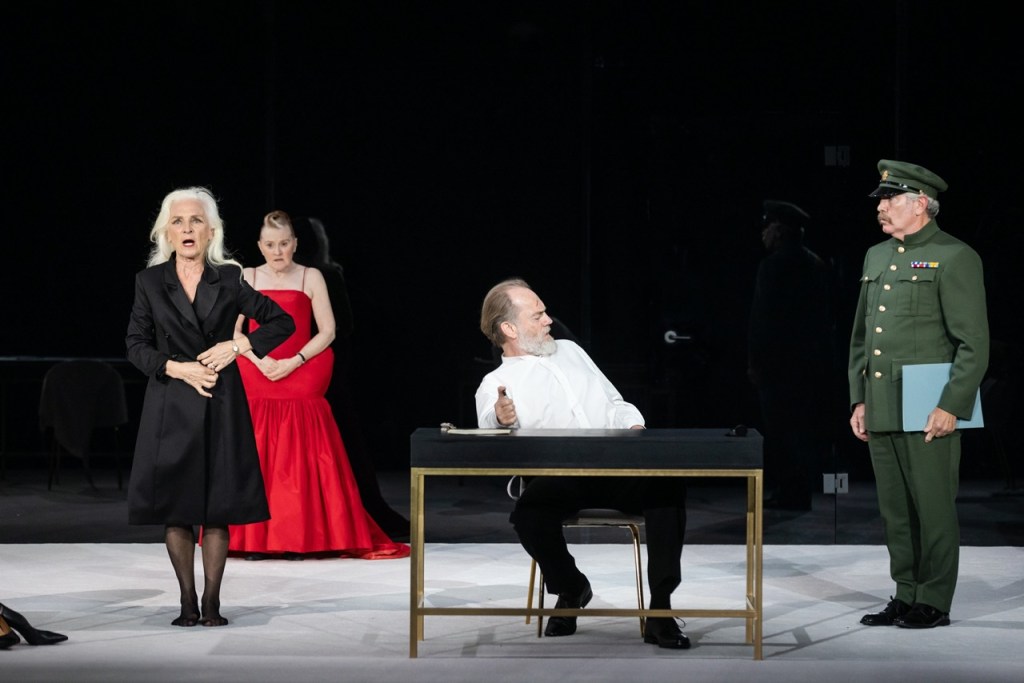
Olwen Fouéré, Julie Forsyth, Hugo Weaving and Tony Cogin. Photo: Daniel Boud. It requires a degree of patience to filter your way through the roundabout of language to find the meanings in the script – and I suspect for many it will be too much. You need to listen through the wall of noise coming at you, to divine the real character of these people. This is not a short play, and those buying tickets just to see Hugo Weaving have to wait a while. When he arrives his magnetism is dynamic, but even his rich voice and mannerisms can only carry you so far through the text. Fouéré does an excellent job of balancing the First Lady’s mania, never so intense it becomes unbearable, but clearly heightened and brittle.
Designer Elizabeth Gadsby places the actors in a three sided glass box, a symbol of their fragility. Lights by Sinead Mckenna and sound by Stefan Gregory assault the audience between scenes, guaranteeing you haven’t drifted off.

Alan Dukes, Hugo Weaving, Kate Gilmore and Helmut Bakaitis. Photo: Daniel Boud. The show ends with an unexpected, well ‘twist’ isn’t the right word, but an unusual finale that shocks and delights. Does it add much to the narrative? Maybe not. It does end the evening with a smile though.
Both The President and First Lady are vile, but intriguing characters and their unfiltered monologues are sometimes grating if you can’t find a way to navigate their rhythms. There’s a sweet treat at the end of this theatrical meal, but you’ll have to eat all your vegetables first before you can enjoy it.
-
Olivier Awards 2024 Winners mini-reviews

I was lucky enough to catch some of the eventual Olivier Award 2024 winners when I was in London last year (and I’m booked in to see more when I head there in a few weeks, including Stranger Things: The First Shadow and The Picture of Dorian Gray (with Sarah Snook this time)). I hoping to get to Broadway to catch Jamie Lloyd’s Sunset Boulevard when it transfers, but we’ll see how the bank account is looking later in the year. And thank god for NT Live broadcasts of shows like Vanya and Dear England – both deserving winners. You might even be able to catch an encore NT Live screening of The Motive and The Cue if you’re lucky.
I’m putting some of my mini reviews of the winners here so they’re in the one place. These were all written in 2023.
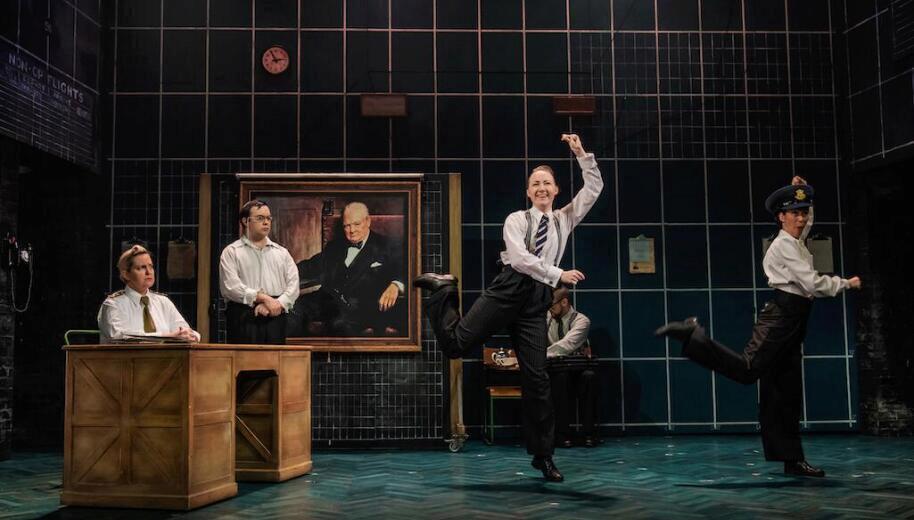
Operation Mincemeat (Fortune Theatre) ★★★★★
Olivier Award 2024 Winner: Mastercard Best New Musical and Best Actor in a Supporting Role in a Musical: Jak Malone
Book, Music & Lyrics by David Cumming, Felix Hagan, Natasha Hodgson & Zoë Roberts. Fortune Theatre.
Everyone I know has been telling me “you have to see Operation Mincemeat, it’s amazing” but the thought of spending West End prices on a show at the Fortune Theatre (a pokey little theatre that housed The Woman in Black for over 20 years) felt ridiculous, but I bit the bullet after discovering that some not-theatre-obsessed friends had already seen it multiple times and raved.
And my god – this is the kind of show we need more of in Australia! Funny, heartfelt, scrappy, this is the little show that could… and the last time I thought that about a musical it was an Edinburgh fringe hit about the six wives of Henry VII! Operation Mincemeat is the real deal, a comedy musical about the infamous WWII operation when the British used a corpse to get false invasion plans to the Germans as a misdirection.
What Operation Mincemeat does really well is hit you high with laughs while hitting you low with big emotions. It doesn’t gloss over the sexism, elitism and nepotism of the age, or the fact that a man’s corpse was used in a callous fashion. It feels like The Play That Goes Wrong meets The Producers, and I loved every second of it.
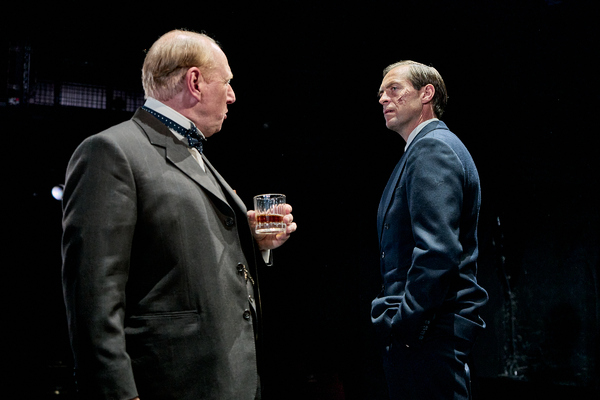
When Winston Went to War with the Wireless (Donmar) ★★★
Olivier Award 2024 Winner: Best Actress in a Supporting Role: Haydn Gwynne
Written by Jack Thorne. Donmar Warehouse.
Writer Jack Thorne is prolific. Across stage and screen his name is everywhere. From plays like Harry Potter and the Cursed Child, Let the Right One In, TV shows like Skins, Shameless and His Dark Materials, and Netflix’s Enola Holmes films, he is kind of everywhere. His new play, When Winston Went to War with the Wireless, is a love letter to the BBC.
Set during the 1926 General Strikes in the United Kingdom it tells of the media war between the only two news sources not on strike, a government run newspaper The British Gazette (edited by then Chancellor Winston Churchill) and the British Broadcasting Corporation (run by closeted gay man John Reith).
I just wanted a bit more from this one. It had all the right things in the right places but I was unmoved by it all. Interestingly there is an element of live radio-play on stage, with live foley sound effects being produced from the back of the stage, which is a great idea never fully realised. The ever excellent Haydn Gwynne stole the show for me. Playing multiple smaller roles she’s just a stage gem.
It’s a great set up for the characters and there is some interesting drama, but in the end I just wondered what point Thorne was trying to make. Admittedly, seeing it the same day as I saw A Little Life meant I was rather tired, so maybe it’s just me.

The Motive and the Cue (National Theatre) ★★★★★
Olivier Award 2024 Winner: Best Actor: Mark Gatiss.
Written by Jack Thorne. National Theatre.
Here we have a new play, directed by Sam Mendes, about the creation of Richard Burton’s record breaking production of Hamlet on Broadway. This show clearly ambition and the scope to be massive, this is theatre aimed at taking on Broadway!
Sir John Gielgud (Mark Gatiss, in possibly a career best performance) has been commissioned to direct a new production of Hamlet starring Richard Burton (Johnny Flynn) but this clash of styles and cultures threatens to push the whole thing off the rails. Will this be the failure that ends both careers?
The Broadway transfer feels almost inevitable. The story is the perfect trans-Atlantic blend – a play that is all about the love of theatre, featuring American icons in the newly wed Burton and Elizabeth Taylor (a pitch-perfect Tuppence Middleton) and a British legend in Gielgud. Staged in a traditional proscenium arch makes it an easily replicated production (the iris-like safety curtain of the National’s Lyttleton theatre gives it a cinematic feel as well). The whole thing is slick, funny and poignant. Ryan Murphy will make it into a Netflix series eventually.
While I felt Thorne’s When Winston Went to War with the Wireless was lacking in heart, The Motive & the Cue has no such problem, it is brimming with emotion. The air of insecurity reeks from Burton’s desperation to succeed (the motivation of which drives the story), and Gielgud’s resignation to his career winding down – these are two men struggling with their inner lives as well as their outer persona’s.
A play about plays and celebrity and art – this could not be more my “thing” if it tried.

Guys & Dolls (Bridge Theatre) ★★★★★
Olivier Award 2024 Winner: Gillian Lynne Award for Best Theatre Choreographer: Arlene Phillips with James Cousins
Music and lyrics by Frank Loesser and book by Jo Swerling and Abe Burrows. Bridge Theatre.
This was one of the shows I pre booked well in advance as I’d heard nothing but rave reviews from friends and critics alike. Nicholas Hytner presents this well-worn, much loved musical in “promenade”, meaning the stalls have been removed and a large proportion of the audience stands in the pit with the performers (with the staging rising out of the ground so those in the seats around the edges can see them). It’s dynamic and full of carefully choreographed chaos. But it’s not just the technical details that got me all hot under the collar, it’s the four excellent leads. Marisha Wallace, Celinde Schoenmaker, Daniel Mays and Andrew Richarson. And to up the ante, the Act One ending scene in Havana is now staged in a gay bar, with Sister Sarah drunkening attacking the men dancing with Skye. This managed to be both classic and incredibly fresh at the same time.
-
A Case for the Existence of God (Seymour Centre) ★★★½

Written by Samuel D Hunter. Outhouse Theatre Co. Seymour Centre. 11 Apr – 4 May, 2024.
Usually, when a narrative looks at the inner workings of male friendship, it uses violence (or sport, but same thing) as its outlet. A Case for the Existence of God bypasses that to look instead at how two men bond over fatherhood, failure and the financial system revealing a deep well of despair.
Working class, white father Ryan (Anthony Gooley) wants a mortgage to buy back some land that had once belonged to his family. He approaches black, gay mortgage broker Keith (Elijah Williams), who he met at his daughter’s daycare, for help. On paper they could not be more different. As Keith takes the time to talk Ryan through his options they slowly open up to each other. Ryan is dealing with his impending divorce and doesn’t want his daughter to have to visit him in a “sad dad” apartment. Keith’s initially calm and professional exterior slowly cracks to reveal a man struggling with the twists and turns of the adoption system. Both find themselves in a precarious situation.

Playwright Samuel D Hunter puts these two characters into a pressure cooker to force them out of their comfort zones. Ryan is already on edge when the play begins. Obviously nervous and intimidated by the financial world he’s forced into, he prattles with a disarming honesty. It’s enough to make Keith peel back the pretence of professionalism to reveal a simmering, existential fear. “You either play by the rules and pretend it all means something, or you don’t get anything. That’s most of what being an adult is,” he says.
Over the next 90 minutes, the two have a variety of conversations exploring their worlds and finding that, beneath all the surface differences, they “share a specific kind of sadness.” Whether it’s waiting for a loan, or waiting for an adoption, both men’s fortunes lie in the hands of unseen, uncaring decision makers (perhaps they are the “God” of the play’s name, otherwise I really don’t know where the title comes from).

The one thing Outhouse Theatre Co excels at is performances. I can honestly say their shows have some of the best acting I’ve seen on Australian stages, and the most consistently excellent casts. They seem to choose material designed to bring the acting talent to the fore, and Case.. is no exception. Anthony Gooley is so utterly authentic as Ryan it feels ingrained in him. Each tick or pause feels honest and unplanned, making it impossible not to care for his well being. Elijah Williams’ Keith is a slower nut to crack, but his brittle nature speaks to a man trying to live up to the lofty expectations of “queer, black exceptionalism,” knowing it could all disappear in an instant. Cutting against stereotype, Hunter makes blue-collar Ryan the more gentle of the two, and the erudite Keith the more emotionally volatile.

Director Craig Baldwin and Designer Veronique Benett force these characters together in a prison-box of an office cubicle. Neither has personal space in which to escape. The play is static, by design, and the final moment of release is well earned.
I can’t say that my attention was held for the whole running time however. Watching the two men overcome their reserve and become friends is a slow process that starts to feel dramatically listless. When the complications come, as they must for the drama. some of the revelations felt contrived. I should also note that at the performance in question, the show was halted due to a medical incident in the audience (all is well, the patron in question was helped quickly and professionally by the production team and Seymour staff). This did however have the unfortunate effect of forcing an unexpected “interval” around two thirds of the way through which interrupted the intended pacing.

A Case for the Existence of God feels fresh in the way it handles male relationships and masculine ennui (or “crisis of masculinity” if you prefer). While this story of “men behaving sadly” lacks the emotional fireworks of other Outhouse Theatre Co productions, it delivers with sterling performances and a genuinely different outlook you rarely see in the theatre.
-
No Pay? No Way! (Sydney Theatre Co) ★★★★1/2

Written by By Dario Fo and Franca Rame. Adapted by Marieke Hardy. Sydney Theatre Company. Drama Theatre. 6 Apr – 11 May, 2024.
Sydney Theatre Co has brought back Marieke Hardy’s adaptation of Fo & Rame’s farce with a timeliness that makes this possibly more pointed than it was when it first appeared four years ago. The dual winds of a cost of living crisis and an inflation/rental crisis (not to mention enquiries into supermarket price-gouging) hit at the heart of No Pay? No Way! which dares us to think a bit deeper about the systems that surround us, and even the seemingly revolutionary rhetoric we often blindly spout on social media.

Glenn Hazeldine & Mandy McElhinney. Photo: Daniel Boud. When STC first staged this four years ago I just missed it, so I was excited when they announced a return run. I had heard nothing but raves about the original, from both friends and critics, and it felt like a good fit for my personal tastes. Comedic farce built on political satire? Sign me up! And even after what can only be described as a disastrously stressful day in the office, I was totally hooked.

Emma Harvie and Mandy McElhinney. Photo: Daniel Boud. Antonia (Mandy McElhinney) and Margherita (Emma Harvie) are two women living in the same apartment complex, trying to make ends meet. Antonia has, to Margherita’s horror, participated in a riot at their local supermarket and stolen bags of food she couldn’t afford. But the exhilaration of the moment has turned into panic as she must hide the goods from her righteous husband Giovanni (Glenn Hazeldine). When the police start searching every apartment, they concoct a scheme to smuggle the goods out by pretending to be pregnant… and the farce begins.

Emma Harvie and Aaron Tsindos. Photo: Daniel Boud. Director Sarah Giles works the actors to the bone with a breakneck pace of verbal and physical comedy. Antonia’s ever evolving stories put McElhinney to the test, as the seemingly simple mistruths compound to grow into lies of theological proportion. Antonia is a bolshie whip-smart housewife with a grifter’s gift of the gab who’s been pushed to the edge by the cost of living.
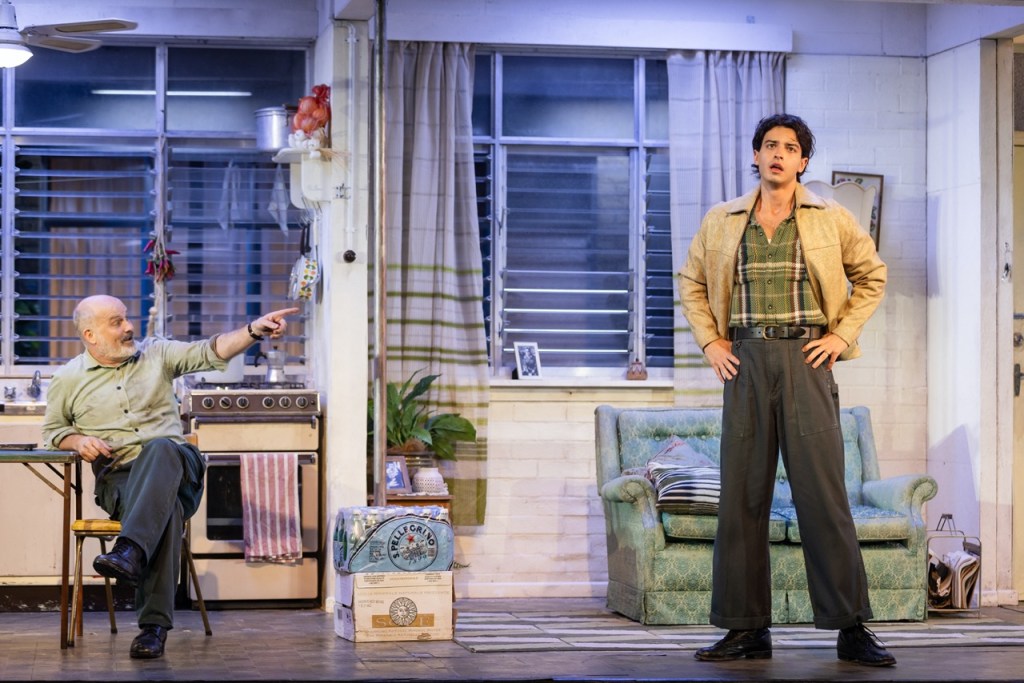
Glenn Hazeldine and Roman Delo. Photo: Daniel Boud. McElhinney is matched by Hazeldine’s brilliantly politically-active but rather dim Giovanni, who grasps the plight of the worker but has little knowledge of female biology. The brilliant scene of Giovanni slowly wrestling with his hunger, staring at a tin of dog food, is both hilarious and clearly horrible. He is joined by Roman Delo as Margherita’s young husband Luigi, with even less idea of women. The cast is topped off with the towering Aaron Tsindos playing a variety of roles, most of them policemen, and pushing the comedy over the edge (the miming of a traffic cop, and the fourth-wall breaking plee for a place to rent are particularly brilliant). While I can’t compare to the original 2020 cast (which included Hazeldine and Tsindos), I can say this quintet is tight and charmingly funny.
But for me the real gem is the demolition of the fourth wall and the second act’s deconstruction (both physical and philosophical). As the age-old battle of capitalism v socialism gets dissected, the play takes things one step further, pushing us out of the easy, tokenistic, safe zone. I won’t say more for fear of spoiling your enjoyment. Charles Davis’s set is marvellous (getting its own round of applause).

So, should we Aussies be rioting in Woolies? Looting our local Coles? Releasing anarchy down in Aldi? Probably, but while there’s joyful catharsis to watching it all play out on stage, you can’t help but wonder which side the centre left-leaning, monied theatre-goers of Sydney are really on.
-
Into The Shimmering World (Sydney Theatre Co) ★★★1/2

Written by Angus Cerini. Sydney Theatre Company. Wharf 1 Theatre. 2 Apr – 19 May, 2024.
Another in Sydney Theatre Company’s line of elegiac visions (Do Not Go Gentle, On The Beach, Fences, The Seagull, The Visitors etc) Angus Cerini’s Into The Shimmering World uses a seemingly simple man to raise a lot of questions.
Ray (Colin Friels) and Floss (Kerry Armstrong) are resilient country folk who’ve lived off the land, raised two kids and seen boom and bust go by, but they’re not getting any younger. Time is catching up to them and their acreage is getting harder to maintain as the harsh climate and changing economic fortunes hits them from all angles. Still very much in love, it’s clear they are in decline and at risk of being swept away.
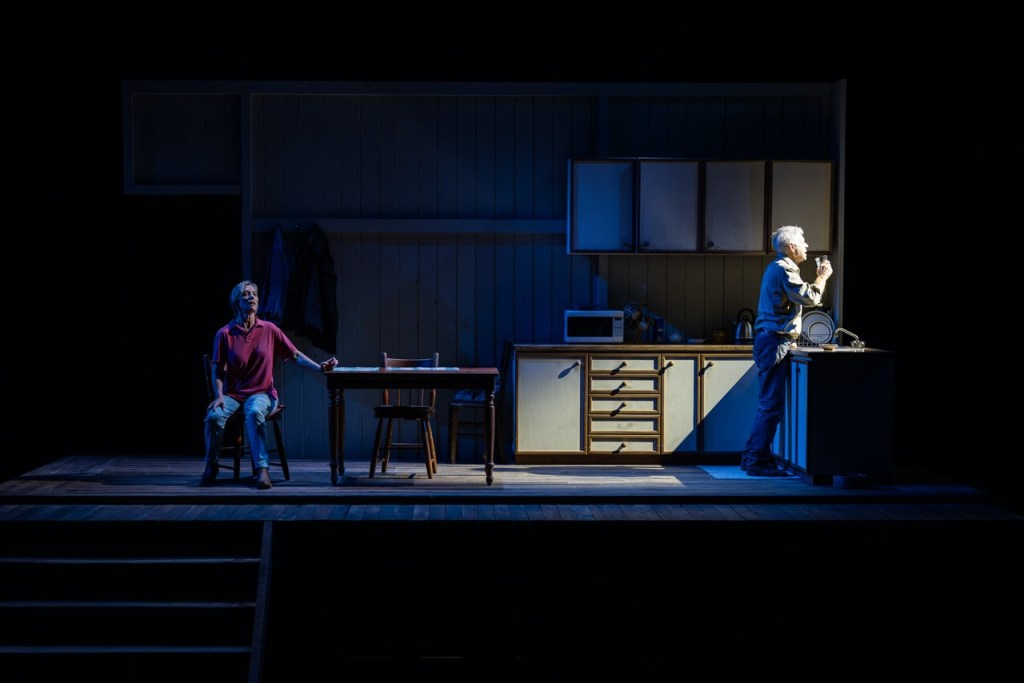
Kerry Armstrong & Colin Friels. Photo: Daniel Boud. There is a lot of unfulfilled promise at the heart of Into The Shimmering World. Ray’s idea of the future hasn’t come to pass, as his sons have no desire to take up farming life. His neighbour is a crook, and the land is subject to more flood and drought. His way of life seems to be unwanted. A stubborn, stoic battler, he has no intention of backing down to anything life is throwing at him even though he knows he can’t stop the forces at work around him. Floss looks after him, works at the hospital and gently challenges him from time to time.
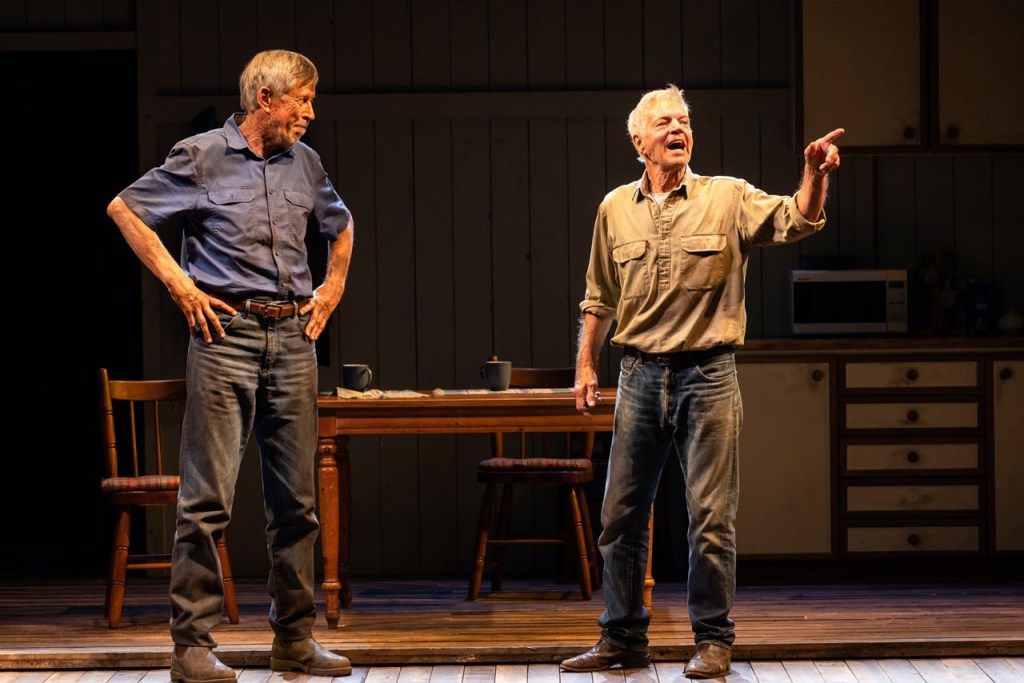
Bruce Spence & Colin Friels. Photo: Daniel Boud. Despite the set-up this is a surprisingly low-stakes, narrative-less drama. At a perfect 90 minutes though, I’m fine just hanging out with characters without the need for a linear “plot” to drive things. Thankfully Colin Friels is such a welcome presence he softens Ray’s cranky edges into an irascible charm, and Kerry Armstrong fills Floss with warmth and strength – the human distillation of a good cup of tea. They pass understanding in their silences. The ever wonderful Bruce Spence brings his innate Bruce Spence-ness, which is always welcome if underused here. Renee Lim and James O’Connell both shine in a variety of roles.
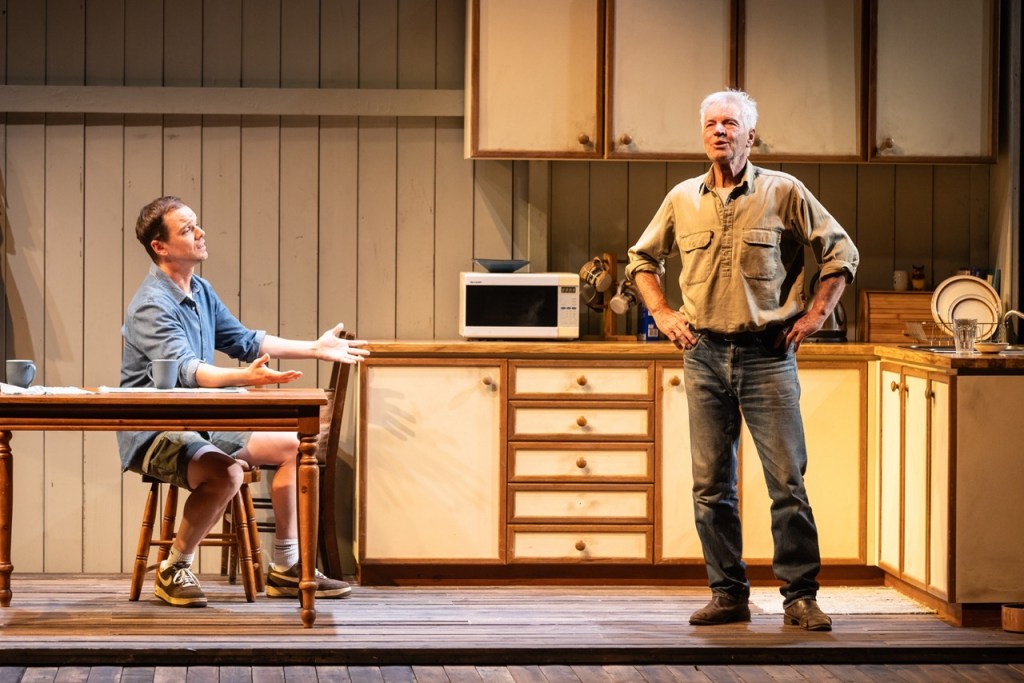
James O’Connell & Colin Friels. Photo: Daniel Boud. Playwright Angus Cerini’s Wonnangatta was one of the first pieces of theatre I saw back in Australia after returning over Covid, with its dark Australian-gothic tones, fever-dream-like pacing and focused central performances – I loved it. With Into The Shimmering World, his characters are more laconic but through their limited use of vocabulary and repeated phrases, Cerini plays with rhythm and subtext. One of the funniest scenes see’s taciturn Ray being coaxed into saying “I love you” by his adult son, that turns into a Meisner-esque struggle of intention, repetition and very human comedy. It also marks the divide between his university educated son and himself.
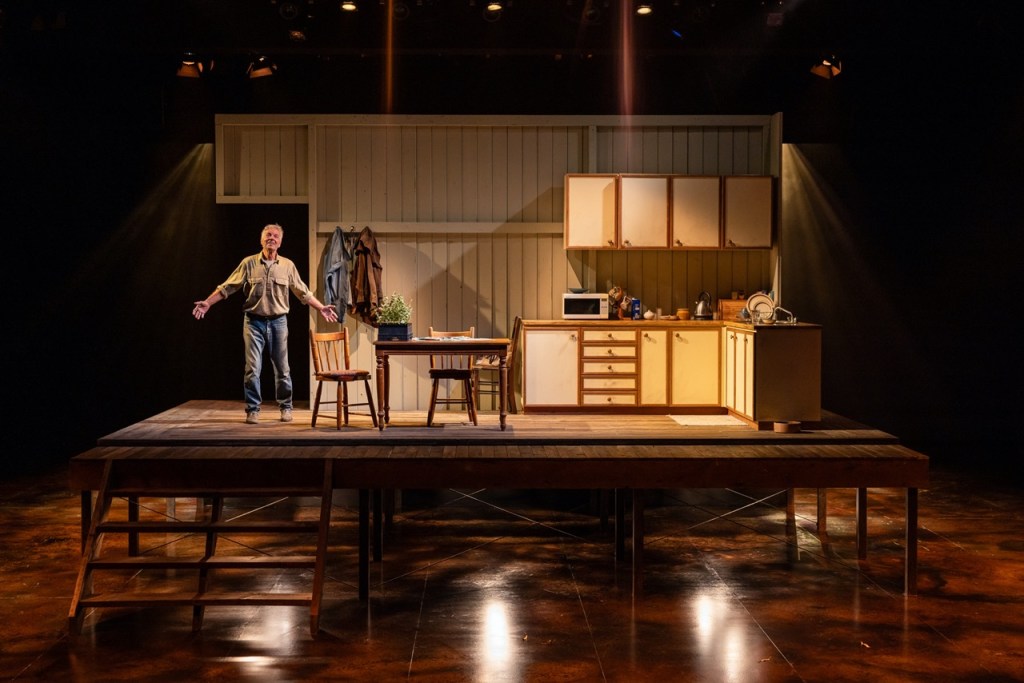
Colin Friels. Photo: Daniel Boud. This is where that sense of “unfulfilled promise” extends to the play and production itself. The advance write up for Into The Shimmering World promised a “gothic and dreamlike take on the Australian landscape” and “the glorious expanse of an extended Wharf 1 Theatre,” neither of which are completely accurate. The play is “dreamlike”, I’ll grant it that. Time passes at a fluid rate in a series of short scenes (Nick Schlieper’s excellent lighting does a lot of work keeping moments clear). But the promised rural-gothic sensibility is missing, this is a domestic drama scratching at the existential. David Fleischer’s set design, a country kitchen and porch floating in a sea of black space feels ethereal but not “expansive”. Clemence Williams’ sound and music are evocative, giving us a sense of environment lacking in the black void of the set, but they are both a little overbearing at times.

Colin Friels. Photo: Daniel Boud. With constant hints at future violence plus a burgeoning sense of rebellion and renewal, Into The Shimmering World shows there is life in Ray yet as his grief gives way to action. His pivot from battling to giving back ultimately sets him free.
-
Grease: The Musical (Capitol Theatre) ★★★1/2

Book, music & lyrics by Warren Casey & Jim Jacobs. Capitol Theatre. 24 Mar – 1 Jun, 2024.
If you’ve been subjected to shonky school productions and community theatre outings, you’ll be overjoyed to see Grease: The Musical be treated like a real, big, professional show once more. The hit songs, the knock out voices, the sharp choreography. When this production of Grease lets rip, it roars!
Two words best sum up my feelings about the new revival of Grease: The Musical – cognitive dissonance. It’s both incredibly enjoyable, and highly questionable at the same time. Somehow both those things stay true and don’t impinge on each other. The sexual politics are retrograde as all ****, but the show is jammed full of great tunes and remains a hell of a lot of fun.
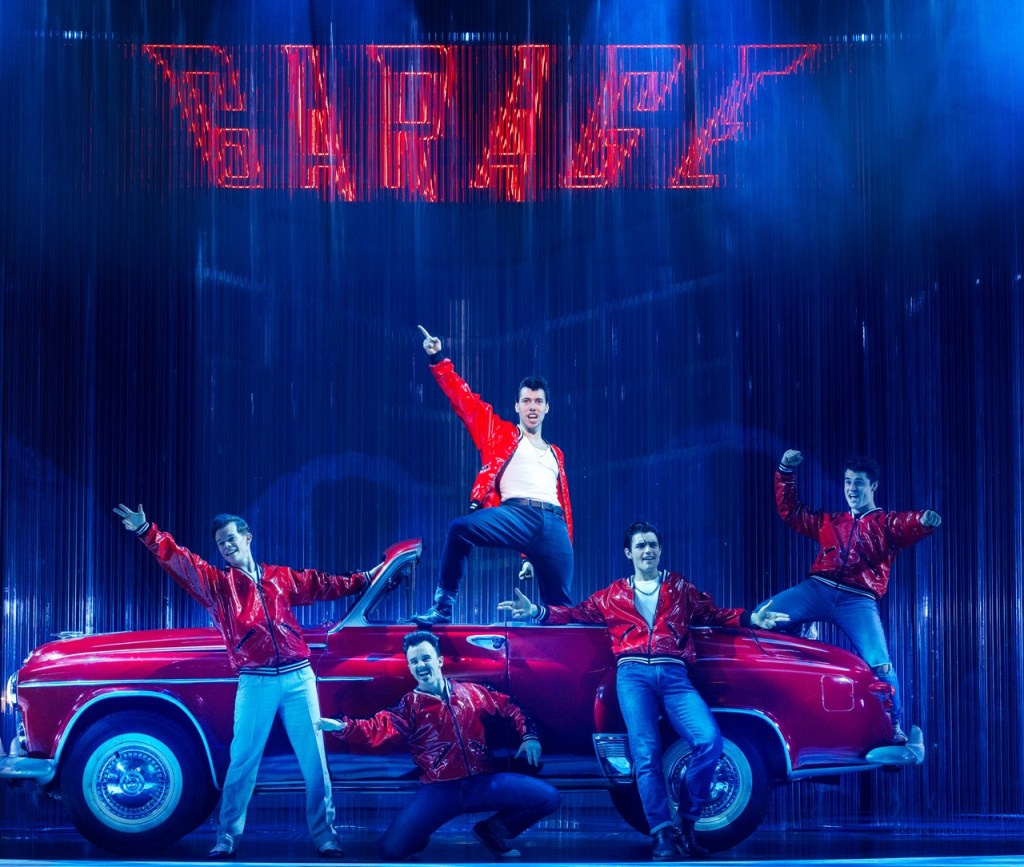
Keanu Gonzalez, Joseph Spanti and T Birds. Photo: Jeff Busby The one thing this production has an abundance of is energy. The set (by James Browne) and lighting (by Trudy Dalgleish) mix stadium pop concert and theatrical megashow. Eric Giancola’s choreography channels the classic film while filling the stage with small moments for those who look around. Some of the scene changes are slow, but director Luke Joslin has peppered the stage with moments of teen life to smooth it out.
The young cast are sharp and focused (thank god for triple threats who can really belt out a tune AND hit a precise dance mark), and the ensemble turn their supporting roles into show stoppers. Doody (Tom Davis), Frenchie (Catty Hamilton), Roger (Andy Seymour), Jan (Caitlin Spears) and Cha Cha (Christina D’Agostino) all steal their scenes and threaten to run away with the show. Keanu Gonsalez’ Kenickie nails ‘Greased Lightning’ and shows depths I wasn’t expecting.
But the show has two real stars – no, I don’t mean Sandy and Danny.
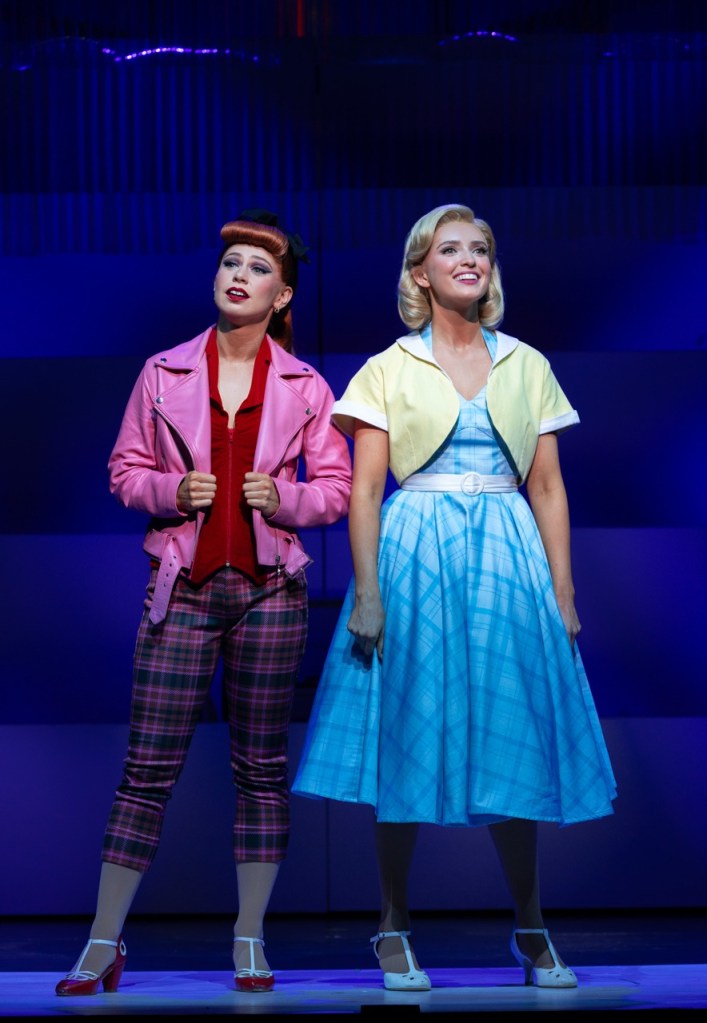
Mackenzie Dunn and Annelise Hall. Photo: Jeff Busby The first is Mackenzie Dunn as Rizzo. Sure, it’s the best role in the whole show. Rizzo gets to play comedy, tragedy and snark as the tough leader of the Pink Ladies, but Dunn doesn’t rest on the material. She’s acting the **** out of every line. For a big glossy musical full of razzle-dazzle, Dunn is playing Rizzo like a complex human that happens to sing and dance with the best of them. She is magnetic.
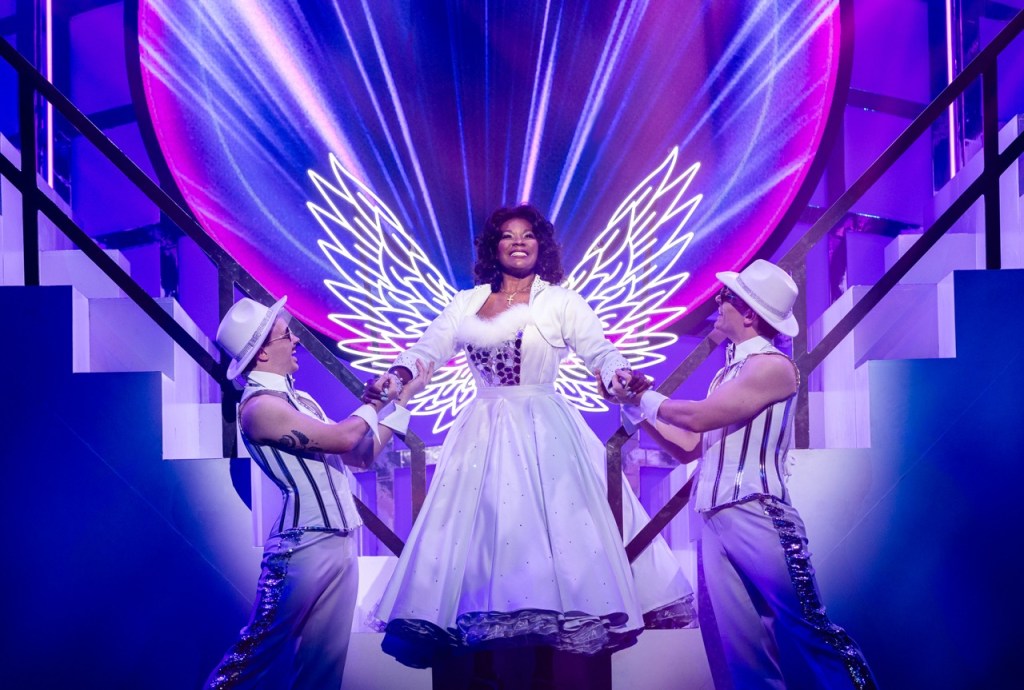
Marcia Hines. Photo: Jeff Busby And speaking of “the best of them”, ladies and gentlemen please make way for Marcia Hines! In a show of bright lights and constant motion, she holds the crowd with a raised eyebrow and a tilt of her head. You can also tell Hines is having a ball.
As for our romantic leads, Joseph Spanti makes a solid Danny Zuko. He’s less of a posing alpha male, and more of a hot kid who’s bouncing between his libido and his emotional immaturity. Surrounded by some frighteningly good musical-theatre tenors, he hits the high notes with almost suspicious ease (I did wonder if some portions were pre-recorded, it was that good). In the mix of all the big characters, sweet Australian Sandy (Annelise Hall) gets lost in the action. I was distracted by Hall’s makeup which was particularly draggy (Drag queen Etcetera Etcetera was in the audience and her makeup was more subtle), and her song delivery often felt more technical than emotive.
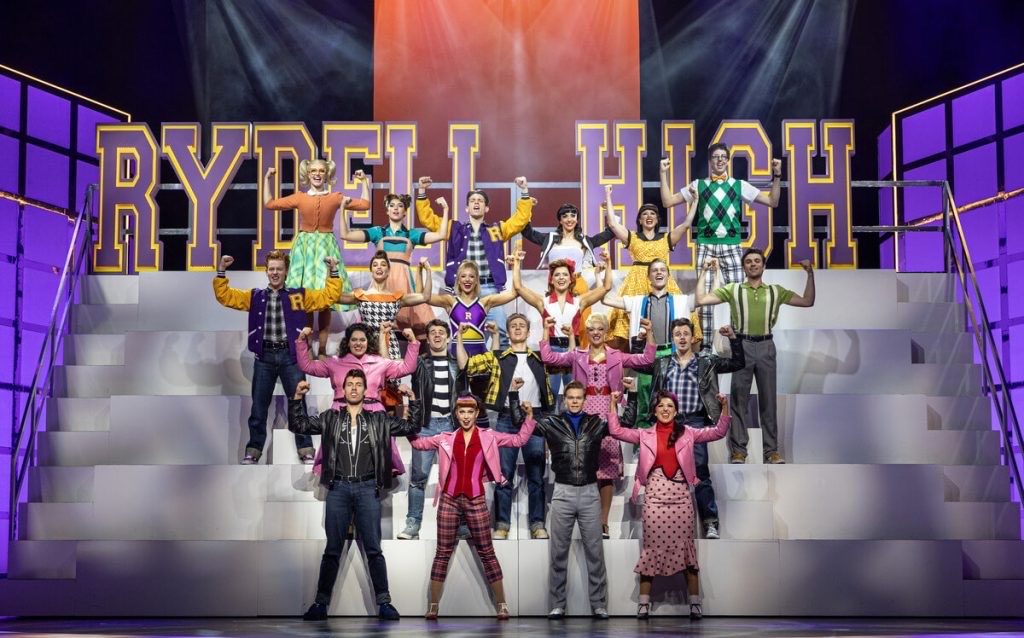
Cast of Grease: The Musical. Photo: Jeff Busby For all the backwards gender stereotyping though, the big lessons still ring true and prove why the show has remained so popular. Watching young people navigate their way through the problems of young adulthood, juggling sexual awakenings, education, independence and raging emotions is a pretty universal experience. This is a big, cartoonish extravaganza filled with fan favourite tunes. Hearing them at full force is an absolute joy – this is what big commercial musical theatre does best.
-
West Side Story (Handa Opera) ★★★★★

Book by Arthur Laurents. Music by Leonard Bernstein. Lyrics by Stephen Sondheim. Opera Australia. Handa Opera on Sydney Harbour. 22 Mar – 21 Apr, 2024.
West Side Story is the musical theatre standard bearer for “all killer, no filler”. Almost every song in the show is a classic thanks to Leonard Bernstein’s music and Stephen Sondheim’s lyrics. Opera Australia’s production takes these foundations and adds a layer of spectacle to events that actually elevates the story. This is less about two young lovers, and more about two communities that are both unique, but all too similar.

Kimberly Hodgson. Image supplied by Opera Australia. This “Romeo and Juliet in 50s New York” still suffers from the same flaws as the original – the love story is actually deeply stupid. This is where the music helps out the most, using the swelling melodies and urgent percussion to carry us along so swiftly you don’t have time to stop and think “they just met a few hours ago”. The language may have dated, and the dance-fights seem quaint, but here they become features, not bugs. This America is a fantasy.

Nina Korbe and Billy Bourchier. Image supplied by Opera Australia. There is a remarkable freshness to the performances. Both Billy Bourchier as Tony and Nina Korbe as Maria feel childlike enough to justify their actions. Their infatuation radiates across the harbour as their youthful faces beam. Patrick Whitbread’s Riff may be all singing and all dancing (excelling at both) but has enough rough edges to feel authentic. Scott Irwin plays Lieutenant Schrank as if he’s in a drama, with no touch of musical theatre camp. Even the smaller roles sparkle with Ewan Herdman’s Baby John, Luke Jarvis’s Action and Rebecca Ordiz’s Rosalia cutting through to make an impact. Of course, West Side Story is all about Anita, giving Kimberly Hodgson room to really strut her stuff.

Patrick Whitbread. Image supplied by Opera Australia. Watching a show of this size makes you truly appreciate the choreography. Revival choreographer Kiira Schmidt Carper adapts Jerome Robbins’ original balletic moves to seamless effect. Stretched out before the vista of the Sydney skyline, watching the Jets and Sharks dance on the “streets”, they’ve never felt more similar, or their arguments more pointless.

The Jets. Image supplied by Opera Australia. Being a Handa Opera production, yes there are fireworks – timed to cap off “America” with a burst of celebration and perhaps irony. The perfect weather of opening night made the moment even more glorious. For an open air event the sound felt surprisingly natural (obviously amplified but not distractingly so). The 40 strong ensemble were dynamite when they gathered for “Tonight (Quintet & Chorus)” near the end of Act One, the competing melodies blending beautifully.

West Side Story. Image supplied by Opera Australia. West Side Story may not be the cherriest of musicals, but with an unbeatable score, a production this good and the backdrop of the harbour city lights it is a perfect Sydney night out.
-
Mercury Poisoning (KXT on Broadway) ★★★1/2

Written by Madeleine Stedman. World Premiere. KXT on Broadway. 15-30 Mar, 2024.
You can’t accuse Madeleine Stedman’s Mercury Poisoning of lacking ambition. Its terrific cast of twelve play dozens of roles across three separate storylines, reciting the beautiful language she has written, over the almost three hour running time. I applaud a writer who refuses to limit themselves to the awkward practicalities of the independent stage.
Set in a semi-fictionalised 60s, we follow three women on different paths to space. Molly (Teodora Matovic) is an American pilot who wants to be the first woman in orbit. Valeria (Violette Ayad) is a Russian worker who is selected to be a cosmonaut. Nicole (Shawnee Jones) is an African-American actress who finds herself on a science-fiction TV show. The three of them face different barriers to achieve their dreams.
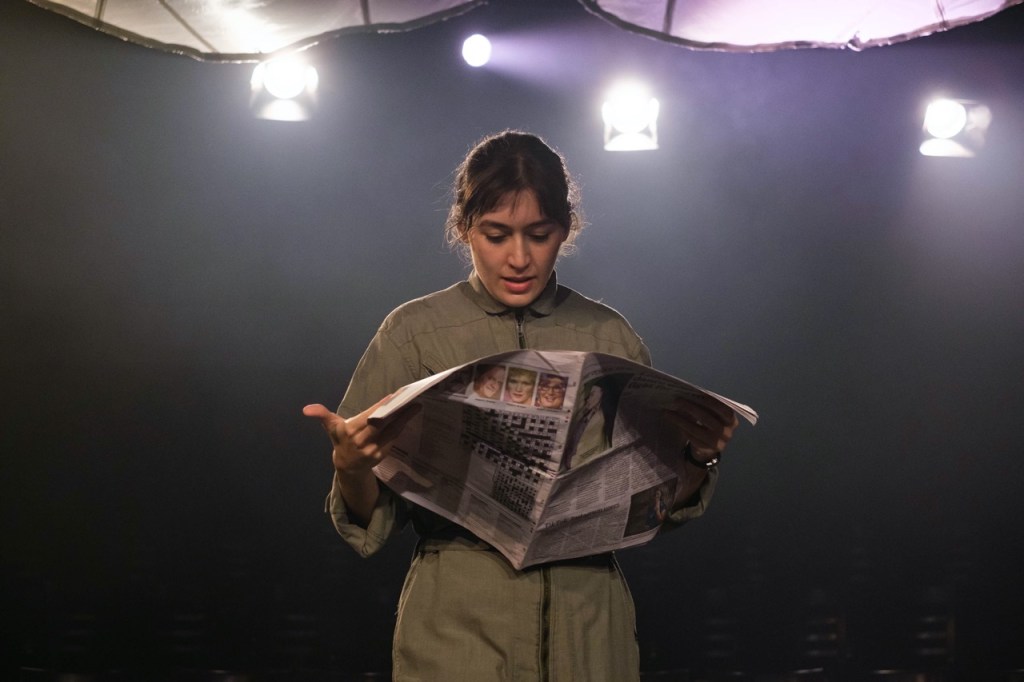
Photo: Clare Hawley. My first impression of Mercury Poisoning was formed by seeing the luminous, minimalist production design by Meg Anderson that instantly reminded me of the film Nope. The pulsing, breathing, parachute canopy reminded me of the alien from Jordan Peele’s film. It also captures Jimi Rawlings’ lighting well, washing the stage with colour. They are complimented by Rowan Yeomans and Jay Rae’s sound design that hums beneath the scenes.
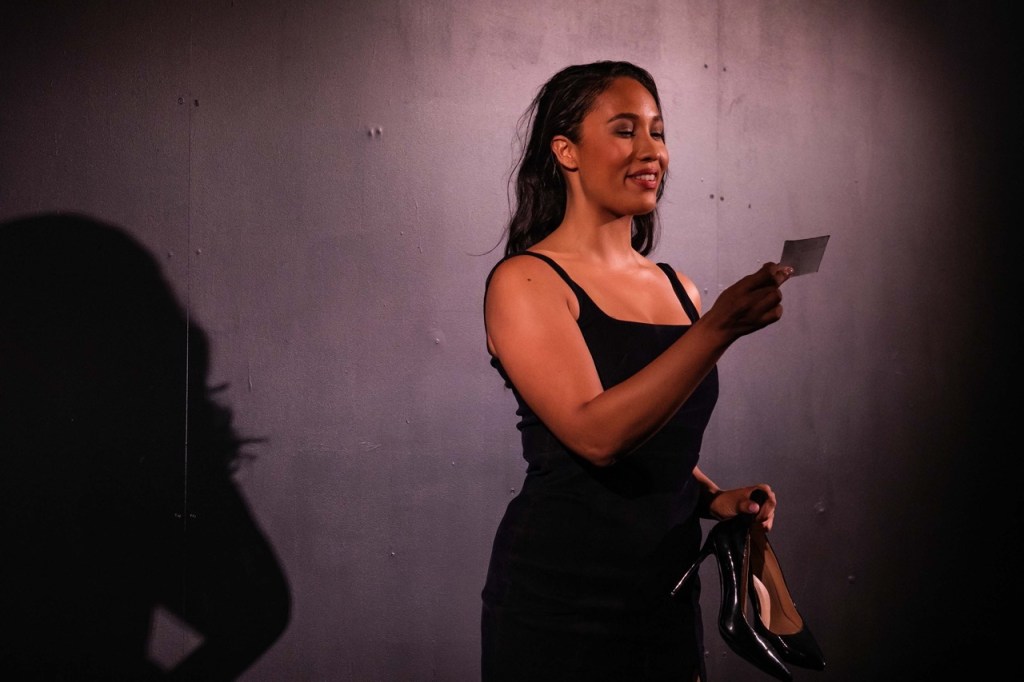
Photo: Clare Hawley. The ensemble does a good job of jumping between roles aided by multiple fast costume changes. It’s hard to pick highlights across this strong pack of actors, but the lead trio of Matovic, Ayad and Jones hold their storylines together with nuance. The ensemble are remarkably good at keeping each new character clear and precise, but it’s here that the impracticality of the script starts to cause friction. Did the story need THIS many characters, THIS many locations?
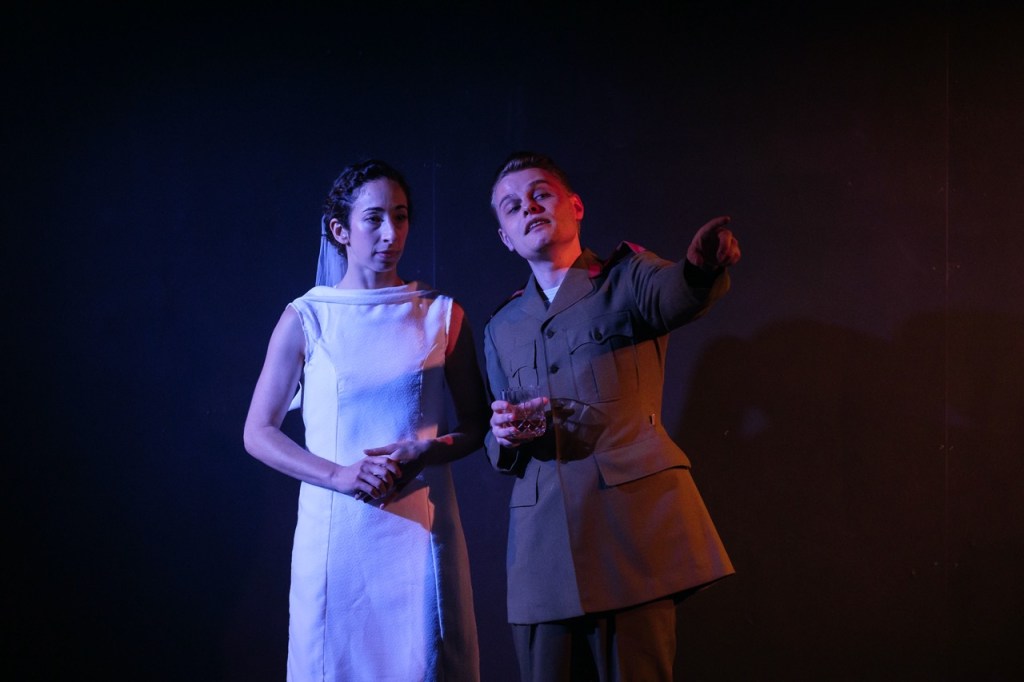
Photo: Clare Hawley. A succession of short scenes starts to make this feel like it is less a piece of theatre, and more of a spec-script to pitch an Apple TV+ series (ala For All Mankind Season One). A more elegant, poetic way of navigating the material would elevate it, whereas the linear cross-cutting between scenes and storylines feels like a piece of edited film presented live.
With an exhaustive running time and no set changes, the script fails to justify its luxurious pacing. The three narratives don’t manage to play off each other. Molly, Valeria and Nicole each face different problems so there is no commonality of message here. Yes, there are varying degrees of sexism to fight, but Nicole’s is predominantly a story of racism and Valeria’s more about tokenism. I can see interesting connections between Molly and Valeria (USA v Russia), and between Molly and Nicole (reality vs fiction) but the link between all three is abstract at best.
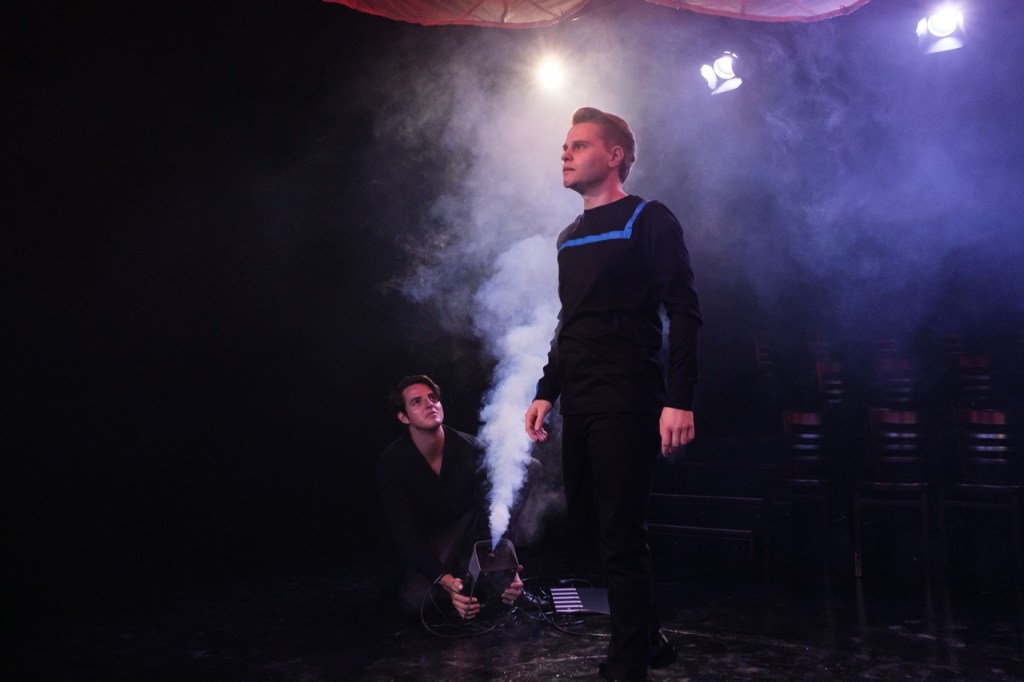
Photo: Clare Hawley. Mercury Poisoning is full of good performances and some wonderful lines that are getting a bit lost in the “uncanny valley” of independent theatre. It’s too big for the small scale and needs to either trim down to the space, or be staged with the spectacle and scope worthy of its ambition. Personally I’d like to see the latter.
-
Subscribe
Subscribed
Have a WordPress.com account? Log in now.

