-
Welcome to Cultural Binge

The rating system is simple:
★★★★★ – Terrific, world-standard. Don’t miss.
★★★★ – Great, definitely worth seeing.
★★★ – Good. Perfectly entertaining. Recommended. Individual mileage may vary.
★★ – Fine. Flawed and not really recommended, but you may find something to appreciate in it.
★ – Bad (& possibly offensive).
See more reviews over at The Queer Review.
Instagram: @culturalbinge
Substack: culturalbinge.substack.com
Email: chad at culturalbinge.com
-
Gutenberg! The Musical! (Hayes) ★★★★½
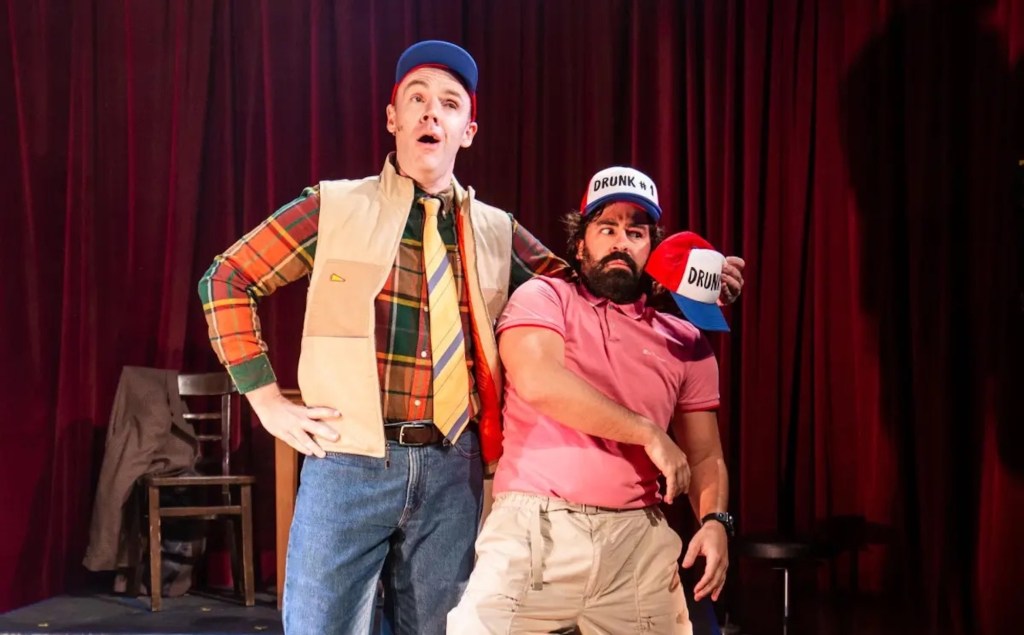
Book, music & lyrics by Anthony King and Scott Brown. Hayes Theatre Co. 10 Apr – 17 May, 2026.
The spiritual cousin of indie-musical hits like Murder For Two and [Title of Show], Gutenberg! The Musical! is less about the songs and more about the expertly choreographed comedy.
Bud Davenport (Ryan González) and Doug Simon (Stephen Anderson) are looking for a miracle that will change their humdrum lives working at an old people’s home, and that miracle, they hope, will be musical theatre. They’ve studied the form and have written their own “historical fiction” about Johannes Gutenberg, the inventor of the printing press. Due to a slight misunderstanding, they’ve flown all the way to Sydney, Australia — turns out the Hayes Theatre they’d been in discussion with wasn’t the Helen Hayes in Manhattan — to pitch the show to investors and Broadway producers.
Their musical-within-a-musical throws “history” out the window to tell a story that’s part Notre-Dame De Paris and part Man of La Mancha (with a generous dose of Spamalot). Can these loveable losers create the next big Broadway hit?
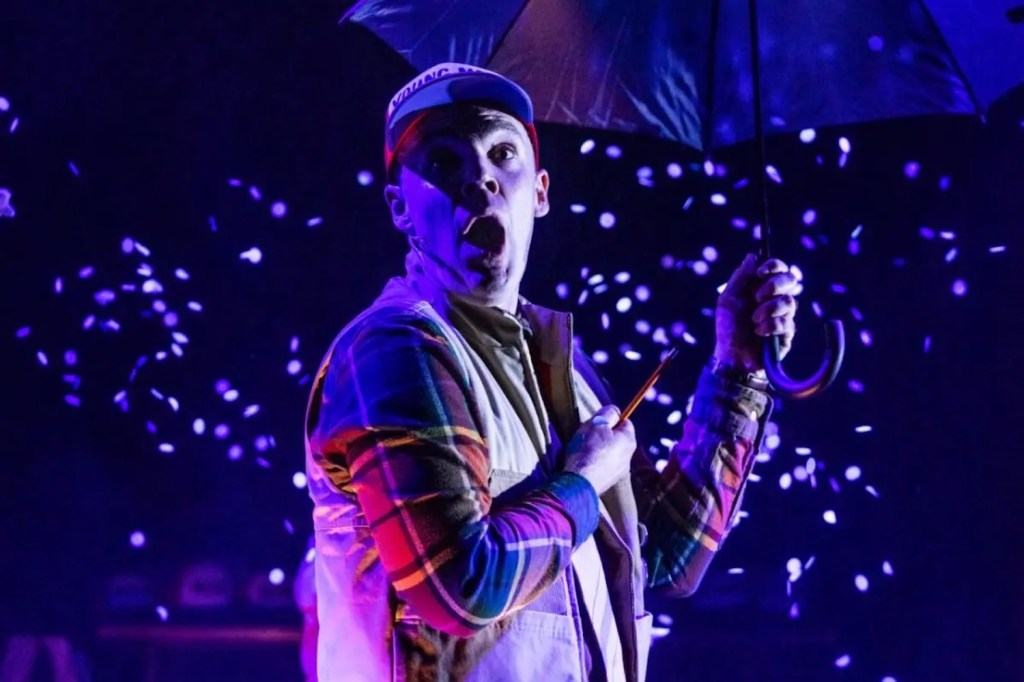
Stephen Anderson. Photo: John McRae. Improv comedy alumni Anthony King and Scott Brown have written a love letter to musical theatre and the sheer joy it can bring. As Bud and Doug stop to explain the mechanics of musical theatre (What is a motif? What is an “I Want” song? What is an “Eleven O’Clock” number?) they break down the walls between them and an audience that gets every joke. Gutenberg is a piss-take on the medium but it’s coming from a place of love and admiration.
With a plot that is deliberately nonsense, and songs that are written to be parodies, it all comes down to the comedic chops of the two main performers, and director Richard Carroll has picked the two best. Stephen Anderson (Titanique) and Ryan González (Zombie! The Musical) are both natural fits for the material — hilariously funny and heart-warmingly adorable in equal measure. You can’t help but root for Bud and Doug’s dreams to come true.
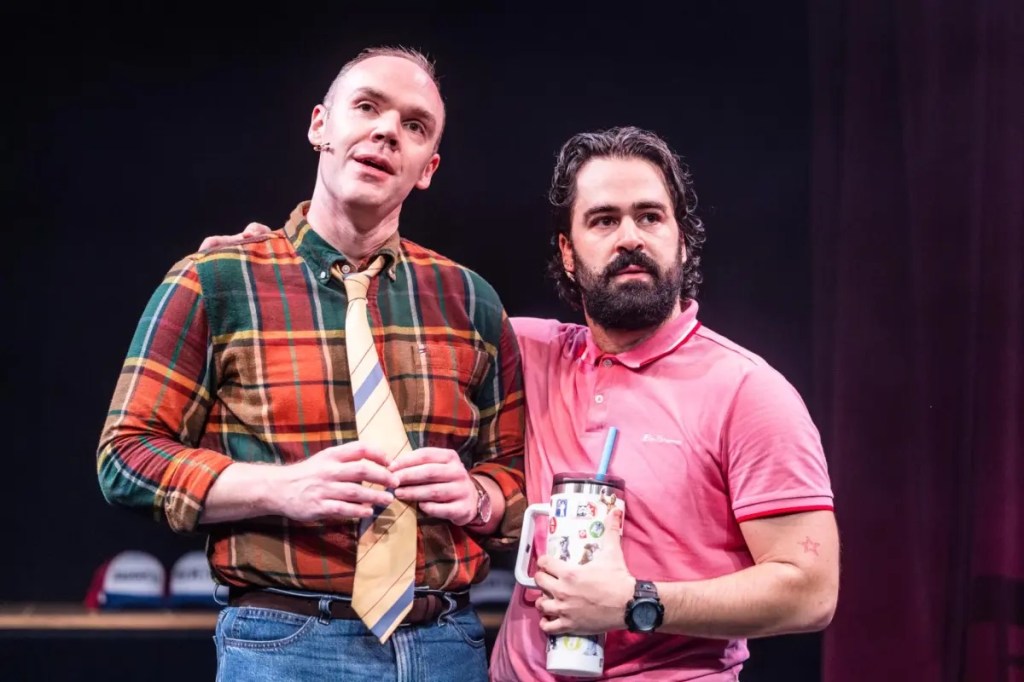
Stephen Anderson & Ryan González. Photo: John McRae. As the two leads simultaneously play dozens of characters, made clear by the use of different caps, they channel an insane amount of zany slapstick energy. Shout out to Shannon Burns’ choreography, which gives them both a real workout. Even when things go wrong (as they did the night I saw the show) it just adds fuel to their comedy engine. I could be wrong, but it looks like they’re both having as much fun as the audience is.
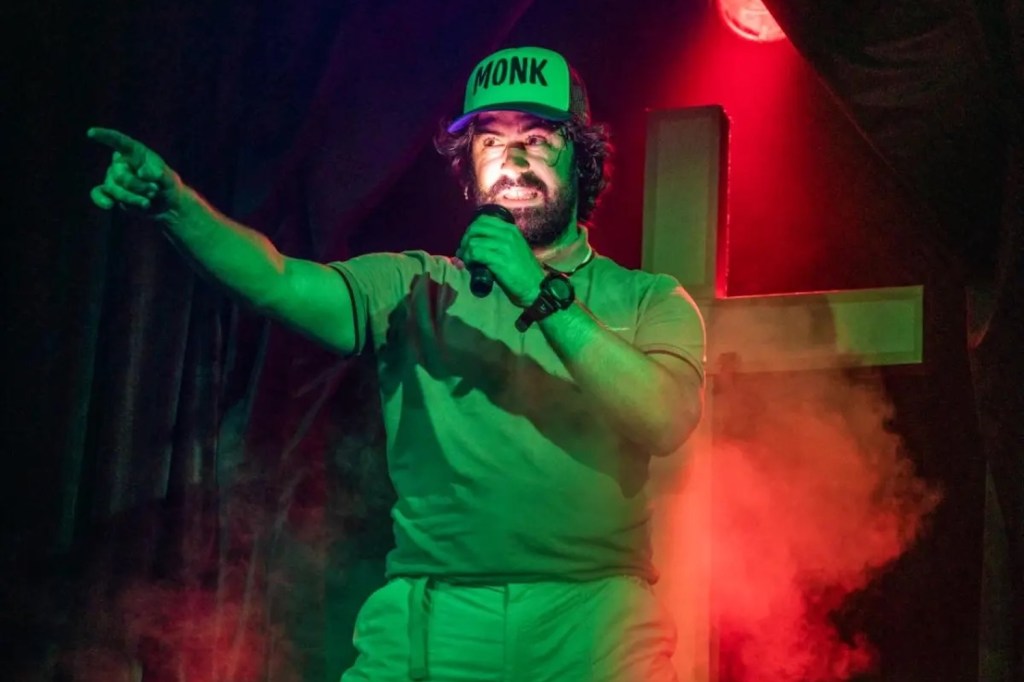
Ryan González. Photo: John McRae. There’s a real art to putting on a show that is supposed to look intentionally ramshackle, while still giving the audience the level of quality they demand for the ticket price, and Gutenberg hits the right level. Lochie Odgers’ set appears to be simple theatre drapery but has some tricks up its sleeve. Liam Roche’s sound design is incredibly sharp (the timing was so impeccable I was wondering what other tricks were being used). And Véronique Benett’s lighting gives the show a notable variety.
The Hayes has proven itself to be the best home for these self-referential, outrageously silly musicals which play directly to their core audiences. Gutenberg fits right in that wheelhouse.
-
Toxic (Qtopia)
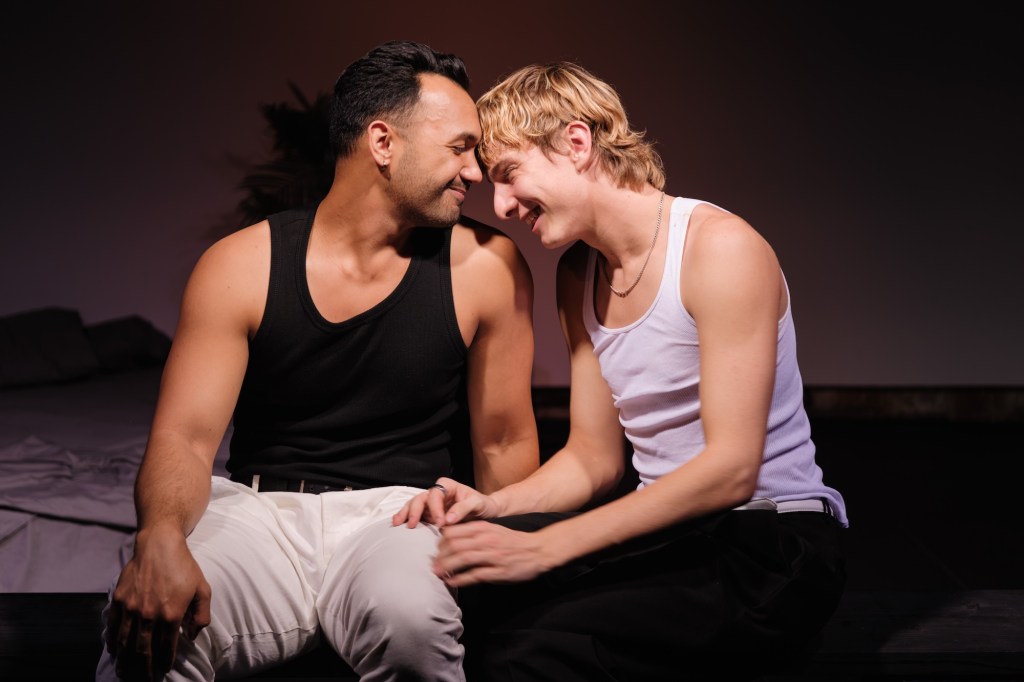
Written by Nathaniel J Hall. Hello Darling Productions. Qtopia Substation. 20 April – 9 May, 2026.
The rise and fall of a gay couple in Manchester threads its way through Britney Spears lyrics to its demise in Toxic.
Two unnamed men, referred to only as The Writer (Patrick Phillips) and The Performer (Bash Nelson) tell a story that is autobiographical – every pill, every cock, every fist raised happened to someone, or so we are told. The Writer is HIV+, but thanks to modern medicine is now undetectable, thus untransmittable. When he finds The Performer who is negative and on Prep, they start having sex and fall into a relationship. But as time goes on, it’s clear HIV was never going to be the problem – their inner demons can do much more damage to the relationship.
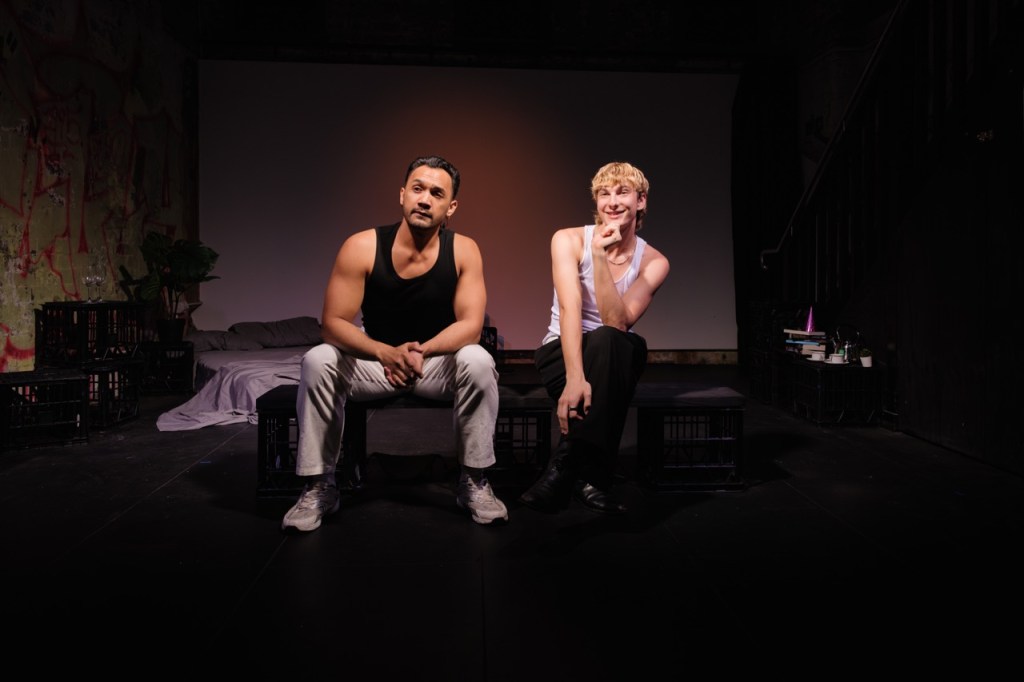
Bash Nelson & Patrick Phillips. Photo: Robert Catto. As you enter the Qtopia Substation, the cast are already on stage, in character, bantering between themselves. As you wait for the performance to begin for real, you’re immersed in their rhythms and flirtatious nature. Sparks are flying. But those sparks are quickly put into context as the show starts.
We are told, repeatedly, that this is the story of how they met, fell in love, and fucked it up. This love story is doomed from the start, and writer Nathaniel J Hall wants you to know that up front. The events are lightly fictionalised but mostly they’re real. Every cock, every pill, every raised fist happened to someone. Maybe they happened to you too.
What unfolds is fairly standard “gay relationship drama”. Along the way we run through every cliché in the book – sex, drugs, threesomes, clubs, more sex, more drugs… it’s a tale so familiar it’s just not that interesting without some unique twist to the format.
And telling a U=U (Undetectable = Untransmissable), post-Prep story has promise – it opens up new avenues to explore but Toxic doesn’t seem interested in doing so. The fact that The Writer can now have sex without condoms or the fear of infecting others would have made for a more interesting story, but here it’s simply a side comment thrown aside rather than discussed. The emotional beat is quickly lost.
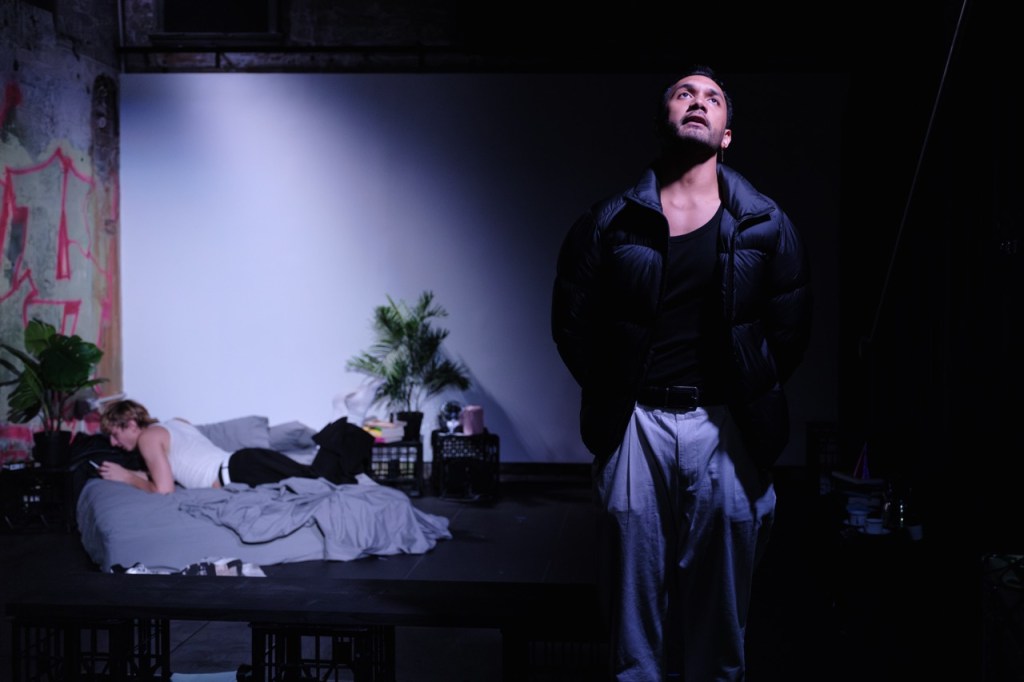
Patrick Phillips & Bash Nelson. Photo: Robert Catto. The Performer has his own stuff to deal with as well. As a mixed race gay man, he’s grown up under the shadow of racism with a tumultuous home life. Try as he might, he’s stuck in his own destructive patterns dealing with both internal and external issues. Is his enjoyment of minor degradation during sex connected to his history? Again, the script doesn’t venture very far in its analysis or character depth.
Thankfully the rather heavy-handed script is given real life by Phillips and Nelson, who bring genuine appeal to the story. The two performers fill in the gaps in the characters with solid work, and their chemistry smooths out the bumps in the storytelling. The occasionally slip of an accent aside, it’s thanks to their charisma that the 70 minutes of the play fly past.
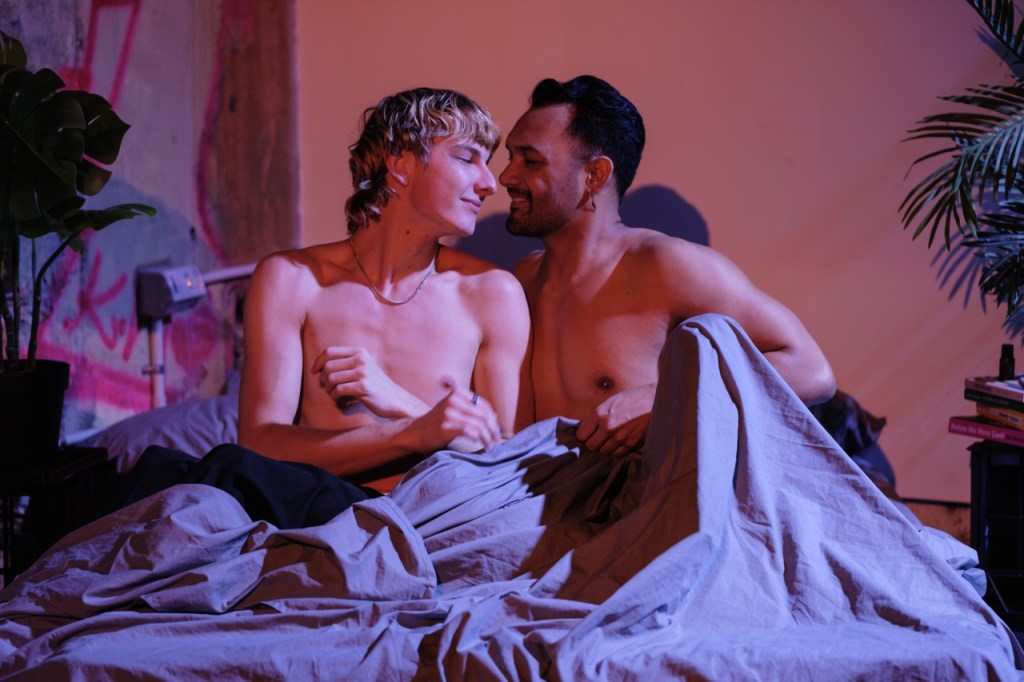
Patrick Phillips & Bash Nelson. Photo: Robert Catto. But I find it hard to get past the mundane script. Slabs of backstory and exposition take the place of actual character development. A late revelation from The Writer makes no sense in the arc of the character – the lack of set up is bewildering.
I got to the end of Toxic asking myself, why is this a play? What is it saying that’s important? And the answer is – nothing at all. There is something naively narcissistic about writing an autobiographical story (Hall performed the role of The Writer in the original production) and expecting an audience to invest their time and money in your overly-familiar domestic issues. Personal confession may be cathartic for the writer, but it is not inherently dramatic for the audience.
While I can’t honestly recommend this one, it’s not the fault of the production, which does admirable work. It’s a solid production of a pointless play. Toxic just hit my gag reflex when it comes to self-indulgent writing.
-
Disney’s The Lion King (Capitol Theatre) ★★★★½

Music & lyrics by Elton John & Tim Rice. Additional music & Lyrics by Lebo M, Mark Mancina, Jay Rifkin, Tsidii Le Loka, Julie Taymor, and Hans Zimmer. Book by Roger Allers & Irene Mecchi. Adapted from the screenplay by Irene Mecchi, Jonathan Roberts & Linda Woolverton. Disney Theatrical Group. Capitol Theatre. Playing till 30 Aug, 2026.
Disney’s stage version of The Lion King is back and nearly thirty years on it’s still unsurpassed in so many ways. If you’ve never seen The Lion King, you owe it to yourself to experience it now.
The Lion King is the glorious oddity in Disney’s theatrical canon. Where most other Disney stage adaptations remain resolutely tied to the aesthetic of the animated films, director Julie Taymor leans into pure theatrical abstraction to bring the scope of The Lion King to the stage. None of Disney’s other shows even come close.

Aphiwe Hyezi. Photo: Daniel Boud. This is a locked in, award-winning production that hasn’t aged a day (okay, maybe the disco hyena number is starting to look a little Cats-like). The puppetry and costuming are still cutting edge — Taymor and Michael Curry’s mask & puppet design still amazes. The sheer level of invention and vision that went into turning the film into an artistically satisfying family show is staggering to behold. The giraffes are still one of the most majestic things to walk the stage. Who knew you could put grass on your head and walk around with such grace?
Apart from some minor updates to the book (a few localised jokes have been added) this is more or less the same show that won the Tony Award in 1998 and first toured Australia (playing the Capitol Theatre) in 2003.
In the enormous cast, it’s the side characters that really shine. The comedic trio of Zazu (Benn Welford), Timon (Jamie McGregor) and Pumbaa (Rutene Spooner) are all triumphs of character and costuming. Breathtaking puppetry meets kid-friendly cartoonish behaviour. Similarly the trio of villainous hyenas Banzai (Winston Hillyer), Shenzi (Ezra Williams) and Ed (Matt Verevis) nail their creepy-comedic vibes.
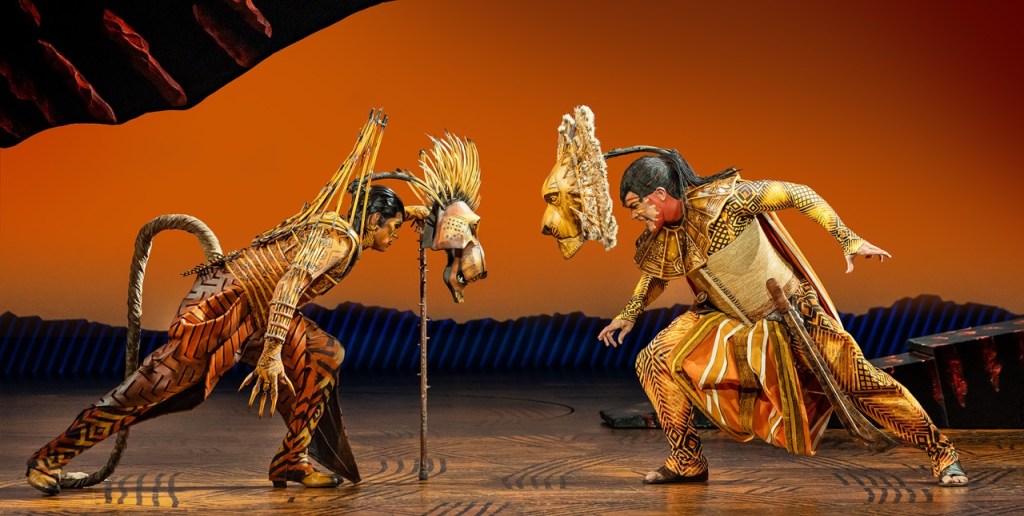
Daniel Frederiksen & Nick Afoa. Photo: Daniel Boud. And, as always, it’s Scar who owns the night — getting all the show’s best dialogue to play with. Daniel Frederiksen nails the right level of evil camp and pomposity to milk this pantomime baddy for all he’s got.
Against these performances the core lion pride falls a little flat. Aphiwe Hyezi (playing adult Simba) and Emily Nkomo (adult Nala) give fine performances but their vocals are notably less powerful, and their performances more pantomime, than the rest of the lead cast.

Aphiwe Hyezi & ensemble. Photo: Daniel Boud. In an age when stage shows have pushed the boundaries of magic and special effects, and face stiffer competition from screens and devices, it’s still thrilling to see the ageless wonder that Julie Taymor and her team produced to bring The Lion King into the real world. No cinema spectacle can compete with watching a puppet elephant walk down the theatre aisle, the simple joy of seeing multicoloured birds be swung around above our heads, or the engineering marvel of bringing a leaping herd of antelope on stage. The Lion King is a testament to imagination and craftsmanship.
I can think of no reason not to go see The Lion King, either for the first time or for the fifth. You may have to fight off/tolerate a sea of children (or in the case of Opening Night, a stew of badly behaved celebrity chefs — theatre etiquette please gents) but the show is worth it.
-
3 Billion Seconds (KXT on Broadway) ★★★½
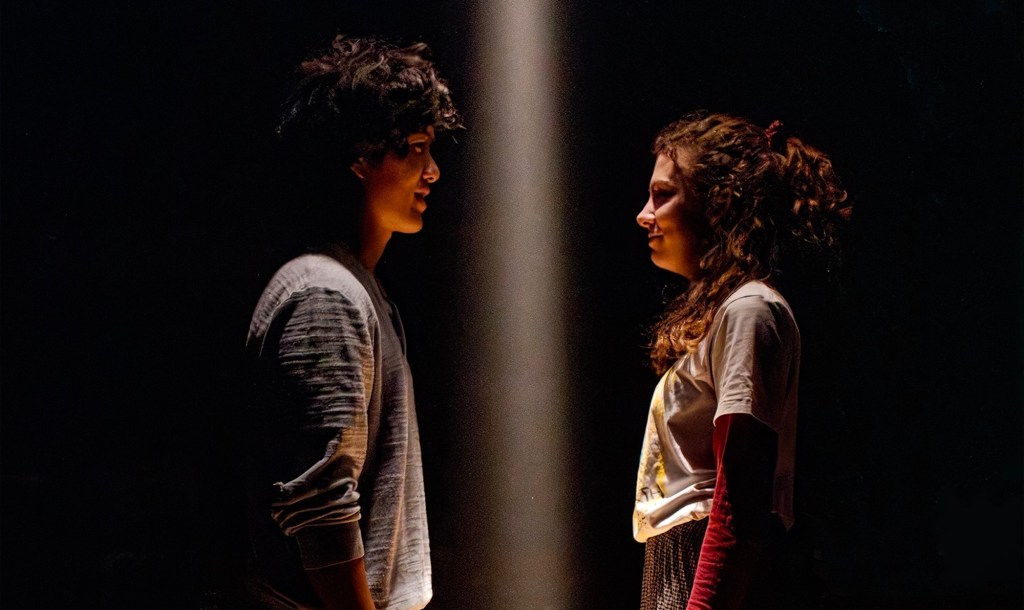
Written by Maud Dromgoole. Blinking Light in association with Bakehouse Theatre Company. KXT on Broadway. 17 Apr – 2 May, 2026.
How far would you go to live an ecologically ethical life? British playwright Maud Dromgoole has fun with the hypocritically idealistic fringe-left and the psychotic devotion of parents-to-be in the reality-stretching 3 Billion Seconds.
Daisy (Izabella Louk) and Michael (Victor Y Z Xu) are having a baby. In their eyes, this is a bad thing. They’re both population activists, and bringing a baby into the world is a big commitment — not to mention a huge carbon footprint. So to justify bringing a new human, who will spend the next 90 years consuming resources, into this world, they set about trying to balance the cosmic scales, banking their own extreme version of “carbon credits” to put themselves in the moral black.
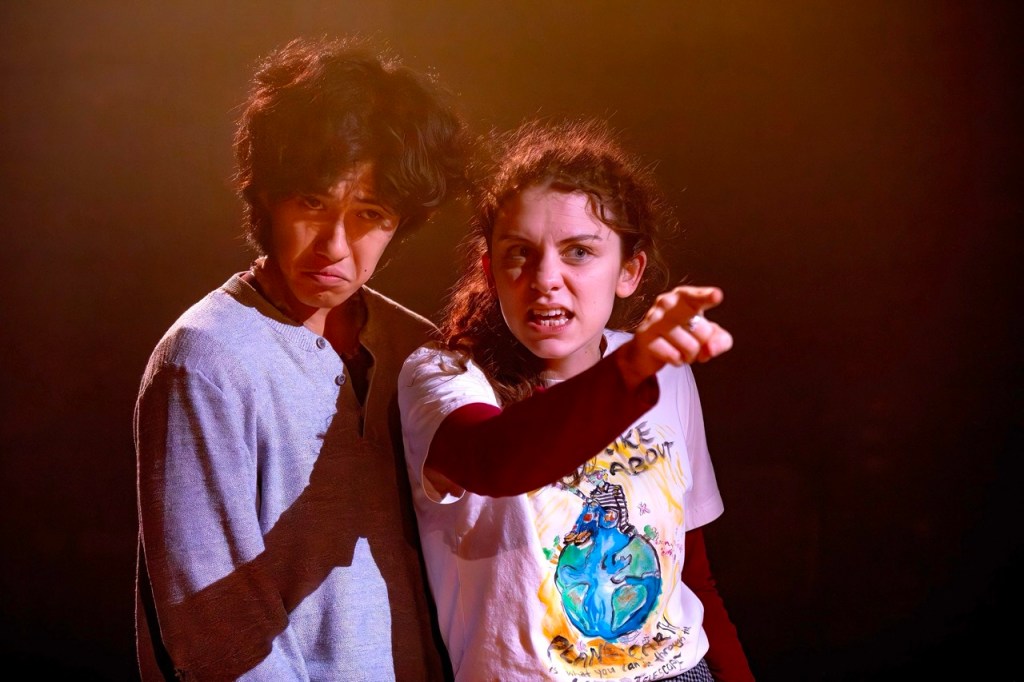
Victor Y Z Xu & Izabella Louk. Photo: Phil Erbacher. What starts as a college rom-com of two young, politically active performers trying to change the world one community hall at a time pushes itself into a manic state. The title, 3 Billion Seconds, refers to the estimated total lifespan of a person born today. So to offset the impending carbon debt of their unborn child, Daisy and Michael need to bank an equal number of credits in advance — more than they can manage by simply reducing their personal output. About halfway through, they start making increasingly extreme choices to hit their goal.
The mid-show pivot, which comes out of the blue, threatens to derail the evening. It lacks set-up, but it pushes the show into fun new territory. Once you simply accept it, 3 Billion Seconds becomes a high-concept black comedy — think 90s indie films like The Last Supper or Shallow Grave. If you’re the kind of Marvel movie fan who thought “Thanos has a point” – you’ll enjoy playing in this moral grey space.

Victor Y Z Xu. Photo: Phil Erbacher. Both Louk and Xu play their roles large to meet the tone, addressing the audience in synchronised narration. Thankfully, both performers have a charm that breaks through some of the more artificial set-ups, giving their angst — if not a convincing natural grounding, then at least a nod in the direction of real human behaviour.
Director Dominique Purdue (recently seen performing in Perfect Arrangement at New Theatre) primes us for the increasingly incredulous turns by placing the show in a heightened, abstract space. Mia MacCormick’s set — a sandpit with half-buried furniture, like the inside of an hourglass with grains of sand slipping away — is given real versatility by sharp lighting and omnipresent sound cues (lights: Caity Cowan; sound: Cameron Smith). It’s an exciting directorial debut, full of vision and invention. A tighter grasp on the script’s comedic timing would heighten it further, but on the whole it shows an abundance of promise.
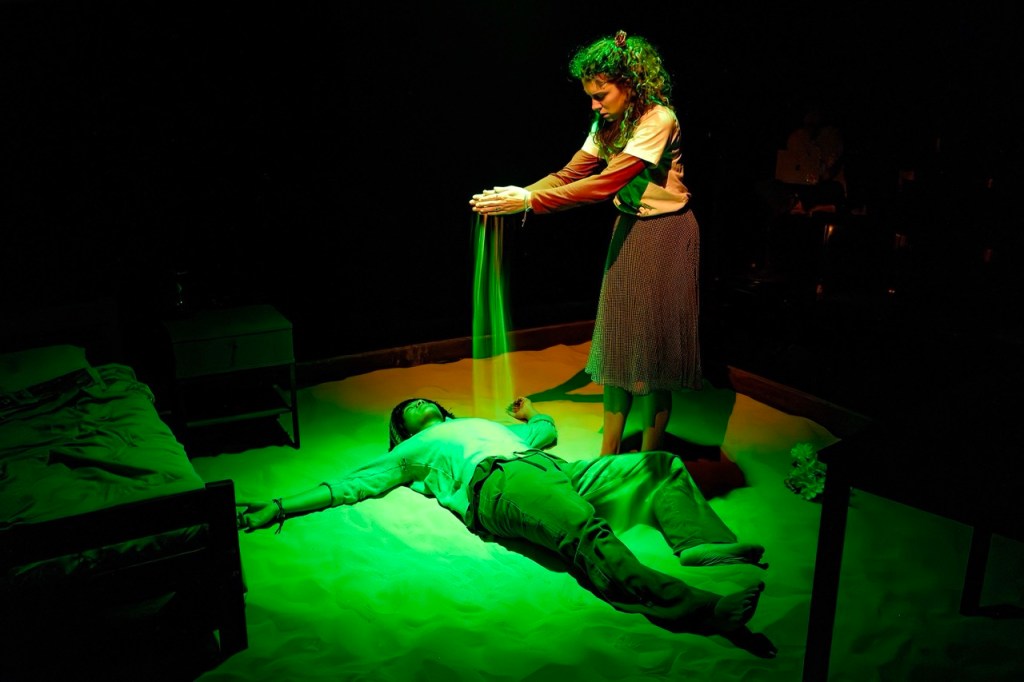
Victor Y Z Xu & Izabella Louk. Photo: Phil Erbacher. Dromgoole’s script — funny, outrageous, and pointed in its critiques — fights against itself to tell an equally entertaining story. The more it leans into magical realism, the harder it is to trust its ecological facts. It’s hard to know where the exaggerations begin or end, meaning the play’s good intentions get lost in the mix of laughs and shocks.
While its satire has a somewhat blunt edge, 3 Billion Seconds is a fun, engaging, and wildly entertaining look at the impossible task of living an ethical life in the modern world. It’s well worth spending around 5 thousand seconds — that’s just under 90 minutes — in the theatre watching it.
-
Drive Your Plow Over The Bones Of The Dead (Belvoir) ★★★★
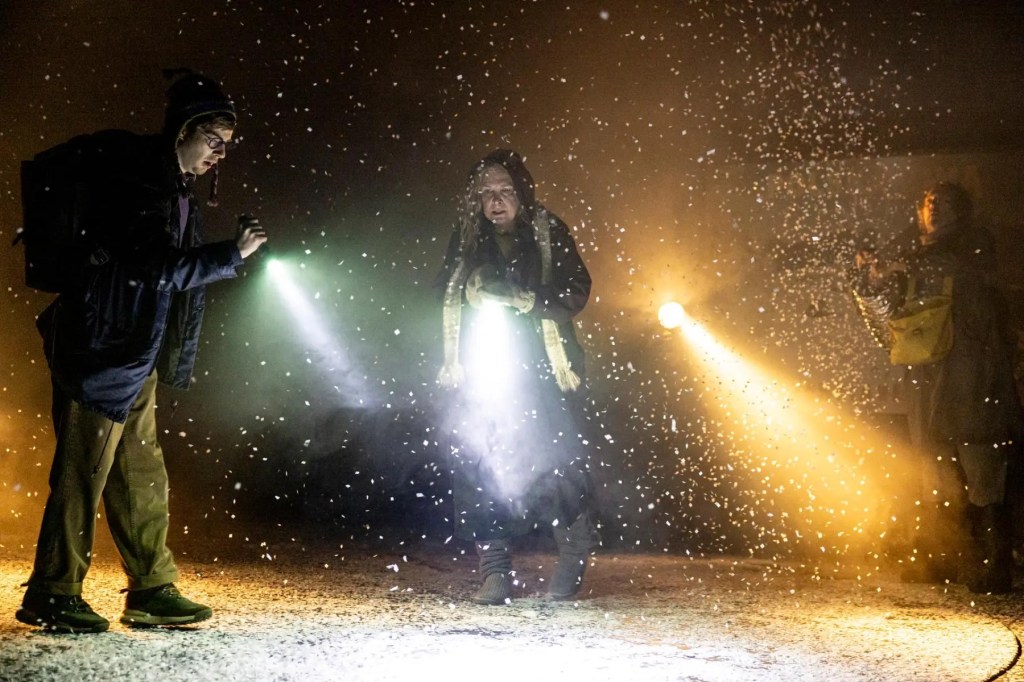
Adapted by Eamon Flack from the novel by Olga Tokarczuk. World Premiere. Belvoir St Theatre. 28 Mar – 10 May 2026.
Have Belvoir bitten off more than they can chew? After abruptly postponing opening night, it started to look like The Master & Margarita‘s spiritual successor was in peril. But fear not, despite being close to three and a half hours long — with two intervals — Drive Your Plow… intrigues and entertains more than other 90-minute shows I’ve seen recently.
Mrs Duszejko (Pamela Rabe) lives in a secluded town surrounded by forests where she spends her time reading the works of William Blake, doing astrology charts and looking after the animals around her. Her winter’s night is disturbed when her neighbour, who she refers to as Oddball (Arky Michael/Bruce Spence – depending on the performance), knocks on her door. He’s found their only other neighbour, who she calls Bigfoot, dead in his home — a deer bone lodged in his mouth. And he’s only the first of many. He is soon followed by similarly fauna-adjacent deaths — one found with a head trauma, surrounded by hoof prints, another found with beetles inside their lungs. As Duszejko looks closely into the many deaths she has a sneaking suspicion that something inhuman is going on. What if the animals in the nearby forest have started to get their revenge on the humans?
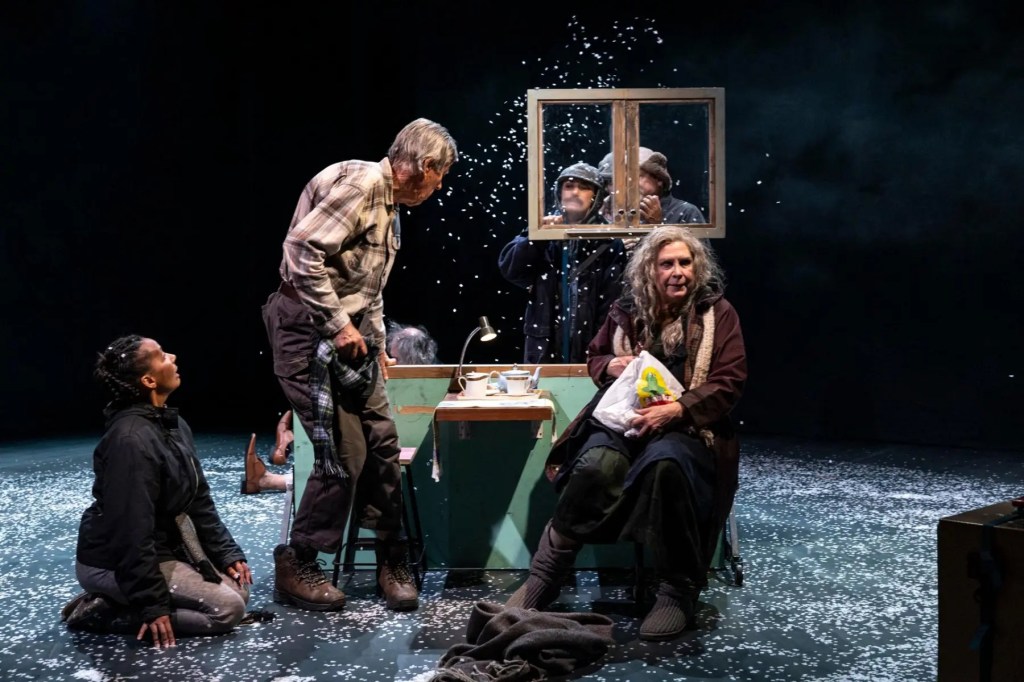
Paula Arundel, Bruce Spence, Pamela Rabe & Ensemble. Photo: Brett Boardman. What has all the hallmarks of a quirky but bleak, prestige TV murder-mystery starring Kate Winslet, quickly becomes something wilder and more unruly. Pamela Rabe holds court, eccentrically dressed, obsessing over star signs and stray deer. As she unreliably narrates, any pretence of a fourth wall is quickly demolished. This isn’t that kind of play. This is a world of impressionistic design (set designer Romanie Harper’s work is as scavenged and recycled as it appears) and scenes that feel as organic as a jam session. Rabe has no qualms riffing off the audience or cheerfully acknowledging when things on stage don’t quite go as planned.
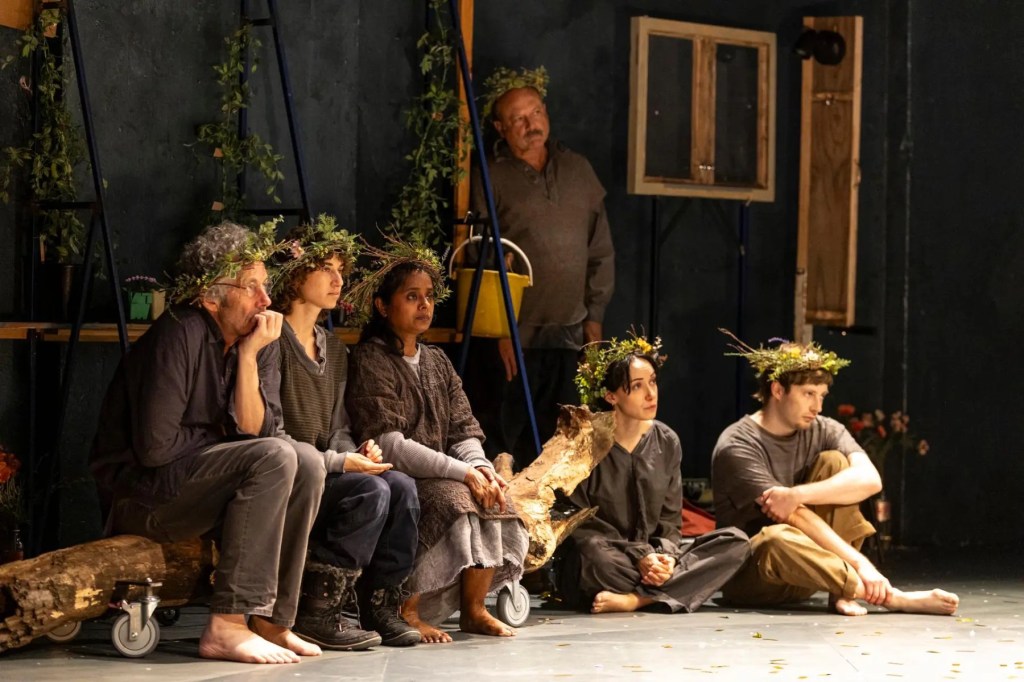
Marco Chiappi, Ziggy Resnick, Nadie Kammallaweera, Alan Dukes, Emma Diaz & Daniel R Nixon. Photo: Brett Boardman. The large ensemble, made up of lead performers in their own right, slide between characters as quickly as they slide the set in and out of position. It’s unusual to have star performers like Nadie Kammallaweera in your cast and only have them utter a handful of lines — surely a quirk of the show’s development and subsequent editing down.
While it lacks the anarchic sense of creation that powered The Master & Margarita, Drive Your Plow… has clearly benefited from a similar genesis. You can feel a sense of authorship among the cast who are completely committed to their parts, whether they’re playing supporting roles or acting as bats. It’s that aura of play that animates Drive Your Plow… and makes the often cold and dark tale highly entertaining.
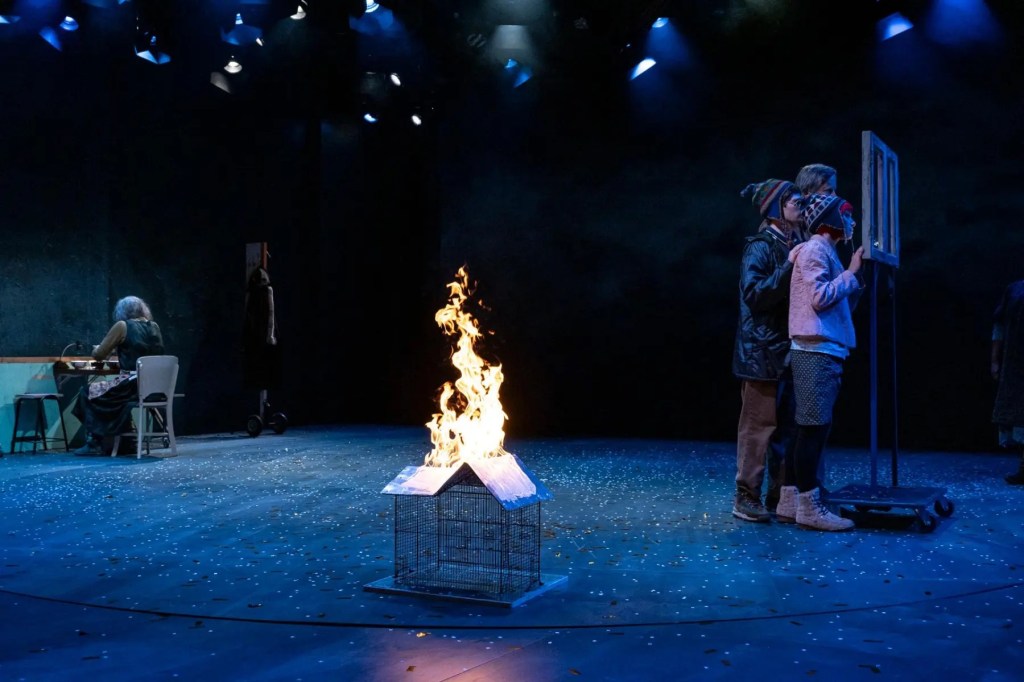
Photo: Brett Boardman. Was there a faster, more efficient way to tell the story? Probably. There are wickedly amusing moments that could easily be cut, but you’d lose the heart of what this ensemble has created. The murder-mystery plot never feels like the real driving force of the narrative, rather just an excuse for a loose structure around which this cast get to riff. And if I had to give out criticism, I’d have loved to see some more elevated costuming for when the cast play animals (as promised by Brett Boardman’s early promotional image).
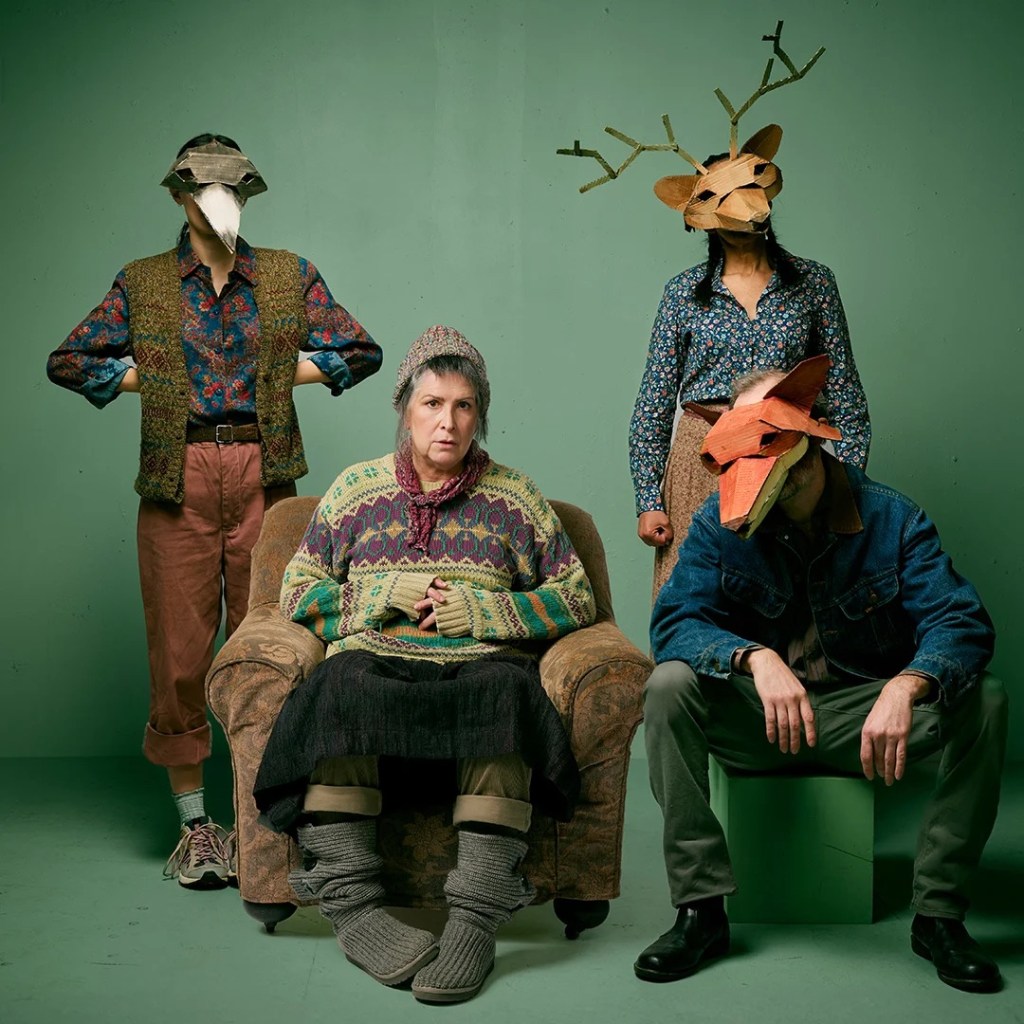
Promo Image by Brett Boardman. It’s purely coincidence but it’s intriguing that Drive Your Plow… is on stage at the same time as An Iliad over at STC. Both are narration-led plays telling violent tales, with a make-shift aesthetic and a dynamic leading performer, and both have produced wildly different shows. Both successful and frustrating in their own ways.
Drive Your Plow… turned out to be a lot more fun than I expected, mainly thanks to the personal magnetism of Pamela Rabe around whom this galaxy of star performers orbit. Based on the novel by Nobel Prize-winning author Olga Tokarczuk, the length doesn’t undermine her beautiful comedic timing as she powers through the gargantuan text. The show is a real investment of time but it pays back in spades.
-
An Iliad (Sydney Theatre Co) ★★★½
Written by Lisa Peterson and Denis O’Hare. Adapted from Homer’s Iliad. Translated by Robert Fagles. Sydney Theatre Co. Wharf 1 Theatre. 18 Apr – 21 Jun 2026.
My first thought, looking at the bare walls of the Wharf 1 Theatre was, “Jeez, STC has spared all expense on this one!” I was of course proven wrong in very short order as An Iliad bloomed into an ingenious piece of lo-fi story telling. Small on sets but big on visuals.
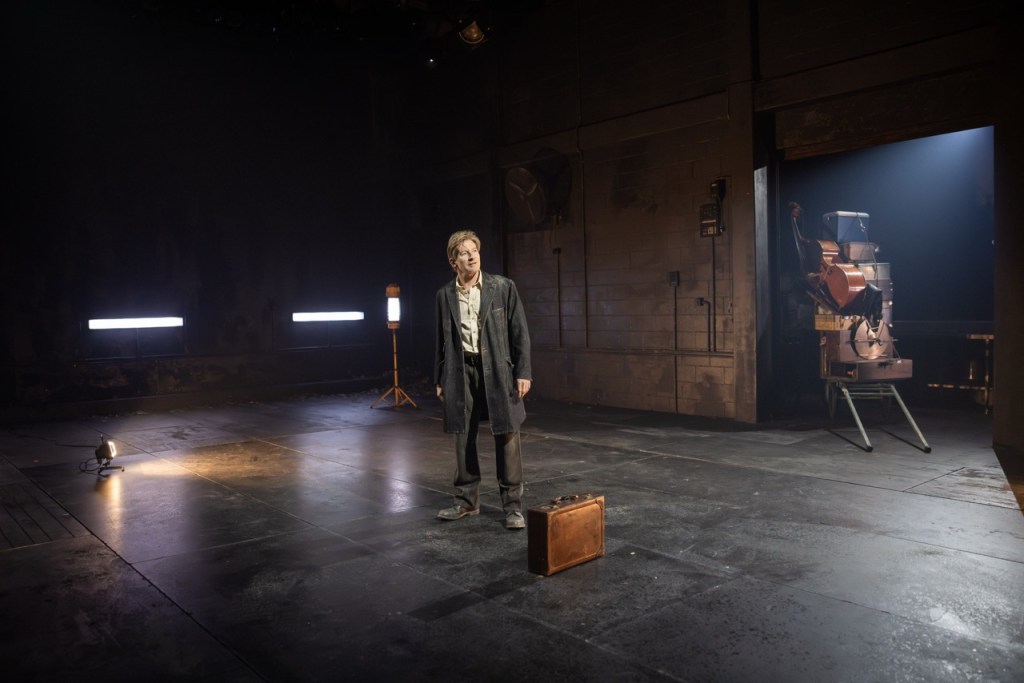
David Wenham. Photo: Daniel Boud. How do you tell the story of the Trojan war with only one man and a musician? You rely on old fashioned oral storytelling with some well chosen props, the odd lights and some atmospheric sound.
The Poet (David Wenham) has been singing his song for… well it feels like a millennia. The same story echoing through time. He’s getting tired of the telling, but this is what he does. With the help of The Musician (Helen Svoboda), he tells the tale of human war – and that tale hasn’t ended yet. Wheeling a cart of tricks onto the bare stage, he uses the tools of his trade to transport us back to ancient Greece, and the battle lines of the Trojan War where Achilles and his beloved Patroclus are torn asunder by fate and human greed.
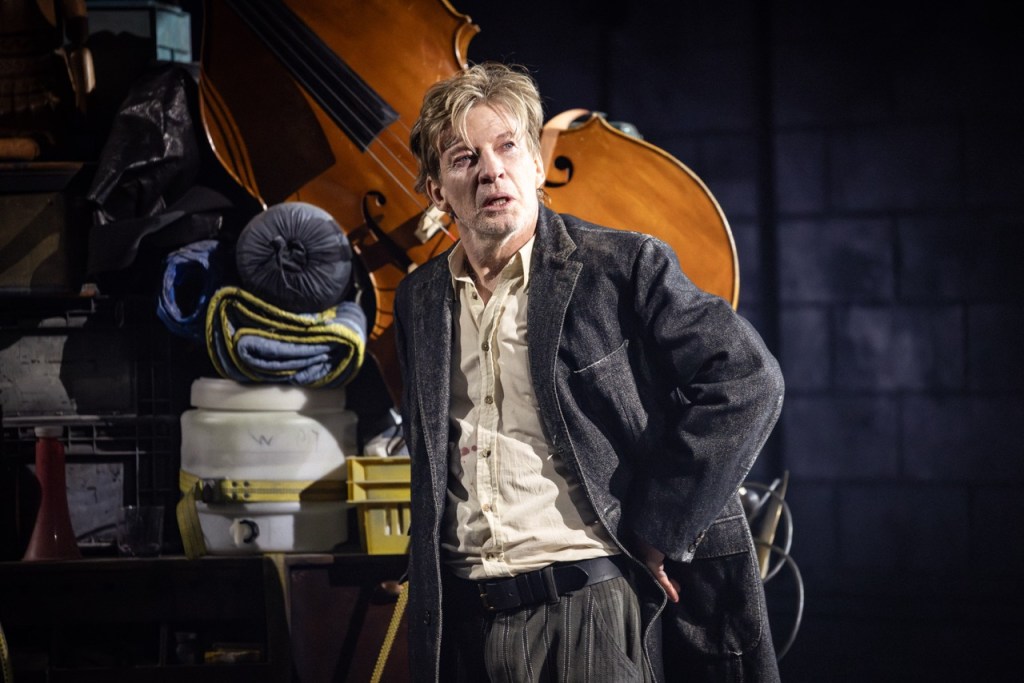
David Wenham. Photo: Daniel Boud. An Iliad requires a storyteller with magnetism to make it work, and Wenham’s powerful, sonorous voice and malleable manner make him a terrific fit for this tale. He brings a world-weariness to The Poet, a deep sadness at the state of humanity, that seeps out of him as he tells his story. Lines like “Achilles, who is addicted to rage – as so many of us are, really, when it comes right down to it…” slip into your brain with their casual assuredness. Wenham never overplays the emotions, making it more powerful.
He is joined by Helen Svoboda as The Musician, who aids him in his tale with the use of a cello, vocals and percussion. Svoboda’s performance is much more than just musical accompaniment. She becomes part of the show’s visual and aural fabric, bashing the strings, letting out wails of anguish and acting as a puppeteer. Her presence gives you a broader sense of the story being told, of the impact on the civilians inside Troy and those waiting at home for the armies to return, of Helen, whose beauty began the feud, and of the gods watching the action below them.
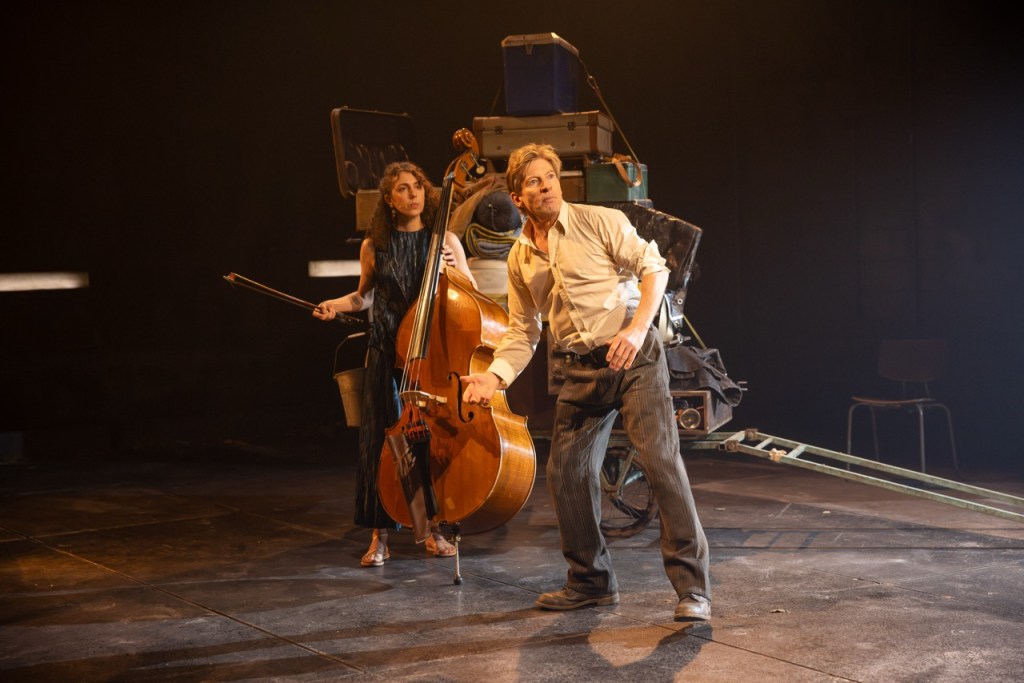
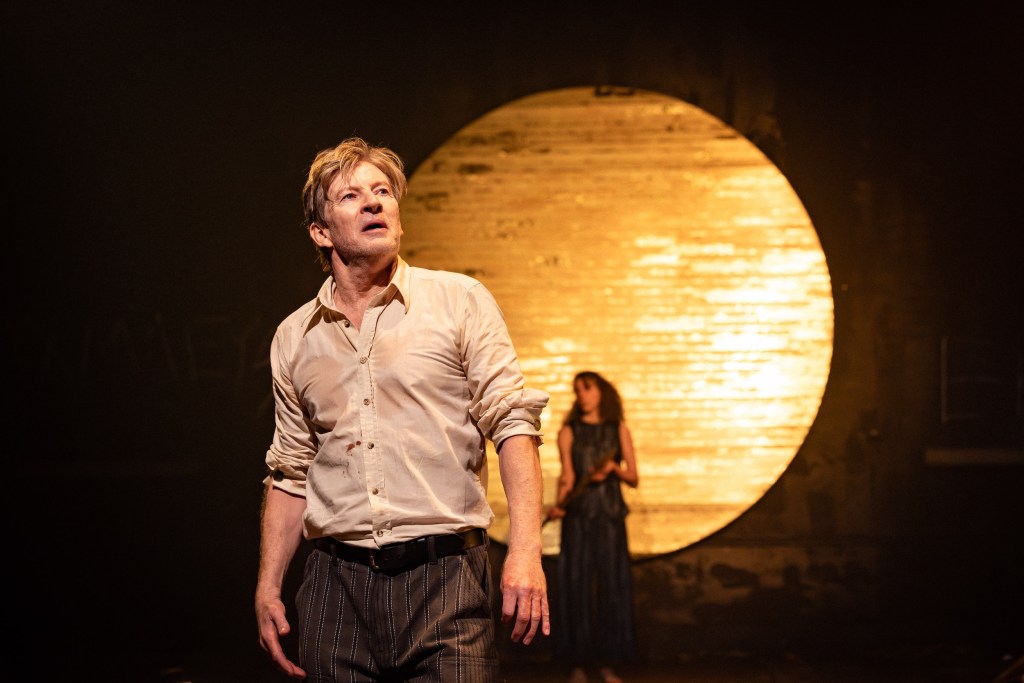
Helen Svoboda & David Wenham. Photo: Daniel Boud. Under Damien Ryan’s direction there is a simplicity that speaks volumes. The stage is that of an abandoned warehouse. A well placed light, a simple misdirection, a rising musical cue, do all the work of a full scale set (kudos to Brady Watkins’ immersive sound design – aided on opening night by a thunderstorm outside). Ryan’s work isn’t on the stage, but in your imagination. When he does give us a visual – like a towering silhouette, a helmet engulfed in flames, or the rise of a golden orb – they make an impact.
In this sea of sparse design, the focus falls entirely on the storytelling and the language. With a text that has been localised for Australian audiences, the play is filled with sly laughs to keep it light – Wenham is a practised master of a wry look or casual aside. But it’s often the simplest things that cut deepest. The most impactful part of the night comes as Wenham simply recites a chronological list of wars from Troy to today. The sad lesson is self-evident. We never change. We never learn.
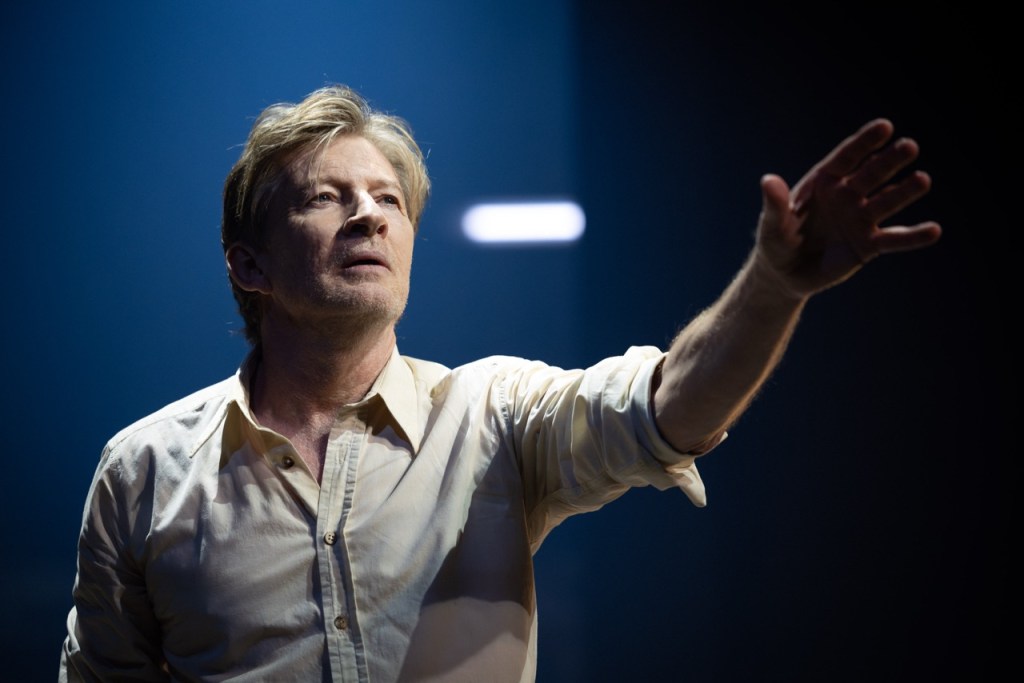
David Wenham. Photo: Daniel Boud. With a virtuosic performance at its centre, and marvellous inventive stagecraft, the cracks in the script start to show. Playwrights Peterson & O’Hare have narrowed the focus of the story from Homer’s original sprawling epic poem and that requires a bit of didactic set-up. Despite everyone’s best efforts it does occasionally slip into a recitation of event after event and it’s hard to drum up real emotional investment in Achilles’, Patroclus’ or Hector’s woes. I found myself intellectually stimulated by the text, but my emotions were left unstirred.
You may have experienced other Iliads in the past, like Brad Pitt’s lamentable film Troy, or you may be gearing up to see Christopher Nolan’s upcoming blockbuster cinematic version of Homer’s ‘sequel’, The Odyssey – no matter what has piqued your interest in An Iliad, it is easily worth the price of admission to see David Wenham flex his theatrical muscles once more.
-
Cluedo: The Play (Theatre Royal) ★★★★
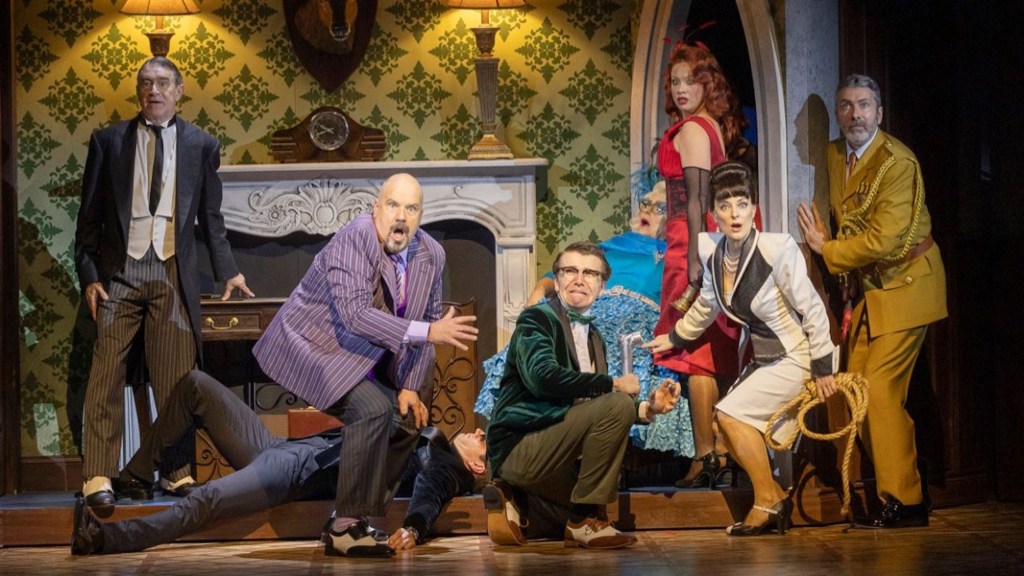
Written by Sandy Rustin. Additional material by Hunter Foster and Eric Price. Based on the Paramount Pictures Motion Picture screenplay by Jonathan Lynn. Based on the Hasbro board game Clue. John Frost for Crossroads Live. Theatre Royal. Till 10 May, 2026.
A play based on a film based on a board game — it’s not the kind of pedigree that bodes well if you’re interested in quality theatre. But give it enough rope, and Cluedo: The Play might just surprise you!
Six people in England have been invited to a secluded country mansion by the mysterious Mr Boddy (Joshua Monaghan). They’ve each been given a pseudonym for the night: there’s the alcoholic Mrs Peacock (Genevieve Lemon), the devious Mrs White (Rachael Beck), the lascivious Professor Plum (David James), the bumbling Reverend Green (Lawrence Boxhall), the dimwitted Colonel Mustard (Adam Murphy) and the seductive Miss Scarlet (Olivia Deeble). They are greeted by the Butler, Wadsworth (Grant Piro) and “French Maid” Yvette (Lib Campbell). The only things that connect them are the fact they all live in, or around Westminster, and they’re all being blackmailed by Mr Boddy — and he has a murderous game planned to throw a spanner into their evening.
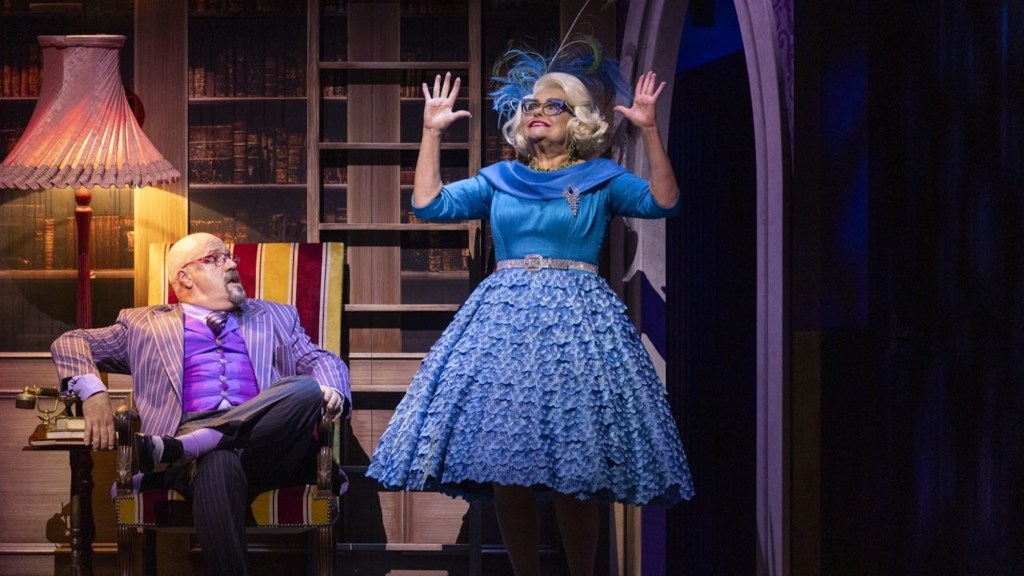
David James & Genevieve Lemon. Photo: Jeff Busby. What follows is a backstabbing, Knives Out drawing-room farce, that runs at full pace the second starting pistol is fired, with the guests desperately trying to solve an ever increasing number of murders. It’s scintillatingly silly, relentlessly high energy and choreographed within an inch of its life.
If you’re familiar with the 1985 comedic flop-turned-cult-classic film Clue, from which this wholeheartedly takes its plot and the bulk of its dialogue, then you’ll be in familiar slapstick territory. It’s one of my top ten favourite movies, the most rewatchable kind of comedy — full of camp excess and ridiculous plotting, plus one of Madeleine Kahn’s all-time great performances. Here the action has been relocated from America to “Downton Stabby” England and you’ll barely notice the difference.
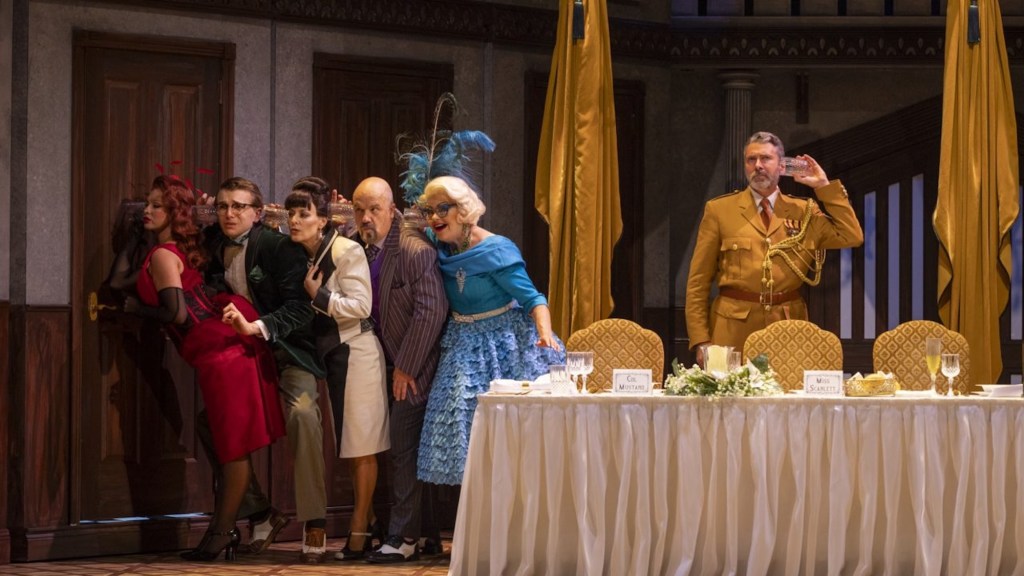
Olivia Deeble, Lawrence Boxhall, Rachael Beck, David James, Genevieve Lemon & Adam Murphy. Photo: Jeff Busby. All the big moments from the film are recreated on stage (some work, some land like a lead pipe) and the whole thing owes a massive debt to Jonathan Lynn’s original witty dialogue and character work. That’s not to take away from the surprising elegance of its translation to the stage. Each scene and comedic beat has been reconfigured to work as theatre, not just lazily slap an iconic scene on stage (I’m looking at you, Pretty Woman: The Musical!) And the new additions work well.
The cast have the energy of an improv troupe all trying to out-stage one another. Grant Piro runs a marathon as Wadsworth — both verbally and physically. Adam Murphy stands out as the comically idiotic Colonel Mustard, as does Lawrence Boxhall in his high-intensity turn and Lib Campbell’s playfully sexy Yvette (don’t worry, some of the film’s more dated aspects have been removed). Rachael Beck has the unenviable task of playing Mrs White, the role made iconic by Madeleine Kahn, and wisely doesn’t try to imitate her style.
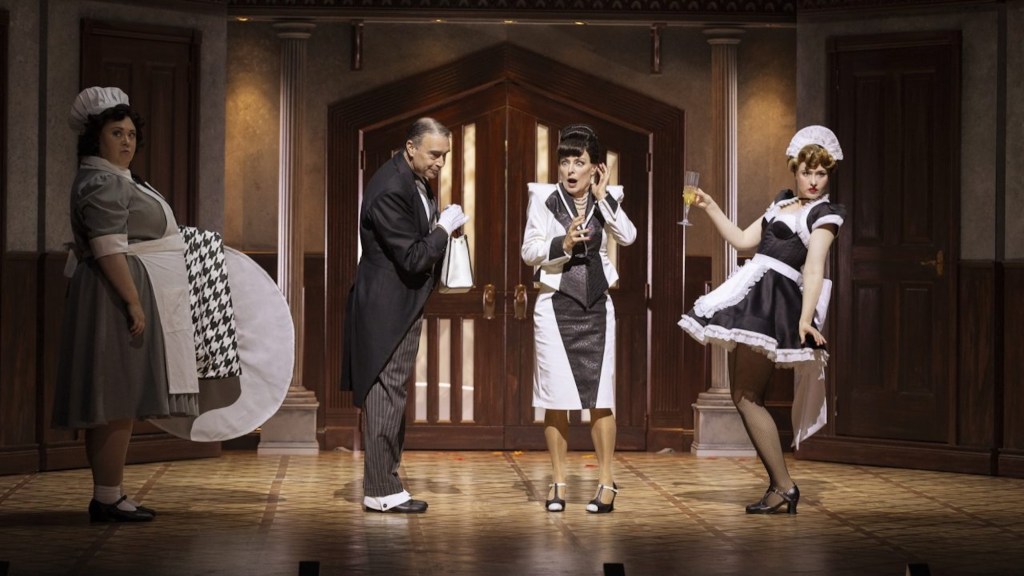
Octavia Barron-Martin, Grant Piro, Rachael Beck & Lib Campbell. Photo: Jeff Busby. James Browne’s set design holds marvellous tricks up its (multiple) sleeves and Jasmine Rizk’s lighting and Sean Peters’ sound have a field day with the horror tropes. Director Luke Joslin keeps the comedy tight — this whole show is more like watching a well-oiled musical be performed, with precise choreography and impeccable timing.
The essence of the film’s original alternate endings is preserved. When in cinemas, each individual cinema was given one of three different endings. When released on VHS and DVD the three endings were put together. Here… well I won’t spoil it, but it does start to rival Lord of the Rings: The Return of the King for the length of the finale. I did find myself getting exhausted by the gags. Not because they weren’t funny, but because they were unrelenting.
I walked in with my expectations in the “low but optimistic” range and was happy to discover a show that wasn’t just a cash-grab with a brand name, but a riotous tribute to the film. It may not be able to hold a candlestick to the original, but it definitely takes a very good shot at it!
-
English (Seymour Centre) ★★★★
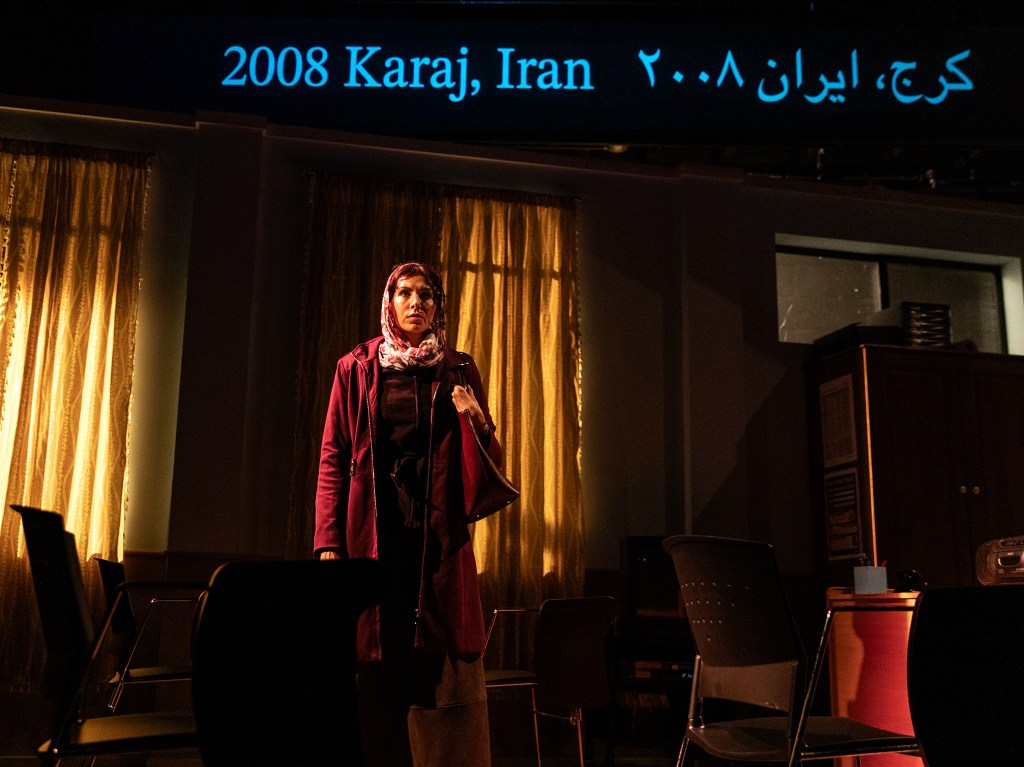
Written by Sanaz Toossi. Outhouse Theatre Co and Seymour Centre. Reginald Theatre, Seymour Centre. 9 Apr – 2 May, 2026.
Sanaz Toossi’s play about a class of English students in Iran has a gentle touch. Those 90 minutes of sweet comedy and warmth soften you up for a final scene that is the perfect grace note. I can see why it won the Pulitzer.
In a classroom in Karaj, in 2008, Marjan (Nicole Chamoun) has a new class of students eager to learn English for their own reasons. Elham (Setareh Naghoni) has been offered a research position at an Australian university, 18-year-old Goli (Minerva Khodabande) wants to be prepared for whatever life throws at her, grandmother Roya (Neveen Hanna) wants to be able to speak to her grandchild in Canada, and Omid (Pedram Biazar) simply wants to improve his English — or maybe he just has a crush on his teacher. As they struggle with their grammar and vocabulary, they not only learn the power of another language, but what their own language means to them.
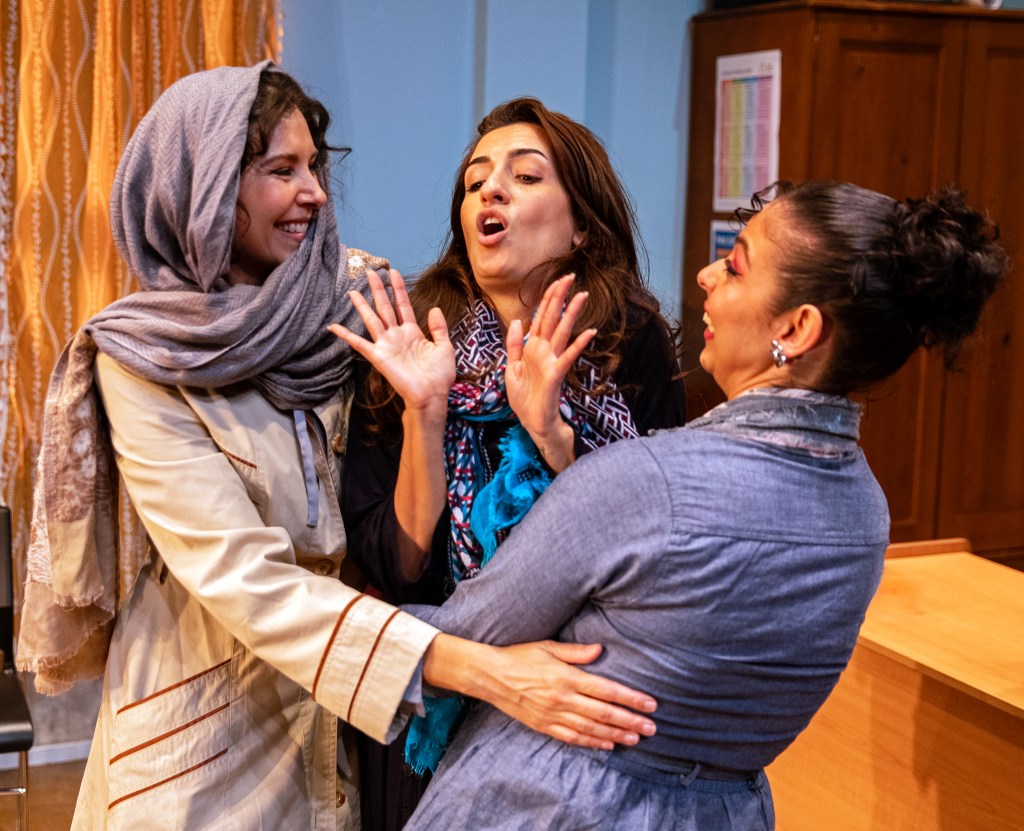
Nicole Chamoun, Setareh Naghoni & Minerva Khodabande. Photo: Richard Farland. The play has a central dramatic conceit. All the characters speak with Iranian accents when they are speaking in English, but when the characters dip into their own native Farsi, they speak with their natural Australian accents. If that sounds complex, it isn’t — you pick it up pretty quickly. It allows the audience to be with the characters in their struggle and frustration with English and their ease with their native Farsi. It breaks down any sense of “otherness” that stands between the audience and the stage.
For a play with so much inherent political baggage, English does a remarkable job of keeping things light. Its softly-softly approach uses language as a metaphor to strip away any preconceptions and lets you approach these characters as real people, not political punching bags. Similarly, director Craig Baldwin takes a light touch to the movement, favouring simplicity and authenticity over stylistic flourishes.
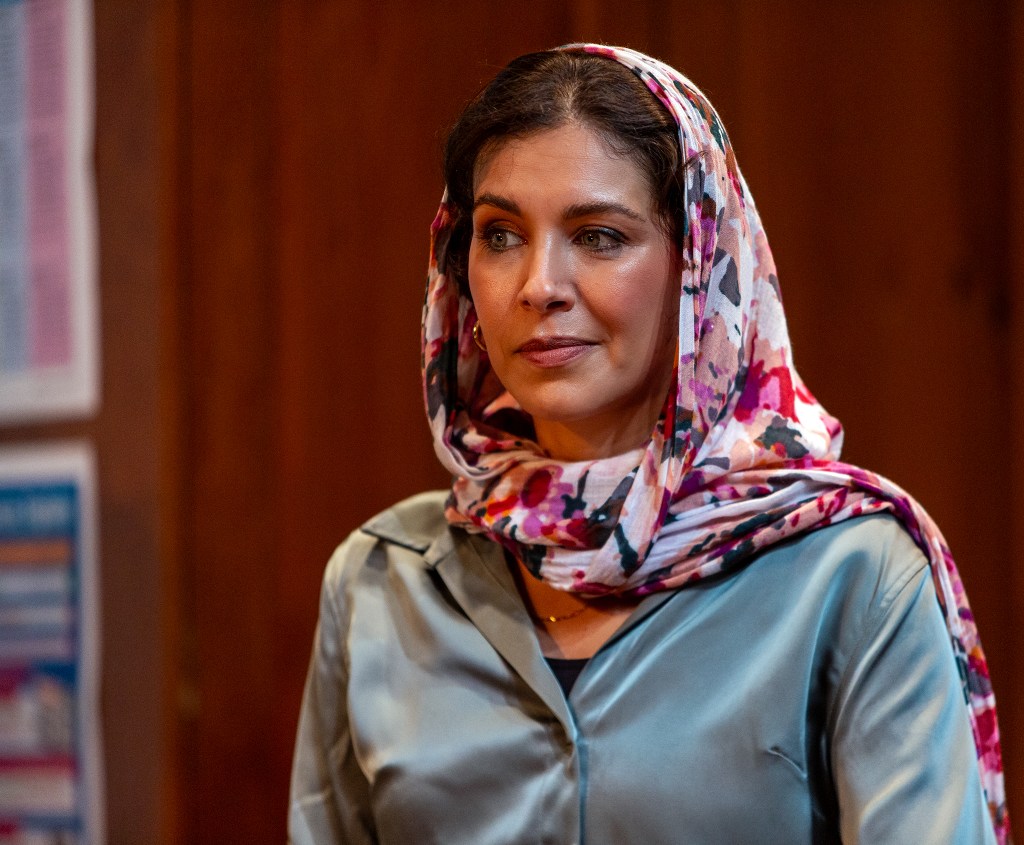
Nicole Chamoun. Photo: Richard Farland. Toossi’s script elegantly touches on a whole host of interconnected issues. It shows how hard it is for people to unlearn behaviours, and how changing language changes thoughts. Just as the intelligent Elham is frustrated by the way her English makes her sound like a simpleton, the struggle to learn a new language reveals each character’s inner fears — Roya feels like she’s losing contact with her son, Elham fears she’s unlikeable, and Marjan is conflicted about having returned to Iran after nine years living in the UK.
It’s anchored by Nicole Chamoun’s charming and layered performance as teacher Marjan. She gives the character a commanding grace and strength, and only slowly reveals her deep well of melancholy. While her past is only referenced in passing, its impact is clearly felt in her behaviour. Also of note is Setareh Naghoni’s abrasive Elham — the problem student whose sharp mind and intense pride fight her every step of the way. It’s a funny and rewarding performance that makes a brilliant foil for Marjan.
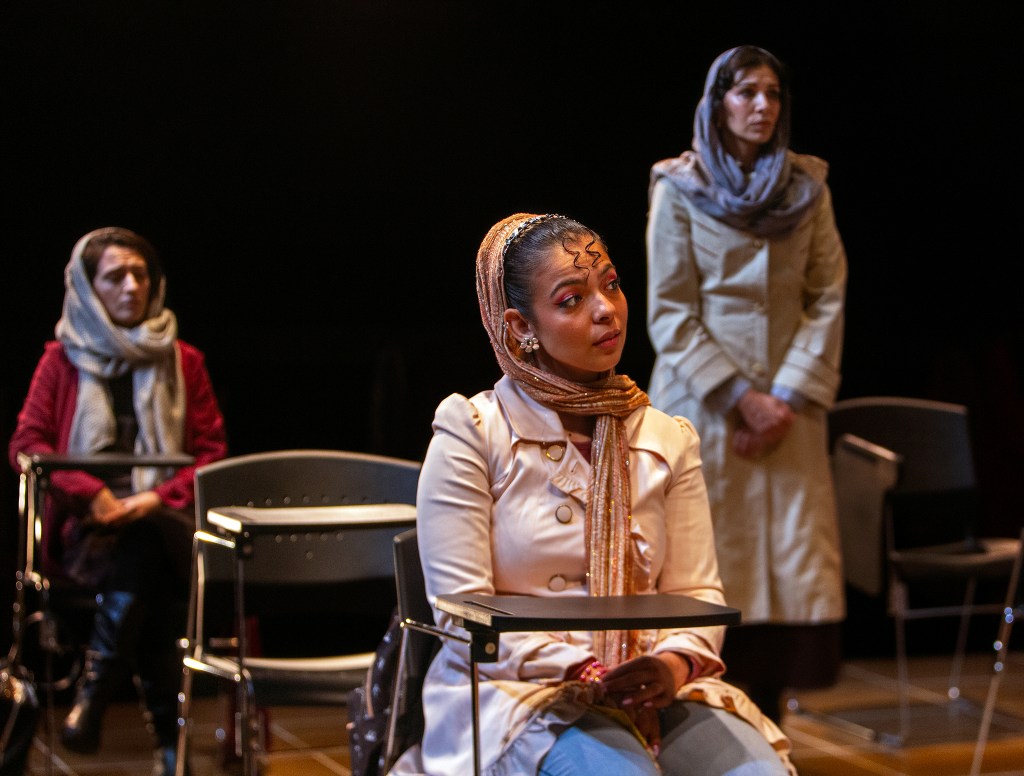
Setareh Naghoni, Minerva Khodabande & Nicole Chamoun. Photo: Richard Farland. There is little plot to worry about here (if you were frustrated by Circle Mirror Transformation at STC, you may struggle with this) — instead we get a series of episodic vignettes of the class, showing their gradual improvements and revealing character. Each small-scale arc slowly plays out, with some threads left unresolved — just like real life. In the end, it’s the peeling back of layers to reveal the complexity of the characters underneath that is the whole point.
The play’s apolitical nature may seem weak to some, but I found its focus on character to be its winning move. Even in the midst of a very real war, it is good to be shown the clear humanity of the Iranian people — people with all the same loves, fears, hopes and struggles we all have. English humanises events that are happening right now, without ever having to touch on them, and that’s a rare gift.
-
Sistren (Griffin) ★★★★★
Written by Iolanthe. Griffin Theatre Company present a Green Door Theatre Company production in association with Belvoir St Theatre. 9 Apr – 3 May 2026.
This is TikTok theatre. Shockingly, I don’t mean that as a veiled insult. Sistren is frenetic, original and addictively entertaining. You barely have time to breathe between laughs before the tone has shifted and we’re onto another morsel of short-burst storytelling, all building to a big finale.
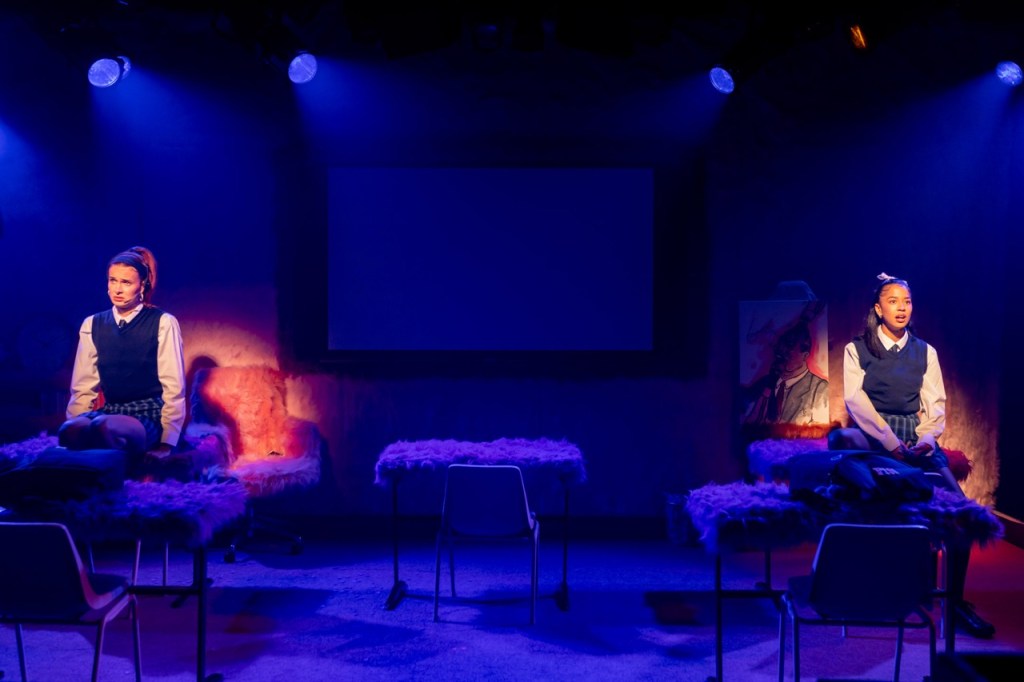
South London high schoolers Isla (Iolanthe) and Violet (Janet Anderson) are in trouble again. Isla couldn’t control her mouth and they’ve landed a suspension which is causing extra problems for Violet. As the two motor-mouth teens discuss their predicament, the contours of their tight friendship get examined, along with a healthy dose of intersectional politics. Are this Black British girl and her White Trans friend each other’s greatest ally, or each other’s biggest liability?
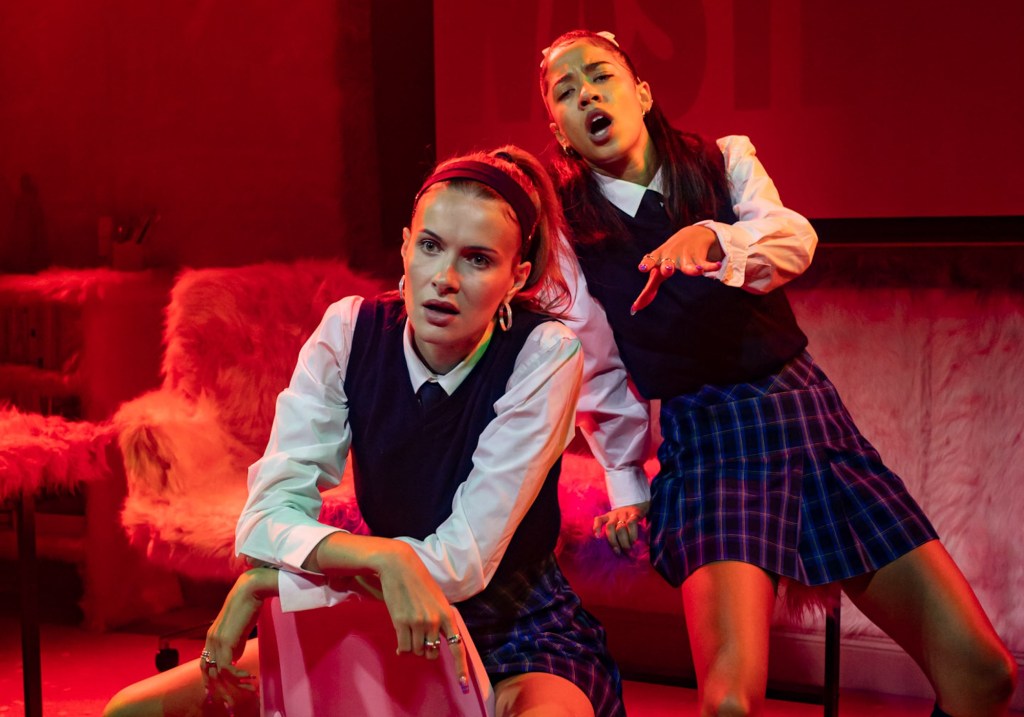
Janet Anderson & Iolanthe. Photo: Teniola Komolafe. Sistren‘s first run in 2025 sold out quickly and it’s clear why. There is an irrepressible energy to Iolanthe’s writing that feels instantly fresh and vibrant. Sistren is an assault on your senses: from the thumping pre-show soundtrack, to Anderson’s camp opening lip-sync, to the motor-mouth banter that speed-races through pop-culture references you’ll need to be on point to catch, or risk feeling one generation behind.
Iolanthe proves she’s a gifted translator of cultural forms, turning the intimate stage into a vibrant blend of comedy and drama told through modern media tropes. Her characters glide between fantasy, reality and gleeful fourth-wall breaks. The outrageous pace will lose some older audiences who’ve not succumbed to the speedy rhythms of modern social media, where every second must be optimised for entertainment lest your mind start to wander.
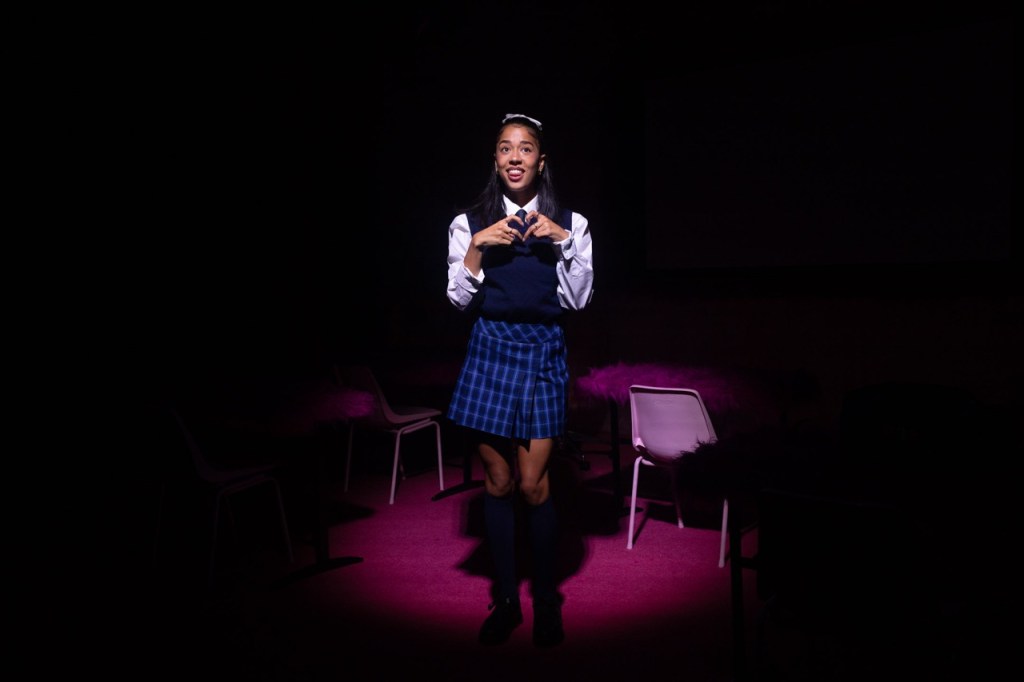
Iolanthe. Photo: Teniola Komolafe. Using her London childhood as a foundation, Iolanthe gives Sistren the authenticity it needs to tackle topics other playwrights might shy away from. Isla and Violet’s brash, young conversations have no space for pointless niceties as they pull apart the experiences of both Black women and Trans youth with unapologetic honesty. These characters aren’t ciphers here to preach — they’re people with real-world experiences worth listening to.
Her writing fits into the new wave of confident, international Black playwriting voices — Jasmine Lee-Jones, Ryan Calais Cameron, Aleshea Harris, James Ijames and Jeremy O. Harris — whose influence can be felt throughout. As a debut play, its dynamism clearly outweighs any dramaturgical quibbles.
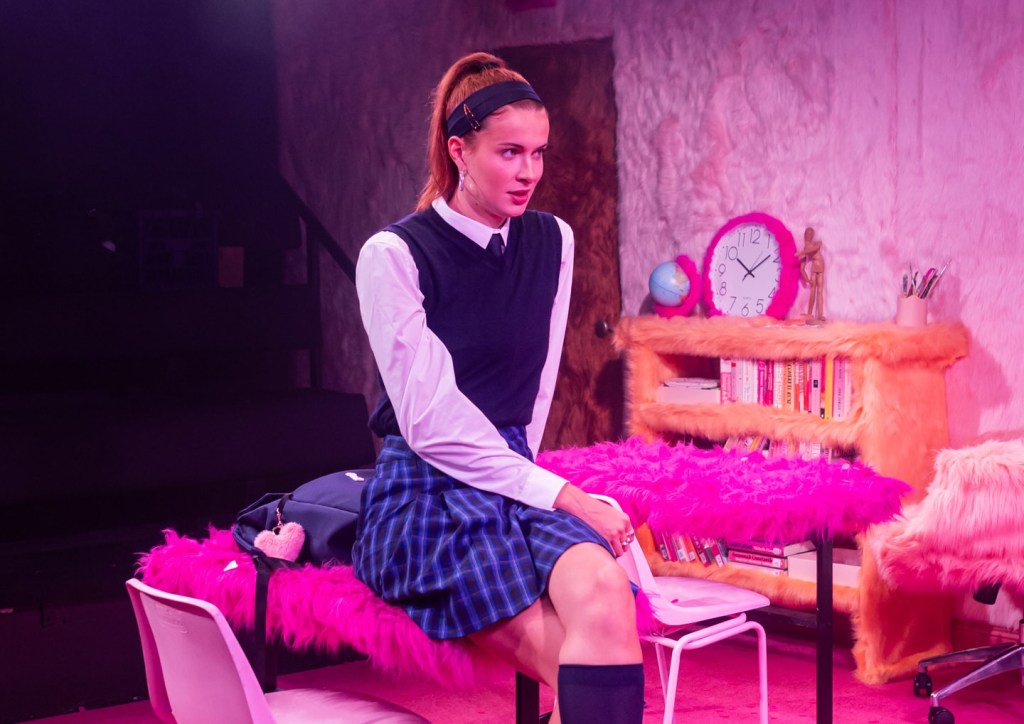
Janet Anderson. Photo: Teniola Komolafe. As writer and performer this could easily be “The Iolanthe Show,” but Janet Anderson stakes her claim to an equal share of the stage time, story and audience’s attention. After seeing Anderson in heavy dramatic works like Collapsible and Overflow, it’s refreshing to see her tackle comedy with luscious degrees of camp and excess — her comic timing is as good as her dramatic heft.
Director Ian Michael leans into the script’s maximalism with dramatic lighting cues (Kelsey Lee on lights), brash sound design (Daniel Herten on audio), multimedia captions (TK Abioye on video) and a furry pink set that puts Barbarella‘s spaceship to shame (Emma White on sets).
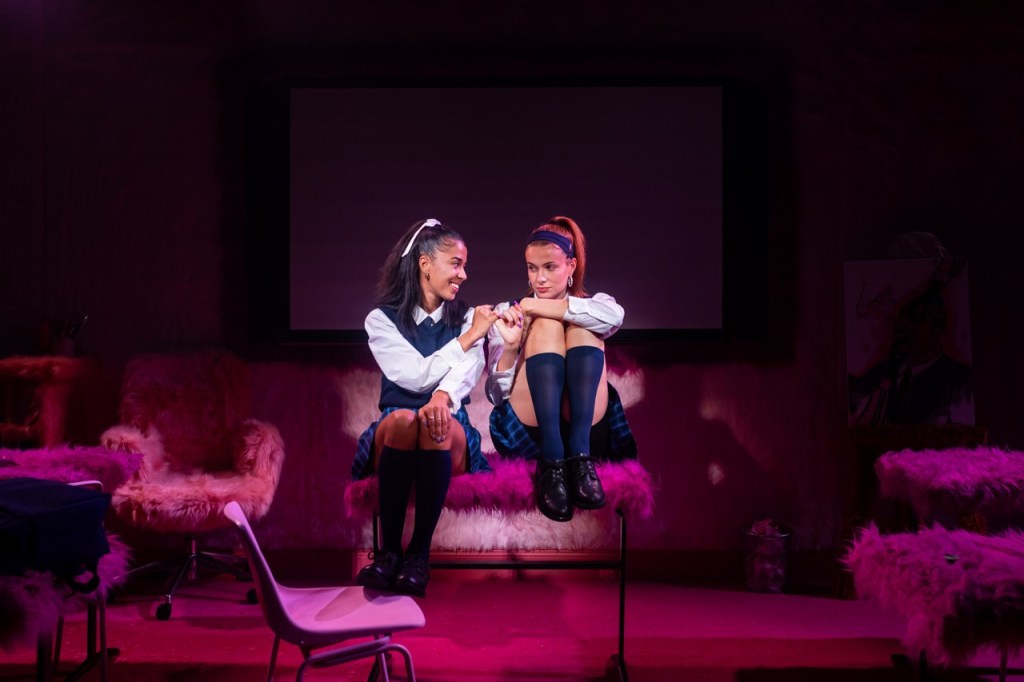
Iolanthe & Janet Anderson. Photo: Teniola Komolafe. For the second time this year, we’ve seen an Australian production that demands to be seen overseas. Sistren would find a natural home in a London theatre like The Bush, Southwark Playhouse or even The Royal Court. It’s that combustible synthesis of young talents — cheers to NIDA — that creates something undeniable. If you missed it last year, like I did, don’t hesitate. If you saw it, you’ll want to see it again.
-
Eden (Qtopia) ★★★★
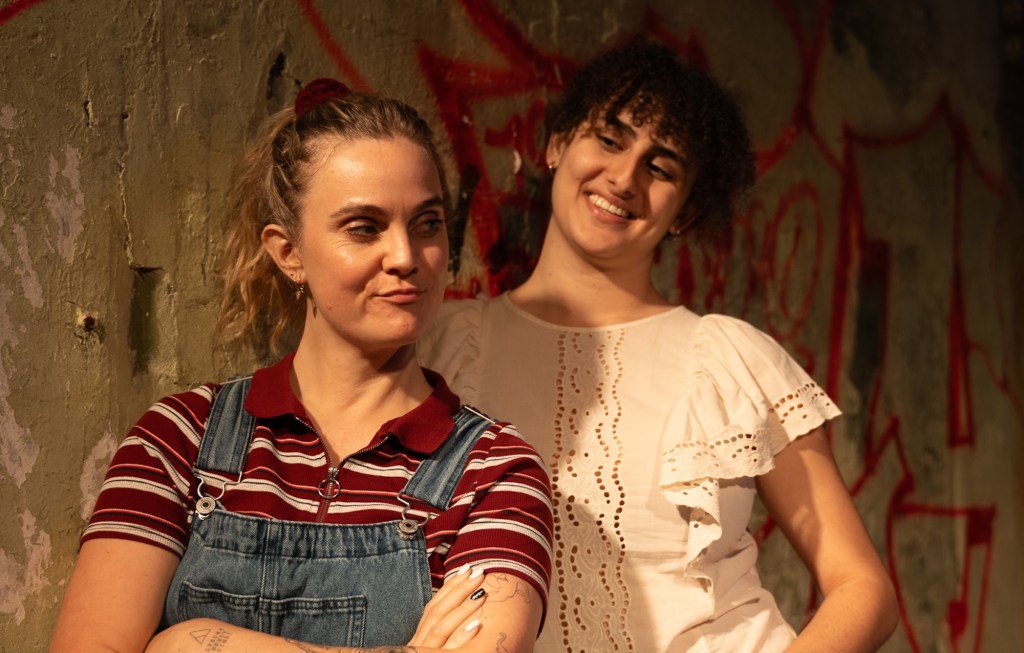
Written by Kate Gaul. Siren Theatre Co. Qtopia Substation. 7-18 Apr, 2026.
Somehow an entire rural community comes to life inside the small space of Qtopia’s Substation theatre — and it’s all embodied by just two performers in Kate Gaul’s Eden.
Schoolgirls Kit (Karrine Kanaan) and Dan (Lara Lightfoot) live unremarkable lives in country Australia. They run around town together, dodging local characters and finding privacy in the bush and by the river. It’s typical small-town life: nothing much happens on the surface, but underneath run strong currents of danger the girls are barely aware of. Then a dead body is discovered by the river, and they wake up to larger things.
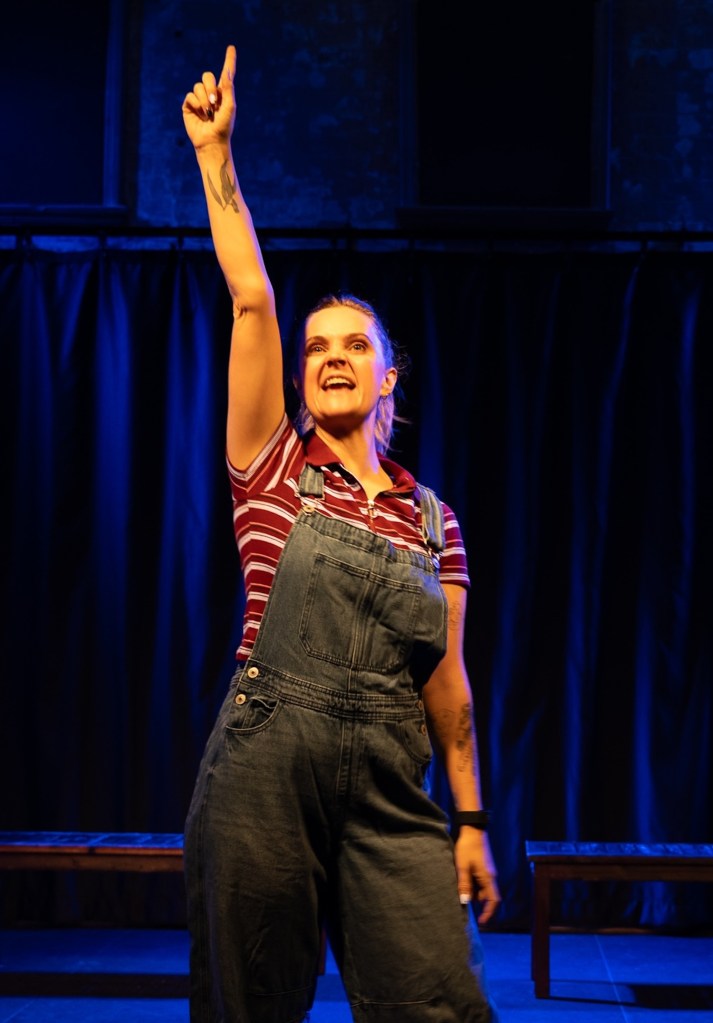
Lara Lightfoot. Photo: Natalia Ladyko. In the space of 50 minutes, Gaul manages to deliver a full plot worthy of an indie film, introduce a dozen or so characters, and take the girls through an emotional awakening — all in poetic language that paints vivid pictures. It’s a remarkable achievement in economy and storytelling.
With no costume changes and minimal staging — just two bench seats — much of the scene-setting relies on Nate Edmondson’s excellent sound design, which treats the text like an audio play. Kanaan and Lightfoot, meanwhile, give chameleonic vocal performances, transforming from rambunctious teens to argumentative parents, rowdy boys, an angry bus driver, teachers and more.
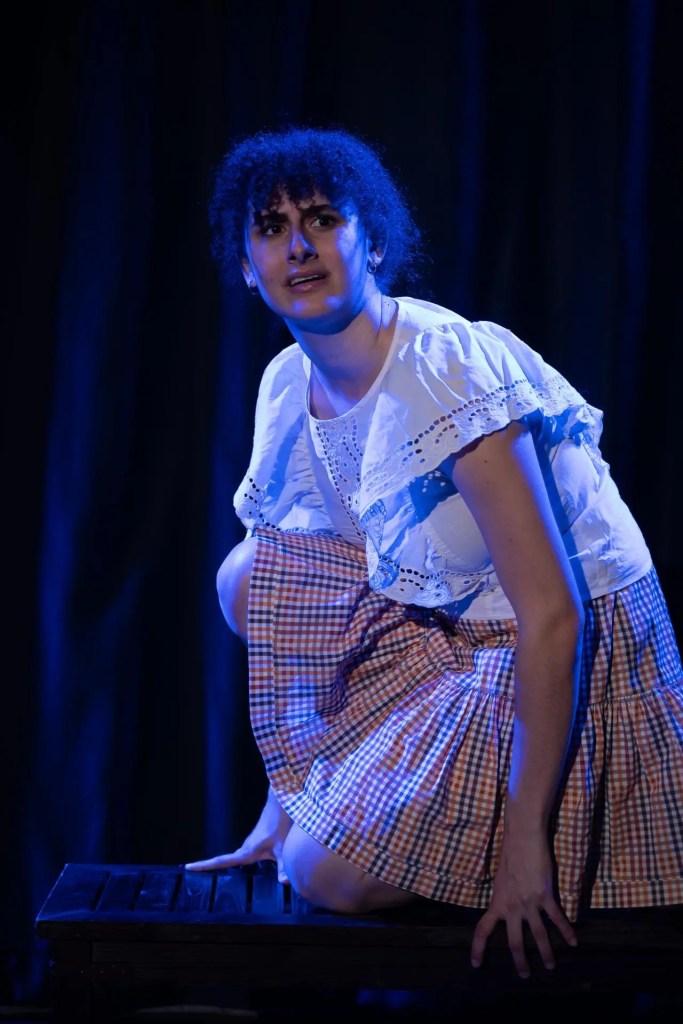
Karrine Kanaan. Photo: Natalia Ladyko. It all rests on Gaul’s use of language, which flows like the all-mighty river at the story’s core. She finds the mythic and mystical in dusty, forgotten places, and there is both a magic in the country and in coming-of-age that combines to give Eden its momentum.
As Eden played out before me in the bare, subterranean Substation, my mind filled with vivid imagery — this town, the river, the people, the danger, the desire, all rendered in beautifully composed, cinematic clarity. It powered my imagination. And then it was over. But its power lingered.
-
Subscribe
Subscribed
Have a WordPress.com account? Log in now.

