-
Welcome to Cultural Binge

The rating system is simple:
★★★★★ – Terrific, world-standard. Don’t miss.
★★★★ – Great, definitely worth seeing.
★★★ – Good. Perfectly entertaining. Recommended. Individual mileage may vary.
★★ – Fine. Flawed and not really recommended, but you may find something to appreciate in it.
★ – Bad (& possibly offensive).
See more reviews over at The Queer Review.
Instagram: @culturalbinge
Substack: culturalbinge.substack.com
Email: chad at culturalbinge.com
-
Tootsie (Teatro) ★★★½
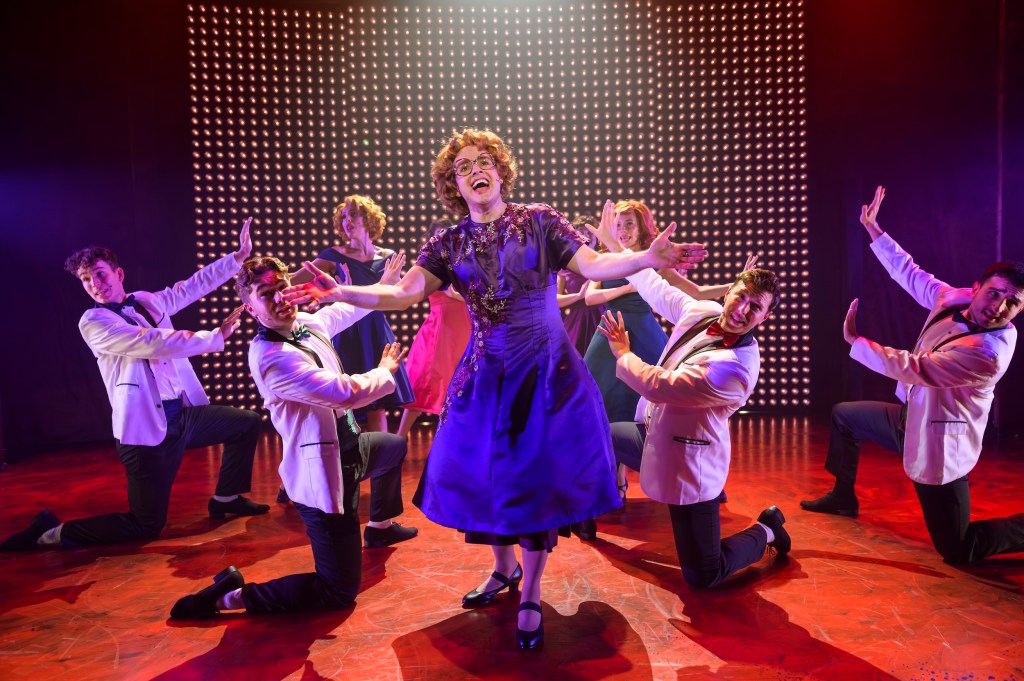
Book by Robert Horn. Music & lyrics by David Yazbek. Based on the movie by Larry Gelbart, Murray Schisgal & Don McGuire. Teatro at the Italian Forum. 26 May – 21 Jun, 2026.
Sydney is in the midst of a Yazbek sandwich — the second David Yazbek musical opening in as many days on either side of the CBD. This time it’s the 2019 adaptation of the 1982 satirical gender-equality comedy Tootsie, now receiving its Australian premiere at Teatro. But times have changed significantly since both the film and the Broadway opening. Can Tootsie survive an update?
Struggling actor Michael Dorsey (Andrew Bevis) is a dick. His argumentative, self-righteous, self-absorbed nature makes him impossible to work with. When his ex-girlfriend Sandy Lester (Alana Tranter) complains about her audition for the role of Juliet’s Nurse in a new Broadway musical, Dorsey decides to audition for the role himself — in drag. To everyone’s surprise, he gets the part. One problem: he’s falling for his co-star Julie (Elenoa Rokobaro), who only knows him as an older female mentor. As the pressure mounts, Dorsey must choose between success as a woman or love as a man.
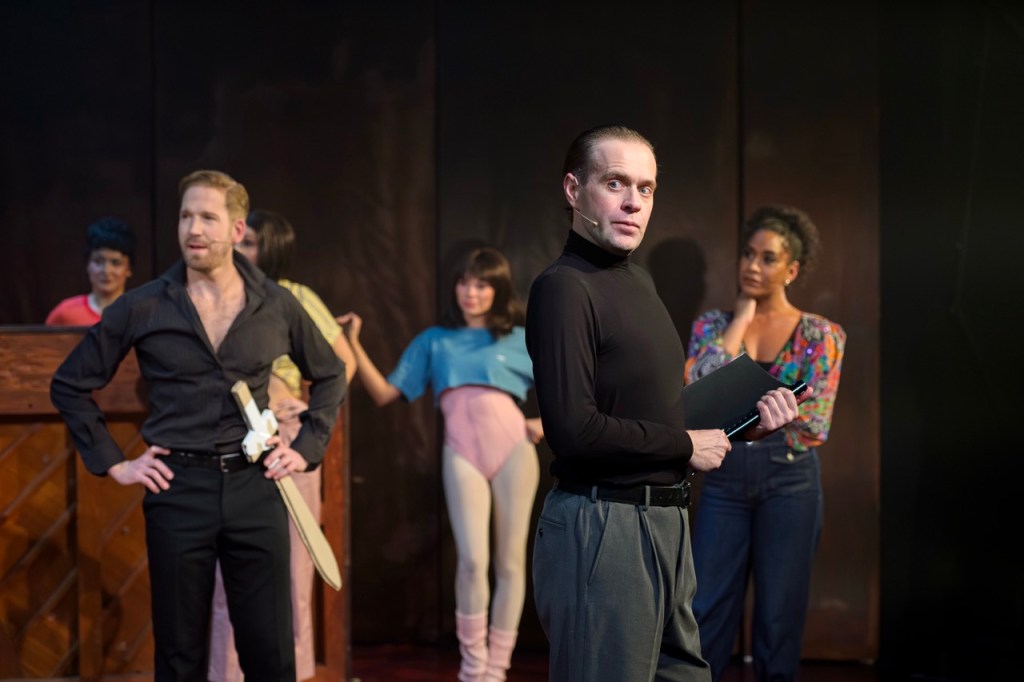
Brendan Irving, Lachlan O’Brien & Elenoa Rokobaro. Photo: Robert Miniter. Designer Dan Potra has traded the sequin-heavy look of The Prom for a wall of lights that alternately mimics a New York skyline or the colour-flash of a Broadway musical. Wig designer Helen Thatcher is working overtime — I’ve seen worse wig work in major commercial shows; here things look comedically elevated but always professionally slick. Director/choreographer Cameron Mitchell fills the stage with colour and movement, using the show’s large, talented ensemble to full effect.
On its own terms as a musical comedy, Tootsie is witty and fleet-footed, and this production goes to town with it. This isn’t Yazbek’s best score, but it’s a lot of fun — there’s a touch of the mania of Women on the Verge and the wordplay of Dirty Rotten Scoundrels, and songs like “Opening Number” and “Jeff Sums It Up” combine classic musical theatre motifs with funny lyrical subversions. Tyran Stig steals the show as Michael’s best friend Jeff — he gets the best lines and lands every one. Lachlan O’Brien is equally delightful as the lothario director Ron, his contempt for everyone around him perfectly calibrated. Andrew Bevis has the difficult task of playing the unlikeable Michael in drag, vocally leaping from his normal range into falsetto — a complex juggle, and one that plays directly into my critique of the show.
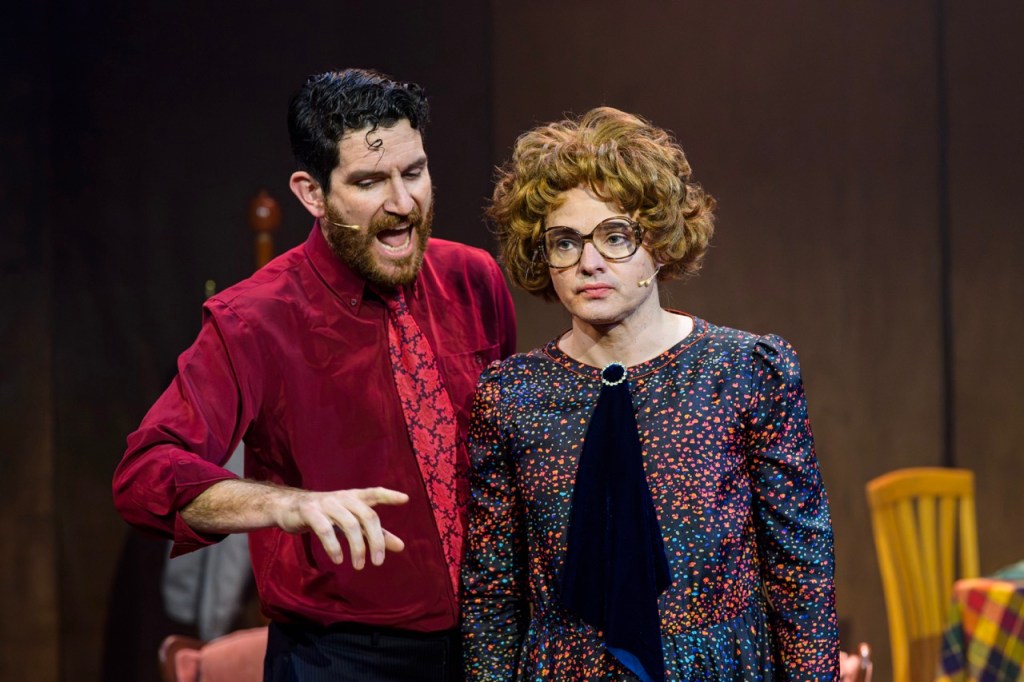
Chris Huntley Turner & Andrew Bevis. Photo: Robert Miniter. Here’s the problem: Tootsie is working on two levels, and only one of them holds up.
Eighties cinema was filled with condescendingly well-meaning comedies about terrible men learning to be less terrible — please don’t try to watch the utterly misguided race “comedy” Soul Man — and the results vary. Within that tradition, Tootsie the film was one of the more thoughtful examples; its heart mostly in the right place. By the time it hit Broadway in 2019 the world of gender was already a far more contentious place, and the musical was tying itself in knots trying to honour the film’s big moments while addressing its flaws. In 2026, those flaws are only more evident.
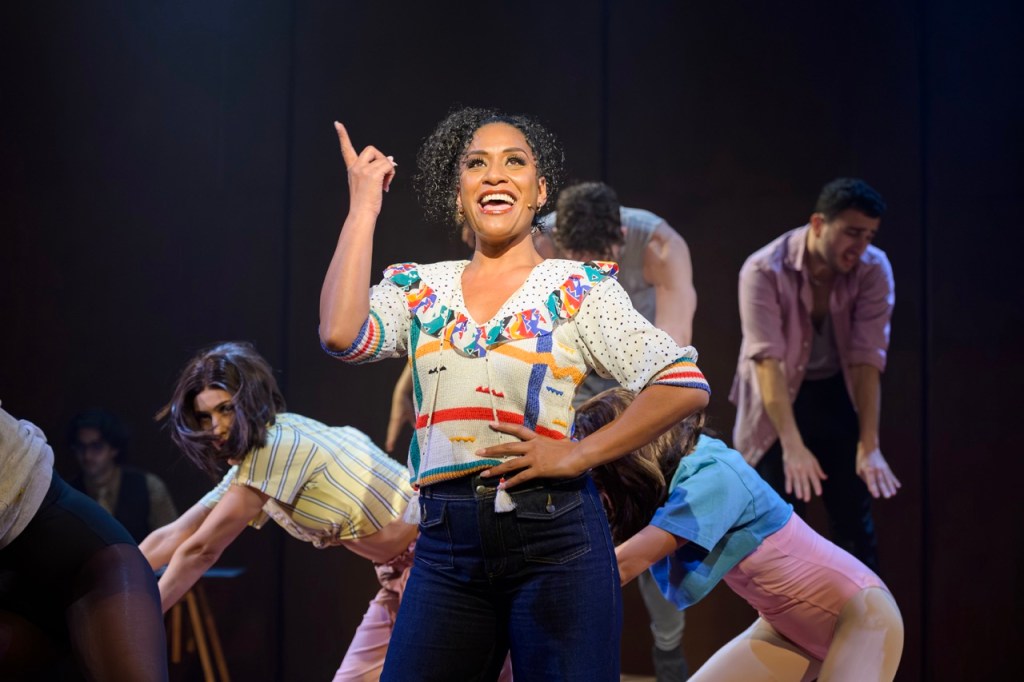
Elenoa Rokobaro. Photo: Robert Miniter. The awkward irony is that in a musical ostensibly preaching gender equality, the female roles are shockingly underwritten. Rokobaro is under-utilised as Julie — a featureless love interest with next to no agency — and Tranter’s Sandy is saddled with the role of the neurotic ex-girlfriend. Meanwhile the show’s feminist commentary is almost entirely delivered by men: Michael speechifies about gender inequality, Jeff provides the woke asides. It’s the creative equivalent of mansplaining sexism to women. For all its good intentions, the show has nothing more to say about gender inequality than a few quips about Dorsey taking a pay cut because they think he’s a woman.
Which brings us back to Michael Dorsey, who is — as mentioned — a dick.
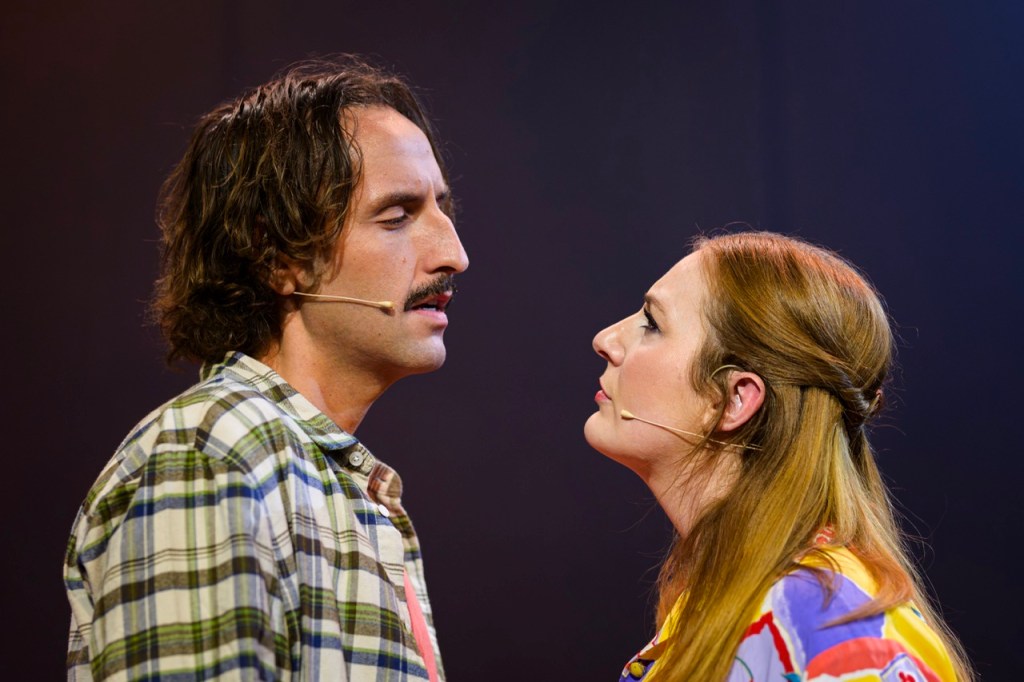
Tyran Stig & Alana Tranter. Photo: Robert Miniter. The show tells us he’s a talented performer, as if talent were an excuse for bad behaviour, and seems to believe that putting on a wig means he understands womanhood. But his deeper flaw isn’t that he’s sexist — it’s that he’s fundamentally self-absorbed, and that doesn’t change because he puts on heels. He ends the show exactly as he began it: chasing his own goals. A difficult protagonist isn’t automatically a problem — Groundhog Day works precisely because Phil Connors’ nastiness is directly tied to his arc. He is selfish; the plot forces him to a place of transformation. By contrast Michael Dorsey’s selfishness isn’t addressed. The wig is a plot device, not a cure.
My advice? Put your gender-critical brain to sleep for the night and head to Teatro for frivolous fun. Taken purely as drag comedy with silly jokes and belting tunes, Tootsie is an easy night at the theatre. It doesn’t bear thinking about too deeply.
-
Continuity (New Theatre) ★★★
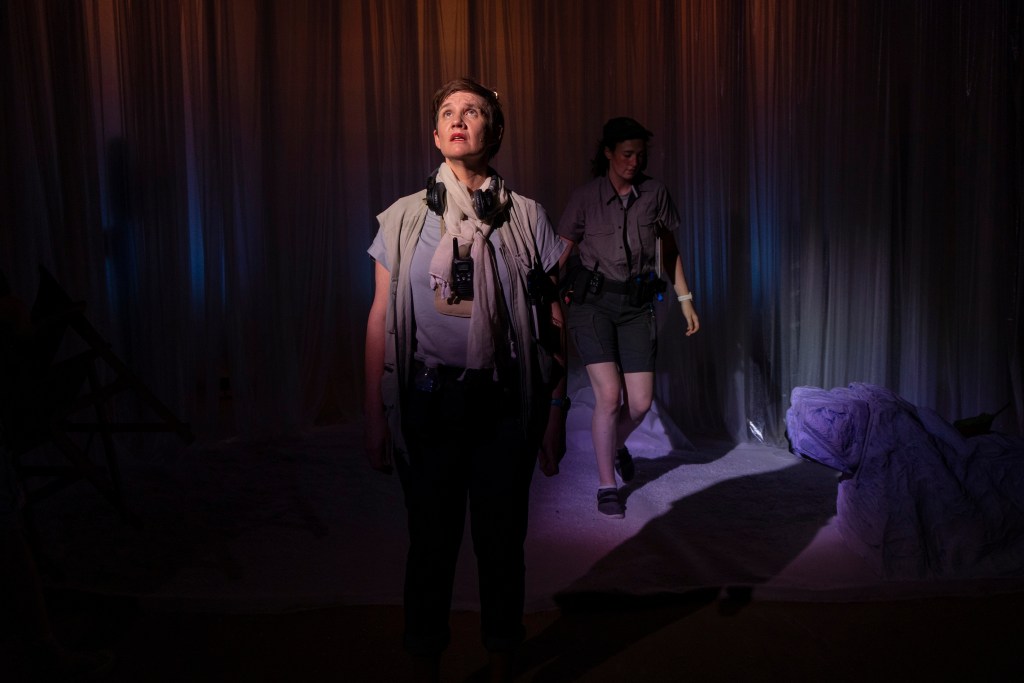
Written by Bess Wohl. New Theatre. 26 May – 20 June, 2026.
Art clashes with commerce and climate change in Bess Wohl’s scattershot black comedy, Continuity.
Indie film director Maria (Michelle Robin Anderson) is living the dream. Her wordy, dramatic spec script about climate change has become a big budget star vehicle for studio darling Nicole (Jessica Joseph-McDermott). But with big budgets comes big expectations and the arrival of her screen-writer ex, David (Nick Curnow), who has turned her drama into a full-blown action blockbuster. All Maria wants is to get the climactic confrontation shot before they lose the light but the annoying science advisor Laurie (Susan Jordan) has some issues with the increasingly unhinged script…
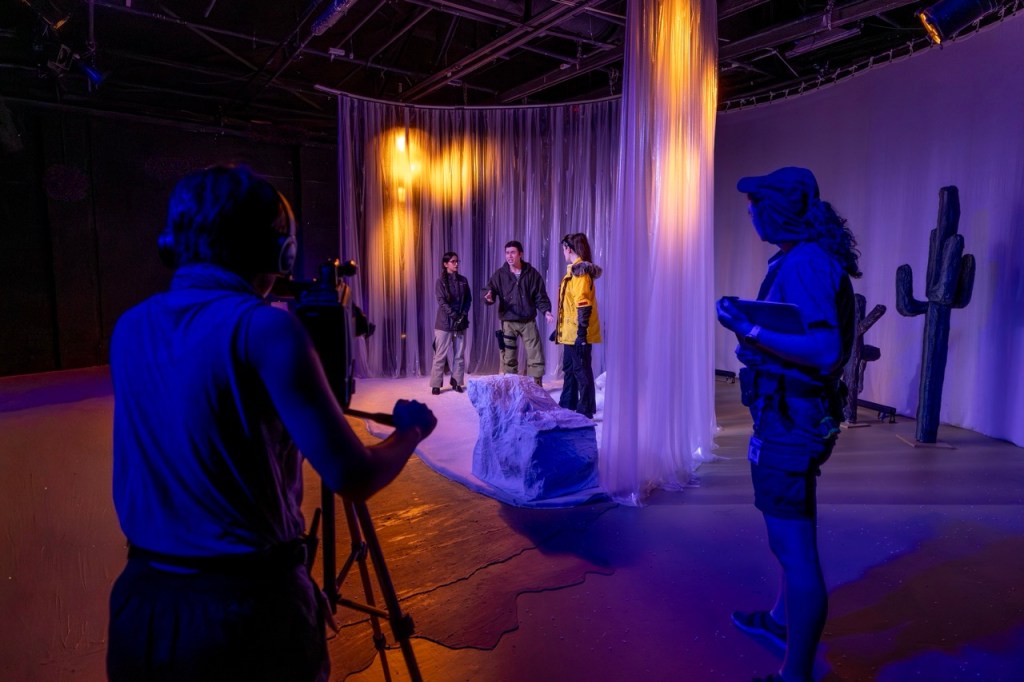
Photo: Bob Seary. Industry comedy mixed with existential dread is an unusual mix for a stage show, and Continuity never quite finds a way to have its cake and eat it too. But while the script struggles to juggle its many competing goals, this production is having fun bringing the movie-making chaos to the stage.
The trio of in-story actors Jessica Joseph-McDermott, Andrew McLaughlin and Sarah Nader have fun skewering the film industry’s on-screen talent while Nick Curnow and Michelle Robin Anderson reveal the chaos off-camera. A special shout out to Noah Rayner, whose slyly passive-aggressive First AD is a nice touch.
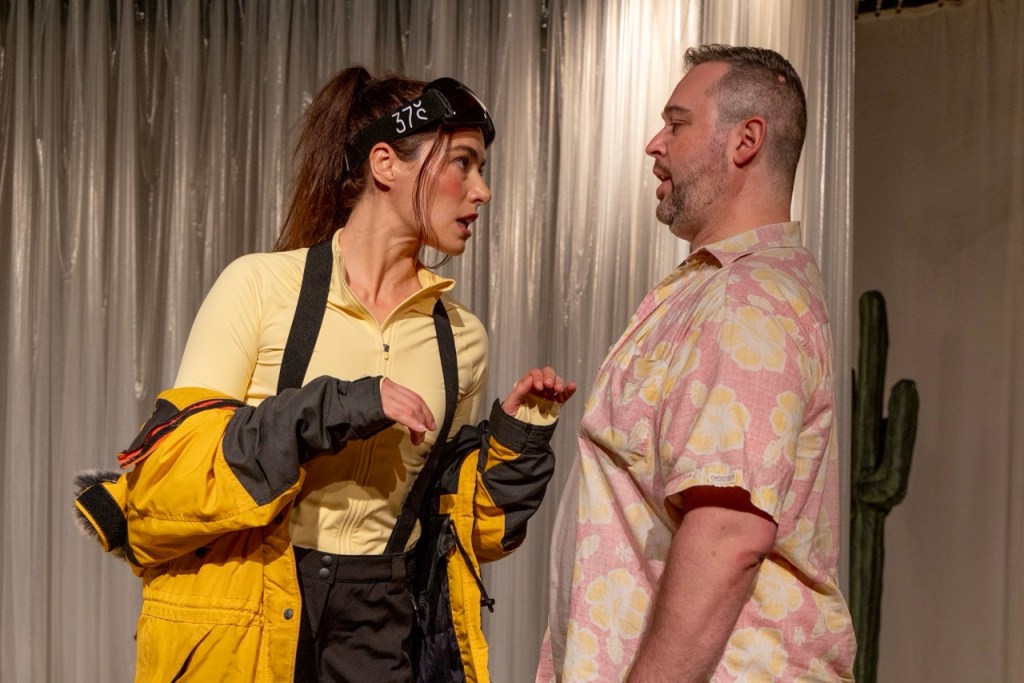
Jessica Joseph-McDermott & Nick Curnow. Photo: Bob Seary. Director Sahn Millington leans into the absurdity of the film-within-a-play’s terrible dialogue, while grounding the off-camera angst with a refreshing believability. David Marshall-Martin’s set is beautifully clean and layered, with shimmering plastic in the place of an ice shelf.
But Bess Wohl’s script is a mishmash of issues stuck in an endless loop. Structured around multiple takes of the same scene, the play’s central thesis — about how many of the attempts to educate the public about the climate crisis lose their focus — is ironically lost in the distraction of the plot set-up. The audience walks away with more investment in the fictional film, than the large scale crisis that motivates it.
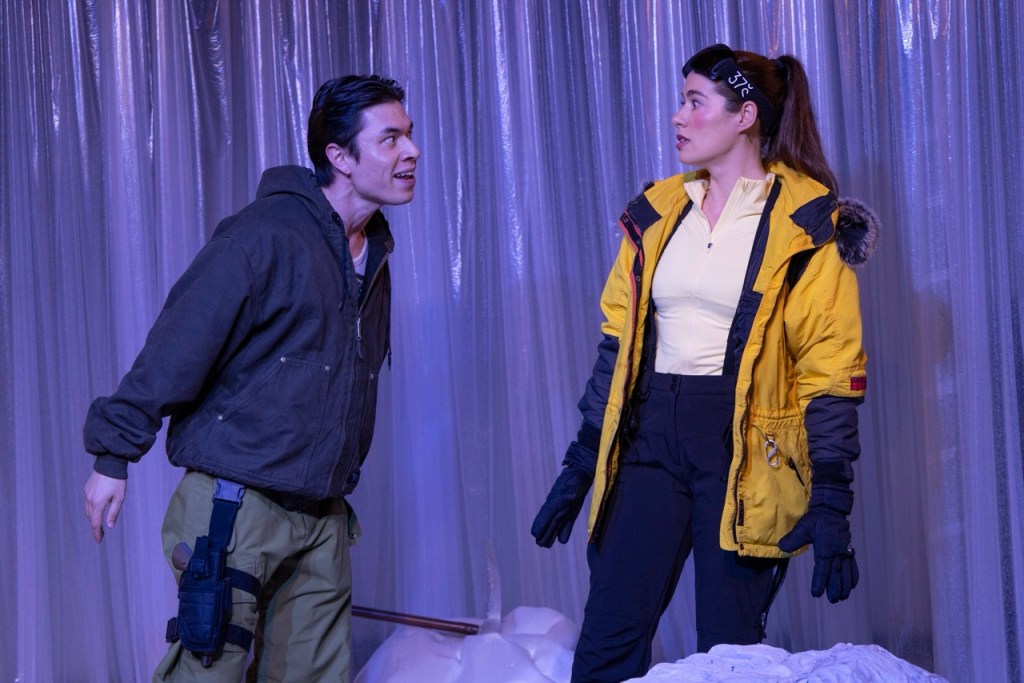
Andrew McLaughlin & Jessica Joseph-McDermott. Photo: Bob Seary. When Continuity does start addressing the issue at hand, it feels like a heavy-handed left turn into hopelessness that feels even more depressing now than it would have back in 2019 when the play premiered. Laurie’s final speech strikes a tone of defeatism that threatens to suck the air out of the room.
Conceptually there is an elegance to Wohl’s premise — using a film set to show how we humans are distracting ourselves with token messages on repeat but never face the reality in front of us. Despite some cracking dialogue and laugh-out-loud moments, the execution lacks a clarity of thought.
The air of pessimism and frustration that fuels Continuity could have birthed a black comedy with bite, but the result is a bit more milquetoast than that. Despite the strengths of this production, and some fine performances (especially from Anderson and Curnow), the funny, film industry parody never truly connects with the social messaging to form a fully satisfying whole.
-
Dirty Rotten Scoundrels (Hayes) ★★★★
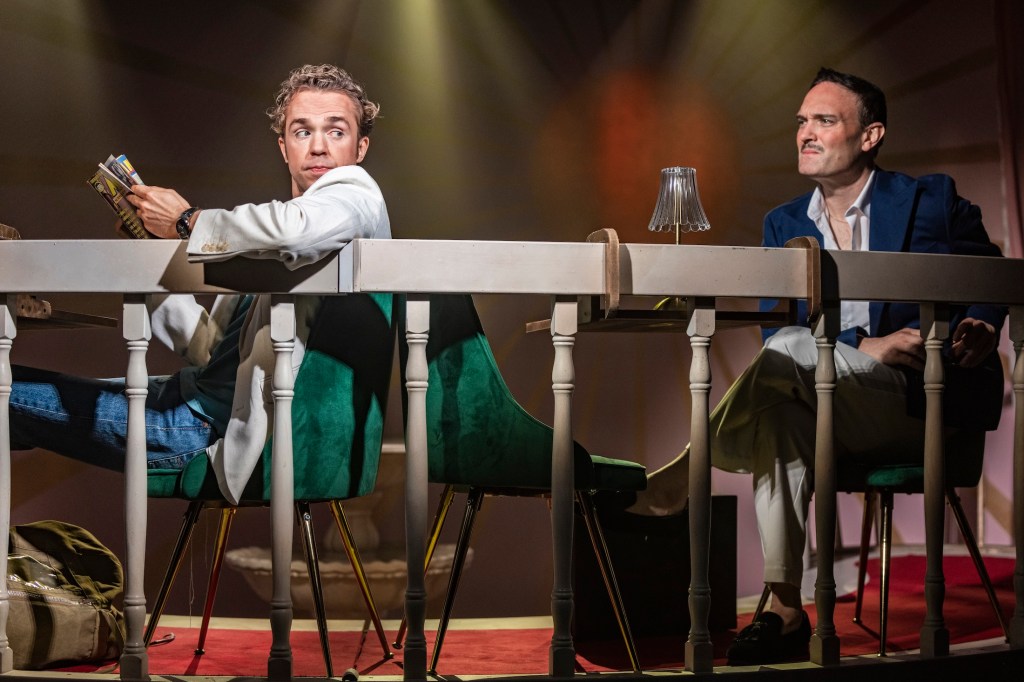
Book by Jeffrey Lane. Music and Lyrics by David Yazbek. Based on the film written by Dale Launer and Stanley Shapiro & Paul Henning. Presented by Redfern Lane Productions in association with Hayes Theatre Co. Hayes Theatre. 22 May – 21 Jun 2026.
Go back to a time when grifters were charming and handsome, and not just Russian bots or slaves in scam farms somewhere in Southeast Asia. Urgh… modern life sucks – I’d rather escape to the musicals.
Welcome to Beaumont-sur-Mer on the French Riviera, an enclave for the rich and bored, and prime hunting ground for debonair con-artist Lawrence Jamieson (Blake Erickson). While he’s slowly fleecing the uber-rich widows, he spots a gauche American scammer, Freddy Benson (Rowan Witt) working nearby and worries that this is the infamous competitor known only as “The Jackal”. Deciding there isn’t room for both of them in this small town, they agree to a bit of friendly competition. The first person to swindle $50,000 from clumsy American heiress Christine Colgate (Kristina McNamara), “The American Soap Queen”, can stay and the loser has to leave town. As the competition escalates, they’re both about to get more than they banked on.
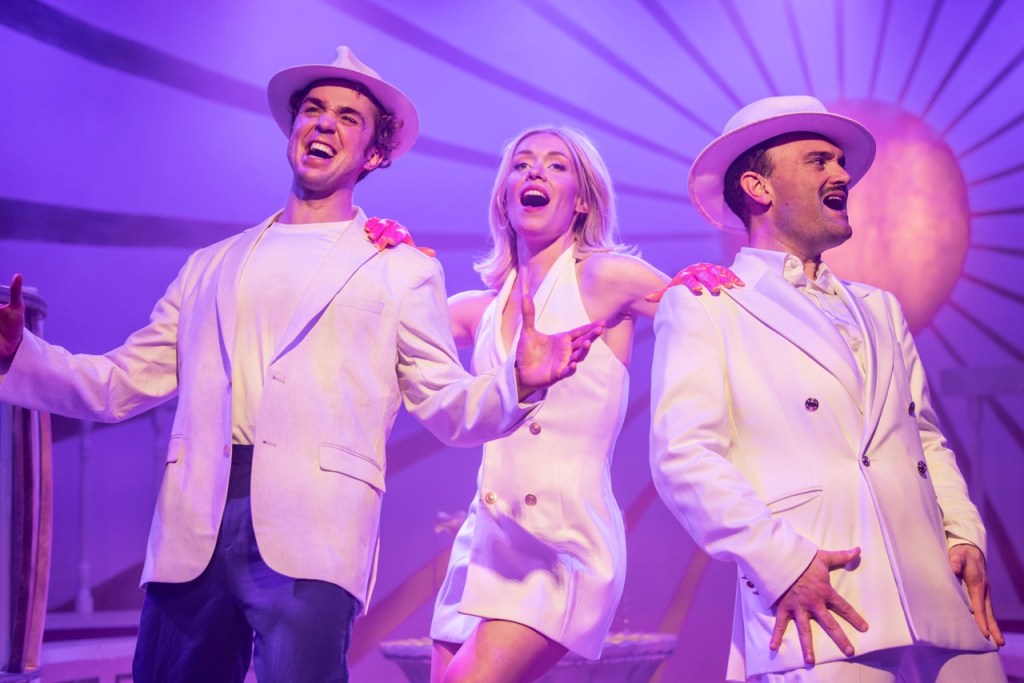
Rowan Witt, Kristina McNamara & Blake Erickson. Photo: John McCrae. I’m a fan of the Tony and Grammy Award winning David Yazbek’s work, which includes Women on the Verge of a Nervous Breakdown, Tootsie and the recently and shamefully overlooked Dead Outlaw. The score for Dirty Rotten Scoundrels has some of my favourite musical theatre songs, “Give Them What They Want” and “Here I Am”. Plus, the 1988 Michael Caine and Steve Martin film was one of my favourite films as a kid. But that kind of love and attachment can sometimes work against a new staging.
Thankfully, this production feels not only fresh but also reverent to the tone of the original. A lot of the success comes down to Jeffrey Lane’s witty book that manages to adapt the film without feeling like a cheap photocopy (*cough-Pretty-Woman-*cough). The wordplay comes fast and furious, and Yazbek’s lyrics follow suit. This is a show to listen to for the loving way the dialogue and songs have been crafted. There is a knowing touch of the absurd about it all.
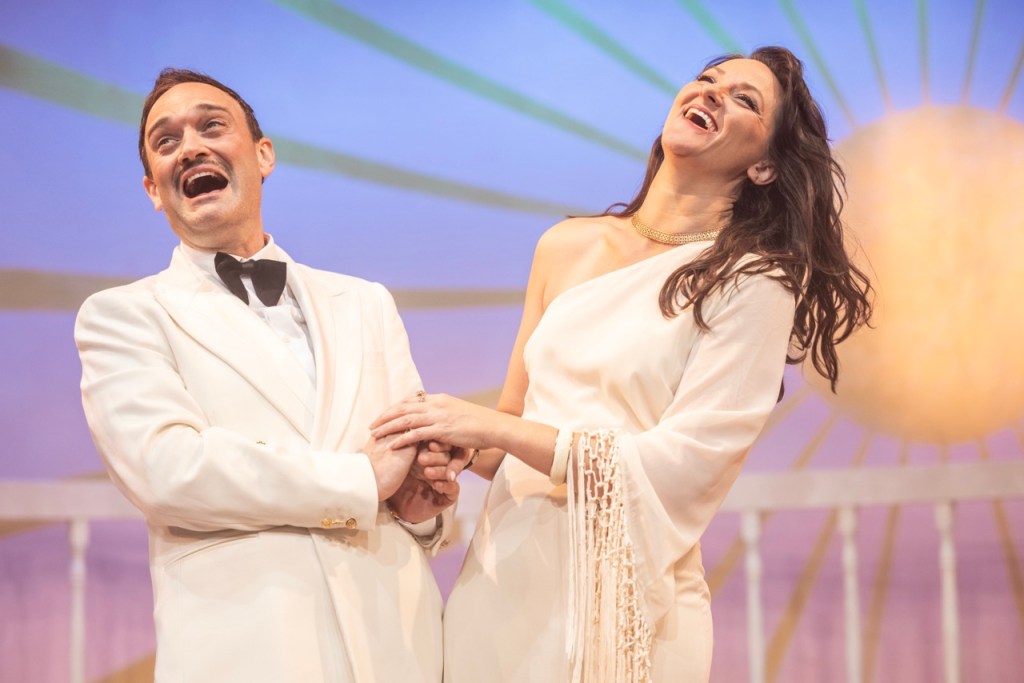
Blake Erickson & Aurélie Roque. Photo: John McCrae. The three leads, and three main supporting performers (Aurélie Roque, Jordan Shea & Scarlet Lindsay) each put their stamp on the material. Director Rebecca McNamee has cast for comedy chops as well as vocal skills and it pays off. There is a sharpness to the humour that elevates the show above other musical comedies – an attention to timing that gives the show an edge over even other terrific recent Hayes comedies.
The double act of Blake Erickson’s suave stoicism and Rowan Witt’s physical comedy skills is wholly satisfying to watch. Witt’s malleable facial expressions go to battle with Erickson’s arched eyebrow to see who can get the bigger laugh. Watching them wage war on each other is pure gleeful joy. Witt adds a layer of youthful charm to Freddy that gives him a likability even when he’s being despicable. They are matched by Kristina McNamara’s delightfully guileless Christine – whose vocals range from big MT belting to soulful balladry.
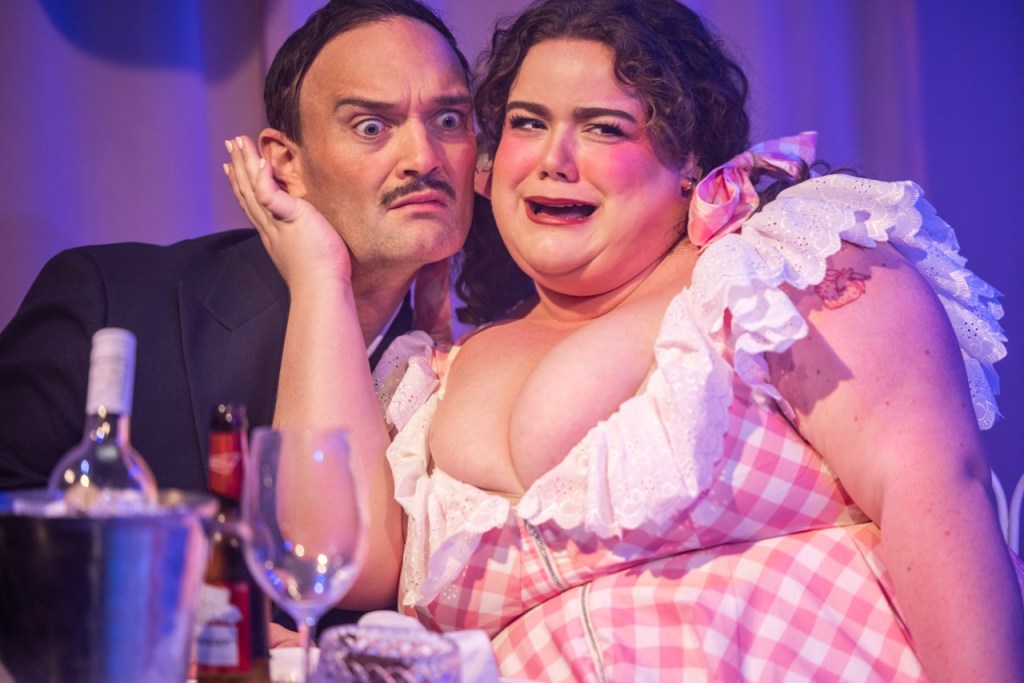
Blake Erickson & Scarlet Lindsay. Photo: John McCrae. Along the way we get some brilliant MT set pieces, like “Oklahoma” (a scene-stealing moment from Scarlet Lindsay), the ridiculous “All About Ruprecht” and the double-crossing “Ruffhousin’ Mit Shüffhausen”. Not all the tunes work however, Freddy’s big intro “Great Big Stuff” lacks the lyrical finesse of other numbers and its reprise can’t carry the weight the plot needs it to, and “Like Zis/Like Zat” treads water.
Soham Apte’s set design evokes European wealth with a clever onstage revolve (that is perhaps overused, but once you’ve paid to have it installed you want to get your money’s worth I guess). Angelina Daniel’s costumes have an elegance with neat character traits. Along with James Wallis lighting, the show looks fantastic.
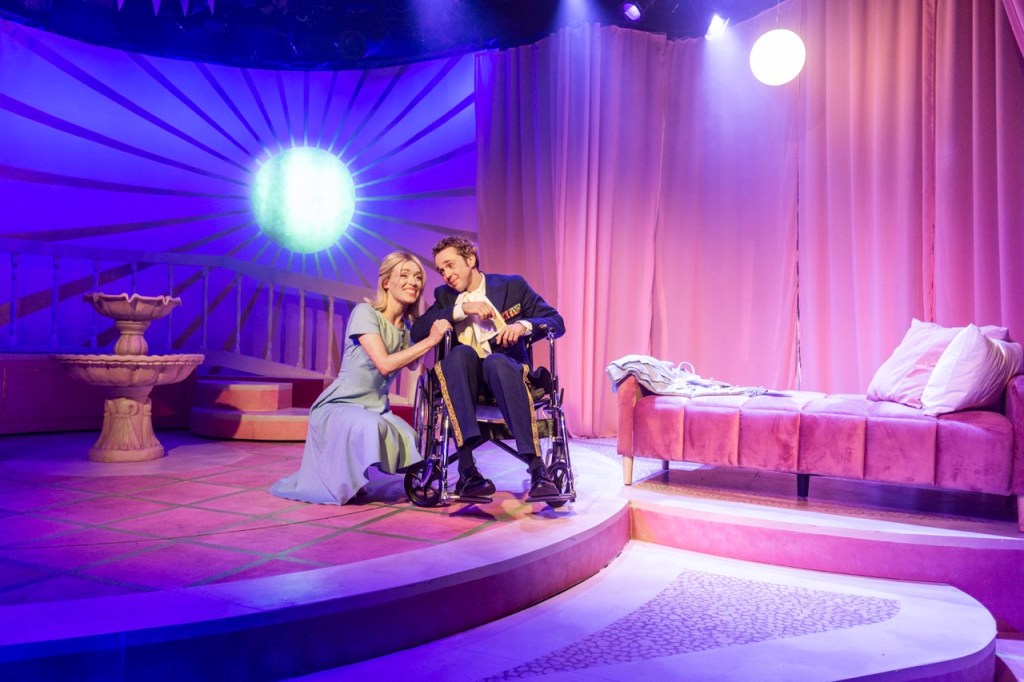
Kristina McNamara & Rowan Witt. Photo: John McCrae. The result is another big win for Hayes. Dirty Rotten Scoundrels has a tighter focus than David Yazbek’s Women on the Verge… and a more satisfying plot, while holding on to that same high energy. With Yazbek’s Tootsie premiering at Teatro, that just leaves his acclaimed The Band’s Visit and cult-hit Dead Outlaw waiting to be brought to Australia. May the theatre gods be kind and send them to us soon.
-
Edward Albee’s At Home At The Zoo (Flight Path) ★★★
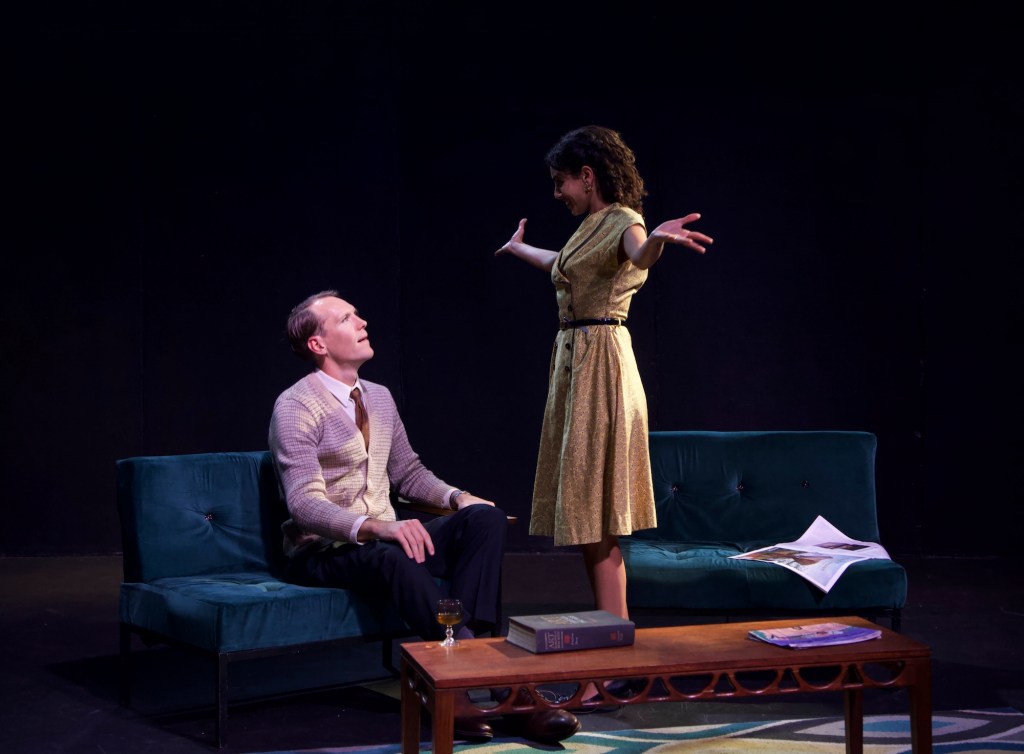
Written by Edward Albee. Joe Theatre. Flight Path Theatre. 20-30 May, 2026.
Well this is a great theatrical curio. Edward Albee’s two connected one-act plays, written more than 40 years apart, claw away at the veneer of civilised manners. Beneath the comforts of Manhattan’s educated elite, darker impulses are waiting.
We open with Albee’s 2004 prequel piece, Homelife, in which married couple Peter (Will Johnston) and Ann (Helana Sawires) form a new, honest connection around their baser instincts. Their comfortable Upper West Side life is slowly driving Ann to drink. As she tries to encourage Peter’s animal lusts it’s a tug of war between humanity’s bestial nature and its domesticated nurture.
In Act 2, we get Albee’s 1959 The Zoo Story, following straight on from Homelife, in which Peter has taken his book outside to Central Park to read in peace. That peace is short-lived as he is disrupted by Jerry (Evan Lever), a quirky and explosive man who has just visited Central Park Zoo and is unnervingly keen to tell Peter all about it.
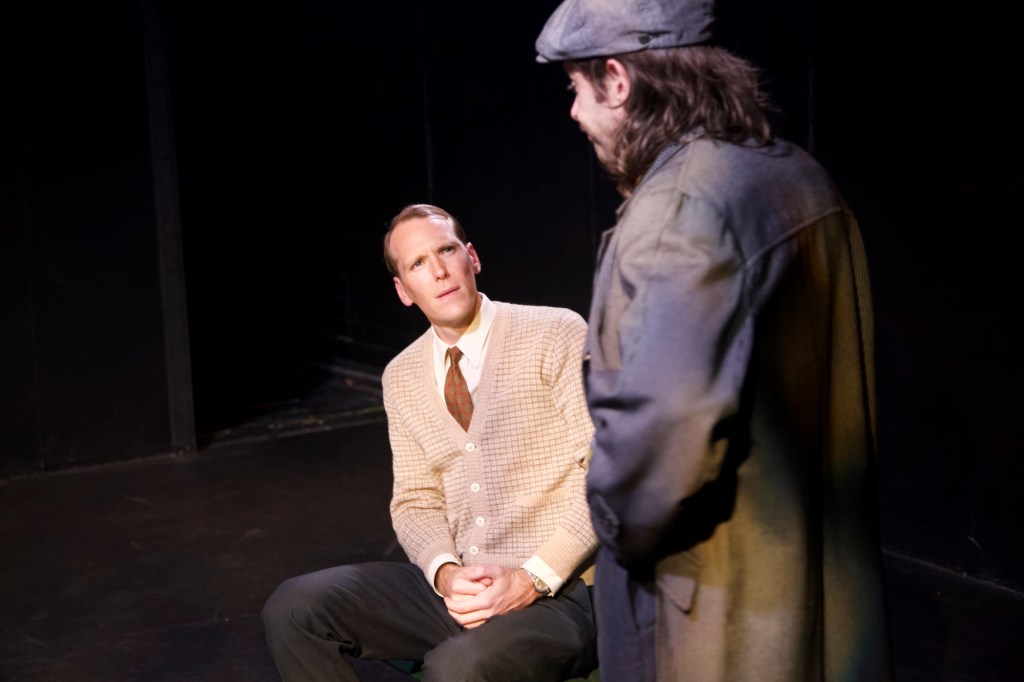
Will Johnston & Evan Lever. Homelife treads familiar territory for fans of Albee. The echo of Who’s Afraid of Virginia Woolf’s George and Martha haunts Peter and Ann, as Ann goads and prods her textbook-reading husband into action. Ann’s opening “We should talk…” sets up a conversation that reveals the travails of marriage — a waning sexual life, banal medical woes and existential wanderlust. Peter describes their conjoined lives as a “smooth voyage on a safe ship,” but they are both being numbed by their comforts and routines.
It’s classic Albee dialogue that bristles with barely contained aggression and contempt, delivered with a diabolical glee by Sawires. Her repressed sexuality clashing with his scholarly calm — “You’re very good, I just wish you could be bad sometimes.” There is tension, but no teeth to their chat. It’s about discovery, not destruction. The repartee between Sawires and Johnston takes a while to spark, not helped by their relatively quiet delivery competing with the sound of planes and the theatre’s large space. When it does, though, the scene comes alive.
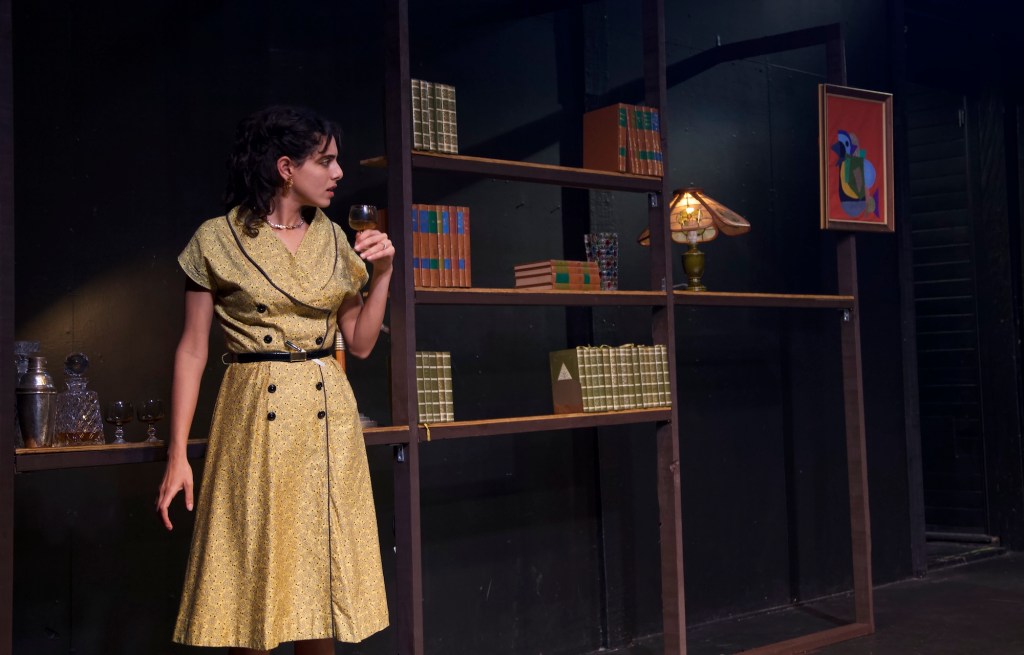
Helana Sawires. The older The Zoo Story shows the hallmarks of a younger, more aggressive mind. The undercurrent of danger is palpable as the unpredictable Jerry effectively monologues, telling long stories of the seedier side of Manhattan life. It all feels like a prelude to something terrible. Lever conveys Jerry’s uneasy over-familiarity with a pugnacious, attention-grabbing edge. He’s a storyteller, a manipulator, and it’s clear the book-smart Peter is no match for the street-smart Jerry.
Director James Litchfield keeps things stripped back and simple, with elegantly minimal production designs, focusing on performance and text – which is a good fit for these plays that are all about language and subtext. At times the performances pitch themselves a bit too subtle for the space (as if they are acting for the camera in close up, rather than playing to a wide room). The comedy still lands but there is room for elevation still. Lever’s powerful performance in The Zoo Story shows a strong handle on the material and its ebbs and flows.
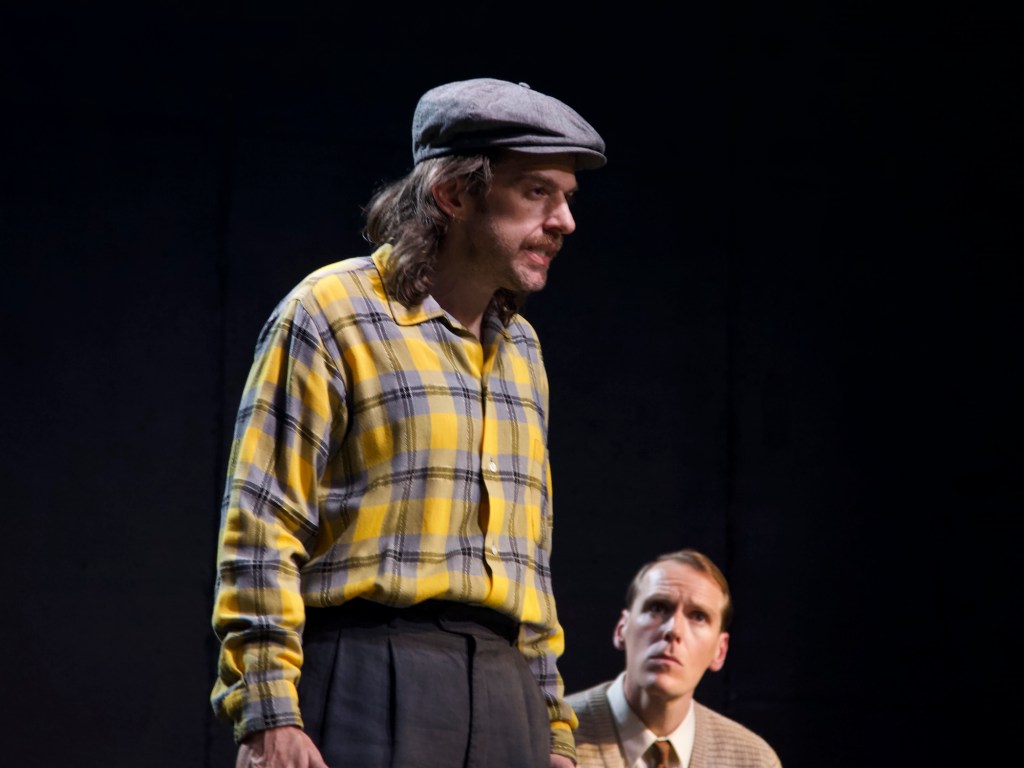
Evan Lever & Will Johnston. Taken all together it’s an intriguing double act that is intellectually engaging. How has Albee raised the stakes for The Zoo Story by fleshing out Peter — and how does that change if you encounter the two plays in purely chronological order, with the 1959 work first and the 2004 prequel after?
And you see the cares of ages creep through the juxtaposition of the two plays. Younger Albee is clearly more invested in the convention-busting Jerry than in the mild-mannered Peter. Jerry bursts with youthful energy and creative chaos. But the older Albee has come to Peter’s lived experience more fully in Homelife. Peter is no longer a cipher, a counterweight to Jerry — he is his own man, with an interior life as rich as his antagonist’s.
The result is two thematically connected vignettes that feel like a theatrical curiosity, a scholarly exercise in writing, rather than a piece of compelling drama in its own right. The core of both pieces is pure Albee — a distaste for civilised conventions and sterilised homogeneity — but they lack the narrative propulsion of his best works.
For the theatrically minded, seeing this rare Albee on stage is a must — you may not get another chance for quite some time. For general theatregoers it may be a less satisfying watch.
-
Savior (Griffin) ★★★★
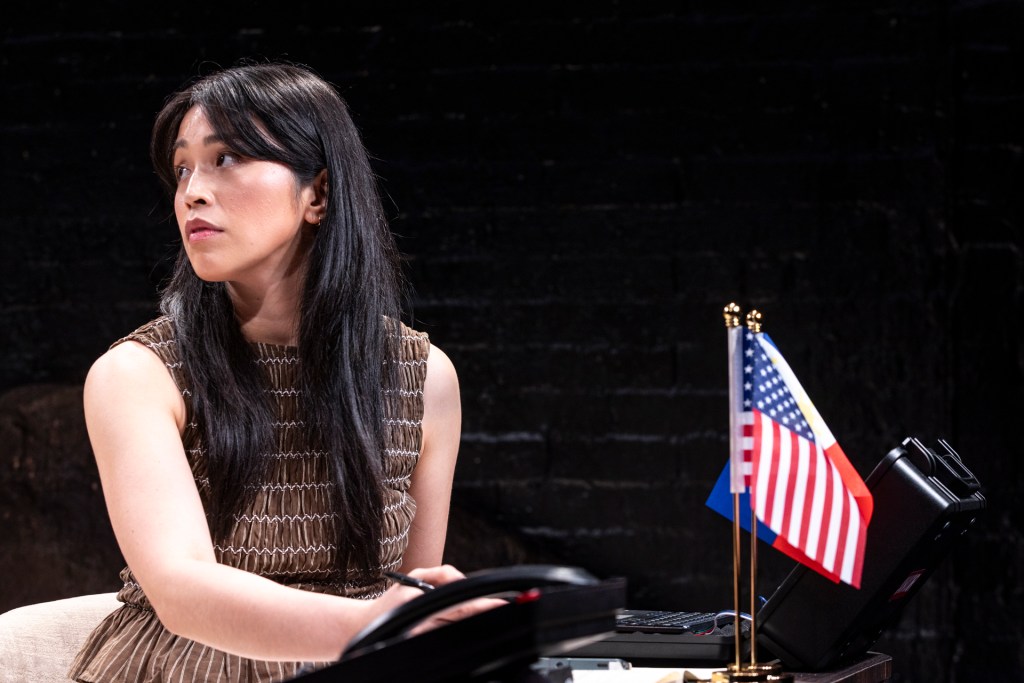
Written by Happy Feraren. Griffin Theatre Co. Belvoir Downstairs Theatre. 16 May – 14 Jun, 2026.
Jesus — or is that J.E.S.U.S. — takes the wheel in Happy Feraren’s deliciously funny disaster comedy Savior, which looks at the gap between good intentions and best practices.
Michelle (Chrissy Mae Valentine) works for an American NGO called SAVIOR, helping to coordinate relief efforts after a natural disaster. From the luxury of a five-star hotel room, she is doing the work of the LORD (the Lead Officer for Revenue Development), reporting to white tech-bro Joe, her personal JESUS (Joint Emergency Systems & Uplift Strategist, played by Michael Whalley).
When her best friend Janna (Chaye Mogg), out of boredom, makes Michelle a fake Tinder profile, she matches with the thoughtfully messianic Joe. Can Michelle’s hero-worship become romance? And what about poor Jobert (Mark Paguio), stuck on the ground in Tacloban handing out aid packages while Michelle is having a poolside date-slash-offsite-team-update with Joe?
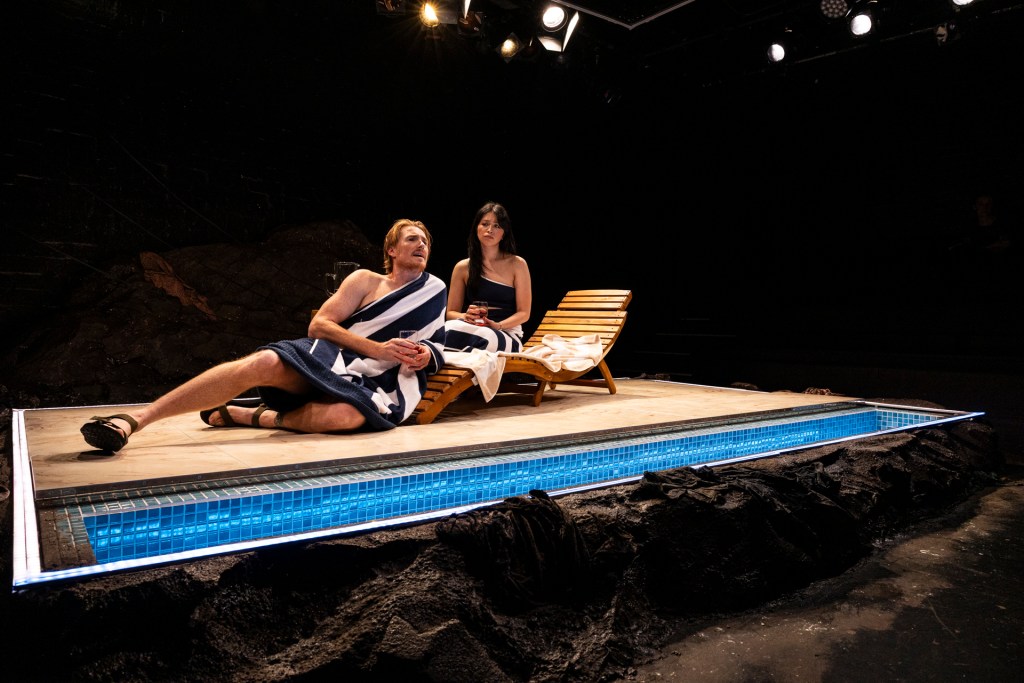
Michael Whalley & Chrissy Mae Valentine. Photo: Brett Boardman. Rarely has a white saviour complex been so literal. Feraren relishes in using Christian iconography to drive home the message of self-ordained Westerners swooping in to help “victims” while raising millions of dollars those same people will never see. Over 90 minutes she aims her satire at everyone, mocking the fetishisation of white people (“Is he hot, or just white?”), the idolisation of westerners, and the transubstantiation of greed into altruism — and vice versa. Throw in some political corruption, corporate inhumanity, and tone-deaf Big Tech, and you’ve got yourself a solid, modern comedy.
Kenneth Moraleda directs with precise timing, keeping the jokes rolling. The cast make a decadent feast of the witty dialogue and awkward situations — never stretching or screeching to make the comedy land. Mogg’s scrappy, chaotic Janna is a delight, a fantastic counterweight to the serious and yearning Michelle. Whalley’s Joe (and assorted other white guys) is a milky cocktail of clueless earnestness and blithe privilege. Paguio manages to turn on a dime as the long-suffering Jobert, moving from waifer-thin politeness to camp glee to finally devastating grief. Together they keep the sitcom rhythms humming.
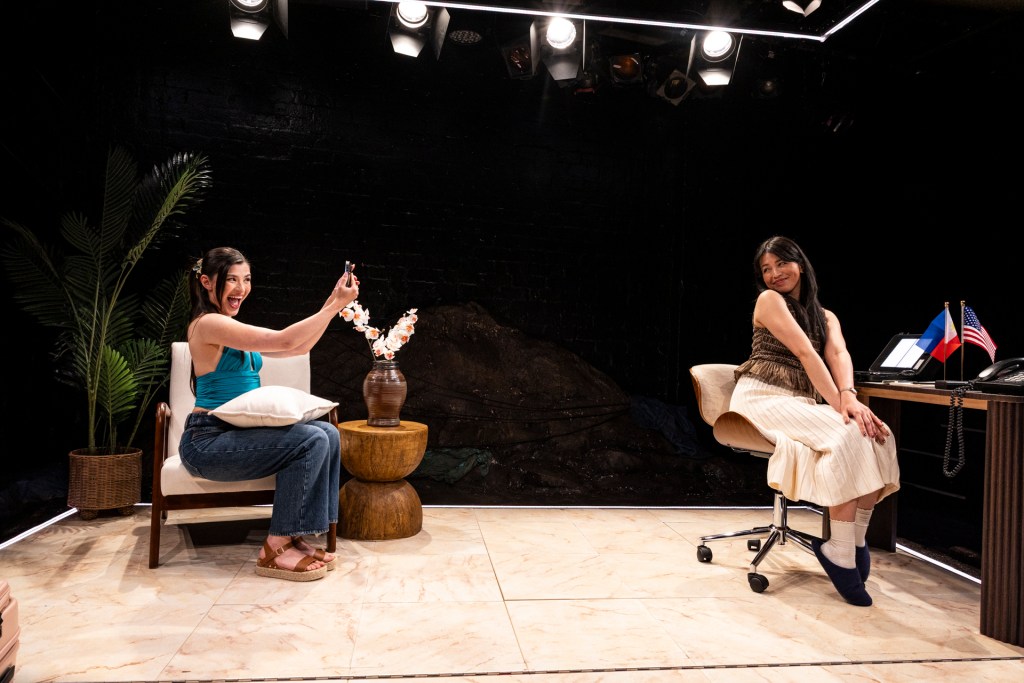
Chaye Mogg & Chrissy Mae Valentine. Photo: Brett Boardman. One of the joys of Griffin’s takeover of Belvoir’s Downstairs Theatre is seeing the space used to its maximum potential, and Savior continues that trend. On a chilly evening, the stacked lighting rig warms the place up nicely (strong work from BROCKMAN), Hailley Hunt’s set design has some neat tricks up its sleeve and DOBBY’s sound design gives the small space texture. Some scene changes take time, but the show earns more than enough goodwill to carry you through the pauses.
The satire itself is however relatively thin. Feraren is painting with a broad brush — her critique of white saviours doesn’t wrestle with the murky, complex web of incentives, needs, and motivations that make up the world of international aid. Savior flirts with grey areas but doesn’t commit to any of them; it is a comedy first and foremost (and a damn funny one at that), content to echo easy truisms rather than dive into messy truths.
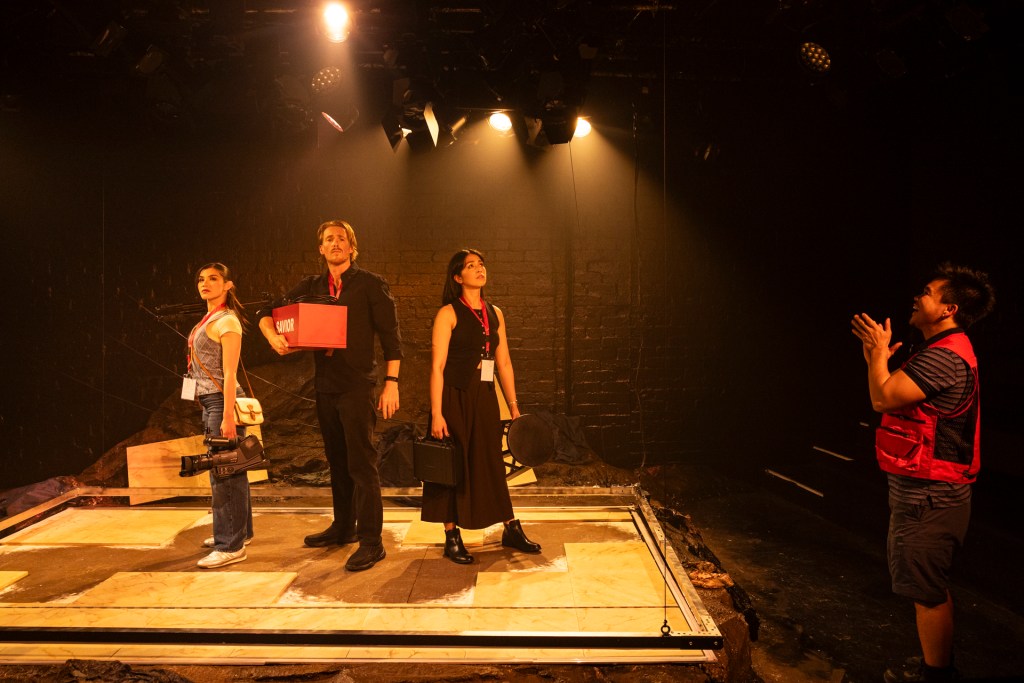
Chaye Mogg, Michael Whalley, Chrissy Mae Valentine & Mark Paguio. Photo: Brett Boardman. And if the church-baiting humour gives you pause, rest easy: Feraren is mocking blind faith in organisations, not in God. The script stops well short of blasphemy — give or take a stigmata or two.
Taken purely as a comedy, Savior serves up ecstatic bliss. It may be reciting a familiar self-mocking liturgy for comfortable progressive audiences, but it’s doing so in fine voice. The show has the freshness you want from a new work, and this quartet of performers will keep you giggling for 90 minutes straight.
-
Sonder (Old Fitz)
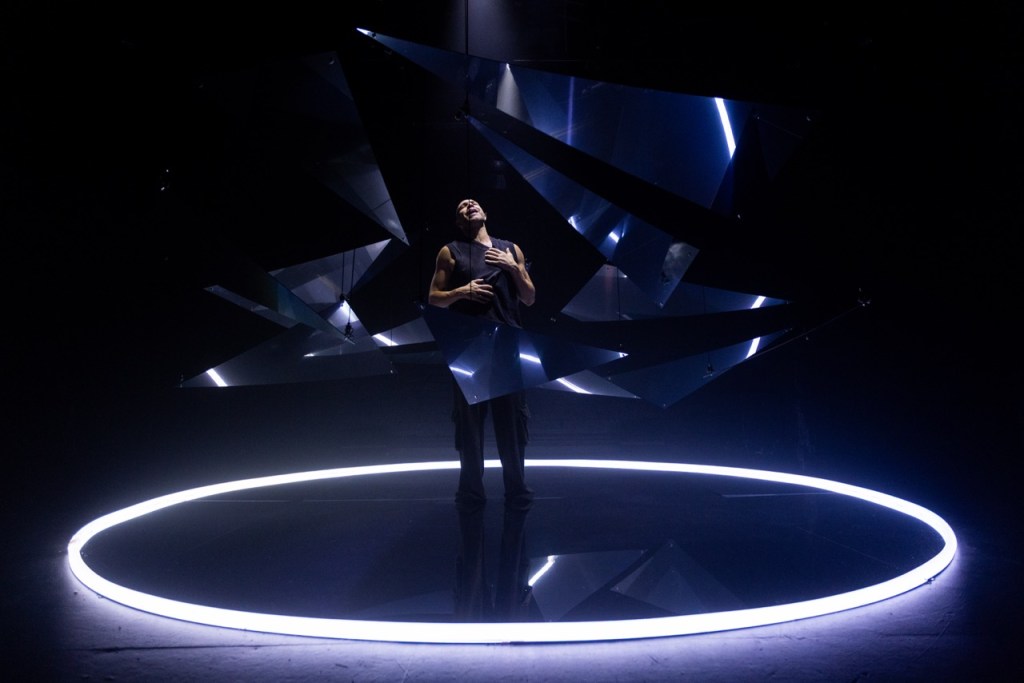
Book & Lyrics by Riki Lindsey. Music by Mitchell Sloan. World Premiere. Presented by Berlage & Co. The Old Fitz. 15-23 May, 2026.
Alexander Berlage’s set and lighting for Sonder are a stunning ballet of metallic sails and swirling light, and thank god for them — they were almost enough to carry me through the accompanying 60 minutes of lifeless personal epiphanies. All that glitters etc…
Romeo (performed by writer Riki Lindsey) is a gay Māori man arriving at a moment of realisation. Looking back at the traumatic events of his life, he finds his way to a place of peace and a capacity to forgive those who wronged him as he comes into his own.
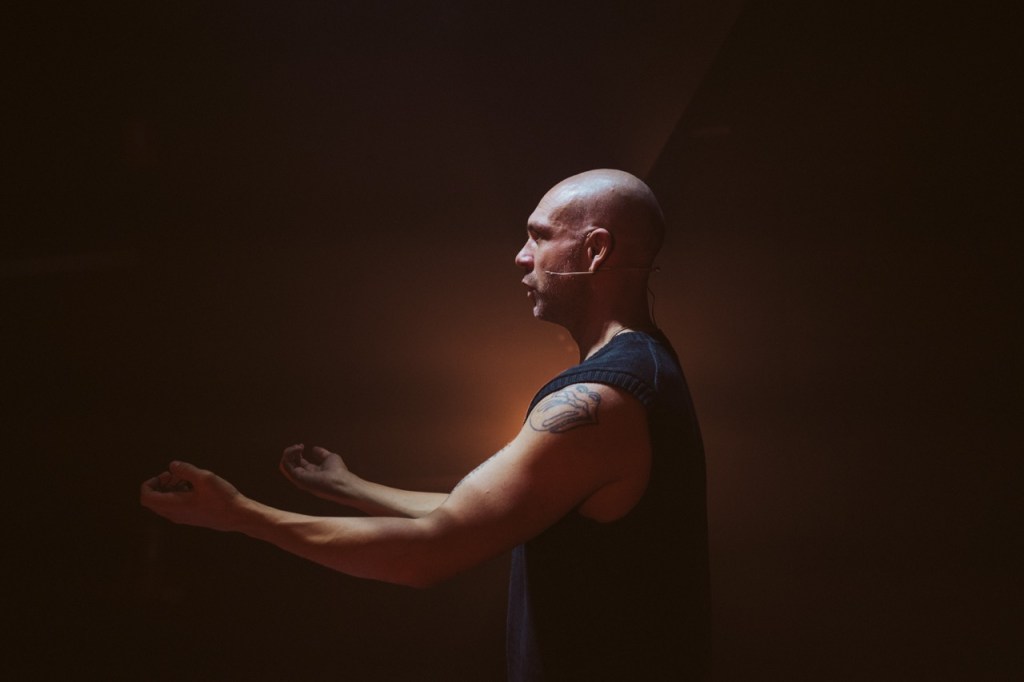
Riki Lindsey. Photo: Jessie Obialor. His journey is told in disconnected snippets — as though you’re skipping through a film you’ve lost interest in, dropping into scenes without context or connective tissue. The show seems to be reaching for poetic abstraction but instead comes across as disjointed.
This is not a traditional musical and shouldn’t be judged as one. It’s closer to a sequence of non-sequiturs with a soundtrack and occasional vocals. The music is well produced, but the lyrics are repetitively flat and the melodies sometimes sit awkwardly outside Lindsey’s vocal ability. Even accepted purely as mood music — emotional atmosphere with no narrative obligation — the songs outlast their welcome, getting in the way of scenes and emotions instead of amplifying them.
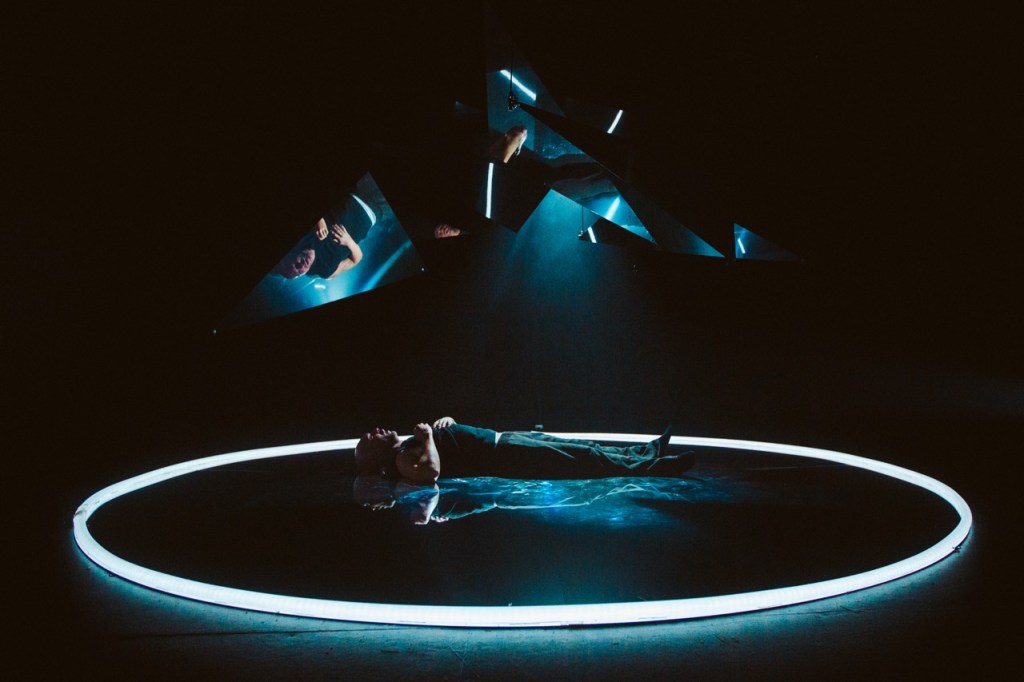
Riki Lindsey. Photo: Jessie Obialor. The result is a cold, lifeless art installation straining to tell a human story: a boy whose childhood was stolen from him, who struggled to connect. The staging works against the narrative’s needs. The sharp architecture discourages human proximity. The cool mechanical pulse of the electronic score, pleasing as it is on the ear, conveys no warmth. The show has the visual language of a polished music video but none of the human connection that live theatre uniquely offers.
It’s this lack of dramatic narrative or emotional connection that sinks Sonder before it even has a chance to swim. It’s hard to invest in a story that withholds story. It’s hard to care for a character who is cloaked in shadows and half-light who we never get a chance to really know.
Style over substance, then: the show mistakes atmosphere for meaning. The technical elements all over-deliver, but they can’t fill the void at the work’s centre. I always appreciate a bold swing, and I had high hopes for this show when it was announced, but it’s a clear miss.
-
Agony (KXT Underground)
Written by Mariika Mehigan. KXT Underground. 16-25 May, 2026.
Note: KXT Underground is a home for low-tech, low-cost, high-risk work giving artists space to hone their work. I’m not giving star ratings to the KXT Underground season.
After a run at Sydney Fringe last year, Mariika Mehigan’s Agony makes the move to the KXT Vault, with most of the original cast, using the sexual politics of the 1970s as the backdrop for dual stories of awakening.
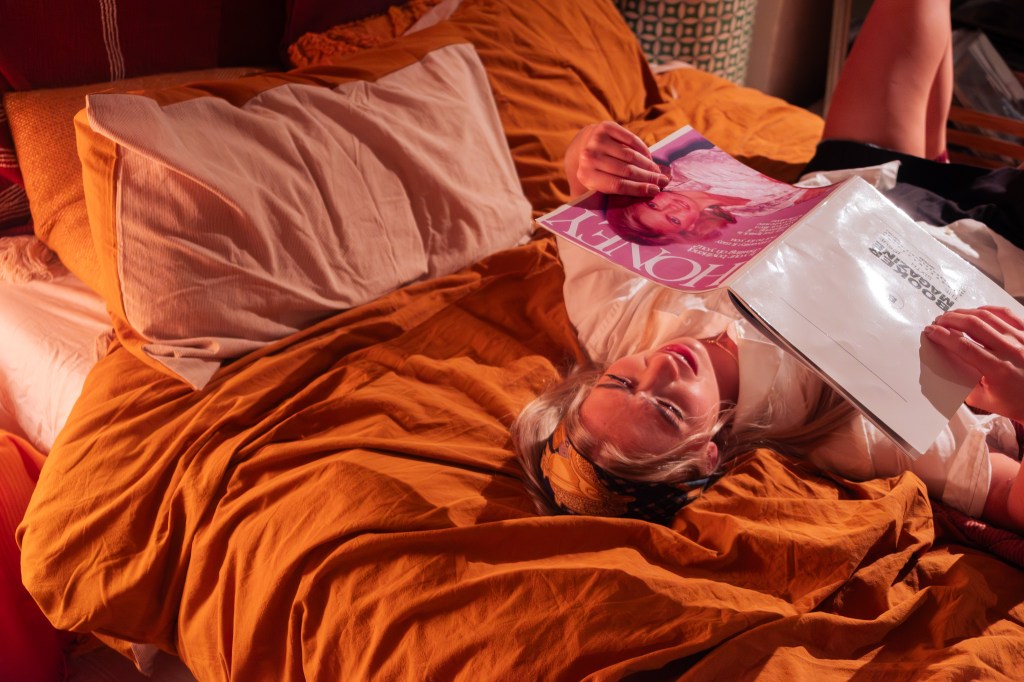
Tanya (Louie O’Carroll) is an agony aunt for Honey magazine, writing sympathetic responses to women’s concerns about sex. This is the ’70s — the sexual revolution and second-wave feminism are still sending ripples through society. One letter is from teenager Bronnie (Laetitia Opie), who’s just had sex with her boyfriend Dean (Sophie Newby) for the first time — it was less than satisfying. Meanwhile, Tanya’s bosses are growing increasingly frustrated by her progressive replies, just as her own sensitive boyfriend Sean (Callum Wilson) is equally frustrated by their lack of a sex life.
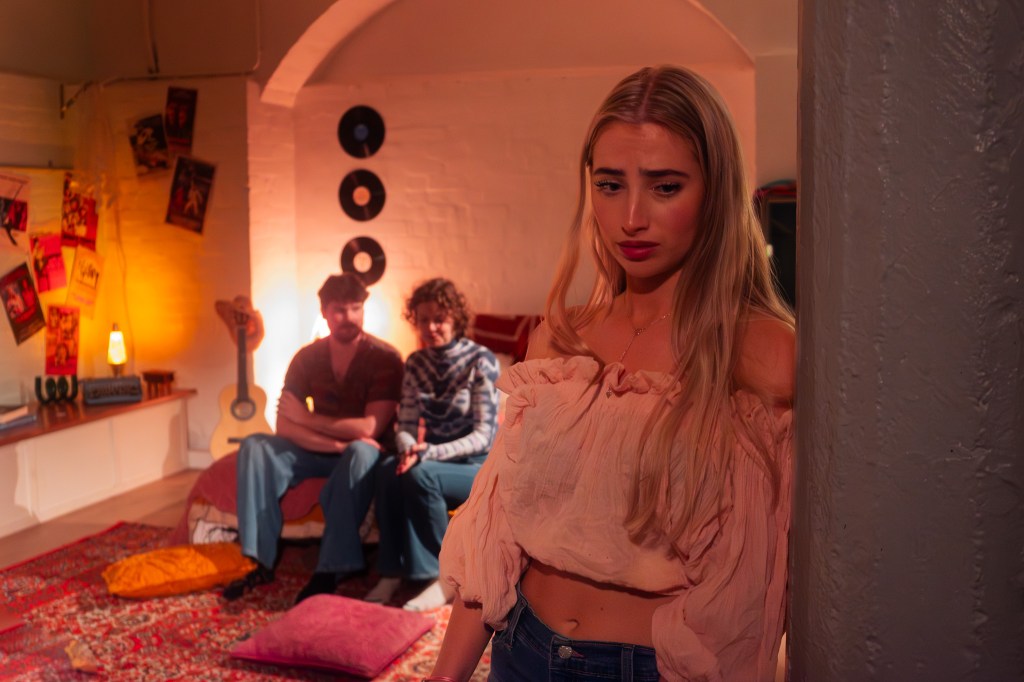
Callum Wilson, Louie O’Carroll & Laetitia Opie. Photo: Laura Elaine. The young cast are all doing great work here — being the show’s second run means that, despite it being their very first performance at KXT, most are now clearly comfortable with their roles. Louie O’Carroll has strong “quirky librarian” energy that gives the earnest Tanya a loveable appeal on stage. Her passion for causes and for educating women clashes neatly with Callum Wilson’s Sean, trying hard to be a sensitive new-age man but failing miserably. Sophie Newby is another highlight, bringing a gently rebellious edge to Kay that is magnetic. Laetitia Opie’s Bronnie is sparky but confused — a young woman trying to figure out what she really wants from sex, life and the future.
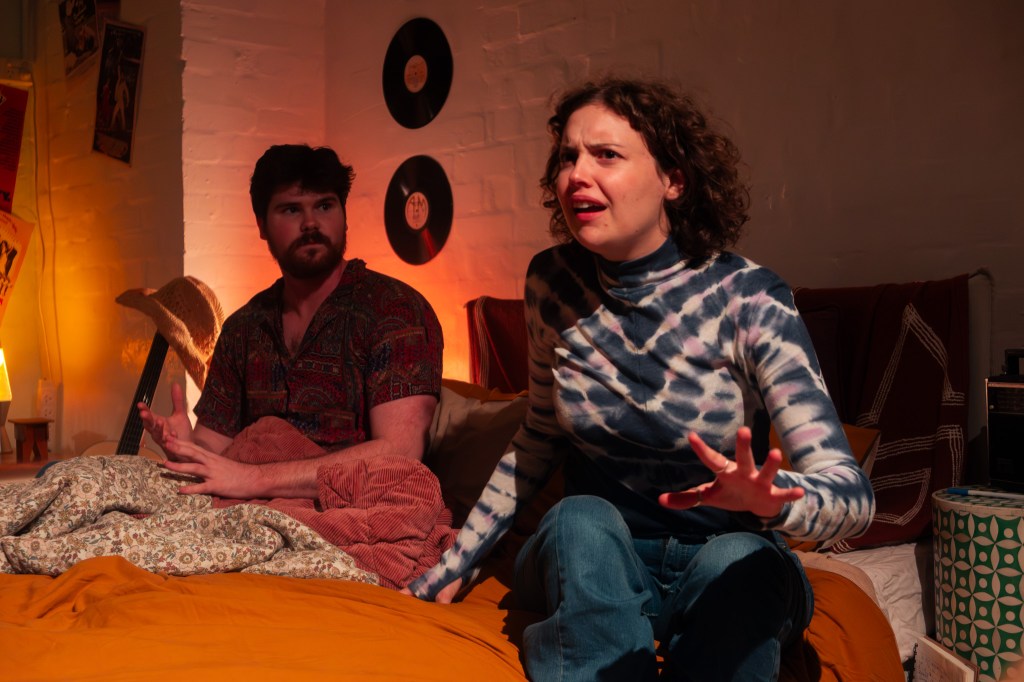
Callum Wilson & Louie O’Carroll. Photo: Laura Elaine. Mehigan squeezes in a lot of story into the sub-sixty-minute running time, mining the relative sexual innocence of the ’70s, and the awkward aftermath of the sexual revolution, for plenty of comedy — there is a real air of ’70s sitcom about many of the early scenes. The tension between the indie feminist writing and the diffusion of ideas though mass market magazines is a really nice touch. The specifics of the characters feel fresh despite covering familiar territory, the emotional beats land, and the comedy is fun and well-observed — even if it isn’t always well balanced with the story’s emotional drama. Director Izzy Rizzo handles the dual narrative with a sure hand in the small space — the intimacy of the KXT Vault works in their favour as well.
So much story however means that inevitably some characters get short shrift. Tanya’s new gay best friend Roman (Barney Scott) in particular feels either underused or redundant, depending on your point of view, and a decision to double-cast Newby as both Kay (Bronnie’s best friend) and Dean (Bronnie’s boyfriend) is distracting, and detracts rather than enhances the storyline.
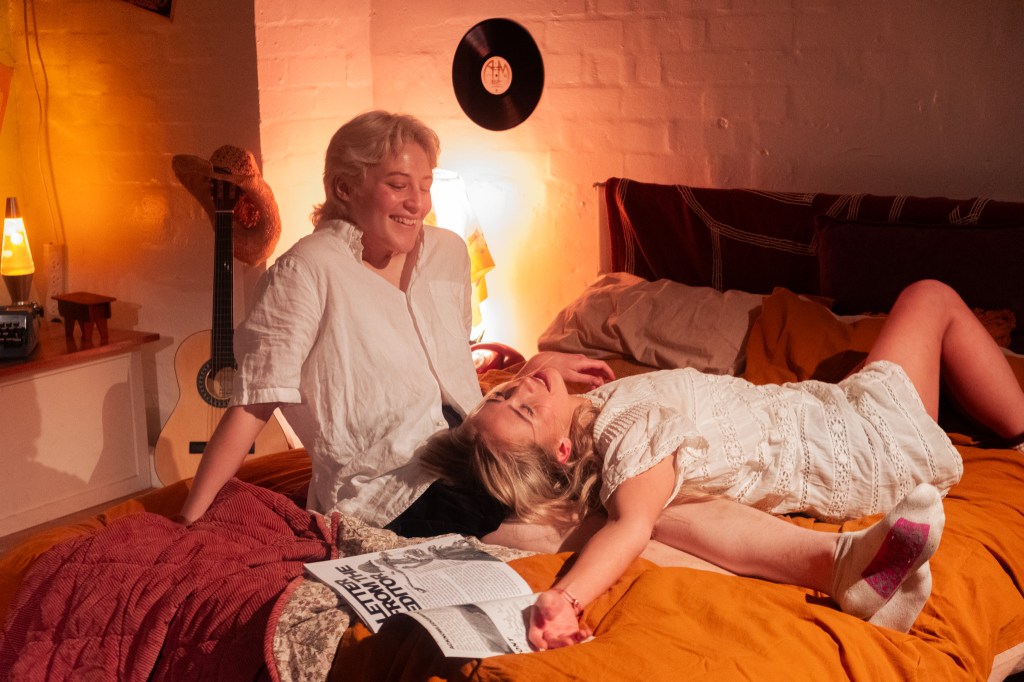
Sophie Newby & Laetitia Opie. Photo: Laura Elaine. As both Tanya and Bronnie come to understand their sexuality from different angles, there is a bittersweet note to their conclusions. Mehigan deserves credit for landing the story here — there is a nuance to the writing that goes deeper than simplistic coming-out storylines with Pollyannaish endings.
Agony is an entertaining and genuinely interesting work from a writer with a solid comic sensibility and real emotional intelligence. A little more focus — either expanding to do full justice to its characters and ideas, or trimming to hit the emotions harder — would help it fulfil its promise.
-
Romeo & Julie (KXT) ★★★★
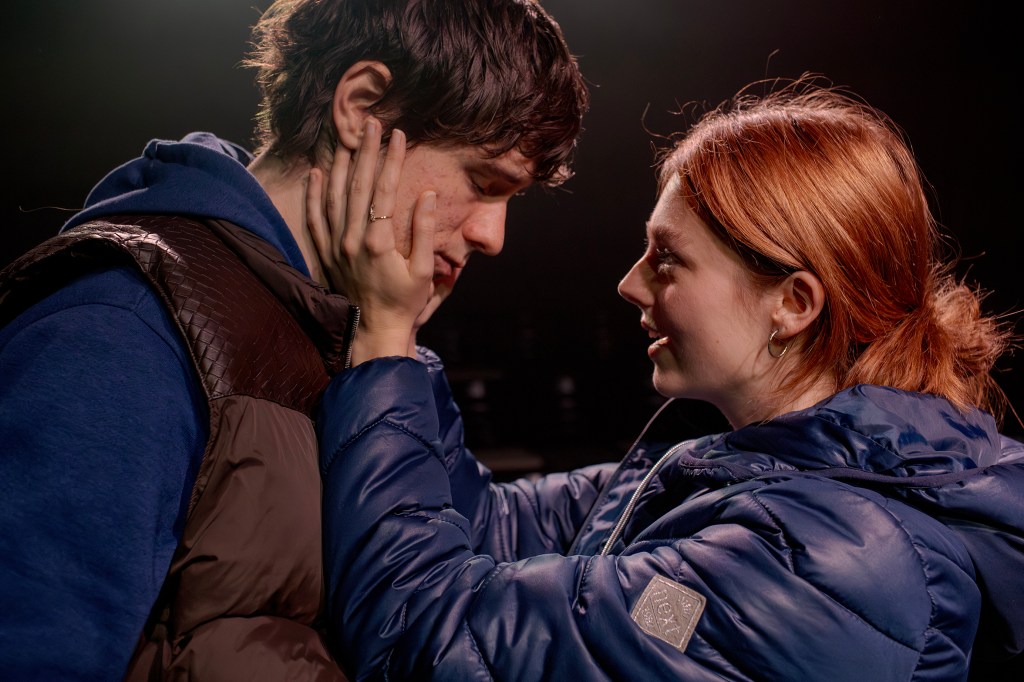
Written by Gary Owen. Mad March Hare Theatre Co in association with Bakehouse Theatre Co. KXT on Broadway. 8–23 May, 2026.
It’s all about choices. Who gets them in life, and what they make of them. Who gets to be in charge of their own lives, and who gets stuck with what life gives them. Gary Owen’s Romeo & Julie has stars and lovers, but the similarities to its Shakespearean namesake more or less end there.
Romy (Alex Kirwan) is a sweet guy with a big heart. The single teen-dad is raising his baby Neve with only the barest support from his alcoholic mother, Barb (Claudia Barrie — who also directs). One day, exhausted, he’s woken up from an impromptu public nap by high-schooler Julie (Estelle Davis) who’s on the verge of going to uni to study physics. Despite her parents’ best efforts, Julie finds herself falling for the caring high school dropout and putting all her dreams for her future on the line.
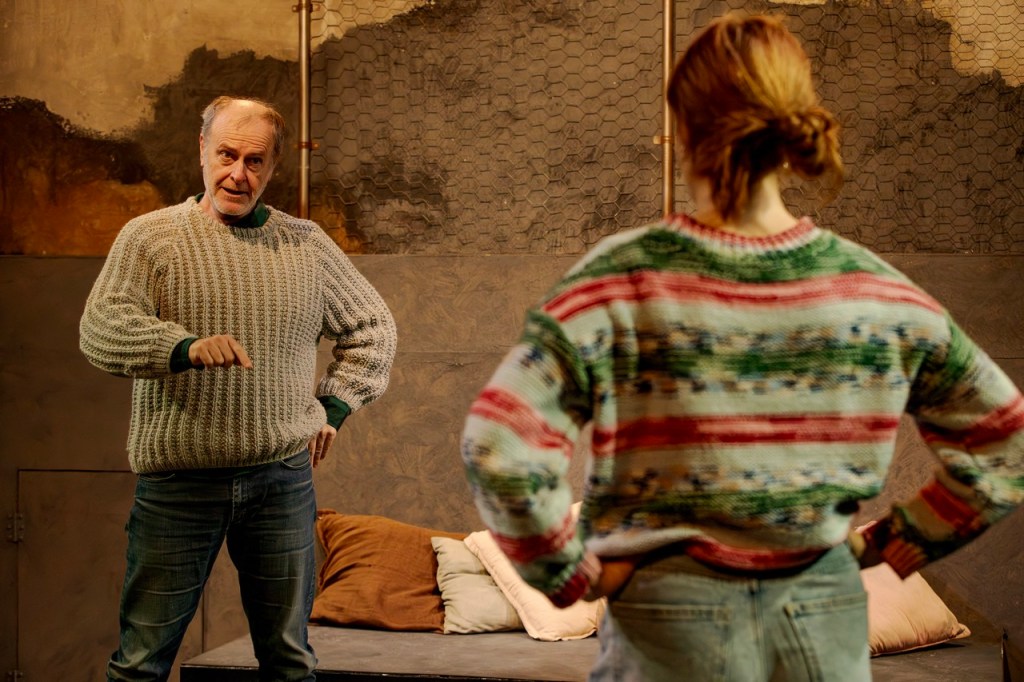
Christopher Stollery & Estelle Davis. Photo: Phil Erbacher. Welsh playwright Gary Owen has taken inspiration from Shakespeare’s doomed couple and given it a very contemporary spin to make a comic drama that is more grit than grins. You’ll laugh, and you’re meant to laugh, but the laughs come as a release to the working-class reality of the play’s world. Instead of Shakespeare’s warring high-born families, we have two working-class households both alike in fragility. Julie’s family have sacrificed to give her the best opportunities they could, sending her to a good school so she can be the first in the family to go to uni. Romy’s family are scraping by, surviving one day at a time. There are no masquerade balls or friars to be seen.
Owen writes Romy and Julie like good-hearted but naive youths who find themselves in situations beyond their experience. Romy’s sudden immersion into parenting has him worn thin, but his heart is resolutely in the right place. Julie has a blindly aspirational-middle-class mindset, fostered by her protective parents. Julie is looking up at the stars while Romy is stuck staring at his feet for fear of tripping. Any attempt at a rom-com romance is punctured by the messy truth of economic insecurity and a child’s needs — a soiled nappy, by any other name, would smell just as terrible.
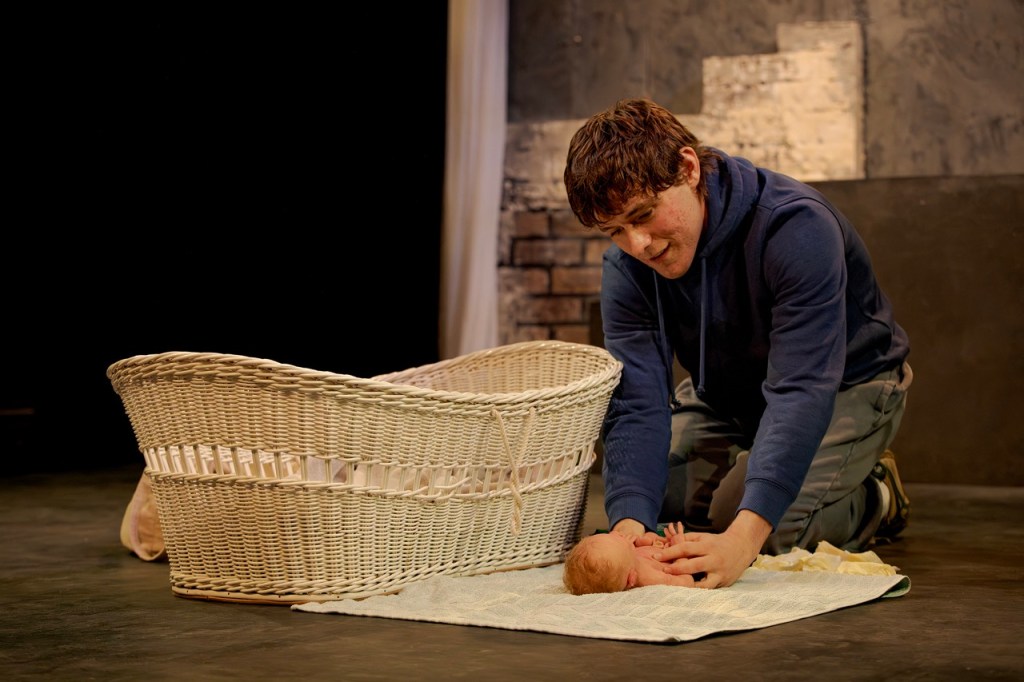
Alex Kirwan. Photo: Phil Erbacher. The cast of five (including Christopher Stollery and Linda Nicholls-Gidley as Julie’s parents) are all exceptional. Their performances beautifully straddle the story’s laughs and drama. It’s genuinely relaxing to be able to watch a group of performances that feel genuine and complete, with no rough edges to pull you out of the story and fantasy they are creating on stage.
Kirwan and Davis make a winning stage couple. Kirwan gives Romy a cheeky, boyish charm that makes Julie’s attraction feel earned. He’s a nice kid struggling to be grown up. Davis balances Julie’s innocence and stubborn cleverness to form a likeable young woman you want to see succeed. Together they successfully navigate the play’s murkier messages about pregnancy, hard choices and the hardships of working-class life without condescension.
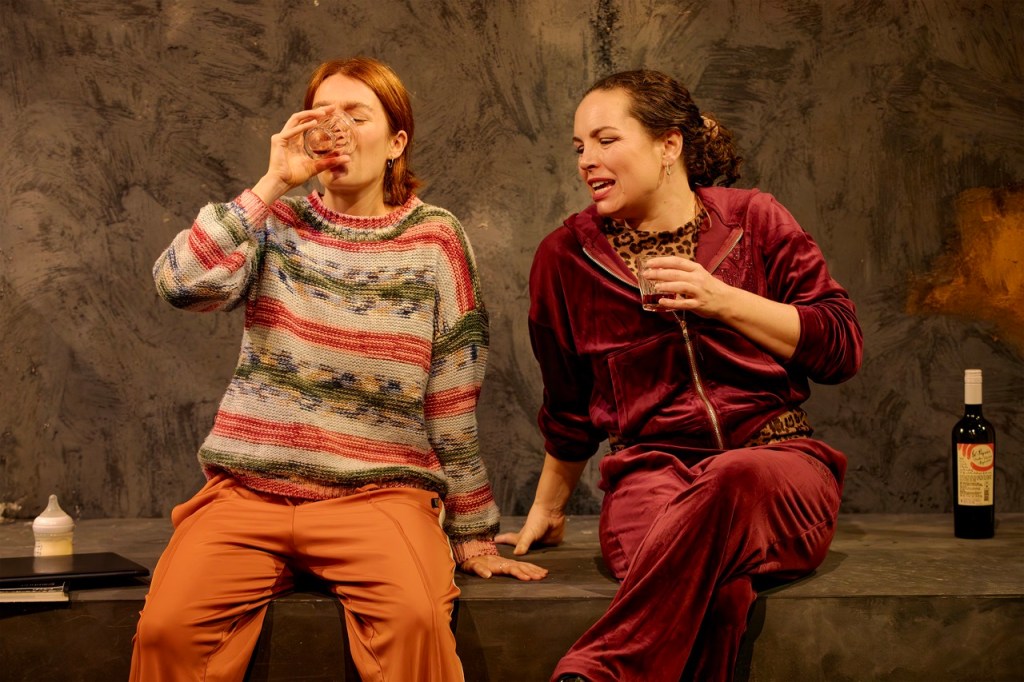
Estelle Davis & Claudia Barrie. Photo: Phil Erbacher. This production’s success lies with director Claudia Barrie, who works from a place of genuine humanity to build these five characters. Even as the play has some third act wobbles and didactic scenes, and stretches itself to make its point and give us one last Shakespearean echo (the final “death” is more emotional than literal), the richness of the character work holds us steady.
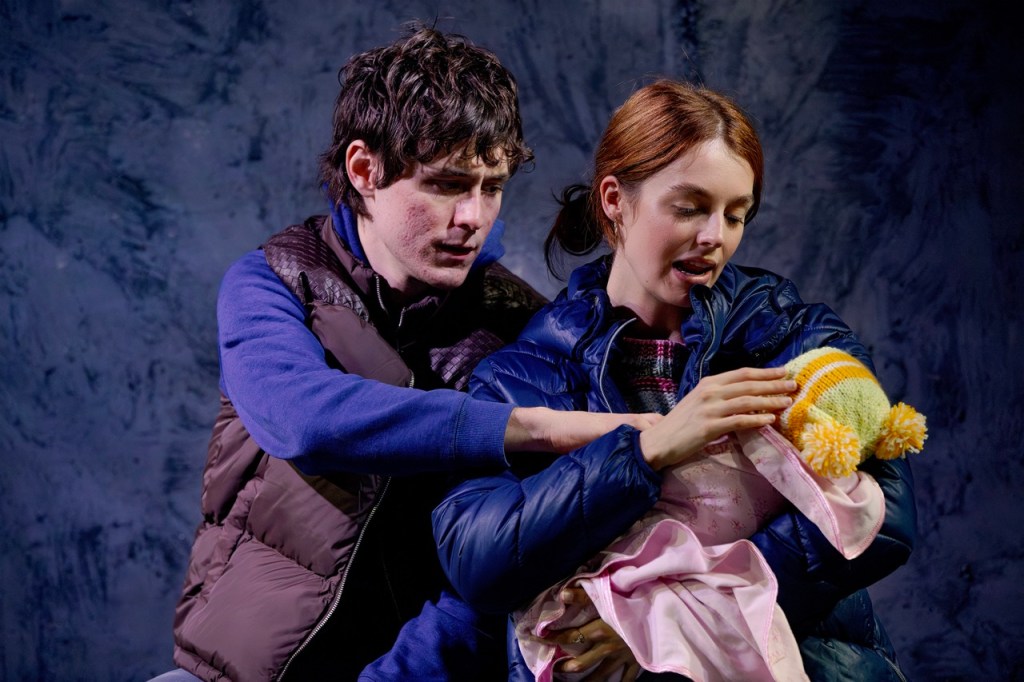
Alex Kirwan & Estelle Davis. Photo: Phil Erbacher. It would be easy to dismiss large chunks of Romeo & Julie as a form of poverty porn were it not for the layered depiction of each character. When reduced to simple descriptors — drunk mum, angry dad, single parent — it reads like a list of clichés, but through nuanced writing and deep performances the observations of poverty read as authentic without being exploitative. In the end the two families aren’t warring with each other; they are struggling to survive against a system that is keeping them all down.
While the production elements of the show lack finesse, Romeo & Julie offers up a moving, funny script with five fantastic performances. Gary Owen may resort to some overly preachy moments, but there is still real beauty here.
-
The Mad Ones (Qtopia) ★★★½
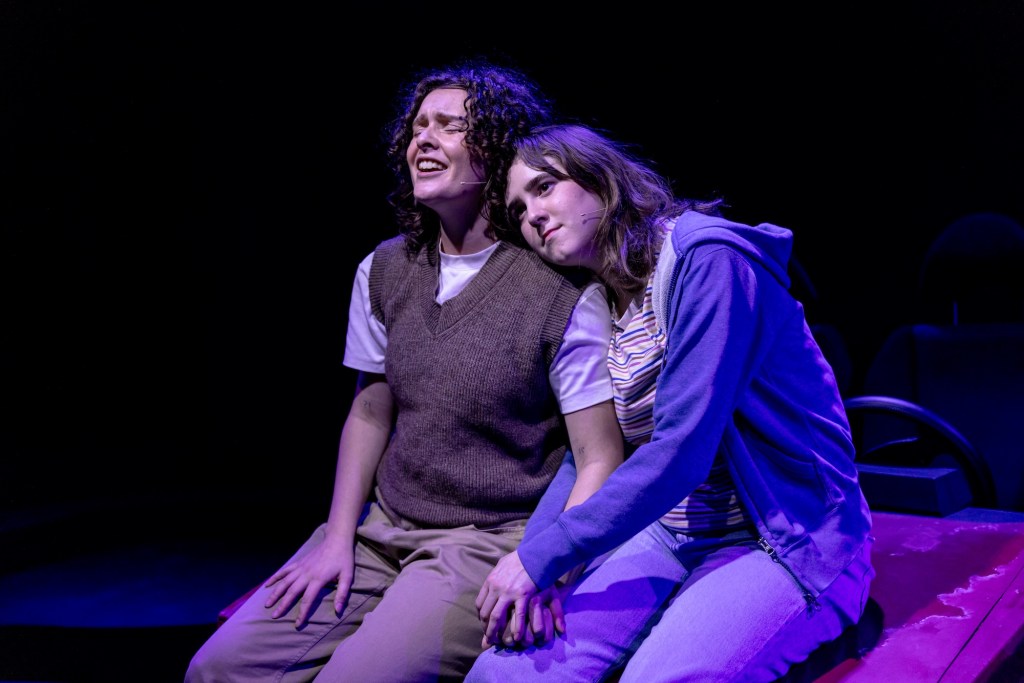
Book & lyrics by Katie Kerrigan. Music & lyrics by Bree Lowdermilk. Additional book and concept by Zach Altman. The Little Big Theatre Co. Qtopia Loading Dock. 30 Apr – 16 May, 2026.
You may already be familiar with Kerrigan & Lowdermilk’s coming-of-age musical The Mad Ones and just not know it. Originally written under the title The Unauthorized Autobiography of Samantha Brown, it features cabaret/audition favourite “Run Away With Me”. But if you know that song, you’ve only scratched the surface of this musical musing about teenage anxiety, sexual confusion and stepping out of other people’s shadows.
Sam (Meg Robinson) is at a crossroads in life. In the rearview mirror are her analytical mum (Tisha R. Kelemen), her sweet boyfriend Adam (Ethan Malacaria) and her best friend Kelly (Teo Vergara), and she feels like she’s letting them all down. She’s graduating from high school with top grades and no idea what she wants to do next. For once in her life she’s asking herself: “What do I want?” But to find the answer, she has to come to terms with some hard truths — starting with the fact that Kelly has died and Sam is just now realising how much she loved her.
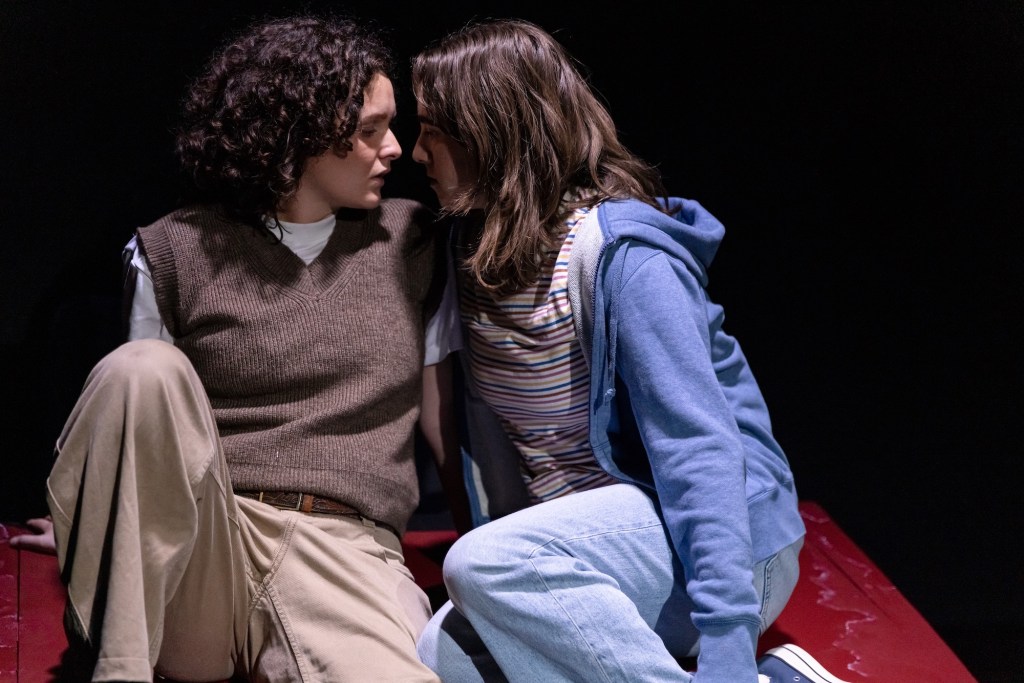
Teo Vergara & Meg Robinson. Photo: Yingying Zhang. The songs by Kerrigan & Lowdermilk are very catchy and give the performers space to really belt — which, in the small space of Qtopia’s Loading Dock Theatre, threatens to raise the roof. And in this minimally staged production, it’s the vocals that are the stars. Meg Robinson gives us “tortured teen” power ballads up there with Evan Hansen. Teo Vergara is a walking, singing ball of impetuous joy. Together their vocals have a pop-music crispness that works beautifully with the contemporary score. Similarly, Ethan Malacaria brings a gentleness to Adam that reinterprets “Run Away With Me” — his only big number — as a soulful plea.
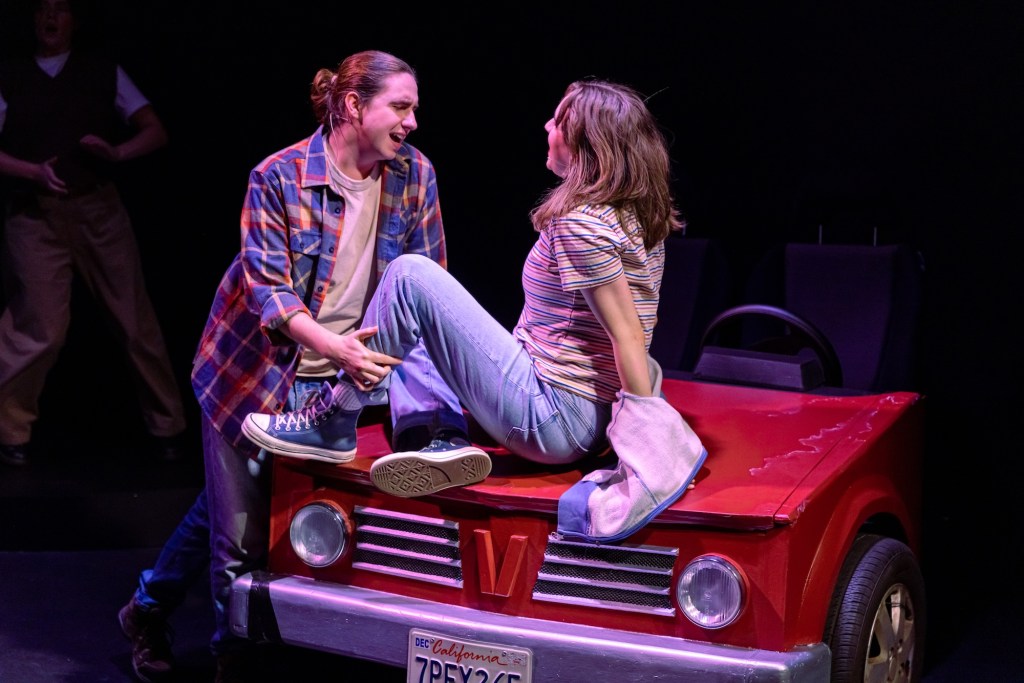
Ethan Malacaria & Meg Robinson. Photo: Yingying Zhang. The songwriting shares DNA with Pasek and Paul — both duos came up together through the same New York musical theatre circles, and it shows. When Kelly declares “maps are for brain-deads”, you half-expect the opening bars of “Does Anybody Have a Map?” to follow. But where Pasek and Paul lean into power-pop hooks and melodies, Kerrigan & Lowdermilk are more interested in texture — trading pop-infused bangers for something warmer and more country-inflected, built on close two-part harmonies.
This small production, directed by Sarah Campbell, keeps things simple, using sound design (Peter Miller) and lighting (Holly Nesbitt) to bring the minimal set to life. Campbell uses every inch of space to give the show movement — but the black box stage has its limits, and over a full-length musical without an interval, the walls do start to close in.
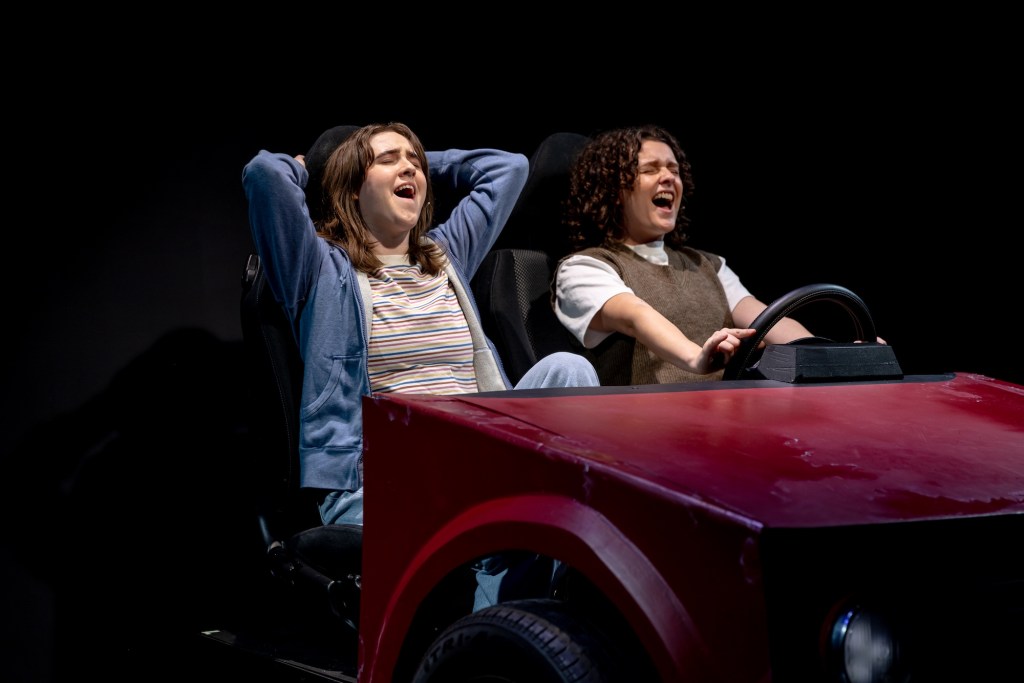
Meg Robinson & Teo Vergara. Photo: Yingying Zhang. That claustrophobia is compounded by a script that is frustratingly static. This is a deeply internal journey — the whole story takes place in a daydream as Sam sits in her car — and there is a real lack of narrative propulsion (ironically) as she wrestles with her inner demons towards a place of decision we always assume she’ll reach. This is musical theatre, after all. Clearly written with an interval in mind but running straight through at 100 minutes, the show’s energy peaks at what should have been the act break and never really recovers. The comedy, meanwhile, feels like an awkward addition that doesn’t fully gel.
If you’re a fan of contemporary musical theatre, The Mad Ones has all the ingredients you’ll enjoy — catchy tunes delivered with crystal-clear, soaring vocals. There’s an intimacy that you only get with a small stage, and while I suspect the show might work better as a concert than a full staging, this production gives you a chance to revel in the remarkable talent on display.
-
Catherine Alcorn Live (Ginger’s) ★★★★
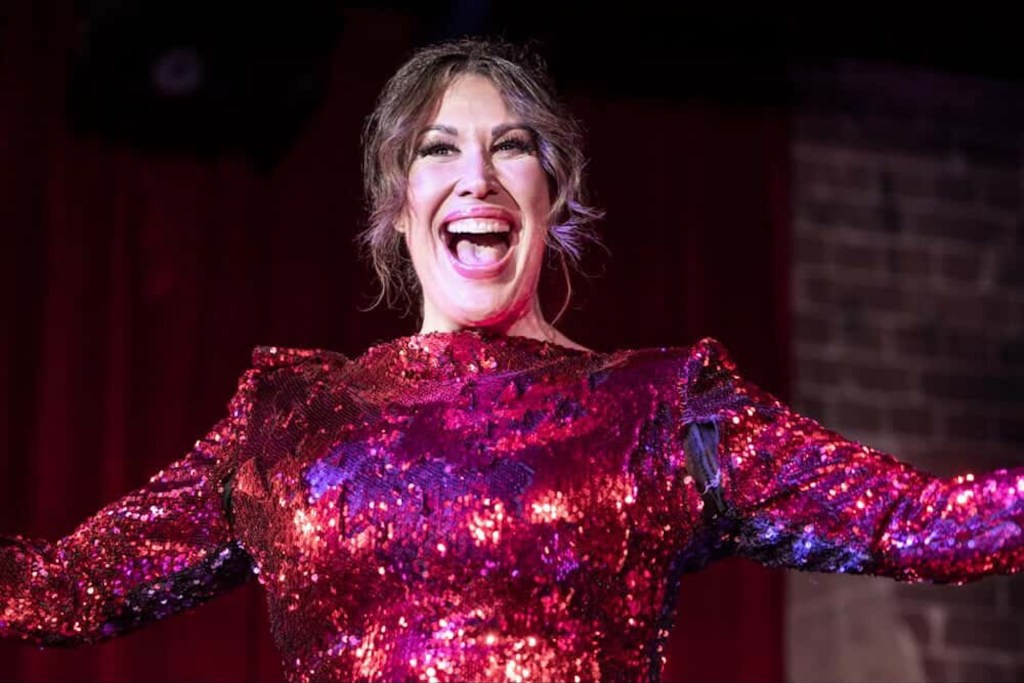
The crowd is rowdy, the drinks are flowing, the banter is bawdy and the band is swinging – Catherine Alcorn is putting life and limb on the line (and occasionally over it) to entertain the crazy, packed-to-the-rafters crowd at Ginger’s on Oxford Street.
From the clutch of drunk middle aged women (on day release from their marriages & kids), to the mobs of drunk gays of indeterminate age (glistening with botox and booze), to Sydney drag & cabaret legends and younger, gender-diverse fans – a Catherine Alcorn gig is a volatile cocktail of fun.
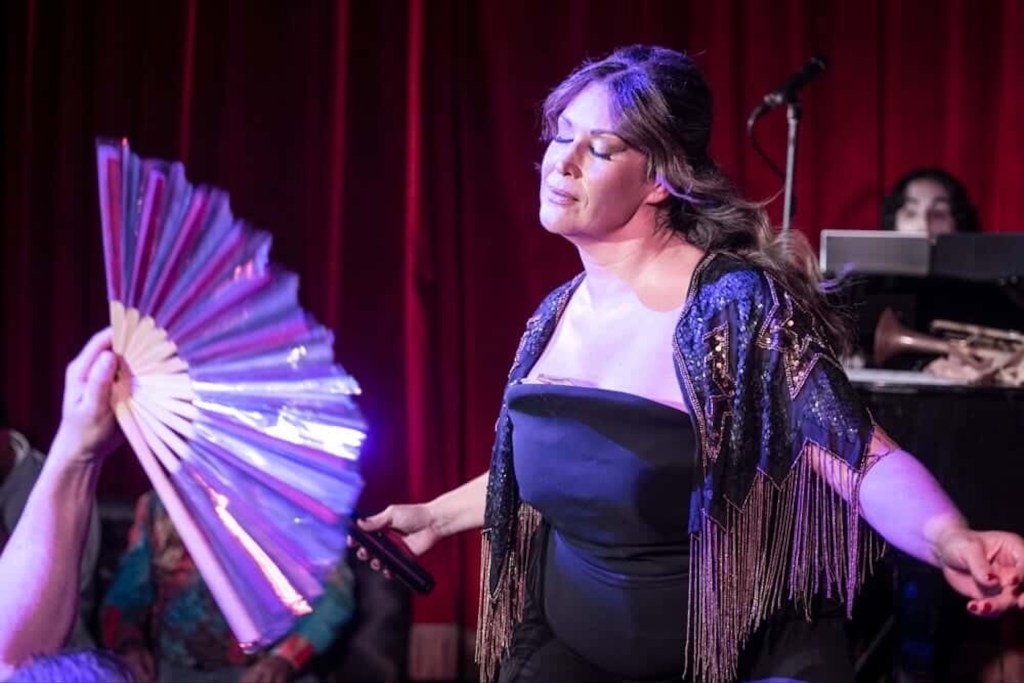
Catherine Alcorn (& fan). Photo: John McRae. You may think Alcorn’s great strength is her powerhouse vocals, but it is in fact her ability to ad-lib. The same goes for her incredibly sharp band — Oliver Stanton on keys, Ned Koncar on guitar, Tina Harris on bass and Jack Powell on drums. When the night’s set list took a back seat to a jukebox-like tangent — providing some extra hits of Britney, Cher and more for the adoring crowd — the band was quick to pivot where the room’s energy was leading.
It’s this energy — less a stately night of show tunes sung with the audience sat in neat rows listening intently, and more a variety show mixed with a speak-easy lock-in — that threatens to raise the roof. The guest acts are diverse – from musical comedian Jackie Loeb (Sydney Comedy Festival shows coming up very soon), to jazz trumpeter James Sarno, and some unexpectedly erotic piano work from Sydney cabaret legend Phil Scott.
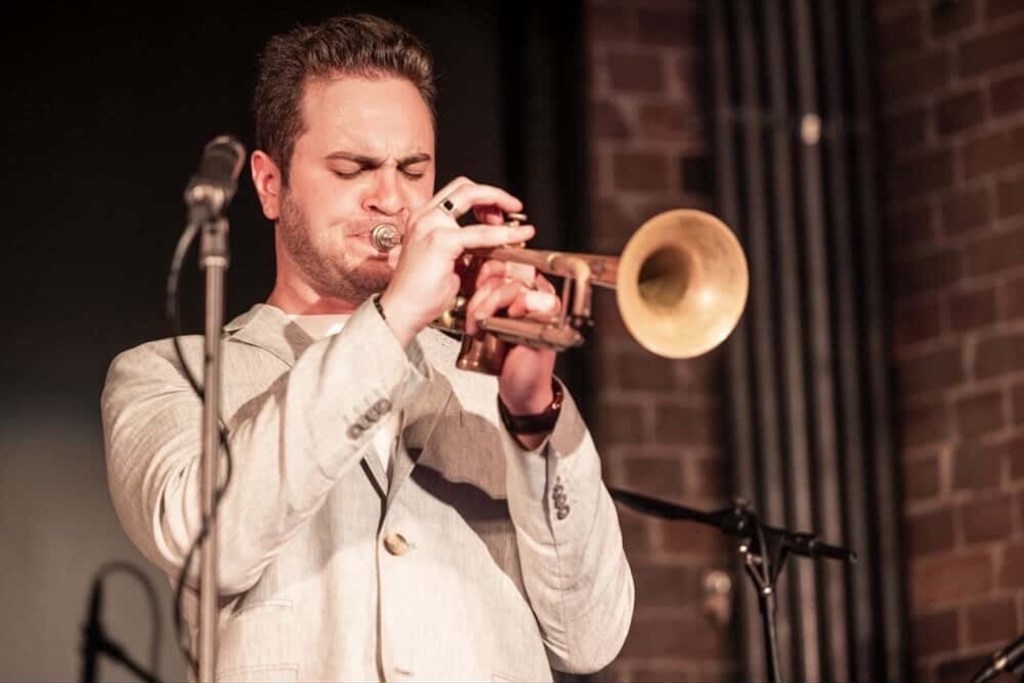
James Sarno. Photo: John McRae. Meanwhile the crowd were treated to a broad set list weaving from Adele to TLC, Dolly Parton to Phil Collins, with some musical theatre thrown in — a Sex & the City-infused Kylie Minogue number, a Robyn singalong, and a crowd pumping rendition of Raye. Somehow, the pivot to a genuinely emotional performance of Elton John’s Your Song, dedicated to an audience member, didn’t seem out of place in a night this eclectic.
As the crowd crammed into every possible bit of spare space — and I do mean every nook & cranny available — Alcorn worked the room and never held back. On her stiletto heels, shimmering in sequins & jewels, she looks like a vision and swears like a trucker, and has the audience in the palm of her hand. When she took a shocking tumble from the stage mid-set, her response was instant: “I’m fine” — and she was back on the mic before the gasps had settled. She returned for the second act on a visibly swollen ankle and didn’t miss a beat. The show must go on, and with Alcorn, it always does.
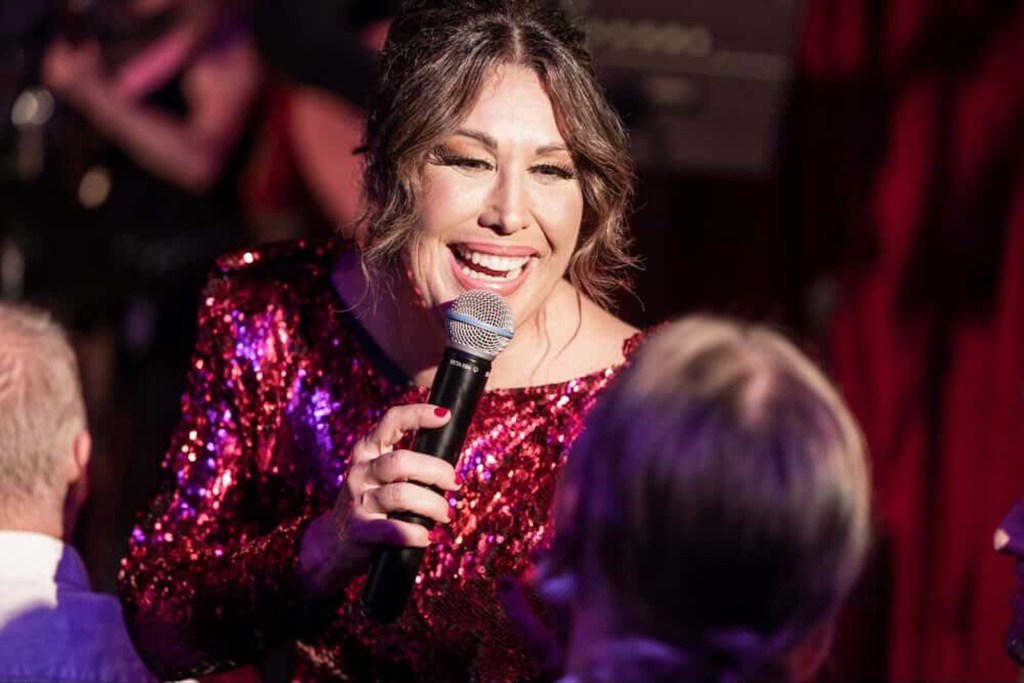
Catherine Alcorn. Photo: John McRae. Walking out onto Taylor Square, after a full evening of music, it felt good to see Oxford Street was still alive. Gentrification be damned, the strip still has some loud, lascivious life left in it yet and Catherine Alcorn’s monthly gigs (and Ginger’s other offerings like Big Gay Piano Bar) are a great addition.
-
Subscribe
Subscribed
Have a WordPress.com account? Log in now.

