Written by Eloise Snape. World Premiere. Ensemble Theatre. 18 Sep – 18 Oct 2026.
Waves of panic, waves of nausea, waves of feminism — they’re all locked in the confined space of The Elevator, Eloise Snape’s snappy corporate comedy that goes hunting for the humanity behind high-tech consumerism.
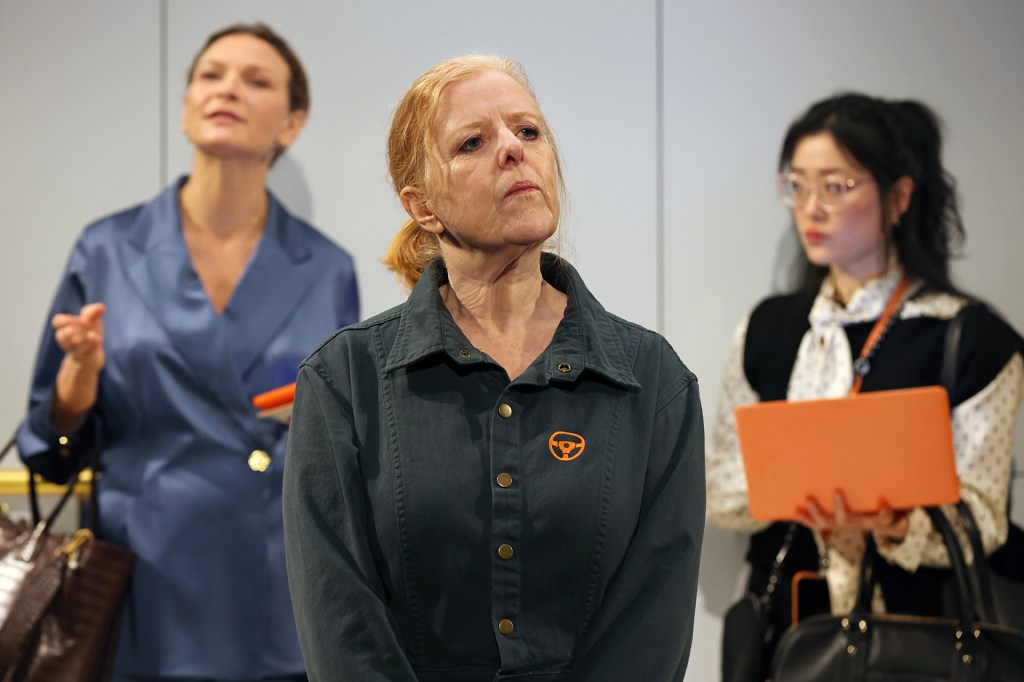
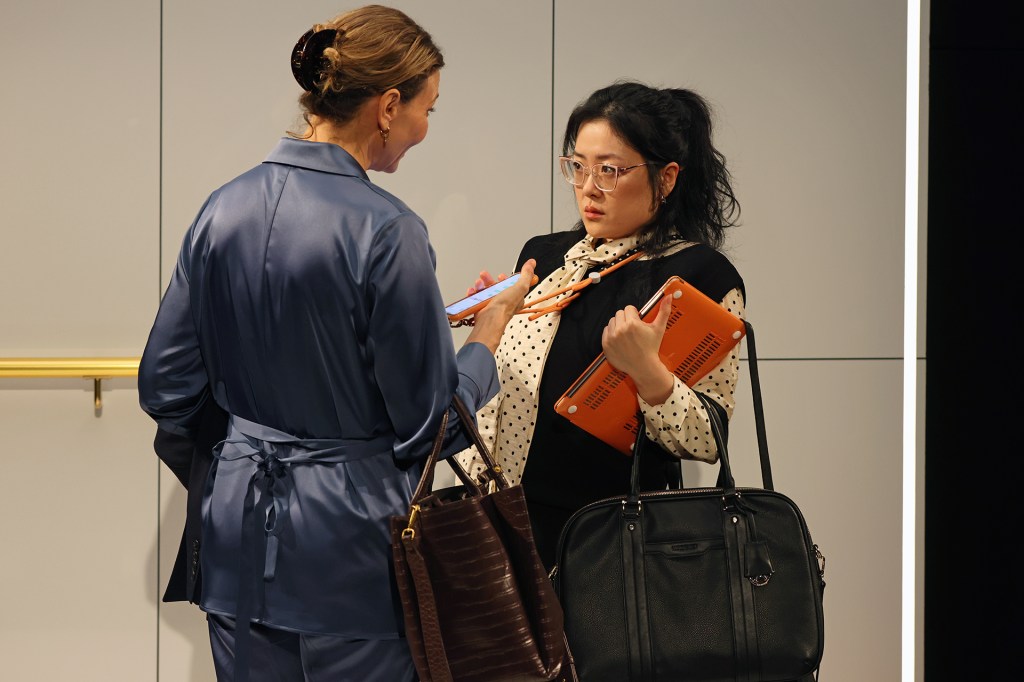
Riding the elevator to the 48th floor to hold a crisis press briefing, CEO Margot (Leeanna Walsman) is trying to wrangle her flustered new comms manager Alison (Shirong Wu) and get their story straight. The company’s driverless car has hit a pedestrian who is in a critical condition in hospital, and they have to get their spin right. Sharing the confined space with cleaner Ollie (Di Adams), things go from bad to worse when the AI-controlled elevator suddenly shuts down, leaving them stuck. Without any distractions, the three women are forced to deal with each other as actual human beings, and it doesn’t go well.
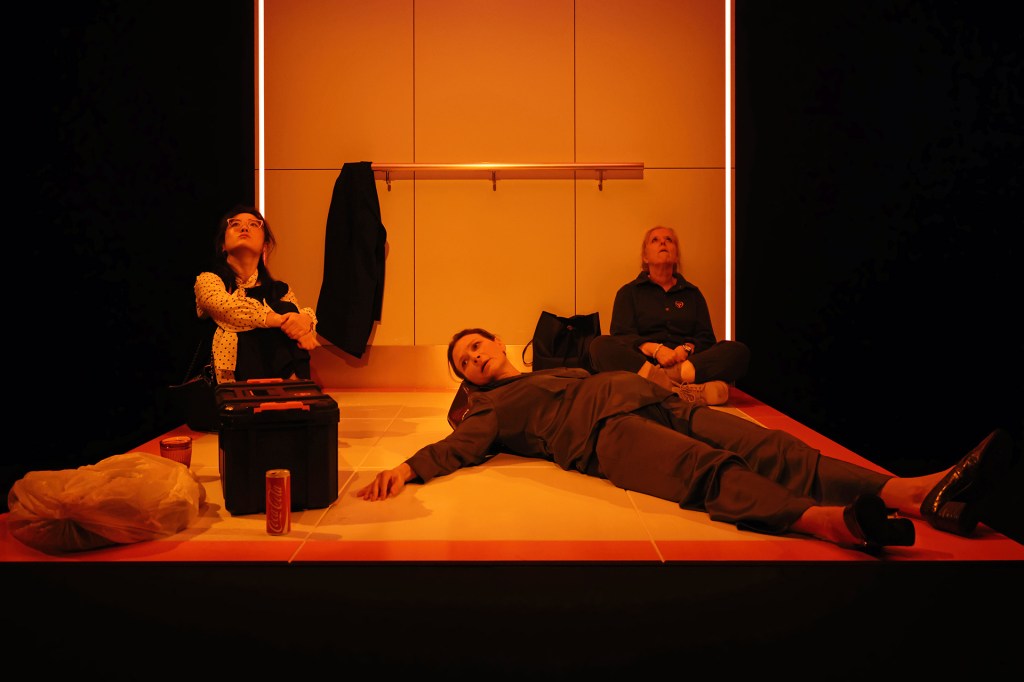
After a number of heavy dramatic plays (STC’s Girls & Boys and Old Fitz’s Dixon & Daughters), sitting back and experiencing Shirong Wu’s flailing comedic performance was like a balm for my soul. From the opening moments, her awkward banter with Leeanna Walsman’s no-nonsense boss set the tone for the beautifully constructed comedy that was to follow.
Walsman’s Margot is a grotesque parody of a neoliberal “girlboss” hurtling toward a glass cliff — a corruption of the promise of second-wave feminism. After literally firing off emails as the epidural kicked in, and leaving her newborn in an incubator to return to the office the next day, she has been completely co-opted by neoliberal capitalism — stripping away her humanity even as her body keeps asserting itself in very physical, fluid-heavy ways.
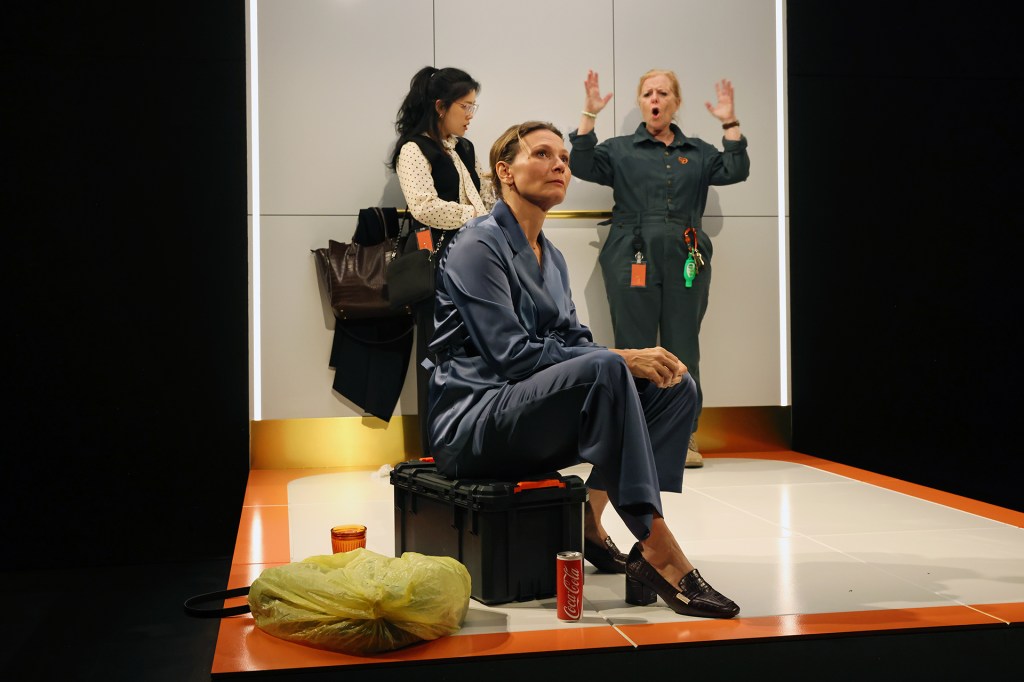
Her opposite is the down-to-earth, eclectic Ollie — a hard-working world-traveller who values experience and wisdom over money and status. In between stands the young Alison, who has been promoted out of her depth after a round of vicious redundancies and is drowning, not waving, in the chaos. Trying to juggle both the needs of her new job and a crisis at home, she is torn between the two worlds.
It’s a great setup for comedy, and a critique of the supposedly technocratic corporate lords who are increasingly making decisions that affect us all, prioritising investors and money over the people on the street. The script’s AI trappings are more set dressing than an integral part of the story (a bit like when Apple talks about Siri but we all know they’re just not in the AI race in a meaningful way) and make for some funny punchlines along the way. The aim of playwright Eloise Snape’s arrows are the corporate world’s dehumanising effects on us all.
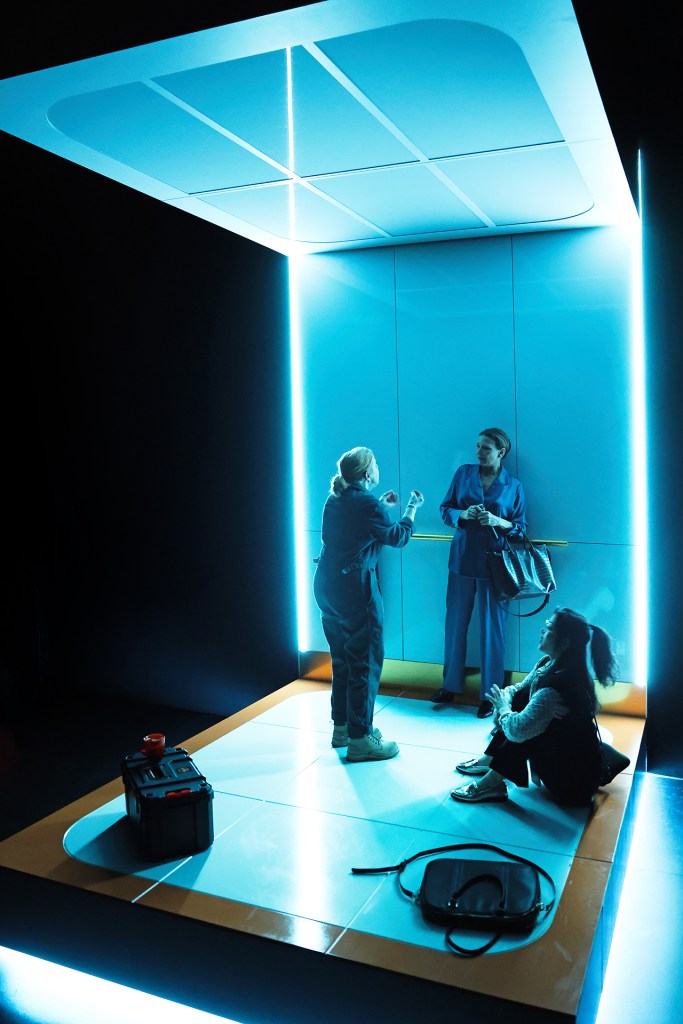
Kelsey Lee’s executive elevator set hints at Star Trek — or more appropriately, Galaxy Quest — style minimalism, giving Daniel Herten’s sound design and composition room to breathe. Johnny Nasser’s voice of the elevator is a comic gift, and Keerthi Subramanyam’s costumes naturally blend into the story.
Eloise Snape’s script is wickedly tight in its execution — a 90-minute comedy that also hits some big topics with full force, balancing the jokes with the message. The sense of timing, executed with precision by director Anthea Williams and the cast, gives the play solid momentum as it ducks and weaves its way through exposition, gags, and character development. The plot’s hidden revelations are neatly planted without drawing attention to themselves, for a satisfying conclusion.
There is undoubtedly a deeper feminist reading to be made, looking into the competing tensions of the characters — I’ll leave that to someone more qualified than I — but for my capitalistic cultural money, The Elevator is a smash, and well worth your cold hard dollars.


Leave a Reply