-
Welcome to Cultural Binge

The rating system is simple:
★★★★★ – Terrific, world-standard. Don’t miss.
★★★★ – Great, definitely worth seeing.
★★★ – Good. Perfectly entertaining. Recommended. Individual mileage may vary.
★★ – Fine. Flawed and not really recommended, but you may find something to appreciate in it.
★ – Bad (& possibly offensive).
See more reviews over at The Queer Review.
Instagram: @culturalbinge
Substack: culturalbinge.substack.com
Email: chad at culturalbinge.com
-
The Unfriend (STC) ★★★½

Written by Steven Moffat. Sydney Theatre Company. Roslyn Packer Theatre. 29 Sep – 31 Oct, 2026.
Helen Thomson kills it as Elsa Jean Krakowski, the houseguest who puts the cereal into serial killer, in Steven Moffat’s The Unfriend. Who hasn’t thought the world would be a better place without certain people in it? I’ll be the first to say it: #ElsaWasRight.
Elsa (Thomson), a chance acquaintance made on holiday, descends on the home of the Lindells, a polite English couple: Peter (Tim Walter) and Debbie (Alex Lee). As they scramble to do their belated due diligence, they discover that Elsa isn’t just a pushy American widow with an oversized appreciation for leopard-print velour. According to the internet, she’s also a murderer. Can the meek, ineffectual Brits get this dangerous Yank out of their home and away from their kids before she strikes again? And why does Elsa seem to be making their lives… well… actually better? Whatever the reason, they need to get rid of her before their stiff upper lips become a case of rigour mortis!
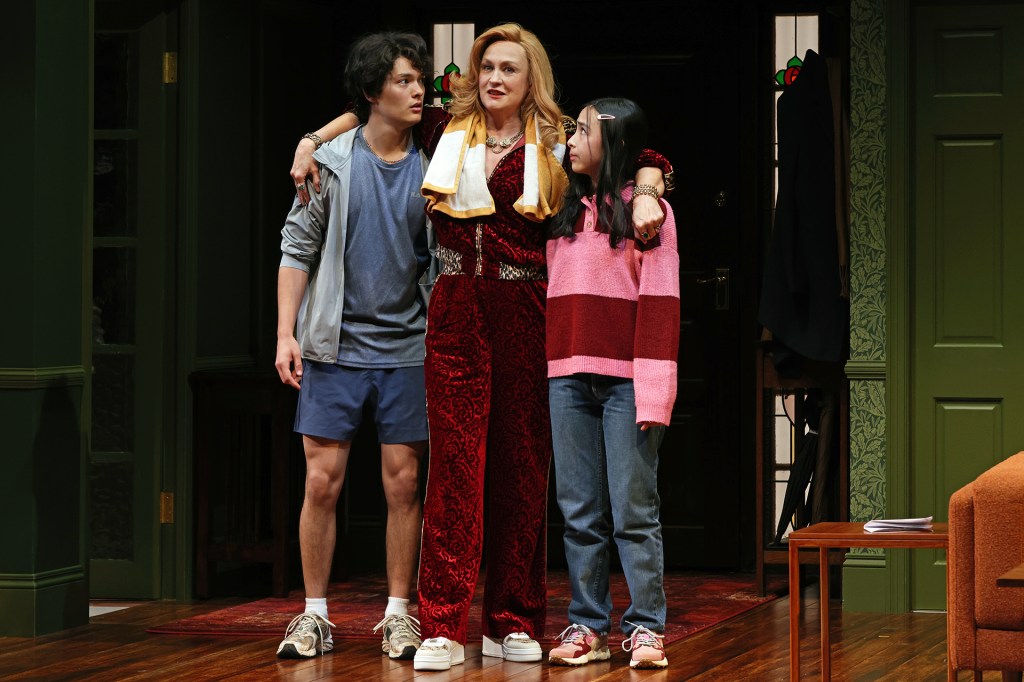
Ty Arnott, Helen Thomson & Brooklyn Davies. Photo: Prudence Upton. Steven Moffat’s name may conjure the brain-twisting hits he’s written, like Benedict Cumberbatch’s Sherlock and Doctor Who. Those with longer memories will remember him as the writer of the sitcom Coupling and the recent comedy-drama miniseries Douglas Is Cancelled, and it’s that Moffat you get here. His sharp sitcom credentials are evident in a witty script full of fresh bons mots you’ll want to quote at your next party.
The script borrows the conventions of sitcoms and drawing-room farce to build the perfect trap for Brits who will literally do anything to avoid embarrassment or offence. It all culminates in an extended sequence of literal toilet humour that will have the audience howling with laughter and/or pain.
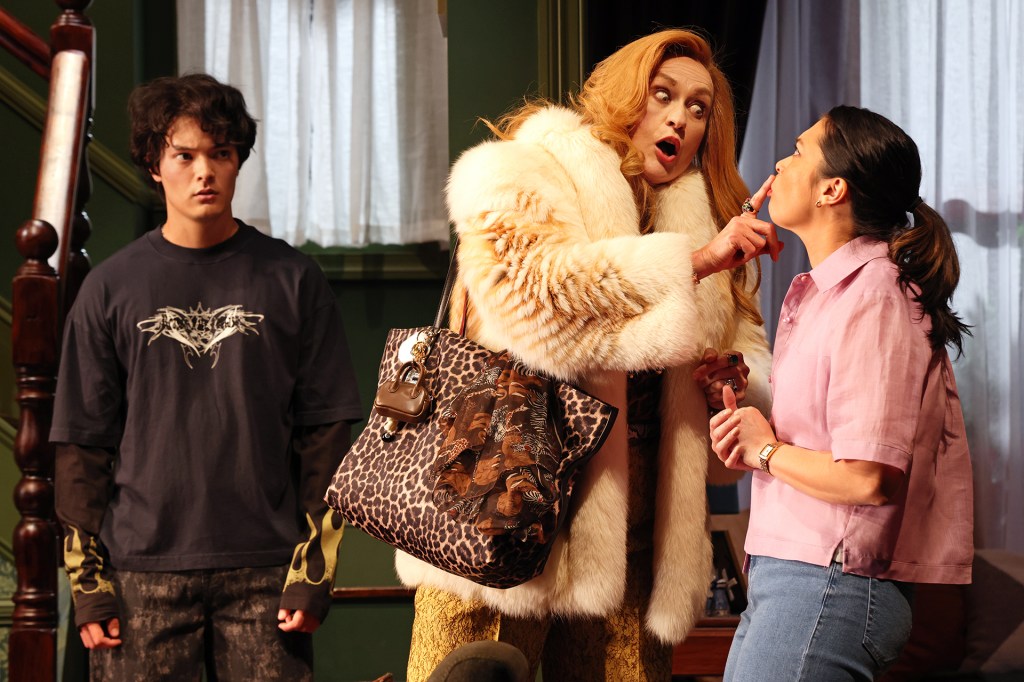
Ty Arnott, Helen Thomson & Alex Lee. Photo: Prudence Upton. Beneath the gags is a self-effacing disdain for the middle classes. Moffat pokes fun at a society that is smiling and genteel in person but cold and judgemental behind closed doors, where lying comes easily and genuine emotion is hard. As their unnamed, repeatedly forgotten neighbour (Huw Higginson) demonstrates, the Lindells may think of themselves as good people with a good life, but their condescension toward the people around them is barely masked by their manners. Into this steps Elsa, a wicked Mary Poppins who has less pretence, and fewer morals, but may actually prove to be just what they need. It’s a perverted version of American optimism vs dour British convention.
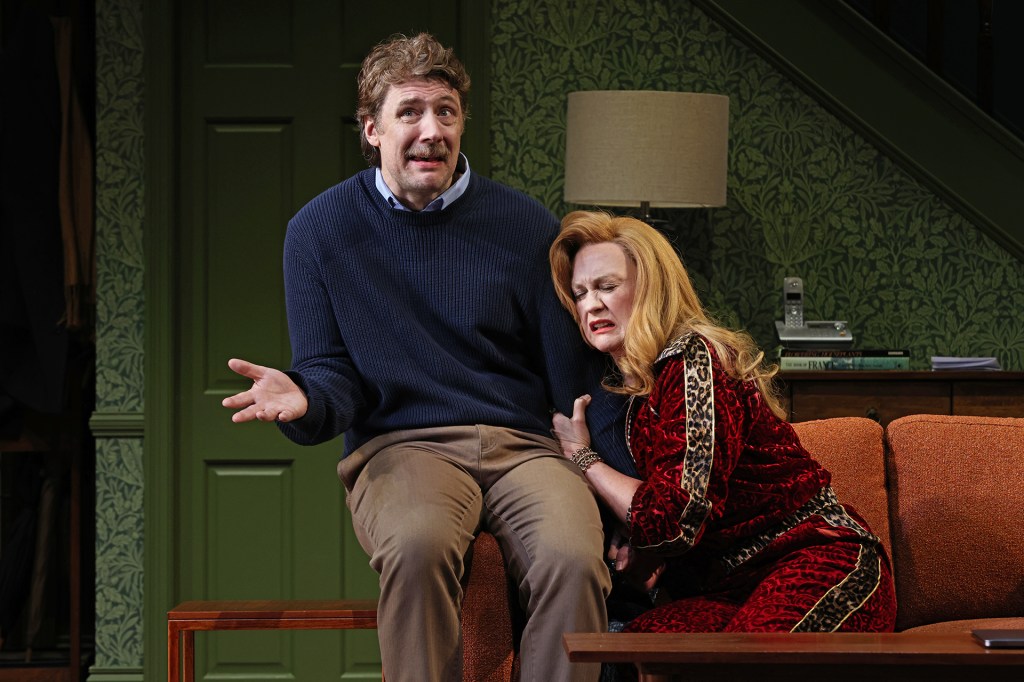
Tim Walter & Helen Thomson. Photo: Prudence Upton. Tim Walter is Thomson’s awkward, cringing equal in the comedy stakes as Peter. It’s a genuine pleasure watching Elsa make him squirm and dodge all his attempts to take control. Not all the other characters fare as well, with one quickly escalating to “stressed and manic” so early that it had nowhere to go for the next two hours making for a boring, one-note performance. I was praying Elsa’s murderous instincts might kick in. Mine certainly did.
The pacing is also hampered by an interval that could easily be removed, and by long blackouts between scenes that make for awkward pauses. With some judicious trimming, you could unearth a swift 90-minute crowd-pleaser hiding inside this two-hour running time.
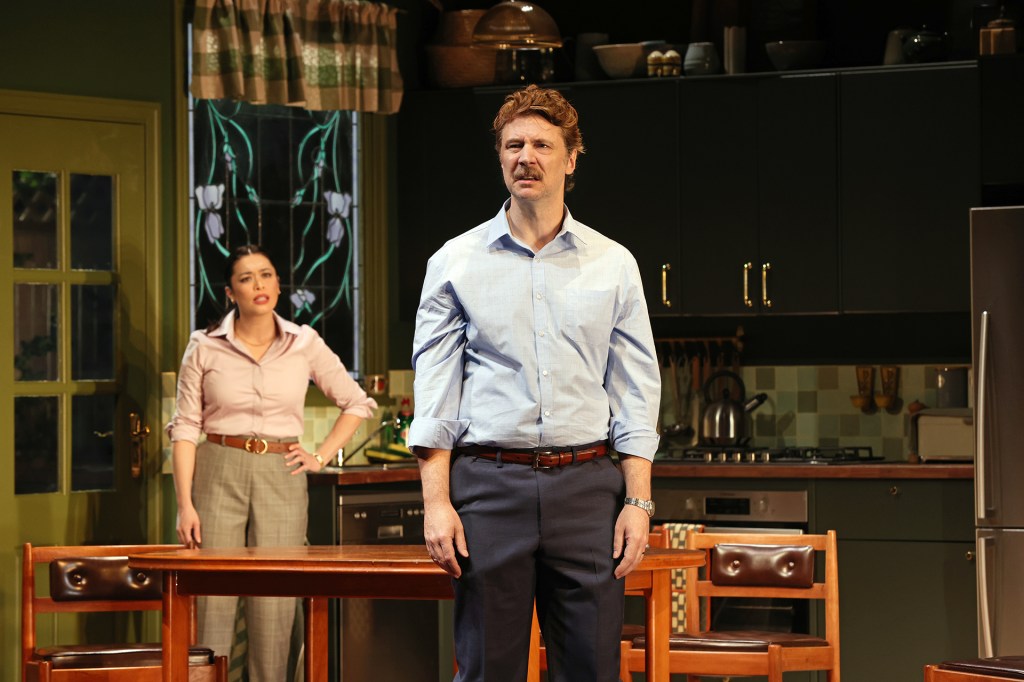
Alex Lee & Tim Walter. Photo: Prudence Upton. Those drawn to the theatre by Thomson and Moffat’s sitcom credentials won’t be disappointed by this admittedly light fare. The dialogue is nuanced in the best traditions of British comedy, and Thomson is an easy delight to watch. Hopefully The Unfriend isn’t Moffat’s last venture onto the stage.
-
The Man (Old Fitz Late) ★★★½
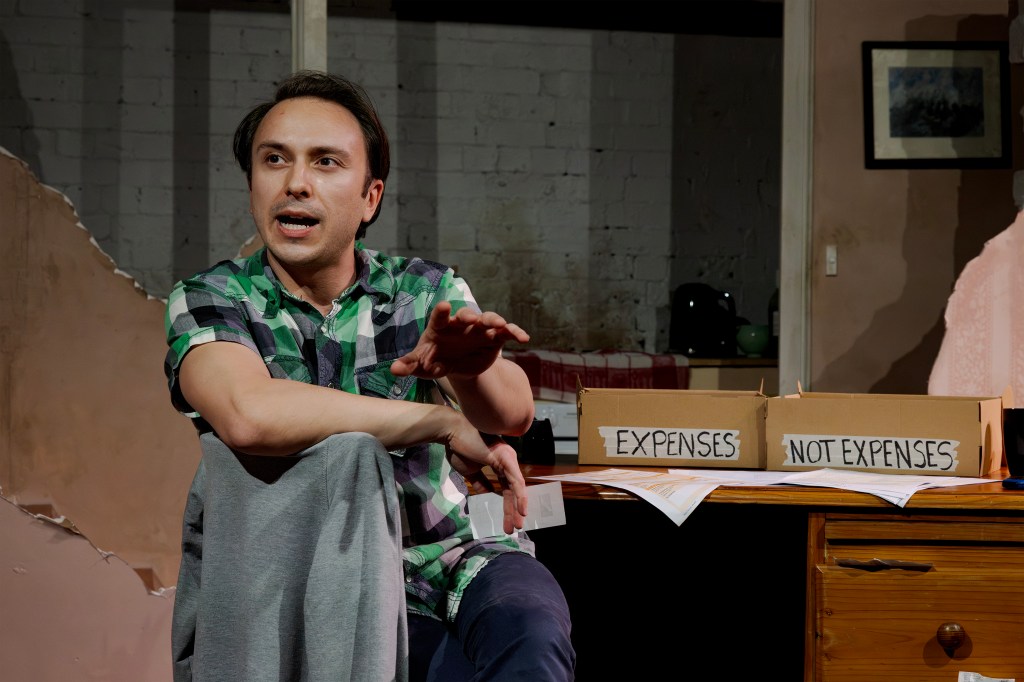
Written by James Graham. Presented by JB Theatre Co. The Old Fitz Theatre. 21 Sep – 2 Oct, 2026.
How can you make tax time fun? You know, tax time! Yay! One of Britain’s most celebrated playwrights, James Graham, is giving it a shot with The Man. Ben (Mike Howlett), a British bloke, sits down to do his tax return, his last year reduced to a pile of receipts. As he works out what he can claim back from HMRC and what he can’t, he takes us on a trip down memory lane through an eventful time in his life.
On entering the theatre, every audience member is handed a receipt, with instructions to give it to Ben when he walks around the auditorium asking for them. Each receipt sparks a different story, a mini-monologue about his year. Howlett has no idea which receipt will arrive next, and the audience soon discovers that the threads of Ben’s life reach us in a random order. It’s a fun conceit that gives the night a sense of play.
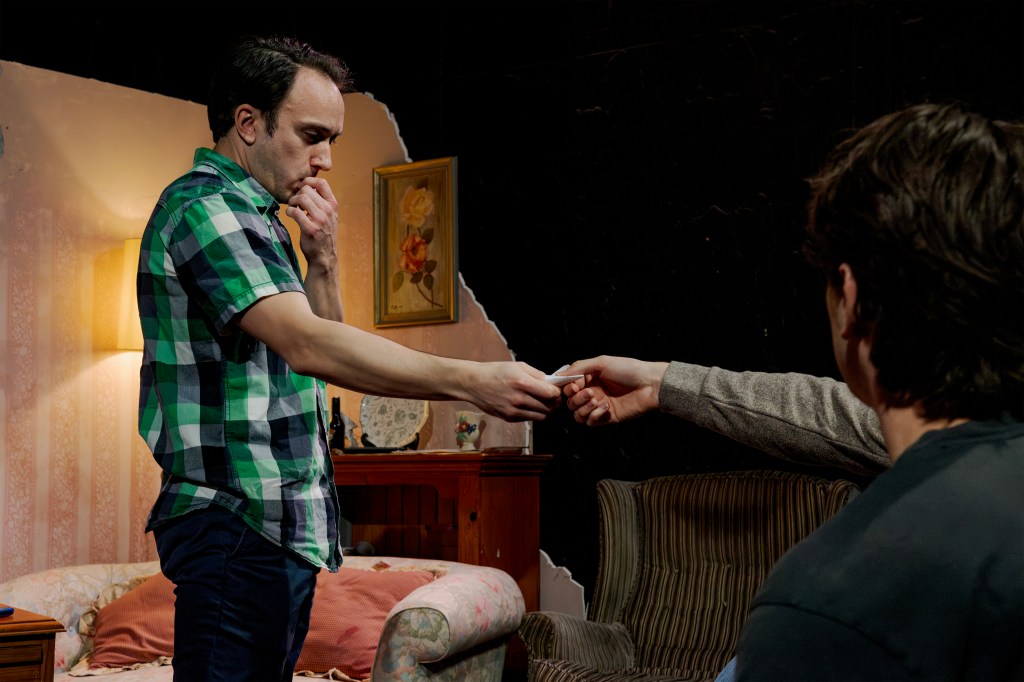
Mike Howlett. Photo: Phil Erbacher. Ben’s stories cover the start (and end) of romantic relationships, his twin brother’s medical condition, and silly anecdotes about coffee. Slowly, a picture forms of a man in a big city, feeling a bit alone. His efforts to start a new business are harder than he expected, and his relationships are sometimes strained.
Exposition is a funny thing. We often judge writing on how well it delivers necessary plot information without boring us. Opening voice-overs are usually pretty bad, and clunky pauses to spit out techno-babble are usually dull. Yet there’s a simple mathematics to storytelling that says you need backstory to explain the importance of events. Graham’s play suggests the order is irrelevant?
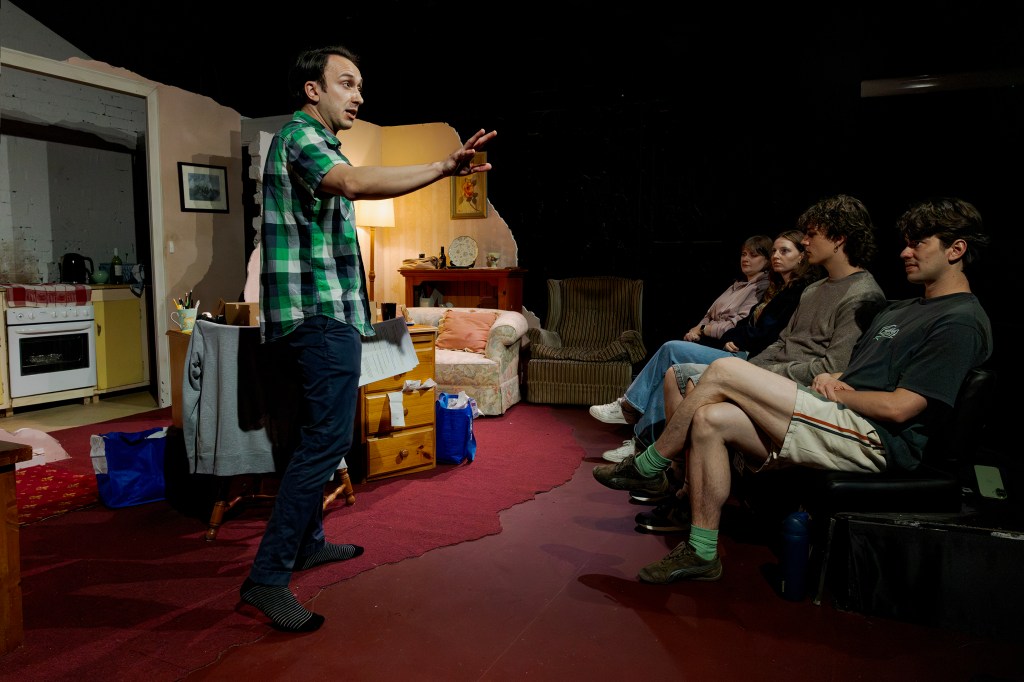
Mike Howlett. Photo: Phil Erbacher. The remarkable thing about The Man is how little the order of its revelations changes its emotional impact. Hear about Ben’s breakup with his girlfriend before the story of how they met, or after, and the news lands just as hard. Either order gives the facts a different flavour, sweet or sadly bittersweet, but the end result is more or less the same.
Ben’s receipts prompt some musical interludes (ah, remember iTunes?), and every so often he calls an HMRC help line, striking up an ongoing conversation with Lisa (Claudia Leon) in Wrexham, a friendly and understanding presence on the other end of the line. Those calls give the play a subtle shape and an overarching story.
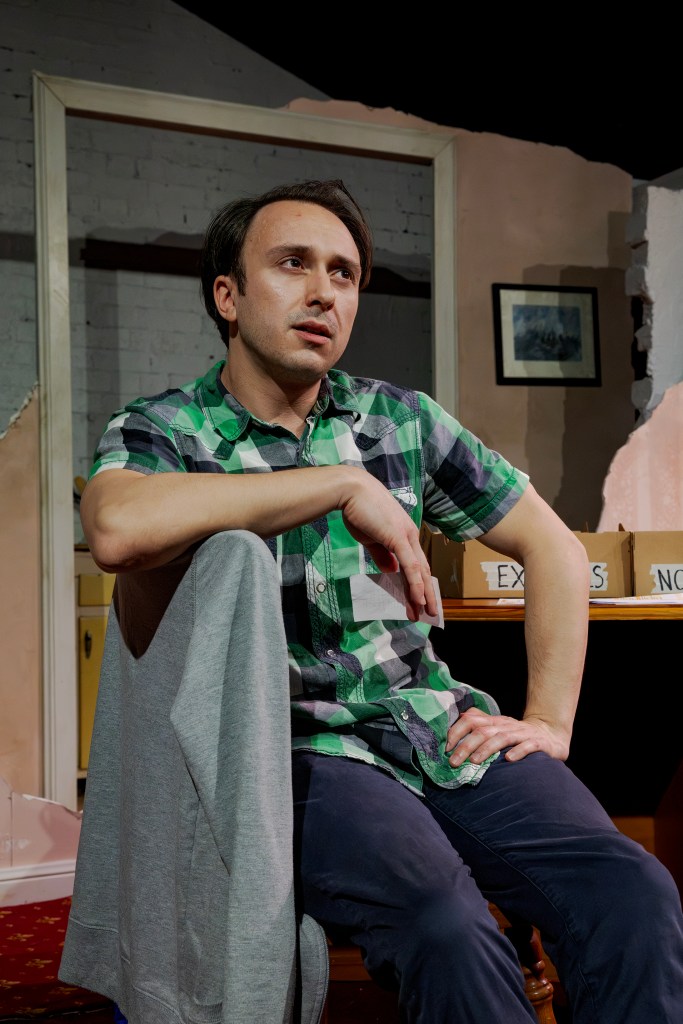
Mike Howlett. Photo: Phil Erbacher. At its core, The Man is almost a therapy session, with the audience standing in for the quiet, attentive therapist, listening for the repeated themes and the little things Ben is fixated on to find the deeper truth behind his purchases. The stories may seem to ramble, but they are slowly filling in a much larger picture. It’s a surprisingly elegant piece of storytelling that relies almost entirely on Howlett’s ability to engage and hold the audience, which he does with ease.
The Man premiered in 2010 and is an early work by Graham, and it has the energy of a young creative playing with form and pushing at boundaries. Two years later, his play This House would premiere at the National Theatre and push him into the top ranks of contemporary British playwrights and screenwriters. His new film Ink, based on his own play, is due out soon, directed by Danny Boyle.
The Man is a playful experiment with theatrical form that pays off. Oh, and I should point out that this review can, like the play, be read in any order. Apart from the first and last paragraphs, you can shuffle the others as you like. Did that alter your impression of the play or the review? I’m going to guess not as much as you thought…
-
The Elevator (Ensemble) ★★★★
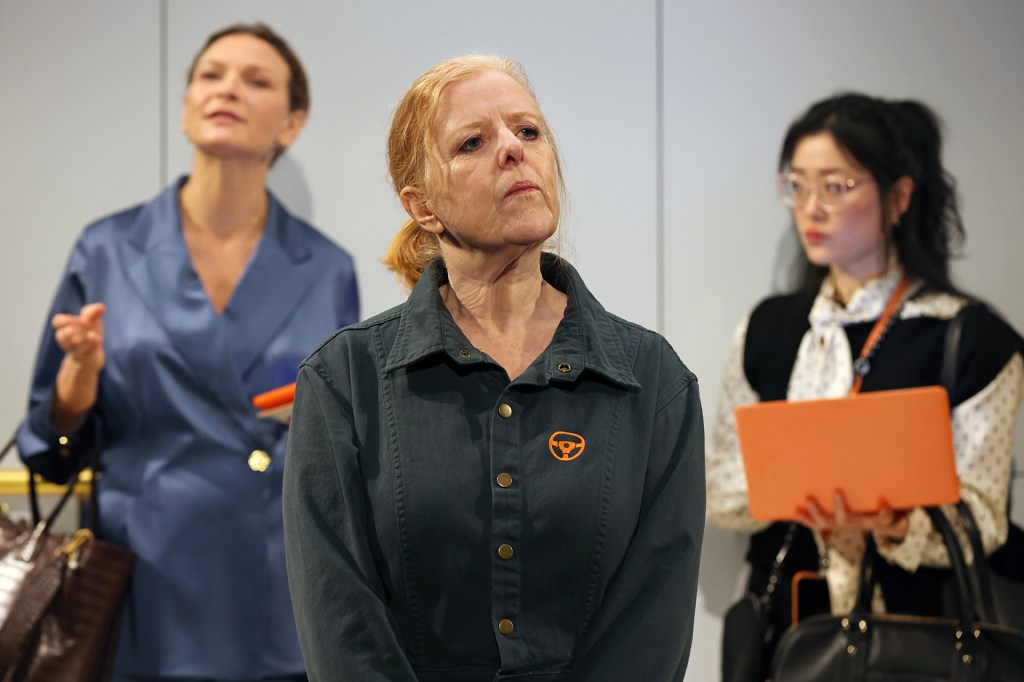
Written by Eloise Snape. World Premiere. Ensemble Theatre. 18 Sep – 18 Oct 2026.
Waves of panic, waves of nausea, waves of feminism — they’re all locked in the confined space of The Elevator, Eloise Snape’s snappy corporate comedy that goes hunting for the humanity behind high-tech consumerism.
Riding the elevator to the 48th floor to hold a crisis press briefing, CEO Margot (Leeanna Walsman) is trying to wrangle her flustered new comms manager Alison (Shirong Wu) and get their story straight. The company’s driverless car has hit a pedestrian who is in a critical condition in hospital, and they have to get their spin right. Sharing the confined space with cleaner Ollie (Di Adams), things go from bad to worse when the AI-controlled elevator suddenly shuts down, leaving them stuck. Without any distractions, the three women are forced to deal with each other as actual human beings, and it doesn’t go well.
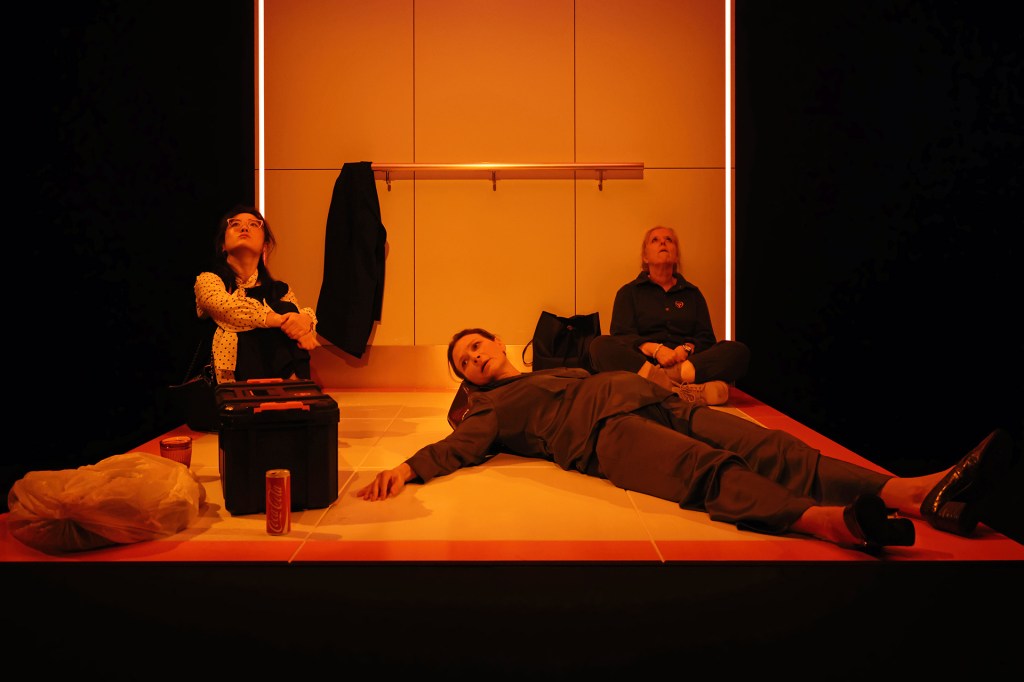
Shirong Wu, Leeanna Walsman & Di Adams. Photo: Prudence Upton. After a number of heavy dramatic plays (STC’s Girls & Boys and Old Fitz’s Dixon & Daughters), sitting back and experiencing Shirong Wu’s flailing comedic performance was like a balm for my soul. From the opening moments, her awkward banter with Leeanna Walsman’s no-nonsense boss set the tone for the beautifully constructed comedy that was to follow.
Walsman’s Margot is a grotesque parody of a neoliberal “girlboss” hurtling toward a glass cliff — a corruption of the promise of second-wave feminism. After literally firing off emails as the epidural kicked in, and leaving her newborn in an incubator to return to the office the next day, she has been completely co-opted by neoliberal capitalism — stripping away her humanity even as her body keeps asserting itself in very physical, fluid-heavy ways.
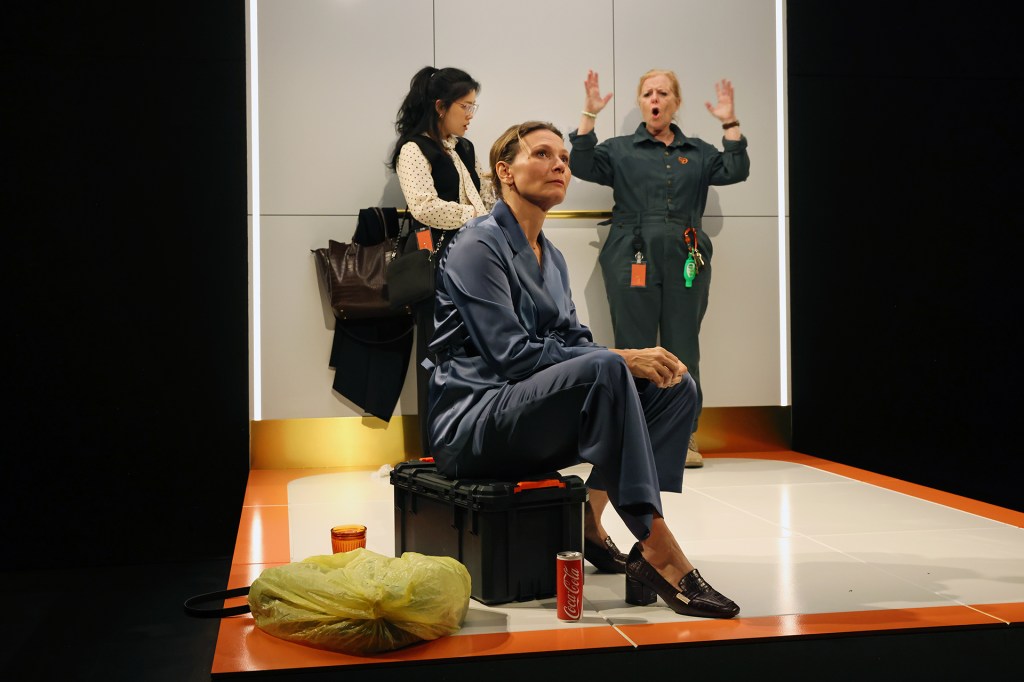
Shirong Wu, Leeanna Walsman & Di Adams. Photo: Prudence Upton. Her opposite is the down-to-earth, eclectic Ollie — a hard-working world-traveller who values experience and wisdom over money and status. In between stands the young Alison, who has been promoted out of her depth after a round of vicious redundancies and is drowning, not waving, in the chaos. Trying to juggle both the needs of her new job and a crisis at home, she is torn between the two worlds.
It’s a great setup for comedy, and a critique of the supposedly technocratic corporate lords who are increasingly making decisions that affect us all, prioritising investors and money over the people on the street. The script’s AI trappings are more set dressing than an integral part of the story (a bit like when Apple talks about Siri but we all know they’re just not in the AI race in a meaningful way) and make for some funny punchlines along the way. The aim of playwright Eloise Snape’s arrows are the corporate world’s dehumanising effects on us all.
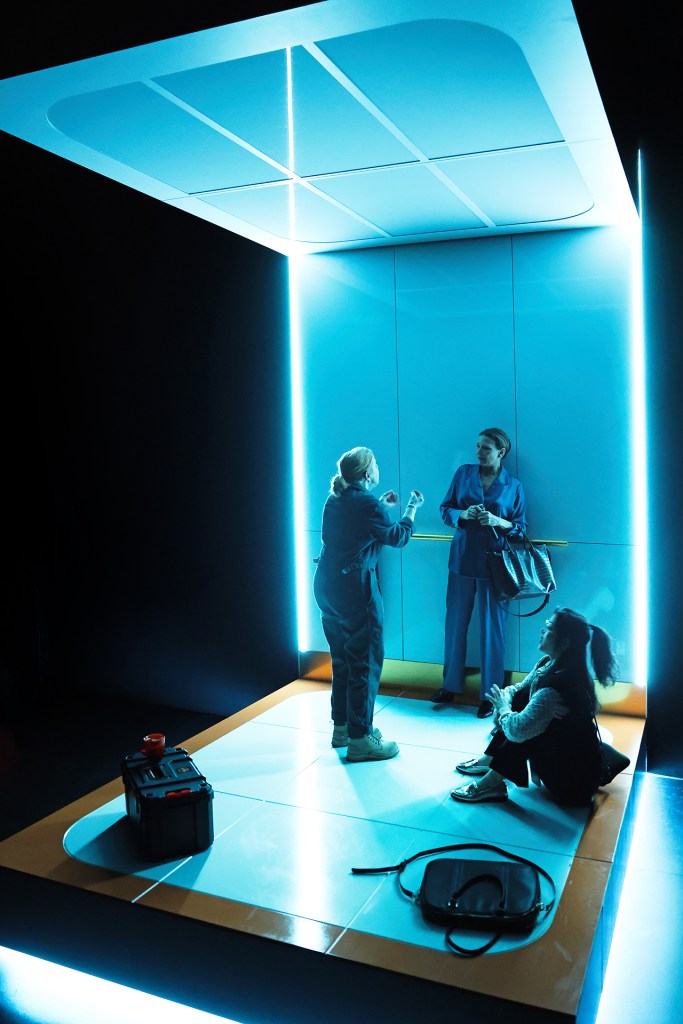
Di Adams, Leeanna Walsman & Shirong Wu. Photo: Prudence Upton. Kelsey Lee’s executive elevator set hints at Star Trek — or more appropriately, Galaxy Quest — style minimalism, giving Daniel Herten’s sound design and composition room to breathe. Johnny Nasser’s voice of the elevator is a comic gift, and Keerthi Subramanyam’s costumes naturally blend into the story.
Eloise Snape’s script is wickedly tight in its execution — a 90-minute comedy that also hits some big topics with full force, balancing the jokes with the message. The sense of timing, executed with precision by director Anthea Williams and the cast, gives the play solid momentum as it ducks and weaves its way through exposition, gags, and character development. The plot’s hidden revelations are neatly planted without drawing attention to themselves, for a satisfying conclusion.
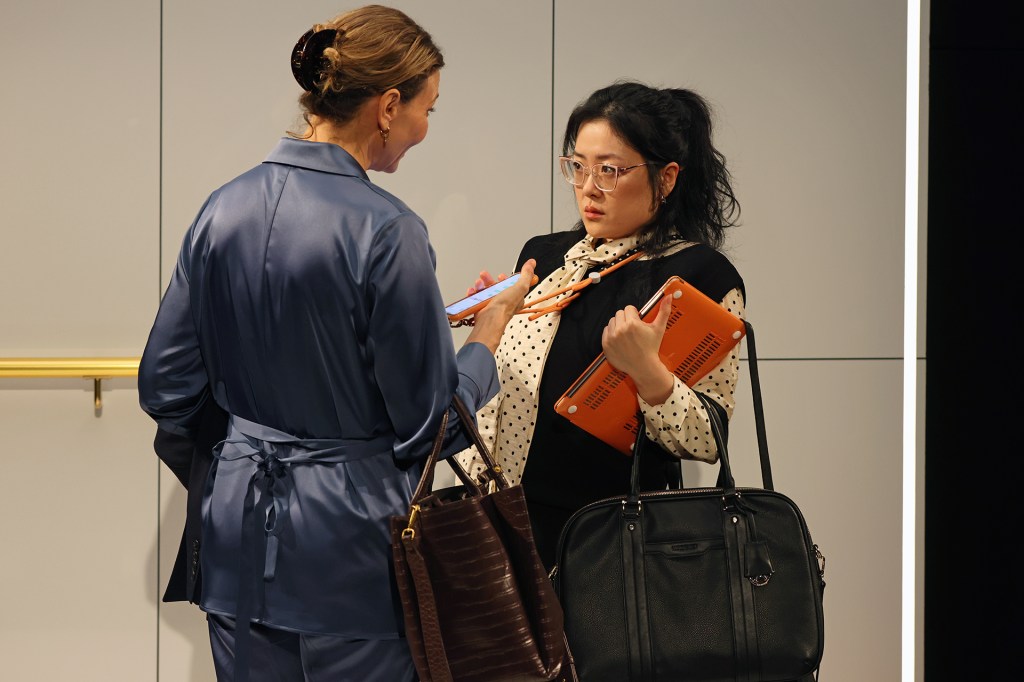
Leeanna Walsman & Shirong Wu. Photo: Prudence Upton. There is undoubtedly a deeper feminist reading to be made, looking into the competing tensions of the characters — I’ll leave that to someone more qualified than I — but for my capitalistic cultural money, The Elevator is a smash, and well worth your cold hard dollars.
-
Dixon & Daughters (Old Fitz) ★★★★½
Written by Deborah Bruce. Australian Premiere. Presented by Tiny Dog Productions. Old Fitz Theatre. 18 Sep – 3 Oct, 2026.
There is something overly familiar about Deborah Bruce’s Dixon & Daughters. A family of women forced to confront each other over the sins of the past. The long shadow of abuse and the longer road to recovery. The withholding mother. The practical daughter. The wallflower. A cathartic denouement leading to a tentative peace. Think elements of August: Osage County,The Memory of Water or Snake in the Grass.
But rather than familiarity breeding contempt, knowing the structure here gives Bruce room to extend the narrative and offer a step beyond the usual finale. It’s in the closing moments that the play lets the air in, giving us a reason to hope for better.
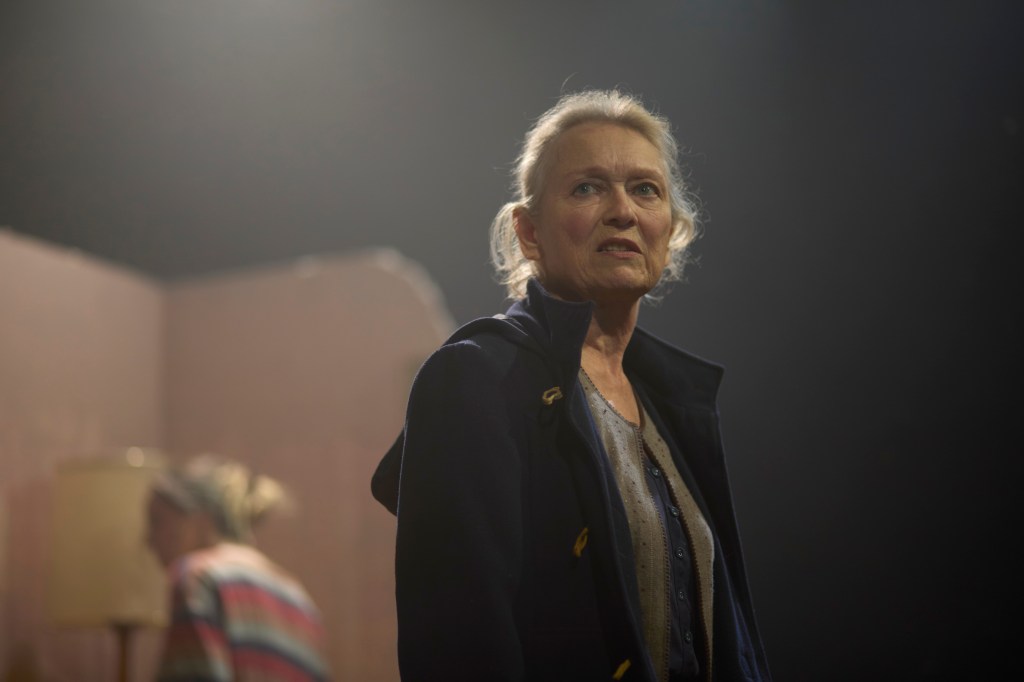
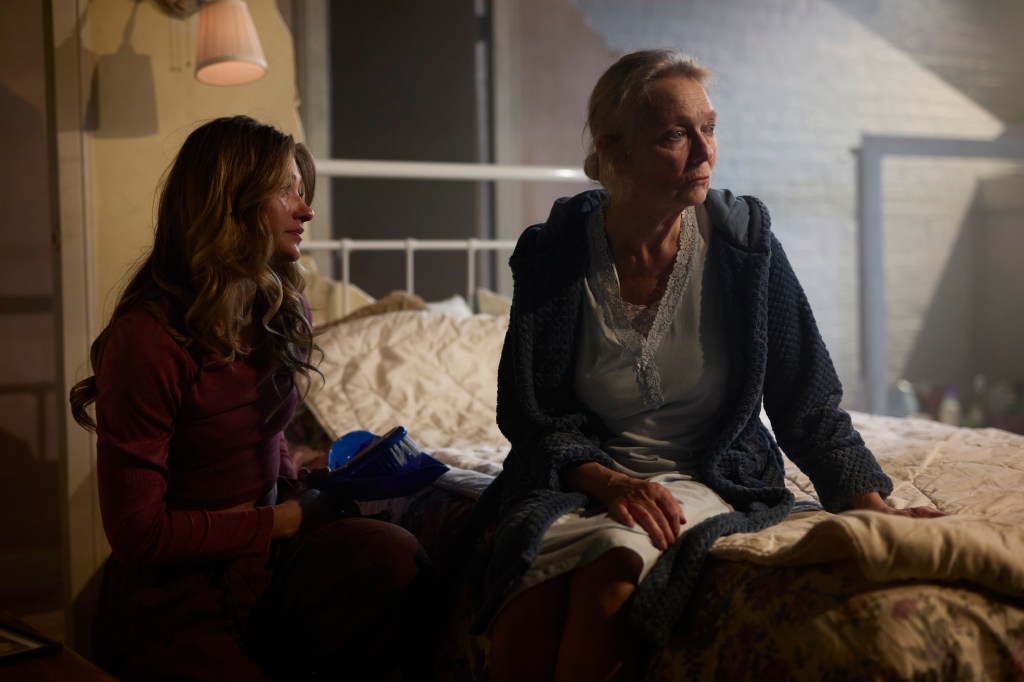
Vanessa Downing. Photo: Campbell Parsons. Mary (Vanessa Downing) has come back home from prison in a foul mood. Her oldest daughter Julie (Romney Hamilton) has been sleeping in her house after separating from her abusive husband. Her practical younger daughter Bernie (Linda Nicholls-Gidley) is having none of her mood. Mary just wants some peace, but there is none to be found. Little does she know that Julie has been talking to their half-sister Briana (Sarah Jane Starr), an outcast since the trial that sent Mary away. Now that Mary is out, Briana wants to clear the air — but some betrayals cut too deep, and some truths prove too hard to face.
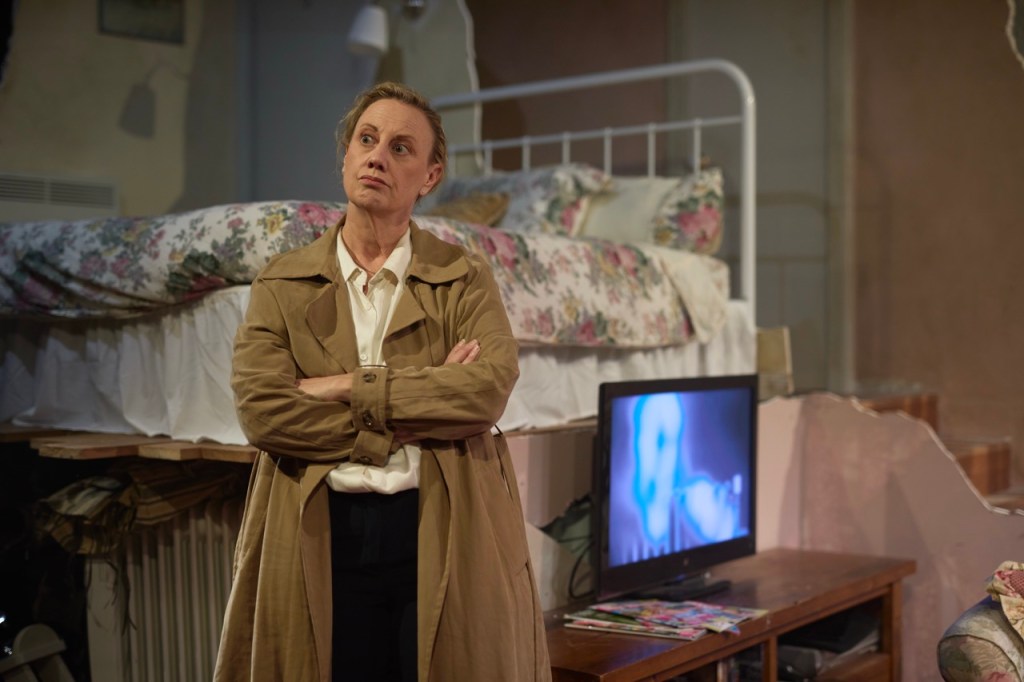
Linda Nicholls-Gidley. Photo: Campbell Parsons. It’s the performances, under Kim Hardwick’s direction, that give Dixon & Daughters its life. Bruce has crafted deeply realised characters, slowly drip-feeding the audience the full context as the night goes on. Nicholls-Gidley’s Bernie is full of love soured into thinly veiled disdain by years of obligation. Hamilton’s Julie is flailing and worn down, broken by the physical abuse from her husband. Starr’s Briana arrives determined, almost brittle with self-help resolve. And Downing, with her sharp, caustic Mary, stands like an unfeeling core to these orbiting, damaged souls. Why is she more invested in helping her young fellow inmate Leigh (Rylea Eilis) than her own children?
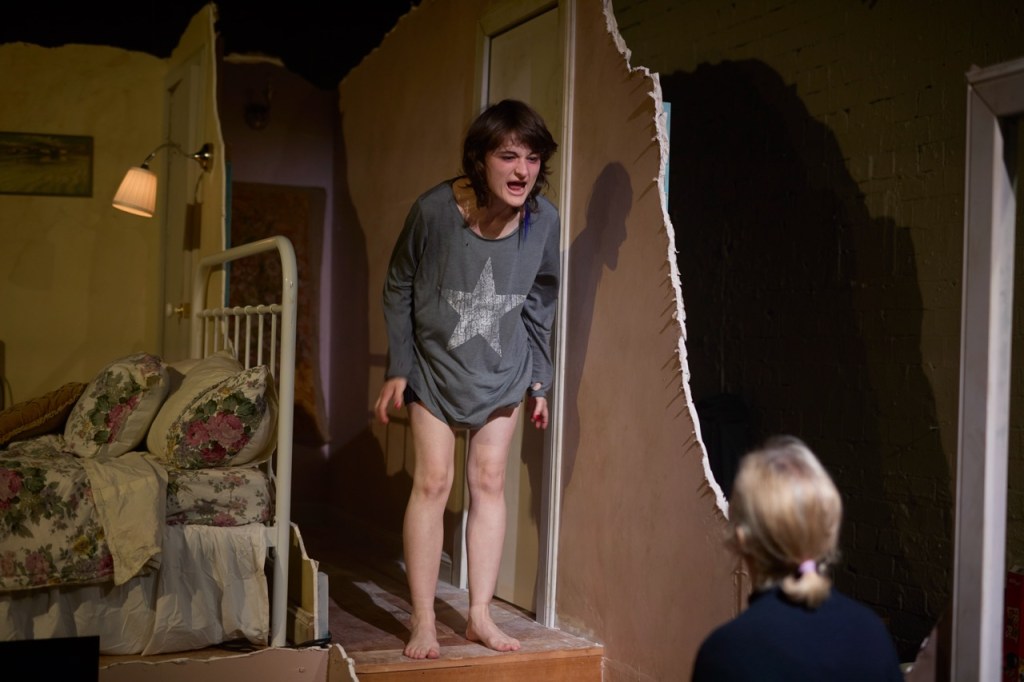
Rylea Eilis. Photo: Campbell Parsons. The family dynamics feel authentic — the product of years of mutual frustration, a history of disappointment and silence running through the dialogue. It’s a pleasure to watch these performances up close in the intimate space of the Old Fitz.
As the revelations pile up and our understanding of each character shifts, the performances deepen with them. I was especially struck by how far my view of Sarah Jane Starr’s Briana turned — from grating to deeply compassionate and strong — over the play’s 90-minute running time. It’s a subtle shift that quietly redirects the whole play.
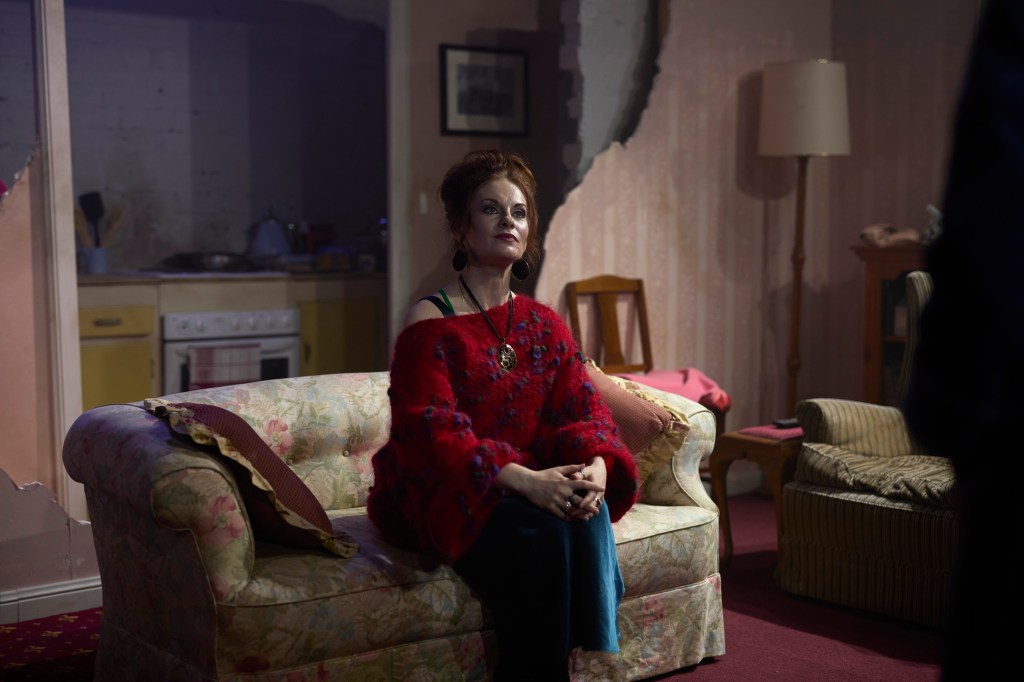
Sarah Jane Starr. Photo: Campbell Parsons. The design team’s work is just as accomplished. A multi-level set, in the Old Fitz space? You’ve got to be joking. But somehow set designer Mia MacCormick and set builder David Hodgkins have created a two-storey home in miniature, and Amelie Brown’s costumes are rich in character. This one is vying for the best production design in the Old Fitz – and there have been some great ones this year.
Bruce knows how to mine wry comedy from pain, and Dixon & Daughters earns some real laughs along the way. While much of it feels familiar, it’s the final act that pushes past the genre’s usual tropes, as Briana proves to be the one best placed to help others — breaking the cycle of abuse and teaching Bernie’s daughter Ella (Danette Potgieter) why it matters to speak out early, and not let abusers get away with it. How else does the world change? It’s in these closing moments that the play earns its flowers — going from a remix of trauma-play tropes into something that stands on its own.
-
Girls & Boys (Sydney Theatre Co) ★★★★
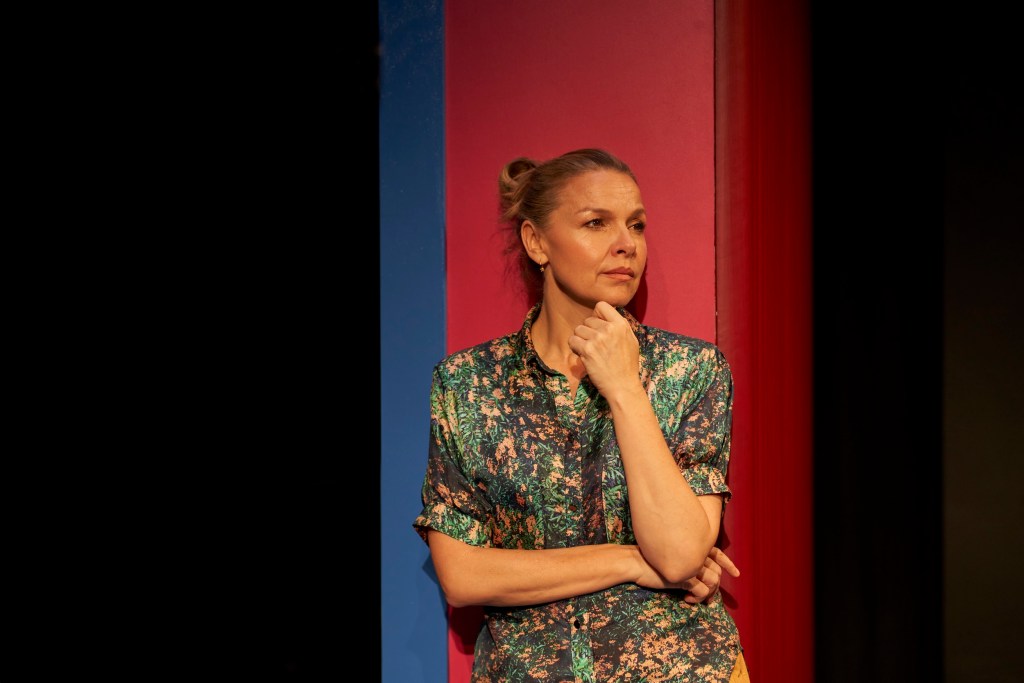
Written by Dennis Kelly. State Theatre Company South Australia Production. Sydney Theatre Company. Wharf 1 Theatre. 17 Sep – 1 Nov, 2026.
Is this “incomprehensible violence thing” an integral part of humanity? From mass shootings, to football hooligans, family killers and Viking hordes – is this just part of who we are as a species? As the unnamed narrator in Dennis Kelly’s Girls & Boys asks us, “how can you understand us without understanding it?”
Justine Clarke plays the unnamed woman at the centre of the story. A working-class Brit who builds a life for herself, busting her way into a media career through sheer bravado and hard work. She and her unnamed husband are building their own careers from scratch before they have two children – first a young budding architect daughter, and then a rambunctious young son.
But when hard times hit, she is caught surprised by the changes in her husband – is he having an affair? Is he hiding something? From the vantage of this possibly unreliable narrator we try to piece together the story that she only half knows.
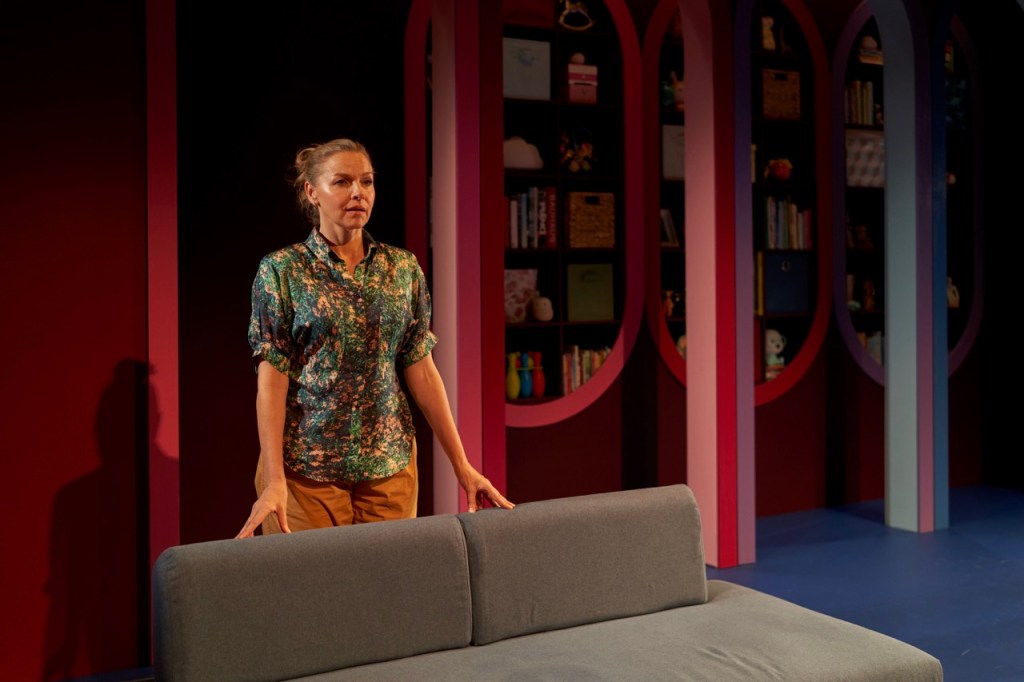
Justine Clarke. Photo: Sam Roberts. You can see why Mitchell Butel wanted to revive this 2023 production of Girls & Boys, returning it to Sydney with an elevation to the STC main stage. This is in many ways a two-hander – Justine Clarke’s dynamic performance shares the stage with Dennis Kelly’s masterful writing. Together they assuredly take our hand and lead us through this exhibition of joy, love and incredible horror. Combined with Butel’s emotionally resonate direction, more directing the flow of energy than the flow of movements, it’s a powerful combination.
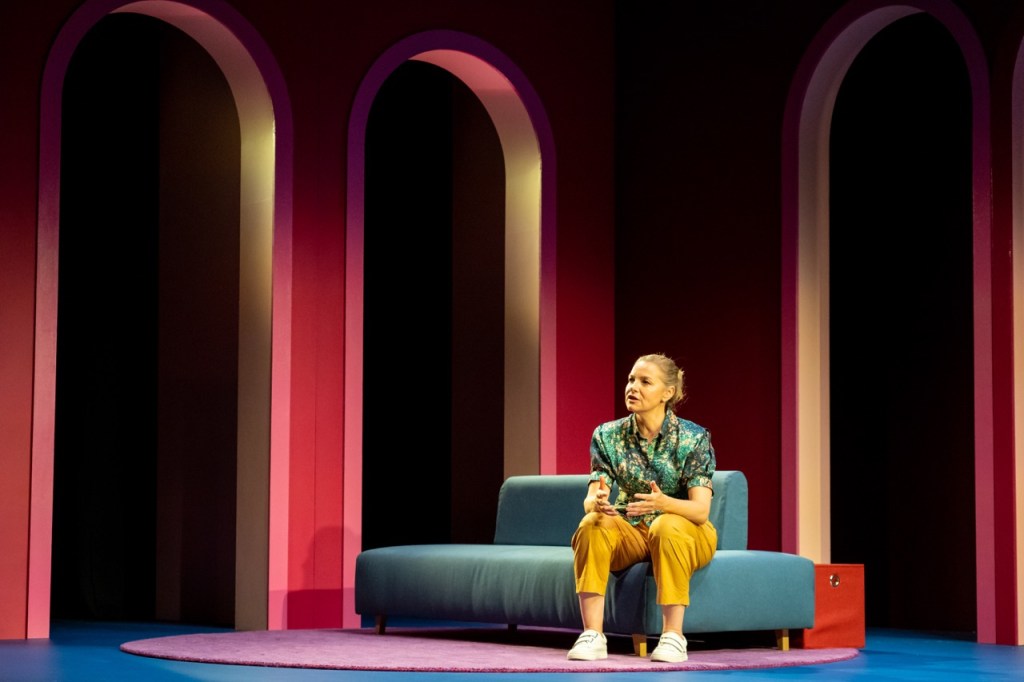
Justine Clarke. Photo: Matt Byrne. But watching Girls & Boys this time I was struck by a story thread I had not really registered before. On previous watches (I saw Girls & Boys first back in 2018, have listened to the audiobook and read the play text since) I was originally caught up in the domestic horror and never heard the commentary about society at large. Perhaps it is because of my very 2026 fears for our rules-based order and societal gains that a new resonance has crept in. This time the discussion of the great things our society has achieved, and the systems we’ve created to subdue our worse impulses, stuck out to me.
“You have never had to kill anyone. You have never had to defend your home, you have never had to flee into the mountains with your family, you have never had to destroy another human life – in what other time in history could that be said?”
And by extension, as these system degrade, or are actively dismantled by those who hate them or those who simply take them for granted, we find ourselves slipping into a more barbarous world. As our narrator concludes, “We didn’t create society for men, we created it to stop men.”
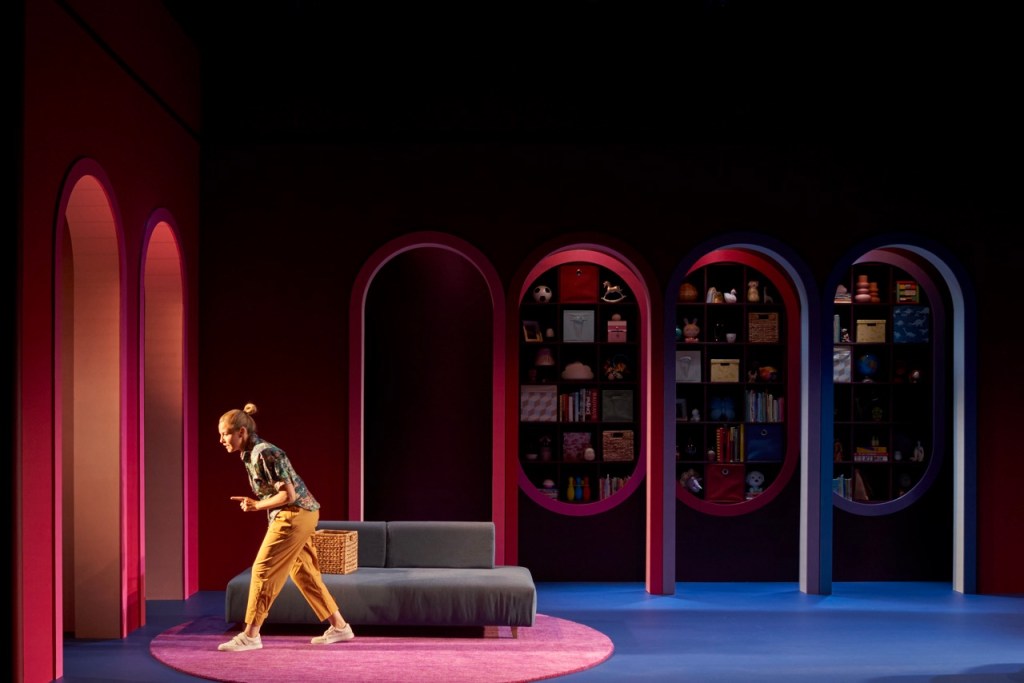
Justine Clarke. Photo: Sam Roberts. For me the only negative aspect of this production is the design language which, try as I might, I can’t understand in the context of this play. The warm, playful visuals stood at odds with the emotional journey against a set that looked more like a pop-up day care than any domestic space.
And if I may be glib in the face of such heavy subject matter, of all the heinous evils presented in the play the worst by far is the patterned green shirt and marigold trouser combo Justine Clarke is forced to wear for the 1 hour 50 minute duration. Sheer cruelty.
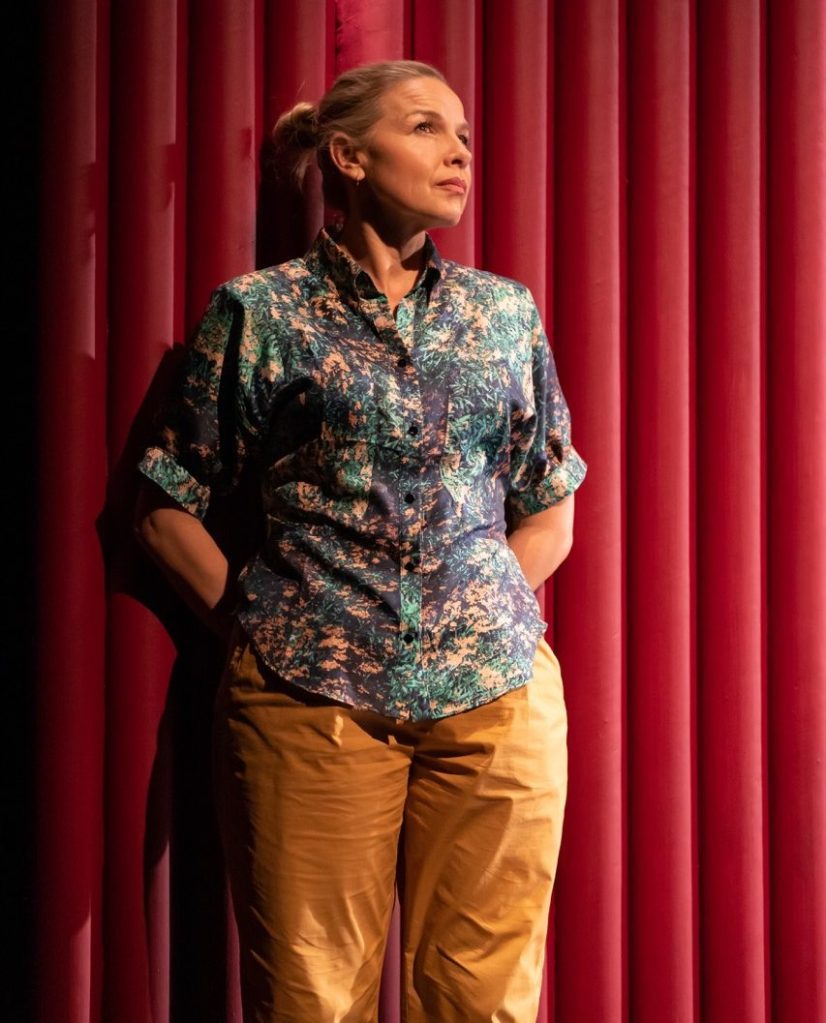
Justine Clarke. Photo: Sam Roberts. Jokes aside, Dennis Kelly’s Girls & Boys is a triumphant piece of writing that will challenge and move you. As we get regular reminders of similar crimes in the news, this play has lost none of its bite over the last decade. With a performer like Justine Clarke in the lead, you simply can’t lose. This is one play you definitely must see.
-
How My Light Is Spent (KXT) ★★★½
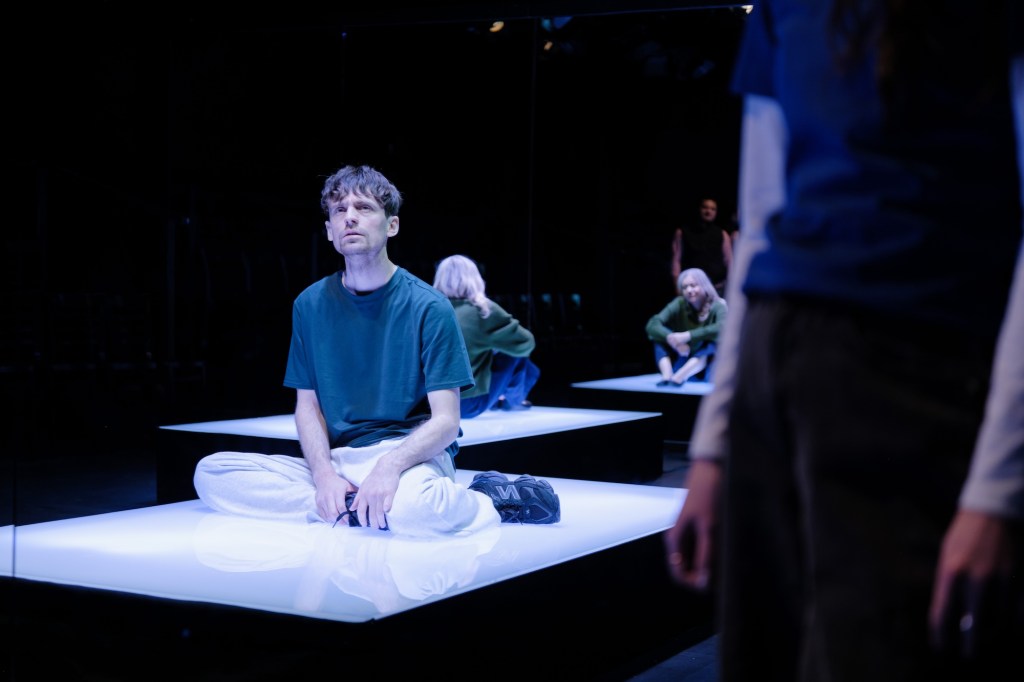
Written by Alan Harris. Presented by Secret House in association with Bakehouse Theatre Company. KXT on Broadway. 11-26 Sep, 2026.
“Do we have a certain amount of light, and when that’s gone, we’re gone?”
Jimmy (James Smithers) and Kitty (Jane Angharad) are stuck in Newport, Wales, dreaming of different lives. Jimmy is in his 30s, living with his mother and working in Newport’s only drive-through donut shop. Kitty is a phone-sex worker saving to go to university. At first, their phone conversations are purely sexual, but over months the socially awkward Jimmy shares more about himself than just his fantasies — until one day Jimmy wakes up to discover that his hands have disappeared…
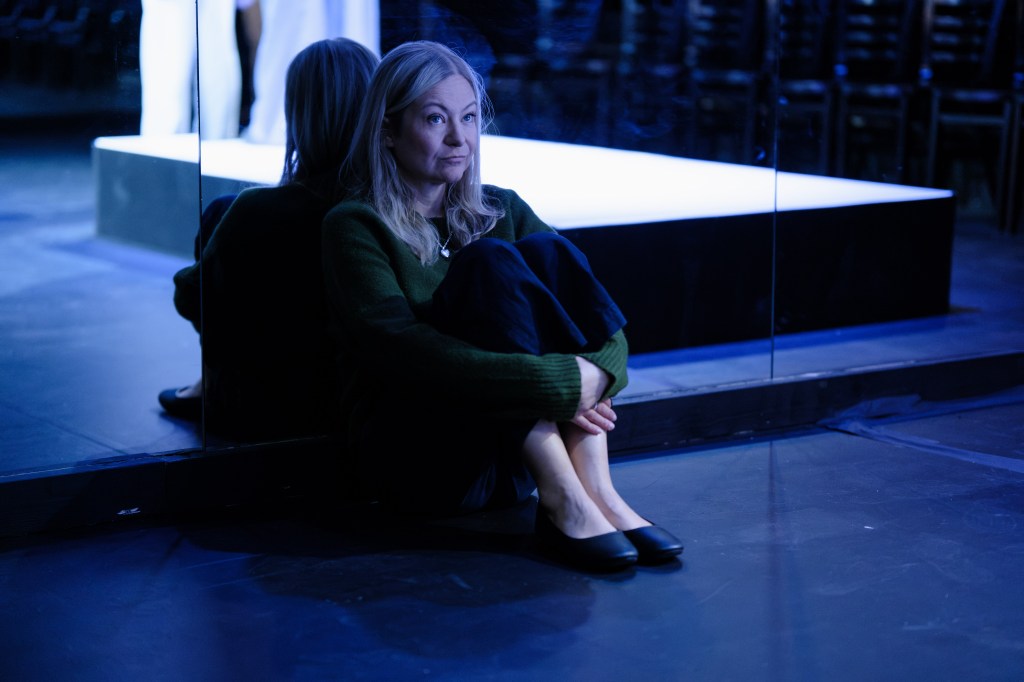
Jane Angharad. Photo: Robert Catto. There is a surreally silly sweetness to Alan Harris’ short play. Beneath the magic lies the loneliness of people lost around the edges of modern life. Maybe the best you can hope for in life is a wank and a donut?
I couldn’t help but think about another KXT show from earlier this year, Gary Owen’s Romeo & Julie, another Welsh story of a young couple trying to find a path to a better future, and in some ways Jimmy & Kitty could be their older/multiverse versions. Both plays are filled with simple, honest heart, but where Romeo & Julie had the advantage of youthful optimism, Jimmy & Kitty feels like desperation has clawed deeper into their psyches, leading to a fantastical finale.
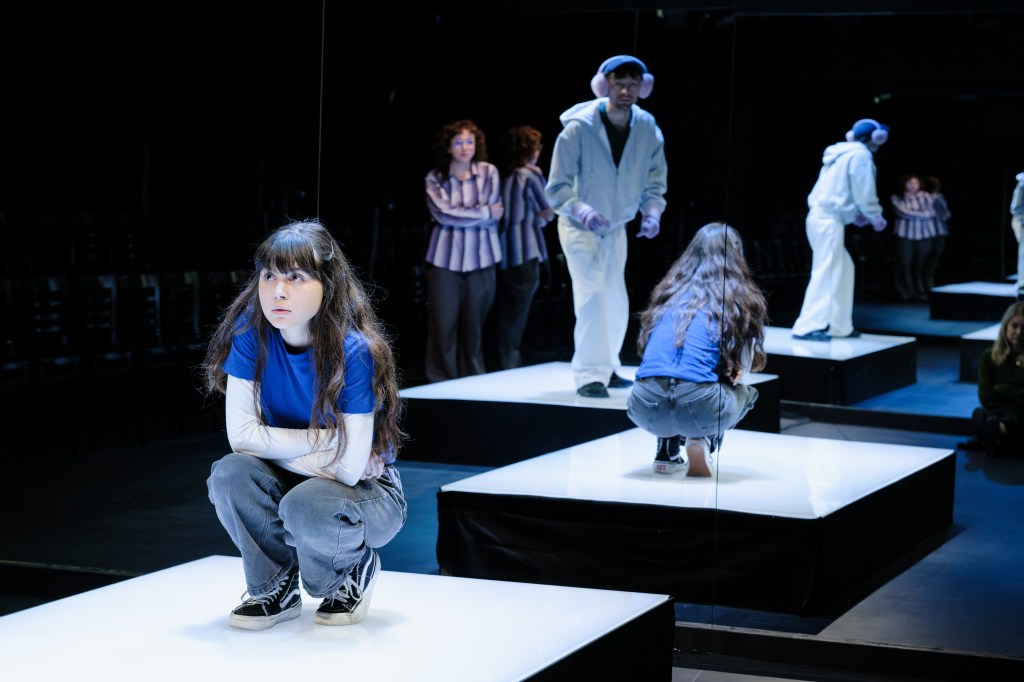
Kira McLennan, Renée Billing & James Smithers . Photo: Robert Catto. Jimmy & Kitty’s story is helped along by a particularly dry-tongued “Greek chorus” — Renée Billing, Pita Lolohea and Kira McLennan — who double as supporting characters. Director Braiden Toko uses James Smithers’ set of light boxes and mirrors to create an intimate space that bridges the physical separation between the characters. They rarely look directly at each other, but the connection always feels strong.
In many ways this is a slight work. Just over an hour long (I won’t lie, I rejoiced at the running time) and focused on a simple story, it would be easy to dismiss were it not for the easy elegance of the comic writing and the charm on display from the whole cast.
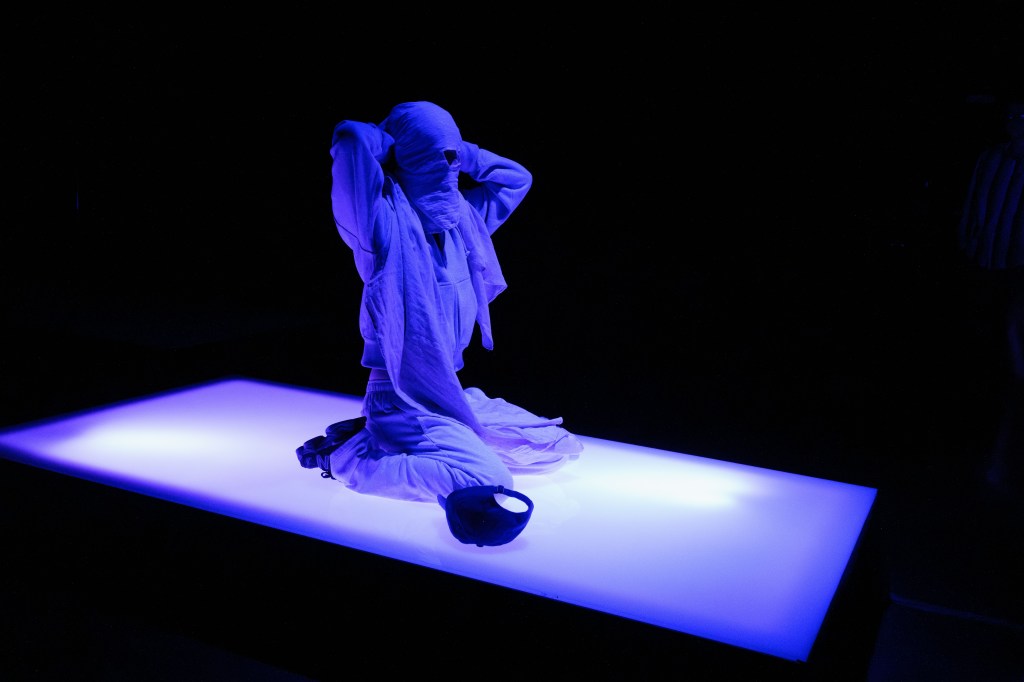
James Smithers. Photo: Robert Catto. While the ending of How My Light Is Spent reaches for a beautiful, magical conclusion to these characters’ pain (and it is nice to indulge in a beautiful fantasy), only one feeling really remains… melancholy. Real life can’t be this poetic in the end.
-
Cold War 2.0 (Sydney Fringe)

Presented by Doppelgangster. Sydney Fringe. Fringe on the Rocks. 9-20 Sep, 2026.
N.B. – I’m not giving star ratings to Sydney Fringe shows.
I wasn’t going to review Cold War 2.0. I walked out of the theatre bewildered, frustrated and annoyed — while feigning mild bemusement to my friends who attended with me. I really wasn’t going to write this review because I felt like I had nothing to say about a show that is bombastic and seems to say so much — but I just couldn’t grasp it in any form that would translate to anything approaching a “review.” As I write this, I’m still not sure I will post it — is this a review? We’ll find out.
But then, as I was sitting in the afternoon sun, unironically listening to Mariah Carey’s seminal EP “MTV Unplugged” (I’ve rediscovered my CD collection) I was struck by one of my favourite quotes:
“Writing about music is like dancing about architecture.”
No, that’s a lie, the quote I thought of is actually “Talking about love is like dancing about architecture,” which is a misquote from a mediocre 90s movie I secretly love (“Playing By Heart,” starring Gillian Anderson, Sean Connery, Angelina Jolie and many more). But then no one has any idea whose quote it is, or where it started originally so it’s all fair game really.
And I realised why I was struggling to wrap my limited mental faculties around Cold War 2.0. I was trying to write about a piece of art that felt more like a dance work than traditional theatre. I was trying to be literal, linear and considered in the face of something that was never designed that way. Suddenly all my feelings and frustrations clicked into place — what if I stopped trying to understand its words and simply felt the performance.
I have no idea if that is what provocateur collective Doppelgangster had in mind, but that is how I responded to the work, and all responses are valid in art so fuck what they think.
Cold War 2.0 made me feel stupid, with its offhand references to political theory, philosophy and other smarty-pants blah-blah I never studied. Cold War 2.0 made me angry because it made my ears ring incessantly from the screams of music (I’m calling this a musical by the way. Cold War 2.0 is a punk musical, whether they fucking like it or not). Cold War 2.0 made me sad. Sad at the flailing impotence of rage, sad at the ineffectual nature of art to create change, sad at the fact that Sydney’s theatre scene is so narrow that we rarely get work with this much emotion, rough power or devotion.
Don’t get me wrong — I kinda hated the whole damn thing. I would not go back to watch it again. But I love the fact that it exists and refuses to conform.
Take the lyric: “Titannic was an inside job. Never was an iceberg. Never was a god.” – what does god have to do with it other than forming a slant rhyme? Urgh – funny lyric, but also still annoying for its imprecision.
I felt uncomfortable by design (the paranoia of losing your phone, or the fear of being pulled up on stage, or even dancing in public) but the question is, what was the point of that discomfort? Falling back to those safe and familiar critical maxims — What is the artist trying to do? Are they doing it well? Is it worth it? The answers are, ‘I don’t know’, ‘I don’t know’ and ‘if that’s your kind of thing’, but they were definitely doing something with a lot of sweaty gusto.
Like a screaming baby, it may not be the most nuanced or effective way to communicate, but you get the idea pretty quick — I’m hungry, or I just shat myself.
What I can confidently say is Cold War 2.0 is a show that I saw. After that, you’re on your own — buy a ticket and see for yourself. Or don’t. Up to you. But if you do — take ear plugs!
P.S. I hope performer Tobias Manderson-Galvin’s ribs are okay.
P.P.S. Don’t be fooled by the promo image, there is no polar bear in the show.
P.P.P.S. Oh crap, they’re going to use “I just shat myself” as a pull quote aren’t they?
-
Housework (Sydney Theatre Co) ★★★★
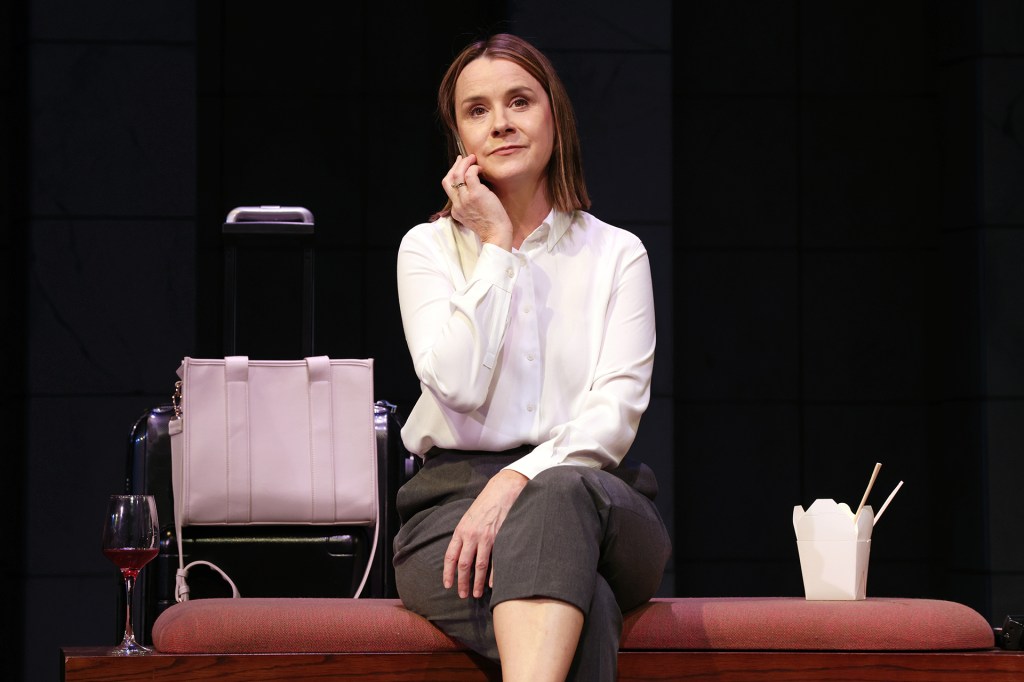
Written by Emily Steel. Sydney Theatre Company. Sydney Opera House Drama Theatre. 5 Sep – 17 Oct, 2026.
Despite the domestic double-meaning of the title, Housework is less about washing, ironing, vacuuming and cooking – although there is discussion of all of those – it’s about the ways the greasy pole of politics changes people. Idealism is cute and all, but power is better.
Anna (Emily Taheny) is the hard-working chief of staff for a first term MP in a marginal seat, Ruth Mandour (Susie Youssef). Along with Media Advisor Ben (Laurence Boxhall) and junior staffer Kelly (Franca Lafosse) she tries to keep Ruth on the straight and narrow – not an easy task. To help Ruth table her first bill, Anna uses her past relationship (professional and otherwise) to get time with a senior Minister, Paul (Johnny Nasser). But when Paul’s attentions are more focused on the young and naive Kelly, rather than Ruth’s women’s health bill, a scandal is brewing that could topple the PM (Indira Naidoo) and make or break careers.
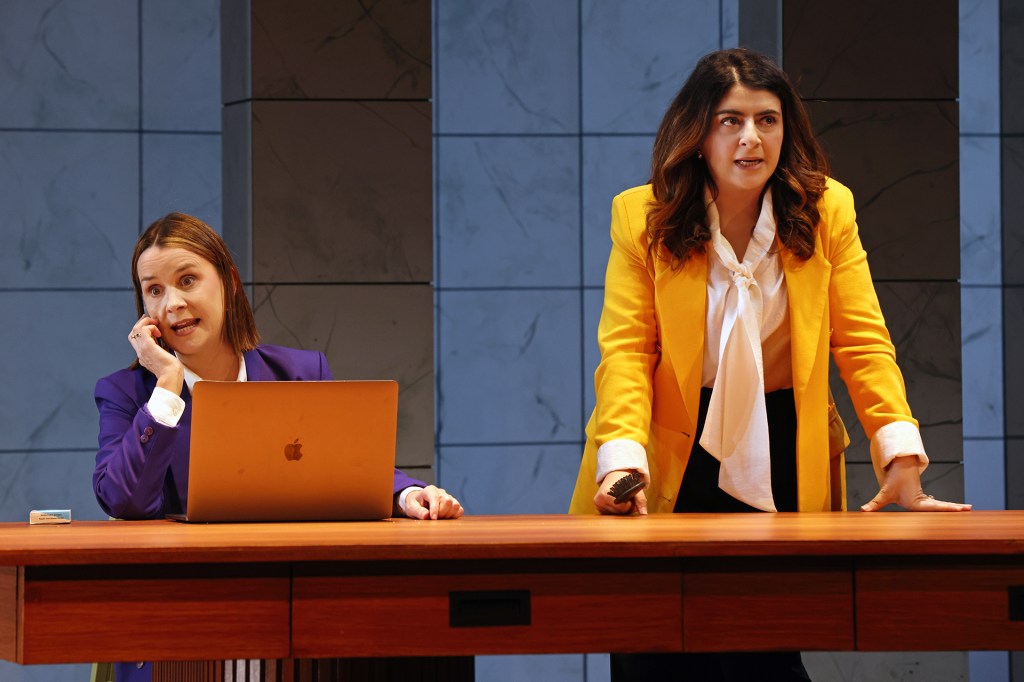
Emily Taheny & Susie Youssef. Photo: Prudence Upton. I love a political comedy. Shows like Yes, Minister, Veep or The Thick of It still hold up today because the nature of politics doesn’t change. The mix of power, greed and vanity brings out the most ridiculous in people. Let’s face it, you need to laugh or you’ll cry.
What Emily Steel has managed to do with such finesse is tackle a lot of tricky topics with a lightness of touch. Questions of consent mix with toxic work cultures and big questions about the calculus of power without ever feeling didactic. And best of all, it doesn’t rely on obvious answers or two-dimensional characters to make its point. This comedy sings along without short-changing the issues at hand.
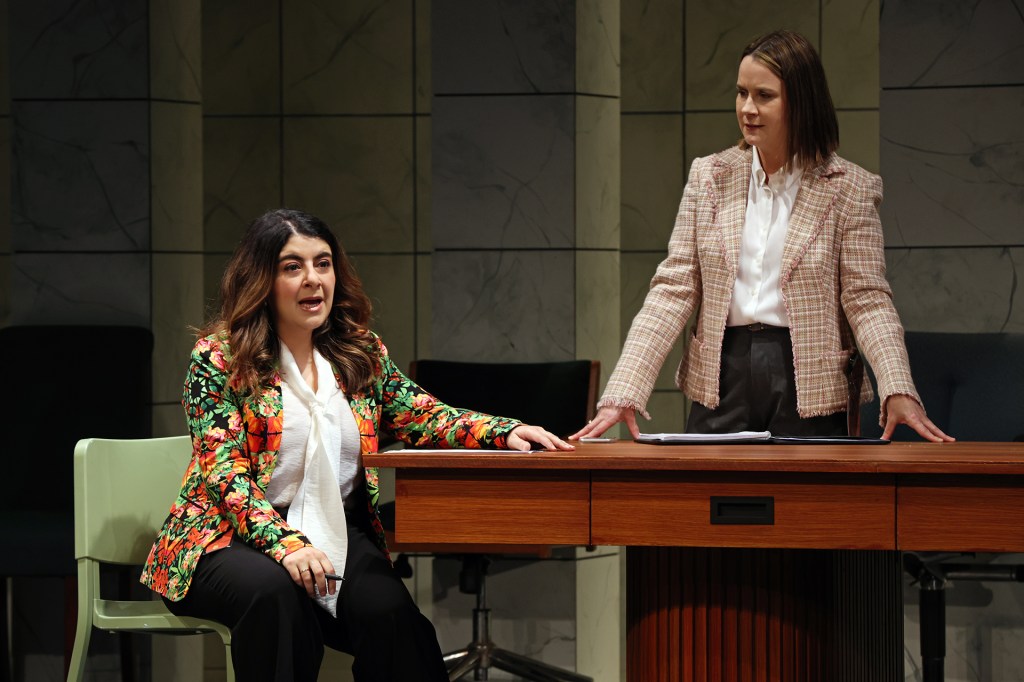
Susie Youssef & Emily Taheny. Photo: Prudence Upton. These are the kinds of comedic performances that I love to see. Heightened but still rooted in character and humanity, they’re real-ish people in extraordinary circumstances, not caricatures waiting for a punchline. It’s easy to laugh with, and at, them because we’re also feeling a whole range of emotions along with them – anger, frustration, attraction, love.
At the play’s core, Taheny and Youssef play things straight, full of wry wit as they try to work together. Taheny’s Anna is trying to balance motherhood and marriage with her life in politics, while Youssef’s Ruth just wants to make her mark and improve the lives of women. But it’s the satellite duo of Boxhall’s Ben and Lafosse’s Kelly where things shine even brighter.
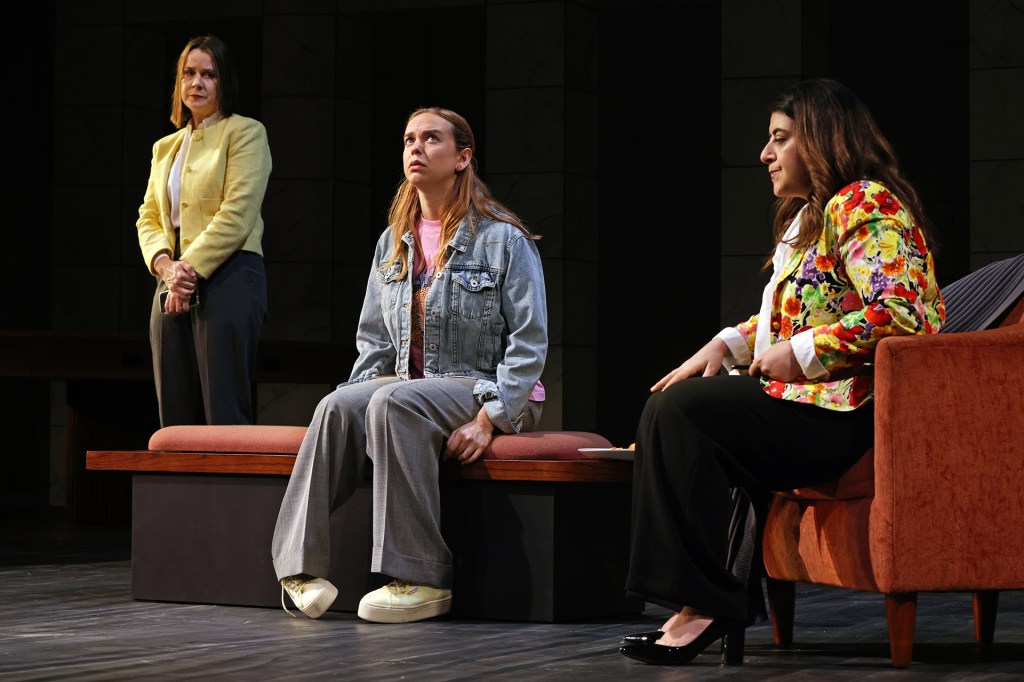
Emily Taheny, Franca Lafosse & Susie Youssef. Photo: Prudence Upton. Franca Lafosse’s over-enthusiastic and wide-eyed Kelly has a heart as big as her mile-wide grin, and her brilliant characterisation keeps the audience wondering – is she hopelessly idealistic and being taken advantage of, or is she a grown woman capable of making her own choices? As she learns some life lessons the hard way, Lafosse takes Kelly through a whole range of emotional states without losing her core innocence.
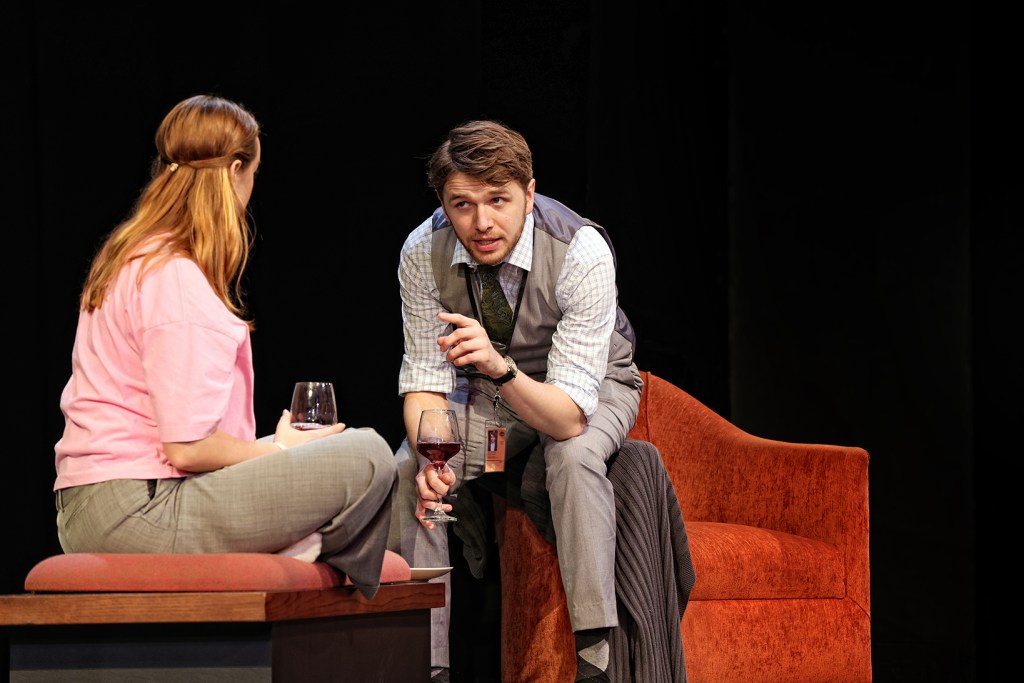
Franca Lafosse & Laurence Boxhall. Photo: Prudence Upton. On the other end of the spectrum is Laurence Boxhall’s media-manipulating Ben, a harried but friendly presence till he isn’t. It’s another nicely layered performance that keeps revealing itself as the play goes on.
But really, it’s the script that makes Housework work so well. It’s tight, it’s funny, it’s balanced like one of those fancy Japanese kitchen knives, and just as cutting. The political faithful and the political agnostic will both have fun with this one.
-
Forget Me, Please (Sydney Fringe)
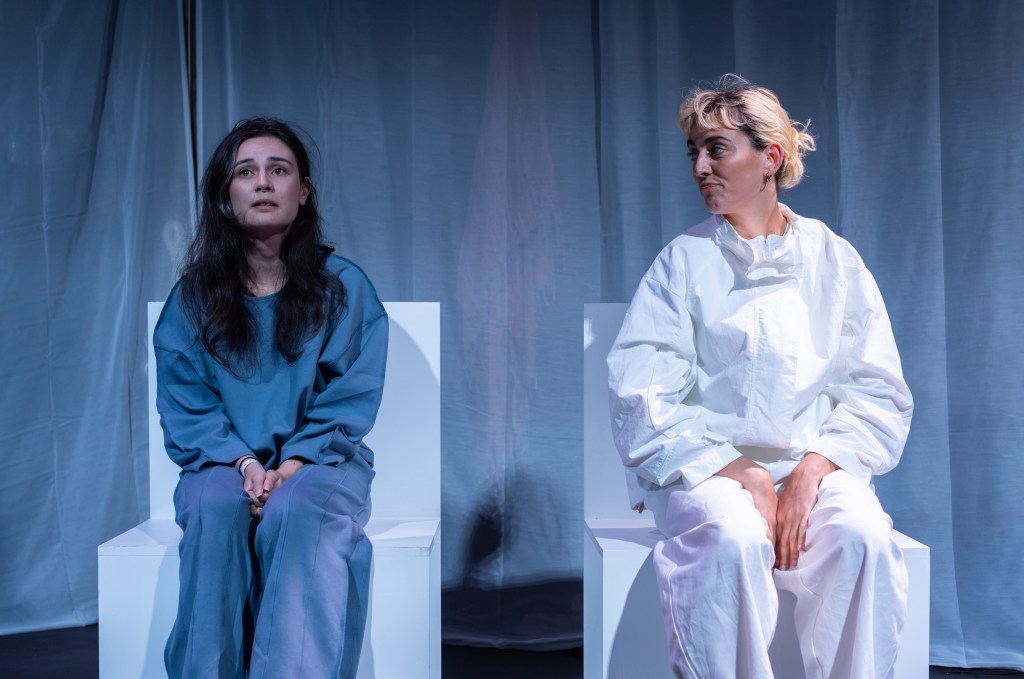
Written by Sophie Davis. World Premiere. Sydney Fringe. The Old Fitz. 1-11 Sep, 2026.
N.B. – I’m not giving star ratings to Sydney Fringe shows.Watch the end of a relationship. And the start of a relationship. And the middle of a relationship. In a non-linear story of love, trauma and mental health. The end may be a foregone conclusion, but the pain is in the details.
We meet Andi and Sasha in a waiting room. Andi is chasing to have a medical procedure to erase her memories of Sasha. Her now ex-girlfriend Sasha is against the whole thing. We then flash back to their “meet-cute” in a hospital years earlier when they both suffered concussions. We see their friendship, then their love, grow — but it’s clear Andi has demons haunting her, and despite their best efforts, sometimes simply forgetting someone seems like the easiest way to deal with the pain.
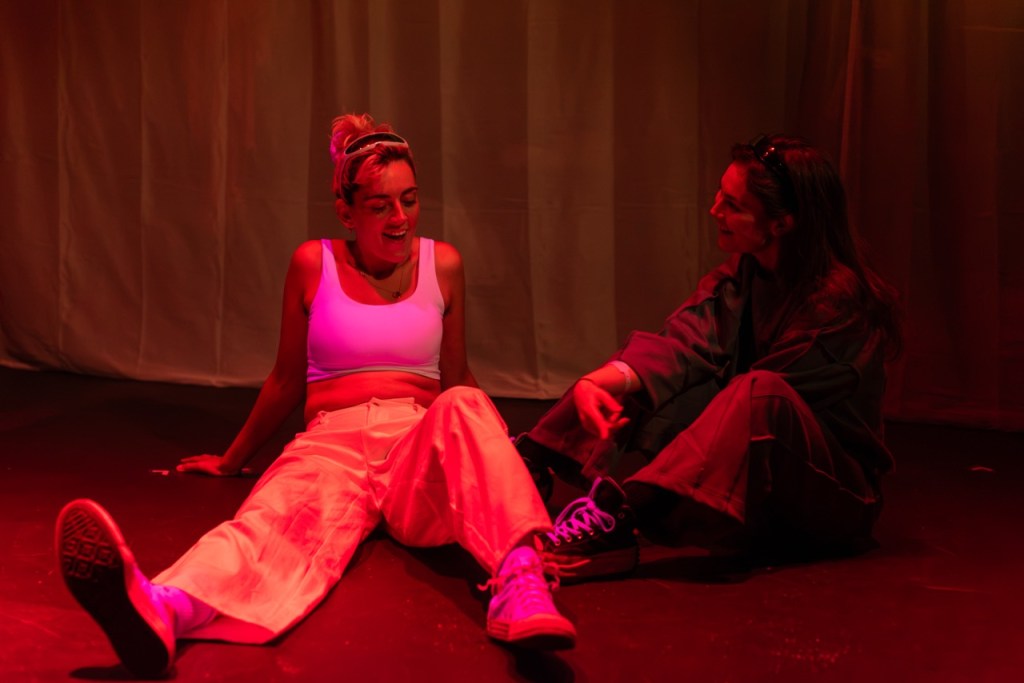
Kala Gare & Shannen Alyce Quan. Photo: Lucy Parakhina. The concept is pure Charlie Kaufman / Eternal Sunshine of the Spotless Mind, but the vaguely sci-fi premise of a medical procedure that can erase people from your memory is simply a background MacGuffin. In many ways Forget Me, Please reminded me more of the slow intertwining and breaking apart of a relationship in all its brutal detail, à la Noah Baumbach’s Marriage Story.
The interesting twist is in casting two performers who are maybe best known for their work in musical theatre. Shannen Alyce Quan, an alumna of Six, The Dismissal and a host of Hayes shows, has been hitting our main stages in dramatic works like Holding the Man at Belvoir and Doubt at STC to great acclaim, and gives a beautifully tortured performance that slowly reveals its depth. Against her, Kala Gare, the fireball of energy that powered MTC/STC’s My Brilliant Career (and also a former Six queen), brings the light and dynamism. They’re a well-balanced duo, and their chemistry keeps Forget Me, Please moving.
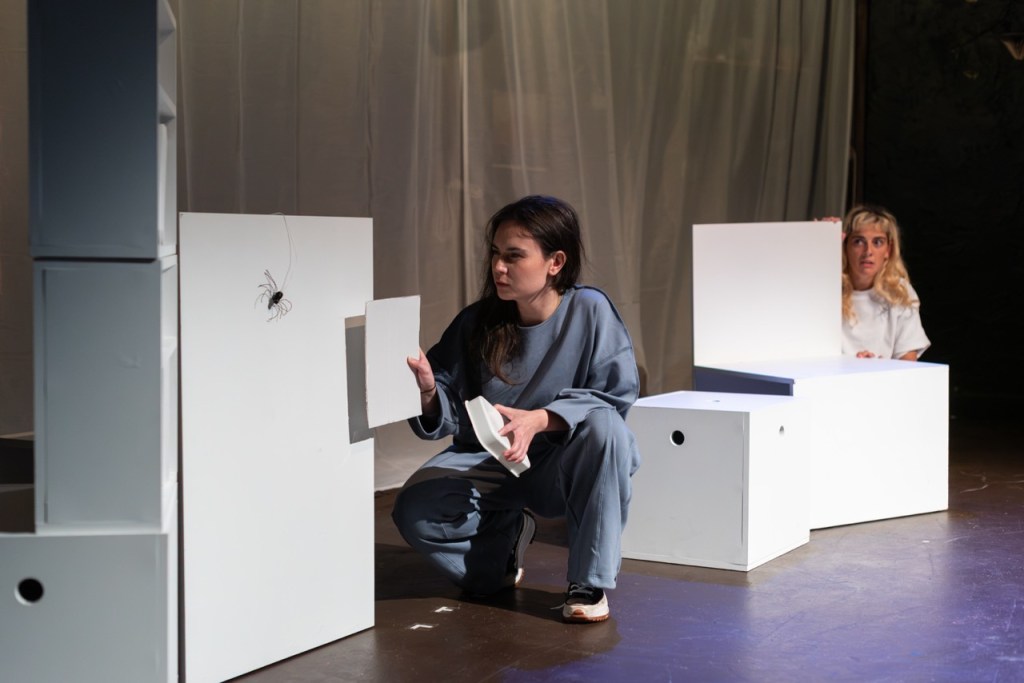
Shannen Alyce Quan & Kala Gare. Photo: Lucy Parakhina. Designers Isobel Sanby & Chris Davis have created a multi-faceted set that made my Tetris-loving heart sing with its clean lines and myriad of combinations (although they do make for some elongated scene transitions). Jessica Meier & Alex Meier’s sound design fills in the gaps and gives us an instant sense of place as the play jumps through space and time. Combined, they make for an interesting show.
Which is vital, as there is a lack of dramatic tension to the story. Starting at the end of the relationship may add a layer of intrigue, but playwright Sophie Davis’ script struggles to back up that initial premise with a story of equal strength. Andi and Sasha’s relationship is fairly mundane, and the story’s discussion of trauma and its lingering effects never builds to a suitable climax. In the end, the play can’t quite get us up to the level to justify the opening scene.
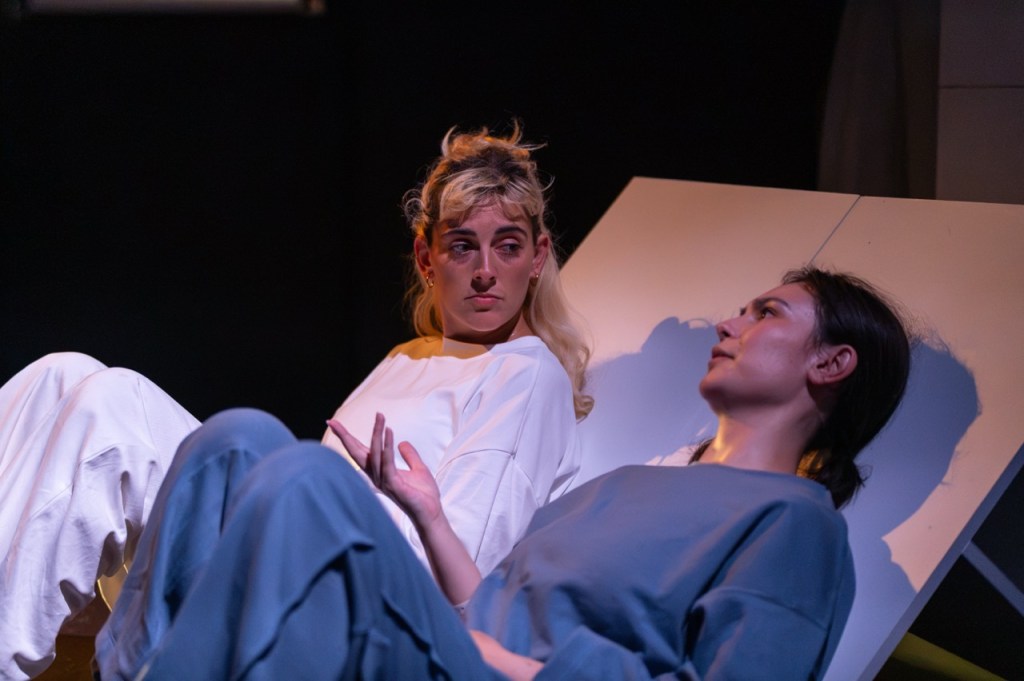
Kala Gare & Shannen Alyce Quan. Photo: Lucy Parakhina. What Forget Me, Please showcases both Shannen Alyce Quan and Kala Gare as dramatic performers who have more to offer than just their powerhouse vocals. I’m curious to see them take on even more nuanced and dynamic roles in the future.
-
Sorry I’m Late (Sydney Fringe)
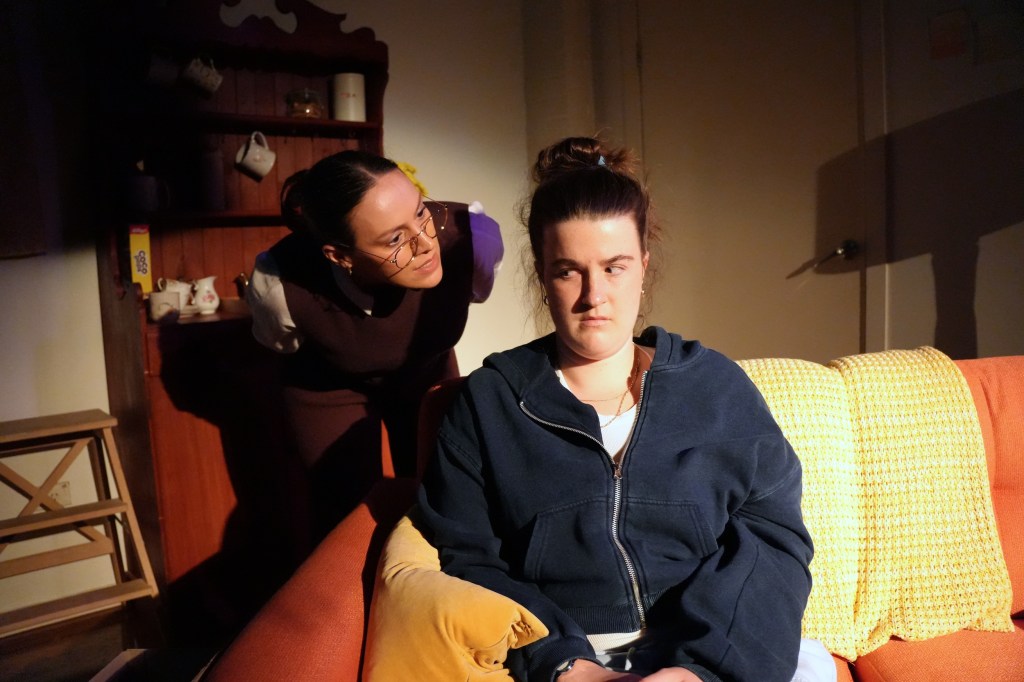
Written by Izzy Azzopardi. Jezebel Productions. Sydney Fringe. The Actor’s Pulse Playhouse. 1-5 Sep, 2026.
N.B. – I’m not giving star ratings to Sydney Fringe shows.
I’m going to be honest – if you’re thinking of seeing Sorry I’m Late, or already have tickets, then stop reading. It’s impossible to discuss without spoilers and it’s much better to go in knowing nothing.
You have been warned…
Okay, if you’re still here that’s on you.
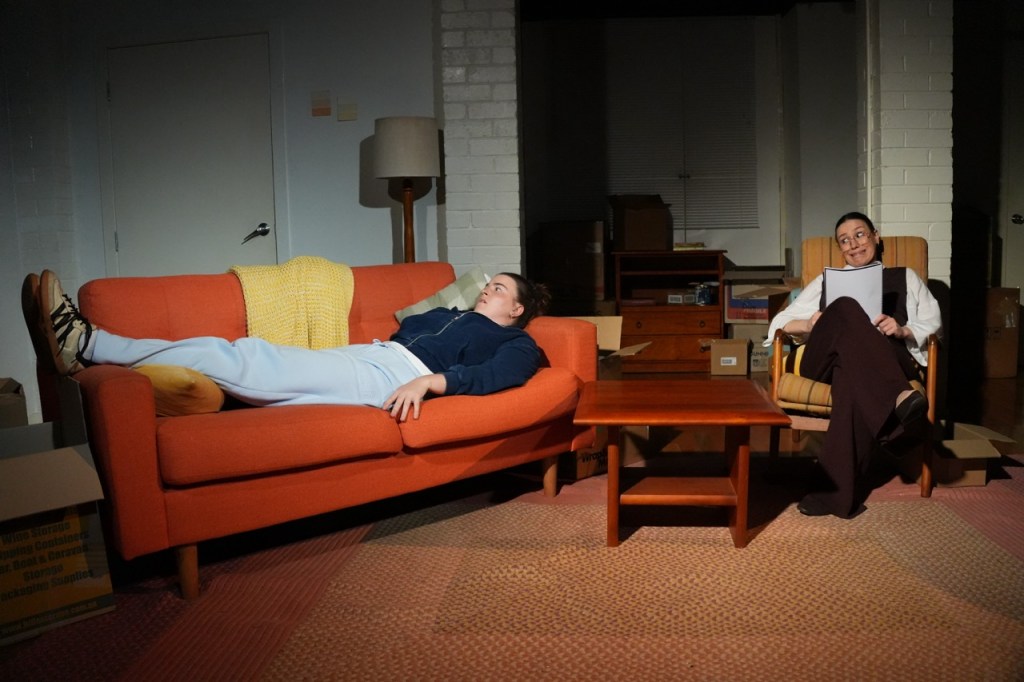
Jessica Garnett & Izzy Azzopardi. Photo: Jade Bell. Tick tock. Tick tock. Izzy Azzopardi (Traffic Light Party) pulls apart her own psyche in the 70-minute two-hander Sorry I’m Late, about a writer pulling apart their own psyche. Time is running out to make an impact, be an artist, build a career, build a life… it’s a shame she keeps getting distracted.
Directed by Rebecca McNamee (Abigail Williams/Dirty Rotten Scoundrels), the lights come up on a room mid-conversation (or is it?) between Dorothy (Azzopardi) and Mackenzie (Jessica Garnett). But Mackenzie has no memory of how the conversation began. Or how she got to be in the room. Or why her shoelace is tied to a chair. What is clear is that Dorothy knows more than she’s letting on, and for all her therapist-like prodding and questioning, something unusual is happening.
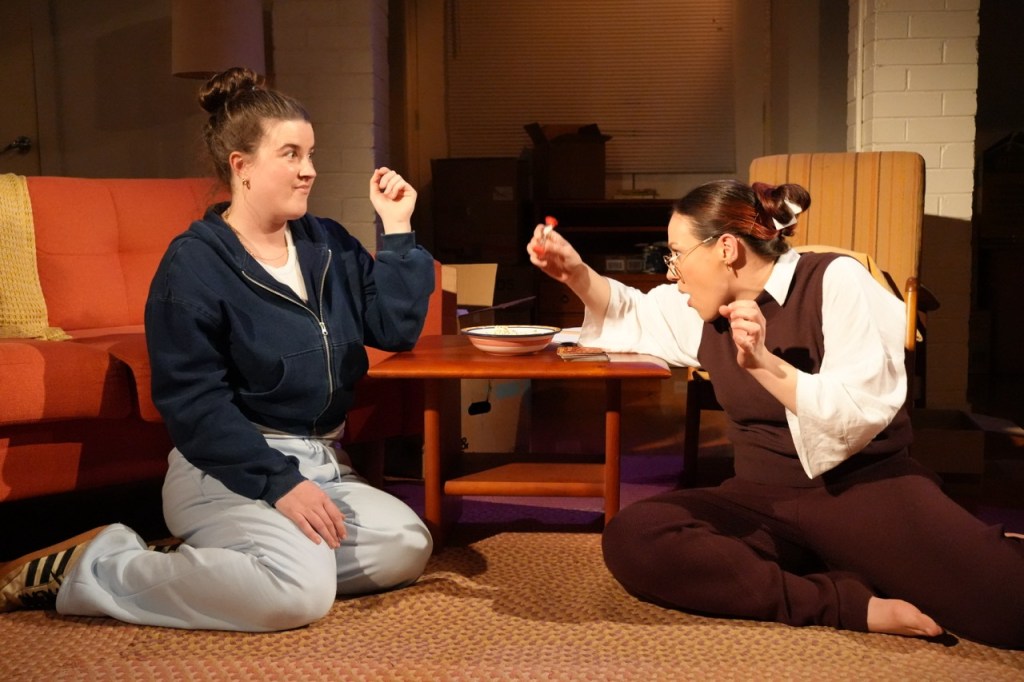
Jessica Garnett & Izzy Azzopardi. Photo: Jade Bell. Told in a succession of short scenes with blackouts, we follow Mackenzie as she tries to find out what’s happening, and why Dorothy keeps talking about her life in the past tense. Is she in a hospital? Is she dead? Is this all happening in her mind?
After an intriguing start, Azzopardi’s script starts to ramble, before bringing itself back for a fun third act (the show was originally billed as being 60 minutes, and it feels like that would have been the ideal length). Like all “puzzle box” stories, there’s a risk that the secret will underwhelm when finally revealed, and there is a little of that here. This feels like a fun writing exercise that has taken on a life of its own, but after a bold, existential opening, what’s revealed to be the travails of a young creative in an early-life crisis feels less urgent.
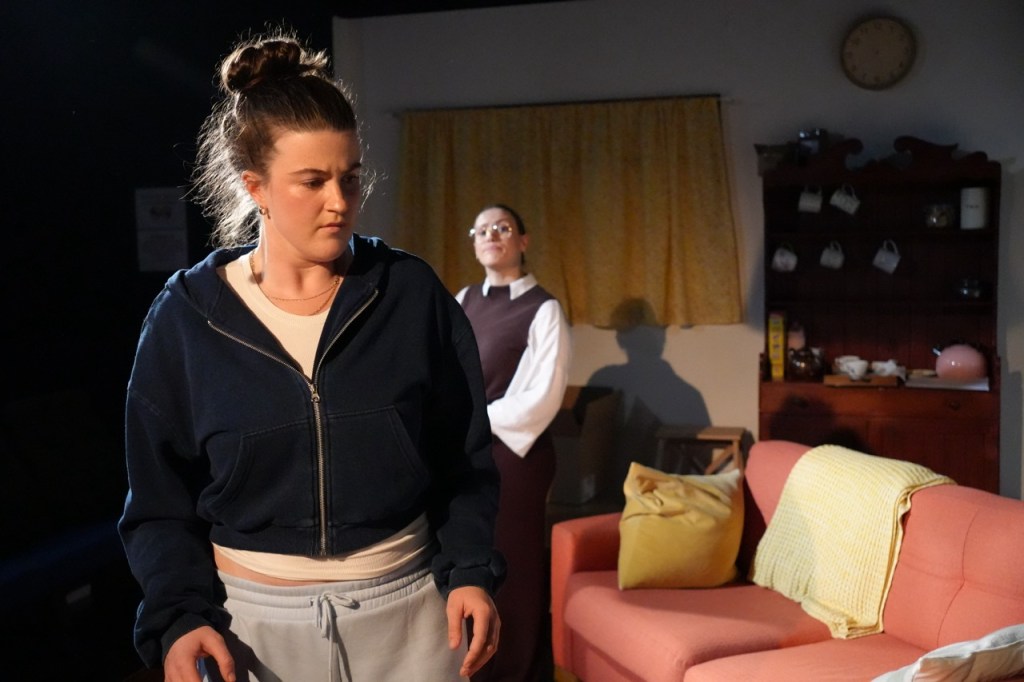
Jessica Garnett & Izzy Azzopardi. Photo: Jade Bell. Both Azzopardi and Garnett give solid performances in bringing the script to life, helped by Tait Gibbons’ sound design, Lila Browning’s lighting and Daisy Hughes’ production design, which all hit the brief.
Sorry I’m Late is an interesting look at the hurdles of living a creative life that feels like the stub of something deeper and more fun — like the central artist themselves, this story has room to grow.
-
Subscribe
Subscribed
Have a WordPress.com account? Log in now.

