-
Welcome to Cultural Binge

The rating system is simple:
★★★★★ – Terrific, world-standard. Don’t miss.
★★★★ – Great, definitely worth seeing.
★★★ – Good. Perfectly entertaining. Recommended. Individual mileage may vary.
★★ – Fine. Flawed and not really recommended, but you may find something to appreciate in it.
★ – Bad (& possibly offensive).
See more reviews over at The Queer Review.
Instagram: @culturalbinge
Substack: culturalbinge.substack.com
Email: chad at culturalbinge.com
-
How To Succeed In Business Without Really Trying (Hayes) ★★½
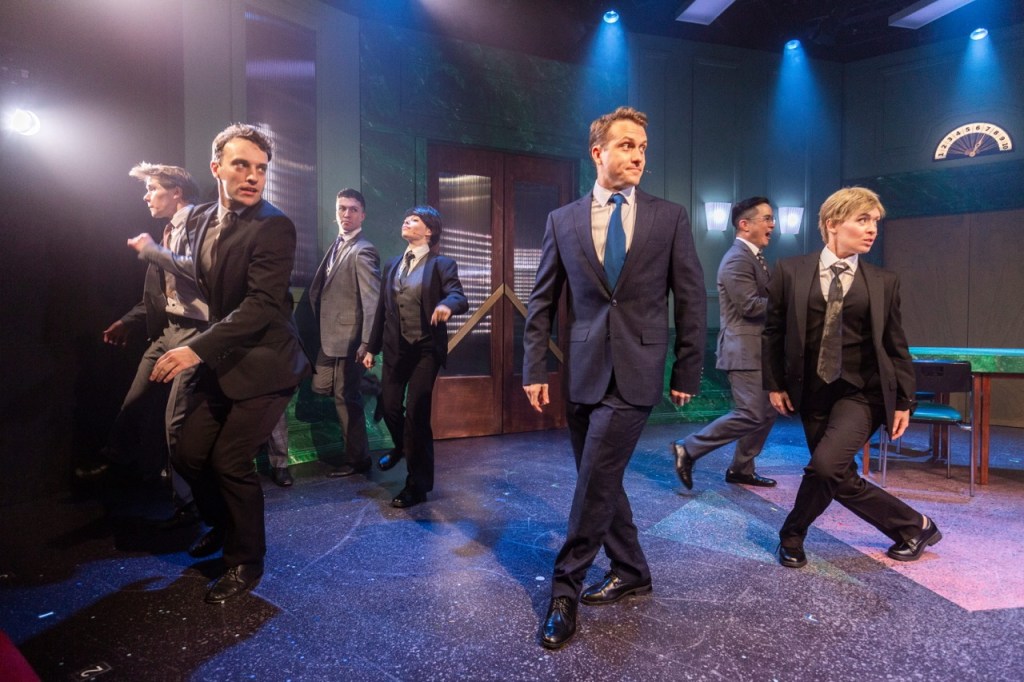
Book by Abe Burrows, Jack Weinstock, Willie Gilbert. Music and Lyrics by Frank Loesser. Based on How to Succeed in Business Without Really Trying by Shepherd Mead. Presented by LPD Productions in association with Hayes Theatre Co. Hayes Theatre. 28 Aug-27 Sep, 2026.
It’s won the Tony. It’s won the Pulitzer. It’s a classic comic satire of the rise of corporate culture and the smoke & mirrors that disguise the hollow fictions of capitalism – skewering the business charlatans who scam their way into positions of power, maybe even politics. It’s a show that could speak to the modern world with a wink and smile. But the new production of How to Succeed in Business Without Really Trying opts for a shallow, simple reading.
J. Pierrepont Finch (Jake Speer), a window-washer seeking to improve his prospects, starts reading the self-help book, How to Succeed in Business Without Really Trying, giving him step-by-step tips on how to rise up the corporate ladder. Through a mix of cunning, gumption, and good timing, Finch manages to run rings around his boss J.B. Biggley (Simon Burke), his corporate rival Bud Frump (Max MacDonald), and the girls in the secretarial pool. But surely someone will see through his fakery? Right?
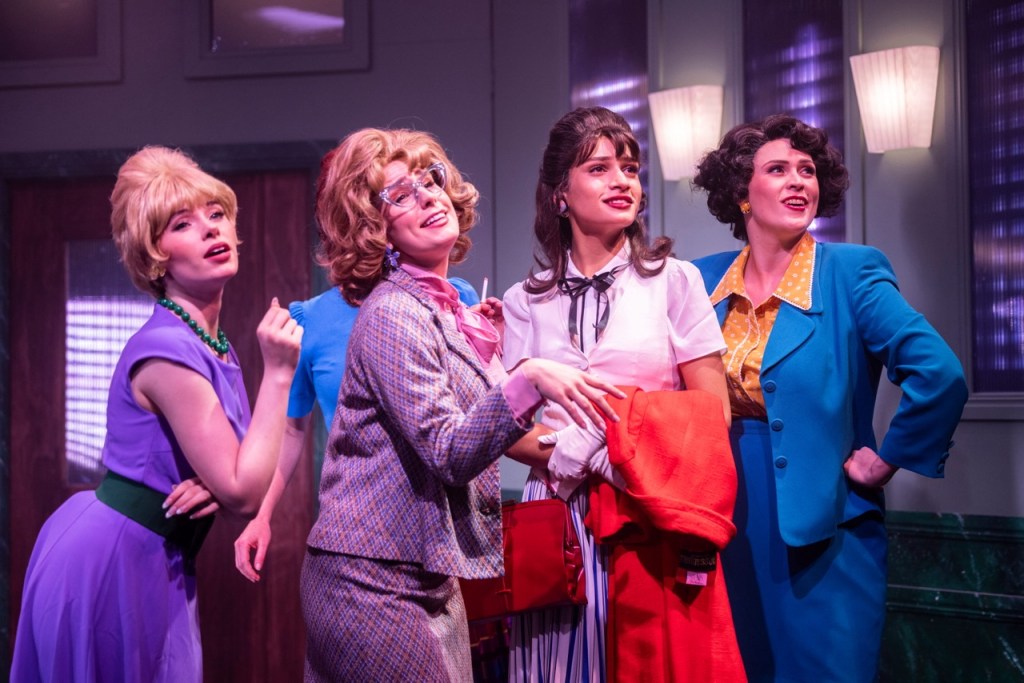
Katie Greene, Stacey Thompsett, Georgia Laga’aia & Madeline Pratt. Photo: John McRae. The cast is stacked with hidden treasures lurking in the ensemble, doing great work in smaller roles. Georgia Laga’aia has fast become my favourite Laga’aia for her knock-out vocals as the show’s love interest Rosemary Pilkington. She’s joined by Noni McCallum’s Miss Jones and Stacey Thomsett’s Smitty – two side roles given oodles of character and charm.
Christine Mutton’s costumes are a real stand out, hitting the bold colours and cuts of the era with flare. Dominic Foffani’s set is impressive, but suffers from a lack of practicality – the scene changes are a clunky rush of furniture rearranging that gives the show a heaviness that fights the breezy comedy.
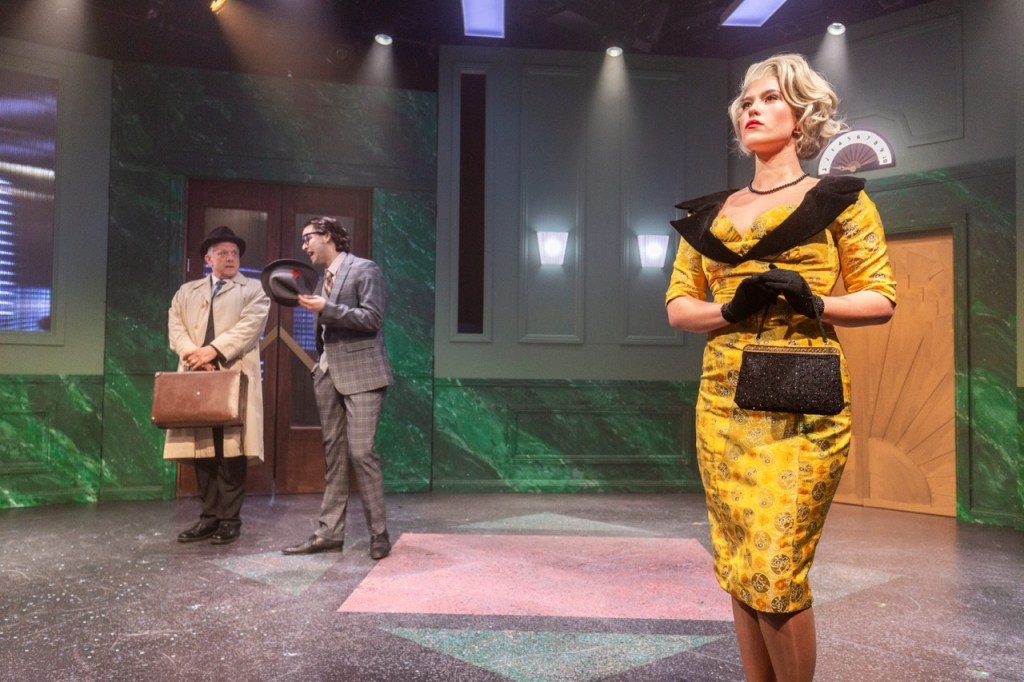
Simon Burke, Max McDonald & Lucy Lalor. Photo: John McRae. I’ll be frank, this is simply not the kind of musical theatre I enjoy, and while it shows signs of how the medium would change over the 60s – growing deeper, telling more complex stories – How to Succeed succeeds in simply being twee and quaint. Cute 60s sit-com touches, and funny songs can only get you so far.
I just couldn’t warm to the lead character of Finch, despite Jake Speer’s performance. A character of no redeeming qualities, whose finest point is that he’s not as bad as the other male characters. It’s a low bar. And without that investment, the show’s nearly three-hour running time was keenly felt.
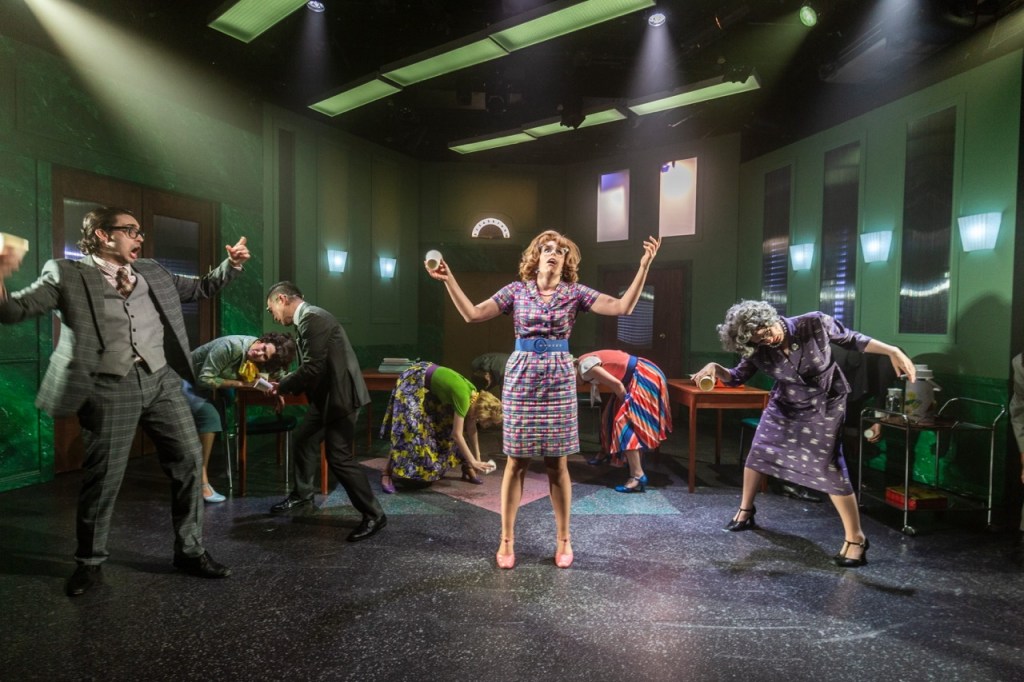
Stacey Thomsett and Ensemble. Photo: John McRae. While not a failure on any technical level, this is a failure of ambition. In an age ruled by corporate & political charlatans who hide behind a technocratic illusion, the lessons of How to Succeed in Business Without Really Trying are a little tone deaf.
-
Heathers: The Musical (Roslyn Packer) ★★★★
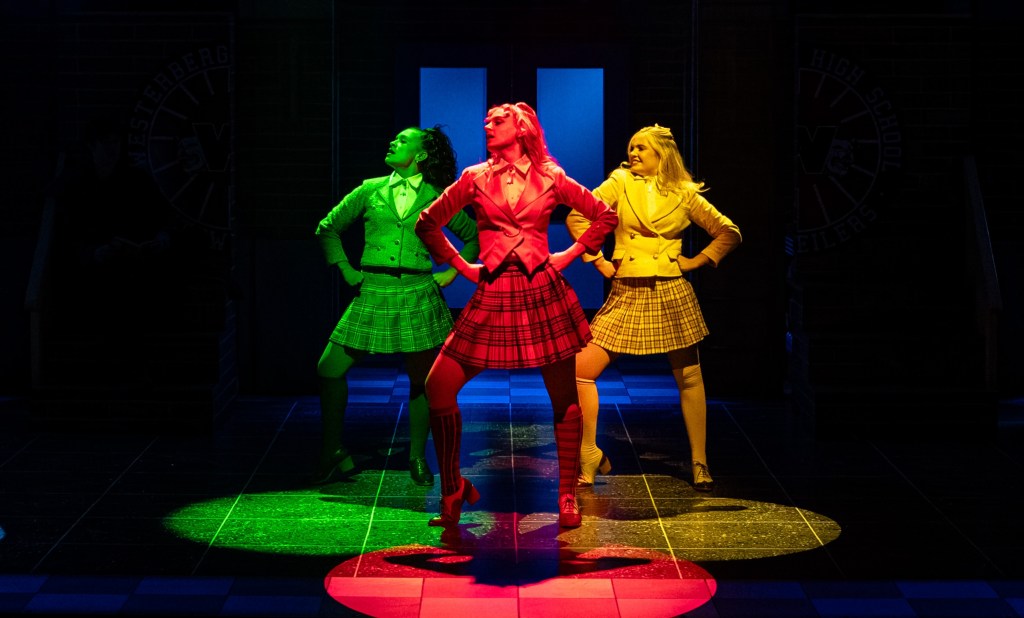
Book, Music & Lyrics by Laurence O’Keefe & Kevin Murphy. Based on the film Heathers by Daniel Waters. Presented by Bill Kenwright Ltd, Paul Taylor Mills, GMG Productions and Stoddart Entertainment. Roslyn Packer Theatre. 1-19 Sep, 2026.
September 1st, 2026. Dear Diary, just when the stench reeking from the previous cadaver of a movie-turned-musical has cleared, another rolls into town… but wait… seriously Cultural Binge, what’s your damage? Could it be that Heathers: The Musical is actually, genuinely good? Well fuck me gently with a chainsaw!
If the thought of turning the 80s troubled-teen classic into a high school musical makes you squirm, you can unclench – against all odds, they’ve made this one work. The dark comedy of the film has been given the primary-coloured satirical treatment of a pop/rock musical – this is Sweeney Todd mashed with Legally Blonde (with whom it shares a writer).
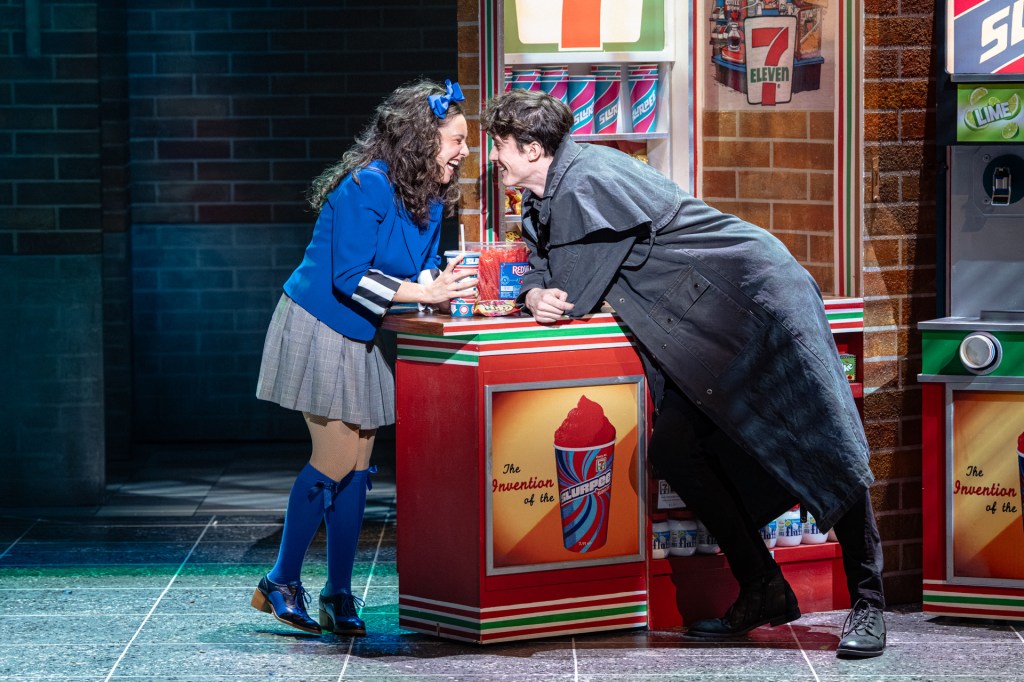
Emma Caporaso & Conor Beaumont. Photo: Cameron Grant, Parenthesy. Heathers has reached Sydney with its fandom at fever pitch. With a cleverly timed opening night (landing on September 1st, “Heathers Day” – the day of Veronica’s first diary entry), the show has already been known to generate legions of young fans. In London, audiences complained about the level of screaming that drowned out dialogue at some performances. And it’s easy to see why the show connects to MT-teen-fangirls. With a cast of characters close to their own age, and a score full of big belting songs that I guarantee are on every drama student’s audition list, the show is almost perfectly designed to tap into their dreams and aspirations.
On that level, Heathers shoots and scores. It’s sexy – plenty of short-skirted girls and shirtless boys for the audience to ogle. The tunes are satisfyingly big belters – every song hits a high note worthy of the finale of The Voice. It’s subversive enough to avoid being cloying but also cleaned up enough that you can still bring your parents. There is no smoking. My favourite line from the film “If you want to fuck with the eagles, you have to learn to fly” is absent bar an oblique reference in one of the lyrics.
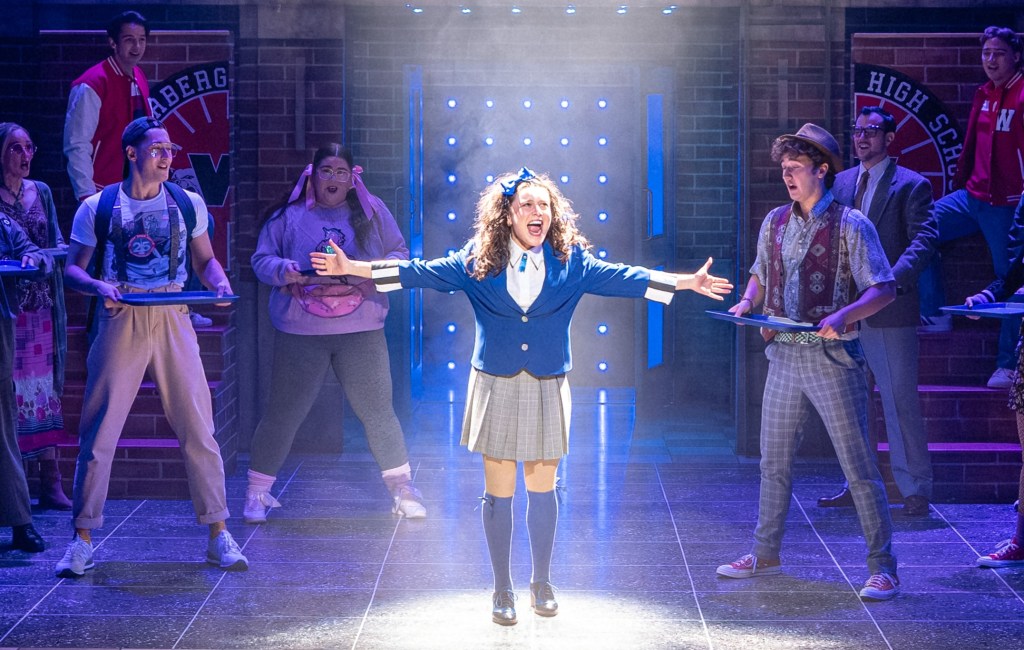
Emma Caporaso & ensemble. Photo: Cameron Grant, Parenthesy. And this cast can sing! Emma Caporaso, who as Veronica Sawyer rarely leaves the stage, has come out of the gate as one of our brightest new stars. With vocal and comedy chops that feel well-honed, and an appealing charisma that draws you in – she instantly stands out compared to our other young leading actresses who, for all their powerful vocals, leave me cold on stage.
Conor Beaumont’s brooding, angular J.D. is a fantastic counterpoint, towering over the cast with disdain and a what-a-cruel-world-let’s-toss-ourselves-in-the-abyss type attitude. Calista Nelmes, who instantly impressed as Maureen in the recent tour of Rent, makes for a formidable Heather Chandler who again has to balance the vocals with the cartoonishly-bitchy comedy. The ensemble play into their pantomime high school personas of 80s Swatch dogs and Diet Coke heads with glee.
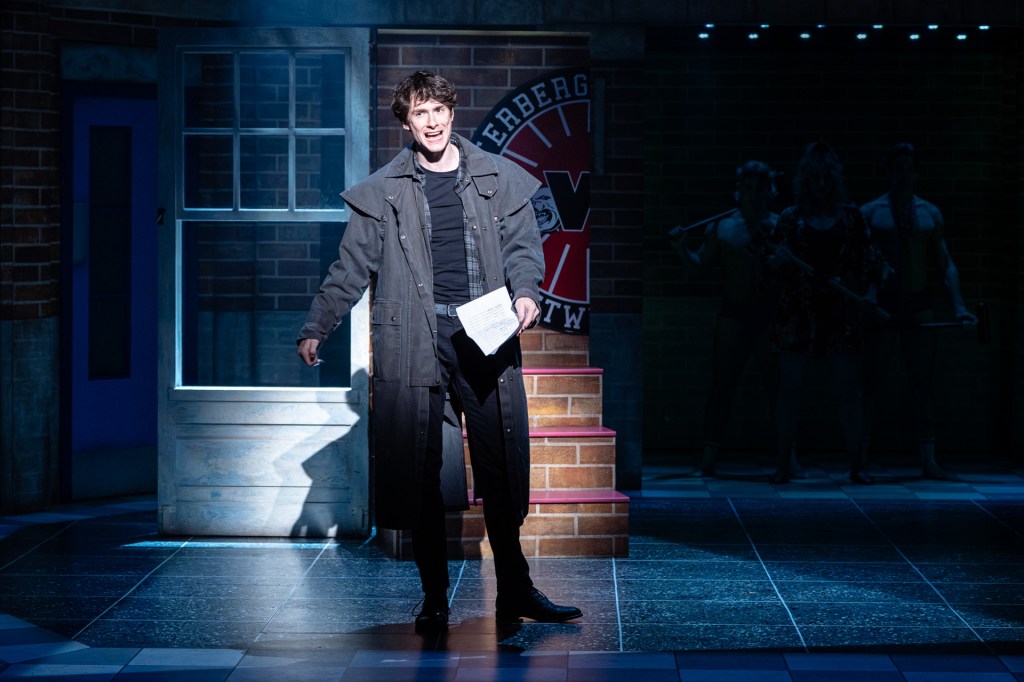
Conor Beaumont. Photo: Cameron Grant, Parenthesy. Heathers is proof that touring musicals don’t need to be high-tech extravaganzas that cost a fortune to move round the country. The staging is charmingly lo-fi, with the ensemble constantly wheeling the set in and out of position. Maybe the failing blockbusters can learn a lesson – keep it simple, cast for talent not “celebrity” and play to smaller houses – it seems to be working. [An aside – did you hear the complaint that theatre critics killed the Waitress tour? Please, we wish our critical-angst bullshit had a body count!]
With the sausage-factory roll out of movie-to-musicals the original film is usually the show’s best friend, and worst enemy (same difference). But somehow O’Keefe and Murphy have made the film dialogue work on stage without coming across like a punchline waiting for a laugh. A lot of that credit has to go to director Andy Fickman who pitches the show just right to relish in the musical theatre excess and satire without simply trying to put the film’s big moments on stage and expect the audience to cheer.
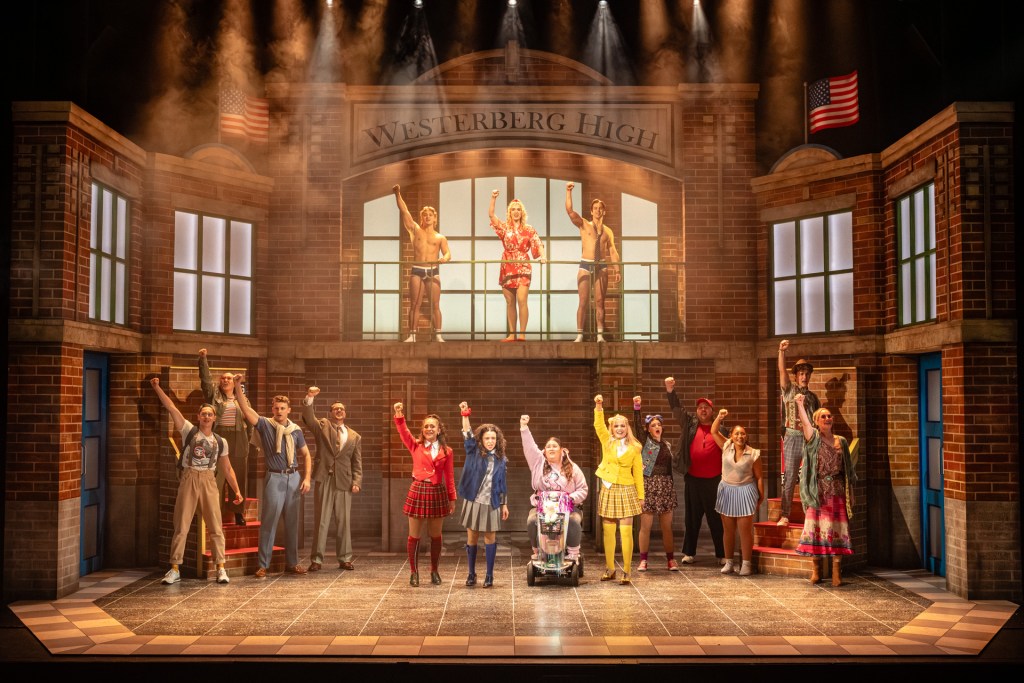
Cast of Heathers: The Musical. Photo: Cameron Grant, Parenthesy. It’s actually annoying that Heathers is so damn good. Just when you think it’s safe to write off the “myriad” of lazy movie-to-musical adaptations we’ve been assaulted with (I’m still not over how pointless & cynical Pretty Woman was, and don’t get me started on London’s The Devil Wears Prada that we can only pray never makes it over here), along comes one that reminds you these musicals aren’t all awful. In fact, I think I’ll be going back for a second viewing.
-
Return of the Godz (Sydney Fringe) ★★★★
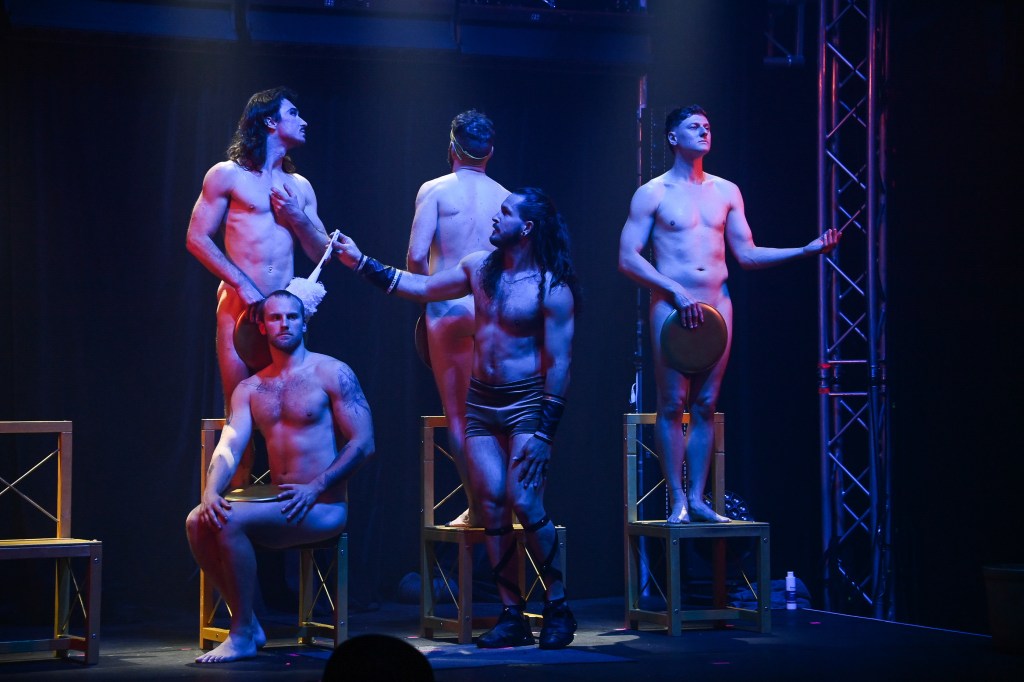
Head First Acrobats. Sydney Fringe Festival. Entertainment Quarter, Fool’s Paradise, The Virago. 22 Aug – 11 Oct, 2026.
If you stepped out of a screening of Christopher Nolan’s The Odyssey wondering where all the gods were, look no further. They have been made flesh, a lot of flesh actually, at Sydney Fringe where they’re getting up to all sorts of high-flying hijinks. Yes, it’s the Return of the Godz — they’re back and they’re ready to party.
What was once a four-piece, has now had its members swollen to five as Cal Harris, Thomas Gorham, Liam Dummer, AJ Saltalamacchia & Mat Piva channel the Greek gods and one demi-god. They are here to play hard and dazzle us with feats of strength, balance, skill and gravity-defying aerials.
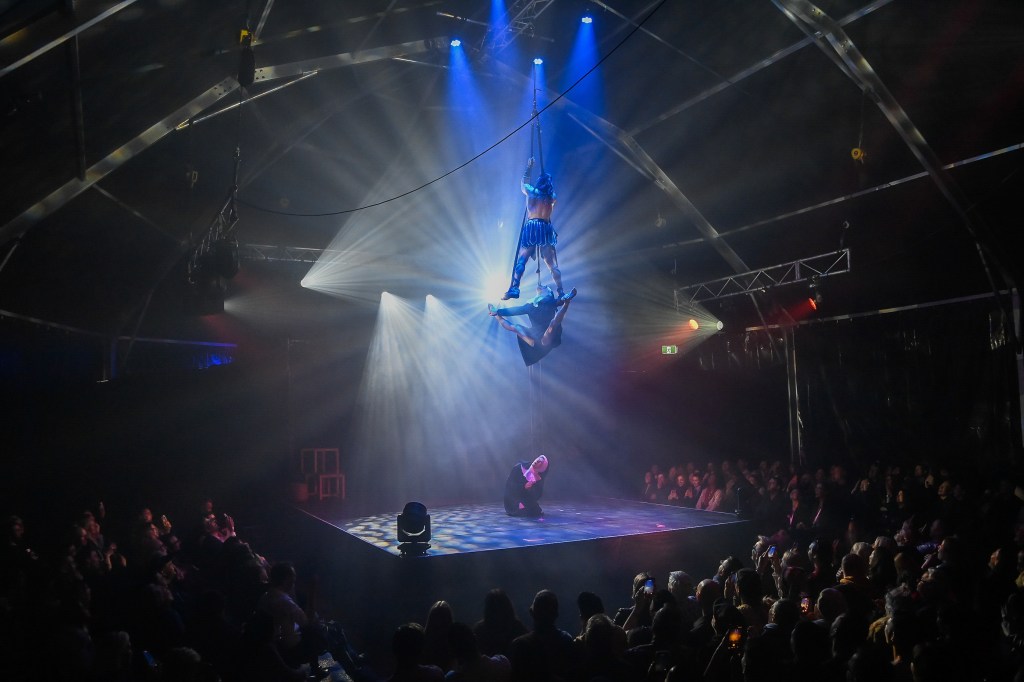
Return of the Godz. Photo: Belinda Rolland. But what makes Head First Acrobats stand out from many other “sexy circus” acts is their sense of humour, bringing a larrikin/juvenile silliness to events. The dick jokes abound along with plenty of camp flirting and teasing of the audience. The nudity will put a smile on your face.
If you saw the show back in 2024 it’s still much the same, with some additional acts woven in – including AJ Saltalamacchia’s knife throwing and Mat Piva’s fire act. This time around, Head First Acrobats are building on their international success, with a larger performance tent and a six-week run at Sydney Fringe. They’ve also brought back their Rated-G show All Star Circus with a focus on more family-friendly acts (more clothes, fewer knives).
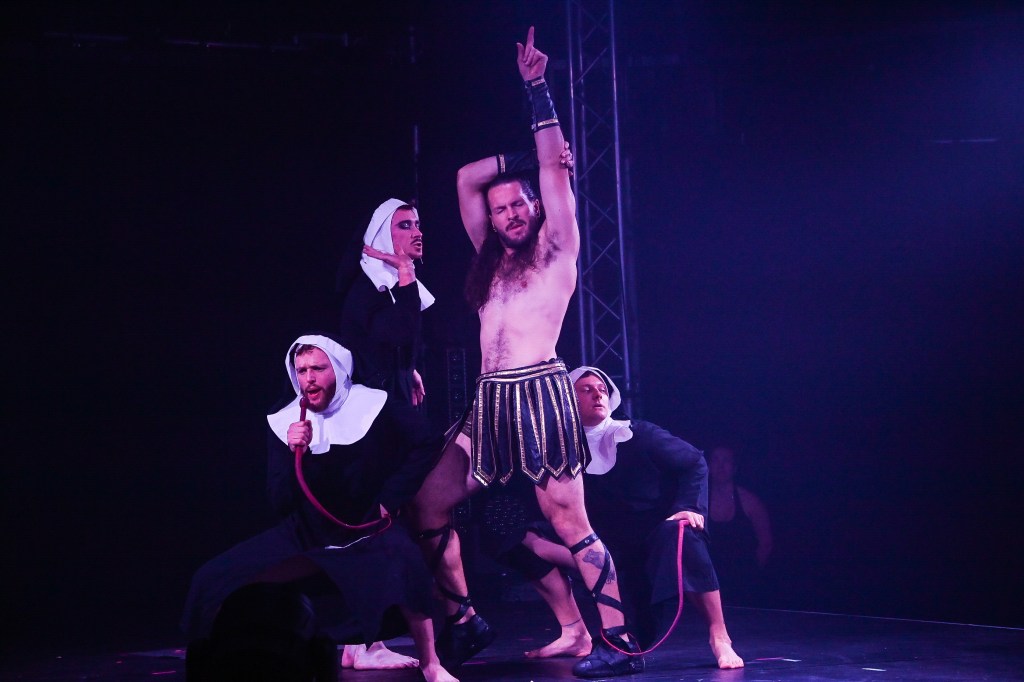
Return of the Godz. Photo: Belinda Rolland. It’s clear the audience was having a ball, from the identikit 30-something Darlinghurst gays, the duos of 40-something straight women having a giggle, the intrepid adult kids bringing their mum, even the bewildered straight men who obviously had no idea what they were getting themselves into. The circus talents are impressive, the camp nonsense is just the cherry on top.
So if you’re in the market for some raunchy physical comedy mixed with some cunning stunts, Return of the Godz might be just what you need.
-
Magic and Sphen: The unofficial story of Sydney’s gayest penguins, or, the gay penguin play (Flight Path) ★★★½
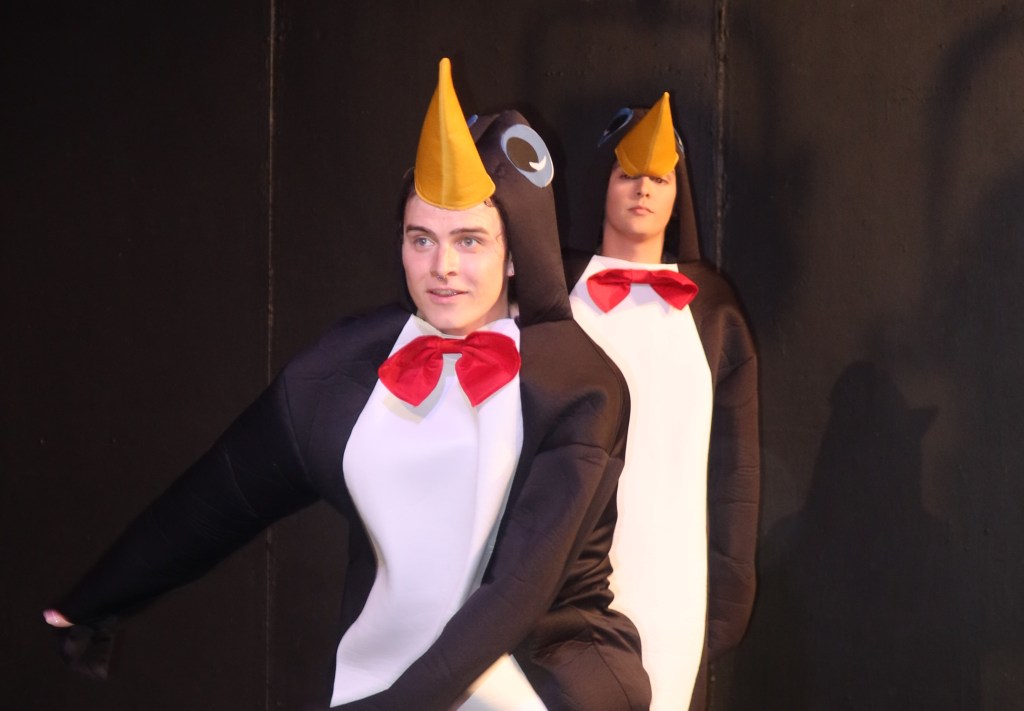
Written by Timmy and Sophea Op. Flight Path Theatre. 25-29 August, 2026.
Apart from having the best title of any play this year, Magic & Sphen: The Unofficial Story of Sydney’s Gayest Penguins, or, The Gay Penguin Play manages to also possibly be the most adorable. Riffing off the real-life Magic & Sphen, the world’s first gay penguin couple in captivity, who lived at Sydney Sea Life Aquarium, the play messes around with form and content to bring us a tap-dancing, fourth-wall-breaking, sitcom-inspired tale of queer family.
Magic (Timmy) and Sphen (Sam Martin) are the performing hits of Sea Life Aquarium, drawing crowds of humans to watch them. But despite having been nesting together for years, Sphen’s best-friend-since-hatching, Judy (Holly Horsfall), hasn’t put two and two together. Now that Sphen is thinking of stepping back from the performing world to have a chick of their own, it’s putting pressure on the relationship, and it feels like the dream couple are at risk of losing it all.
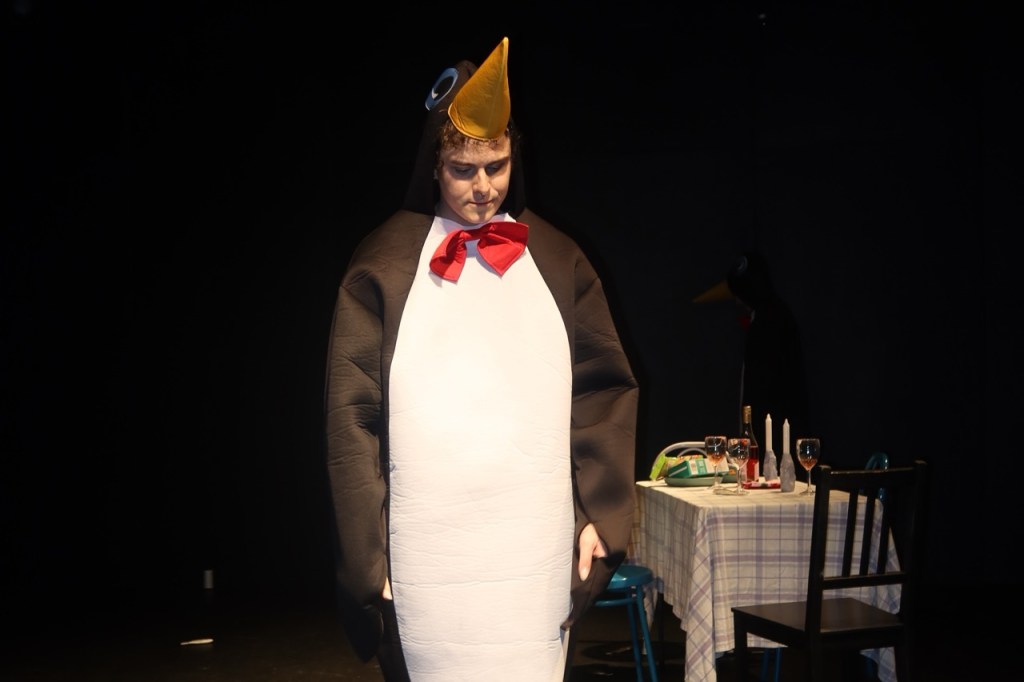
Timmy. Magic & Sphen is stupid, and heart-warming, and sad, then heart-warming again, then sad again — okay, there are some structural issues, but by this point I was so invested I didn’t really care. Watching two adult performers in penguin outfits dancing to a 90s power ballad against a backdrop of romantic photos had me hooked.
Despite the ridiculous set-up and the fringe-budget execution, director Casey Elder manages to keep things simmering at just the right level of silly and sincere. Timmy and Sophea Op’s script juggles gay parenting, homophobia and a bunch of penguin jokes with a charming lightness of touch. The dinner party scene is an exercise in absurd beauty.
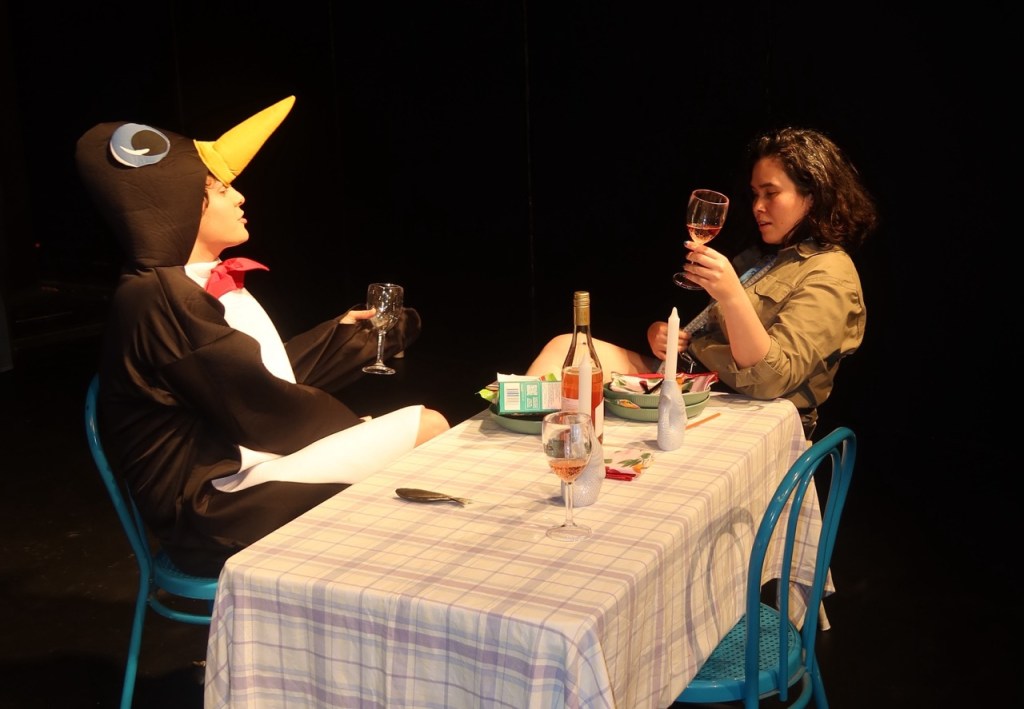
Timmy & Dominique Purdue. Timmy and Sam Martin sell Magic and Sphen’s relationship as one of gay lovers moving into a new phase together. After sacrificing his own dreams to support Magic’s performing career, Sphen wants to start a family. Meanwhile his best friend Judy is showing clear signs of homophobia that threaten to ruin their friendship. They’re all real enough dramas to invest in — the fact they have beaks on their heads is beside the point.
The MVP of the whole affair is Dominique Purdue as the kid-friendly, overly enthusiastic penguin handler having to treat the human-sized cast as if they were pint-sized penguins. It had me giggling the whole time.
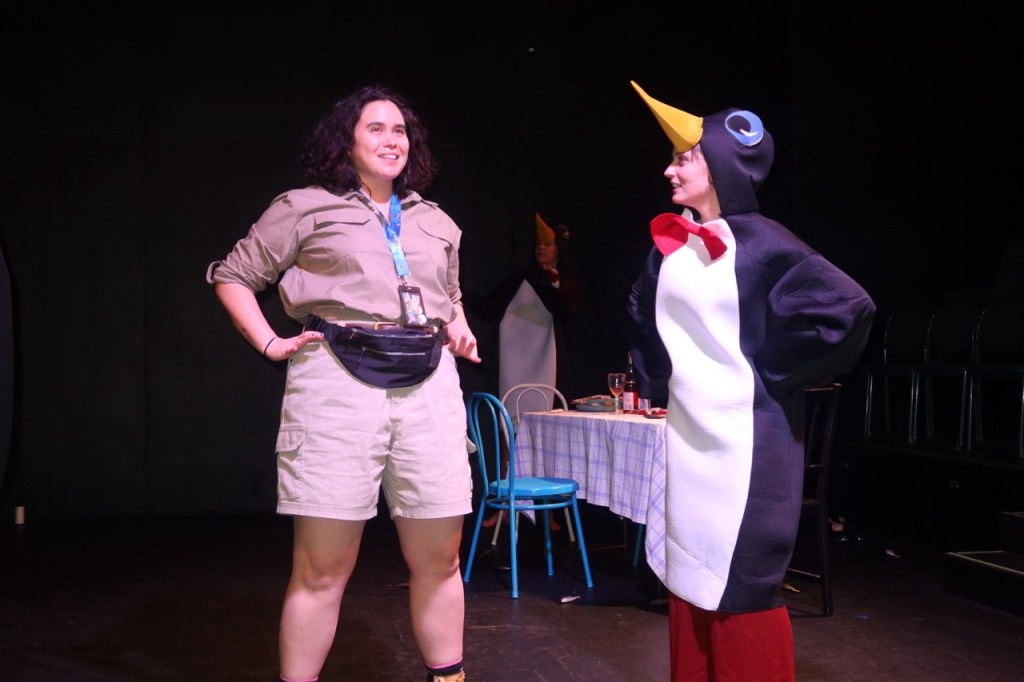
Dominique Purdue & Lola Kate Carlton But for all the love, the structural issues are actually real. The story hits its emotional peak early and Sphen’s fate gets revealed twice. For a story that has been paced so well, it’s the only real speed bump.
Magic & Sphen is simply a joy. It’s a shame the show’s season was so short, and I really hope we get to see Magic & Sphen staged again soon.
-
Strategic Love Play (Flight Path) ★★★½
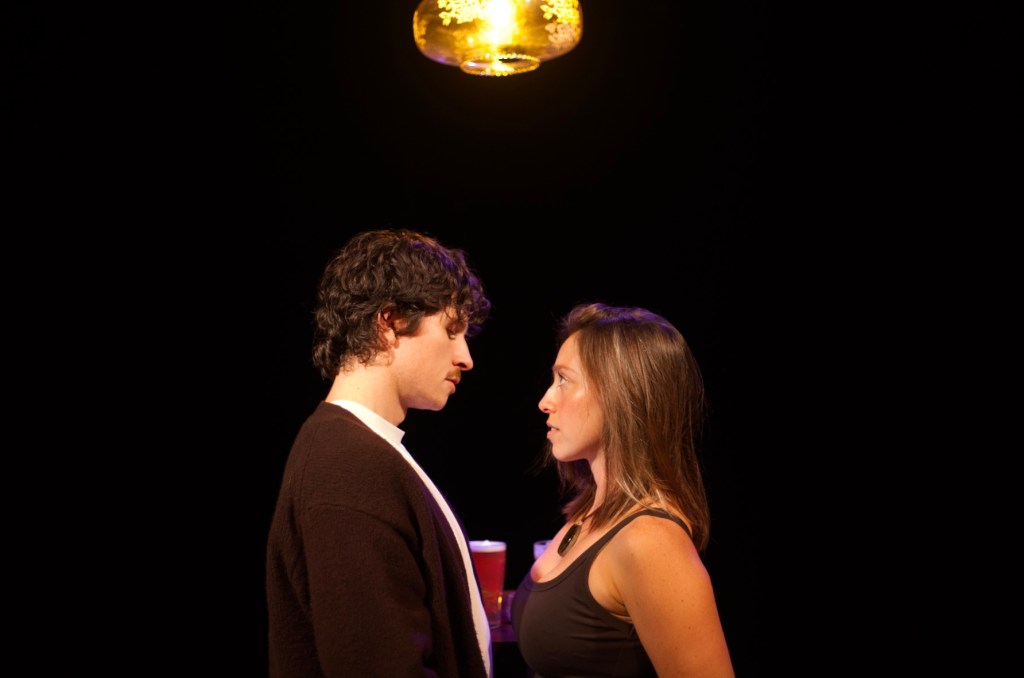
Written by Miriam Battye. Sharehouse Productions. Flight Path Theatre. 25-29 Aug 2026.
Dating sucks. And that reality is the fuel behind Miriam Battye’s caustic rom-com Strategic Love Play, which sees two singles drop the pretence to get what they really want… but will it actually work?
An unnamed Woman (Georgia-Paige Theodos) and Man (Caleb Jamieson) meet in a bar for a blind date. He’s recently single after his girlfriend moved to America (it’s more complicated than that), and she’s been single dating for so long she has no more f*cks to give. He’s nice. She’s sarcastic. He doesn’t want to hurt her feelings. All she wants is some honesty. Over 70 minutes, they talk it all out.
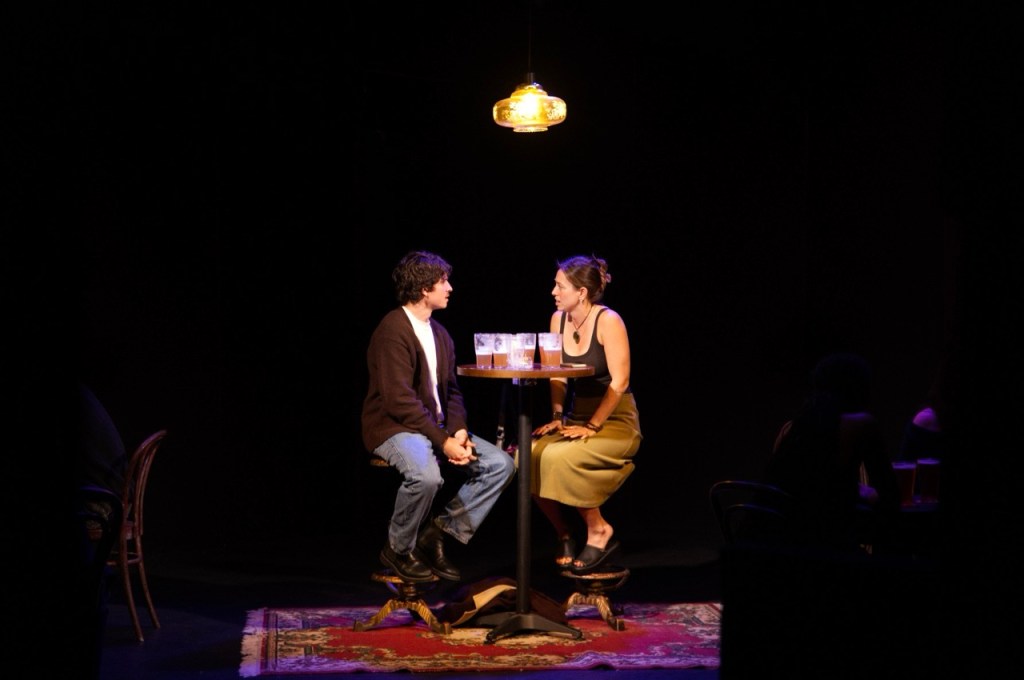
Caleb Jamieson & Georgia-Paige Theodos. Photo: Clarence Lin Thien. Strategic Love Play is a single conversation that ducks and weaves its way around the world of dating. It’s well-worn territory, but Battye skips the usual moaning about dating apps and gender politics and homes in on the hypocrisy underneath it all — dating requires people to subtly lie about themselves to try to impress another person who is also subtly lying about themself. What if everyone just spoke the truth, laid all their weird deal-breakers on the table, and asked for the things they really want?
Despite not having character names, the Man and Woman are not universal stand-ins. The two characters are constantly being layered with depths, slowly revealed to the audience. Thankfully, Theodos and Jamieson are both charming enough to hold the audience for 70 straight minutes of chat, and good enough actors to deliver these roles with nuance and a sense of fresh discovery.
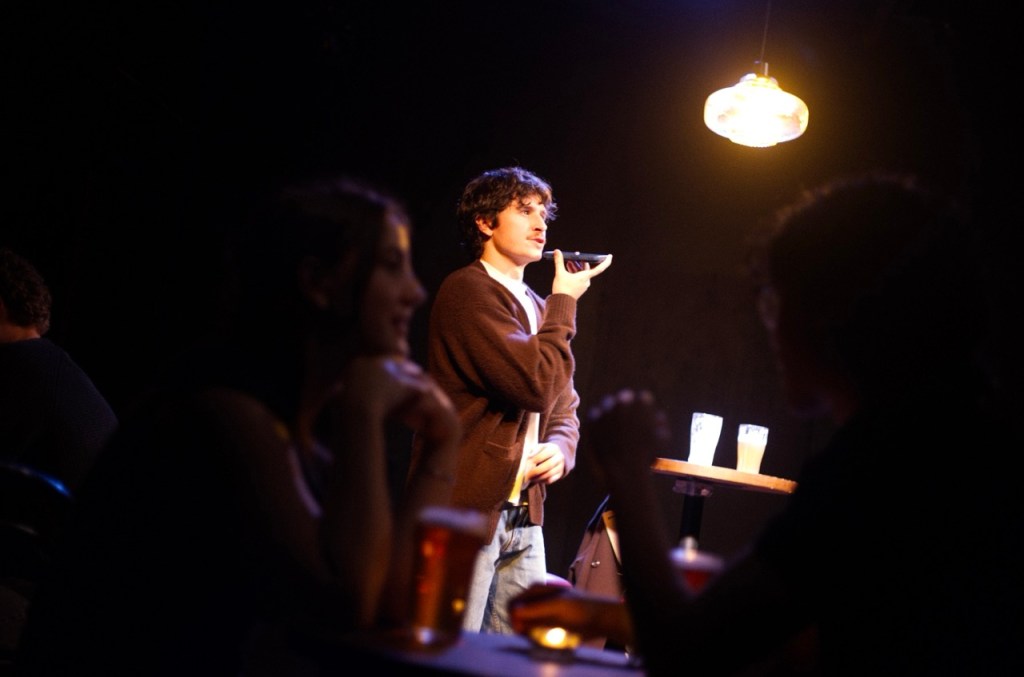
Caleb Jamieson. Photo: Clarence Lin Thien. Director Ava Rusch has a nice sense of timing that keeps this conversation from feeling stale, finding new ways to keep the characters physically moving (although I was horrified the moment Woman left her credit card unattended on the bar table). In a wonderful display of the extravagances only fringe theatre can afford, the stage includes four other couples sitting at tables who do nothing but fake “rhubarb-rhubarb” conversations in half-light to fill out the space. Kudos to the ensemble for pitching in with little personal reward.
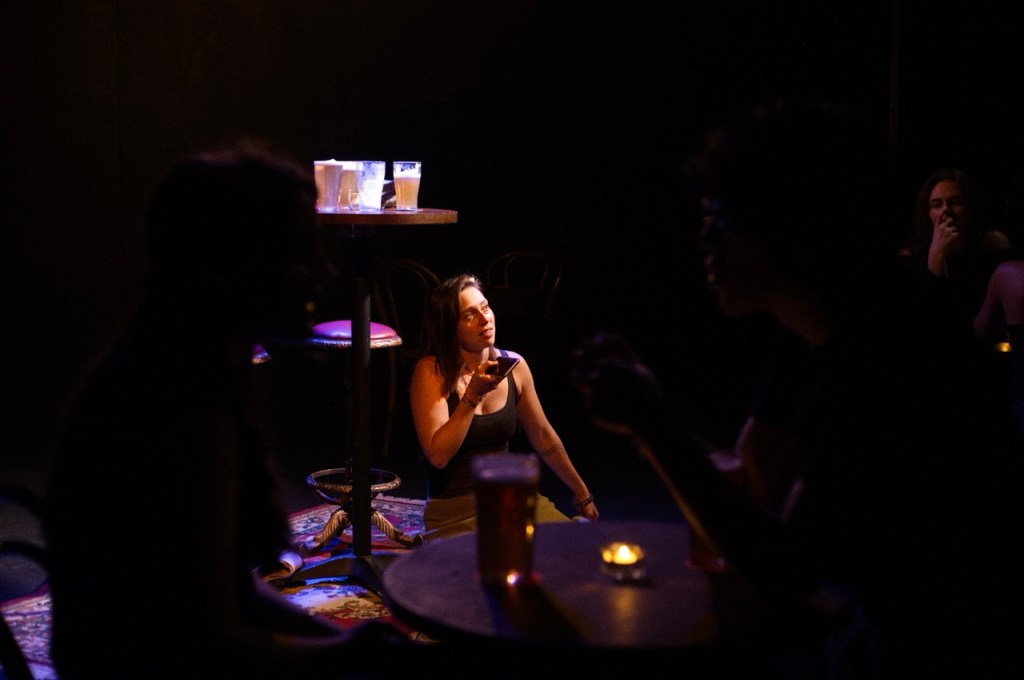
Georgia-Paige Theodos. Photo: Clarence Lin Thien. Sound Designer Otto Zagala brings a mix of bar ambiance and subtly changing music that helps to give the scene dynamics (oh, and a quote from me in their bio! Lol, that’s a first, I think). Similarly, lighting by Lila Browning conveys a warmth and intimacy to the large Flight Path stage space.
Miriam Battye’s dialogue is a fantastic showcase for performers, giving the two leads space for comedy, romance, heartbreak and drama, making for an easily entertaining hit of theatre.
-
Equus (KXT) ★★★★
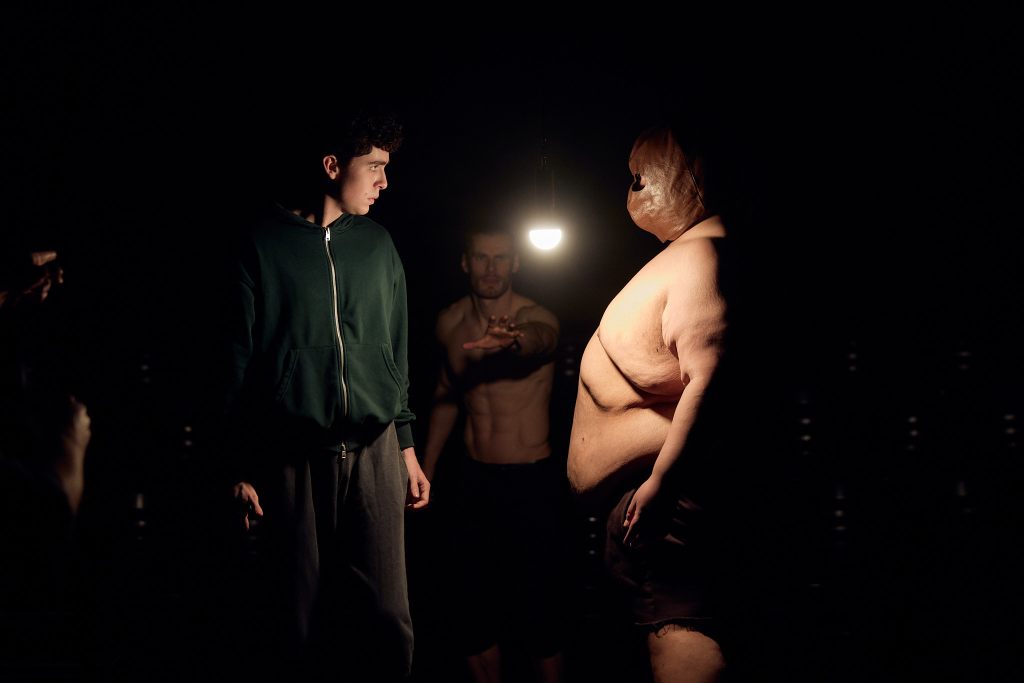
Written by Peter Shaffer. Daniel Cottier Productions in association with Bakehouse Theatre. KXT on Broadway. 21 Aug – 5 Sep, 2026.
Sex, religion, violence, horses – Peter Shaffer’s Equus throws all the things you’re not supposed to talk about at dinner parties (well, other than horses, they’re usually safe territory) into a psycho-drama that bucks at the numbing effect of modernity. The new staging at KXT on Broadway reframes the story through a more explicitly queer and body-focused lens that results in some unexpected shifts.
Psychiatrist Martin Dysart (J. James-Moody) is sent to see a troubled 17-year-old, Alan Strang (Ryan Yeates), who has blinded six horses in one night. As he tries to uncover the roots of the boy’s mental distress he unravels a complex psychology that has transfigured teenage faith and sex into a dangerously twisted brew. But can he help Alan live a “normal” life? What does that even mean? And why is Dysart jealous of this complicated, broken boy?
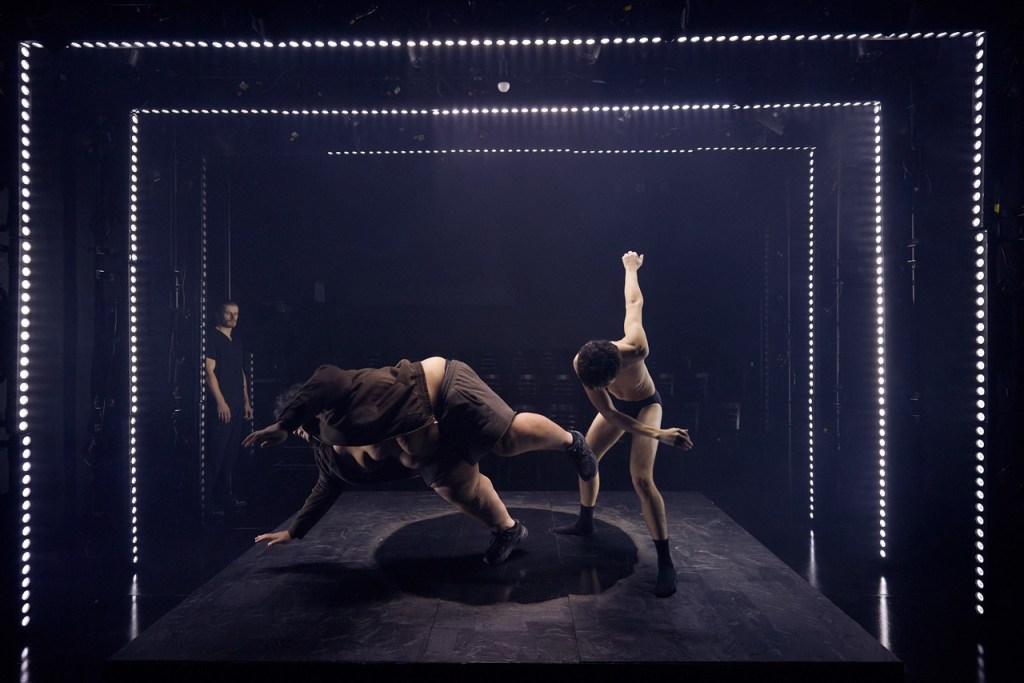
Stephen Madsen, Shalamah Tautaiolefue & Ryan Yeates. Photo: Daniel Boud. Director/Designer Brockman has taken Shaffer’s exploration of worship/fetishisation and amplified it into a full-throated, kink-forward affair. Dark and monochromatic, pulsing dance music, the stage is part night-club, part sex club, part nightmare. In place of the traditional horse-mask, the actor playing Nugget (Shalamah Tautaiolefue) is given a gimp mask. Alan’s devotion to Equus is no longer psycho-sexually fraught, it is a fully-embodied sexual awakening with disturbing shades of abuse. It’s a bold, all-encompassing vision that gives this Equus a fresh frisson of excitement. It’s not subtle, but as Dysart himself says, “Extremity’s the point.”
This is Brockman as full auteur, reshaping the text as boldly as the visuals. The biggest, most obvious change is the reframing of Nugget — replacing the traditionally muscled performer with, as Brockman describes it, “a fat, queer body,” approaching the themes of body and eroticism through a new lens.
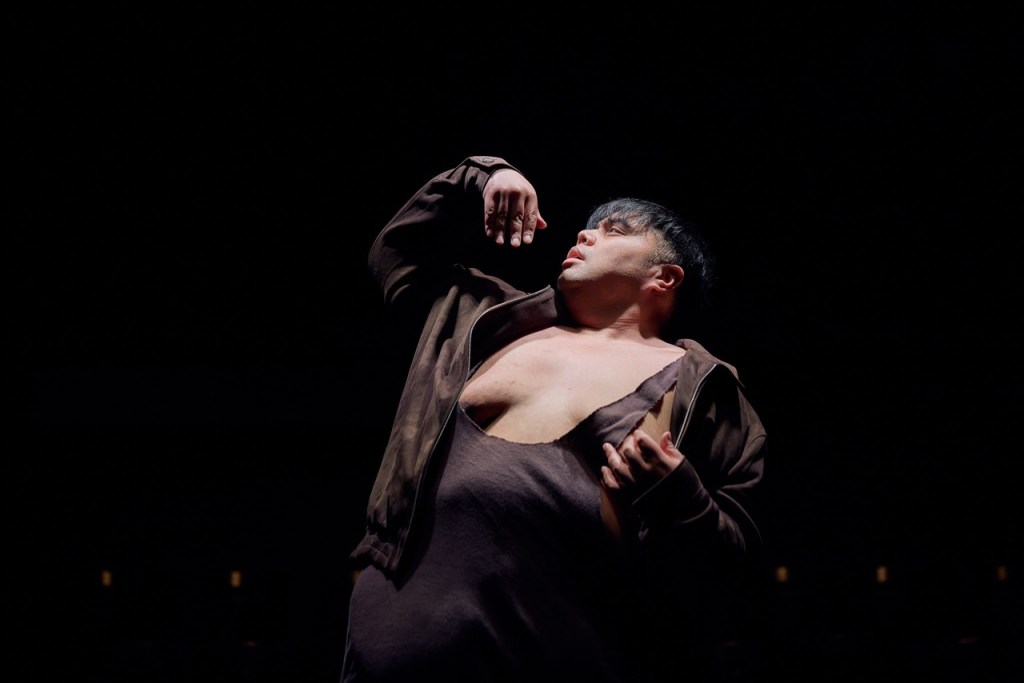
Shalamah Tautaiolefue. Photo: Daniel Boud. And that skews the story in interesting ways. Shaffer’s text has always been a complex web of deep-rooted neurosis and competing compulsions, and this addition layers in new subtext that threatens to overcomplicate an already dense narrative. But for those invested in the story, it proves additive rather than disruptive.
James-Moody gives an outstanding performance as Dr Dysart, the conflicted psychiatrist suffering his own personal crisis. Dysart’s closeted sexuality, dealt with obliquely in the text, is made overt in his constant watching of Stephen Madsen as the Nurse. The beauty of the intimate KXT space is you can watch every thought and emotion flash across his face, the centrepiece of the whole story. In a thrilling alteration, Brockman has Dysart speak some of his closing dialogue, not to Alan, but to a shivering Nugget, drawing a fresh connection in the text that opens up the character of Dysart in new ways.
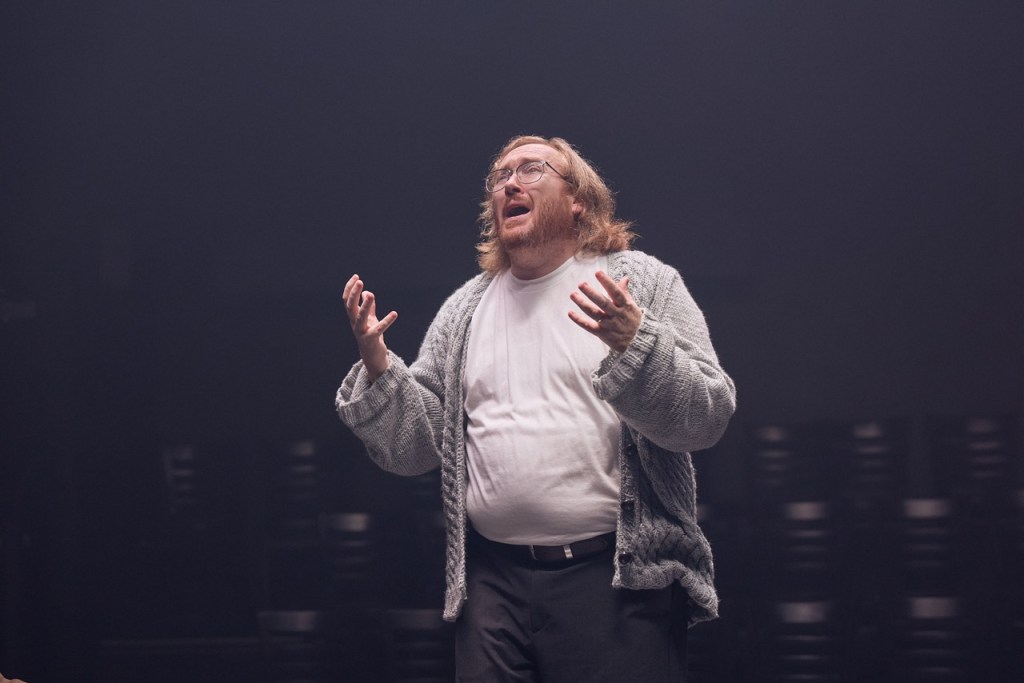
J. James-Moody. Photo: Daniel Boud. As the dangerous teen Ryan Yeates brings a much stronger sense of self-awareness to Alan Strang’s attempts at manipulation that highlight his innate intelligence. It shifts the character from a sense of “tormented innocence” into one of complicit guilt. This is Alan Strang as an incel whose sexuality is suppressed and twisted by a broken understanding of faith.
While this is by no means a definitive production of Equus, this is a confident, bold revisioning. It’s exciting to see a text be reconsidered with such a clarity – mining it for new angles. For me it wasn’t 100% successful, but the ambition is the thing. This is what Sydney theatre needs more of and marks Brockman as a director of note.
-
Lacuna (Griffin Lookout) ★★★★

Written by Eric Jiang. An Essential Workers Production in association with Belvoir St Theatre. Griffin Lookout. Downstairs Theatre, Belvoir. 30 Jul – 15 Aug, 2026.
“Memories, light the corners of my mind…” Take a trip down memory lane, literally, in the high-concept queer heist that is Lacuna. It’s part Charlie Kaufman, part The Daniels and 100% Griffin.
Claudia (Rachel Seeto) is underachieving. Struggling to find a job, dealing with a break-up with her girlfriend and trying to put on a good front for her mother, she stumbles into the underworld and finds herself a new gig working for Meng Po (Loretta Kung), the Goddess of Oblivion. Her job? Erasing memories from the living. And it turns out she’s pretty good at it. She starts to wonder if she can repair her relationship with her mother by carefully removing the memory of a fight they had.
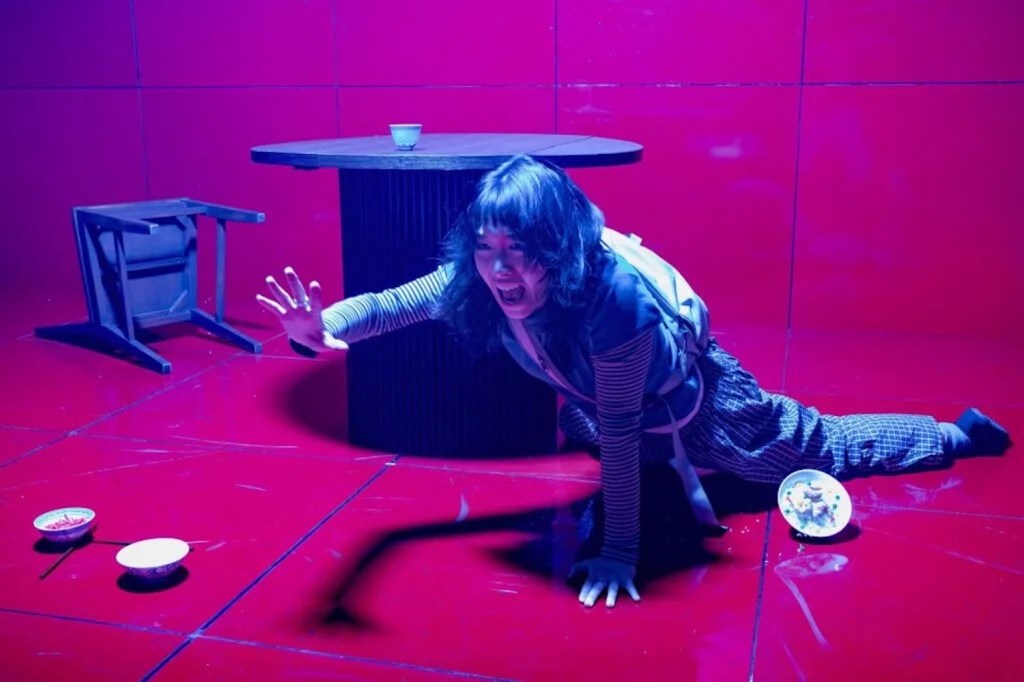
Rachel Seeto. Photo: Phil Erbacher. Welcome to the Backrooms of Belvoir — and by that I mean the Downstairs Theatre, currently inhabited by Griffin. Lacuna sets itself in the liminal spaces of the mind to play with some very big questions, even if only briefly. Eric Jiang’s script is funny in all the right places, throwing off asides about the gig economy, job hunting, poets, the tensions of queerness in the Chinese diaspora and more as it makes its way to deeper questions about identity, memory and consent.
The real star of the show is the brilliant technical and design work this team have assembled in the Downstairs Theatre space. Hailley Hunt has once again produced a striking, simple set with real punch. The bright red backdrops, accented by Morgan Moroney’s eloquent lighting and Sam Cheng’s immersive sound, make this one of the most memorable stagings I’ve seen all year.
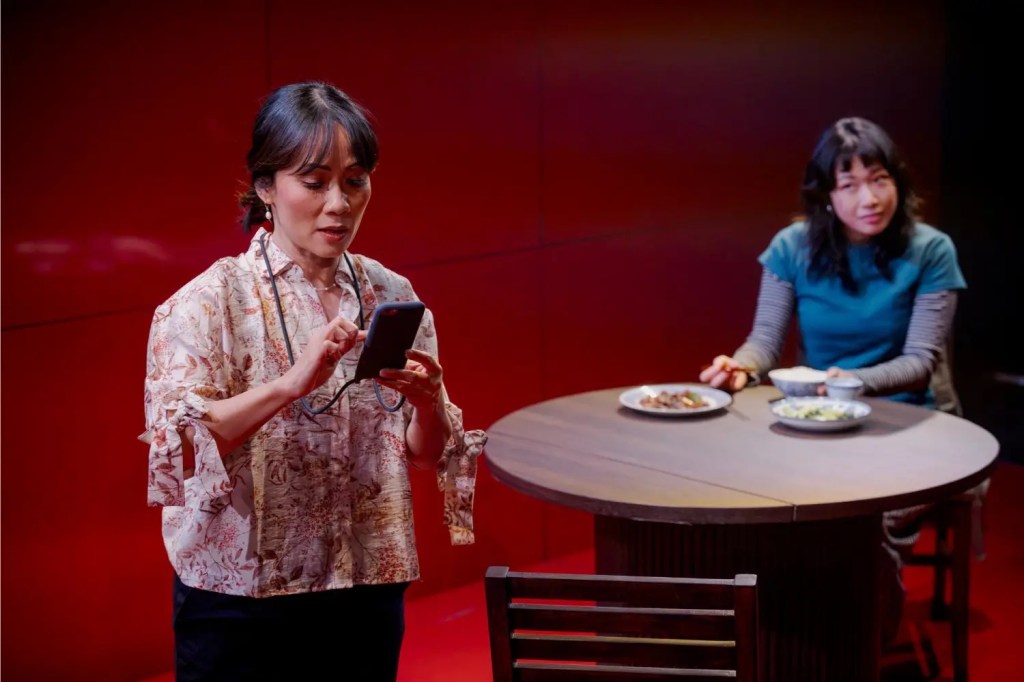
Loretta Kung & Rachel Seeto. Photo: Phil Erbacher. Rachel Seeto is great as the Gen Z Claudia struggling to find a footing in life, balancing wry comedic beats with a blend of angst that is nicely specific. She shifts neatly through the different landscapes, helping the audience go with her between worlds. Loretta Kung (playing the dual roles of the ethereal Meng Po and Claudia’s mum) gets to have fun as the strangely corporate-yet-incorporeal goddess who dips into meaningfully naff “HR” talk. As Claudia’s mum, she gets to lean into classic “Chinese mum” stereotypes but delivers the real emotions at the right time. Dominic Lui flips (literally) between full Lexapro-homo deadpan asides as Cedric and manic pixie dream-god as Tu’er (the patron saint of homosexuality). Moments do occasionally feel wooden, lacking emotional truth, but overall they find their way to their destination.
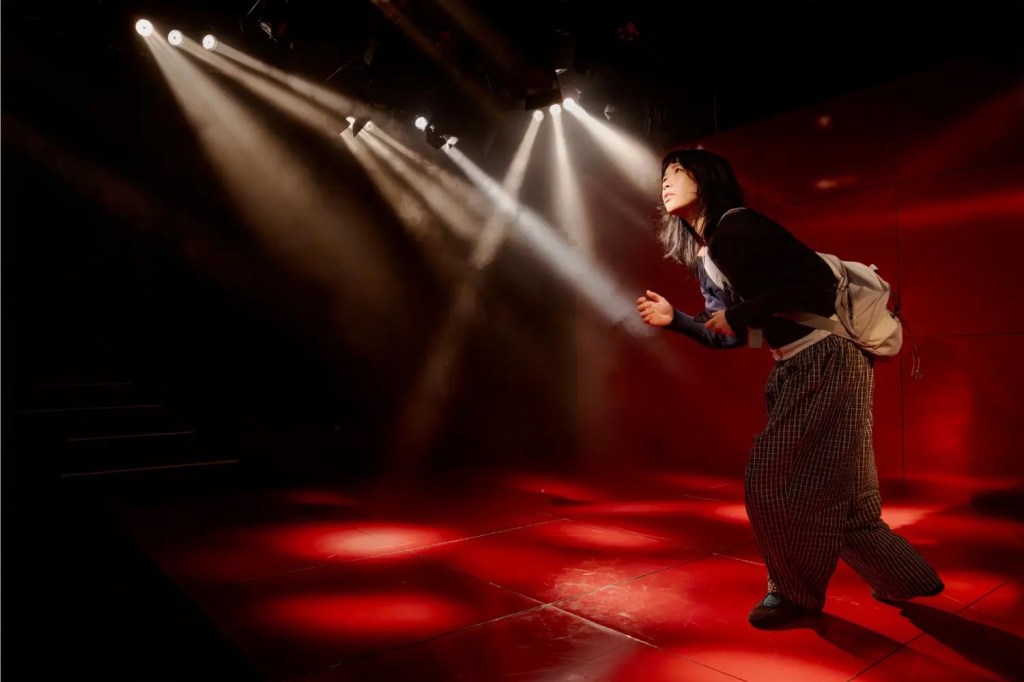
Rachel Seeto. Photo: Phil Erbacher. Lacuna is easily one of the best takes on “second-generation immigrant queer” storytelling I’ve seen on stage in a long time (no offence, but we don’t need any more playwrights staging their coming-out trauma with a slight cultural twist — yes, your parents’ generation didn’t understand queerness, we get it already). Jiang takes us one step further into the messy aftermath of coming out and how it takes time to heal. On top of that, he has sprinkled charming specificity over a big story hook. It’s great stuff.
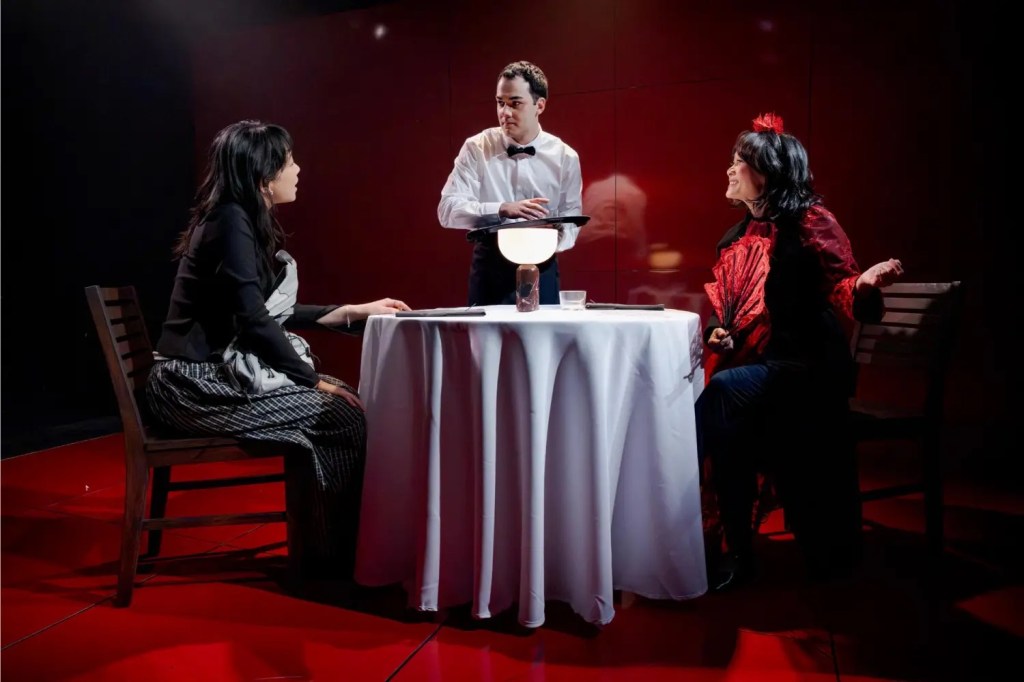
Rachel Seeto, Dominic Lui & Loretta Kung. Photo: Phil Erbacher. My main complaint (and you know there’d be at least one, right?) is the rushed finale, which doesn’t quite fulfil the promise of the beautiful set-up. Already under 90 minutes long, Lacuna could use a more in-depth and satisfying emotional conclusion rather than the hasty retreat we currently get.
I’m glad I got to catch Lacuna near the very end of its run, but still a jam-packed performance. Do I suspect we’ll be seeing it again before too long? I hope so — this is one play I would love to see grow a bit bigger, deeper and more thoughtful with time.
-
Top Silk (Ensemble) ★★½

Written by David Williamson. Ensemble Theatre. 31 Jul – 12 Sep 2026.
Ensemble plays things by-the-book with a staid revival of David Williamson’s 80s domestic/legal drama Top Silk.
Legal power couple Jane Fredericks (Rachel Gordon) and Trevor Fredericks (Nicholas Brown) have their intellects and their ethics tested on all fronts. At home, their son Mark (Samir Nasser) is failing to hit their own academic heights. At work, Jane, a legal aid lawyer, finds herself representing an old high school lover, Eddie (Jeremy Waters), on a drug charge. When she hears of a less-than-legal way to get his charges dropped, she has to wrestle with her conscience. Meanwhile, Trevor’s dreams of a political career might be helped if he represents a local media baron who-for-legal-reasons-is-definitely-not-named-Murdoch. As the two legal minds wrangle with their qualms, their marriage starts to slip through the cracks.
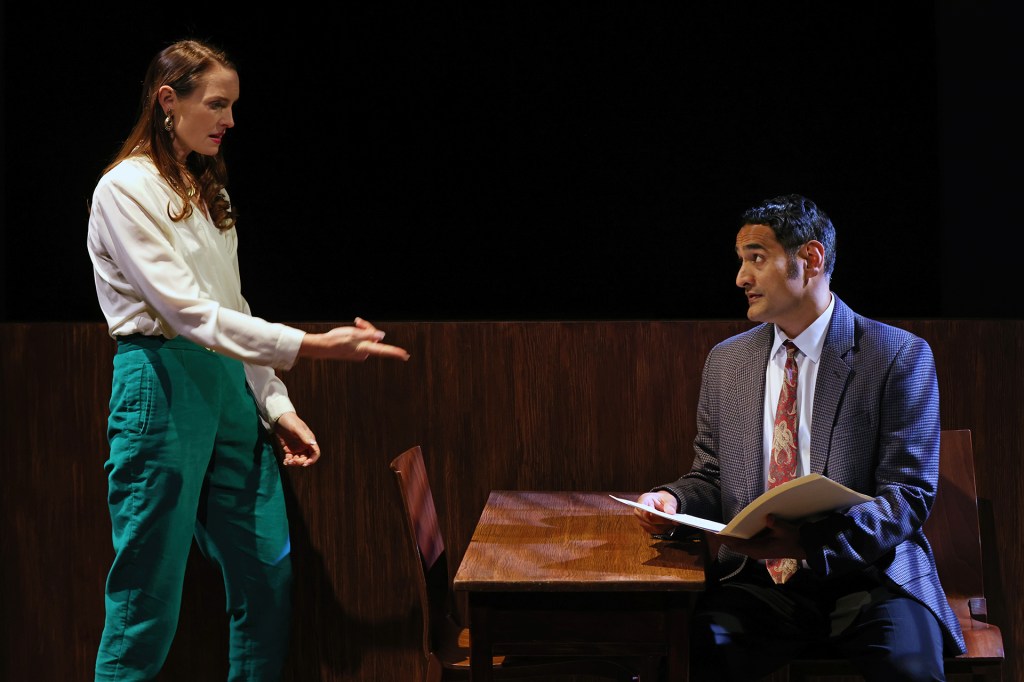
Rachel Gordon and Nicholas Brown. Photo: Prudence Upton. There are two questions I ask when watching a revival of a play: has it dated, and what is it saying to today’s audience? For Top Silk the answers are “yes” and “nothing new.” This moral labyrinth is far too simplistic for a contemporary audience, and its politics anodyne. What might have felt on-the-pulse in 1989, with its so-thinly-veiled-there’s-no-point characters of the time, and its 1980s view of a “strong independent woman,” feels a bit silly in 2026.
The strong ensemble are, by all measures, giving great performances as they work hard to breathe new life into the text. Rachel Gordon holds strong as the powerful/desirable/loving 80s superwoman (sans shoulder pads) at the story’s core. Nicholas Brown makes the supposedly bookish and unlikable Trevor… well, quite likeable actually, with a touch of political sleaze. Jeremy Waters has fun with the hapless incarcerated Eddie (and he gets some of the show’s best lines). Thomas Campbell goes full Rupert as the rich and manipulative Paul Bradley.
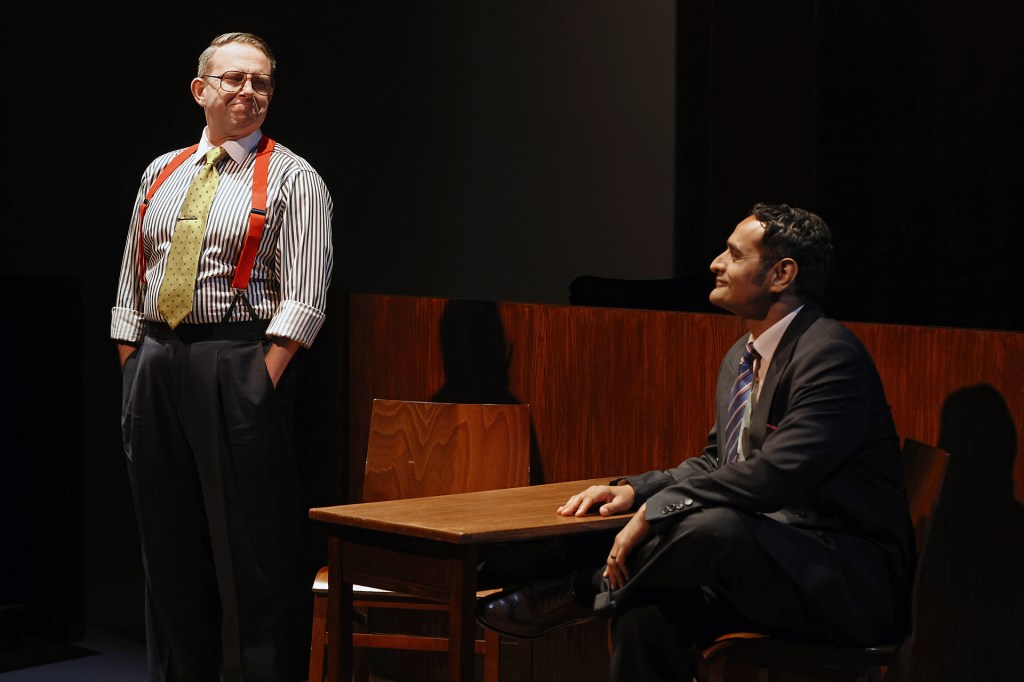
Thomas Campbell and Nicholas Brown. Photo: Prudence Upton. Williamson’s dialogue feels overworked and static on Ailsa Paterson’s legislatively cold set. The lines and set-up were so obvious I wanted to stand up and object – “Your Honor, the playwright is leading the witness!” Sound and lighting bring to mind 80s game show Mastermind and 90s TV hit Law & Order (you could practically hear the “dun-dun” between scenes). Partially this is a stylistic thing — the fashion of playwriting has changed, leaving Top Silk looking like your mum’s old dress. It’s cute, in an ironic way, but not something you’d take seriously.
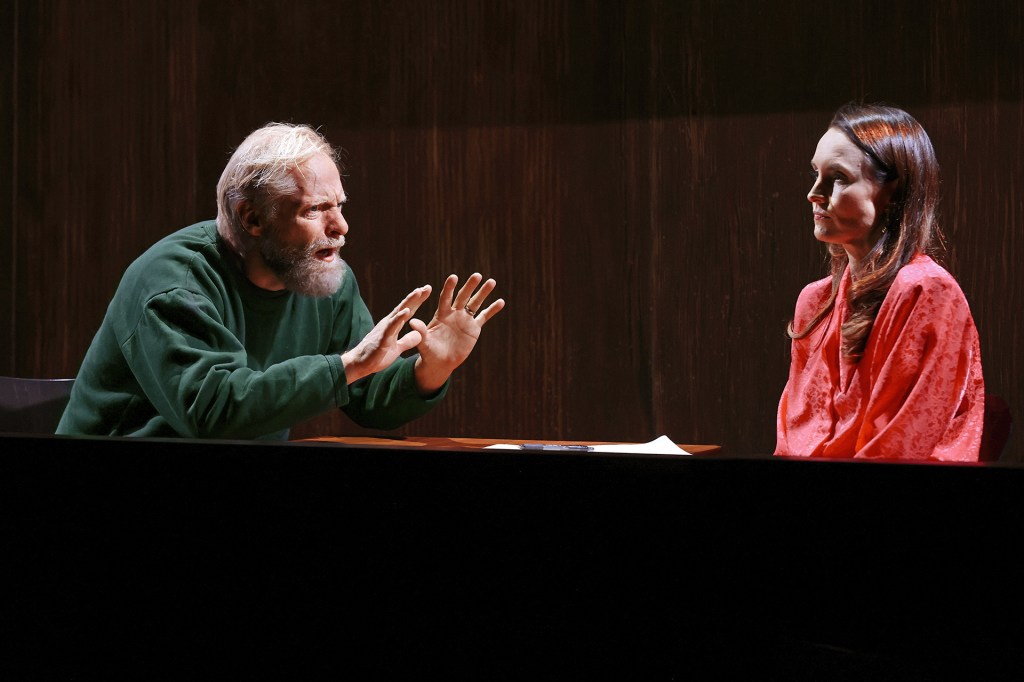
Jeremy Waters and Rachel Gordon. Photo: Prudence Upton. It must be said that none of this seemed to bother the happy, packed-out Ensemble audience around me, who laughed on cue, giggled at the appearance of an old-fashioned credit card “click-clack” machine, and rode each twist of the plot with an audible “oh.” As with all of Ensemble Theatre’s David Williamson revivals and premieres, his loving audience is waiting for them.
Personally, I’d say this one is for the fans, or those who want to tick a notable Australian classic off their “to see” list. The lack of relevance or rediscovery in the production keeps Top Silk something of a museum piece for those looking for a hit of 80s drama.
-
Fiddler on the Roof (Theatre Royal) ★★★★
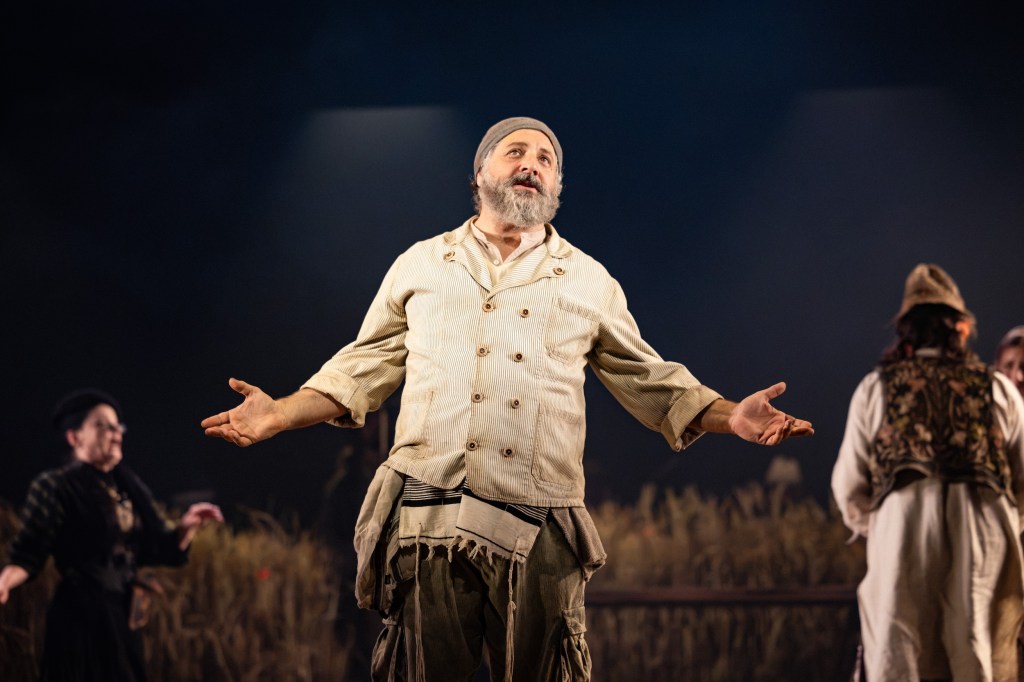
Music by Jerry Bock. Lyrics by Sheldon Harnick. Book by Joseph Stein. Theatre Royal Sydney. 31 Jul – 3 Oct, 2026.
Some of London theatre’s most exciting modern talents bring their award-winning production of the classic Fiddler on the Roof to Sydney. Is it a “wonder of wonders,” a “miracle of miracles,” as the London critics thought?
In 1905, Jewish milkman Tevye (Troy Sussman) tries to look after his family of five daughters, find them good husbands, and set them up for a future in a rapidly changing world. When local matchmaker Yente (Sigrid Thornton) tries to match Tevye’s daughter Tzeitel (Freya Boltman) to a much older man, the old world and the new begin to collide. With his daughters proving more strong-willed than he imagined, Tevye fights to hold onto the best of tradition.
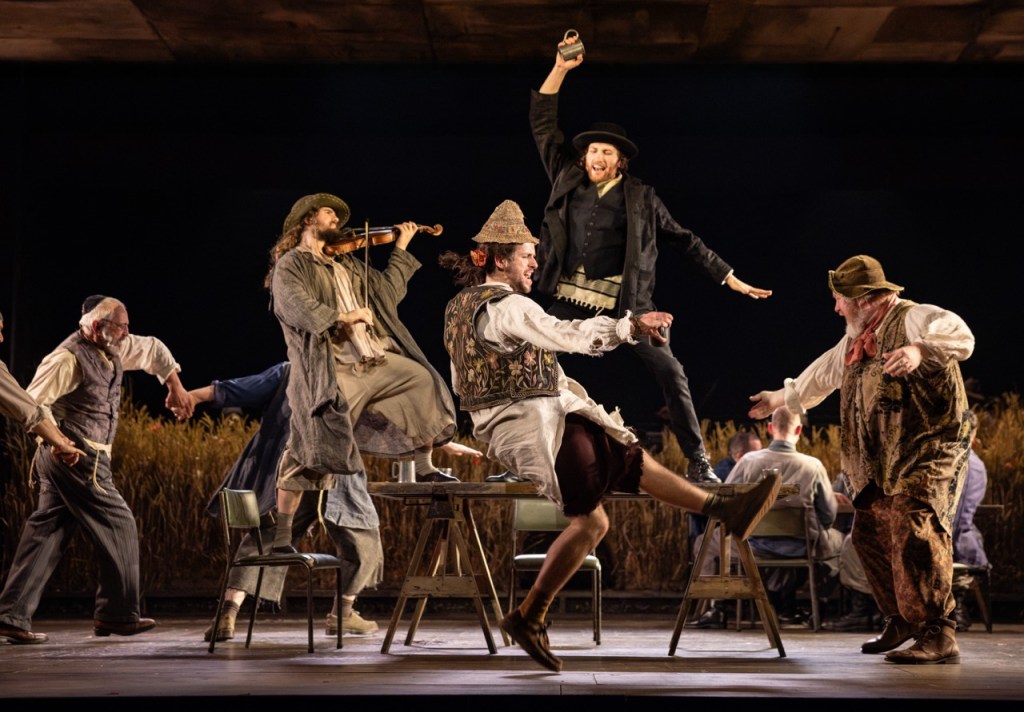
Fiddler on the Roof ensemble. Photo: Daniel Boud. Lovers of big casts and full voices will get a thrill from the opening number, “Tradition,” which kicks in like a starting pistol. It’s been a while since the Theatre Royal has been engulfed in such a strong sound. Director Jordan Fein directs for emotion and layers the vocals on top — the result is a deeply human musical that feels both heartbreaking and elating. The addition of violinist Ben Adler as The Fiddler, a constant watchful presence, is the cherry on the cake.
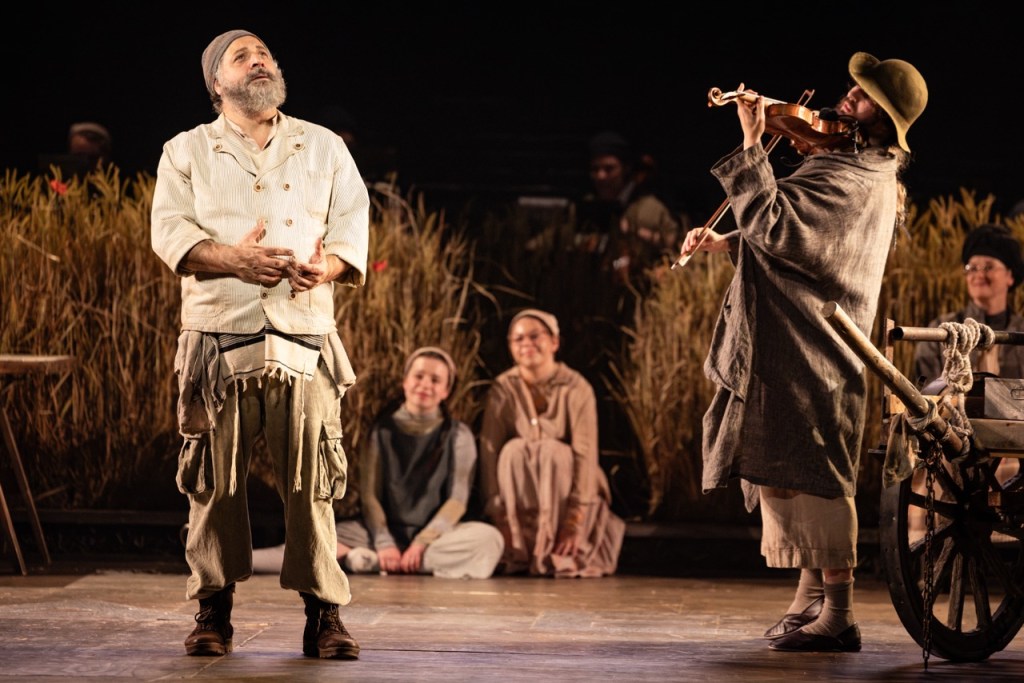
Troy Sussman and Ben Adler. Photo: Daniel Boud. Sussman’s Tevye finds the natural, good-natured comedy of the story without dipping into vaudeville. As his three strong-willed daughters, Freya Boltman, Ellen Ebbs and Caity Plummer settle into an easy innocence. Alexis Fishman similarly pitches Tevye’s wife, Golde, as a clear sitcom “harassed housewife” without veering into shrill stereotypes. The cast keep their Australian accents, which takes a second to get used to but becomes seamless, adding a sense of universality to the drama.
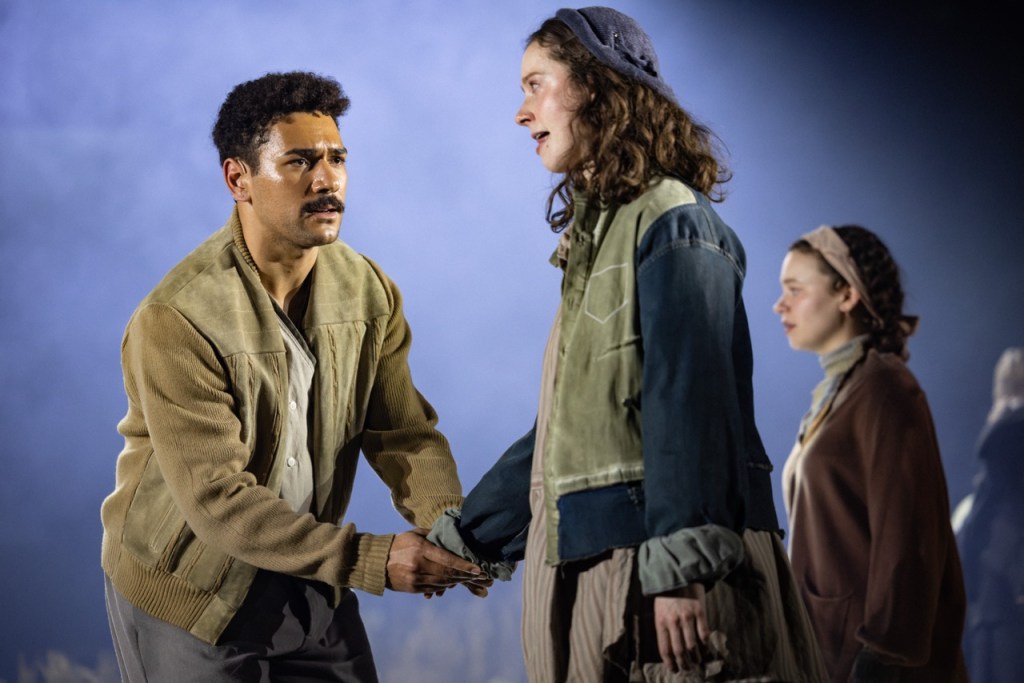
Jacob Steen and Caity Plummer. Photo: Daniel Boud. Many will come to Fiddler on the Roof with a sense of familiarity, whether from high school productions, the 1971 film, or its endless echoes in pop culture. First staged at London’s Regent’s Park Open Air Theatre before moving indoors to the Barbican, this production has amassed a run of five-star reviews and scored 13 Olivier nominations and three wins, including Best Musical Revival.
And it shows. Despite the move indoors, Tom Scutt’s simple but imposing set, dominated by a wooden canopy, has an epic quality, hinting at generations of history hidden beneath the soil — a connection to land Australians know well. When the canopy descends to form the chuppah, that connection deepens further. It’s majestic to look at, though you can’t help feeling a pang of FOMO for its original open-air staging, surrounded by trees and sunset colours, timed no doubt for “Sunrise, Sunset.”
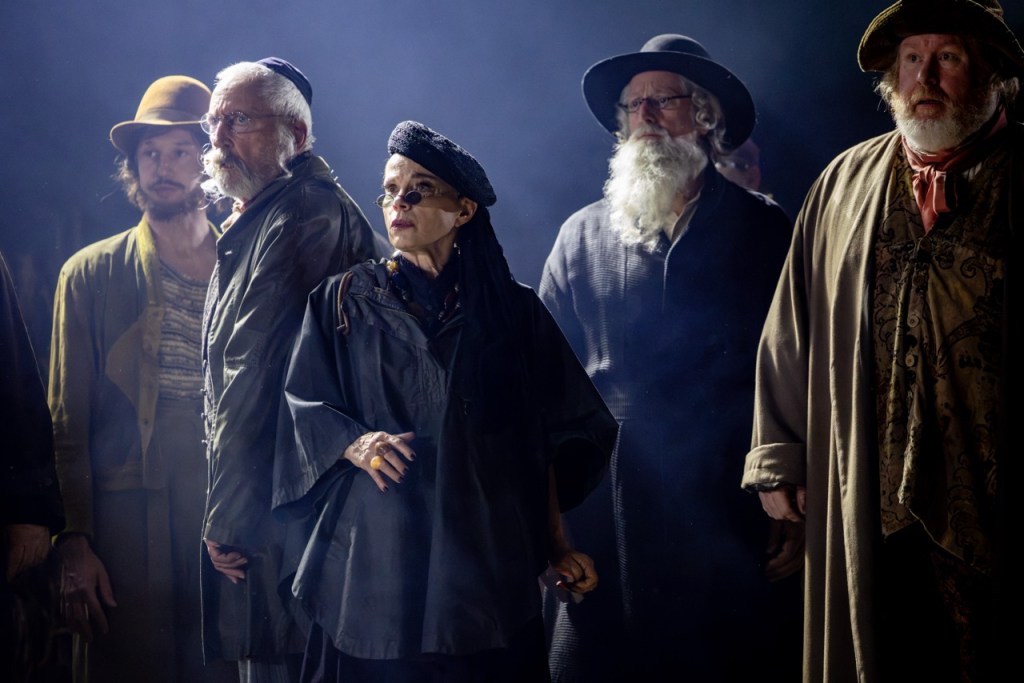
Patrick Whitbread, John Waters, Sigrid Thornton, Mark Doggett and Damien Bermingham. Photo: Daniel Boud. Joseph Stein’s book remains sadly relevant, lacing in the growing threat of turn-of-the-century antisemitism as it swept across Europe. The sleepy village of Anatevka may try to ignore the outside world, but the forces of modernity push through regardless — for better or worse. It’s impossible not to view this production through the lens of current antisemitism, including the events of the Bondi shooting, which brought slightly heightened security to opening night. Fiddler may seem quaint by comparison, but that doesn’t dull its truth.
For a show that has rarely strayed far from Sydney stages, this Fiddler on the Roof feels worth revisiting. Try as you might, you’ll still be singing “If I Were a Rich Man” all the way home.
-
Velvet Inferno (Sydney Opera House) ★★★★
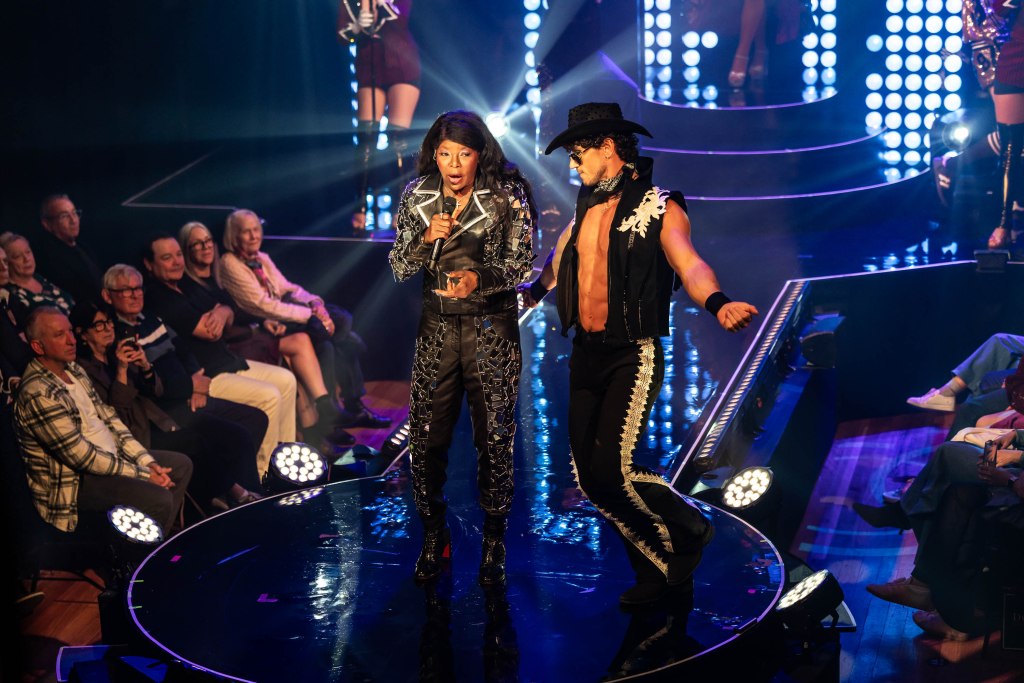
Sydney Opera House & Rix Management Presents. Sydney Opera House Studio. 24 Jul – 13 Sep, 2026.
Disco meets daring aerials in Velvet Inferno, the cabaret that mixes flirty and funny circus acts with four-on-the-floor beats.
The new incarnation of Velvet swings back into Sydney with some jaw-dropping acrobatics from an international cast, all set to the feel-good dance hits of disco. The playlist is the kind of soundtrack you’ll be familiar with from every party you’ve been to, laden with hits like ‘Relight My Fire’, ‘Play That Funky Music’, ‘It’s Raining Men’, ‘Last Dance’ and ‘I’m Every Woman’ — to be honest, it’s the kind of stuff I wish they still played in gay bars.

Oleg Tatarynov. Photo: Ken Leanfore. The visuals are a non-stop feast thanks to the combined work of designer James Browne and lighting designer Matt Marshall, who recreate the idealised dream of a disco. The costumes are a cascade of sequins and metallics, the lights multi-coloured and flashing, and the mirror balls abundant.

Zoë Marshall. Photo: Ken Leanfore. It all sets the stage for a varied ensemble of circus acts you might be familiar with from similar shows but are always entertaining to watch. Hair-rialist Zoë Marshall reminds us not to **** with a woman rocking a fierce ponytail. Craig Reid gives us comedy with some impressive quick-changes and a multifaceted hula hoop routine. Oleg Tatarynov stuns with his six-pack aerials with a side of boy-lesque. But my personal favourite of the acts was the death-defying extreme roller-skaters Yevhenii and Vlada from Duo Stardust, who had the crowd on the edge of their seats — I was getting scared for the front row. They’re a jaw-droppingly talented and sexy ensemble.

Mateja Sardelis, Marcia Hines, KYE, Brendan Maclean & Emma Feliciano. Photo: Ken Leanfore. They’re joined on stage by a group of excellent vocalists — KYE, Emma Feliciano, Mateja Sardelis, Brendan Maclean and the icon that is Marcia Hines. They deliver big dance-floor vocals, which are unfortunately lost in a sound mix that prioritises beats over melodies. The best vocal moment comes in the form of a stripped-back rendition of ‘Staying Alive’, performed by Maclean with a solo banjo, that will break your heart.
One thing that is utterly flawless is the 6:30pm starting time. An early start and a tight 75-minute show — you’re out the door by 8pm. Music to my ears! If you’re in need of some hot gymspiration in these cold, wintery days, look no further.
-
Subscribe
Subscribed
Have a WordPress.com account? Log in now.

