-
Welcome to Cultural Binge

The rating system is simple:
★★★★★ – Terrific, world-standard. Don’t miss.
★★★★ – Great, definitely worth seeing.
★★★ – Good. Perfectly entertaining. Recommended. Individual mileage may vary.
★★ – Fine. Flawed and not really recommended, but you may find something to appreciate in it.
★ – Bad (& possibly offensive).
See more reviews over at The Queer Review.
Instagram: @culturalbinge
Substack: culturalbinge.substack.com
Email: chad at culturalbinge.com
-
So Young (Old Fitz) ★★★★

Written by Douglas Maxwell. Australian Premiere. Outhouse Theatre Co. Old Fitz Theatre. 7-22 Nov, 2025.
“Remember the time…?” – three friends getting together to reminisce becomes a passive-aggressive battle in the darkly funny Scottish domestic comedy So Young. The stories that bind friendships run deep – but are they stopping life from moving forward?

Jeremy Waters, Ainslie McGlynn, Aisha Aidara & Henry Nixon. Photo: Richard Farland. Middle-aged couple Liane (Ainslie McGlynn) and Davie (Jeremy Waters) are invited to dinner by their recently widowed friend Milo (Henry Nixon). All three are still grieving the loss of Helen – Milo’s wife of twenty years and Liane’s best friend. When Milo suddenly introduces them to his new twenty-year-old girlfriend Greta (Aisha Aidara), Liane and Davie do their best to stay civil, but they can only bottle up their outrage and confusion for so long.
Outhouse Theatre Co have always excelled at finding strong writing to bring to the stage, and So Young is no exception. Though conceptually lighter than previous works like A Case for the Existence of God, Heroes of the Fourth Turning or Consent, So Young is an exploration of the heart, not the mind, that gives the cast plenty to chew on.
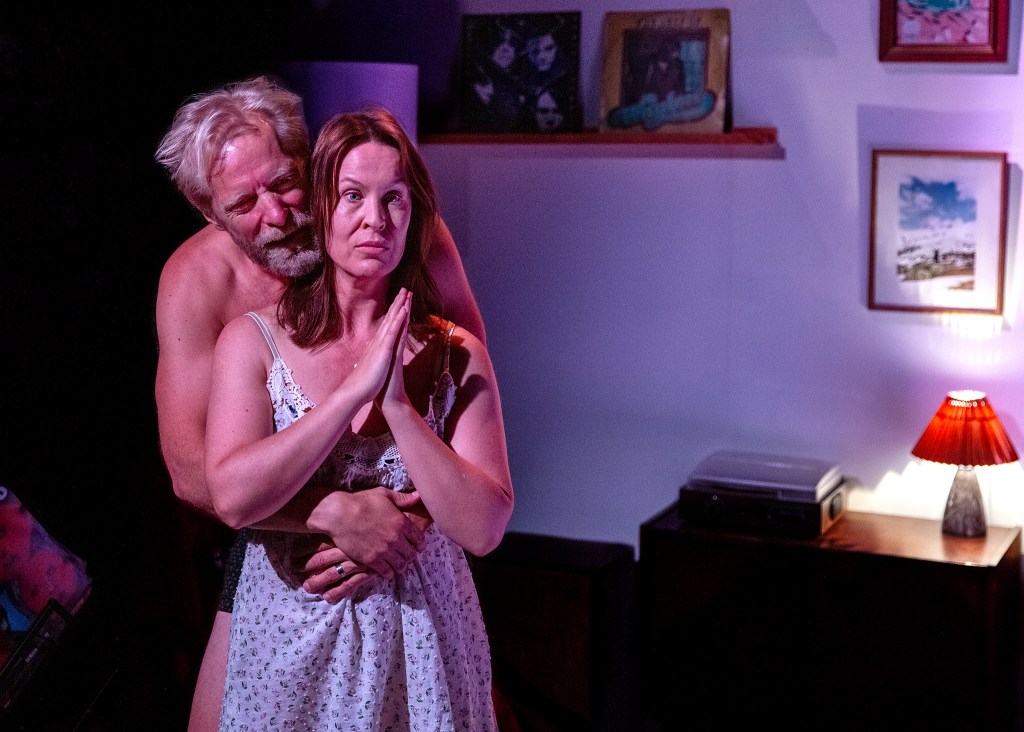
Jeremy Waters & Ainslie McGlynn. Photo: Richard Farland. McGlynn and Waters bring an easy familiarity to the marriage, full of shorthand and comfortable jests. Their chemistry with Nixon, playing their old school friend Milo, has a natural warmth. Even in their forties, there’s a youthful camaraderie between Davie and Milo that speaks to shared history. Their current frustrations rest on decades-old grievances and familiar patterns of behaviour.
Both Liane and Milo are consumed by grief for Helen, who died alone in hospital during the Covid pandemic. The unresolved nature of that loss seeps into their lives in different ways. Liane is angry and confused, her resentments souring her relationships. Milo is lonely but determined to move forward, refusing to be swallowed by sorrow.
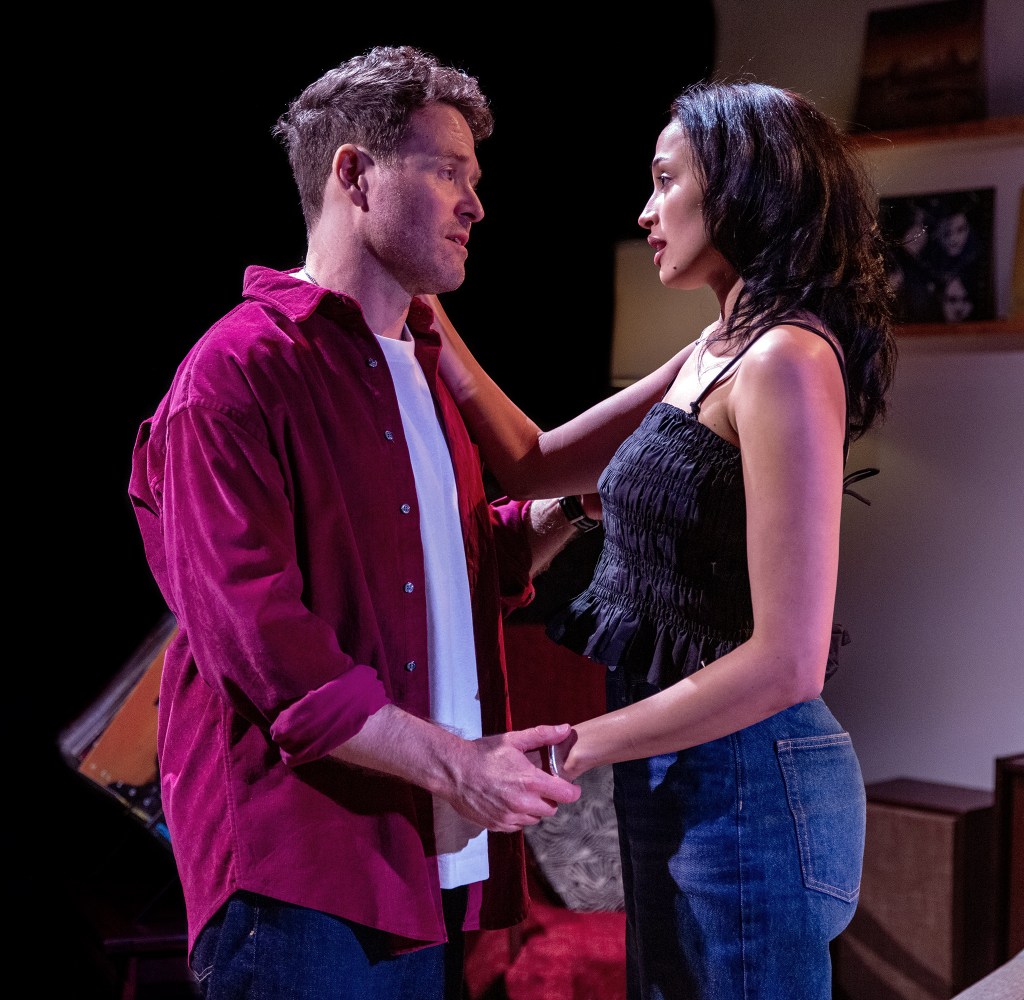
Henry Nixon & Aisha Aidara. Photo: Richard Farland. As the outsider, Aidara’s Greta feels distinctly separate from the others. Playwright Douglas Maxwell goes to great lengths to present her as an equal despite her youth which risks turning her into an idealised woman, rather than a real character. His determination to sidestep older-younger romance clichés sometimes tips the balance – the relationship risks being defined more by what it isn’t than by what it is. Thankfully Aidara’s layered performance fills in the gaps (her reactions are beautifully delivered, even when she is not the focus of the moment).
The success of Maxwell’s script lies not in reinventing a familiar tale – the older man’s younger girlfriend provoking amusement and disgust – but in filling each moment with well-observed detail and sharp dialogue. It’s a smart, grown-up piece that trusts its audience. Every line slots into place like a puzzle piece, revealing character bit by bit. Maxwell deftly avoids inserting references to Covid-era UK politics (“Partygate”, vaccine denial, the image of Queen Elizabeth sitting alone at Prince Philip’s funeral), keeping the focus personal.
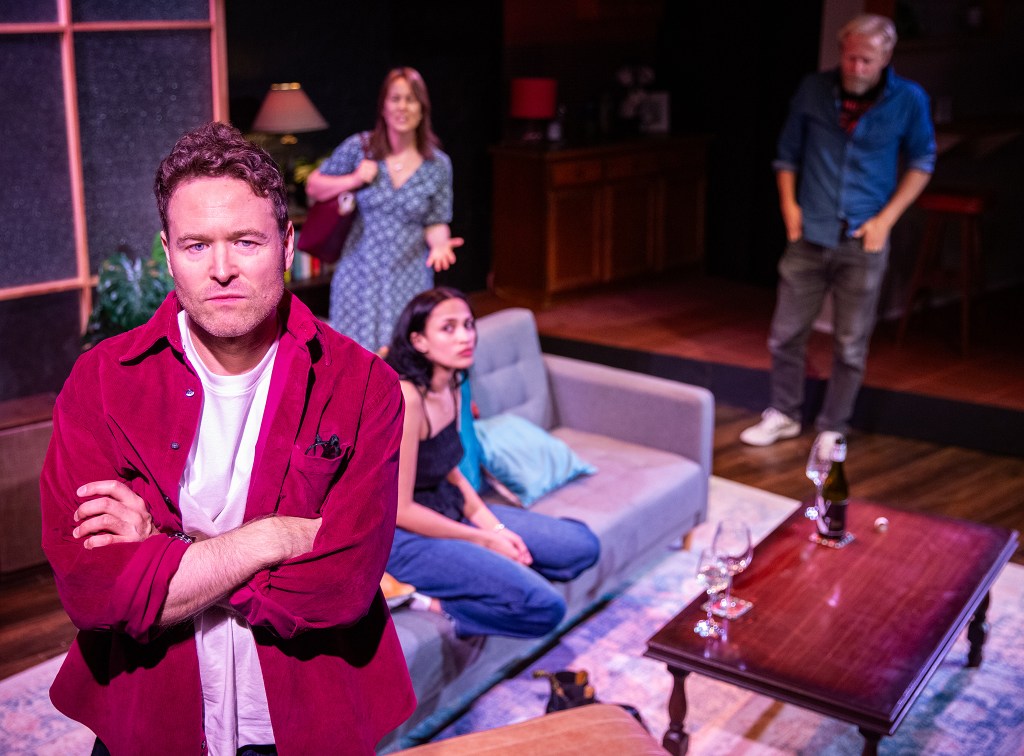
Henry Nixon, Ainslie McGlynn, Aisha Aidara & Jeremy Waters. Photo: Richard Farland. Director Sam O’Sullivan makes deft use of the Old Fitz’s intimate space, complemented by Kate Beere’s rich set design. Aron Murray’s lighting is especially adept at smoothing scene transitions and shifting location with simple elegance. O’Sullivan draws an appealing naturalism from his performers – despite their slightly heightened Scottish accents – grounding the play in emotional truth.
So Young may not be the meatiest of dramas, but it’s far from empty comedic calories. Outhouse Theatre Co have doubled down on works that put the laughs front and centre this year, with both So Young and the excellent Eureka Day at the Seymour from earlier this year being crowd-pleasers without sacrificing literary or intellectual merit. There’s plenty to engage both brain and heart and I’m all here for it.
-
Looking Ahead to (not) Sydney Theatre in 2026: Part Three

If you fancy heading interstate for a show & some touristing, I’ve got some shows you might be interested in checking out.
Next time – I’ll have a look at the line ups for Sydney Festival and Mardi Gras Festival.
-
The Lovers (Theatre Royal) ★★★★½
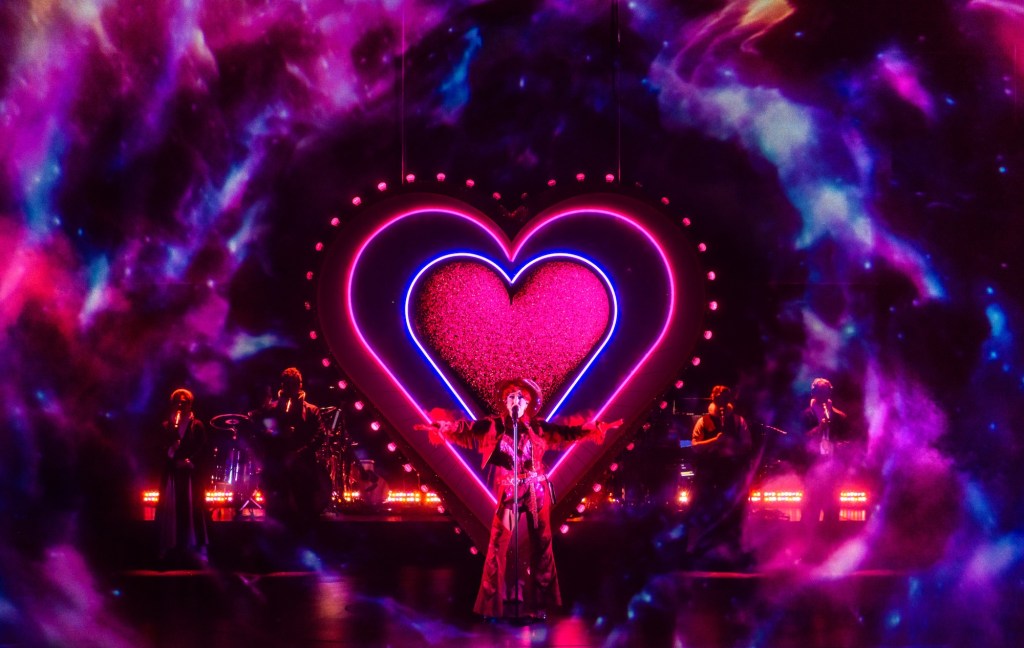
Book, music and lyrics by Laura Murphy, based on Shakespeare’s A Midsummer Night’s Dream. Shake & Stir Theatre Co. Theatre Royal Sydney. 31 Oct – 15 Nov, 2025.
Three years after its debut at the Sydney Opera House, Laura Murphy’s musical The Lovers is back with so many giant video screens you’d be forgiven for thinking Kip Williams had come back to town. Bigger, louder and flashier, this version of The Lovers rivals & Juliet for the Pop Shakespeare crown.

Natalie Abbot & Mat Verevis. Photo: Joel Devereux. It’s A Midsummer Night’s Dream, but not as you know it, as our disco/cowgirl fairy leader Oberon (Stellar Perry) and pouf-ball-headed Puck (Jayme-Lee Hanekom) try to make a couple of Athenian youths fall in love. They just don’t really have a good track record at this romance stuff, and it’s clear to see why.
Loved-up couple Hermia (Loren Hunter) and Lysander (Mat Verevis) have run away so they can get married. But Hermia is being pursued by Demetrius (Jason Arrow), the guy she’s been promised to. Meanwhile, Demetrius is being stalked by Hermia’s best friend, Helena (Natalie Abbott). So if Oberon and Puck can just get Demetrius to fall for Helena, then everyone’s problems are solved, right? Right?

Jason Arrow. Photo: Joel Devereux. First staged in 2022 by Bell Shakespeare, this new production brings fresh staging and a blended cast which sees original cast members Natalie Abbott and Stellar Perry return, joined by Hamilton’s Jason Arrow, Six’s Loren Hunter, Beautiful’s Mat Verevis and more (even the covers are stacked—with Titanique’s Jenni Little and Joseph & the Amazing Technicolor Dreamcoat’s Nic Van Lits waiting in the wings). It’s a powerhouse team belting Murphy’s hooky tunes—you will walk out singing. Needless to say, the whole show sounds stunning, and everyone gets to stretch their comedy muscles as well.
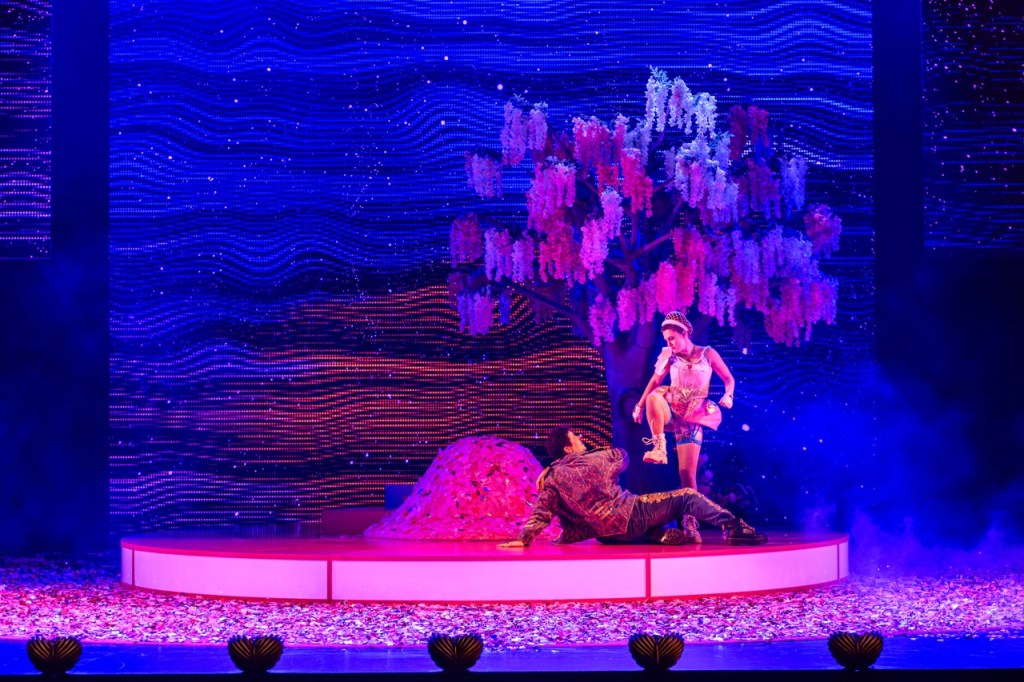
Jason Arrow & Loren Hunter. Photo: Joel Devereux. Shake & Stir’s Artistic Director Nick Skubij brings an almost sci-fi eye to the musical, with cosmic expanses filling the stage and a lone tree that reminded me of the Hugh Jackman brain-bender The Fountain. Isabel Hudson’s design frames the stage in Elizabethan ruins and makes abundant use of the stage’s triple revolve—that’s right, THREE revolves! Suck it, Les Misérables!
As with the cast, many creatives from the original staging return with a brand-new vision. Trent Suidgeest’s lighting channels stadium pop gigs, and David Bergman’s sound and video design take cues from games and music videos—this is just visually gorgeous work.
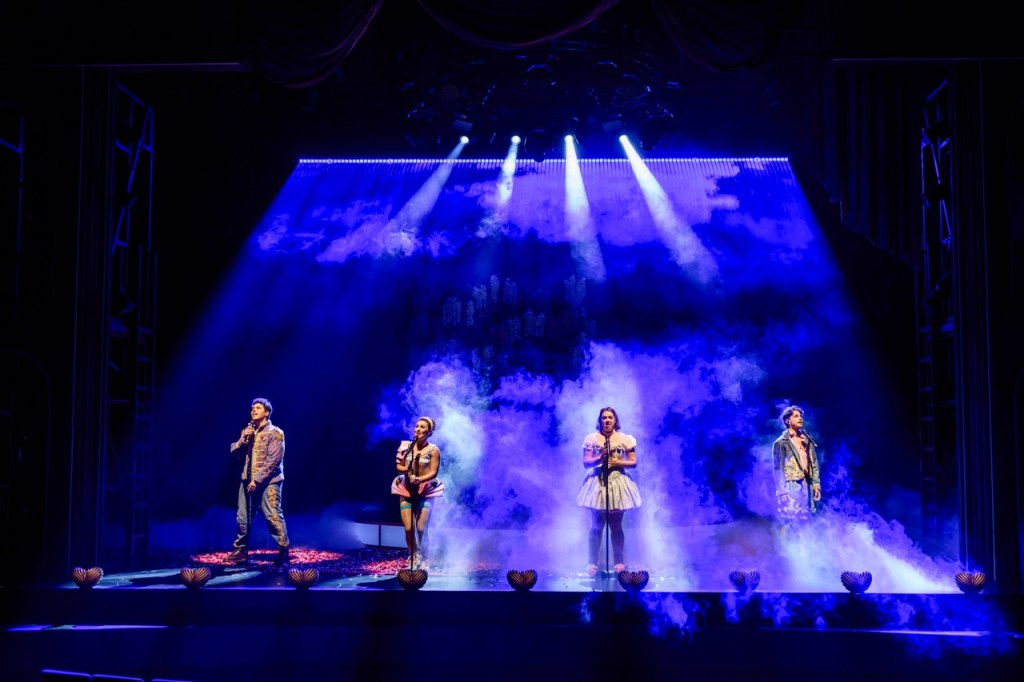
Jason Arrow, Loren Hunter, Natalie Abbot & Mat Verevis. Photo: Joel Devereux. Yvette Lee’s choreography carries forward some moves from the original (I instantly recognised the “nay-nay-nay” hand wave) while elevating the comedy of the boys’ rivalry. I don’t know if Lee is also responsible for the confetti-ography, but it was impressive nonetheless. Can you ever have too much confetti? The Lovers is definitely trying to prove the answer is NO!
Musically, The Lovers rocks! Laura Murphy uses the language of pop songs to play with our understanding of Shakespeare and to ground the action for a contemporary audience. And it’s exciting to see the work return on a bigger stage and with a more commercial vision.
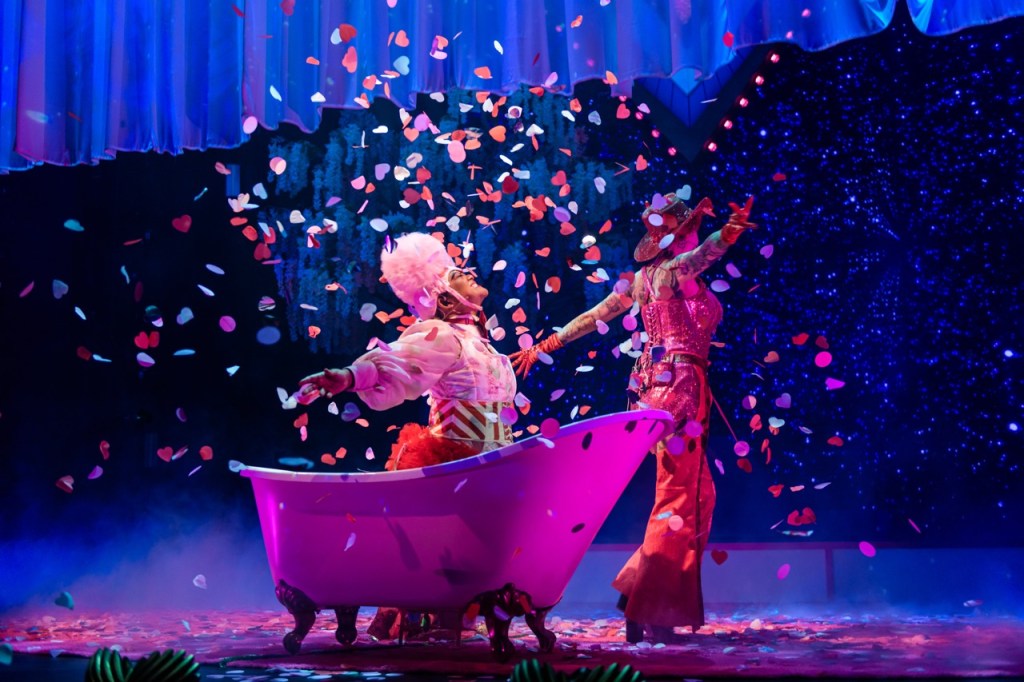
Jayme-Lee Hanekom & Stellar Perry. Photo: Joel Devereux. So, if you already saw the 2022 production, should you go see The Lovers again? Yes! I loved Sean Rennie’s pastel-fluid fantasia, but Skubij’s shimmering, sparkly show is a whole new thing. Personally, I just find it exciting to see the same show given two different visual aesthetics in such a short space of time.
Sydney, we’re being spoilt right now, having two terrific Australian musicals on our stages at the same time. So make the most of it—this doesn’t happen very often.
-
Phar Lap: The Electro-Swing Musical (Hayes) ★★★★½
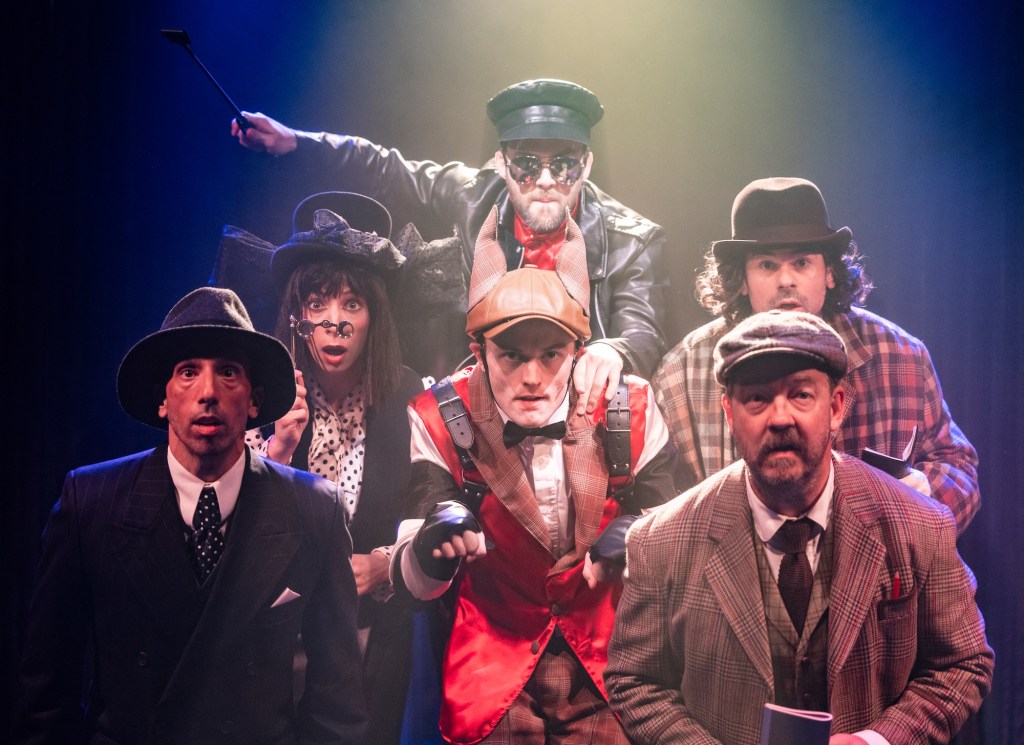
Book, Music & Lyrics by Steven Kramer. World Premiere. Hayes Theatre Company. 17 Oct – 22 Nov 2025.
After strong word of mouth from workshops and readings, Phar Lap: The Electro-Swing Musical has galloped onto the stage — and it lives up to the hype. Steven Kramer delivers a remarkable trifecta: great music, sharp lyrics, and an outrageously bonkers book to match. This show has an abnormally big heart and an even bigger funny bone.
Harry Telford (Justin Smith), a horse trainer on his last legs, convinces businessman David Davis (Nat Jobe) to take a punt on a horse he’s found in New Zealand. It has a promising bloodline — a descendant of winners. But when the sweet little Phar Lap (Joel Granger) arrives with a thick Kiwi accent, he has no competitive drive — he’d rather be doing dressage. Unimpressed, Harry has to find a way to turn this zero into a national hero to save his own hide.
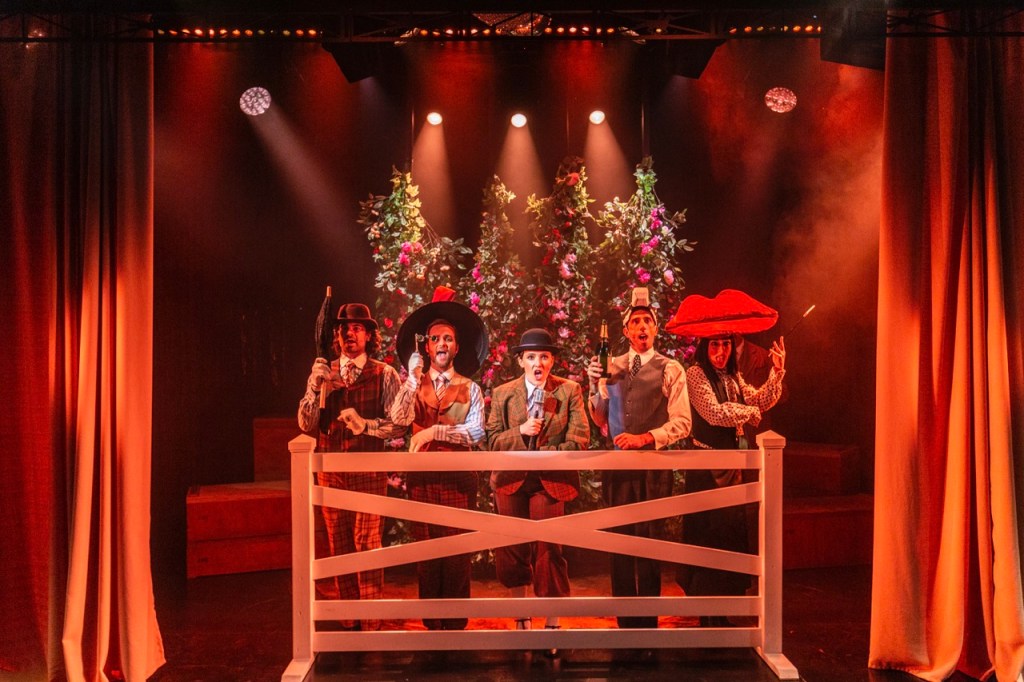
Lincoln Elliot, Shay Debney, Manon Gunderson Briggs, Nat Jobe & Amy Hack. Photo: John McCrae. Plot-wise, it sounds simple enough, but Phar Lap shines in the storytelling finesse Kramer and director Sheridan Harbridge bring to proceedings. The book is a cavalcade of jokes — from Phar Lap’s training partners being named One-One and Two-Two (“One-One won one and Two-Two won one too”) to the hyper-fast commentary on capitalism from the Race Caller (Manon Gunderson-Briggs — her performance is the glue that holds the show together). Kramer has made sure the script is tight and jam-packed. Yet it’s not just jokes and tunes — he grounds us in the historical events of the time, showing how Phar Lap’s underdog success became an inspiration for a nation suffering through the Great Depression (but, you know, he’s made it funny).
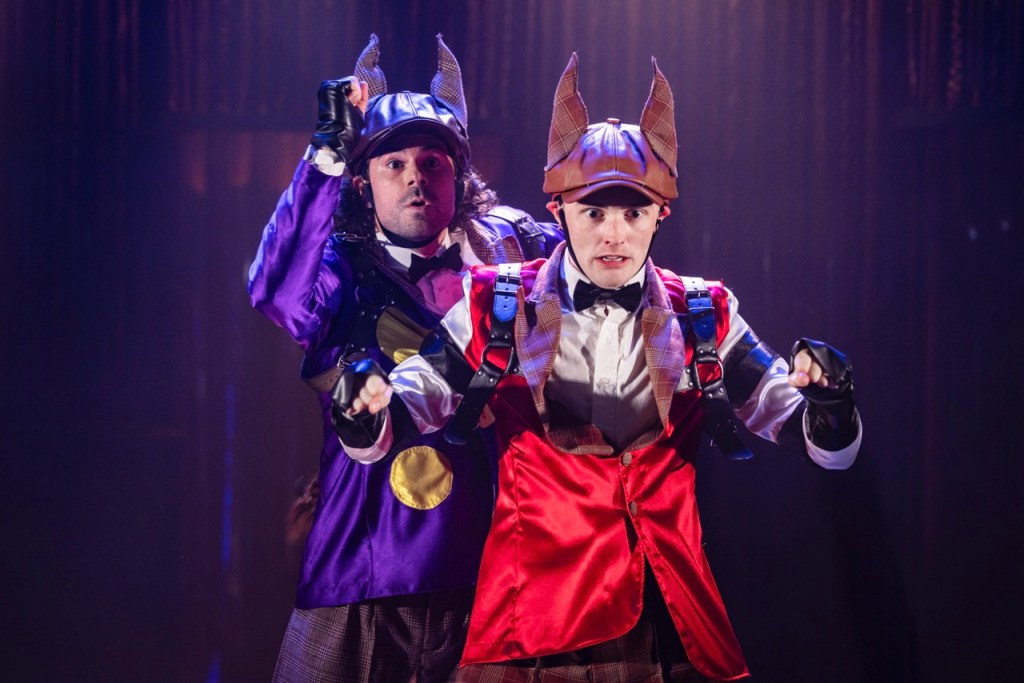
Lincoln Elliot & Joel Granger. Photo: John McCrae. Beyond the writing, the performances match the show’s wild energy. Each character is transformed into a hilarious, larger-than-life caricature thanks to impeccable casting and clear direction. Phar Lap’s older half-brother Nightmarch (Lincoln Elliott) is a braggadocious Kiwi bro, while Shay Debney is a scene-stealer as jockey Jim Pike — a leather daddy ready to ride Phar Lap all night long. Amy Hack shines as both the mysteriously accented Madame X and in a small but memorable turn as a “horse girl” fan. But it’s all anchored by Joel Granger’s wide-eyed, innocent Phar Lap. His cheerful, do-good demeanour is infectious, with Granger bringing a childlike Thomas the Tank Engine energy to the role. Even Phar Lap’s darker or stranger moments (like his oddly sexual bonding with Jim Pike, or his growing addiction to sugar cubes) have a gleeful silliness to them.
Kramer’s score is as sharp as his script. Long established as a go-to musical director, he brings skill and depth of musical knowledge to a score that’s high-energy, smart, and littered with gags — a mash-up of Thoroughly Modern Millie, The Great Gatsby (both Baz Luhrmann’s film soundtrack and the current Broadway show), and the tone of Operation: Mincemeat. There’s palpable passion running through this music — give me a cast recording ASAP, please.
That same inventiveness carries through every element of the production. Mason Browne’s costumes instantly impress, transforming actors into upright horses with long-eared jockey caps and braids — so simple but effective. Ellen Simpson’s choreography plays with all the hallmarks of the era in refreshing ways. Hailey Hunt’s set is surprisingly layered (the stage border referencing Eadweard Muybridge’s The Horse in Motion is a lovely touch), giving room for Trent Suidgeest’s lighting to inject energy and variety into the space. Similarly, Liam Roche’s sound design elegantly brings the racetrack to life.
There are minor quibbles — like the use of recorded taps for the dancing — but these come down to production cost and are easy to forgive in an indie theatre space. The book occasionally drives its punchlines home a little too hard (it’s okay — we all got the “big heart” reference the first time), yet that’s personal preference. For a premiere production, this show is in outstanding form.
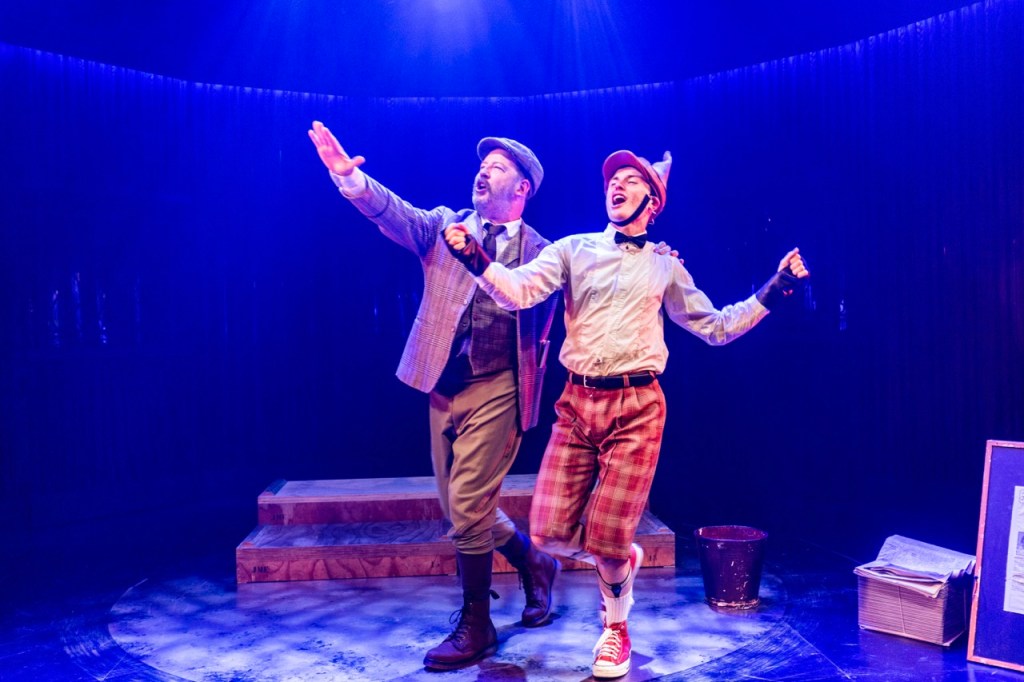
Justin Smith & Joel Granger. Photo: John McCrae. Making successful independent theatre is hard. Making successful independent musical theatre is almost impossible. For every Zombie! The Musical, there’s… well, I won’t name them all, but history is littered with the corpses of unimpressive musicals that should never be seen again. It doesn’t just take talent and songwriting — it takes development and producing skill to bring a show like this to the stage. Thankfully, Hayes have done it again, birthing another new Australian musical that feels completely race-ready. The story may be local, but the themes and humour have universal appeal. All Phar Lap needs now is a few more investors and a big enough stage to really stretch its legs and show everyone what it can do.
-
Naturism (Griffin) ★★★½

Written by Ang Collins. Griffin Theatre Co. Wharf 2 Theatre, Sydney Theatre Company. 25 Oct – 15 Nov 2025.
It’s shirts vs skins as Novocastrian playwright Ang Collins pits generations against one another for her climate-comedy, Naturism. And yes, it’s true, the cast are completely nude — but it’s not just a naked cry for attention, at least not in the way you think it is.
Evangeline (Camila Ponte Alvarez) has fled Melbourne in search of peace from the mental turmoil of her internet-influencer lifestyle. She’s heard about a commune of eco-naturists in the rainforest, and it sounds like the perfect place. There she finds a bunch of Gen X burnouts, including Ray (Glenn Hazeldine), a former CEO turned hippie; Helen (Hannah Waterman), a frustrated middle-class artist; and Sid (Nicholas Brown), a philosopher with a love of routine.
But it isn’t the paradise Evangeline expected. Sid is suspicious of her, Helen is tripping on mushrooms, and there are signs that something is wrong with nature as their commune grows unnaturally hotter. Then an oversized SUV delivers the self-absorbed Gen Z man-child Adam (Fraser Morrison), full of grand plans for this tract of land…
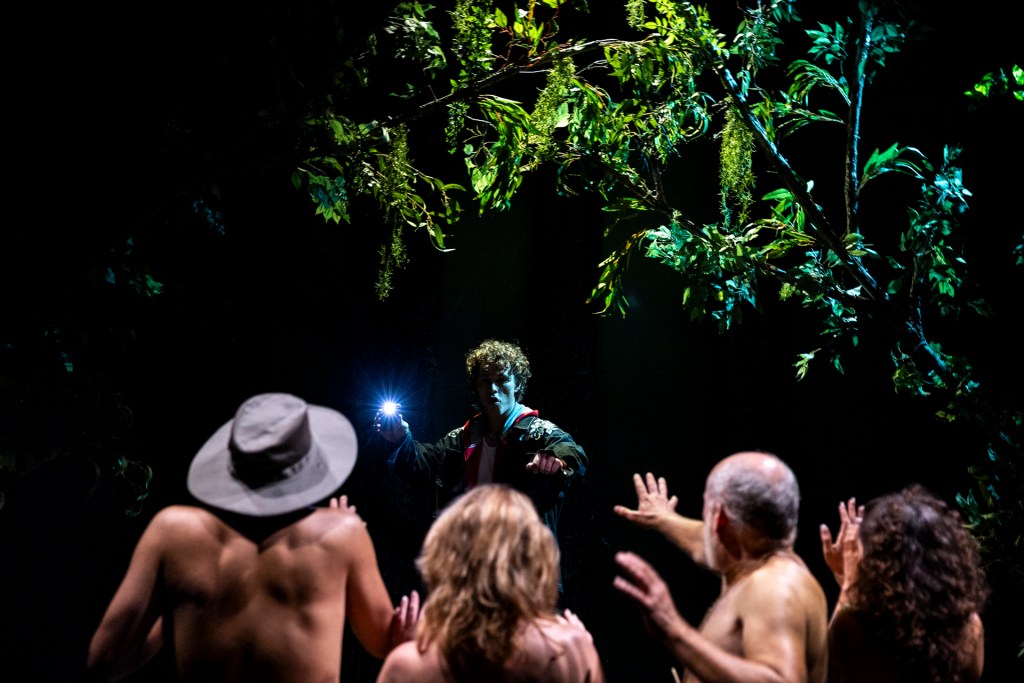
Nicholas Brown, Hannah Waterman, Fraser Morrison, Glenn Hazeldine & Camila Ponte Alvarez. Photo: Brett Boardman. Nudity on stage is nothing new — cynical producers have used it to sell tickets for decades. Bums on stage = bums on seats. And putting bare skin front and centre is nothing new for Griffin either. But nudity on this scale is a bold move nonetheless. Somehow, in an age of “prestige TV” sexposition and “content creators” shilling OnlyFans accounts, seeing this much flesh on stage is still initially confronting but then you just get on with the show.
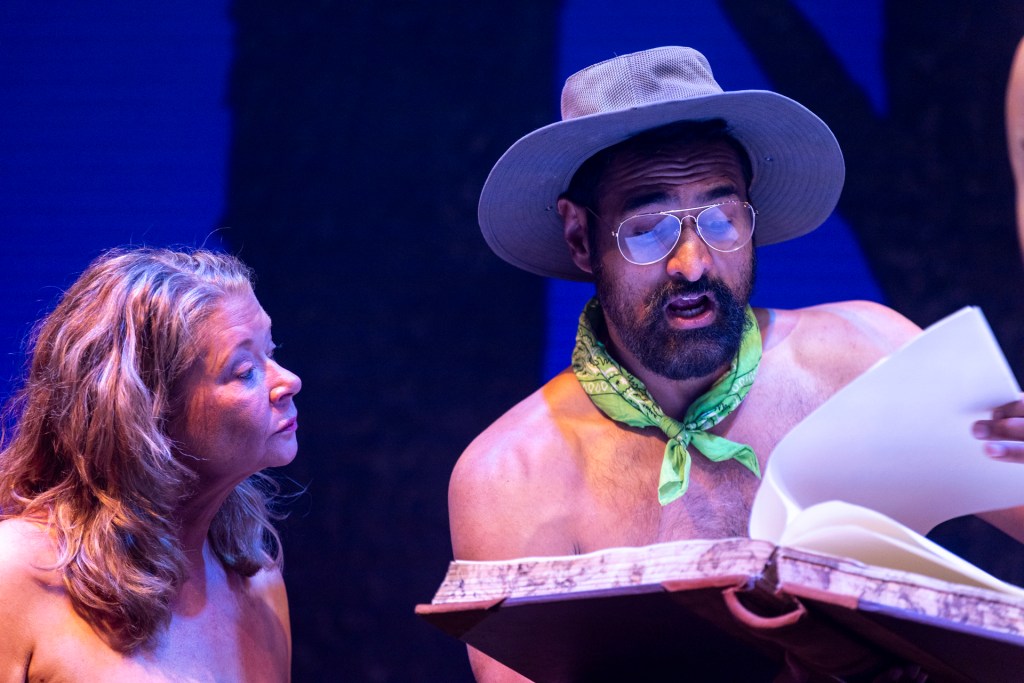
Hannah Waterman & Nicholas Brown. Photo: Brett Boardman. Naturism opts to go for our funny bones first, and our brains second. This isn’t a preachy soap-box play, it’s a daft comedy with plenty of jiggly bits. I’m generally not one to enjoy overtly “silly” humour, but Collins and director Declan Greene keep the cartoonish aspects grounded in real motivations and human behaviour. Or perhaps it’s the nudity itself that brings an extra layer of… honesty? Either way, I found myself both laughing heartily and cheerfully invested in these characters and their collective climate guilt.
As much as Collins is critiquing climate denialism, she is more critiquing the vanity of performative activism. As one generation struggles to come to terms with the damage they have wrought, another faces the task of actually doing the hard, boring work to clean it all up for the sake of their own future. Much like the wild fire roaring toward them, the climate emergency doesn’t care about politics, good intentions or boarders – and everyone will need to deal with the consequences.
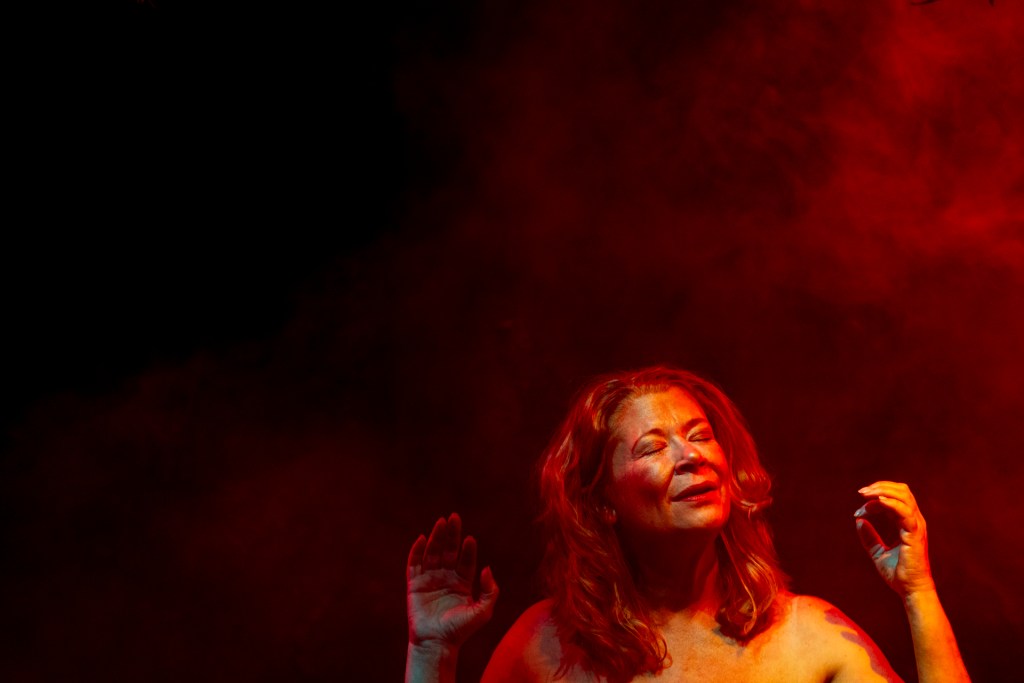
Hannah Waterman. Photo: Brett Boardman. Full praise to this cast, who completely embrace their roles — especially the dynamic and hilarious Hannah Waterman, whose delicious voice and reactions had me in stitches, and Camila Ponte Alvarez, whose manic, shallow Evangeline shone. Their commitment makes the absurdity feel surprisingly sincere.
Naturism is also the most fully staged show I’ve seen in the Wharf 2 space. James Browne has delivered a simple but vibrant set and, paradoxically, some outstanding costumes for the cast. David Bergman’s sound and music ground us in a sense of place, working with Verity Hampson’s dynamic lighting that moves from carefully focused spotlights to a magical dreamscape and a raging bushfire. This Griffin team know how to maximise a small space.
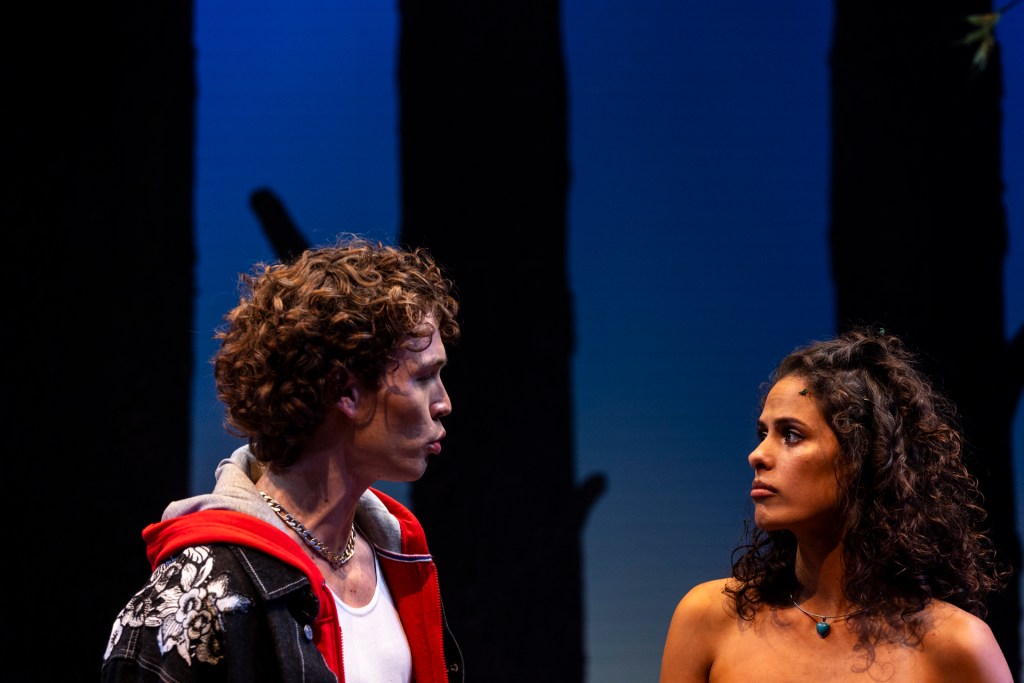
Fraser Morrison & Camila Ponte Alvarez. Photo: Brett Boardman. Once the characters are dragged back down to earth by some harsh realities, Naturism asks us to step away from the noise of modern life and consider the natural world around us. Humans — all of us, regardless of age or status — are an incredibly clever bunch of morons, burning the house down as we live in it. Will some onstage nudity wake us up to reality of our ecological problems? At this stage, it can’t hurt to try.
-
Looking Ahead to Sydney Theatre in 2026: Part Two

Another piece of my break down of the 2026 Sydney theatrical season, this time looking at the musicals coming our way (and some other bits & pieces). It’s over on Substack, where all my non-review writing is now going. Part three, looking at the interstate companies, coming in a few weeks.
-
Fly Girl (Ensemble) ★★★★½
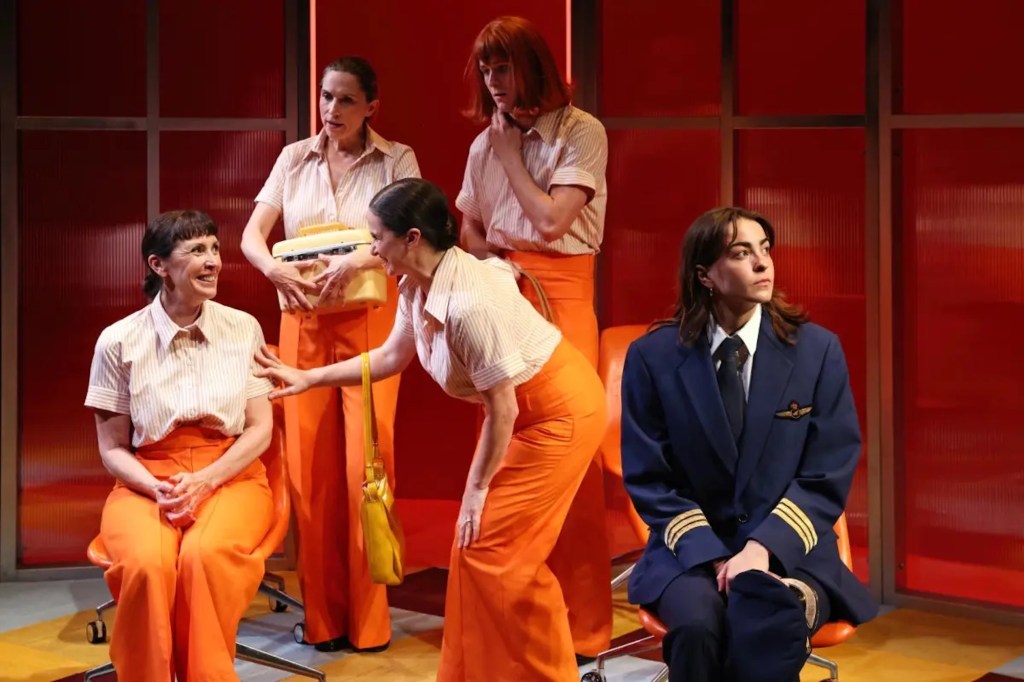
Written by Genevieve Hegney & Catherine Moore. World Premiere. Ensemble Theatre. 17 Oct – 22 Nov, 2026.
With a lightness of touch, Genevieve Hegney and Catherine Moore’s Fly Girl is a colourful slice of triumph over the patriarchy. Based on the true story of Deborah Lawrie’s battle to become Australia’s first female commercial airline pilot, it has all the hallmarks of a feel-good hit of the summer – even if we’re still in spring.
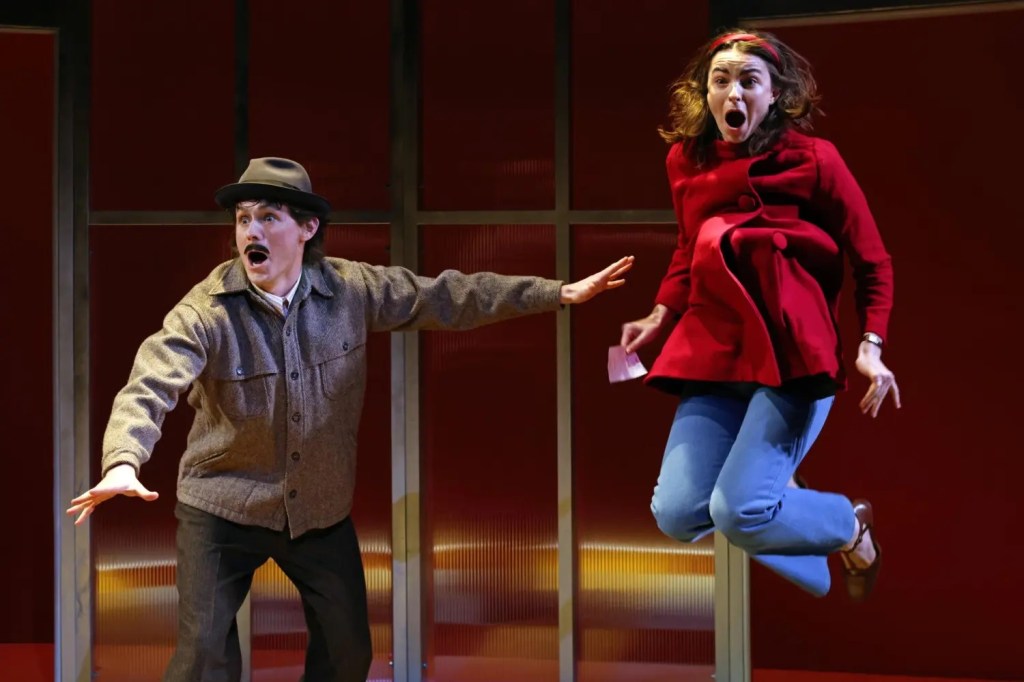
Alex Kirwan & Cleo Meink. Photo: Prudence Upton. Young Deborah Lawrie (Cleo Meink) has inherited her father’s love of aviation. Training since her teenage years, all she wants is to pilot aeroplanes – the bigger, the better. After earning her qualifications and becoming both a schoolteacher and flying instructor, she is still repeatedly rejected for Ansett’s commercial pilot training programme – despite the fact that her own students have successfully applied. But things change in 1977 with the introduction of the Victorian Equal Opportunity Act. When Lawrie files a complaint mere days after her wedding, she has no idea the case will span years as Reg Ansett and his team use every trick in the book to try to crush one woman’s dream to fly.
There’s a real buzz in the Ensemble Theatre pre-show, as a particularly rambunctious audience are clearly in a good mood. This is opening-night energy (despite the fact it’s a few nights after). The tone is pushed further by the pre-show addition of Ansett stewardesses in the aisles, greeting guests as they find their seats. I’ve not seen the Ensemble Theatre this alive in… well, ever!
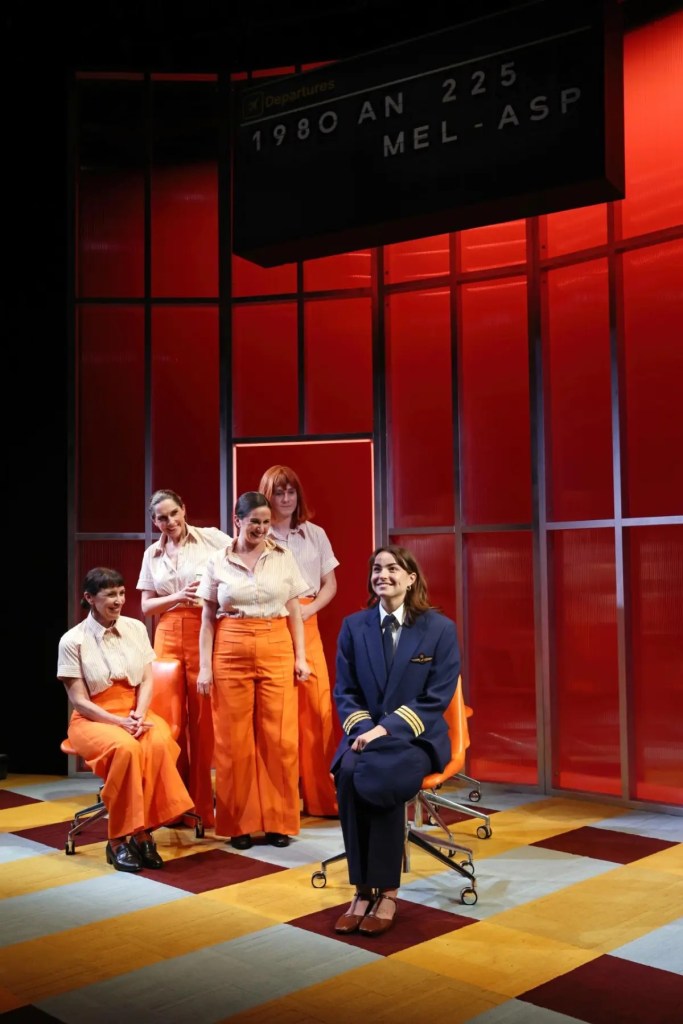
Catherine Moore, Genevieve Hegney, Emma Palmer, Alex Kirwan and Cleo Meink. Photo: Prudence Upton. And that vibe doesn’t stop. Fly Girl has the energy and optimism of a musical, not a legal drama. Grace Deacon’s set and costumes are an explosion of bright orange. It instantly evokes a sense of joy – and maybe naivety. This is peak 70s. The cast all play up to the campy, comedic tone. Despite the story’s inherent tensions, the mood never dips. We’re here to celebrate Lawrie’s triumphs; the setbacks are like pantomime villains we can boo and hiss at.
Hats off to Hegney and Moore for crafting this outwardly sugary confection of a play, and to director Janine Watson for her excellent sense of timing and tone. Together they mine constant micro-moments of silliness without spoon-feeding the audience – whether it’s the slow pace of dialling a rotary landline or the lack of options in in-flight catering – and there’s a constant undercurrent of reassuring schadenfreude, knowing that Ansett itself will eventually fail. This all combines to let the team have their cake and gleefully smash it into Reg Ansett’s face too.
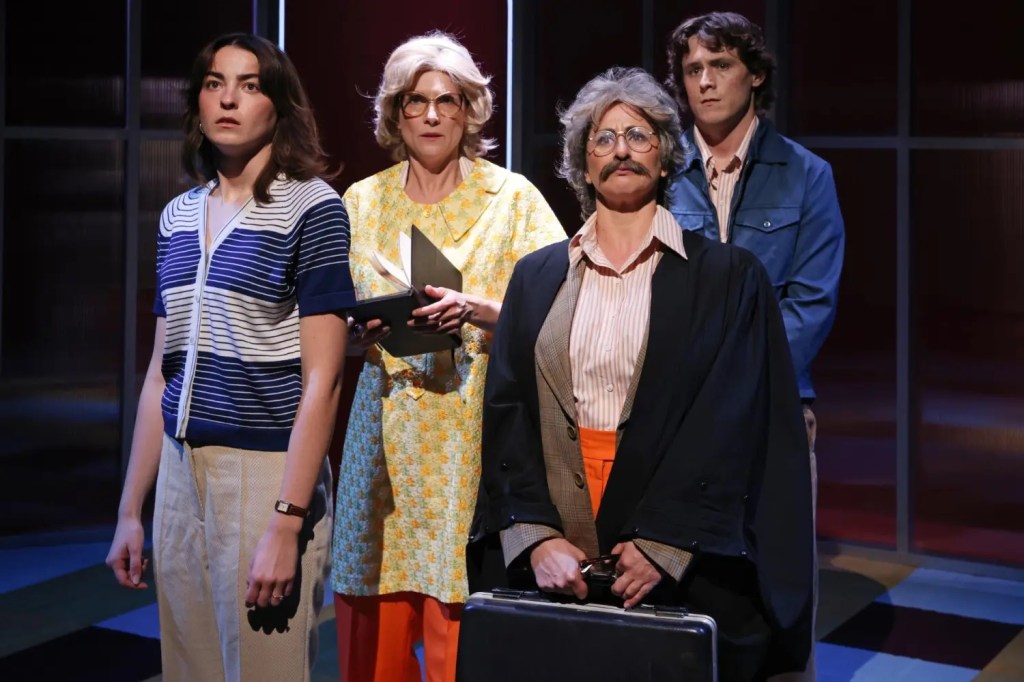
Cleo Meink, Genevieve Hegney, Emma Palmer & Alex Kirwan. Photo: Prudence Upton. The excellent cast of five (playwrights Genevieve Hegney and Catherine Moore are joined by Emma Palmer, Alex Kirwan and Meink) play dozens of roles, necessitating a succession of increasingly outrageous costume changes. By Act Two, even the pretence of leaving the stage to switch is discarded – their transformation becomes a public ballet during the scene changes. Each new character is stamped quickly and clearly as their own comic creation.
The real beauty of Fly Girl is that it isn’t just froth and one-liners. Hegney and Moore have a knack for slipping the lessons in under the radar, and Watson lands the emotional heart at just the right moment. It’s rare to see a play that has the audience applauding mid-scene, celebrating Lawrie’s every triumph.

Genevieve Hegney, Catherine Moore & Emma Palmer. Photo: Prudence Upton. At times, the script does feel like it’s a screenplay (lots of short scenes, a linear narrative of triumph), and I could see this becoming a fun film – anyone in commissioning listening? – or being expanded into a stage musical. (I’m serious: the emotional highs and lows would work well in song, and we have a good, clear villain in Reg Ansett – the positive shout-out to a prominent media mogul might even make fundraising a bit easier.) What it lacks in bite, it makes up for sheer enjoyment – this is as close to a four quadrant hit as I’ve seen on stage in ages.
As the play ended, it became clear why there was an extra buzz in the air: Deborah Lawrie herself was sitting behind me and joined the cast for the bows. Now in her 70s, she’s still an active pilot and a Member of the Order of Australia (AM). Meanwhile, Ansett Airways was liquidated in 2002 after a financial collapse, returning earlier this year as an “AI-powered travel agency” – which sounds horrific. As George Herbert said, “Living well is the best revenge”!
-
Four Minutes Twelve Seconds (Flight Path) ★★★½
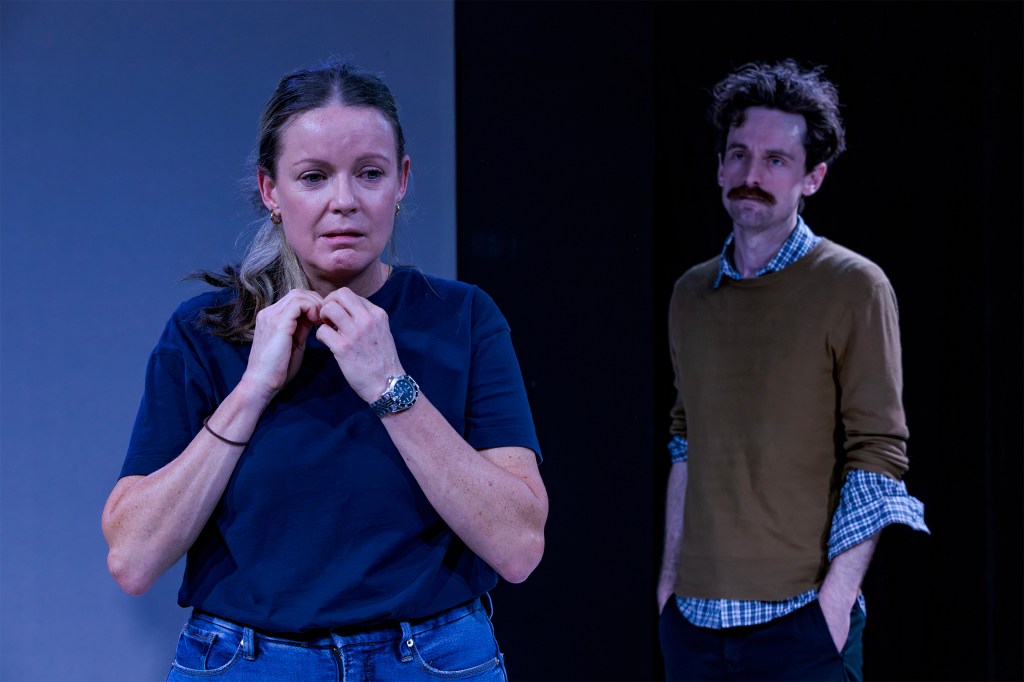
Written by James Fritz. Crying Chair Theatre in association with Secret House. Flight Path Theatre. 22 Oct – 1 Nov, 2025.
The characters in James Fritz’s sexting drama have all the foibles of real people in an unexpected and seemingly impossible situation. It makes for some juicy, compelling drama in Four Minutes Twelve Seconds.
When a sex tape of a teenage couple is leaked online, all hell breaks loose as Di (Emma Dalton) and David (James Smithers) must protect their son Jack from allegations of abuse and revenge porn, while also trying to get to the bottom of what really happened. Who leaked the footage? Was it Jack’s mate Nick (Nicholas McGrory)? Why did Jack’s girlfriend Cara (Kira McLennan) suddenly dump him? How much do parents really know about their teenage children?
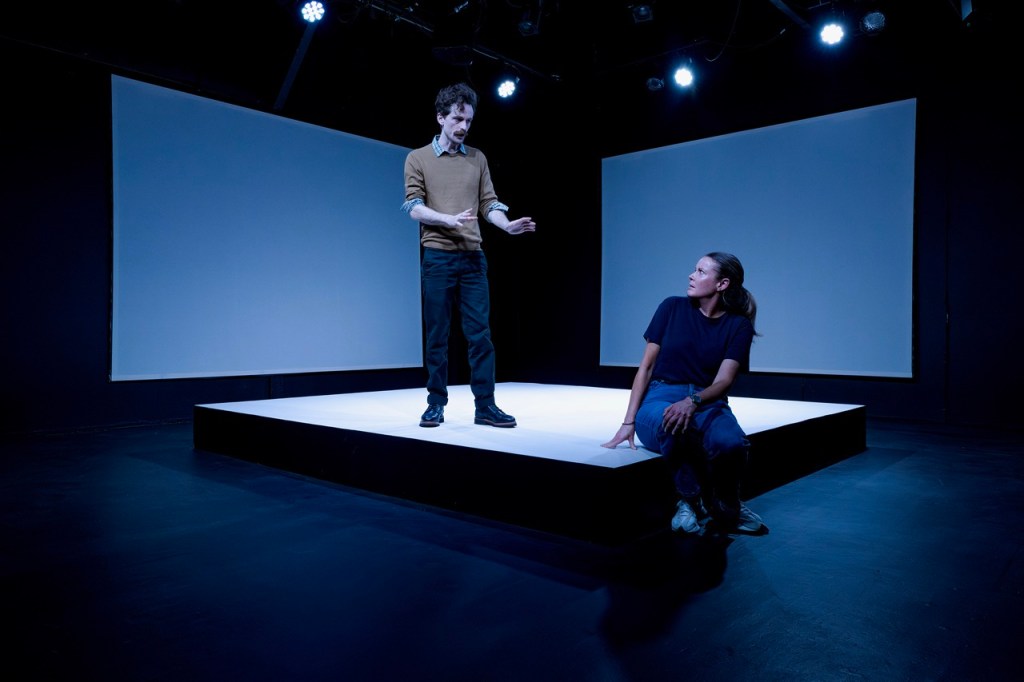
James Smithers & Emma Dalton. Photo: Phil Erbacher. The play Four Minutes Twelve Seconds is ten years old, and while parts of the tech mentioned feel dated, the human drama is very much contemporary in its impact. Fritz’s dialogue is sharp and layered, giving the performers room to bounce off one another like real conversations. When it works, this play crackles with that addictive theatrical energy.
Fritz makes the interesting choice to remove Jack’s voice from the narrative, he is never seen or heard, merely existing as an pressence in the next room. It places the story firmly in the parents perspective which gives it clarity and relatability. This puts the moral quandary on the shoulders of Jack’s mum, Di, as she wrestles with the thought that maybe her son isn’t the boy she thought he was — and what responsibility she bears to try to make things right. It’s a juicy role with some wonderful twists and turns. While some of the later plot developments don’t quite pass the real-life “sniff test”, they all make clear emotional sense, which earns the play a lot of leeway.

Emma Dalton & James Smithers. Photo: Phil Erbacher. The creative team has placed the emphasis heavily on the performances. A clean, stylish stage (lovely, concise design work by James Smithers, on top of his acting role) makes smart use of the Flight Path space. Lighting by Clare Sheridan accents the great AV design of Kieran Camejo. Director Jane Angharad keeps the patter of the dialogue moving at a fast, naturalistic pace, which elevates the sometimes static staging.
Smithers is excellent in his onstage role as the protective father of Jack. His grasp of the rapid-fire text and character work saves the role from feeling repetitive, despite many of the scenes treading similar territory time and again. Also refreshingly good is Kira McLennan as Cara, Jack’s attractive ex-girlfriend from the wrong side of the tracks. Her aggression-hiding-her-fear dynamic pulls the story out of its middle-class POV and places it in a wider world.
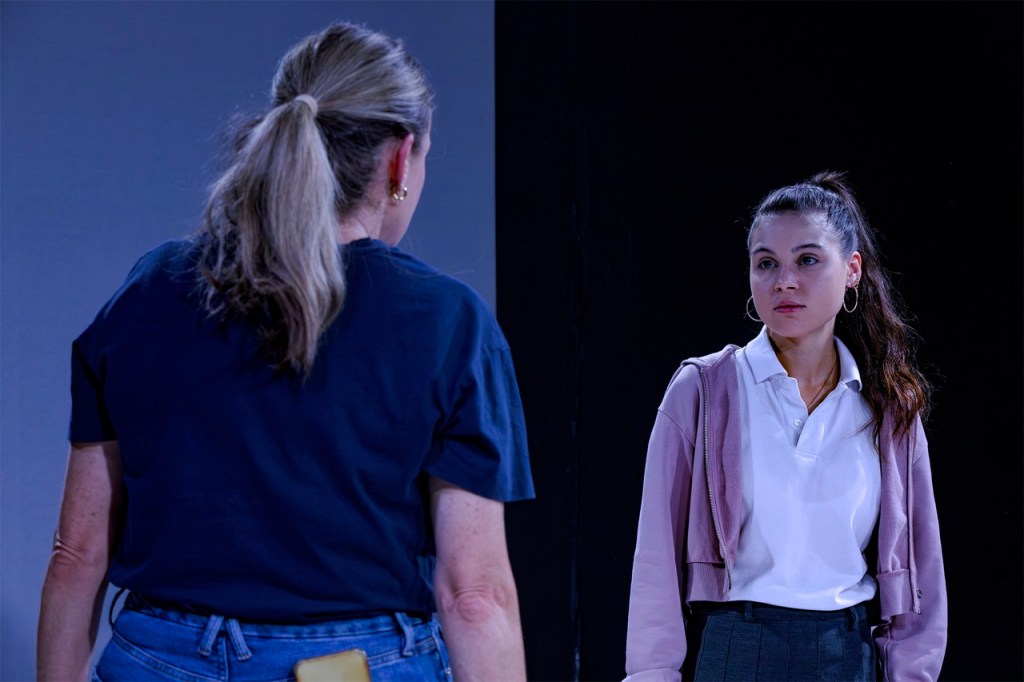
Emma Dalton & Kira McLennan. Photo: Phil Erbacher. As Jack’s devastated mother, Emma Dalton has the bulk of the dialogue and emotional journey. Dalton wisely avoids easy melodrama with a performance that fights between interiority and expression. However, with so much stage time and such a wordy, looping script, it could benefit from a bit more light and shade.
It’s interesting to see Four Minutes Twelve Seconds soon after watching Suzie Miller’s Inter Alia, which covers similar ground — parents floundering in the face of sexual abuse allegations against their sons. It’s fascinating to see how the two plays, written over a decade apart, handle the topic. Inter Alia left me asking “what do you do after the bombshell has dropped?”, which Four Minutes Twelve Seconds tries to tackle. James Fritz’s answers are bold and thought-provoking and will have the parents in the room rattled.
-
La Ronde (The Grand Electric) ★★★½

Conceived by Scott Maidment. The Grand Electric. From October 16.
My neck is sore and my throat is dry — all because I spent 90 minutes, mouth ajar, staring up at the roof of the Grand Electric watching beautiful people spin around in the air. This is La Ronde (you have to say that last bit like you’re French and doing a voice over for the film 300 — This. Is. La Ronde!!!)
Sydney loves a sexy circus/acrobatics show, and between Sydney Festival, Mardi Gras Festival, Sydney Fringe Festival and more, we’ve had quite a few over the last couple of years. We’ve seen sexy guys in togas and dusty denim, one based on The Great Gatsby, one set in L’Hôtel, and plenty of camp ones with drag queens. But La Ronde (not to be confused with the classic play of the same name) comes from Strut & Fret — the team behind Blanc de Blanc and LIMBO — so it has a well-established pedigree.
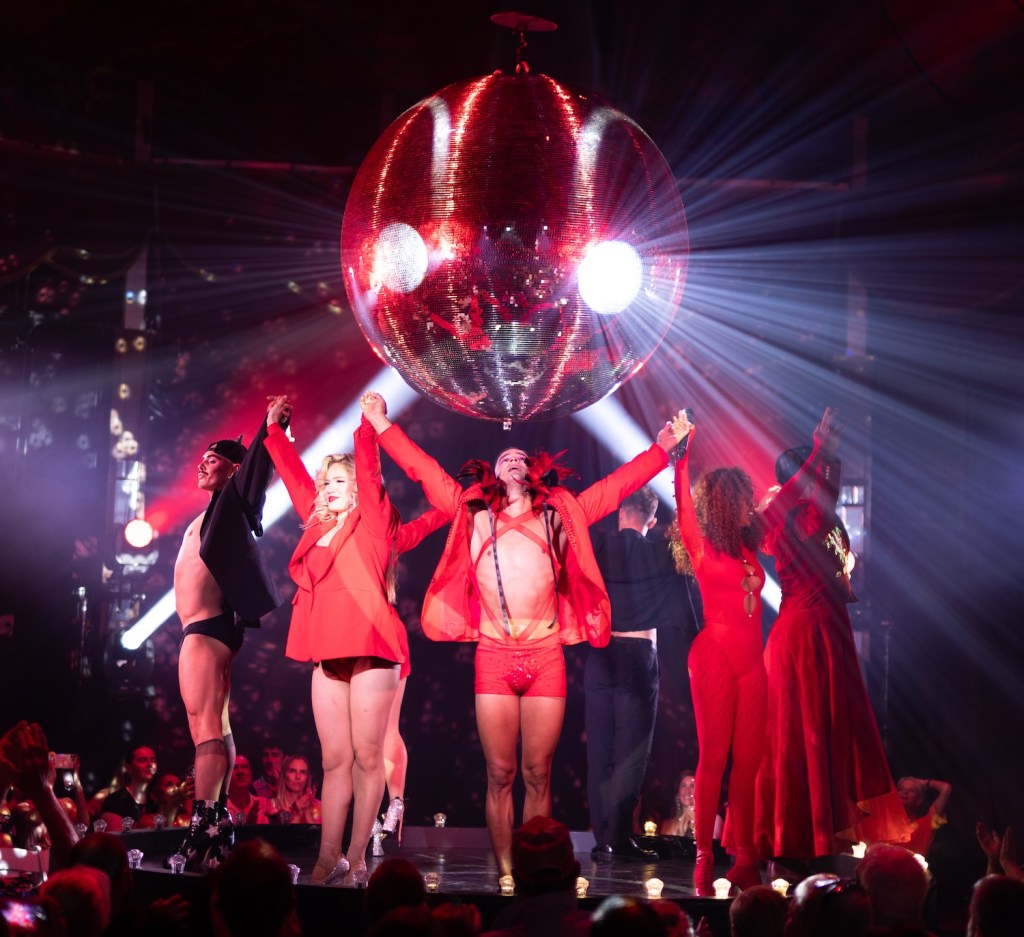
La Ronde. Photo: George F Photography. Staged in the round (the clue is in the title), La Ronde doesn’t have a storyline; instead, it boasts a decadent, sexy aesthetic that holds it all together. The mood is set by the frankly enormous disco ball dominating the stage — this is a party. Once all the wannabe influencers have taken their photos in front of it the show begins.
The international cast each bring their own specialty and charm, with a mix of acts that make you want to book a Pilates class immediately. Aussie Zoë Marshall kicks the night off with some crowd-energising hair-hanging aerial work (reader: at this point I lost an hour trying to create a portmanteau of “hair” and “aerial”, but it never looked right — “haerial”? “hairial”?). Melburnian Adam Malone combines muscles and make-up for two drag-infused acts — an energetic hoop number and an upside-down balancing “Washington Trapeze”. Proof that drag queens can do everything the others can — only backwards, upside down, and in heels.

La Ronde Danik Abishev is a muscled master of balance. Just when I joked that they wouldn’t dare attempt a fire stunt… he sets his tools alight and continues to defy gravity. Ukrainian-born trapeze artist Diana Bondarenko, making her Australian debut with the show, works the pyramid trapeze, while fellow Ukrainian Sergiy Mishchurenko performs beautifully on the aerial pole.
Meanwhile, singer Geniris belts out big party hits throughout the night in outfits as gravity-defying as any of the acrobatic acts we see. Her rich vocals are gorgeous, but the acoustics of the Grand Electric get a little muddy at times (I swear I thought she was singing “I’m coming UP” instead of “I’m coming OUT”).

La Ronde. Photo: George F Photography. But in this sea of swirling sex appeal, one act stood out above all the others for giving the audience what they really wanted — British clown-about-town Sam Goodburn. Surrounded by the smouldering, hard bodies of his show-mates, Sam strips down to his pasty white skin with the confidence only a slightly delusional Brit could muster, while dispensing Jammy Dodgers like a rogue vending machine. His mix of balance, precision footwork, and expert comedic timing were the clear highlights of the night — proof, if ever needed, that at the end of the day we just want a man who can make us laugh.
La Ronde is good fun and doesn’t stray far from the format of Strut & Fret’s past hits. This will undoubtedly be a hit with corporate parties as we approach the silly season, and with those wanting something a little friskier for their night out.
-
Calamity Jane (Sydney Opera House) ★★★★
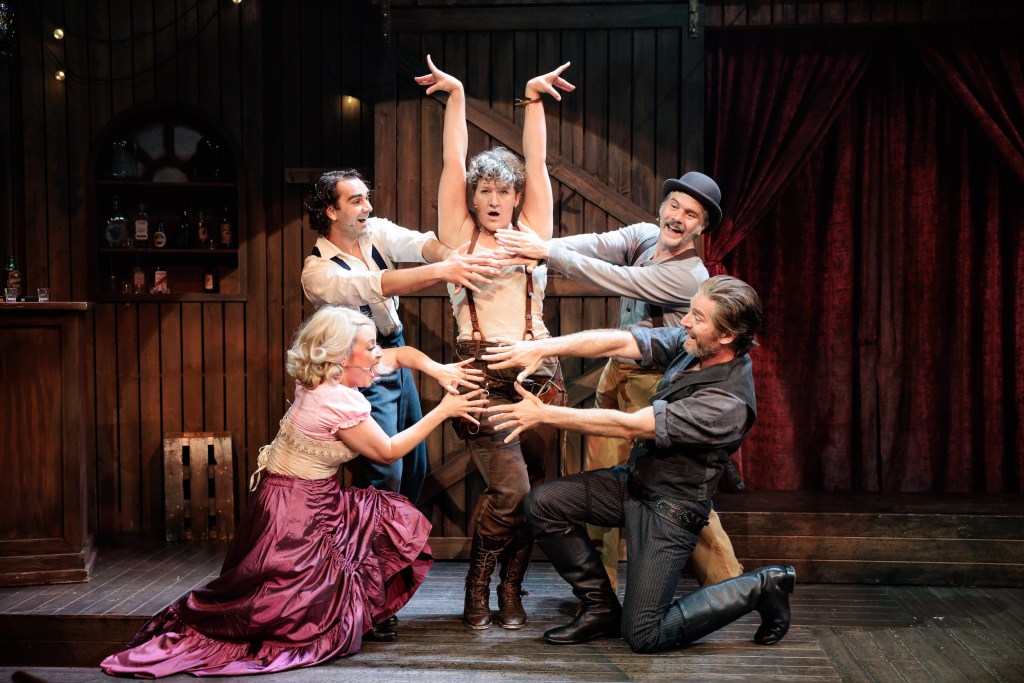
Music by Sammy Fain. Lyrics by Paul Francis Webster. Book by Ronald Hanmer and Phil Park. Adapted from the stage play by Charles K. Freeman after the Warner Bros. film written by James O’Hanlon. Presented by Sydney Opera House and One Eyed Man Productions. Sydney Opera House Studio. 14 Oct – 16 Nov, 2026With this production pulling the queer-coded subtext out into the spotlight, it’s clear that this “secret love’s no secret anymore.” Calamity Jane’s not only out of the closet – she’s gone full “chaotic bisexual”.
“Calamity” Jane (Virginia Gay) loves to tell a tall tale almost as much as she loves being one of the boys. But the boy she loves most, handsome young Lt. Danny Gilmartin (Kaya Byrne), just thinks of her as a friend. When she’s pressured by town tough guy Wild Bill Hickok (Andrew Cutcliffe) into trying to bring beautiful actress Adelaid Adams to perform in their small town, Deadwood, Calamity has to save face and attempt the impossible. Instead, she unwittingly mistakes aspiring performer Katie Brown (Kala Gare) for Adelaid – and Katie might just be the most beautiful girl the town, or Calamity herself, has ever seen.

Calamity Jane. Photo: Daniel Boud. Much like director Sean Rennie’s Rent, playing upstairs in the Joan Sutherland Theatre (which gets a cheeky shout-out), director Richard Carroll’s Calamity Jane has had a few years, and a few productions, before becoming the show it is today. From modest beginnings as one of Michelle Guthrie’s excellent Neglected Musicals at the Hayes in 2016, it has morphed into its current immersive cabaret form – and is all the better for it.
There’s an obvious advantage that comes with performers spending years living with their characters: they get under the skin, get comfortable, and start to really play with the role. It’s clear that Virginia Gay’s grip on Calamity Jane is so secure she can let rip and just have fun. Gay balances the various facets of Calamity with ease and manages to wring more pathos from the pantomime romances than you might think possible. Her Calamity Jane is both reserved and guarded, but also thirsty AF.
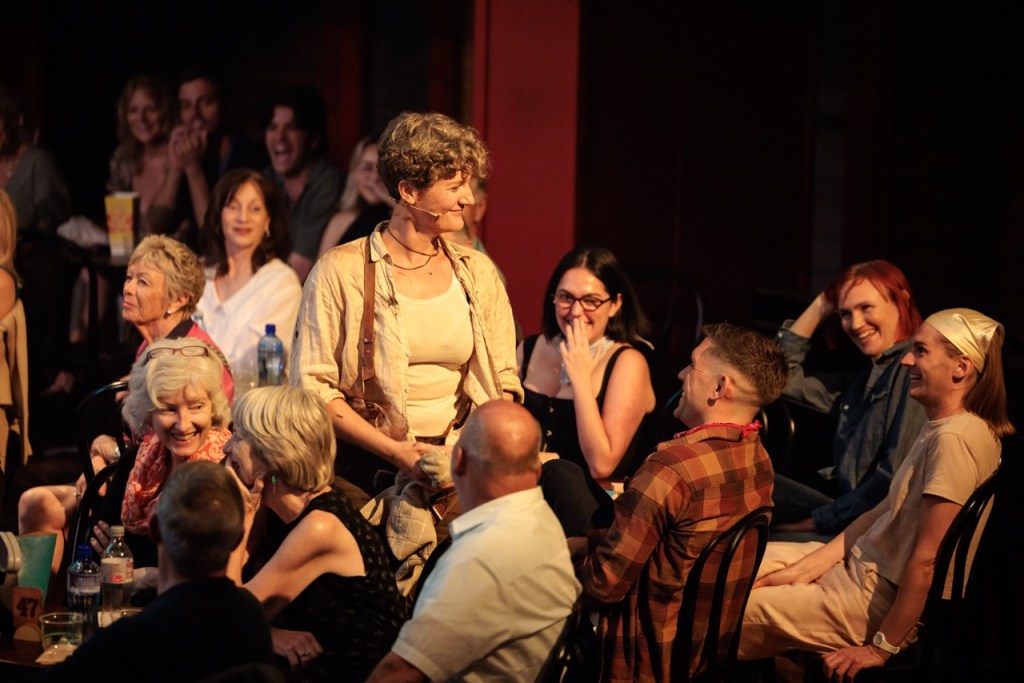
Calamity Jane. Photo: Daniel Boud. This interactive show really shines when it’s shoving its ample bosom in the audience’s face – so to speak (and a shout-out to Victoria Falconer’s rambunctious performance that had the front row both amused and aroused). With cabaret seating filling the floor of the Opera House Studio, the performers bump and grind their way around the room. This is playful silliness worthy of Blazing Saddles – somehow capturing the blithe innocence of its age and a modern awareness of its charms.
To 21st-century eyes, the idea that Calamity isn’t just a “tomboy”, but is in all likelihood queer, seems obvious. Ironically, we don’t need to make a whole song and dance about it. Whether you read her as bisexual, lesbian, or fluid, it’s all just a plot point on the way to the classic happy ending.

Calamity Jane. Photo: Daniel Boud. Which led me to wonder: in 2025, does foregrounding the well-documented queer subtext of Calamity Jane actually benefit the story?
On one level, the answer is an unqualified “yes”. By letting the attraction between Calamity and Katie play out, the scenes gain extra depth, saving the show from its own historical twee-ness. In a straight interpretation, “A Woman’s Touch” is just a pointless bit of fluff padding out the show. With the queer subtext established, it gives the story extra momentum and complication. It elevates this light musical comedy romp into a cheeky and ridiculous farce – something this production plays right into, to great effect.
But it also serves as a distraction from the core emotional journey – Calamity’s realisation that she’s actually in love with her gruff sparring partner, Bill. Now, to find “true love”, Calamity has to be rejected by both Lt. Danny and Katie – leaving poor Wild Bill relegated to being her third choice, a consolation prize. Honestly, I have more faith in Susan (Victoria Falconer) and Francis’s (Tyran Stig, understudying for Ryan Gonzalez) “lavender marriage” than I do in Calamity and Bill’s.
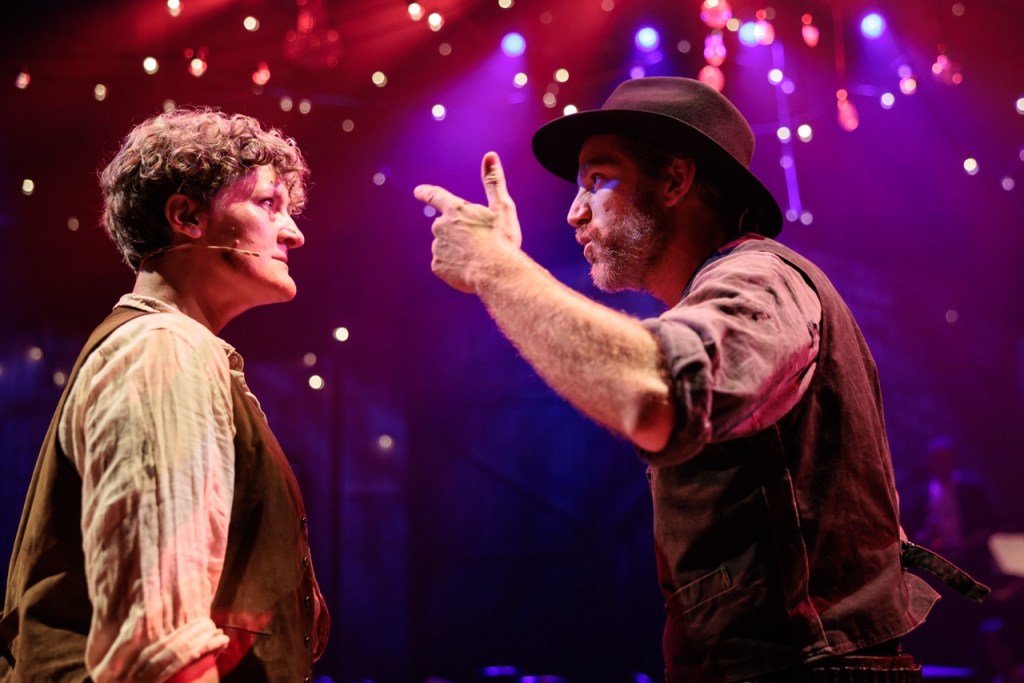
Calamity Jane. Photo: Daniel Boud. It reminds me of a speech from Matthew Lopez’s The Inheritance. Here it is, slightly edited:
Eric: You know what I miss? I miss the feeling that being gay was like being a member of a secret club… that liminal space when we were out but also, I don’t know, still kinda mysterious and opaque to society… It was a secret club with a secret language and shared, secret experiences…
Jason 2: Being gay doesn’t feel remarkable anymore. It’s like, “Oh, you’re gay? Ho-hum, what other tricks can you do?”
And I’ll be honest – I do kinda miss the ‘wink wink’ nature of those celluloid-closet classics. Of course, I don’t miss an age that forced queer people to hide, but there definitely used to be a thrill in spotting the Easter eggs and decoding the hidden intent.
Am I overthinking a silly little musical? Definitely – welcome to my brain.

Calamity Jane. Photo: Daniel Boud. None of which detracts from the fact that this is a good, fun night at the opera (house). This show is designed to maximise your entertainment with an easily digestible story, lots of meta-textual jokes, a bit of saucy-but-safe sexuality, and a chance for us all to have a good laugh.
From the opening double act of Phillip Lowe and Victoria Falconer setting the scene, to splash-zone antics with multiple spit-takes, beautiful vocal harmonies, and unexpected interactions – Calamity Jane is here to raise your spirits and ensure you leave the room happier than when you walked in.
-
Subscribe
Subscribed
Have a WordPress.com account? Log in now.

