-
Welcome to Cultural Binge

The rating system is simple:
★★★★★ – Terrific, world-standard. Don’t miss.
★★★★ – Great, definitely worth seeing.
★★★ – Good. Perfectly entertaining. Recommended. Individual mileage may vary.
★★ – Fine. Flawed and not really recommended, but you may find something to appreciate in it.
★ – Bad (& possibly offensive).
See more reviews over at The Queer Review.
Instagram: @culturalbinge
Substack: culturalbinge.substack.com
Email: chad at culturalbinge.com
-
A Chinese Christmas (KXT on Broadway) ★★★

Written by Trent Foo. KXT on Broadway. 10-20 Dec, 2025.
Welcome to Christmas Eve in the Chinese Underworld, as Chinese-Australian Heepa (writer-actor Trent Foo) seeks advice and some magical help from his ancestors to ensure his blended Christmas goes off without a hitch. But the ancestors want something in return…
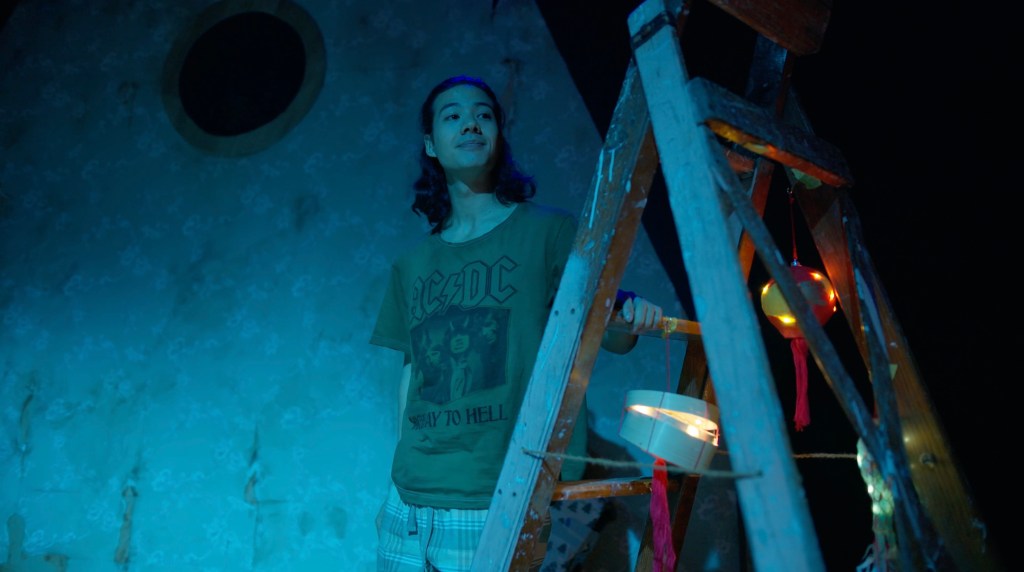
Trent Foo. Photo: Robert Miniter. Told in an almost epistolary fashion, Heepa’s ancestors force him to tell stories of his relationship with his grandmother and his Paw Paw (Tiang Lim) in exchange for magical favours. As he does so, he is accompanied by — and occasionally menaced by — one of his oldest ancestors, Lady Dai (Jolin Jiang), who plays a variety of instruments to add both musical and live sound effects — an absolute highlight of the night.
Foo’s script is a cheerful blend of cultures, creating a unique Christmas experience. There are hints of classic Christmas tales such as Dickens’ A Christmas Carol in the play’s construction (imagine multiple Ghosts of Christmas Past raking through Heepa’s memories), some of which feel slightly redundant in the grand scheme of things. This is predominantly a character piece, not a plot-driven play, and it is in the small moments of Heepa’s relationship with his Paw Paw that the story progression occurs.

Jolin Jiang. Photo: Robert Miniter. The script is translated to the stage through Monica Sayers’ confident direction. The storytelling is active and makes great use of the set, as Foo carefully rearranges the messy “underworld basement”. Cat Mai’s lighting does strong narrative work in establishing the tone of the underworld and guiding our attention. My absolute favourite part of the production, however, is the audio work — beautiful sound design by Cameron Smith, paired with live music composed and performed by Jolin Jiang.
Despite occasional lapses into overly arch delivery, there is great warmth in Foo’s stage presence, alongside the familiar strength of Tiang Lim’s performance as Heepa’s Paw Paw. His youthful exuberance and unearned confidence mix well with her quiet concern, and as the story builds and we come to understand their relationship more deeply, the play earns its heartfelt conclusion.

Tiang Lim. Photo: Robert Miniter. It all makes for a pleasantly entertaining look at the way our lives are shaped by those who raise us, and how our childhood eyes don’t always see the truth of a situation. At a swift 70-minute duration, A Chinese Christmas doesn’t overstay its welcome, delivering a Christmas message of love, loss, and family in a way you’ve probably not seen before.
-
New Breed 2025 (Sydney Dance Co) ★★★★
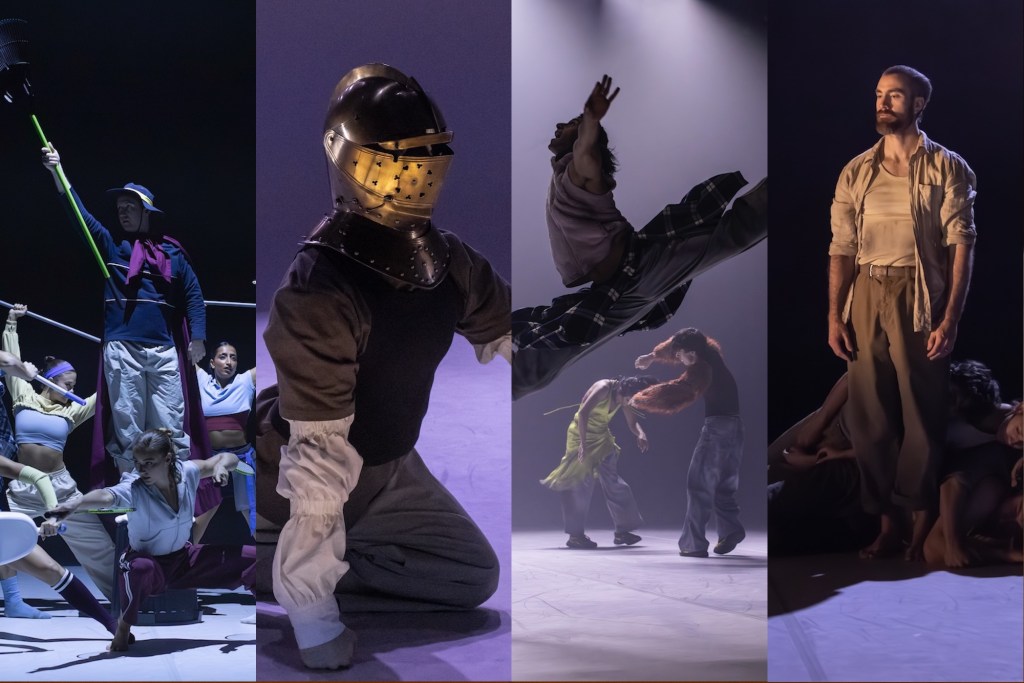
Choreographed by Emma Fishwick, Ngaere Jenkins, Ryan Pearson & Harrison Ritchie-Jones. Sydney Dance Company. Carriageworks. Dec 3-13, 2025.
Farewell New Breed. Long Live New Breed. This may be the final annual instalment of Sydney Dance Company’s showcase of the next generation of choreographic talent, but its influence will be felt for some time yet. The four new pieces in this year’s show mix whimsy and imagination with athletic stamina.
Save Point. Photo: Pedro Greig. The first piece, Ryan Pearson’s Save Point, is a trip back to childhood. Inspired by computer games (hence the title) and long days spent playing outside, inventing entertainment as only a child can, Save Point feels like a pleasant memory you can return to on loop.
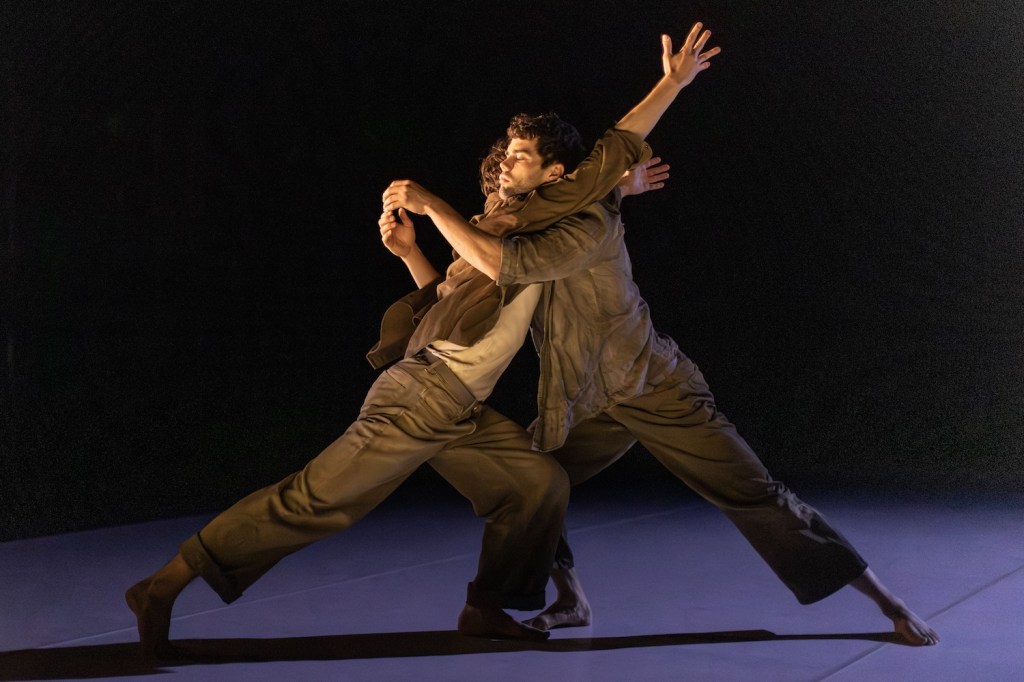
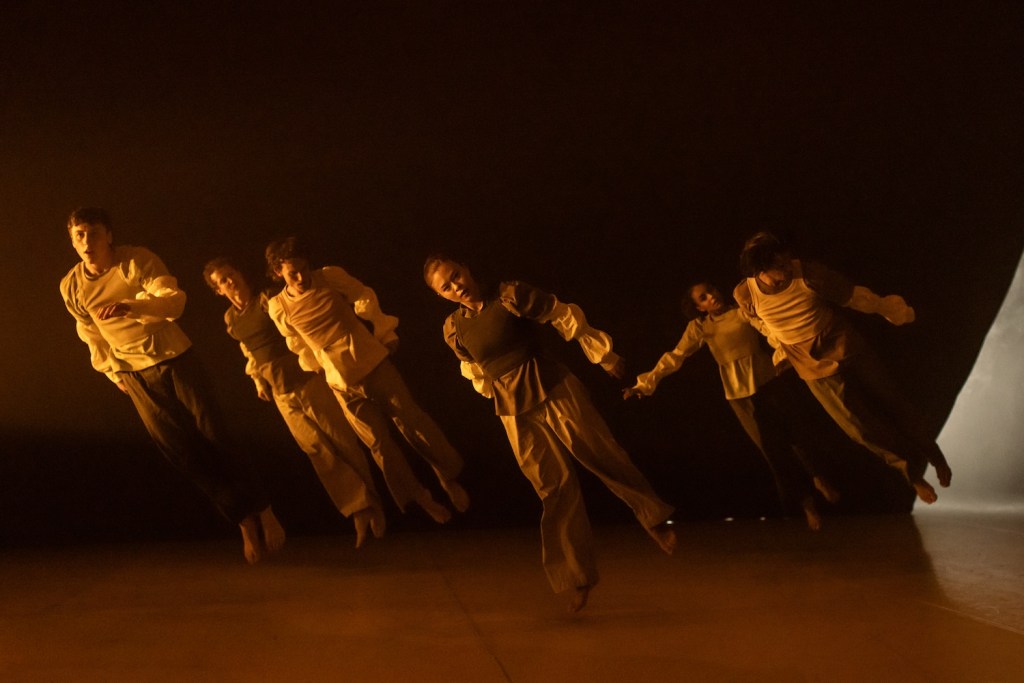
From the Horizon Thereafter. Photo: Pedro Greig. Second is Ngaere Jenkins’ From the Horizon Thereafter, the most successful piece of the evening for me. This lyrical work takes six dancers and moulds them like clay. As movement washes over the group in both gentle and coercive ways, a haunting sense of loss and beauty lingers.
marathon-o-marathon. Photo: Pedro Greig. Emma Fishwick’s marathon-o-marathon is third, and is perhaps the most unusual. Fishwick uses a variety of incongruous props — from a knight’s helmet to a cardboard cut-out unicorn and a bag of oranges — to liken humanity’s seemingly uphill battle with climate collapse to a never-ending marathon. At times amusing and at times exhausting, this was the most “message-forward” performance of the show.
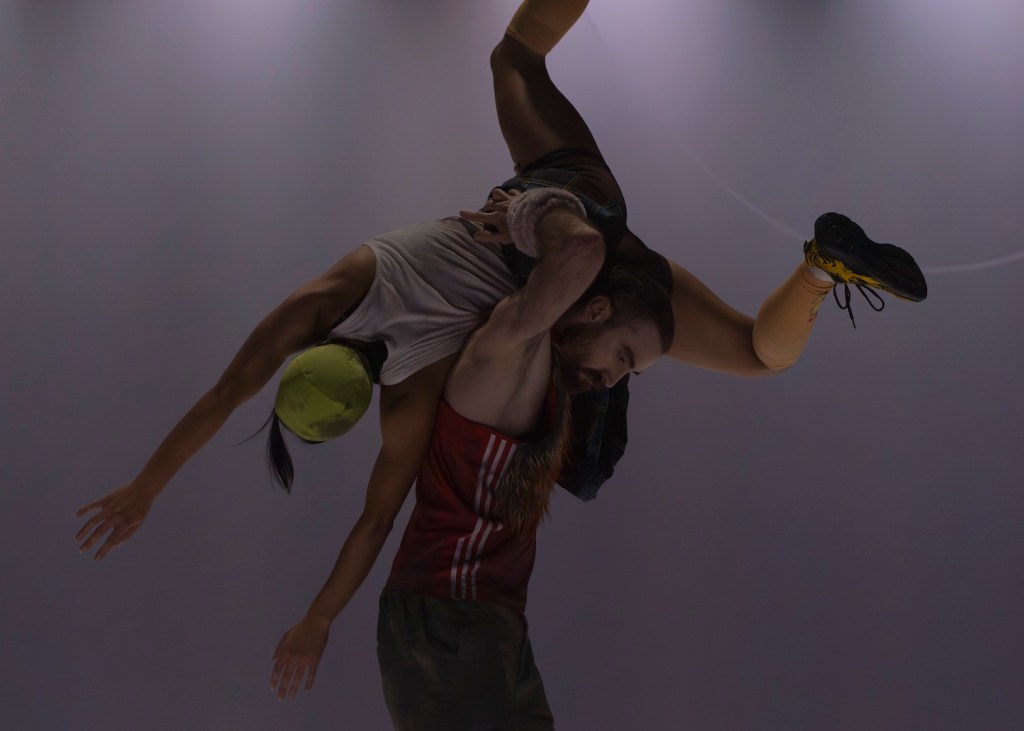
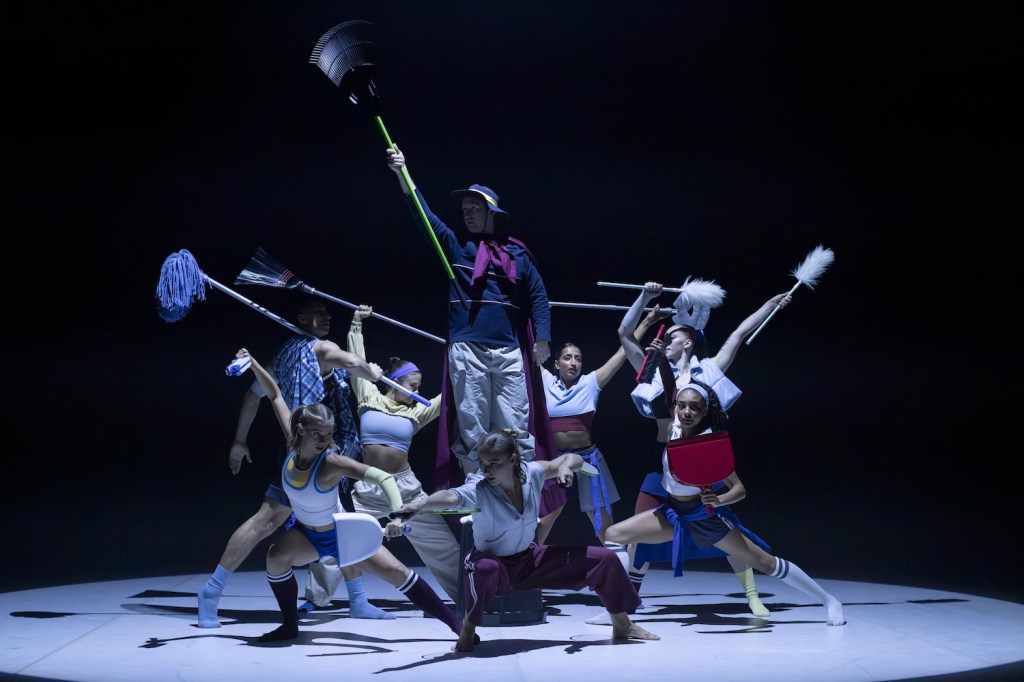
Pigeon Humungous. Photo: Pedro Greig. The programme wraps up with the funny and athletic Pigeon Humungous by Harrison Ritchie-Jones. Casting us into a post-apocalyptic future of pigeon–human hybrids battling for position in the social hierarchy, it’s a bolt of energy with moves that blend dance, martial arts, acrobatics and more. Its wilful silliness and playful genre trappings made for a truly entertaining finale.
Each piece is supported by excellent lighting by Alexander Berlage and costumes by Aleisa Jelbart.
After twelve years of showcasing new talent — and the dancers of the SDC company — it’s a shame to lose New Breed from Sydney’s dance calendar. But times change, and the talent we’ve seen will no doubt go on to produce work well into the future. Grab a ticket to one of the remaining shows and celebrate the great work we’ve all seen.
-
Dial M For Murder (Ensemble Theatre) ★★★★

Written by Frederick Knott. Adapted by Jeffrey Hatcher. Australian Premiere. Ensemble Theatre. 28 Nov 2025 – 11 Jan 2026.
Ensemble’s Christmas fare may not seem particularly festive or jolly at first glance, but Dial M for Murder is excessively fruity, rum-soaked and complex — basically a fancy Christmas pudding on stage. This is a hell of a lot of fun.
It’s 1954, and the wealthy Margot (Anna Samson) has been having an affair with murder-mystery novelist Maxine (Madeleine Jones). After calling things off, she has no clue that her husband Tony (Garth Holcombe) has discovered their love letters and is secretly blackmailing her.

Anna Sampson & Kenneth Moraleda. Photo: Phil Erbacher. But he’s not going to stop there. Tony has devised a cunning plan to have someone murder his wife so he can inherit her fortune. When she survives the attack and kills the assassin in self-defence, it becomes a game of cat and mouse.
As the plot ducks and weaves, Tony, Margot, Maxine and Inspector Hubbard (Kenneth Moraleda) all try to outwit one another. The audience goes on a roller-coaster ride of traps and near misses — the more audacious, the better. Will Tony get away with it? Will Margot discover the truth? Will Maxine ever get her book published? Buy a ticket to find out.
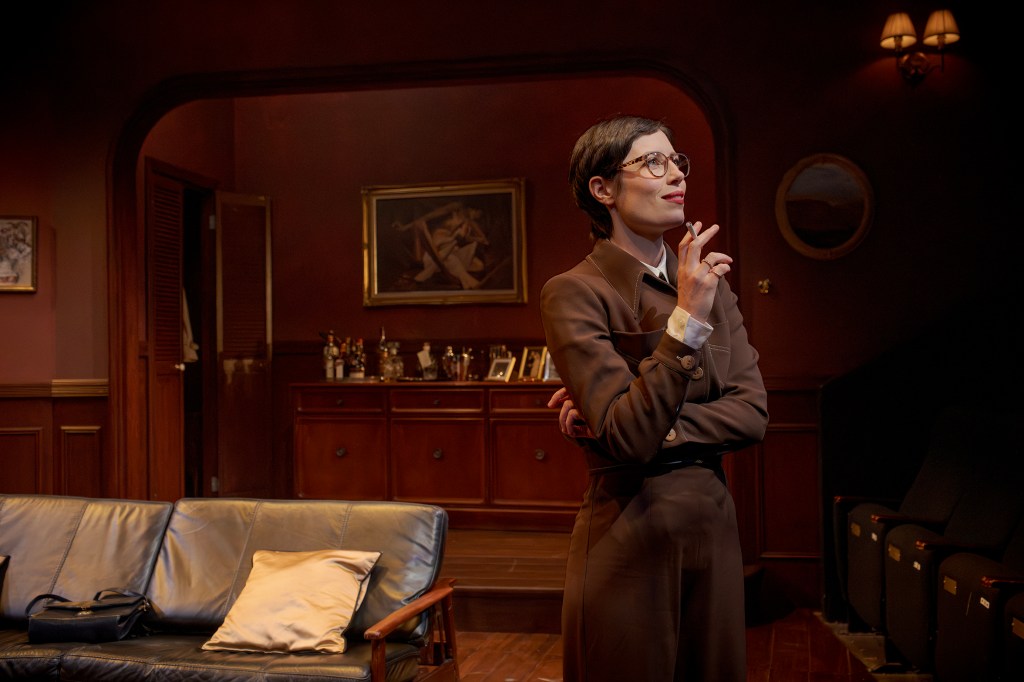
Madeleine Jones. Photo: Phil Erbacher. Frederick Knott’s original story is a classic, carefully constructed inverted murder-mystery — the audience know who did it from the off. Beyond the plot, this production has undergone thoughtful adaptation. Jeffrey Hatcher’s updated version puts an interesting spin on things by gender-flipping Margot’s lover from the original Max to Maxine and giving Margot a little more agency.
Tony is no longer a washed-up sportsman but a literary publicist working on Maxine’s book. These changes weave the characters together in more compelling ways and freshen things up without altering the essential plot or tone.
And tone is crucial here, as Mark Kilmurry and the cast lean into the pulp fiction of mid-century thrillers without tipping into parody. Each new twist earns laughs of recognition and amusement from the crowd.

Anna Sampson. Photo: Phil Erbacher. It also helps that the production is driven by an excellent cast.
Garth Holcombe’s Tony is deliciously two-faced; his avarice and intelligence make it easy to relish the prospect of his downfall.
Anna Samson — wonderful to have back on stage after the success of her equally murderous TV hit — makes Margot far more than a passive, deceived housewife. She teeters on the verge of realisation, pulling the audience with her as she hunts for explanations.

Anna Sampson & Garth Holcombe. Photo: Phil Erbacher. Madeleine Jones brings a touch of erudite-lesbian strength to Maxine, whose sharp mind keeps probing for the plot holes in Tony’s story. Together, this formerly romantic triangle circle each other’s suspicions, each looking for an advantage.
But the real cherry on top of this forensically constructed treat is Kenneth Moraleda’s slightly askew Inspector Hubbard. Like all great fictional detectives, he has a tone all his own — a kind of professional insincerity that becomes his superpower. His refusal to get caught up in the melodrama, combined with cheerfully deadpan manoeuvring, makes him a true stand-out.
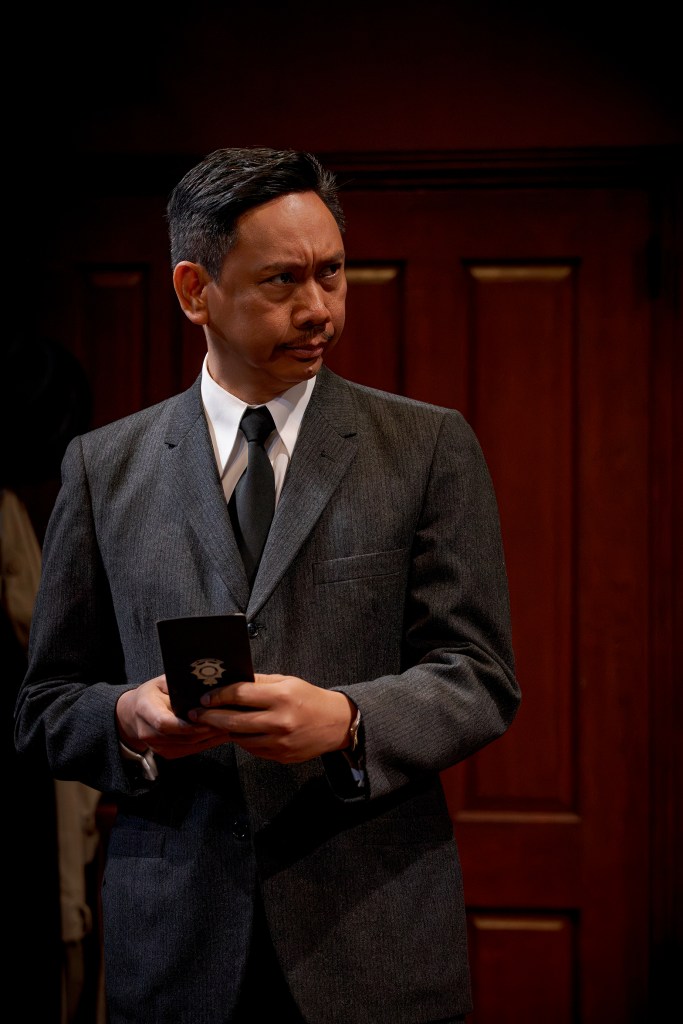
Kenneth Moraleda. Photo: Phil Erbacher. Pardon the obvious pun, but Dial M for Murder is bloody good fun. It feels as though everyone involved — from Mark Kilmurry’s direction through Nick Fry’s set, Matt Cox’s lighting, Madeleine Picard’s sound and the cast — is having a terrific time and bringing that joyful energy to the stage.
This is a genius piece of programming for year’s end, guaranteed to have you laughing and cheering by the bows.
-
Born on a Thursday (Old Fitz) ★★★½

Written by Jack Kearney. World Premiere. New Ghosts Theatre Company. The Old Fitz Theatre. 28 Nov – 14 Dec, 2025.
Whenever you see a dining table on a set, you know you’re in for some serious domestic drama. Jack Kearney’s Born on a Thursday delivers some hard family truths, anchored by a seamlessly powerful performance from Sharon Millerchip.
April (Sofia Nolan) has unexpectedly returned home from Europe, where she was a professional ballet dancer. Her mother Ingrid (Millerchip) greets her with an instantly cool reception. Ingrid is busy caring for her son Isaac (Owen Hasluck), who suffered a traumatic brain injury 18 months ago.
The mood is lightened by their neighbour and long-term family friend Howard (James Lugton), who is busy working in the garden. Ingrid’s old friend Estelle (Deborah Galanos) also appears, bringing warmth where Ingrid brings frost. As the months pass and the family learns to live with each other again, more buried trauma slowly surfaces.
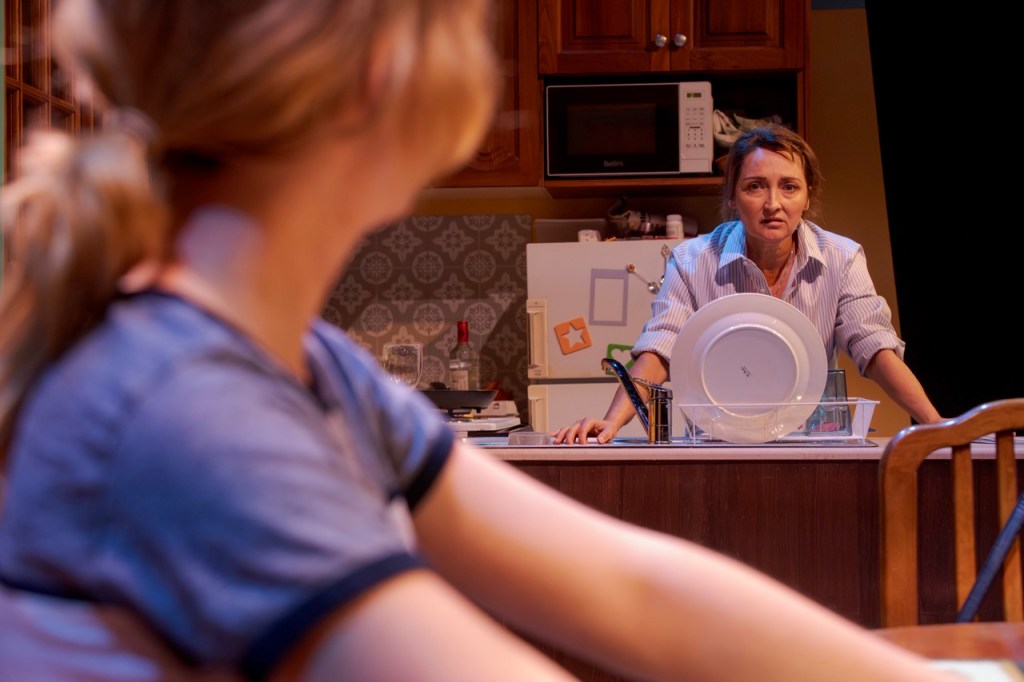
Sofia Nolan & Sharon Millerchip. Photo: Phil Erbacher. The cast are truly excellent, offering lived-in performances that suggest decades of shared history. Among this sea of great acting though, Millerchip is the clear standout. Her portrayal of a hard-working, no-nonsense matriarch — determined not to let anyone down but with little room for anything else — is exceptional. Meanwhile, Ingrid’s mission to push the local football club to take responsibility for Isaac’s injury bubbles beneath the family tensions, adding another layer of pressure.
Sofia Nolan’s April offers both a rejection of her mother’s ethos and a reluctant respect for it. Their chemistry speaks volumes. Even with only a few exchanges about the past, it’s obvious April grew up with a demanding mother. Their natural rhythms reveal a deep and complicated history.

Owen Hasluck & Sofia Nolan. Photo: Phil Erbacher. Isaac’s brain injury presents a challenging role for Owen Hasluck, yet his performance never wavers. I can’t judge the accuracy from personal experience, but his clarity, intention and portrayal of Isaac’s distress feel real and intense.
I’d also like to formally request another Old Fitz production with a Christmas connection for James Lugton in 2026. It would complete an odd but delightful trilogy of Lugton Christmas dramas after last year’s terrific Snowflake (returning at Ensemble in the new year) and now the opening Christmas-set scenes of Born on a Thursday. Once again, his work is gentle, powerful, and full of intense love.
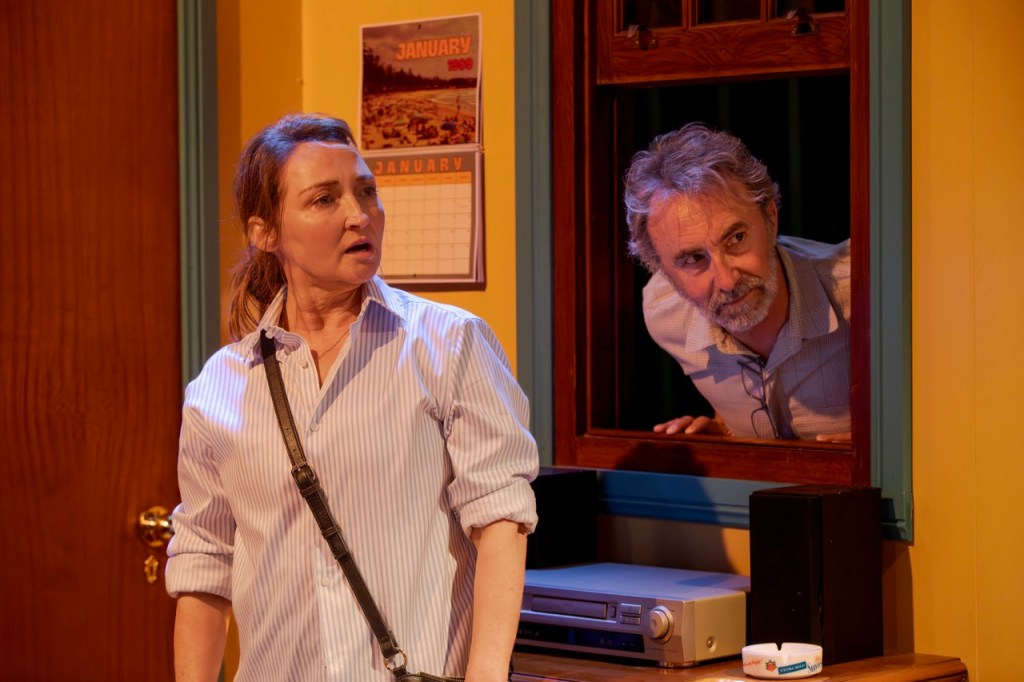
Sharon Millerchip & James Lugton. Photo: Phil Erbacher. Much of this beautiful naturalism rests on director Lucy Clements’ shoulders. Her approach is empathetic and grounded in honest emotion rather than plot mechanics. The audience is welcomed into the house (brought to life by Soham Apte’s lovely design) and invited to inhabit the rituals of this family.
Despite commentary surrounding the production, the sporting injury is not the centre of the narrative. It serves instead as a point of pressure on all the characters. Life’s unfairness presses down on each of them, and while they deal with their own struggles, Isaac is never treated as a problem to be solved. He is part of the fabric of their day-to-day existence. While his challenges are more obvious, he is not the only one with scars to deal with.

Sofia Nolan. Photo: Phil Erbacher. Kearney’s script is well crafted, though a little woolly in places. His dialogue rings with truth — it sounds like the way people really speak, occasionally lifted by the sort of one-liner we all wish we could summon in the moment. The play isn’t particularly plot-driven, and at over two and a half hours, it does start to waver as some scenes linger.
What you’ll carry with you at the end is Sharon Millerchip’s extraordinary performance as a mother willing to go to the ends of the earth for her children. We don’t see her on our stages nearly enough, so make the most of this chance to watch her own the space.
-
Romeo & Juliet (Bell Shakespeare) ★★★½

Written by William Shakespeare. Bell Shakespeare. Sydney Opera House. 19 Nov – 7 Dec, 2025.
“Two households, both alike in…” — yeah, yeah, yeah, you know all this already, right? Romeo and Juliet are back to “love fast and die young” one more time. Those crazy kids and their poisons…
Bell Shakespeare have brought back their acclaimed, stripped-back staging from 2023 for another run after an extensive national tour. It caps off an interesting 2025 season, which saw the company take on some of the canon’s lesser-produced works, like Coriolanus. So it makes sense to wrap things up with one of the stone-cold, crowd-pleasing classics.
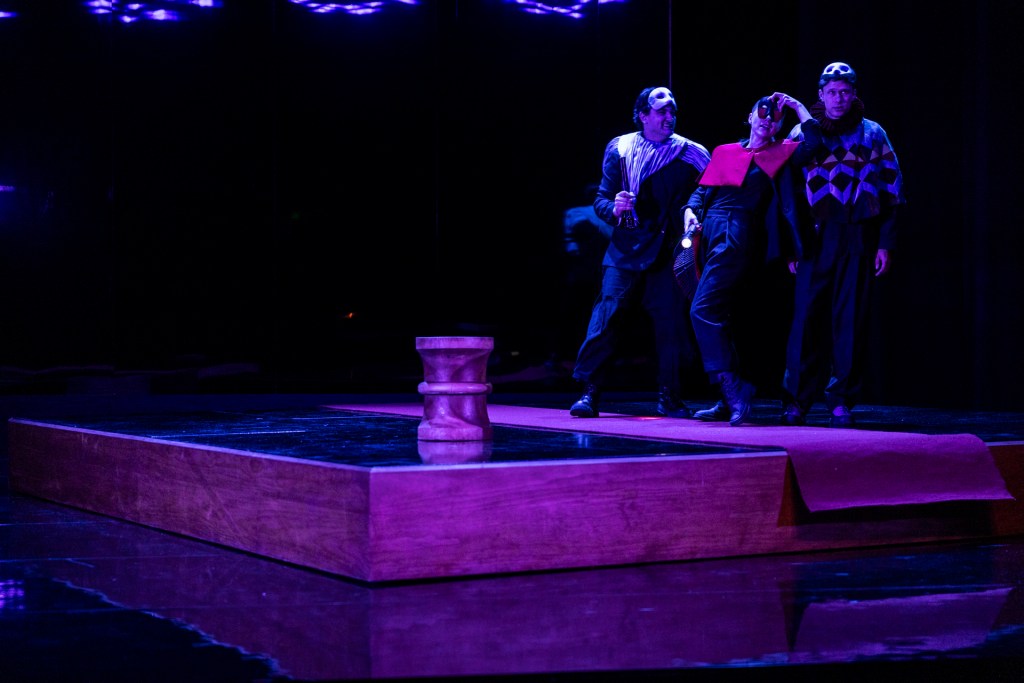
James Thomasson, Brittany Santariga & Ryan Hodson. Photo: Brett Boardman. Artistic Director Peter Evans’ vision keeps the staging minimal, with a pair of basic risers, some rugs, and black-on-black costumes. Without the bells and whistles of modern theatremaking, it brings the focus back to the text and the performances—my two favourite things.
I’ve seen a few major productions of Romeo & Juliet over the last few years—from the very contemporary, OTT Broadway version with Rachel Zegler and Kit Connor, to London’s Almeida Theatre production by hit director Rebecca Frecknall. Both approached the text in completely different ways. In comparison, Evans’ production feels refreshingly honest, with a simple clarity.
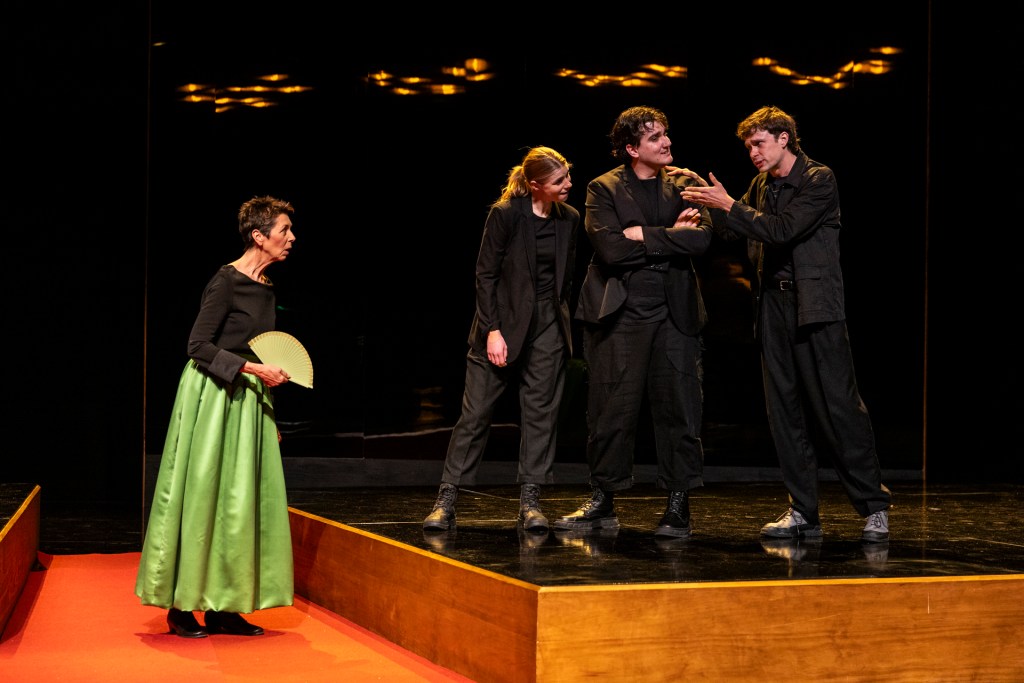
Merridy Eastman, Brittany Santariga, James Thomasson & Ryan Hodson. Photo: Brett Boardman. Sydney marks the end of a long tour, which sees the cast well and truly settled into their roles, or ‘rolls’ in the case of Ryan Hodson’s Romeo, who spends a fair amount of Act I sliding and crawling around the stage.
Easy standouts are Merridy Eastman’s Nurse (always a gift of a role for a performer) and Michael Wahr’s emotionally open Capulet—a role often reduced to mere power and rage, but here offering a more nuanced representation.
At the play’s heart are the two leads, both performers who have recently impressed with parts at the Old Fitz.
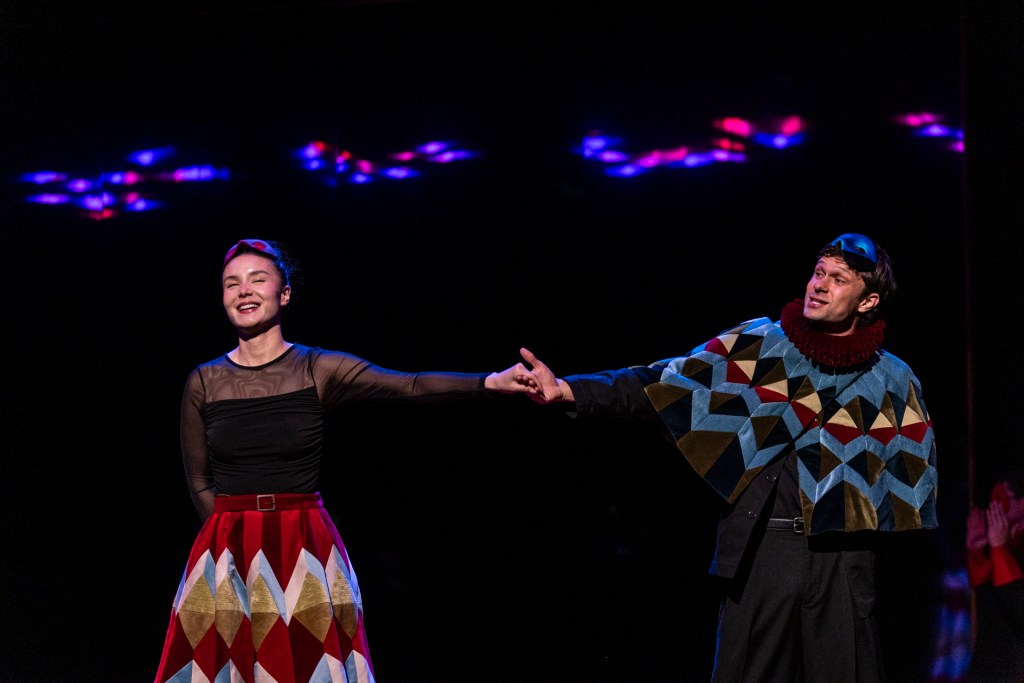
Madeline Li & Ryan Hodson. Photo: Brett Boardman. Hodson (who stood out in Posh) has a scruffy appeal that transforms into boyish glee in his Romeo, bringing out the character’s youthful, brash goofiness.
Madeline Li (who caught my eye in Dear Elena Sergeevna) gives us a strong and wilful Juliet. There is no attempt to present her as a fourteen-year-old, which neatly sidesteps any potential issues. She is a modern young woman who runs rings around the adults in her life.
Together, their romance feels like a meeting of equals.
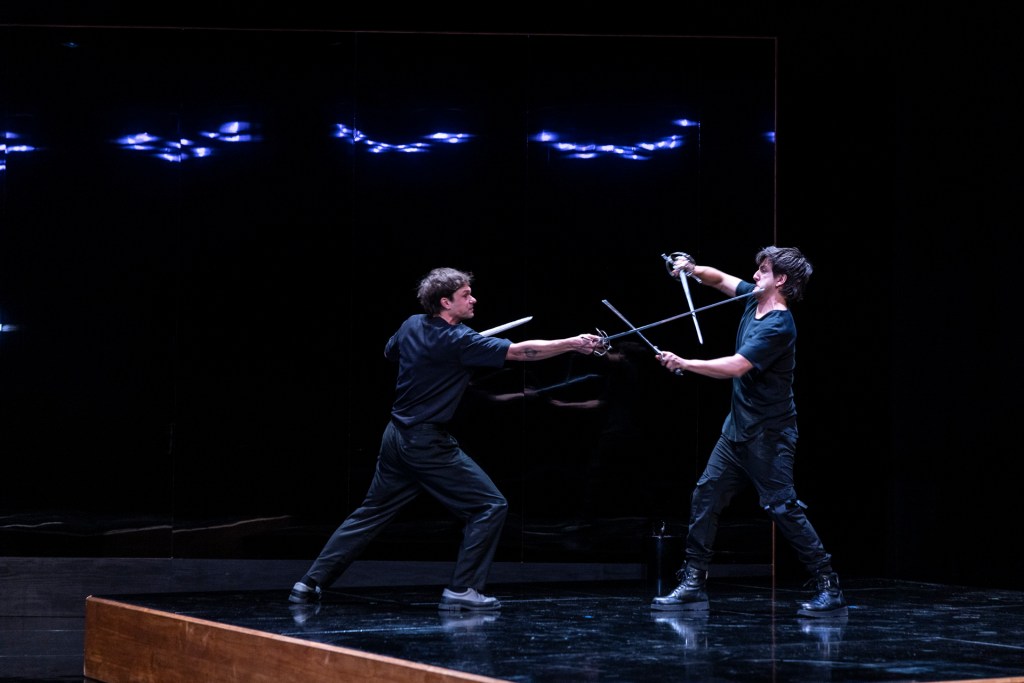
Ryan Hodson & Tom Matthews. Photo: Brett Boardman. It’s also nice to see some proper, old-school stage fighting. When done poorly, these sword fights feel slow and obviously safe. Here, Tom Royce-Hampton’s fight direction has a muscular energy and, while the choreography is still evident, it feels like the performers are putting some real heft into their swings.
The performance I caught was followed by an audience Q&A, and this is one of the areas where Bell Shakespeare truly excels. The cast were immaculate ambassadors for both the company and theatre as a whole, enthusiastically encouraging questions from kids in the audience as well as the older patrons.
Peter Evans resists the urge to impose an unnecessary concept on top of Shakespeare’s well-worn classic, and the result is a strong presentation of the text—one of Shakespeare’s most poetic, romantic, and heartbreaking stories. Sometimes you just need to strip away the distractions and let the words fill the space, which this production does so well.
-
Congratulations, Get Rich! 恭喜发财, 人日快乐 (Sydney Theatre Co) ★★★

Written by Merlynn Tong. La Boite Theatre, Singapore Repertory Theatre & Sydney Theatre Company. Wharf 1 Theatre. 21 Nov – 14 Dec, 2025.
Kip Williams’ final piece of programming for STC, Merlynn Tong’s new play Congratulations, Get Rich, is cute, with some good giggles — and if that sounds slightly condescending, well…
Mandy (Merlynn Tong) is haunted by the death of her mother. Literally. As she sets about opening her own business, Money Money Karaoke, she’s visited by the ghosts of her mother (Seong Hui Xuan) and grandmother (Kimie Tsukakoshi). Tonight also happens to be Mandy’s 38th birthday — the same age her mother and grandmother died. The question becomes: can these strong women from the other side help Mandy achieve greatness, or is she doomed to follow in their tragically messy footsteps?
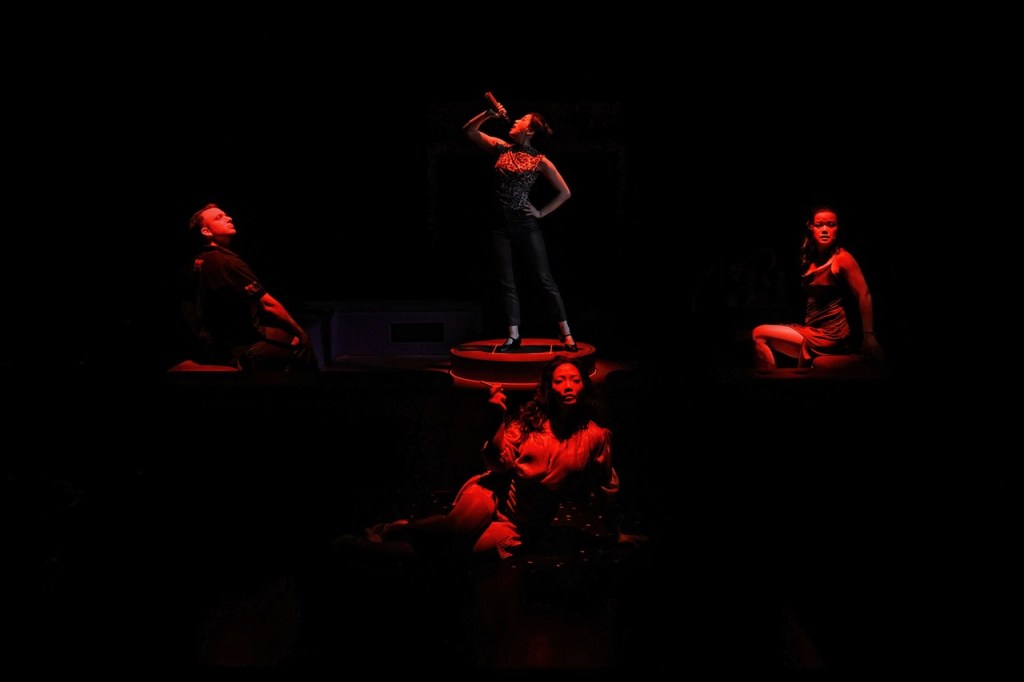
Zac Boulton, Seong Hui Xuan (foreground), Kimie Tsukakoshi (background) and Merlynn Tong. Photo: Prudence Upton. The wounds our parents inflict can be long-lasting, and Tong explores the holes they leave in our lives that are hard to fill. As she drip-feeds details of the complex relationships between the three women, the picture becomes clearer — and darker. Families are always messier than they appear.
Wisely, Tong spices things up with big karaoke energy and humour. Mandy’s boyfriend Xavier (Zac Boulton) fires off a series of truly awful/good white-guy dad jokes, and the combination of the women’s vanity and outrageousness hits just the right tone. Some of the cultural gags would likely play better with Chinese-related audiences than they did with the 95% Caucasian crowd I saw it with. The result is an unusual blend of music, comedy, PG-rated horror and drama.
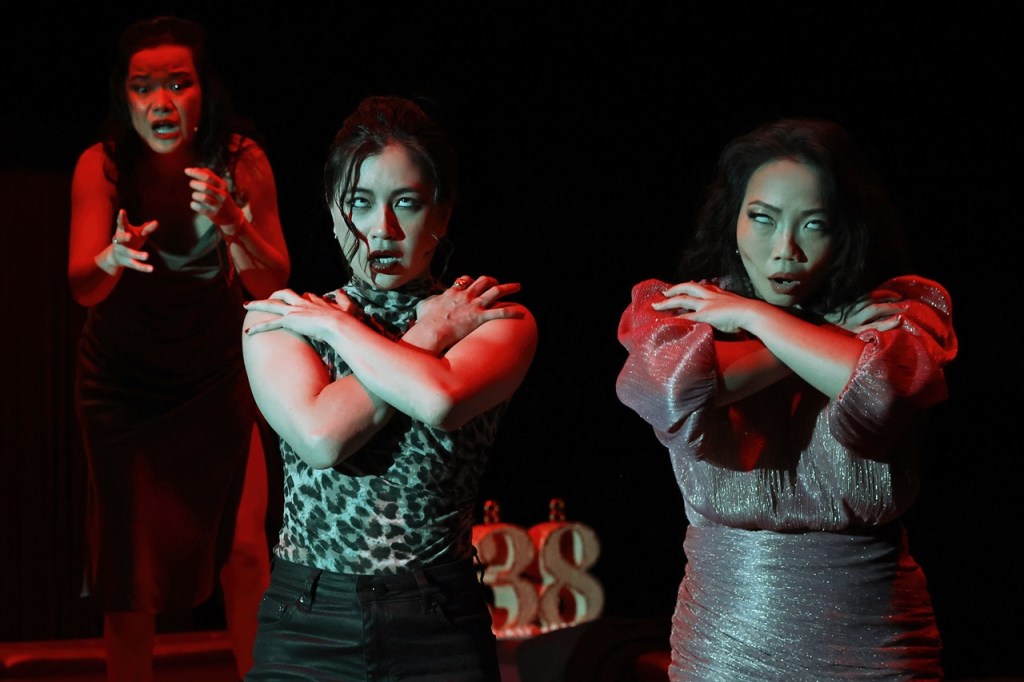
Merlynn Tong, Kimie Tsukakoshi and Seong Hui Xuan. Photo: Prudence Upton. One of the play’s best conceits is having all the women appear the same physical age. They’re all happy to get loose with the whisky and green tea cocktails they’re throwing back like a group of friends. Together they have a natural exuberance and affinity that also masks tensions underneath. There’s an undeniable element of competition between them as they vie to be the top dog — both physically and vocally.
Which brings me to the songs, of which there are quite a few. Both Seong Hui Xuan and Kimie Tsukakoshi have good voices and give strong deliveries. The problem is that the songs… well, they’re not up to much. These aren’t catchy pop tracks, nor are they musical-theatre numbers that move plot or character; they’re one-note karaoke pastiches that simply repeat information we already have. It’s a real missed opportunity. The shallow, pre-recorded backing suits the show’s premise but offers very little to the audience.
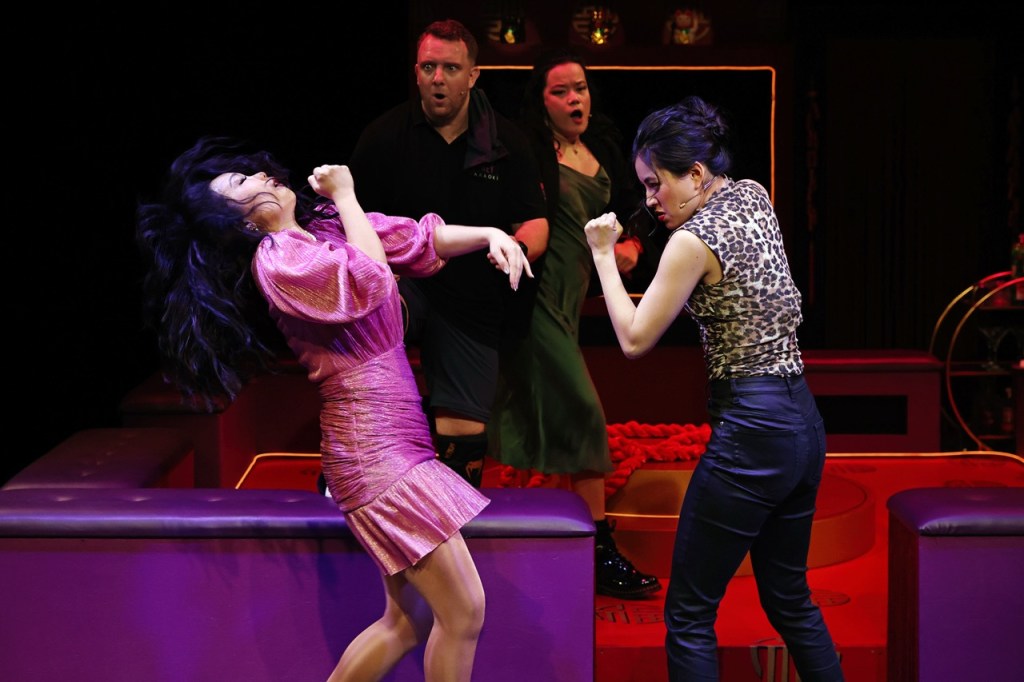
Seong Hui Xuan, Zac Boulton, Merlynn Tong and Kimie Tsukakoshi. Photo: Prudence Upton. This, combined with the production elements, is where the cracks really begin to show. There’s an abundance of literal emptiness in Congratulations, Get Rich. James Lew’s set sits awkwardly in the bare expanse of the Wharf 1 stage (I can see how it would have fit well at Brisbane’s La Boite, where it originated). There’s also an audible emptiness — long pauses in dialogue and action that create an uneasy air. Guy Webster’s sound design is loud and pointed, but never immersive.
Director Courtney Stewart struggles with some of the metaphysical aspects, which lack theatricality. The repeated moments of the ghost women “eating” fall especially flat, and there’s little consistency in the use of the large “television screen” on set. At times there’s a tacky quality to the action, music and some of the comedy that feels more like watching an episode of ‘Bewitched’ than a contemporary mainstage production in 2025.
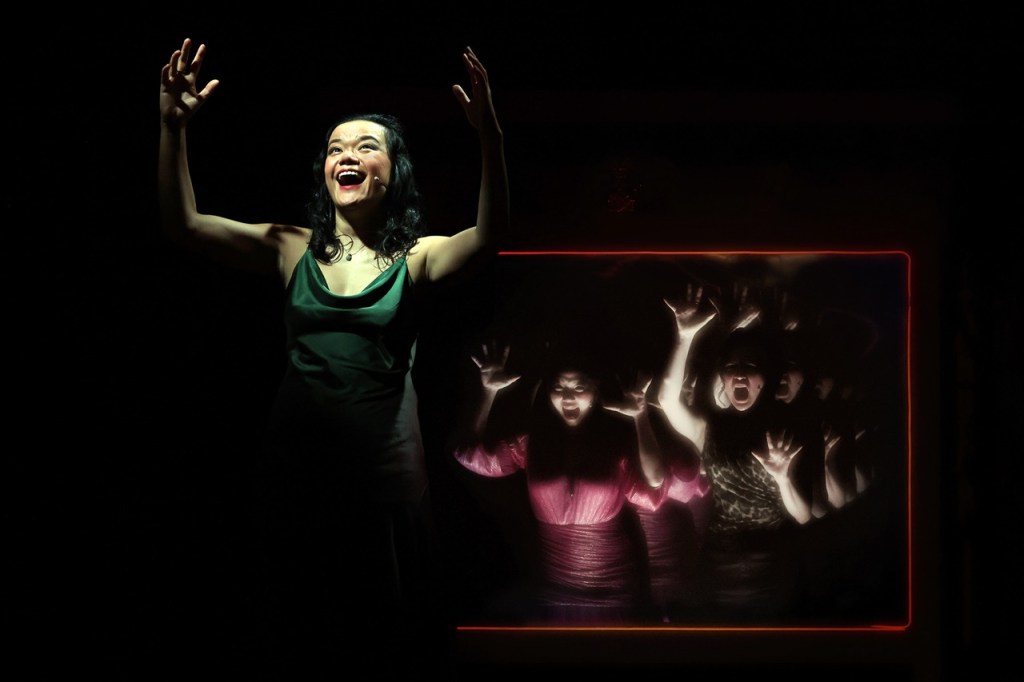
Merlynn Tong, Seong Hui Xuan and Kimie Tsukakoshi. Photo: Prudence Upton. I know this all sounds pretty negative, but the show does have wonderful highs. It truly succeeds in the moments when the cast gels and delivers genuinely good laughs that come from character rather than poorly set-up gags. This is a strong cast working with an original concept, and Tong’s voice continues to bring a fresh tone to our stages. Together, it’s enough to get you past the fact that the show is a bit undercooked.
This one is a mixed bag. Some very good elements mixed with some poor elements mean it all evens out in the wash to a three star experience. While it isn’t a patch on her previous STC hit Golden Blood, Congratulations, Get Rich still serves up some fun, light entertainment over its 90 minutes — it just feels slight from a playwright and creative team we know can really deliver the goods.
-
The Seagull (KXT on Broadway) ★★★★½
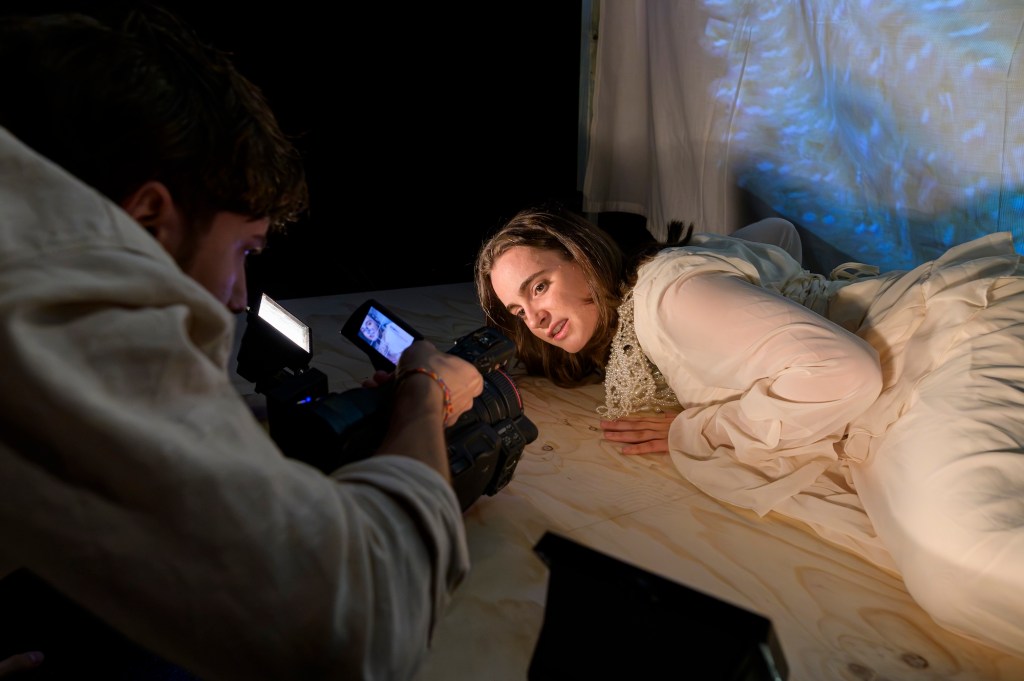
Written by Anton Chekhov. Adapted by Saro Lusty-Cavallari. Montague Basement in association with Bakehouse Theatre. KXT on Broadway. 21 Nov – 6 Dec, 2025.
For a nearly 130-year-old play, Anton Chekhov’s The Seagull is looking pretty spry in the new Australian adaptation now on stage at KXT on Broadway. It’s funny, cutting, and somehow meta-but-not-meta in its commentary on the Sydney theatre scene. I’ll be honest: I cringed at the thought of Covid-set Chekhov, but this may be the first genuinely good pandemic-adjacent play I’ve seen — and also one of the best adaptations of The Seagull. Hats off to everyone involved; this one’s a keeper.
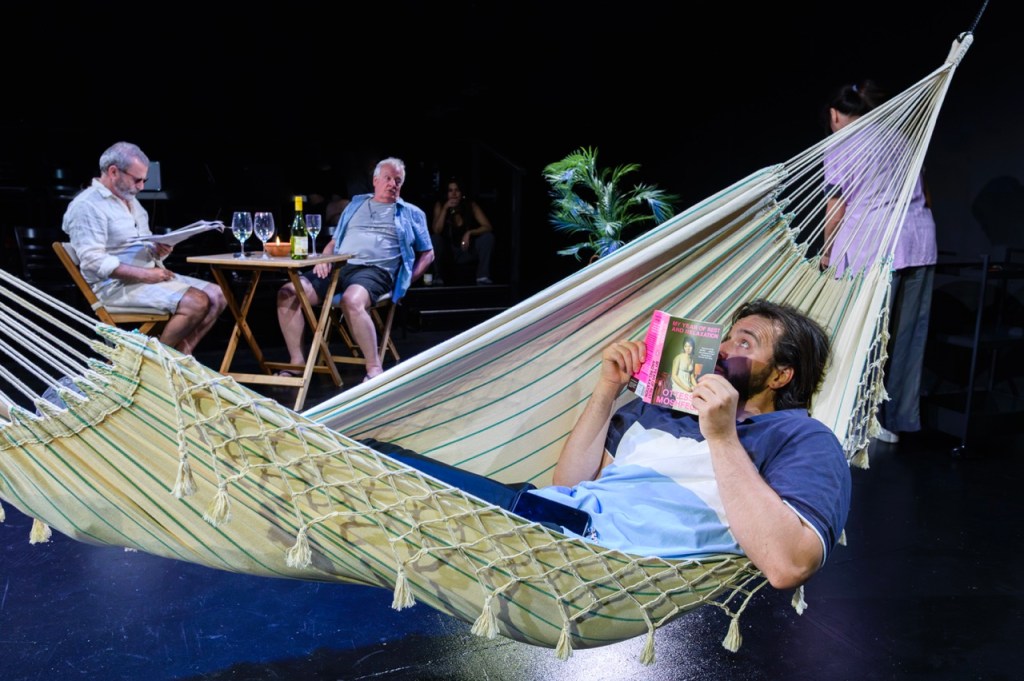
Brendan Miles, Tim McGarry, Jason Jefferies. Photo: Robert Miniter Photography. Cast your mind back to March 2020, as Covid locks down Australia for the first time (and, coincidentally, the month I moved back to Australia — but this isn’t about me). Beloved Australian actress Irene Nicolson (Deborah Jones) retreats to her family property along the Bellingen River. She’s joined by her lover Alex (Shan-Ree Tan), a noted author; her son Constantin (Saro Lepejian), a moody young artist in the making; and her brother Peter (Tim McGarry), who completes this accidental bubble of creatives.
Between glasses of pinot gris and BBQs by the water, small tensions begin to take root. When Constantin brings his girlfriend Nina (Alexandra Travers) to stage his avant-garde backyard play, events start to snowball just as Covid cases rise around the country. The question becomes: will this enforced proximity of middle-class artists spark a masterpiece, or just more chaos?

Brendan Miles, Deborah Jones, Shan-Ree Tan. Photo: Robert Miniter Photography. Writer-director Saro Lusty-Cavallari’s script is steeped in local theatre history, and the satire is delicious. It lovingly takes pot-shots at Sydney’s theatrical establishment while also skewering the younger generation pushing, often frustratedly, against long-standing conventions. As Irene name-drops colleagues and venues from across her career, it’s like scrolling through three decades of Australian theatre contacts.
Meanwhile, as Constantin rails against “the system,” Lusty-Cavallari gets to have his cake and eat it too — using Con to voice the criticisms of those who’ve struggled to break onto our main stages, while also allowing us to laugh at them. It’s a rich vein of comedy that brings Chekhov’s scenario vibrantly to life, making this one of the funniest adaptations I’ve seen.

Shan-Ree Tan, Deborah Jones, Alexandra Travers, Brendan Miles, Saro Lepejian. Photo: Robert Miniter Photography. I was almost disappointed there wasn’t a sly nod to STC’s fateful 2023 production of The Seagull, which caused so much needless commotion and cost the company dearly (maybe there was and I just missed it). Still, the humour isn’t there just to wink at us; it opens broader questions about art, authenticity, and the pretensions baked into a form we all keep coming back to.
Moving the action to the early days of the pandemic works far better than expected. It gives the characters a believable reason to be trapped together — and a justification for some of their more extreme decisions. Perhaps it’s the distance of a few years, or maybe the show’s lightness of touch, but the references to that traumatic time don’t sting the way they often have in other Covid-era plays.

Saro Lepejian. Photo: Robert Miniter Photography. More importantly, the adaptation speaks to the present as much as the past. The emotional divide between the weary, established older generation and the frustrated younger cohort feels sharply contemporary. As Nina, Constantin, and Maddie (Talia Benatar) search for a place in a world that seems poorly designed for them, their tragedies feel all too familiar — and all too real.
A terrific cast and a first-rate script make the 2 hr 20 min running time fly by. It’s not every production that earns a round of applause barely 15 minutes in, but Lusty-Cavallari’s The Seagull hits a sweet spot for Sydney theatregoers. It balances levity and depth with impressive ease — a remarkable achievement.
N.B. A warm “Happy Birthday” to KXT on their 10th anniversary. This show is a superb way to step into your second decade.
-
Cowbois (Seymour Centre) ★★★

Written by Charlie Josephine. Presented by Siren Theatre Co and Seymour Centre. 20 Nov – 13 Dec, 2025.
Cowbois, a queer fantasia on Western themes now playing at Seymour Centre, ricochets between tones at a furious pace. Part pantomime cowboy tale, part surreal musical, part action-comedy, its exhaustive cast of 15 performers are here to challenge your view of binary concepts like “goodies” & “baddies” or “masculine” & “feminine”.
Set in a dusty town with no name, where all the men have gone mining for gold and the women are left to fend for themselves with only the drunken Sheriff to protect them, there are Wanted signs everywhere plastered with the image of handsome criminal Jack Cannon (Jules Billington). When the swaggering bandit arrives in town, the women are left flustered and confused as Jack’s trigger finger starts a sexual revival none of them could have predicted.

Jane Phegan, Nicholas Hiatt, Emily Cascarino, Jules Billington, Faith Chaza & Brandon Christine. Photo: Alex Vaughan. After getting its start at the Royal Shakespeare Company and moving to London’s acclaimed Royal Court, where it received rave reviews, Siren Theatre Co have brought Cowbois to Australia under the direction of Kate Gaul. And, much like everyone’s marksmanship in the big final gunfight, it’s a bit hit-and-miss but the bullets hit their mark right when they need to.
What starts as a comedy of manners among the “womenfolk” of the town takes a while to reveal its genre-bending leanings. Once Jack saunters into town bringing a healthy dose of magical realism, things start to simmer. Then we’re off to the queer-romance section of the story, as love — and confetti — fills the air. Just as quickly, we’re diverted into dark and serious discussions of gender and scenes of persecution before the stage becomes the center of a freewheeling gunfight. It’s an ever-evolving, maximalist mash-up of styles that never quite takes shape into something whole.

Jules Billington. Photo: Alex Vaughan. Jules Billington shines, often literally, as the trans-masculine cowboy with a twinkle in their eye and a pistol in their pocket (or maybe they’re just happy to see us?). It’s a knowing performance that invites the audience into the action. Billington’s likability radiates through scenes as they spread love and acceptance to the locals.
Emily Cascarino is a centring presence as Miss Lillian, the married proprietor of the local salon who falls for the dashing rascal while her husband is away. So too is Branden Christine’s Mary, who delivers unforced comedic side-eye with charm.
The combined work of Emelia Simcox (production design), Brockman (lighting) and Aisling Birmingham (sound) makes for a physically impressive stage space that elevates the action and the comedy. While the atmospheric scoring by the band does wonders in building tone and accenting moments, the original songs themselves fall flat. The musical numbers feel awkwardly placed and are hard to hear without any amplification — and it’s clear the majority of these performers were not cast for their singing and dancing skills. The sudden switch from folk & country to electronica mid-song, for instance, is particularly jarring.
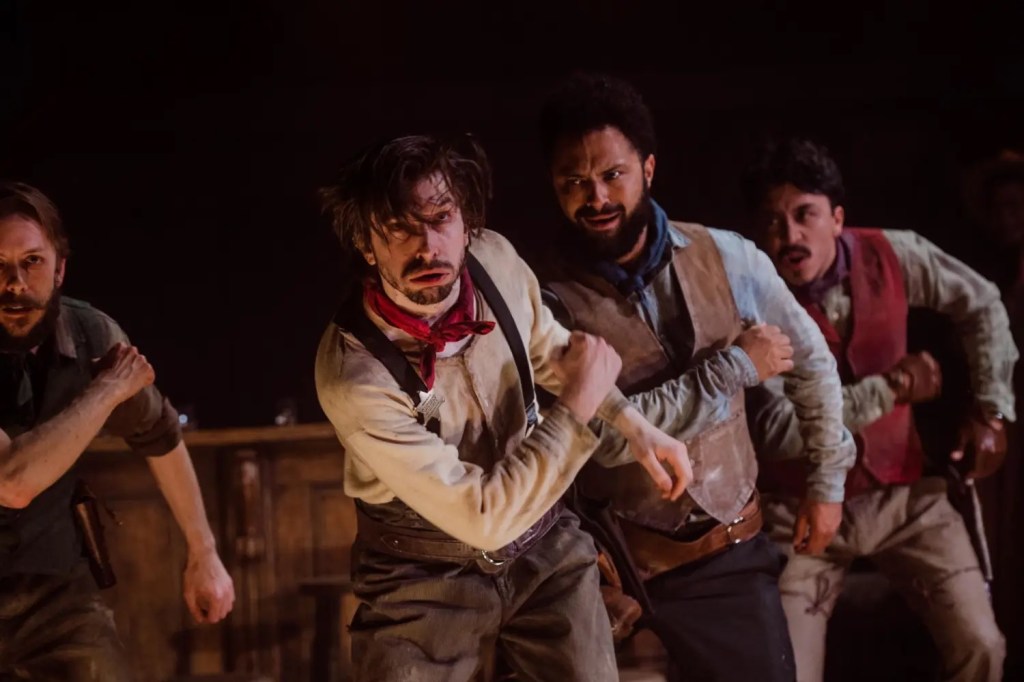
Nicholas Hiatt, Matthew Abotomey, Edward O’Leary, Henry Lopez. Photo: Alex Vaughan. Charlie Josephine’s script works best in its heightened tone, playing with the gender roles so well established in Western cinema, or when running at full spoof. When sincerity sneaks in, an air of ‘after-school special’ creeps in with it that is clearly preaching to the choir. Personally, I felt that each scene ran too long, often overstating moments or, worse, over-explaining its own humour. Some trims, and a less languid delivery, would make the evening flow faster.
But there is an undeniable charm to Cowbois that is hard to resist. When Lou (Faith Chaza) steps out as their true self, it’s hard not to be swept up in pride and relief. I found myself smiling broadly the whole time (and at 2 hours 40, it’s not a short piece). Even while I struggled with the pace of some scenes or the abrupt tonal shifts, I felt a real sense of relaxed exuberance surrounding the show. If you’re after an explosion of queer joy, this may be just the ticket.
-
Edward Albee’s Who’s Afraid of Virginia Woolf? (Sydney Theatre Co) ★★★★★

Written by Edward Albee. GWB Entertainment & Andrew Henry Presents the Red Stitch Actors’ Theatre production. Sydney Theatre Company. Roslyn Packer Theatre. 7 Nov – 14 Dec, 2025.
It’s back — the most caustic of all domestic comedies. Edward Albee’s Who’s Afraid of Virginia Woolf returns to Sydney with its jagged wit and diabolically broken relationships, brought to the stage by real-life married couple Kat Stewart and David Whiteley.
George (Whiteley) and Martha (Stewart) return home from a faculty party filled with minor complaints. You were too loud. You were too quiet. You weren’t funny. They settle into their tired, drunken bickering routine as George makes Martha a nightcap. But it won’t be a nightcap. Martha has invited a nice young couple they met – Nick (Harvey Zielinski) and Honey (Emily Goddard) – over to keep the party going. Why? Does she just want to humiliate George further? Or is there something more to the games they’re both playing?
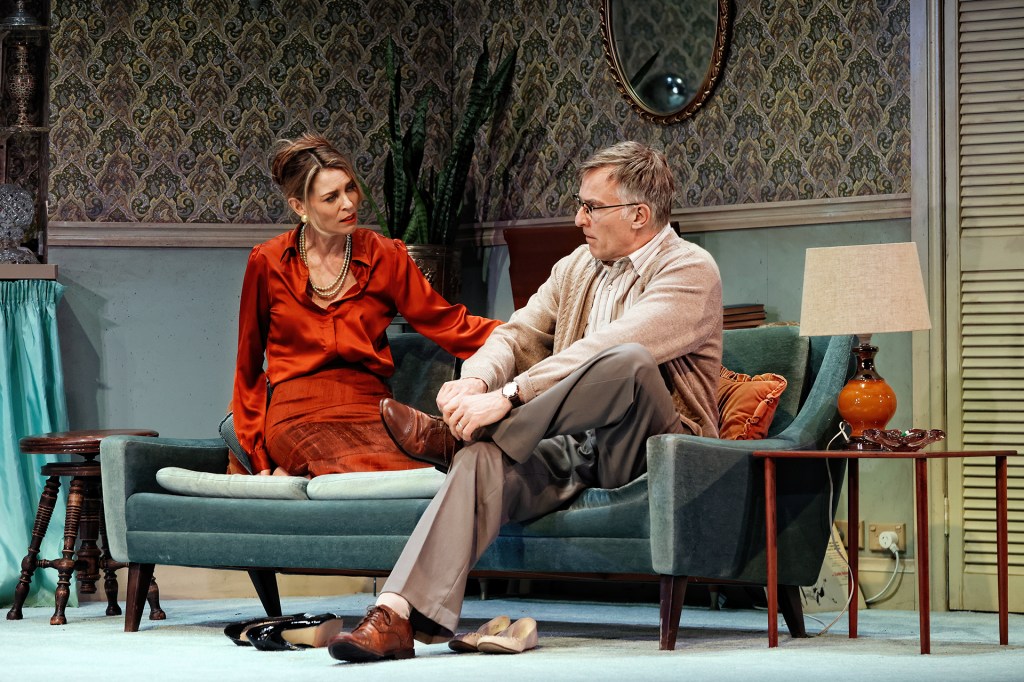
Kat Stewart and David Whiteley. Photo: Prudence Upton. I’ll lay my cards on the table early and say that I think Albee’s script is near perfect. It’s a finely tuned machine of subtext, competing motivations, and carefully dropped hints. Yes, the three-hour-plus running time is intimidating. But you’d be hard-pressed to find a single line you’d want to cut. The emotional fever builds carefully over the course of the play, and it would break the rhythm to tinker with Albee’s work. More than sixty years on, it remains a modern masterpiece.
If Albee’s text is a masterclass in structure, his characters are a study in complex, competing motivations and emotional drives. George and Martha are the culmination of decades of slights, frustrations, and dead dreams – middle-aged people who feel too much and can only numb themselves with liquor.
Their world is a sick microcosm of insular jokes and stories only they truly understand. Like an online conspiracy theorist cut off from regular society, they’re losing touch with the real world and retreating into their dysfunctional private hell. You know they’ve had this exact fight before, yet there’s some strange comfort in the repetition – they understand one another completely and that is its own sort of intimacy. It’s only when George changes the game that the true horror settles in.
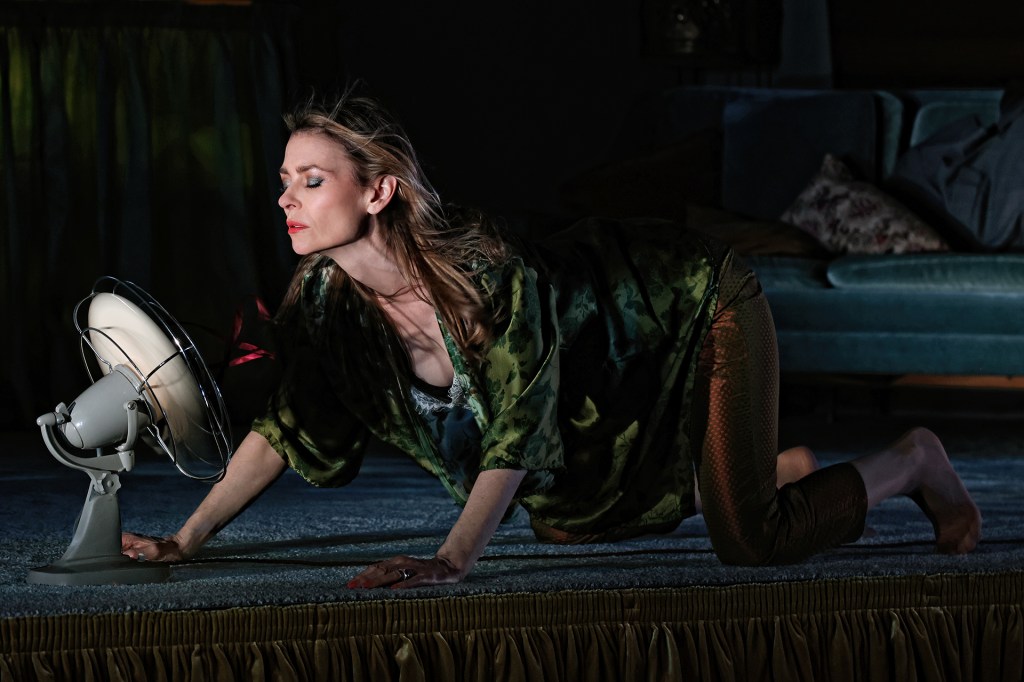
Kat Stewart. Photo: Prudence Upton. Kat Stewart is invigorating as the academic’s housewife clawing at the walls of her middle-class existence. She brings a feline grace and simmering rage to Martha as she stalks the stage – the world is ignoring her but she is demanding its attention.
While Stewart has rightly been highly praised, I found myself drawn more to Whiteley’s viciously professorial and quick-witted performance. His George is an example of masterfully pitched tone. There’s a menace to his delivery – a sense that George is playing multiple games at once – but that cerebral element never outweighs the emotional drive, the pain, that pushes him forward. Watching these two together is the stuff theatrical dreams are made of. This is gold.

Harvey Zielinski, Emily Goddard and David Whiteley. Photo: Prudence Upton. As the younger academic couple, Nick and Honey, Zielinski and Goddard at first seem miscast – neither fitting the physical descriptions given in the script. But their performances quickly dispel any doubts, especially Goddard, who has the hardest role to balance as a more traditionally comedic figure. Under Sarah Goodes’ direction, she lands her moments without breaking the tone.
All of this comes together under Goodes’ steady hand. She has doubled down on the emotional horror of the story, adding short, ethereal interludes that strengthen the ongoing mystery surrounding George and Martha’s “kid”. As the audience is left to guess how much of what they’re saying is truth and how much is bitter fiction, these moments tease us further.

Harvey Zielinski, David Whiteley, Emily Goddard and Kat Stewart. Photo: Prudence Upton. Harriet Oxley’s design is both spacious and stifling, placing George and Martha’s bar centre stage – there’s no forgetting their lives revolve around alcohol. There are beautiful subtleties in Matt Scott’s lighting and in Grace Ferguson and Ethan Hunter’s sound design (even if one cue felt slightly overused).
This production has grown from Melbourne’s 80-seat Red Stitch Actors Theatre, where it debuted in 2023, to the expanded, full-scale version we see today. These actors have had time to settle into their roles and live with these complex characters – and it shows. The production has already received near-universal acclaim, and it’s clear to see why. Unlike the 2022 production staged at the Sydney Opera House (which I missed, but multiple sources say was a bit of a drag), this version rises to the challenge of the text.
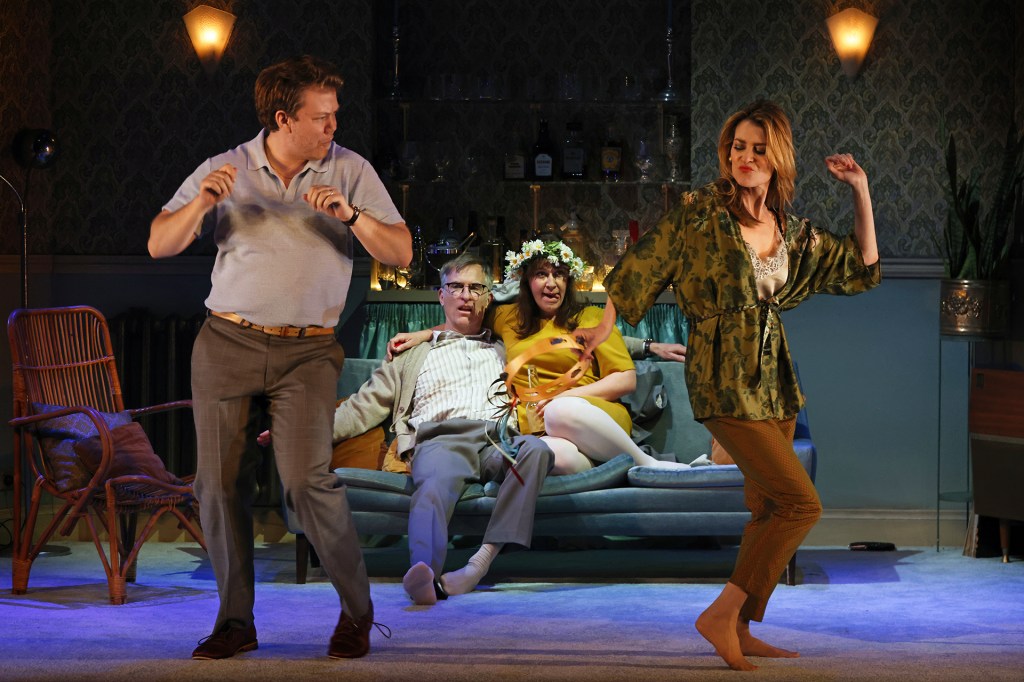
Harvey Zielinski, David Whiteley, Emily Goddard and Kat Stewart. Photo: Prudence Upton. Make no mistake: this is a heavy night at the theatre. As funny as it is watching two people tear each other apart with wit and venom, it’s also a journey into alcoholism and emotional abuse – and, strangely, at the end of the day, a twisted love story. At three hours twenty minutes, including two short intervals (you’ll be racing to either use the loo or get to the bar – good luck doing both), it makes for an intense evening, especially on a school night. But, for my money, it doesn’t get much better than this.
-
Atlantis (KXT on Broadway) ★★★

Written by Paul Gilchrist. subtlenuance, in association with bAKEHOUSE Theatre Company. KXT Vault. KXT on Broadway. 8-17 Nov, 2025.
KXT on Broadway christens its studio space, the KXT Vault, with a new staging of Paul Gilchrist’s short play, Atlantis. It’s an intriguing choice to open an equally interesting new intimate venue.
Sarah (Veronica Clavijo) and Tom (Jimmy Hazelwood) are on the run. Fleeing Sydney on foot, they’ve hitched rides as far as they could on their way to Byron Bay to see if Sarah’s aunty Zelda (Sylvia Marie) can put them up until things blow over. To earn their keep, they start working in her spiritualist store, hocking crystals and dreamcatchers to the gullible. While they secretly mock the clientele, they start to wonder how different, really, is Zelda’s past life as an Atlantean princess from Tom’s as an inept drug dealer, or Sarah’s as a struggling actress? It’s all in the stories we tell ourselves to make sense of the world.
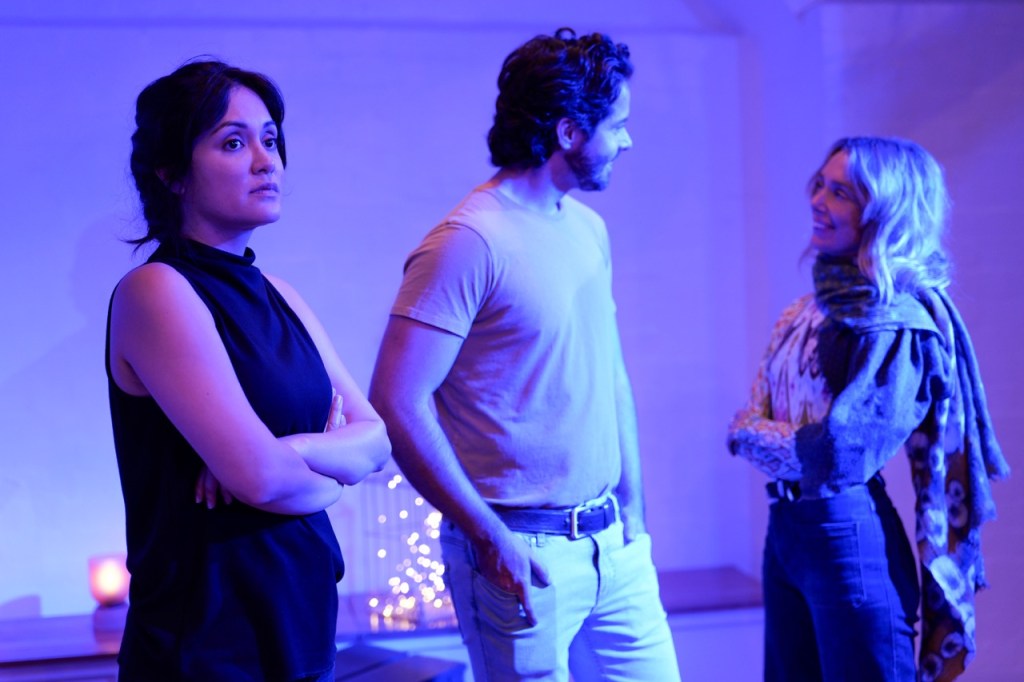
Veronica Clavijo & Jimmy Hazelwood & Sylvia Marie. Photo: Syl Marie Photography. Written and directed by Gilchrist, this pop-up production makes use of the Vault’s enforced intimacy with numerous fourth-wall-breaking asides that heighten our awareness that this is a story about stories, told by storytellers. Naturalism is not the name of the game here. The heightened language demands your attention, accented with moments of humour.
This is a cerebral affair full of wry observations about life – you can feel the authorial voice speaking through the characters. Between the witty commentary on contemporary society it asks us to consider which stories are worse – the cheeky half-truths and lies Tom tells Sarah, or the kooky delusions Zelda tells herself? One does more harm than the other.
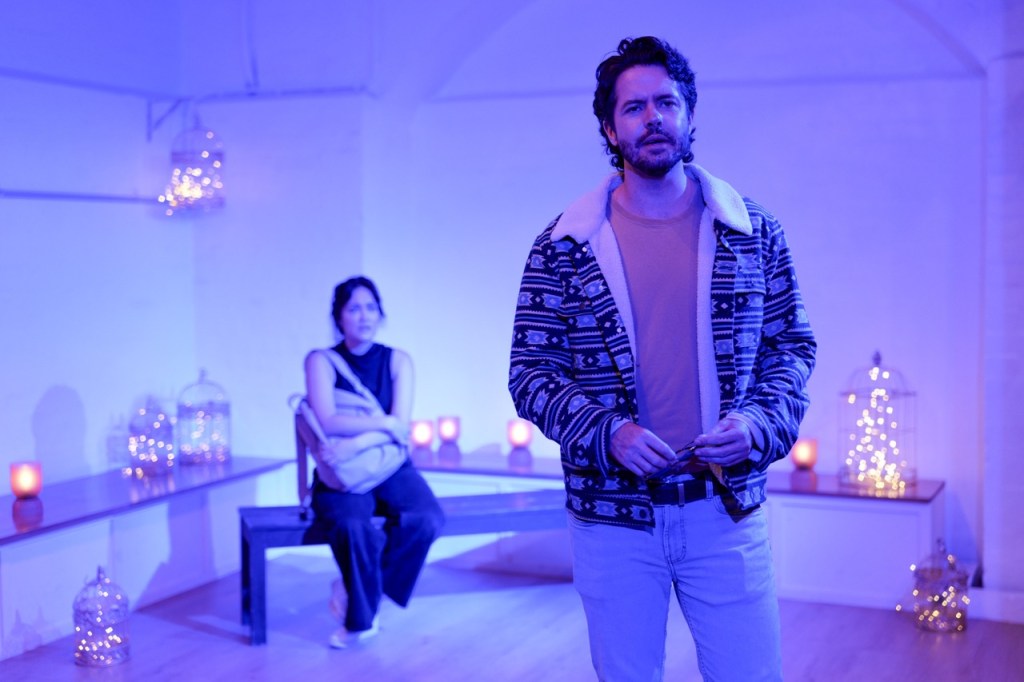
Veronica Clavijo & Jimmy Hazelwood. Photo: Syl Marie Photography. The Vault itself is a simple space, seating about 30 people in two rows, facing a corner. The stage area is given an ethereal quality thanks to tasteful lighting & simple design elements — fairy lights, birdcages, and the occasional wind chime. Washed in a purple glow, things feel otherworldly. The abstraction accentuates the actors, though there is a slightly awkwardness in their performances as they wrangle the dense dialogue that detracts from the emotion.
Almost ten years on from the play’s debut (at the old KXT, as part of the Sydney Fringe 2016), this Atlantis has risen again. It’s a solid start of KXT’s Underground programming – a small scale piece that will get your mind working.
-
Subscribe
Subscribed
Have a WordPress.com account? Log in now.

