-
Welcome to Cultural Binge

The rating system is simple:
★★★★★ – Terrific, world-standard. Don’t miss.
★★★★ – Great, definitely worth seeing.
★★★ – Good. Perfectly entertaining. Recommended. Individual mileage may vary.
★★ – Fine. Flawed and not really recommended, but you may find something to appreciate in it.
★ – Bad (& possibly offensive).
See more reviews over at The Queer Review.
Instagram: @culturalbinge
Substack: culturalbinge.substack.com
Email: chad at culturalbinge.com
-
Never Have I Ever (Melbourne Theatre Co) ★★★★
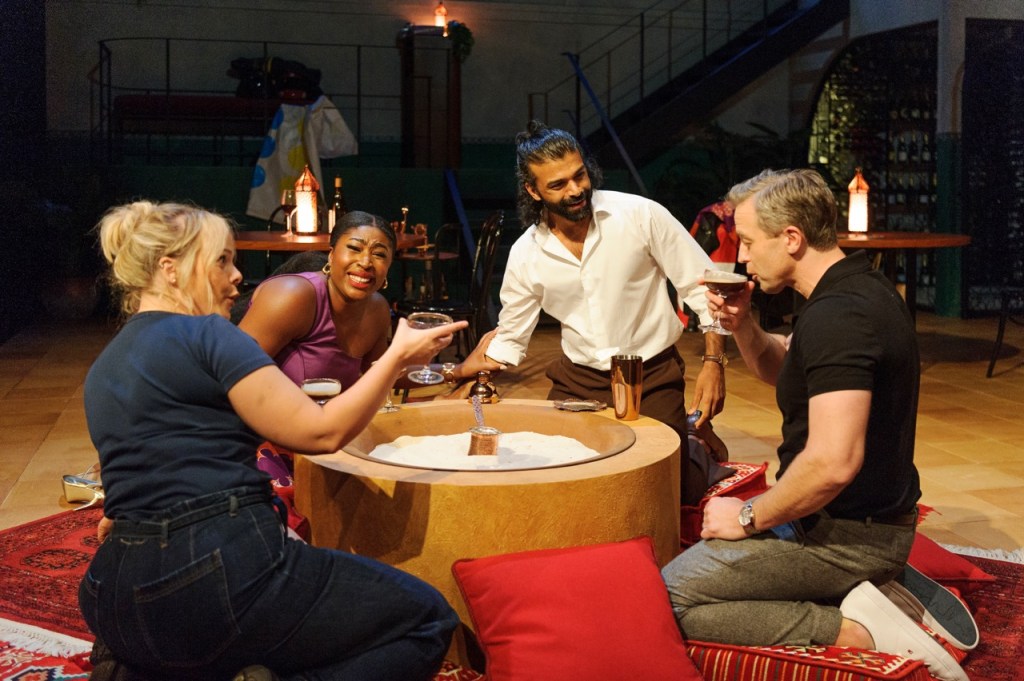
Written by Deborah Frances-White. Australian Premiere. Melbourne Theatre Company. 15 Feb – 22 Mar 2025.
Lately, I’ve been bemoaning the lack of fierce, contemporary political thought in our theatres. Recent works tackling modern topics have felt more like one-sided polemics, with their conclusions locked in from the moment the lights go down, or overly polite pieces that lightly touch on thorny topics. I just wanted an intelligent playwright to dig beneath the surface and present ideas I hadn’t already read about or thought of myself. Finally, Never Have I Ever hit the mark!

Photo: Sarah Walker. Four friends meet up in a restaurant for dinner and an awkward conversation. Couple Jacq (Katie Robertson) and Kas (Sunny S Walia) are the owners who, after several years, have had to declare bankruptcy and close their business. Tonight, they’re breaking the news to their posh banker friend and major investor, Tobin (Simon Gleeson), and his wife, their university chum, Adaego (Chika Ikogwe). What starts off as a cheerful “What’s £120,000 between friends?” chance to drink the great wine in the cellar, turns into a raging, cocaine-fueled bender where long-held truths are spoken, and an indecent proposal is laid on the table.
Australian-born, UK-based writer Frances-White squeezes so much liberal discourse into one play that it’s dizzying to behold. Like having a wine-fueled evening with your most politically engaged, educated mates who love an argument, this conversation forces its fist down the throat of “wokeness” and not only deconstructs it piece by piece, but eviscerates it from within. Going beyond the platitudes and token gestures, it begins with a joke about which of the four of them is the most woke, and gleefully proceeds to find the hypocrisy in our liberal pretensions.

Photo: Sarah Walker. Is Adaego the most woke? She’s a Black woman in business, a master networker and a speaker for change – the perfect “identity politician”. Or Jacq, the bisexual chef who worked her way out of poverty to create her own business while holding onto her socialist ideas. Or Kas, the second-generation “respectable immigrant” who has dedicated himself to getting along, working hard, and making sure the women around him have their own voice. Or perhaps it’s Tobin, the cisgender, rich white guy who champions ethical investments from the back of his Ducati, donates his time, money, and space to marginalised people, and pushes back against the greed of the City (while still getting filthy rich himself). And when ethics meet cold hard reality, who will stick to their beliefs?
The script is very British… VERY British. Everything from collecting Nectar points (the UK equivalent of Everyday Rewards points), the Brexit vote, and the price of courgettes is used for punchlines that may or may not land with you, depending on your own knowledge. Names and places fly past, but most are easy to understand through context. The result, however, is that the pace of the comedy is sometimes thrown off by a micro-moment of confusion or reflection. As an ex-Brit, though, it hit every mark for me.

Photo: Sarah Walker. Frances-White knows how to plant a joke or plot point that will pay off later, and when to liven the mood with a dash of silliness. The text is sharp and funny, with moments that let the actors play. The most exciting part is how Frances-White never sacrifices the intellectual stance for the sake of a quick laugh. Jacq’s stance on her bisexuality never wavers (just because she’s in a relationship with Kas doesn’t mean she’s “gone straight”). Even the discussion about the ethics of accepting a small fortune in return for a sexual act is a complex dance of dilemmas ranging from bodily autonomy, capitalism, colonisation, and the status of sex work. Just as on her podcast The Guilty Feminist, Frances-White works through some complex thoughts on identity politics, social activism, cultural appropriation, privilege, relationships, feminism, and more while playing with them along the way.
All four cast members balance the heightened comedy with the cold, harsh edge of the drama playing out underneath. These aren’t “comedic performances,” but rather the comedy rises from the situation, heightened by alcohol. Both Robertson and Gleeson are chilling in their ability to turn from laughter to rage. They all know when to undersell a punchline and let the audience catch it—nothing is forced, nothing is false. It’s a joy to watch them play out this hilariously awful scenario.
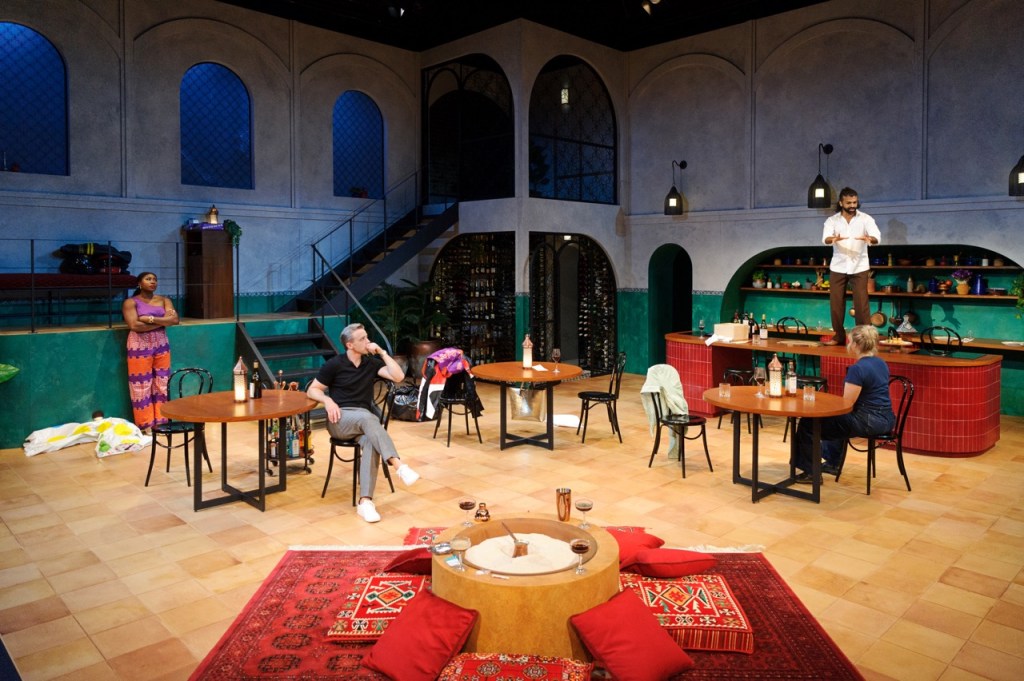
Photo: Sarah Walker. Zoe Rouse’s costumes are brilliant signifiers for each character, but the expansive, multi-level stage design, while offering plenty of opportunities to stage conversations in different places, sometimes makes for long scene transitions that weaken the comedic pace. Director Tasnim Hossain grounds the comedy in character, elevating the presentation, but some moments felt too restrained. A moment of full-out farce seemed within arm’s reach and could have spiced up the evening with a bit more variety. When the play moves into dark drama, Hossain is on very strong footing, having done the groundwork with the characters earlier.
Despite its UK specificity and occasional pacing oddities, Never Have I Ever is one of the most interesting and funny plays I’ve seen in a while. It interrogates “the left” as only someone steeped in intellectual discourse can—not from a desire to fight against it, but in a desire to truly explore the thoughts and strengthen it from within. The fact that this discussion is hidden inside an utterly entertaining comedy and perfectly plotted drama is the cherry on the cake.
-
Song of First Desire (Belvoir) ★★★½
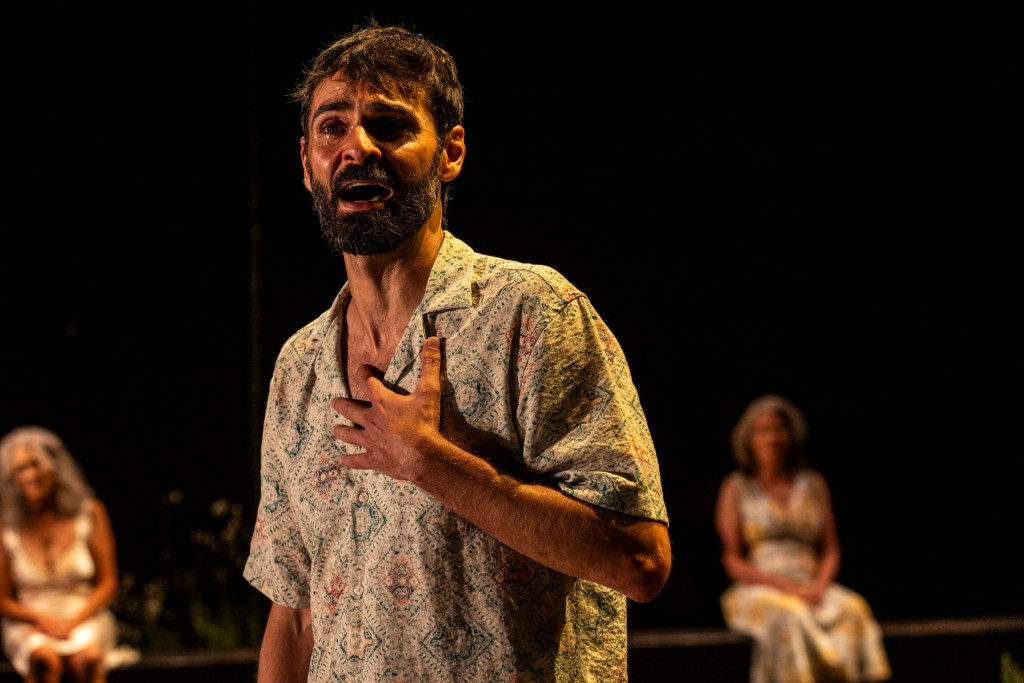
Written by Andrew Bovell. Belvoir. 13 Feb – 23 Mar, 2025.
There’s a ghost haunting Song of First Desire. Well, two, actually: the Ghost of Stories Past and the Ghost of Stories Future. I’ll explain what I mean by that in a few paragraphs. All you need to know right now is that four utterly compelling performances are happening on stage at Belvoir, with Sarah Peirse shining like a star.
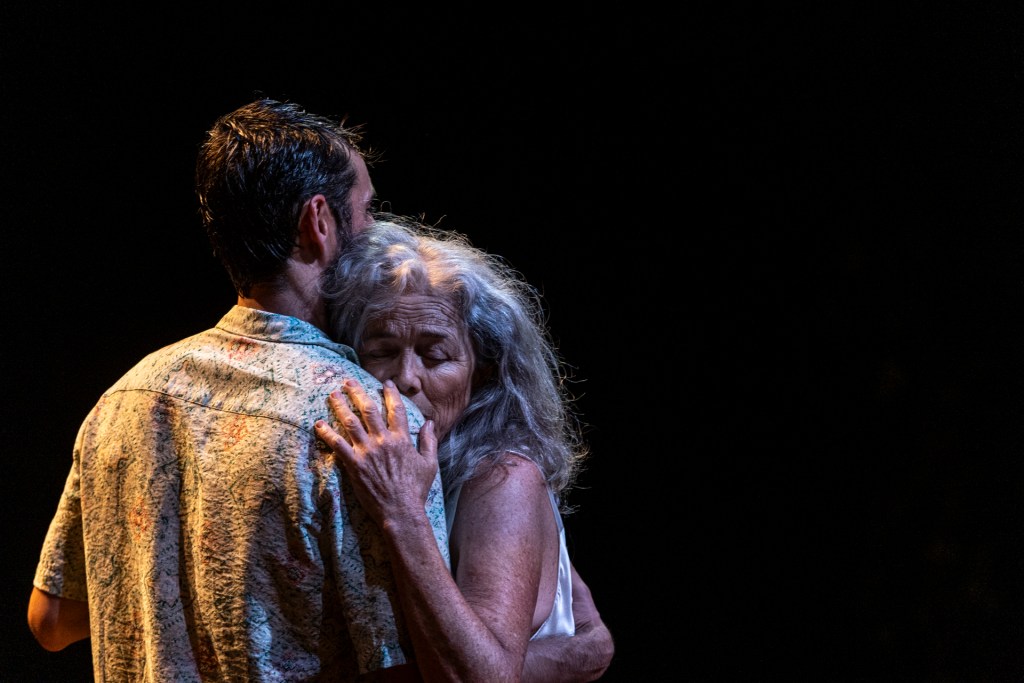
Borja Maestre & Sarah Peirse. Photo: Brett Boardman. The dual narrative of the play begins in present-day Madrid, where Carmelia (Peirse), an elderly mother, lives with her bitter adult twin children, Julia (Kerry Fox) and Luis (Jorge Muriel). Carlos has offered room and board to a Colombian man he met at the doctor’s office, Alejandro (Borja Maestre), who can help care for Carmelia. It doesn’t escape Julia’s notice that Carlos is infatuated with Alejandro, and she takes pleasure in manipulating her brother’s affections.
In flashbacks, we see events in 1968, where a mother, Margarita (Peirse again), confronts a wealthy couple about the events of the Civil War, in which she lost both a husband and a child. The scars of this conflict will be felt for generations to come.

Sarah Peirse, Borja Maestre & Kerry Fox. Photo: Brett Boardman. If the rough outline of the play sounds familiar, it might be because it bears a striking, albeit coincidental, resemblance to the plot of Counting & Cracking (the Ghost of Stories Past I mentioned earlier). A present day mother reflecting on the events of her youth in a country torn-apart by civil war. The resemblance is purely superficial, but once the thought crossed my mind, I couldn’t shake it. It was then that the universality of the story really hit home for me. It doesn’t take much for people to turn on one another—man’s inhumanity to man, and so on.
In the show’s programme, writer Andrew Bovell talks about the resonance of Spain’s unspoken trauma and the concept of Dos Españas or the “Two Spains”—in which two conflicting ideas of Spain exist side-by-side—and its parallels to Australia’s unresolved national colonial sins. But my thoughts were firmly rooted in the future, reflecting on what it takes for a civilisation to go from prosperity to mass murder.
The events of the Spanish Civil War and the authoritarianism of Franco’s regime are still recent history, and I couldn’t shake a feeling of dread when thinking about current politics and where the rise of fascism in 2025 might be leading us (the Ghost of Stories Future I mentioned). What would it take for Australia to descend into those depths? Will it be long before America falls over the edge? Was I just blindly fortunate enough to live in a relatively peaceful time in our history?
It’s a lot to process while watching a play.
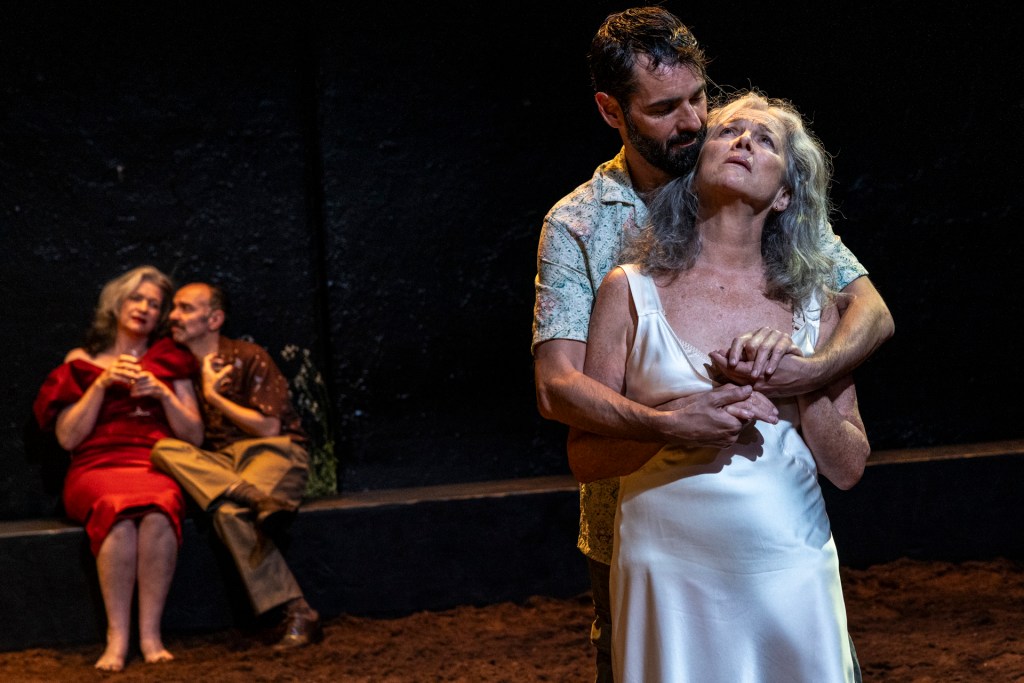
Kerry Fox, Jorge Muriel, Borja Maestre & Sarah Peirse. Photo: Brett Boardman. I could have easily gotten lost in these thoughts if not for the riveting performances on stage. Sarah Peirse is mesmerising in her dual roles, effectively communicating the shifting time periods. Borja Maestre’s authenticity and conviction radiate anguish. Kerry Fox and Jorge Muriel deliver a toxic, codependent dynamic that is as funny as it is unsettling.
The dual, dovetailing narratives present an odd mixture. The 1968 storyline is a gripping, gut-wrenching tale filled with rage and politics, while the modern-day narrative edges toward a bitter familial comedy (reminiscent of Who’s Afraid of Virginia Woolf? or August: Osage County). At times, I struggled to find a tonal connection between the two. However, when the layers of exposition reveal the links, it is disturbing and disorienting to reframe much of what you’ve already seen.

Kerry Fox & Jorge Muriel. Photo: Brett Boardman. It was in the closing moments that the play started to lose me, as the events threatened to veer into melodrama, almost hitting misery porn levels. This last-minute piling on felt out of step with the rest of the play, which had carefully parcelled out its information slowly and deliberately.
As a cautionary tale of the depths to which humanity can sink, Song of First Desire is frightening. As an exploration of the personal impacts of historical events, it is both beautiful and upsetting. There is no denying how exceptional these four performers are, which makes this a rich and rewarding piece of theatre.
-
Picnic at Hanging Rock (Sydney Theatre Co) ★★★★

Written by Tom Wright. Adapted from the novel by Joan Lindsay. Sydney Theatre Company. 17 Feb – 5 Apr, 2025.
Disquiet. Two worlds are colliding, and the space is filled with an air of disquiet. The land refuses to conform to the will of the humans on its surface.
Tom Wright’s adaptation of Picnic at Hanging Rock is told more through sound than vision. Composer and sound designer James Brown creates a universe of possibilities in the darkness, with the cracking of rocks, the rush of wind, and the never-ending movement of Mother Earth. It is this soundscape that evokes an unceasing sense of unease, permeating Ian Michael’s eloquent and sinister production.
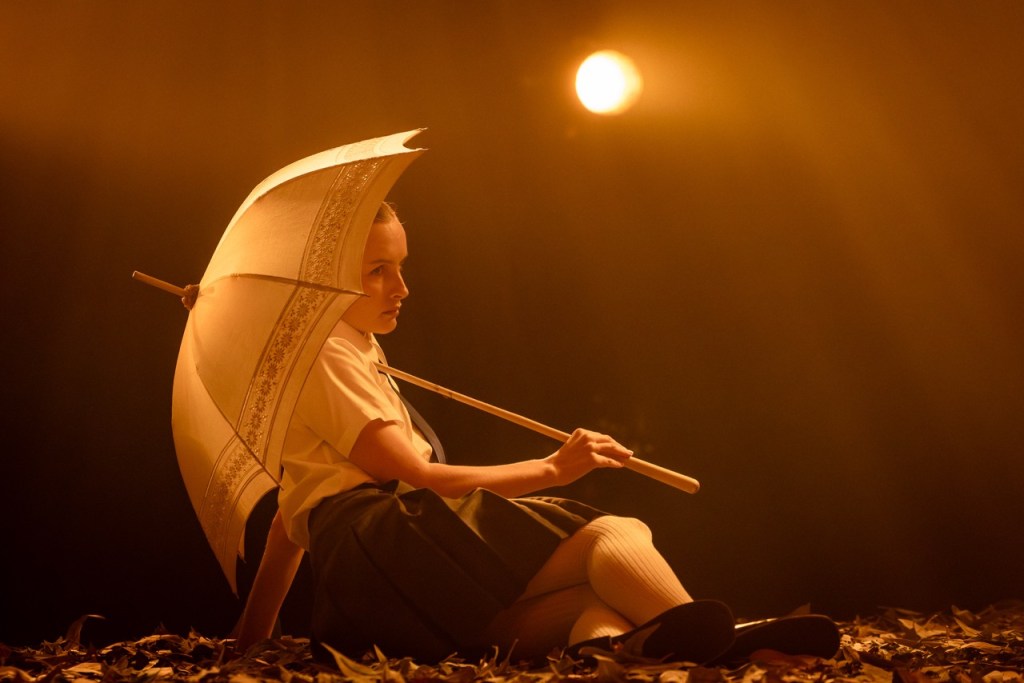
Picnic at Hanging Rock. Photo: Daniel Boud. You’re probably already familiar with the story from Joan Lindsay’s gripping 1967 novel, Peter Weir’s stunning 1975 film, or the 2018 TV miniseries. It’s a tale that has haunted our national imagination for generations. On Valentine’s Day in 1900, a group of schoolgirls go on a picnic at the nearby ‘Hanging Rock’, or Ngannelong, as the native Kulin people call it. At the picnic, four of the girls – Miranda, Edith, Irma, and Marion – explore the natural monolith, despite being forbidden to do so. When Edith returns in hysterics, with no memory of what happened, a search party is sent out. But there is no trace of the missing girls, or their teacher Miss McCraw.
Determined to find the girls, an Englishman, Mike Fitzhubert, sets off on his own to search the rock, only to be found later dazed, alongside the recovered Irma. As more and more tragedies unfold at the rock and in the town, the question of what happened lingers in the air.

Picnic at Hanging Rock. Photo: Daniel Boud. I’ll be honest – I was initially disappointed by the absence of a giant rock in Elizabeth Gadsby’s set design. However, that feeling was soon dispelled by the evocative darkness and the looming threat of the giant, white shape hanging above the stage. Like a ghostly monument, always present in the lives of the townsfolk, it gives the story an extra touch of otherworldliness. At times, this production of Picnic at Hanging Rock veers toward horror or science fiction.
Wright’s script incorporates elements of the novel’s posthumously released “missing final chapter,” without offering any hard and fast explanations. The subtext conveys a constant sense of the land and the spiritual force it holds – a power that cannot be taken by the European descendants on the surface.

Picnic at Hanging Rock. Photo: Daniel Boud. The cast of five – Olivia De Jonge, Kirsty Marillier, Lorinda May Merrypor, Masego Pitso, and Contessa Treffone – move between roles as they both dramatise and recite events. Their collective sense of fear brings to mind the more frightening moments of The Crucible. All five are extraordinary, weaving their roles together seamlessly.

Picnic at Hanging Rock. Photo: Daniel Boud. But it is Ian Michael’s vision that is the showstopper here. With an all-encompassing, anxiety-inducing atmosphere, marked by some stunning breaks (I won’t spoil how, but you’ll know them when you see them), the show is an achievement in tone and storytelling.
Picnic at Hanging Rock plays out like a supernatural horror film with an intense, existential dread for the unrelenting 85-minute running time. Or perhaps it is a revenge thriller, with the land taking its tribute from the people above. Either way, you might need a drink afterwards.
-
She Slayed: A Drag Murder Mystery (Qtopia) ★★★★
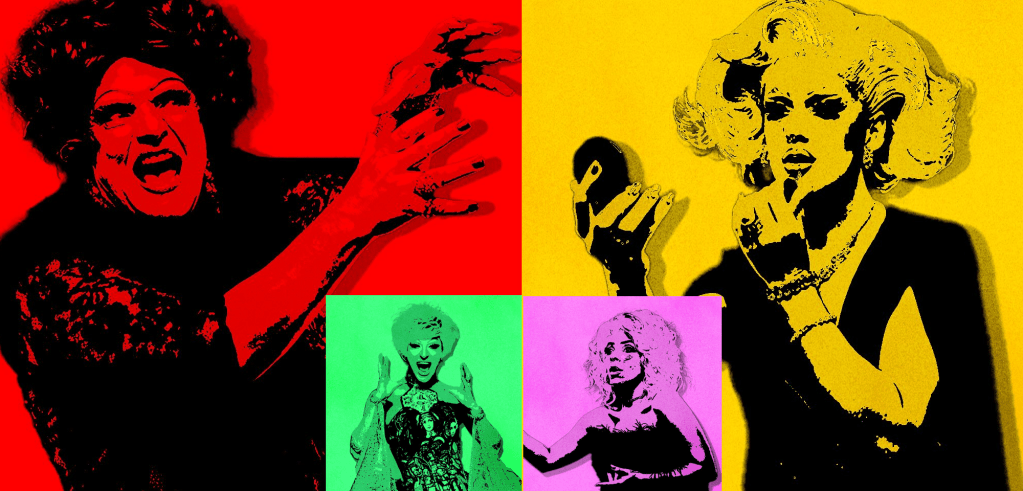
Created by Nicholas Reynolds. Qtopia Loading Dock Theatre. 20-22 Feb, 2025.
The comedy queens have brought their diabolically fun murder-mystery She Slayed to Sydney for Mardi Gras, and it’s not what you expect. Well, it IS what you expect (murderous drag queens + lip syncs – part comedy show, part club act), but it’s also a stealth musical theatre cabaret featuring live singing. Yes, these killer queens croon!
Welcome to Dolly Diamond’s glamorous show at the… um… okay, it’s a loading dock, but she’s determined to make the most of it. With a cast of government-funded charity cases, including the young POUSSAY, the “elderly” Rose Garden, and South African immigrant Jens Radda, Dolly is set to put on a show – no matter what that bastard critic in the front row thinks. The traditionally bitter banter of drag queens takes a darker turn however, when one of them goes from drop-dead-gorgeous to drop-dead!

She Slayed. Photo: Harper. Design: Joel Van Echteld. She Slayed is jam-packed with showtunes to satisfy even the most up-to-date musical theatre fan. The opening number is ripped straight from the current Broadway season: the brilliant “For The Gaze” from Death Becomes Her. As the tight 70-minute show unfolds, we hear hits from Cabaret, Chicago, Annie, and more, plus some hits from gay pop icons like Kylie Minogue, Lady Gaga, and others. Each performer sings live, with the occasional lip sync included. And that’s the key to the show’s success – these drag queens are cold, hard pros who know how to work the crowd.
The murder mystery plot, full of jealousies and dumb-ass jokes, serves as the scaffolding around which these four divas riff. It’s in the ad-libs and crowd interactions that the show really sparkles. When pesky things like sound system issues, underperforming air-conditioning, or wardrobe malfunctions arise, they know how to salvage the moment and generate even more laughs.

Of the many highlights, Dolly Diamond’s audience banter is among the best. Like the seasoned pro she is, she knows how to mock the crowd without turning them against her. Another standout is Jens Radda’s brilliantly absurd rendition of “I Can’t Do It Alone” from Chicago – drag physical comedy at its finest.
With plot twists, a rapid-fire gag rate, and four top-notch drag talents, She Slayed is a definite crowd-pleaser – get your friends, grab a drink, and get a seat.
-
Hadestown (Theatre Royal) ★★★★½

Music, book, and lyrics by Anaïs Mitchell. Australian Premiere. Theatre Royal. 10 Feb – 26 Apr, 2025.
The first time I saw Hadestown, I fell in love. Now that the show has arrived in Sydney, I’ve fallen in love all over again. Hadestown is epic (and ‘Epic II’ and ‘Epic III’ — but who’s counting?).
A folk-rock/New Orleans jazz retelling of two Greek love stories — the ill-fated young lovers Orpheus and Eurydice, merged with the tale of Persephone and Hades. The show is both a romance and a tragedy, earthy in tone but heavenly in song. It’s a perfect blend of elements, elevated to something… mythic.
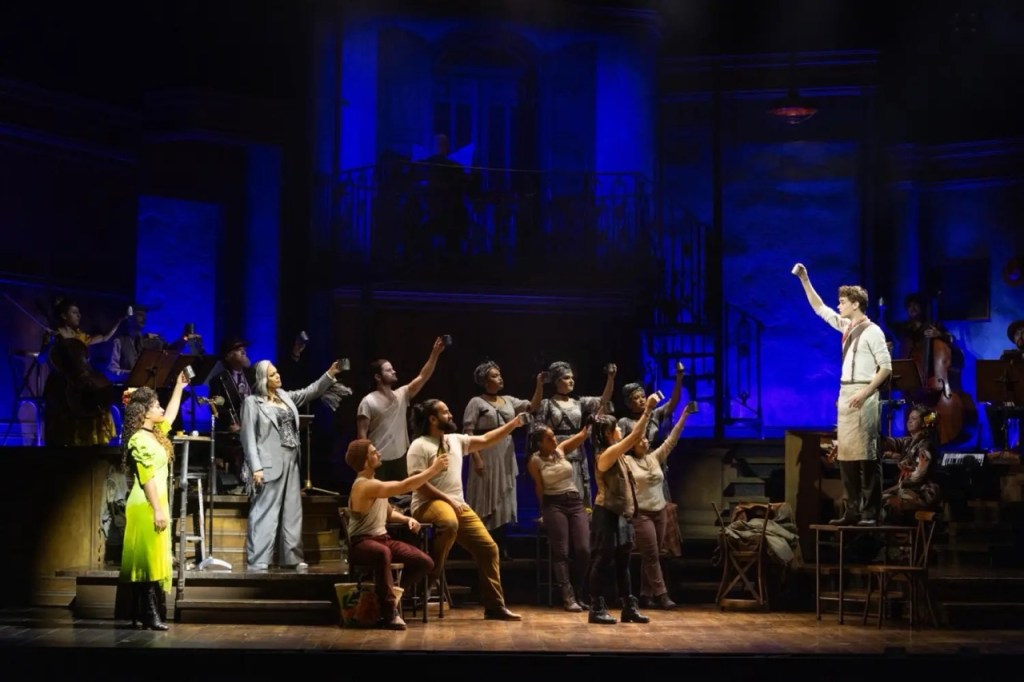
Cast of Hadestown. Photo: Lisa Tomasetti. Hadestown has taken a long road to our stages (wonderfully detailed in Mitchell’s book Working on a Song: The Lyrics of Hadestown — a masterclass in dramaturgy). When I first saw it at London’s National Theatre in 2018, pre-Broadway, the show was longer and subtly different, but its heart was seductively intact. That original cast, featuring Broadway royalty André De Shields, Amber Gray, and rising stars Eva Noblezada and Reeve Carney, was dynamic. I’ve always feared seeing another cast, as these performers were so indelibly fused with their roles — particularly Amber Gray, whose drunken, vivacious Persephone was a real standout.
That view softened with the recent release of the UK live recording, which featured the local cast singing in their natural accents. Orpheus now has an Irish lilt, and Hermes gender-flipped into a Caribbean/British woman. Hearing that recording freed me up and made me excited to hear these songs with a local Australian twang.
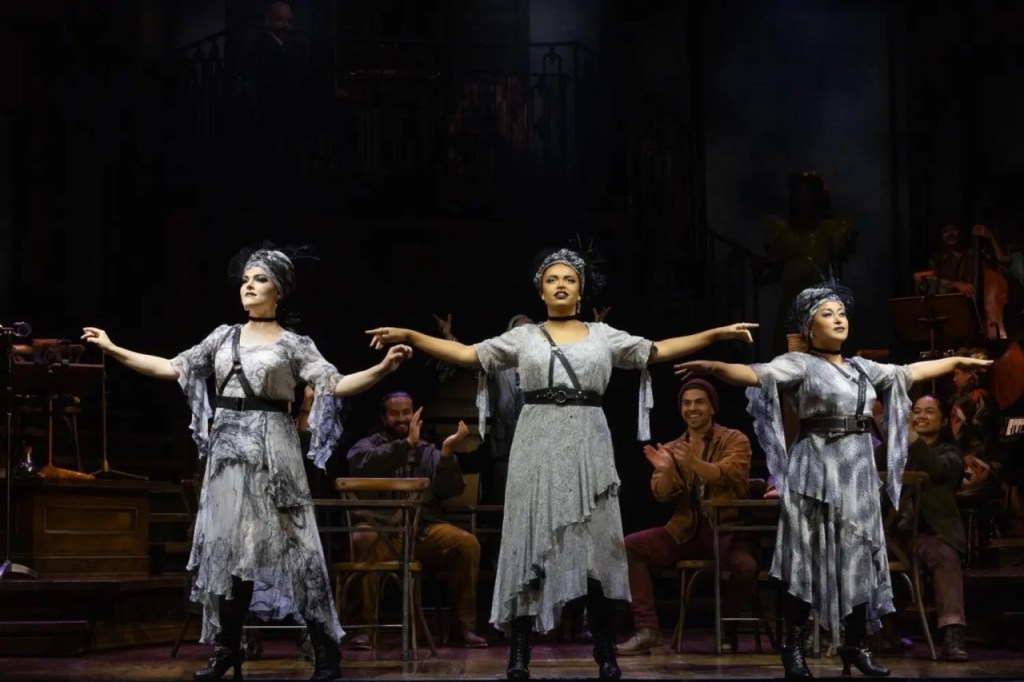
Sarah Murr, Imani Williams & Jennifer Trijo. Photo: Lisa Tomasetti. It’s clear that Sydney’s musical theatre fans are already steeped in Hadestown and primed for the show. The Theatre Royal foyer buzzed with a crowd that seemed more queer and alternative than usual. Mitchell’s music has clearly struck a chord with a fresh audience. And for good reason — these songs are gorgeous. Mitchell’s tunes sweep with romance and show a clear understanding of how to balance a musical, shifting tempos and creating evocative reprises. There is an element of YA angst in Orpheus and Eurydice, mixed with the struggles of longer-term relationships in Persephone and Hades.
I’ve seen the Sydney production twice now (the first time was during previews, so I didn’t review it, but on the second watch, my thoughts were confirmed). Seeing as the show has received a host of rave reviews (and this will be one as well), I’ll dig a little bit deeper than usual. While I’m highlighting a couple of negatives, its coming from a place of ★★★★½ adoration.
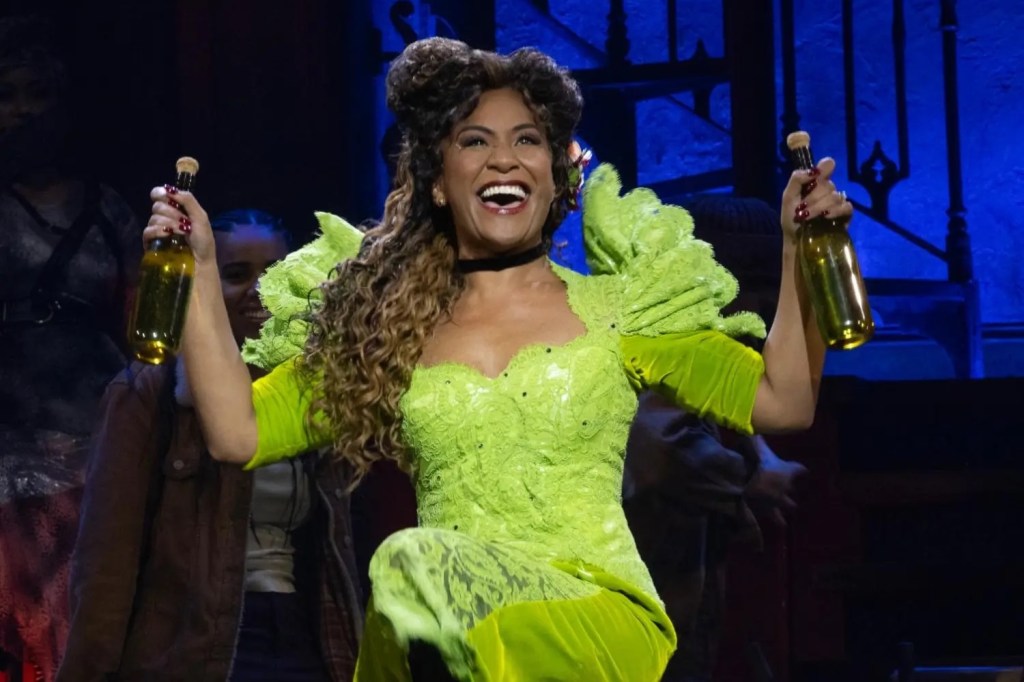
Elenoa Rokabaro. Photo: Lisa Tomasetti. The Australian cast is truly wonderful. Praise the gods that the powerhouse that is Elenoa Rokobaro has finally been given a mainstage role worthy of her talents. Her Persephone is grounded, organic, and beautifully messy. The trio of shady Fates (Sarah Murr, Jennifer Trijo, and Imani Williams) belt and harmonise, adding an extra layer of sass and spite to proceedings.
Adrian Tamburini draws humour from the sleazy and heartless Hades, his rich bass voice filling the room. Devon Braithwaite, who went on as Hades the second time I saw it, brought an extra dash of swagger and sex to the part (dear producers & casting directors — he’s ready for his own leading role now. May I suggest The Wild Party? He’d make a devilishly good Burrs).
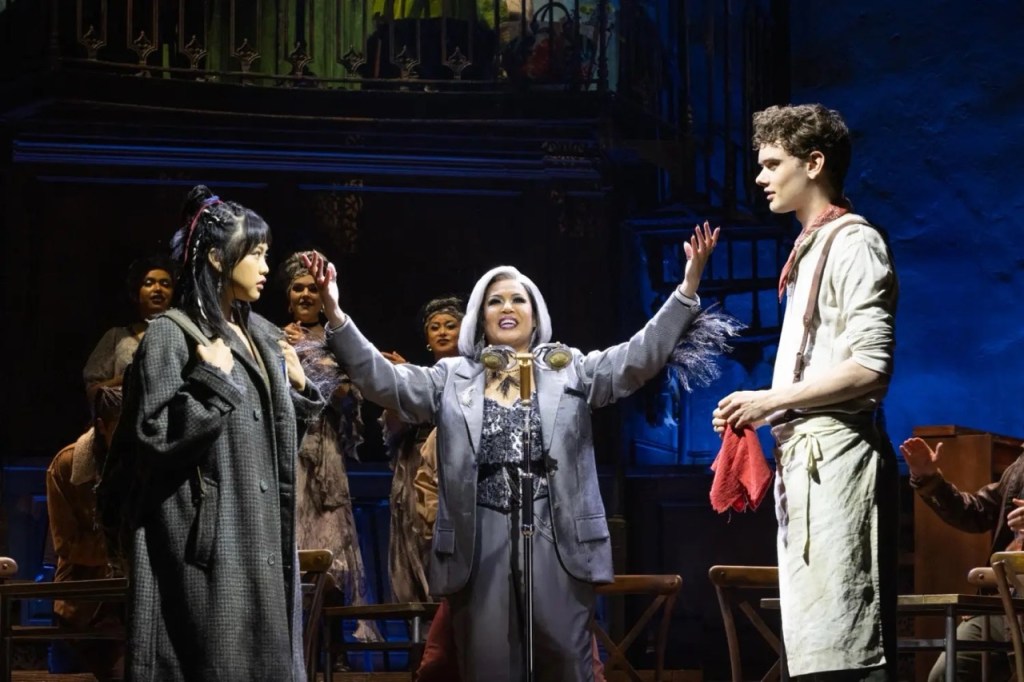
Abigail Adriano, Christine Anu & Noah Mullins. Photo: Lisa Tomasetti. Abigail Adriano’s Eurydice blends vulnerability and strength (a more streetwise version of her Kim in Miss Saigon). Her bigger, more demonstrative style is balanced out by the gentle vibes of Noah Mullins’ Orpheus. Mullins is the real discovery here for me. I never saw the Australian Jagged Little Pill (I’m not a fan of that show), so I had only seen him in a minor role in La Cage aux Folles. His clear tenor voice and boyish charm sell Orpheus as an adorable but callow artist. The character’s dismissive errors are the result of youthful ignorance, rather than rude disregard. Mullins himself was giving me strong Joe Locke (Heartstopper / Agatha All Along) vibes. From the audience’s screams, it’s clear he’s already become a soft-boy superstar.
Things get a bit uneven with our narrator and guide, Hermes. Christina Anu is vocally dynamic, but her acting performance lacked the crowd-rousing charisma required and never fully explored the depths of the role. In a sea of excellence, she comes off as “good.” Admittedly, I’m judging her against the legendary André De Shields who really showed what the role can be… it’s a tough act to follow.
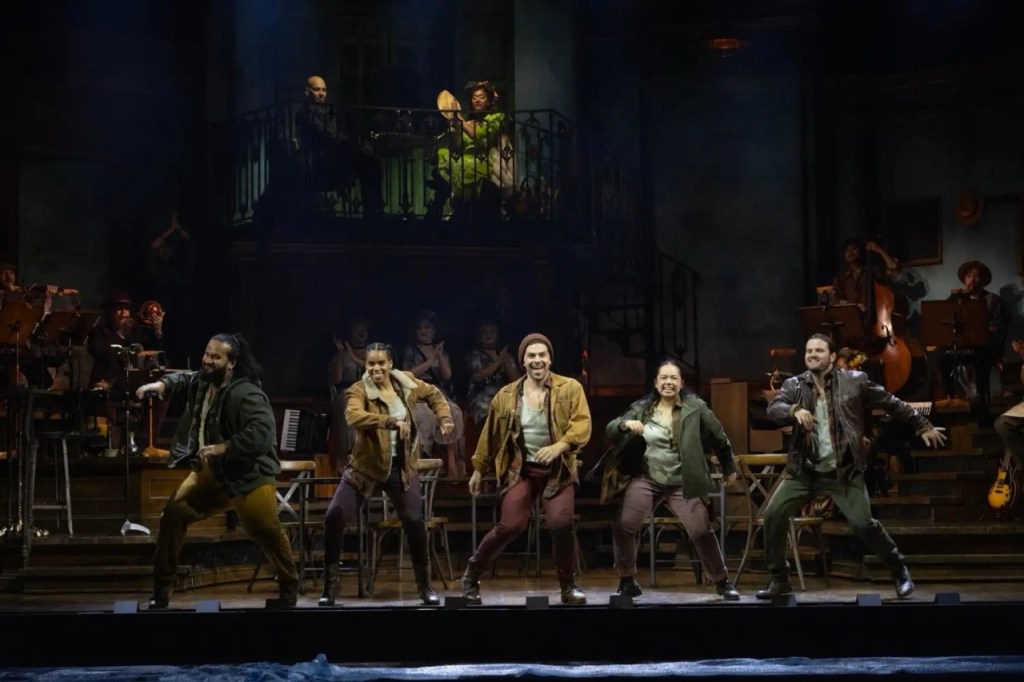
Hadestown Chorus (Devon Braithwaite center). Photo: Lisa Tomasetti. As mentioned, the current UK production lets performers use their own accents, adding texture to the show. The same happens here, though many of the cast slip into “generic American” when singing. It’s a shame. I would have loved to hear the score with full Aussie/Missy Higgins tones.
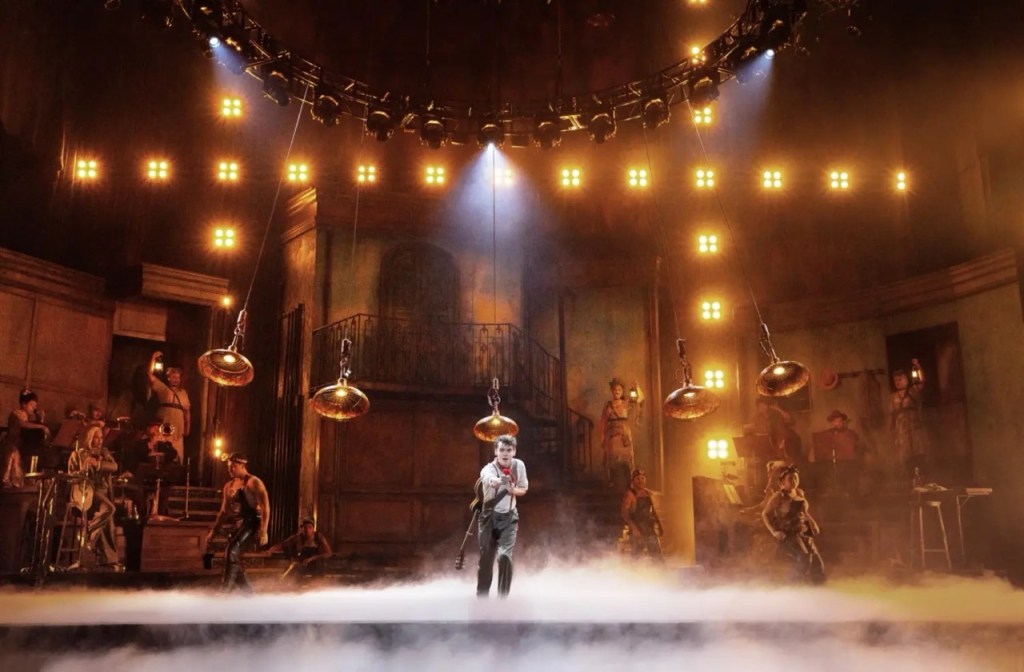
Noah Mullins & the cast of Hadestown. Photo: Lisa Tomasetti. Rachael Hauk’s design continues the “Brooklyn chic” trend of shows like Once and Hamilton — all wood and exposed brickwork, with an added touch of steampunk. A giant rear lighting rig (lighting design by Bradley King) amps up the rock concert drama in a way similar to the recent Jesus Christ Superstar. Like that show, Hadestown balances between a concert/cabaret and a fully-fledged Broadway musical, with plenty of fourth-wall breaks and direct narration. The choreography by David Neumann is suitable, but the dance break in ‘Livin’ It Up On Top’ feels like it’s filling time rather than being impressive in its own right.
It’s still early days for Sydney’s Hadestown, and it feels like the production has room to settle in and loosen up, becoming more organic in its delivery and storytelling. Given time it will relax into its groove more. The score is bulletproof, and this cast does it justice. Even after two viewings I suspect I’ll be heading to the Theatre Royal a few more times. After all, “it’s an old song, but we’re gonna sing it again.”
-
The Pirates of Penzance, or the Slave of Duty (Hayes) ★★★★

Music by Arthur Sullivan. Libretto by W.S. Gilbert. New adaptation by Richard Carroll. Hayes Theatre. 14 Feb – 16 Mar, 2025.
An extra salty adaptation of The Pirates of Penzance by Co-Artistic Director of the Hayes Theatre, Richard Carroll, breathes new life into Gilbert & Sullivan’s timeless comic opera. Respectful yet irreverent, these pirates might surprise you.
Celebrating his 21st birthday, young pirate Frederic (Maxwell Simon) decides to turn his back on his villainous family, led by the loud but soft-hearted Pirate King (Jay Laga’aia), and dedicate himself to becoming an upstanding member of society. The only problem is, he has no idea what that truly means. Fortunately, he finds a guidebook to help him—though, it’s a shame he hasn’t finished reading it yet.
Upon leaving the ship and stumbling ashore, he meets the beautiful and clearly upwardly mobile Mabel (Brittanie Shipway), and the two instantly fall in love. But things are never that simple, especially when Mabel’s father (Trevor Jones) is a Major General who will never accept an ex-pirate as a son-in-law. Plus, there’s the thorny issue of Frederic’s paradoxical birthday to resolve…

Brittanie Shipway, Jay Laga’aia, Billie Palin, Trevor Jones & Maxwell Simon. Photo: John McCrae. It’s all very silly. Not quite Titanique levels of silliness, but still daft in the extreme. Richard Carroll has done an excellent job reworking and refreshing this nearly 150-year-old comedy into a faster-paced, modern show without sacrificing the simple, elegant pleasure of the original. It is, at times, crass and pulls in contemporary pop references, but it’s the juxtaposition of these elements that keeps the laughs bubbling up. To Carroll’s credit, he doesn’t force-feed the audience punchlines either. The show is structured to let the viewers discover the laughs themselves, without missing a beat. It’s good, confident storytelling.
Now, before I go any further, I must inform you that this show commits one heinous crime for which it should be clapped in irons. It underutilises the talented Billie Palin, who plays a range of sidekicks but is the only cast member never to have a featured moment. While almost everyone on stage is pulling double or triple duty (this cast of five is really working hard for that Hayes money), each of them gets a standout number or two. However, Palin is left hustling with a silly moustache for far too long. Give the girl a break!
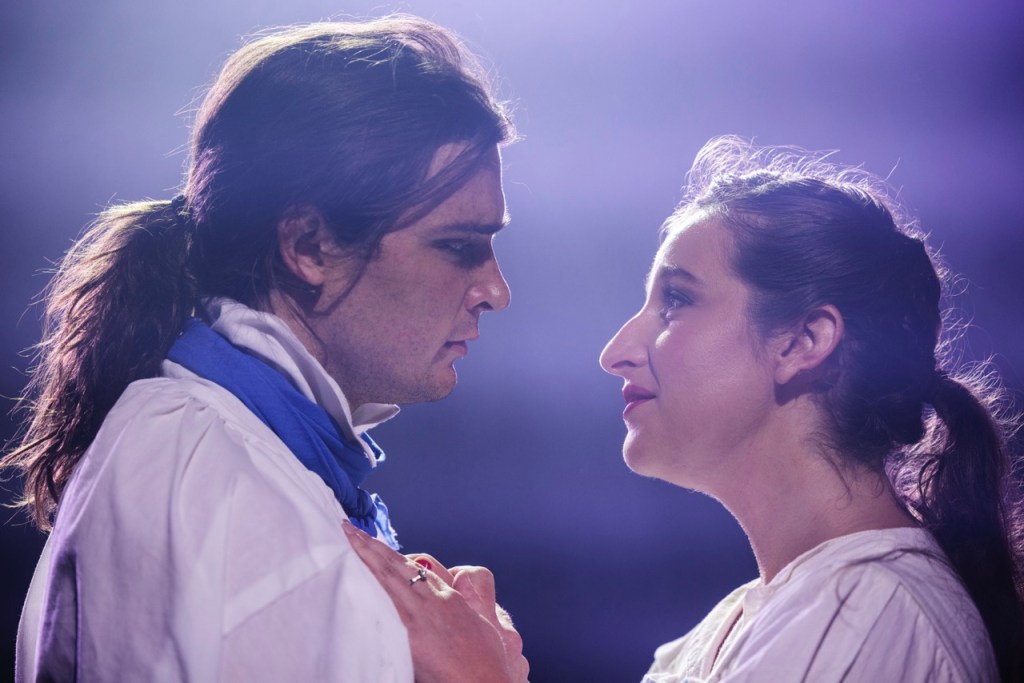
Maxwell Simon & Brittanie Shipway. Photo: John McCrae. On a more serious note, this quintet of talents is so unique in their skill sets, and all are comedic stars. The show is a silly joy to watch. Brittanie Shipway shimmers as both Frederic’s nursemaid Ruth and his love interest Mabel. Her vocal delivery slides from operatic to brassy musical theatre with finesse. Maxwell Simon is foppish and foolish, imbuing Frederic with a doe-eyed, idiot’s charm of his own, while Jay Laga’aia overpowers the stage with personality, which compensates for his, um, less refined singing (sorry, but he is the weakest vocalist on stage).

Brittanie Shipway & Jay Laga’aia. Photo: John McCrae. It is Trevor Jones, however, who steals the show, serving as musical director, accompanist, Major General, and a range of smaller roles. From his succession of quick changes behind the piano to his barnstorming rendition of ‘I Am The Very Model of a Modern Major-General’ (with some brilliant new lyrics that unfold like a Russian Matryoshka doll of gags), he is a one-man cabaret powerhouse who keeps the ship moving.
Together, the five cast members form a whirlwind of activity, rarely leaving the stage for more than a moment to quickly change outfits (some very smart costumes by Lily Mateljan). Nick Fry’s set gives us local pantomime vibes (in a good way), covering the side walls with posters of old productions of The Pirates of Penzance and placing the audience in the action at the front. Yes, if you’re sitting in the onstage seats, you will probably get roped in for some low-key comedy at some point.

Brittanie Shipway. Photo: John McCrae. The Pirates of Penzance holds a very special place in my heart. It was my first ever theatre experience as a child, seeing John English, Simon Gallagher, and Marina Prior in the 1984 production (it was remounted in 1994 & filmed). Sitting in the back of the stadium with my family, it was the first time I fell in love with theatre (I became obsessed with Gilbert & Sullivan afterward). Since then, I’ve seen a number of productions, most of them twee and dull, with the exception of Sasha Regan’s all-male version at Wilton’s Music Hall in London (which I just saw is returning this year). This new version at the Hayes stands among the best.
Purists may baulk at the changes (the original has fallen out of copyright, allowing the creative team to take liberties), but for the rest, this revitalising update keeps the nostalgia intact. Stripping things back to a cast of five makes it perfect for the space at the Hayes Theatre. Then again, if anyone knows the strengths and limitations of the space, it’s Richard Carroll.
-
Cruise (KXT on Broadway) ★★★★★

Written by Jack Holden. Australian Premiere. KXT on Broadway. 12–22 Feb 2025.
Jack Holden’s Olivier Award-nominated one-man play, Cruise, is a time-jumping, bar-hopping treasure that achieves in 90 minutes what The Inheritance takes almost seven hours to accomplish. This play explores the connections between gay generations and remembers the vibrant queer life in Soho, London, during the 1980s as AIDS struck.
Based on Holden’s own experience volunteering for Switchboard, the LGBTQ+ phone helpline founded in 1974, Cruise focuses on the story of Michael, a young man who arrives in London unemployed and eager to explore. Michael recounts tales of his life filled with eccentric characters and thrilling sexual exploits as he discovers gay bars, clubs, and cruising spots. When he meets the tall, butch “Slutty Dave” at a karaoke bar, he falls in love, just as AIDS begins to take its toll on the community.
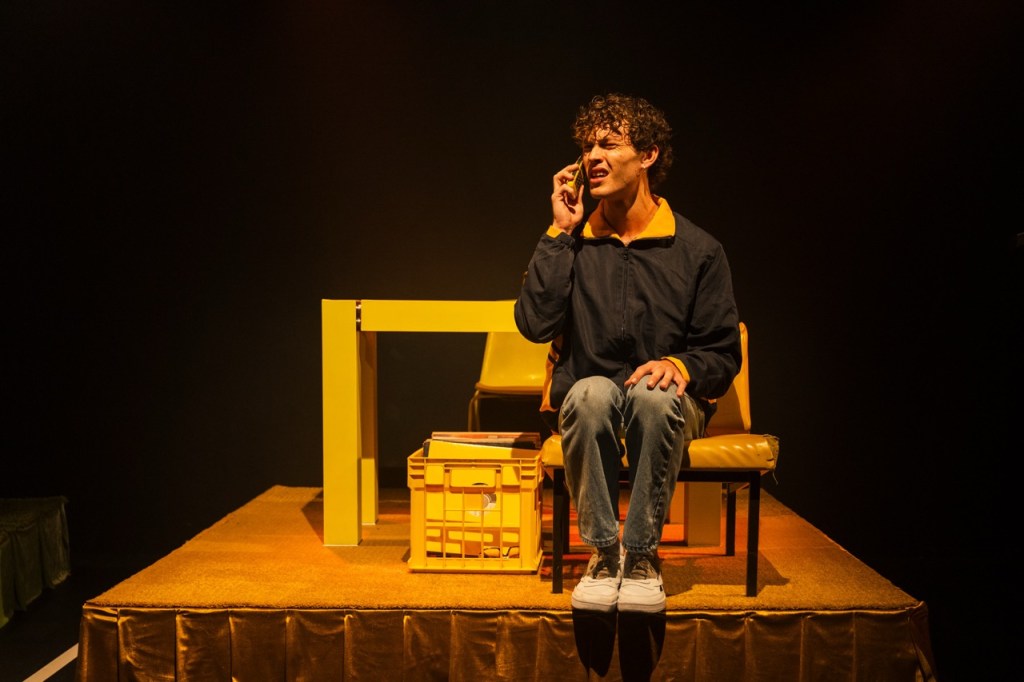
Fraser Morrison. Photo: Abraham de Souza. Yes, it’s another AIDS narrative. Yes, it’s sad. Yes, many of the beats may seem familiar from a dozen other plays, films, and TV shows (such as The Normal Heart, It’s A Sin, Holding The Man, etc.), but the brilliance of Cruise lies not in the story itself, but in how it is told. Rather than simply presenting the narrative, Holden’s script immerses you in the action. Michael’s history has the all the idiosyncrasies of reality making this more impactful than mere fiction.
The performance rests entirely on the handsome, versatile actor Fraser Morrison, who plays a dozen characters, narrating a tale that operates on multiple levels. It’s a complex, multifaceted performance as Morrison shifts and contorts his body to embody each person Michael meets. Through changes in physicality and (occasionally OTT) accent, each character remains clear, distinct, and real. It’s a comprehensive showcase for a young actor and Morrison proves his worth.

Fraser Morrison. Photo: Abraham de Souza. Sean Landis’s direction is vibrant, capturing the essence of various locations and times with subtle shifts. He keeps the action flowing around the traverse staging, ensuring the monologue never feels static as Morrison moves from platform to platform (production design by Chelsea Wheatley) like he’s skipping across Soho’s crowded streets. While some moments are occasionally underlit, and a few sound design choices lack verisimilitude, Landis still gets to the heart of the story.
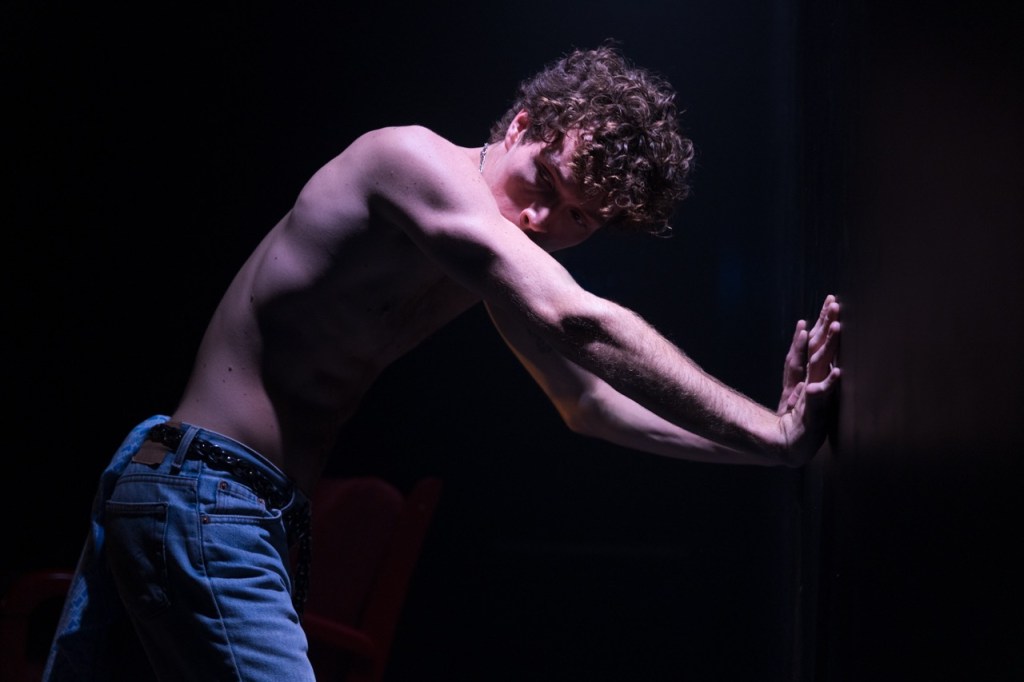
Fraser Morrison. Photo: Abraham de Souza. Despite its sensual title and sex-filled stories, Cruise doesn’t fall into the “gay play” cliches of gratuitous smutty details or nudity. There is a pervasive air of sexual energy, a hormonal thrill of anticipation, that helps power the story along, without the cheap thrills. Low lighting and strobes (lighting design by Tom Hicks) keep things tantalisingly suggestive.
Holden’s script serves as a history lesson about London’s Soho and its surroundings in the 1980s, mentioning real locations and local legends like drag queen Jackie Shit. It presents a world that feels foreign to most of the audience in 2020s Sydney—where gay bars once hid behind blacked-out windows, rather than the open, neon-lit fishbowls we see today. In this era, strangers would go cruising, dogging, and cottaging for furtive sexual encounters before the rise of location-based apps. While many of the venues Holden references are long gone, some still stand as the last remnants of a gay village now overtaken by upscale retail and restaurants catering to the West End crowd.
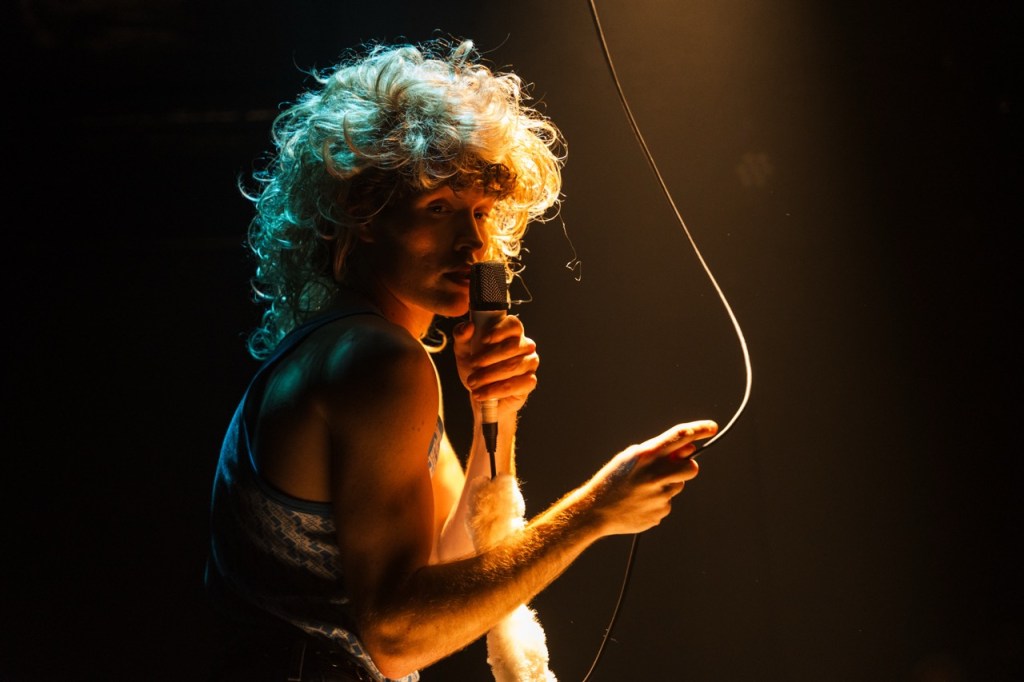
Fraser Morrison. Photo: Abraham de Souza. Weaving through moments of hope and hopelessness, Cruise is a triumph of beautifully nuanced observations and compassionate storytelling. It feels more real and less sensationalistic than other “AIDS plays.” The intricacy of the storytelling—from script to direction, to Fraser Morrison’s stunning performance—makes Cruise far more than what one might expect.
-
Wuthering Heights (Roslyn Packer) ★★★★

Adapted by Emma Rice (from the novel by Emily Brontë). Roslyn Packer Theatre. 31 Jan – 15 Feb 2025.
Iconic and iconoclastic, British director Emma Rice’s Wuthering Heights hits Sydney like a gale-force wind whipping across the moors. Three hours long, darkly funny, with musical interludes and a fourth-wall-breaking genealogy lesson, it lives up to Rice’s reputation for bold, entertaining, and unusual theatre. It’s unfortunate that no one seems to be turning up!
When I saw Wuthering Heights, a few days after its opening but early in its three-week run, things looked dire. Despite a host of four-star, very positive reviews, the Roslyn Packer was barely one-quarter full. Is it a lack of interest or a lack of advertising that’s scaring people away from this admittedly challenging show? Or is it bad timing—at the end of the Sydney Festival, even the most adventurous theatre-goer might be tired and cash-strapped? Either way, it was sad to see. Thankfully, the cast didn’t seem dampened by the lack of local enthusiasm—the show was fantastic!

Original Wuthering Heights cast. Photo: Steve Tanner. This Wuthering Heights has a very literary and sly sense of humour that is disarming (not unlike the musical Natasha, Pierre & the Great Comet of some year I can’t remember). It takes a fraught, insanely toxic romance and unapologetically points out all its faults. Heathcliff and Catherine are simply the worst people you’re likely to meet. A quick primer at the start reminds us that many of the characters have very similar names, and most end up dead. “What did you expect?” asks the ensemble with a shrug.

Original Wuthering Heights cast. Photo: Steve Tanner. Don’t come looking for a literal presentation of the gothic text. Emma Rice has deconstructed the staging, reducing the grand houses to an odd door or window, always letting the outside world into the space. Two simple wooden chairs have been converted into animalistic thrones, adorned with antlers and lights. The band—this is a play with songs—sits at the rear, always in view. When the cast aren’t on stage, they spend most of their time watching from chairs just off to the side, joining in as a “Greek chorus.” The characters speak directly to the audience—there is no pretence of a fourth wall.
John Leader’s Heathcliff is cold and cruel, yet highly engaging. Stephanie Hockley’s Catherine is manic and unpredictable. Their “love” is more toxic than a Coalition energy policy. For me, Nandi Bhebne (as the leader of The Moors, the show’s Greek chorus) was the key. She holds the audience’s hand, acts as a moral compass, and drives the story along. Her “three years later” dance was one of the show’s funniest little moments. Rebecca Collingwood plays pure comedy, both as the young Isabella Hilton and Hilton Heathcliff.
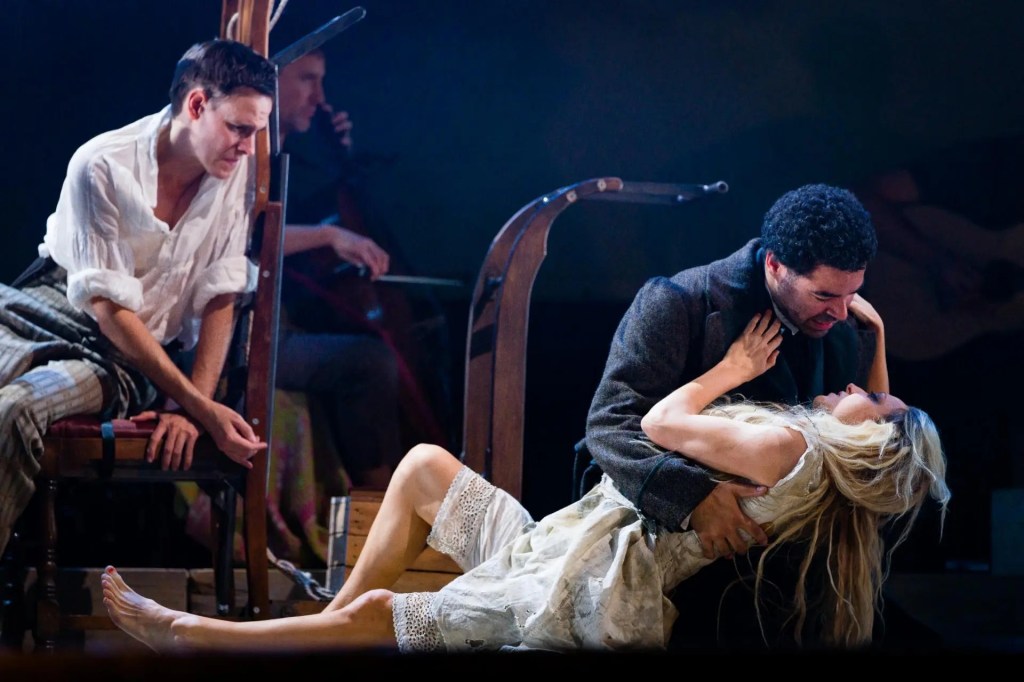
Original Wuthering Heights cast. Photo: Steve Tanner. Ian Ross’s music taps into a dark, folk-rock space that reminded me of Tori Amos and Fiona Apple (though that may just be my age speaking). Vicki Mortimer’s costumes play with classic silhouettes in recycled and patchwork fabrics, while her set ingeniously works wonders with suggestion.
I believe Emma Rice is one of the best theatre-makers to come out of the UK in the last 20-30 years. Her adaptation of Brief Encounter (which toured here in 2013) is stunning. She gave Cynthia Erivo one of her first major roles in an adaptation of The Umbrellas of Cherbourg (my friend Alan’s favourite show). And her adaptation of Romantics Anonymous is one of my all-time favourite musicals (would someone please produce it here? It’d be perfect for the Hayes!). She blew through Shakespeare’s Globe like a breath of fresh air (and was sacked for it—oh, the theatre drama). While I don’t think this Wuthering Heights is quite up there with her best work, it’s still a great example of a fierce creative mind at work.

Original Wuthering Heights cast. Photo: Steve Tanner. If you’re a theatre-maker, go see Wuthering Heights immediately—it’ll expand your horizons just a bit more. If you’re a theatre-lover, go for the invention and fresh take on a classic. If you’re a more casual theatre-goer, I’d say give it a shot—it may be a bit too much for some (a few people didn’t return after the interval when I went), but cheap rush tickets seem easy to get at this stage. If you’re a purist of the book, well, it’s hit and miss whether you’ll enjoy this radical take on the material. But either way, no one I know is making theatre like this, on this scale, in Australia, so let’s enjoy it while we can.
-
4000 Miles (Sydney Theatre Co) ★★★½
Written by Amy Herzog. Sydney Theatre Co. 8 Feb – 23 Mar, 2025.
The gentle intergenerational drama 4000 Miles sees a grandmother and her grandson dealing with death in their own ways. But forget about them—the reason you’ll want to see this is Shirong Wu’s show-stealing performance as Amanda, a self-confessed “slutty” New York art student, which breathes life into the sedate (and strangely knotty) plot.
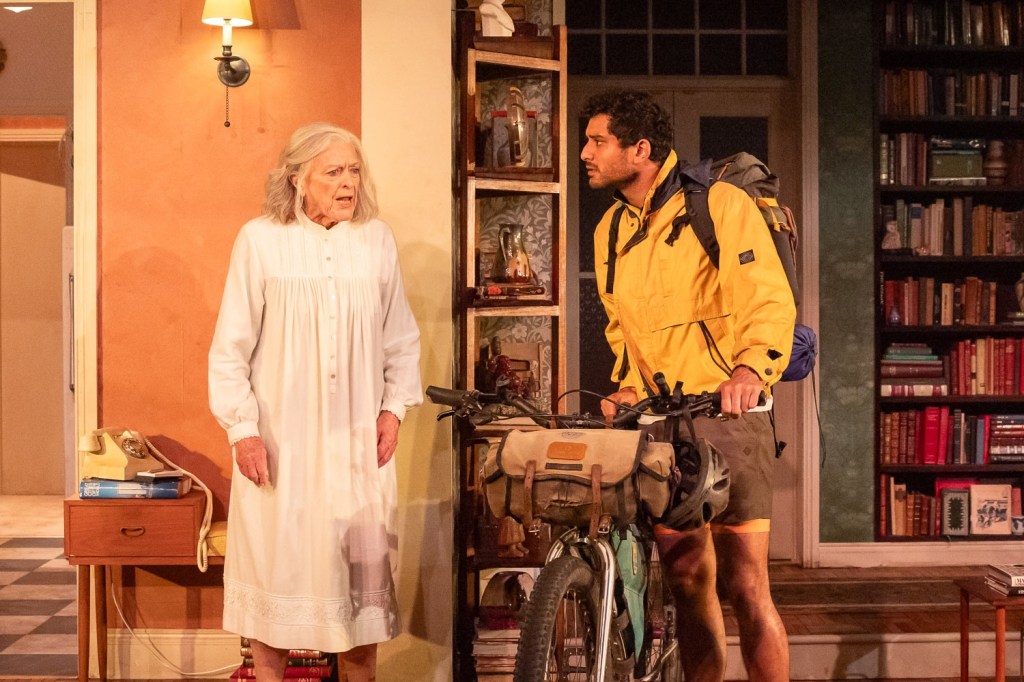
It’s 3 am, and Leo (Shiv Palekar) has turned up at the New York apartment of his grandmother Vera (Nancye Hayes), with his cross-country bike and bags. He’s ridden coast-to-coast with his best mate and needs a place to sleep, but Vera is more concerned about the phone calls she’s received from Leo’s mother, worried about him. Over the next few days, Leo and Vera settle into a new, uneasy dynamic, dancing around family issues and the question of what Leo is doing with his life.
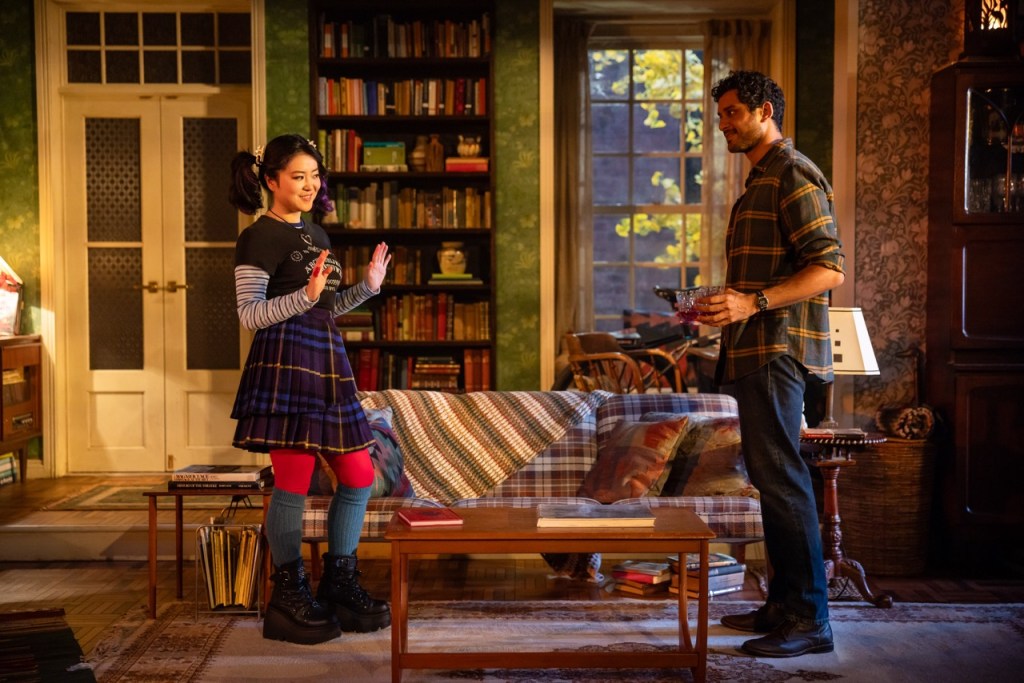
Shirong Wu and Shiv Palekar. Photo: Daniel Boud. The first thing to note is that 4000 Miles is funny. It draws solid laughs from classic intergenerational moments (Vera’s bad memory, or Leo bringing girls back to the apartment). They’re both counter-culture spirits in different ways: Vera was a card-carrying communist, while Leo rejects modernity and wants to spend time with nature. But they’re both struggling with connection after suffering loss. The widowed Vera’s only regular interaction with people is her daily conversation with her frenemy across the hall—they call each other every day to make sure they’re still breathing. Leo is dealing with a whole host of problems like the fact that his girlfriend Bec (Ariadne Sgouros) has broken up with him, as well as family issues stemming from multiple sources.
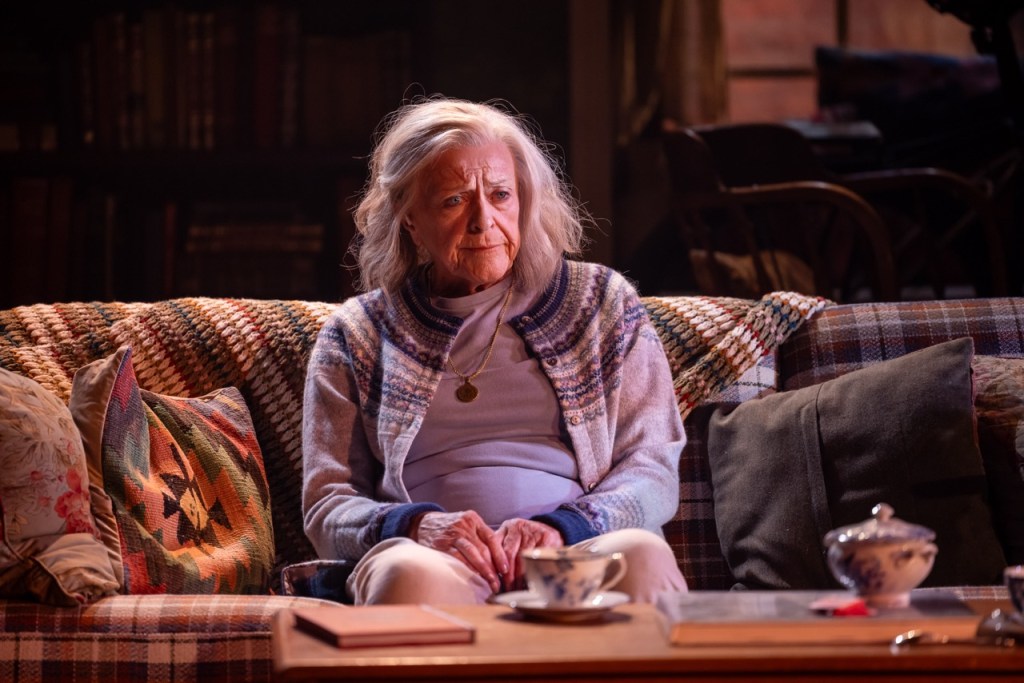
Nancye Hayes. Photo: Daniel Boud. Nancye Hayes is splendid as the no-nonsense Vera, struggling with her own creeping frailty. Hayes knows how to land a punchline and draw a giggle with a simple raise of the eyebrow but is equally skilled at bringing it all back to the heart. Her Vera is played large, but the small emotions are clear. Against her, Shiv Palekar looks like a lanky giant, making them a wonderfully odd couple. The always engaging Ariadne Sgouros gets to play things straight for a change, showing that she’s not just great at insane comedy but also at tapping into the genuine humanity of her roles.
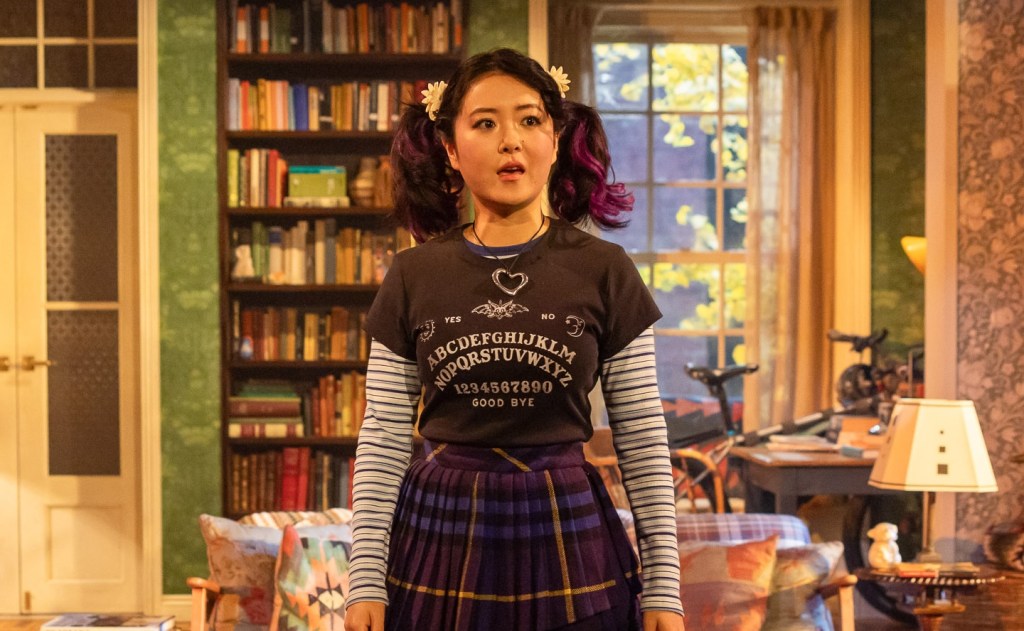
Shirong Wu. Photo: Daniel Boud. However, it’s Shirong Wu who blows into the play like a force of nature that truly made my night. Her performance as Leo’s amorous fling Amanda was completely pitch-perfect. A one-scene wonder that injected new life into the play. I was left wanting more.
I appreciate the unforced tone of Herzog’s writing, which draws the audience in rather than throwing out obvious clues and exposition. It gives space for the stage creatives to bring their own nuance and skill to the story. But for me, this production felt more presentational than real, lacking some of the Pulitzer-prize-nominated depth the play is known for.
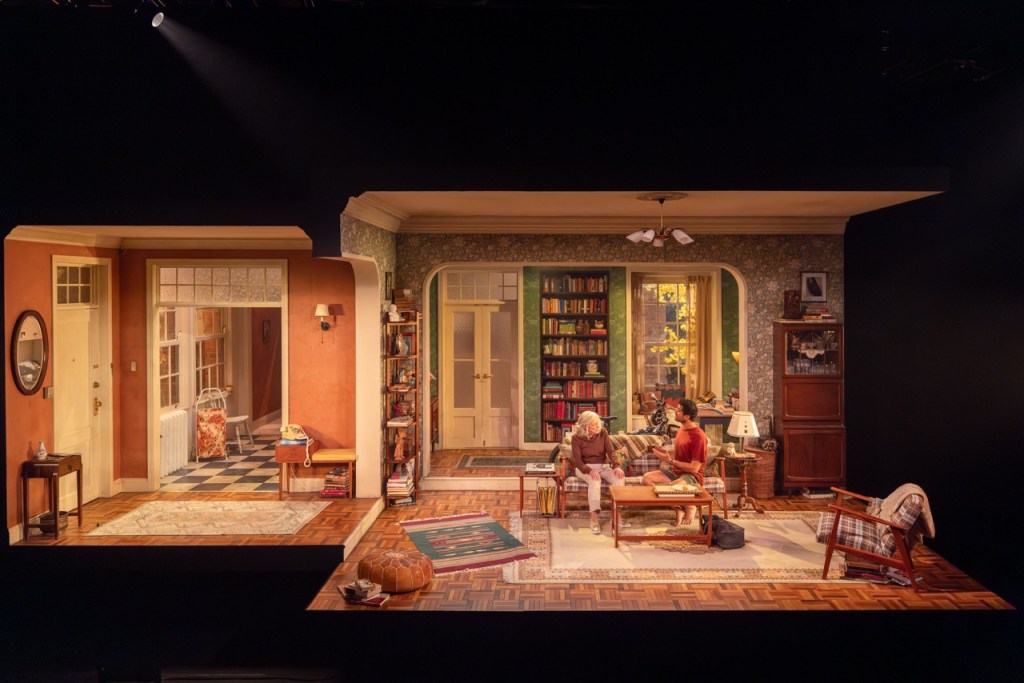
Nancye Hayes and Shiv Palekar. Photo: Daniel Boud. As the play progressed, though, small things began to bother me and pull me out of the story. Jeremy Allen’s intricate, layered set design looked more like a single-floor English village cottage than a rent-controlled, upper-floor Greenwich Village apartment with downtown views to me. The moody scene changes, accompanied by luscious compositions by Jessica Dunn, seemed to be telegraphing emotions I wasn’t experiencing. Scenes felt tonally dissonant (a major third act revelation in particular), and there was a lack of chemistry between some players on stage. The American accents (it’s always the accents) seemed to be getting in some performers’ way—creating emotionally flat readings. I seemed to be out of step with the show’s rhythms.
So I’m frustrated by this one, but it’s the frustration that comes from seeing something that’s almost-very-close-to-being-just-right, and that’s a very personal judgement, your opinion may vary. It was like there was a pebble in my shoe, stopping me from keeping pace with the play’s stride. I wonder if a second viewing would be totally different for me? 4000 Miles is definitely worth watching, so buy a ticket and see for yourself – then come back and tell me I’m wrong/right.
-
Feeling Afraid As If Something Terrible Is Going To Happen (Sydney Opera House) ★★★★½

Written by Marcelo Dos Santos. Sydney Opera House. 5-23 Feb, 2025.
Feeling Afraid As If Something Terrible Is Going To Happen is less a play about a stand-up comic than it is a magic show in its own right. Layers of storytelling build upon one another as an unnamed comedian (Samuel Barnett) becomes the most unreliable of narrators. Tragedy… comedy… same thing really.
Dating is awful. Everyone has bad dating stories, and our comedian has some pretty terrible ones involving blood and other bodily fluids. But they make for great material for his stand-up routine. The quirks and perils of dating apps, casual sex, and deep-seated neuroses keep things moving, much like any stand-up comedy show would. Then, he meets the perfect man. He’s too perfect. American, great body, a bit self-serious—but that’s manageable. The catch? The American never laughs at his jokes… this isn’t going to end well.

Photo: Daniel Boud. One-act monologues are a tricky form to master, and for every great one (Suzie Miller’s Prima Facie, Simon Stephens’ Seawall, Phoebe Waller-Bridge’s Fleabag, Dennis Kelly’s Girls & Boys, to name a few recent examples), there are easily a dozen self-indulgent or flawed ones. There’s no room to hide in a monologue; you see the cracks instantly.
Which is why I refer to Feeling Afraid… as a magic show. It manages to do a lot of things you don’t instantly notice while you’re watching it. Dos Santos’ script is tight—really tight. It weaves between observational comedy, deconstruction of stand-up, and psychological relationship drama, all while subtly manipulating you every step of the way. What starts off as a rehearsal for a stand-up routine, full of stops and revisions, gradually evolves into a rom-com. From there, it shifts into dramatic territory, and the ending… well, is it real? Or is the comedian hiding from reality?

Photo: Daniel Boud The gag rate is deliciously high, with a rapid-fire patter that’s almost hypnotic. Jokes about gay men and relationships are well-worn, but they’re just the opening salvo in a show that ventures into more intriguing territory. While elements of the story are very British-centric (in Australia, we’re not as obsessed with TV comedy panel shows or the nuances of London suburbs), there are nice localised touches (“Tories, or as you confusingly call them, ‘Liberals’…”). It’s clear that Dos Santos knows this world of rising UK comedians intimately. His deconstruction of how stand-up works may not carry the full emotional weight of Hannah Gadsby’s Nanette, but it serves a different purpose here.
Samuel Barnett has always been a talented comedic actor, but this performance takes things up a level, both in terms of the laughs and the sadness lurking beneath. Comedy is harder than drama, sure, but try playing both at the same time—this goes beyond a simple “sad clown.” Barnett walks the tightrope of seeming loose and improvisational, only to shift emotionally with a subtle lighting change. It’s a fantastic performance, skillfully honed. Side-note: I’d love to know what gay comedians think of the show. Write in.
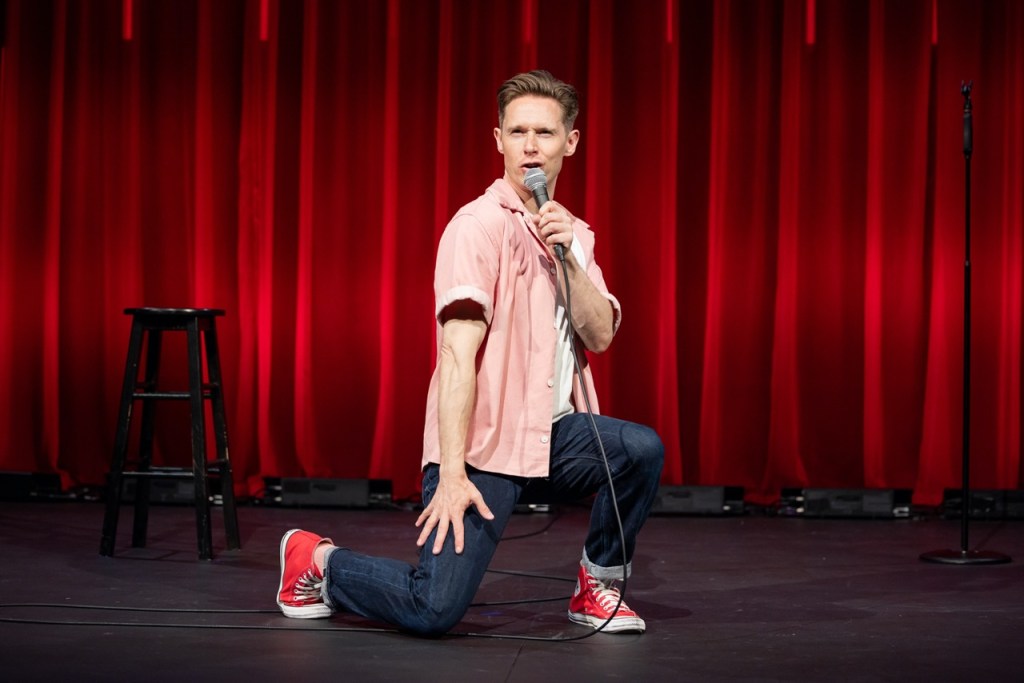
Photo: Daniel Boud The other standout elements of Feeling Afraid… are the excellently executed technical details. Director Matthew Xia fills the practically bare space with movement and subtle shifts that add resonance as the show progresses. The microphone itself becomes a psychological crutch, while the boundaries of the stage transform into barriers to be broken. Elliot Griggs’ lighting becomes a character in its own right, snapping us between locations and hinting at the emotional tone. Max Pappenheim’s sound design literally takes the air out of the room.
At just under 70 minutes, Feeling Afraid As If Something Terrible Is Going To Happen manages to be multiple things at once, and I believe it would even withstand multiple viewings—I would be keen to rewatch and start to dismantle it further. It speaks to the general creeping fear of modern love, the art and commerce of comedy, the joys and traumas of gayness, and, most excitingly for me, the beauty of theatrical construction. The key is that it doesn’t shove these ideas down your throat; it simply does them while you’re laughing and having a great time. It’s magic.
-
Subscribe
Subscribed
Have a WordPress.com account? Log in now.

