-
Welcome to Cultural Binge

The rating system is simple:
★★★★★ – Terrific, world-standard. Don’t miss.
★★★★ – Great, definitely worth seeing.
★★★ – Good. Perfectly entertaining. Recommended. Individual mileage may vary.
★★ – Fine. Flawed and not really recommended, but you may find something to appreciate in it.
★ – Bad (& possibly offensive).
See more reviews over at The Queer Review.
Instagram: @culturalbinge
Substack: culturalbinge.substack.com
Email: chad at culturalbinge.com
-
Amber (Old Fitz) ★★★½

Written by Nikita Waldron. World Premiere. Old Fitz Theatre. 28 Mar – 11 Apr, 2025.
Amber is a rom-com, and like all the best rom-coms, it sneaks in some darker material on the way to its HEA (or HFN, at least).
Amber (played by writer Nikita Waldron) is obsessed with romantic comedies, from the films of Richard Curtis and Nora Ephron to Sex and the City (yes, even a bit of And Just Like That), not to mention her romantasy crush… Edward Cullen from Twilight. She has it all planned out. But while she waits for that perfect first kiss, she might be missing out on the best things real life has placed in front of her… at least that’s how she remembers it all happening.
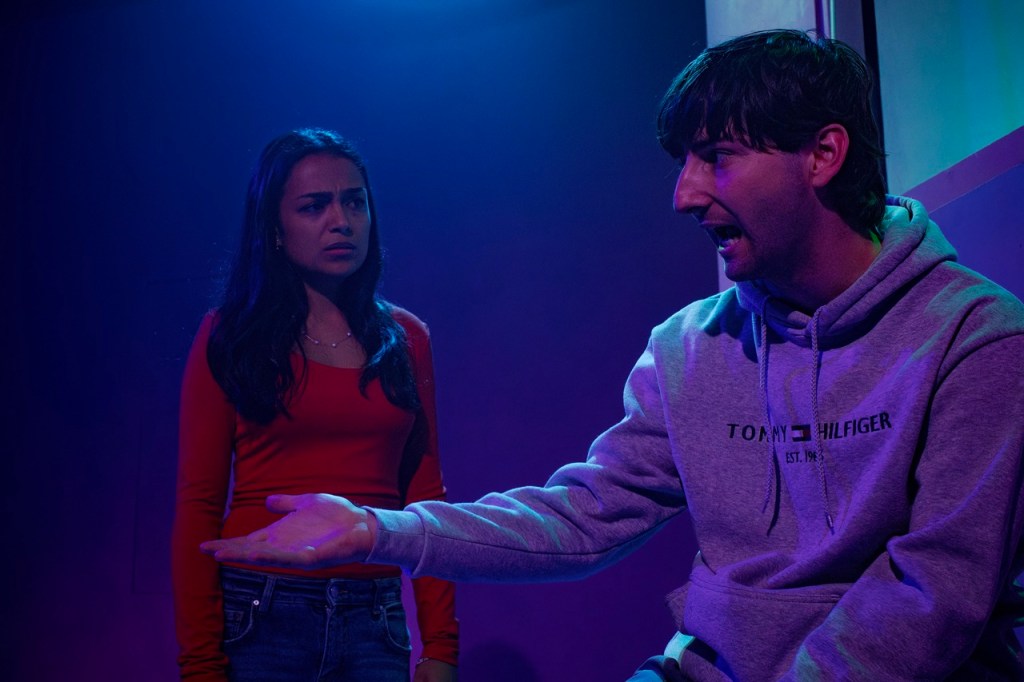
Nikita Waldron & Harry Stacey. Photo: Phil Erbacher. What starts off as a cute, teenage scenario quickly takes on more dimensions in Waldron’s funny and nuanced script. For all the pop-cultural references and pastel pink shades around her, Amber is actually processing real pain. Her narration is unreliable, full of wishful thinking and last-minute corrections, as she recounts the story of meeting the boy who would become her first great love, then losing him, and then looking for some kind of third-act resolution.
But life doesn’t work like a story, and real people deal with their emotions in plenty of unpredictable and strange ways. From deliberately chasing the wrong guys to making bad drunk decisions, Amber grows up into a messier world than her teenage self would recognise. Waldron’s script does a great job of putting us into Amber’s head, including hiding truths from the audience that Amber herself doesn’t see.
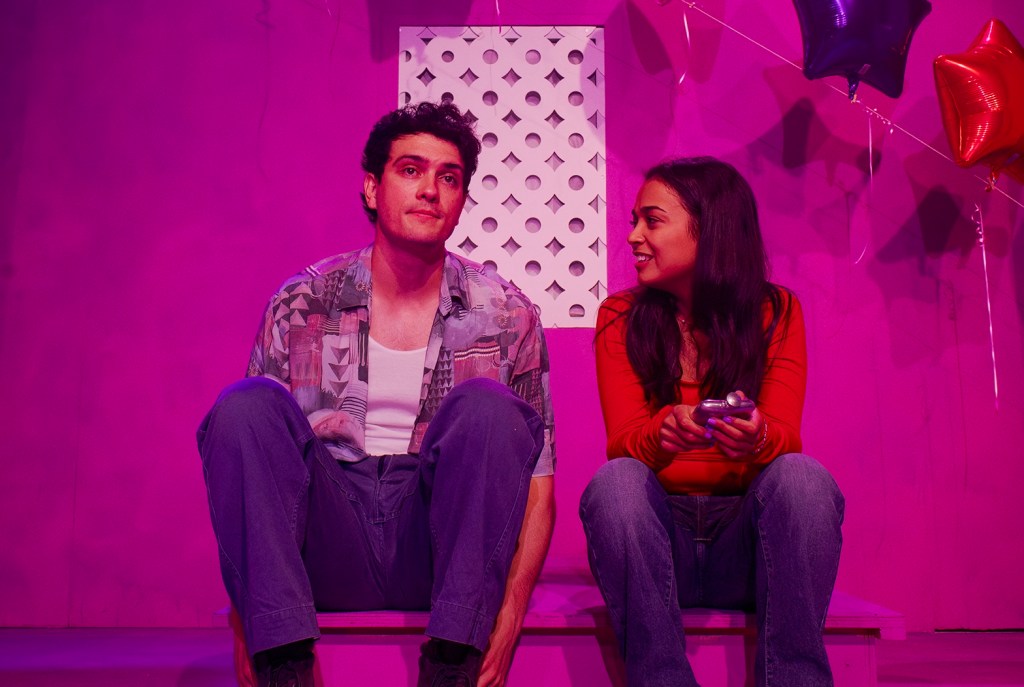
Kurt Ramjan & Nikita Waldron. Photo: Phil Erbacher. Waldron also has the acting chops to pull off the role, taking Amber from an awkward teenager through her messy twenties and beyond. She has written a funny, complex role for herself that plays into her own skills for gentle comedy.
Director Mehhma Malhi (who excelled with All Boys at KXT on Broadway – reuniting with two of the cast here) brings some nice directorial touches to the script, showing again that she has a strong grasp on character dynamics. Simple but effective lighting cues (lighting by Izzy Morrissey) and sound design (by Madeleine Picard) convey a lot of meaning. To the whole production team’s credit, there are subtle touches to Amber that don’t scream for your attention but gently guide the audience where it needs to be.

Ashan Kumar & Nikita Waldron. Photo: Phil Erbacher. In an interesting twist, the four male characters are played by three actors (Harry Stacey, Ashan Kumar, and Kurt Ramjan), with each actor playing one of Amber’s suitors and also collectively playing the guy Amber is in love with—Luca. The power of this only becomes apparent later, as Amber admits she is trying to find a guy who reminds her of Luca, with each man representing a part of his personality she’s attracted to. Together, as Luca, the three actors form a kind of shifting memory, or dreamlike version of a real person. It’s simple but highly effective.
At the end of the day, though, this is a romance, and as such, the heroine must stumble, learn her lesson, rise, and reach her romantic finale. This is where the tropes of the genre begin to reassert themselves, from Amber’s unlikely publishing success to her realisation that love is more complicated than she imagined. Happily ever after? We’ll see.
-
Bloom (Sydney Theatre Co) ★★★
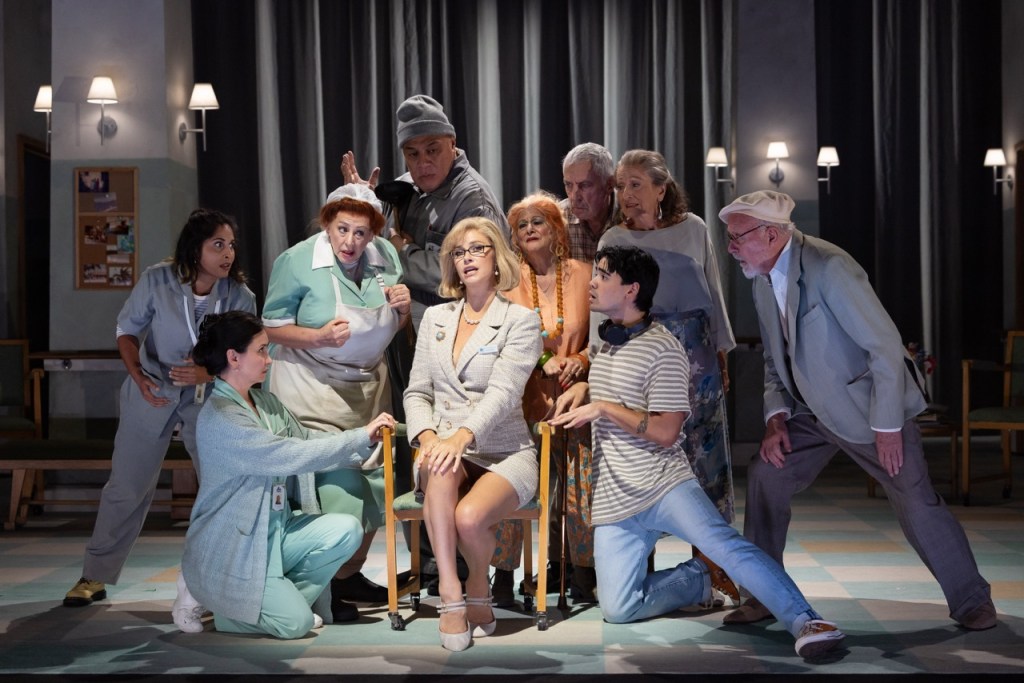
Music by Katie Weston and Lyrics by Tom Gleisner. Book by Tom Gleisner. Sydney Theatre Company. Roslyn Packer Theatre. 29 Mar – 11 May, 2025.
Tom Gleisner & Katie Weston’s Bloom arrives in Sydney following its well-reviewed premiere at Melbourne Theatre Co in 2023. A brand-new, homegrown musical is always worth supporting, particularly on the scale of a mainstage production. We get so few. However, I can’t help but feel this bloom has been picked a bit too soon.
Finn (Slone Sudiro), a listless university student, is looking for a place to live and thinks he’s stumbled upon a great deal: living and working at Shady Pines… sorry, the Pine Grove Aged Care facility. The flyer he has promises room and board in exchange for light domestic duties, helping out the team looking after elderly residents, including the reluctant firebrand Rose (Evelyn Krape), the absent-minded thespian Roland (John O’May), the lonely artist Lesley (Jackie Rees), old mechanic Doug (John Waters), and others. While the scheme may be the legally dubious brainchild of corporate penny-pincher Mrs MacIntyre (a show-stealing Christie Whelan Browne) — and loathed by the facility’s well-trained and underpaid professional staff — Finn forms new bonds with the collection of oddballs he’s forced to live with, and maybe something more.
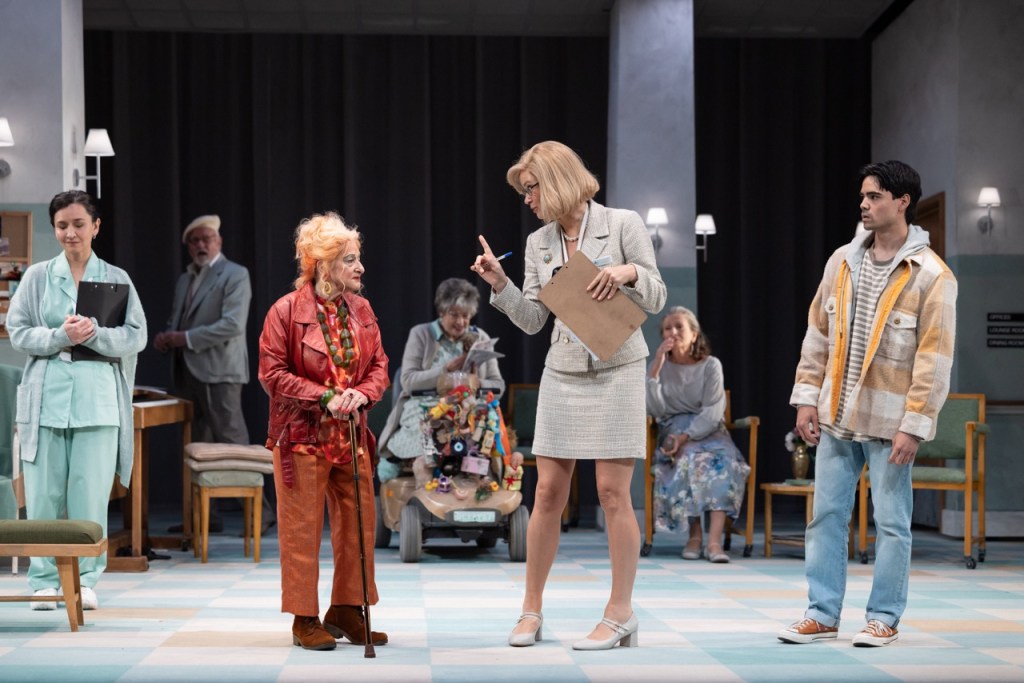
Front: Evelyn Krape, Christine Whelan Browne & Slone Sudiro. Photo: Daniel Boud. Bloom is at its best when it lets the humour cut close to the bone. Christie Whelan Browne deliciously dissects the business of aged care as the facility administrator, more interested in balancing the budget than actually providing appropriate services. Easily the best vocalist and comedian in the cast, she lights up her scenes with the kind of precision we expect from musical comedy talent. Her scenes play into Tom Gleisner’s comedy (with a distinct Frontline edge to some of the jokes), and her delivery is spot on. She may be a pantomime villain, but she milks it for all its worth.
Without her, the show drifts into twee comedy and obvious plot points. Most of the characters are wafer-thin constructs (one-note jokes with a touch of tragic backstory — like the kleptomaniac Betty (Maria Mercedes), whose long awaited son has yet to visit). Or there’s the romance subplot that shuffles along to the obvious conclusion, completely ignoring the real sex lives of older people in care, plus there’s an overly convenient (if cute) resolution you’ll probably clock a mile off. It’s old-school sit-com fodder that would work as the B-plot to an episode of The Golden Girls.
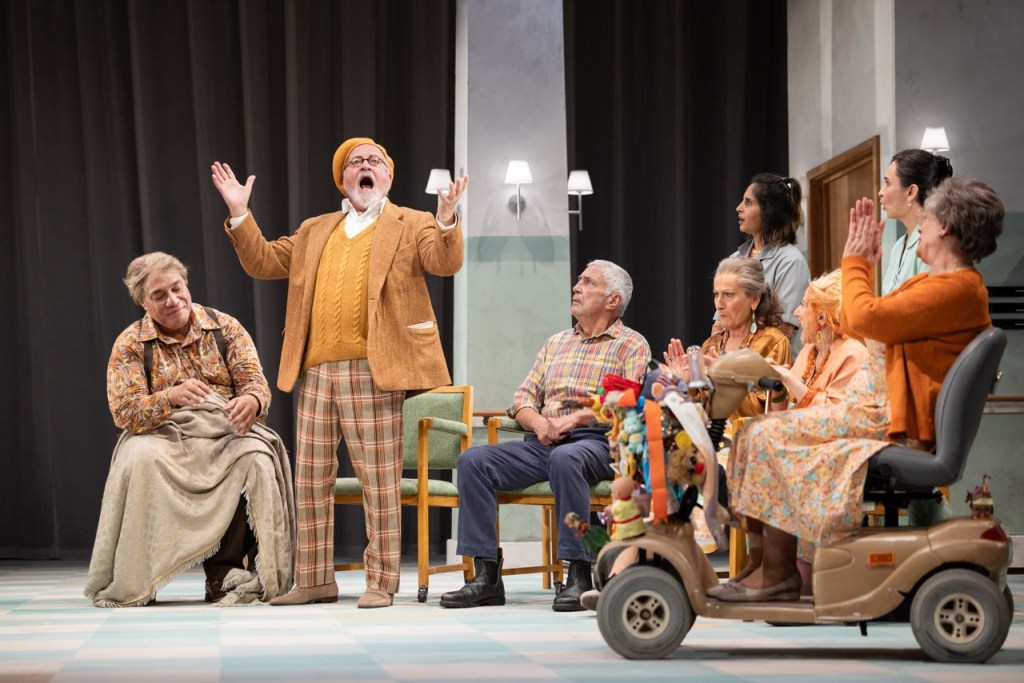
Eddie Muliaumaseali’I, John O’May, John Waters, Jackie Rees, Vidya Makan, Evelyn Krape & Maria Mercedes. Photo: Daniel Boud. The script, while gently amusing and structurally sound, struggles to maintain clarity in its message. On one hand, it laments the lack of respect and support given to professionals working in aged care, yet on the other, it suggests an amateur could genuinely become a therapist with no training. The play sidesteps the morally complicated issue of whether Mrs MacIntyre might actually have a point (if the budget can’t be settled, the whole facility may be shut down) in favour of presenting her as a simplistic “corporate villain.”
Vocally, the cast ranges from acceptable to good, with some of the older cast’s voices straining to hit their notes. Only Whelan Browne truly delivers professional musical theatre excellence. They’re all slightly hampered by an overly loud band at the rear of the stage, which drowns out some of the lyrics when the energy gets too high.

Slone Sudiro. Photo: Daniel Boud. Thankfully, a cast this warm and endearing helps paper over the inadequacies of the material. It’s hard to dislike John Waters or Evelyn Krape, no matter what they do. Slone Sudiro has a slacker’s charm that works well alongside Vidya Makan’s frustration (as young professional carer Ruby), and Christina O’Neil’s portrayal of the overworked but earnest Gloria.

Evelyn Krape, John Waters, Slone Sudiro, Christina O’Neill, John O’May, Maria
Mercedes & Jackie Rees. Photo: Daniel Boud.The multi-layered set (by Dann Barber) is almost too convincing with its depressing, claustrophobic feel. The staging’s one breakout moment provides a much-needed respite from the teal/gray walls but comes quite late and is gone too soon. Andrew Hallsworth’s choreography shines in some brilliant moments, though it is otherwise limited to “old people shuffling in time.”
And the songs… Most of them have first-base melodies and predictable rhymes, like listening to Christian easy-listening radio in the ’90s. They’re pleasantly dull, or at worst, actively distracting from the scene. One key moment is completely undercut by a superfluous number that diminishes, rather than enhances, the emotional impact. Bloom would likely be better as a touchingly comedic play.
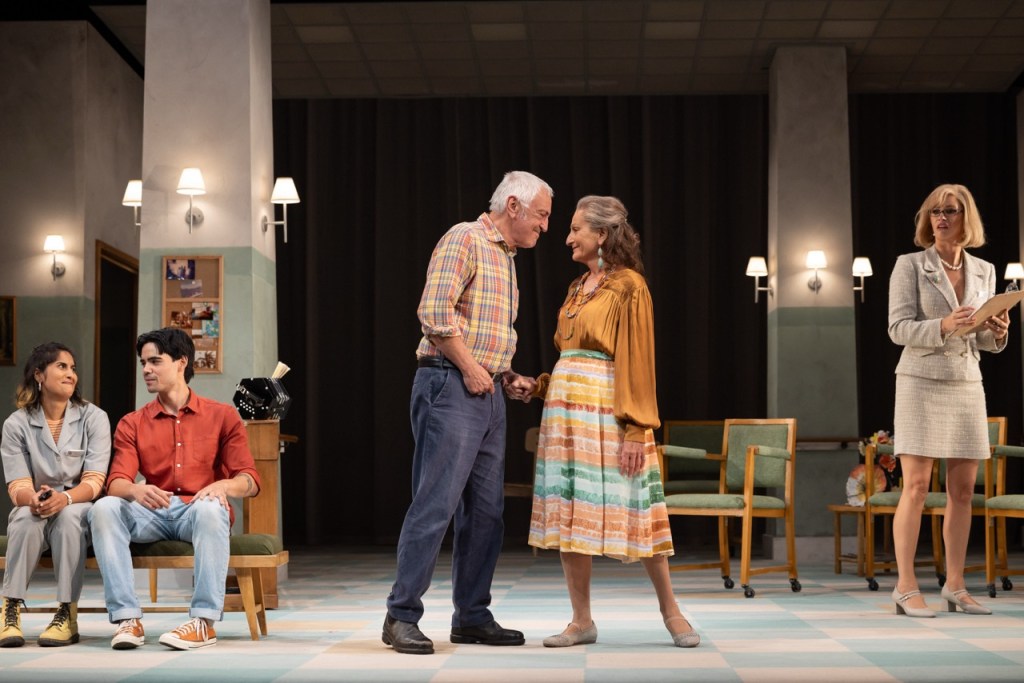
Front: John Waters & Jackie Rees. Photo: Daniel Boud. Bloom is like a blend of better stories: Louis Nowra’s Cosi and Alan Bennett’s Allelujah, full of nice moments and missed opportunities. The broader issues surrounding the development of new musicals is a topic for another time, but Bloom feels as though its ambitions have been clipped by a lack of development time and/or money. Thankfully, Christie Whelan Browne is always worth the price of admission, and she makes this show work.
-
The Player Kings (Seymour) ★★★★½

Based on Richard II, Henry IV p 1&2, Henry V, Henry VI p 1,2 & 3 and Richard III by William Shakespeare. Adapted by Damien Ryan. Seymour Centre. 26 Mar – 5 Apr, 2025.
Gird your loins for the theatrical event of 2025! Sport For Jove has thrown down the gauntlet by presenting Shakespeare’s eight-play historical cycle of kings in two abridged parts, each lasting just over 4.5 hours, showcasing the sweeping forces of politics and personal enmity over generations. It’s like a “greatest hits” compilation of people named Richard and Henry (or Harry or Hal).
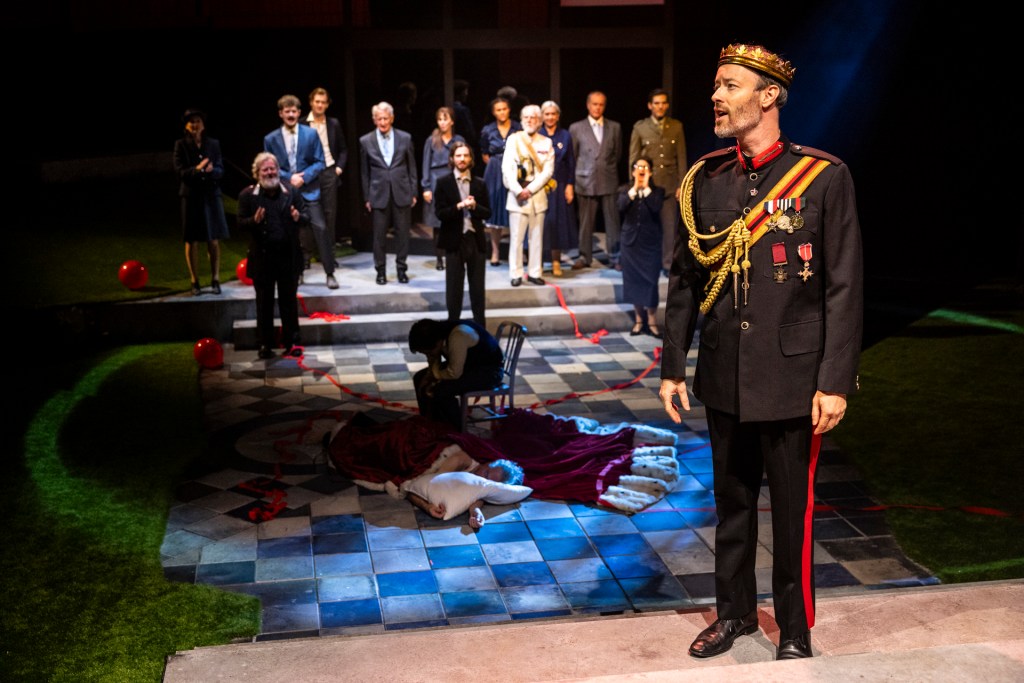
Gareth Davies & the ensemble of The Player Kings. Photo: Brett Boardman. We live in an age of monster-sized, IMAX-scale theatre. Post-Angels in America, post-The Inheritance, post-Harry Potter & the Cursed Child (two-part version), the idea of sitting through a marathon nine hours of Shakespeare in one day feels surprisingly normal. He was no stranger to multi-part stories himself. I can survive multiple international long-haul flight; surely my bladder and lower back can handle this, right?
What’s nine hours, after all? If you binge Friends you’ll have only just finished the first season by then (poor Rachel). It’s basically the length of a flight to Thailand. You probably spend as much time sitting at your desk on a regular workday. So, armed with theatre-loving optimism, a refillable water bottle, and some Uncle Tobys muesli bars (just in case), I walked through the rain to see what Sport For Jove had in store.
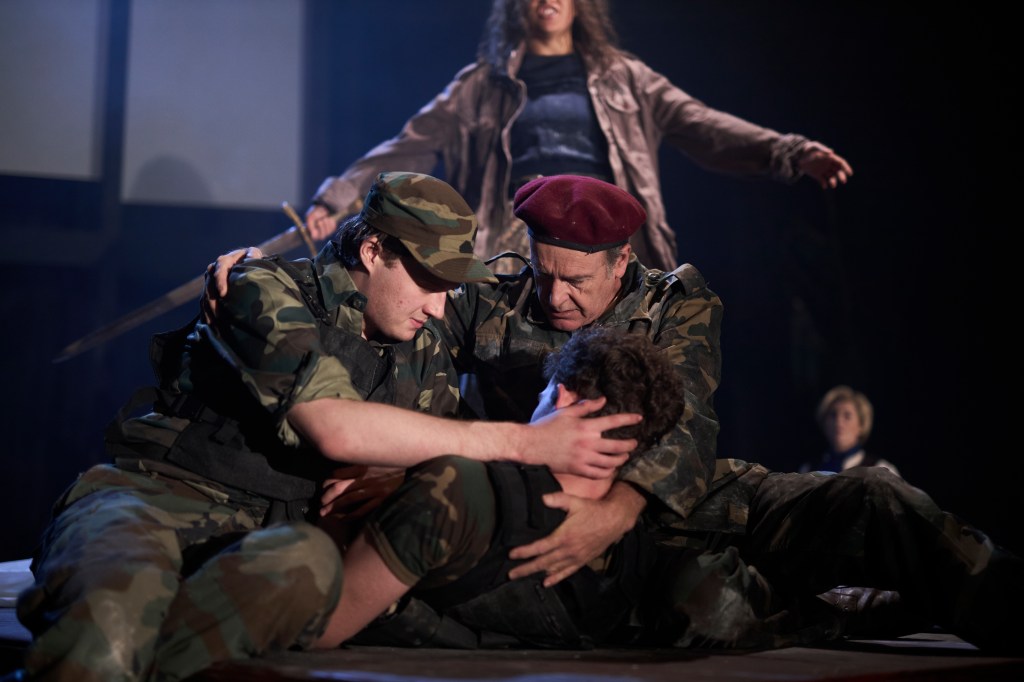
Oliver Ryan & Christopher Stollery. Photo: Campbell J Parsons. Let’s begin by acknowledging the sheer technical and creative feat of this production. Reducing each play to around 70-90 minutes while preserving its plot and language, staging this many scenes, and having actors learn vast amounts of dialogue across multiple roles — it’s a remarkable achievement of artistic faith and endurance.
The fact that it’s genuinely excellent is the icing on the cake.
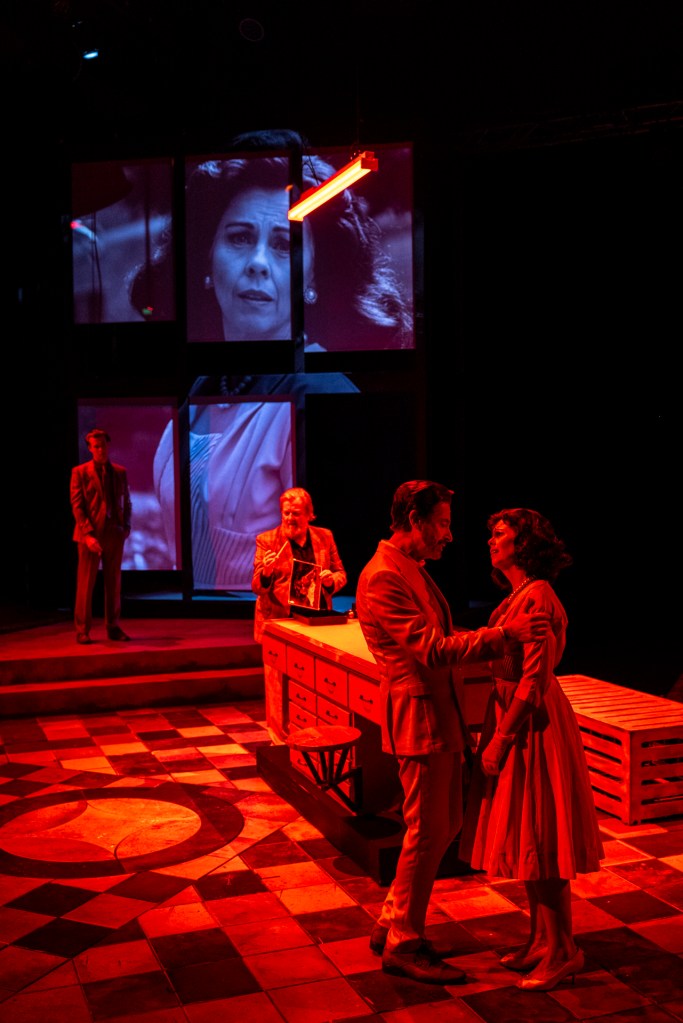
Steve Rodgers, Sean O’Shea & Katrina Retallick. Photo: Brett Boardman. Over the course of six chapters (each roughly spanning a king’s rise to power), we get drama, political thrillers, comedy both broad and subtle, and action. This variety keeps the plays moving at a mighty pace. Under Sport For Jove Artistic Director Damien Ryan’s direction, each scene serves a clear purpose, each play has a distinct visual style, and each character feels uniquely crafted. The clarity of the storytelling grows more impressive as the day/evening goes on. The creative energy is powerful enough to drive the company through this herculean endeavour.
By performing these stories back to back, the focus shifts from the individual plots, marriages or murders; to the cyclical nature of “eat, sleep, dethrone, repeat” throughout history. This zero-sum mentality of power (“When you play the game of thrones, you win or you die. There is no middle ground” — to borrow a line from another author) seems deeply ingrained in our systems of leadership. Shakespeare wasn’t concerned with chronicling historical realities; the plays are riddled with inaccuracies and fictions. Instead, they highlight how “society” does little to mask or heal our animalistic human nature.
Damien Ryan touches on this in his director’s note: “We are chasing an illusion of power in a world where everything disappears… we watch them learn the hard way that futility is their guiding star, and that their identities are simply and only human.”

Liam Gamble. Photo: Brett Boardman. An unspoken element rises to the forefront in the cycle’s sixth and final chapter, Richard III — the rise of revolutionary populism. After generations of entitled elites infighting and waging wars, treating the public as cannon fodder, a political outsider aligns with the masses to tear it all down, with no regard for what follows. Is Richard III’s murderous rise the inevitable result of a broken system? What can we learn from the final moments, as the old system reasserts itself with yet another victor slaying another king? Can we ever find peace?
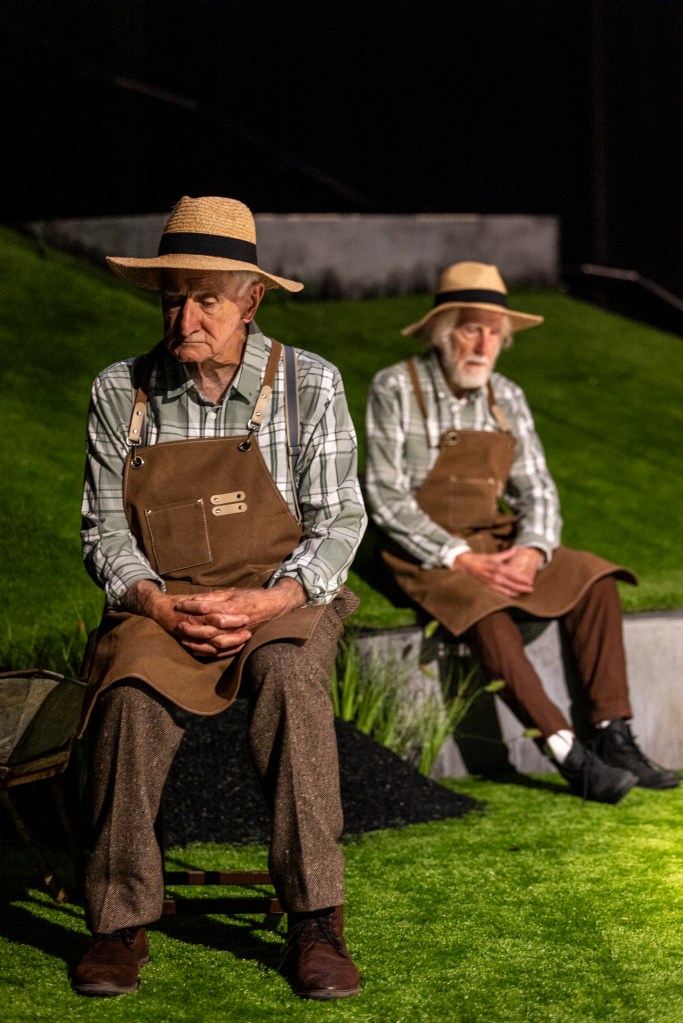
John Gaden & Peter Carroll. Photo: Brett Boardman. It’s near impossible to single out cast members, as they form a seamlessly perfect ensemble, but as we know, pairing Peter Carroll and John Gaden together always impresses and amuses. Gareth Davies and Sean O’Shea swap crowns repeatedly, playing younger and older versions of various monarchs with precision, drawing thoughtful parallels between them, and an extra round of applause must go to the multitalented Jack Mitsch (last seen at the Seymour in The Inheritance), who pulls triple duty as composer/live musician, scoring the entire nine hours alone from the gantry, while also playing various smaller roles on stage and even serving as an unexpected swimwear model.
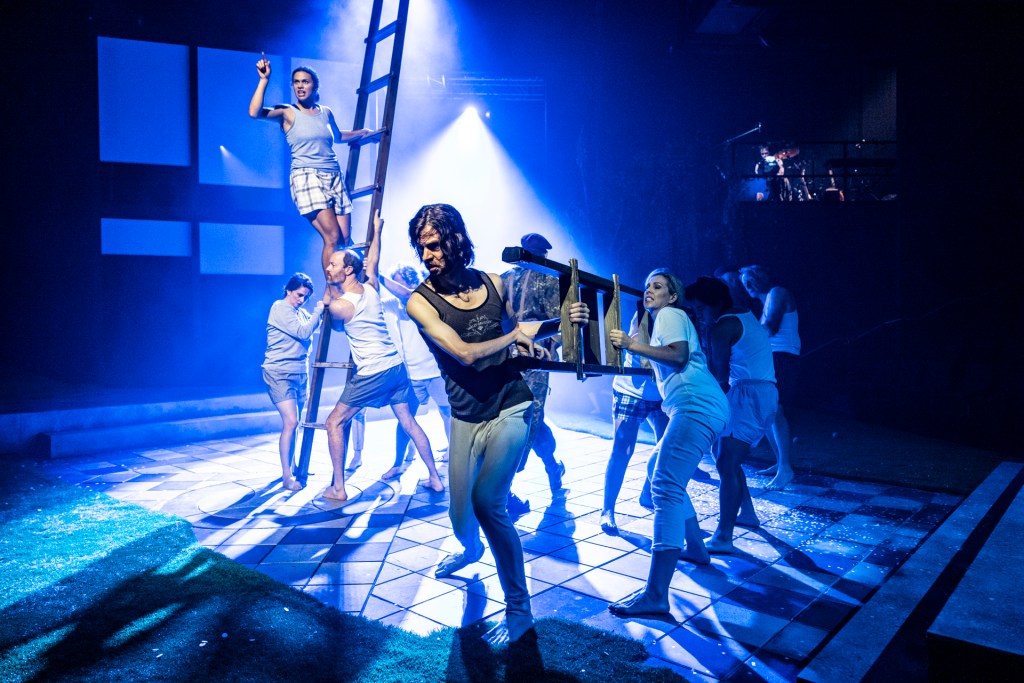
The ensemble of The Player Kings. Photo: Brett Boardman. Kate Beere’s stage design is a wonder, balancing the many needs of the multiple stories. With Matt Cox’s dynamic lighting and the help of three costume designers (Beere, Ruby Jenkins, and Lily Moody — each taking on two chapters), the visual variety remains fresh and engaging. Director Damien Ryan has also woven moments of lightheartedness throughout to balance out all the severed heads, and there are quite a few severed heads (amazing prop work). The entire production works hard to fend off any sense of boredom — and it succeeds.
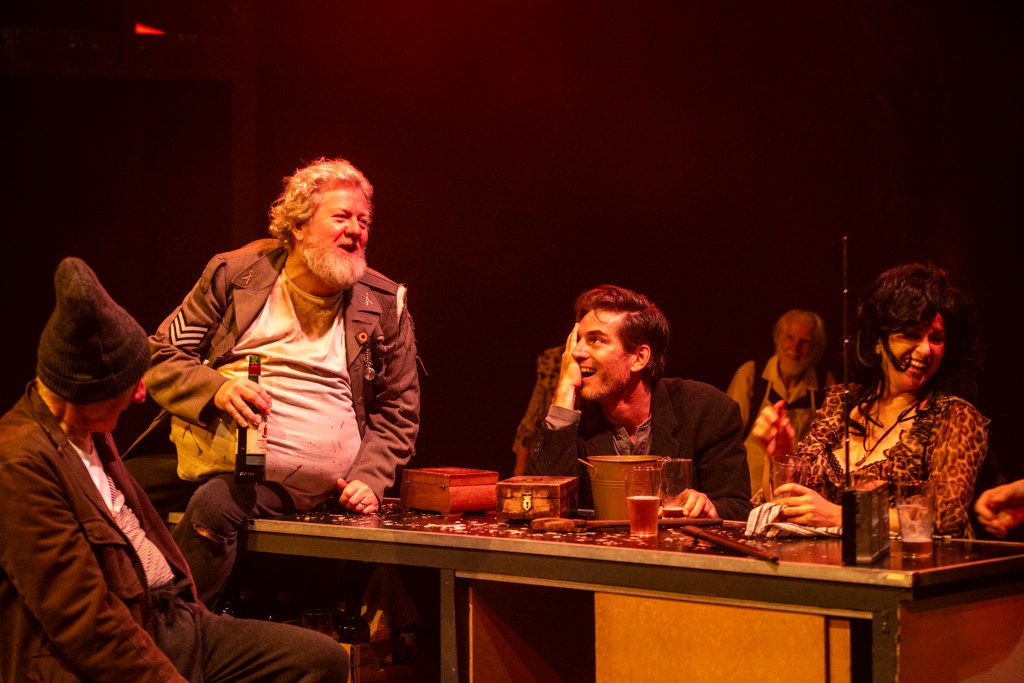
Steve Rodgers & Andrew Cutcliffe. Photo: Brett Boardman. Personally, I found Part One to fly by with a speed and energy that made the nearly 5-hour running time (it ran over) feel much shorter. I’ve sat through 90-minute plays that felt longer than this. While Chapter 1 (Richard II) served more as a prologue, it was in Chapter 2 that the show really showed its variety as the cast took on new roles with vigour. Going in, I feared we might get stuck in a “perpetual second act,” as each chapter rolled into the next. While the plays have been reduced and their dramatic arcs feel truncated, each chapter feels like it’s building toward a larger moment or message.
Things felt less assured in Part Two, leading me to worry that it was slightly under-rehearsed compared to Part One or that fatigue had begun to set in. It wasn’t until around 9 pm, 10 hours after I first sat down, that I started to feel the strain of the day. It may be my own wavering attention or over-familiarity with the play, but Chapter 6 (Richard III) didn’t have the same impact as earlier installments. Some over-amplified dialogue didn’t help, making Richard feel artificial compared to others on stage.
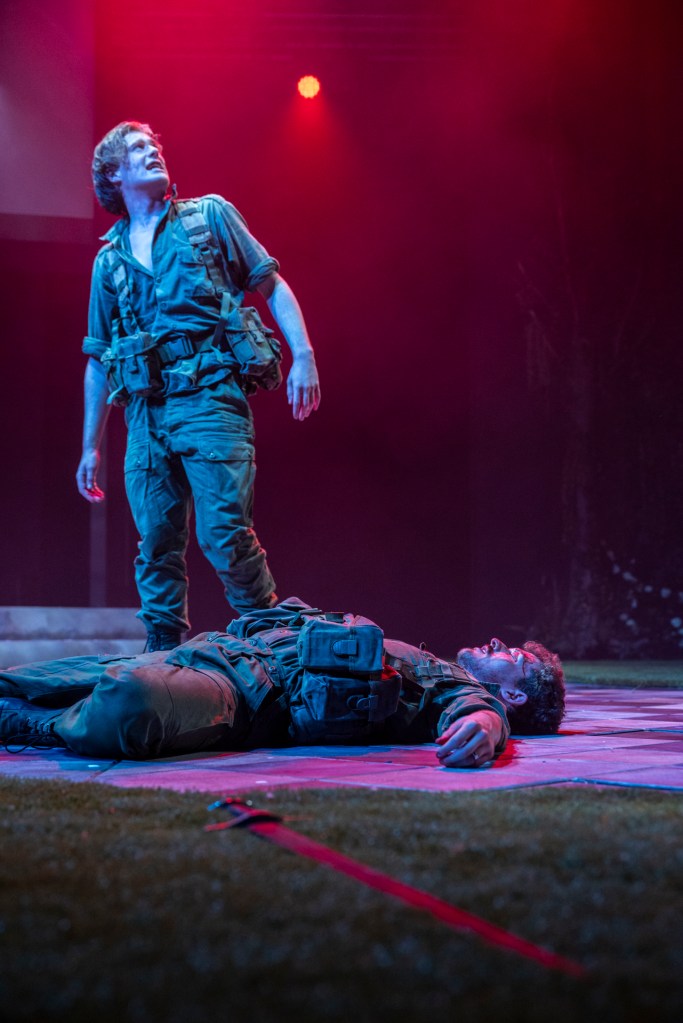
Oliver Ryan & Max Ryan. Photo: Brett Boardman. So, after a thousand words, let me address a few things head-on.
Is The Player Kings too long? No. The Player Kings reframes the original plays, not as individual narratives, but as a durational work — and you approach such pieces differently to regular plays. The most interesting thing for me happened in the foyer between chapters. As day turned to evening, the audience began talking during the breaks. Now that we were all familiar faces on a shared journey, we joked about how much time was left, wished we’d gotten a coffee, regretted getting a coffee, or tried to do corridor yoga to loosen our joints. By the end, elated by the experience, we joked about getting home to our beds. A mini-community had formed, which was lovely.
And the length is kind of the point. It’s not about who-stabbed-who, but “why do we keep stabbing each other?”
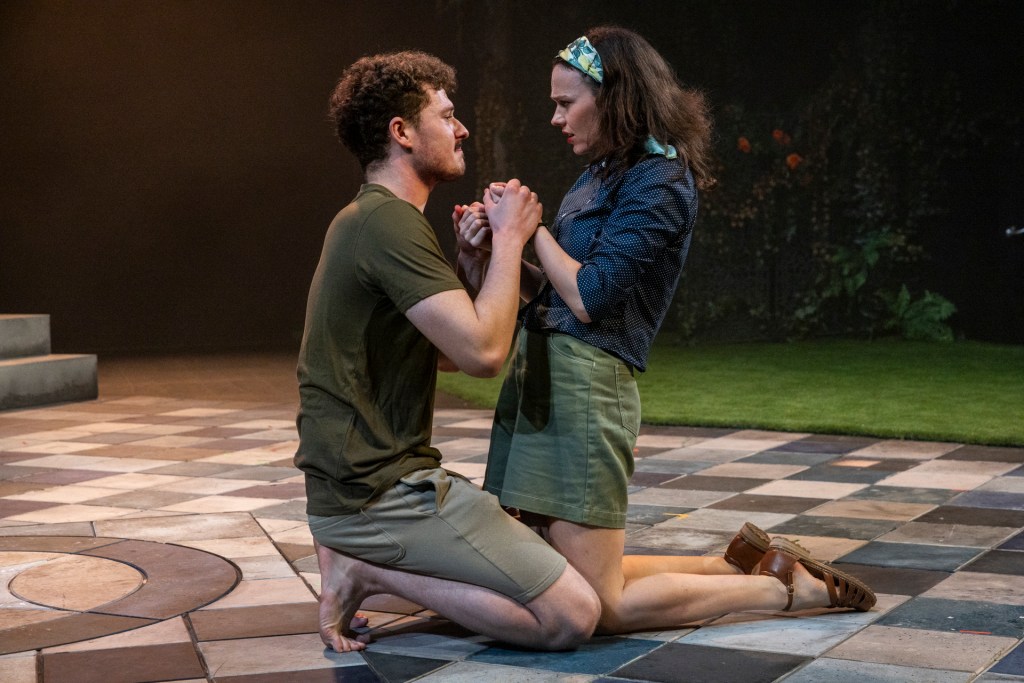
Max Ryan & Lulu Howes. Photo: Brett Boardman. Will you get confused with all the names, places, and people? The show’s programme includes a family tree, as well as a mini-synopsis of each part — definitely worth reading beforehand. With so many characters sharing the same name, and much of the plot depending on genealogies, it’s easy to lose track. But Sport For Jove has anticipated this and made it as simple as possible.
Is it worth sacrificing a day (or two long evenings) to see? Oh, God yes (depending on how much you like Shakespeare). Don’t worry, this is “good Shakespeare.” You won’t get lost in the language; the cast knows exactly what they’re doing. It’s fast-paced and entertaining despite its length. Plus, you’ll probably never have the chance to see these plays like this again — it’s a unique event. And you’ll have major bragging rights for having seen it.
Any other practical tips? The seats in the York Theatre are much more comfortable than the torture devices downstairs in the Reginald. I was lucky enough to have an aisle seat (and a spare seat next to me) so I could stretch out as needed. Being on the aisle also gave me an advantage in the “race to the loo” during intervals (ladies, you’ll want to move quickly). Dress for comfort. Go easy on the alcohol. Basically treat it like you would a long-haul flight, neck pillow optional.
The Player Kings is an astonishing achievement in theatre. This isn’t “eating your theatrical vegetables,” but a lavish degustation menu of Shakespearean delights. After a few years of Bard-fatigue, Sport For Jove has reignited my love for Shakespeare.
-
The Glass Menagerie (Ensemble) ★★★½
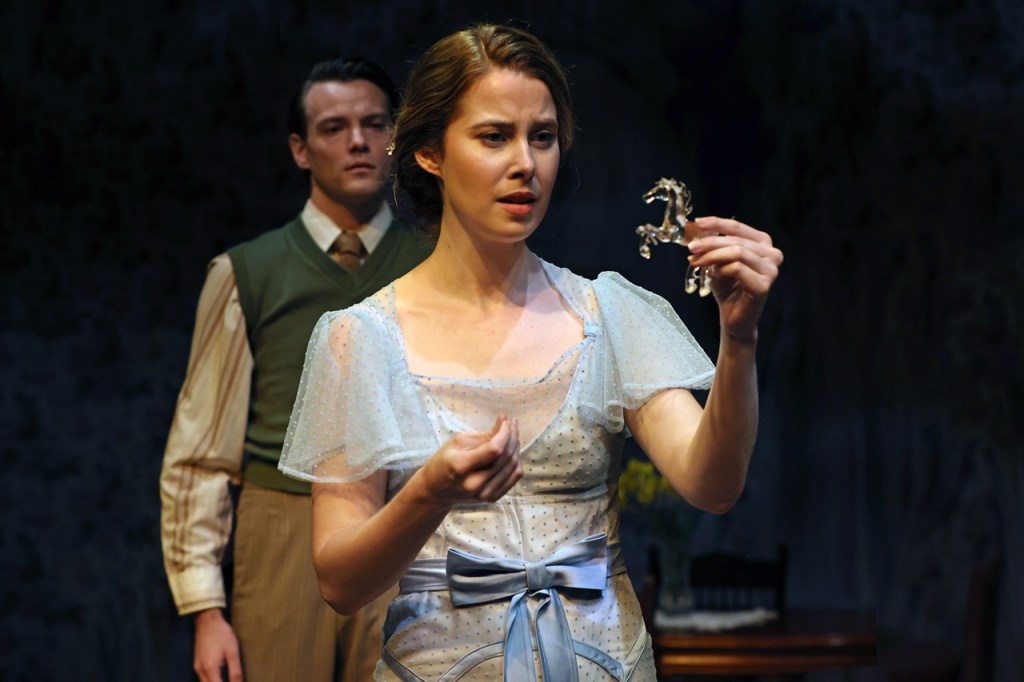
Written by Tennessee Williams. Ensemble Theatre. 21 Mar – 26 Apr, 2025.
Director Liesel Badorrek’s new production of Tennessee Williams’ debut The Glass Menagerie pushes against the play’s expected structure and text to bring the “memory play” to the stage with a fresh twist. The result is a strange beast with an amorphous tone that feels less like memory and more like a dream.
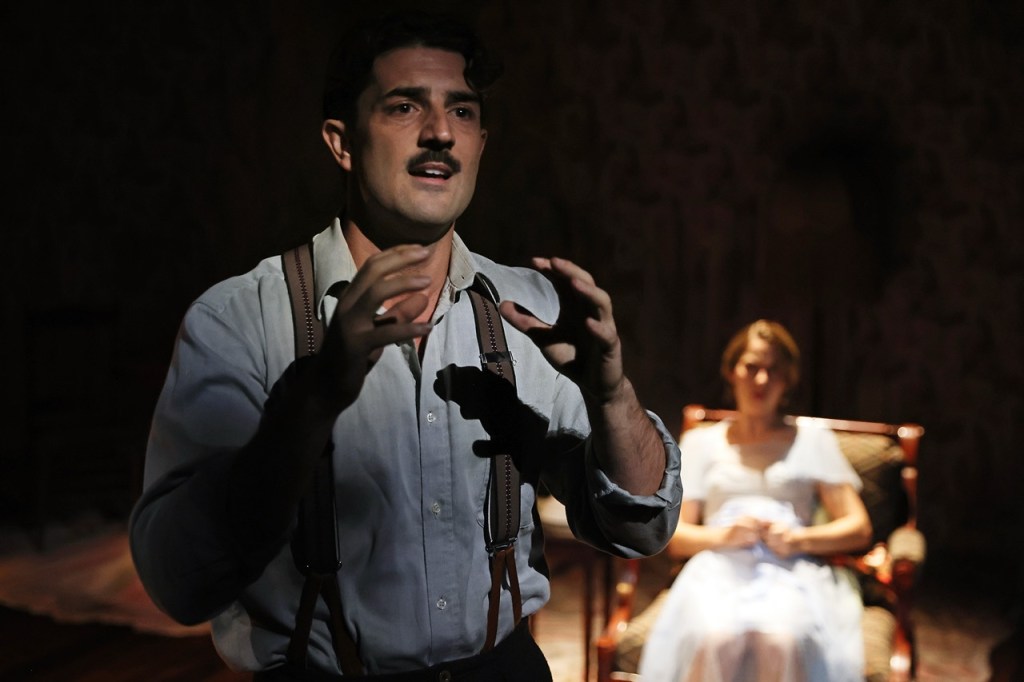
Danny Ball & Bridie McKim. Photo: Prudence Upton. As Tom Wingfield (Danny Ball), our narrator, tells us in the introduction, the play “is dimly lighted, it is sentimental, it is not realistic.” This is a memory of Tom’s family, and he is stepping back into it. His mother Amanda (Blazey Best), a former Southern belle, is desperately trying to find a brighter future for her children, while his painfully shy sister Laura (Bridie McKim) hides in the house, fixating on her collection of glass animals — her menagerie.
When Amanda discovers Laura has been lying to her about attending a business college, she realises the quiet girl, with a walking impediment, has few prospects for an independent life and convinces Tom to help her find a suitor for Laura. One day, Tom announces he has arranged for a “gentleman caller” (Tom Rodgers) to stop by for dinner.
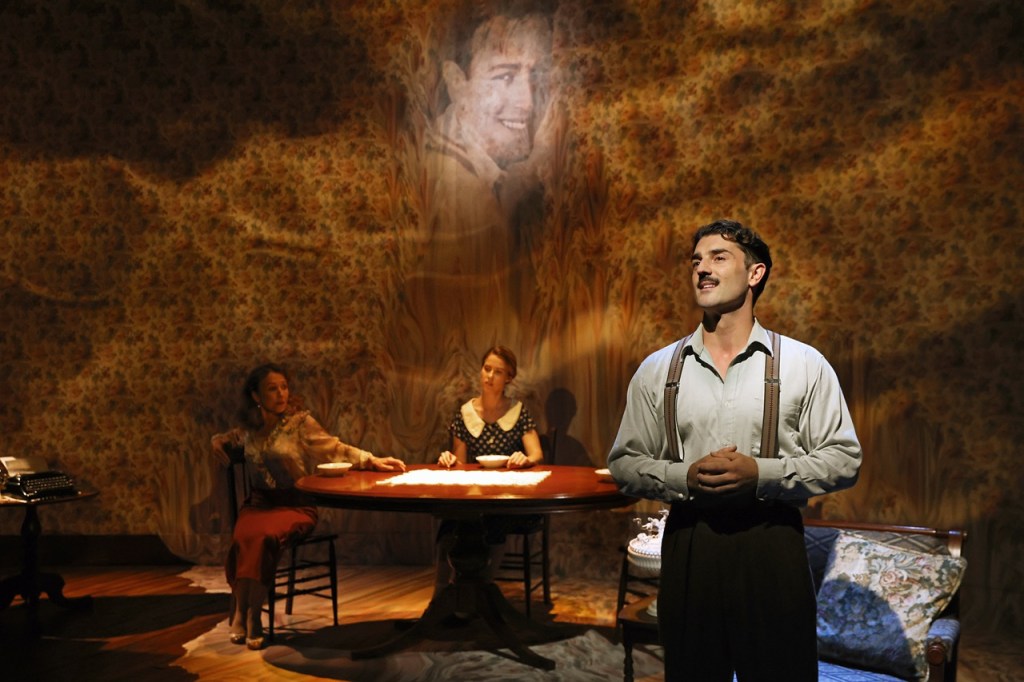
Blazey Best, Bridie McKim & Danny Ball. Photo: Prudence Upton. For me, the hero of the play is the peculiar set by Grace Deacon. As you enter the Ensemble Theatre, the first thing you see is a wide expanse of wallpaper with its hypnotic, repeating pattern. Into its facade, a face emerges, smearing down the wall and bleeding into the floor below, as though the walls are weeping with their own quiet anguish. Beneath an armchair, a circular rug stretches and breaks in two. The fire escape outside slowly deconstructs itself as it reaches out of view. If this “memory” were a digital image, it would be corrupting with glitches and imbalances.
On top of this, lighting designer Verity Hampson creates a sea of movement as Tom’s memories shift through time. The spectral portrait of Tom’s father recedes or looms large depending on how the lighting strikes it. A visual fluidity washes over the stage, aided by Maria Alfonsine’s compositions and sound design. This is the kind of stagecraft I get nerdily excited about.
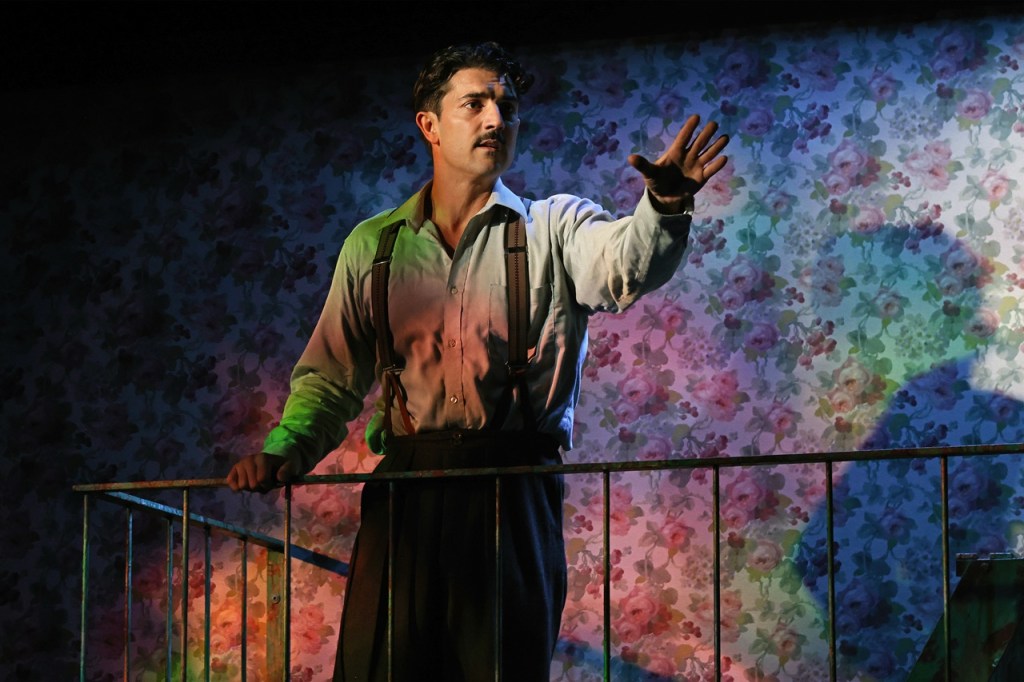
Danny Ball. Photo: Prudence Upton. Director Liesel Badorrek has further blurred the boundaries of this text by using parts of Williams’ prosaic stage direction (grab a copy of the script and read it — it’s beautiful prose in its own right) as pre-recorded narration. While it certainly fits the tone of voice of Tom’s character, there is something distractingly artificial about hearing a voice from the speakers than the stage that detracts rather than enhances the action.
This cast also brings something new to the text that I haven’t seen before. Danny Ball’s Tom has a charming softness and playful nature. Blazey Best brings out an absurd humour in Amanda that doesn’t immediately evoke pity but unexpected comedy.
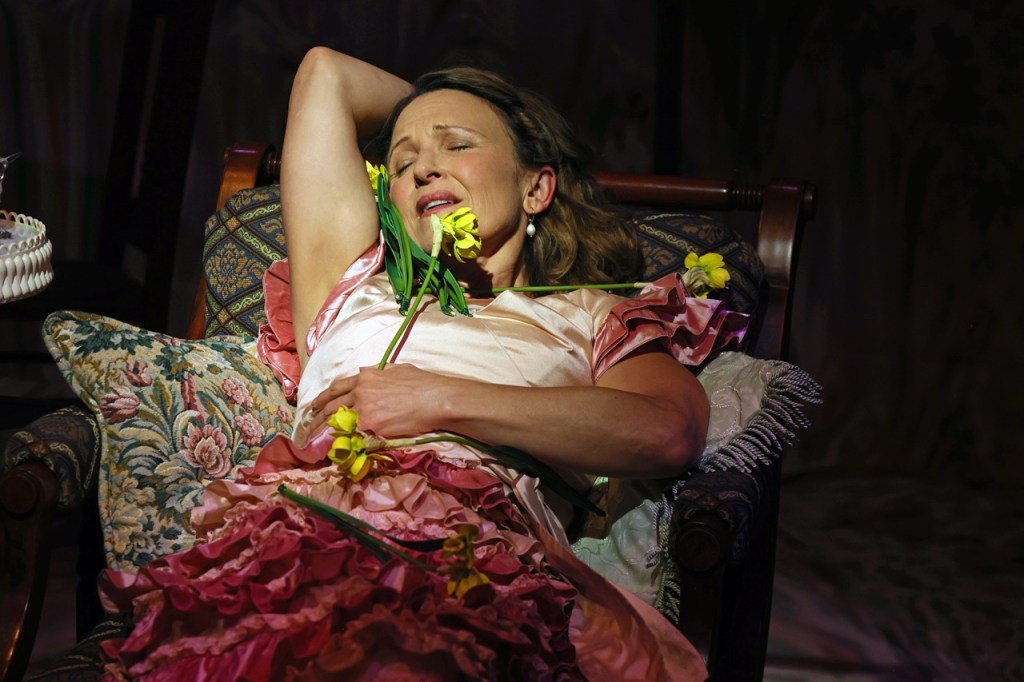
Blazey Best. Photo: Prudence Upton. Bridie McKim’s Laura isn’t a beautiful waif with a token limp but something more frail and lived in. Tom Rodgers’ Jim O’Connor, the gentleman caller, is a harder role to play, both because of the mountain of text he delivers and the burden of being the most “realistic” (in Tennessee’s words) of the characters. He elevates his performance to the same slightly unhinged level as the rest of the cast, leading you to conclude that maybe the Wingfield family isn’t as unusual as they seem — perhaps society has twisted everyone.
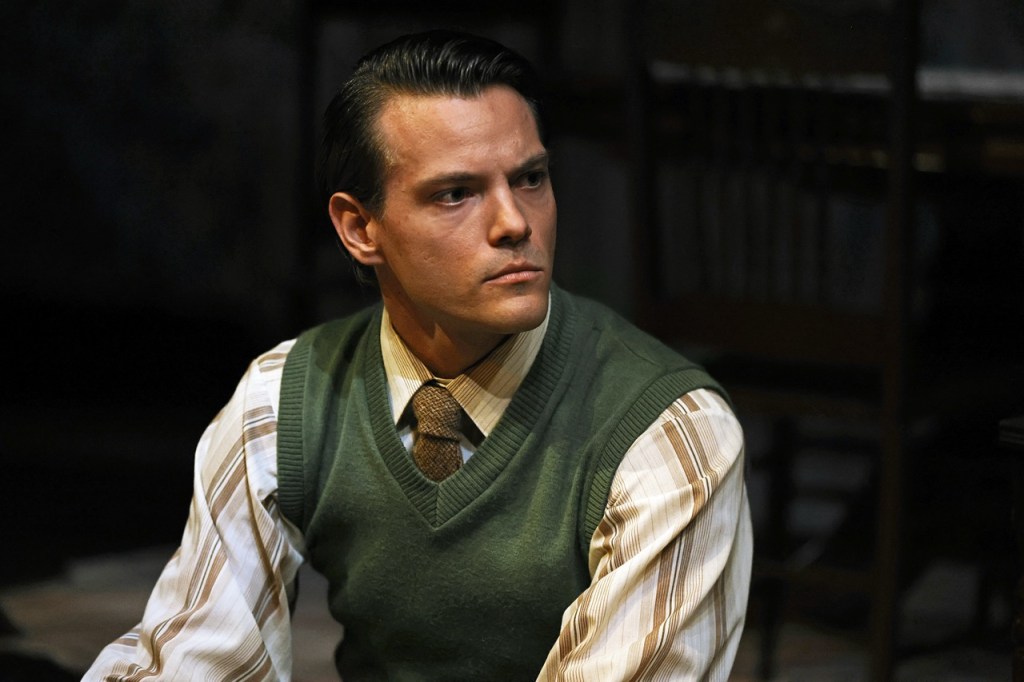
Tom Rodgers. Photo: Prudence Upton. Much like a dream, for all the interesting moments there is a lack of clarity or consistency to what’s happening that blunts the finale’s revelations [no spoilers, obviously — if you want to know more, it’ll cost you a wine or three]. The bold accents threaten to twist these exaggerated characters into melodrama, and one or two of the creative decisions dilute the play’s complexity.
The Glass Menagerie is a classic with the kind of poetic script that generations of writers have tried and failed to emulate. While this lacks the richness and depth of Ensemble’s 2023 production of Williams’ Suddenly Last Summer, it offers a fresh opportunity to luxuriate in Tennessee Williams’ greatness again.
-
Guys & Dolls (Handa Opera) ★★★★
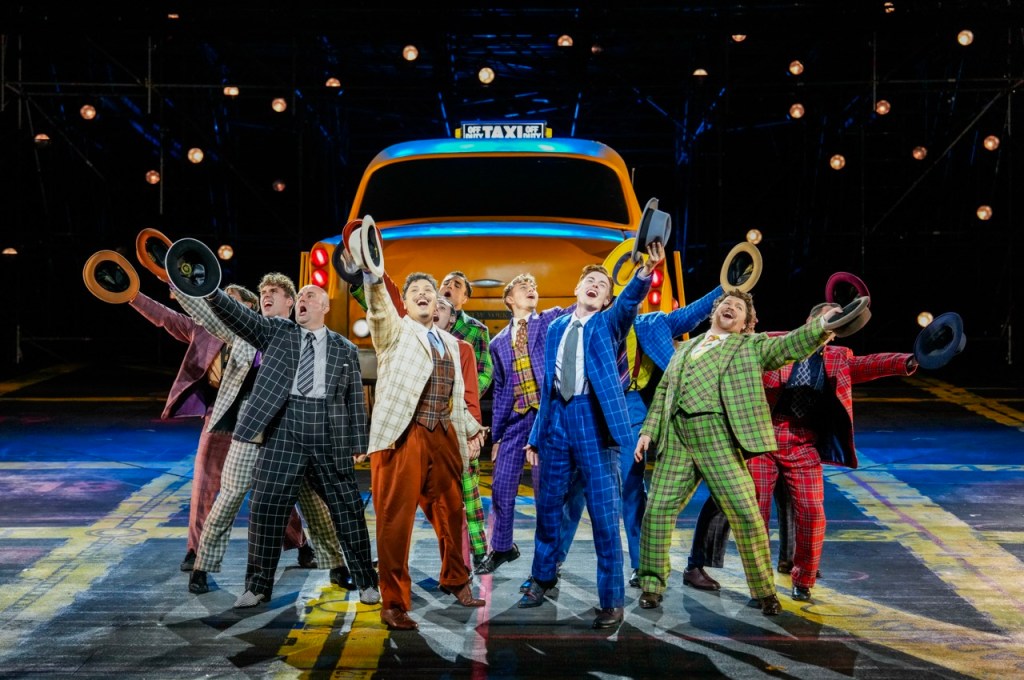
Book by Jo Swerling & Abe Burrows. Music & Lyrics by Frank Loesser. Handa Opera on Sydney Harbour. 21 Mar – 20 Apr 2025.
Do you ever forget how much you like a show? Guys & Dolls has been burned into my brain over the years, so much so that I take it for granted. This show is fast, funny, and full of some of the best tunes in musical theatre. Now, blown up to Sydney Harbour scale, its colourful characters take on epic proportions.
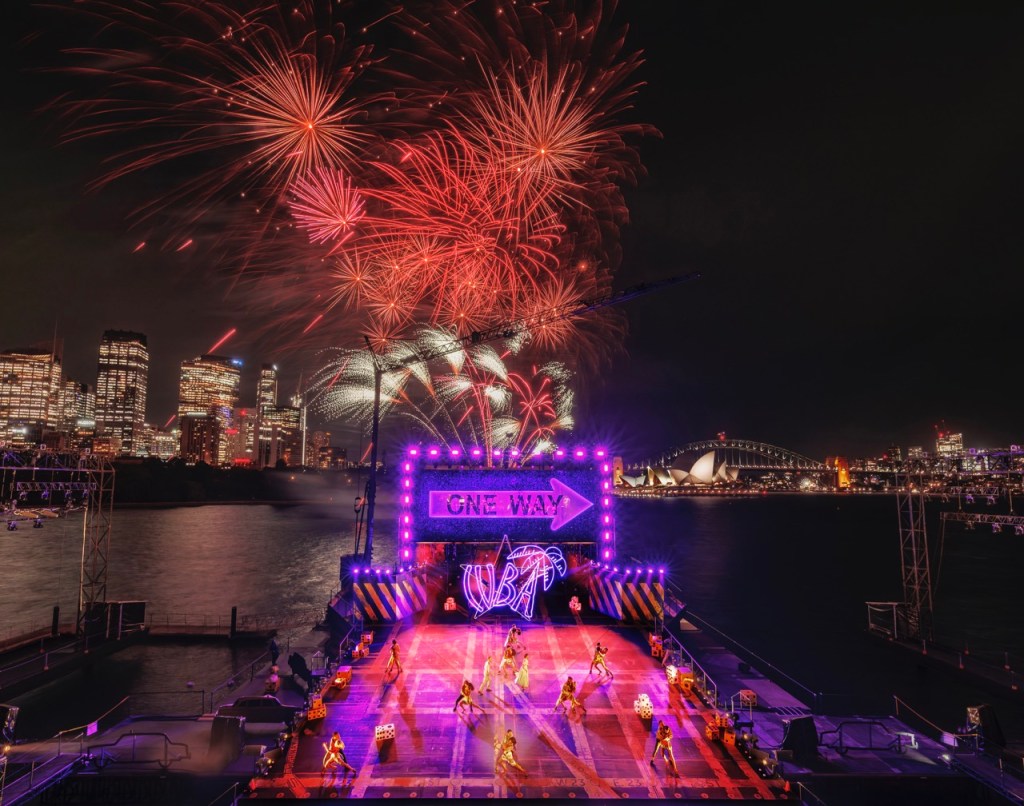
Handa Opera on Sydney Harbour Guys & Dolls. Photo: Neil Bennett. I approached this embiggened production slightly wary, unsure how Guys & Dolls would work on such a large scale. Add to that the fact that I’ve seen so many productions of Guys & Dolls, ranging from school halls to West End blockbusters (and the groundbreaking, immersive 2023 Bridge Theatre, London production, which remains one of my all-time theatre highlights – I’m listening to the cast recording as I write this). Would this urban fable sink or swim on Sydney Harbour?
There is a simple charm to the rom-com complications, filled with twists and turns, bolstered by some sharp dialogue. Most musicals flounder with simplistic or lazy scripts, but Swerling and Burrows keep the script for Guys & Dolls tight and full of zingers. Sure, some of the humour has dated, the sexual politics are decidedly questionable, and some of the language feels peculiar to modern ears (all based on Damon Runyon’s short stories), but in the exaggerated space of Brian Thomson’s set, the show’s implausible plot feels right at home.

Angelina Thomson. Photo: Neil Bennett. Angelina Thomson dazzles as the ditzy and lovable Miss Adelaide, a euphemistic “hot box dancer” with a perennial cold that may come from dancing every night in her underwear, or possibly from a psychosomatic reaction to the fact that she’s been engaged to her boyfriend for fourteen years. Thomson not only belts her tunes so the stars above can hear her, but her broad comedy also lands perfectly – it’s easy to read those big expressive eyes, even from the cheap(ish) seats.
Annie Aitken gets less to work with as the romantic lead, Sister Sarah Brown, but has fun when Sarah lets her hair down. Some nice vocal work too as the drunk Sarah slips into a more earthy register, rather than her prim & proper earlier tones. When Sister Sarah and Adelaide form an unlikely friendship, they become joyously unstoppable, asserting their own agency over the story.
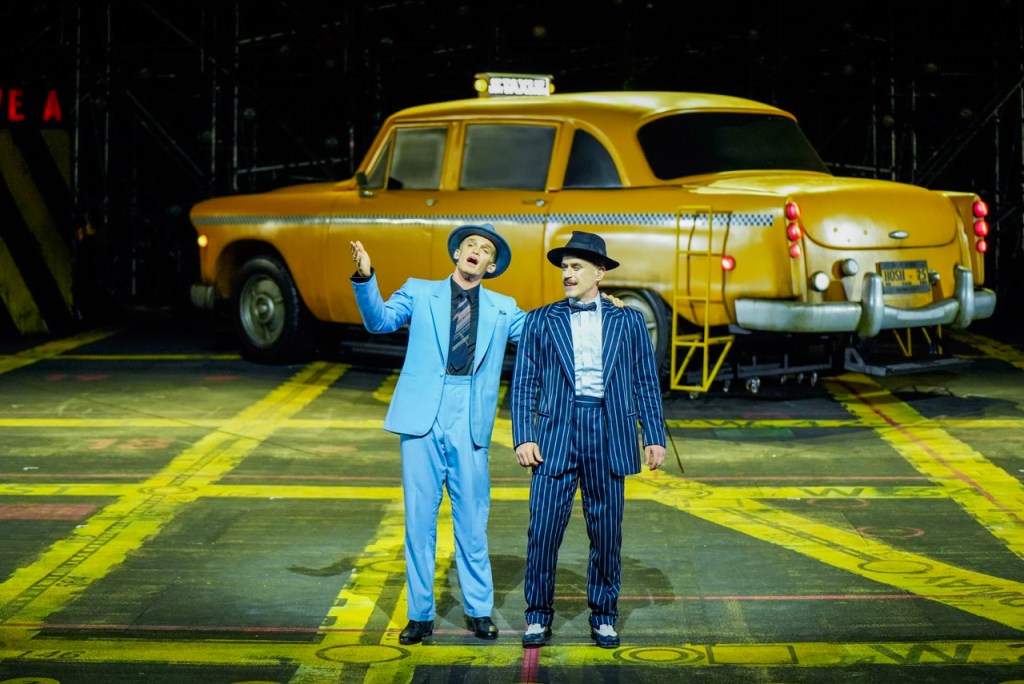
Cody Simpson & Bobby Fox. Photo: Neil Bennett. Bobby Fox is great as Adelaide’s no-good gambler boyfriend, Nathan Detroit, a sympathetic, lovable cad. Cody Simpson’s Sky Masterson makes a strong visual and vocal impact but lacks the megawatt charm needed to command a pack of unruly retrobates on such a big stage.
The real show-stealer is, perhaps unsurprisingly, Jason Arrow as Nicely-Nicely Johnson. One of the great musical theatre comedy roles, Arrow manages to sneak sly moments of extra humour into his scenes before blowing the metaphorical roof off the place with “Sit Down, You’re Rockin’ The Boat” – the show’s best number. It’s worth the price of admission alone. They should have saved the customary fireworks for the song’s finale!

Jason Arrow. Photo: Neil Bennett. Director Shaun Rennie has played with the musical, adding some unique touches that keep things fresh. Lt Brannigan (Thomas Campbell), usually a one-note grumpy cop, gets instant laughs with a new speech impediment, as does General Cartwright (Naomi Livingston), who has become a rather randy revivalist. Some queer touches to Sarah and Sky’s visit to Cuba help push back against some of the more regressive, 1950s elements of the story. Not every original idea hits these high notes, however, with a weasely, coked-up Big Jule (Doron Chester) failing to intimidate or amuse.

Cody Simpson & Ensemble. Photo: Neil Bennett. The big numbers are where this production truly impresses. From Adelaide’s Hot Box numbers to the whole company performing “Sit Down, You’re Rockin’ The Boat,” the stunning choreography of “Luck Be A Lady” (Kelley Abbey’s work brings the stage alive), and the simple comedy of “Adelaide’s Lament,” it’s clear a lot of attention has been paid to elevate the key songs.
Brian Thomson’s set boldly reimagines the New York locale, dominated by a gigantic “One Way” sign looming over the stage (it was wonderful to see the band performing over the action below) and an oversized yellow taxi cab. But the open-air environment can’t fully capture the underground gambling sequences. The ‘Save A Soul’ mission set, however, felt like an afterthought.

Annie Aitken & Cody Simpson. Photo: Neil Bennett. While Guys & Dolls lacks the epic dramatic scale of West Side Story or The Phantom of the Opera, it has an old-fashioned, comfort-food warmth that is a welcome panacea to some of the real-world chaos right now. It’s big, it’s silly, and it’s the kind of comedy that’s easy to sit back and enjoy – especially with a glass of bubbles in hand and the Sydney Harbour Bridge in the background.
-
MJ The Musical (Lyric) ★★★★

Book by Lynn Nottage. Music & Lyrics by Michael Jackson et al. Lyric Theatre, Sydney. From 25 Feb 2025.
No one has captured the pure joy and excitement of music quite like Michael Jackson. From pre-teen superstar to adult musical pioneer, MJ The Musical threads the needle between sugary pop perfection and a weighty examination of the man behind the mass hysteria. The result is a technically excellent piece of musical theatre that exceeds expectations. Put simply, MJ The Musical is… wait for it… thrilling.
I approached MJ The Musical with trepidation. Even before entering the theatre, it had three strikes against it: 1) It’s a jukebox musical, which I generally despise. 2) Its book is written by Lynn Nottage, a writer I don’t particularly enjoy. 3) Jackson’s legacy is tarnished by accusations of sexual abuse. Even the most generous viewer can’t completely avoid the ick factor.
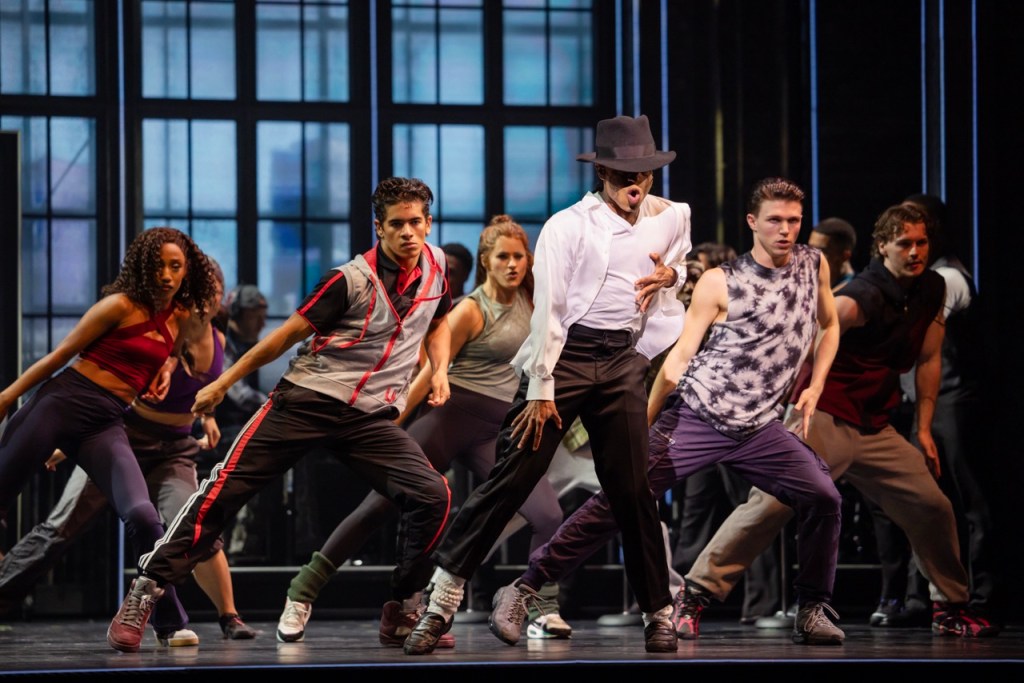
Roman Banks and the ensemble of MJ The Musical. Photo: Daniel Boud. The show is set in the rehearsal room of Jackson’s groundbreaking 1992 Dangerous World Tour, when Michael was at the peak of his power. After the iconic triple hit of his first three solo albums—Off The Wall, Thriller, and Bad—the world awaited to see if he could continue the streak. 1991’s Dangerous was seen by many as a creative wobble: good but not on the same level as his past work. MJ The Musical is framed around a fictional interview with MTV, looking back at his earlier career and questioning him about the pressure to remain number one, as well as the many ridiculous tabloid stories about his life.
For most of Act 1, I felt the typical “biographical jukebox musical” pieces fall into place. Classic songs were presented as flashback performances, while others were slowly woven into the narrative as slightly awkward musical theatre songs, revealing inner thoughts and emotions. The show is part “covers concert,” part familiar history—all the usual elements you expect from a jukebox show.

Penny McNamee, Derrick Davis and Roman Banks. Photo: Daniel Boud. And it’s staged brilliantly, with many of the cast playing dual roles, often aided only by Natasha Katz’s expressive lighting design. Derrick Davis especially shines in his dual roles as Michael’s father, Joseph, and Rob, the tour manager. Derek McLane’s scenic design, combined with Peter Nigrini’s projections, is equally impressive, seamlessly transitioning scenes so subtly you barely notice. It was when these seemingly small, often overlooked elements began to add up that I started to appreciate the craft on stage. Yes, it’s a jukebox musical, with all the usual problems that entails, but it’s executed with art and precision.
Book writer Lynn Nottage and the creative team have been astute in their choices. Setting the show in 1992 allows them to avoid the abuse allegations, which became public a year later. It’s a sidestep, but a clever/cynical one, giving the show plausible deniability and letting Jackson’s legion of fans (and the audience in general) momentarily off the hook.
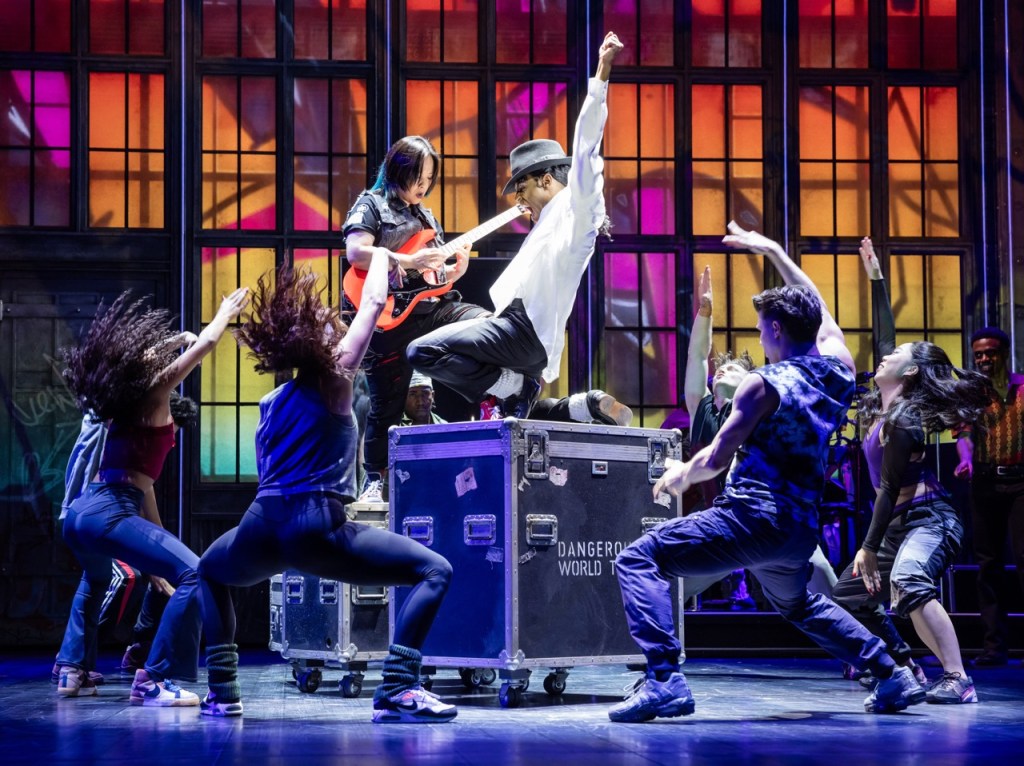
Roman Banks and the ensemble of MJ The Musical. Photo: Daniel Boud. The other advantage of basing the show around the Dangerous World Tour is that it limits the musical choices to Jackson’s glory days. While I personally enjoy some of the tracks from his later albums, they don’t have the same cultural impact as these early staples. As Michael strives to continuously raise the stakes on the tour and accomplish feats unheard of at the time (many of which are commonplace now), Nottage sketches out the image of a man driven to succeed by his personal pain. At its heart, this is a story about a boy and his distant, abusive father.
Act 2 is where the show really begins to shine. I’ve already mentioned the slightly awkward retrofitting of some pop songs into internal monologues, but once again, there is a smart use of the material to give MJ some psychological depth. A song you think has been featured and discarded in Act 1 makes a brilliant comeback in Act 2 for an absolutely show-stopping moment—you can probably guess which song I’m referring to.
Director/choreographer Christopher Wheeldon is a master at telling a story through movement (his choreography for An American In Paris remains one of my favourites— that dream ballet!). Reworking classic Jackson moves and creating new pieces that reference some of the greats, he draws clear connections between classic cinema, Soul Train, and Fosse’s style, all linked to Jackson. This show is electric, barely giving you a second to catch your breath.
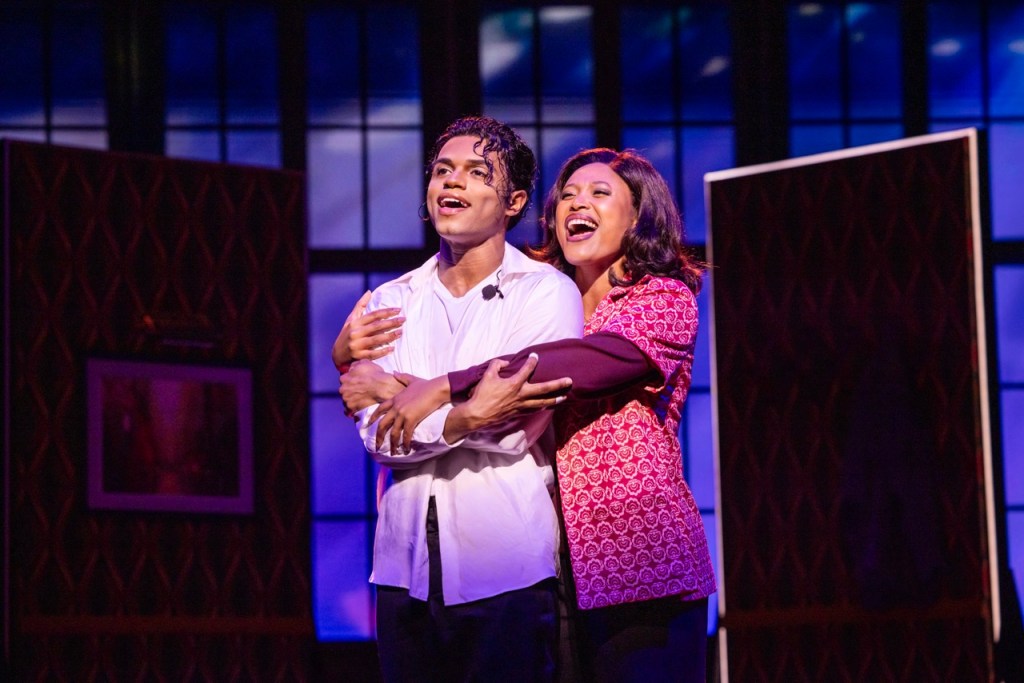
Roman Banks and Josslyn Hlenti Afoa. Photo: Daniel Boud. The actors playing Michael are the heart and soul of the show. Roman Banks is astonishing as the adult Michael, and it’s clear why he was brought over from the US. He captures the humour and drive of the man, imbuing him with a humanity often missing in the caricatures we typically see. His vocal and dance performance do justice to the legend. Liam Damons radiates charm as Michael at his creative peak, making his solo albums while battling family pressure and industry indifference. Less guarded than Banks’s older version, Damons makes Michael both supremely likeable and sympathetic.
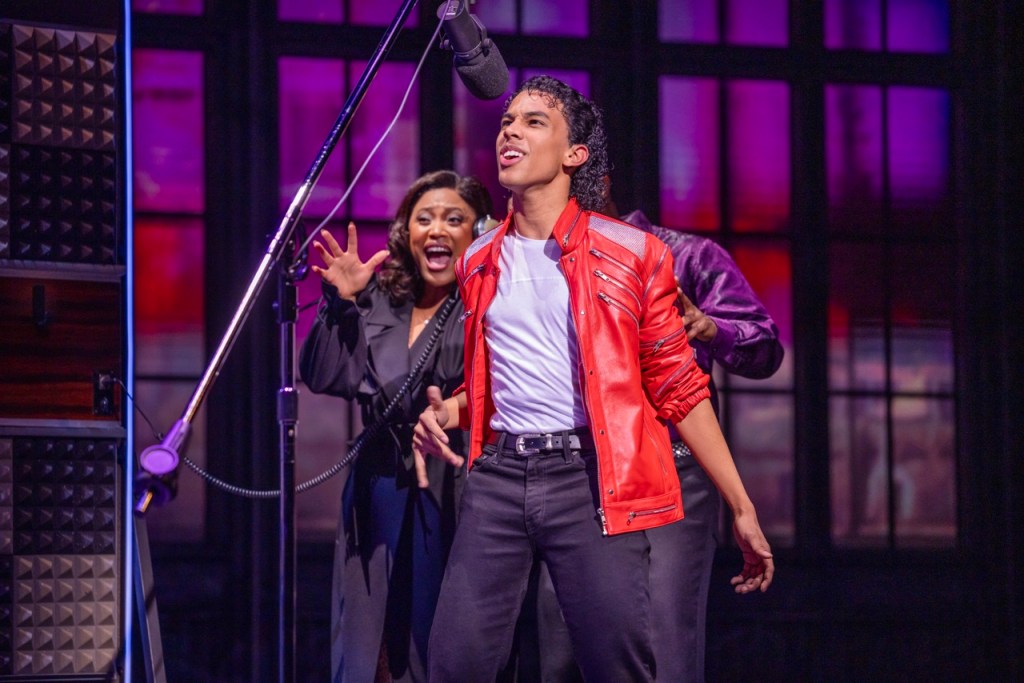
Josslyn Hlenti Afoa and Liam Damons. Photo: Daniel Boud. For many, the dark shadow of abuse allegations will hang over MJ The Musical, and while the show begs us to focus on the music rather than the man, it also goes to great lengths to suggest Jackson came to some kind of emotional epiphany (accompanied by The Man in the Mirror)—which is clearly false. Michael Jackson never changed his ways. His many demons remained with him to the very end.
There’s no denying the fact that this show excels on multiple levels. Michael Jackson’s influence and success are impossible to dismiss, ignore, or deny. He is also impossible to reduce to a musical, but MJ tries its hardest. The audience was ecstatic watching their musical hero come to life on stage (with the odd bit of drunken, rambunctious chatter and annoying singalongs – jukebox musicals tend to draw a less “theatrely” crowd).
The creative team have taken the limitations placed on them and made a show that is genuinely exciting and entertaining… it just depends on how much you care for Michael Jackson himself.
-
No Love Songs (Foundry) ★★★
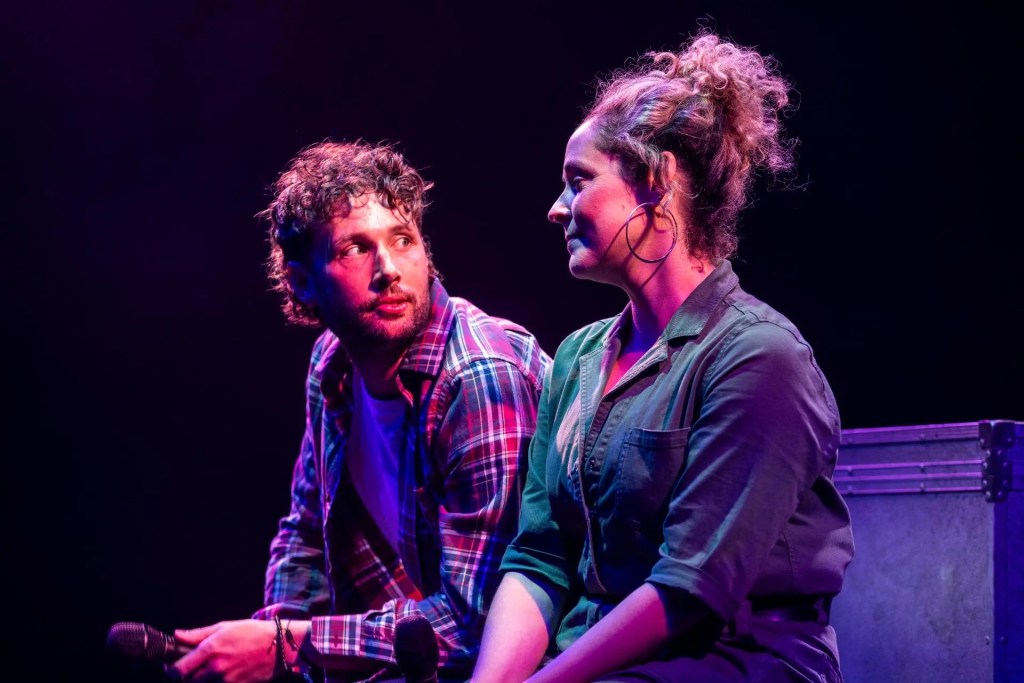
Music by Kyle Falconer. Book by Laura Wilde & Johnny McKnight from an original idea by Kyle Falconer & Laura Wilde. Foundry Theatre. Mar 7 – Apr 5, 2025.
Everyone’s life has a playlist, and this is Lana and Jessie’s. But don’t come to No Love Songs thinking this is some fun, pop/rock-infused, rom-com gig-musical. This show is less (500) Days of Summer and more Next To Normal, if you know what I mean.
Lana (Lucy Maunder) is a university student, working in retail and keen for a night out, when she sees Jessie (Keegan Joyce) fronting a band in a pub. It doesn’t take long for them to stumble home together. From there, things move quickly as a pregnancy turns their budding romance into a fully-fledged family. But the young couple aren’t prepared for how much their lives are about to change, and when Jessie goes on an international tour to make enough cash to support the new family unit, the pressure of raising a newborn falls solely on Lana’s shoulders.

Lucy Maunder & Keegan Joyce. Photo: Brett Boardman. No Love Songs has a classic “indie musical” feel. Its budget-friendly construction (two performers and an exposition-heavy book reduce the need for sets or costume changes) puts the focus on the talented leads whose personal charm is paramount. Moving the action to Australia is seamless (you wouldn’t know the show was originally set in the UK if you weren’t told), and there is a welcome warmth to both Joyce and Maunder, which helps to fill the large “black box” of the new Foundry Theatre.

Lucy Maunder & Keegan Joyce. Photo: Brett Boardman. Adapted from songwriter Kyle Falconer’s 2021 solo album No Love Songs for Laura—an upbeat slice of indie pop—the tunes are catchy, especially in the early moments. As the show progresses, it becomes clear that they weren’t written as narrative vehicles, like traditional musical theatre songs, and, despite some re-written lyrics, don’t always convey the plot or internal motivation effectively.
This becomes an issue as the show pivots from the meet-cute into the rocky realities of parenthood, which, to the show’s credit, are taken very seriously. No Love Songs is a darker show than the sweet imagery and cute tagline might suggest, and the songs and script struggle to find the right balance. The result is a series of lengthy monologues in which both characters tell the audience what’s going on rather than dramatising it, or using the music tell the story.

Keegan Joyce. Photo: Brett Boardman. Keegan Joyce makes a strong impression as the endearing but out-of-his-depth musician, Jessie. His voice is well suited to this material. Lucy Maunder has the tougher job of the two. Carrying the weight of a mental health storyline that literally saps Lana of her personality. It’s much harder to make her fully engaging and the middle of the show suffers from a lack of energy.
Musicals that really tackle mental health issues head on are few and far between, and No Love Songs admirably works hard to show us issues of postpartum depression with nuance and succeeds more often than not. The thing it’s most lacking is songs that get to the heart of the matter rather than being retrofitted to the moments.
Despite a strong start, fun tunes, and oodles of charm, the show can’t quite overcome these flaws in its construction. It has the guts of something unique and the ambition to tell a real story, but it needs to be set free from its pop-record origins to become truly satisfying.
-
The Boys in the Band (Chapel Off Chapel) ★★★
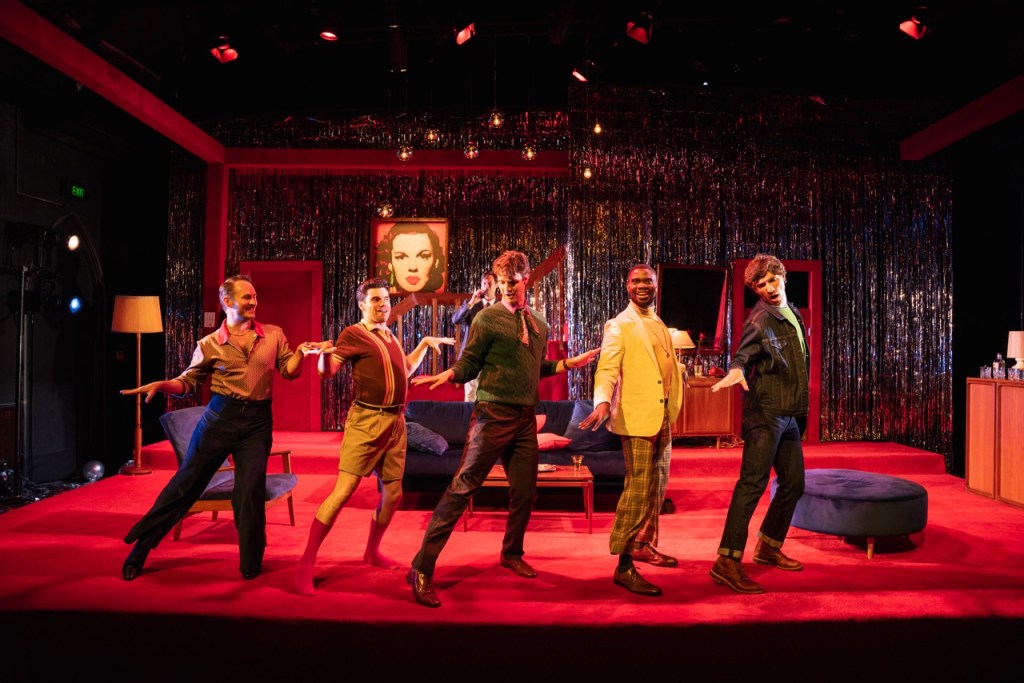
Written by Mart Crowley. Chapel Off Chapel, Melbourne. 27 Feb – 15 Mar 2025.
Mart Crowley’s 60s gay classic The Boys in the Band has seen it all. It’s been adored, revered, filmed, dismissed, reviled, revived, filmed again… It’s the Cher of gay theatre. Does it still have something to say in 2025? Are modern gay men still full of self-destructive self-loathing? Are we just better at hiding it behind botox, wellness, and the mask of societal acceptance? Is that too deep a question to ask post-Mardi Gras?
It’s 1968, and a group of gay friends/frenemies gather to celebrate the birthday of Harold (Mason Gadowski), who is turning a ripe old thirty-two. Michael (Maverick Newman), the host, is holding it all together through blind determination and crippling credit card debt, helped by Donald (Jack Stratton-Smith), his handsome, neurotic ex. But when Michael receives a distraught phone call from his straight college friend Alan (Mitchell Holland) asking to come over and speak to him, he panics.
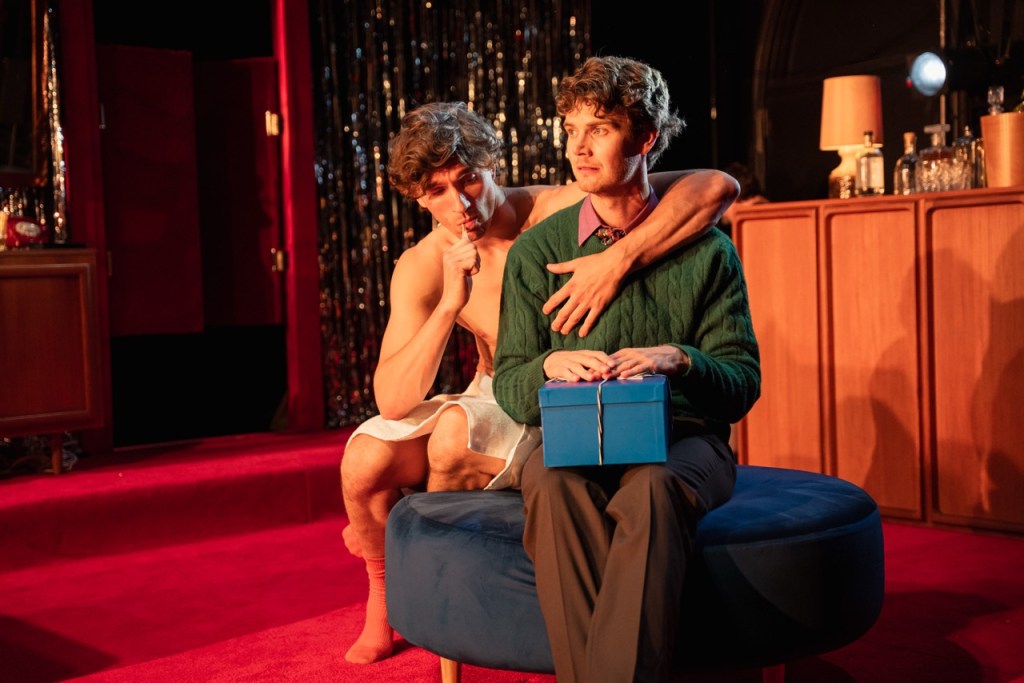
Jack Stratton-Smith & Maverick Newman. The Boys in the Band. Despite his seemingly open exterior, Michael isn’t out to everyone, and this gaggle of gays in his home will be hard to hide—especially the camp interior designer Emory (Ryan Henry), the studiously fey Bernard (Adolphus Waylee), and the loving/fighting couple Hank (Stephen Mahy) and Larry (Andy Johnston). And then there’s the gorgeous but scantily clad rentboy (Harry McGinty) that Emory has brought over as a gift… it won’t be the uptight Alan’s kind of scene. Or will it?
Director Alister Smith and designer Harry Gill have embraced the camp aesthetic of a Mardi Gras float. Walls of shimmering silver streamers, a bold red carpet with blue velvet furniture, and an ominous pop-portrait of Judy Garland staring down on proceedings—it’s time to “glitter & be gay.”
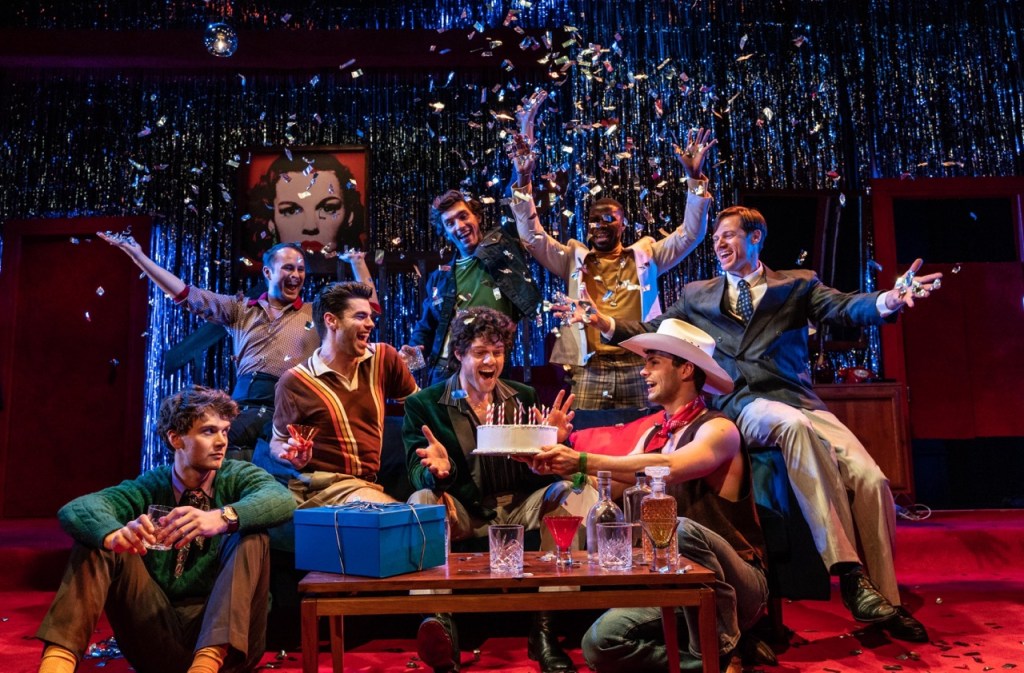
The cast of The Boys in the Band. At first, you’re left wondering if it’s “too gay” (is there ever such a thing? No!). Will this dazzling and distracting set handle the nasty drama to come? Excellent lighting by Tom Vulcan tackles the play’s sharp mood swings with ominous ease.
The cast attack the script with gusto. Maverick Newman steps right off the Murder for Two stage into The Boys in the Band with barely a change of outfit—his queer southern charm is still a joy to watch. As Michael, the play’s central character, he gets a lot more dramatic meat to chew on here, and his camp playfulness descends into shrill rage with frightening force. He proves there’s grit under the silliness worth a dramatic turn.
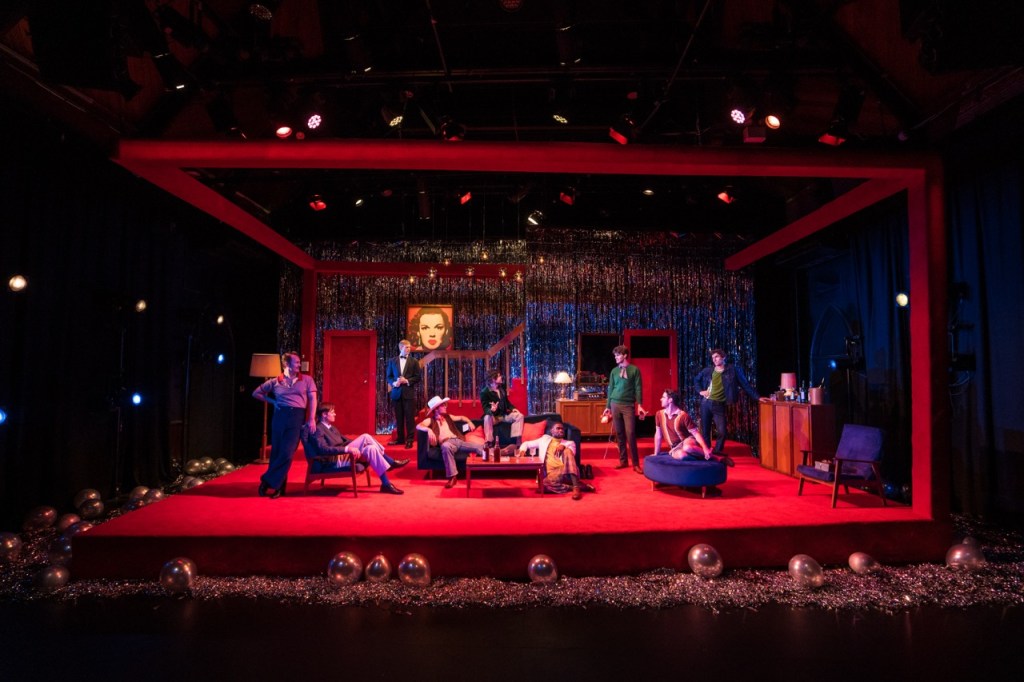
The cast of The Boys in the Band. Around him are a parade of gay caricatures—the outrageously camp one, the slutty one, the straight-acting one, the studious one, the insecure snarky one… all ready to snap at each other. In a room full of this much shade, it’s a wonder we can even see them.
The slow-building comedic farce is fun to watch as Michael’s fear hits peaks and troughs with each ring of the doorbell. But once we get past this, things start to lose steam as the cast and creatives struggle to reveal the heart of the play.
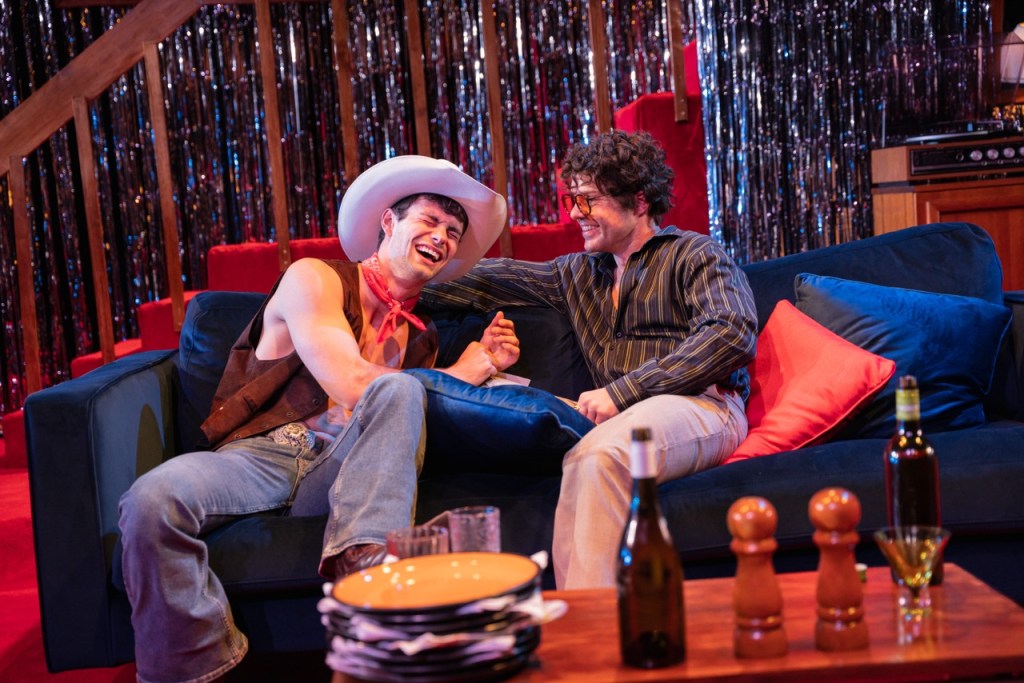
Harry McGinty & Mason Gadowski. The Boys in the Band. The Boys in the Band is a story full of self-loathing in which none of the characters are happy; they are snatching moments of happiness where they can. It taps into the fear and sadness of queer life pre-Stonewall and the Gay Liberation movement of the 60s and 70s, when gay men were only “free” behind closed doors, with the curtains firmly shut. There is a lack of depth to the despair on stage, which struggles to find firm footing under all the confetti.
Perhaps the fact that this relatively youthful production team doesn’t quite manage to translate that generational pain is a sign of progress—it’s not a time we ever want to return to.
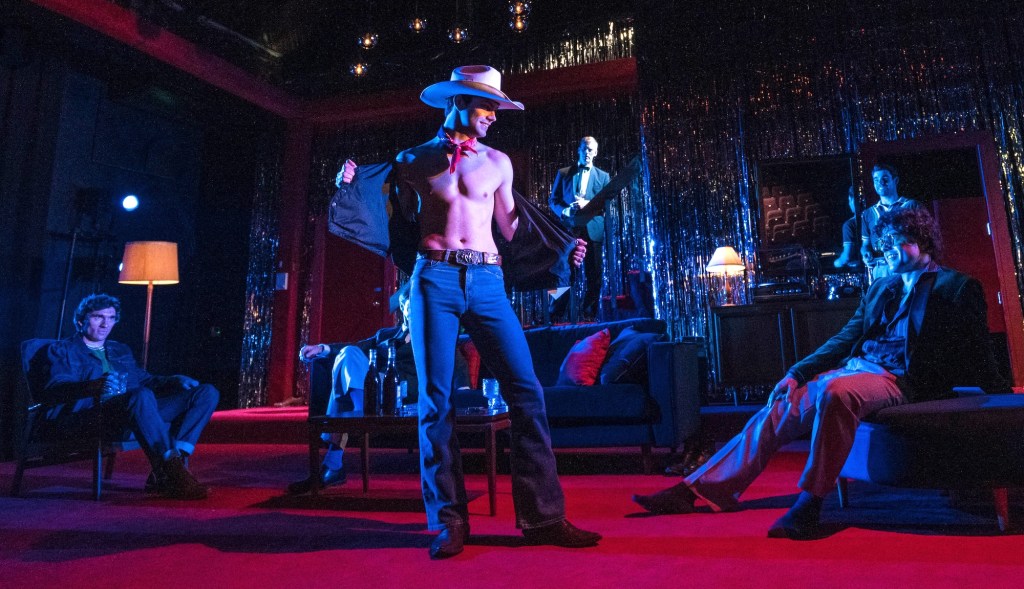
The cast of The Boys in the Band. In a similar vein to the concurrent revival of Joanna Murray-Smith’s Honour at Red Stitch Actors Theatre down the road, there is a core truth to The Boys in the Band that keeps the play relevant today. Not everyone lives with the queer freedoms we have in the metropolitan centres of a liberal democracy (and even then, many people in smaller communities within our cities are still closeted for fear of exclusion), and there is power in recognising that and letting it inform a period piece like this.
This production of The Boys in the Band is colourful and as moving as a drag queen lip-syncing a ballad—it only goes so deep, but we get to have fun along the way. It’s an important piece of queer theatre (a gay Who’s Afraid of Virginia Woolf?) that deserves to be remembered for the way it helped change public perception of gay men in a time when they were hidden in the shadows of society. And some of the dialogue… oooh, you’ll be cackling all the way home.
-
Honour (Red Stitch) ★★★½
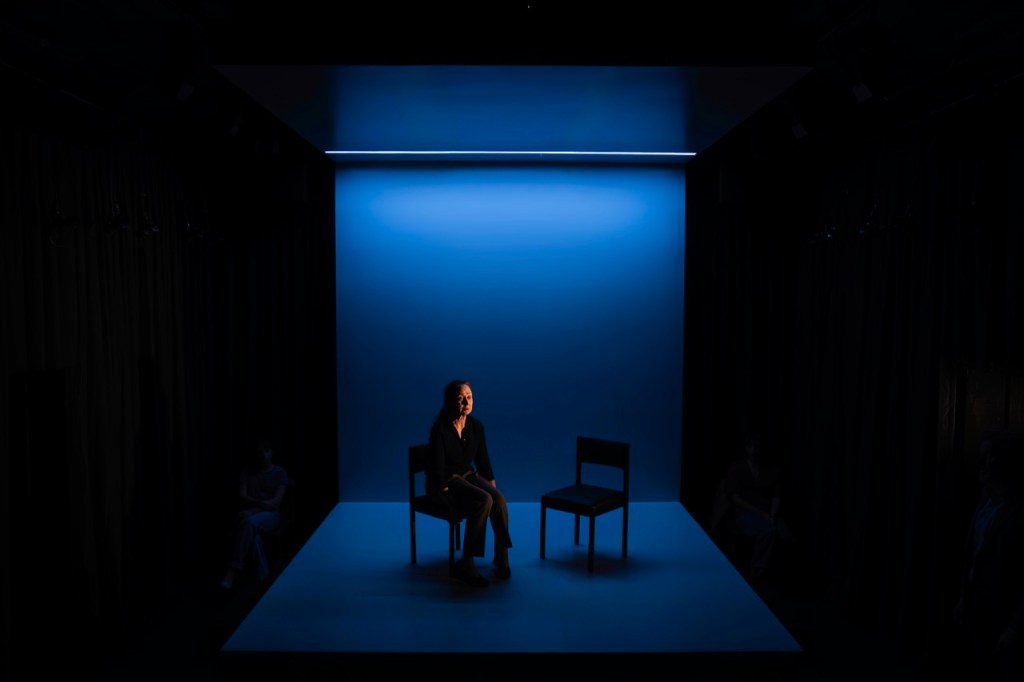
Written by Joanna Murray-Smith. Red Stitch Actors’ Theatre, Melbourne. 15 Feb – 23 Mar, 2025.
It’s sadly a “tale as old as time”: a middle-aged man leaves his family for a younger woman. While Joanna Murray-Smith’s 1995 international hit Honour may show some signs of its age, it retains an emotional truth that keeps it relevant.
George (Peter Houghton), a much-loved and awarded journalist, is being profiled by Claudia (Ella Ferris), a fiercely intelligent 29-year-old writer. Around the edges is his wife Honor (Caroline Lee), a writer herself who hasn’t published in over 20 years, dedicating herself instead to raising their daughter, Sophie (Lucinda Smith), and caring for George. Their marriage seems bulletproof, built on love and mutual admiration. But when George announces that he’s in love with Claudia, recriminations arise. Is Claudia to blame? Is George being a fool? Has Honor given up her own creative career for nothing?
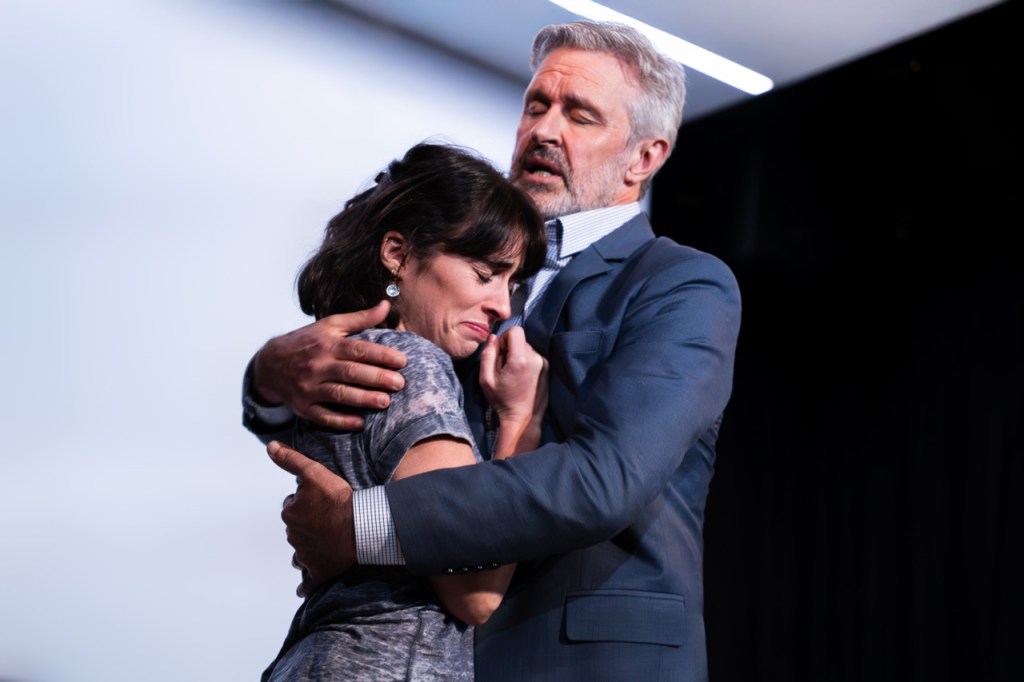
Lucinda Smith and Peter Houghton. Photo: James Reiser. It’s always useful to take a step back and revisit the basics before building on decades of thought, and that’s what this presentation of Honour does. It reminds us of the sexual politics and public debates that form the foundation of our modern view of relationships. It also starkly highlights the fact that these issues still occur, in exactly the same way, today. When Claudia points out that it’s “always the woman” who sacrifices for the man in a relationship, it still rings true in 2025, as women continue to bear the brunt of domestic duties even when both adults are working.
That’s not to say Honour is without its rough edges. Watching it today, one might yearn for the intellectual and emotional interrogation to dig deeper than it does. The dissection of love and relationships feels somewhat narrow these days.
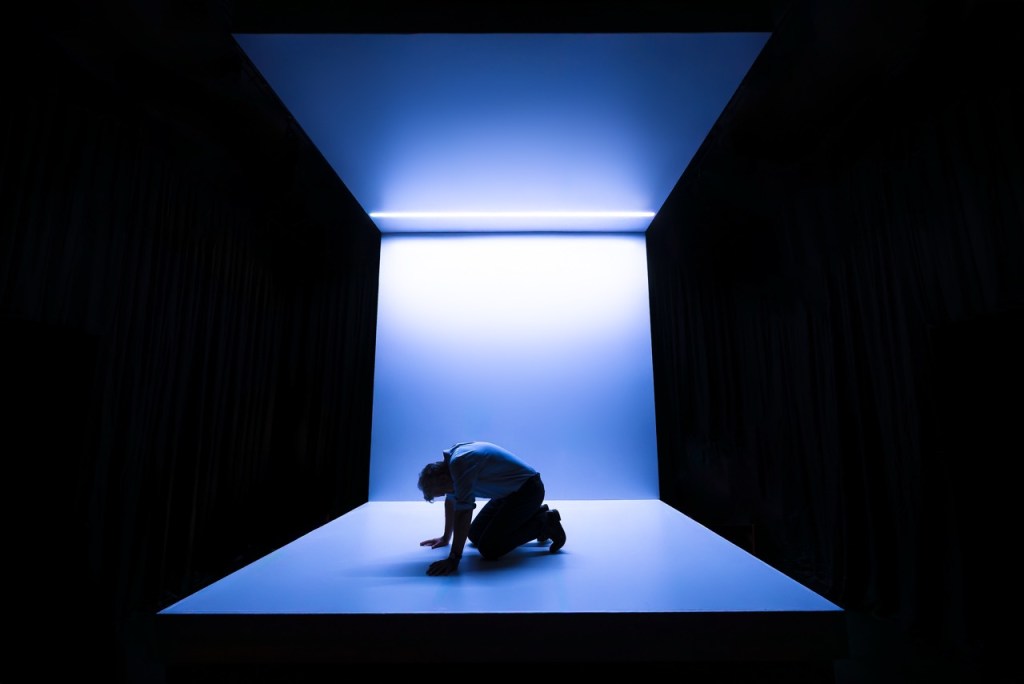
Peter Houghton. Photo: James Reiser. In the intimate Red Stitch Actors Theatre, all attention is on the acting. In a space this size, performers can invest in micro-moments and nuance without the need to play to the cheap seats. When not involved in a scene, the cast sit or stand at the side of the stage, observing the action, always in character. Without the distraction of a set (the staging is reduced to a white stage with two chairs), all eyes are on the actors.
Peter Houghton is superb as the brilliant George, who is sharply self-aware but still falls into the middle-aged cliché of the mid-life crisis. His opening scene, full of stutters and changes of thought, is a lesson in open interiority. Each character’s thoughts and shifts are clear and honest, while maintaining the rhythm of the script. He is a man who “thinks through his mouth,” and this mass of text feels alive. As this seemingly self-assured man is rocked by the attention of a younger woman, his newfound insecurity is wonderful to behold.
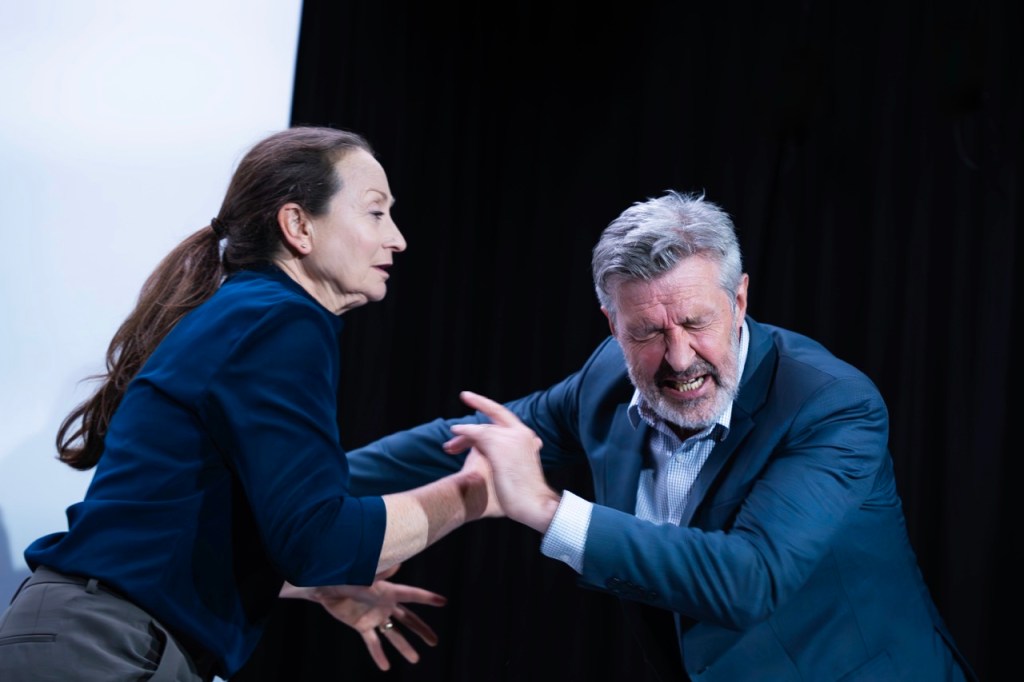
Caroline Lee and Peter Houghton. Photo: James Reiser. Caroline Lee’s Honor travels a similar yet distinct arc, moving from wry observation to grief, then to self-reliance. It’s a suitably intelligent performance that benefits from the small theatre space, allowing her to live in the smaller moments. Honor is often quiet and thoughtful, which can seem passive, but here it represents a journey of a woman rising from within. When she bites back, it’s a delicious shock of unexpected energy, fuelled by her own disappointments.
Ella Ferris’s Claudia is a harder role to balance, often reduced to being an external agent of change, rather than a fully fleshed-out character herself. Murray-Smith’s script layers the role with complex motivations: she is a strong, intelligent, beautiful woman aware of her power but also deeply concerned about her own emotional capacity. Ferris plays the role broader than the others, which at times felt overly demonstrative against the smaller, subtler performances around her.
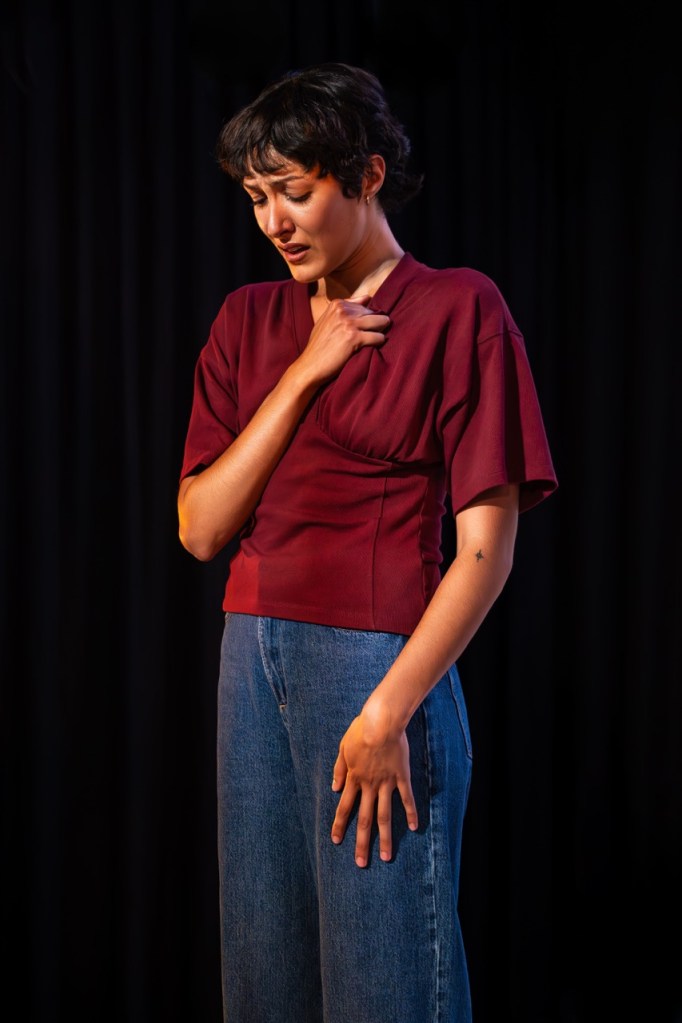
Ella Ferris. Photo: James Reiser. There is a coldness to Honour. The sharpness of Murray-Smith’s text is muddied by overly fast delivery; the humour is never given space to land, nor are the emotions allowed room to build. For all the talk of passion, George and Claudia’s romance feels more like a concept than a rush of excitement. Honor herself often seems depressed, and that depression dampens the atmosphere.
Is Honour still relevant? Yes. The emotional question at its core holds true as long as we live in a world where relationships end and new ones begin. Audiences will always approach classic plays with fresh eyes and minds, discovering new truths in the text. Built on excellent, lived-in performances, Honour will continue to strike hard at the predominantly middle-aged and older audiences who fill the theatre.
-
Truth (Malthouse) ★★★½

Written by Patricia Cornelius. Malthouse, Melbourne. 13 Feb – 8 Mar, 2025.
Patricia Cornelius’ exploration of the power of whistleblowers and the intrusion of state power in Truth is powerful and portentous but ultimately so one-sided that it risks being dismissed as propaganda. With little new to say about the state of digital surveillance in which we live, it proves to be entertaining and lively. However, you can’t escape the fact that this is a simple hagiography through and through. We’re not here to debate Assange but to venerate him.
Five performers take to the dark, encaged stage to play the hacktivist hero (or traitor) Julian Assange. From his youthful days in Melbourne’s early computer scene to his eventual imprisonment and controversial plea deal, we move through Assange’s life, with extended stops along the way, in a recitative form—five voices speaking as one, finishing each other’s sentences.

Photo: Pia Johnson. The first thing that strikes you is the ominous set design by Matilda Woodroofe. An imposing metal gantry and wire fencing dominate the rear of the stage, above which hangs a screen displaying bold text. The edges of the stage are littered with microphones and cameras. The only other staging consists of five desks with old-fashioned computer monitors and keyboards. The cast dashes around and through this set with the clandestine fervour of a spy drama or revolutionary guerrilla war.
As a five-strong chorus, Emily Havea, Tomas Kantor, James O’Connell, Eva Rees, and Eva Seymour have very little in common other than the ill-fitting suits they wear. Notably, none have Assange’s recognisable shock of white hair. Their varying heights, ages, and appearances suggest that this version of Assange is the “everyman”—the activist in all of us. As the play progresses, each slips into secondary roles that suit their particular moulds (Edward Snowden, Chelsea Manning, etc.).

Photo: Pia Johnson. And it’s thrilling to watch. Director Susie Dee, a long-time collaborator with Cornelius, animates this wall of text with furious, but never needless, action. Cornelius’ text has a rhythm that the ensemble slips in and out of, giving it a natural flow. Yes, it’s a lecture, but it’s never a dull one.
The events around Wikileaks have been dramatised numerous times in film already, and while Truth anchors itself on Assange’s biography, it is more interested in the broader way the public is kept ignorant and reality is hidden from us all. A replay of violent drone footage, showing the US military killing and injuring civilians, hits hard—a reminder that this isn’t an abstract examination of concepts, but a literal life-and-death issue.

Photo: Pia Johnson. However, it’s in the tension between discussing Assange himself (including the allegations of rape) and the broader examination of deception and informed democracy that things get fuzzy. What is “truth” anyway? Is it facts without context, and who dictates that context? All storytelling is an act of manipulating attention, so can a play speak of “truth” while manipulating the audience to achieve its desired ending?
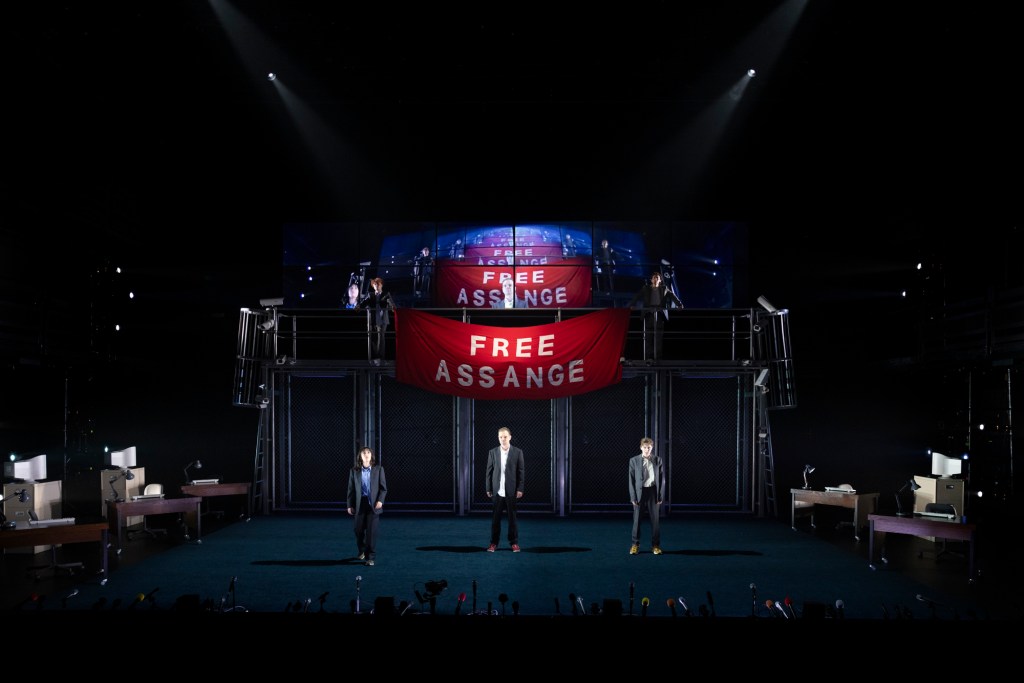
Photo: Pia Johnson. Sadly, for Assange and for the play, the idealistic notion that revealing information to the public can make the world better has proven to be shockingly false. Truth never grapples with the age of mass disinformation and “flood the zone with shit” politics. Nor does it tackle the erosion of faith in institutions, which has led to the fracturing of modern politics, the rise of conspiracy thinking (from Wikileaks to QAnon isn’t much of a leap), and the structural nihilism that is breaking down society.
With its laser focus on Assange, Truth lets bigger and more contemporary issues pass by without deeper examination, and that is perhaps my biggest frustration with the play. While it is undoubtedly an interesting and engaging piece of theatre, it strangely feels like a timely revival of an old play, rather than a new work for 2025. Assange is a fascinating figure in our history, and his work revealing the hypocrisy of the modern West is rightly to be applauded. However, its legacy is more complicated than Truth lets on.
-
Subscribe
Subscribed
Have a WordPress.com account? Log in now.

