-
Welcome to Cultural Binge

The rating system is simple:
★★★★★ – Terrific, world-standard. Don’t miss.
★★★★ – Great, definitely worth seeing.
★★★ – Good. Perfectly entertaining. Recommended. Individual mileage may vary.
★★ – Fine. Flawed and not really recommended, but you may find something to appreciate in it.
★ – Bad (& possibly offensive).
See more reviews over at The Queer Review.
Instagram: @culturalbinge
Substack: culturalbinge.substack.com
Email: chad at culturalbinge.com
-
Casey & Diana (Qtopia) ★★★½
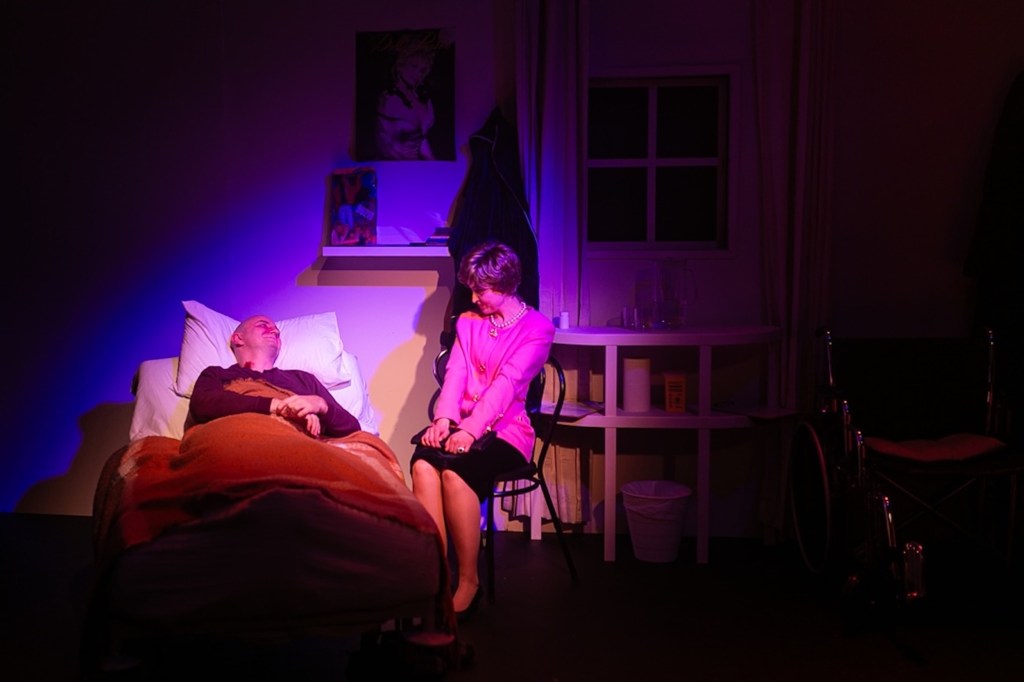
Written by Nick Green. Australian Premiere. Mi Todo Productions. Qtopia. 22 Jul – 8 Aug, 2026.
Princess Diana’s place as a noted AIDS activist sets the scene for Casey & Diana, a predictable but moving drama that serves as a showcase for five great performances from actors who are now all on my “I’ll keep an eye out for them” list.
It’s 1991 and we’re in Casey House, an AIDS hospice in Toronto, Canada, when a new patient, Andre (Gabriel Alvarado), is admitted. He’s placed in a shared room with one of the longer-term residents, Thomas (Chad Traupmann) — a camp, talkative man with a biting wit. Under the watchful care of the no-nonsense Vera (Isabel Burton) and new volunteer Marjorie (Linda Nicholls-Gidley), the two men await their fate. But the hospice is abuzz with news… they’re about to get a visitor of royal standing. As the thought of meeting Princess Diana (Lib Campbell) gives the men a rush of excitement, Thomas’ joy is threatened by the reappearance of his estranged sister Pauline (Lucy Miller). He just has to keep it together for seven days till the Princess arrives…
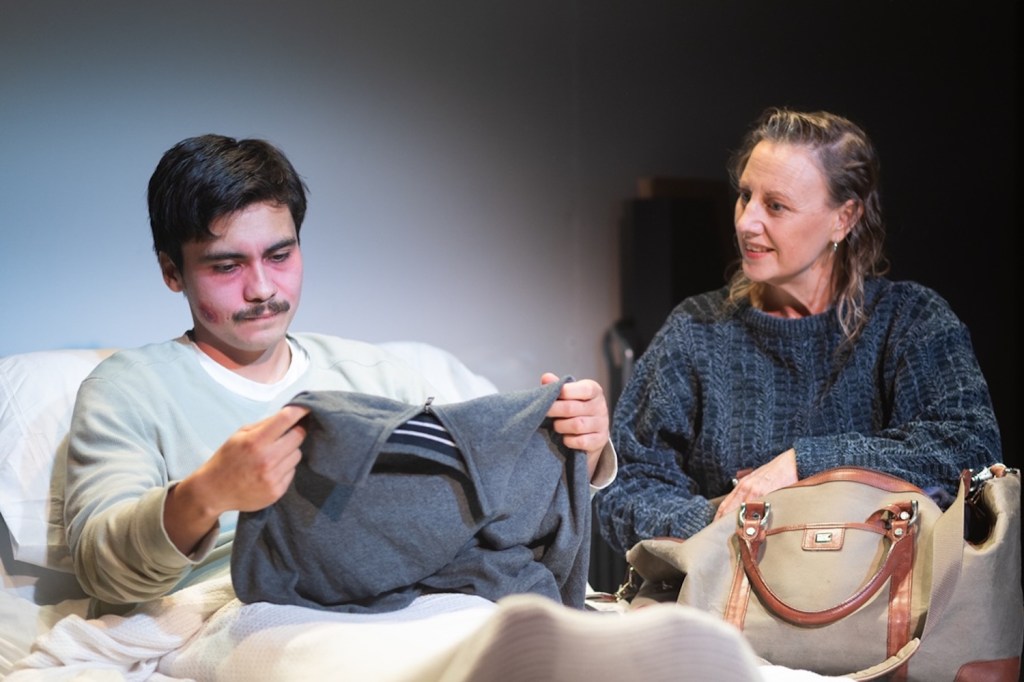
Gabriel Alvarado & Linda Nicholls-Gidley. Photo: Teniola Komolafe. Against my best efforts, I found myself getting teary at the end. I walked in knowing this was an AIDS drama set in the early 90s, and let’s be honest, it was never going to end cheerfully. But over the course of the play’s two hours and thirty minutes, the characters managed to get under my skin. Playwright Nick Green wins you over in the play’s closing moments with a sweetly circular beat that got past my cynical guard. It landed so beautifully thanks to the combined effort of a cast who balance the script’s humour with its serious heart.
Princess Diana’s activism during the AIDS crisis was hugely influential, and along with unlikely allies like Tammy Faye Bakker in the US, her empathy for those suffering helped break a lot of the stigma of the time. When Diana shook the hand of an AIDS patient at London’s Middlesex Hospital in 1987, it marked a turning point in public awareness that AIDS was not transferable by touch. She would make headlines again in 1989 by hugging a child with AIDS at a Harlem hospital. And on her final visit to Canada in 1991, she would visit Casey House. The specificity of the location isn’t particularly relevant to the story beyond its Canadian origins, and focusing on a less historic visit lets the attention fall on the people rather than the events.
Director Nancy Denis is a force of nature (if you saw Juicy Riot you know exactly what I mean), but here she disappears into the material, guiding the cast to emotionally raw performances that feel fully embodied. Reactions felt organic; characters felt whole. While the script had some clearly “stagey” scenes, they were grounded in real humanity. It’s the kind of seamless emotional experience you get when a strong cast is in sync with its director.
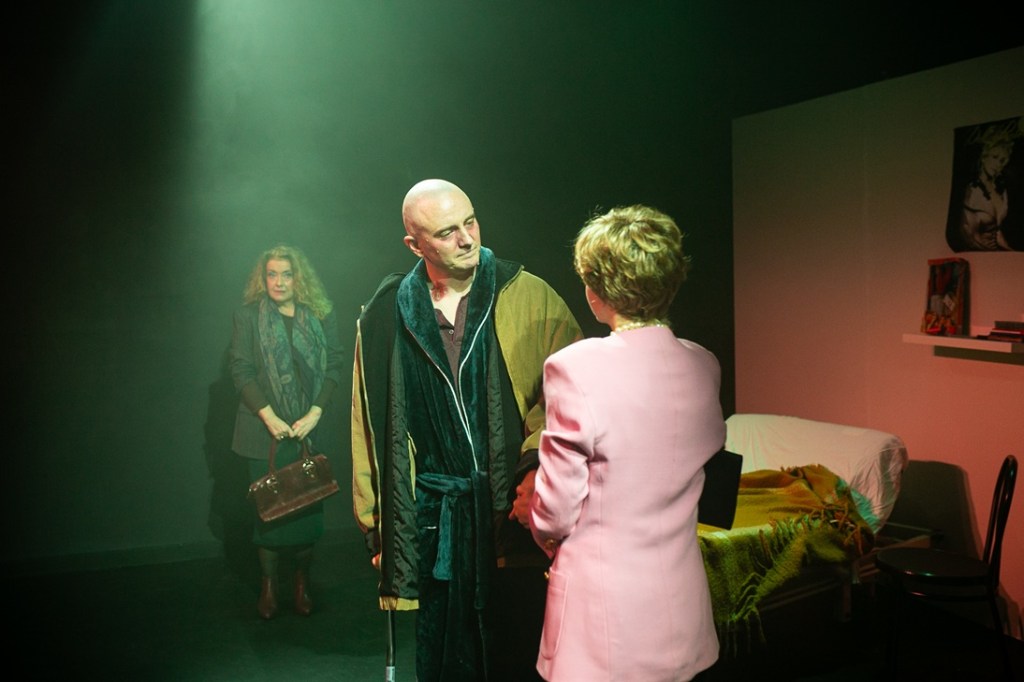
Lucy Miller, Chad Traupmann & Lib Campbell. Photo: Teniola Komolafe. The cast is uniformly strong, but Chad Traupmann’s lead performance as Thomas deserves mention. Camp always hides a core of pain, which Traupmann understands, and his 80s-pop-culture-obsessed Thomas has the kind of sharp, cutting humour that reveals his inner turmoil. The role requires a mix of competing motivations on top of portraying an illness, and Traupmann (who I’m more familiar with as a producer rather than a performer) has created a nicely layered character.
Despite its length and production limitations, Casey & Diana puts its focus on character, and it pays off big time.
-
Bennelong in London (Sydney Theatre Co) ★★★★
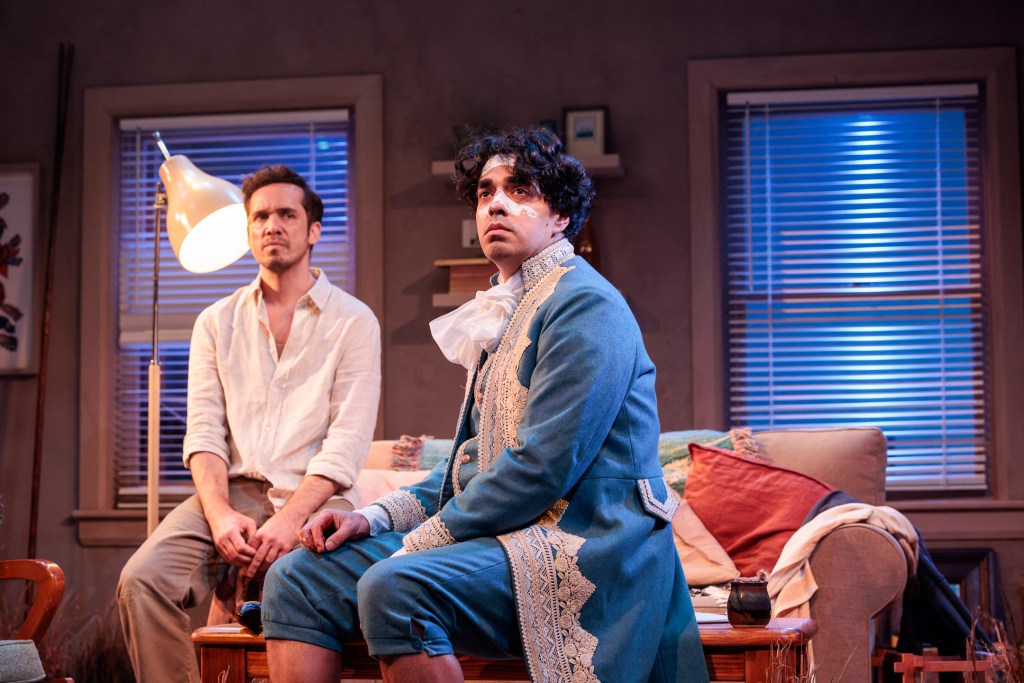
Written by Jane Harrison. World Premiere. Wharf 1 Theatre. Sydney Theatre Company. 18 Jul – 16 Aug, 2026.
Jane Harrison rewrites the established book on a key part of Australia’s colonial history, retelling the life of Bennelong from his own perspective and letting it ripple through time to 2026. But, you know, in a fun way.
In the suburbs of Parramatta, a thirty-something actor Sebastian Anderson (Guy Simon) is rushing home to do a self-tape audition. He wants to win the role of Bennelong in a new play, Bennelong in London (ooh meta!). Struggling to deliver his monologue into his phone, he off-handedly wishes the real Bennelong were there to help him out — and is shocked when Bennelong himself (Googoorewon Knox) appears before him, distinctly unimpressed with this NIDA graduate’s impersonation.
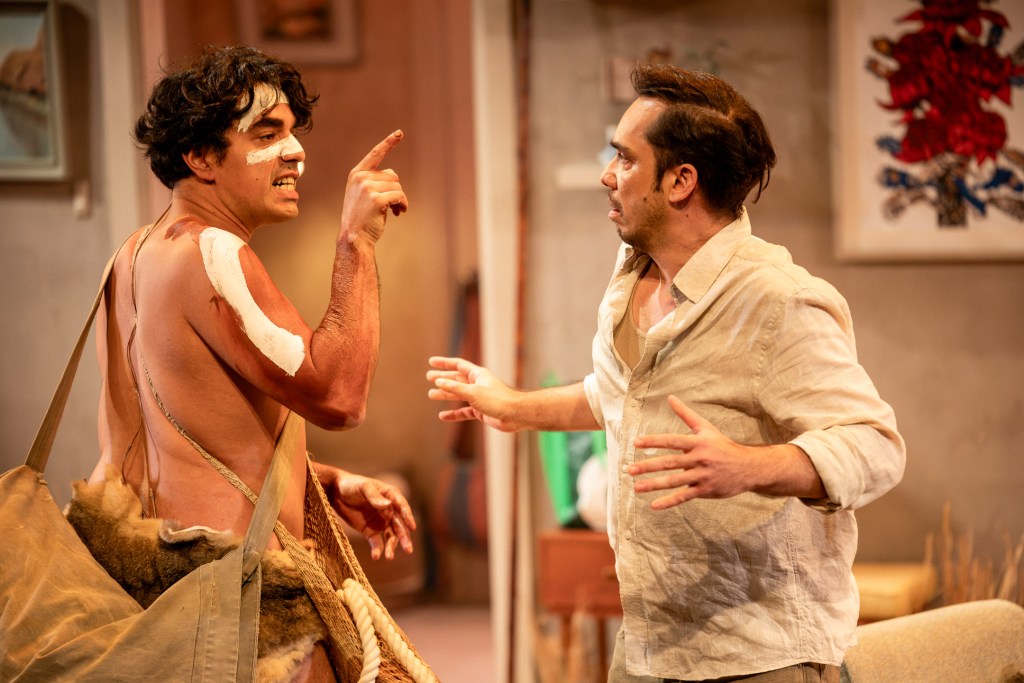
Googoorewon Knox & Guy Simon. Photo: Daniel Boud. The historical Bennelong is known as the first Aboriginal man to travel to Europe and return to Australia. Beyond that, details are scarce, gleaned from reports written by early colonisers riddled with built-in bias and the racist assumptions of the time. Those written records are, in many ways, a fiction — an act of storytelling. With Bennelong in London, Harrison counters that narrative with a fiction of her own, one told from Bennelong’s point of view. It’s a balancing of the scales that asks us to think about the power of our stories.
To do so, Harrison sidesteps historical blame and heads for heart and humour. She plays with the man-out-of-time, odd-couple energy you’d find in sitcoms (it reminded me of episodes of Ghosts, or even bits of Bewitched) and it’s exactly what stops the play collapsing into a two-handed Wikipedia recitation. Bennelong himself speaks of his time and his captors with a forgiveness and perspective that keeps things light rather than accusatory.
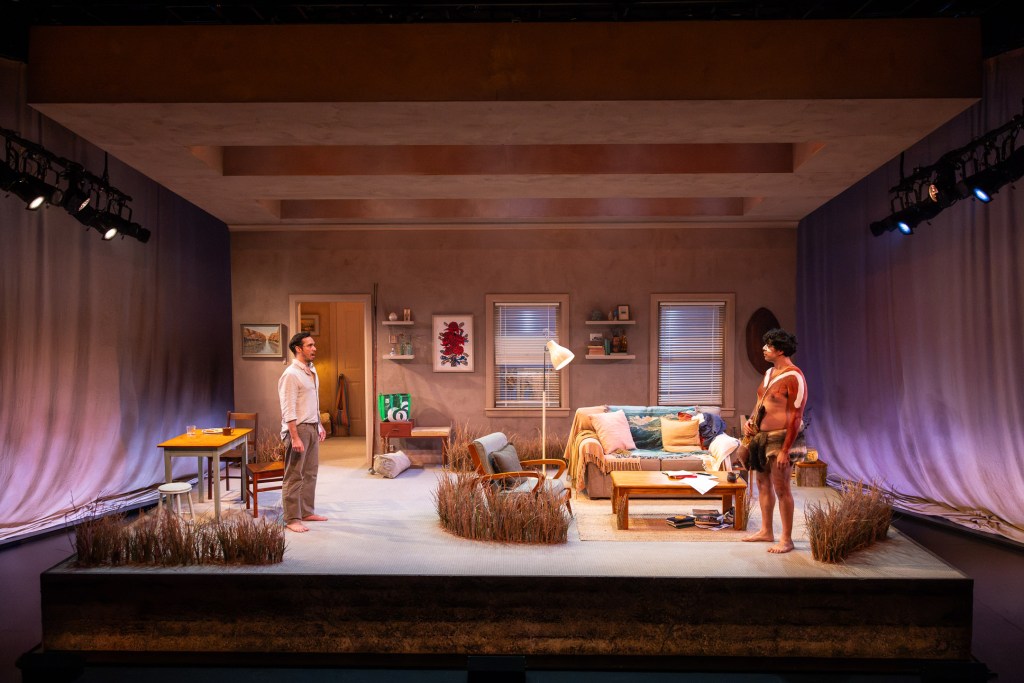
Guy Simon & Googoorewon Knox. Photo: Daniel Boud. This is a story, about a storyteller, hearing the story of another storyteller in order to tell the storyteller’s story. It’s in the onion-like layers of this narrative little tesseract that Bennelong in London has the most fun. Those in the acting profession will enjoy Harrison’s gleeful swipes at the industry’s more ludicrous affectations. Guy Simon is at his playful best as the actor chasing a gig. Bouncing off Bennelong’s impish provocations, he’s comedic foil and dramatic sounding board at once. As Bennelong, Googoorewon Knox brings intelligence and confidence to a figure history left mostly blank.
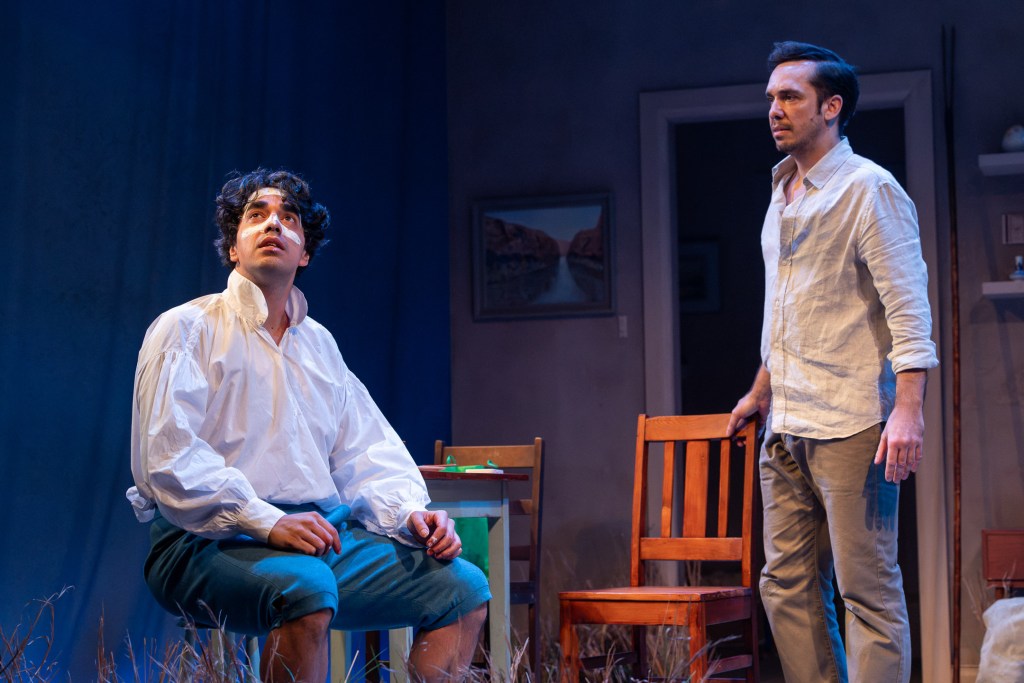
Googoorewon Knox & Guy Simon. Photo: Daniel Boud. For much of the 90-minute running time I was happy just hanging out with these two, listening to the stories and banter, but it’s the final stretch — when director Ian Michael lets the drama and the storytelling escalate into something more theatrical — where the play truly lands. Trent Suidgeest’s lighting, Emma White’s stunning use of waratahs, James Peter Brown’s sound design, and Knox and Simon’s performances combine into something with real theatrical power. I wanted more of it.
Bennelong in London manages to stay warm and approachable while it talks about contentious moments in history, and that’s a balancing act that takes skill. Two entertaining performances, combined with technical excellence, prove that storytelling still has a real impact — oh, is that another layer to the onion? Damn, they’re clever…
-
Pride & Prejudice* (*sort of) (Sydney Opera House) ★★★½
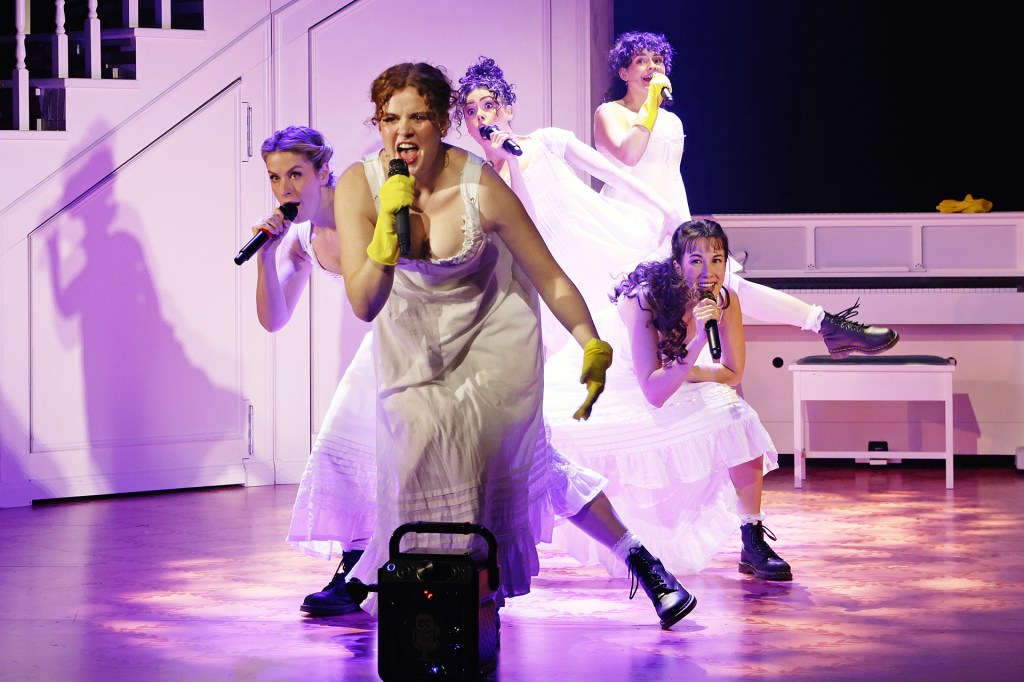
Written by Isobel McArthur after Jane Austen. Neil Gooding Productions & Woodward Productions. Sydney Opera House, Drama Theatre. 16 Jul – 30 Aug, 2026.
Another year, another comedy-riff on Jane Austen’s Pride & Prejudice! This time it’s Isobel McArthur’s Olivier Award-winning karaoke cover version that trades Austen’s incisive wit for brash anachronisms and pop bangers.
The schtick of PAPSO (apologies for the abbreviation) is that it turns Austen’s novel into an oral retelling by five maids, the kind of people overlooked in these grand sweeping Georgian romances. This means the whole cast play multiple roles jumping from scene to scene with some ridiculous quick changes.
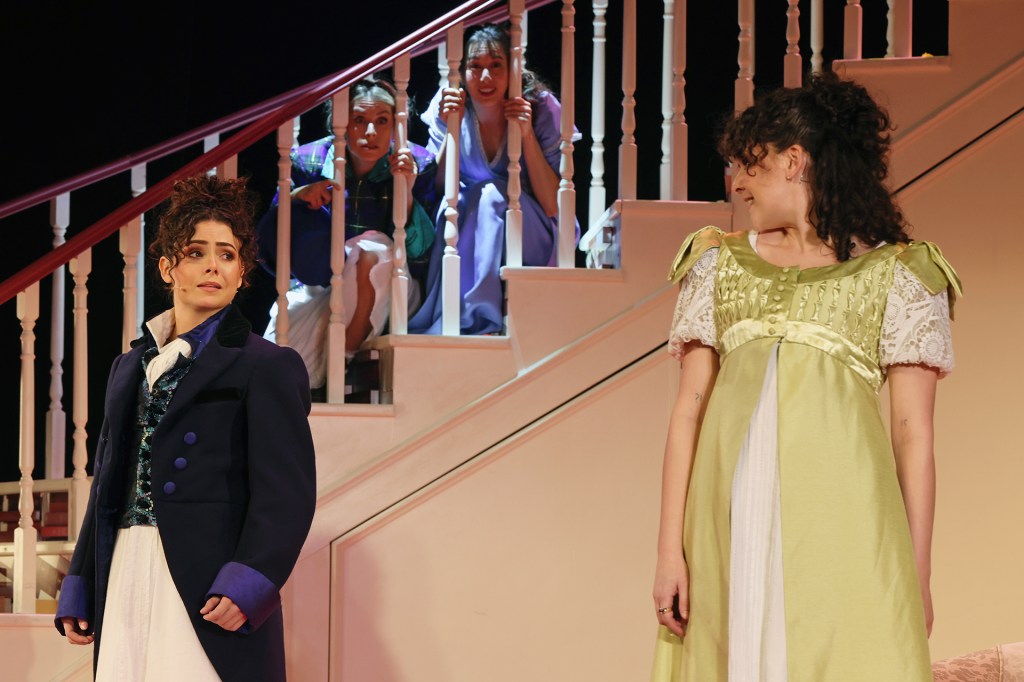
Zoe Ioannou, Amy Lehpamer, Kaori Maeda-Judge & Teo Vergara. Photo: Prudence Upton. Teo Vergara gets off relatively lightly playing the leading part of the feisty heroine Elizabeth Bennet. Amy Lehpamer gets to play the pining Charlotte Lucas, as well as both Mr Bingley and his haughty sister Caroline, the latter of which is a scene-stealer. Kaori Maeda-Judge jumps from the broken-hearted Jane Bennet, to the rakish George Wickham, and best of all — to the imperious Lady Catherine. The diminutive Zoe Ioannou doubles the stressed Mrs Bennet with the taciturn Mr Darcy. Ruby Shannon gets the widest range of roles, as both Mary and Lydia Bennet, the creepy Mr Collins, and the loving Mrs Gardiner. It’s a top-notch musical/comedy cast and all five are exceptional.
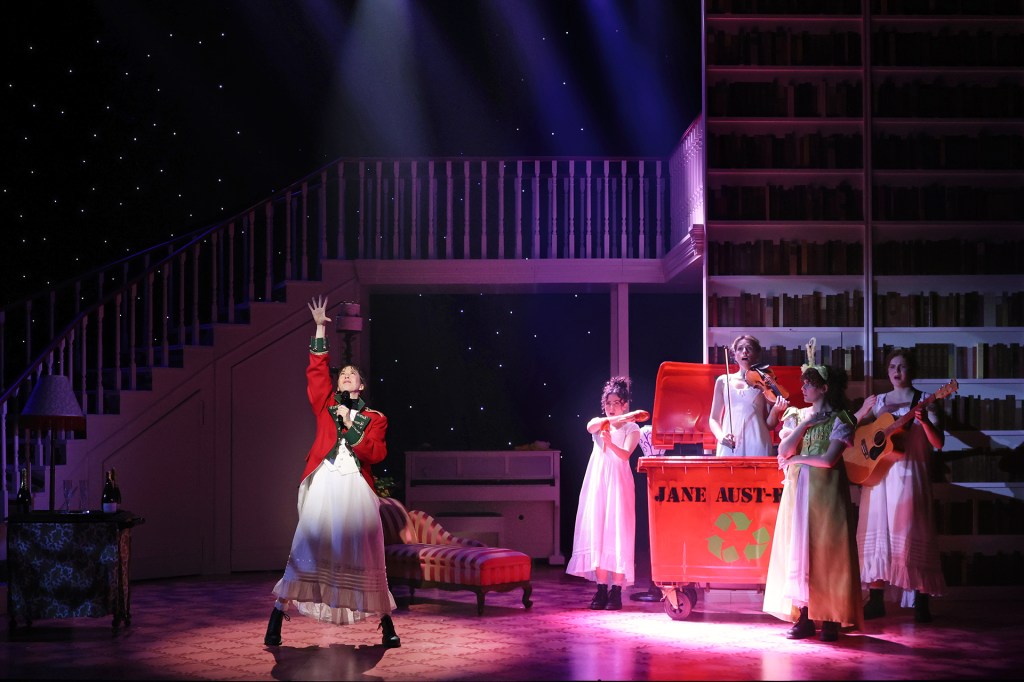
Cast of Pride & Prejudice* (*sort of). Photo: Prudence Upton. McArthur’s script relishes highlighting the problematic issues of the day (like Wickham’s habit of abducting teenage girls) and joking about the sexism of the Bennet sisters’ predicament. After setting up the premise, that this story is being retold by the servants, McArthur lets this pretext slide, which is a shame — there would have been a rich vein of commentary to mine — instead the maids become narrators and a simple framing device instead. With only one attempt at any kind of social commentary (a solitary wry joke about immigration), McArthur is here to have fun, not preach, and thank god for that — with a running time of 2 hours 30 minutes the show doesn’t need to be any longer.
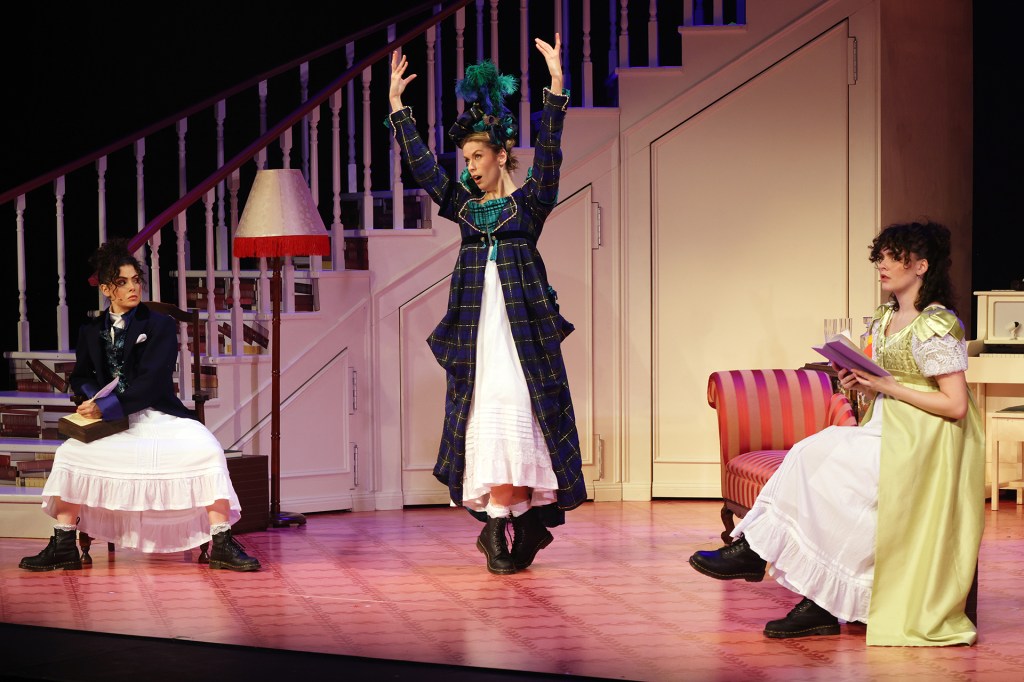
Zoe Ioannou, Amy Lehpamer & Teo Vergara. Photo: Prudence Upton. The karaoke moments give the show frequent bursts of colour and energy, but feel like a vestigial throwback to an earlier iteration of the show that is better suited to a smaller venue (the show has real “fringe hit” energy despite having originated at Glasgow’s Tron Theatre). Much of PAPSO feels slightly lost in the deep Drama Theatre space in the same way the recent tour of The Play That Goes Wrong did. The set keeps things relatively simple (with a few neat surprises), and much of the visual flare comes from Ana Inés Jabares-Pita’s costumes which are a delight, from the subtle differences between the Bingley siblings, to the Titanic-sized hat worn by Lady Catherine. It’s impressive how they manage to be both visually striking and workable with rapid quick changes. My tip — book for the front 10 rows to be really immersed in the show.
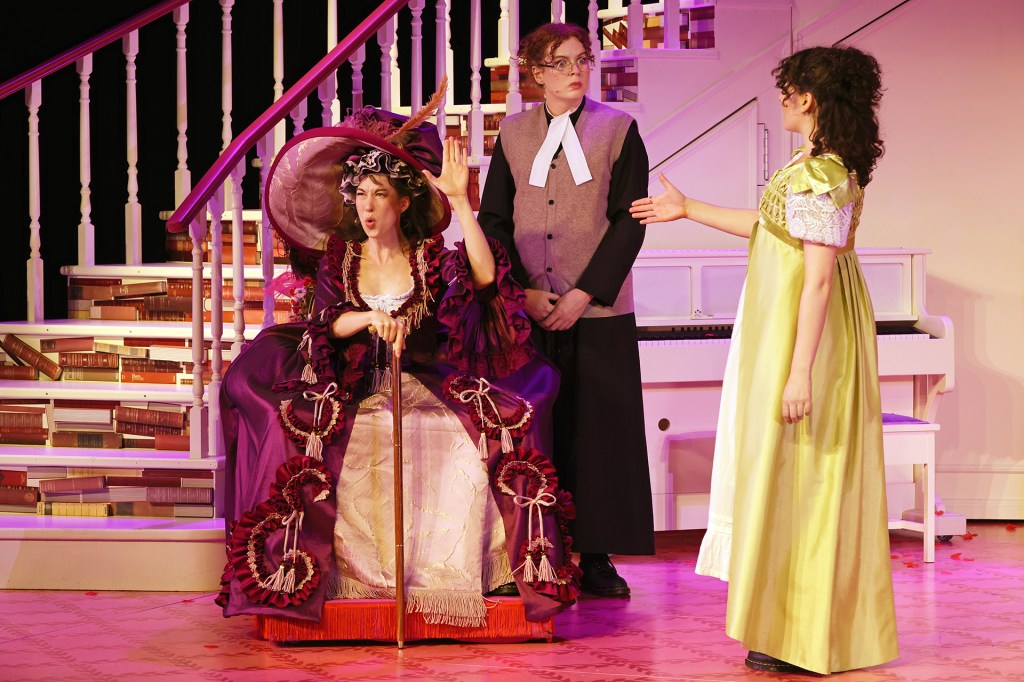
Kaori Maeda-Judge, Ruby Shannon & Teo Vergara. Photo: Prudence Upton. It definitely pays to know your Austen, in all its forms, to get the most out of PAPSO, with a lot of the laughs coming from seeing how they’ll try to execute the well-known story-beats. Jane’s horse-ride to the Bingleys’ house and Darcy’s return home are comedy highlights (but you’ll need to be familiar with the BBC adaptation to get the joke).
Pride & Prejudice* (*sort of) is like one of those florid, viral croissants you get from Lune — it’s ridiculous and tasty, full of deliberately empty calories to enjoy. You’ll have a great time revisiting the highlights of that book you read in high school while you wait for the next cinematic adaptation. Have no fear of being stuck in some high-brow night at the theatre — this one is firmly set at mid.
-
Holy Hell (Old Fitz Late) ★★★½
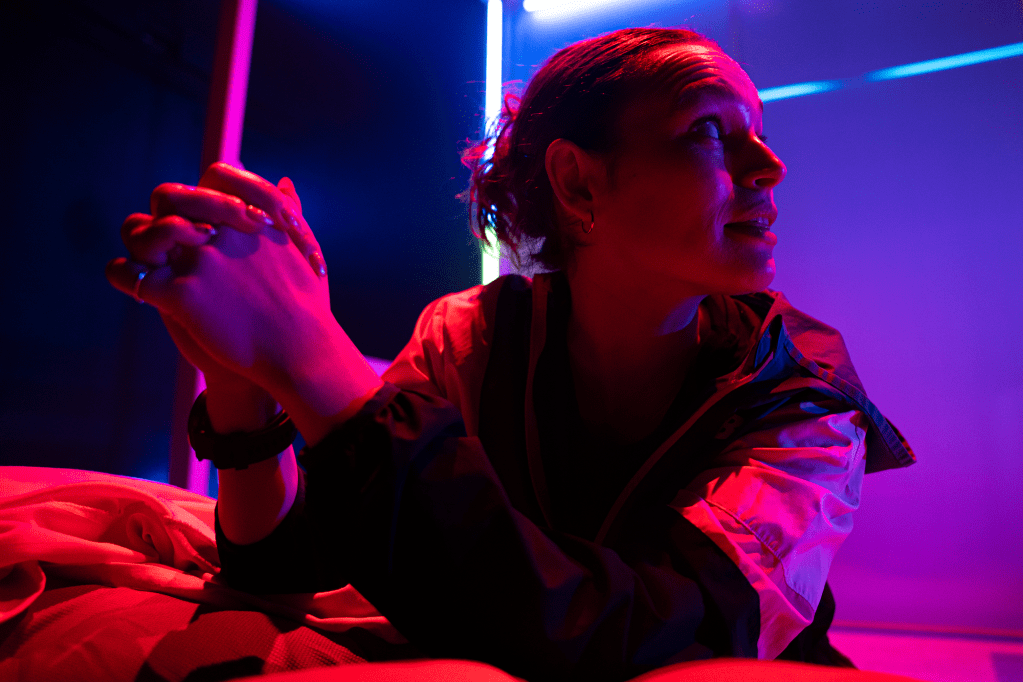
Written by Bianca Watkins. World Premiere. Bloodline Productions. The Old Fitz Theatre. 14-24 Jul, 2026.
Faith, friendship and hard drugs combine to produce some unexpected answers in Bianca Watkins’ new play, Holy Hell, that proves itself to be more devout than you might expect.
Catholic university students Cat (Stephanie Somerville) and Mish (Courtney Ally Miller) aren’t exactly the best of friends, but when their mutual bestie Daisy has her drink spiked, Cat suspects one of their uni mates and enlists Mish’s help to get to the bottom of things. But Mish has other plans. She needs a character reference from Cat, and is determined to bond with her over an intense late-night “trip” provided by her dealer — aka her brother. As hallucinogens get ingested and reality bleeds into fantasies, some truths prove to be messier than expected.
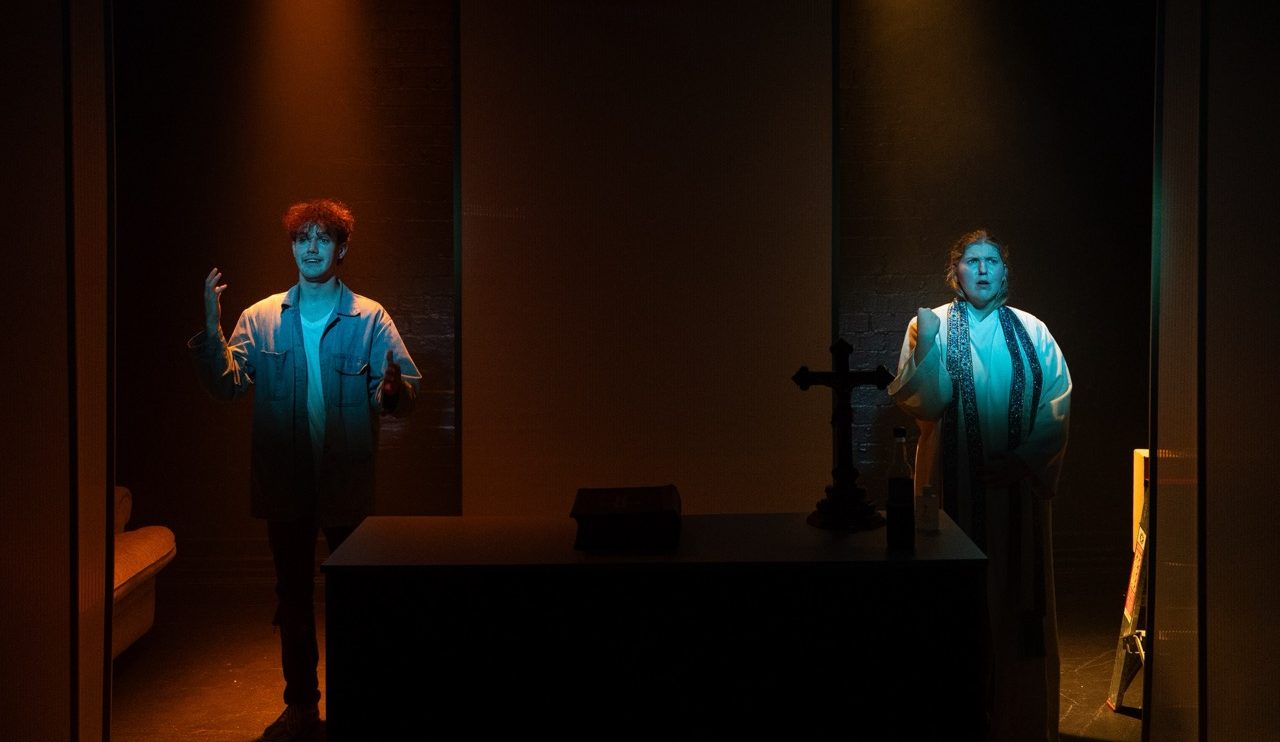
Owen Hasluck & Stephanie Somerville. Photo: Nick Warrand. There’s something refreshing in Bianca Watkins’ writing that kept subtly defying expectations as Holy Hell progressed. Rather than pushing for the drama, the story veered away from the obvious (and frankly tired) tropes of similar stories, finding itself an honest vein of emotion to explore. As Cat pursues what she believes to be the obvious answer, the truth proves to be maybe more mundane, but more emotionally impactful for her.
As the core duo, Stephanie Somerville and Courtney Ally Miller are a study in opposites. Their performances come to the material from different directions but blend neatly into the kind of odd couple friendship you only really develop in university. Director Dakotah Love keeps the comedy in check, knowing when to amplify for effect without sacrificing genuine emotional investment. The story is helped immensely by the comedic charm of Owen Hasluck as their poor, unwitting friend and the quiet calm of Riley Thomas as their university chaplain.
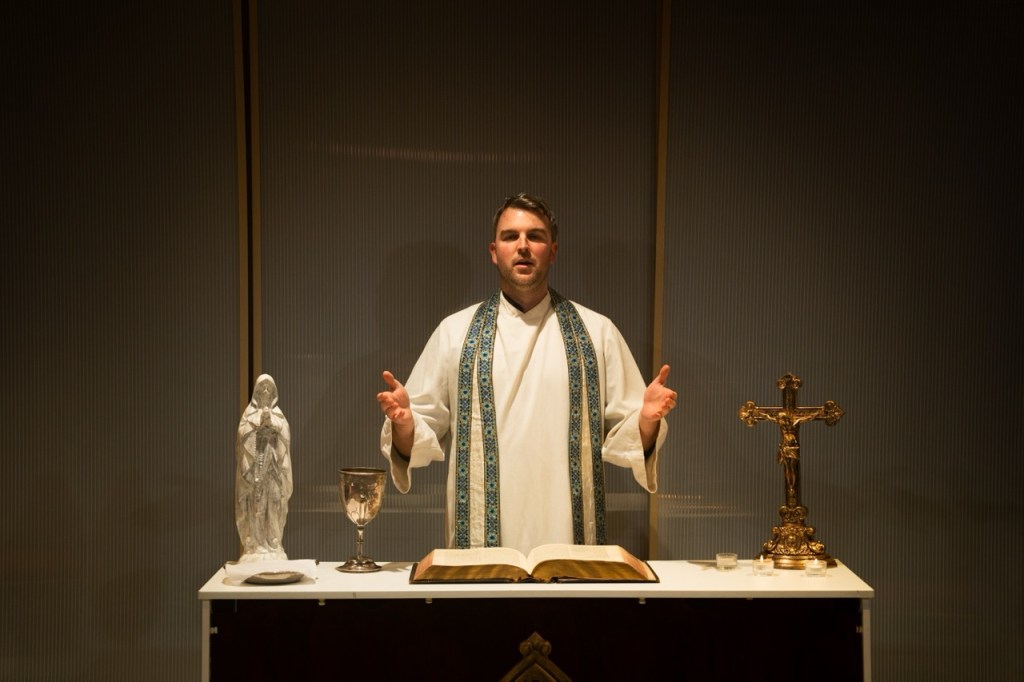
Riley Thomas. Photo: Nick Warrand. But it’s the play’s careful, inquiring exploration of faith that I found quite fascinating. Watkins avoids writing an anti-religion polemic and instead finds an element of belief at its core. There is a respectful playfulness to her observations of Catholicism that looks for nuance with a sense of positivity. I have no idea of Watkins’ relationship with religion, but she neatly avoids both juvenile rejection and blind observance.
While it doesn’t deliver on the promise of the title, Holy Hell succeeds in forging its own path through some well-trodden material. With a keen observational eye, Watkins has made an interesting and entertaining play worth staying up late for.
-
Dealing With Clair (Old Fitz) ★★★★

Written by Martin Crimp. Presented by Irregular Programming. The Old Fitz Theatre. 10-25 Jul, 2026.
In an unnerving play that uses the world of real estate as the backdrop to explore the hypocrisy of the landed classes, and the isolating pressure of city life, perhaps the most horrific thing is simply the price of property back in 1988 when the play first premiered. A “four” bed house with a garden on a nice road in London for less than you’d pay for a studio flat in 2026 – I gasped.
Young, successful couple Mike (Arkia Ashraf) and Liz (Talia Benatar) are looking to sell their house but they know how awful and predatory the London real estate market can be, where a buyer can be gazumped at the last minute by a higher bid. They want to do things ethically – list a fair asking price, and accept the first offer to reach it. As their real estate agent, Clair (Olivia Hall-Smith) gently manipulates them into greed, all while appearing to save them from their own naivety. Things are looking rosy when a new buyer, James (Daniel Fletcher), turns up with a large cash offer. Everyone is happy to overlook James’ personality quirks when he’s the one who is about to make them all quite rich.
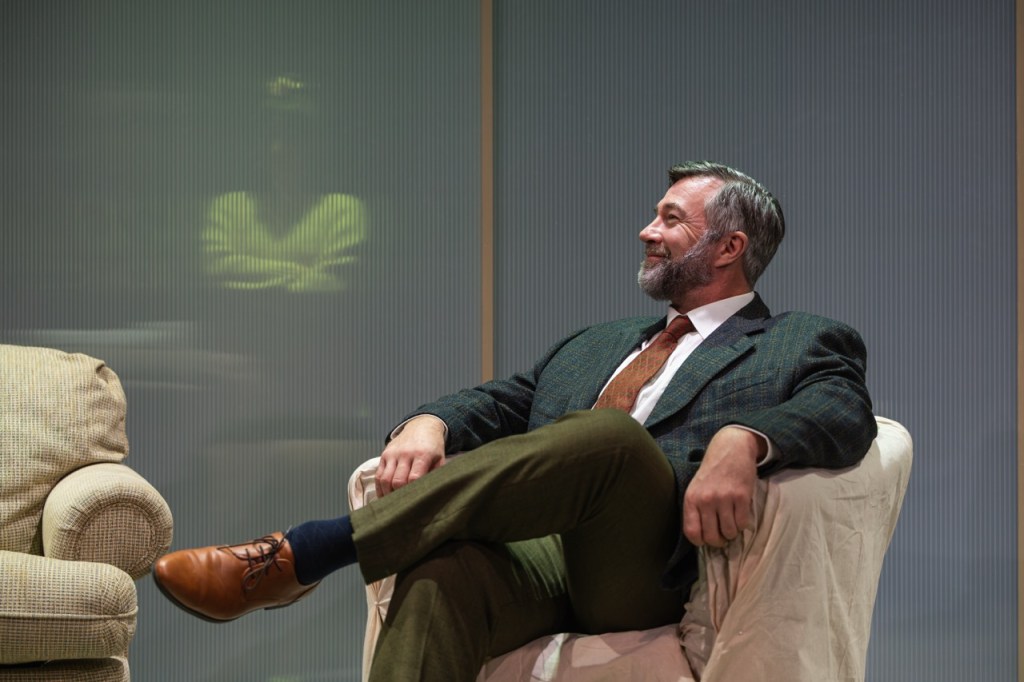
Jade Fuda & Daniel Fletcher. Photo: Robert Miniter. Inspired by the real life disappearance of London real estate agent Suzy Lamplugh in 1986, playwright Martin Crimp takes aim at the unleashed greed of Thatcherite Britain, and sadly nothing much has changed since. In this layered satire, Crimp’s villain is society as a whole, a toxic Id unmoored from any sense of community. Mike and Liz justify their greed in small steps as they look down on their nanny, Anna (a scathing performance by Jade Fuda), and mock Clair behind her back. When Clair disappears, her entire existence in London is swept away by a city of people only looking after themselves. As tradesman Ashley (Bayley Prendergast) points out, the house itself has flaws that everyone is overlooking. Only James seems to have the measure of the modern world, and his response is terrifying.
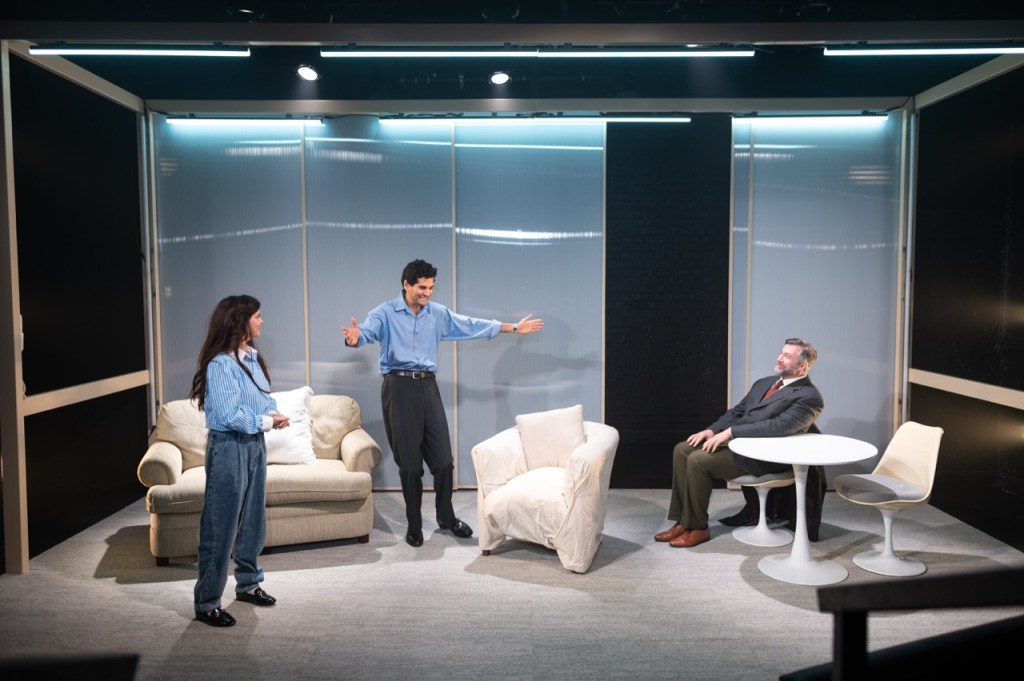
Talia Benatar, Arkia Ashraf & Daniel Fletcher. Photo: Robert Miniter. Soham Apte’s set creates a sterile box with sliding, translucent doors. It screams featureless, mass-produced neutral – the colour of empty hallways so inoffensive to everyone it basically rejects inspection. On this backdrop, Izzy Morrissey’s lighting brings movement and tone, as well as a harsh modernity in neon strips. Director Harry Reid invites ghosts to inhabit the space – the child we never see, Anna lurking in the next room, a stain you barely notice until you do. Even the makeshift nature of an independent theatre set accentuates the themes of transience and impermanence.
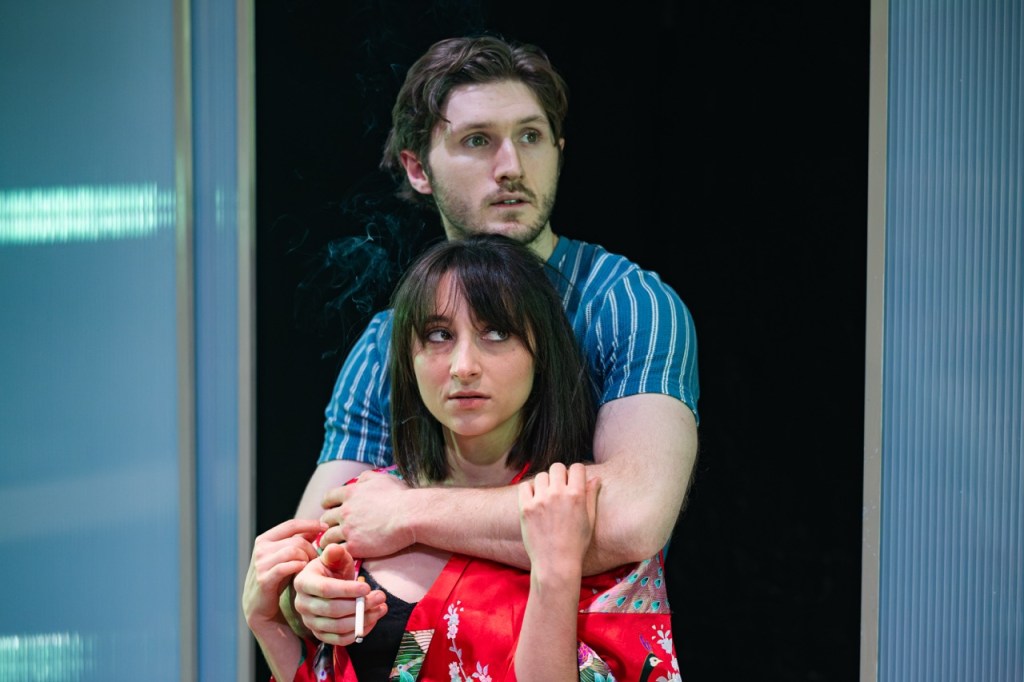
Bayley Prendergast & Jade Fuda. Photo: Robert Miniter. Daniel Fletcher’s off-kilter performance as the polite James strikes just the right note. He exists in another reality, an alien lacking the delusions of the other characters while steeped in their manners. Around him, Olivia Hall-Smith’s Clair tries to manoeuvre and engage with him while deflecting his unwanted intrusions. There is a fear beneath her professional, determined exterior. Meanwhile, Arkia Ashraf and Talia Benatar’s entitled couple are brilliantly clueless to their own corruptions.
After some less-than-thrilling exposures to Crimp’s work, I’ve started to come around to his writing – mainly thanks to the team at Irregular Programming. Or maybe I’m just more comfortable with the darkness of life now, and I find myself on Crimp’s wavelength. Either way, Dealing With Clair is a disturbing but rewarding watch.
-
The Addams Family: The Musical (Hayes) ★★★★
Book by Marshall Brickman & Rick Elice. Music & Lyrics by Andrew Lippa. Based on Characters Created by Charles Addams. Presented by Joshua Robson Productions in association with Hayes Theatre Co. Hayes Theatre. 11 Jul – 9 Aug, 2026.
After getting the kind of savage Broadway reviews that would kill most shows, The Addams Family: The Musical went on to live a full life — as is appropriate for the gorgeously gothic sitcom family. But that show had the theatrical firepower of Nathan Lane and Bebe Neuwirth. Can the scrappy scamps at The Hayes deliver the same crowd-pleasing magic, or is this one D.O.A.?
Wednesday Addams (Jenny Guigayoma) has a secret. She’s met a boy named Lucas (Alexander Tye) and fallen in love. When her Uncle Fester (Evan Lever) finds out, he invites Lucas and his parents Mal & Alice (Rory O’Keeffe & Teagan Wouters) over to the Addams’ house for dinner. With Gomez (Marcus Rivera) and Morticia (Erika Heynatz) doing their best to be gracious hosts to the suburban family, Morticia grows suspicious that her family is hiding something from her. When Pugsley (Georgia Oom) decides to pull a prank, awkward truths are revealed and Morticia and Gomez’s undying love is pushed to its limits.

Full company of The Addams Family: The Musical. Photo: James Reiser. What starts off as a monochromatic take on La Cage Aux Folles — trading gays for goths, and sequins for sarcophagi — finds its feet when it abandons the token plot and lets its “freak flag fly” (to quote Shrek: The Musical). After working its way through a slightly overlong first act that gets bogged down in plot, The Addams Family manages to rise from the grave for a pacy, triumphant second. It’s rare that a show pulls off a Second Coming like this, but The Addams Family holds back all its gems till you’re back from the bar. Woe betide the fool who leaves at the interval — patience really is a virtue.
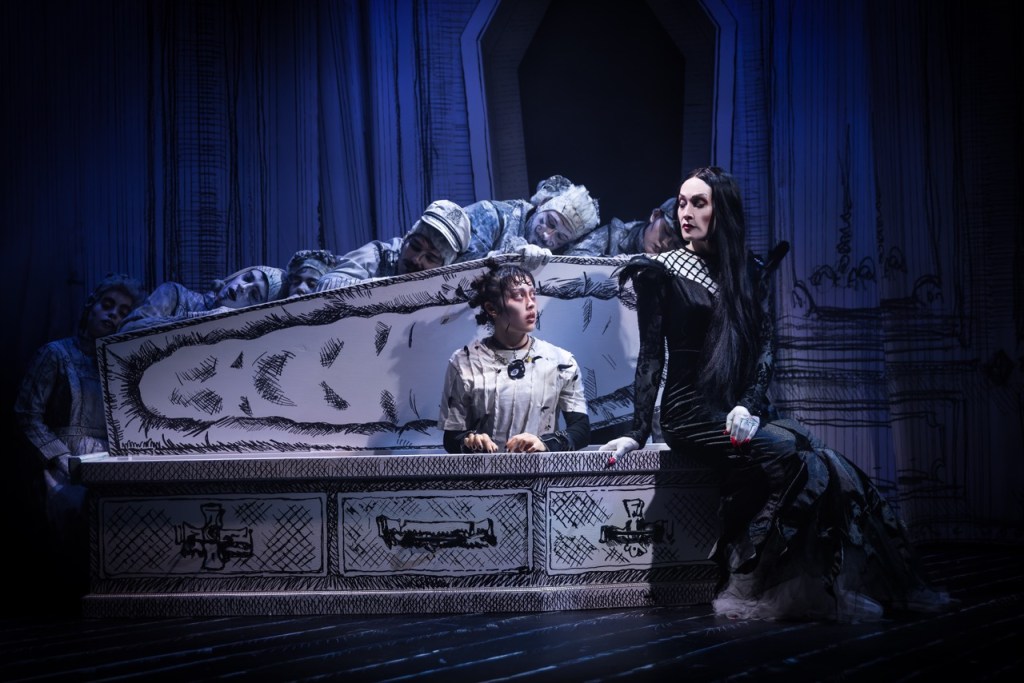
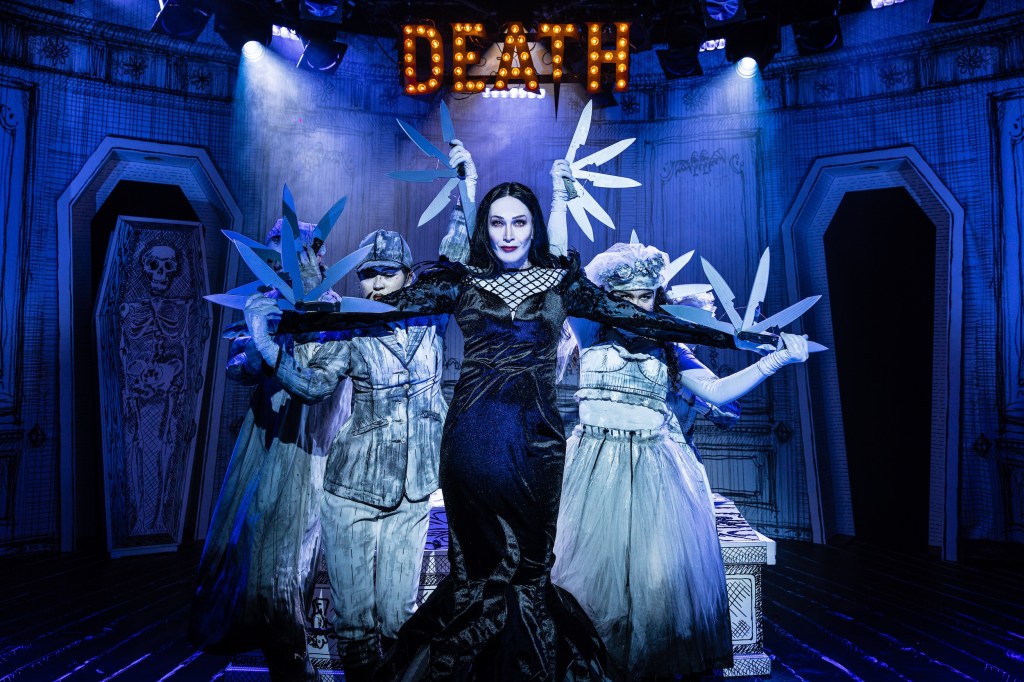
Photo: James Reiser. A relatively harmless but charmless score by Andrew Lippa (The Wild Party, Big Fish) is given life thanks to some stunning production design by Dann Barber, who serves up a cartoonishly memorable set and stunning costumes (cast and crew will be fighting over who gets to keep Morticia’s coat from Act 2). Barber’s designs transform Elliot Aitken’s Lurch into a slow-moving, architectural Transformer, give us a comedically daring reveal for Evan Lever’s Uncle Fester, and make Erika Heynatz tower above the rest, as Morticia surely must.
The unevenness of the score is mirrored in the casting, which ranges from 90% inspired to 10%… well, less so. The core Addams are all excellent, especially Guigayoma and Heynatz, whose vocals bring out the best in the tunes. Pugsley, Wednesday’s malicious younger brother, has been gender-blind cast — a young woman playing a young boy — but Oom’s performance rises above the momentary, pointless distraction. It’s Lever’s Uncle Fester, though, who threatens to steal the show: his subplot may be structurally unnecessary and could easily be cut, but his off-kilter performance is a comedic highlight. The Beinekes, however, suffer in comparison. Teagan Wouters gets a moment to bust loose, but the men in the family suffer from varying vocals and little material to work with.

Photo: James Reiser. Fans of the original Addams Family comics (or the 60s TV show, or 70s cartoon, or the 90s films, or the 2020s Netflix series Wednesday) will appreciate all the touchstones — Thing never appears as a character onstage, but is woven in through plenty of smaller nods — though they may be frustrated by the softening of the characters. Musical theatre lovers bemoaning the cancellation of the Beetlejuice tour can at least get their dark and quirky fill here. For the real nerds out there: this production is using the clearer US Tour script, not the Broadway version.
A solidly good first act and a brilliant second make for a bit of a mixed bag, but put together, the result is another winner for the Hayes that sends you out the door with a big smile on your face. The trio of Guigayoma, Heynatz and Lever are all unmissable (Rivera is no slouch either), and I haven’t even raved about the slow-moving surprise hit that is Elliot Aitken’s Lurch. As for Morticia’s coat — it deserves five stars all its own.
-
The Day of the Triffids (New Theatre) ★★★★

Based on the novel by John Wyndham. Adapted by J. James-Moody. New Theatre. 30 Jun – 25 Jul, 2026.
SCREAM at the fall of civilisation! PANIC as the KILLER plants ATTACK! SHIVER at the HORROR of human depravity! Or… sit back and enjoy J. James-Moody’s retro-creepy stage adaptation of John Wyndham’s beloved 1950 post-apocalyptic eco-thriller, The Day of the Triffids.
Biologist Bill Masen (James Collins) wakes from eye surgery to discover he’s missed a spectacular meteor shower that has rendered everyone who saw it blind overnight. As one of the few sighted people left in London, he watches society crumble within days — and with no one left to contain them, the tightly controlled, carnivorous plants called Triffids break loose, revealing themselves to be far more intelligent than anyone realised. Amid the chaos he finds Josella Playton (Umai Shantharajah), a socialite and novelist who was too drunk to see the meteor shower herself, and together they try to eke out a new existence in a truly broken Britain.
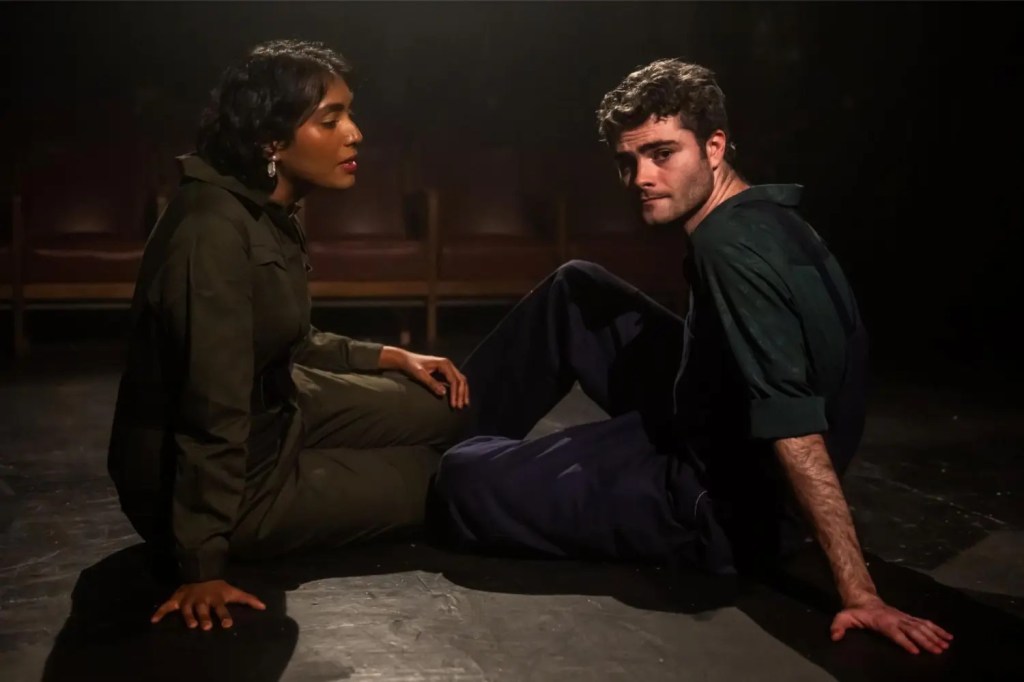
Umai Shantharajah & James Collins. Photo: Chris Lundie. Wyndham’s speculative novels are brilliant at capturing the creeping unease of Cold War Britain, and reflecting on them now, in 2026, those fears feel just as real. The Day of the Triffids combines a distrust of science with a fear of humanity’s darker survival instincts, and it lands eerily close to contemporary climate anxiety, vaccine scepticism and the rise of strongman politics. Wyndham’s visions of how society tries to rebuild are all tinged with a wry socio-political cynicism that isn’t too different from modern nihilism in the face of democracy’s potential decline.
It’s little wonder the novel’s core story will feel more than familiar to horror fans, given how liberally Danny Boyle and Alex Garland borrowed its plot for 28 Days Later — swap racing zombies for slow-moving plants and it’s pretty much the same film.
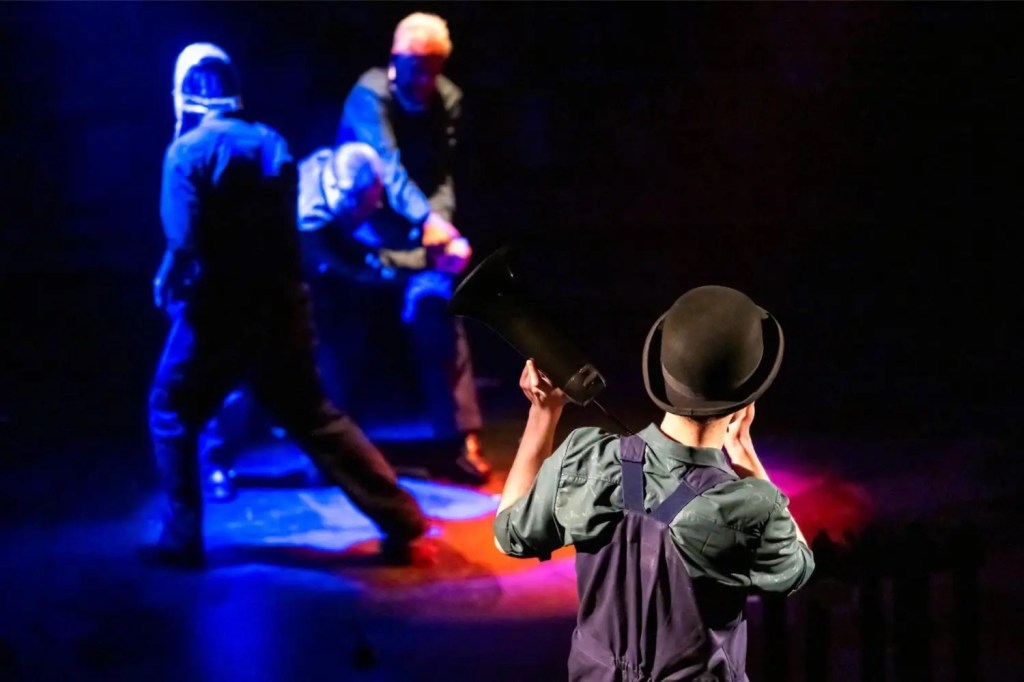
Ensemble of The Day of the Triffids. Photo: Chris Lundie. What’s most striking is how neatly the fears of the 1950s map onto the present. Wyndham’s genetically modified Triffids feel born of today’s GM crop debates. His theorised satellite weapons could easily be replaced by Elon Musk’s Starlink (sorry — “Skynet”). And the harvesting of Triffid oil as a fossil fuel replacement speaks directly to the 2020s energy transition. Plumbing a range of modern anxieties — including AI, conspiracy theories, anarchy, and humanity’s hubris leading to its own downfall, Wyndham was, as ever, ahead of his time — and there’s something oddly comforting in realising our current fears aren’t as unique as we like to think.
Director/adapter/designer J. James-Moody leans into these fears with a production that mimics a mid-century radio play, complete with stretches of spoken narration, giving us shades of War of the Worlds paranoia. This surprisingly faithful adaptation follows the episodic structure of the novel as Bill travels around England searching for Josella.
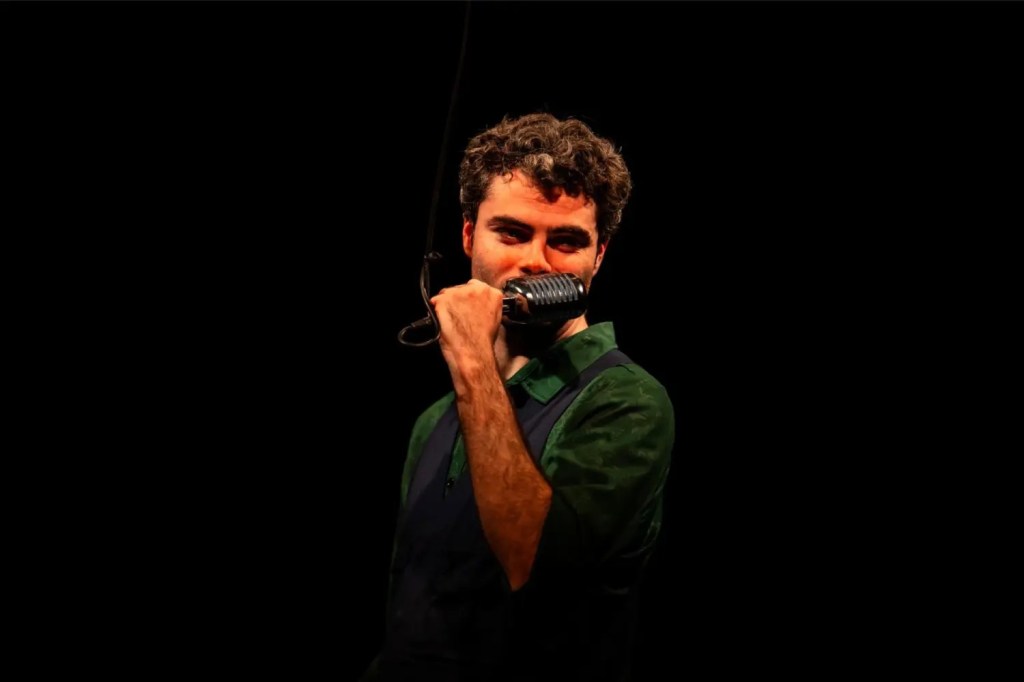
James Collins. Photo: Chris Lundie. Opening with a burst of creative energy, there is a real drive to early scenes that mimic the fast editing of a movie, placing the on-stage audience in the middle of the action. The stylised, boldly coloured intro feels reminiscent of Alfred Hitchcock thrillers. Scored with 40s/50s-style pop hits, the beginning gets you hooked in.
The production is anchored by the winning duo of James Collins as the brooding young biologist and Umai Shantharajah as the vivacious, resourceful, posh writer, giving the story a romantic spine and some much-needed plot momentum. Both are charming and eminently watchable as two people wrestling with their own good natures and their need to survive.

Max Ryan. Photo: Chris Lundie. Equally impressive are the show’s two other showcase roles — Max Ryan’s violent Torrence, channelling A Clockwork Orange vibes complete with a bowler hat, and Natasha Todd as a gender-flipped Coker, a smart adaptation choice that gives the production’s second act a different dynamic than the novel’s.
When the production was first announced, I was dying to know how the Triffids would be realised on stage. A puppet-like “Audrey II”? A potted plant on wheels? A poor stage manager in a green leotard? I should have trusted James-Moody’s vision more. The titular, deadly plants are given menacing life through Aubtin Namdar’s immersive sound design and Holly Nesbitt’s lighting, with only the occasional flash of props — effective and appropriate for a story in which the real enemy is other humans with a lust for power.

Nathan Farrow. Photo: Chris Lundie. The production could do with a haircut. Its two-hour running time feels a touch too long, especially once the inventive opening act gives way to a more repetitive episodic pace. The novel’s tour through post-apocalyptic social models lands harder on the page, where its commentary can breathe, than it does compressed on stage. Some pacing issues persist, both plot and production wise, that takes the sting out of the big finale.
Still, The Day of the Triffids has a genuinely exciting thrill of invention about it — simple stagecraft and storytelling filling the gaps the way only the best theatre makers can. It has a vision that makes it one of the most enthralling shows on Sydney stages right now.
-
Doubt: A Parable (Sydney Theatre Co) ★★★★★
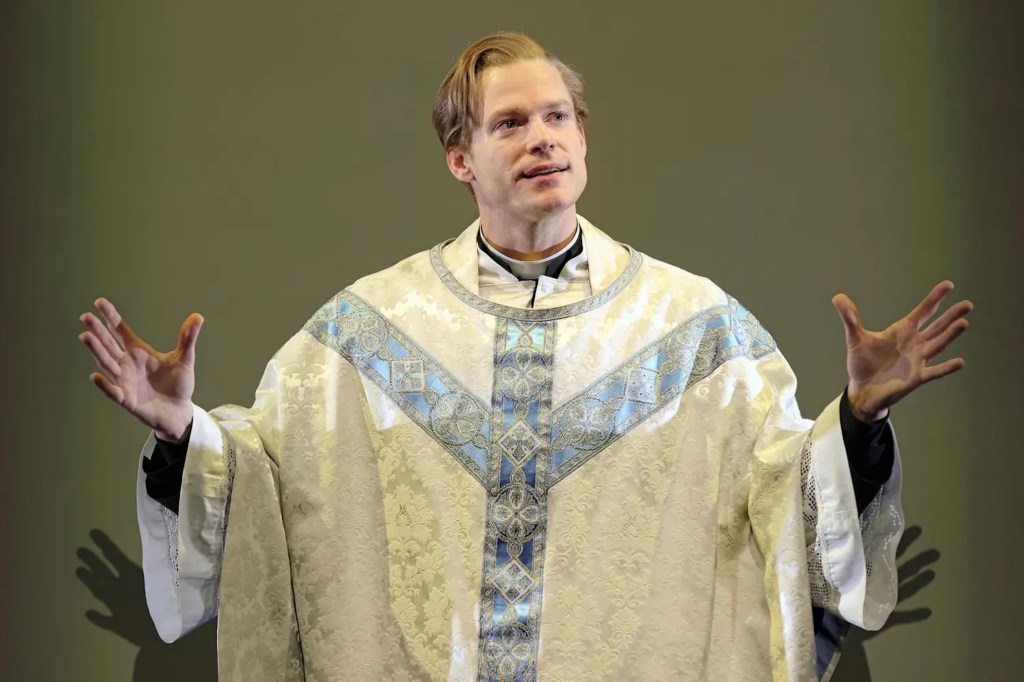
Written by John Patrick Shanley. Roslyn Packer Theatre. Sydney Theatre Company. 30 Jun – 2 Aug, 2026.
It’s a Tony & Pulitzer Prize winning masterpiece, that’s a swift 90 minutes long. Do you need any more encouragement than that? Just book.
Okay, you need more convincing? It stars the indomitable Pamela Rabe (Happy Days / Drive Your Plow Over the Bones of the Dead / August: Osage County), and marks the STC debut of Sam Reid (TVs The Newsreader / Interview with the Vampire). Seriously, why haven’t you booked already?
What more? Okay, let’s get into it.
Doubt is, as the title says, “a parable” — it’s a short story with a moral message. In this case it’s about blind conviction, intolerance and suspicion — aka the stuff that social media mobs are all about. The collision of facts vs belief, and the way bad faith accusations can do more damage than anything real. As the saying goes, “a lie is halfway round the world before the truth has got its boots on”, and for us in the age of social media it’s even more weaponised, making Doubt as timely as it ever was.
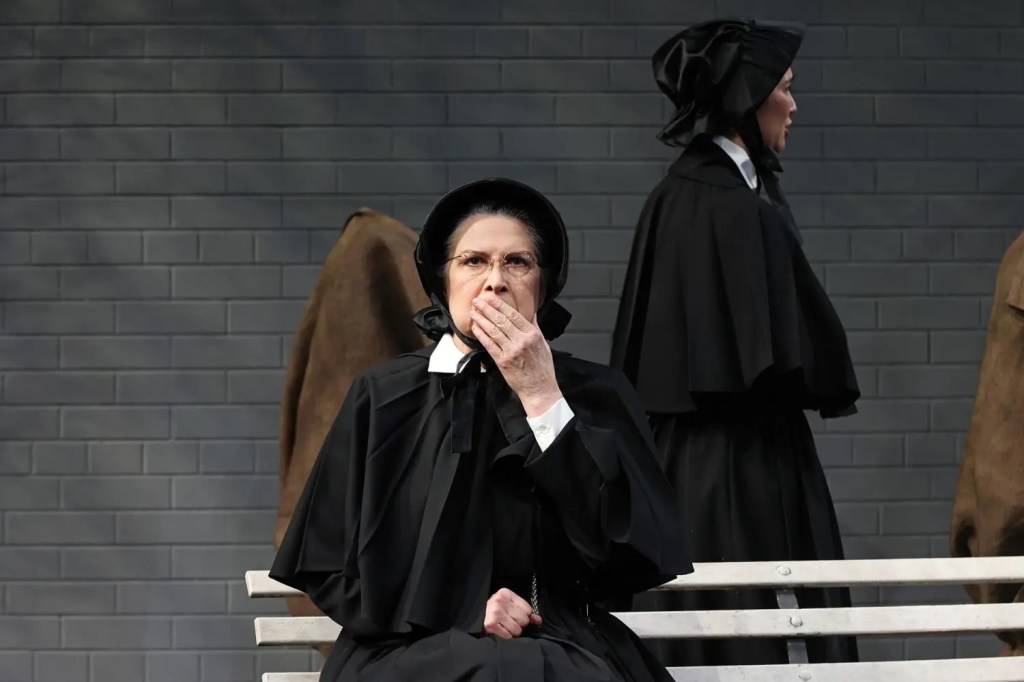
Pamela Rabe & Shannen Alyce Quan. Photo: Prudence Upton. John Patrick Shanley’s major work tells the story of St Nicholas Church School in 1964, where Father Flynn (Sam Reid) wants to bring a human, progressive face to the Catholic Church against the best instincts of the school’s stern Headmistress Sister Aloysius (Pamela Rabe). After tasking the young Sister James (Shannen Alyce Quan) to keep an eye out for anything suspicious, Aloysius is disturbed to hear that Father Flynn had a private meeting with a new pupil, after which the 12-year-old seemed disturbed, with alcohol on his breath. Instantly convinced that Father Flynn is abusing the student, Sister Aloysius goes on the warpath to rid her school of a noxious influence.
Doubt is an incredibly tight story. The economy of execution has an urgency that refuses to let anything get in the way of the central message — blind faith can be destructive. Marion Potts directs with equal clear-eyed determination — managing to find humour in moments without sacrificing the inherent drama. Bob Cousins’ imposingly elegant set has an austere simplicity that still brings depth. And a TREE! Our first STC tree for the year! I don’t know where I’d be without an STC tree on stage! Just me? Okay then.
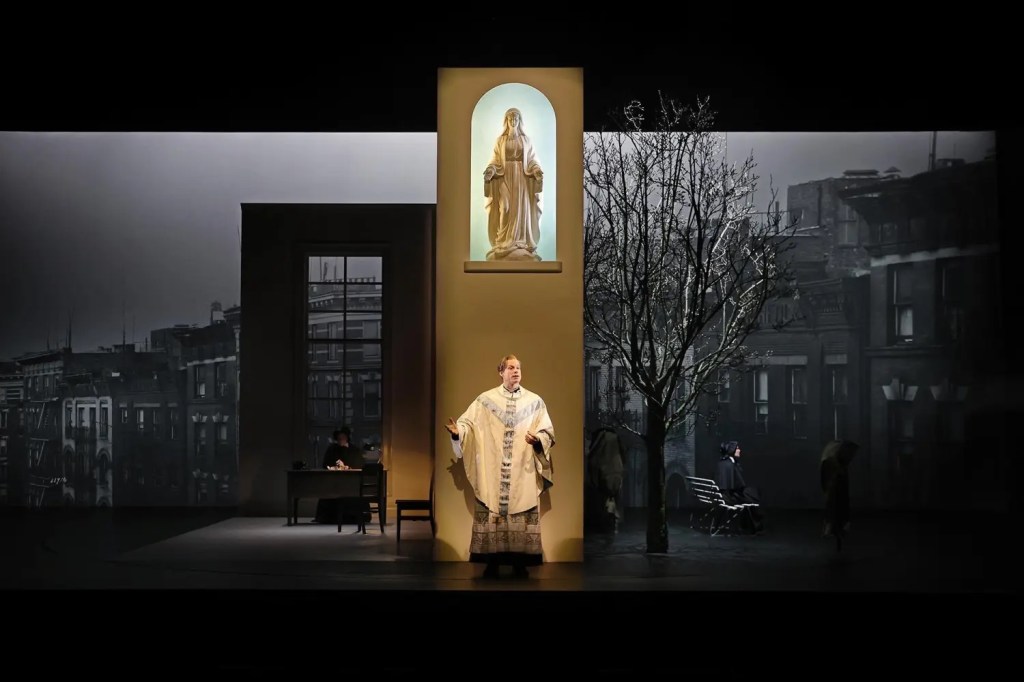
Pamela Rabe, Sam Reid & Shannen Alyce Quan. Photo: Prudence Upton. Pamela Rabe is in full imperious form, decked out in a nun’s habit that is as black and white as her worldview. Shannen Alyce Quan plays the naive but hopeful Sister James with a wounded authenticity and Zindzi Okenyo packs in a punch in her one scene as the mother of the child in question. However it is Sam Reid who is the real revelation here. I’ve seen Reid on stage before (in Girl From The North Country) but this is the first truly lead stage role I’ve seen him take on, and he brings a natural warmth and ease to Father Flynn. When placed under pressure, Flynn’s conflicting emotions emanate from Reid’s expressive eyes without a word. Reid may have made his name on screen, but he is a natural on the stage. Let’s hope this isn’t his last stint in Sydney.
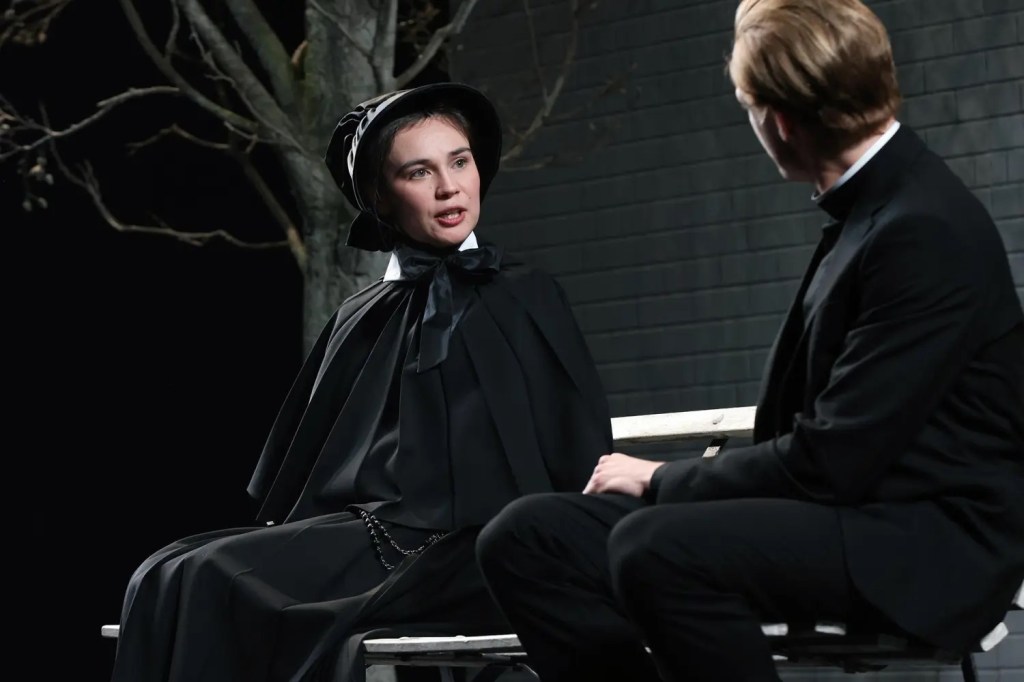
Shannen Alyce Quan & Sam Reid. Photo: Prudence Upton. If I had to nitpick, I would say that occasionally, in the pursuit of light-and-shade the performances sometimes veer into over-expressiveness, over amplifying emotions for the back row, robbing the odd moment of its emotional truth in favour of finding a touch of levity. In essence, the production falls into the same error as Sister Aloysius identifies in Sister James, “You’d trade anything for a warm look.” But there are worse sins a play can make.
The beauty of Doubt is its lack of definitive answers. It throws just enough facts at you to engage the “whodunnit” instincts within us, but not enough to bring any clear conclusions. Father Flynn is no saint, any more than Sister Aloysius is out of order trying to protect the children in her care. But suspicions aren’t facts, and a rumour can destroy a life. Who is right?
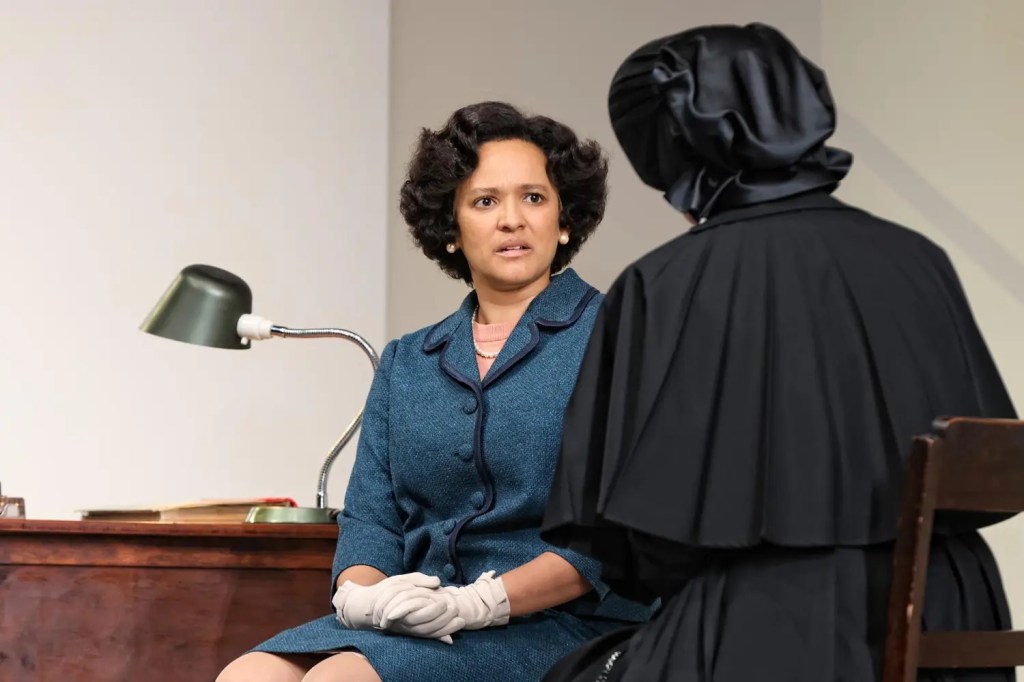
Zindzi Okenyo & Pamela Rabe. Photo: Prudence Upton. In a time in which “certainty” has become a commodity and “doubt” a sign of weakness, the lessons of Doubt: A Parable are more resonant than ever. The easy temptation of apparent clarity, served up by loud voices on social media or by religious or political charlatans, is no guarantee of truth. The world isn’t black and white — the truth is found in the shades of grey.
-
The Dapto Chaser (Ensemble) ★★★½
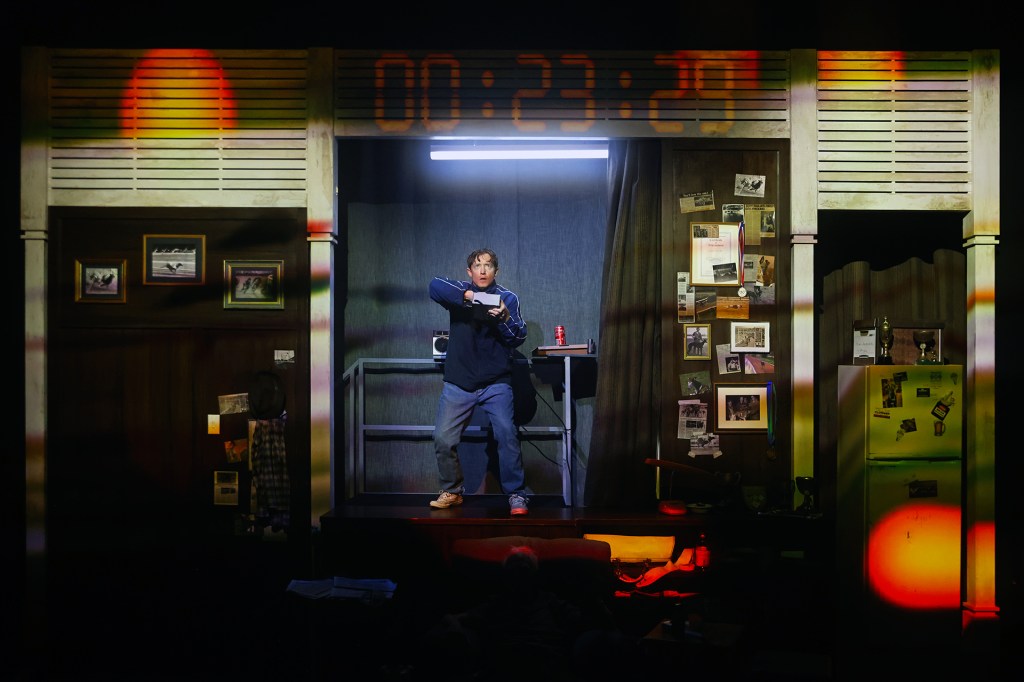
Written by Mary Rachel Brown. Ensemble Theatre. 29 Jun – 25 Jul, 2026.
It’s a dog-eat-dog world in The Dapto Chaser, Mary Rachel Brown’s look at greyhound racing and the trap of poverty. When everyone is out for themselves, how can someone at the bottom ever catch a break? And why does the temptation to “flip the table” feel like it has a wider political resonance in 2026 than it did when the play debuted in
20152011?The Sinclair family live and breathe dog racing. Father Errol (Peter Carroll) is a former dog racing stalwart brought low for cheating. His son Cess (Justin Rosniak) is still active in the sport, while his other son Jimmy (André De Vanny) wants out but can’t get too far away from the family business. As the boys struggle with a mountain of debts, their only hope falls to their dog, Boy Named Sue — their one shot for glory and potential freedom. But Jimmy’s employer and Errol’s nemesis, Arnold (Marco Chiappi), has other plans.
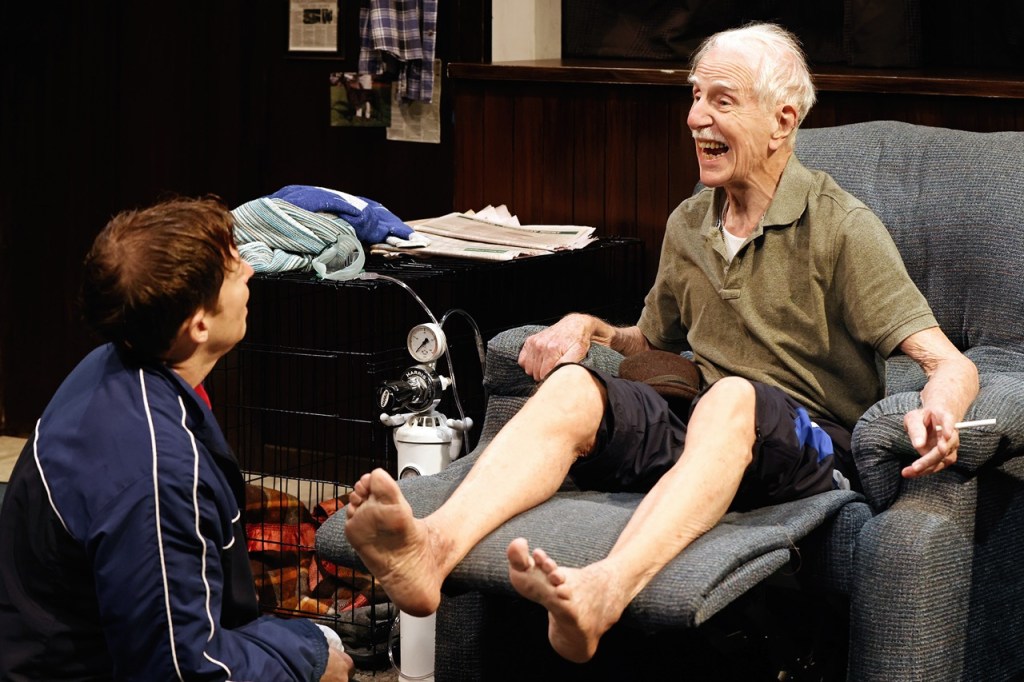
André De Vanny & Peter Carroll. Photo: Prudence Upton. Brown’s script is full of nuggets of comedic dialogue sitting next to sharp moments of truth. The story may start in the world of dog racing but the heart of it is in the cyclical nature of disadvantage. These characters are living with next to nothing; for them gambling isn’t just an addiction — it’s a dream of escape. There’s always the next race, the next opportunity.
Peter Carroll sets the tone as the obsessive patriarch of the family, desperate to stay connected to the world through his battery-operated transistor radio and hear the races. His relationship with his son Jimmy, who acts as his carer, is complex. De Vanny’s Jimmy has his own breed of toughness, standing up to his father’s whims while doing his best to help. There is an honest simplicity to De Vanny’s performance that reveals an inner child with his own hopes and dreams. Rosniak’s Cess, however, is the mirror image of his father — a fast-talking obsessive who is always good for the money (if you can just wait till after the next race).
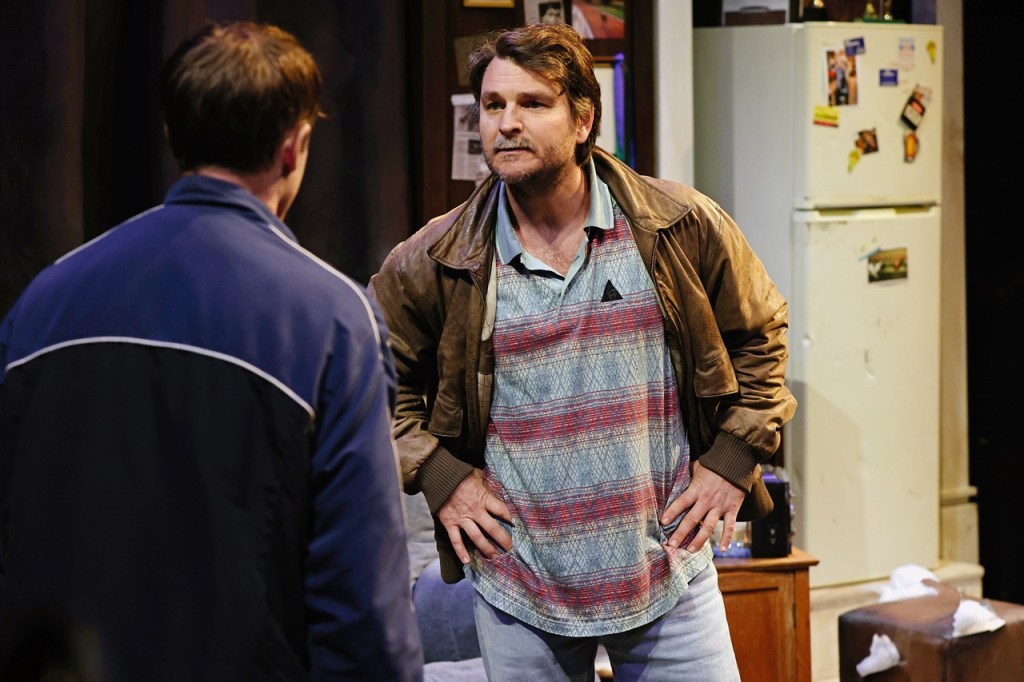
André De Vanny & Justin Rosniak. Photo: Prudence Upton. As events take their course it becomes clear — no one listens to Jimmy. The other characters talk “at” him, but never “to” him. His isolation from the world is exemplified by his job — sitting in a tower operating the mechanical rabbit the dogs chase around the track. It’s a position of power no one respects. In the end, Jimmy is the only one who can break the cycle of addiction and destruction.
The Dapto Chaser is maybe an odd choice for Ensemble, and risks coming across as poverty porn for the Kirribilli Set, were it not for the far-reaching effects of gambling in all its forms. With its tight focus on family, its message is broader than the specifics of its setting, and this production, directed by Anna Houston, leans into the grotesque comedy found in familial moments.
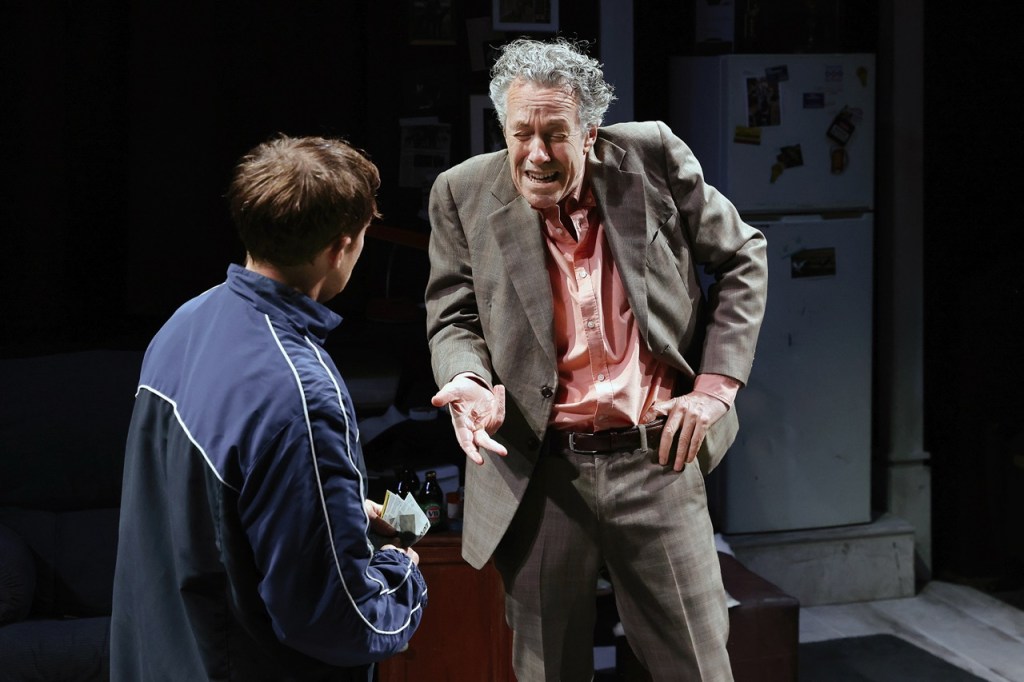
André De Vanny & Marco Chiappi. Photo: Prudence Upton. Simone Romaniuk cleverly adapts the space, using the bones of The Roommate’s set, amplified by Matt Cox’s lighting. We are taken to the racetrack by Aron Murray’s video design that overlays the space, combined with Madeleine Picard’s sound. The show packs a punch into a small space.
It comes down to Jimmy to change the game with a drastic choice. With nothing to lose, an uncertain future holds more hope than he finds in his current life. It’s the desperate optimism of destructive change – things can’t get worse but maybe they can get better. In the end it’s just another long shot gamble. That’s the only hope he’s got.
-
Juicy Riot (Eternity Playhouse) ★★★★
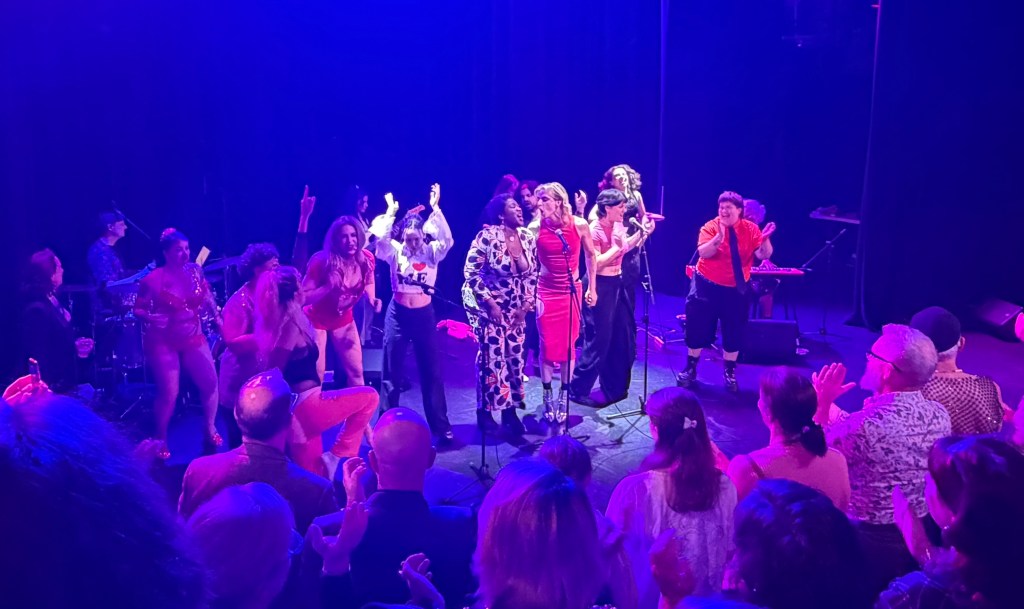
Pride Fest. Eternity Playhouse. 29 Jun 2026.
For one night only it was music, mayhem and mammaries at the Eternity Playhouse as Victoria Falconer and Kala Gare unleashed their own blend of poly–sexual fantasia to wrap up Pride Month with Juicy Riot. It was loud, proud and one hell of a crowd.
The eclectic set list of 80s bangers, burlesque and ballads was driven by good vibes and a chaotic creative drive that discarded any ego in favour of an uplifting evening. As Falconer and Gare took on the roles of MCs, performers, accompanists and stagehands (including some serious manual labour), Juicy Riot had the “muck in” enthusiasm of the best community action.
The range of performers included current Mackenzie star Billie Palin, former Hedwig and the Angry Inch / House of Rot star Adam Novellio, a vivacious and voracious bare–breasted Nancy Denis, the cast of Nails: The Musical and more — the central message of love, fun and celebration was palpable. Even the one straight man in the room was drafted in to help out.
But the night belonged to Kala Gare, the bisexual Energiser bunny, leaping and bounding across the stage and seating with endless enthusiasm. The only thing tighter than her power vocals was the dangerously snatched 80s swimsuit she was wearing.
This was a night of celebration and liberation, not for those easily disconcerted by queer joy and sexuality. This was a free–wheeling queer church, and Victoria Falconer was our not–so–virginal queen. From performing theremin cunnilingus to playing Mother to the cast of performers in the wings, she shepherded the evening to its ecstatic climax.
Juicy Riot lived up to its name. You came in thirsty and left fully quenched. This Pride was a riot — in every sense of the word.

-
Subscribe
Subscribed
Have a WordPress.com account? Log in now.

