-
Welcome to Cultural Binge

The rating system is simple:
★★★★★ – Terrific, world-standard. Don’t miss.
★★★★ – Great, definitely worth seeing.
★★★ – Good. Perfectly entertaining. Recommended. Individual mileage may vary.
★★ – Fine. Flawed and not really recommended, but you may find something to appreciate in it.
★ – Bad (& possibly offensive).
See more reviews over at The Queer Review.
Instagram: @culturalbinge
Substack: culturalbinge.substack.com
Email: chad at culturalbinge.com
-
William Yang: Milestone (Sydney Festival) ★★★★

Created by William Yang. World Premiere. Sydney Festival. Roslyn Packer Theatre. 10-11 Jan, 2025.
After the epic, emotional Grand Slam of The Inheritance last year, Sydneysiders who wanted more connection to their gay elders were given the opportunity as William Yang presented Milestone at the Sydney Festival. To celebrate his 80th birthday, this artist and fixture of Sydney’s LGBTQ+ scene presented a visual and musical memoir of his life as a gay Chinese-Australian.
Those who have seen any of Yang’s previous talks or slideshows will find much of Milestone familiar, as it pulls together the various strands of his work into a single narrative. But, like listening to an older relative repeat a beloved story, there is warmth in the familiarity and a mythic quality to the retelling. Yang captures a world that has been lost to us in time and through the ravages of age and AIDS.
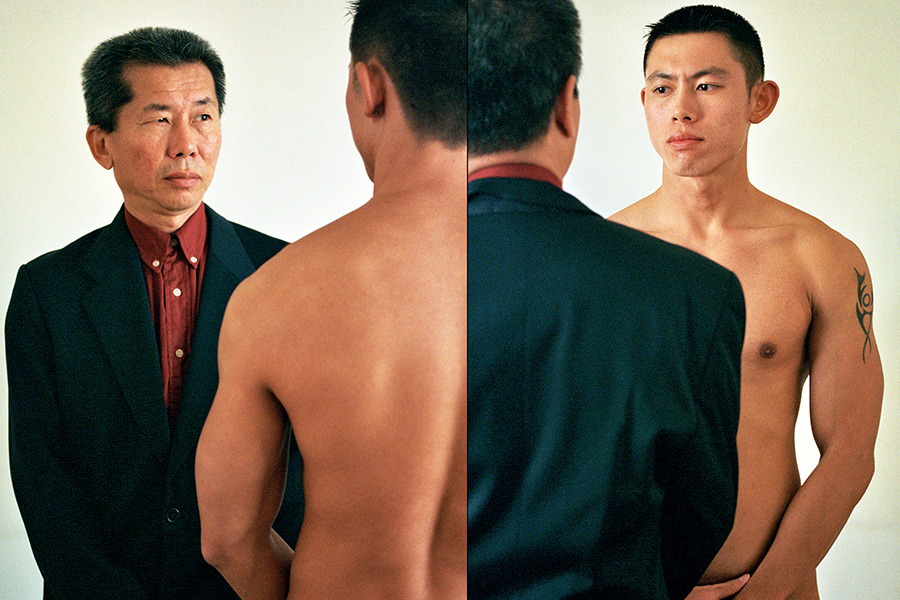
Alter ego 2001. William Yang. Courtesy of Sydney Festival. A more personal tale than his previous shows, Yang places his own life at the forefront with a retrospective air. Unlike earlier works that focused on individual themes, the totality of his experiences becomes the thread that binds it all together, producing a unique tapestry of life. His stories of sibling dynamics merge with the heyday of Gay Liberation, and the founding of his art practice blends with the self-discovery of his multiple identities (as a gay man, a Chinese man, a photographer, and a chronicler of moments).
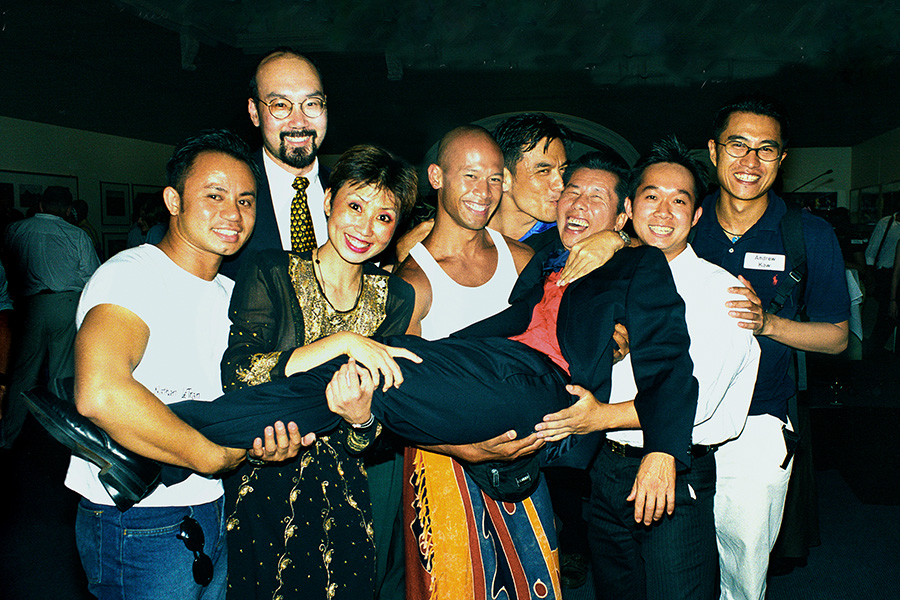
William Yang. Courtesy of Sydney Festival. The presentation is accompanied by new orchestrations by Elena Kats-Chernin, conducted by Simon Bruckard, which lend certain moments extra emotional resonance or cinematic scope. Some of his candid shots may at first seem ordinary until viewed through the lens of Yang’s stories and memories. His voyeuristic work becomes celebratory rather than salacious, thanks to a twinkle in Yang’s eye or the uplift of the music.
Milestone is, at times, melancholy as it lingers in the past. The bittersweet swell of emotion for loves no longer with us and for great parties that are now just memories. This is a walk through a slice of Australian history, but more importantly, it is an opportunity to connect with our own line of unique queer and Asian experiences in this rough land we call home.
-
Dark Noon (Sydney Festival) ★★★½

Written by Tue Biering. Sydney Festival. Sydney Town Hall. 9-23 Jan, 2025.
Cycles of American violence are at the heart of Dark Noon, a retelling of America’s “wild west” mythology, this time with the insight of history and the clarity of an outsider’s point of view. But be warned, it’s confronting, and for those in the front row, unexpectedly interactive.
Written and directed by Danish theatre-maker Tue Biering and choreographer/co-director Nhlanhla Mahlangu, created through workshops with an African cast in Johannesburg, Dark Noon untangles the tropes of the spaghetti Western, inserting the brutal realities behind the cinematic visions and putting the evils of colonialism, greed, and lawlessness front and centre. Told in nine chapters over almost two hours, the show hums with an anger that undercuts its multiple comedic beats. It is fun and very funny, but you’ll never forget there is a bedrock of injustice and cruelty underneath.
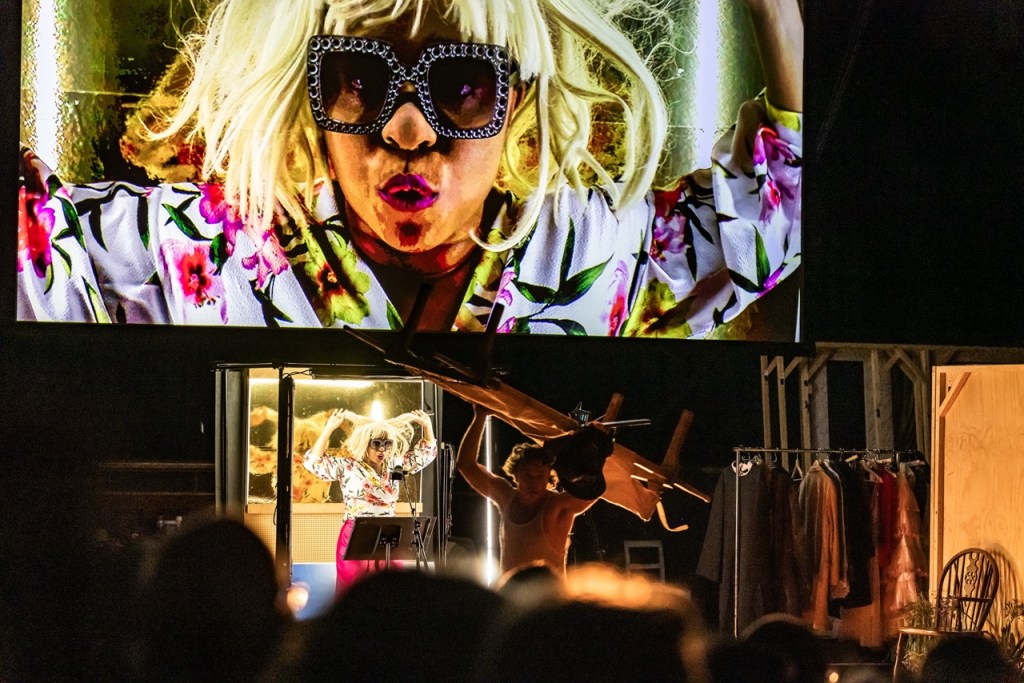
Dark Noon. Photo: Victor Frankowski. Spread out on the expansive floor of Sydney Town Hall, the audience watches a frontier town being constructed, building by building, around a railroad track. From an open expanse claimed by Europeans desperate for a new beginning (murdering or displacing the indigenous population), through the cold-hearted avarice of the “gold rush” years, the myth-making of Little House on the Prairie, Chinese immigration, and the growing divide between East and West Coasts, Dark Noon covers a lot of ground. But it’s not the specifics of each era that stick in your mind; rather, it’s the base reality of human nature.
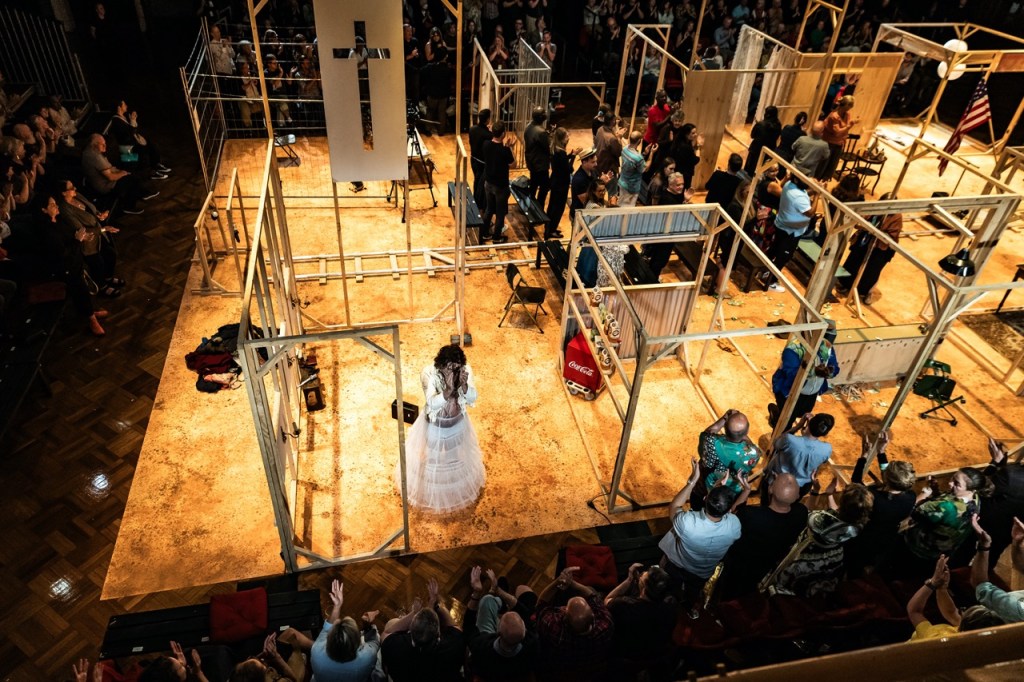
Dark Noon. Photo: Victor Frankowski. The cast of seven (Bongani Bennedict Masango, Joe Young, Kaygee Letsholonyana, Lillian Malulyck, Mandla Gaduka, Siyambonga Alfred Mdubeki and Thulani Zwane) jump between multiple roles, break the fourth wall, and narrate the story as they go. They deliver very physical performances, including some rich singing, that fills the space. Each knows how to turn on the charm and draw the audience in before flipping to their more dangerous characters – we never get to relax in their presence for too long.
I walked in expecting an anti-colonial message, but what you get is much more than that. Cycles of selfishness and greed breeding cycles of violence and desperation. Men unbound by society turning to their animalistic natures. Lawlessness vs. “civilisation” is played out in different ways at different times. Dark Noon reminds us that modern society is a veneer, and it doesn’t take much for people to revert to (and sometimes revel in) their own barbarism.
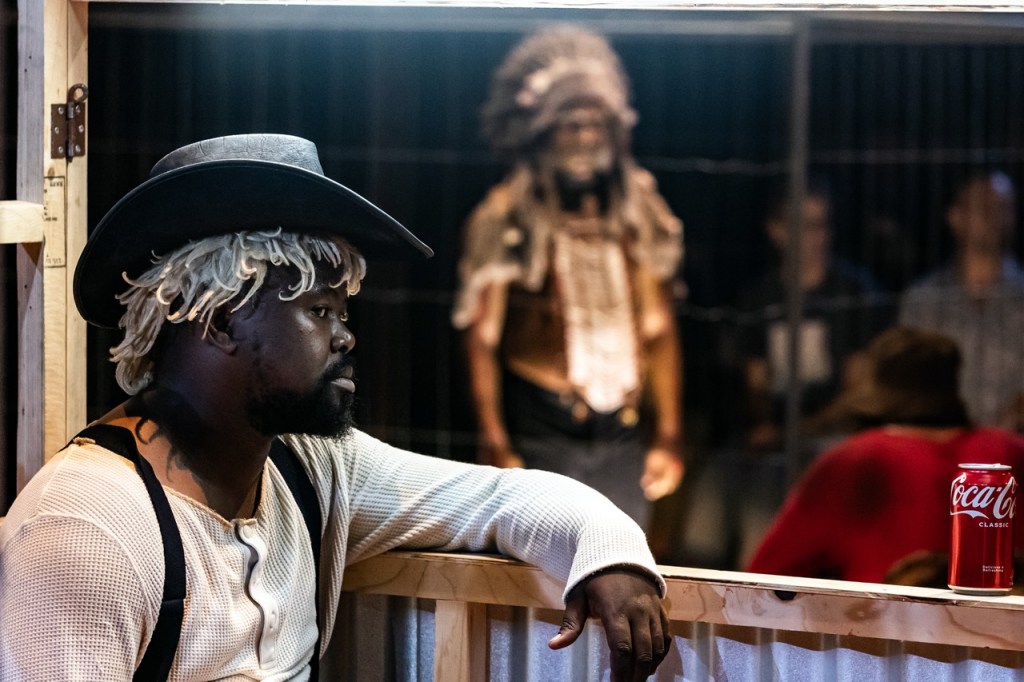
Dark Noon. Photo: Victor Frankowski. Now, let’s talk about the most potentially controversial part of the show. No, it’s not the vast generalisations about the sweep of history or the violence. It’s the audience interaction. Perhaps we’ve all gotten a bit too polite, but those brave/unfortunate souls in the front row are often thrown into the action with little awareness of what’s coming, and the social pressure to join in with a smile is high. The fact that these “fun” moments take a darker turn has a greater narrative point, which is well taken, and most of the participants played along (though there were a few noticeable grimaces among them). But I’m very glad I was sat a few rows back from the action.
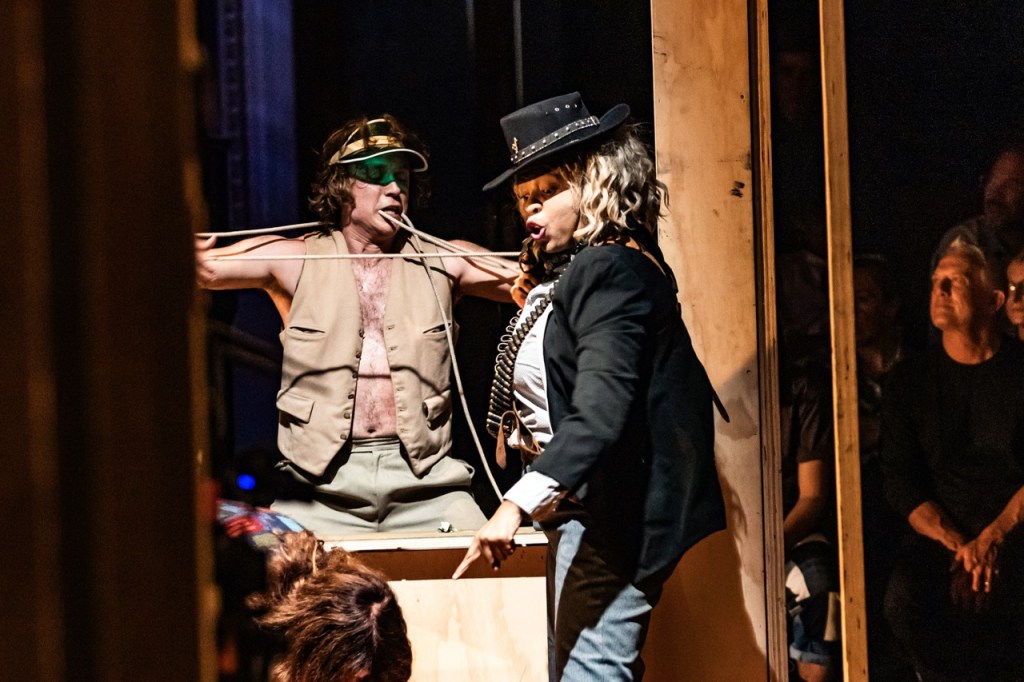
Dark Noon. Photo: Victor Frankowski. For all the inventive stagecraft, the witty script, and the refreshing point of view, the best moment of Dark Noon comes at the very end (don’t worry, this isn’t a spoiler) when the cast pause and talk to the audience about their own childhoods and their first tastes of movies set in the “wild west.” That simple moment of honest, non-confrontational connection whispers its truths more powerfully than the 100 minutes of shouting before it.
-
Elf: The Musical (Sydney Opera House) ★★★½

Book by Thomas Meehan and Bob Martin. Music by Matthew Sklar. Lyrics by Chad Beguelin. Based upon the New Line Cinema film written by David Berenbaum. Sydney Opera House. 19-29 Dec, 2024.
Predictable, silly, and presented as a semi-staged “concert” (i.e. minimal sets and props), how does this bog-standard movie-to-musical adaptation of Elf manage to be so unexpectedly adorable and fun? It must be a Christmas miracle. Somehow, this show is much more than the sum of its parts.
If you’ve seen the film, you know what to expect, and if you haven’t, well, the plot isn’t that important anyway. But here’s the gist: the very human-sized Buddy (Gareth Isaac) has been raised at the North Pole with Santa and his diminutive elves, and despite being almost three times their height, the naive man-child thinks he’s an elf. When, as an adult, he discovers the truth, he sets off in search of his real dad, Walter Hobbs (Simon Burke), a grumpy businessman in New York City. This leads to Buddy being thrust into the human world at Christmastime to see if he can get his father off the “naughty list” and forge a new family.

Gareth Isaac & ensemble. Photo: Daniel Boud. The show kicks off with what may be its most genuinely funny scene, featuring the elves singing and dancing in Santa’s Workshop. Some playful costuming by Josh McIntosh and great comedic work from the entire ensemble set the tone for the night. From here, the show swings between “ho-ho-ho” and “ho-hum” depending on whether Buddy is in the scene. There’s something magical about seeing outrageously over-the-top innocence clash with harsh reality and refusing to yield. It’s classic “see the world through a child’s eyes” stuff.

Gareth Isaac & Simon Burke. Photo: Daniel Boud. As far as adapting the Will Ferrell classic to the stage, Elf: The Musical is no different from any of the hundreds of other film-to-stage adaptations we get. It’s got all the major comedy beats, like a horrified Buddy screaming “You’re not Santa” at a department store stand-in. Scenes and characters have been simplified or altered to fit the stage, and the book is cheesy. The style is pantomime, the songs are nice and Christmasy, and the jokes are all family-friendly. Everything about it is perfectly fine.
Don’t let the fact that this is meant to be a “concert” production fool you; it’s not just a concert. It’s a full show, just with simplified staging to suit its short, festive run. The set consists of giant screens with effective animations by David Bergman, giving the show a very 2D, cartoonish feel that works well for this production. The band is visible, sitting above the set.
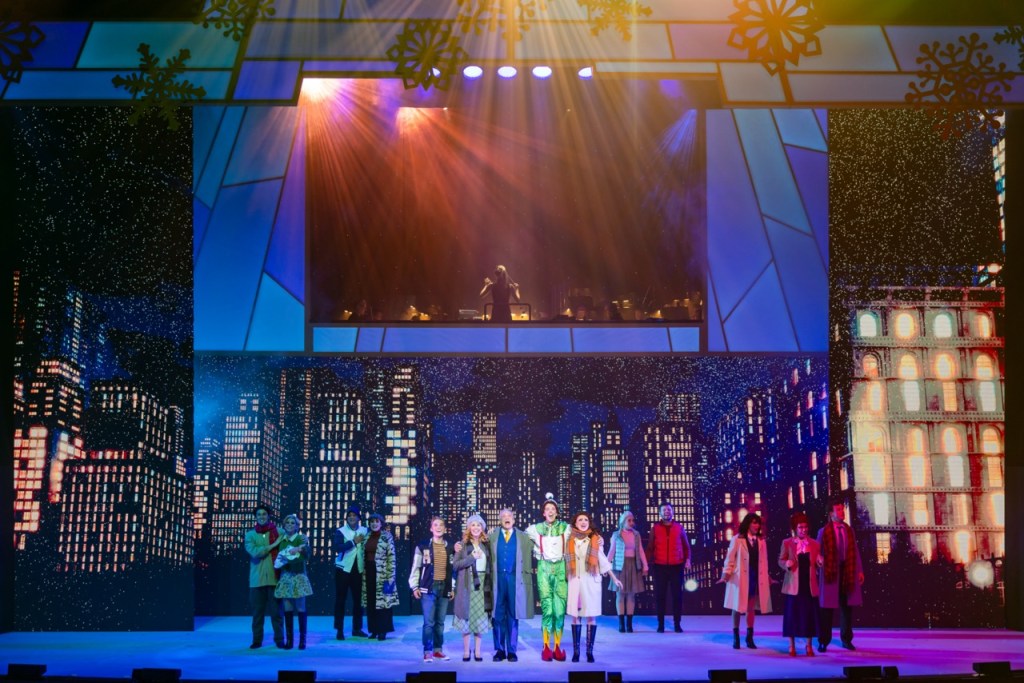
Full cast of Elf: The Musical. Photo: Daniel Boud. Gareth Isaac has the lanky, child-like charm required to bring Buddy to life. Simon Burke is far more likeable as Walter Hobbs than the character is in the movie, being more stressed and grumpy than outright dismissive or mean. The ever-reliable Katrina Retallick shines in the underwritten role of Emily Hobbs, Walter’s wife. Oscar Bridges avoids playing the “sad kid at Christmas” cliché as Michael, Walter and Emily’s teenage son (and God bless him for surviving the floppy ’90s boyband haircut and high-waisted jeans he’s been given). The young ensemble provides plenty of energy and some suitably hammy comedy beats—everyone got the memo: this show is a panto, so go big or go home. There are even a couple of “for the adults” moments—like an appearance by New York’s famously buffed “Naked Cowboy” and a series of chorus girls in short skirts.

Gareth Isaac & ensemble. Photo: Daniel Boud. Seeing Elf: The Musical is a great way to enjoy a Christmassy night out without being subjected to the same ten carols over and over. Thank Santa for a show with all-original tunes! While the Grinch-side of my brain grumbled at the obviously fake tap dancing, the utterly pointless romantic subplot, the “ice skating” and the double entendres that would make a Carry On movie wince—I had fun! Together, this cast transforms Elf into something genuinely entertaining and wonderfully festive.
-
Dungeons & Dragons: The Twenty-Sided Tavern (Sydney Opera House) ★★★½

Created by David Carpenter, Sarah Davis Reynolds and David Andrew Laws. Australian Premiere. Sydney Opera House. From 15 Dec, 2024.
Dungeons & Dragons turned 50 this year, and what a half-century it’s been. A pop cultural phenomenon, genre-defining role-playing game, lightning rod for the 1980s “Satanic Panic,” major inspiration for Netflix’s Stranger Things, the backbone of the award-winning horror/fantasy comic book series Die (a personal favourite), and now a live, semi-improvised tournament The Twenty-Sided Tavern has arrived in Sydney with a new local cast, inviting us all to join in the adventure.
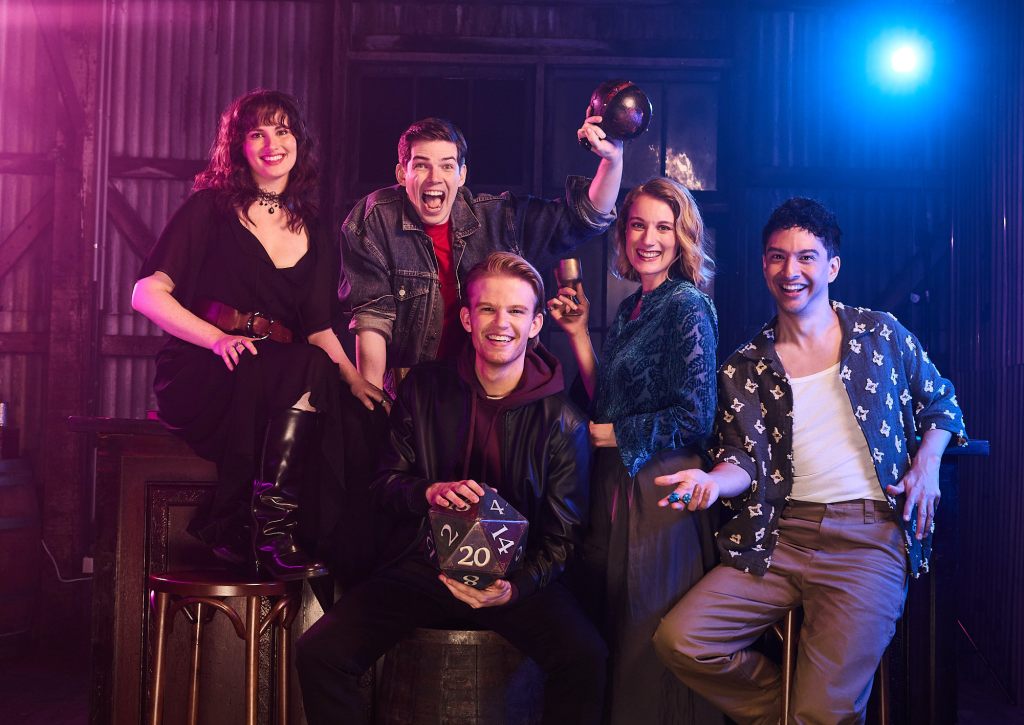
Zoë Harlan, Atlas Adams, William Kasper, Eleanor Stankiewicz & Trubie-Dylan Smith. Photo: Daniel Boud. But what exactly is The Twenty-Sided Tavern? It’s a live show mixed with a traditional game of D&D. Under the guidance of the Dungeon Master (William Kasper) and the Tavern Keeper (Zoë Harlan), the trio of players consists of a warrior (Atlas Adams), a spellcaster/mage (Eleanor Stankiewicz), and a trickster (Trubie-Dylan Smith). Together, they embark on a campaign whose direction is determined by the roll of the dice or, occasionally, the whims of the audience.
Yes, the audience is interactive with the action. Using QR codes around the room (mobile phones required), the audience answers questions and takes part in games. Participation is optional, of course—you can simply sit back and watch it all unfold. As you enter the venue, you’ll get a sticker—either red, blue, or green. This determines which character you’ll mainly influence. The show begins with each performer stepping forward, and the crowd choosing which specific character they’ll play. While there are moments of live audience interaction, the cast tends to focus on those eager and willing to join in.
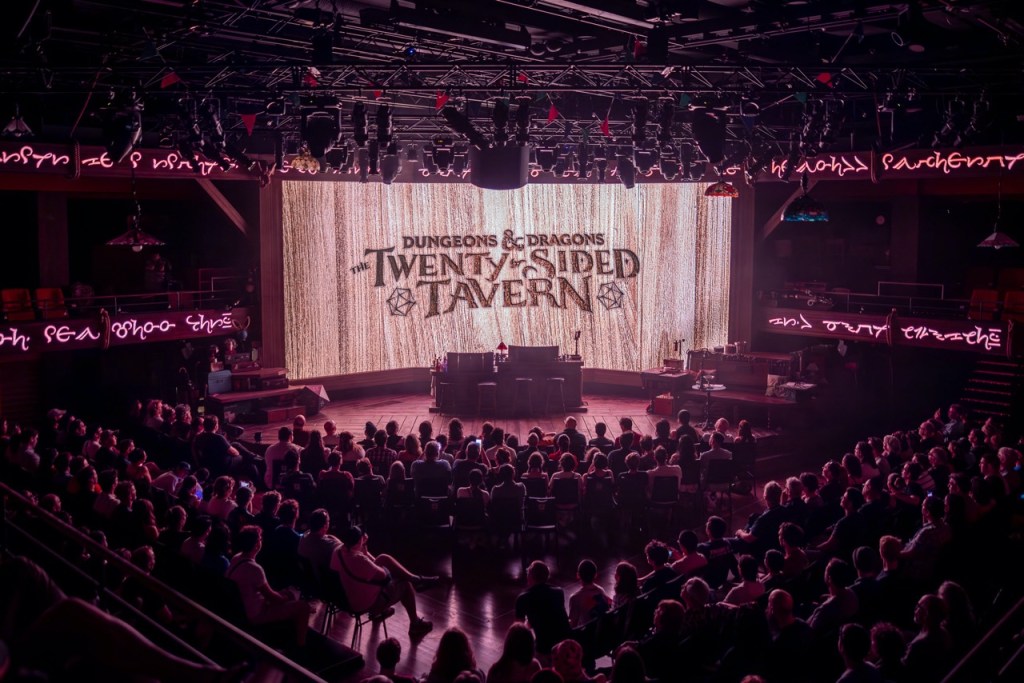
Dungeons & Dragons: The Twenty-Sided Tavern. Photo: Daniel Boud. If your first thought is, “Why would I want to sit back and watch other people play D&D?” you might be underestimating how much fun it can be. A quick scan of YouTube reveals various iterations of this concept, including Dimension 20’s all-drag campaign or Critical Role’s regular games, (The Twenty-Sided Tavern is, however, the only officially approved live show), voyeurism is very in. The show resembles a semi-structured improv night, held together by quest mechanics, with occasional pauses to explain rules or play a silly game. Rather than being a traditional, serious D&D adventure, this story is skewed towards light-hearted fun and comedy.
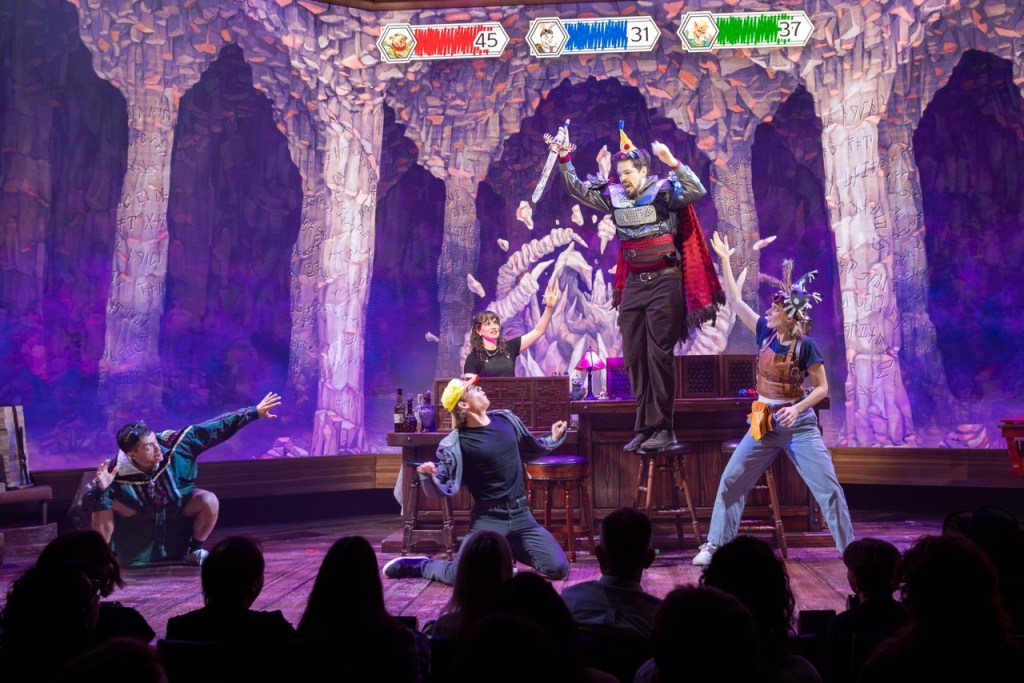
Dungeons & Dragons: The Twenty-Sided Tavern. Photo: Daniel Boud. However, this is where the premise starts to struggle. For all the thrills of a great improv show, there is the risk of awkwardness, and at times The Twenty-Sided Tavern feels a bit like “forced fun”. Some of the “ad-libs” seem pre-scripted and the non-stop high-energy delivery can be exhausting (like an overzealous parent reading a bedtime story). One suspects the cast are still settling in with each other and that more organic banter is yet to come.
Of course, this is a family show (for ages 8 and up), so it can’t be the entirely freewheeling, late-night improv I might prefer (though it did get pretty risqué on opening night), and the violence and horror are suggested but not seen. Dungeons & Dragons’ appeal lies in the sense of danger and fantasy drama, but The Twenty-Sided Tavern feels more safe and cartoony. In fact, you may begin to wonder whether the audience voting has any real impact on the story at all. Theoretically, the players could lose the campaign, but I wonder if that ever happens.
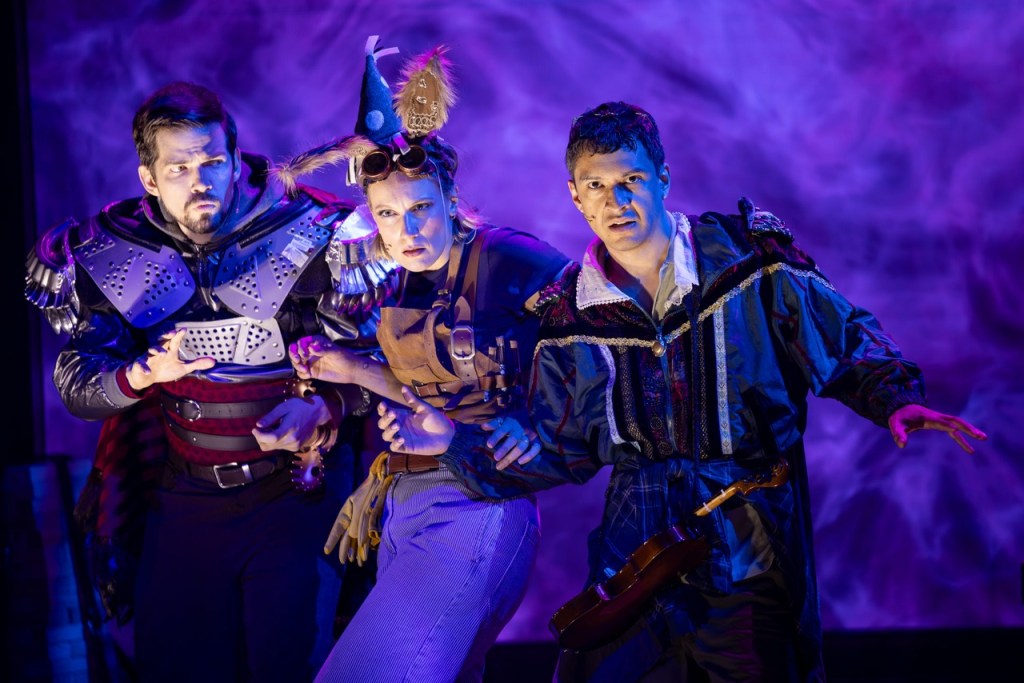
Atlas Adams, Eleanor Stankiewicz & Trubie-Dylan Smith. Photo: Daniel Boud. That said, this shouldn’t detract from the impressive work the performers are doing. The dice rolls are real, leading to some unusual and funny outcomes (opening night’s performance kicked off with a surprisingly enthusiastic assault on some pickpocketing child urchins). The cast does an excellent job of bringing their characters to life, particularly Kasper as the DM, who must act out all the supporting roles. Everyone on stage juggles multiple tasks, as the mechanics of D&D require a blend of on-the-fly mathematics, convoluted plotting, and comedic interruptions. However, the three main players are somewhat hamstrung by the roles they’re given. Most of the characters are reduced to a simple recurring joke or visual gag, which can be difficult to sustain over two and a half hours.
Dungeons & Dragons has proven itself to be a versatile and resilient format. It works as horror (Stranger Things), comedy (the film Honor Among Thieves), and kids cartoon adventure. The Twenty-Sided Tavern is very much the latter. Once the show has a chance to settle in, and the cast grow more familiar and comfortable with one another, I expect the on-stage chemistry will become a potent brew, giving the show the extra edge it needs to score a successful hit. To be honest, I’d like to see it again to witness different characters take on the quest and see if the outcome is any different. Do I get a re-roll?
-
Top 10 Shows of 2024
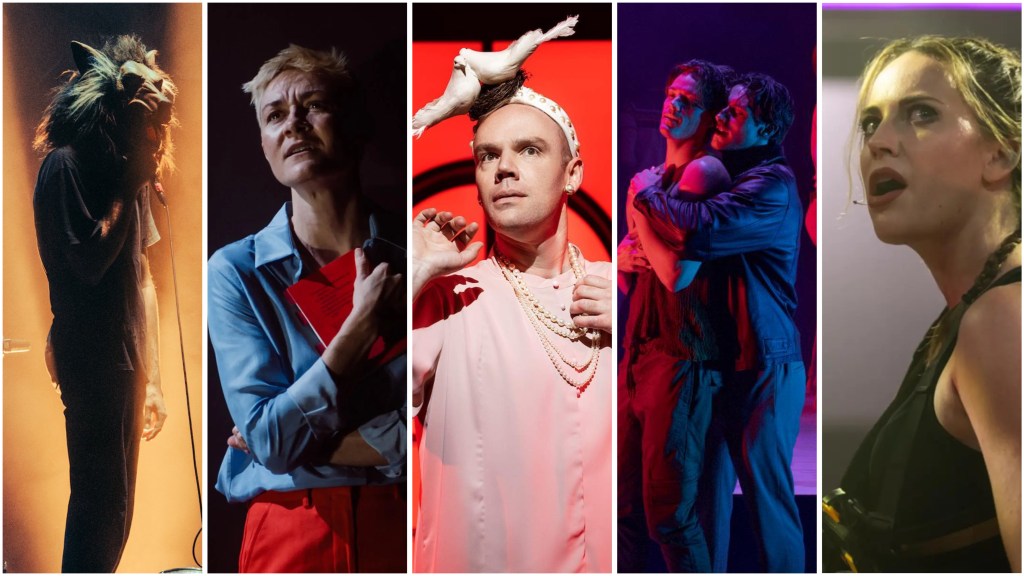
Well, 2024 was certainly a full year of theatre, dance, opera, and more. I saw 149 shows in total, an increase of over 50% from 2023, which is a frankly frightening amount. The vast majority of the shows I saw were very good, a number were exceptional and a handful were quite poor. There was only one show I disliked so much I thought it best not to review it. And only one show complained about the (actually quite positive) review I wrote. So that’s a win.
Before I put out my personal Top Ten shows of the year, let’s have a look at how the individual companies fared — all from my one-man perspective, of course; individual mileage may vary.

The President. Sydney Theatre Co. Photo: Daniel Boud. Sydney Theatre Co (12 shows reviewed of 15) was a mixed bag this year, book ending the year with the two shows I enjoyed the least, A Fool in Love and Sweat. But the rest of the year had some real favourites. They dined out on returning hits (No Pay? No Way!, Julia and RBG: Of Many, One) and terrific transfers (Sunday and Golden Blood), but the newer works felt a little cold to me – technically beautiful but nothing connected on a personal level. We bid farewell to Kip Williams, whose remarkable stewardship of the company has been outstanding, and who spent part of the year getting The Picture of Dorian Gray up & running in London to Olivier-winning (next stop Tony Awards?) success.
Belvoir (7 shows reviewed out of 10) cast its net as wide as usual and served up some bangers in Holding The Man, Curious Incident of the Dog in the Night-time, August: Osage County, as well as the returning Counting & Cracking. Nothing quite hit the ecstatic heights of 2023’s The Master & Margarita, but that was utter perfection! Downstairs, 25a (4 shows reviewed out of 7) was really cooking. All the shows I saw were excellent and had that creative spark you crave in the theatre.
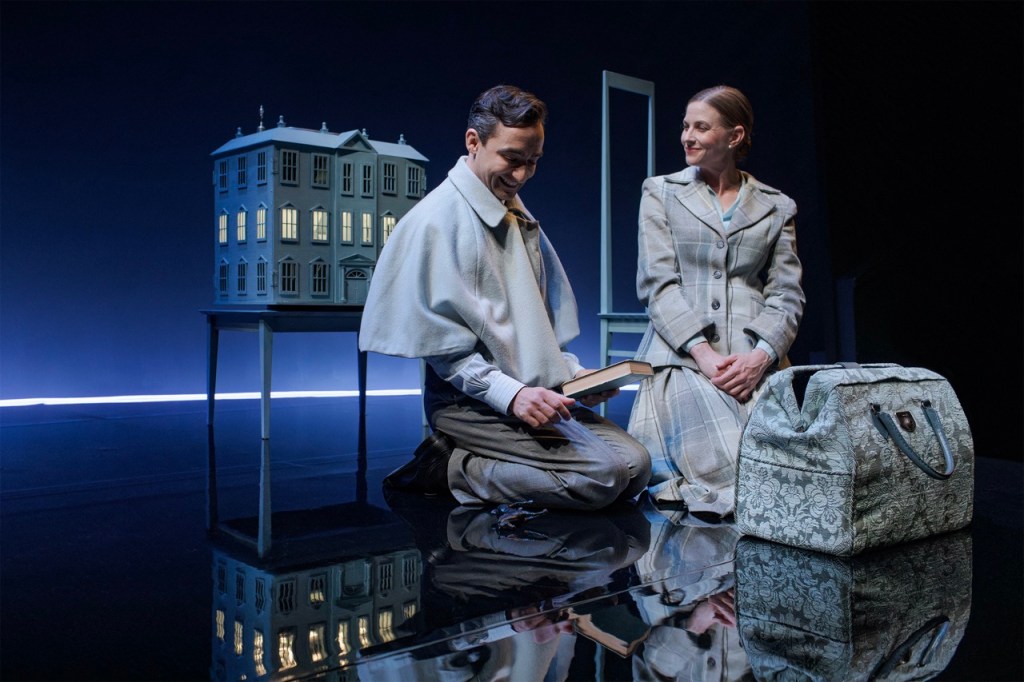
The Queen’s Nanny. Ensemble Theatre. Photo: Phil Erbacher. Frustratingly, I didn’t get to Ensemble Theatre (4 shows reviewed out of 10) as much as I wanted to, and missed a few shows I very keen for (like Laura Wade’s Colder Than Here and Sam O’Sullivan’s McGuffin Park). What I did get to see, I really enjoyed. My personal highlight was Melanie Tait’s The Queen’s Nanny. As one of the companies whose output I consistently enjoy, I need to make more of an effort in 2025 — trust me, it’s pretty easy to get to the theatre from south of the harbour!
Hayes Theatre (4 main shows reviewed out of 7) was busy, busy this year, packed with shows, cabarets, concerts and talks. It was an impressive schedule juggling their own productions with independents using the space. The two total standouts were Ride The Cyclone and Zombie! The Musical by a mile.

Mercury Poisoning. KXT on Broadway. Photo: Clare Hawley. KXT on Broadway (10 shows reviewed out of 15) is, actually, my local theatre and it housed a group of theatre-makers all over delivering with ambition and vision. Even the shows I wasn’t that enamoured with showed a real passion for the text. Good stories abounded
As for the other independent venues and companies we had the excellent Yentl come to the Opera House, and if you skipped the UnWrapped season at the Opera House you really did miss out – AUTO-TUNE was one of the best shows of the year. Seymour Centre (my other local) was solid but nothing really stood out till the double-decker hit of The Inheritance.
I didn’t get to the Old Fitz enough at all this year, although Snowflake came incredibly close to making my Top Ten. Similarly I need to pay more attention to work at Qtopia and New Theatre. Yes, despite seeing almost 150 shows this year, there is plenty of stuff I didn’t get a chance to see (I didn’t get to Bell Shakespeare at all). God only knows how Suzy Wrong manages to get around as much as she does, the woman is superhuman in her dedication to Sydney theatre.
Cultural Binge’s Top Ten Favourite Shows of 2024
Out of all the Sydney shows I saw, I’ve put together my personal Top Ten. These are shows that I really enjoyed and which have stayed with me through the year.
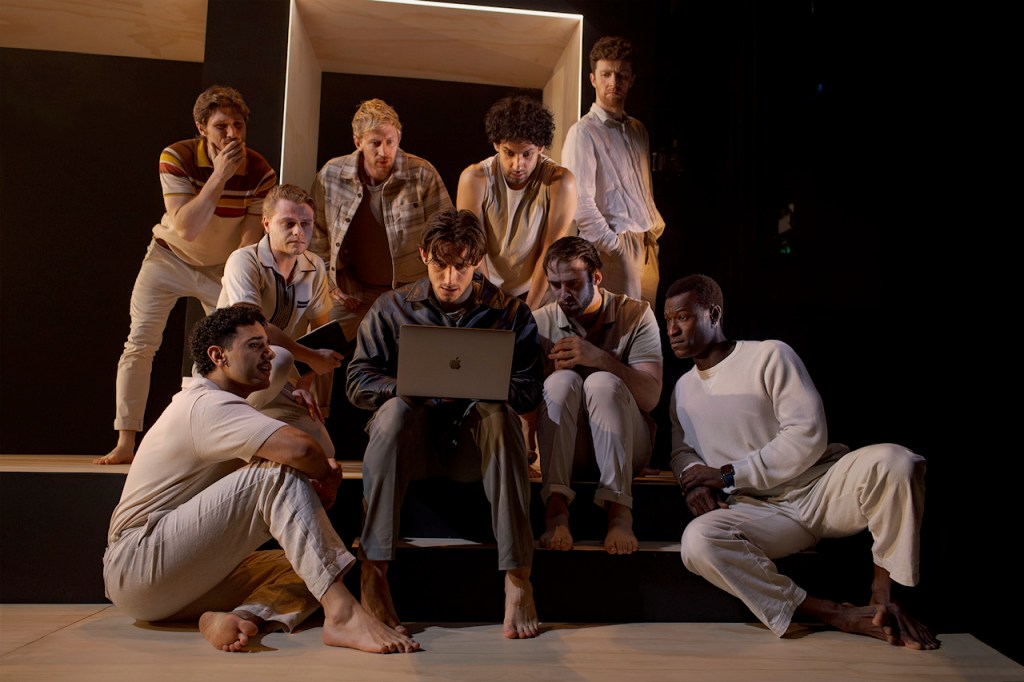
The Inheritance. Seymour Centre. Photo: Phil Erbacher. 10) The Inheritance Part 1 & Part 2 (Shane Anthony, Daniel Cottier Productions, Sugary Rum Productions and Seymour Centre)
Sydney’s production of The Inheritance, one of two different productions I saw this year, was a tough one for me to review. The original production is one of my favourite shows of all time, and that full professional staging and its cast are burned into my brain, so it’s hard for me not to hold every subsequent production up against its standard.
But our smaller, independent Sydney production held its own with a fraction of the original’s time and resources. Well thought through design and good performances in the lead roles never let this long, wordy play feel stale or dull.

The Lewis Trilogy. Griffin. Photo: Brett Boardman. 9) The Lewis Trilogy (Griffin)
I guess it was the year for durational works, as Griffin kicked things off with a triple bill (all in one day if you were brave) of The Lewis Trilogy. A fond farewell to the SBW Stables Theatre as we knew it, and a brilliant overview of Louis Nowra’s career. Completely fascinating to see this loosely autobiographical trilogy together and a real triumph for the ensemble. Definitely one of those theatrical events for the ages.

8) Titanique (Michael Cassel Productions, The Grand Electric)
Titanique is so insanely stupid it shouldn’t exist, but the daft blend of pop cultural gags and Celine Dion has been a total crowd-pleaser since it opened and it shows no signs of fading away. Could this become a Sydney staple? I’ve overheard total randoms talking about it from the office to airport terminals – it’s definitely made its way into Sydney’s mainstream consciousness. And look, with my critical eye I can see so many flaws with the show, but the reality is the exuberant joy it releases makes any qualms over the book meaningless.

The Past is a Wild Party. Qtopia. Photo: Alex Vaughan. 7. The Past is a Wild Party (Siren Theatre Co, Qtopia)
A one-woman walk through sexual politics and queer history could have been a dry, didactic mess, but The Past is a Wild Party was an exercise in elegant presentation. Beautiful lighting by Brockman, a welcoming and warm performance by Jules Billington, and an excellent script by Noëlle Janaczewska combined with Kate Gaul’s understated direction, to make something simply special to watch.
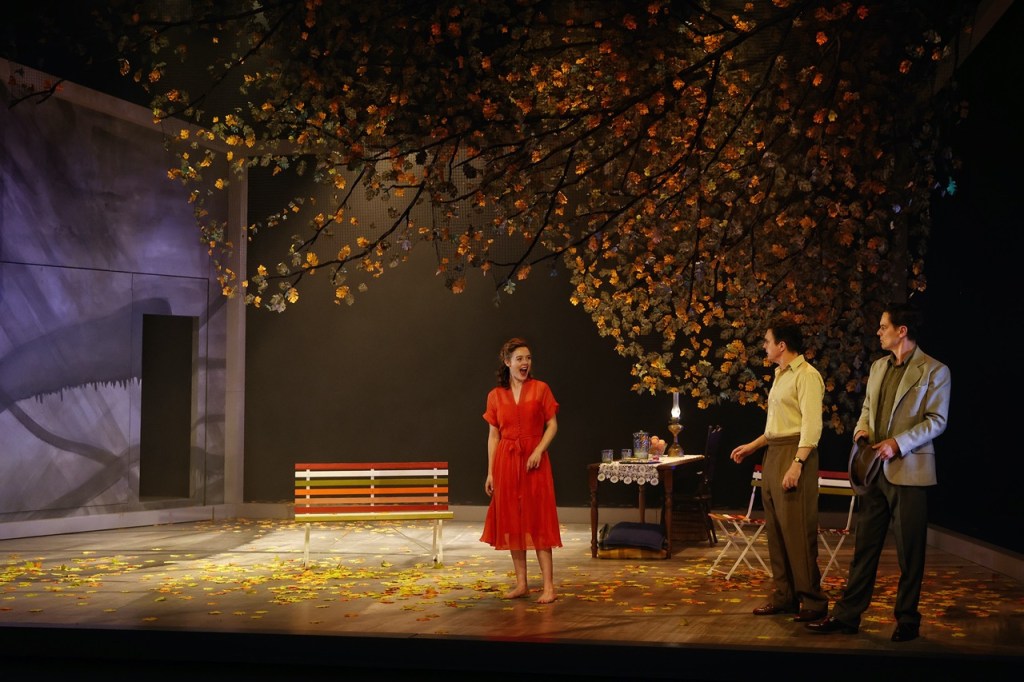
Sunday. Sydney Theatre Co. Photo: Prudence Upton. 6. Sunday (Sydney Theatre Co / Melbourne Theatre Company)
Bringing Melbourne Theatre Company’s production of Sunday north to Sydney was a smart move. Anthony Weigh’s script is lively, opening up a chapter of Australian art history, and gives Nikki Shiels a platform to shine. I loved Anna Cordingley’s simple yet imposing design. This show just sang for me.
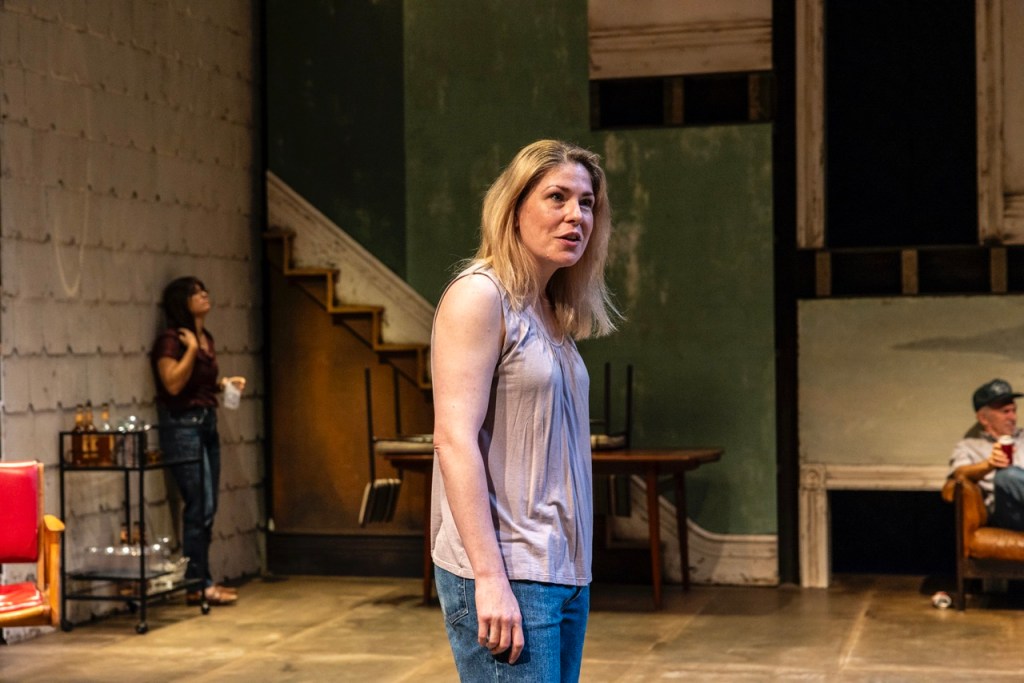
August: Osage County. Belvoir. Photo: Brett Boardman. 5. August: Osage County (Belvoir)
I did pause to ask myself if Belvoir’s August: Osage County was actually this good, or if I was suffering from a bit of recency bias, but I’m pretty sure I’m not. This show is just a feast of great work. The script was already a classic, famous for its juicy roles and antagonistic characters. And I think I was totally prepared for Pamela Rabe to excel (which she did), but it was Tamsin Carroll that had me on the edge of my seat the whole time. I’ve always loved her work and thought she was an excellent actress, but this took things up a notch.

4. & Juliet (Michael Cassel Productions, Lyric Theatre)
This show, like Titanique, & Juliet is just pure joy to me. Far smarter and more earnest than it needed to be, the book to this musical isn’t the usual lazy jukebox affair but a whip-smart comedy full of wordplay, slapstick and unexpected delights. Plus, the tunes are bangers that actually work as proper musical theatre songs – moving the plot and characters along on their journeys.

Yentl. Sydney Opera House. Photo: Jeff Busby. 3. Yentl (Kadimah Yiddish Theatre, Monstrous Theatre and Neil Gooding Productions in association with Shalom, Sydney Opera House)
A slight cheat here as I didn’t actually see the show in Sydney, but at its run in Melbourne earlier in 2024, but I don’t care. Yentl was one of those great delights you have when you walk into a theatre expecting nothing and are completely transported to another world and get to explore a life completely different to your own. As an exercise in adaptation it is flawless, holding your hand and taking you into some deeply esoteric religious dogma without feeling heavy or confusing. And it never treated the audience as fools, Yentl had faith in its own ability to grip you till the end.

2. Zombie! The Musical (Hayes Theatre Co.)
The best shows are the ones that take you by surprise and leave you feeling moved by the end, and Zombie! The Musical did just that. For all its stupid B-movie moments and loving musical theatre jokes, it managed to have real heart. Of course, it’s a musical so it lives or dies on the tunes, and Laura Murphy proved why she’s the best musical theatre writer in Australia at the moment (yup, I said it).
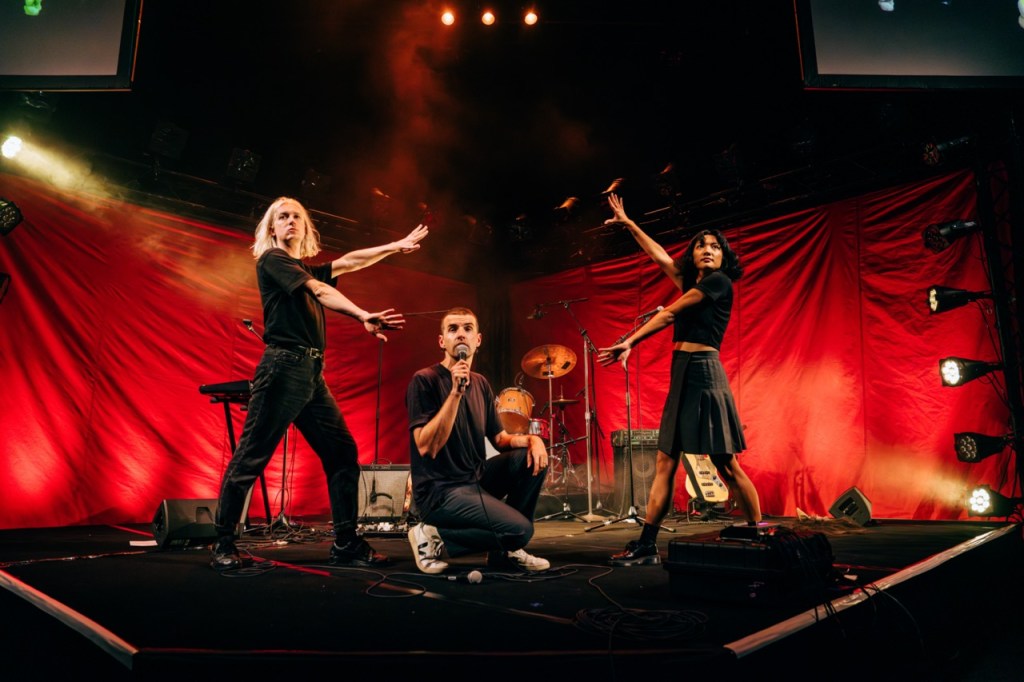
AUTO-TUNE. Sydney Opera House. Photo: Ravyna Jassani. 1. AUTO-TUNE (re:group Performance Collective, Sydney Opera House)
And the theme of “shows that took me by surprise” reached its apex with re:group’s AUTO-TUNE part of the Sydney Opera House’s UnWrapped season. This multimedia, indie sci-fi rock theatre/music hybrid amazed on every level. The storytelling was just transformative, breaking form time and again to tell a heartbreaking story in ever-inventive ways. Where their other shows, like POV and UFO, were admirable and interesting deconstructions of how theatre works with technology, AUTO-TUNE gave us their most impactful story to date. I can’t wait to see what re:group Performance Collective comes up with next.
Bring on 2025!
-
The Pigeons (KXT on Broadway) ★★½

Written by David Gieselmann. Translated by Maja Zade. The Other Theatre in association with bAKEHOUSE Theatre. KXT on Broadway. 7-21 Dec, 2024.
Two farces, both alike in stupidity, in fair Sydney, where we lay our scene…
Just as the hilarious Hot Tub is heating up Belvoir 25a, the absurd German comedy The Pigeons lands at KXT on Broadway. Like a mash-up of The Office, Succession, and ’Allo, ‘Allo, The Pigeons takes you on a wild ride.

Andrew Lindqvist & Kandice Joy. Photo: Justin Cueno. Have you ever wanted to just disappear? Robert Bertrand (Mark Langham) does. He wants to leave his family and the company he owns and just live in peace, but doing so is more complicated than he expected. For starters, his successor at the company, Holger Voss (Andrew Lindqvist), is a nervous wreck thanks to the intra-office psychological warfare of Robert’s son Helmar (Jackson Hurwood) and the tough Heidrun Reichert (Kandice Joy). Plus, the money he’s embezzled from the company has been stolen by a blonde Dane named Silja (Micaela Ellis). Meanwhile, his wife’s psychologist, Dr. Erich Asendorf (Tel Benjamin), is screwing his patients, including Holger’s wife, Natalie (Lib Campbell), and getting them all confused. And exactly how does a pigeon-loving French half-brother factor into the equation?

Andrew Lindqvist, Tel Benjamin & Lib Campbell. Photo: Justin Cueno. There’s a lot going on in The Pigeons. This carefully constructed, furiously paced farce has the intensity and fluidity of a manic nightmare. It’s no wonder poor Holger is losing his mind. Less funny “ha-ha” and more funny “what the hell is going on?”, Director Eugene Lynch leans into the abrupt Germanic sharpness of the text for quick scene changes. The large cast is constantly kept on their toes with some tight choreography in the small space of the KXT stage as scenes take place one on top of the other.
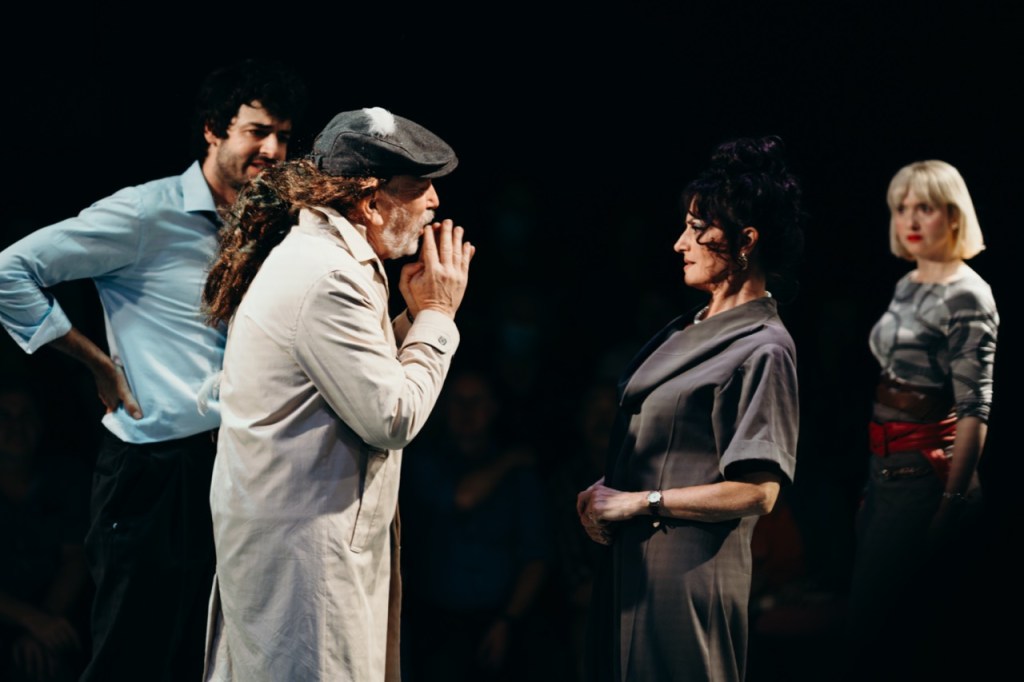
Andrew Lindqvist, Mark Langham, Kath Gordon & Lib Campbell. Photo: Justin Cueno. The show’s strength lies in its completely committed cast, who believe every outrageous word they utter and play the heightened mania at just the right level. They all seem to be having a great time with the absurdity around them.
Things get more intense as the set starts to physically close in on them (think Star Wars’ iconic trash compactor scene), and some definitely not OH&S-approved prop work had me worried – do NOT stand on a swivel chair in an office, people!
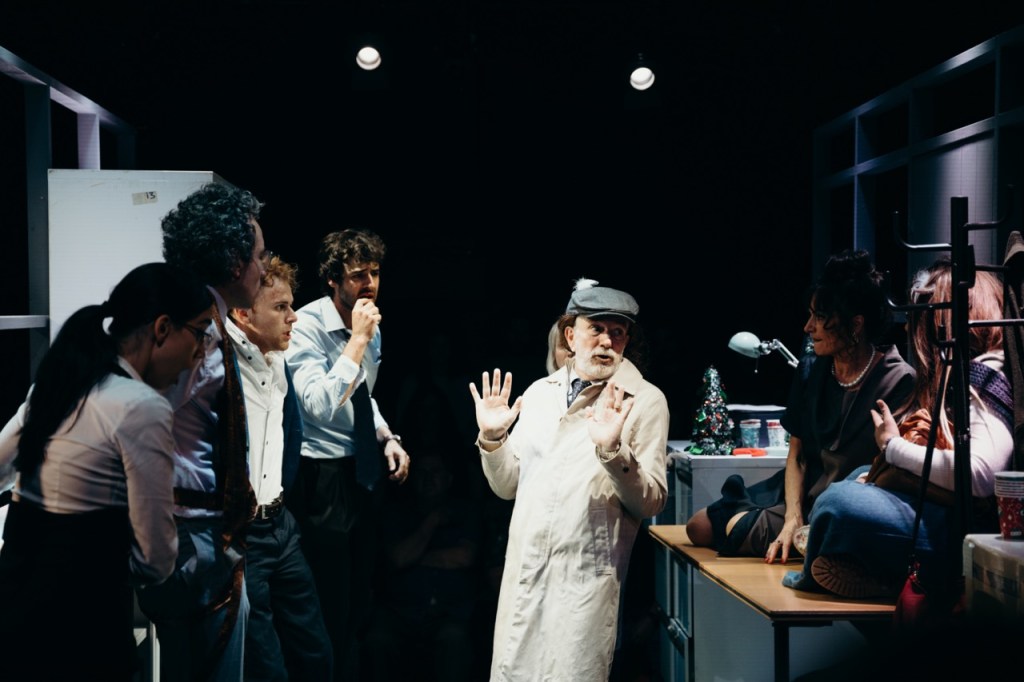
Kandice Joy, Tel Benjamin, Jackson Hurwood, Andrew Lindqvist, Mark Langham, Kath Gordon & Micaela Ellis. Photo: Justin Cueno. But the non-stop mania starts at full tilt and becomes exhausting as the plot gets harder and harder to follow. Some ill-conceived set movements block the climactic action from a large portion of the audience, robbing the ending of any emotional investment. Like the cumbersome set, there is a weight to the production. You can feel everyone trying their hardest to make it all work but the play never takes flight.
The Pigeons can be discombobulating, but it’s never dull. Charming, but clearly flawed, it’s refreshing to have a play this bold, even if it’s not fully successful. While you’ll definitely laugh out loud, you’ll also be scratching your head on the way home.
P.S. just a reminder that ★★ means “Fine. Flawed and not really recommended, but you may find something to appreciate in it.”
-
Snowflake (Old Fitz) ★★★★½
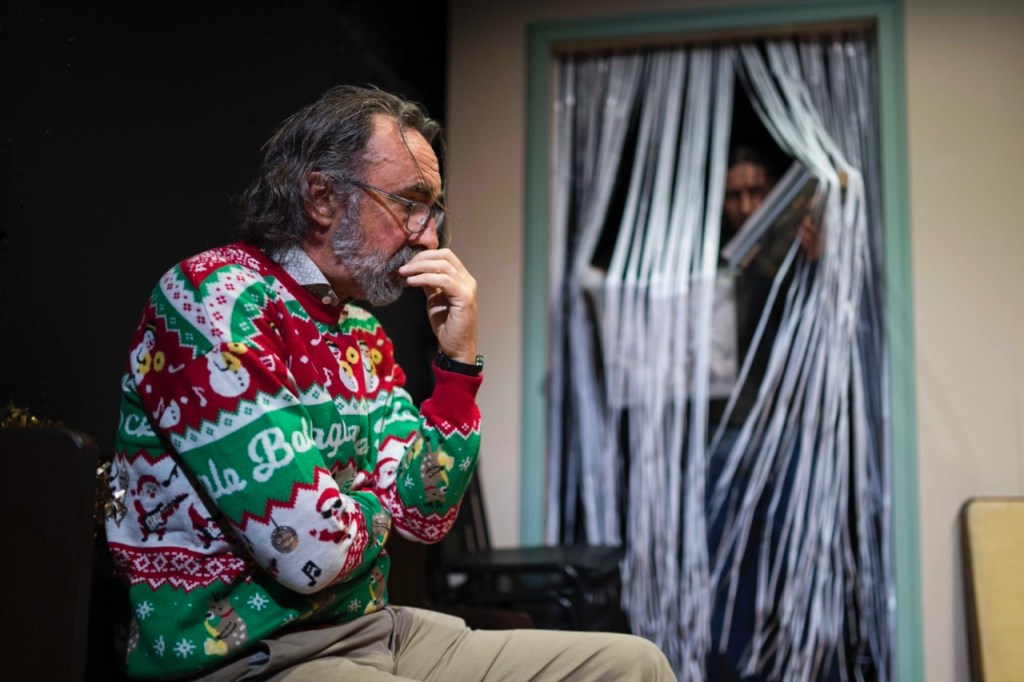
Written by Mike Bartlett. Australian Premiere. The Old Fitz Theatre. 6-22 Dec, 2024.
The modern politics of Brexit and the generational divide are window dressing in Mike Bartlett’s family drama Snowflake. The real draw here is an intelligent, thoughtful script that looks beyond the reactionary, and three absolutely perfect performances.
It’s Christmas Eve 2019, and Andy (James Lugton) is nervously setting up a community hall to welcome home his daughter, whom he hasn’t seen in three years. She left home abruptly and cut off all contact, but he’s hoping against hope that she will turn up. When a young woman, Natalie (Lilian Alejandra Valverde), appears needing to get into the hall’s kitchen to borrow plates for her own family Christmas meal, Natalie is instantly intrigued by Andy’s situation and starts to dig for more details. As they talk, Andy starts to realise that his own past actions may not have been as benign as he thought.
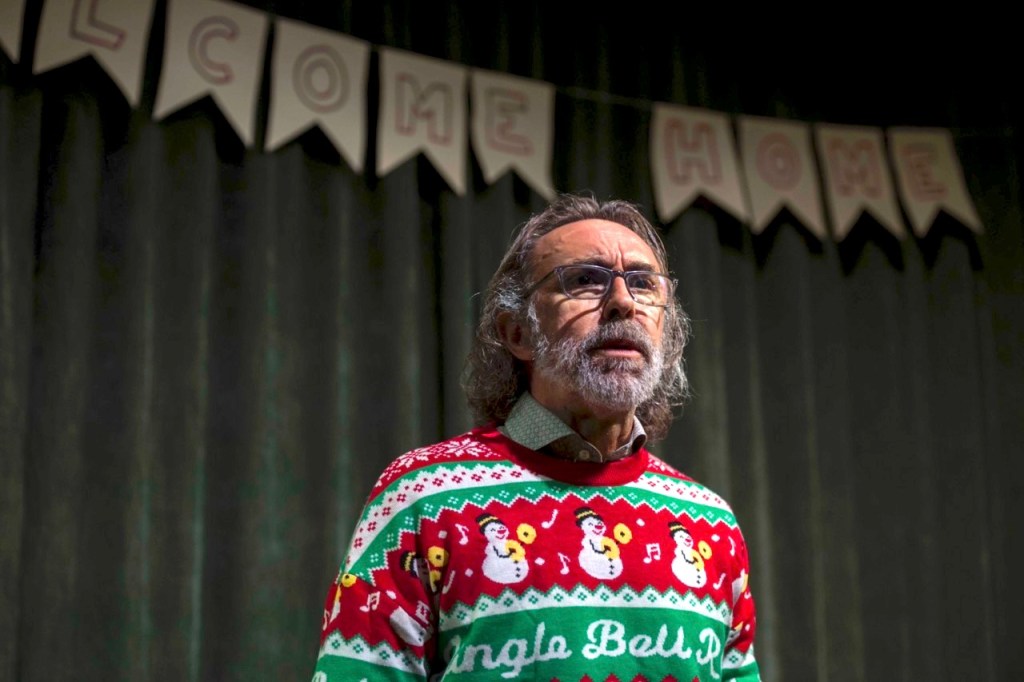
When Snowflake was staged in London in 2019 (after its premiere in 2018) some critics felt it was too blunt and too soon to really dissect the complexities of the 2016 Brexit vote to leave the EU. Even after three years, the wounds were still fresh, and the sense of betrayal felt by many younger Britons was still raw. Now, in 2024 and half a world away from the specifics of the event, it’s clear to see that for Bartlett, the real truth doesn’t lie in the vote itself but in the lack of communication between generations. Brexit was the symptom, but not the cause, of the drama.
Where Bartlett succeeds, and what no doubt infuriated people at the time, is in eloquently discussing the world view of both the middle-aged Andy and his daughter Maya (Claudia Elbourne), and showing how they sit in conflict with one another, without really choosing a side. In fact, I guarantee different people will walk away with different ideas of who is right and wrong (and it will probably break along generational lines).
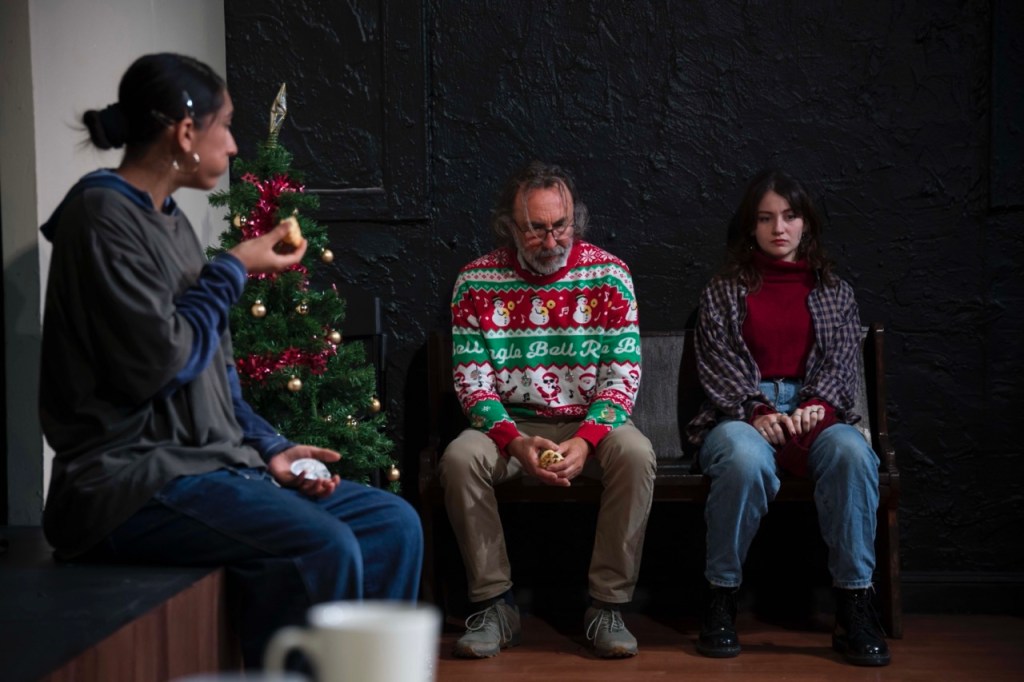
This isn’t a play about arguments or point-scoring; it’s about our own human emotional needs and our blind spots. When Maya is trying to tell Andy how she feels, he constantly interjects to console her. He sees this as the kindness of a loving father; she sees it as an overbearing patriarch who won’t let her speak. Andy doesn’t understand that Maya isn’t looking for answers to questions; she’s looking for support and to be treated as an equal. Meanwhile, Maya is too wrapped up in her own emotions to see things from Andy’s perspective.
Sydney stages are already awash with some great plays to end the year, giving us a smorgasbord of great performances, and this cast easily joins that list. James Lugton is the heart and soul of the show as Andy, delivering a first act that consists of a single monologue with finesse. His confusion and frustration are palpable and relatable, as is his good-natured desire to understand. Andy is no two-dimensional “Boomer” (more of a Gen X’er, actually), but simply a middle-aged father who is trying his best.

In contrast, Lilian Alejandra Valverde’s youthful energy and refusal to politely accept social cues are both aggravating and delightful at the same time. Natalie’s gentle manoeuvring and desire to listen and reflect back are a mix of condescending and caring. Claudia Elbourne’s Maya is full of wounded pain carefully held in check. Her performance is the most withheld and the most layered.
All three are perfect. As are their accents, thank God. We’ve suffered through too many OTT, on-the-nose accents this year, but this trio are so naturalistic you simply forget we’re in a pub basement in King’s Cross. Soham Apte’s set design keeps things hidden before a final reveal, and its bland simplicity evokes the sadness of Andy and Maya’s situation. Jo Bradley’s direction keeps things grounded, focused on the performances, and the show is all the better for it.
Bartlett is one of my favourite playwrights of the past decade (he’s part of a crop of contemporary British writers like Simon Stephens, James Graham, Ella Hickson etc whose work I really connect with), and Snowflake is tonally a sequel to his 2017 hit Albion, which explored British pride and nationalism in the wake of Brexit. Snowflake is less grand in scope, and is in many ways closer to his 2009 breakthrough play, Cock, in dealing with the emotional fallout of one person’s choice.

Everyone will read their own politics into Snowflake, and Bartlett has, either cleverly or cowardly, left those questions open-ended while gleefully poking at both sides. Snowflake isn’t really about picking a winner from the Brexit debate (or Trump, or the climate crisis, or immigration, etc); it’s about finding a way to co-exist with love and respect. It’s about meeting people where they are, not where you want them to be. It’s about learning to shut the fuck up and actually listen to people, instead of being self-centred and self-righteous in our own beliefs.
-
Hot Tub (Belvoir 25a) ★★★★

Written by Lewis Treston. World Premiere. Belvoir 25a. 6-21 Dec 2024.
Crass, crazy and thoroughly entertaining – you could do a lot worse than end your theatrical year at Belvoir’s downstairs 25a space watching Lewis Treston’s crime-family comedy, Hot Tub.
Young Dido (Melissa Kahraman) has come to the Gold Coast for Schoolies and to visit her dad, Murray (Kieran McGrath), and ask him for money. He lives at The Great White with his new wife, the mystical/mystifying Jade (Shannon Ryan), her avaricious, nihilistic twink son Reese (Jack Calver), and Jade’s mother, the family matriarch and owner of the building, the formidable Eunice (Diane Smith). But Dido’s plan isn’t working out. When Murray refuses to bankroll her drastic weight-loss surgery, she turns to more illicit means for the funds and finds herself under the eye of a well-meaning, not entirely mentally secure police officer (Ella Prince).
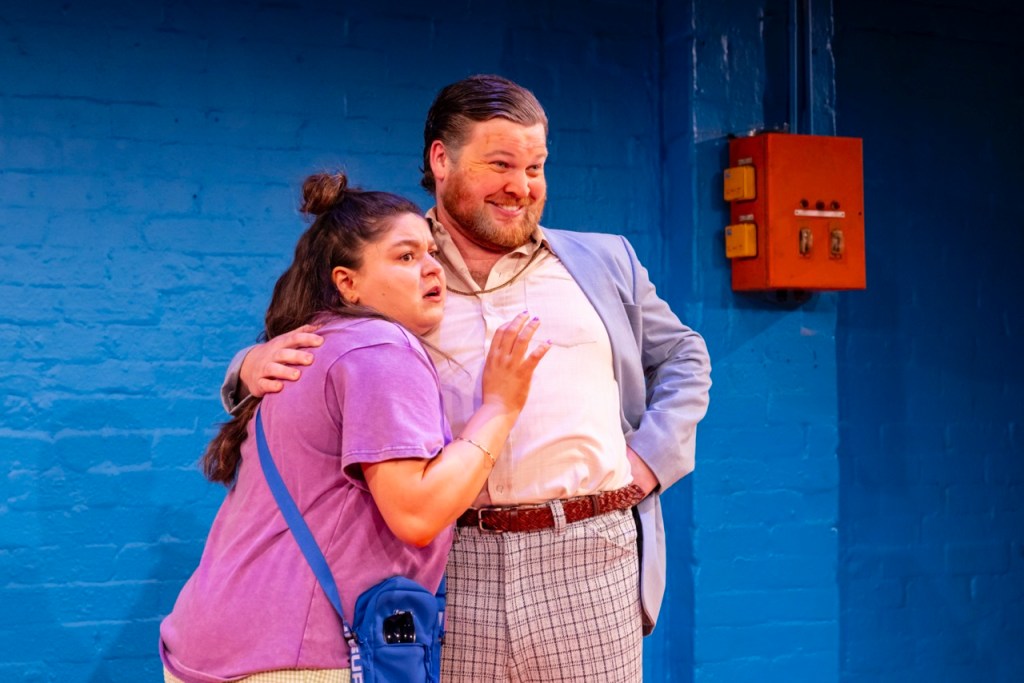
Melissa Kahraman & Kieran McGrath. Photo: Katherine Griffiths. Belvoir has taken a big risk scheduling this uproariously funny comedy downstairs while the brilliantly bleak dramedy August: Osage County is upstairs – you wouldn’t want the sound of wild hilarity and dick jokes to bleed into the drama above. But there’s no denying the crowd-pleasing stupidity that Hot Tub is serving up. Treston knows how to create a scenario ripe with possibility and then stuff it full of filthy jokes like a Christmas turkey. Are the jokes cheap? Yes. Are they funny anyway? Definitely yes. Just when you’ve finished laughing at the pink dildo being waved in the audience’s face, three more punchlines have snuck up to turkey-slap you.
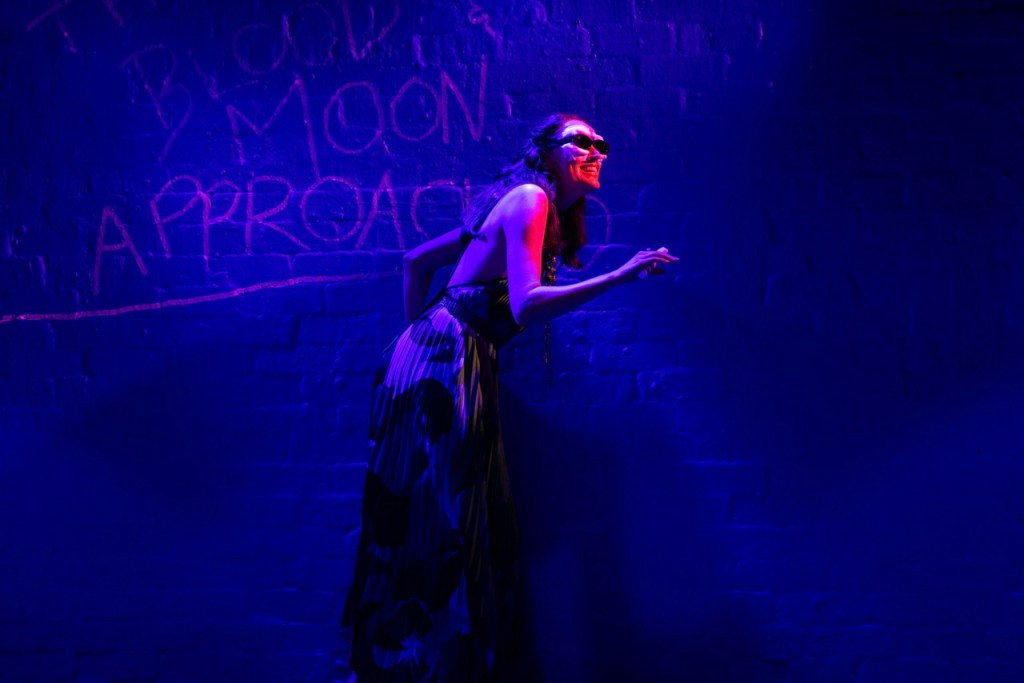
Shannon Ryan. Photo: Katherine Griffiths. Normally, this is the kind of crude comedy I would roll my eyes at, but the laughs are backed up by a genuinely empathetic performance from Kahraman as Dido, who is just a young girl trying to figure out her life and make it into something better. She may make a series of bad decisions, but the motivation behind it all is sweetly relatable. Around her, the cast gets to run riot as they fully commit to the bit – whether that means squeezing into unflattering budgie smugglers, slinging on a jockstrap, or playing in the eponymous heated pool (in fact, a ball pit). The show is full of silly micro-moments, a look here and a movement there, that never steal the spotlight but come from serious character work.
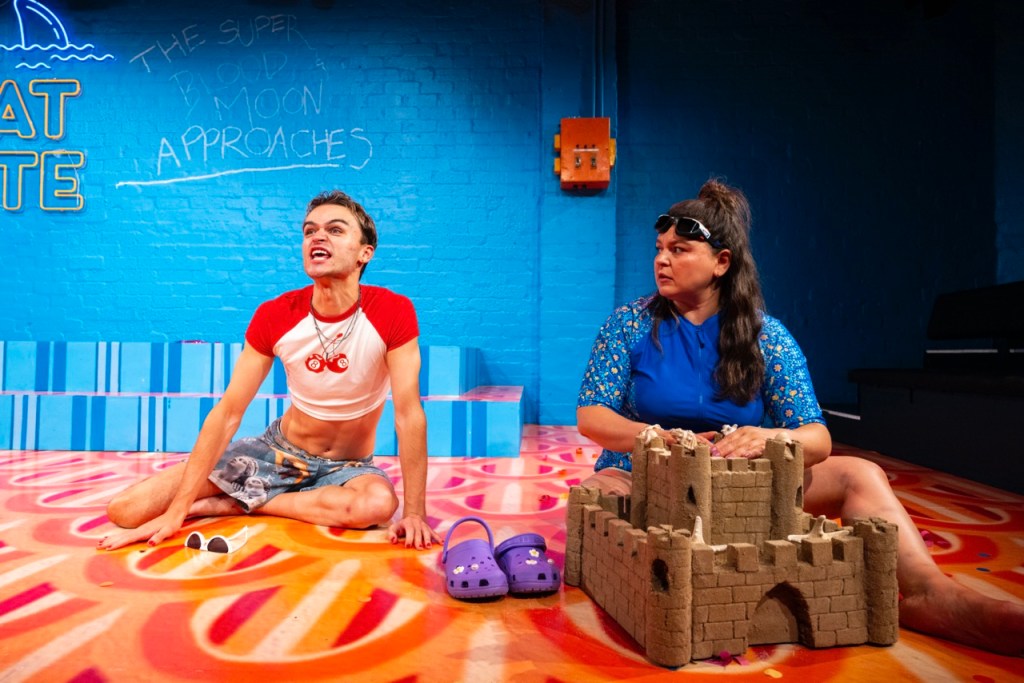
Jack Calver & Melissa Kahraman. Photo: Katherine Griffiths. Behind it all, the real star of the show is director Riley Spadaro, who keeps this three-ring circus of stupidity in check. The plot, as bizarre as it is, is always prominent, and the characters are focused. The action scenes are tight, and for all the apparent on-stage chaos, there is a clear vision and guiding hand. Unlike many similar comedies, this one never loses its humanity.
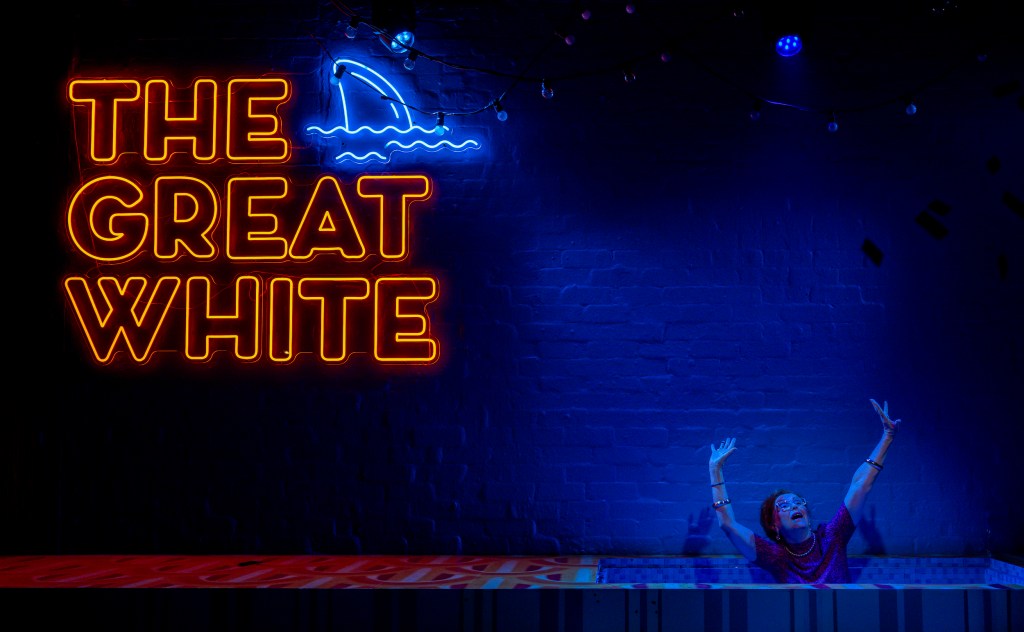
Diane Smith. Photo: Katherine Griffiths. Nothing about Hot Tub feels like a 25a show. I say that as a compliment, but also as an existential inquiry. This show is so well presented it could easily be a mainstage show upstairs. A bespoke neon sign (13 letters, plus waves and a shark fin), carpentry, multiple costumes and props, not to mention a complete repaint of the theatre’s interior… they certainly got a lot of bang for their 25a (“less than $2500”) budget.
Hot Tub doesn’t have a moral or message to deliver; it simply exists to make you laugh and is very good at what it does. It’s clear that Treston’s comedy chops are well-honed and here to party in this homegrown slice of silliness.
-
New Breed 2024 (Sydney Dance Company) ★★★★

Choreographed by Piran Scott, Dean Elliott, Siobhan McKenna & Amber McCartney. Sydney Dance Company. Carriageworks. 4–14 Dec, 2024.
Sydney Dance Company’s annual showcase of emerging choreographers, New Breed, is back for 2024 with a mini-advent calendar of different treats. The four works on show are each completely unique, using dance in different ways to explore ideas of how human bodies interact with the world.

Amber McCartney, Siobhan McKenna, Dean Elliot & Piran Scott. The performance opens with its most easily accessible piece, Piran Scott’s Breath. Choreographed to the music of John Butler’s acoustic track ‘Ocean’, Breath embodies the deep connection Australians have with our coastline while taking us through one person’s life, from first breath to last (the ending is very Hamilton). The most lyrical and romantic of the four works, it draws us in and opens the night strong.

Piran Scott’s Breath. Photo: Pedro Greig. Courtesy of Carriageworks. Up next is Dean Elliott’s Full In / Half Out, a look at athleticism and friendly (?) competition. Blending the worlds of gymnastics and dance, a troupe of dancers in skin-tight, glittering bodysuits (by Aleisha Jelbert) bend and stretch, flip and leap, all jostling for attention and superiority. There is a healthy dose of humour mixed with the impressive sensuality of Elliott’s work. Of all the pieces, Elliott showcased the dancers’ strength and physical prowess the most – I wish my back had that level of flexibility.

Dean Elliott’s Full In / Half Out. Photo: Pedro Greig. Courtesy of Carriageworks. Have you ever been in a room of people talking when suddenly all the conversations pause at the same time and there is a moment of silence? This kind of group behaviour is at the heart of Siobhan McKenna’s Say It Again, the most experimental of the pieces. An interesting exploration of sound through movement and the tension we feel to subconsciously find order and unity, but also independent expression, Say It Again uses the rustle of the costumes (complete with bulbous, ruffled sleeves) and vocalisations as its only audio accompaniment. It was a real “lean in” moment. While not completely successful, this feels like the beginning of an interesting practice, and it will be exciting to see where this piece evolves next.

Siobhan McKenna’s Say It Again. Photo: Pedro Greig. Courtesy of Carriageworks. The performance closes with my favourite piece, Amber McCartney’s haunting Leech. When I say ‘haunting’, I don’t mean in a lyrical, emotionally longing sense. I mean it in a literal “I will have nightmares now” sense. McCartney throws us into a world of science-fiction body horror. In a pre-recorded introduction, McCartney speaks of her love of 70s and 80s sci-fi, and specifically cites Philip Kaufman’s 1978 remake of Invasion of the Body-Snatchers as a key reference for Leech. However, I saw clear echoes of more recent psychologically disturbing films like Jonathan Glazer’s 2013 Under The Skin and Alex Garland’s 2019 Annihilation as well.

Amber McCartney’s Leech. Photo: Pedro Greig. Courtesy of Carriageworks. With a discordant soundscape by Alisdair & Robert Macindoe and Robert Downie, the dancers form a mass of seemingly disassociated limbs and appendages that move with unnatural grace. Like a newborn foal, these grotesqueries slowly learn to become more human-like. Brilliant costume design and subtly low lighting keep you unsure how many performers are on stage as they combine and separate, at times with two heads, at times with four legs… it is thrilling to watch.
One thing is clear from these four works: there is a rich breadth and depth of choreographic talent in Australia, and our contemporary dance scene has a strong, bold future.
-
Looking Ahead to the 2025 Season

Sydney’s major theatre companies have announced their 2025 seasons and there is a lot to pick over. Sydney Theatre Co is in transition between Kip Williams and Mitchell Butel’s regimes and Griffin is going into its first full nomadic year so it’s not quite business as usual.
I’ve poured over the announced works looking for interesting tid-bits and connections across the companies. As always there are a lot of classics, big names, shows that were hits overseas or interstate and a handful of brand new works to enjoy.
Surprisingly this year, there doesn’t appear to be any dueling productions (in 2024 Australia saw two totally independent productions of Cost of Living, and three independent productions of The Inheritance). Whether that’s by luck or by design is anyone’s guess.
Okay, let’s jump in.

Aria. Ensemble Theatre THE INESCAPABLE DAVID WILLIAMSON
After sneaking out of retirement in 2024 with two new plays The Great Divide at Ensemble Theatre and The Puzzle at State Theatre Company South Australia, David Williamson is spreading his influence further by revealing another World Premiere, the return of a Sydney classic and more all over the East Coast.
His new play, Aria, continues Ensemble’s love affair with opera dramas (after 2024’s Masterclass). They also have return of one of his best loved plays from the 80s, Emerald City, which is interesting as it is promising a “refresh”. What does that actually mean? It could be anything from removing any out-dated language to giving it a new, modern spin. I guess we’ll have to book to find out.
But that’s not all, Mark Kilmurry’s 2023 production of Rhinestone Rex and Miss Monica is heading up to Queensland Theatre and there’s also a revival of The Removalists, his groundbreaking 70s hit, happening at Melbourne Theatre Company. It seems like Williamson is well and truly back as the King of Australian Theatre.

Jacky. Belvoir. MELBOURNE’S BEST
Some notable shows are moving up north from Melbourne. Sydney Theatre Co has nabbed Sarah Goode’s production of Edward Albee’s Who’s Afraid of Virginia Woolf? that got raves at Red Stitch. I really wanted to get down there to see it, so I’m chuffed it’s traveling up. Hayes has an acclaimed production of Ghost Quartet coming up, but more on that in a bit. And the British fringe show Sauna Boy, that I saw at Midsumma down in Melbourne this year, is coming to Sydney for Mardi Gras.
Melbourne Theatre Company has a couple of transfers on the way. Belvoir is bringing up Jacky putting the spotlight firmly on Guy Simon (I still giggle when I think of his turn in Holding The Man earlier in 2024, but that sadly means he can’t repeat his role in Whitefella Yella Tree at STC). And STC is bringing up Katie Weston and Tom Gleisner’s musical Bloom.

Whitefella Yella Tree. Sydney Theatre Co. ONE MORE TIME, FOR THE DUMMIES
Do we need to stage an intervention for Heather Mitchell? I’m starting to feel like STC has her locked in a basement and only lets her out to reprise her stunning performance as Ruth Bader-Ginsburg. Yes, Suzie Miller’s RBG: Of Many, One is back for its third run. I love the show, but I’m sure part of this return is simply economic – the running costs on this must be low now, with the sets and costumes all made and only a single performer. It’s no secret STC took a financial hit this past year so it’s no surprise to see their 2025 season filled with returns like this (and The Dictionary of Lost Words), and top-notch imports from other theatres (see above). They’ve also picked up Dylan Van Den Berg’s terrific Whitefella Yella Tree that wowed in its debut season at Griffin.
Also, Sarah-Louise Young’s lovingly fun An Evening Without Kate Bush is back (this time for Mardi Gras) and Trophy Boys gets a return run at Riverside.
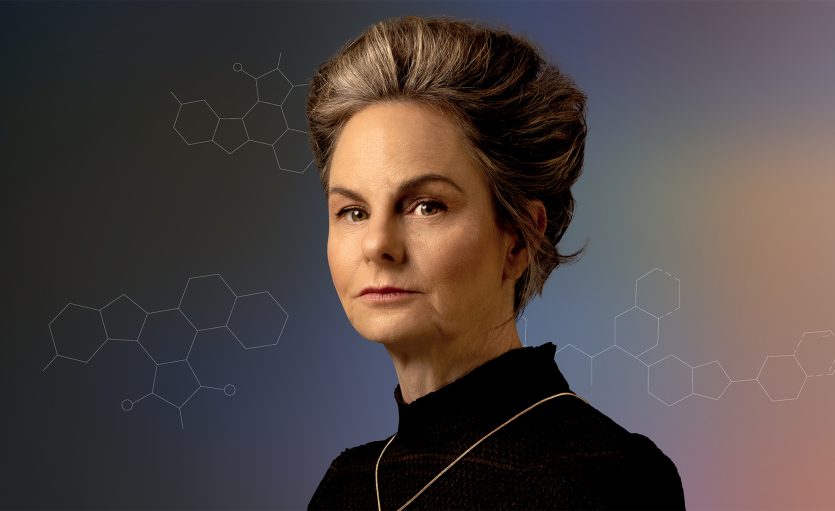
The Half-life of Marie Curie. Ensemble Theatre. SEQUEL-ISH
Okay the following shows aren’t actually sequels, but there is a clear line between these debut plays and shows we’ve already seen.
I’m getting strong Photograph 51 vibes from Ensemble’s The Half-life of Marie Curie. Add to that Ensemble have director Sean Rennie tackling another Tennessee Williams, this time it’s The Glass Menagerie. I loved his take on Suddenly Last Summer so I have high hopes. And Ensemble are giving us more Harold Pinter with a double bill of The Lover & The Dumb Waiter.
Over at STC, Merlynn Tong is back with Congratulations, Get Rich! (恭喜发财, 人日快乐) after her terrific Golden Blood made the move from Griffin to STC (and toured). And there’s the new adaptation of The Talented Mr Ripley by Joanna Murray-Smith (who’s no stranger to the work of Patricia Highsmith, having penned Switzerland that was revived at Ensemble this year).
Unsurprisingly, after the enduring runaway success of Counting & Cracking and The Jungle & The Sea, Belvoir has developed a new play with S. Shakthidharan. The Wrong Gods (a co-production with MTC) that will undoubtedly sell out, so don’t sleep on this one.
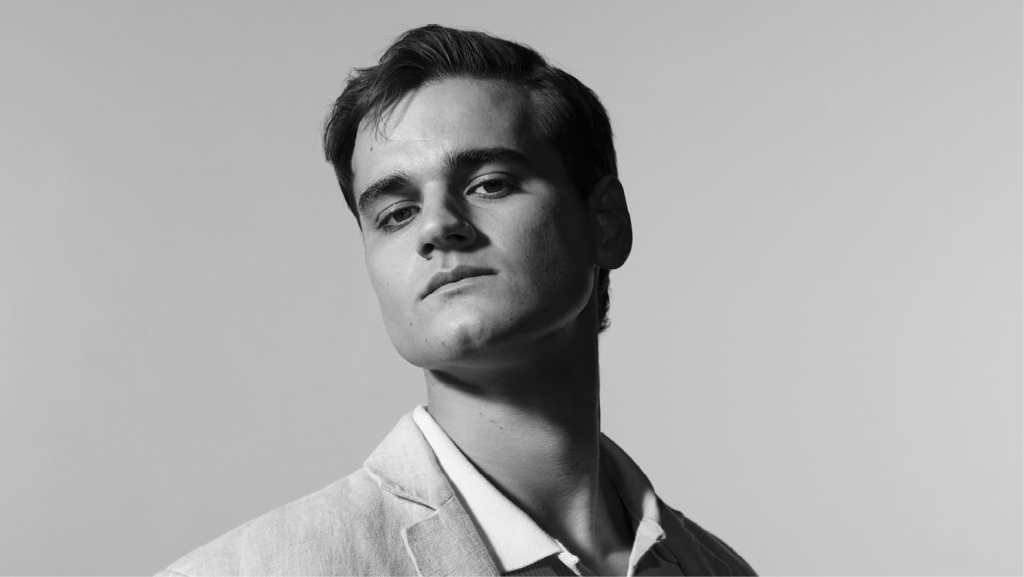
The Talented Mr Ripley. Sydney Theatre Co. WE HEART EXISTING I.P.
Pre-existing IP (intellectual property) abound in 2025. And yes, I’m using the phrase “intellectual property” deliberately for the somewhat soulless and legalistic tone it provides. Theatre has always adapted books, news and later films for the stage as a safe way to develop new works and attract audiences “look, this is brand new but still familiar. Please buy tickets.” Is it cynical? Not necessarily, although I would argue that one mainstage adaptation this year probably is there just for the money (no, I’m not pointing fingers just yet).
Apart from the previously mentioned The Talented Mr Ripley at STC, they also have a new version of D’Arcy Niland’s The Shiralee adapted by Kate Mulvany. Plus Joan Lindsay’s enduring mystery The Picnic at Hanging Rock hits the stage via playwright Tom Wright.
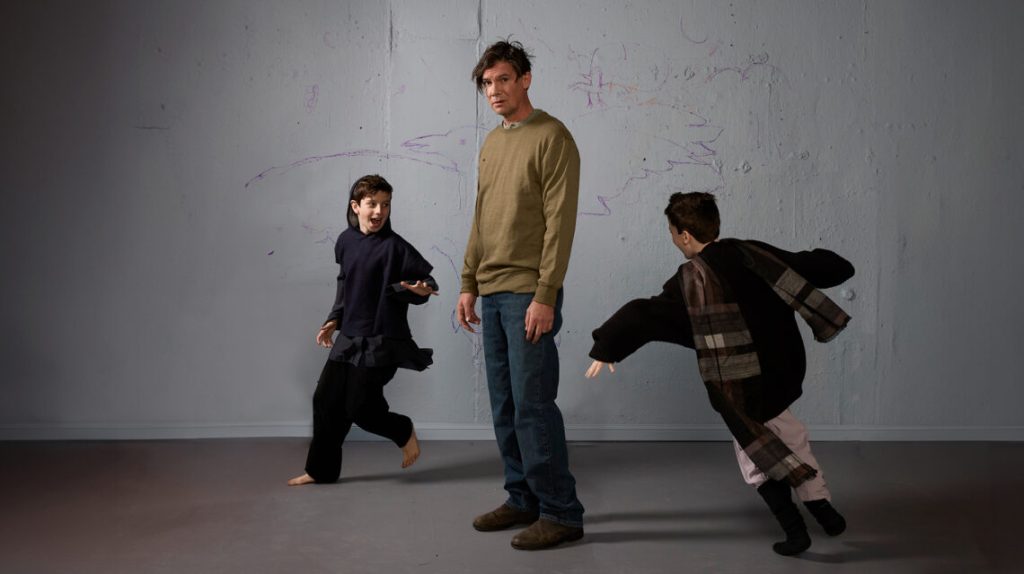
Grief is the Thing with Feathers. Belvoir. Belvoir has new theatrical versions of Helen Garner’s The Spare Room (with Judy Davis!), Max Porter’s Grief is the Thing with Feathers (not to be confused with a different adaptation of the same book done by Enda Walsh, this one is brand new), but the one I’m most excited for is Virginia Wolfe’s Orlando starring Janet Anderson. Take my money!
Meanwhile Ensemble are reclaiming the play Dial M For Murder from the legacy of the Hitchcock film and bringing it back to the stage, with Jeffrey Hatcher adapting Frederick Knott’s original. Riverside has the stage adaptation of Looking For Alibrandi. And Hayes are debuting the musical theatre version of Pedro Almadovar’s adored film Women on the Verge of a Nervous Breakdown (I saw a production of this in London years ago and didn’t love it to be honest, but Hayes excel at reclaiming show like this so I’m excited to see what happens).
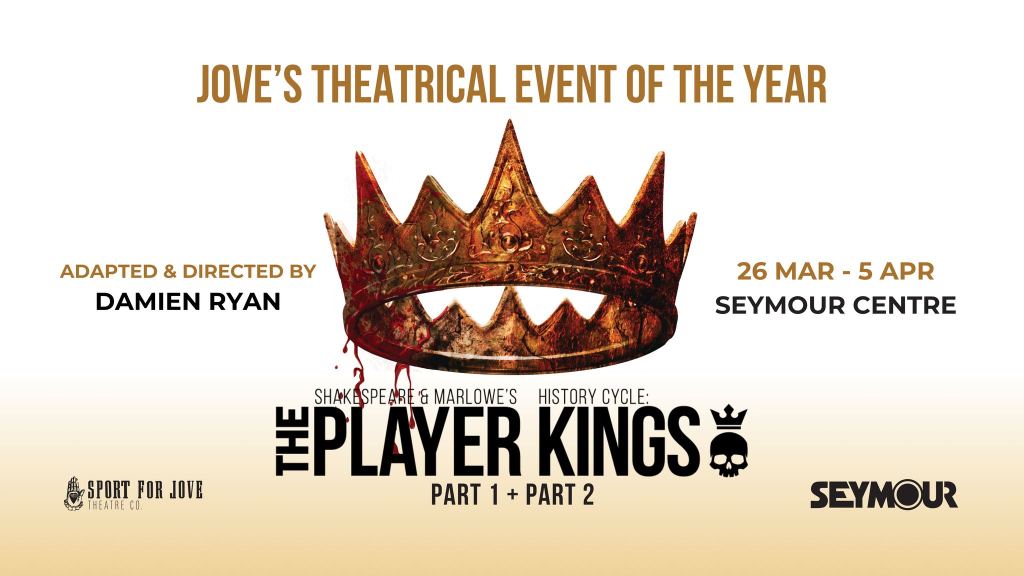
The Player Kings. Seymour Centre. A ROLL CALL OF CLASSICS
Pinter? Check.
Shakespeare? Check.
Beckett? Check.
Tennessee Williams? Yup.
Sam Shepard? Yes please.
Sondheim? Thank god!
There’s no shortage of familiar, classic names on stage, and while some of the choices are a little… well worn, others are delving a bit deeper into the canon to find interesting picks. What’s got my eye? The Pinter’s at Ensemble (I love a double bill of one-act plays, I’m waiting patiently for someone to do some of Tom Stoppard’s earlier short works), as well as The Glass Menagerie as mentioned earlier.
In addition to Romeo & Juliet and Henry 5 (notably not styled as Henry V), Bell Shakespeare are dusting off Coriolanus (is it really the first time they’ve done it in 30 years?!) which is great to see. It was understandable that they focused on Shakespeare’s blockbusters in the post-Covid years and it’s exciting to have the repertoire get opened up again.
And speaking of Shakespeare, Sport For Jove are staging The Player Kings (Shakespeare’s Richard II and Richard III, in new adaptations by Damien Ryan) at Seymour Centre. It’s a two part epic, but we’re used to that now, right?

Circle Mirror Transformation. Sydney Theatre Co. THE PRIZEFIGHTERS
2024 Pulitzer Prize, Obie Award and Outer Circle Critics Award winning play, Primary Trust, hits the fast track from New York to land at Ensemble. Ensemble has had success bringing modern American award winners to Sydney so this has the ingredients of a hit.
On the other side of the harbour, Pulitzer Prize winning playwright Annie Baker lands at Sydney Theatre Co with her Obie Award winning play Circle Mirror Transformation (with Rebecca Gibney making her STC debut). And STC have got Amy Herzog’s buzzy play 4000 Miles lined up for a big revival.
Hayes brings Tony-nominated blue-grass musical Bright Star to the stage. Written by Steve Martin (yes, that Steve Martin) and Edie Brickell, this one has an interesting pedigree and is exactly the kind of show I love seeing at Hayes. Hardly a beloved Broadway hit, its charms may work better on the small scale than a big main stage.
Two shows at the Opera House also have my interest. Firstly there’s the return of Olivier Award winning laugh-fest The Play That Goes Wrong – a pitch perfect hit of physical comedy. And there’s the ever excellent Tony and Olivier-nominated actor Samuel Barnett starring in Feeling Afraid As If Something Terrible Is Going To Happen, which, despite the title, isn’t about how I feel when going to review a fringe show in the suburbs… jokes (kinda).
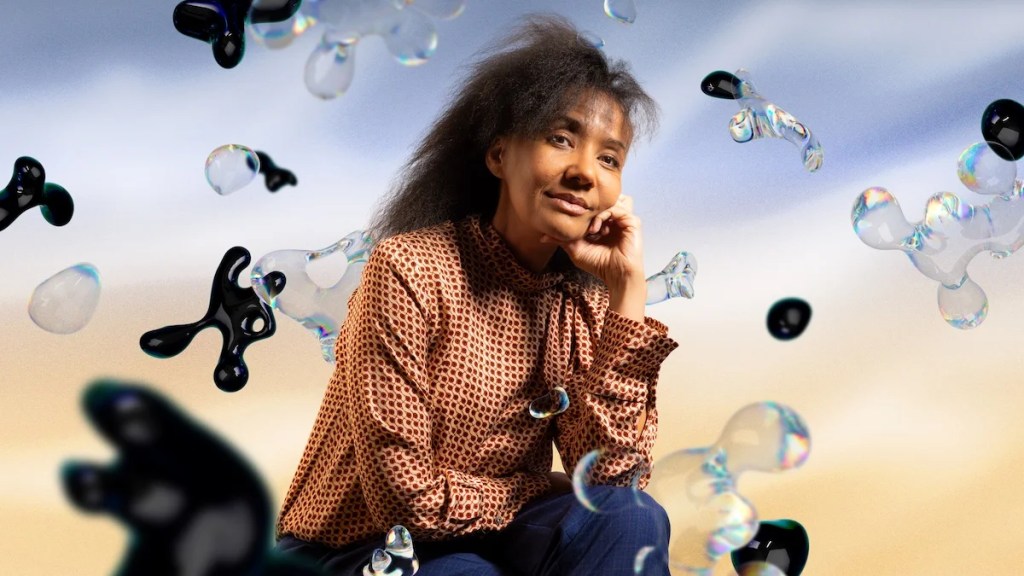
Nucleus. Griffin. NEW WRITING
New writing is hard to pre-judge but some of the announced new works quickly piqued my interest.
Alana Valentine has a new play with Griffin (playing at Seymour Centre) called Nucleus. I’m a sucker for science plays and mixing this with environmental questions feels right in my wheelhouse.
Griffin’s other big show is getting a lot of chatter, but probably more for the nudity than anything else at this point. Will Naturism be worth seeing in all its glory? It’s certainly going to give STC’s Wharf 2 space a shake up.

Cruise. KXT on Broadway. Don’t miss the Olivier Nominated Cruise at KXT on Broadway (highly recommended by mates in London) and a feminist look at Shakespeare’s Hamlet in Ophelia Thinks Harder.
And Melanie Tait’s got another new play on the way at Ensemble, although How To Plot A Hit in Two Days doesn’t sound like it’ll be quite as gentle as The Queen’s Nanny was this year.
Bloom. Sydney Theatre Co. MUSIC & THEATRE & MUSICAL THEATRE
Outside of the Hayes we’ve got some musical offerings from STC and Belvoir.
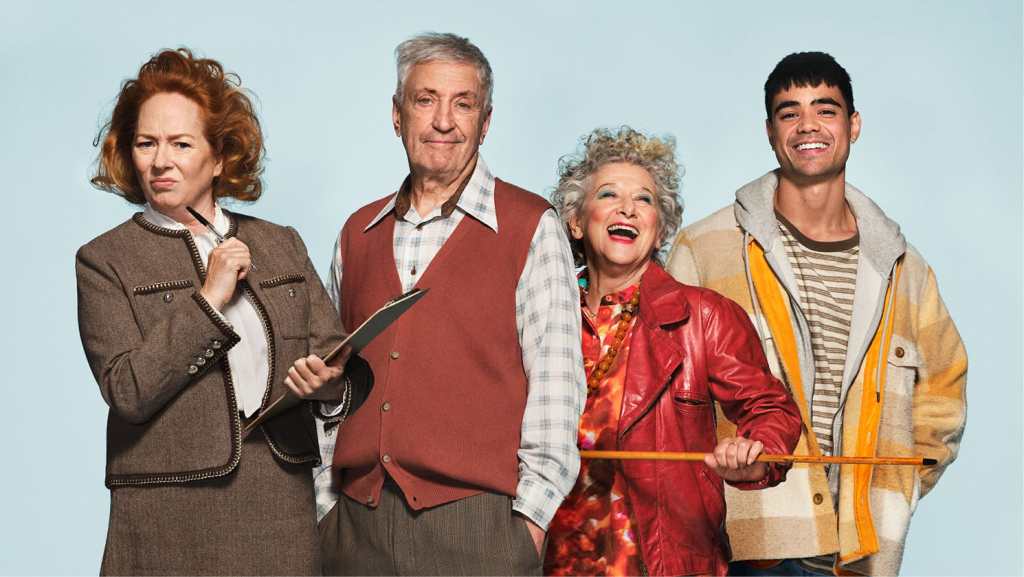
As mentioned already, STC has Bloom coming up from Melbourne. Congratulations, Get Rich! (恭喜发财, 人日快乐) describes itself as a “musical comedy”, but doesn’t list any songwriters or lyricists. I’m assuming its karaoke setting means we’re in for some mangled pop tunes.
At Belvoir, the luminous Meow Meow is back with Meow Meow’s The Red Shoes, her own quixotic take on the Hans Christan Andersen tale of possessed footwear but it too looks to be more cabaret than Broadway.
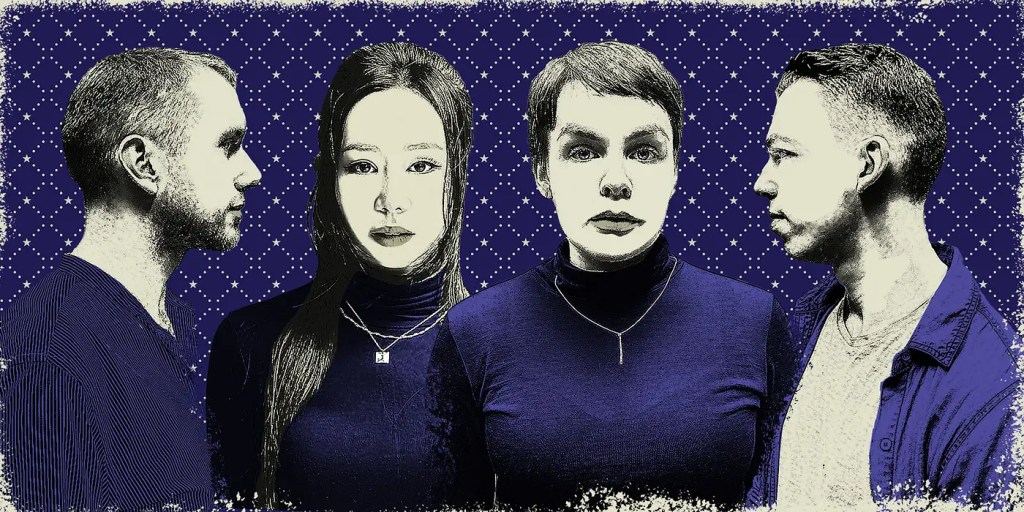
Ghost Quartet. Hayes. Thankfully the Hayes has a packed slate of familiar shows ripe for reinvention, and rarities for the MT nerds. They’re kicking off the year with the show I’m probably most excited about, Dave Malloy’s esoteric Ghost Quartet about… okay I’ve seen the show, listened to the recording, read the Wiki and I have no clue what the hell is going on, but the music is stunning. Written after Natasha, Pierre and The Great Comet of 1812, it’s about ghosts and memories and cameras and alcohol and weird stuff. Trust me, have whatever whiskey themed cocktail Hayes dreams up and let the luscious score envelope you.
Hayes is also giving us new takes on The Pirates of Penzance, The Producers and Once On This Island in addition to Women on the Verge of a Nervous Breakdown and Bright Star. When it comes to new writing, they’re giving Phar Lap a full production. I heard nothing but raves from its presentation at the Festival of New Works, so that’s looking good!

The Lord of the Rings: A Musical Tale. State Theatre. Then we have the big commercial musicals coming to town. We kick off the year with the reimagining of the epic Lord of the Rings: A Musical Tale. In its original form the show was a spectacular, well, flop is a strong word but it wasn’t a hit. This new version scored strong reviews when it premiered at the Watermill Theatre in the UK, but that version had immersive outdoor elements. so we’ll see how it goes inside the State Theatre. I have to admit, I really love the score.
Then we’ve got big classics like the upcoming open air Guys & Dolls from Opera Australia (not to mention Candide), a terrific new show in Hadestown (which I love), a kinda new jukebox show in the Michael Jackson show MJ (which I’m dubious about but everyone I know who’s seen it overseas says it’s an amazing show) and a return run for The Book of Mormon. And that’s just the shows already announced.
Kimberly Akimbo. State Theatre Company SA and Melbourne Theatre Company. INTERSTATE GOODIES
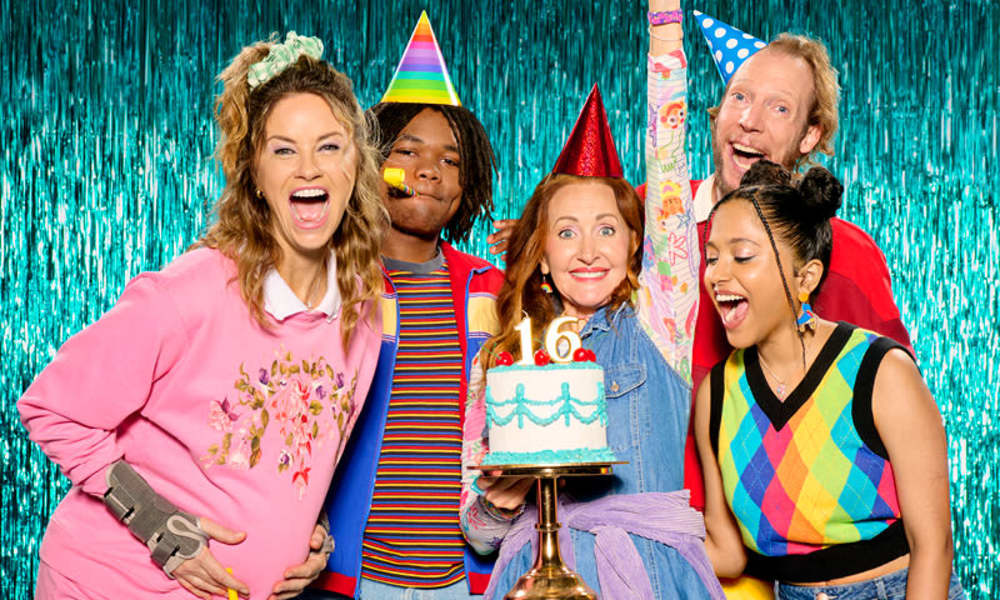
If you fancy hopping on a plane (or a train, or a nice long drive) there’s some eye-catching things happening interstate. At Queensland Theatre, Daniel Evans is directing Aaron Sorkin’s original play A Few Good Men (that would later be turned into the Tom Cruise film). Melbourne Theatre Company and State Theatre Company SA are putting on Broadway hit Kimberly Akimbo (music by the great Jeanine Tesori) starring Marina Prior and Casey Donovan. I saw this on Broadway and TBH I didn’t LOVE it as much as I wanted to, but a fresh production (and lower expectations) might do the trick. MTC have also got Broadway’s 2024 hit Mother Play, starring Sigrid Thornton.
Red Stitch are reviving Joanna Murray-Smith’s 1995 play Honour and staging Max Friedlich’s inter-generational work drama Job that was a big deal on Broadway this year. And Melbourne’s getting Beetlejuice: The Musical.

The Birds. Malthouse Theatre, Melbourne. Meanwhile Paula Arundell is taking on Hitchcock’s The Birds in an intriguing “theatrical feat of audio engineering” at Melbourne’s Malthouse. I don’t know what that means but I’m so up for it!
Victorian Opera is also staging Sondheim’s Follies. I adore Follies so that might get me on a plane. They’ve even got a chamber production based on Jane Austen’s Mansfield Park.

2025 Sydney Theatre Co. SOME FINALS THOUGHTS…
It’s an interesting year for Sydney theatre. Belvoir and Ensemble are forging ahead with their own mixes of new and classic works – they both know their audiences well and cater to them well. Sydney Theatre Co seem to be in “Survive ‘25” mode (that may be me being dramatic, but they’re definitely taking their foot off the peddle for the year with fewer productions. All giving freshly minted Artistic Director Mitchell Butel time to settle in). Griffin is still producing a reduced slate in different venues which shifts the local landscape a bit. While I’ll miss their output this year, it makes space for audiences to get out and explore the other independent theatre options available at The Old Fitz, New Theatre, KXT on Broadway, Seymour Centre and more.
So get your season tickets lined up (or just go with the flow) and enjoy.

2025 Belvoir
-
Subscribe
Subscribed
Have a WordPress.com account? Log in now.

