-
Welcome to Cultural Binge

The rating system is simple:
★★★★★ – Terrific, world-standard. Don’t miss.
★★★★ – Great, definitely worth seeing.
★★★ – Good. Perfectly entertaining. Recommended. Individual mileage may vary.
★★ – Fine. Flawed and not really recommended, but you may find something to appreciate in it.
★ – Bad (& possibly offensive).
See more reviews over at The Queer Review.
Instagram: @culturalbinge
Substack: culturalbinge.substack.com
Email: chad at culturalbinge.com
-
People Will Think You Don’t Love Me (KXT Broadway) ★★★★
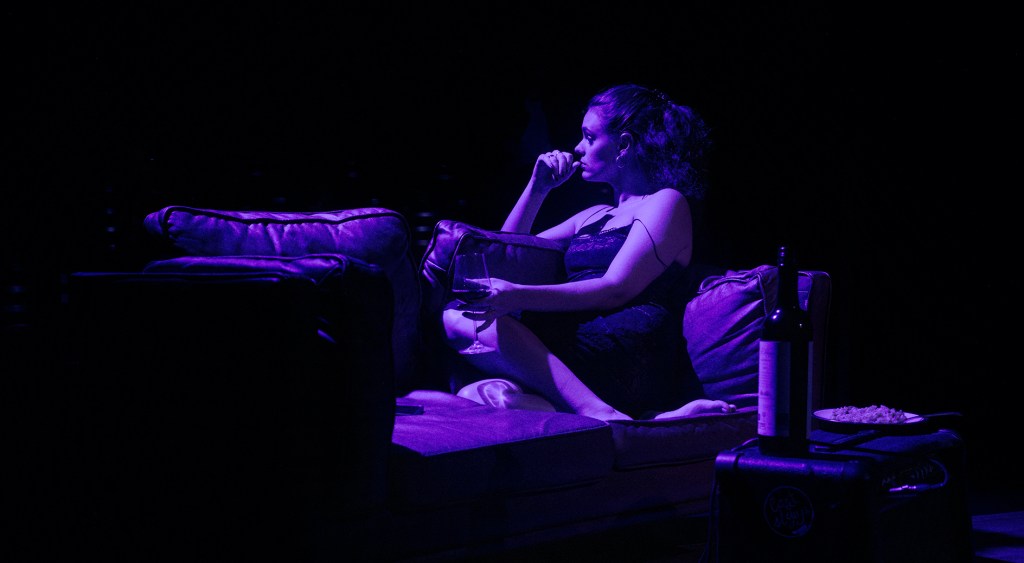
Written by Joanna Erksine. World Premiere. KXT Broadway.15-30 Nov. 2024.
It’s a horror trope we know well. The protagonist has a transplant (a heart, a brain or an arm usually) and they become possessed by the original owner’s spirit, ala 1991s trashy ‘Body Parts’. In People Will Think You Don’t Love Me, writer Joanna Erskine plays with these fantastical genre trappings to give us a relationship drama between a young married couple and the girlfriend of an organ donor.
Told in a not-always-linear fashion, we meet Michael (Tom Matthews) and his wife Liz (Grace Naoum) as they visit Tomasina (known as Tommy, played by Ruby Maishman). It’s awkward and no one knows what to say. They want to thank Tommy for the fact Michael’s life was saved by a heart transplant from her dead boyfriend, a musician named Rick, but Tommy stands confused and slightly annoyed. As Michael continues to recover, and he and Liz start to adjust to their new, healthier lives, Michael finds himself visiting Tommy again, to learn more about Rick… and hopefully explain why he can suddenly now play the guitar and piano.
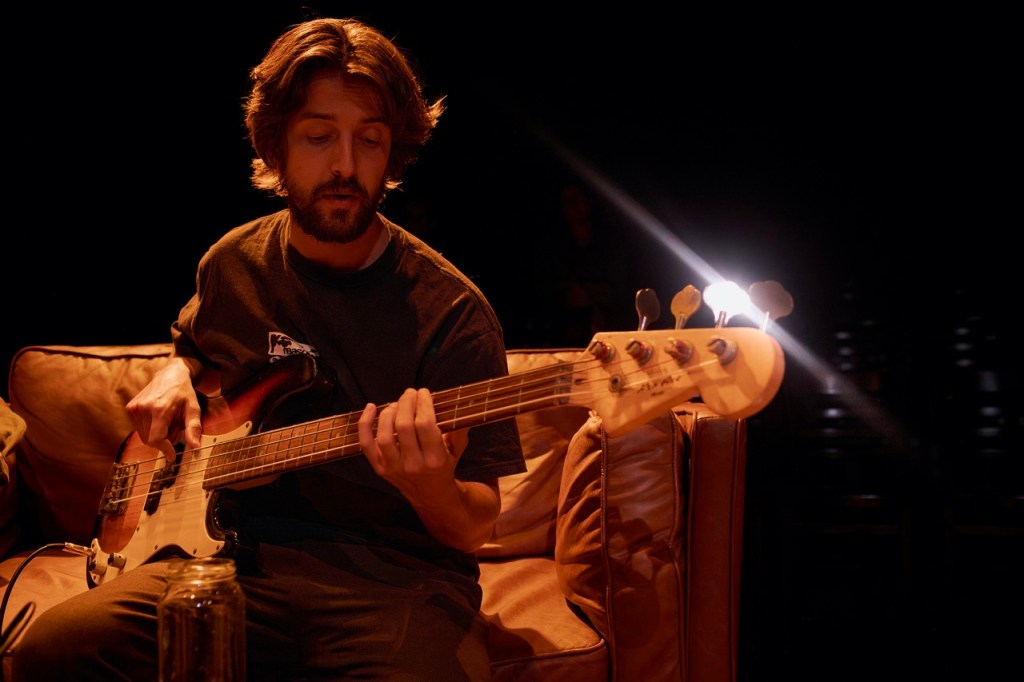
Tom Matthews. Photo: Phil Erbacher. The first thing that hit me watching People Will Think You Don’t Love Me, was how good these three performers were. There’s a real sense of relief you feel when you don’t see the actor, you only see the character, and there is nothing to break that illusion. Erksine’s script is driven by subtext and unspoken thoughts that are writ large in the eyes of all three characters. Smart direction by Jules Billington never overplays the emotions but keeps things tightly, realistically, in check.
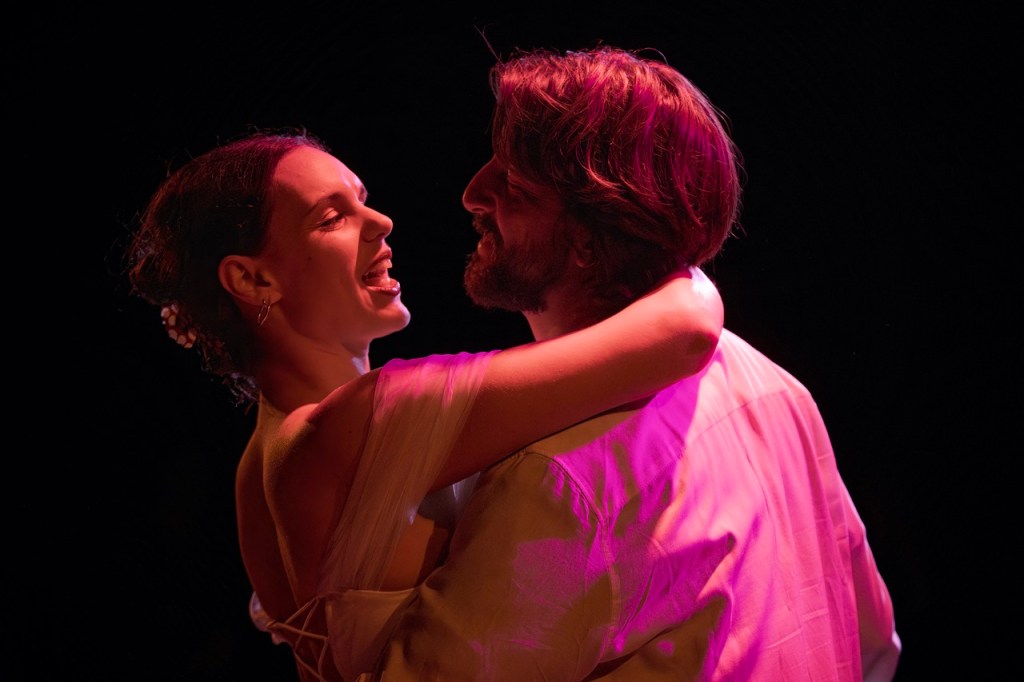
Ruby Maishman & Tom Matthews. Photo: Phil Erbacher, The psychological horror vibes are driven by some great sound design and composition by Clare Hennessy that creeps up on you and pushes things just far enough to let you acknowledge what it’s doing. Sam Wylie’s production design hides things in plain sight in a simple apartment set up.
But it all comes down to Erskine’s text which is hooky enough to tease you along through the uninterrupted two hours-ish running time. It’s a good balance between the domestic drama (is Michael cheating on Liz with Tommy?) and the supernatural (is Michael slowly turning into Rick?). The final speech by Liz lays out the issues with neat, emotional resonance that brings it all back home.
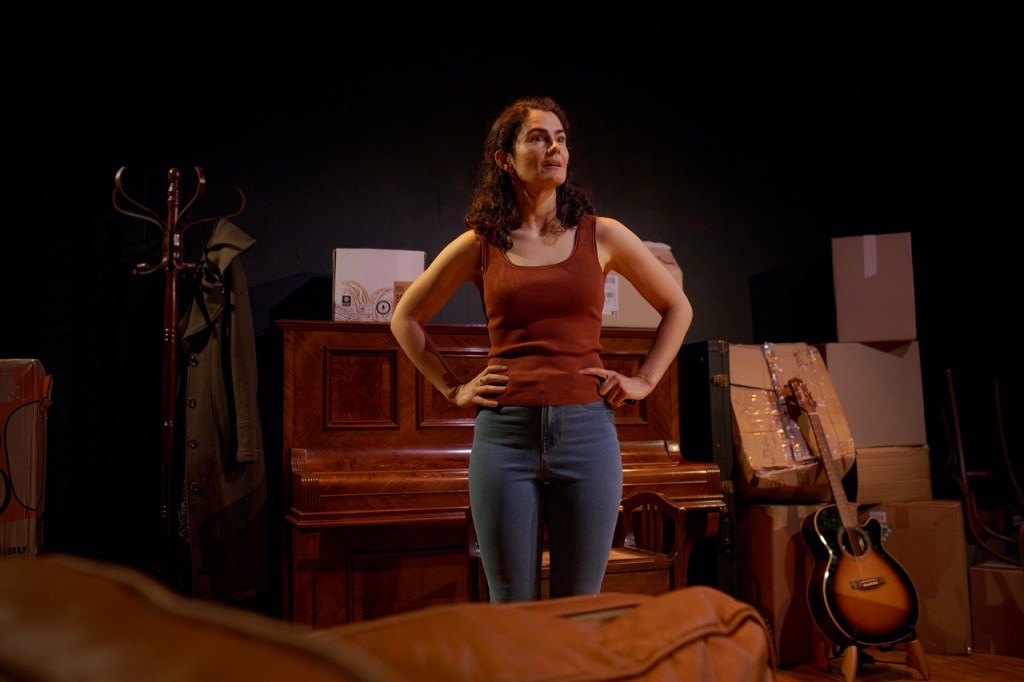
Grace Naoum. Photo: Phil Erbacher. If it starts to overstay its welcome, it’s because the storytelling is neat and clear, and the emotional stakes are well established. You may know, or think you know, where the story is going, but it’s the journey that makes this trip worthwhile.
-
August: Osage County (Belvoir) ★★★★★

Written by Tracy Letts. Belvoir St Theatre. 9 Nov – 15 Dec, 2024.
Why do we enjoy watching families tear themselves apart on stage? Is it cathartic to hear people say the things we never would? Is it comforting to watch people worse than ourselves? Or is it just because the drama gives us a feast of potentially great acting? Whatever it is, August: Osage County at Belvoir has it in spades – an unsettling, addictive blend of harsh truth and dramatic flair.
The Weston family gather after the disappearance of their father Beverly (John Howard). The three Weston daughters, Ivy (Amy Mathews), Karen (Anna Samson) & Barbara (Tamsin Carroll) return with their own dreams and resentments that boil over in the oppressive Oklahoma heat. They are joined by their Aunt Mattie Fae (Helen Thomson), her husband, Charlie (Greg Stone), and her infantilised adult son, “Little” Charles (Will O’Mahony). Together they have to deal with the matriarch of the house, the formidable Violet (Pamela Rabe), whose pill-popping truth-bombs drive them all to the edge. All the while Johnna (Bee Cruse), a young Cheyenne woman hired to help around the house, watches.
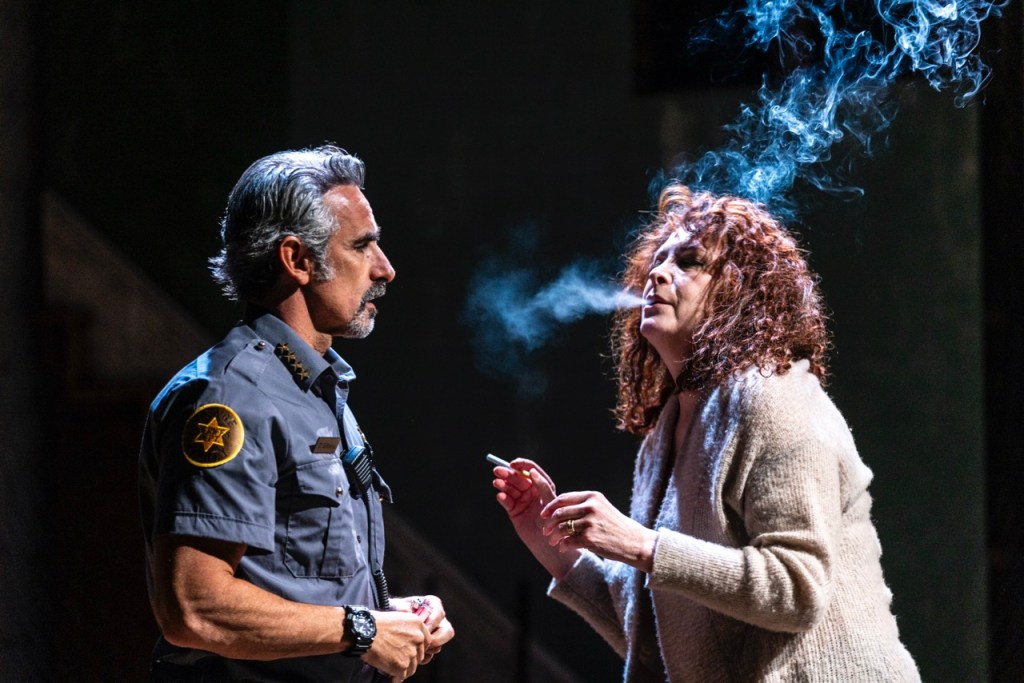
Johnny Nasser & Pamela Rabe. Photo: Brett Boardman. Pamela Rabe is rightly drawing rave reviews for her bitter/funny/tragic Violet. She’s a tough survivor with an acid tongue and a sharp mind, fueled by her addiction to painkillers. The kind of character you love to loathe. Rabe doesn’t just sink her teeth into the role, she rips open its throat and wears its skin like a cloak. Violet is awful… but rarely is she categorically wrong. Like all the best “villains” her motivation is understandable if often deplorable. Imagine Martha from Edward Albee’s Who’s Afraid of Virgina Woolf after George has passed away and you’ll get close to Violet’s core.
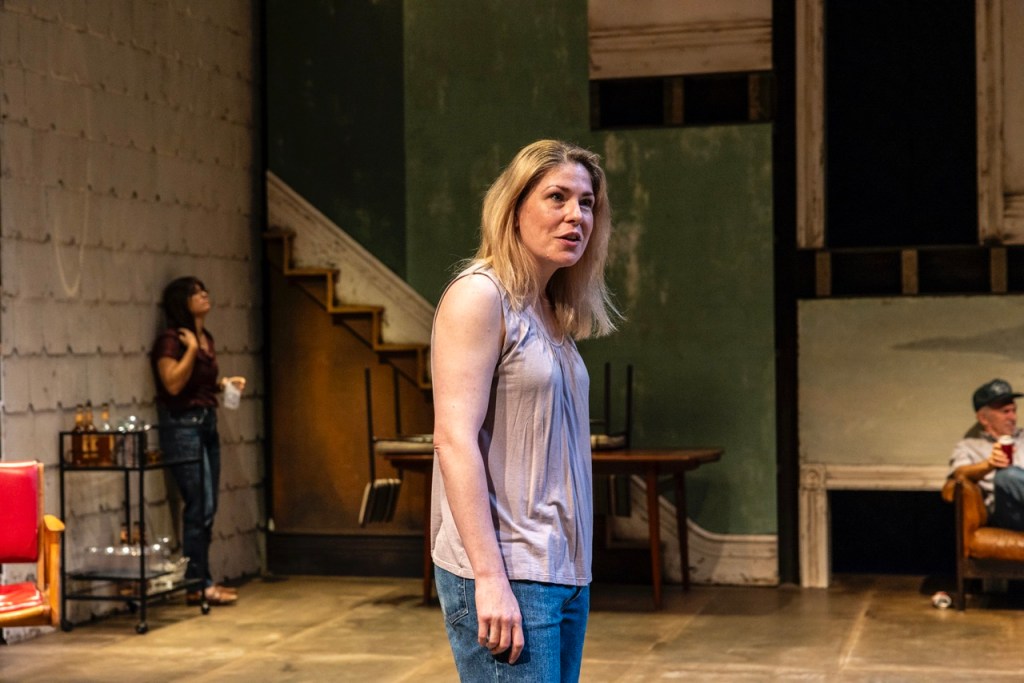
Tamsin Carroll. Photo: Brett Boardman. However the real superstar performance comes from Tamsin Carroll as the oldest daughter Barbara. Carroll is simply magnificent as a middle-aged woman cracking under the familial pressure coming from all sides. Her performance is seamless and deeply empathetic, so much so it grounds the play, letting the other actors push things broader for laughs. As the foil to Violet, Barbara cuts through the fear and rage with weary clarity. On a stage full of rich, lived-in performances from each and every actor, Carroll shines as its heart.
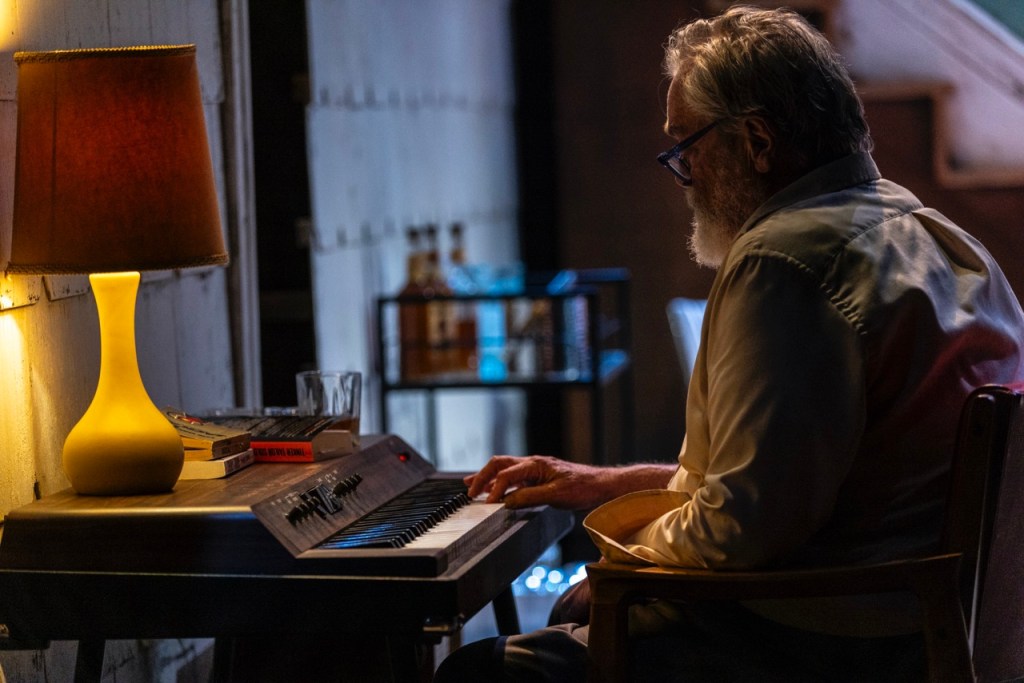
John Howard. Photo: Brett Boardman. Eamon Flack has directed the show with an understated elegance. After wowing audiences with his showmanship in great productions of Holding The Man and The Master & Margarita etc, this time Flack’s hand is light. Drawing out masterful performances (and creating moments of physical comedy that seem to come out of nowhere), Flack lets the text rise to the fore. He gently turns John Howard’s Bev (who only appears in the first act) into a haunting, melancholy presence that lingers for the whole play.
Set Designer Bob Cousins’ apparently sparse set is also deceptively subtle. The wide open space of the stage stands like the sun-bleached Great Plains, surrounded by elements of a house torn apart and reassembled, with windows and doors out of place. Morgan Moroney’s lighting gives it texture and an essential blast of heat.
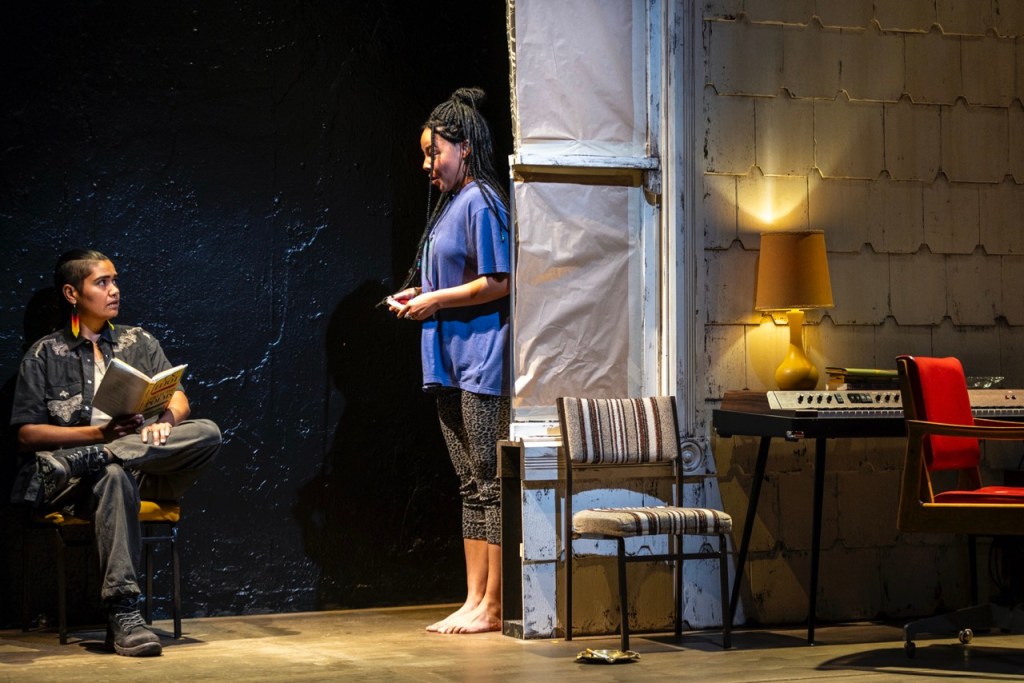
Bee Cruse & Esther Williams. Photo: Brett Boardman. Tracy Letts is a visceral writer. He creates a pungent, stifling air with his characters that is intoxicating, like a modern day Tennessee Williams. With August: Osage County he weaves three or four play’s worth of drama into one rich tapestry of dysfunction with a paradoxical lightness of touch that reminds you what good writing, really good writing, can achieve.
Letts never takes the easy way out, by writing characters that are mere cyphers or punchlines (okay, maybe Rohan Nichol’s Steve is a bit one dimensional on the page). Each member of the Weston family has a unique, broken interiority that drives them. They’ve each been damaged by the generation before them and are just trying to do their wounded best. Letts doesn’t judge his characters, he lets them roam free and sees where they will collide.
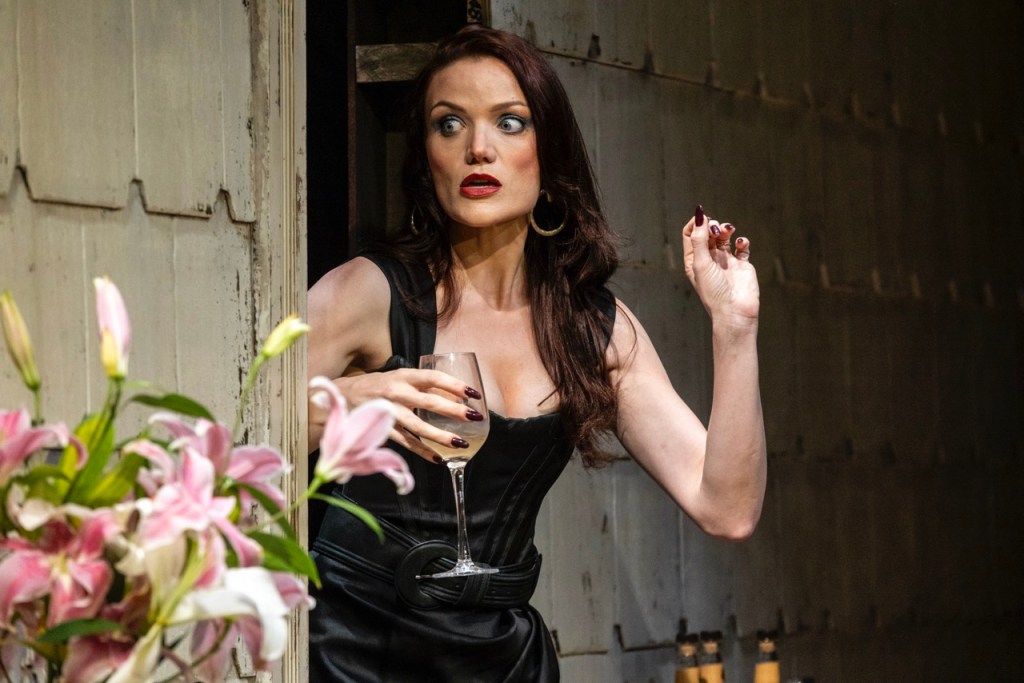
Anna Samson. Photo: Brett Boardman. Lines like “Why were they ‘the Greatest Generation?’ Because they were poor and hated Nazis? Who doesn’t . . . hate Nazis” hit sadly differently as we head toward Tr*mp 2.0, but Letts text still cuts sharp with its indictment of America (Weston = Western), and how we often replicate patterns of abuse to become the things we despise.
“Thank God we can’t tell the future. We’d never get out of bed.” Amen.
-
Wicked: Part 1 (Cinemas) ★★★½

Directed by Jon M Chu. Screenplay by Winnie Holzman & Dana Fox. Music & Lyrics by Stephen Schwartz. In cinemas from Nov 20, 2024.
Let us be glad! Let us be grateful! After what feels like a decade of teasing, the film adaptation of the stage adaptation of the book based on the earlier children’s story has finally premiered in Oz (or Aus if you prefer). Wicked is finally here, well, the first half of it anyway.
Covering the events of the first act of the stage musical Wicked: Part 1 is set years before the events of The Wizard of Oz taking us back to the university days of the popular Galinda Upland (Ariana Grande) and the outcast Elphaba Thropp (Cynthia Erivo). When the two young witches are forced to share a room they go from frenemies to besties. Under the tutelage of Doctor Dillamond (voiced by Peter Dinklage), a goat and a History professor at Shiz University and Madame Morrible (Michelle Yeoh), the Headmistress of Shiz University, it becomes clear that Elphaba has a natural talent for witchcraft. When Elphaba’s talents get her an audience with the Great & Powerful Wizard of Oz (Jeff Goldblum) she realises things aren’t what they seem.
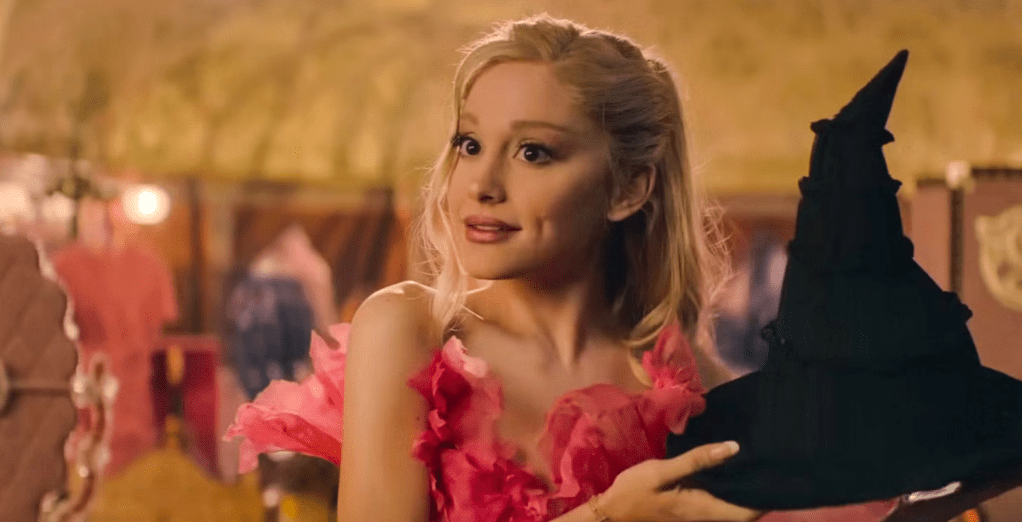
The long gestating film comes to the screen with a pedigree worthy of its enduring stage success. Jon M Chu proved he has the vision and skill to direct musicals after the excellent, and relatively low budget film of In The Heights. Emmy, Grammy & Tony winner Cynthia Erivo steps into the coveted role of Elphaba (let’s face it we’re all crossing our fingers she gets an Oscar soon). Oscar winner Michelle Yeoh fills Madame Morrible with a cutting sense of humour. Olivier Award winner Jonathan Bailey slips into Fiyero’s famously tight trousers with ease. And of course, Grammy Award winning theatre kid Ariana Grande arrives with her hair-flicks perfected to play Galinda/Glinda. This team knows what they’re doing.
While there are no new songs in this half of the story there is substantial rearranging and new elements added to existing numbers that will make fans happy (and helps to plug some narrative holes for the newcomers).

Grande especially shines with excellent comic timing. Her Glinda is brilliant and precise as she literally bounces off the walls with gleeful abandon. Bailey flirts up a storm, his charm knows no bounds. Erivo knows when to take Elphaba from stern to sparkling and gives us the girl beneath the green skin. The relationships between these three core characters are firmly established and the leads have great chemistry. Watching Galinda and Elphaba fight-montage during ‘What Is This Feeling’ is a sheer delight. Fan of the stage show will be elated by moments, and special appearances, in this frothy, Galindafied cinematic version.
But it all threatens to be too, too much. Visually overstuffed and often emotionally overwrought, the film of Wicked is all glitz and kicks trying to outdo itself at every turn. Each song is “enhanced” with new vocal riffs, like everyone is desperate to win their season of ‘The Voice’. The pursuit of jaw-dropping visuals makes some moments nonsensical (Shiz’s pointless turbine-twirling library belongs in Hogwarts, not here).

Maybe it was the running time, or maybe its a reverence for the stage show, but the film struggled to build up to its big moments. Narrative leaps that work fine on stage feel unjustified on screen. We never really see Elphaba transition from hated outsider to welcome class-mate (we get why Glinda is her friend, but the crowds assembled to see her go to the Emerald City seem to come out of nowhere) and those flying monkeys seem to switch allegiance for no reason. It’ll be interesting to see how newcomers go with the film.
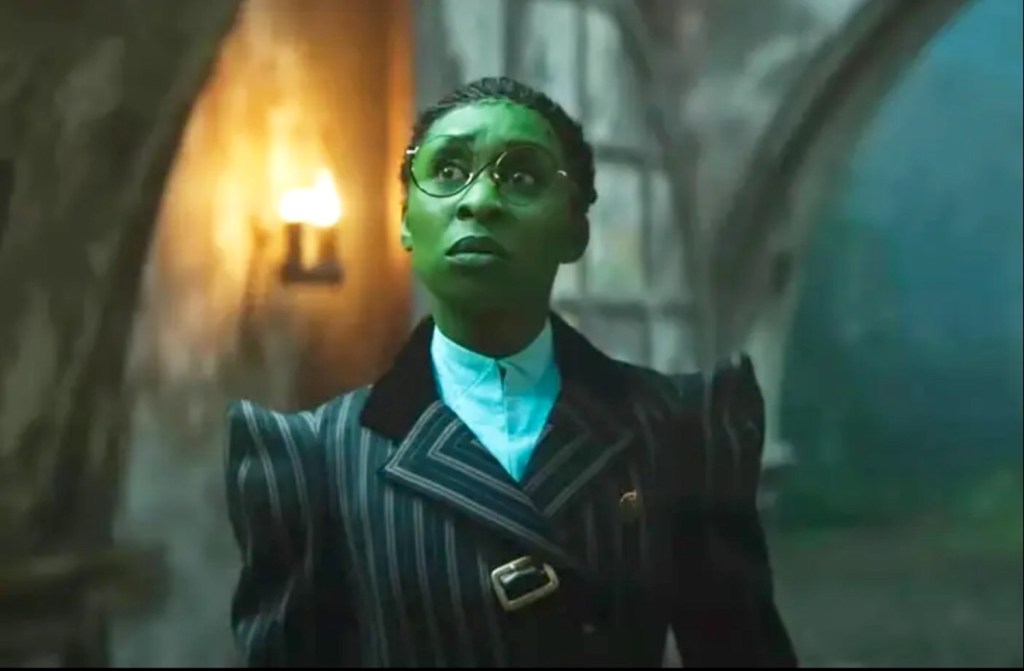
Despite my quibbles with the pacing and the gilded delivery there is no denying this is a gorgeous film. From the art nouveau inspired Shiz Univerity to the art deco Emerald City, every element is a flight of fancy that fills the screen. The design play off of the stage show, and you’ll recognise elements of Susan Hilferty’s original costumes and Eugene Lee’s scenic design. While at times it threatens to get lost in the special effects, its saved by the core performances. The orchestrations are rich, and the songs will be on high rotation at home (assuming they stitch them back together for the soundtrack, many of the key tunes are broken up by scenes in the film).
In Wicked: Part 1 everyone may deserve the chance to fly, but I’m left wanting a more solid grounding in Elphaba’s character and story. Ironically, despite splitting the narrative into two the thing the film needs is more time to add the connective tissue between moments. But with this cast, and these songs, I guarantee you’ll I’ll be watching this film on repeat for years.
-
Sweat (Sydney Theatre Co) ★★★
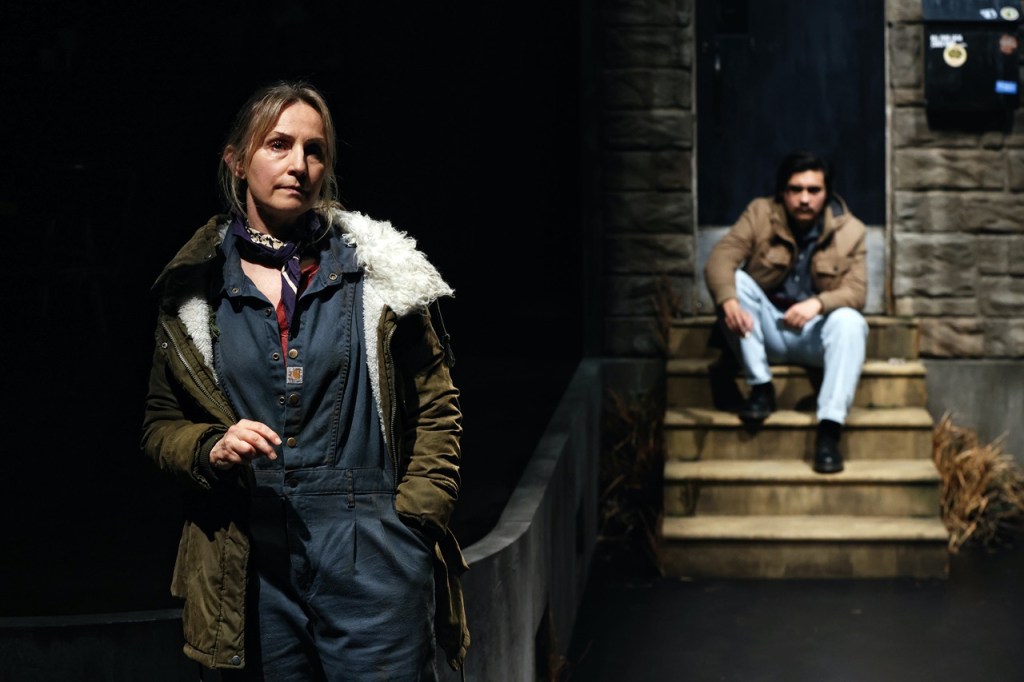
Written by Lynn Nottage. Australian Premiere. Sydney Theatre Co. 11 Nov – 22 Dec 2024.
First staged in 2015, but not seen on Broadway till 2017, Lynn Nottage’s Sweat was hailed as an insightful look at working class America (aka Tr*mp voters) by hand-wringing audiences desperate to understand what had happened in the wake of the 2016 election. It is a look at the insidious nature of racism and how the “haves” stay rich by pitting the “have nots” against each other and wouldn’t it be nice if we could all just get along.
Set in a bar in Reading, Pennsylvania, a blue-collar factory town, we watch the fallout of events at a local steel factory. Tracy (Lisa McCune) and her best friend Cynthia (Paula Arundell) have worked side by side on the factory floor all their lives. When the company decides to find a new manager by promoting internally, they both go for the job. Things get more complicated when drastic cost-cutting leads to industrial action, putting the two women on opposite sides of the picket line.

Deborah Galanos, Lisa McCune, James Fraser, Tinashe Mangwana and Paula Arundell in Sweat, 2024. Photo: Prudence Upton I’ll say this for Nottage’s earnest script, it gives these performers space to really act. Paula Arundell is outstanding as Cynthia, a woman of tough, hardy grit who finds herself in a world of suits and meetings. Lisa McCune uses her innate charm to chart a serious arc for the embittered Tracy, taking her from likable buddy to angry white racist. Deborah Galanos completes the tight trio of friends as Jessie, the permanently drunken sidekick with expert comic timing that never slips into parody. Markus Hamilton also impresses as Brucie, Cynthia’s estranged husband who has already suffered a dehumanising defeat at the hands of his own corporate bosses. Gabriel Alvarado elevates his role of Oscar, the Colombian glassy who works behind the scenes at the bar, saving him from being little more than a plot contrivance.

Tinashe Mangwana, Paula Arundell, Gabriel Alvarado and James Fraser in Sweat, 2024. Photo: Prudence Upton Sweat is happy to let scenes, and monologues, linger as it makes its way to its conclusions. Unfortunately those conclusions are rather obvious and their resolution underwhelming. Despite Jeremy Allen’s intricate set (with some excellently integrated lighting moments), the play feels awfully static and flat. Director Zindzi Okenyo (who excelled co-directing Seven Methods of Killing Kylie Jenner and Is God Is) gets great performances from the majority of the cast, but is less successful wrangling the script into shape and making us care. The final physical confrontation is unconvincingly staged, and the closing moments, reaching for poignancy, are undercut by a cringe-worthy revelation and a last line that spoon feeds the audience.
Which isn’t to say there aren’t things I like in the script. The subtle commentary on drug dependency is interesting, but so lightly included it’s easy to overlook the parallels between Black Brucie’s dope smoking and white Tracy’s oxycontin. The circular nature of racial animus, with each new incoming community being hated by those already there. The slow build of Oscar’s character is satisfying to watch, as is the deteriorating relationship between Tracy and Cynthia. But the play lacks a focus as both Tracy and Cynthia take a back seat in the second act (Cynthia literally disappears from the play) and the finale is handed to side characters to deliver.

Deborah Galanos, James Fraser and Tinashe Mangwana in Sweat, 2024. Photo: Prudence Upton Sweat has been declared a “masterpiece” and a “thesis on the decline of the working class” but having seen it twice, in two different productions, I honestly just find it to be middling. Not bad, not at all, Nottage’s plotting is tight and her characters can be rich in the hands of the right performers, but I don’t find the play to be particularly revelatory. The big messages about how people turn on each other instead of the power structures above them feels so basic as to be pointless. I had a similar reaction watching Nottage’s Clyde’s at Ensemble last year (thankfully Sweat is mostly spared Clyde’s sickly sit-com faux-sincerity). It’s clear that I personally do not connect with her writing, which does not bode well for the upcoming musical MJ which she wrote the book for.
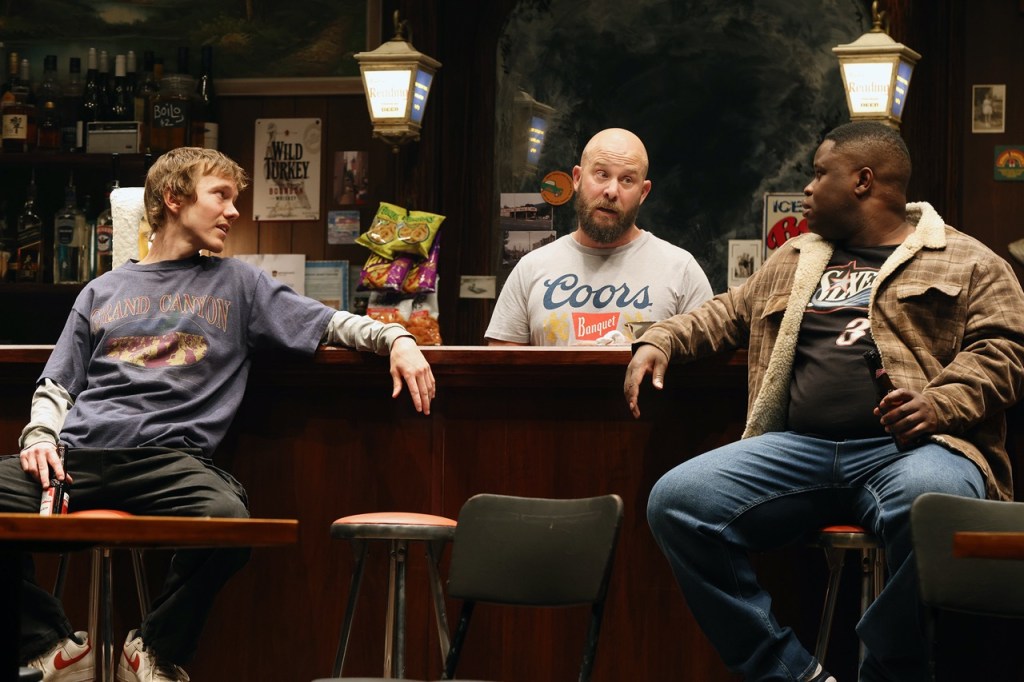
James Fraser, Yure Covich and Tinashe Mangwana in Sweat, 2024. Photo: Prudence Upton Overheard discussion after the show suggests that many people found Sweat to be wonderful and prescient, an interesting slice-of-life. I’m clearly in the minority here and I’ve tried hard to find the gem that so many others see, to no avail. Of the Pulitzer Prize winning plays on Sydney stages right now, STC’s Sweat and Belvoir’s August: Osage County, you can guess which one I’d rewatch last. I might just stop torturing myself and skip Nottage’s next play.
-
Jesus Christ Superstar (Capitol Theatre) ★★★★½

Music by Andrew Lloyd Webber. Lyrics by Tim Rice. Capitol Theatre. 6 Nov 2024 – 19 Jan 2025.
Rock opera Jesus Christ Superstar is back and it’s louder, sweatier and glitterier than ever before. Oh and sexier! Is Jesus allowed to be this sexy? It’s very conflicting.
Vocally this show is no joke. Michael Paynter may look like a hipster Hillsong youth pastor on the verge of a scandal, but his rock tenor voice wails like an electric guitar possessed by the devil. The effortlessly clear tone of his high notes is a wonder to behold, and his rendition of “Gethsemane (I Only Want to Say)” scored not one, but two mid-song ovations on opening night. It was remarkable.

Javon King and Michael Paynter. Photo: Jeff Busby. Paynter is paired with Javon King as Judas. King, a more experienced musical theatre performer, makes Judas a smoother, more lyrical character. He brings a more intellectually conflicted tone to the numbers. The musical theatre credentials are backed up by Peter Murphy as the frustrated Pilate. Mahalia Barnes delivers smooth R&B vocals as Mary. Let’s be honest, there is absolutely nothing to the character of Mary. She wanders on, sings a song, wanders off, but Barnes makes the most of her moments and her voice is gorgeous to luxuriate in.

Michael Paynter with ensemble. Photo: Jeff Busby. The casting of Reuben Kaye as Herod is a genius move, injecting a chaotic dose of queerness into the show. Where previous iterations of this production had treated Herod as a Leigh Bowery / “club drag” character, Kaye makes the role his own with more of a theatrical “drag show” performance. It’s a welcome breath of fresh air and colour in the sea of greys and browns.
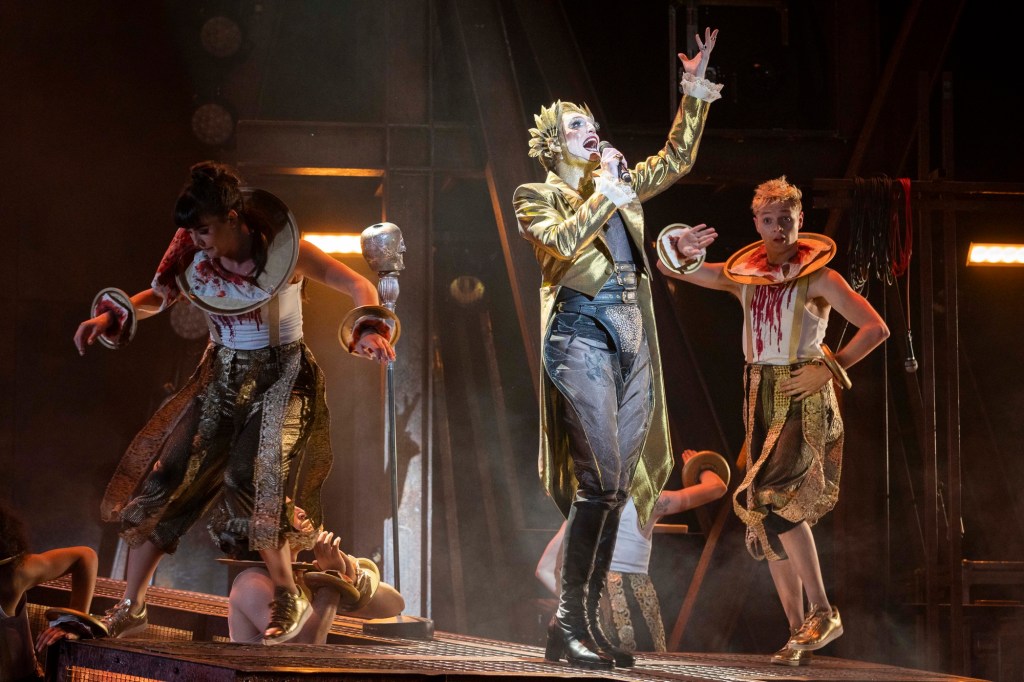
Reuben Kaye. Photo: Jeff Busby. This particular staging has been doing the international rounds since it premiered in London’s Regent’s Park OpenAir theatre in 2016 (it would return in 2017 and then be retooled for indoor theaters and go on tour) and there is a definite mid-teens “H&M lounge-wear” feel to the baggy, monochromatic styling. The choreography by Drew McOnie explodes with moments of ecclesiastical conformity and dynamic worship. Tom Scutt’s design has lost much of its original scale but still evokes a brutal landscape, with its metallic catwalk crucifix and elevated scaffolding. On a side note, Robert Tripolino, who I saw play Jesus when this production was staged at London’s Barbican Theatre in 2018, will be jumping back into the role for the Perth leg of the tour. He’s excellent as well.

Javon King. Photo: Jeff Busby. Jesus Christ Superstar has a massive cultural footprint in Australia thanks to the record breaking 1992 production. In that production Jon Stevens’ Judas served up rockstar sex appeal in tight leather trousers, this version sees Paynter’s Jesus slowly disrobing before being beaten, bloodied and glittered. There’s something very, well… Catholic about staring up at a sweaty, six-packed messiah. It’s the sort of jacked Jesus the manosphere would believe in.
In some ways, Jesus Christ Superstar works best when treated as a concert, more than a piece of theatre and this production straddles the best of both worlds. With no dialogue, the only acting required happens in the vocals, and this team of singers over deliver. There’s little in the way of subtlety but the roof-busting big notes more than make up for that. Michael Paynter’s performance alone is one for the record books.
-
Oscar (Australian Ballet) ★★★★½
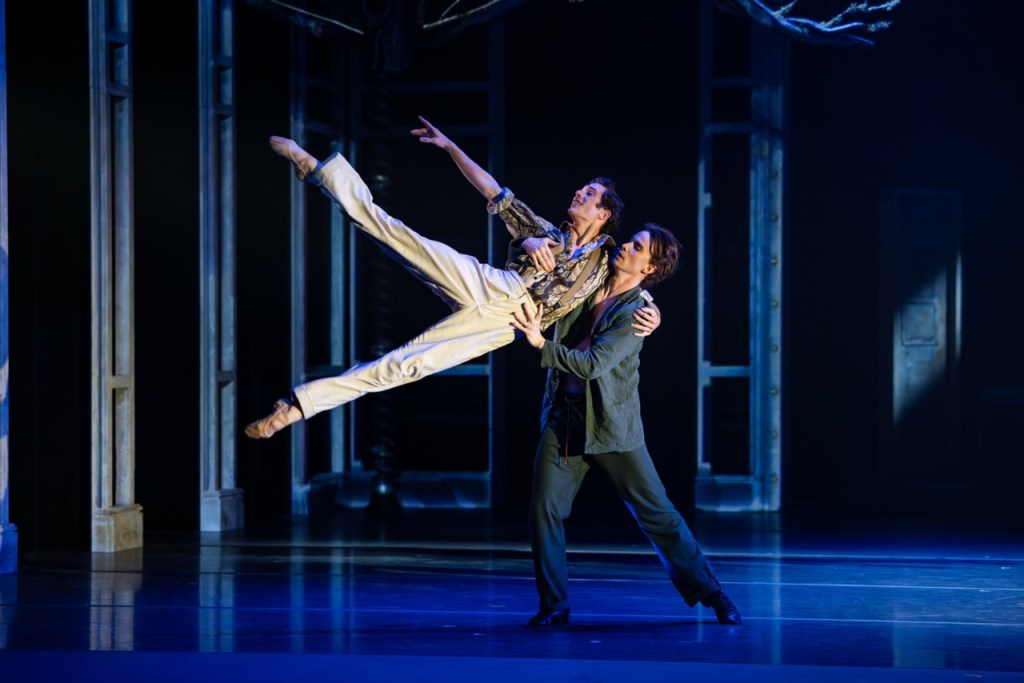
Choreographed by Christopher Wheeldon. Composed by Joby Talbot. Sydney Opera House. 8-23 Nov, 2024.
Oscar Wilde, bon vivant and one of the greatest writers and wit of the twentieth century has a legacy few can compete with. His plays, novels and writings are the stuff of legend, but the life of Wilde, sparkling and scandalous as it was, is ultimately a tale of hubris colliding with homophobia leading to his downfall. Now, through the opulent beauty of choreographer Christopher Wheeldon and composer Joby Talbot’s original ballet, Oscar, presents his story through a romantic lens with an eye on his legacy.
Told in two acts, each with an opening monologue delivered by Sean O’Shea, Oscar begins with Wilde in court, sentenced to two years prison for gross indecency. Locked in jail, Wilde dreams of his earlier life through the lens of one of his stories, ‘The Nightingale and the Rose’. In Act Two, suffering from an infected injury, Wilde’s dreams turn to nightmares as he envisions ‘The Picture of Dorian Gray’, casting himself as the disfigured portrait jealously watching while his perfect self enjoy the fruits of the world.
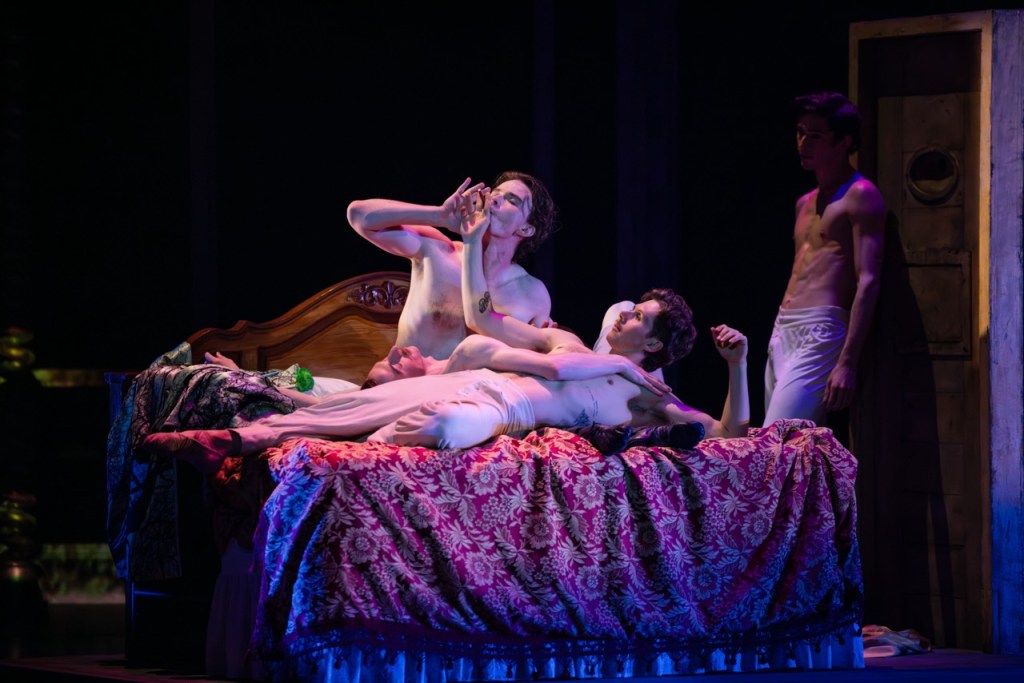
Photo: Daniel Boud The narrative is not linear, but a fluid combination of dreams delving into Wilde’s psyche. A bit of poetic licence translates Wilde’s great love, and one of history’s most manipulative “evil twinks”, Lord Alfred Douglas (Bosie), into a more sympathetic and romantic character than he was in reality. Those with a strong familiarity with Wilde’s story will recognise many of the characters from his life, his first lover turned friend Robbie Ross, his trio of famous actress friends Sara Bernhardt, Lillie Langtry and Ellen Terry, his wife Constance and their two sons and of course Bosie, and Bosie’s father Lord Queensbury (if you’re new to Wilde’s tale, its best to do a quick read of the programme).
This ballet, the first full-length ballet commission by Australian Ballet in about two decades is stunning to watch. Talbot’s music has luscious melodies that sound full and vivacious with the full orchestra. The sound is all encompassing and cinematic in its scope. The aural storytelling hits with clarity. Wheeldon’s choreography is playful and sensual bringing a wide range of characters to life, showing us Wilde’s transformation from haughty toast-of-the-town to broken, delirious prisoner. Along the way we’re treated to the storybook Nightingale, a pair of vaudevillian drag queens, key scenes from The Picture of Dorian Gray, an orgy and more.
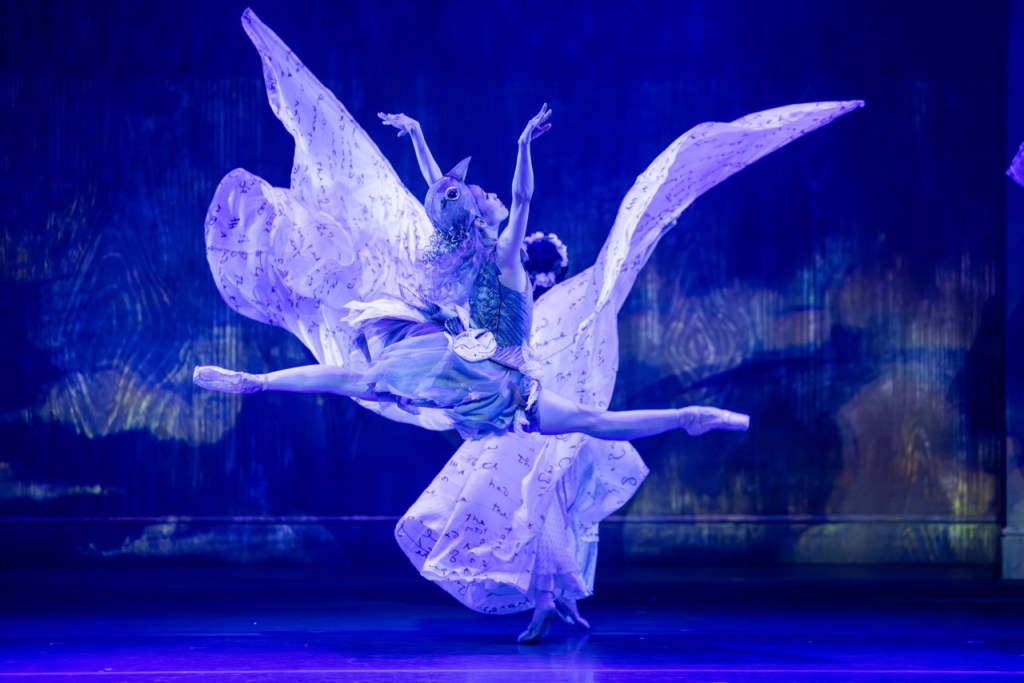
Photo: Daniel Boud At the performance I saw, Joseph Caley performed as Wilde and was utterly magnetic, full of lost longing. His moments with his Shadow/Dorian (Jake Mangakahia) were beautiful as was the pas de deux with Bosie (Elijah Trevitt). Other standouts included Jill Ogai as the Nightingale, Rina Nemoto as Constance Wilde and Mason Lovegrove as Basil Hallward.
Oscar is a wonderful addition to the Australian Ballet repertoire and will obviously be seen worldwide. This is a score I will listen to repeated (once it is released) and show I look forward to revisiting again.
-
MQFF 2024 Reviews

Once again I’m reviewing films at the Melbourne Queer Film Festival this year for The Queer Review. I’ve consolidated my reviews (and those by other Queer Review reviewers) here so they sit in the one place. I’ve listed them in star rating order to make things easier for people considering going and added interviews we’ve run with some of the talent and creators.
I’ll be updating this page as more films are reviewed.
INTERVIEWS
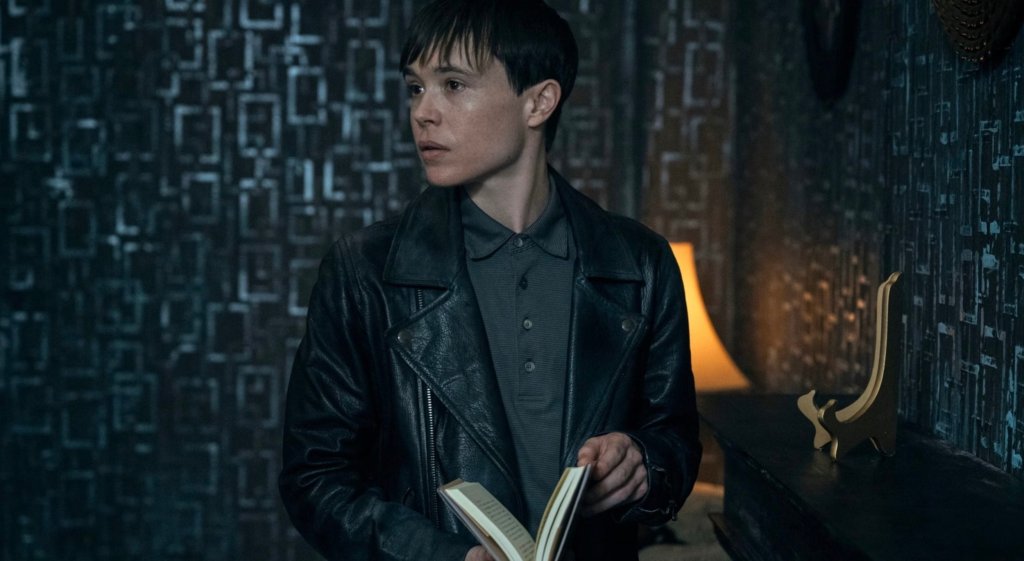
Close To You ★★★★ REVIEWS
Baldiga – Unlocked Heart (Baldiga – Entsichertes Herz) ★★★★½
Fragments of a Life Loved ★★★★½
Any Other Way – The Jackie Shane Story ★★★★
Little Richard I Am Everything ★★★★
The Summer with Carmen (To kalokairi tis Karmen) ★★★★
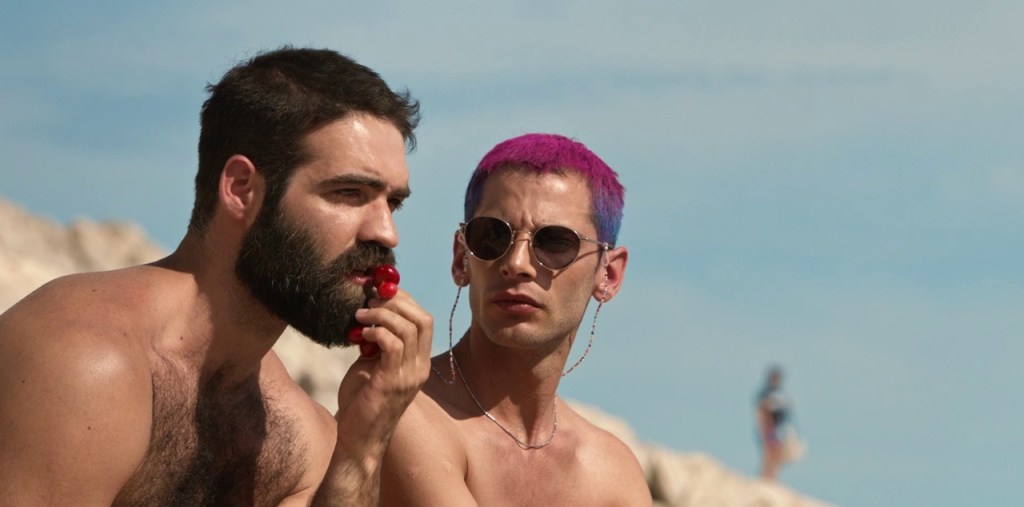
The Summer With Carmen ★★★ REVIEWS
The Astronaut Lovers (Los Amantes astronautas) ★★★1/2
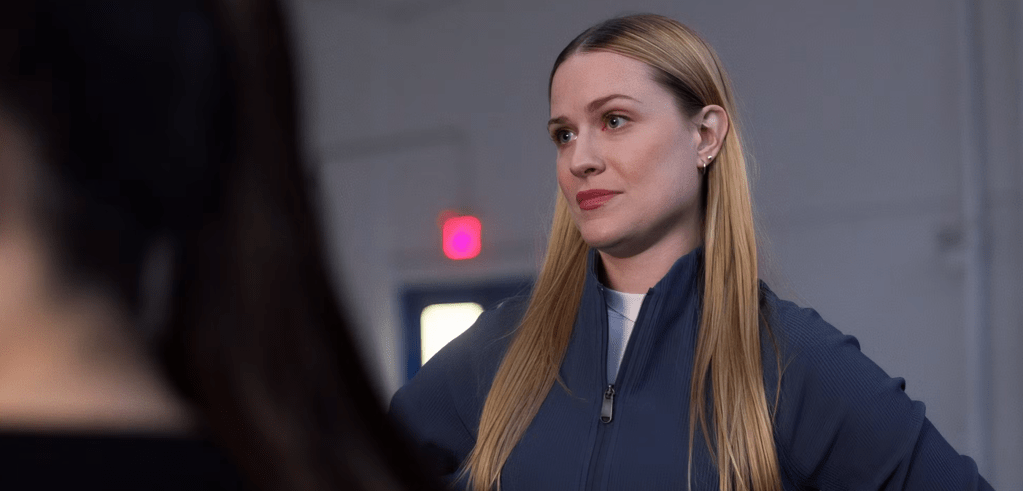
Backspot 
-
The Inheritance, Parts 1 & 2 (Seymour Centre) ★★★★½
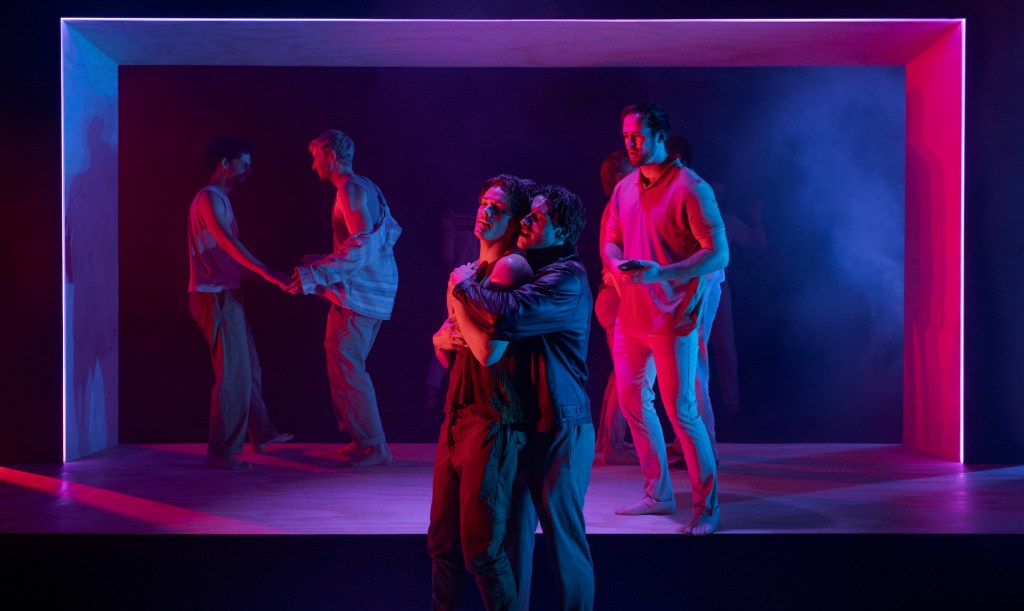
Written by Matthew López. Seymour Centre. 7-30 Nov, 2024.
Grab a cushion1 and strap yourself in for a literary, theatrical marathon because The Inheritance has finally come to Sydney! The Olivier and Tony Award winning play (also Evening Standard Award, Outer Circle Critics Award, Drama Desk Award, GLAAD Media Award… you get the idea) has taken its time to get to us, but it’s here and it’s well worth all the hype.
A contemporary-ish tale of gay men in New York taking liberal inspiration from EM Forster’s novel ‘Howards End’, The Inheritance focuses on young gay couple Eric (Teale Howie) & Toby (Ryan Panizza). Toby is a magnetic, sexy writer whose YA novel “Loved Boy” is being turned into a play. Eric is more of a home-maker, working in progressive politics with his friend Jasper (Jack Mitsch) and making both great brunches and cocktails for his friends. Their lives are changed by three events that happen in quick succession. An older gay couple Henry (John Adam) and Walter (Simon Burke) move into their building, subletting till their new townhouse is completed. A chance encounter at The Strand bookstore brings a young actor, Adam (Tom Rodgers), into their lives. And Eric discovers they are being evicted from his rent-controlled family home…
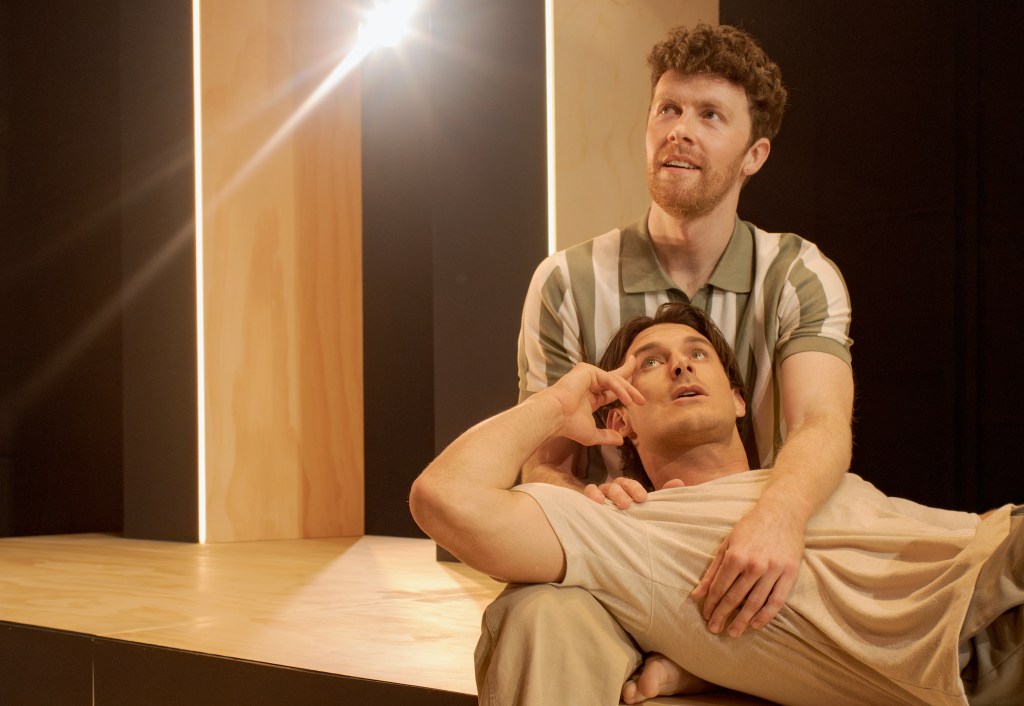
Teale Howie & Ryan Panizza. Photo: Phil Erbacher. Let’s tackle the elephant in the room. The Inheritance is long. It is two plays, running at just over three hours each. I know I called this website Cultural Binge, but I didn’t mean it that literally. Thankfully each part has two intervals, breaking the whole story down into roughly six one-hour episodes – this is like bingeing a miniseries on streaming.
Matthew López’s writing has been structured to keep things moving and varied. Characters come and go (we are literally only introduced to a major character in the final sixth act of the story) and locations change from an abstract space, in which EM Forster himself is running a writing class, to Eric & Toby’s New York apartment, an escape to Fire Island, Paris in the winter and more. Scenes, and monologues, are long, but ever evolving. It is definitely wordy and a lot to take in at times. This is a winding, scholarly tale and makes no excuses for that (but does make a few well received jokes at its own expense). The language is beautiful, the speeches eloquent and the emotions complex and deep.
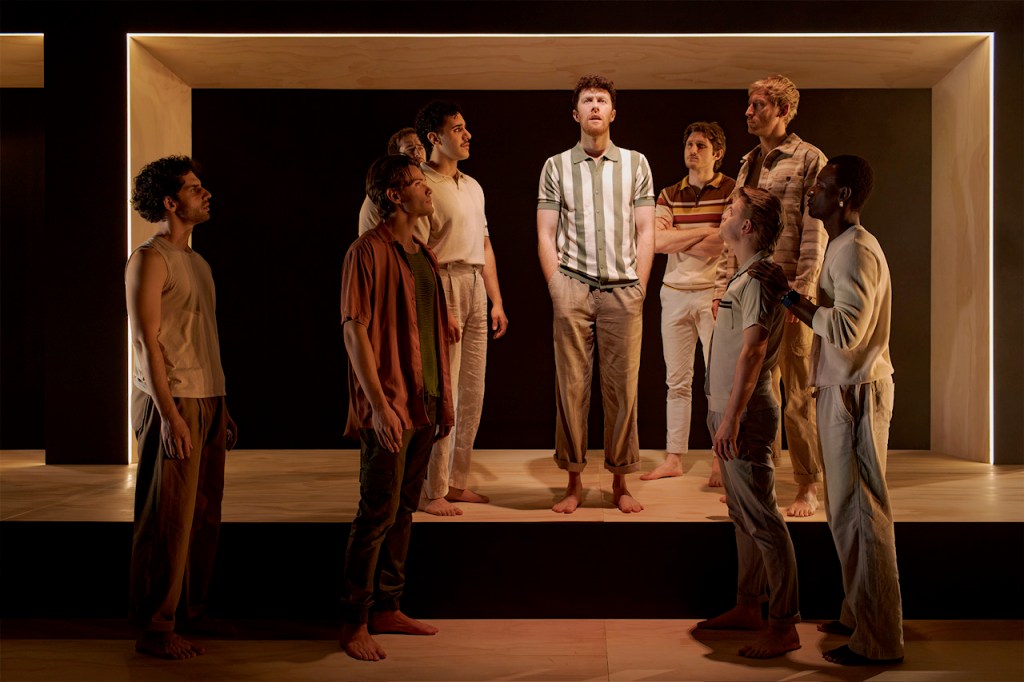
Teale Howie & cast. Photo: Phil Erbacher. It is preachy at times, and moments that felt thrilling when the play premiered in 2018 come across a little awkwardly now (some parts feel like you’re rewatching Dawson’s Creek and wondering who swallowed the thesaurus) but that is a rarity. The script is laced with insights and wordplay, jokes and one-liners you’ll want to remember (my favourite is Toby’s “My heart is always pure. Unfortunately it happens to be surrounded by the rest of me.”) Watching this cast sink their teeth into monologues that span decades, and no doubt pages and pages of script, is like watching Olympic athletes get their turn to compete – it’s a joy to see experts excel at what they were trained to do. I’m in awe of anyone who can remember this gargantuan script, let alone act it with specificity and humanity.
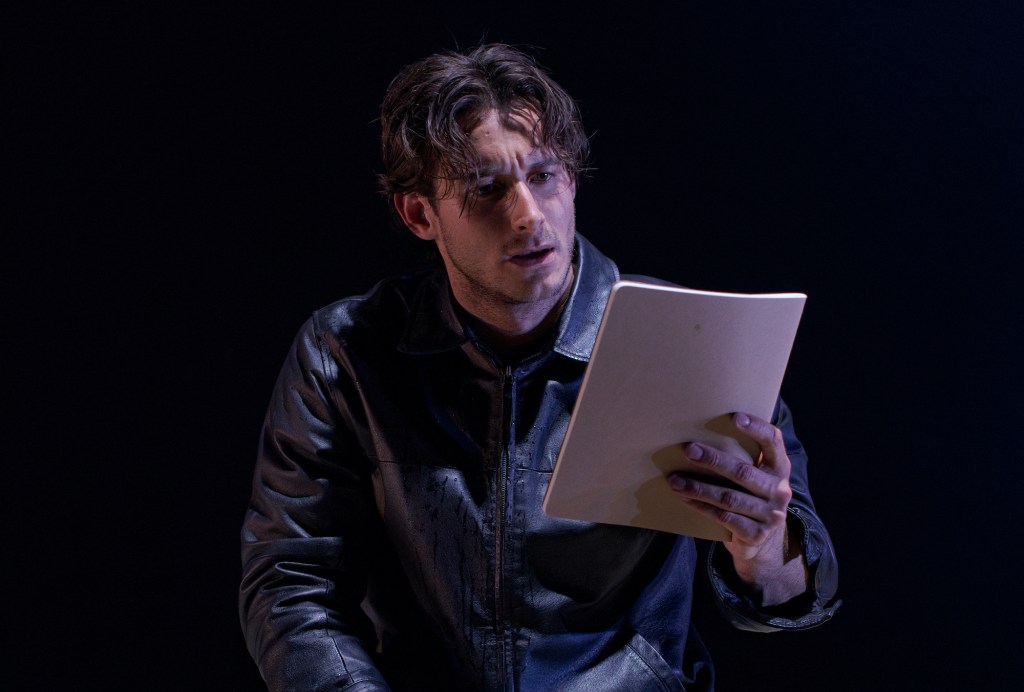
Ryan Panizza. Photo: Phil Erbacher. Ryan Panizza (Hubris & Humiliation) is simply a revelation as Toby Darling. He captures the mix of arrogance, insecurity and charm that make the character such a presence you really notice his absence when he’s not around. While Toby is all cheeky self-obsession and sexy looks at first, the role gets progressively more intense and Panizza stepped up to the plate. He may be serving up blatant beefcake at times (we call it “The Draxl Effect2”) but he proves he has the acting muscles to back up the Marvel-movie-sized ones.
Similarly Tom Rodgers tackles the most difficult part in the plays, the dual roles of Adam & Leo (including a scene where the two characters interact). As echoes of each other, Rodgers adds subtle differences to the parts to differentiate them while keeping their core similarity to the fore. The change would have benefitted from a stronger costuming distinction though and maybe a less sexualised depiction of Leo’s descent into addiction.
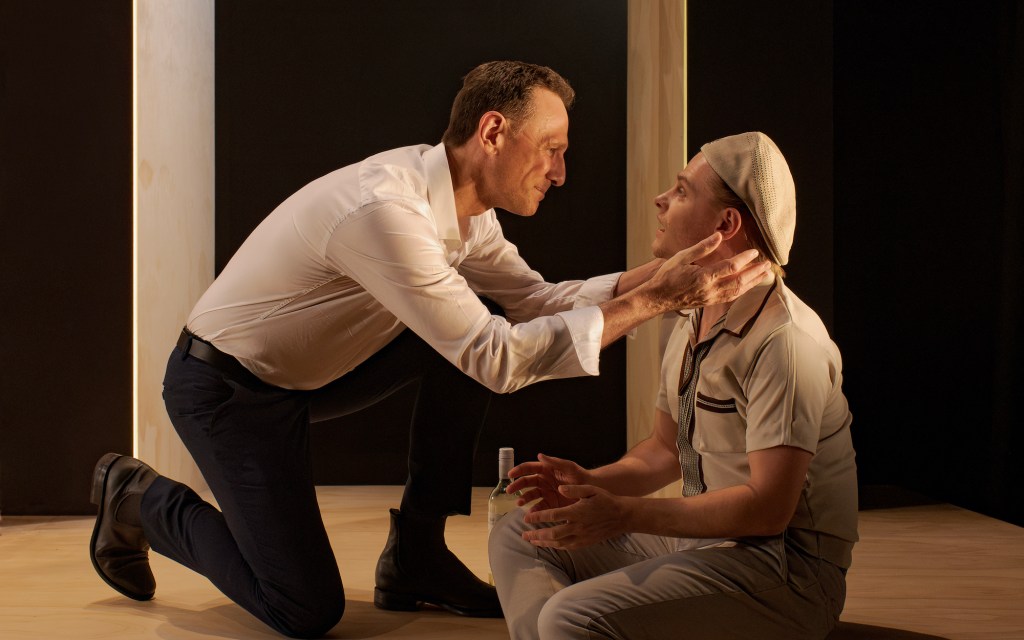
John Adam & Jack Richardson. Photo: Phil Erbacher. John Adam turns the potentially unlikable Henry Wilcox into a warm blend of friendly, intelligent conservatism that challenges the progressive assemblage of younger gay men. And Jack Richardson (Turn of the Screw) brings some sparkling comic relief, particularly as Tucker (as promised). Elijah Williams, who impressed earlier this year in A Case for the Existence of God, also adds strength and dignity as Eric’s best friend Tristan. In short, this ensemble is all excellent.
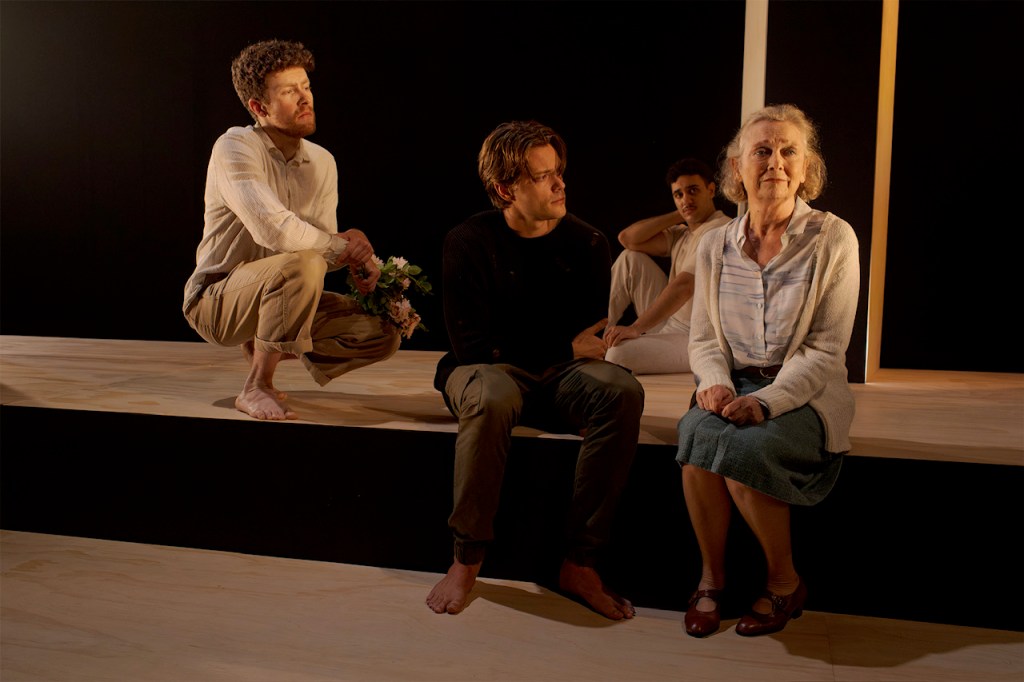
Teale Howie, Tom Rodgers, Quinton Rofail Rich & Vanessa Downing. Photo: Phil Erbacher. Kate Beere’s clean set design holds some hidden surprises. The use of the full height of the Seymour Centre’s Reginald Theatre was an unexpected treat (the photos don’t really do the space justice). Alexander Berlage’s lighting is similarly precise and evocative. This is a beautiful looking show.
I’ve made no secret of how much I love this play (having seen it a number of times in different productions). I’ve been lucky enough to follow it from first previews in London to now. I know the writing and story is right up my alley and this production does wonders in bringing it to life. This is an achievement of theatre making, and not the kind of show you see every day, or indeed every year. Not to be missed.
1 I mean this literally, there are extra cushions for your seat available as you enter the theatre.
2 The Draxl Effect: If you cast Tim Draxl and he doesn’t take his shirt off, did you ever really cast Tim Draxl at all? An existential question for the ages.

-
Sunset Blvd (Nicole’s Version) (St James Theatre, Broadway) ★★★★★

Music by Andrew Lloyd Webber. Book and Lyrics by Don Black & Christopher Hampton.
Every now and again I get a total theatrical obsession. Like the musical Spring Awakening that I saw 9 times in London and on Broadway after pouring over the recording for years. Or the epic two-part play The Inheritance that I’ve now seen 7 full times across three continents and four cities (the new Sydney production will be the 8th). And now, you can add the new production of Sunset Boulevard to the list. After seeing it on Broadway I jumped straight online as I walked out of the theatre and booked to see it again before I left New York, and I’d happily see it more times. I’ve been listening to the live recording ever since.

I’ve made no secrets about how much I love Andrew Lloyd Webber’s Sunset Boulevard. It was one of the first musicals I owned (as a chunky 2-CD set). I wouldn’t actually get to see it staged till a few years ago when Glenn Close reprised the role in London. Then this year we had Sarah Brightman and Silvie Paladino give us a new production at the Sydney Opera House that I really enjoyed (and happily watched twice to catch both leading ladies). But there was always a shadow hanging over the local production. Friends and critics in London were falling over themselves about the new, Brechtian version of the show, directed by rockstar director Jamie Lloyd and starring popstar-turned-stage-star Nicole Scherzinger.
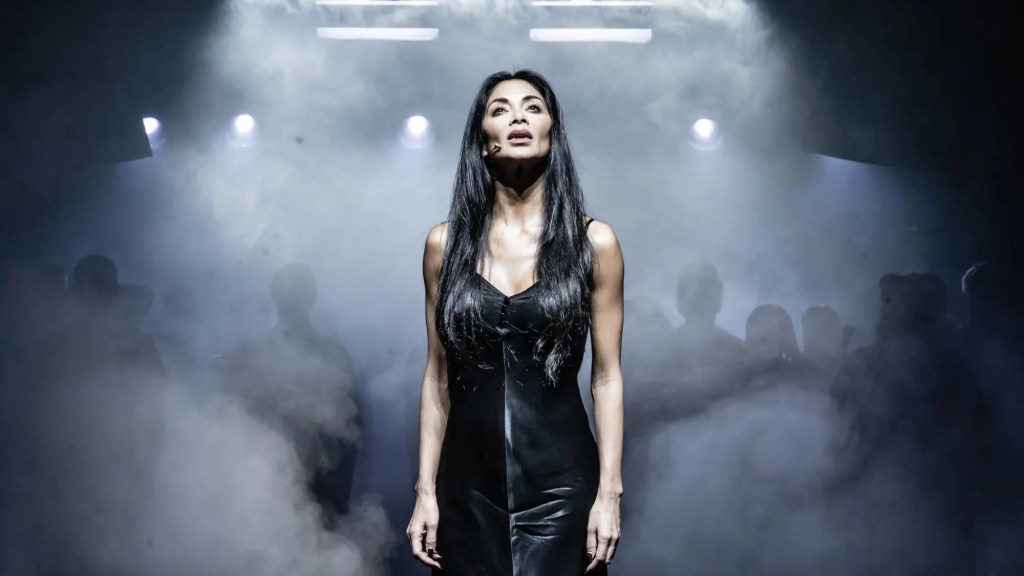
Friends were throwing down their cash to see it multiple times and the press were fawning. Scherzinger has been earning her stripes as a stage performer for a few years and has always been an excellent vocalist. Jamie Lloyd meanwhile had made a name for himself as a director who could turn classic plays into blockbusters – a knack for canny celebrity casting, combined with a challenging text and, as would become more pronounced over the years, relatively bare staging. Jamie Lloyd productions have a laser focus on the performer and the script. Actors love working with him. Audiences lap it up. The Jamie Lloyd Company is a brand, and knows how to wield its power to get shows off the ground.
After a run of missteps like Love Never Dies, Stephen Ward and Bad Cinderella it seems clear Andrew Lloyd Webber was leaning into his back catalogue. He’d been working on a revised version of the roller-skating Starlight Express for years (it’s now opened in London). Jesus Christ Superstar had been given a fresh makeover at London’s Regent’s Park OpenAir theatre (that version would tour the world and is about to arrive in Sydney) with Belgian director Ivo Van Hove working on another new version. And things got kookier with the camp retelling of Cats as The Jellicle Ball. After trying too hard to be cool with Bad Cinderella, Lloyd Webber has suddenly become popular again. It’s like watching Tommy Hilfiger hang out with rappers in the 90s. It’s odd but it works.

So here we are, after knocking them dead in London, Sunset Boulevard is back on Broadway and is the talk of the town (even Rachel Zegler, starring in Romeo + Juliet up the road, dressed as Nicole’s Norma Desmond for Halloween). By removing pesky things like a set, costume changes and comedy numbers, Jamie Lloyd has sharpened the book, tweaked the lyrics and made a self-referentially camp masterpiece. This is Sunset Blvd, now with added cocaine.
And it’s one of the best theatrical experiences I’ve had in years. The closest comparison I have is the first time I saw Kip Williams’ The Picture of Dorian Gray (it’ll be interesting when both shows are on Broadway at the same time in 2025). Nicole Scherzinger’s line readings are so precise, so carefully delivered, she wrings every bit of emotion out of the tunes. You realise just how much her talent was being wasted singing pop music all those years. The bare staging gives the performance leeway to go bigger and it balances out. If you plonked Scherzinger’s performance into the recent Opera House production it would all be too, too much, but against a bare stage, wearing a simple black slip dress, her acting sits perfectly.

Lloyd has also made some smart decisions with the text. They reportedly rewrote a third of the lyrics, but the changes didn’t feel that major. Removing the two comedy numbers lets the humour come from the performances and keeps the tone consistent. The wafer thin romance between Betty and Joe sits better now that everything else has been stripped back. The somewhat embarrassing “car chase” sequence that leads Joe to Norma’s palazzo has been replaced by cinema-style opening credits (over the course of the show Jamie Lloyd manages to get his name on screen at least three times which threatens to go beyond branding and straight into narcissism). At times it feels like you’re watching a contemporary dance piece rather than a Broadway musical – the cast, dressed in sportswear, moving in sharp lines on the dark stage.

Of course there are two moments everyone is talking about. The opening of Act II sees Tom Francis as Joe Gillis perform the song “Sunset Boulevard” as a single-shot walk-and-talk. With a camera-man in tow he walks from his dressing room, through the backstage areas, past other dressing rooms (filled with visual jokes for the fans), down to the theatre’s foyer, out onto the street and back again. By the time Francis walks straight onto the stage in time to end the tune, the audience is screaming with applause.
Then there is the blood soaked finale that’s been flooding social media feeds and became a Halloween sensation. It instantly told the world that this production was visceral and violent. In a show that is primarily black and white, the big washes of red burn into your eyes. As much as I jokingly criticised the local production for concocting a reason for Tim Draxl to get his much Instagrammed six-pack out, here we get Tom Francis drenched in blood, wearing nothing but his boxer shorts and it fits the narrative style completely.

It’s just brilliant theatre. Jamie Lloyd has attacked the text as if it were a contemporary staging of Shakespeare, removing anything that would distract from the music and lyrics, but runs the risk of removing too much context. Judging by the chatter around me in the theatre, there were definitely some confused voices (I heard quite a few people “theatre-splaining” to their friends during the interval).

The other question is, is this all just a star vehicle powered by Nicole Scherzinger’s fanbase? Well I don’t think Scherzinger is the kind of performer with an avid following large enough to hit the numbers this show is hitting. And the fact that both the London and Broadway productions have a regular alternate Norma on select performances in addition to an understudy (much like the Australian production did) means audiences will definitely see another actress do the role. As much as this is a career-making role for her, it’s not all about Nicole. Could this production travel, with a different lead actress (say, to Sydney maybe)? Yes, but good luck casting it.
Jamie Lloyd’s Sunset Boulevard won’t be to everyone’s taste. I know people who were either indifferent or loudly disgusted by it, but for me it sits right in my sweet spot – big musical theatre numbers, defiantly theatrical staging, bold directorial vision. God I hope they film the whole thing.
-
New York Mini-Reviews p4: The Plays
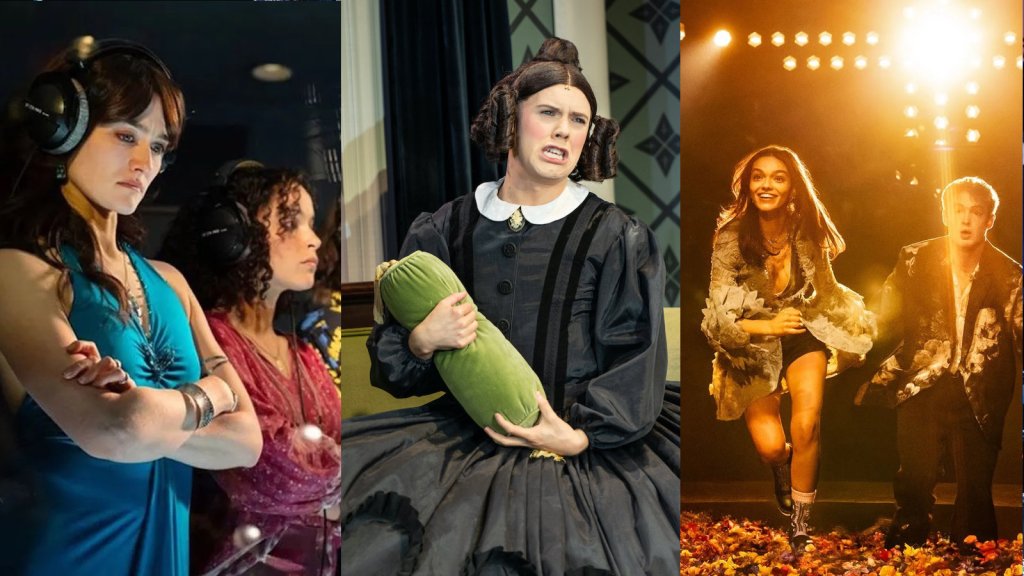
I didn’t see as many plays as I would have liked, prioritising the big musicals rather than smaller plays. I tried very hard to get tickets to MCC’s Shit. Meet. Fan. to no avail. I wasn’t particularly interested in Left on 10th, or The Roommate. I actually DID buy a very expensive ticket to see Robert Downey Jr’s Broadway debut in McNeal, but after the mediocre reviews I decided to sell the ticket and use that money to pay for three other shows. A move I’m still happy about.
But the three plays I did see were well worth the effort.

Romeo + Juliet (Circle In The Square) ★★★½
Written by William Shakespeare. Music by Jack Antonoff.
No this isn’t a musical, despite the heavy presence of music in the production. As you enter the theatre it feels more like a late 90s nightclub with heavy beats, lots of neon, bags of Haribo and gender-fluid (we just called it androgynous back then) clothing. Huge teddy bears sit on small balconies on either side of the oval stage. I was having serious flashback to dancing all night, sucking on lollipops and watching ravers lose their minds. The fact that the title is styled with a + instead of an & instantly reminded me of Baz Luhrmann’s film version to which this production owes a massive debt.
The big draw cards here were the two leads, ‘Heartstopper’ heartthrob Kit Connor as Romeo, and Hollywood’s Rachel Segler as Juliet. Their combined YA appeal drew a very young crowd to the theatre which was exciting to see.
Is it a good production of Shakespeare? Well no, not really. It’s full of invention but the text and story get lost in the mix. The whole show is trying too hard to be young and relevant. Some interesting double casting sees the same performer play unusual pairs of roles (Juliet’s parents are both played by the one actor, Juliet’s Nurse and Tybalt are paired as well). Similarly Gabby Beans plays both the Friar and Mercutio, garnering an unexpected laugh when she had to change roles mid-scene and started by simply saying “I’m the Friar now” (she gave a great performance BTW, one of the shows highlights).
Despite clearly hitting the gym, Connor felt slightly awkward when dealing with Mercutio and his mates, but was on stronger ground in the emotional scenes with Juliet. Zegler brought a spiky energy to Juliet that helped to balance the ways the role is underserved in this production. Yes, she gets to sing a song as well – no, it has nothing to do with the plot really.
For all the production’s faults though, they totally nail the Balcony Scene, which sees Connor jumping up to Juliet balcony suspended in midair, and doing a pull up to plant a kiss on her lips. The crowd went wild.

Stereophonic (John Golden Theatre) ★★★★
Written by David Adjmi. Music & Lyrics by Will Butler.
Again, no, this isn’t a musical but it’s a play about music. If you’ve not heard the buzz about Stereophonic yet, it’s a play about a band that isn’t Fleetwood Mac for legal reasons, recording their new album after their first major hit. It scooped up 5 Tony Awards, including Best Play in 2024.
After hearing so much praise for Stereophonic I was a bit surprised by how simple it was. Set entirely within the recording studio, we watch as the power dynamics of the band shift, relationships crumble and success makes way for anger and resentment. There’s a great push & pull of creative impulses between the members that increases the tensions, aided by liberal drug taking. The real wow factor is watching these great actors prove to be great musicians as well, performing Will Butler’s rock songs like a team of pros.
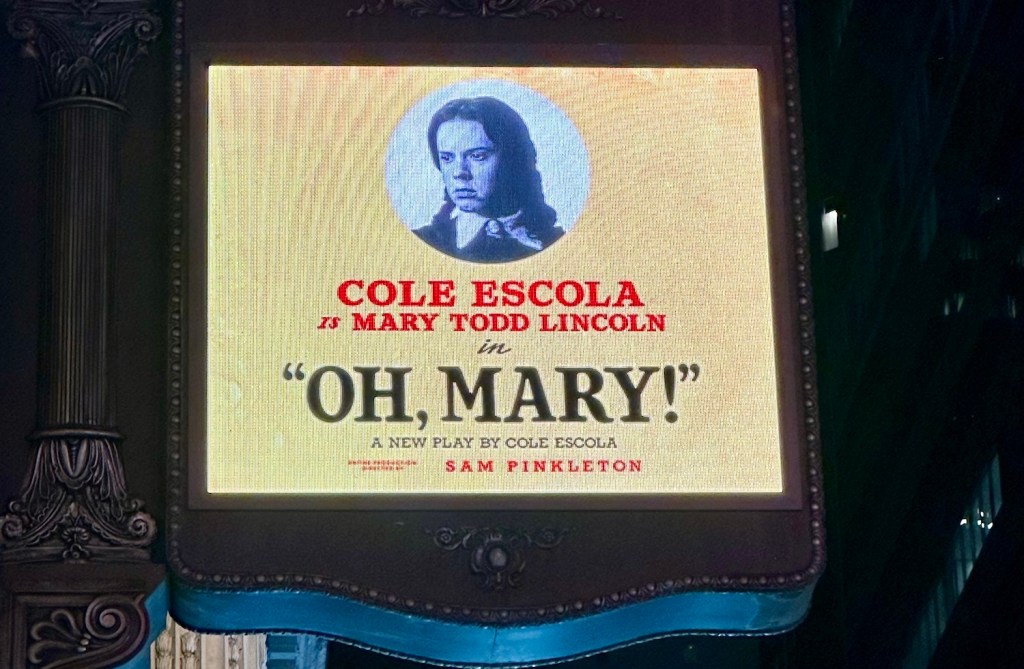
Oh, Mary! (Lyceum Theatre) ★★★★★
Written by Cole Escola.
Oh Mary! is another play that had amazing reviews all round. This is the blockbuster comedy of the season and tickets were astronomically priced. Thankfully a friend put me onto a ticket resale app and I was lucky enough to get a ticket in the stalls (orchestra for the Americans) for a not-insane amount of money.
If you’ve not heard about Cole Escola’s runaway hit, it reframes Mary Lincoln (as in the wife of President Abraham Lincoln) as a frustrated, drunken housewife dreaming of her days in the cabaret scene. After all, Mary (Cole Escola in drag) is married to a closeted gay man who’s in the middle of a Civil War. Things take an unexpected turn when, to keep her away from the bottle and give her something to do, Abraham (Conrad Ricamora) hires an acting coach (James Scully) who proves to be rather handsome.
Escola’s Mary is all childish Freudian id run rampant constantly pulling faces and failing to understand that the people around her have their own lives going on. She torments her upright chaperone (Bianca Leigh) and everyone else around her just to pass the time. As the plot picks up steam, and takes some hilarious odd tangents, Abraham’s queerness comes out more and more and things get more unhinged.
This was a hell of a lot of fun and proved to be worth every cent. It’s a small comedy taking on Broadway and succeeding at every turn. It’s also worth watching Cole Escola’s promotional appearance on talk shows for even more sharp tongued silliness.
-
Subscribe
Subscribed
Have a WordPress.com account? Log in now.

