-
Welcome to Cultural Binge

The rating system is simple:
★★★★★ – Terrific, world-standard. Don’t miss.
★★★★ – Great, definitely worth seeing.
★★★ – Good. Perfectly entertaining. Recommended. Individual mileage may vary.
★★ – Fine. Flawed and not really recommended, but you may find something to appreciate in it.
★ – Bad (& possibly offensive).
See more reviews over at The Queer Review.
Instagram: @culturalbinge
Substack: culturalbinge.substack.com
Email: chad at culturalbinge.com
-
New York Mini-Reviews p3: New Broadway Musicals
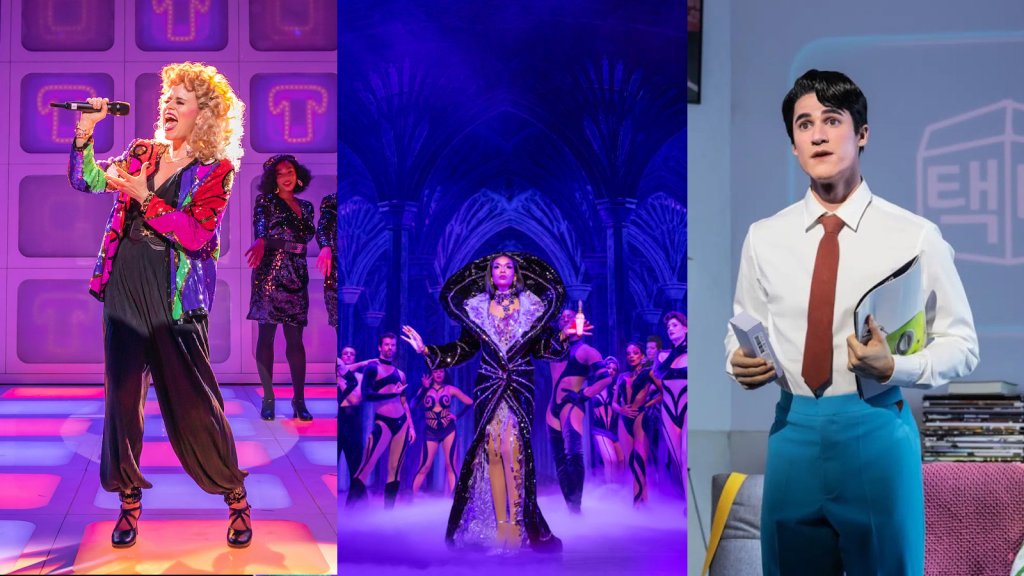
Most of these shows were in previews so I’m keeping things vague (with no star ratings) but if this is how good they are already then most them are stone cold hits, and one will sadly sink against all the competition.
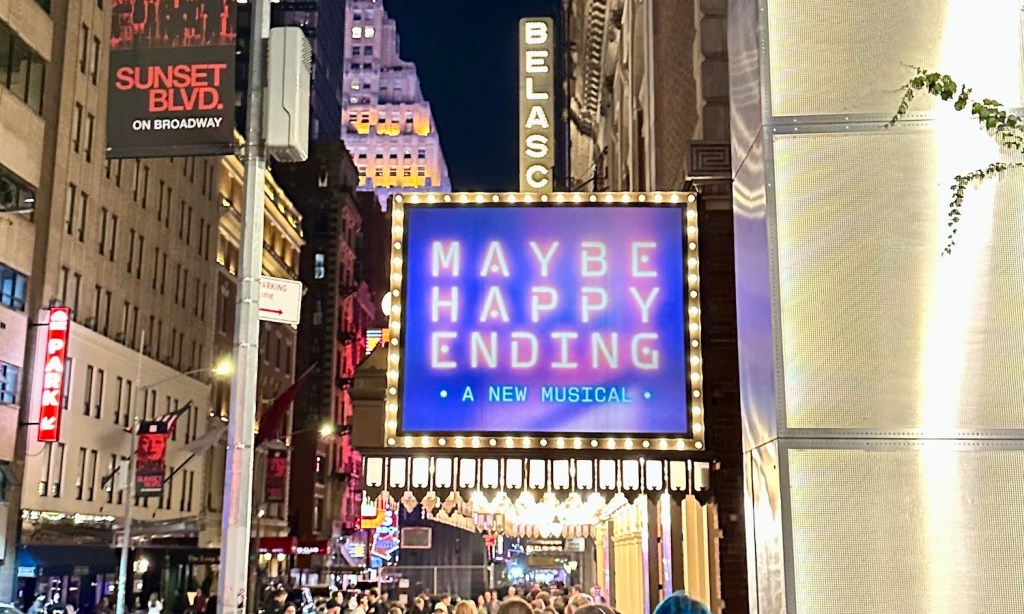
Maybe Happy Ending (Belasco Theatre) in previews
Book by Will Aronson & Hue Park. Music by Will Aronson. Lyrics by Hue Park.
This feels like a sleeper cult hit for its injection of quirk and adorability.
Two “retired” personal helper robots reside in rooms across from each other where they will eventually fall into disrepair. Oliver (Darren Criss) is an older Model 3 helper-bot who is convinced his owner will come back to collect him. He spends his days in a neat routine, listening to jazz albums his owner gave him and talking to his plant. His well ordered days are interrupted by a knock on the door. There he finds Claire (Helen J. Shen), a Model 5 who lives across the hallway, in distress. Her charger has broken and she needs to borrow Oliver’s. It’s a classic meet-cute between two spiky neighbours who share a very literal spark. One day Claire convinces Olivier that they should strike out and go find his owner so the two robots break the rules and head off on a road trip.
I’ve not seen a more beautifully sweet musical since I saw Two Strangers (Carry A Cake Across New York) in London. There is a charm that oozes from every aspect of this show. The two leads are magnetic. The design work is stunning. The music is bubbly and retro – this feels like a very 60s sitcom set up. You could easily replace the sci-fi elements with a regular odd-couple neighbours vibe.
The whole show is will make you laugh and cry and go “awww” a lot but not necessarily in that order. It has more heart than a dozen other shows combined.
I absolutely loved it and would happily pay to see it again.

Sunset Boulevard (St James Theatre)
Book & Lyrics by Don Black & Christopher Hampton. Music by Andrew Lloyd Webber.
I’m going to save my thoughts on Sunset Boulevard for a separate piece compared with the recent Australian production. Expect that in a few days.
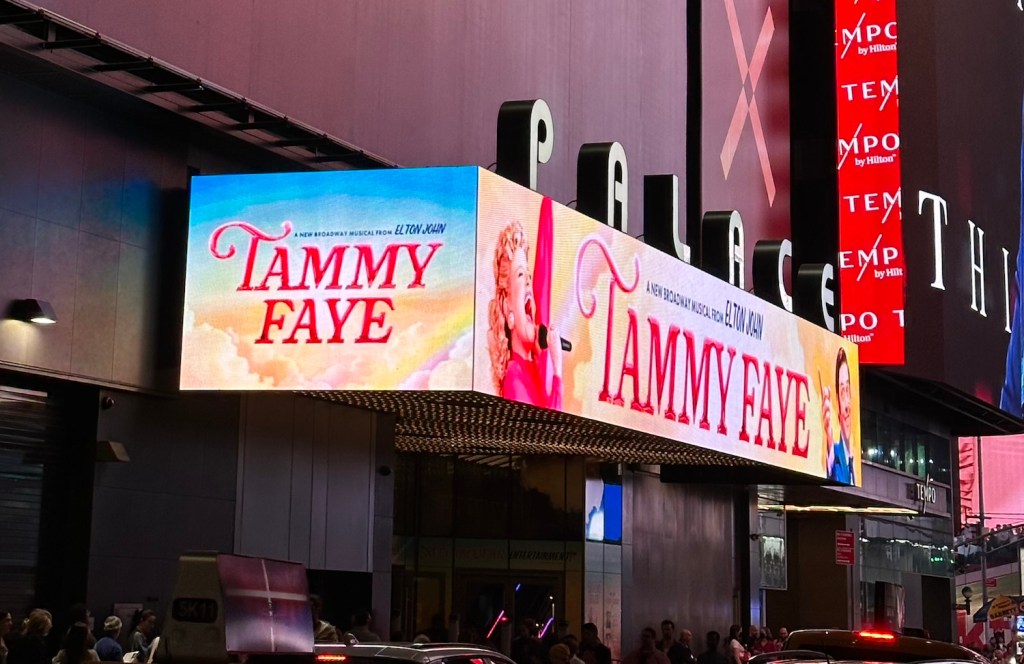
Tammy Faye (Palace Theatre) in previews
Book by James Graham. Music by Elton John. Lyrics by Jake Shears.
I was very excited about the London transfer of Tammy Faye, and subsequently it was the one I was most disappointed with. I love Katie Brayben, she’s a terrific performer who I’ve seen lead musicals in London and her performance as Tammy Faye is great. Shame the whole show around her isn’t up to the same standard.
The talent involved is fierce. Book by celebrated playwright James Graham whose work I love. Directed by Almeida’s Rupert Gould, music by Elton John and Scissor Sisters’ Jake Shears. And none of them live up to their abilities here.
The problems? The whole show feels shallow but if you’ve seen the documentary (or the film starring Jessica Chastain) ‘The Eyes of Tammy Faye’, you know there is a lot more going on under the surface. Up against juggernauts like Sunset Boulevard and Death Becomes Her, Tammy Faye feels lacking in comparison.
The best thing about this production is the newly refurbished Palace Theatre that has had major structural work (it’s an impressive architectural achievement).
And speaking of Death Becomes Her…
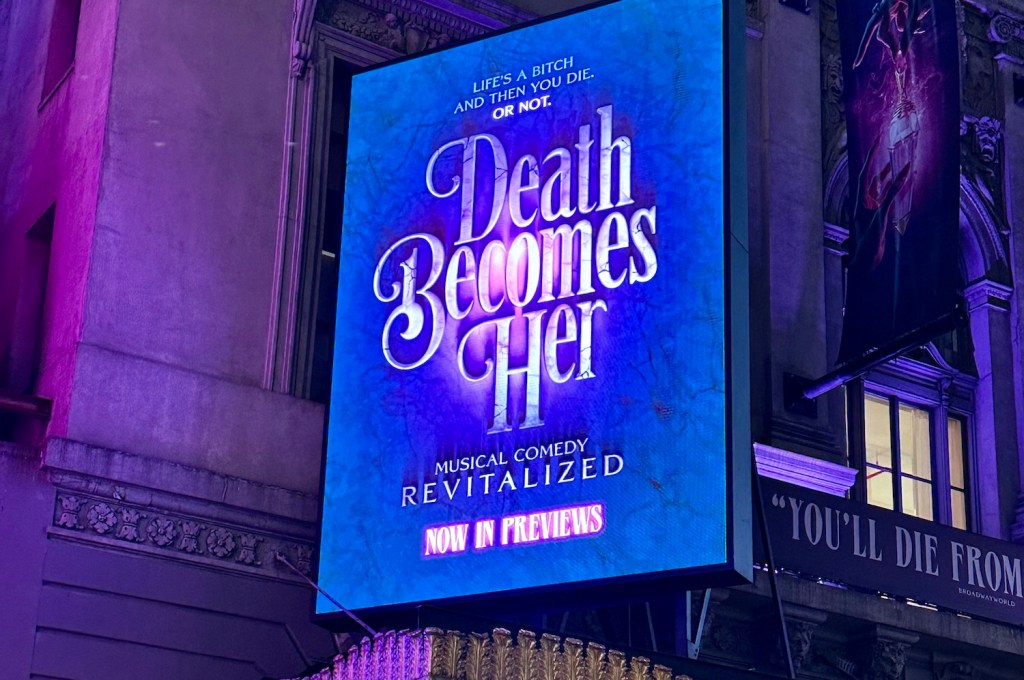
Death Becomes Her (Lunt-Fontanne Theatre) in previews
Book by Marco Pennette. Music & Lyrics by Julia Mattison & Noel Carey.
I’d heard great things coming out of the shows out of town run in Chicago so this had me excited. But then illness struck the cast and the performance I had booked (the second preview) was canceled barely two hours before showtime. As the ushers turned people away we could hear the cast inside furiously rehearsing the understudy.
I quickly rebooked for the last night before I flew and with Megan Hilty still out, her understudy took the stage… and BLEW THE HOUSE AWAY! I’m actually glad I got to see her. With barely two days of proper rehearsal, and only her second performance in the role, Kaleigh Cronin was brilliantly funny and sharp with some incredibly intricate fight and dance choreography. A lot of the special effects rely on some precision and she nailed it. Jennifer Simard stands as a counterweight with her sultrier vocals and physicality. Former Destiny’s Child member Michelle Williams has little to do other than appear in a succession of stunning gowns and sing flawlessly, which she does.
The show itself is big classic camp Broadway stuff. Explicitly playing to the mainly gay audience who can quote every line. The special effects are impressive but not miraculous – they’re very clever but not exactly mind-blowing. The show is brassy and fun. In terms of the new musicals of the season it’s clearly Death Becomes Her v Sunset Boulevard.
-
New York Mini-Reviews p2: Broadway Musicals

The whole purpose of the trip was really to catch up with the big Broadway musicals that had been making waves like The Outsiders. The sad fact is that the majority of these will never be seen in Australia on this scale, so I was trying to soak as much in as I could.

Water For Elephants (Imperial Theatre) ★★★½
Book by Rick Elice. Music & Lyrics by PigPen Theatre Co. Based on the book “Water for Elephants” by Sara Gruen.
I’m not a fan of either the book or film of Water For Elephants but the Broadway show promised some impressive acrobatics and animal puppetry, so thanks to a TodayTix sale I nabbed seats to see the spectacle.
And what a spectacle it was! In some ways it’s too much of a spectacle leaving you unsure where to look as things are happening in every corner of the stage. Watching the cast assemble a circus tent in real time, while performing tricks was impressive and the extremely likeable ensemble evoked the tight knit community of circus performers. The animal puppetry was equally impressive, using a mix of puppetry and costumes to bring the beasts to life. Cleverly, they tease the reveal of the stories eponymous elephant letting it assemble slowly. The final result however is less than the sum of its parts – impressive no doubt, but not the showstopper it feels like they wanted.
Musically the show is… nice but not exceptional. Director Jessica Stone manages the action sequences well using lights and “stop motion” to hint at action that would never look convincing on stage.
Overall, it’s a solid, fun show that served as an early “warm up” for my trip.
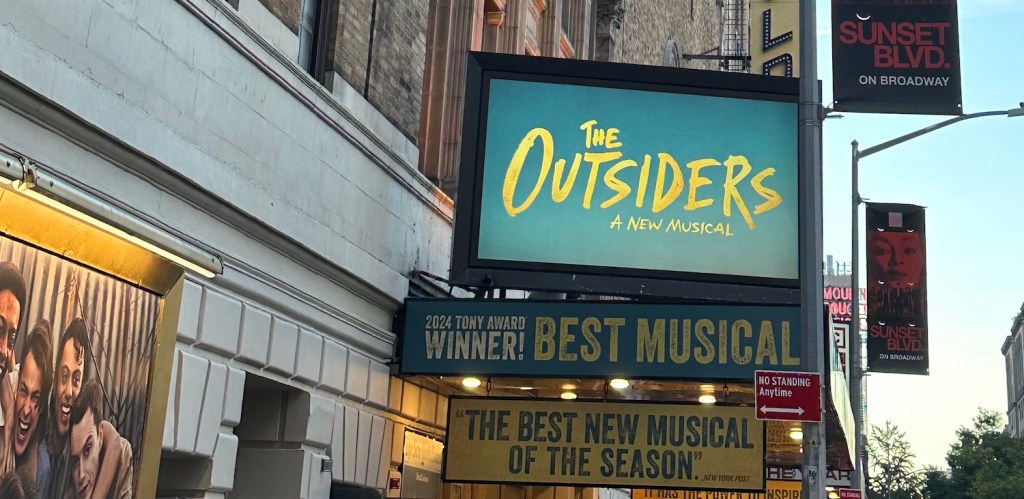
The Outsiders (Bernard B. Jacobs Theatre) ★★★★★
Book by Adam Rapp & Justin Levine. Music & Lyrics by Jonathan Clay, Zach Chance & Justin Levine. Based on the novel “The Outsiders” by S.E. Hinton and the film by Kathleen Rowell.
After winning the Tony for Best Musical in 2024, The Outsiders was high on my list because I was very skeptical about how they could turn the story into a Broadway musical without losing its grit. And yes, some of the book’s edges have been worn off for practical reasons but the stage show feels more grounded and earthy than most musicals do. A cast of soulful singers with unique voices save it from the potential tackiness I was expecting.
The show has received strong write ups for its convincing stage violence, and it is quite brutal by musical theatre standards. A stage covered in gravel makes each movement feel more propulsive and clever lighting hides key moments.
But it’s the cast that makes this work. Brody Grant reminded me of a young Shia LaBeouf (before he got… weird) as Ponyboy Curtis. Jason Schmidt is a sexy charmer as his brother Sodapop, and Brent Comer’s older sibling Darrel gave midwestern strength under pressure. One real surprise was Emma Pittman as Sherri Valance, a role that could easily have been simply “the girl” but her excellent vocals and performance elevated it.
The Outsiders was basically brilliant and deserves all the acclaim. I’ll admit I was a flood of tears by the end.

The Great Gatsby (Broadway Theatre) ★★★★
Book by Kait Kerrigan. Music by Jason Howland. Lyrics by Nathan Tysen. Based on the novel “The Great Gatsby” by F Scott Fitzgerald.
Jeremy Jordan and Eva Noblezada head up this lavish production that feels very “core Broadway”. Impressively grand sets that blend animation screens with physical elements letting the scenes feel expansive, a large all-singing all-dancing ensemble with classic big ballads and fun up-tempo dance numbers and cars, yes fully operational cars on the set. I wasn’t initially too fussed about seeing it (it was on my “maybe” list) but good words from a few trusted friends pushed me over the line and I really enjoyed myself.
Jordan’s Gatsby is especially quirky which was a refreshing touch and helped to justify his extreme behaviour. Noblezada was on fine form, while the character of Daisy didn’t feel as suited to her as her role as Eurydice in Hadestown did.
A fun but frivolous show, my only real complaint was the complete straight-washing of the character of Jordan Baker (played charmingly by Samantha Pauly). No more lesbian golfer but 100% a love interest for Nick Carraway (Noah J. Ricketts). Oh well, that’s the thing with “coded” characters, they can be read either way.

Once Upon A Mattress (Hudson Theatre) ★★★
Original Book by Jay Thompson, Marshall Barer and Dean Fuller. 2024 Book by Amy Sherman-Palladino. Music by Mary Rodgers. Lyrics by Marshall Barer. Based on the fairytale “The Princess & the Pea” by Hans Christian Andersen
I went to Once Upon A Mattress for one reason and one reason only… to finally see Sutton Foster in a show. I’d previously spent a lot of cash to see The Music Man with Foster and Hugh Jackman only for Foster to be off that particular performance. And wouldn’t you know it… she was unexpectedly off for this performance as well! I was furious!
Once the sting of disappointment faded and I settled into the fact that I am simply cursed to never see Sutton Foster on stage, I relaxed and watched the show. It’s cute. It’s a nothing. It’s the kind of show you take the whole family to because it’s twee and won’t offend anyone. Michael Urie plays Prince Dauntless like a cartoon character (and does so very well). The new book by ‘Gilmore Girls’ creator Amy Sherman-Palladino is nice. Other than that the show left next to no impression on me at all.
-
New York Mini-Reviews p1: Off-Broadway
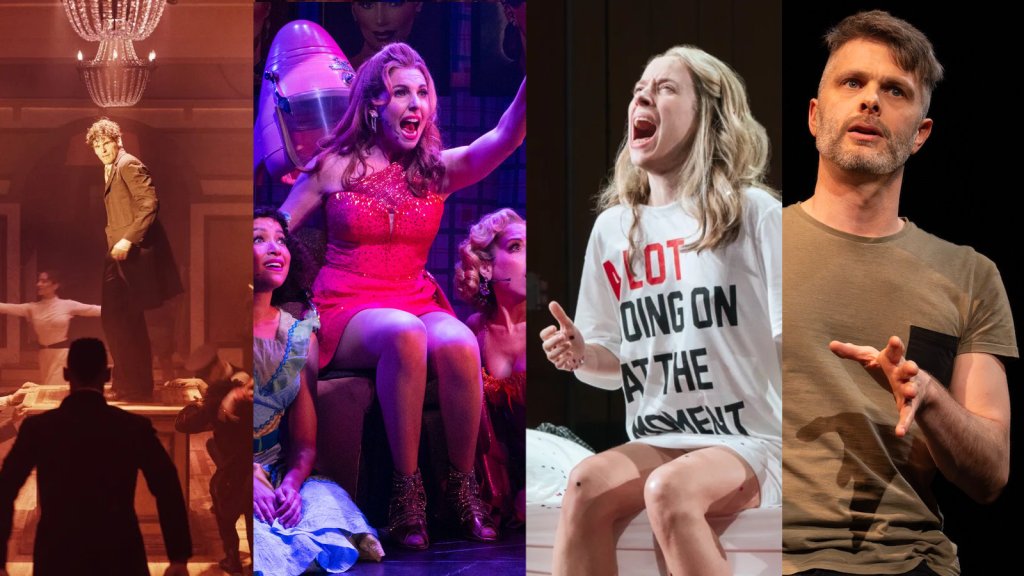
I spent 12 days (and an undisclosed sum of money) in New York seeing a total of 16 shows, attending the famed New York Comic-Con, and catching up with friends. It was, frankly, a bit mental but then I’ve never been very good at “do nothing and relax” holidays. Despite being a semi-regular visitor, it’s the longest I’ve ever spent in New York in one go so there was a lot of time to cover a lot of shows as well as do everything else.
Let’s start Off-Broadway.

The Big Gay Jamboree (Orpheum Theatre) ★★★
Book by Marla Mindelle & Jonathan Parks-Ramage. Music & Lyrics by Marla Mindelle & Philip Drennen.
With the success of the hilarious Titanique, I was keen to see the new show from Titanique co-creator Marla Mindelle and this one looked just as camp and ridiculous. The premise sounded fun. When a recently engaged former-wannabe-actress wakes up in the town of Bareback, Idaho, she finds herself in a 1940s musical that she can’t escape.
It’s as if dirt-bag Elenor from ‘The Good Place’ ended up in ‘Schmigadoon’ with a touch of a certain sci-fi TV show on Apple+ which if I named it would probably be a spoiler. The humour is what you expect from a straight woman who’s spent too much time surrounded by gay men. Jokes about bottoming, ethical non-monogamy, cruising, PreP, Real Housewives, RuPaul etc. In an odd twist of fate it shares two simple gags with the much bigger Death Becomes Her – making fun of Idaho, and the fact that if you want to succeed “you’ve got to get the gays”. They’re delivered in different ways in both shows but are essentially the same jokes. The Big Gay Jamboree is not particularly clever but it holds on to the dumb fun energy of a drag performance with some clever set and costume design.
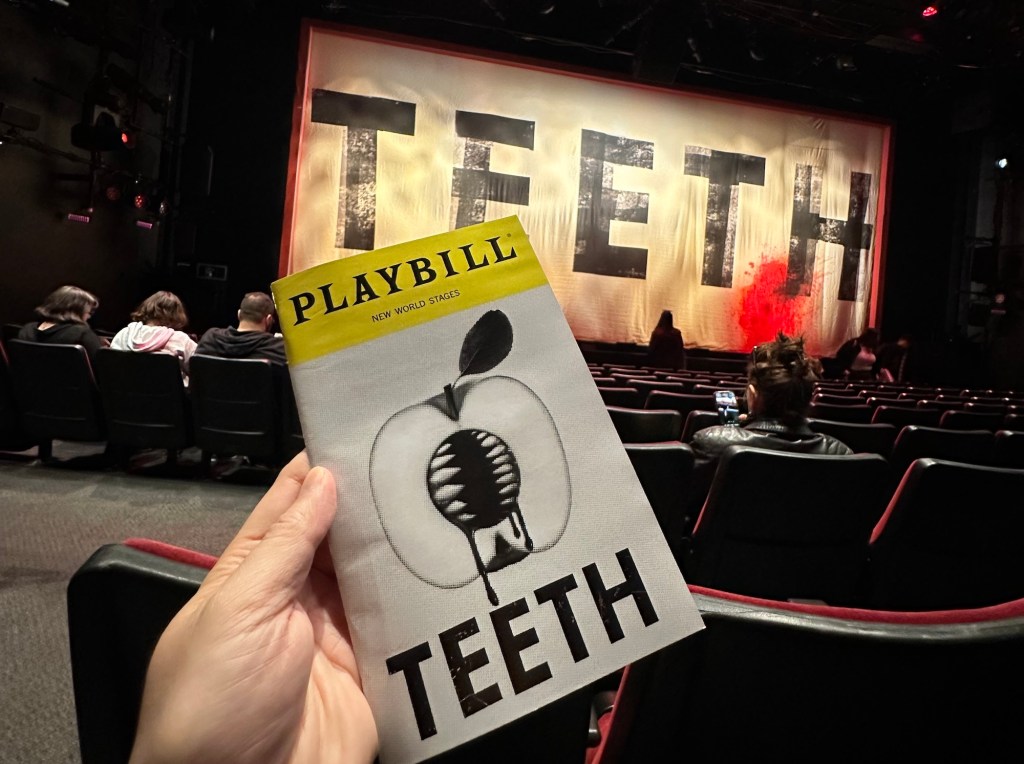
Teeth (New World Stages) ★★★½
Music & Book by Anna K Jacobs. Book & Lyrics by Michael R Jackson. Based on the screenplay “Teeth” by Mitchell Lichtenstein.
Two names got me interested in seeing Teeth – star Andy Karl and writer Michael R Jackson whose A Strange Loop was a real highlight of my last trip to Broadway. Good word of mouth didn’t hurt either.
This is classic, off-Broadway cult classic material. An adaptation of the film of the same name, in which a young woman cursed/blessed with vagina dentata sinks her teeth into her hypocritical church before unleashing a riot across the town. I’m going to keep some elements vague because the real joy of the show is its shock value. The staging is simple but effective with the real treats coming from the excellent cast. If the sight of severed prop pensises isn’t your bag then this might be too much, but it has total Carrie/Bat Boy vibes. I’ve never seen that much dick on stage (if you see it, you’ll know what I mean).
Oh and the splash zone is a serious thing, they take great delight in spraying blood from the stage.

Life and Trust (Conwell Tower) ★★★½
Produced by Emursive.
From Emursive, a group of immersive theatre makers who worked on the acclaimed Sleep No More, Life and Trust take the story of Faust as its starting point and places it in 1929, the day before the Great Wall St crash. It helps that they’ve taken over multiple floors of Conwell Tower, a grand building just off Wall Street and turned it into a labyrinthine tower of dark delights.
I’ve not seen Sleep No More (although now I want to) as I’ve always had an aversion to non-linear immersive narratives. I’ve never seen/experienced one that works. And Life and Trust doesn’t really work as a story, it’s more of a sumptuous mood filled with sex and money and betrayal.
But the quality of the work is clear, the multistory set is glorious and worth wandering around all on its own. While I followed a few characters I found myself happily wandering off and jumping tracks to see new snippets of story with included Dorian Gray getting shirtless and sweaty in his boudoir, a tall boxer fighting a match (and then having very athletic sex with Dorian), two lesbians in a fraught relationship, a crooked doctor manipulating people and being manipulated and Faust tormenting some others one-to-one. To be honest, I have no idea what really connected it all, but it was definitely enthralling. Although the crowd was sometimes too intense and the usual complaint of couples holding hands and walking slowly was very evident.

Deep History (The Public Theatre) ★★½
Written and Performed by David Finnigan.
I wanted to see a show at the Public Theatre as I’d never been before and it’s the birthplace of so many future hits and I was excited to see an Australian work playing. Turns out this one man monologue by David Finnigan (writer of Scenes from the Climate Era at Belvoir last year) was part TED Talk, part biography. Essentially a fringe show with Finnigan talking about his own history as the son of a climate scientist. This lecture is played out against a story of the 2019 bushfires that ravaged New South Wales and Finnigan’s best friend who lived in the area.
Sadly the premise hits rocky patches as the story telling device falls apart in front of the audience. The moment of revelation never lands as the set up is weak and unconvincing.
-
The Female of the Species (Old Fitz) ★★★½
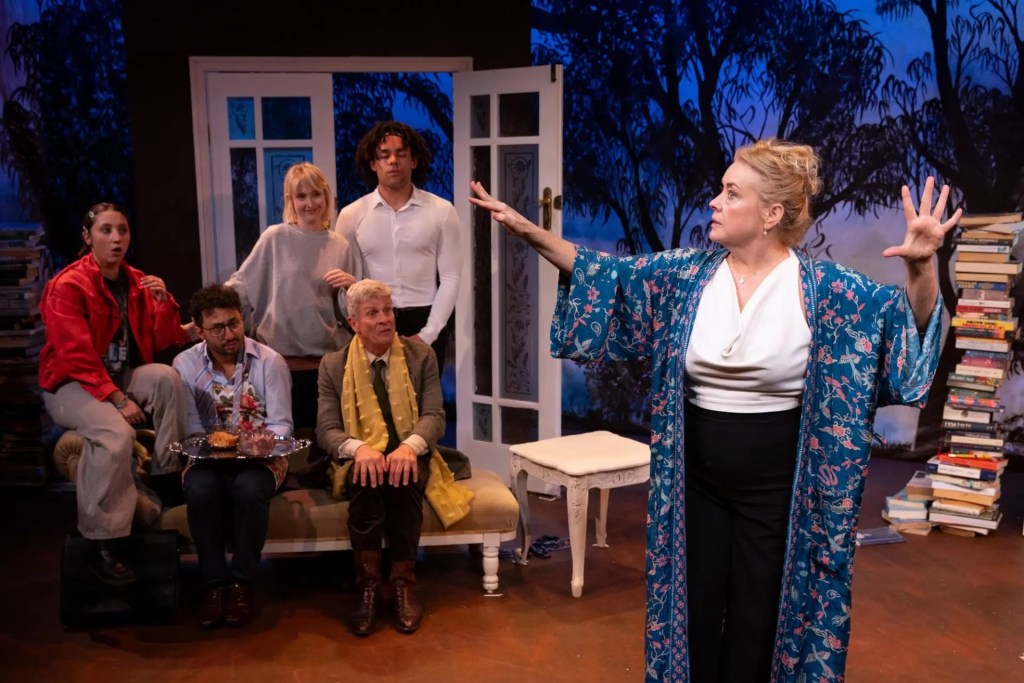
Written by Joanna Murray-Smith. Old Fitz Theatre. Nov 1-23, 2024.
Joanna Murray-Smith’s noughties satire of gender roles, The Female of the Species, is filled with laughs with a literate edge. Poking fun at celebrity intellectuals, feminism, gullible consumers and turn of the century gender politics, it’s a hodge-podge of women supporting and destroying one another, and the men who navigate around them.

Photo: Noni Carroll. Celebrated provocateur Margot Mason (Lucy Miller) has a book deadline to hit but can’t bring herself to string two sentences together. When her home is invaded by a former student, Molly Rivers (Jade Fuda), she is in part annoyed but also flattered. That is until Molly pulls a gun and handcuffs Margot to her desk.
Molly blames Margot’s writings for ruining her life and is here for revenge. Things get more complicated when Margot’s sleep deprived daughter Tess (Lib Campbell) stumbles in. But Tess has no interest in helping her dismissive mother and the three women begin a war of words as they criticise each other’s life choices. When Tess’s husband, the dull Bryan (Doron Chester), a taxi driver with a bone to pick with feminists named Frank (Joe Kalou), and Margot’s genteel gay publisher Theo (Mark Lee) all arrive the situation gets even more bizarre.
The Female of the Species is stuffed full of jokes and ludicrous power dynamics that are, at best, cute reflections of real behaviour, and at worst, silly contrivances. As sharp as the text is, it does require a bit of a leap of faith to buy into the ever escalating farce of it all. Murray-Smith delights in playing with various ideas of feminism, womanhood, masculinity and power, throwing them in opposition and seeing which ones dance and which ones fight.

Photo: Noni Carroll. The cast are all excellent and having a ball, particularly Lib Campbell’s Tess who goes from dazed and distraught to engaged in the action and finally discovering her lost libido. Campbell threw Tess’s dry asides out with excellent timing and gave Tess an interiority that made the scenes even funnier.
Director Erica Lovell keeps the action flowing and the mood elevated to a consistently absurd level, but the scenario hits 100 mph early and can’t quite maintain its momentum for the full 100 min running time. As fun as the script is, the ideas and language feel dated as the debate has evolved since 2006. Like an overly familiar meme, moments get little more than a wry knowing smile rather than full chuckle.

Photo: Noni Carroll. But the energy of the cast and the fleet-footed lines keep things entertaining. Not every joke lands, but with this many it hardly matters, and when the observations on feminism, gender and the generational divide cut, they go satisfyingly deep.
-
Interview: Director Shane Anthony on The Inheritance. “It’s rare that we get these kinds of durational experiences in Sydney.”
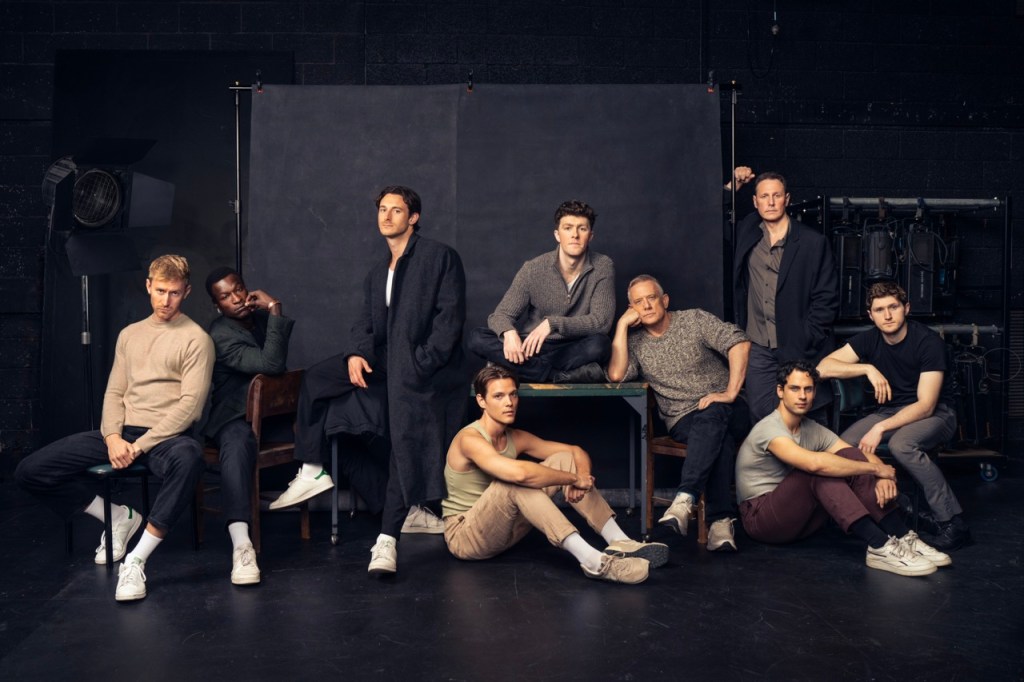
Matthew López’s Olivier and Tony Award winning two-part drama, The Inheritance Parts 1 & 2, is finally coming to Sydney this month.
The story centers around a young gay couple, Eric & Toby and their circle of friends, including older couple Walter & Henry, whose lives are disrupted by a series of events. The play is a contemporary retelling of EM Forster’s classic novel ‘Howard’s End’ (and includes Forster himself as a character) filled with reflections on queer culture, literature, US politics, the Aids crisis, and covering fraternal, sexual and inter-generational gay relationships.
This year alone we’ve had all new productions in Melbourne and Canberra, and in Sydney it lands at Seymour Center (the season has already been extended due to demand) under the direction of Shane Anthony, the director behind two of my favourite shows of the last few years, Ulster American (Seymour Centre & Ensemble Theatre) and Anatomy of a Suicide (Seymour Centre).
Shane stepped out of rehearsals to have a quick chat about why The Inheritance is so beloved and still so important.
Answers have been edited for clarity.

Shane Anthony. Photo courtesy of Seymour Centre. Cultural Binge (CB): To start with, how did you come across The Inheritance? Did you see the original production? Did you first read the script?
Shane Anthony (SA): No, I didn’t see the original production. I heard about it, obviously. I had a friend who was involved in the Broadway production and then a friend of mine who lives in London had seen the show and often recommended scripts for me to read and so pointed it out. I read it in 2019 or 2020, and then started harassing the agent for the rights here in Australia.
CB: So when you read it, what was the thing that drew you to it to start with?
SA: It’s just good writing. I read it in one hit, it’s a page turner. It’s nuanced, it’s complex, it’s messy. These characters are fucking up, they’re flawed, which is exciting, you know, because it’s not one dimensional.
I’m also a sucker for plays that have characters needing to mine their traumas to move forward. I find that deeply fascinating because I think as a director it offers a really incredible terrain to work with. I’m personally interested in plays that have rich, compelling personal relationships, that are political, so it ticked a bunch of boxes for me.
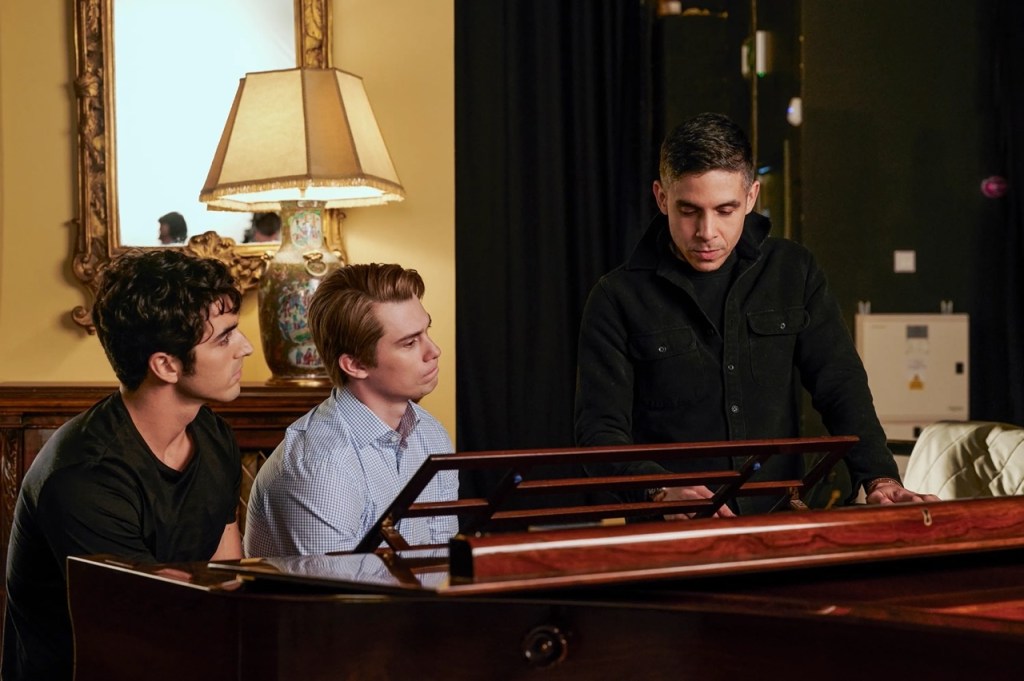
Playwright Matthew López on the set of ‘Red, White and Royal Blue’. CB: It’s funny because now, the playwright Matthew López is probably more widely known as the director of the hit gay rom-com movie ‘Red, White and Royal Blue’, which is a lovely piece of fluff, than as the writer of this multi-generational epic drama.
SA: There’s definitely some moments of fluff in The Inheritance too. The Inheritance is very funny and silly at times. There’s some romantic comedy moments. There’s definitely moments of deep gravity and he’s obviously wrestling with some big themes, queer history and legacy, but there’s definitely some soapy moments which are entertaining.
I think it’s like a beautiful cocktail to have this gravity and to have these moments that are really bubbly and fun as well.
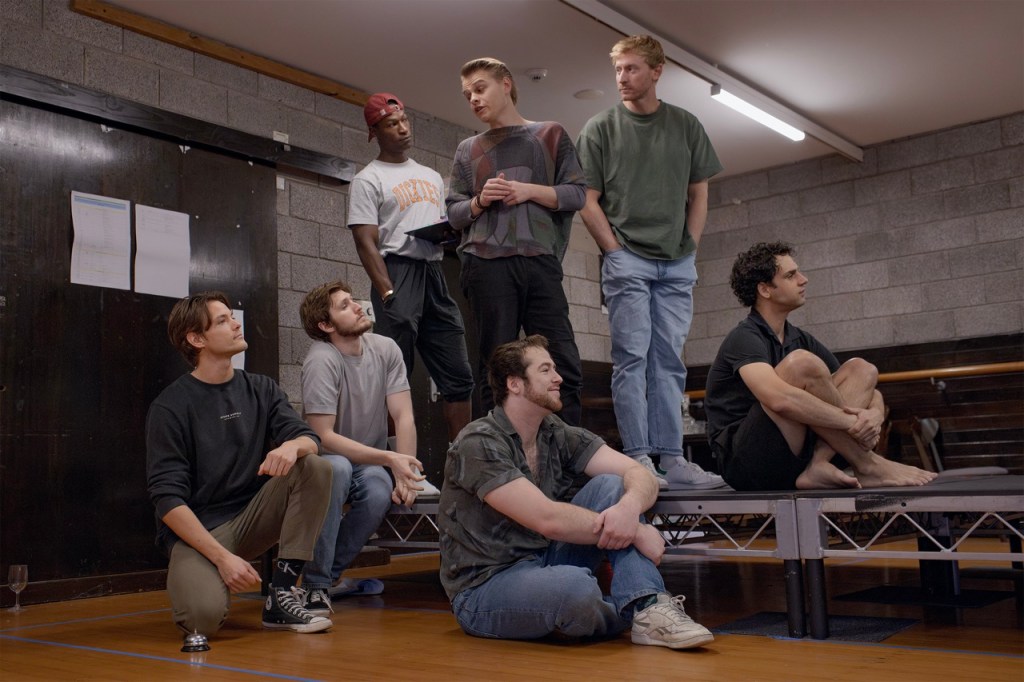
Sydney cast of The Inheritance in rehearsals. Photo: Phil Erbacher. CB: The Inheritance talks a lot about inter-generational relationships and friendships and mentorship. A focus of the play is how gay men don’t always have older people to teach us about gay life, and the Aids crisis decimated a generation. Did you have queer elders or mentors that were part of your life growing up?
SA: That’s a great question. It’s only been in the last decade that that’s become the case. And obviously, without mentioning who that person is, there’s one individual in particular, who I do look up to. So that there is a mentoring, guiding quality there. That’s quite beautiful, actually. So a lot of love and respect for that person.
It’s been really interesting having three separate generations in the rehearsal room. Some of the younger generations have just reflected on how different their experience has been and that has not been such a thing for them. They haven’t needed that guidance in the same way which is both refreshing and also eye opening.
CB: Definitely. I find it’s encouraging because that’s what we always wanted, that freedom to not be totally defined by our sexuality, but also part of me wants to go “Fuck you. You don’t understand what it was like!”
SA: Which is what the play’s interrogating. What do we owe the generations before that forged this path for you. You know, that’s a luxury. There’s a privilege in that legacy.
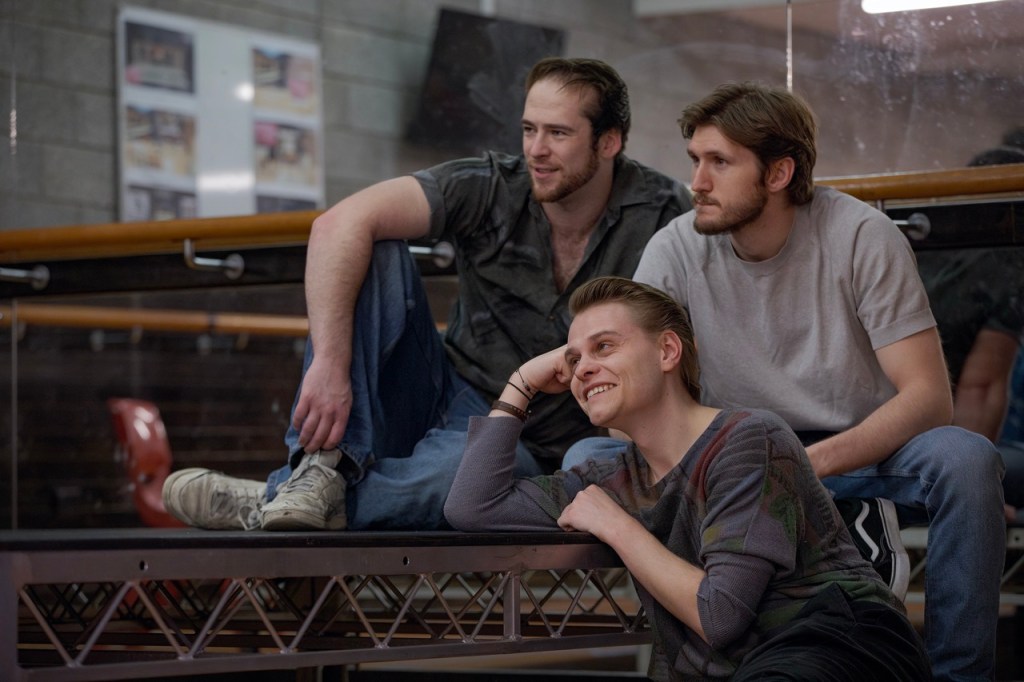
Front: Jack Richardson. Photo: Phil Erbacher. CB: I’ve got the cast list, and I’m making some educated guesses on who’s playing which character, but I am very curious to see who’s playing the most important character in the show… Tucker.
SA (laughs): This gorgeous young actor, Jack Richardson. Tucker’s wonderful. A lot of fun. Jack’s timing is impeccable, so it’s a joy. We looked at a bunch of Tuckers and there were different iterations of what that character could be. Then Jack just arrived with something that was actually unexpected. Jack’s got us laughing in the room.
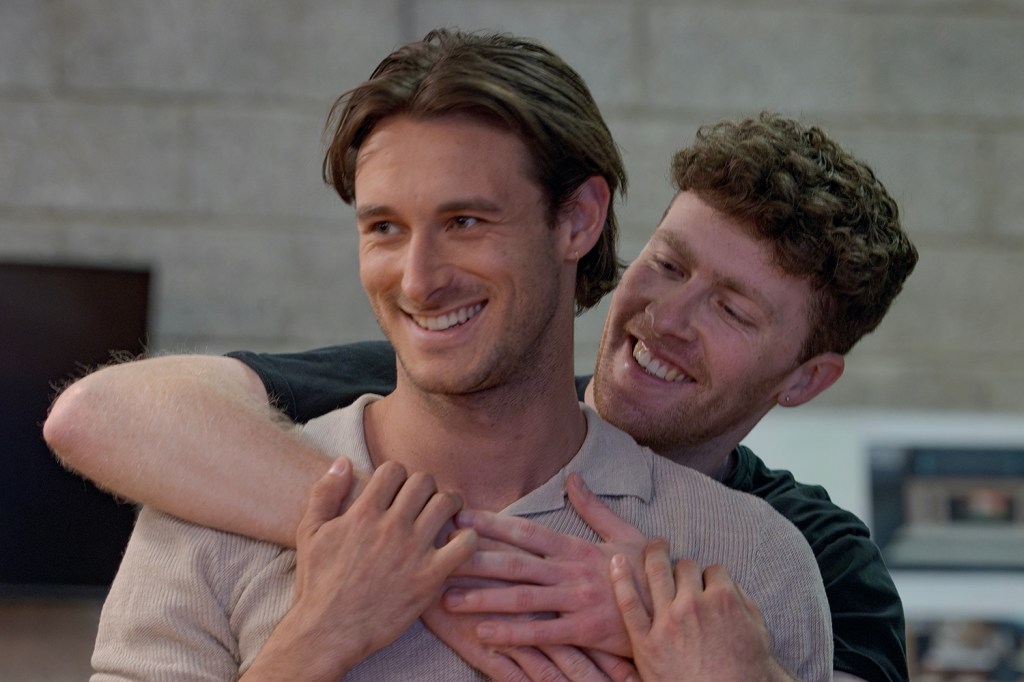
Photo: Phil Erbacher. CB: Who’s doing the design work on the show? Tell me more about your team.
SA: We’ve got a really excellent team. I’m very fortunate. Kate Beere is a wonderful designer I met a couple of years ago, and she’s just created the most perfect space, which is essentially like a blank canvas for our production to take place, but highly suggestive of all of the multiple locations that the play needs to support.
Tim Chappel, who won an Oscar and BAFTA for ‘The Adventures of Priscilla: Queen of the Desert’, is doing our costumes. Damien Lane is the composer on the production. I’ve worked with Damien a bunch before on previous shows. And Alex Berlage is doing lighting design.

Photo: Phil Erbacher. CB: You do have a very high powered cast and production team on this. How did you get them all together?
SA: I really have to praise the producing team, of which I’m one of the producers. Gus Murray from Sugary Rum and Daniel Cottier. We’ve been working for a year and a half on the show. I know it’s so cliche, but it really feels like there’s a village of people working on this, which is so beautiful.
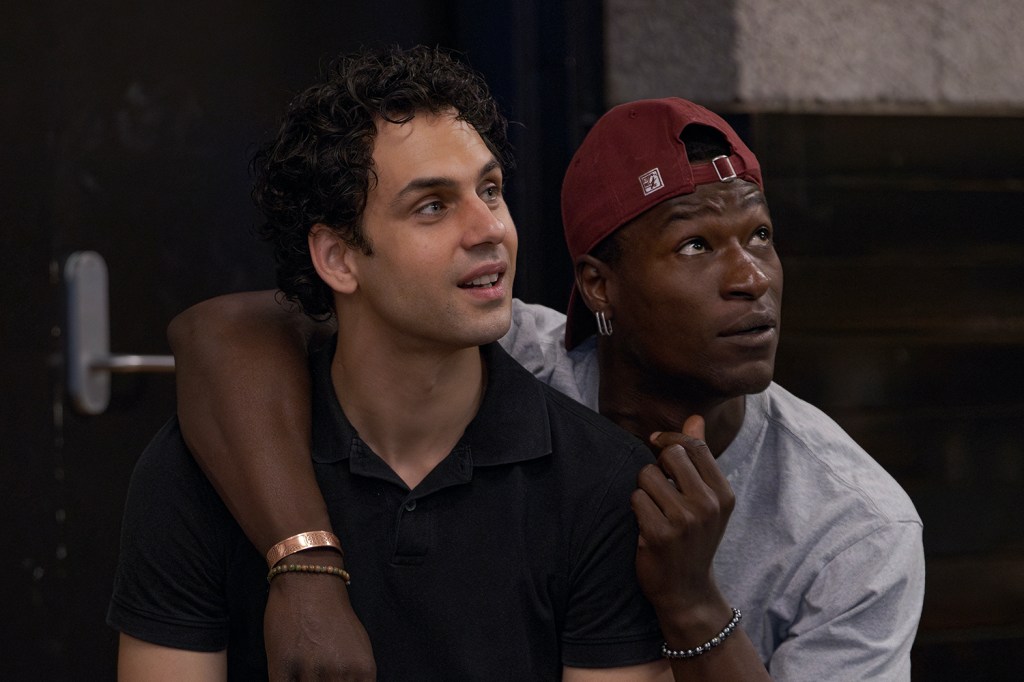
Photo: Phil Erbacher. CB: So the show is two plays, told in three acts each (with act breaks). On the full two-show days there’s a longer meal break between the two plays so you’re not stuck in the theatre non-stop for the full duration.
I do imagine, though, that a lot of people are going to be slightly wary just because of the length. I’m the kind of theatre nerd who’s absolutely down for sitting down for almost seven hours of theatre. But that’s not the case for everybody.
SA: I kind of expected the same, but our sales are totally the opposite, actually, and we’ve been really surprised. The ticket sales are definitely much stronger than previous Seymour shows that I’ve directed at this point in time. So there’s obviously an appetite for the experience and for just being in the theatre. And you’re right. I’m like, who are these people who want to sit in the theatre for seven hours? But that audience is obviously out there.
It’s rare that we get these kinds of durational experiences in Sydney, things like Taylor Mac’s A 24-Decade History of Popular Music a couple of years ago [CB: Or Bark of Millions]. With these kinds of shows I think people allow themselves to go into another world in the way that we do when we binge television. There is also a sense of community that you develop when you’re sitting in a room with people for seven hours going on this journey together. So do it in one day if you can.
There are a bunch of people that are planning to see the show have already seen it overseas and I hope we live up to those expectations. I’ll be also interested to see how Australian audiences will see this because it’s so specific in terms of its cultural ties to the United Kingdom and EM Forster and ‘Howard’s End’, but also its set in New York, which is such a character as part of the piece as well.
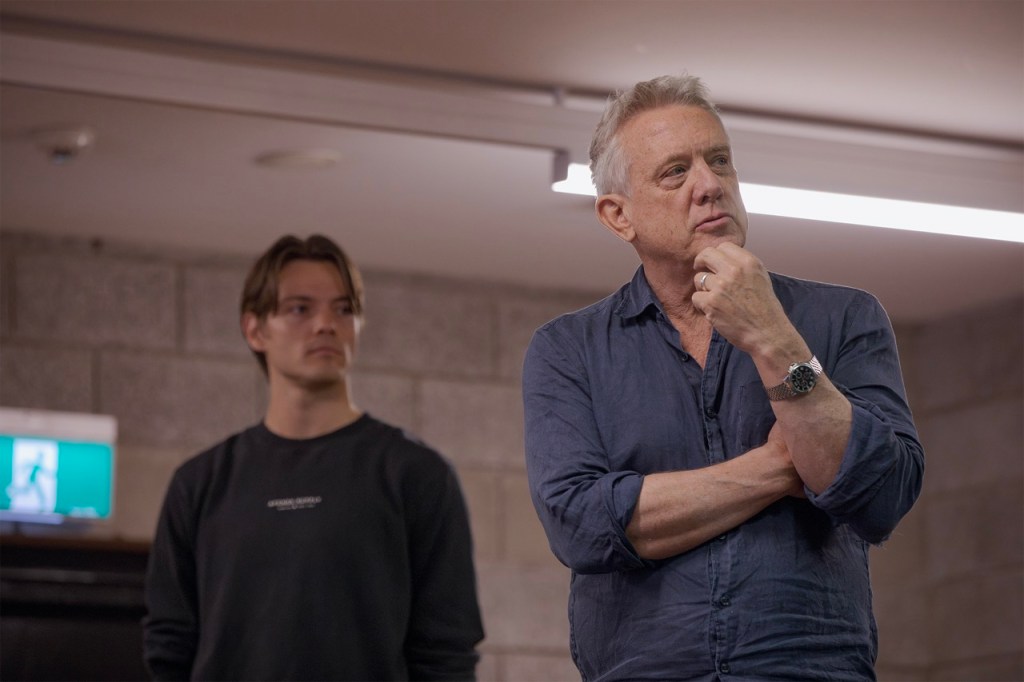
Photo: Phil Erbacher. CB: The version of New York in the play feels very early 2000s. It’s the ‘Sex & the City’ New York that we all know very well. It’s Gramercy Park, the Whitney, the Lincoln Center and trips to Brooklyn. Places and things we know from pop-culture.
To wrap up, how would you convince someone that The Inheritance is going to be something that they should come and see?
SA: I would say that it is a profound, epic piece of theatre over seven hours that is about personal relationships. Absolutely universal, but set against the backdrop of queer history and both British and American politics. You’ll laugh, you will cry, you’ll be entertained.
CB: Thanks for your time.

Sydney cast of The Inheritance. Photo: Harvey House Photography. The Inheritance plays at Seymour Centre from Nov 7-30, 2024 with the option of seeing both parts in one day, or over two evenings.
If you need more convincing you can read a review of the Broadway production on The Queer Review, my mini review of the Los Angeles production, and my review of the Melbourne production.
-
Sunday (Sydney Theatre Co) ★★★★★

Written by Anthony Weigh. Sydney Theatre Company. Drama Theatre, Sydney Opera House. 28 Oct – 14 Dec, 2024.
Things are simmering in the Melbourne Theatre Company transfer of Anthony Weigh’s Sunday, now playing as part of Sydney Theatre Company’s 2024 season. Like its lead character, Sunday Reed, the play has opinions and is more than happy to share them.
In the 1930s, Sunday Reed (Nikki Shiels) and her husband John (Matt Day) have bought an old dairy farm by the Yarra. It was an impulsive decision, but the property would take on a life of its own as a haven for modern artists, eventually to be known as the “Heide set”. When they find a young man unexpectedly standing in their home, they meet Sidney Nolan (James O’Connell) who is desperately seeking help to get to Paris to “learn to see”. But Sunday will have none of his colonial mindset and challenges him to look outside and see Australia with the same eye.
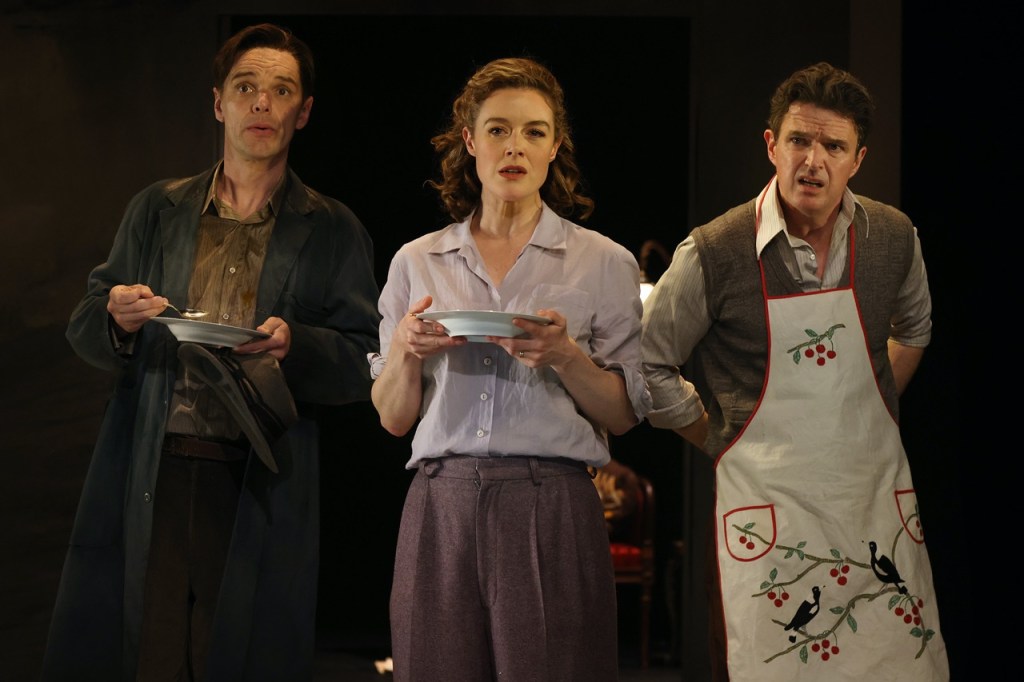
James O’Connell, Nikki Shiels & Matt Day. Photo: Prudence Upton. John and Sunday Reed were pioneers, fostering a new creative community and changing the Australian art scene. The Heide Set, named after the farm’s location in Heidelberg Victoria, were a bohemian collective, experimenting with art, sex and societal norms to make them fit their own vision. The Reeds and Nolan would live as a throuple for many years, while Nolan would paint his iconic Ned Kelly series.
As presented in Weigh’s loquacious but propelling script, Sunday is an iconoclast, forever challenging the people around her. There is a visceral thrill in Shiels performance as the men she is pushing stand up to her provocations. The minute they weaken she is bored. It drives a sexual energy through the almost three hour running time that never lessens, filling the near empty set with life. Shiels is simply on fire as Sunday Reed. Her intellectual sparring with John is matched only by the kinetic attraction of Sidney.
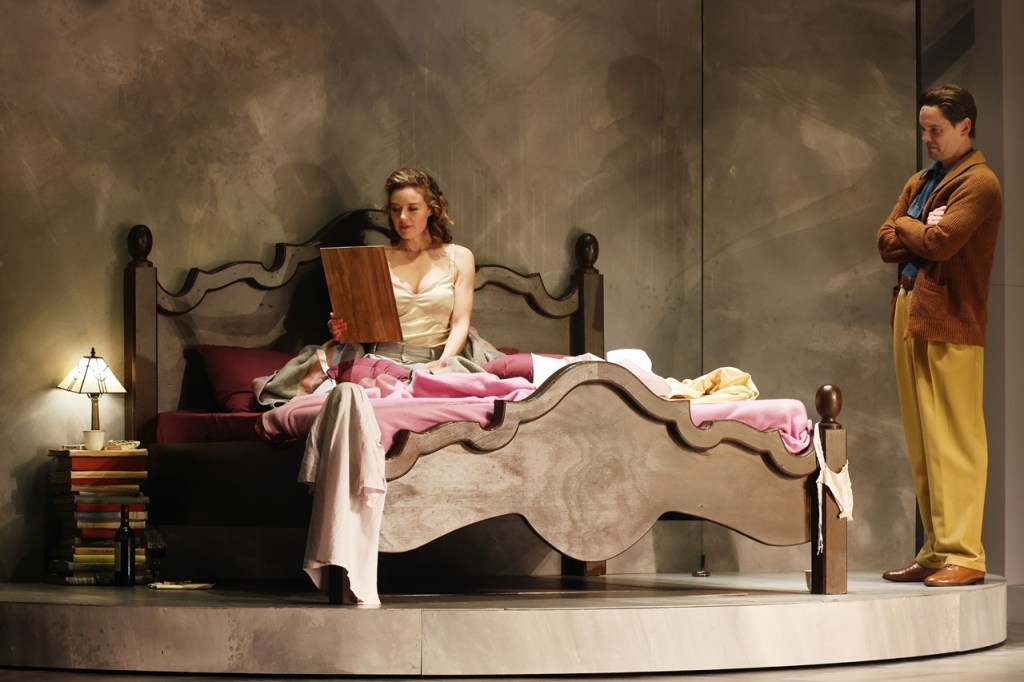
Nikki Shiels & James O’Connell. Photo: Prudence Upton. Weigh gets a lot of laughs with the familiar battle between Sydney & Melbourne, best illustrated in the opening moments as Sunday describes the different colour palates of various cities. As she describes the different qualities of the colour blue in Sydney or Brisbane, the juxtaposition of lush European greens to Australia’s hot yellow/greens, you see the way her eye and mind operate. She does not paint, but she is a producer, mentor and muse to the painter.
Director Sarah Goodes describes Sunday as an exercise in myth-making. Taking the bare facts we know of the Reeds and Nolans relationship and filling in the blanks. In doing so they have constructed a vision of Sunday Reed that is the classic “bold modern woman born in the wrong era”. Forced to forge a path for herself because the world around her did not suit her personality, Sunday and John create their own oasis. Rejecting bourgeois Australia’s fawning fascination with Europe, they sought to elevate our own visions, our own landscapes and talents.
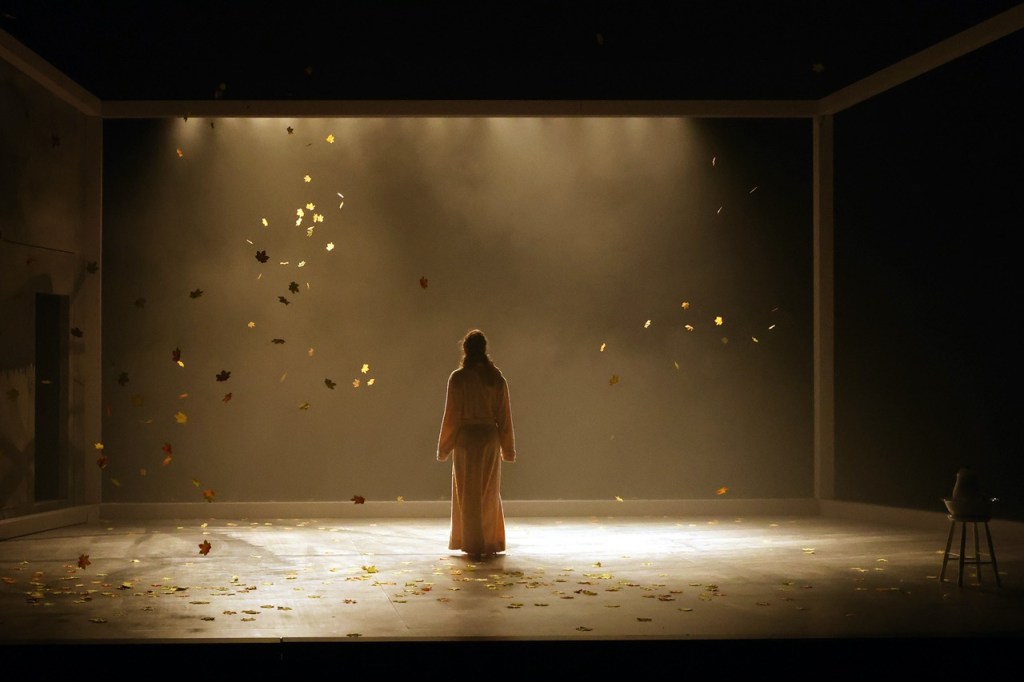
Nikki Shiels. Photo: Prudence Upton. I was instantly in love with Anna Cordingley’s sparse, oversize set – two walls with hidden entrances and long, horizontal cutout holding a screen (that mimicked Nolan’s Ned Kellys). Its openness evoked a sense of scale and wide country vistas we never see, but feel through the combination of Paul Jackson’s haze-filled lights and Jethro Woodward’s sound.
With a tour de force performance from Nikki Shiels as Sunday, and stunning visuals, this is a real winner. An absolute, bang-on great piece of theatre.
-
Dear Evan Hansen (Sydney Theatre Co) ★★★★½

Book by Steven Levenson. Music & Lyrics by Benj Pasek & Justin Paul. Sydney Theatre Co & Michael Cassel Group. Roslyn Packer Theatre. 12 Oct – 1 Dec, 2024.
I guess it’s no surprise that Dear Evan Hansen, a show about performative morality, has received similarly performative grandstanding reviews from some critics. I’ve read a few that go to great lengths to explain why Dear Evan Hansen doesn’t work as show, all the things that are wrong about it and why it doesn’t deserve it’s success or reputation, without stopping to grapple with the fact this it IS a success, it DOES work as a show and it DOES have a high reputation. I guess the internet loves a hot take (even if it is ten years too late). Dear Evan Hansen is a shamelessly mawkish show of radio-friendly pop hits… that’s not a flaw, that’s its superpower.
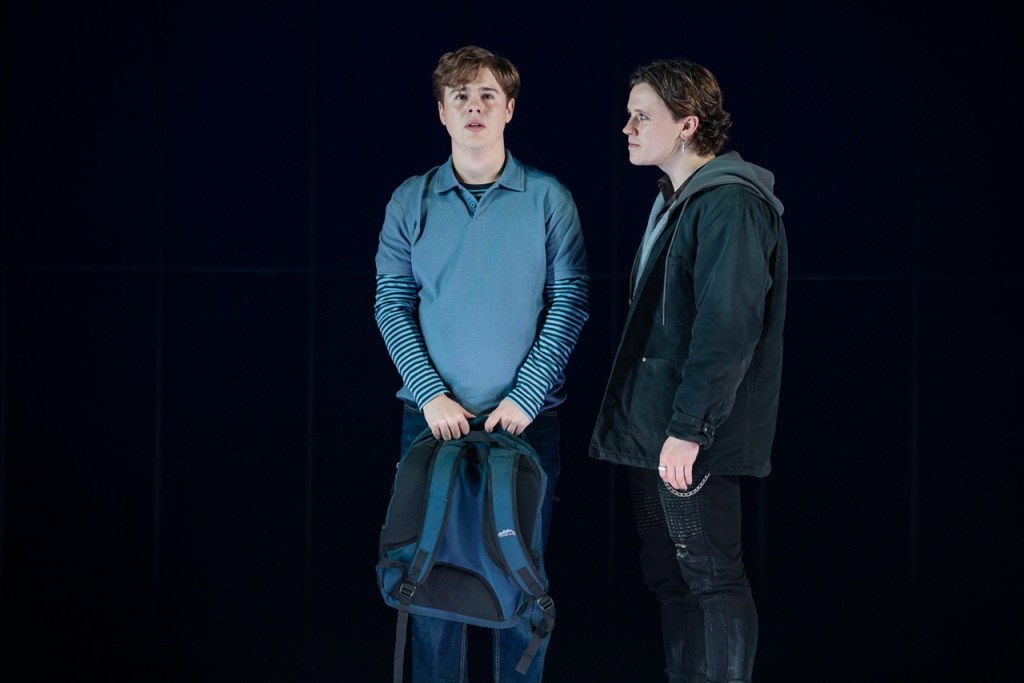
Beau Woodbridge and Harry Targett. Photo: Daniel Boud. Anxious teenager Evan Hansen (Beau Woodbridge, or on the night I went Lawrence Hawkins was in the role) is left with his arm in a cast and a lot of emotions he can’t express. His therapist urges him to write positive letters to himself, “Dear Evan Hansen, today is going to be a good day because…” to battle his depression. His single mother Heidi (Verity Hunt-Ballard) does her best to be there for him while juggling work and her own studies, but Evan is left on his own a lot. One day at school, another disaffected teenager, Connor Murphy (Harry Targett), finds one of Evan’s letters in which Evan vents his negativity, and takes it. When Connor is found dead from his own suicide attempt, people assume the letter they found on his body is a suicide note addressed to “Dear Evan Hansen…” Through a combination of his own insecurities, empathy and desire for connections, Evan goes along with their assumption that he and Connor were friends, but the lies start to take on a life of their own and soon Evan finds himself backed into a corner by Connor’s grieving family and his own viral internet fame.
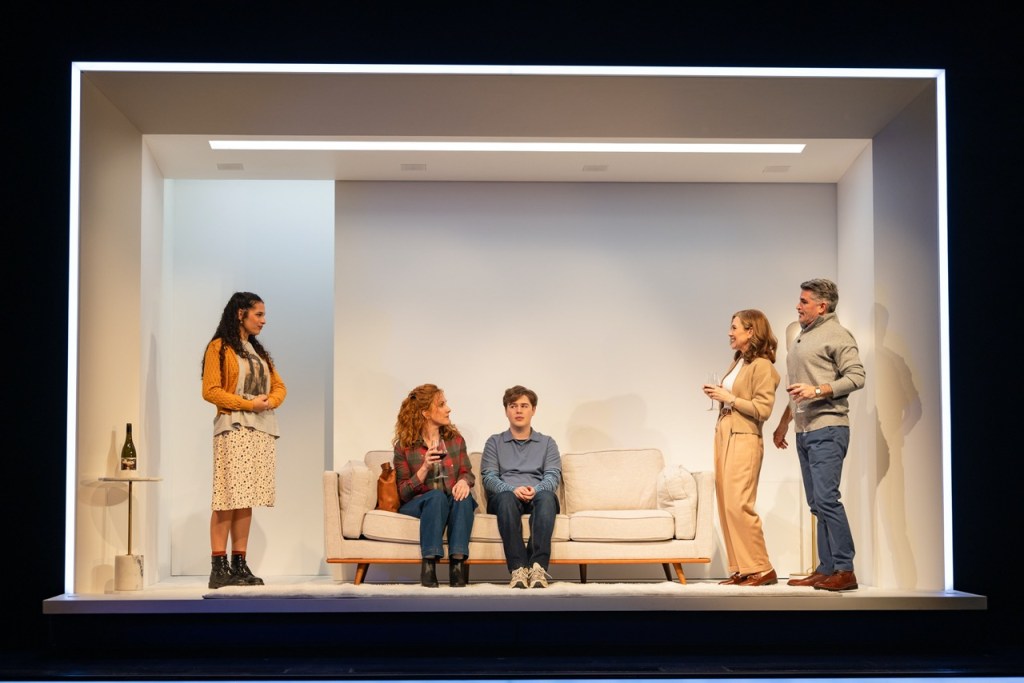
Georgia Laga’aia, Verity Hunt-Ballard, Beau Woodbridge, Natalie O’Donnell and Martin Crewes. Photo: Daniel Boud. Everyone in Dear Evan Hansen is flawed. The characters are a mix of broken people looking for something to fill the emotional gap and Evan’s fake stories of Connor serve as a rorschach test for each of them. Evan gets to have a close friend he never did in real life, Connor’s parent’s guilt is assauged knowing Connor had made a genuine connection, and his sister Zoe (Georgia Laga’aia) is given a loving brother she never had. But a lie is a lie, and as Evan is embraced by this new, wealthy family, his falsehoods grow more elaborate. For the first act Dear Evan Hansen is a story of grief and the way it skews our decisions, and about how we never know other people’s private pain.
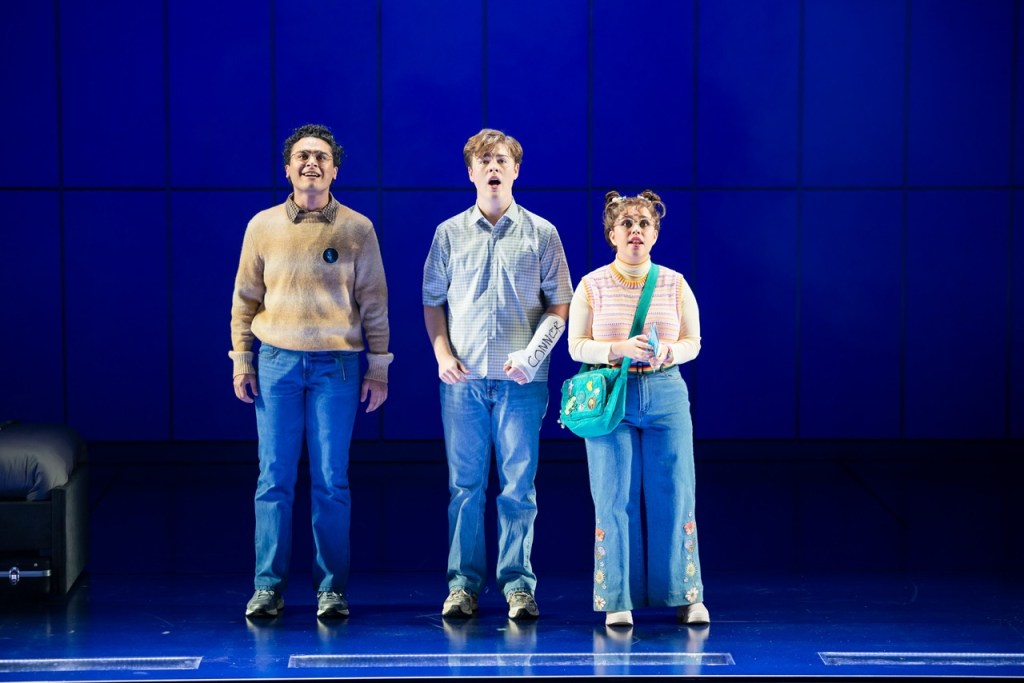
Jacob Rozario, Beau Woodbridge and Carmel Rodrigues. Photo: Daniel Boud. Slowly this circle of half-truths spreads as others unwittingly start to follow Evan’s lead. Fellow student Alana (Carmel Rodrigues) exaggerates her connection to Connor for attention. Evan’s frenemy Jared (Jacob Rozario) blatantly tries to profit off the tragedy. Here the narrative turns to look more at the world of performative internet activism and shallow emotions. I’m just gonna say it, the show’s one true villain is self-deluded and narcissistic Alana who latches on to Connor’s suicide to boost her own profile with no regard for others. When the social media attention on Evan and the Murphy’s turns sour, the heartless anger from those who have developed a gross para-social relationship with them is frustratingly true to form. In classic internet style, for all the talk of empowerment, love and community, people place a higher premium on judgment and righteousness than on grace and forgiveness.
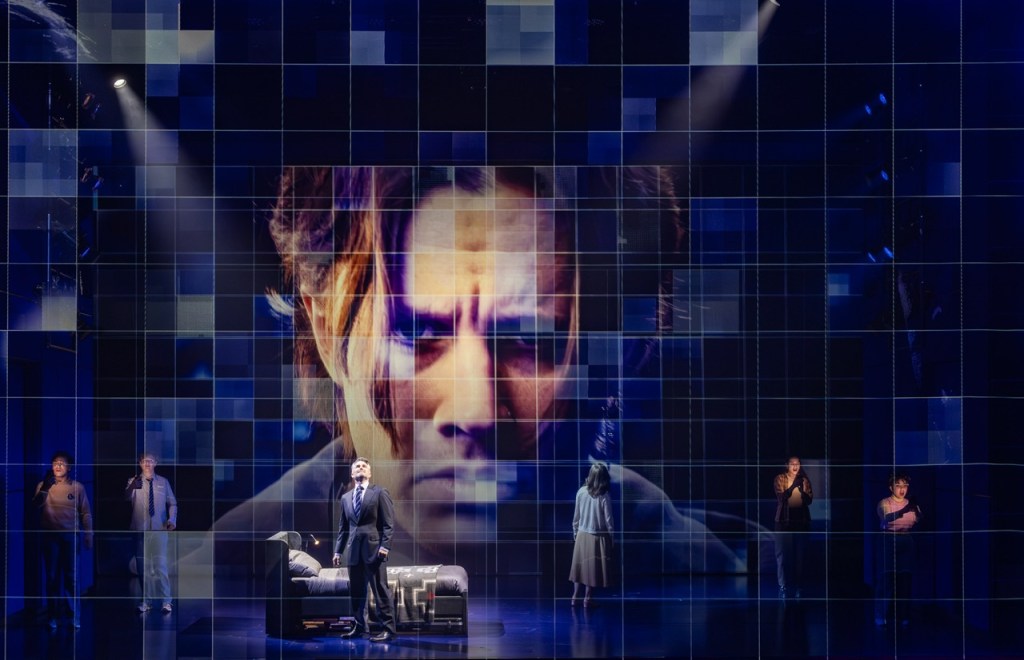
Jacob Rozario, Beau Woodbridge, Martin Crews, Natalie O’Donnell, Georgia Laga’aia, Carmel Rodrigues and Harry Targett (screen) Photo: Daniel Boud. So let’s talk about this production specifically, the first non-replica production of the show I’ve seen. This isn’t a vastly different take on the material, sticking to the established blue colour scheme of the original, using projections to bring internet culture to life etc, but the techniques used are more up-to-date (the original looks quite dated now as you’d expect from something about the internet that’s already 10 years old). That said, the real stand outs are Matt Scott’s sharp lighting design and David Bergman’s video design. Together with Jeremy Allen’s multifaceted set that combines screens and translucent scrims to give us a 3D internet they manage to make the end of Act 1, the show’s potentially most cringe-worthy moment, feel immersive and rich (with a hint of menace). The technology never overwhelms the characters or emotion – it’s a smart show with a smart execution.
Director Dean Bryant keeps Evan’s nervous ticks to a minimum (thankfully, they are often overplayed in other productions) and threads the needle between keeping Evan sympathetic while also engaging in some awful behaviour.
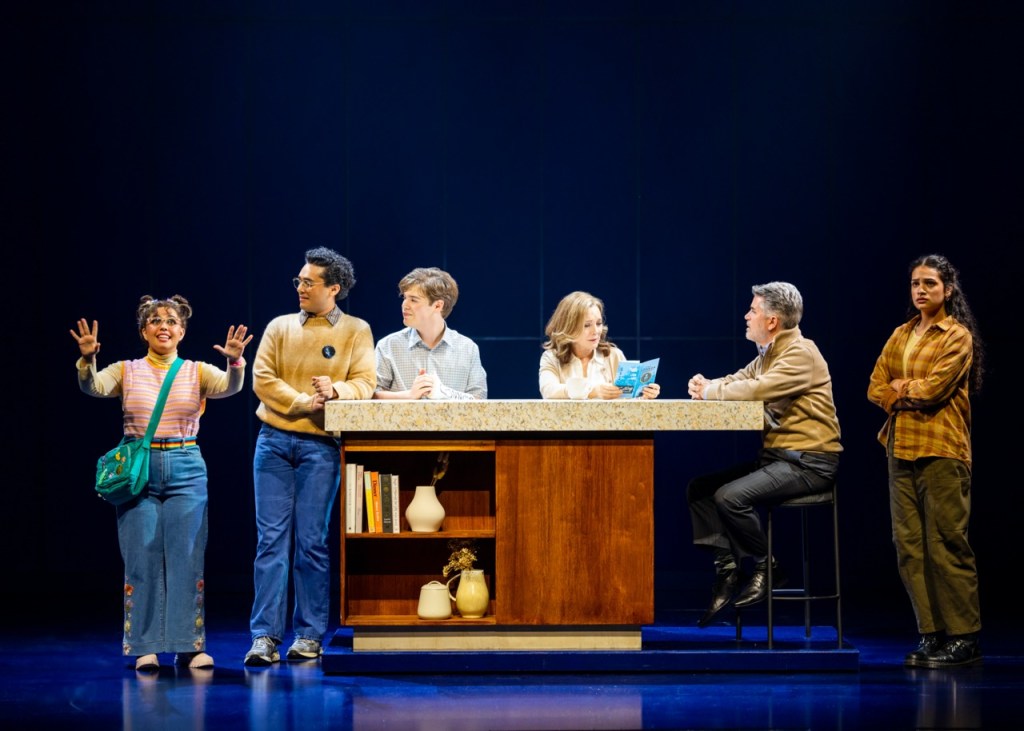
Carmel Rodrigues, Jacob Rozario, Beau Woodbridge, Natalie O’Donnell, Martin Crewes and Georgia Laga’aia. Photo: Daniel Boud. And this cast… Harry Targett is clearly enjoying his dual roles as Connor, and the version of Connor that lives in Evans head. Jacob Rozario gets to be the show’s clown as the amoral Jacob, adding much needed levity and snark to the saccharine moments. But the show belongs to Evan Hansen, who was played by the terrific Lawrence Hawkins on the night I attended.
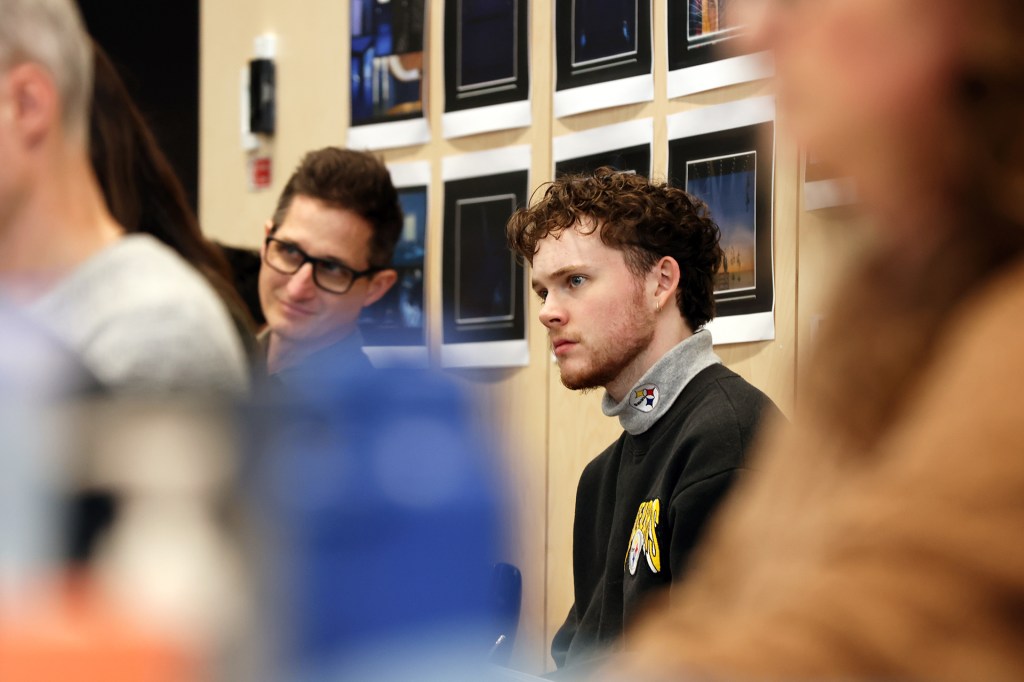
Tod Strike and Lawrence Hawkins in rehearsals. Photo: Prudence Upton. I can’t say anything with regards to Beau Woodbridge’s performance, but Hawkins was flawless in the role. Hawkins was a breath of fresh air in Hayes’ Little Women earlier this year, and proves he can lead a show here. His physical size gives Evan an extra sense of boyish frailty which makes his subsequent decisions feel like youthful stumbles.
Others have criticised Pasek & Paul’s pop-Broadway melodies which I find baffling. It’s true that many of them don’t really progress the plot or character in the traditional musical theatre mould, but rather stop the show to express emotions or, more often, to speak directly to the audience. This direct connection to the audience is the show’s strength. The internal struggles of the characters are the internal struggles of the generation of fans it has attracted, and just like pop songs, it’s given them an emotional outlet.
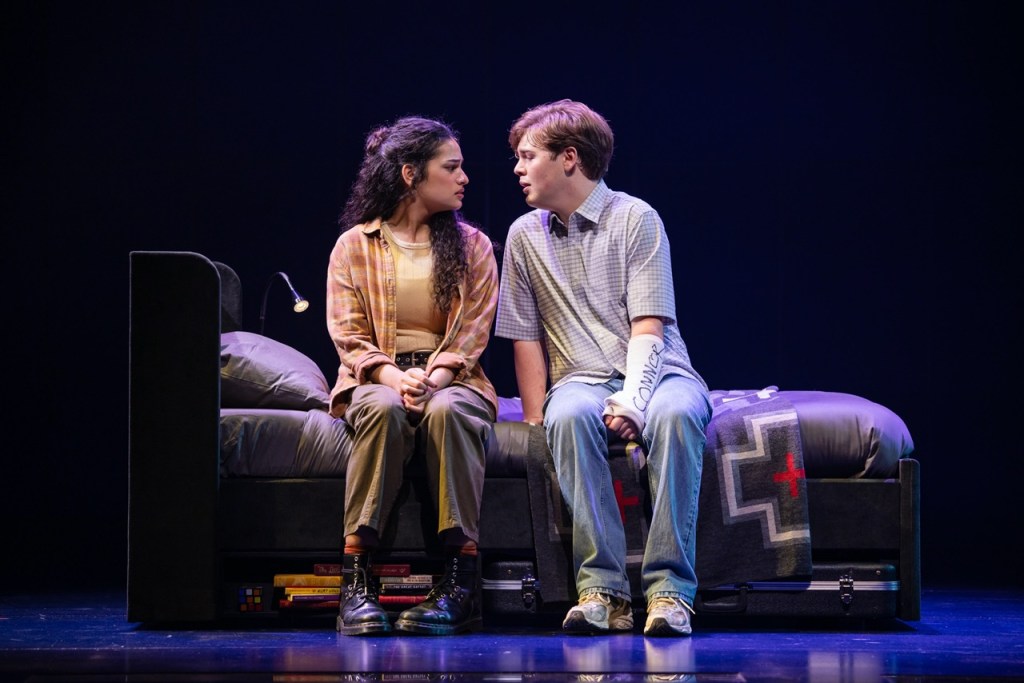
Georgia Laga’aia and Beau Woodbridge. Photo: Daniel Boud. I could discuss the show’s resolution that also seems to serve as a test of the audience’s views, but that would require spoilers. Needless to say, I think it’s a good, aspirational finale even if it does sidestep some of the bigger issues.
This is a great production of a big ol’ weepy pop musical, including, in this case, a star making turn from Lawrence Hawkins (I’d love to watch the show again with Beau Woodbridge to compare – I’m a sucker for a “compare and contrast” moment). After a recent holiday seeing big budget Broadway musicals, it’s great to come home and see the same quality, if not better, on our own main stages.
-
Flat Earthers: The Musical (Griffin/Hayes) ★★½
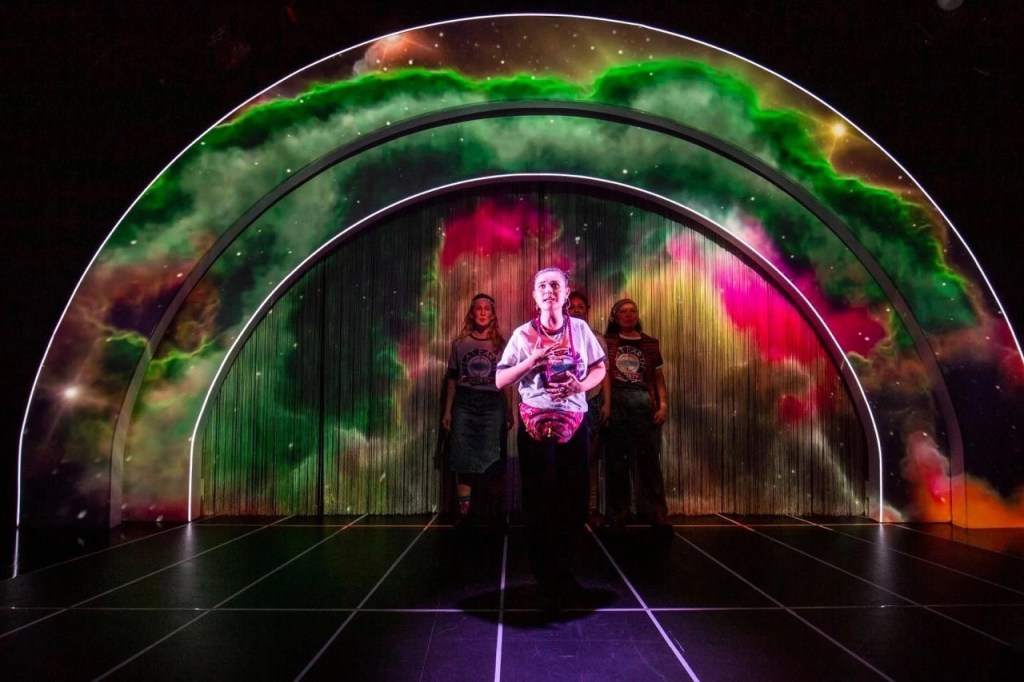
Book & Lyrics by Jean Tong & Lou Wall. Songwriting by Lou Wall & James Gales. Hayes Theatre Co. 11 Oct – 9 Nov, 2024.
I spent a day thinking about Flat Earthers: The Musical and wondering why I left the theatre with a visceral feeling of total hatred for it. Yes, I walked away from the Hayes Theatre angry and that’s not my normal reaction to a show I don’t like. Usually I’m just “well that sucked” and off to catch the train home, but no, this one stuck with me.
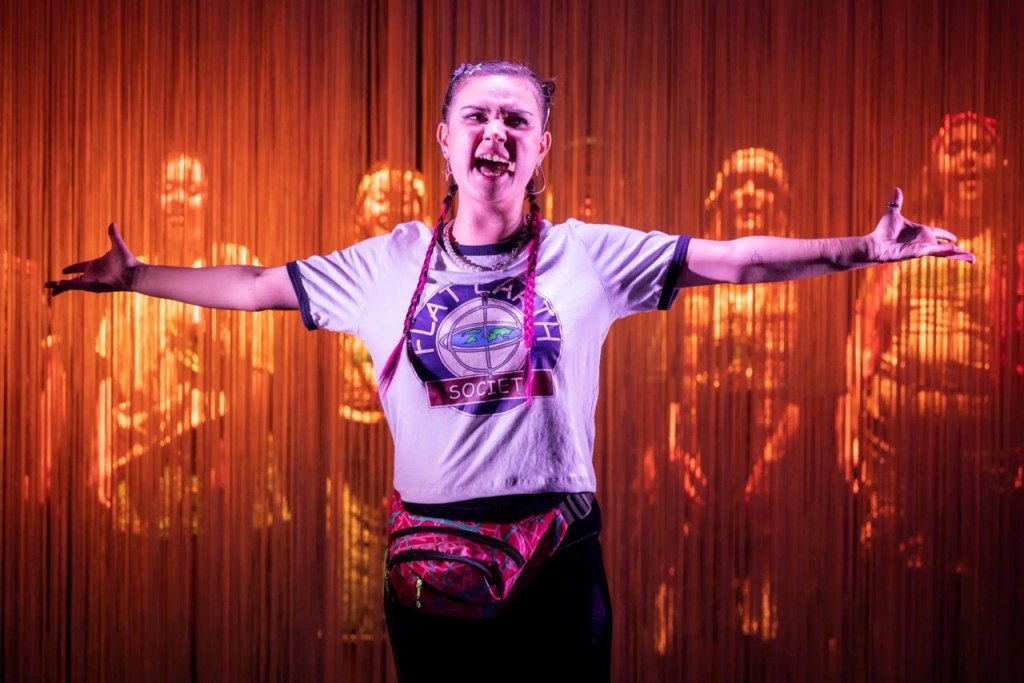
Shannen Alyce Quan. Photo: John McRae. Ria (Shannen Alyce Quan) is part of a snarky Youtube group debunking conspiracy theories online. But when a cute girl named Flick (Manali Datar) slides into her DMs to defend “flat earthers” Ria is smitten. Will she dive off her moral high ground to get dirty with a delusional girl who lives in a bunker? What do the Illuminati have to do with it? And how do we get from here to a nuclear apocalypse, all in the space of 2.5 hours?
Flat Earthers is a daft race from joke to joke, they constantly pile on top of each other like a succession of ad-libs running out of control. Along the way they handwave in the direction of deeper topics, like conspiracy mindsets, the need for community and the dangers of extremism while pushing onto the next non sequitur. Don’t expect any clever interrogation of big ideas, or even coherent character motivation, this is just all about dumb fun. If you think phrases like “suck my clit” or shouting “cunt” are funny punchlines, you might even enjoy this one.

Shannen Alyce Quan & Manali Datar. Photo: John McRae. So let’s talk about this GOOD stuff – and there is definitely good stuff here. While some of the tunes are woeful (the opening number was a hot mess), the music works well with the ballads and cute comedy moments between Ria and Flick. Both Quan and Datar are adorable in their roles and their chemistry carries you through the show’s rough patches. For me things really picked up in the second act as Michelle Brasier was given the spotlight to vamp it up as the evil Mz Prism. She makes zero sense but she’s loving every second of it.

Michelle Brasier & ensemble. Photo: John McRae. Benjamin Brockman (is it just the mononym Brockman now? I can’t tell if that’s a thing or just a typo on the Hayes website) turns in another outstanding set, rivalling his one for Ride The Cyclone, cleverly blending video projections with the live action to give us a full online experience. This is Dear Evan Hansen on a tight budget and it’s just as effective. Daniel Herten and Xanthe Dobbie’s animations and sound design expand the space remarkably well.
I think what threw me was the fact this was a co-production between Hayes and Griffin, leading me to expect something with a slightly higher IQ than what we get. I may have disliked Griffin comedies like Blaque Showgirls but at least I’ll concede it had a point to make. Flat Earthers doesn’t just have a vacant heart, it actively runs away from any kind of definitive take on the basic premise of truth, political division and loving across the divide.
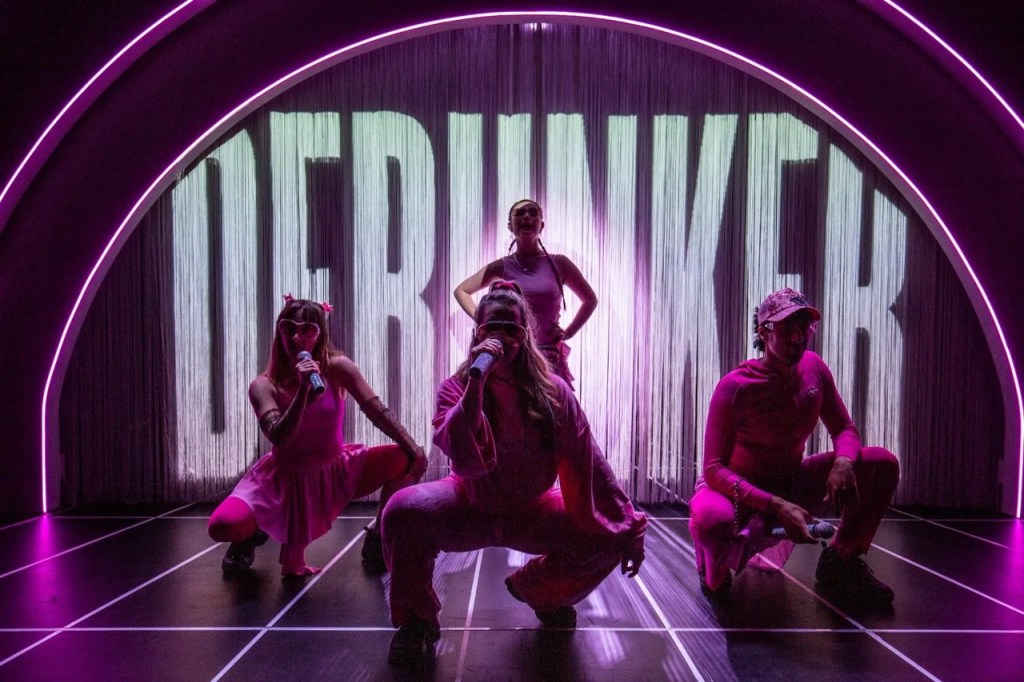
Ensemble. Photo: John McRae. But the show bends over backwards not to offend conspiracy theorists, and in the current world that is a shockingly naive position to take. Worse still, the show doesn’t actually try to engage with the topic in any meaningful way or bring new thoughts to the table. It’s all just a backdrop for a couple of cheap laughs. The debunkers are all “mean” and the flat earthers are all “nice and just need friends”. Sorry but after years of Covid deniers, Pizzagate, QAnon, 5G and antisemitic conspiracies I don’t have a lot of time for taking these topics so lightly.
-
Joker: Folie à Deux (Cinema) ★★★
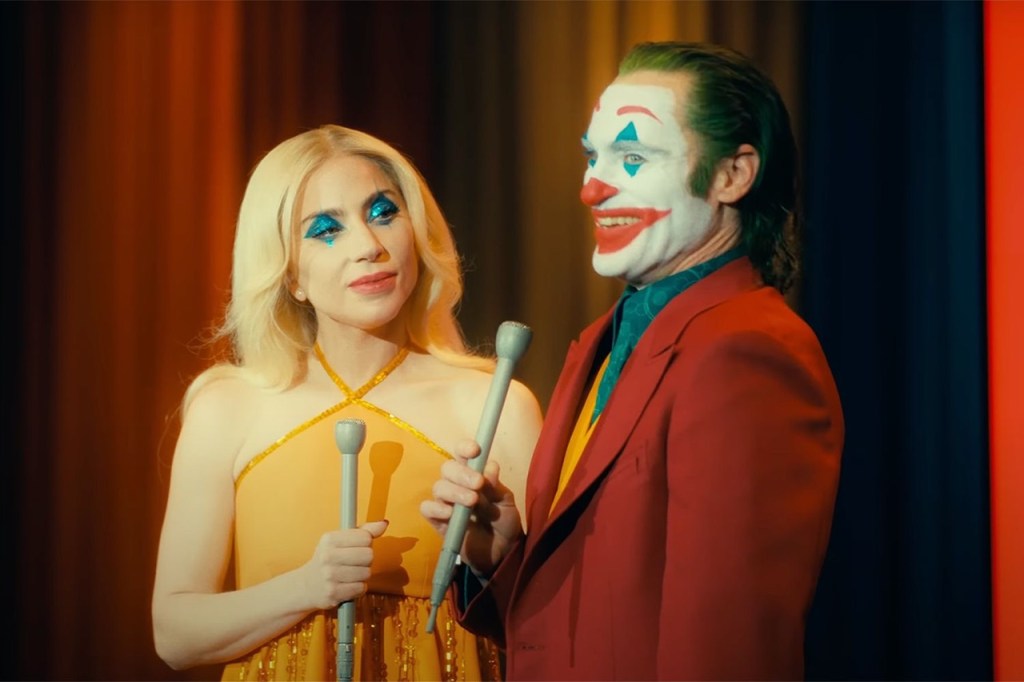
Directed by Todd Phillips. Written by Scott Silver & Todd Phillips.
I can’t believe I’m about to say this but… I liked Joker: Folie à Deux, which is, make no mistake, a movie musical! It’s just not like one you’ve probably seen before, replacing the usual comedic beats with violence and psychological tension. I wouldn’t say it was fun, or even completely successful, but it is fascinating – especially when you consider there was originally talk of it being a stage musical.
After the events of the first film, in which failed comedian Arthur Fleck (Joaquim Phoenix) took on the persona Joker and murdered five or six people, including one on live TV, he is in a psychiatric prison, Arkham State Hospital. Under the watchful eye of abusive prison wardens, including Jackie Sullivan (Brendan Gleeson). When Jackie arranges for Arthur to have access to a music therapy class, Arthur meets Lee (Lady Gaga) who is instantly fascinated with him as a celebrity killer. After Arthur is deemed sane enough to stand trial, she gets released and promises to turn up to the trial every day. As the crowd of Joker fans gather in and outside the courtroom, Arthur can’t resist becoming the Joker once more to appeal to his fans.
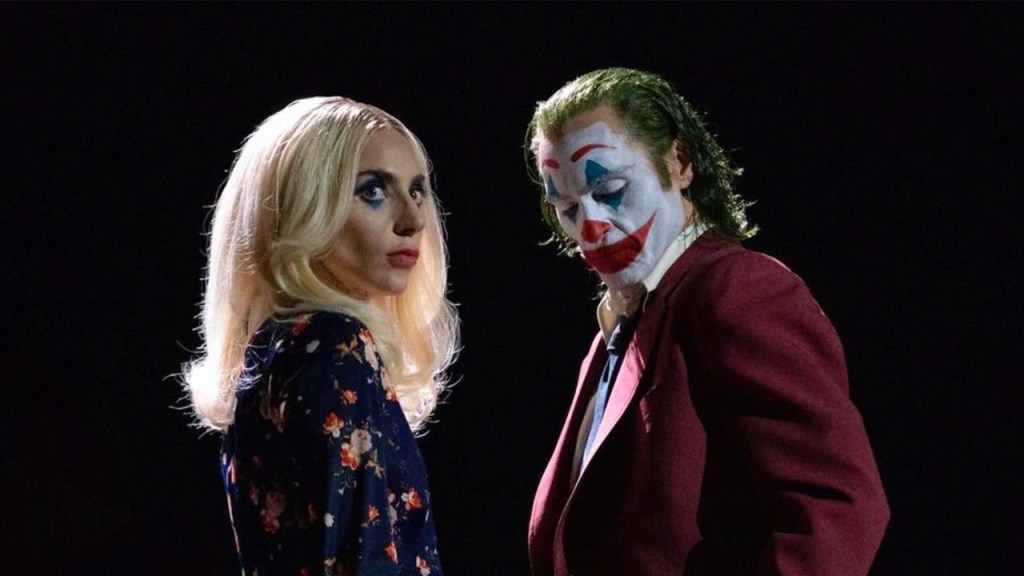
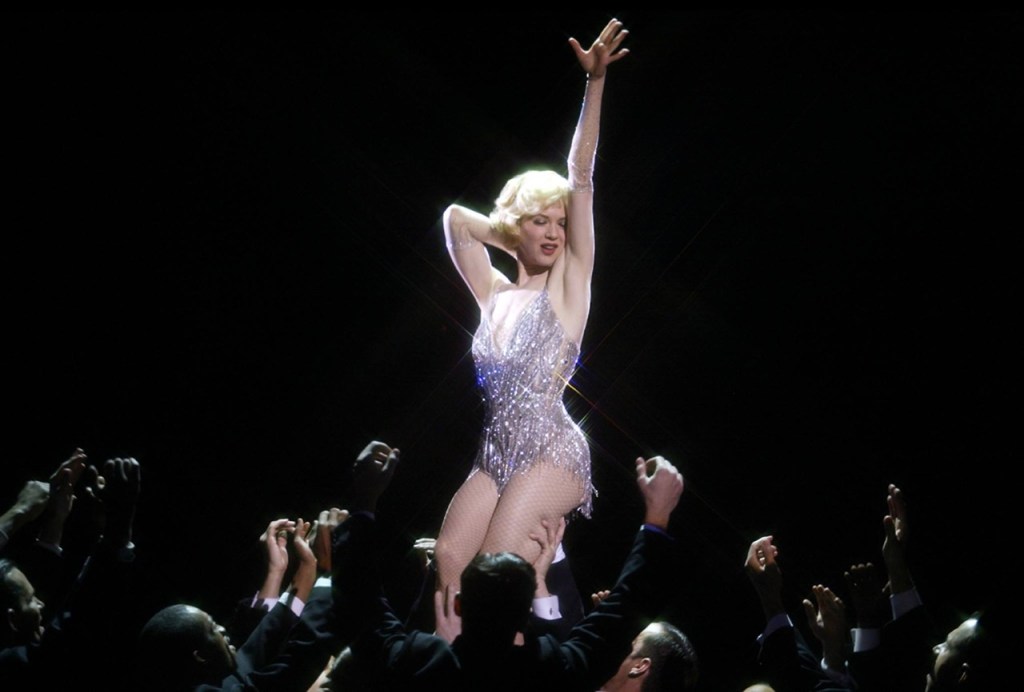
Joker: Folie à Deux There are two musicals Folie à Deux most resembles. First and foremost is Rob Marshall’s Oscar winning adaptation of Kander & Ebb’s Chicago. Folie à Deux is part prison drama, part courtroom drama, laced with musical flights of fancy that almost all take place inside the mind of the characters. But where Chicago is a musical comedy that winks in the direction of violence, Folie à Deux is a trip into Arthur Fleck’s broken soul which snaps into musical numbers when his brain hits overload.
Chicago The second show it reminded me of is & Juliet. There is a thrill to the way both & Juliet and Folie à Deux reframe the original lyrics of their songs without changing a word. In the film Fleck sings a bitter, angry rendition of Rogers & Harts “Bewitched (Bothered & Bewildered)”. Coming from the mouth of a psychopath, the lyrics are inverted into a chilling moment of self-recognition.
“I’m wild again! Beguiled again! A simpering, whimpering child again! Bewitched, bothered and bewildered am I.
Couldn’t sleep, And wouldn’t sleep. Until I could sleep where I shouldn’t sleep. Bewitched, bothered and bewildered am I!
Lost my heart, but what of it? My mistake, I agree. He’s a laugh, but I love it Because the laugh’s on me.”
The victim of child abuse, Arthur Fleck is about to reclaim his violent alter-ego, but the man underneath knows it’s a hollow joke on himself.
Or take Schwartz & Dietz’s “That’s Entertainment” that acts as a plot summary:
“A clown, with his pants falling down. Or the dance that’s a dream of romance. Or the scene where the villain is mean. That’s entertainment!”
This jukebox musical is taking “American standards” and highlighting the pain and desperation behind them. And like all good MT songs they reveal the true inner thoughts of the characters, in this case the inner ambivalence of the Joker who finds himself becoming the centre of a cult of personality he can’t control and doesn’t actually want after craving a spotlight for so long.
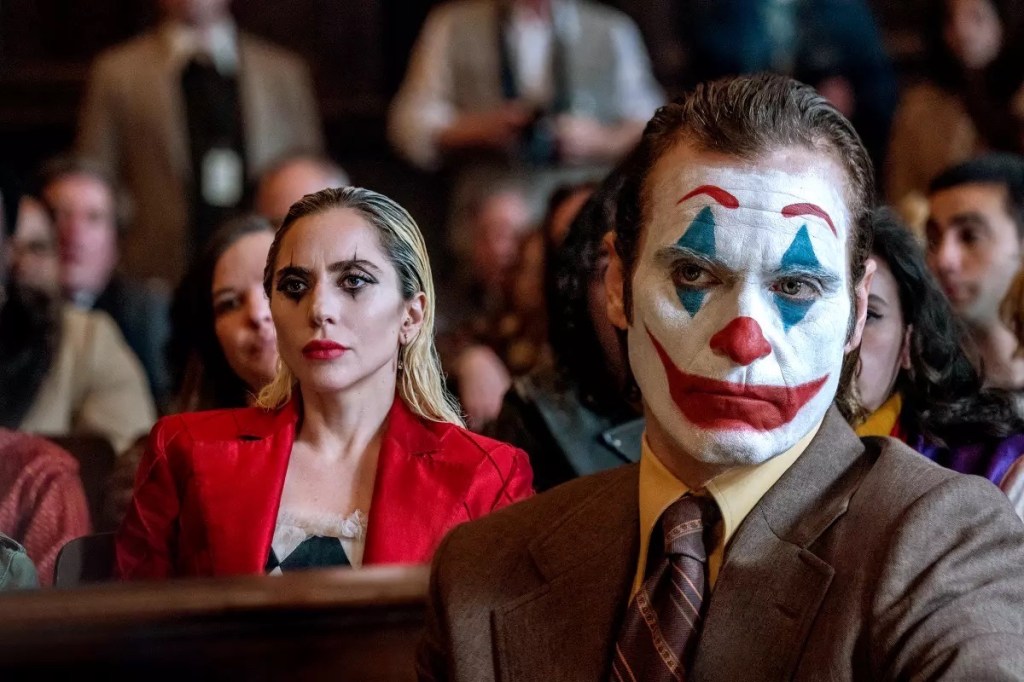
Joker: Folie à Deux Sadly, Folie à Deux doesn’t quite commit to the bit and make the songs integral to the story (although Lady Gaga’s accompanying album ‘Harlequin’ is well worth a listen as she fully evolves into her Liza Minelli era). Like most jukebox musicals the songs just aren’t designed to further the narrative and as the film progresses they start to lose their momentum. By the end, the songs become a distraction to the story rather than an aide.
But the one thing you can’t accuse Folie à Deux of is a lack of originality or vision, which was my major complaint about the first film (that I loathe). Joker became an unexpected Oscar-winning (excuse me while I vomit) hit, becoming the highest earning R rated film ever (till Deadpool & Wolverine came along in 2024) despite being a soulless recycling of over-played IP, given a sheen of prestige drama by photocopying better films (Scorcese’s The King of Comedy and Taxi Driver). A nihilistic wankfest for lost boys. That said, Joaquim Phoenix’s performance was terrific and completely committed, as much as I didn’t want to spend a second more in his presence.
Then why did I go see the sequel? A couple of film-nerd friends who also hated the first movie said it was interesting and that the stunning backlash from critics and audiences was oddly harsh. So I set my expectations very low and discovered Folie à Deux is practically a repudiation of the original (although I’m sure everyone involved would reject that idea). Where Joker reveled in its pornographic nastiness and anarchy, winning a legion of Snyder-bro fans, Folie à Deux carries that worldview through to its conclusion. Joker isn’t an anti-hero, he’s a failure. His nihilism is a mask just like his face-paint, and underneath there is still a man who can’t escape his own emotions as much as he wants to.
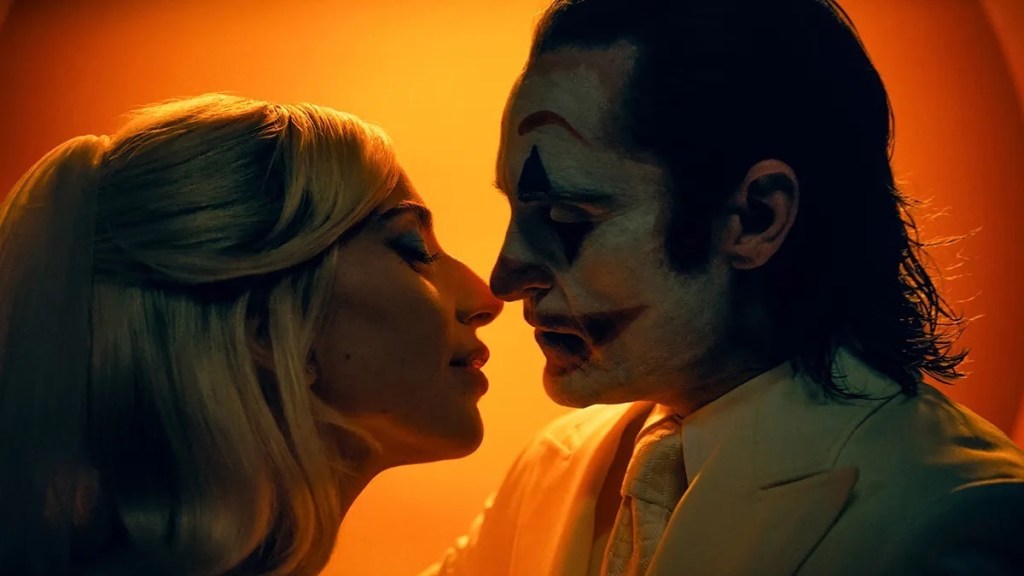
Joker: Folie à Deux I can’t think of a film that has so firmly stuck its middle finger up at the original audience other than Lana Wachowski’s The Matrix Resurrections (which was a big “oh you want more of the same shit? Well fuck you!” to the studio, but wasn’t successful as a film). It’s like Todd Phillips won the trust of the fans and then slapped them in the face (“You think the Joker is cool? Well I’ll show you how stupid you are AND I’ll make it a musical to really rub your noses in it!”). As someone who had a visceral reaction of disgust to Joker, I found Folie à Deux to be a refreshing follow-up.

Joker: Folie à Deux Once again, Phoenix (and Gaga) both completely commit to their roles. Where a more timid film would be filled with exposition, Todd Phillips leaves it to their performances to fill in the gaps. Gaga’s Harleen Quinzel never truly lays out her motivations but her drive to achieve her own goals is undeniable. There’s just enough of the original comic book origin in there to please fans without bogging the film down with backstory. Phoenix makes his transformation from Fleck to Joker feel like the birthing of a monster in a horror film. In fact Folie à Deux comes close to being a genuine musical-horror movie without a trace of comedy (is musical/horror a thing?). Sweeney Todd is many things, but actually frightening isn’t one of them.
Todd Phillips keeps the musical moments restrained, easing the audience into Fleck’s mind (it’s a little unclear whether Gaga’s Lee is also having musical delusions or if we’re just seeing what Fleck imagines is happening). Despite plenty of references to movie musicals of the past, Joker takes its cues from late-night TV (which is appropriate) and vaudeville. What the film is lacking is a full-scale production number to cap off the psychological journey into madness we’ve been on.
Did this movie need to exist? Definitely not, but after Joker made over a billion dollars a sequel was inevitable and I tip my hat to all involved for using their sudden success to make something this unexpected and bold. Folie à Deux is definitely ones of those divisive ones that I could either give ★★ or ★★★★ depending on my mood. I have zero intention of ever watching either of the Joker films again, but I can’t deny they are very well made and now that they both exist I can appreciate the arc. So I’ll give it ★★★ and call it even.
-
Interview: Director Gary Abrahams on Yentl. “Sometimes you need to be self destructive to become who you’re meant to be.”

Back in March, after seeing Yentl (★★★★★) at Malthouse Theatre in Melbourne, I wrote:
“We can only beg the theatre gods, or the Yeytser Ho’re, for a Sydney transfer.”
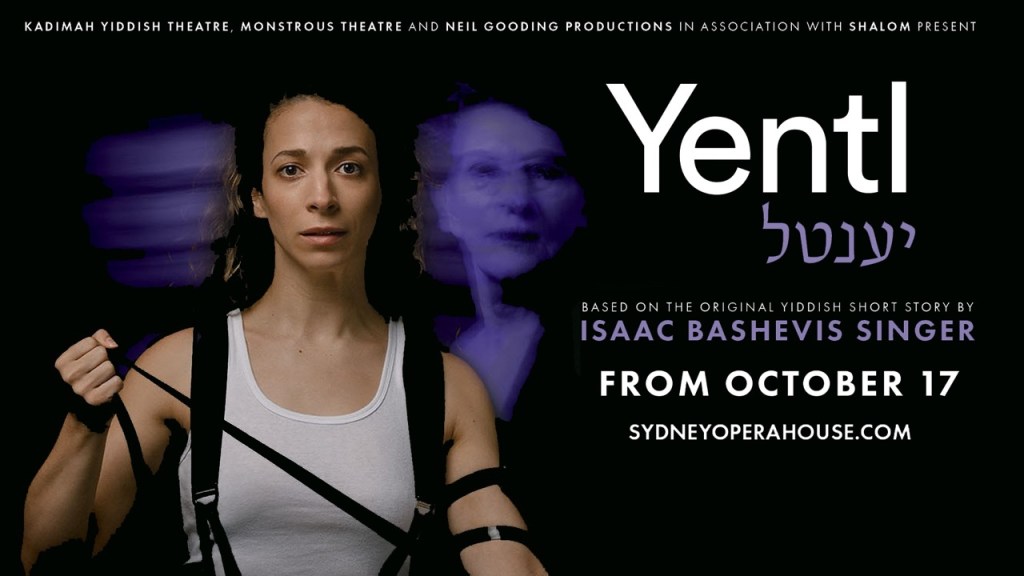
Well it seems the gods (and Monstrous Theatre and the Sydney Opera House) were listening and now, after two runs in Melbourne, this bold, dark and spiritual story of a young woman who disguises herself as a man to get an education, lands at the Sydney Opera House from October 17 (the run has already been extended to November 10). I’m obviously not taking credit for the transfer, but I’m also not not taking credit for the transfer on some higher, spiritual level.
Ahead of its move to Sydney, I got to have a brief chat with Yentl director Gary Abrahams who took a break from rehearsing his new play (Werewolf, written by Van Badham – which also sounds fascinating) at Arts Centre Melbourne, to answer some of my questions.

Gary Abrahams in rehearsals. CULTURAL BINGE (CB): Hi Gary, thanks for taking the time to do this. Why don’t you start by giving us a little bit of background on this production of Yentl?
GARY ABRAHAMS (GA): So this is the third season. The first season premiered in 2022 at the Arts Centre Melbourne. Then in March 2024, we had a return season at the Malthouse Theatre. It was just by chance the Sydney transfer happened. I’d been speaking to the Sydney Opera house since 2022 and it just so happened that a few weeks opened up this year.
CB: Have you made any changes to the script between runs?
GA: We did tweak it a bit before the Malthouse season. The season at the Sydney Opera House is going to be very, very close to the Malthouse season. You know, we’re such perfectionists and you feel like the work’s never done, but at a certain point you just have to let it be what it is. I have to also just trust that Yentle‘s had the response that it’s had because something’s working. Despite its specificity, it still has a universality that anybody can connect with.
CB: Oh, I definitely think so. I’m an agnostic, former Christian, Anglo-Chinese, gay guy who has no real understanding of Jewish culture beyond the pop cultural references, and I was absolutely spellbound by it.
GA: Oh, well, that’s really nice. It’s really important to me that it does reach an LGBTQI+ audience because I think what it’s exploring is so contemporary. Yentl’s own journey speaks to the inner struggle that so many queer people have to go through in their own life to arrive at a place of self acceptance and self realisation.
I think sometimes we do a disservice to LGBTQI audiences by disallowing the spiritual part of that conversation. I think a lot of queer people have had quite a negative experience with organised religion, but that doesn’t mean that they don’t have their own sort of personal relationship to their own soul or spirituality. And I think there’s something quite healing about having the argument thrashed out in front of you on a level that is quite spiritual.
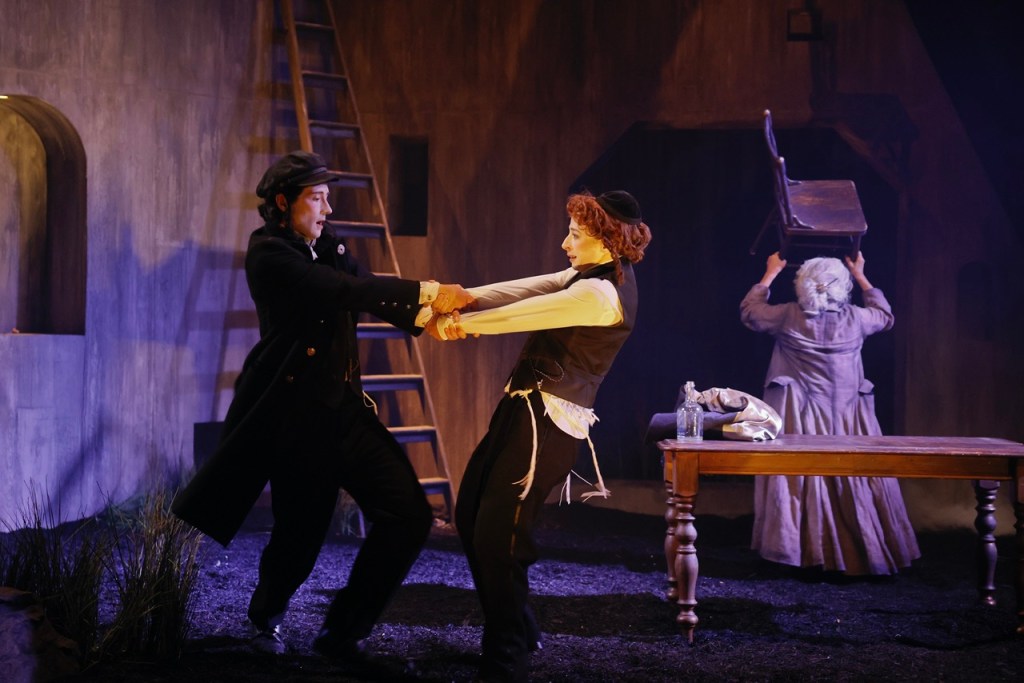
Nicholas Jaquinot, Amy Hack & Evelyn Krape. Photo: Jeff Busby. CB: I remember being quite surprised by how actually spiritual it is as a play. Oftentimes theatre steers away from the formalised spirituality of religion. We deal with spirituality in a more artistic sense, but the idea that this is feels very embedded in a well established spiritual context.
GA: I think that’s a particularly Australian view, and I agree with you. I think in Australia, we have a really, really difficult time going head on into big philosophical, moral, spiritual territory. Obviously I’m speaking from a Western perspective, but it’s something that I think is sorely lacking within our theatre and in our art. You know, we skew completely away from deep spirituality, soulfulness, all of that into a very postmodern arena. And I think that’s partly what people responded so strongly to with this show was that we did dare to go to those very deep spiritual places. I think people kind of crave that.
Regardless of how modern or agnostic you might be, or where your own spiritual practice lies, we all have that craving to understand ourselves on a deeper level and I think theatre is the perfect place to have that conversation in the modern world.
“I’m always interested in theatre that is never pretending to be anything other than theatre.“
CB: I want to dig into the nuts and bolts of the show a bit. You went back to the original Yiddish short story by Isaac Bashevis Singer, and the play is presented in both English and Yiddish (with translations). How good is your Yiddish?
GA: I don’t speak Yiddish. My grandparents were Yiddish speakers, so I’ve grown up with it, but I don’t speak it fluently. Obviously, there’s an existing Broadway show from the 1970s [Ed – You know the one, “Papa can you hear me?”]. So to get around that we went back to the original Yiddish story and that was the springboard for us and to make sure that we were presenting something that could have a conversation between the original culture and for western audiences.
Part of working with Kadimah Yiddish Theatre is that we have so many people that can help us with translation and with interpretation. And Yiddish itself is very connected to spiritual study, because at yeshivas and schools, you’re constantly switching between Yiddish and Hebrew and learning how to analyse text and read between the lines. Then question some more, and then explore further questions.
Of course, Rivka Margolis, who does all the translations, she’s an extraordinary scholar herself. She really understands that the act of translation is a creative act. It’s not a language where you have direct English/Yiddish translations of words. So a big part of her job was to try and find an authentic way of realising what we were doing in English but still allowed the poetry and creativity of what we were doing to shine through.

Amy Hack & Evelyn Krape. Photo: Jeff Busby. CB: One of the big changes to the text is the personification of the Yeytser Ho’re, the “Evil Inclination” (played by Evelyn Krape). Why was it important for this adaptation?
GA: It was an evolution. When we returned to the original short story written in Yiddish, we found some interesting slight variations between the Yiddish and the English translation. There was something slightly more open within the Yiddish that spoke about this thing inside of Yentl that compels her to do these things. Within Judaism there is this idea of the “Yeytser Ho’re”, your “evil inclination” (but that’s an oversimplified translation). It just felt like the perfect analogy to describe what we were exploring. Everybody has this internal drive and sometimes it pushes you to be self destructive, but that isn’t necessarily a bad thing. Sometimes you need to be self destructive in order to break down who you are, to become who you’re meant to be.
CB: I remember when I was watching it, you started off loving the Yeytser Ho’re. The character is funny and rambunctious. It’s the audience’s gateway into the story. But then as it goes on, you realise it’s not always acting in Yentl’s best interests…
GA: Or is it? That’s a sort of ambiguity, the duality that we’re exploring. It does go to some very dark places but if Yentl hadn’t gone to those dark places she may not have arrived where she needed to by the end.
We wanted to toy with the ambiguity of it all because that’s life. Life is neither good nor bad. It’s chaos and order, creation and destruction, all at the same time. It was important for us to bring Yentl’s arc to a place where she had to make peace with both sides of her femininity and her desire to be a religious student.
CB: This is kind of a basic question about the production, but why the pale face makeup?
GA: It’s the conversation I had with my designer. Part of what we’re riffing with was old style Yiddish theatre. Pre-World War Two it was a huge industry that traveled around the world. It had a slight vaudeville feel. And I’m always interested in theatre that is never pretending to be anything other than theatre. I’m not at all drawn to realism as a style and I like to keep the audience aware that what they’re watching is a fabrication because I think somehow that distance allows a deeper truth to be revealed. When you reveal and expose theatrics, it allows an audience to suspend disbelief a little bit sooner and earlier, and then get sucked into the story and the deeper layers of metaphor and poetry.
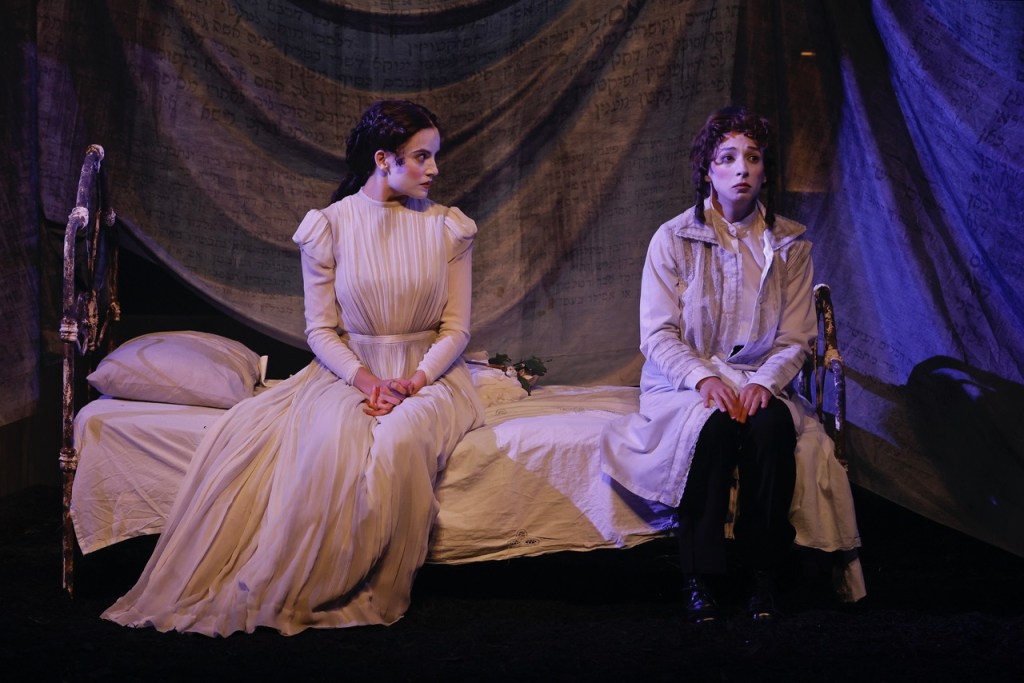
Genevieve Kingsford & Amy Hack. Photo: Jeff Busby. CB: You’ve worked quite a lot with adaptation. You seem to have an affinity with this kind of hardcore, literate, theatre adaptation. What draws you to these works?
GA: That’s such a lovely question, because yes, you’re right, I did my masters in writing and directing, but my focus was on adaptation. I just always remember, as a child, whenever I was reading a book or watching something, I always had that part of my mind that was reimagining it. What I love about theatre is that it’s a combination of various artistic languages. Literature, but there’s also cinema, music, dance language… I just love theatre as an art form. I love the conversation that I have to have with the original writer, to kind of wrestle with the ideas through the making of the work. I’m a voracious reader and I listen to a lot of music and I watch a lot of cinema and TV but theatre really is my main language. And like, there’s so many great stories that already exist, you don’t want to have to keep reinventing the wheel.
CB: You’re in rehearsals for a new show at Arts Centre Melbourne, before you get back into the rehearsal room for Yentl. Tell me about Werewolf?
GA: I’ve just opened a production of the opera La Boheme and the new show opening at the Arts Centre is with Van Baden. Werewolf is a kind of crazy political horror story. It’s a very, very audacious piece of work that is exploring how people on the left get radicalised into a sort of violent extremism. I’m sure she won’t mind me saying this, but she’s been very disturbed by some of the stuff that she’s been seeing. And part of this work is trying to explore and make sense of this veer towards extremism that celebrates violence as a means to an end. It’s a very short season, but, yeah, hopefully this is just the beginning for that.
CB: Hopefully we’ll get to see Werewolf up here soon too. Thanks for your time.
Yentl plays at the Sydney Opera House Playhouse from 17 Oct – 10 Nov, 2024.
Answers have been edited and condensed for clarity.
-
Subscribe
Subscribed
Have a WordPress.com account? Log in now.

